<?xml version="1.0" encoding="UTF-8"?>
<!DOCTYPE html PUBLIC "-//W3C//DTD XHTML 1.1//EN" "http://www.w3.org/TR/xhtml11/DTD/xhtml11.dtd">
<html xmlns="http://www.w3.org/1999/xhtml" xml:lang="en">
<head>
<meta content="text/html; charset=UTF-8" http-equiv="content-type" />
<meta http-equiv="Content-Language" content="en" />
<meta name="generator" content="Pressbooks 4.0.2" />
<meta name="pb-author" content="College of New Caledonia" />
<meta name="pb-title" content="Human Resource Management: First Canadian Edition" />
<meta name="pb-language" content="en-ca" />
<meta name="pb-cover-image" content="https://pressbooks.bccampus.ca/hrm1stcanadianedition/wp-content/uploads/sites/118/2017/05/Cover.png" />
<meta name="pb-copyright-year" content="2017" />
<meta name="pb-book-license" content="cc-by-nc-sa" />
<meta name="pb-custom-copyright" content="This work is the result of a collaborative project between BC Campus and the College of New Caledonia to adapt a text made available by The Saylor Foundation under a Creative Commons Attribution-NonCommercial-ShareAlike 3.0 License without attribution as requested by the work’s original creator or licensee. Changes to this book are licensed under  a  Creative Commons Attribution 4.0 International License .Detailed changes to this book can be found in Appendix: 1st Canadian Edition Changes." />
<meta name="pb-copyright-holder" content="BCcampus" />
<meta name="pb-contributing-authors" content="Laura Dias , Shoreline Community College" />
<meta name="pb-keywords-tags" content="human resources, human resource management," />
<meta name="pb-bisac-subject" content="BUS030000 BUSINESS &amp; ECONOMICS / Human Resources &amp; Personnel Management" />
<title>Human Resource Management: First Canadian Edition</title>
</head>
<body lang='en'>
<div id="half-title-page"><h1 class="title">Human Resource Management: First Canadian Edition</h1></div>
<div id="title-page"><h1 class="title">Human Resource Management: First Canadian Edition</h1><h2 class="subtitle"></h2><h3 class="author">College of New Caledonia</h3><h4 class="contributing-authors"> Laura Dias , Shoreline Community College</h4><h4 class="publisher"></h4><h5 class="publisher-city"></h5></div>
<div id="copyright-page"><div class="ugc"><p>This work is the result of a collaborative project between BC Campus and the College of New Caledonia to adapt a text made available by The Saylor Foundation under a <a href="https://creativecommons.org/licenses/by-nc-sa/3.0/">Creative Commons Attribution-NonCommercial-ShareAlike 3.0 License</a> without attribution as requested by the work’s original creator or licensee. Changes to this book are licensed under  a  <span class="external-link"><a href="https://creativecommons.org/licenses/by/4.0/" class="external-link" rel="nofollow">Creative Commons </a></span>Attribution 4.0 International License .</p><p>Detailed changes to this book can be found in Appendix: 1st Canadian Edition Changes.</p><div class="license-attribution" xmlns:cc="http://creativecommons.org/ns#"><p xmlns:dct="http://purl.org/dc/terms/"><a rel="license" href="http://creativecommons.org/licenses/by-nc-sa/4.0/"><img alt="Creative Commons License" style="border-width:0" src="https://i.creativecommons.org/l/by-nc-sa/4.0/88x31.png"/></a><br/><span xmlns:dct="http://purl.org/dc/terms/" property="dct:title">Human Resource Management: First Canadian Edition</span> by <a xmlns:cc="http://creativecommons.org/ns#" href="https://pressbooks.bccampus.ca/hrm1stcanadianedition" property="cc:attributionName" rel="cc:attributionURL">BCcampus</a> is licensed under a <a rel="license" href="http://creativecommons.org/licenses/by-nc-sa/4.0/">Creative Commons Attribution-NonCommercial-ShareAlike 4.0 International License</a>, except where otherwise noted.</p></div></div></div>
<div id="toc"><h1>Contents</h1><ul><li class="part"><a href="#chapter-1-the-role-of-human-resource-management">Chapter 1: The Role of Human Resource Management</a></li><li class="chapter standard"><a href="#introduction-14"><span class="toc-chapter-title">Introduction</span></a></li><li class="chapter numberless"><a href="#slug-1-1-what-is-human-resources"><span class="toc-chapter-title">1.1 What is Human Resources?</span></a></li><li class="chapter numberless"><a href="#slug-1-2skills-needed-for-hrm"><span class="toc-chapter-title">1.2 Skills Needed for HRM</span></a></li><li class="chapter numberless"><a href="#slug-1-3todays-hrm-challenges"><span class="toc-chapter-title">1.3 Today’s HRM Challenges</span></a></li><li class="chapter numberless"><a href="#slug-1-4cases-and-problems"><span class="toc-chapter-title">1.4 Cases and Problems</span></a></li><li class="part"><a href="#chapter-2-the-legal-environment-in-canada">Chapter 2: The Legal Environment in Canada</a></li><li class="chapter standard"><a href="#introduction-15"><span class="toc-chapter-title">Introduction</span></a></li><li class="chapter numberless"><a href="#slug-2-1federal-and-provincial-jurisdiction-in-canada"><span class="toc-chapter-title">2.1 Federal and Provincial Jurisdiction in Canada</span></a></li><li class="chapter numberless"><a href="#slug-2-2-human-rights-laws"><span class="toc-chapter-title">2.2 Human Rights Laws</span></a></li><li class="chapter numberless"><a href="#slug-2-3-employment-standards-in-canada"><span class="toc-chapter-title">2.3 Employment Standards in Canada</span></a></li><li class="chapter numberless"><a href="#privacy-laws-in-canada"><span class="toc-chapter-title">2.4 Privacy Laws in Canada</span></a></li><li class="part"><a href="#chapter-3-developing-and-implementing-strategic-hrm-plans">Chapter 3: Developing and Implementing Strategic HRM Plans</a></li><li class="chapter standard"><a href="#introduction"><span class="toc-chapter-title">Introduction</span></a></li><li class="chapter standard"><a href="#slug-3-1-strategic-planning"><span class="toc-chapter-title">3.1 Strategic Planning</span></a></li><li class="chapter standard"><a href="#slug-3-2-writing-the-hrm-plan"><span class="toc-chapter-title">3.2 Writing the HR Plan</span></a></li><li class="chapter numberless"><a href="#slug-3-3-tips-in-hrm-planning"><span class="toc-chapter-title">3.3 Tips in HRM Planning</span></a></li><li class="chapter standard"><a href="#slug-3-4-technology-strategic-planning"><span class="toc-chapter-title">3.4 Technology and Strategic Planning</span></a></li><li class="chapter standard"><a href="#slug-3-5-cases-and-problems"><span class="toc-chapter-title">3.5 Cases and Problems</span></a></li><li class="part"><a href="#chapter-4-diversity-and-multiculturalism">Chapter 4:  Diversity and Multiculturalism</a></li><li class="chapter standard"><a href="#introduction-2"><span class="toc-chapter-title">Introduction</span></a></li><li class="chapter standard"><a href="#slug-4-1-diversity-and-multiculturalism-2"><span class="toc-chapter-title">4.1 Diversity and Multiculturalism</span></a></li><li class="chapter standard"><a href="#slug-4-2-diversity-plans"><span class="toc-chapter-title">4.2 Diversity Plans</span></a></li><li class="chapter standard"><a href="#slug-4-3-cases-and-problems"><span class="toc-chapter-title">4.3 Cases and Problems</span></a></li><li class="part"><a href="#chapter-5-recruitment">Chapter 5: Recruitment</a></li><li class="chapter standard"><a href="#introduction-3"><span class="toc-chapter-title">Introduction</span></a></li><li class="chapter standard"><a href="#slug-5-1-the-recruitment-process"><span class="toc-chapter-title">5.1 The Recruitment Process</span></a></li><li class="chapter standard"><a href="#slug-5-2-the-law-and-recruitment"><span class="toc-chapter-title">5.2 The Law and Recruitment</span></a></li><li class="chapter standard"><a href="#slug-5-3-recruitment-strategies"><span class="toc-chapter-title">5.3 Recruitment Strategies</span></a></li><li class="chapter standard"><a href="#slug-5-4-cases-and-problems"><span class="toc-chapter-title">5.4 Cases and Problems</span></a></li><li class="part"><a href="#chapter-6">Chapter 6: Selection</a></li><li class="chapter standard"><a href="#introduction-4"><span class="toc-chapter-title">Introduction</span></a></li><li class="chapter standard"><a href="#slug-6-1-the-selection-process"><span class="toc-chapter-title">6.1 The Selection Process</span></a></li><li class="chapter standard"><a href="#slug-6-2-criteria-development-and-resume-review"><span class="toc-chapter-title">6.2 Criteria Development and Résumé Review</span></a></li><li class="chapter standard"><a href="#slug-6-3-interviewing"><span class="toc-chapter-title">6.3 Interviewing</span></a></li><li class="chapter standard"><a href="#slug-6-4-testing-and-selecting"><span class="toc-chapter-title">6.4 Testing and Selecting</span></a></li><li class="chapter standard"><a href="#slug-6-5-making-the-offer"><span class="toc-chapter-title">6.5 Making the Offer</span></a></li><li class="chapter standard"><a href="#slug-6-6-cases-and-problems"><span class="toc-chapter-title">6.6 Cases and Problems</span></a></li><li class="part"><a href="#chapter-7-compensation-and-benefits">Chapter 7: Compensation and Benefits</a></li><li class="chapter standard"><a href="#introduction-5"><span class="toc-chapter-title">Introduction</span></a></li><li class="chapter standard"><a href="#slug-7-1-goals-of-a-compensation-plan"><span class="toc-chapter-title">7.1 Goals of a Compensation Plan</span></a></li><li class="chapter standard"><a href="#slug-7-2-developing-a-compensation-package"><span class="toc-chapter-title">7.2 Developing a Compensation Package</span></a></li><li class="chapter standard"><a href="#slug-7-3-types-of-pay-systems"><span class="toc-chapter-title">7.3 Types of Pay Systems</span></a></li><li class="chapter standard"><a href="#slug-7-4-other-types-of-compensation"><span class="toc-chapter-title">7.4 Other Types of Compensation</span></a></li><li class="chapter standard"><a href="#slug-7-5-cases-and-problems"><span class="toc-chapter-title">7.5 Cases and Problems</span></a></li><li class="part"><a href="#chapter-8-retention-and-motivation">Chapter 8: Retention and Motivation</a></li><li class="chapter standard"><a href="#introduction-6"><span class="toc-chapter-title">Introduction</span></a></li><li class="chapter standard"><a href="#slug-8-1-the-costs-of-turnover"><span class="toc-chapter-title">8.1 The Costs of Turnover</span></a></li><li class="chapter standard"><a href="#slug-8-2-retention-plans"><span class="toc-chapter-title">8.2 Retention Plans</span></a></li><li class="chapter standard"><a href="#slug-8-3-implementing-retention-strategies"><span class="toc-chapter-title">8.3 Implementing Retention Strategies</span></a></li><li class="chapter standard"><a href="#slug-8-4-cases-and-problems"><span class="toc-chapter-title">8.4 Cases and Problems</span></a></li><li class="part"><a href="#chapter-9-training-and-development">Chapter 9: Training and Development</a></li><li class="chapter standard"><a href="#introduction-7"><span class="toc-chapter-title">Introduction</span></a></li><li class="chapter standard"><a href="#slug-9-1-steps-to-take-in-training-an-employee"><span class="toc-chapter-title">9.1 Steps to Take in Training an Employee</span></a></li><li class="chapter standard"><a href="#slug-9-2-types-of-training"><span class="toc-chapter-title">9.2 Types of Training</span></a></li><li class="chapter standard"><a href="#slug-9-3-training-delivery-methods"><span class="toc-chapter-title">9.3 Training Delivery Methods</span></a></li><li class="chapter standard"><a href="#slug-9-4-designing-a-training-program"><span class="toc-chapter-title">9.4 Designing a Training Program</span></a></li><li class="chapter standard"><a href="#slug-9-5-cases-and-problems"><span class="toc-chapter-title">9.5 Cases and Problems</span></a></li><li class="part"><a href="#chapter-10-successful-employee-communication">Chapter 10: Successful Employee Communication</a></li><li class="chapter standard"><a href="#introduction-8"><span class="toc-chapter-title">Introduction</span></a></li><li class="chapter standard"><a href="#slug-10-1-communication-strategies"><span class="toc-chapter-title">10.1 Communication Strategies</span></a></li><li class="chapter standard"><a href="#slug-10-2-management-styles"><span class="toc-chapter-title">10.2 Management Styles</span></a></li><li class="chapter standard"><a href="#slug-10-3-cases-and-problems"><span class="toc-chapter-title">10.3 Cases and Problems</span></a></li><li class="part"><a href="#chapter-11-managing-employee-performance">Chapter 11: Managing Employee Performance</a></li><li class="chapter standard"><a href="#introduction-9"><span class="toc-chapter-title">Introduction</span></a></li><li class="chapter standard"><a href="#slug-11-1-handling-performance"><span class="toc-chapter-title">11.1 Handling Performance</span></a></li><li class="chapter standard"><a href="#slug-11-2-employee-rights"><span class="toc-chapter-title">11.2 Employee Rights</span></a></li><li class="chapter standard"><a href="#slug-11-3-cases-and-problems"><span class="toc-chapter-title">11.3 Cases and Problems</span></a></li><li class="part"><a href="#chapter-12-employee-assessment">Chapter 12: Employee Assessment</a></li><li class="chapter standard"><a href="#introduction-10"><span class="toc-chapter-title">Introduction</span></a></li><li class="chapter standard"><a href="#slug-12-1-performance-evaluation-systems"><span class="toc-chapter-title">12.1 Performance Evaluation Systems</span></a></li><li class="chapter standard"><a href="#slug-12-2-appraisal-methods"><span class="toc-chapter-title">12.2 Appraisal Methods</span></a></li><li class="chapter standard"><a href="#slug-12-3-completing-and-conducting-the-appraisal"><span class="toc-chapter-title">12.3 Completing and Conducting the Appraisal</span></a></li><li class="chapter standard"><a href="#slug-12-4-cases-and-problems"><span class="toc-chapter-title">12.4 Cases and Problems</span></a></li><li class="part"><a href="#chapter-13-working-with-labour-unions">Chapter 13: Working with Labour Unions</a></li><li class="chapter standard"><a href="#introduction-11"><span class="toc-chapter-title">Introduction</span></a></li><li class="chapter standard"><a href="#slug-13-1-the-nature-of-unions"><span class="toc-chapter-title">13.1 The Nature of Unions</span></a></li><li class="chapter standard"><a href="#slug-13-2-collective-bargaining"><span class="toc-chapter-title">13.2 Collective Bargaining</span></a></li><li class="chapter standard"><a href="#slug-13-3-administration-of-the-collective-bargaining-agreement"><span class="toc-chapter-title">13.3 Administration of the Collective Bargaining Agreement</span></a></li><li class="chapter standard"><a href="#slug-13-4-cases-and-problems"><span class="toc-chapter-title">13.4 Cases and Problems</span></a></li><li class="part"><a href="#chapter-14-safety-and-health-at-work">Chapter 14: Safety and Health at Work</a></li><li class="chapter standard"><a href="#introduction-12"><span class="toc-chapter-title">Introduction</span></a></li><li class="chapter standard"><a href="#slug-14-1-workplace-safety-and-health-laws"><span class="toc-chapter-title">14.1 Workplace Safety and Health Laws</span></a></li><li class="chapter standard"><a href="#slug-14-2-health-hazards-at-work"><span class="toc-chapter-title">14.2 Health Hazards at Work</span></a></li><li class="chapter standard"><a href="#slug-14-3-cases-and-problems"><span class="toc-chapter-title">14.3 Cases and Problems</span></a></li><li class="part"><a href="#main-body">Chapter 15: International HRM</a></li><li class="chapter standard"><a href="#introduction-13"><span class="toc-chapter-title">Introduction</span></a></li><li class="chapter standard"><a href="#slug-15-1-offshoring-outsourcing"><span class="toc-chapter-title">15.1 Offshoring, Outsourcing</span></a></li><li class="chapter standard"><a href="#slug-15-2-staffing-internationally"><span class="toc-chapter-title">15.2 Staffing Internationally</span></a></li><li class="chapter standard"><a href="#slug-15-3-international-hrm-considerations"><span class="toc-chapter-title">15.3 International HRM Considerations</span></a></li><li class="chapter standard"><a href="#slug-15-4-cases-and-problems"><span class="toc-chapter-title">15.4 Cases and Problems</span></a></li><li class="back-matter miscellaneous"><a href="#glossary"><span class="toc-chapter-title">Glossary</span></a></li></ul></div>
<div class="part introduction " id="chapter-1-the-role-of-human-resource-management"><div class="part-title-wrap"><h3 class="part-number">I</h3><h1 class="part-title">Chapter 1: The Role of Human Resource Management</h1></div></div>
<div class="chapter standard" id="introduction-14"><div class="chapter-title-wrap"><h3 class="chapter-number">1</h3><h2 class="chapter-title">Introduction</h2></div><div class="ugc chapter-ugc"><h2 class="chapter-1:-the-role-of-human-resource-management">Human Resource Management Day to Day</h2> <div class="chapter-1:-the-role-of-human-resource-management"><p>You have just been hired to work as the human resource (HR) manager of a small company. You heard about the job through a conference you attended, put on by the Human Resource Management Association (HRMA). Previously, the owner of the company, Jennifer, had been doing everything related to human resource management (HRM). You can tell she is a bit critical about paying a good salary for something she was able to juggle all on her own. On your first day, you meet the 10 employees and spend several hours with the company owner, hoping to get a handle on what human resource processes are already set up.</p> <p>Shortly after the meeting begins, you see Jennifer has a completely different perspective of what HRM is, and you realize it will be your job to educate her on the value of a HR manager. You look at it as a personal challenge—both to educate her and to show her the value of this role in the organization.</p> <p>First, you tell her that HRM is a strategic process having to do with the staffing, compensation, retention, training, and employment law and policies side of the business. In other words, your job as an HR manager will be not only to write policy and procedures and to hire people (the administrative role), but also to use strategic plans to ensure the right people are hired and trained for the right job at the right time.</p> <p>For example, you ask her if she knows what the revenue will be in six months, and Jennifer answers, “Of course. We expect it to increase by 20%.”</p> <p>You ask, “Have you thought about how many people you will need due to this increase?”</p> <p>Jennifer looks a bit sheepish and says, “No. I guess I haven’t gotten that far.”</p> <p>Then you ask her about the training programs the company offers, the software used to allow employees to access pay information online, and the compensation policies.</p> <p>She responds, “It looks like we have some work to do. I didn’t know that human resources involved all of that.”</p> <p>You smile at her and start discussing some of the specifics of the business so you can get started right away writing the strategic human resource management plan.</p> </div> </div></div>
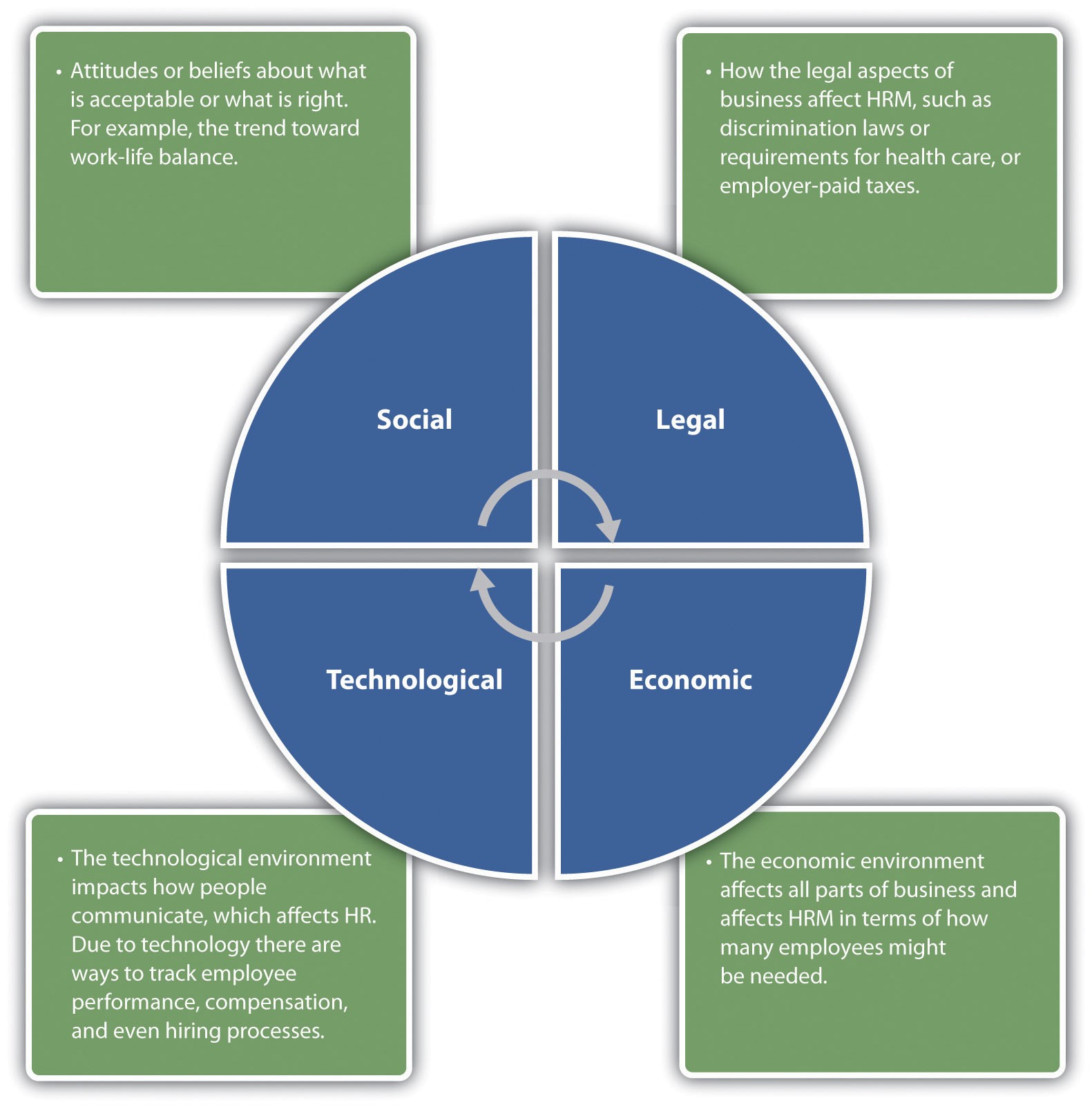
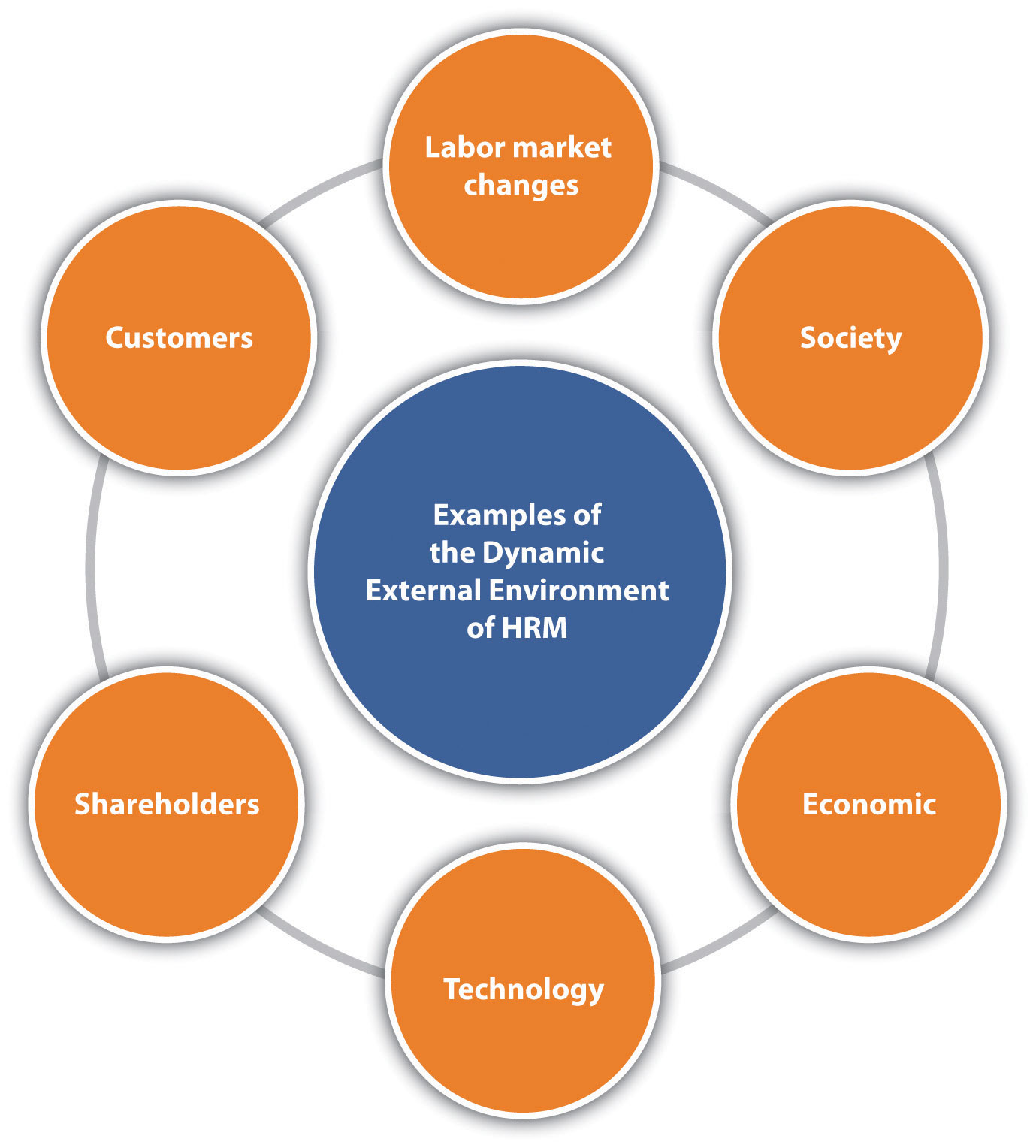
<div class="chapter numberless" id="slug-1-1-what-is-human-resources"><div class="chapter-title-wrap"><h3 class="chapter-number"></h3><h2 class="chapter-title">1.1 What is Human Resources?</h2></div><div class="ugc chapter-ugc"> <div class="1.1-what-is-human-resources?"><div class="bcc-box bcc-highlight"><h3 itemprop="educationalUse">Learning Objectives</h3> <p>By the end of this section, you will be able to</p> <ol><li>Explain the role of HRM in organizations.</li> <li>Define and discuss some of the major HRM activities.</li> </ol> </div> <p>Every organization, large or small, uses a variety of <strong>capital</strong> to make the business work. Capital includes cash, valuables, or goods used to generate income for a business. For example, a retail store uses registers and inventory, while a consulting firm may have proprietary software or buildings. No matter the industry, all companies have one thing in common: they must have people to make their capital work for them. This will be our focus throughout the text: generation of revenue through the use of people’s skills and abilities.</p> <h2>What is HRM?</h2> <p>Human resource management (HRM) is the process of employing people, training them, compensating them, developing policies relating to them, and developing strategies to retain them. As a field, HRM has undergone many changes over the last 20 years, giving it an even more important role in today’s organizations. In the past, HRM meant processing payroll, sending birthday gifts to employees, arranging company outings, and making sure forms were filled out correctly. In other words, it was more of an administrative role than a strategic role crucial to the success of the organization. Jack Welch, former CEO of General Electric and a management guru, sums up the new role of HRM:</p> <blockquote><p>“Get out of the parties and birthdays and enrollment forms&#8230; Remember, HR is important in good times, HR is defined in hard times.”<span class="footnote">Kristen B. Frasch, David Shadovitz, and Jared Shelly, “There’s No Whining in HR,” <em>Human Resource Executive Online</em>, June 30, 2009, accessed September 24, 2010, http://www.hreonline.com/HRE/story.jsp?storyId=227738167.</span></p></blockquote> <p>It’s necessary to point out here, at the very beginning of this text, that every manager has some role relating to human resource management. Just because we do not have the title of HR manager doesn’t mean we won’t perform all or at least some of the HRM tasks. For example, most managers deal with compensation, motivation, and retention of employees—making these aspects not only part of HRM but also part of management. As a result, this book is equally important to someone who wants to be a human resource (HR) manager and someone who will manage a business.</p> <div class="textbox examples"><h3 itemprop="educationalUse">Human Resource Recall</h3> <p>Have you ever had to work with a HR department at your job? What was the interaction like? What was the department’s role in that specific organization?</p> </div> <h2>The Role of HRM</h2> <div class="the-role-of-hrm"><p>Keep in mind that many functions of HRM are also tasks that other department managers perform, which is what makes this information important despite the career path taken. Most experts agree on seven main roles that HRM plays in organizations. These are described in the following sections.</p> <h3>1. Staffing</h3> <p>You need people to perform tasks and get work done in the organization. Even with the most sophisticated machines, humans are still needed. Because of this, one of the major tasks in HRM is <strong>staffing.</strong> Staffing involves the entire hiring process from posting a job to negotiating a salary package. Within the staffing function, there are four main steps:</p> <ol><li><strong>Development of a staffing plan.</strong> This plan allows HR managers to see how many people they should hire based on revenue expectations.</li> <li><strong>Development of policies to encourage and support diversity in the workplace</strong>. Diversity in the workplace is becoming more and more important, as we have many more people from a variety of backgrounds in the workforce.</li> <li><strong>Recruitment.</strong> This involves finding people to fill the open positions.</li> <li><strong>Selection.</strong> In this stage, people will be interviewed and selected, and a proper compensation package will be negotiated. This step is followed by training, retention, and motivation.</li> </ol> <h3>2. Development of Workplace Policies</h3> <p>Every organization has policies to ensure fairness and continuity within the organization. One of the jobs of HRM is to develop the wording and documentation surrounding these policies. In the development of policies, HRM, management, and executives are involved in the process. For example, the HRM professional will likely recognize the need for a policy or a change of policy, seek opinions on the policy, write the policy, and then communicate that policy to employees. It is key to note here that HR departments do not and cannot work alone. Everything they do needs to involve all other departments in the organization. Some examples of workplace policies might be the following:</p> <ul><li>Discipline process policy</li> <li>Vacation time policy</li> <li>Dress code</li> <li>Ethics policy</li> <li>Internet usage policy</li> </ul> <h3>3. Compensation and Benefits Administration</h3> <p>HRM professionals need to determine that compensation is fair, meets industry standards, and is high enough to entice people to work for the organization. <strong>Compensation</strong> includes anything employees receive for their work. In addition, HRM professionals need to make sure the pay is comparable to what other people performing similar jobs are being paid. This involves setting up pay systems that take into consideration the number of years with the organization, years of experience, education, and similar aspects. Examples of employee compensation include the following:</p> <ul><li>Health benefits</li> <li>Pay</li> <li>RRSP’s or pension plans</li> <li>Stock purchase plans</li> <li>Vacation time</li> <li>Sick leave</li> <li>Bonuses</li> <li>Tuition reimbursement</li> </ul> <h3>4. Retention</h3> <p><strong>Retention</strong> involves keeping and motivating employees to stay with the organization. Compensation is a major factor in employee retention, but there are other factors as well. Ninety per cent of employees leave a company for one of the following reasons:</p> <ul><li>The job they are performing</li> <li>Challenges with their manager</li> <li>Poor fit with the organization&#8217;s culture</li> <li>Poor workplace environment</li> </ul> <p>Despite this, 90% of managers think employees leave as a result of pay.<span class="footnote">Leigh Rivenbark, “The 7 Hidden Reasons Why Employees Leave,” <em>HR Magazine</em>, May 2005, accessed October 10, 2010, http://findarticles.com/p/articles/mi_m3495/is_5_50/ai_n13721406.</span> As a result, managers often try to change their compensation packages to keep people from leaving, when compensation isn’t the reason they are leaving at all. We will discuss some strategies to retain the best employees based on these four factors.</p> <h3>5. Training and Development</h3> <p>Once we have spent the time to hire new employees, we want to make sure they not only are trained to do the job, but they also continue to grow and develop new skills in their job. This results in higher productivity for the organization. Training is also a key component in employee motivation. Employees who feel they are developing their skills tend to be happier in their jobs, which results in increased employee retention. Examples of training programs might include the following:</p> <ul><li>Job skills training, such as how to run a particular computer program</li> <li>Communication training</li> <li>Team-building activities</li> <li>Policy and legal training, such as sexual harassment training and ethics training</li> </ul> <h3>6. Dealing with Laws Affecting Employment</h3> <p>HR people must be aware of all the laws that affect the workplace. These laws may include the following:</p> <ul><li>Discrimination laws</li> <li>Health-care requirements</li> <li>Compensation requirements, such as the minimum wage</li> <li>Worker-safety laws</li> <li>Labour laws</li> </ul> <p>The legal environment of HRM is always changing, so HRM people must always be aware of changes taking place and then communicate those changes to all managers in the organization. Rather than presenting a chapter focused on HRM laws, we will address these laws in each relevant chapter.</p> <h3>7. Worker Protection</h3> <p>Safety is a major consideration in all organizations. New laws are often created with the goal of setting federal or state standards to ensure worker safety. Unions and union contracts can also affect the requirements for worker safety in a workplace. It is up to the HR manager to be aware of worker protection requirements and ensure the workplace is meeting both federal and union standards. Worker protection issues might include the following:</p> <ul><li>Chemical hazards</li> <li>Heating and ventilation requirements</li> <li>Use of “no fragrance” zones</li> <li>Protection of private employee information</li> </ul> <h3>Communication</h3> <p>Besides these major roles, good communication skills and excellent management skills are key to successful human resource management, as well as general management.</p> <h3>Awareness of External Factors</h3> <p>In addition to managing internal factors, the HR manager needs to consider the outside forces at play that may affect the organization. Outside forces, or <strong>external factors</strong>, are those things the company has no direct control over; however, they may be things that could positively or negatively impact human resources. External factors might include the following:</p> <ol><li>Globalization and offshoring</li> <li>Changes to employment laws</li> <li>Health-care costs</li> <li>Employee expectations</li> <li>Diversity of the workforce</li> <li>Changing demographics of the workforce</li> <li>A more highly educated workforce</li> <li>Layoffs and downsizing</li> <li>Technology, such as HR databases</li> <li>Increased use of social networking to distribute information to employees</li> </ol> <p>For example, the recent trend in <strong>flexible work schedules</strong> (allowing employees to set their own schedules) and <strong>telecommuting</strong> (allowing employees to work from home or a remote location for a specified period of time, such as one day per week) are external factors that have affected HR. HRM has to be aware of these outside issues so they can develop policies that meet not only the needs of the company, but also the needs of the individuals. Another example is the inclusion of &#8220;Family Status&#8221; in the Human Rights Act. There are implications for industries that require shift work, travel, or other working conditions that make it difficult to balance family responsibilities.</p> <div id="attachment_205" style="width: 602px" class="wp-caption aligncenter"><a href="https://pressbooks.bccampus.ca/hrm1stcanadianedition/wp-content/uploads/sites/118/2017/02/HRM_ch1-1-2.jpg"><img src="https://pressbooks.bccampus.ca/hrm1stcanadianedition/wp-content/uploads/sites/118/2017/02/HRM_ch1-1-2-296x300.jpg" alt="" class="wp-image-205" width="592" height="600" srcset="https://pressbooks.bccampus.ca/hrm1stcanadianedition/wp-content/uploads/sites/118/2017/02/HRM_ch1-1-2-296x300.jpg 296w, https://pressbooks.bccampus.ca/hrm1stcanadianedition/wp-content/uploads/sites/118/2017/02/HRM_ch1-1-2-768x779.jpg 768w, https://pressbooks.bccampus.ca/hrm1stcanadianedition/wp-content/uploads/sites/118/2017/02/HRM_ch1-1-2-1010x1024.jpg 1010w, https://pressbooks.bccampus.ca/hrm1stcanadianedition/wp-content/uploads/sites/118/2017/02/HRM_ch1-1-2-65x66.jpg 65w, https://pressbooks.bccampus.ca/hrm1stcanadianedition/wp-content/uploads/sites/118/2017/02/HRM_ch1-1-2-225x228.jpg 225w, https://pressbooks.bccampus.ca/hrm1stcanadianedition/wp-content/uploads/sites/118/2017/02/HRM_ch1-1-2-350x355.jpg 350w, https://pressbooks.bccampus.ca/hrm1stcanadianedition/wp-content/uploads/sites/118/2017/02/HRM_ch1-1-2.jpg 1581w" /></a> <p class="wp-caption-text"><strong>Figure 1.2</strong></p> </div> <p>One way managers can be aware of the outside forces is to attend conferences and read various articles on the web. For example, the website of the <a href="http://www.hrma.ca/">Society for Human Resource Management</a> (http://www.hrma.ca/) not only has job postings in the field but discusses many contemporary HR issues that may help managers make better decisions when it comes to people management.</p> <div class="bcc-box bcc-success"><h3 itemprop="educationalUse">Key Takeaways</h3> <ul><li>Most professionals agree that there are seven main tasks HRM professionals perform: staffing, setting policies, compensation and benefits, retention, training, employment laws, and worker protection.</li> <li>In addition to being concerned with the seven internal aspects, HRM managers must keep up to date with changes in the external environment that may impact their employees. The trends toward flexible schedules and telecommuting are examples of external aspects.</li> <li>To effectively understand how the external forces might affect human resources, it is important for the HR manager to read the HR literature, attend conferences, and use other ways to stay up to date with new laws, trends, and policies.</li> </ul> <h4 style="text-align: center;">Key Terms</h4> <p><strong>capital</strong>: All resources a company uses to generate revenue. Human resources or the people working in the organization are the most important resource.</p> <p><strong>compensation:</strong> Anything employees receive for their work.</p> <p><strong>external environment</strong>: Outside forces that the company has no direct control over but that could positively or negatively impact human resources and the organization.</p> <p><strong>flexible schedules</strong>: When employees are permitted to set their own schedules.</p> <p><strong>human resource management (HRM)</strong>: The process of employing people, training them, compensating them, developing policies relating to the workplace, and developing strategies to retain employees.</p> <p><strong>retention</strong>: The process of keeping and motivating employees to stay with the organization.</p> <p><strong>staffing</strong>: The entire hiring process from posting a job to negotiating a salary package.</p> <p><strong>telecommuting:</strong> When employees work from home or a remote location for a specified period of time.</p> </div> <div class="bcc-box bcc-info"><h3 itemprop="educationalUse">Exercises</h3> <ol><li>State arguments for and against the following statement: There are things more valuable in an organization besides the people who work there</li> <li>Of the seven tasks an HR manager does, which do you think is the most challenging? Why?</li> </ol> </div> <p>[3] Peter Cappelli, “HR Implications of Healthcare Reform,” <em>Human Resource Executive Online,</em>March 29, 2010, accessed August 18, 2011, <a class="rId15" target="_blank" href="http://www.hreonline.com/HRE/story.jsp?storyId=379096509">http://www.hreonline.com/HRE/story.jsp?storyId=379096509</a>.</p> </div> </div> </div></div>
<div class="chapter numberless" id="slug-1-2skills-needed-for-hrm"><div class="chapter-title-wrap"><h3 class="chapter-number"></h3><h2 class="chapter-title">1.2 Skills Needed for HRM</h2></div><div class="ugc chapter-ugc"> <div class="1.2skills-needed-for-hrm"><div class="bcc-box bcc-highlight"><h3 itemprop="educationalUse">Learning Objectives</h3> <p>By the end of this section, you will be able to</p> <ol><li>Explain the professional and personal skills needed to be successful in HRM.</li> <li>Define HRM and the certifications that can be achieved in this profession.</li> </ol> </div> <p>A characteristic of a successful manager or human resource (HR) manager is an array of skills to deal with a variety of situations. It simply isn’t enough to have knowledge of HR, such as knowing which forms need to be filled out. It takes multiple skills to create and manage people, as well as a cutting-edge HR department.</p> <p>The first skill needed is organization. The need for this skill makes sense given that you are managing people’s pay, benefits, and careers. Having organized files on your computer and good time-management skills are crucial for success in any job, but especially if you take on a role in HR.</p> <p>As trite as it may sound, people skills is necessary in any type of management position and perhaps might be the most important skill for achieving success at any job. Being able to manage a variety of personalities, deal with conflict, and coach others are all in the realm of people management. The ability to communicate goes along with people skills. The ability to communicate good news (hiring a new employee), bad news (layoffs), and everything in between, such as changes to policy, makes for an excellent manager and human resource management (HRM) professional.</p> <p>Keys to a successful career in HRM or management include understanding specific job areas (such as managing the employee database), understanding employment laws, and knowing how to write and develop a strategic plan that aligns with the business. All these skills will be discussed in this book.</p> <p>A strategic mindset as an HR professional is a key skill as well. A person with a strategic mindset can plan far in advance and look at trends that could affect the environment in which the business is operating. Too often, managers focus on their own area and not enough on the business as a whole. Strategic HR professionals are able to not only work within their area, but also understand how HR fits into the bigger picture of the business.</p> <p>Ethics and a sense of fairness are also necessary in HR. Ethics is a concept that examines the moral rights and wrongs of a certain situation. Consider the fact that many HR managers negotiate salary and union contracts and manage conflict. In addition, HR managers have the task of ensuring compliance with ethics standards within the organization. Many HR managers are required to work with highly confidential information, such as salary information, so a sense of ethics when managing this information is essential.</p> <div class="textbox examples"><h3 itemprop="educationalUse">Human Resource Recall</h3> <p>Think of your current skills. Are there personal or professional skills you would like to work on?</p> </div> <p>Finally, while we can list a few skills that are important, understanding the particular business, knowing the business strategy, and being able to think critically about how HR can align itself with the strategy are ways to ensure HR departments are critical parts of the business. HR is a specialized area, much like accounting or finance. However, many individuals are placed in HR roles without having the specific knowledge to do the job. Often, people with excellent skills are promoted to management and then expected (if the company is small) to perform recruiting, hiring, and compensation tasks. This is why we will refer to management and HR management interchangeably throughout the chapters , as these skills are important for HRM professionals and managers alike. Having said that, for those of you wanting a career in HRM, the <a class="rId17" href="http://www.hrma.ca/chrp/become-a-chrp/the-chrp-path/">Chartered Professional in Human Resources (CPHR)</a> (http://cphrbc.ca/cphr/become-a-cphr/the-cphr-path/) designation is a way to demonstrate your mastery of HRM material. Other specialty certifications also exist: the <a class="rId18" href="https://www.bcrsp.ca/">Canadian Registered Safety Professional</a> designation (https://www.bcrsp.ca/), <a class="rId19" href="https://www.payroll.ca/CPA/cert/en/Certification/Certification_-_Main.aspx">Certified Payroll Manager</a> (https://www.payroll.ca/CPA/cert/en/Certification/Certification_-_Main.aspx), and <a class="rId20" href="https://www.workplace.ca/ipm/aprc_accred.html">Registered Professional Recruiter</a> (https://www.workplace.ca/ipm/aprc_accred.html) are three of the most well known specialties in Canada. In addition to demonstrating the abilities of an HR professional, certification allows the professional to be more marketable in a very competitive field.</p> <p>Most companies need an HR department or a manager with HR skills. The industries and job titles are so varied that it is possible only to list general job titles in human resources:</p> <ul><li>Benefits manager</li> <li>Classification officer</li> <li>Compensation analyst</li> <li>Disability case manager</li> <li>Employee relations manager</li> <li>Human resources assistant</li> <li>Human resources manager</li> <li>Industrial relations manager</li> <li>Recruiter</li> <li>Training and development manager</li> </ul> <p>This is not an exhaustive list, but it can be a starting point for research on this career path.</p> <div class="bcc-box bcc-success"><h3 itemprop="educationalUse">Key Takeaways</h3> <ul><li>There are a number of skills crucial to HRM. In this job, files must be managed, and an HR manager is constantly working in different areas of the business.</li> <li>Communication skills are necessary in HRM as well. The ability to present good and bad news, work with a variety of personalities, and coach employees is important in HRM.</li> <li>Specific job skills, such as computer skills, knowledge of employment law, the ability to write and developing strategic plans, and general critical-thinking skills are important in any type of management, but especially in HRM.</li> <li>HR manages need a sense of fairness and strong ethics. Because HR works with a variety of departments to manage conflict and negotiate union contracts and salary, HR professionals need ethics skills and the ability to maintain confidentiality.</li> <li>Since one of the major responsibilities of an HR department is to align the HR strategic plan with the business strategic plan, critical and creative thinking, as well as writing, are skills that will benefit HR managers.</li> <li>Many people find themselves in the role of an HR manager, so we will use the term HR manager throughout this book. However, many other types of managers also perform the tasks of recruiting, selecting, and compensating, making this book and the skills listed in this section applicable to all people interested in management.</li> <li>Certifications may make you more marketable in the field of HRM.</li> </ul> </div> <div class="bcc-box bcc-info"><h3 itemprop="educationalUse">Exercises</h3> <ol><li>What are your perceptions of what an HR manager does on a day-to-day basis? Research this job title and describe your findings. Is this the type of job you expected?</li> </ol> </div> </div> </div></div>
<div class="chapter numberless" id="slug-1-3todays-hrm-challenges"><div class="chapter-title-wrap"><h3 class="chapter-number"></h3><h2 class="chapter-title">1.3 Today’s HRM Challenges</h2></div><div class="ugc chapter-ugc"> <div class="1.3today’s-hrm-challenges"><div class="bcc-box bcc-highlight"><h3 itemprop="educationalUse">Learning Objectives</h3> <p>By the end of this section, you will be able to</p> <ol><li>Identify and explain some of the challenges associated with HRM.</li> </ol> </div> <p>All departments within an organization must prove their value and their ability to contribute to the overall business strategy; the same is true with human resource management (HRM). As companies are becoming more concerned with cutting costs, HRM departments must show the value they add to the organization by aligning with business objectives. Being able to add value starts with understanding some of the challenges businesses face and finding ways to reduce a negative impact on the business. This section will discuss some of the HRM challenges, and the rest of this text will dive into greater detail about how to manage these challenges.</p> <h2>Containing Costs</h2> <p>If you were to ask most business owners what their biggest challenges are, they will likely tell you that cost management is a major contributor to the success or failure of their business. In most businesses today, the people part of the business is the place most likely to face cuts when the economy isn’t doing well.</p> <p>Consider the expenses that involve the people part of any business:</p> <ol><li>Health-care benefits</li> <li>Training costs</li> <li>Hiring process costs</li> <li>And many more…</li> </ol> <p>These costs cut into the bottom line of any business. The trick is to figure out how much, how many, or how often benefits should be offered, without sacrificing employee motivation. A company can cut costs by not offering benefits or pension plans. But if its goal is to hire the best people, a hiring package without these items will most certainly not get the best people. Containment of costs, therefore, is a balancing act. Human resource (HR) managers must offer as much as they can to attract and retain employees without offering too much, as this can put pressure on the company’s bottom line. We will discuss ways to alleviate this concern throughout this book.</p> <p>For example, there are three ways to cut costs associated with health care:</p> <ol><li>Shift more of the cost of health-care-benefit plans to employees.</li> <li>Reduce the benefits offered.</li> <li>Change or better negotiate the plan.</li> </ol> <p>Health care costs companies approximately $4,003 per year for a single employee and $9,764 for employees with families. This equals roughly 83% and 73% of total health-care costs for single employees and employees with families, respectively.<span class="footnote">“<a href="http://www.businessmanagementdaily.com/articles/23381/1/Use-3-strategies-to-cut-health-care-costs/Page1.html">Use Three Strategies to Cut Health Care Costs</a>,” <em>Business Management Daily</em>, September 9, 2010, accessed October 10, 2010, http://www.businessmanagementdaily.com/articles/23381/1/Use-3-strategies-to-cut-health-care-costs/Page1.html.</span> One possible strategy for containing the cost of health-care plans is to implement a <strong>cafeteria plan</strong>. Cafeteria plans started becoming popular in the 1980s and have become standard in many organizations.<span class="footnote">Mary Allen, “Benefits, Buffet Style—Flexible Plans,” <em>Nation’s Business</em>, January 1997, accessed October 1, 2010, http://findarticles.com/p/articles/mi_m1154/is_v75/ai_4587731.</span> This type of plan gives all employees a minimum level of benefits and a set amount to spend on flexible benefits, such as additional health care or vacation time. It creates more flexible benefits, allowing employees, based on their family situation, to choose which benefits are right for them. For example, a mother of two may choose to spend her flexible benefits on health care for her children, while a single, childless woman may opt for more vacation days. In other words, these plans offer flexibility, while also saving money.</p> <p>Another way to contain costs is by offering training. While this may seem counterintuitive as training does cost money up front, it can actually save money in the long run. Consider how expensive a sexual harassment lawsuit or wrongful termination lawsuit might be. For example, Continental Pipeline &amp; Facility Ltd. in Tumbler Ridge, B.C., was fined $150,000 in October 2015 for failing to provide its workers with the information, instruction, training, and supervision needed to ensure their health and safety after one of their workers was pinned by a 317 kilogram (700 pound) pipe.<span class="footnote">“Penalties,” <em>WorkSafe Magazine</em>, September/October 2016.</span> Some simple training up front (costing less than the lawsuit) likely would have prevented this from happening. Training employees and management on how to work within the law, thereby reducing legal exposure, is a great way for HR to cut costs for the organization as a whole.</p> <p>The hiring process and the cost of turnover in an organization can be very expensive. <strong>Turnover</strong> refers to the number of employees who leave a company in a particular period of time. By creating a recruiting and selection process with cost containment in mind, HR can contribute directly to cost-containment strategies company wide. In fact, the cost of hiring an employee, or replacing an old one (turnover), can be as high as $9,777 for a position that pays $60,000 per year.<span class="footnote">James Del Monte, “<a href="http://www.jdapsi.com/Client/articles/coh">Cost of Hiring/Retention</a>,” <em>JDA Professional Services, Inc.</em>, 2010, accessed October 1, 2010, http://www.jdapsi.com/Client/articles/coh.</span> By hiring smart the first time, HR managers can contain costs for their organization.</p> <p>In a survey reported on by the Sales and Marketing Management newsletter, 85% of managers say that ineffective communication is the cause of lost revenue.<span class="footnote">“The Cost of Poor Communications,” Sales and Marketing, December 22, 2006, accessed October 1, 2010, http://www.allbusiness.com/marketing-advertising/4278862-1.html.</span> Email, instant messaging, text messages, and meetings are all methods of communication in business. An understanding of communication styles, personality styles, and channels of communication can help managers be more effective in their communication, resulting in cost containment. In HRM, we can help ensure our people have the tools to communicate better, and contain costs and save dollars in doing so.</p> <p>One cost-containment strategy for US businesses has been <strong>offshoring.</strong> Offshoring refers to the movement of jobs overseas to contain costs. It is estimated that 3.3 million US jobs will be moved overseas by 2015.<span class="footnote">Vivek Agrawal and Diana Farrell, “<a href="https://www.mckinseyquarterly.com/Who_wins_in_offshoring_1363">Who Wins in Offshoring?</a>,<em>” Global Directions, special issue, McKinsey Quarterly</em>, (2003): 36–41, https://www.mckinseyquarterly.com/Who_wins_in_offshoring_1363.</span> According to the US Census Bureau, most of these jobs are information-technology (IT) jobs, as well as manufacturing jobs. This issue is unique to HRM, as the responsibility for developing training for new workers and laying off domestic workers will often fall under the realm of HRM.</p> <p>Of course, cost containment isn’t only up to HRM and managers, but as organizations look at various ways to contain costs, human resources can certainly provide solutions.</p> <h2>Technology</h2> <p>Technology has greatly impacted human resources and will continue to do so as new technology is developed. Through use of technology, many companies have virtual workforces that perform tasks from nearly all corners of the world. When employees are not located just down the hall, management of these human resources creates some unique challenges. For example, it creates an even greater need for multicultural or diversity understanding. Since many people will work with individuals from across the globe, cultural sensitivity and understanding is the only way to ensure the use of technology results in increased productivity, rather than decreased productivity due to miscommunication.</p> <p>Technology also creates a workforce that expects to be mobile. The rise of smart phones and social networking has impacted human resources, and many companies now disseminate information to employees via these methods. Of course, technology changes constantly, so the methods used today will likely be different in one year, or even six months from now. Because of the ability to work from home, or anywhere else, many employees may request and even demand a flexible schedule to meet their own family and personal needs. Productivity can be a concern for all managers in the area of flextime, and another challenge is ensuring fairness to other workers when one person is offered a flexible schedule.  Many companies, however, are going a step further and creating virtual organizations, which don’t have a physical location (cost containment) and allow all employees to work from home or the location of their choice. As you can imagine, this creates concerns over productivity and communication within the organization.</p> <p>In addition, there are a large variety of databases available to perform HRM tasks. For example, databases are used to track employee data, compensation, and training. There are also databases available to track the recruiting and hiring processes. Of course, the major challenge with technology is that it&#8217;s constantly changing nature, which can impact all practices in HRM.</p> <div class="textbox examples"><h3 itemprop="educationalUse">How would you handle this?</h3> <h4>Too Many Friends</h4> <p>You are the HR manager for a small company, consisting of 23 people plus the two owners, Steve and Corey. Every time you go into Steve’s office, you see he is on Facebook. Because he is Facebook friends with several people in the organization, you have also heard he constantly updates his status and uploads pictures during work time. Then, at meetings, Steve will ask employees if they saw the pictures he recently uploaded from his vacation, weekend, or backpacking trip.</p> <p>One employee, Sam, comes to you with a concern about this. “I am just trying to do my job. But I feel if I don’t look at his photos, he may not think I am a good employee,” she says.</p> <p>How would you handle this?</p> </div> <p><strong>Cyberloafing</strong>, a term used to describe lost productivity as a result of an employee using a work computer for personal reasons, is another concern created by technology. One study performed by Nucleus Research found that the average worker uses Facebook for 15 minutes per day, which results in an average loss of 1.5% of productivity.<span class="footnote">“<a href="http://economictimes.indiatimes.com/tech/internet/Facebook-use-cuts-productivity-at-work-Study/articleshow/4818848.cms">Facebook Use Cuts Productivity at Work</a>,” <em>Economic Times</em>, July 25, 2009, accessed October 4, 2010, http://economictimes.indiatimes.com/tech/internet/Facebook-use-cuts-productivity-at-work-Study/articleshow/4818848.cms.</span> Some workers, in fact, use Facebook over two hours per day during working hours. Restricting or blocking access to the Internet, however, can result in angry employees and affect motivation at work.</p> <p>Technology can also create additional stress for workers. Increased job demands, constant change, constant emailing and texting, and the physical aspects of sitting in front of a computer can be not only stressful, but also physically harmful to employees.</p> <h2>The Economy</h2> <p>Tough economic times in a country usually results in tough times for business too. High unemployment and layoffs are clearly HRM and managerial issues. If an HR manager works for a unionized company, union contracts are the guiding source when having to downsize in response to a tough economy.</p> <p>Besides union restrictions, the legal restrictions on who is let go and the process followed to do it should be on the forefront of any manager’s mind when they are required to lay off people because of a poor economy. Dealing with performance issues and measuring performance can be considerations when it is necessary to lay off employees.</p> <p>Likewise, in a growth economy, the HR manager may experience a different kind of stress. Massive hiring to meet demand might occur if the economy is doing well. For example, McDonald’s restaurants had to fill 600 positions throughout Las Vegas and held hiring-day events in 2010.<span class="footnote">“McDonald’s Readies for Massive Hiring Spree,” <em>Fox 5 News, Las Vegas</em>, May 2010, accessed October 5, 2010, http://www.fox5vegas.com/news/23661640/detail.html (site discontinued).</span> Imagine the process of hiring this many people in a short period of time. The same recruiting and selection processes used under normal circumstances will be helpful in mass-hiring situations.</p> <h2>The Changing and Diverse Workforce</h2> <p>HR managers should be aware that the workforce is constantly changing. For example, a recent report by Statistics Canada indicates that the proportion of men working full-time fell by 10% from 1976 to 2010; in contrast, the full-time employment rate of women increased by 17% in the same time period. The study also found that full-time employment for Canadians under the age of 29 (not including full-time students) has fallen significantly, most notably between 2007 and 2014.<span class="footnote">R. Morissette, F. Hou, and G. Schellenberg, "Economic Insights: Full-time Employment, 1976 to 2014," <em>Statistics Canada</em>, accessed May 10, 2016, http://www.statcan.gc.ca/pub/11-626-x/11-626-x2015049-eng.htm.</span> Our workforce is also better educated. In 2012, about 54% of Canadians aged 15 and over had trade certificates, college diplomas, or university degrees. This indicates an increase of 21% since 1990. In 2006, 41% of the Aboriginal population aged 25 to 64 years had post-secondary certification (although 34% of working-age Aboriginals do not have a high school diploma, compared to 15% of the non-aboriginal population). In addition, 51% of recent immigrants reported having university degrees.<span class="footnote">“<a href="http://well-being.esdc.gc.ca/misme-iowb/.3ndic.1t.4r@-eng.jsp?iid=29">Indicators of Well-being in Canada</a>,” <em>Statistics Canada</em>, accessed May 10, 2016, http://well-being.esdc.gc.ca/misme-iowb/.3ndic.1t.4r@-eng.jsp?iid=29.</span></p> <div class="textbox examples"><h3 itemprop="educationalUse">Fortune 500 Focus</h3> <p><strong>Multi-generational</strong> is here to stay, and Xerox is the leader in recruiting Generation Y talent. This age group has been moving into the labour market over the last six years, and this major demographic change, along with the retirement of baby boomers, has many companies thinking. Fortune 500 companies know they must find out where their new stars are coming from. In recruiting this new talent, Xerox isn’t looking to old methods, because they know each generation is different. For example, Xerox developed the “Express Yourself” recruiting campaign, which is geared around a core value of this generation, to develop solutions and change. Joe Hammill, the director of talent acquisition, says, “Gen Y is very important. Xerox and other companies view this emerging workforce as the future of our organization.”<span class="footnote">Stephanie Armour, “Generation Y: They’ve Arrived at Work with a New Attitude,” <em>USA Today</em>, November 6, 2005.</span> Besides the new recruiting campaign, recruiters are working at what they term “core colleges”—that is, colleges that produce the kind of talent they need. For example, they developed recruitment campaigns with specific institutions such as the Rochester Institute of Technology because of its strong engineering and imaging science programs. Xerox&#8217;s company website has a specific tab for recent college graduates, emphasizing core values of this generation, including the ability to contribute, support, and build skills. With its understanding of multicultural generations, Xerox has created a talent pool for years to come.</p> </div> <p>It is expected that over the next 10 years, over 40% of the workforce will retire, and there will not be enough younger workers to take the jobs once held by the retiring workforce.<span class="footnote">Alvaro Fernandez, “<a href="http://www.sharpbrains.com/blog/2007/08/10/training-the-aging-workforce-and-their-brains">Training the Aging Workforce</a>,” <em>SharpBrains</em>, August 10, 2007, accessed October 6, 2010, http://www.sharpbrains.com/blog/2007/08/10/training-the-aging-workforce-and-their-brains.</span> As you can imagine, this will create a unique staffing obstacle for human resources and managers alike as they try to find talented people in a pool that doesn’t have enough people to perform the necessary jobs. The reason for this increase in retirement is the aging baby boomer population. <strong>Baby boomers</strong> can be defined as those born between the years 1946 and 1965, according to Statistics Canada. They are called &#8220;baby boomers&#8221; because there was a large increase in babies born after soldiers came back from World War II. As of 2011, Canada has more people over the age 65 than under the age 15. The boomer generation makes up 27% of our population.</p> <p>The impact of the baby boomer generation on our country and on HRM is huge. First, the retirement of baby boomers results in a loss of a major part of the working population, and there are not enough people to fill those jobs that are left vacant. Second, the baby boomers’ knowledge is lost upon their retirement. Much of this knowledge isn’t formalized or written down, but it still contributes to the success of business. Third, elderly people are living longer, and this results in higher health-care costs for all currently in the workforce.</p> <p>As a result of the aging workforce, HR managers should review current workers’ skill levels and monitor retirements and skills lost upon those retirements, which is part of strategic planning. Having knowledge about current workers and skills, as well as predicting future workforce needs, will be necessary to deal with the challenges of an aging workforce.</p> <div class="textbox examples"><h3 itemprop="educationalUse">Human Resource Recall</h3> <p>Have you ever worked in a multi-generational organization? What were some of the challenges in working with people who may have grown up in a different era?</p> </div> <p>Another challenge, besides a lack of workers, is the multi-generational workforce. Employees between the ages of 17 and 68 have different values and different expectations of their jobs. Any manager who tries to manage workers from varying generations will likely have some challenges. Even compensation preferences are different among generations. For example, the traditional baby boomer built a career during a time of pensions and strongly held values of longevity and loyalty to a company. Compare the benefit needs of this person to someone who is younger and expects to save through a pension plan, and it is clear that the needs and expectations are different.<span class="footnote">Michelle Capezza, “<a href="http://www.ebglaw.com/technology-media-telecommunications/news/technology-team-newsletter-employee-benefits-in-a-multigenerational-workplace/">Technology Team Newsletter: Employee Benefits in a Multigenerational Workplace</a>,” <em>Epstein Becker Green</em>, August 12, 2010, accessed October 6, 2010, http://www.ebglaw.com/technology-media-telecommunications/news/technology-team-newsletter-employee-benefits-in-a-multigenerational-workplace/.</span> Throughout this book, we will discuss compensation and motivational strategies for the multi-generational workforce.</p> <h2>Ethics</h2> <p>A discussion of ethics is necessary when considering the challenges of HR. Much of the discussion surrounding ethics happened after the early to mid-2000s when several companies were found to have engaged in gross unethical and illegal conduct, resulting in the loss of billions of dollars for shareholders. Consider the statistics: only 25% of employees trusted their CEO to tell the truth, and 80% of people said that employers have a moral responsibility to society.<span class="footnote">Strategic Management Partners, “Unethical Statistics Announced At Business Leaders Event,” news release, accessed August 31, 2011,  <a class="rId37" target="_blank" href="http://www.consult-smp.com/archives/2005/02/unethical_stati.html">http://www.consult-smp.com/archives/2005/02/unethical_stati.html</a>.</span> Based on these numbers, an ethical workplace is important not only for shareholder satisfaction but for employee satisfaction as well. Companies are seeing the value of implementing ethics codes within the business.</p> <p>Many HR departments have the responsibility of designing codes of ethics and developing policies for ethical decision making. Some organizations hire ethics officers to specifically focus on this area of the business. Out of 400 HR professionals surveyed, 48% had an ethics officer who reported to either the CEO or the HR executive.<span class="footnote">Mark McGraw, “The HR-Ethics Alliance,” <em>Human Resource Executive Online</em>, June 16, 2011, accessed July 7, 2011, http://www.hreonline.com/HRE/story.jsp?storyId=533339153.</span> According to Steve Miranda, chief human resources officer for the Society for Human Resource Management (SHRM), “[the presence of an ethics officer] provides a high-level individual with positional authority who can ensure that policies, practices, and guidelines are effectively communicated across the organization.”<span class="footnote">Mark McGraw, “The HR-Ethics Alliance,” <em>Human Resource Executive Online</em>, June 16, 2011, accessed July 7, 2011, http://www.hreonline.com/HRE/story.jsp?storyId=533339153, brackets in original.</span></p> <p>For example, the insurance company Allstate recently hired a chief ethics and compliance officer (CECO) who offers a series of workshops geared for leaders in the organization &#8220;to reinforce to key executives that maintaining high ethical standards starts at the top.&#8221;<span class="footnote">Mark McGraw, “The HR-Ethics Alliance,” <em>Human Resource Executive Online</em>, June 16, 2011, accessed July 7, 2011, <a class="rId40" target="_blank" href="http://www.hreonline.com/HRE/story.jsp?storyId=533339153">http://www.hreonline.com/HRE/story.jsp?storyId=533339153</a>.</span> In addition, the CECO monitors reports of ethics complaints within the organization and trains employees on the code of ethics or <strong>code of conduct</strong>. A code of ethics is an outline that explains the expected ethical behaviour of employees. For example, General Electric (GE) has a 64-page code of conduct that outlines the expected ethics, defines them, and provides information on penalties for not adhering to the code. The code of conduct is presented below. Of course, simply having a written code of ethics does little to encourage positive behaviour, so many organizations (such as GE) offer stiff penalties for ethics violations. Developing policies, monitoring behaviour, and informing people of ethics are necessary to ensure a fair and legal business.</p> <p>The following is an outline of GE’s code of conduct:<span class="footnote"><a href="http://files.gecompany.com/gecom/citizenship/pdfs/TheSpirit&amp;TheLetter.pdf">“The Spirit and the Letter," [PDF] </a><em>General Electric Compan</em>y, accessed August 10, 2011, http://files.gecompany.com/gecom/citizenship/pdfs/TheSpirit&amp;TheLetter.pdf.</span></p> <ul><li>Obey the applicable laws and regulations governing our business conduct worldwide.</li> <li>Be honest, fair, and trustworthy in all your GE activities and relationships.</li> <li>Avoid all conflicts of interest between work and personal affairs.</li> <li>Foster an atmosphere in which fair employment practices extend to every member of the diverse GE community.</li> <li>Strive to create a safe workplace and to protect the environment.</li> <li>Through leadership at all levels, sustain a culture where ethical conduct is recognized, valued, and exemplified by all employees.</li> </ul> <div class="bcc-box bcc-success"><h3 itemprop="educationalUse">Key Takeaways</h3> <ul><li>An important part of productive HRM is ensuring the department adds value to the rest of the organization, based on the organization’s strategic plan.</li> <li>A major challenge in HRM is cost containment. This can be done in several ways, but one example is in the way health care and benefits are offered. Many companies are developing cafeteria plans that satisfy the employee and help contain costs.</li> <li>HRM can also contain costs by developing and managing training programs and ensuring employees are well trained to be productive in the job.</li> <li>Hiring is a very expensive part of human resources. Therefore, HR managers should take steps to ensure they are hiring the right people for the job the first time. Turnover is a term used to describe the departure of an employee.</li> <li>Poor communication results in wasting time and resources. We can communicate better by understanding communication channels, personalities, and styles.</li> <li>Technology is also a challenge to be met by HRM. For example, employees may request alternative work schedules because they can use technology at home to get their work done.</li> <li>Because technology is part of our work life, cyberloafing, or employees spending too much time on the Internet, creates new challenges for managers. Technology can also create challenges such as workplace stress and lack of work-life balance.</li> <li>The economy is a major factor in HRM. HR managers, no matter what the state of the economy, must plan effectively to make sure they have the right number of workers at the right time. When there is a down economy, HR managers must consider the legal and union implications of layoffs. In an up economy, HR managers must hire workers to meet the internal demand.</li> <li>The retirement of baby boomers is creating a labour gap in the workplace, related to not only the number of people available but also the skills people have. Multi-generational companies, or companies with workers of a variety of ages, must find ways to motivate employees, even though those employees may have different needs. HR must be aware of this and continually plan for the challenge of a changing workforce. Diversity in the workplace is an important challenge in human resource management.</li> <li>Ethics and monitoring of ethical behaviour are also challenges in HRM. Setting ethical standards and monitoring ethical behaviour, including developing a code of conduct, is a must for any successful business.</li> </ul> <h4 style="text-align: center;">Key Terms</h4> <p><strong>baby boomers:</strong> A generation of people born between 1946 and 1965.</p> <p><strong>cafeteria plans:</strong> A flexible benefit plan that gives all employees a minimum level of benefits and a set amount to spend on flexible benefits, such as additional health care or vacation time.</p> <p><strong>code of conduct:</strong> A document outlining the expected ethical behaviour of employees in a company.</p> <p><strong>cyberloafing:</strong> Lost productivity as a result of an employee using a work computer during work time for personal reasons.</p> <p><strong>Generation Y (millennials):</strong> A generation of people born between 1981 and 1999.</p> <p><strong>multi-generational:</strong> Describes a workforce or company made up of people of a wide range of ages.</p> <p><strong>offshoring:</strong> The movement of jobs overseas to contain costs.</p> <p><strong>turnover:</strong> The number of employees who leave a company in a particular period of time.</p> </div> <div class="bcc-box bcc-info"><h3 itemprop="educationalUse">Exercises</h3> <ol><li>Research the various generations: baby boomers, Generation X, and Generation Y (millennials). Compare and contrast five differences between the generations. How might these differences impact HRM?</li> <li>Review news articles on the current state of the economy. Which aspects of these articles do you think can relate to HRM?</li> </ol> </div> </div> </div></div>
<div class="chapter numberless" id="slug-1-4cases-and-problems"><div class="chapter-title-wrap"><h3 class="chapter-number"></h3><h2 class="chapter-title">1.4 Cases and Problems</h2></div><div class="ugc chapter-ugc"> <div class="textbox learning-objectives"><h3 itemprop="educationalUse">Chapter Summary</h3> <p>Human resource management (HRM) is the process of employing people, training them, compensating them, developing policies relating to the workplace, and developing strategies to retain employees. Three certification exams, which are offered by the Human Resource Certification Institute, can be taken to demonstrate HRM skills and become more marketable.</p> <p>HRM involves seven main areas: (1) staffing, (2) workplace policies, (3) benefits and compensation, (4) retention, (5) training, (6) employment laws, and (7) employee protection.</p> <p>Human resource (HR) managers need many different types of skills. Some skills are general, such as being able to organize, multi-task, and communicate effectively. Others are job-specific skills, such as how to run a particular computer program. In addition, a sense of fairness and ethics is crucial to a successful career in HRM.</p> <p>There are many contemporary challenges associated with HRM. First, it is up to everyone in the organization to contain costs. HR managers need to look at their own departments and demonstrate the value of what they contribute to the organization. HR managers can also help contain costs by managing benefits plans and compensation and providing training.</p> <p>The fast-changing nature of technology is also a challenge in HRM. As new technologies are developed, employees may be able to implement innovative ways of working such as flextime. HR managers are also responsible for developing policies dealing with cyberloafing and other workplace time wasters revolving around technology. Employee stress and lack of work-life balance are also greatly influenced by technology.</p> <p>Being aware of the changes in the economy allows HR managers to adequately plan for reductions and additions to the workforce.</p> <p>The aging and changing workforce is our final factor. As baby boomers retire, there likely will not be enough people to replace them, and many of the skills the baby boomers have may be lost. In addition, having to work with multiple generations at once can create challenges, as different expectations and needs arise from multi-generational workforces.</p> </div> <div class="textbox examples"><h3 itemprop="educationalUse">Chapter Case: Changes, Changes</h3> <p>Jennifer, the owner and manager of a company with 10 employees, has hired you to take over HRM so she can focus on other areas of her business. During your first two weeks, you find out that the company has been greatly affected by the up economy and its revenue is expected to grow by 10% over the next three years, with some quarters seeing growth as high as 30%. However, five of the ten workers are expected to retire within three years. These workers have been with the organization since the beginning and have a unique historical perspective of the company. The other five workers are of diverse ages.</p> <p>In addition to these changes, Jennifer believes they may be able to save costs by allowing employees to telecommute one to two days per week. While she has some concerns about productivity if she allows employees to work from home, she has even considered closing down the physical office and making her company a virtual organization. She wonders how such a major change will affect their ability to communicate and worker motivation.</p> <p>Jennifer shares her thoughts on the cost of health care for the organization. She has considered cutting benefits entirely and having her employees work for her on a contract basis, instead of being full-time employees. She isn’t sure if this would be a good choice.</p> <p>Jennifer schedules a meeting with you to discuss some of her thoughts. To prepare for the meeting, you research the issues so you can impress your new boss with recommendations on the challenges presented.</p> <p>&nbsp;</p> <p>Based on the Chapter Case you just read, answer the following questions:</p> <ol><li>Point out which changes are occurring in the business that affect HRM.</li> <li>What are some considerations the company and HR should be aware of when making changes related to this case study?</li> <li>What would the initial steps be to start planning for these changes?</li> <li>What would your role be in implementing these changes? What would Jennifer’s role be?</li> </ol> </div> <div class="textbox exercises"><h3 itemprop="educationalUse">Team Activities</h3> <ol><li>In a group of two to three people, research possible career paths in HRM and prepare a PowerPoint presentation to discuss your findings.</li> <li>Interview an HR manager and discuss his or her career path, skills, and daily tasks. Present your findings to your class.</li> </ol> </div> </div></div>
<div class="part " id="chapter-2-the-legal-environment-in-canada"><div class="part-title-wrap"><h3 class="part-number">II</h3><h1 class="part-title">Chapter 2: The Legal Environment in Canada</h1></div></div>
<div class="chapter standard" id="introduction-15"><div class="chapter-title-wrap"><h3 class="chapter-number">2</h3><h2 class="chapter-title">Introduction</h2></div><div class="ugc chapter-ugc"><h2>Human Resource Management Day to Day</h2> <p>You are visiting family in Halifax, Nova Scotia. You and your cousin have both recently gotten your first job and you are both earning minimum wage. But to your surprise, you realize you are earning $0.65/hour more than your cousin!</p> <p>You exclaim, “That’s illegal! They are paying him less than minimum wage!”</p> <p>Your aunt reassures you, &#8220;No. The minimum wage is different in Nova Scotia. The laws are different.&#8221;</p> <p>You decide to google “minimum wage in Canada” and learn that the minimum wage is different in every province. In addition, some provinces have a “training wage” for workers who have never held a job before, and other provinces have a special minimum wage for servers that is lower than the regular minimum wage. You wonder why the rules are different in every province.</p> </div></div>
<div class="chapter numberless" id="slug-2-1federal-and-provincial-jurisdiction-in-canada"><div class="chapter-title-wrap"><h3 class="chapter-number"></h3><h2 class="chapter-title">2.1 Federal and Provincial Jurisdiction in Canada</h2></div><div class="ugc chapter-ugc"> <div class="2.1federal-and-provincial-jurisdiction-in-canada"><div class="bcc-box bcc-highlight"><h3 itemprop="educationalUse">Learning Objectives</h3> <p>By the end of this section, you will be able to</p> <ol><li>Explain the hierarchy of laws in Canada, and the different types of laws.</li> <li>Describe when a working relationship would be governed by federal rather than provincial law.</li> </ol> </div> <p>There is a hierarchy to the legal system in Canada. The Constitution Act adopted in 1982 has the highest level of authority in Canada. No government<span class="_Tgc">—</span>federal, provincial, or municipal<span class="_Tgc">—</span>can pass a law or regulation that contravenes the <strong>Canadian Constitution</strong>, and any law in Canada can be challenged before the Supreme Court if it is not consistent with the Constitution. The Constitution outlines our rights and freedoms, including the freedom of association, freedom of peaceful assembly, and freedom of conscience and religion. All individuals are equal before and under the law and have the right to freedom from discrimination. Sections 1 to 34 of the Constitution make up the Canadian Charter of Rights and Freedoms, often simply referred to as “the Charter.” The Constitution gave rise to the various human rights codes and acts in Canada and has had a profound effect on employment law, as well as labour law. We have seen the right to join unions defended under the Constitution as well.</p> <div id="attachment_297" style="width: 610px" class="wp-caption aligncenter"><a href="https://pressbooks.bccampus.ca/hrm1stcanadianedition/wp-content/uploads/sites/118/2017/02/Slide1.png"><img src="https://pressbooks.bccampus.ca/hrm1stcanadianedition/wp-content/uploads/sites/118/2017/02/Slide1-300x225.png" alt="" class="wp-image-297" width="600" height="450" srcset="https://pressbooks.bccampus.ca/hrm1stcanadianedition/wp-content/uploads/sites/118/2017/02/Slide1-300x225.png 300w, https://pressbooks.bccampus.ca/hrm1stcanadianedition/wp-content/uploads/sites/118/2017/02/Slide1-768x576.png 768w, https://pressbooks.bccampus.ca/hrm1stcanadianedition/wp-content/uploads/sites/118/2017/02/Slide1-65x49.png 65w, https://pressbooks.bccampus.ca/hrm1stcanadianedition/wp-content/uploads/sites/118/2017/02/Slide1-225x169.png 225w, https://pressbooks.bccampus.ca/hrm1stcanadianedition/wp-content/uploads/sites/118/2017/02/Slide1-350x263.png 350w, https://pressbooks.bccampus.ca/hrm1stcanadianedition/wp-content/uploads/sites/118/2017/02/Slide1.png 960w" /></a> <p class="wp-caption-text"><strong>Figure 2.1</strong> The legal environment in Canada.</p> </div> <p>In Canada, there are two different “jurisdictions”: provincial and federal. This division arose from the British North America (BNA) Act, which served as Canada’s constitution until 1982. While employment legislation in the early 1900s was driven by the federal government, the Snider case (<em>Toronto Electric Power Commissioners v. Snider et al.</em>) in 1925 clarified that provincial governments were responsible for civil and property matters, including employment law, which is a form of contract law. The federal government retained responsibility for interprovincial industries. As a result of the Snider case, most Canadian workers fall under provincial jurisdiction.</p> <p>Industries that fall under federal jurisdiction are identified in Section 2 of the <a href="http://laws-lois.justice.gc.ca/eng/acts/L-2/page-1.html">Canada Labour Code</a>, and these industries are defined as either “for the general advantage of Canada or for the advantage of two or more of the provinces.”</p> <p>The following are examples of industries that are federally regulated:</p> <ul><li>Shipping and transportation services that cross provincial or international boundaries</li> <li>Marine, ferry, and port services</li> <li>Airports, airlines, and aviation companies</li> <li>Pipelines, tunnels, and bridges that cross provincial boundaries</li> <li>Postal services (e.g., Canada Post)</li> <li>Chartered banks</li> <li>Telecommunications services (cellular and internet services)</li> <li>Broadcasting (television and radio)</li> <li>Uranium mining</li> <li>Grain elevators, feed and seed mills</li> </ul> <div class="sources-of-laws-impacting-hrm"><h2>Sources of Laws Impacting HRM</h2> <p>In addition to having both provincial and federal jurisdictions, there are five sources of laws that impact human resource management (HRM). Each province has its own set of laws, and the federal government has its own set of laws.</p> <p>These different laws include</p> <ol><li>Human rights laws, which protect groups of individuals from discrimination based on a criteria including race, religion, physical or mental disability, and sexual orientation.</li> <li>Labour laws, which stipulate the rights of workers to organize unions and bargain collectively with employers.</li> <li>Employment standards laws, which set the minimum requirements employers must meet in terms of hours of work, wages, statutory holidays, vacations, work leave, termination, and severance.</li> <li>Legislation that governs workplace health and safety. In B.C., that’s the Worker’s Compensation Act, which is enforced by WorkSafeBC. The Canada Labour Code (federal jurisdiction) defers to the local provincial workplace health and safety regulations rather than trying to create a parallel agency.</li> <li>Privacy legislation, such as B.C.’s Personal Information Protection Act, which obligates organizations to protect any personal information they collect, use, or disclose. This includes information about name, sex, age, weight, height, medical information, marital status, employment history, education, credit history, and fingerprints.</li> </ol> <p>In addition to the statutory laws, unionized workplaces are also governed by collective agreements, which are contracts negotiated and agreed to between employers and unions. Non-union work agreements are also a form of contractual law, although they are generally much less formal, and employment agreements are not always well documented. Typically, the <strong>letter of offer</strong> provided to a new hire will contain the terms and conditions of employment. Anything that is not specifically addressed by the employment contract is deemed to fall under common law by default.</p> <p><strong>Common law</strong> (sometimes referred to as case law) is a final source of law and is created by judges when they interpret and apply statutory laws to specific cases. <strong>Statutory law</strong> is written law. It is created, debated, and voted upon by elected officials. Decisions made by judges of a higher court can be binding on lower courts; this ensures consistency in how the law is interpreted. Case law from other provincial jurisdictions is not binding, but could be considered persuasive if the context of the case is substantially similar. A <strong>persuasive argument</strong> is when one party in a court case refers to a case decided in another jurisdiction or a lower court. While an arbitrator or judge does not need to adopt the same analysis, it may influence them to do so. Judges will often consider the findings of judges in other jurisdictions and may choose to align their decisions with those decisions. Or, they may state that the case is not applicable because it is distinguishable (different) from the current decision at hand.<span class="footnote"><em>Honda Canada Inc. v. Keays</em>, [2008] 2 SCR 362, 2008 SCC 39 (CanLII), http://canlii.ca/t/1z469, accessed on January 29, 2017.</span></p> <div class="textbox examples"><h3 itemprop="educationalUse">Is an employee who was fired without just cause entitled to damages?</h3> <p>“Wallace Awards” refers to a 1997 Supreme Court case that held that how an employee was terminated and whether it was in “bad faith” could be a factor considered for compensatory damages in wrongful dismissal. In the 2008 Supreme Court case <em>Honda Canada Inc v. Keays</em>, the court determined that damages resulting from pain or distress as result of the <em>manner of dismissal</em> would only be considered where the employer had acted in bad faith by being dishonest, misleading, making false accusations, damaging future employment prospects, or being unduly insensitive (e.g., firing an employee in front of co-workers).</p> </div> <h2>Tribunals</h2> </div> <p>A <strong>tribunal</strong> is a board, panel, or committee tasked with making decisions. Tribunals are generally less formal and less expensive than going through the court system and are also better able to respond to issues in a timely way.</p> <div class="sources-of-laws-impacting-hrm"><div class="tribunals"><ul><li>The B.C. Human Rights Tribunal is an “independent, quasi-judicial body responsible for adjudicating human rights complaints.”<span class="footnote"><em>BC Human Rights Tribunal, </em>accessed May 18, 2016, http://www.bchrt.bc.ca/.</span></li> <li>The B.C. Labour Relations Board is an “independent, administrative tribunal with the mandate to mediate and adjudicate employment and labour-relations matters related to unionized workplaces.”<span class="footnote"><em>Labour Relations Board British Columbia</em>, accessed May 18, 2016, http://www.lrb.bc.ca/.</span></li> <li>Many jurisdictions also have a tribunal which adjudicates complaints related to employment standards. In B.C., the province has moved towards a process which involves completing a “self-help” kit, which encourages employees to work with their employer to resolve the issue. If they are unable to, the employee may make a complaint to the Employment Standards Branch (ESB). The ESB will provide education and mediation in an attempt to resolve the issue. If that fails, the ESB may choose to investigate the matter and refer it to an officer to issue a Determination. At times, an adjudication hearing may be called, and both parties will be required to attend, either in person or by teleconference, along with any witnesses.</li> </ul> </div> </div> </div> <div class="2.1federal-and-provincial-jurisdiction-in-canada"><div class="sources-of-laws-impacting-hrm"><div id="sdfootnote3sym"><div class="textbox key-takeaways"><h3 itemprop="educationalUse">Key Takeaways</h3> <ul><li style="text-align: left;">The Canadian Constitution is the highest law in Canada. No other laws can conflict with the Constitution.</li> <li style="text-align: left;">There are three types of laws: <ul><li>Statutory law is the written law created by politicians.</li> <li>Common law is case law precedents created by judges and arbitrators.</li> <li>Contract law includes collective agreements and employment letters.</li> </ul> </li> <li style="text-align: left;">The five sources of law affecting employment practices in Canada are Constitutional law, labour law, employment law, privacy laws, and safety laws.</li> <li style="text-align: left;">Most employment relationships are governed by provincial law. Certain industries fall under federal jurisdiction.</li> </ul> <h4 style="text-align: center;">Key Terms</h4> <p><strong>Canadian Constitution:</strong> The highest level of legal authority in Canada, which outlines our rights and freedoms. The Constitution inspired the various human rights codes and acts in Canada and has had a profound effect on employment and labour law.</p> <p><strong>common law:</strong> Law created by judges when they interpret and apply statutory laws to specific cases. Often referred to as &#8220;case law.&#8221;</p> <p><strong>contract law: </strong>collective agreements between employers and employees/unions and employment letters</p> <p><strong>persuasive argument:</strong> When one party in a court case refers to a similar case decided in another jurisdiction or a lower court.</p> <p><strong>statutory law:</strong> Written law that is created, debated, and voted upon by elected officials.</p> <p><strong>tribunal:</strong> A board, panel, or committee tasked with making decisions.</p> </div> <div class="bcc-box bcc-info"><h3 itemprop="educationalUse">Exercises</h3> <ol><li>Patch Rocket is a new delivery “hot shot” service based in Fort Nelson and serving the oil patch in northeastern B.C. They offer same-day delivery of equipment and supplies to camps and drilling operations. You are the HR manager there, and have just learned that sometimes your delivery drivers unknowingly cross the border into Alberta to deliver supplies. From an HR perspective, why might this be an issue? What would this mean for your HR policies?</li> </ol> </div> <p>&nbsp;</p> <p>&nbsp;</p> </div> </div> </div> </div></div>
<div class="chapter numberless" id="slug-2-2-human-rights-laws"><div class="chapter-title-wrap"><h3 class="chapter-number"></h3><h2 class="chapter-title">2.2 Human Rights Laws</h2></div><div class="ugc chapter-ugc"> <div class="protected-groups-are-specific-groups-of-people-identified-in-the-human-rights-code-who-share-an-attribute-that-is-defined-as-“prohibited-grounds”-for-discrimination-under-the-human-rights-act.-direct-discrimination:-occurs-where-an-employer-adopts-a-practice-or-rule-that,-on-its-face,-discriminates-on-a-prohibited-groundadverse-impact-or-adverse-effect-is-a-situation-where-an-employer,-in-good-faith,-adopts-a-policy-or-practice-that-has-an-unintended,-negative-impact-on-members-of-a-protected-group.-2.2-human-rights-laws"><div class="bcc-box bcc-highlight"><h3 itemprop="educationalUse">Learning Objectives</h3> <p>By the end of this section, you will be able to</p> <ul><li>Describe human rights laws in Canada, as well as notable cases.</li> </ul> </div> <p>Human rights laws protect specific groups of people from discrimination in employment, as well as the provision of goods and services.</p> <p>Grounds for protection against discrimination in employment in B.C. include the following:<span class="footnote">"<a href="http://www.bclaws.ca/Recon/document/ID/freeside/00_96210_01">Human Rights Code [RSBC 1996] Chapter 210</a>," <em>BC Laws</em>, accessed January 29, 2017, http://www.bclaws.ca/Recon/document/ID/freeside/00_96210_01.</span></p> <ul><li>Race, ancestry, colour, and place of origin</li> <li>Mental or physical disability</li> <li>Age (if 19 or older)</li> <li>Criminal conviction</li> <li>Marital status or family status</li> <li>Gender expression and identity</li> <li>Sexual orientation</li> <li>Political belief</li> </ul> <p><strong>Discrimination</strong> can be intentional or unintentional. If a policy or practice has a disproportionate impact (adverse effect) on a group of people protected under human rights legislation, it is discriminatory.</p> <p><strong>A bona fide occupational requirement (BFOR) </strong>allows employers to discriminate if they have a legitimate reason to do so. For example, you may discriminate against someone who is unable to lift 30 kilograms (65 pounds) if being able to lift that weight is a BFOR.<span class="footnote"><em>British Columbia (Public Service Employee Relations Commission) v. BCGSEU</em>, [1999] 3 SCR 3, 1999 CanLII 652 (SCC), accessed January 29, 2017, http://canlii.ca/t/1fqk1.</span></p> <p>There are three questions that must be answered in order to determine whether a standard is a BFOR. Did the employer</p> <ol><li>Adopt the standard for a purpose rationally connected to the performance of the job?</li> <li>Have an honest and good-faith belief that the standard or process was necessary, and did not intend to discriminate?</li> <li>Ensure the standard is reasonably necessary, and the employer took all reasonable steps to avoid an adverse impact on a protected group (reasonable accommodation)?</li> </ol> <div class="textbox examples"><h3 itemprop="educationalUse">Is it really a BFOR? The case of Tawney Meiorin</h3> <p>Tawney Meiorin worked as a B.C. forest firefighter for three years, and had been performing satisfactorily, when the government implemented a new aerobic-capacity test, which involved running 2.5 kilometres in no more than 11 minutes. Meiorin failed the test, completing the run in 11 minutes 49 seconds, and was subsequently dismissed. She argued that the standard discriminated against women as most women have a lower aerobic capacity than men. The arbitrator found that the standard was discriminatory because it had an adverse effect on women, and the government had failed to demonstrate that the standard was necessary to perform the work of a forest firefighter safely and efficiently. The case eventually made its way to the Supreme Court of Canada, and in its decision the court established a three-step test to establish a BFOR.</p> </div> <p>Employers are expected to accommodate to the point of “undue hardship.” This means that a standard or requirement is reasonably necessary to ensure that work will be performed successfully, both safely and efficiently. <strong>Undue hardship</strong> occurs when an employer cannot bear the costs of the accommodation. For instance, a very small business with a narrow profit margin may not be required to install an elevator or purchase expensive equipment to accommodate a disabled employee. However, this may not be an unreasonable expense for a larger employer. Also, if the safety of the employee, colleagues, or the public could be jeopardized, an employer may not have to accommodate.</p> <div class="textbox examples"><h3 itemprop="educationalUse">What is “family status”: The Campbell River test</h3> <p>In 2004, the B.C. Court of Appeal heard the case of Shelley Howard, an employee of the Campbell River and North Island Transition Society and Community Social Services Employers’ Association (CRNITS). Howard’s teenage son had both medical and behavioural problems. During the course of her part-time employment with CRNITS, Howard’s workload declined. To address this, the employer decided to change Howard’s hours of work from 8:30 a.m.–3:00 p.m. to 11:30 a.m.–6:00 p.m. Howard expressed concern about the change in hours as she needed to look after her son after his school hours and provided documentation for this from her family doctor. While the court noted that Howard experienced “demanding and difficult child-care obligations,” they concluded that she was not being discriminated against upon the fact that she was a parent, and that simply having difficult child-care arrangements would not make parents a “class or category that Section 13 … seeks to protect.”<span class="footnote"><em>Health Sciences Assoc. of B.C. v. Campbell River and North Island Transition Society</em>, [2004] BCCA 260 (CanLII), accessed January 29, 2017, http://canlii.ca/t/1h23x.</span></p> </div> <div class="bcc-box bcc-success"><h3 itemprop="educationalUse">Key Takeaways</h3> <ul><li>Human rights laws protect specific groups of people from being discriminated against.</li> <li>Discrimination can be direct or unintentional yet still have an adverse impact on a protected group. The law does not distinguish between intentional and unintentional discrimination.</li> <li>Some employers may discriminate if they have a bona fide occupational requirement to do so. There is a three part test that must be completed to establish a BFOR.</li> <li>Employers have a duty to accommodate to the point of undue hardship.</li> </ul> <h4 style="text-align: center;">Key Terms</h4> <p style="text-align: left;"><strong>adverse impact/effect:</strong> When an adopted policy or practice has a negative impact on members of a protected group.</p> <p style="text-align: left;"><strong>bona fide occupational requirement (BFOR): </strong>Allows employers to discriminate and adopt discriminating policies if they have a legitimate reason to do so.</p> <p style="text-align: left;"><strong>discrimination:</strong> A policy or practice that has a disproportionate impact (adverse effect) on a group of people protected under human rights legislation. It can be intentional or unintentional.</p> <p style="text-align: left;"><strong>protected groups: S</strong>pecific groups of people identified in the human rights code who share an attribute that is defined as “prohibited grounds” for discrimination under the human rights act.</p> <p style="text-align: left;"><strong>undue hardship: </strong> When an employer cannot bear the costs of accommodating an employee.</p> <p style="text-align: left;"></p></div> <div class="bcc-box bcc-info"><h3 itemprop="educationalUse">Exercises</h3> <ol><li>You are hiring a new front-desk person for your hotel. Only two applicants have any previous experience in a hotel, so you bring them both in for an interview. One applicant is clearly not suitable for your hotel, but the other applicant has experience, good references, and you were impressed by her interview. The problem, from your perspective, is that at the interview you noted that she is clearly four to five months pregnant, which probably will mean she will go off on maternity leave during your busy holiday season. Do you offer her the job? Discuss.</li> <li>You are creating a newspaper ad for a new job posting in your Surrey, B.C., branch. This community has a high number of residents who speak Punjabi. When might it be okay to say “Preference will be given to individuals who speak Punjabi&#8221;?</li> </ol> </div> <p>&nbsp;</p> <div id="sdfootnote4sym"><a href="#sdfootnote4anc">4</a></div> <div id="sdfootnote5sym"><a href="#sdfootnote5anc">5</a> 7 Health Sciences Assoc. of B.C. v. Campbell River and North Island Transition Society, 2004 BCCA 260 (CanLII), &lt;http://canlii.ca/t/1h23x&gt;, retrieved on 2017-01-29</div> </div> <div id="sdfootnote7sym"><a href="#sdfootnote7anc">7</a> Health Sciences Assoc. of B.C. v. Campbell River and North Island Transition Society, 2004 BCCA 260 (CanLII), , retrieved on 2017-01-29</div> </div></div>
<div class="chapter numberless" id="slug-2-3-employment-standards-in-canada"><div class="chapter-title-wrap"><h3 class="chapter-number"></h3><h2 class="chapter-title">2.3 Employment Standards in Canada</h2></div><div class="ugc chapter-ugc"> <div class="2.3-employment-standards-in-canada"><h2>Human Resource Management Day to Day</h2> <p>Paul works at a warehouse in Richmond, B.C. He has been scheduled to work on Easter Sunday, and is excited as his friends have told him that he will be entitled to double time, meaning he will be paid twice his normal hourly rate. He is sad that he won’t be able to join in an Easter egg hunt with his children, but clearly the benefits of accepting the shift outweigh the negatives. Later that week, when he receives his paycheque, he sees his extra pay was not included so he brings the error to his supervisor’s attention. His supervisor, startled, replies that Easter Sunday isn’t actually a statutory holiday, so Paul is not entitled to any extra pay.</p> <div class="bcc-box bcc-highlight"><h3 itemprop="educationalUse">Learning Objectives</h3> <p>By the end of this section, you will be able to</p> <ol><li>Provide an overview of the types of clauses typically included in Employment Standards Acts.</li> </ol> </div> <p>Employment standards are the minimum standards that an employer must comply with. While unionized employees usually receive more than the minimum standards, a collective agreement can never provide for less than required in the Employment Standards Act, so the standards apply to both union and non-union employees. The precise standards vary from province to province, but most jurisdictions in Canada address:</p> <ul><li>Documentation and record retention</li> <li>Minimum wage</li> <li>Minimum age</li> <li>Meal and rest breaks</li> <li>Minimum/maximum shift lengths</li> <li>Uniforms and clothing</li> <li>Annual vacation and vacation pay</li> <li>Notice provisions</li> <li>Payroll deductions</li> </ul> <p>That said, there are sometimes exceptions to all of these, depending on an employer’s industry or an employee’s role. For instance, some work environments don’t have a “standard” day – that could include farm workers who harvest crops, coders working in technology firms, long-haul truckers, or individuals who live in camp and work in silviculture or the oil patch.</p> <div class="textbox examples"><h3 itemprop="educationalUse">Industries with Special Rules in British Columbia</h3> <p>While the minimum standards apply to most employees, many industries have exemptions to things like overtime pay, minimum wage, and statutory-holiday pay. These industries include the following:</p> <ul><li>High technology</li> <li>Agriculture</li> <li>Trucking</li> <li>Silviculture</li> <li>Oil and gas</li> <li>Resident caretakers</li> <li>Commission sales</li> </ul> </div> <h2> Record Keeping</h2> <p>Employers must keep records, in English, for all their employees and they must retain those records for a specified period after an employee’s employment ends. In B.C., records must be retained for a minimum of two years after an employee’s employment ends. Records that must be retained include the following:</p> <ul><li>Personal data (name, date of birth, phone, address)</li> <li>Key dates</li> <li>Wage rates and structure, as well as benefits</li> <li>Records of payments and deductions, including holidays and vacation</li> <li>Time bank data</li> <li>Reimbursements (e.g., cleaning uniform)</li> </ul> <table style="width: 447.65pt;"><thead><tr class="-R" style="height: 19.15pt;"><th class="-C" style="background-color: #3d6299; border-width: 1pt 1pt 3pt; border-style: solid; border-color: #eae3d8; padding: 3.6pt 7.2pt;"><strong>Jurisdiction</strong></th> <th class="-C" style="background-color: #3d6299; border-width: 1pt 1pt 3pt; border-style: solid; border-color: #eae3d8; padding: 3.6pt 7.2pt;"><strong>BC</strong></th> <th class="-C" style="background-color: #3d6299; border-width: 1pt 1pt 3pt; border-style: solid; border-color: #eae3d8; padding: 3.6pt 7.2pt;"><strong>AB</strong></th> <th class="-C" style="background-color: #3d6299; border-width: 1pt 1pt 3pt; border-style: solid; border-color: #eae3d8; padding: 3.6pt 7.2pt;"><strong>ON</strong></th> <th class="-C" style="background-color: #3d6299; border-width: 1pt 1pt 3pt; border-style: solid; border-color: #eae3d8; padding: 3.6pt 7.2pt;"><strong>NS</strong></th> <th class="-C" style="background-color: #3d6299; border-width: 1pt 1pt 3pt; border-style: solid; border-color: #eae3d8; padding: 3.6pt 7.2pt;"><strong>YK</strong></th> </tr> </thead> <caption>Table 2.1 Comparison of statutory holidays in Canada by province.</caption> <tbody><tr class="-R" style="height: 19.15pt;"><td class="-C" style="background-color: #ced3de; border-top: solid #EAE3D8 3pt; border-right: solid #EAE3D8 1pt; border-bottom: solid #EAE3D8 1pt; border-left: solid #EAE3D8 1pt; padding: 3.6pt 7.2pt 3.6pt 7.2pt;">January 1, New Year</td> <td class="-C" style="background-color: #ced3de; border-top: solid #EAE3D8 3pt; border-right: solid #EAE3D8 1pt; border-bottom: solid #EAE3D8 1pt; border-left: solid #EAE3D8 1pt; padding: 3.6pt 7.2pt 3.6pt 7.2pt;">X</td> <td class="-C" style="background-color: #ced3de; border-top: solid #EAE3D8 3pt; border-right: solid #EAE3D8 1pt; border-bottom: solid #EAE3D8 1pt; border-left: solid #EAE3D8 1pt; padding: 3.6pt 7.2pt 3.6pt 7.2pt;">X</td> <td class="-C" style="background-color: #ced3de; border-top: solid #EAE3D8 3pt; border-right: solid #EAE3D8 1pt; border-bottom: solid #EAE3D8 1pt; border-left: solid #EAE3D8 1pt; padding: 3.6pt 7.2pt 3.6pt 7.2pt;">X</td> <td class="-C" style="background-color: #ced3de; border-top: solid #EAE3D8 3pt; border-right: solid #EAE3D8 1pt; border-bottom: solid #EAE3D8 1pt; border-left: solid #EAE3D8 1pt; padding: 3.6pt 7.2pt 3.6pt 7.2pt;">X</td> <td class="-C" style="background-color: #ced3de; border-top: solid #EAE3D8 3pt; border-right: solid #EAE3D8 1pt; border-bottom: solid #EAE3D8 1pt; border-left: solid #EAE3D8 1pt; padding: 3.6pt 7.2pt 3.6pt 7.2pt;">X</td> </tr> <tr class="-R" style="height: 19.15pt;"><td class="-C" style="background-color: #e8eaef; padding: 3.6pt 7.2pt 3.6pt 7.2pt; border: solid #EAE3D8 1pt;">A day in February</td> <td class="-C" style="background-color: #e8eaef; padding: 3.6pt 7.2pt 3.6pt 7.2pt; border: solid #EAE3D8 1pt;">X</td> <td class="-C" style="background-color: #e8eaef; padding: 3.6pt 7.2pt 3.6pt 7.2pt; border: solid #EAE3D8 1pt;">X</td> <td class="-C" style="background-color: #e8eaef; padding: 3.6pt 7.2pt 3.6pt 7.2pt; border: solid #EAE3D8 1pt;">X</td> <td class="-C" style="background-color: #e8eaef; padding: 3.6pt 7.2pt 3.6pt 7.2pt; border: solid #EAE3D8 1pt;"></td> <td class="-C" style="background-color: #e8eaef; padding: 3.6pt 7.2pt 3.6pt 7.2pt; border: solid #EAE3D8 1pt;"></td> </tr> <tr class="-R" style="height: 19.15pt;"><td class="-C" style="background-color: #ced3de; padding: 3.6pt 7.2pt 3.6pt 7.2pt; border: solid #EAE3D8 1pt;">Good Friday</td> <td class="-C" style="background-color: #ced3de; padding: 3.6pt 7.2pt 3.6pt 7.2pt; border: solid #EAE3D8 1pt;">X</td> <td class="-C" style="background-color: #ced3de; padding: 3.6pt 7.2pt 3.6pt 7.2pt; border: solid #EAE3D8 1pt;">X</td> <td class="-C" style="background-color: #ced3de; padding: 3.6pt 7.2pt 3.6pt 7.2pt; border: solid #EAE3D8 1pt;">X</td> <td class="-C" style="background-color: #ced3de; padding: 3.6pt 7.2pt 3.6pt 7.2pt; border: solid #EAE3D8 1pt;">X</td> <td class="-C" style="background-color: #ced3de; padding: 3.6pt 7.2pt 3.6pt 7.2pt; border: solid #EAE3D8 1pt;">X</td> </tr> <tr class="-R" style="height: 19.15pt;"><td class="-C" style="background-color: #e8eaef; padding: 3.6pt 7.2pt 3.6pt 7.2pt; border: solid #EAE3D8 1pt;">Easter Sunday and Monday</td> <td class="-C" style="background-color: #e8eaef; padding: 3.6pt 7.2pt 3.6pt 7.2pt; border: solid #EAE3D8 1pt;"></td> <td class="-C" style="background-color: #e8eaef; padding: 3.6pt 7.2pt 3.6pt 7.2pt; border: solid #EAE3D8 1pt;"></td> <td class="-C" style="background-color: #e8eaef; padding: 3.6pt 7.2pt 3.6pt 7.2pt; border: solid #EAE3D8 1pt;"></td> <td class="-C" style="background-color: #e8eaef; padding: 3.6pt 7.2pt 3.6pt 7.2pt; border: solid #EAE3D8 1pt;"></td> <td class="-C" style="background-color: #e8eaef; padding: 3.6pt 7.2pt 3.6pt 7.2pt; border: solid #EAE3D8 1pt;"></td> </tr> <tr class="-R" style="height: 19.15pt;"><td class="-C" style="background-color: #ced3de; padding: 3.6pt 7.2pt 3.6pt 7.2pt; border: solid #EAE3D8 1pt;">Victoria Day</td> <td class="-C" style="background-color: #ced3de; padding: 3.6pt 7.2pt 3.6pt 7.2pt; border: solid #EAE3D8 1pt;">X</td> <td class="-C" style="background-color: #ced3de; padding: 3.6pt 7.2pt 3.6pt 7.2pt; border: solid #EAE3D8 1pt;">X</td> <td class="-C" style="background-color: #ced3de; padding: 3.6pt 7.2pt 3.6pt 7.2pt; border: solid #EAE3D8 1pt;">X</td> <td class="-C" style="background-color: #ced3de; padding: 3.6pt 7.2pt 3.6pt 7.2pt; border: solid #EAE3D8 1pt;"></td> <td class="-C" style="background-color: #ced3de; padding: 3.6pt 7.2pt 3.6pt 7.2pt; border: solid #EAE3D8 1pt;">X</td> </tr> <tr class="-R" style="height: 19.15pt;"><td class="-C" style="background-color: #e8eaef; padding: 3.6pt 7.2pt 3.6pt 7.2pt; border: solid #EAE3D8 1pt;">Canada Day</td> <td class="-C" style="background-color: #e8eaef; padding: 3.6pt 7.2pt 3.6pt 7.2pt; border: solid #EAE3D8 1pt;">X</td> <td class="-C" style="background-color: #e8eaef; padding: 3.6pt 7.2pt 3.6pt 7.2pt; border: solid #EAE3D8 1pt;">X</td> <td class="-C" style="background-color: #e8eaef; padding: 3.6pt 7.2pt 3.6pt 7.2pt; border: solid #EAE3D8 1pt;">X</td> <td class="-C" style="background-color: #e8eaef; padding: 3.6pt 7.2pt 3.6pt 7.2pt; border: solid #EAE3D8 1pt;">X</td> <td class="-C" style="background-color: #e8eaef; padding: 3.6pt 7.2pt 3.6pt 7.2pt; border: solid #EAE3D8 1pt;">X</td> </tr> <tr class="-R" style="height: 19.15pt;"><td class="-C" style="background-color: #ced3de; padding: 3.6pt 7.2pt 3.6pt 7.2pt; border: solid #EAE3D8 1pt;">August 1</td> <td class="-C" style="background-color: #ced3de; padding: 3.6pt 7.2pt 3.6pt 7.2pt; border: solid #EAE3D8 1pt;">X</td> <td class="-C" style="background-color: #ced3de; padding: 3.6pt 7.2pt 3.6pt 7.2pt; border: solid #EAE3D8 1pt;"></td> <td class="-C" style="background-color: #ced3de; padding: 3.6pt 7.2pt 3.6pt 7.2pt; border: solid #EAE3D8 1pt;"></td> <td class="-C" style="background-color: #ced3de; padding: 3.6pt 7.2pt 3.6pt 7.2pt; border: solid #EAE3D8 1pt;"></td> <td class="-C" style="background-color: #ced3de; padding: 3.6pt 7.2pt 3.6pt 7.2pt; border: solid #EAE3D8 1pt;"></td> </tr> <tr class="-R" style="height: 19.15pt;"><td class="-C" style="background-color: #e8eaef; padding: 3.6pt 7.2pt 3.6pt 7.2pt; border: solid #EAE3D8 1pt;">AUG 15 Discovery Day</td> <td class="-C" style="background-color: #e8eaef; padding: 3.6pt 7.2pt 3.6pt 7.2pt; border: solid #EAE3D8 1pt;"></td> <td class="-C" style="background-color: #e8eaef; padding: 3.6pt 7.2pt 3.6pt 7.2pt; border: solid #EAE3D8 1pt;"></td> <td class="-C" style="background-color: #e8eaef; padding: 3.6pt 7.2pt 3.6pt 7.2pt; border: solid #EAE3D8 1pt;"></td> <td class="-C" style="background-color: #e8eaef; padding: 3.6pt 7.2pt 3.6pt 7.2pt; border: solid #EAE3D8 1pt;"></td> <td class="-C" style="background-color: #e8eaef; padding: 3.6pt 7.2pt 3.6pt 7.2pt; border: solid #EAE3D8 1pt;">X</td> </tr> <tr class="-R" style="height: 19.15pt;"><td class="-C" style="background-color: #ced3de; padding: 3.6pt 7.2pt 3.6pt 7.2pt; border: solid #EAE3D8 1pt;">Labour Day</td> <td class="-C" style="background-color: #ced3de; padding: 3.6pt 7.2pt 3.6pt 7.2pt; border: solid #EAE3D8 1pt;">X</td> <td class="-C" style="background-color: #ced3de; padding: 3.6pt 7.2pt 3.6pt 7.2pt; border: solid #EAE3D8 1pt;">X</td> <td class="-C" style="background-color: #ced3de; padding: 3.6pt 7.2pt 3.6pt 7.2pt; border: solid #EAE3D8 1pt;">X</td> <td class="-C" style="background-color: #ced3de; padding: 3.6pt 7.2pt 3.6pt 7.2pt; border: solid #EAE3D8 1pt;">X</td> <td class="-C" style="background-color: #ced3de; padding: 3.6pt 7.2pt 3.6pt 7.2pt; border: solid #EAE3D8 1pt;">X</td> </tr> <tr class="-R" style="height: 19.15pt;"><td class="-C" style="background-color: #e8eaef; padding: 3.6pt 7.2pt 3.6pt 7.2pt; border: solid #EAE3D8 1pt;">Thanksgiving</td> <td class="-C" style="background-color: #e8eaef; padding: 3.6pt 7.2pt 3.6pt 7.2pt; border: solid #EAE3D8 1pt;">X</td> <td class="-C" style="background-color: #e8eaef; padding: 3.6pt 7.2pt 3.6pt 7.2pt; border: solid #EAE3D8 1pt;">X</td> <td class="-C" style="background-color: #e8eaef; padding: 3.6pt 7.2pt 3.6pt 7.2pt; border: solid #EAE3D8 1pt;">X</td> <td class="-C" style="background-color: #e8eaef; padding: 3.6pt 7.2pt 3.6pt 7.2pt; border: solid #EAE3D8 1pt;"></td> <td class="-C" style="background-color: #e8eaef; padding: 3.6pt 7.2pt 3.6pt 7.2pt; border: solid #EAE3D8 1pt;">X</td> </tr> <tr class="-R" style="height: 19.15pt;"><td class="-C" style="background-color: #ced3de; padding: 3.6pt 7.2pt 3.6pt 7.2pt; border: solid #EAE3D8 1pt;">Remembrance Day</td> <td class="-C" style="background-color: #ced3de; padding: 3.6pt 7.2pt 3.6pt 7.2pt; border: solid #EAE3D8 1pt;">X</td> <td class="-C" style="background-color: #ced3de; padding: 3.6pt 7.2pt 3.6pt 7.2pt; border: solid #EAE3D8 1pt;">X</td> <td class="-C" style="background-color: #ced3de; padding: 3.6pt 7.2pt 3.6pt 7.2pt; border: solid #EAE3D8 1pt;"></td> <td class="-C" style="background-color: #ced3de; padding: 3.6pt 7.2pt 3.6pt 7.2pt; border: solid #EAE3D8 1pt;">X*</td> <td class="-C" style="background-color: #ced3de; padding: 3.6pt 7.2pt 3.6pt 7.2pt; border: solid #EAE3D8 1pt;">X</td> </tr> <tr class="-R" style="height: 19.15pt;"><td class="-C" style="background-color: #e8eaef; padding: 3.6pt 7.2pt 3.6pt 7.2pt; border: solid #EAE3D8 1pt;">Christmas Day</td> <td class="-C" style="background-color: #e8eaef; padding: 3.6pt 7.2pt 3.6pt 7.2pt; border: solid #EAE3D8 1pt;">X</td> <td class="-C" style="background-color: #e8eaef; padding: 3.6pt 7.2pt 3.6pt 7.2pt; border: solid #EAE3D8 1pt;">X</td> <td class="-C" style="background-color: #e8eaef; padding: 3.6pt 7.2pt 3.6pt 7.2pt; border: solid #EAE3D8 1pt;">X</td> <td class="-C" style="background-color: #e8eaef; padding: 3.6pt 7.2pt 3.6pt 7.2pt; border: solid #EAE3D8 1pt;">X</td> <td class="-C" style="background-color: #e8eaef; padding: 3.6pt 7.2pt 3.6pt 7.2pt; border: solid #EAE3D8 1pt;">X</td> </tr> <tr class="-R" style="height: 19.15pt;"><td class="-C" style="background-color: #ced3de; padding: 3.6pt 7.2pt 3.6pt 7.2pt; border: solid #EAE3D8 1pt;">Boxing Day</td> <td class="-C" style="background-color: #ced3de; padding: 3.6pt 7.2pt 3.6pt 7.2pt; border: solid #EAE3D8 1pt;"></td> <td class="-C" style="background-color: #ced3de; padding: 3.6pt 7.2pt 3.6pt 7.2pt; border: solid #EAE3D8 1pt;"></td> <td class="-C" style="background-color: #ced3de; padding: 3.6pt 7.2pt 3.6pt 7.2pt; border: solid #EAE3D8 1pt;">X</td> <td class="-C" style="background-color: #ced3de; padding: 3.6pt 7.2pt 3.6pt 7.2pt; border: solid #EAE3D8 1pt;"></td> <td class="-C" style="background-color: #ced3de; padding: 3.6pt 7.2pt 3.6pt 7.2pt; border: solid #EAE3D8 1pt;"></td> </tr> </tbody> </table> <h2>Statutory Holidays</h2> <p>Statutory holidays vary from province to province. In some jurisdictions, Remembrance Day is a statutory holiday, and in others, it isn’t. This means that employees who have worked a certain number of hours would be entitled to be paid on the holiday, even if your business is closed. If your business is open on the holiday, they could be entitled to overtime pay in addition to another paid day off in lieu of the holiday.</p> <h2>Compensation for Length of Service</h2> <p>In Canada, you cannot fire someone without “just cause” and without notice. If an employee hasn’t done anything wrong, you must give most employees a certain amount of notice that their job will be terminated, and the amount of notice is usually calculated according to a standard formula. This gives employees an opportunity to find work before they are without a paycheque. It should be noted that common-law provisions for the amount of notice is generally much greater than that provided for in the Employment Standards Act. If an entire business is closing or restructuring, there may be additional notice requirements.</p> <div class="textbox examples"><h3 itemprop="educationalUse">Compensation for Length of Service</h3> <p>As of January 2017, the length of notice required for terminating an employee in B.C. is:</p> <ul><li>After three months – one week;</li> <li>After 12 months – two weeks;</li> <li>After three years – one week for each completed year of employment, to a maximum of eight weeks.</li> </ul> </div> <h2>Minimum Wage in Canada</h2> <p>Minimum wages vary across Canada, but even within a province there can be differences. Some provinces have a “training wage,” which is lower than the minimum, for workers who are just entering the work force and have no prior work experience. Some provinces have a special minimum wage for servers, and in some industries, like agriculture, individuals may be paid by the pound of products harvested, rather than an hourly wage.</p> <table style="width: 493.75pt;"><caption>Table 2.2 Minimum Wage, Comparison by Province, July 2016</caption> <tbody><tr class="-R" style="height: 14.9pt;"><td class="-C" style="background-color: #3d6299; border-top: solid #EAE3D8 1pt; border-right: solid #EAE3D8 1pt; border-bottom: solid #EAE3D8 3pt; border-left: solid #EAE3D8 1pt; padding: 0.75pt 5.4pt 0pt 5.4pt;"><strong> </strong></td> <td class="-C" style="background-color: #3d6299; border-top: solid #EAE3D8 1pt; border-right: solid #EAE3D8 1pt; border-bottom: solid #EAE3D8 3pt; border-left: solid #EAE3D8 1pt; padding: 0.75pt 5.4pt 0pt 5.4pt;"><strong>BC</strong></td> <td class="-C" style="background-color: #3d6299; border-top: solid #EAE3D8 1pt; border-right: solid #EAE3D8 1pt; border-bottom: solid #EAE3D8 3pt; border-left: solid #EAE3D8 1pt; padding: 0.75pt 5.4pt 0pt 5.4pt;"><strong>Alberta</strong></td> <td class="-C" style="background-color: #3d6299; border-top: solid #EAE3D8 1pt; border-right: solid #EAE3D8 1pt; border-bottom: solid #EAE3D8 3pt; border-left: solid #EAE3D8 1pt; padding: 0.75pt 5.4pt 0pt 5.4pt;"><strong>Ontario</strong></td> <td class="-C" style="background-color: #3d6299; border-top: solid #EAE3D8 1pt; border-right: solid #EAE3D8 1pt; border-bottom: solid #EAE3D8 3pt; border-left: solid #EAE3D8 1pt; padding: 0.75pt 5.4pt 0pt 5.4pt;"><strong>Yukon</strong></td> </tr> <tr class="-R" style="height: 44.75pt;"><td class="-C" style="background-color: #3d6299; border-top: solid #EAE3D8 3pt; border-right: solid #EAE3D8 1pt; border-bottom: solid #EAE3D8 1pt; border-left: solid #EAE3D8 1pt; padding: 0.75pt 5.4pt 0pt 5.4pt;"><strong>Basic Minimum Wage</strong></td> <td class="-C" style="background-color: #ced3de; border-top: solid #EAE3D8 3pt; border-right: solid #EAE3D8 1pt; border-bottom: solid #EAE3D8 1pt; border-left: solid #EAE3D8 1pt; padding: 0.75pt 5.4pt 0pt 5.4pt;">10.45</td> <td class="-C" style="background-color: #ced3de; border-top: solid #EAE3D8 3pt; border-right: solid #EAE3D8 1pt; border-bottom: solid #EAE3D8 1pt; border-left: solid #EAE3D8 1pt; padding: 0.75pt 5.4pt 0pt 5.4pt;">$11.20</td> <td class="-C" style="background-color: #ced3de; border-top: solid #EAE3D8 3pt; border-right: solid #EAE3D8 1pt; border-bottom: solid #EAE3D8 1pt; border-left: solid #EAE3D8 1pt; padding: 0.75pt 5.4pt 0pt 5.4pt;">$11.25</td> <td class="-C" style="background-color: #ced3de; border-top: solid #EAE3D8 3pt; border-right: solid #EAE3D8 1pt; border-bottom: solid #EAE3D8 1pt; border-left: solid #EAE3D8 1pt; padding: 0.75pt 5.4pt 0pt 5.4pt;">$11.07</td> </tr> <tr class="-R" style="height: 59.65pt;"><td class="-C" style="background-color: #3d6299; padding: 0.75pt 5.4pt 0pt 5.4pt; border: solid #EAE3D8 1pt;"><strong>Different wage based on age</strong></td> <td class="-C" style="background-color: #e8eaef; padding: 0.75pt 5.4pt 0pt 5.4pt; border: solid #EAE3D8 1pt;">500 hour training wage (repealed in 2011)</td> <td class="-C" style="background-color: #e8eaef; padding: 0.75pt 5.4pt 0pt 5.4pt; border: solid #EAE3D8 1pt;"></td> <td class="-C" style="background-color: #e8eaef; padding: 0.75pt 5.4pt 0pt 5.4pt; border: solid #EAE3D8 1pt;">$10.55 for students under 18 yrs old</td> <td class="-C" style="background-color: #e8eaef; padding: 0.75pt 5.4pt 0pt 5.4pt; border: solid #EAE3D8 1pt;"></td> </tr> <tr class="-R" style="height: 59.65pt;"><td class="-C" style="background-color: #3d6299; padding: 0.75pt 5.4pt 0pt 5.4pt; border: solid #EAE3D8 1pt;"><strong>Different based on hospitality</strong></td> <td class="-C" style="background-color: #ced3de; padding: 0.75pt 5.4pt 0pt 5.4pt; border: solid #EAE3D8 1pt;">$9.20 for liquor servers</td> <td class="-C" style="background-color: #ced3de; padding: 0.75pt 5.4pt 0pt 5.4pt; border: solid #EAE3D8 1pt;">$10.70 for liquor servers</td> <td class="-C" style="background-color: #ced3de; padding: 0.75pt 5.4pt 0pt 5.4pt; border: solid #EAE3D8 1pt;">$9.80 for liquor servers</td> <td class="-C" style="background-color: #ced3de; padding: 0.75pt 5.4pt 0pt 5.4pt; border: solid #EAE3D8 1pt;"></td> </tr> <tr class="-R" style="height: 44.75pt;"><td class="-C" style="background-color: #3d6299; padding: 0.75pt 5.4pt 0pt 5.4pt; border: solid #EAE3D8 1pt;"><strong>Live-in domestic help</strong></td> <td class="-C" style="background-color: #e8eaef; padding: 0.75pt 5.4pt 0pt 5.4pt; border: solid #EAE3D8 1pt;">Daily rate = min wage x 10 hours</td> <td class="-C" style="background-color: #e8eaef; padding: 0.75pt 5.4pt 0pt 5.4pt; border: solid #EAE3D8 1pt;">Fixed monthly amount $2127</td> <td class="-C" style="background-color: #e8eaef; padding: 0.75pt 5.4pt 0pt 5.4pt; border: solid #EAE3D8 1pt;">Daily rate = min wage x 12-15 hours</td> <td class="-C" style="background-color: #e8eaef; padding: 0.75pt 5.4pt 0pt 5.4pt; border: solid #EAE3D8 1pt;">8 hours x min wage for each day worked</td> </tr> </tbody> </table> <div class="bcc-box bcc-success"><h3 itemprop="educationalUse">Key Takeaways</h3> <ul><li>Each jurisdiction in Canada has their own set of laws outlining the minimum standards that must be kept by employers. These Employment Standards acts vary across the country, but generally include provisions around documentation and record retention, minimum wage, minimum age of workers, meal and rest breaks, minimum and maximum shift lengths, uniforms and clothing, annual vacation and vacation pay, notice provisions, and payroll deductions.</li> </ul> </div> <div class="bcc-box bcc-info"><h3 itemprop="educationalUse">Exercises</h3> <ol><li>You manage a fast-food franchise. You want to hire your friend’s daughter, who is 14 years old. She is very mature for her age—responsible, cheerful, and a hard worker. She will be supervised by the shift leader, who is 18 years old and has worked there for two years. She will work approximately 9 hours per week, in three three-hour shifts after school. Look up your employment standards act to determine whether this is a legal arrangement.</li> <li>Kathy shows up for her scheduled four-hour shift at a restaurant. Things are really slow, and the employer wants to send someone home. He asks who would like to go home; Kathy volunteers because she has family in town. She leaves after “working” for 45 minutes. How much time will she be paid for? What if, in this scenario, her shift had been an eight-hour shift? Would that make a difference?</li> <li>George is working a 5.5-hour shift. Is he entitled to any breaks? Would they be paid or unpaid?</li> <li>Johnston worked as a voting officer in the provincial election. He worked from 7:15 a.m. to 9:15 p.m. on May 12, 2009. He also worked for two hours on May 7. He complained to the Employment Standards Branch that the employer had breached the Employment Standards Act. Is a 14-hour shift “excessive”?</li> <li>Timothy started working for Cozy Hotels on April 24, 2016. Timothy works from Saturday to Wednesday, 8:30 a.m. to 4:30 p.m. Good Friday falls on Friday, March 25, and Easter falls on Sunday, March 27, 2016. What is he entitled to in terms of pay for the statutory holiday?</li> </ol> </div> </div> </div></div>
<div class="chapter numberless" id="privacy-laws-in-canada"><div class="chapter-title-wrap"><h3 class="chapter-number"></h3><h2 class="chapter-title">2.4 Privacy Laws in Canada</h2></div><div class="ugc chapter-ugc"> <div class="privacy-laws-in-canada"><h3>Human Resource Management Day to Day</h3> <p>Jaspreet manages a small long-term care residence. Lately, she has noticed an unusual increase in the supplies being purchased. She began tracking the inventory in the store room and sure enough, the amount of paper products and some canned goods have almost doubled. Jaspreet is positive that one of the staff must be taking inventory home for their personal use, but she doesn’t want to accuse anyone until she has firm evidence. She wonders whether it would be a good idea to put a nanny camera in the store room in an effort to catch the thief.</p> <div class="bcc-box bcc-highlight"><h3 itemprop="educationalUse">Learning Objectives</h3> <p>By the end of this section, you will be able to</p> <ol><li>Provide an overview of privacy law in Canada.</li> <li>Discuss common principles in privacy legislation.</li> </ol> </div> <p>The Personal Information Protection Act (PIPA) in B.C. applies to all non-governmental organizations (or organizations under federal jurisdiction), including businesses, non-profits, and associations. It must be considered any time an organization collects, uses, or discloses personal information in the course of its operations. For example, when you register your child in soccer, you complete a registration form that contains personal information, and the soccer association has a duty to protect that information.</p> <p>Information can be collected in a variety of ways, including work computers (browser history, for example), key-card records, phone records, through video surveillance, GPS tracking on company vehicles, and application forms. Privacy legislation balances an individual’s privacy rights with an organization’s need to collect and use personal information.</p> <p>Generally, individuals have a right to</p> <ul><li>See and correct information about them that has been collected and stored.</li> <li>Know why the information is collected and how it will be used.</li> <li>Know that the organization employs appropriate security measures.</li> <li>Grant their consent for the collection or disclosure of information.</li> </ul> <p>In the event an individual’s privacy is accidentally breached, that person has a right to be made aware of it. In November 2014, CBC News reported that Island Health terminated two employees after it was found that they had looked at more than 100 patients’ private health-care records when there was no work-related reason for them to do so.<span class="footnote">CBC News, “Privacy Breach at Island Health Leads to Dismissals,” November 27, 2014, accessed January 29, 2017, http://www.cbc.ca/news/canada/british-columbia/privacy-breach-at-island-health-leads-to-dismissals-1.2852140.</span> In other cases, employers have instituted video surveillance without warning employees that they could be under surveillance – but employers have an obligation to <span style="background-color: #00ff00;">mitigate</span> an employee’s expectation of privacy.</p> <p>To address these common issues, federal and provincial governments are making more information available online, to assist employers. For instance, the <a href="https://www.oipc.bc.ca/guidance/guidance-documents/">Office of the Information and Privacy Commissioner for British Columbia</a> makes guides such as “Guide to Using Overt Video Surveillance” available to the public on their website (https://www.oipc.bc.ca/guidance/guidance-documents/). Any time an employer collects information on customers or employees, these guides should be consulted in order to ensure you stay within the law and know how to deal with breaches of confidentiality.</p> <div class="bcc-box bcc-success"><h3 itemprop="educationalUse">Key Takeaways</h3> <ul><li>Privacy legislation governs the collection, use, and disclosure of personal information.</li> <li>Employers regularly collect information about their customers, as well as their employees.</li> <li>The purpose of privacy legislation is to balance an individual’s need for privacy with an organization’s need to access information.</li> <li>“Collection” of information can include monitoring GPS reports on company vehicles, reviewing browser histories on work computers, video surveillance in the workplace, as well as more obvious methods such as application forms.</li> <li>Organizations have a duty to report a breach of privacy.</li> <li>Provincial and federal privacy commissioners provide a number of online tools and guides to assist employers, which should be consulted any time an organization is considering a new method of collecting information.</li> </ul> </div> <div class="bcc-box bcc-info"><h3 itemprop="educationalUse">Exercises</h3> <ol><li>The opening segment discusses the case of Jaspreet, who is contemplating installing a nanny camera in the store room. Should she go ahead with this plan, or would that contravene privacy laws?</li> <li>Brent works as an HR advisor in a large organization in the lower mainland. Yesterday, he worked from home screening resumes because his five-year-old daughter was sick. Today, on the way in to work, he dropped off his library books in the overnight bin. At 9:30 a.m., as he was gathering the resumes to go into a meeting with the department manager, he noticed he was missing one of the applications. He realized he must have put it in the bin along with the library books. What should he do?</li> </ol> </div> <div id="sdfootnote6sym"><a href="#sdfootnote6anc">6</a></div> </div> </div></div>
<div class="part " id="chapter-3-developing-and-implementing-strategic-hrm-plans"><div class="part-title-wrap"><h3 class="part-number">III</h3><h1 class="part-title">Chapter 3: Developing and Implementing Strategic HRM Plans</h1></div></div>
<div class="chapter standard" id="introduction"><div class="chapter-title-wrap"><h3 class="chapter-number">3</h3><h2 class="chapter-title">Introduction</h2></div><div class="ugc chapter-ugc"><h2>Human Resource Management Day to Day: The Value of Planning</h2> <p>James stumbled into his position as the human resource (HR) manager. He had been working for Techno, Inc. for three years, and when the company grew, James moved from a management position into a human resource management (HRM) position. Techno, Inc. is a technology and software consulting company for the music industry.</p> <p>James didn’t have a good handle on how to effectively run a HR department, so for much of the time he tried to figure it out as he went. When Techno started seeing rapid growth, he hired 30 people within a one-month period to meet the demand. Proud of his ability to accomplish his task of meeting the business’s current needs, James was rather pleased with himself. He had spent numerous hours mulling over recruitment strategies, putting together excellent compensation plans, and then eventually sifting through résumés. Now the organization had the right number of people needed to carry out its projects.</p> <p>Fast forward five months, however, and it turns out that the rapid growth was only temporary. James met with the executives of the business who told him the contracts they had acquired were finished, and there wasn’t enough new work coming in to make payroll next month if they didn’t let some people go. James felt frustrated because he had gone through so much effort to hire people, and now they would be laid off—never mind the costs of hiring and training his department had taken on to make this happen. As James sat with the executives to determine who should be laid off, he felt sad for the people who had given up other jobs just five months before, only to be laid off.</p> <p>After the meeting, James reflected on this situation and realized that if he had spoken with the executives of the company sooner, they would have shared information on the duration of the contracts. If he had, he likely would have hired people differently, perhaps on a contract basis rather than on a full-time basis. He also considered the fact that the organization could have hired an out-sourcing company to recruit workers for him. As Jason mulled this over, he realized that he needed a strategic plan to make sure his department was meeting the needs of the organization. He vowed to work with the company executives to find out more about the company’s strategic plan and then develop a HRM strategic plan to make sure Techno, Inc. has the right number of workers, with the right skills, at the right time in the future.</p> </div></div>
<div class="chapter standard" id="slug-3-1-strategic-planning"><div class="chapter-title-wrap"><h3 class="chapter-number">4</h3><h2 class="chapter-title">3.1 Strategic Planning</h2></div><div class="ugc chapter-ugc"> <div class="3.1 strategic-planning"><div class="bcc-box bcc-highlight"><h3 itemprop="educationalUse">Learning Objectives</h3> <p>By the end of this section, you will be able to</p> <ol><li>Explain the differences been HRM and personnel management.</li> <li>Define the steps in HRM strategic planning.</li> </ol> </div> <p>In the past, human resource management (HRM) was called <strong>personnel management</strong>. Personnel management departments hired people and dealt with the hiring paperwork and processes. It is believed the first human resource (HR) department was created in 1901 by the National Cash Register Company (NCR). The company faced a major strike but eventually defeated the union after a lockout. (We address unions in  Chapter 12, &#8220;<a href="#chapter-13-working-with-labour-unions">Working with Labour Unions</a>.&#8221;) After this difficult battle, the company president decided to improve worker relations by organizing a personnel department to handle grievances, discharges, safety concerns, and other employee issues. The department also kept track of new legislation surrounding laws affecting the organization. Many other companies were coming to the same realization that a department was necessary to create employee satisfaction, which resulted in more productivity. In 1913, Henry Ford saw employee turnover at 380% and tried to ease the turnover by increasing wages from $2.50 to $5.00, even though $2.50 was a fair wage during this time period.<span class="footnote">Michael Losey, “HR Comes of Age,” HR Magazine, March 15, 1998, accessed July 11, 2011, http://findarticles.com/p/articles/mi_m3495/is_n3_v43/ai_20514399.</span> Of course this approach didn’t work for long, and these large companies began to understand they had to do more than hire and fire if they were going to meet customer demand.</p> <p>More recently, however, the personnel department has divided into human resource management and human resource development, as these functions have evolved over the century. HRM is not only crucial to an organization’s success, but it should be part of the overall company’s strategic plan, because so many businesses today depend on people to earn profits. Strategic planning plays an important role in how productive the organization is.</p> <table><caption>Table 3.1 Examples of differences between personnel management and HRM.</caption> <thead><tr class="-R" style="height: 0;"><th>Personnel Management Focus</th> <th>HRM Focus</th> </tr> </thead> <tbody><tr class="-R"><td>Administering policies</td> <td>Helping achieve strategic goals through people</td> </tr> <tr class="-R"><td>Stand-alone programs, such as training</td> <td>HRM training programs that are integrated with company’s mission and values</td> </tr> <tr class="-R"><td>Personnel department responsible for managing people</td> <td>Line managers share joint responsibility in all areas of hiring and management</td> </tr> <tr class="-R"><td>Creates a cost within an organization</td> <td>Contributes to the profit objectives of the organization</td> </tr> </tbody> </table> <p>Most people agree that the following duties normally fall under HRM. Each of these aspects has its own part to play within the overall strategic plan of an organization:</p> <ol><li><strong>Staffing</strong>. Staffing includes the development of a strategic plan to determine how many people an organization might need to hire. Based on the strategic plan, the HRM department then performs the hiring process to recruit and select the right people for the right jobs. We discuss staffing in greater detail in the Chapter 5, &#8220;<a href="#introduction-3">Recruitment</a>,&#8221; Chapter 6, &#8220;<a href="#introduction-4">Selection</a>,&#8221; and Chapter 7, &#8220;<a href="#introduction-5">Compensation and Benefits</a>.&#8221;</li> <li><strong>Basic workplace policies</strong>. The development of policies to help reach the strategic plan’s goals is the job of the HRM department. These policies address things like safety, security, scheduling, vacation times, and flextime schedules. After the policies have been developed, they need to be communicated to the rest of the organization by the HRM department. Of course, HR managers work closely with supervisors in organizations to develop these policies. Workplace policies will be addressed throughout the book.</li> <li><strong>Compensation and benefits</strong>. In addition to paycheques, perks such as RRSPs and pension plans, health benefits, and other perks are usually the responsibility of the HR manager. Compensation and benefits are discussed in Chapter 7, &#8220;<a href="#introduction-5">Compensation and Benefits</a>,&#8221; and Chapter 8, &#8220;<a href="#introduction-6">Retention and Motivation</a>.&#8221;</li> <li><strong>Retention</strong>. The assessment of employees and strategizing how to retain the best employees is a task that HR managers oversee, but other managers in the organization will also provide input.  Chapter 10, &#8220;<a href="#introduction-8">Successful Employee Communication</a>,&#8221; Chapter 11, &#8220;<a href="#introduction-9">Managing Employee Performance</a>,&#8221; and Chapter 12, &#8220;<a href="#introduction-10">Employee Assessment</a>,&#8221; cover different types of retention strategies, from training to assessment.</li> <li><strong>Training and development</strong>. Helping new employees develop the skills needed for their jobs and helping current employees grow their skills are also tasks for which the HRM department is responsible. Determining training needs and the development and implementation of training programs are important tasks in any organization. Training is discussed in great detail in  Chapter 10, &#8220;<a href="#introduction-8">Successful Employee Communication</a>,&#8221; including succession planning. Succession planning includes handling the departure of managers and making current employees ready to take on managerial roles when a manager does leave.</li> <li><strong>Regulatory issues and worker safety</strong>. Keeping up to date on new regulations relating to employment, health care, and other issues is generally a responsibility that falls on the HRM department. While various laws are discussed throughout the book, unions and safety and health laws in the workplace are covered in Chapter 13, &#8220;<a href="#introduction-11">Working with Labour Unions</a>,&#8221; and Chapter 14, &#8220;<a href="#introduction-12">Safety and Health at Work</a>.&#8221;</li> </ol> <p>In smaller organizations, the manager or owner is likely performing HRM functions.<span class="footnote">Jan de Kok and Lorraine M. Uhlaner, “Organization Context and Human Resource Management in the Small Firm,” <em>Tinbergen Institute Discussion Papers</em>, 01-038/3, Tinbergen Institute, 2001, accessed August 13, 2011, http://ideas.repec.org/s/dgr/uvatin.html.</span> They hire people, train them, and determine how much they should be paid. Larger companies ultimately perform the same tasks, but because they have more employees, they can afford to employ specialists, or human resource (HR) managers, to handle these areas of the business. As a result, it is highly likely that you, as a manager or entrepreneur, will be performing HRM tasks, hence the value in understanding the strategic components of HRM.</p> <h2>HRM vs. Personnel Management</h2> <p><strong>HRM strategy</strong> is an elaborate and systematic plan of action developed by a human resource (HR) department. This definition tells us that an HR strategy includes detailed pathways to implement HRM strategic plans and HR plans. Think of the <strong>HRM strategic plan</strong> as the major objectives the organization wants to achieve, and the <strong>HR plan</strong> as the specific activities carried out to achieve the strategic plan. In other words, the strategic plan may include long-term goals, while the HR plan may include short-term objectives that are tied to the overall strategic plan. As mentioned at the beginning of this chapter, HR departments in the past were called personnel departments. This term implies that the department provided “support” for the rest of the organization. Companies now understand that the human side of the business is the most important aspect of any business (especially in this global economy). Therefore, HR has much more importance than it did 20 years ago. While personnel management mostly involved activities surrounding the hiring process and legal compliance, HR involves much more, including strategic planning, which is the focus of this chapter. The <strong>Ulrich HR model</strong>, developed by David Ulrich, is a common way of looking at HRM strategic planning and provides an overall view of the role of HRM in the organization. Ulrich&#8217;s model is said to have started the movement that changed the view of HR; no longer merely a functional area, HR became more of a partnership within the organization. While his model has changed over the years, the current model looks at alignment of HR activities with the overall global business strategy to form a strategic partnership.<span class="footnote">David Ulrich and Wayne Brockbank, <em>The HR Value Proposition</em> (Boston: Harvard Business Press, 2005), 9–14.</span> His newly revised model looks at five main areas of HR:</p> <ol><li><strong>Strategic partner</strong>. HR Partners with the entire organization to ensure the alignment of the HR function with the needs of the organization.</li> <li><strong>Change agent</strong>. HR has the ability to anticipate and respond to change not only within the HR function, but in the company as a whole.</li> <li><strong>Administrative expert and functional expert</strong>. HR has the ability to understand and implement policies, procedures, and processes that relate to the HRM strategic plan.</li> <li><strong>Human capital developer</strong>. HR develops talent that is projected to be needed in the future.</li> <li><strong>Employee advocate</strong>. HR works for employees currently within the organization.</li> </ol> <p>According to Ulrich, the implementation of this model must happen with an understanding of the overall company objectives, problems, challenges, and opportunities.<span class="footnote">David Ulrich, “Evaluating the Ulrich Model,” <em>Acerta,</em> 2011, accessed July 11, 2011, http://www.goingforhr.be/extras/web-specials/hr-according-to-dave-ulrich#ppt_2135261.</span> For example, the HR professional must understand the dynamic nature of the HRM environment, such as changes in labour markets, company culture and values, customers, shareholders, and the economy. Once this occurs, HR departments can determine how best to meet the needs of the organization within these five main areas.</p> <div id="attachment_653" style="width: 610px" class="wp-caption aligncenter"><a href="https://pressbooks.bccampus.ca/hrm1stcanadianedition/wp-content/uploads/sites/118/2017/02/Figure-2.1.png"><img src="https://pressbooks.bccampus.ca/hrm1stcanadianedition/wp-content/uploads/sites/118/2017/02/Figure-2.1-271x300.png" alt="" class="wp-image-653" width="600" height="665" srcset="https://pressbooks.bccampus.ca/hrm1stcanadianedition/wp-content/uploads/sites/118/2017/02/Figure-2.1-271x300.png 271w, https://pressbooks.bccampus.ca/hrm1stcanadianedition/wp-content/uploads/sites/118/2017/02/Figure-2.1-768x851.png 768w, https://pressbooks.bccampus.ca/hrm1stcanadianedition/wp-content/uploads/sites/118/2017/02/Figure-2.1-924x1024.png 924w, https://pressbooks.bccampus.ca/hrm1stcanadianedition/wp-content/uploads/sites/118/2017/02/Figure-2.1-65x72.png 65w, https://pressbooks.bccampus.ca/hrm1stcanadianedition/wp-content/uploads/sites/118/2017/02/Figure-2.1-225x249.png 225w, https://pressbooks.bccampus.ca/hrm1stcanadianedition/wp-content/uploads/sites/118/2017/02/Figure-2.1-350x388.png 350w, https://pressbooks.bccampus.ca/hrm1stcanadianedition/wp-content/uploads/sites/118/2017/02/Figure-2.1.png 1379w" /></a> <p class="wp-caption-text"><strong>Figure 3.1</strong> To be successful in writing an HRM strategic plan, one must understand the dynamic external environment. This includes things like customers, shareholders, technology, the economy, society, and changes to the labour market.</p> </div> <h2>HRM as a Strategic Component of the Business</h2> <div class="hrm-as-a-strategic-component-of-the-business"><p>Keeping the Ulrich model in mind, consider these four points when creating a good HRM strategic plan:</p> <ol><li><strong>Make it applicable.</strong> Often, people spend an inordinate amount of time developing plans only to let the plans sit in a file somewhere without implementing them. A good strategic plan should be the guiding principles for HRM. It should be reviewed and changed as aspects of the business change. Involvement of all members in the HR department (if it’s a larger department) and communication between everyone within the department will make the plan better.</li> <li><strong>Be a strategic partner.</strong> The alignment of the HRM strategic plan with corporate values should be a major objective of the plan. In addition, the HRM strategic plan should be aligned with the mission and objectives of the organization as a whole. For example, if the mission of the organization is to promote social responsibility, then the HRM strategic plan should address this in the hiring criteria.</li> <li><strong>Involve people.</strong> An HRM strategic plan cannot be written alone. The plan should involve everyone in the organization. For example, as the plan develops, the HR manager should meet with various people in different departments and find out what skills the best employees have. Then the HR manager can make sure the people recruited and interviewed have similar qualities as the best people already doing the job. In addition, the HR manager will likely want to meet with the financial department and executives who do the budgeting, so they can determine human resource needs and recruit the right number of people at the right times. In addition, once the HR department determines what is needed, communicating a plan can encourage feedback, which will help ensure that the plan is aligned with the business objectives.</li> <li><strong>Understand how technology can be used.</strong> Organizations often do not have the money or the inclination to research software and find budget-friendly options for implementation. People are sometimes nervous about new technology. However, the best organizations are those that embrace technology and find the right technology for their businesses. There are thousands of HRM software options that can make the HRM processes faster, easier, and more effective. Good strategic plans address this aspect.</li> </ol> <p>HR managers know the business and therefore know the needs of the business and can develop a plan to meet those needs. They also stay on top of current events so they know what is happening globally that could affect their strategic plan. If they find out, for example, that an economic downturn is looming, they will adjust their strategic plan. In other words, the strategic plan needs to be a living document, one that changes as the business and the world changes.</p> <div class="textbox examples"><h3 itemprop="educationalUse">Human Resource Recall</h3> <p>Have you ever looked at your organization’s strategic plan? What areas does the plan address?</p> </div> <h2>The Steps to Strategic Plan Creation</h2> <p>As mentioned previously, HRM strategic plans must have several elements to be successful. Remember, the HRM strategic plan is different from the HR plan. Think of the HRM strategic plan as the major objectives the organization wants to achieve, while the HR plan consists of the detailed plans to ensure the strategic plan is achieved. Often, the strategic plan is viewed as just another report that must be written. Rather than jumping in and writing it without much thought, it is best to give the plan careful consideration.</p> <p>The goal of the next section is to provide you with some basic elements to consider and research before writing any HRM strategic plans.</p> <h3>Conduct a Strategic Analysis</h3> <p>A strategic analysis looks at four aspects of the individual HRM department:</p> <ol><li><strong>The company&#8217;s mission and values.</strong> It is impossible to plan for HRM if one does not know the values and missions of the organization. As we have already addressed in this chapter, it is imperative for the HR manager to align department objectives with organizational objectives. It is worthwhile to sit down with company executives, management, and supervisors to make sure you have a good understanding of the company mission and values.</li> <li><strong>Organizational life cycle.</strong> You may have learned about the life cycle in marketing or other business classes, and this applies to HRM too. An <strong>organizational life cycle</strong> refers to the introduction, growth, maturity, and decline of the organization, which can vary over time. For example, when the organization first begins, it is in the introduction phase, and a different staffing, compensation, training, and labour or employee-relations strategy may be necessary to align HRM with the organization’s goals. This might be different from the strategy for an organization that is struggling to stay in business and is in the decline phase. That same organization, however, can create a new product, for example, which might put the organization in the growth phase. Table 3.2, &#8220;Lifecycle Stages and HRM Strategy,&#8221; explains some of the strategies that may be different depending on the place of an organization in the organizational life cycle.</li> <li><strong>The HRM department mission and values. </strong>HRM departments must develop their own departmental mission and values. These guiding principles for the department will change as the company’s overall mission and values change. Often, the mission statement is a list of what the department does, which is less of a strategic approach. Brainstorming about HR goals, values, and priorities is a good way to start. The mission statement should express how an organization’s human resources help that organization meet its business goals. A poor mission statement might read as follows: “The human resource department at Techno, Inc. provides resources to hiring managers and develops compensation plans and other services to assist the employees of our company.”A strategic statement that expresses how human resources help the organization might read as follows: “HR’s responsibility is to ensure that our human resources are more talented and motivated than our competitors’, giving us a competitive advantage. This will be achieved by monitoring our turnover rates, compensation, and company sales data and comparing that data to our competitors’.”<span class="footnote">Gary Kaufman, “How to Fix HR,” <em>Harvard Business Review</em>, September 2006, accessed July 11, 2011, http://hbr.org/2006/09/how-to-fix-hr/ar/1.</span> When the mission statement is written in this way, it is easier to take a strategic approach with the HR planning process.</li> <li><strong>Challenges facing the department.</strong> HR managers cannot deal with change quickly if they are not able to predict changes. As a result, the HR manager should know what upcoming challenges may be faced to make plans to deal with those challenges better when they come along. This makes the HRM strategic plan and HR plan much more usable.</li> </ol> <table><thead><tr class="-R" style="height: 0px;"><th>Life Cycle Stage</th> <th>Staffing</th> <th>Compensation</th> <th>Training and Development</th> <th>Labour/Employee Relations</th> </tr> </thead> <caption>Table 3.2 Life Cycle Stages and HRM Strategy<span class="footnote">Seattle University Presentation, accessed July 11, 2011, http://fac-staff.seattleu.edu/gprussia/web/mgt383/HR%20Planning1.ppt.</span></caption> <tbody><tr class="-R"><td>Introduction</td> <td>Attract best technical and professional talent.</td> <td>Meet or exceed labour market rates to attract needed talent.</td> <td>Define future skill requirements and begin establishing career ladders.</td> <td>Set the basic employee-relations philosophy of the organization.</td> </tr> <tr class="-R"><td>Growth</td> <td><ul><li>Recruit adequate numbers and a mix of qualifying workers.</li> <li>Plan management succession.</li> <li>Manage rapid internal labour market movements.</li> </ul> </td> <td><ul><li>Meet external market but consider internal equity effects.</li> <li>Establish formal compensation structures.</li> </ul> </td> <td>Mold effective management teams through management development and organizational development.</td> <td>Maintain labour peace, employee motivation, and morale.</td> </tr> <tr class="-R"><td>Maturity</td> <td><ul><li>Encourage sufficient turnover to minimize layoffs and provide new openings.</li> <li>Encourage mobility as reorganizations shift jobs around.</li> </ul> </td> <td>Control compensation costs.</td> <td>Maintain flexibility and skills of an aging workforce.</td> <td><ul><li>Control labour costs and maintain labour peace.</li> <li>Improve productivity.</li> </ul> </td> </tr> <tr class="-R"><td>Decline</td> <td>Plan and implement workforce reductions and re-allocations; downsizing and outplacement may occur during this stage.</td> <td>Implement tighter cost control.</td> <td>Implement retraining and career consulting services.</td> <td><ul><li>Improve productivity and achieve flexibility in work rules.</li> <li>Negotiate job security and employment-adjustment policies.</li> </ul> </td> </tr> </tbody> </table> <h3>Identify Strategic HR Issues</h3> <p>In this step, the HRM professionals will analyze the challenges addressed in the first step. For example, the department may see that it is not strategically aligned with the company’s mission and values and opt to make changes to its departmental mission and values as a result of this information.</p> <p>Many organizations and departments will use a strategic planning tool called a <strong>SWOT analysis</strong>, which identifies strengths, weaknesses, opportunities, and threats to determine some of the issues they are facing. Once this analysis is performed for the business, HR can align itself with the needs of the business by understanding the business strategy. See Table 3.3, &#8220;Sample HR Department SWOT Analysis for Techno, Inc.,&#8221; for an example of how a company’s SWOT analysis can be used to develop a SWOT analysis for the HR department.</p> <p>Once the alignment of the company SWOT is completed, HR can develop its own SWOT analysis to determine the gaps between HR’s strategic plan and the company’s strategic plan. For example, if the HR manager finds that a department’s strength is its numerous training programs, this is something the organization should continue doing. If a weakness is the organization’s lack of consistent compensation throughout all job titles, then the opportunity to review and revise the compensation policies presents itself. In other words, the company’s SWOT analysis provides a basis to address some of the issues in the organization, but it can be whittled down to also address issues within the department.</p> <h3>Prioritize Issues and Actions</h3> <p>Based on the data gathered in the last step, the HR manager should prioritize the goals and then put action plans together to deal with these challenges. For example, if an organization identifies that they lack a comprehensive training program, plans should be developed that address this need. (Training needs are discussed in  Chapter 9 &#8220;<a href="#introduction-7">Training and Development</a>.&#8221;) Involving management and executives in the organization is an important aspect of this step. Once you have a list of issues you will address, discuss them with the management and executives, as they may see issues or priorities differently than you. Remember, to be effective, HRM must work with the organization and assist the organization in meeting goals. This should be considered in every aspect of HRM planning.</p> <table><caption>Table 3.3 Sample HR Department SWOT Analysis for Techno, Inc.</caption> <tbody><tr class="-R"><th>Strengths</th> <td><ul><li>Hiring talented people</li> <li>Company growth</li> <li>Technology implementation for business processes</li> <li>Excellent relationship between HRM and management/executives</li> </ul> </td> </tr> <tr class="-R"><th>Weaknesses</th> <td><ul><li>No strategic plan for HRM</li> <li>No planning for up/down cycles</li> <li>No formal training processes</li> <li>Lacking software needed to manage business processes, including go-to-market staffing strategies</li> </ul> </td> </tr> <tr class="-R"><th>Opportunities</th> <td><ul><li>Develop an HRM staffing plan to meet industry growth</li> <li>Purchase HRM software to manage training, staffing, and assessment needs for an unpredictable business cycle</li> <li>Continue the development of HRM and a relationship with executives by attending and participating in key meetings and the decision-making processes</li> <li>Use training programs and outside development opportunities to continue developing in-house marketing expertise</li> </ul> </td> </tr> <tr class="-R"><th>Threats</th> <td><ul><li>Economy</li> <li>Changing technology</li> </ul> </td> </tr> </tbody> </table> <h3>Draw Up an HRM Plan</h3> <p>Once the HR manager has met with executives and management and priorities have been agreed upon, the plans are ready to be developed. Detailed development of these plans will be discussed in Section 3.2, &#8220;<a href="#3-2-writing-the-hrm-plan">Writing the HRM Plan</a>.&#8221; Sometimes companies have great strategic plans, but when the development of the details occurs, it can be difficult to align the strategic plan with the more detailed plans. An HR manager should always refer to the overall strategic plan before developing the HRM strategic plan and HR plans.</p> <p>Even if a company does not have an HR department, HRM strategic plans and HR plans should still be developed by management. By developing and monitoring these plans, the organization can ensure the right processes are implemented to meet the ever-changing needs of the organization. The strategic plan looks at the organization as a whole, the HRM strategic plan looks at the department as a whole, and the HR plan addresses specific issues in the HR department.</p> <div class="bcc-box bcc-success"><h3 itemprop="educationalUse">Key Takeaways</h3> <ul><li>Personnel management and HRM are different ways of looking at the job duties of human resources. Twenty years ago, personnel management focused on administrative aspects. Today, HRM involves a strategic process, which requires working with other departments, managers, and executives to be effective and meet the needs of the organization.</li> <li>In general, HRM focuses on several main areas, which include staffing, policy development, compensation and benefits, retention issues, training and development, and regulatory issues and worker protection.</li> <li>To be effective, an HR manager needs to utilize technology and involve others.</li> <li>As part of strategic planning, HRM should conduct a strategic analysis, identify HR issues, determine and prioritize actions, and then draw up the HRM plan.</li> </ul> <h4 style="text-align: center;">Key Terms</h4> <p><strong>HR plan:</strong> The specific activities carried out to achieve the HRM strategic plan.<strong><br /> </strong></p> <p><strong>HRM strategic plan:</strong> An elaborate and systematic plan of action developed by an HR department to carry out the HRM strategy.<strong><br /> </strong></p> <p><strong>HRM strategy:</strong> The major objectives the organization wants to achieve.</p> <p>&nbsp;</p> <p>&nbsp;</p> <p><strong>organizational life cycle:</strong> The introduction, growth, maturity, and decline of the organization, which can determine staffing, compensation, training, and labour or employee-relations strategies.<strong><br /> </strong></p> <p><strong>personnel management: </strong>Preceeded HRM. Personnel management departments dealt mostly with administrative tasks, such as hiring paperwork and processes.</p> <p><strong>SWOT analysis:</strong> A strategic planning tool that has an organization or department identify its strengths, weaknesses, opportunities, and threats.</p> <p><strong>Ulrich HR model:</strong> A HR model developed by David Ulrich that looks at aligning HR activities with the overall global business strategy to form a strategic partnership.<strong><br /> </strong></p> </div> <div class="bcc-box bcc-info"><h3 itemprop="educationalUse">Exercises</h3> <ol><li>What is the difference between HR plans and HRM strategic plans? How are they the same?</li> <li>Of the areas of focus in HRM, which one do you think is the most important? Rank them and discuss the reasons for your rankings.</li> </ol> </div> </div> </div> </div></div>
<div class="chapter standard" id="slug-3-2-writing-the-hrm-plan"><div class="chapter-title-wrap"><h3 class="chapter-number">5</h3><h2 class="chapter-title">3.2 Writing the HR Plan</h2></div><div class="ugc chapter-ugc"> <div class="3.2 writing-the-hrm-plan"><div class="bcc-box bcc-highlight"><h3 itemprop="educationalUse">Learning Objectives</h3> <p>By the end of this section, you will be able to</p> <ol><li>Describe the steps in the development of an HRM plan.</li> </ol> </div> <p>As addressed in Section 3.1, &#8220;<a href="#3-1-strategic-planning">Strategic Planning</a>,&#8221; the writing of a human resource management (HRM) strategic plan should be based on the strategic plans of the organization and of the department. Once the strategic plan is written, the human resource (HR) professional can begin work on the HR plan. This is different from the strategic plan in that it is more detailed and more focused on the short term. The six parts described here are addressed in more detail in following chapters.</p> <div class="textbox examples"><h3 itemprop="educationalUse">Compensation is a Touchy Subject</h3> <p>How would you handle this?</p> <p>&nbsp;</p> <p>As the HR manager, you have access to sensitive data, such as pay information. As you are looking at pay for each employee in the marketing department, you notice that two employees with the same job title and performing the same job are earning different amounts of money. As you dig deeper, you notice the employee who has been with the company for the least amount of time is actually getting paid more than the person with longer tenure. A brief look at the performance evaluations shows they are both star performers. You determine that two different managers hired the employees, and one manager is no longer with the organization.</p> </div> <div id="attachment_194" style="width: 460px" class="wp-caption aligncenter"><a href="https://pressbooks.bccampus.ca/hrm1stcanadianedition/wp-content/uploads/sites/118/2017/02/HRM_ch3-3-2.jpg"><img src="https://pressbooks.bccampus.ca/hrm1stcanadianedition/wp-content/uploads/sites/118/2017/02/HRM_ch3-3-2-297x300.jpg" alt="" class="wp-image-194" height="454" width="450" srcset="https://pressbooks.bccampus.ca/hrm1stcanadianedition/wp-content/uploads/sites/118/2017/02/HRM_ch3-3-2-297x300.jpg 297w, https://pressbooks.bccampus.ca/hrm1stcanadianedition/wp-content/uploads/sites/118/2017/02/HRM_ch3-3-2-150x150.jpg 150w, https://pressbooks.bccampus.ca/hrm1stcanadianedition/wp-content/uploads/sites/118/2017/02/HRM_ch3-3-2-768x775.jpg 768w, https://pressbooks.bccampus.ca/hrm1stcanadianedition/wp-content/uploads/sites/118/2017/02/HRM_ch3-3-2-1015x1024.jpg 1015w, https://pressbooks.bccampus.ca/hrm1stcanadianedition/wp-content/uploads/sites/118/2017/02/HRM_ch3-3-2-65x66.jpg 65w, https://pressbooks.bccampus.ca/hrm1stcanadianedition/wp-content/uploads/sites/118/2017/02/HRM_ch3-3-2-225x227.jpg 225w, https://pressbooks.bccampus.ca/hrm1stcanadianedition/wp-content/uploads/sites/118/2017/02/HRM_ch3-3-2-350x353.jpg 350w, https://pressbooks.bccampus.ca/hrm1stcanadianedition/wp-content/uploads/sites/118/2017/02/HRM_ch3-3-2.jpg 1581w" /></a> <p class="wp-caption-text"><strong>Figure 3.2 </strong>As you can see from this figure, the company strategic plan ties into the HRM strategic plan, and from the HRM strategic plan, the HR plan can be developed.</p> </div> <p>The six parts of the HR plan include the following:</p> <ol><li><strong>Determine human resource needs</strong>. This part is heavily involved with the strategic plan. What growth or decline is expected in the organization? How will this affect your workforce? What is the economic situation? What are your forecasted sales for next year?</li> <li><strong>Determine a recruitment strategy</strong>. Once you have a plan in place, it’s necessary to write down a strategy addressing how you will recruit the right people at the right time.</li> <li><strong>Select employees</strong>. The selection process consists of the interviewing and hiring process.</li> <li><strong>Develop training</strong>. Based on the strategic plan, what are your training needs? Is there new software that everyone must learn? Are there problems in handling conflict? Whatever the training topics are, the HR manager should address plans to offer training in the HR plan.</li> <li><strong>Determine compensation</strong>. In this aspect of the HR plan, the manager must determine pay scales and other compensation such as health care, bonuses, and other perks.</li> <li><strong>Appraise performance</strong>. Develop sets of standards so you know how to rate the performance of your employees and continue with their development.</li> </ol> <p>Each chapter of this text addresses one area of the HR plan, but the next sections provide some basic knowledge of planning for each area.</p> <h2>Determine Human Resource Needs</h2> <p>The first part of an HR plan will consist of determining how many people are needed. This step involves looking at company operations over the last year and asking a lot of questions:</p> <ol><li>Were enough people hired?</li> <li>Did you have to scramble to hire people at the last minute?</li> <li>What are the skills your current employees possess?</li> <li>What skills do your employees need to develop to keep up with technology?</li> <li>Who is retiring soon? Do you have someone to replace them?</li> <li>What are the sales forecasts? How might this affect your hiring?</li> </ol> <p>These are the questions to answer in this first step of the HR plan development process. As you can imagine, this cannot be done alone. You will need to involve other departments, managers, and executives to obtain an accurate estimate of staffing needs for now and in the future.</p> <p>Many HR managers will prepare an inventory of all current employees, which includes their educational level and abilities. This gives the HR manager a big picture on what current employees can do. Knowing the skills and abilities of employees can help guide development opportunities. For example, by taking an inventory, you may find out that Richard is going to retire next year, but no one in his department has been identified or trained to take over his role. Keeping the inventory helps you know where gaps might exist and allows you to plan for these gaps.</p> <p>HR managers will also look closely at job components and analyze each job. This allows them to get a better picture of what kinds of skills are needed to perform a job successfully. Once the HR manager has performed the needs assessment and knows exactly how many people, and in what positions and time frame they need to be hired, the HR manager can get to work on recruiting, which is also called a staffing plan.</p> <h2>Recruit</h2> <p>Recruitment is an important responsibility of the HR manager. Knowing how many people to hire, what skills they should possess, and hiring them when the time is right are major challenges in the area of recruiting. Hiring individuals who have not only the skills to do the job, but also the attitude, personality, and fit can be the biggest challenge in recruiting. Depending on the type of job you are hiring for, you might place traditional advertisements on the web or use social networking sites. Some companies offer bonuses to employees who refer friends. No matter where you decide to recruit, it is important to keep in mind that the recruiting process should be fair and equitable and diversity should be considered. We discuss diversity in greater detail in Chapter 4, &#8220;<a href="#introduction-2">Diversity and Multiculturalism</a>.&#8221;</p> <p>Depending on availability and time, some companies may choose to outsource their recruiting processes. For some types of high-level positions, a head hunter will be used to recruit people nationally and internationally. A <strong>head hunter</strong> is a person who specializes in matching jobs with people, and they usually work only with high-level positions. Another option is to use an agency that specializes in hiring people for a variety of positions, including temporary and permanent positions. Some companies decide to hire temporary employees because they anticipate only a short-term need, and it can be less expensive to hire someone for only a specified period of time.</p> <p>No matter how it is done, recruitment is the process of obtaining the résumés of people interested in the job. In our next step, we review those résumés, interview, and select the best person for the job. We address recruitment is more depth in Chapter 5, &#8220;<a href="#introduction-3">Recruitment</a>.&#8221;</p> <h2>Select</h2> <p>After you have reviewed résumés for a position, it is time to work toward selecting the right person for the job. Although we discuss selection in great detail in Chapter 7, &#8220;<a href="#introduction-5">Compensation and Benefits</a>,&#8221; it is worth a discussion here as well. Numerous studies have been done, and while they have various results, the majority of studies say it costs an average of $45,000 to hire a new manager.<span class="footnote">Susan Herman, <em>Hiring Right: A Practical Guide</em> (Thousand Oaks, CA: Sage, 1993), xv.</span> While this may seem exaggerated, consider the following items that contribute to the cost:</p> <ol><li>Time spent reviewing résumés</li> <li>Time spent interviewing candidates</li> <li>Interview expenses for candidates</li> <li>Possible travel expenses for new hire or recruiter</li> <li>Possible relocation expenses for new hire</li> <li>Additional bookkeeping, payroll, RRSPs and pension plans, and so forth</li> <li>Additional record keeping for government agencies</li> <li>Increased unemployment insurance costs</li> <li>Costs related to lack of productivity while new employee gets up to speed</li> </ol> <p>Because it is so expensive to hire, it is important to do it right. First, résumés are reviewed and people who closely match the right skills are selected for interviews. Many organizations perform phone interviews first so they can further narrow the field. The HR manager is generally responsible for setting up the interviews and determining the interview schedule for a particular candidate. Usually, the more senior the position is, the longer the interview process takes—even up to eight weeks.<span class="footnote">John Crant, “<a href="https://www.jobsinminneapolis.com/articles/title/How-Long-Does-an-Interview-Process-Take/3500/422">How Long Does an Interview Process Take?</a>” <em>Jobsinminneapolis.com</em>, December 2, 2009, accessed October 28, 2010, http://www.jobsinminneapolis.com/articles/title/How-Long-Does-an-Interview-Process-Take/3500/422.</span> After the interviews are conducted, there may be reference checks, background checks, or testing that will need to be performed before an offer is made to the new employee. HR managers are generally responsible for this aspect. Once the applicant has met all criteria, the HR manager will offer the selected person the position. At this point, salary, benefits, and vacation time may be negotiated. Compensation is the next step in the HR plan.</p> <h2>Determine Compensation</h2> <p>What you decide to pay people is much more difficult than it seems. Pay systems must be developed that motivate employees and embody fairness to everyone working at the organization. However, organizations cannot offer every benefit and perk because budgets always have constraints. Even governmental agencies need to be concerned with compensation as part of their HR plan. For example, in 2011, Illinois State University gave salary increases of 3% to all faculty, despite state budget cuts in other areas. They reasoned that the pay increase was needed because of the competitive nature of hiring and retaining faculty and staff. The university president said, “Our employees have had a very good year and hopefully this is a good shot in the arm that will keep our morale high.”<span class="footnote">Stephanie Pawlowski, “Illinois State University to Get Salary Bump,” <em>WJBC Radio</em>, July 11, 2011, accessed July 11, 2011, http://wjbc.com/illinois-state-university-faculty-to-get-salary-bump.</span></p> <p>In the process of determining the right pay for the right job, there can be many variables to consider, in addition to keeping morale high. First, as we have already discussed, the place of an organization in the organization life cycle can determine the pay strategy for the organization. The supply and demand of those skills in the market, the economy, and region or area in which the business is located are also determining factors in compensation strategy. For example, a company operating in Seattle may pay higher for the same job than their division in Missoula, Montana, because the cost of living is higher in Seattle. The HR manager is always researching to ensure the pay is fair and at market value. For many organizations, training is a perk. Employees can develop their skills while getting paid for it. Training is the next step in the HR planning process. In Chapter 7, &#8220;<a href="#introduction-5">Compensation and Benefits</a>,&#8221; we get into greater detail about the variety of pay systems, perks, and bonuses that can be offered.</p> <h2>Develop Training</h2> <p>Once we have planned our staffing, recruited people, selected employees, and then compensated them, we want to make sure our new employees are successful. Training is covered in more detail in Chapter 9, &#8220;<a href="#introduction-7">Training and Development</a>.&#8221; One way we can ensure success is by training our employees in three main areas:</p> <ol><li><strong>Company culture.</strong> A <strong>company culture</strong> is an organization’s way of doing things. Every company does things a bit differently, and by understanding the company culture, the employee will be set up for success. Usually this type of training is performed at orientation when an employee is first hired. Topics might include how to request time off, dress codes, and processes.</li> <li><strong>Skills needed for the job.</strong> If you work for a retail store, your employees need to know how to use the register. If you have sales staff, they need to have product knowledge to do the job. If your company uses a particular software, training is needed in this area.</li> <li><strong>Human-relations skills.</strong> These are non-job-specific skills your employees need not only to do their jobs, but also to make them all-around successful employees. Skills needed include communication skills and interviewing potential employees.</li> </ol> <h2>Perform a Performance Appraisal</h2> <p>The last thing an HR manager should plan is the performance appraisal. While we discuss performance appraisals in greater detail in Chapter 12, &#8220;<a href="#introduction-10">Employee Assessment</a>,&#8221; it is definitely worth a mention here, since it is part of the strategic plan. A <strong>performance appraisal</strong> is a method by which job performance is measured. The performance appraisal can be called many different things, such as the following:</p> <ul><li>Employee appraisal</li> <li>Performance review</li> <li>360 review</li> <li>Career development review</li> </ul> <p>No matter what the name, these appraisals can be very beneficial in motivating and rewarding employees. The performance evaluation includes metrics on which the employee is measured. These metrics should be based on the job description, both of which the HR manager develops. Various types of rating systems can be used, and it’s usually up to the HR manager to develop these, as well as employee evaluation forms. The HR manager also usually ensures that every manager in the organization is trained on how to fill out the evaluation forms, and more importantly, how to discuss job performance with the employee. Then the HR manager tracks the due dates of performance appraisals and sends out emails to those managers letting them know it is almost time to write an evaluation.</p> <div class="textbox examples"><h3 itemprop="educationalUse">Human Resource Recall</h3> <p>Have you ever been given a performance evaluation? What was the process and the outcome?</p></div> <div class="bcc-box bcc-success"><h3 itemprop="educationalUse">Key Takeaways</h3> <ul><li>HR planning is a process that is part of the strategic plan. It involves addressing specific needs within the organization, based on the company’s strategic direction.</li> <li>The first step in HR planning is determining current and future human resource needs. In this step, current employees, available employees in the market, and future needs are all analyzed and developed.</li> <li>In the second step of the process, once we know how many people we will need to hire, we can begin to determine the best methods for recruiting the people we need. Sometimes an organization will use head hunters to find the best person for the job.</li> <li>After the recruiting process is finished, the HR manager will begin the selection process. This involves setting up interviews and selecting the right person for the job. This can be an expensive process, so we always want to hire the right person from the beginning.</li> <li>HR managers also need to work through compensation plans, including salary, bonuses, and other benefits such as health care. This aspect is important since most organizations use compensation to attract and retain the best employees.</li> <li>The HR manager also develops training programs to ensure the people hired have the tools to be able to do their jobs successfully.</li> </ul> <h4 style="text-align: center;">Key Terms</h4> <p><strong>company culture:</strong> An organization’s way of doing things.</p> <p><strong>head hunter:</strong> A person who specializes in matching jobs with people. They usually work only with high-level positions.</p> <p><strong>performance appraisal:</strong> A method by which job performance is measured.</p> </div> <div class="bcc-box bcc-info"><h3 itemprop="educationalUse">Exercises</h3> <ol><li>Of the parts of HR planning, which do you think is most difficult, and why? Which would you enjoy the most, and why?</li> <li>Why is it important to plan your staffing before you start to hire people?</li> <li>What is the significance of training? Why do we need it in organizations?</li> </ol> </div> <hr /> </div> </div></div>
<div class="chapter numberless" id="slug-3-3-tips-in-hrm-planning"><div class="chapter-title-wrap"><h3 class="chapter-number"></h3><h2 class="chapter-title">3.3 Tips in HRM Planning</h2></div><div class="ugc chapter-ugc"> <div class="3.3 tips-in-hrm-planning"><div class="bcc-box bcc-highlight"><h3 itemprop="educationalUse">Learning Objectives</h3> <p>By the end of this section, you will be able to</p> <ol><li>Explain the considerations that will help ensure that a HRM strategic plan is usable and successful.</li> </ol> </div> <p>As you have learned from this chapter, human resource management (HRM) strategic planning involves understanding your company’s strategic plan and human resource&#8217;s (HR) role in the organization. The planning aspect meets the needs of the strategic plan by knowing how many people should be hired, how many people are needed, and what kind of training they need to meet the goals of the organization. This section gives some tips on successful HR strategic planning.</p> <div class="textbox examples"><h3 itemprop="educationalUse">Fortune 500 Focus</h3> <p>Like many Fortune 500 companies throughout the world, IBM in India finds that picking the best prospects for a job isn’t always easy. By using advanced analytics, however, it aims to connect the strategic plan, staffing needs, and the hiring process using a simple tool. The project was originally developed to assign people to projects internally at IBM, but IBM found this tool able to not only extract essential details like the number of years of experience, but also make qualitative judgments, such as how good the person actually is for the job.<span class="footnote">Sridhar Chari, “IBM Automates Parsing of Resumes,” <em>iStock Analyst</em>, July 11, 2011, accessed July 11, 2011, http://www.istockanalyst.com/business/news/5283887/ibm-automates-parsing-of-resumes.</span> This makes the software unique, as most résumé-scanning software programs can only search for specific keywords and are not able to assess the job fit or tie the criteria directly to the overall strategic plan. The project uses IBM India’s spoken web technology, in which the prospective employee answers a few questions, creating the equivalent of a voice résumé. Then using these voice résumés, the hiring manager can easily search for those prospects who meet the needs of the organization and the objectives of the strategic plan.</p> <p>Some of the challenges noted with this software include the recognition of language and dialect issues. However, the IBM human resources solution is still one of the most sophisticated tools to be developed for this purpose. “Services is very people-intensive. Today, there is talk of a war for talent, but attracting the right kind of people is a challenge, yet unemployment is very high. Our solution applies sophisticated analytics to workforce management,” says Manish Gupta, director at IBM Research-India.<span class="footnote">Sridhar Chari, “IBM Automates Parsing of Resumes,” <em>iStock Analyst</em>, July 11, 2011, accessed July 11, 2011, http://www.istockanalyst.com/business/news/5283887/ibm-automates-parsing-of-resumes.</span></p> <p>It is likely that this is only the beginning of the types of technology that allow HR professionals to tie their HR plans directly to a strategic plan with the touch of a few buttons.</p> </div> <h2>Link the HRM Strategic Plan to the Company Plan</h2> <p>Understanding the nature of the business is key to being successful in creating a HRM strategic plan. Because every business is different, the needs of the business may change, depending on the economy, the season, and societal changes in our country. HR managers need to understand all these aspects of the business to better predict how many people are needed, what types of training are needed, and how to compensate people, for example. The strategic plan that the HR manager writes should address these issues. To address these issues, the HR manager should develop the departmental goals and HR plans based on the overall goals of the organization. In other words, HR should not operate alone but in tandem with the other parts of the organization. The HRM strategic plan should reflect this.</p> <h2>Monitor the Plan Constantly</h2> <p>Often, a great strategic plan is written, taking lots of time, but isn’t actually put into practice for a variety of reasons, such as the following:</p> <ul><li>The plan wasn’t developed so that it could be useful.</li> <li>The plan wasn’t communicated with management and others in the HR department.</li> <li>The plan did not meet the budget guidelines of the organization.</li> <li>The plan did not match the strategic outcomes of the organization.</li> <li>There was lack of knowledge on how to actually implement it.</li> </ul> <p>There is no point in developing a plan that isn’t going to be used. Developing the plan and then making changes as necessary are important to making it a valuable asset for the organization. A strategic plan should be a living document in that it changes as organizational or external factors change. People can get too attached to a specific plan or way of doing things and then find it hard to change. The plan needs to change constantly or it won’t be of value.</p> <h2>Measure the Plan</h2> <p>A good HRM strategic plan and HR plan should discuss the way “success” will be measured. For example, rather than writing, “Meet the hiring needs of the organization,” be more specific: “Based on sales forecasts from our sales department, hire 10 people this quarter with the skills to meet our 10 job openings.” This is a goal that is specific enough to be measured. These types of quantitative data also make it easier to show the relationship between HR and the organization, and better yet, to show how HRM adds value to the bottom line. Likewise, if a company has a strategic objective to be a safe workplace, you might include a goal to “develop training to meet the needs of the organization.” While this is a great goal, how will this be measured? How will you know if you did what you were supposed to do? It might be difficult to measure this with such a general statement. On the other hand, a goal to “develop a safety training workshop and have all employees complete it by the end of the year” is specific and can be measured at the end to determine its success.</p> <div class="textbox examples"><h3 itemprop="educationalUse">Human Resource Recall</h3> <p>What are some of your personal goals? Are these goals measurable?</p> </div> <h2>Sometimes Change Is Necessary</h2> <p>It can be difficult to base an entire plan on forecasted numbers. As a result, an HRM department that is willing to change quickly to meet the needs of the organization proves its worthiness. Consider a sales forecast that called for 15 new hires, but you find out months later that the organization is having a hard time making payroll. Upon digging deeper, you find the sales forecasts were exaggerated, and now you have 15 people you don’t really need. By monitoring the changes constantly (usually done by asking lots of questions to other departments), you can be sure you are able to change your strategic plan as changes happen.</p> <h2>Be Aware of Legislative Changes</h2> <p>One of the major challenges in HRM, as we discuss in Chapter 1, &#8220;<a href="#introduction-14">The Role of Human Resource Management</a>,&#8221; is being aware of what is happening from a legal perspective. Because most budgets are based on certain laws, knowing when a law changes and how it will affect department budgets and planning (such as compensation planning) will help create a more solid strategic plan. For example, if the minimum wage goes up in your province and you have minimum-wage workers, reworking the budget and communicating this change to your accounting team is imperative in providing value to the organization. We will discuss various legislation relating to HRM throughout this book.</p> <div class="bcc-box bcc-success"><h3 itemprop="educationalUse">Key Takeaways</h3> <ul><li>As has been the theme throughout this chapter, any HRM strategic plan should be directly linked to the strategic plan of the organization.</li> <li>A HRM strategic plan should be constantly updated and revised as things in the organization change.</li> <li>A good strategic plan provides ways of determining whether a goal has been met. Any plan should have measurable goals so the connection to success is obvious.</li> <li>Changes in a strategic plan and in goal setting are necessary as the internal and external environments change. An HR manager should always be aware of changes in financial forecasts, for example, so the plan can accommodate the changes.</li> <li>Legislative changes may impact strategic plans and budgets as well. It’s important to make sure HR managers are keeping up on these changes and communicating them.</li> </ul> </div> <div class="bcc-box bcc-info"><h3 itemprop="educationalUse">Exercises</h3> <ol><li>What are some ways an HR manager can keep up on legislative changes? Do a web search and list specific publications that may cover legislative changes.</li> <li>Why is it important to be able to measure strategic plans? What might happen if you don’t?</li> </ol> </div> <hr /> </div> </div></div>
<div class="chapter standard" id="slug-3-4-technology-strategic-planning"><div class="chapter-title-wrap"><h3 class="chapter-number">6</h3><h2 class="chapter-title">3.4 Technology and Strategic Planning</h2></div><div class="ugc chapter-ugc"> <div class="3.4 technology-&amp;-strategic-planning"><p>Small employers may simply use spreadsheets, but all employers use some sort of application or program to help manage their staff. Employers must comply with a number of legislative requirements that make it desirable to track data in an efficient way. For example, the simple task of monitoring start dates could be a nightmare for a company that relies on a paper process but suddenly needs to adjust its workforce. Calculating the appropriate amount of notice required by law is impossible without the start dates! But the most common use of technology is around time tracking, payroll, and benefits. With a bi-weekly payroll cycle, there is a strong financial case to be made for streamlining and automating the system as much as possible. In addition, job seekers will notice that more and more companies are using online application systems to collect and screen résumés.</p> <p>While the costs to invest in HRM technology vary, employers will reliably save on both direct and indirect costs when they invest in an appropriate application. Indirect costs may include the risks of making a decision not aligned with statutory obligations or increased productivity of existing staff, but direct costs in staff time needed to manage a manual process is usually the most compelling reason for organizations to adopt technology.</p> <h2>Key Considerations</h2> <h3>Language</h3> <p>In Canada, we have two official languages (English and French), but many software solutions are available only in English. If your company does business in Quebec or New Brunswick, you may need to have an option that accommodates the needs of your French-speaking employees. If you’re not already doing business in those provinces, you must still consider whether it is foreseeable that you might expand your territory—changing systems later could prove to be both costly and challenging.</p> <h3>Data Storage</h3> <p>If you’re using an application that will be stored on your own servers, is it secure and backed up regularly? If you are using a cloud-based application, will the data be stored in Canada, and how secure with the data be? Many organizations are concerned about the United States government’s “Patriot Act.” Initially designed to combat terrorism, this legislation allows American law enforcement access to records of a company or individual without requiring that the individual be notified. In response, the government of British Columbia introduced the Freedom of Information and Protection of Privacy Amendment Act<em> </em>in 2004. Organizations that provide services to a “public body,” such as a hospital, school, health authority, or directly to the provincial government, must ensure that the storage of and access to personal information is restricted to locations within Canada.</p> <h3>Integration</h3> <p>Does the system integrate with your other systems? This is critical with payroll applications; they should integrate with your accounting software in order to generate the time- and process-cost savings. If the key driver behind the adoption of technology is to be able to access and use data in order to be more productive and efficient, you must ensure that your various systems can “speak” to each other, or the data you use to manage your business might be inaccurate.</p> </div> </div></div>
<div class="chapter standard" id="slug-3-5-cases-and-problems"><div class="chapter-title-wrap"><h3 class="chapter-number">7</h3><h2 class="chapter-title">3.5 Cases and Problems</h2></div><div class="ugc chapter-ugc"> <div class="3.4 cases-and-problems"><div class="textbox learning-objectives"><h3 itemprop="educationalUse">Chapter Summary</h3> <ul><li>Human resource management (HRM) was once called the personnel management. In the past, hiring people and working with hiring paperwork was the personnel department’s job. Today, the HRM department has a much broader role, and as a result, HR managers must align their strategies with the company’s strategies.</li> <li>Functions that fall under HRM today include staffing, creation of workplace policies, compensation and benefits, retention, training and development, working with regulatory issues, and worker protection.</li> <li>Human resource (HR) strategy is a set of elaborate and systematic plans of action. The company objectives and goals should be aligned with the objectives and goals of the individual departments.</li> <li>The steps to creating an HRM strategic plan include <ol><li>Conducting a strategic analysis. This entails having an understanding of the values and mission of the organization, so you can align your departmental strategy in the same way.</li> <li>Identifying any HR issues that might impact the business.</li> <li>Prioritizing issues and taking action.</li> <li> Drawing up the HRM strategic plan.</li> </ol> </li> <li>The HRM strategic plan consists of six parts. <ol><li>Determine the needs of the organization based on sales forecasts, for example.</li> <li>Recruit and select the right person for the job.</li> <li>Develop training and development opportunities to help better the skills of both existing and new employees.</li> <li>Determine compensation.</li> <li>Appraise performance.</li> </ol> </li> <li>As things in the organization change, the strategic plan should also change.</li> <li>To make the most from a strategic plan, it’s important to write the goals in a way that makes them measurable.</li> </ul> </div> <div class="textbox examples"><h3 itemprop="educationalUse">Chapter Case: We Merged&#8230; Now What?</h3> <p>Earlier this month, your company, a running-equipment designer and manufacturer called Runners Paradise, merged with a smaller clothing-design company called ActiveLeak. Your company initiated the buyout because of the excellent design team at ActiveLeak and their brand recognition, specifically for their MP3-integrated running shorts. Runners Paradise has 35 employees and ActiveLeak has 10 employees. At ActiveLeak, the owner, who often was too busy doing other tasks, handled the HRM roles. As a result, ActiveLeak has no strategic plan, and you are wondering if you should develop a one. Here are the things you have accomplished so far:</p> <ul><li>You have reviewed compensation and adjusted salaries for the sake of fairness, and you have communicated this to all affected employees.</li> <li>You have developed job requirements for current and new jobs.</li> <li>You had each old and new employee fill out a skills-inventory Excel document, which has been merged into a database.</li> </ul> <p>From this point, you are not sure what to do to fully integrate the new organization.</p> <ol><li>Why should you develop an HRM strategic plan?</li> <li>Which components of your HR plan will you have to change?</li> <li>What additional information would you need to create an action plan for these changes?</li> </ol> </div> <div class="textbox exercises"><h3 itemprop="educationalUse">Team Activities</h3> <ol><li>Work in a group of three to five people. Choose a company and perform a SWOT analysis on that organization, and be prepared to present it to the class.</li> <li>Based on the SWOT analysis you performed in the first question, develop new objectives for the organization.</li> </ol> </div> </div> </div></div>
<div class="part " id="chapter-4-diversity-and-multiculturalism"><div class="part-title-wrap"><h3 class="part-number">IV</h3><h1 class="part-title">Chapter 4:  Diversity and Multiculturalism</h1></div></div>
<div class="chapter standard" id="introduction-2"><div class="chapter-title-wrap"><h3 class="chapter-number">8</h3><h2 class="chapter-title">Introduction</h2></div><div class="ugc chapter-ugc"><h2>Human Resource Management Day to Day: Hiring Multicultural</h2> <p>On a Tuesday afternoon, as you are getting ready to go to lunch, you receive an email from your human resource (HR) manager about the need to hire a new project manager, and there is a $500 bonus for referring a friend who successfully joins the company. Immediately, you email your friend Daniel, because you know he would be great for the job. Daniel is eventually hired for the position. A few months later, a new email goes out asking for friend recommendations for a new position. You and Daniel both recommend someone, and eventually that person gets hired. Over the next year, hiring notices are not advertised externally, as the organization has had good luck with this hiring practice. It seems like a great way to recruit new people, doesn’t it? It can be, but it also can be detrimental to developing a diverse and multicultural workplace.</p> <p>While not true across the board, people have a tendency to spend time with people who are like themselves in race, income level, and other aspects of diversity such as sexual orientation. In fact, according to the National Institute of Child Health and Human Development and a study published in the American Journal of Sociology, it is much more likely that someone will name a person in their own race as a friend than someone of a different race.<span class="footnote">James Moody, “Race, School Integration, and Friendship Segregation in America,” <em>American Journal of Sociology</em> 107, no. 3 (2001): 679–719.</span> Likewise, even from a young age, people tend to choose friends who are of the same race. As a result, when you recommend Daniel for a position, it is highly likely that Daniel is similar, from a diversity perspective, to you. Then, when Daniel recommends someone for a job, it is highly likely that he too is recommending someone with similar characteristics as you both. This obviously creates a lack of multicultural diversity in the workplace, which can mean lost profits for companies.</p> </div></div>
<div class="chapter standard" id="slug-4-1-diversity-and-multiculturalism-2"><div class="chapter-title-wrap"><h3 class="chapter-number">9</h3><h2 class="chapter-title">4.1 Diversity and Multiculturalism</h2></div><div class="ugc chapter-ugc"> <div class="why-diversity-and-multiculturalism?"><div class="bcc-box bcc-highlight"><h3 itemprop="educationalUse">Learning Objectives</h3> <p>By the end of this section, you will be able to</p> <ol><li>Define, explain, and identify your own power and privilege.</li> <li>Provide reasoning as to why diversity is important to maintain profitability.</li> </ol> </div> <p>Many people use the terms diversity and multiculturalism interchangeably, when in fact, there are major differences between the two.</p> <p><strong>Diversity</strong> is defined as the differences between people. These differences can include race, gender, sexual orientation, religion, background, socio-economic status, and much more. <strong>Multiculturalism</strong> goes deeper than diversity by focusing on inclusiveness, understanding, and respect, and also by looking at unequal power in society. In a report called “The 2007 State of Workplace Diversity Management Report,” most human resource (HR) managers said that diversity in the workplace</p> <ol><li>Is not well defined or understood at work,</li> <li>Focuses too much on compliance, and</li> <li>Places too much emphasis on gender and ethnicity.<span class="footnote">Society for Human Resource Management, "The 2007 State of Workplace Diversity Management Report," March 2008, accessed August 3, 2011, http://www.shrm.org/Publications/HRNews/Pages/DiversityBusinessImperative.aspx.</span></li> </ol> <p>This chapter focuses on the advantages of a diverse workplace and discusses multiculturalism at work and the compliance aspect of diversity.</p> <h2>Power and Privilege</h2> <p>As defined in this chapter, diversity focuses on the “otherness” or differences between individuals and has a goal of making sure, through policies, that everyone is treated the same. While this is the legal and the right thing to do, multiculturalism looks at a system of advantages based on race, gender, and sexual orientation called power and <strong>privilege.</strong> In this system, the advantages are based on a system in which one’s race, gender, and sexual orientation is predominant in setting societal rules and norms. Check out the YouTube video, “<a href="https://www.youtube.com/watch?v=hD5f8GuNuGQ">What is Privilege</a>” for a great discussion and demonstration of privilege (https://www.youtube.com/watch?v=hD5f8GuNuGQ).</p> <p>The interesting thing about power and privilege is that if you have it, you may not initially recognize it, which is why we can call it invisible privilege. Here are some examples:</p> <ol><li><strong>Race privilege</strong>. Let’s say you (a Caucasian) and your friend (an African American) are having dinner together. When the bill comes, the server gives the cheque to you. While this may not seem like a big issue, it assumes you (being Caucasian) are the person paying for the meal. This type of invisible privilege may not seem to matter if you have that privilege, but if you don’t, it can be infuriating.</li> <li><strong>Social-class privilege</strong>. When Hurricane Katrina hit New Orleans in 2005, many people from outside the storm area wondered why so many people stayed in the city, not even thinking about the fact that some people couldn’t afford the gas to put in their car to leave the city.</li> <li><strong>Gender privilege</strong>. This refers to the privileges one gender has over another. For example, the assumption that a woman will change her name to her husband’s when they get married.</li> <li><strong>Sexual-orientation privilege</strong>. If I am heterosexual, I can put a picture of my partner on my desk without worrying about what others think. I can talk about our vacations together or experiences we’ve had without worrying what someone might think about my relationship. This is not the case for many gay, lesbian, and transgendered people and their partners.</li> </ol> <p>Often, the privilege we have is considered invisible because it can be hard to recognize our own privilege based on race, gender, or social class. Many people use the color-blind approach, which says, “I treat everyone the same” or “I don’t see people’s skin color.” In this case, the person is showing invisible privilege and thus ignoring the privileges he or she receives because of race, gender, or social class. While it appears this approach would value all people equally, it doesn’t, because people’s different needs, assets, and perspectives are disregarded by not acknowledging differences.<span class="footnote">Victoria C. Plaut, Kecia M. Thomas, and Matt J. Goren, “Is Multiculturalism or Color Blindness Better for Minorities?” <em>Psychological Science</em> 20, no.4 (2009): 444–46.</span></p> <p>Another important aspect of power and privilege is the fact that we may have privilege in one area and not another. For example, I am a Caucasian female, which certainly gives me race privilege but not gender privilege. Important to note here is that the idea of power and privilege is not about “white male bashing” but understanding our own stereotypes and systems of advantage so we can be more inclusive with our co-workers, employees, and managers.</p> <p>So what does this all mean in relation to human resource management (HRM)? It means if we can combine the understanding of certain systems that allow for power and privilege, we may be able to eliminate, or at least minimize, these issues. Besides this, one of the best things we can do for our organization is to have a diverse workforce, with people from a variety of perspectives. This diversity leads to profitability and the ability to better serve customers.</p> <div class="textbox examples"><h3 itemprop="educationalUse">Human Resource Recall</h3> <p>Take this week to examine your own power and privilege as a result of gender, race, or social class. Notice how people treat you because of your skin color, gender, or how you dress and talk.</p> </div> <div class="textbox examples"><h3 itemprop="educationalUse">Stereotypes and the Effect on Privilege</h3> <p>This video on YouTube &#8220;<a href="https://www.youtube.com/watch?v=0UmowwMivyU">How Privileged Are You?</a>&#8221; which discusses some racial stereotypes and white privilege through interviews (https://www.youtube.com/watch?v=0UmowwMivyU).</p> </div> <h2>Why Diversity and Multiculturalism?</h2> <p>When many people look at diversity and multiculturalism, they think that someone’s gender, skin colour, or social class shouldn’t matter. So diversity can help us with policies to prevent discrimination, while multiculturalism can help us gain a deeper understanding of the differences between people. Hopefully, over time, rather than look at diversity as attaining numerical goals or complying with the law, we can combine the concepts to create better workplaces. Although many books discuss laws relating to diversity, not many actually describe why diversity is necessary in the workplace. Here are a few main reasons:</p> <ol><li>It is the law.</li> <li>We can better serve customers by offering a broader range of services, such as being able to speak a variety of languages and understand other cultures.</li> <li>We can better communicate with one another (saving time and money) and customers.</li> <li>With a multicultural perspective, we can create better ideas and solutions.</li> </ol> <div class="textbox examples"><h3 itemprop="educationalUse">Fortune 500 Focus</h3> <p>Hilton is one of the most recognized names in the hotel industry. Hilton employs 130,000 people in 3,750 hotels in 84 countries. The hotel chain, with some locations franchised, focuses on diversity and inclusion as part of its operations. First, it has a director of global diversity and inclusion, who plays a key role in executing the Hilton global diversity and inclusion efforts, which are focused on culture-, talent-, workplace-, and marketplace-diversity strategies. Each Hilton brand must establish its own diversity performance goals and initiatives, which are monitored by the diversity council. The diversity council is made up of the company&#8217;s board of directors, the CEO, and the vice-president of human resources. At any given time, Hilton has 30 or more diversity initiatives in place, [3] which are managed by the diversity council.<span class="footnote">Jason Forsythe, “Leading with Diversity,” <em>New York Times</em>, 2005, accessed July 13, 2011, http://www.nytimes.com/marketing/jobmarket/diversity/hilton.html.</span></p> <p>Hilton has created several diversity programs within the communities in which the hotels operate. For example, Hilton was one of the first hotel chains to develop an outreach program to educate minority and female entrepreneurs on franchise investments. One part of the program includes invitation-only seminars that discuss what it takes to be a successful hotel owner. Hilton says its diversity seminars are driven by the fact that it wants employees to reflect the diversity of the customers.</p> <p>In addition to the outreach program, Hilton partners with historically black colleges and universities for recruiting, which creates an effective tie to jobs once students graduate. It has developed a supplier tracking system, so it knows the total number of supplier payments made and how many of those suppliers are female or minorities. William A. Holland, the vice president for workforce planning and analysis, says, “It takes leadership to make diversity work, and our diversity initiative comes from the highest levels of our organization.”<span class="footnote">Jason Forsythe, “Leading with Diversity,” New York Times, 2005, accessed July 13, 2011, http://www.nytimes.com/marketing/jobmarket/diversity/hilton.html.</span></p> </div> <p>Promoting a multicultural work environment isn’t just the law. Through a diverse work environment and multicultural understanding, organizations can attain greater profitability. A study by Cedric Herring called &#8220;Does Diversity Pay?&#8221; reveals that diversity does, in fact, pay. The study found those businesses with greater racial diversity reporter higher sales revenues, more customers, larger market shares, and greater relative profits than those with more homogeneous workforces.<span class="footnote">Cedric Herring, “Does Diversity Pay?: Racial Composition of Firms and the Business Case for Diversity,” (paper presented at the annual meeting of the American Sociological Association, Montreal, Canada, August 11, 2006), accessed May 5, 2009, http://citation.allacademic.com/meta/p_mla_apa_research_citation/1/0/1/7/9/pages101792/p101792-1.php.</span> Other research on the topic by Scott Page, the author of <em>The Difference: How the Power of Diversity Creates Better Groughps, Firms, Schools, and Societies,</em><span class="footnote">Scott E. Page, <em>The Difference: How the Power of Diversity Creates Better Groups, Firms, Schools, and Societies</em>, (Princeton, NJ: Princeton University Press, 2007).</span> ended up with similar results. Page found that people from varied backgrounds are more effective at working together than those who are from similar backgrounds because they offer different approaches and perspectives in the development of solutions. Often, people believe that diversity is about checking a box or only providing window dressing to gain more customers, but this isn’t the case. As put by Eric Foss, chairperson and CEO of Pepsi Beverages Company, “It’s not a fad. It’s not an idea of the month. It’s central and it’s linked very directly to business strategy.”<span class="footnote">William J. Holstein, “<a href="http://www.nytimes.com/2009/02/14/business/14interview.html">Diversity is Even More Important in Hard Times</a>,” <em>New York Times</em>, February 13, 2009, accessed August 25, 2011, http://www.nytimes.com/2009/02/14/business/14interview.html.</span> A study by the late Roy Adler of Pepperdine University shows similar results. His 19-year study of 215 Fortune 500 companies shows a strong correlation between female executives and high profitability.<span class="footnote">Roy Adler, “Women in the Executive Suite Correlate to High Profits,” <em>Glass Ceiling Research Center</em>.</span> Another study conducted by Project Equality found that companies that rated low on equal-opportunity issues earned 7.9% profit, while those who rated highest with more equal opportunities resulted in 18.3% profit.<span class="footnote">Melissa Lauber, “Studies Show That Diversity in Workplace Is Profitable,” <em>Project Equality,</em> n.d., accessed July 11, 2011, http://www.villagelife.org/news/archives/diversity.html.</span> These numbers show that paying attention to diversity and multiculturalism certainly is not a fad, but a way of doing business that better serves customers and results in higher profits.</p> <p>As managers, we need to recognize this and develop policies that recognize not only the importance of diversity but the importance of nurturing multicultural understanding in the workplace. Many employees, however, may be resistant to a discussion on diversity and multiculturalism. Much of this may have to do with their own power and privilege, but some resistance may be related to the discomfort people may feel when faced with the realization that change is a necessity and the cultural makeup of the workplace is changing. Some people may argue that we’ve always done it this way and are less willing to change to the new ways of doing things.</p> <p>Perhaps one of the best diversity statements by a Fortune 500 company was made by Jose Manuel Souto, the CFO for Visa in Latin America. He says, “A diverse workforce is critical to providing the best service to our global clients, supporting our business initiatives, and creating a workplace environment that promotes respect and fairness.”<span class="footnote">National Latina Business Women Association, “Women and Minorities on Corporate Boards Still Lags Far Behind National Population,” accessed August 24, 2011, http://nlbwa.org/component/content/article/64-nationalnews/137-procon-and-asian-global-sourcing-conference.</span></p> <p>Now that you have an understanding of the meaning of diversity, power, and privilege, as well as the importance of diversity, we will move on to discuss specific diversity strategies.</p> <div class="bcc-box bcc-success"><h3 itemprop="educationalUse">Key Takeaways</h3> <ul><li>Diversity is the real or perceived differences between individuals. This can include race, gender, sexual orientation, size, cultural background, and much more.</li> <li>Multiculturalism is a term that is similar to diversity, but it focuses on development of a greater understanding of how power in society can be unequal due to race, gender, sexual orientation, power, and privilege.</li> <li>Power and privilege is a system of advantages based on one’s race, gender, and sexual orientation. This system can often be invisible (to those who have it), which results in one race or gender having unequal power in the workplace. Of course, this unequal power results in unfairness, which may be a legal concern.</li> <li>Diversity is important to the success of organizations. Many studies have shown a direct link between the degree of diversity in a workplace and the company’s success.</li> </ul> <h4 style="text-align: center;">Key Terms</h4> <p><strong>diversity:</strong> The differences between people.</p> <p><strong>multiculturalism:</strong> Focuses on inclusiveness, understanding, respect, and an analysis of power.</p> <p><strong>privilege:</strong> Comes from being part of a system where your race, gender, and sexual orientation is predominant in setting societal rules and norms. People who have it often don’t recognize it.</p> <p>&nbsp;</p> </div> <div class="bcc-box bcc-info"><h3 itemprop="educationalUse">Exercises</h3> <ol><li>Perform an Internet search to find a specific diversity policy for an organization. What is the policy? From what you know of the organization, do you believe they follow this policy in reality?</li> <li>Visit the website <a href="http://www.diversityinc.com">DiversityInc</a> (http://www.diversityinc.com) and find their latest “Top 50” list. What criteria are used to decide what companies appear on this list? What are the top five companies for the current year?</li> </ol> </div> <hr style="height: 1.5pt; text-align: center; border-style: none; border: 0; background-color: gray; color: gray;" /> </div> </div></div>
<div class="chapter standard" id="slug-4-2-diversity-plans"><div class="chapter-title-wrap"><h3 class="chapter-number">10</h3><h2 class="chapter-title">4.2 Diversity Plans</h2></div><div class="ugc chapter-ugc"> <div class="4.2 diversity-plans"><div class="bcc-box bcc-highlight"><h3 itemprop="educationalUse">Learning Objectives</h3> <p>By the end of this section, you will be able to:</p> <ol><li>Be able to apply strategies to create a multicultural work environment and diversity plans.</li> <li>Be able to create an HR plan with diversity considerations.</li> </ol> </div> <p>While state and federal laws must be followed to ensure multiculturalism, the culture of the company and the way the organization operates can contribute to the nurturing of a multicultural environment (or not). Most companies have a formalized and written antidiscrimination and harassment policy. For example, Zappos’s policy states, “The diversity of Zappos’ employees is a tremendous asset. We are firmly committed to providing equal opportunity in all aspects of employment and will not tolerate any illegal discrimination or harassment. Examples of such behavior include derogatory comments based on racial or ethnic characteristics and unwelcome sexual advances. Please refer to the applicable sections of the Employee Handbook for further guidance.”[1]</p> <p>Implementing a policy is an excellent first step, but what is important is how the company acts on those formalized processes and written policies. Let’s say, for example, an organization has a published policy on inclusion of those with physical disabilities, but much “schmoozing” and relationship development with managers takes place on the golf course on Friday afternoons. While the policy states the company doesn’t discriminate, their actions and “traditions” show otherwise and do discriminate against those with disabilities. If this is where the informal work and relationship building take place, an entire group could be left out of this process, likely resulting in lower pay and promotion rates. Likewise, organizations that have a “beer Friday” environment may discriminate against those whose religions do not condone drinking alcohol. While none of these situations are examples of blatant discrimination, a company’s culture can contribute to an environment that is exclusive rather than inclusive.</p> <p>Many organizations have developed diversity management plans that are tied to the written diversity policy of the organization. In fact, in many larger organizations, such as Hilton, manager- or director-level positions have been created to specifically manage diversity plans and programs. Josh Greenberg, a researcher in the area of workplace diversity, contends that organizations with specific diversity plans tend to be able to facilitate changes more quickly than companies without diversity plans. [2] He says there are three main steps to creating diversity plans:</p> <ol><li><strong>Assessment of diversity.</strong> Employee satisfaction surveys, discussions, and open forums that can provide insight into the challenges and obstacles to diversity. Inclusion of all workers for input is necessary to create a useful plan.</li> <li><strong>Development of the diversity plan.</strong> Based on step 1, a series of attainable and measurable goals should be developed regarding workplace diversity.</li> <li><strong>Implementation of the plan.</strong> The commitment of executives and management is necessary. Formulating action plans based on the goals developed in step 2 and assignment of implementation and measurement of those plans must follow. The action plan should be the responsibility of the entire organization, not just the director of diversity or human resources.</li> </ol> <p>In Section 4.2.1 &#8220;Recruitment and Selection&#8221;, we discuss some of the HR plan considerations in company culture and “our way of doing things” that are worth considering when creating a diversity plan.</p> <h4>Recruitment and Selection</h4> <p>As you saw in the opening of the chapter, &#8220;Diversity and Multiculturalism&#8221;, sometimes organizations do not mean to be exclusive or discriminatory, but their practices are discriminatory and illegal. For example, the B.C. Human Rights Act says it is illegal to publish a job advertisement that shows a preference for a particular type of person or discourages someone from a protected group from applying for a job.</p> <p>We address discrimination in the selection process in Chapter 5 &#8220;Selection&#8221;. However, a mention of the four-fifths rule here is important to determine how we can quantitatively evaluate discrimination in our selection practices. One way to calculate possible discrimination is by using the four-fifths rule, or 80 percent rule. The rule states that a selection rate for any race, sex, or ethnic group that is less than four-fifths of the rate for the group with the highest rate could be regarded as adverse impact. Adverse impact refers to employment practices that may appear to be neutral but have a discriminatory effect on a protected group. For example, let’s assume 100 women and 500 men applied to be firefighters. Let’s say 20 of those women were hired and 250 men were hired. To determine adverse impact based on the four-fifths rule, calculate the following:</p> <ul><li>Selection rate for women: 20 percent</li> <li>Selection rate for men: 50 percent</li> <li>Then divide the highest selection rate: .20/.50 = .4</li> </ul> <p>Because .4, or 40 percent, is less than four-fifths, there may be adverse impact in the selection process for firefighters.</p> <h4>Testing</h4> <p>If employment tests are required, a test must be in direct relation to the job. For example, an organization that uses a personality test in hiring must be able to show that the personality test results are nondiscriminatory and do not exclude a population.</p> <p>In addition, if a reasonable accommodation is needed, such as an interpreter, and it does not cause financial difficulty for the organization, this should be granted.</p> <p>Also consider the type of test and how it might exclude a certain group of people, such as those who don’t speak English as a first language. We will discuss multiculturalism and testing further in Chapter 5 &#8220;Selection&#8221;.</p> <h4>Pay and Promotion</h4> <p>Development of policies related to pay and promotion is key to fairness in a multicultural situation. It is widely published that women make about 77 percent of what men earn for similar jobs. [3] Many studies have tried to determine a cause for this pay inequity, and here are some of the possible reasons studied and researched:</p> <ol><li><strong>Hours worked.</strong> Studies have said that women tend to work fewer hours because of child-care and housework expectations.</li> <li><strong>Occupational choice.</strong> A study performed by Anne York at Meredith College [4]found that women tend to choose careers that pay less because they are worried about balancing family and career. In addition, numerous studies show that women choose careers on the basis of gender stereotypes (e.g., nurse, teacher) and that this leads to lower pay.</li> <li><strong>Stereotypes.</strong> The concept of male bias is a possibility. In many studies, people were more likely to choose male doctors over female doctors, even when experience and education were the same. [5] There appears to be a perception that men may be more competent in certain types of jobs.</li> <li><strong>Maternity and family leave.</strong> Women leaving the workforce for a short or extended period of time may affect the perception of promotability in the workplace.</li> <li><strong>Salary negotiation.</strong> A study performed by Bowles and Babcock [6] showed that men were eight times more likely to negotiate salary than women. In addition, when women did negotiate, they received lower monetary returns. Consider a study performed by Cornell University, which found that women were often negatively affected in their job when they negotiated salary, as compared to men not being viewed negatively after negotiations.</li> </ol> <p>Whatever the reason for pay difference, all managers should be aware of these differences when hiring and promoting. Allowing managers to determine the pay for their employees can also bring out negative stereotypes—and lead to breaking of the law. Determining a set pay schedule for all new and promoted employees can help remedy this situation.</p> <p>A factor in promotions can also be the mentor-mentee relationship. Most individuals in organizations will have an informal mentor who helps them “through the ranks.” Traditionally, this informal mentor relationship results in someone “pairing up” with another who has similar physical characteristics, is the same gender, or has a similar mind-set. As a result, if the organization has, for example, mostly men, it is likely the female will not be informally mentored, which can result in lack of promotion. Likewise, if the workforce consists of mostly Caucasian females, it is likely the African American male may not develop an informal mentor relationship with his female counterparts. Development of a formal mentorship program to ensure that everyone has a mentor is one way to alleviate this situation.</p> <h4>Now What?</h4> <p>Now that you have an awareness of the aspects of HR that could be affected by multiculturalism, you may consider what steps you can take to create a more multicultural workplace. The first step would be to create a diversity plan, as discussed earlier in this section. The second step would be to look at the operation of the HR department and to figure out what departmental measures can be taken to promote diversity.</p> <p>HR, for example, can provide a training series on power and privilege and how it relates to the workplace. Awareness is the first step to creating a truly multicultural environment. Once employees recognize their own power and privilege, the training could be developed to include laws related to diversity, and discussions on bias can take place. Then discussions can be held on how to improve HR plans such as job analysis, recruitment, and selection to create a multicultural work environment. Rather than thinking about this training as one of many objectives that must be accomplished, think about the training from the conversation perspective. Getting the conversation started is the first step in this personal and professional development process for employees.</p> <p>Some of the aspects to creating a training focused on multiculturalism might include the following:</p> <ol><li>Build a cultural knowledge about customs, religions, and histories.</li> <li>Discuss treatment of people based on them as individuals, rather than as part of a “group,” which can result in stereotyping.</li> <li>Teach employees to listen actively, which can help raise cultural awareness.</li> <li>Train employees to rethink current policies and how those policies might be exclusive to a certain group.</li> <li>Work on resistance to change. Many employees think, “This is the way we have always done it, and now we have to change it because we have a group of ____ working here now.”</li> <li>Does your leadership team have a multiculturalism perspective? Are many ethnic backgrounds and other multicultural traits represented?</li> </ol> <p>While these suggestions may not eliminate power and privilege, the ability to talk about differences and expectations can be a key ingredient to creating a more inclusive environment. Sometimes this type of training can help people evaluate their perceptions. For example, suppose a complaint came through that a woman was making derogatory sexual comments to only one group of men in an organization. When talked to about it, she said she made comments to the “techies” because she thought the comments would provide them a needed confidence boost, but she generally wouldn’t make those types of comments. This is an example of her perception (“techies” need confidence boosts from women) followed by her action (the comments) on this perception. When we assume our perceptions are correct, we are usually wrong. Training can get people to consider their emotions, stereotypes, and expectations. Besides training, asking ourselves a series of important questions can be the start to making diversity and multiculturalism work. The University of California, San Francisco human resource department lists some of these questions, which are shown in the sidebar.</p> <div class="textbox shaded"><h3>Things to Consider When Creating a Multicultural and Diverse Work Environment</h3> <div class="things-to-consider-when-creating-a-multicultural-and-diverse-work-environment"><ul><li>Do you test your assumptions before acting on them?</li> <li>Do you believe there is only one right way of doing things, or that there are a number of valid ways that accomplish the same goal? Do you convey that to staff?</li> <li>Do you have honest relationships with each staff member you supervise? Are you comfortable with each of them? Do you know what motivates them, what their goals are, and how they like to be recognized?</li> <li>Are you able to give negative feedback to someone who is culturally different from you?</li> <li>When you have open positions, do you insist on a diverse screening committee and make additional outreach efforts to ensure that a diverse pool of candidates has applied?</li> <li>When you hire a new employee, do you not only explain job responsibilities and expectations clearly but orient the person to the campus and department culture and unwritten rules?</li> <li>Do you rigorously examine your unit’s existing policies, practices, and procedures to ensure that they do not differentially impact different groups? When they do, do you change them?</li> <li>Are you willing to listen to constructive feedback from your staff about ways to improve the work environment? Do you implement staff suggestions and acknowledge their contribution?</li> <li>Do you take immediate action with people you supervise when they behave in ways that show disrespect for others in the workplace, such as inappropriate jokes and offensive terms?</li> <li>Do you make good faith efforts to meet your affirmative action goals?</li> <li>Do you have a good understanding of institutional isms such as racism and sexism and how they manifest themselves in the workplace?</li> <li>Do you ensure that assignments and opportunities for advancement are accessible to everyone?</li> <li>What policies, practices, and ways of thinking have differential impact on different groups?</li> <li>What organizational changes should be made to meet the needs of a diverse workforce?</li> </ul> <p>Source: University of California, San Francisco, “Managing Diversity in the Workplace,” chap. 12 in Guide to Managing Human Resources, accessed July 11, 2011, <a class="rId75" href="http://ucsfhr.ucsf.edu/index.php/pubs/hrguidearticle/chapter-12-managing-diversity-in-the-workplace/" target="_blank">http://ucsfhr.ucsf.edu/index.php/pubs/hrguidearticle/chapter-12-managing-diversity-in-the-workplace/#684</a>.</p> </div> </div> <div class="textbox shaded"><h3>Human Resource Recall</h3> <p>Why is multiculturalism important in the workplace? What is your role, as an employee in your organization, to ensure a diverse workforce?</p> </div> <h3>How Would You Handle This?</h3> <p><em>Refer a Friend</em></p> <p><em>Your manager is very concerned about the cost of hiring the three new people you need. As a result, she doesn’t want to post the advertisement in a variety of places; she thinks it’s best to just use a “refer a friend” recruitment strategy. When she moves forward with this strategy, ten people turn in résumés. Upon looking further, it appears all applicants went to the same private religious college and graduated around the same time. You are concerned that this method of recruitment lacks diversity. How would you handle this with your manager?</em></p> <p><em>How Would You Handle This?</em></p> <p><a class="rId76" target="_blank" href="https://api.wistia.com/v1/medias/1371393/embed">https://api.wistia.com/v1/medias/1371393/embed</a></p> <p><em>The author discusses the How Would You Handle This situation in this chapter at:<a class="rId77" target="_blank" href="https://api.wistia.com/v1/medias/1371393/embed">https://api.wistia.com/v1/medias/1371393/embed</a>.</em></p> <div class="textbox shaded"><h3>Key Takeaways</h3> <ul><li>Oftentimes there are cultural aspects to an organization that make it resistant to an inclusive environment. These are often not obvious, but it is important to be aware of how your own company culture impacts multiculturalism.</li> <li>One way to begin the discussion within your organization is to create diversity action plans, for which the entire company is responsible and for which HR is the change agent. In addition to companywide initiatives, HR can also look within its own HR plans to see where it may be able to change.</li> <li>In recruitment, awareness of how and where you post announcements is crucial.</li> <li>Testing should be fair and unbiased and shouldn’t negatively impact someone based on race, national origin, gender, social class, or educational level.</li> <li>There are many reasons for differences in pay. Development of a set pay scale can alleviate some of the issues surrounding unfair pay, especially between men and women.</li> <li>Formal mentorship programs can create multicultural understanding and can ensure people do not stick with their own race or gender when helping someone move up the ranks in an organization.</li> </ul> </div> <div class="bcc-box bcc-info"><h3 itemprop="educationalUse">Exercises</h3> <p><strong>1:</strong> What are some things we can do, personally, to promote multiculturalism?</p> <p><strong>2:</strong> What are the advantages of having a set pay scale? What are the disadvantages?</p> </div> <hr /> <p>[1] Zappos.com, accessed August 25, 2011, <a class="rId78" target="_blank" href="http://about.zappos.com/our-unique-culture/zappos-core-values/build-open-and-honest-relationships-communication">http://about.zappos.com/our-unique-culture/zappos-core-values/build-open-and-honest-relationships-communication</a>.</p> <p>[2] Josh Greenberg, “Diversity in the Workplace: Benefits, Challenges, Solutions,” The Multicultural Advantage, 2004, accessed July 12, 2011,<a class="rId79" target="_blank" href="http://www.multiculturaladvantage.com/recruit/diversity/Diversity-in-the-Workplace-Benefits-Challenges-Solutions.asp">http://www.multiculturaladvantage.com/recruit/diversity/Diversity-in-the-Workplace-Benefits-Challenges-Solutions.asp</a>.</p> <p>[3] National Committee on Pay Equity, accessed August 25, 2011,<a class="rId80" href="http://www.iwpr.org/initiatives/pay-equity-and-discrimination/" target="_blank">http://www.iwpr.org/initiatives/pay-equity-and-discrimination/#publications</a>.</p> <p>[4] E. Anne York, “Gender Differences in the College and Career Aspirations of High School Valedictorians,” Journal of Advanced Academics 19, no. 4 (Summer 2008): 578–600,<a class="rId81" target="_blank" href="http://eric.ed.gov/ERICWebPortal/detail?accno=EJ822323">http://eric.ed.gov/ERICWebPortal/detail?accno=EJ822323</a>.</p> <p>[5] David R. Hekman, Karl Aquino and Brad P. Owens, “An Examination of Whether and How Racial and Gender Biases Influence Customer Satisfaction,” Academy of Management Journal53, no. 2 (April 2010): 238–264.</p> <p>[6] Hannah Riley Bowles and Linda Babcock, “When Doesn’t It Hurt Her to Ask? Framing and Justification Reduce the Social Risks of Initiating Compensation” (paper presented at IACM 21st Annual Conference, December 14, 2008): accessed August 25, 2011,<a class="rId82" target="_blank" href="http://papers.ssrn.com/sol3/papers.cfm?abstract_id=1316162">http://papers.ssrn.com/sol3/papers.cfm?abstract_id=1316162</a>.</p> </div> <div class="4.2 diversity-plans"></div> </div></div>
<div class="chapter standard" id="slug-4-3-cases-and-problems"><div class="chapter-title-wrap"><h3 class="chapter-number">11</h3><h2 class="chapter-title">4.3 Cases and Problems</h2></div><div class="ugc chapter-ugc"> <div class="4.4 cases-and-problems"><div class="textbox shaded"><h2>Chapter Summary</h2> <ul><li>DIVERSITY is the real or perceived differences between individuals. Diversity can include race, gender, sexual orientation, size, cultural background, and many other differences. Multiculturalism is similar to diversity but focuses on the development of a greater understanding of how power in society can be unequal because of race, gender, sexual orientation, power, and privilege.</li> <li>POWER AND PRIVILEGE is a system of advantages based on one’s race, gender, and sexual orientation. This system can often be invisible (to those who have it), which results in one race or gender having unequal power in the workplace. Of course, this unequal power results in unfairness, which may be a legal concern.</li> <li>DIVERSITY is important to the success of organizations. Many studies have shown a direct link between the amount of diversity in a workplace and the success of the company.</li> <li>Oftentimes there are cultural aspects to an organization that make it resistant to an inclusive environment. These are often not obvious, but awareness of how your own company culture impacts multiculturalism is important. Job announcements, testing, and pay differences are company culture components that can create exclusive environments.</li> <li>In recruitment, awareness of how and where you post announcements is crucial. Development of a set pay scale can alleviate some of the issues surrounding unfair pay, especially between men and women.</li> <li>Formal mentorship programs can create multicultural understanding and ensure people do not stick with their own race or gender when helping someone move up the ranks in an organization.</li> </ul> </div> <div class="textbox examples"><h3>Chapter Case</h3> <p>But…It’s Our Company Culture!</p> <p>You are the HR manager for a fifty-person firm that specializes in the development and marketing of plastics technologies. When you were hired, you felt the company had little idea what you should be paid and just made up a number, which you were able to negotiate to a slightly higher salary. While you have been on the job for three months, you have noticed a few concerning things in the area of multiculturalism, besides the way your salary was offered. The following are some of those items:</p> <ol><li>You know that some of the sales team, including the sales manager, get together once a month to have drinks at a strip club.</li> <li>An aboriginal person left the organization, and in his exit interview, he complained of not seeing a path toward promotion.</li> <li>The only room available for breast-feeding mothers is the women’s restroom.</li> <li>The organization has a policy of offering $200 to any employee who refers a friend, as long as the friend is hired and stays at least six months.</li> <li>You have heard managers refer to those wearing turbans in a derogatory way.</li> <li>What do you think needs to be done to create a more inclusive environment, without losing the culture of the company? What suggestions would you make to those involved in each of the situations?</li> </ol> </div> <div class="textbox shaded"><h3>Team Activity</h3> <p>In groups, research recent high-profile cases involving diversity or multiculturalism. Prepare a five-minute presentation on the case to present to classmates.</p> </div> </div> </div></div>
<div class="part " id="chapter-5-recruitment"><div class="part-title-wrap"><h3 class="part-number">V</h3><h1 class="part-title">Chapter 5: Recruitment</h1></div></div>
<div class="chapter standard" id="introduction-3"><div class="chapter-title-wrap"><h3 class="chapter-number">12</h3><h2 class="chapter-title">Introduction</h2></div><div class="ugc chapter-ugc"><h2>Keeping Up with Growth</h2> <p>Over the last two years, the company where Melinda works as HR manager, Dragon Enterprises, has seen plenty of growth. Much of this growth has created a need for a strategic, specific recruiting processes. In the past, Dragon Enterprises recruited simply on the basis of the applications they received, rather than actively searching for the right person for the job. The first thing Melinda did when arriving at the company was to develop a job analysis questionnaire, which she had all employees fill out an online survey tool. The goal was to create a job analysis for each position that existed at the company. This happened to be the point where the organization started seeing rapid growth, as a result of increased demand for the types of parts the company sells. Luckily, since Melinda followed the industry closely and worked closely with management, part of her strategic outline planned for the hiring of several new positions, so she was mostly ready for it. Keeping in mind the company’s position on a diverse workforce, Melinda set out to write new job descriptions for the job analysis she had performed. She knew the job analysis should be tied to the job description, and both of these should be tied to the job qualifications. Obviously, to recruit for these positions, she needed to develop a recruitment plan. Over the next year, the organization needed to hire three more floor management positions, three office positions, and fifteen factory floor positions. Next, she needed to determine a time line to recruit candidates and a method by which to accept the applications she would receive. After sharing this time line with her colleague, the chief operating officer, she went to work recruiting. She sent an e-mail to all employees asking them to refer a friend and receive a $500 bonus. Next, part of her strategy was to try to find very specialized talent in management to fill those positions. For this, she thought working with a recruiting company might be the best way to go. She also used her Twitter and Facebook accounts to broadcast the job openings. After a three-week period, Melinda had 54 applications for the management positions, 78 for the office positions, and 110 for the factory floor positions. Pleased with the way recruiting had gone, she started reviewing the résumés to continue with the selection process.</p> </div></div>
<div class="chapter standard" id="slug-5-1-the-recruitment-process"><div class="chapter-title-wrap"><h3 class="chapter-number">13</h3><h2 class="chapter-title">5.1 The Recruitment Process</h2></div><div class="ugc chapter-ugc"> <div class="5.1 the-recruitment-process"><div class="bcc-box bcc-highlight"><h3 itemprop="educationalUse">Learning Objectives</h3> <p>By the end of this section, you will be able to:</p> <ol><li>Discuss the need for forecasting human resource needs and techniques for forecasting.</li> <li>Explain the steps to an effective recruitment strategy.</li> <li>Develop a job analysis and job description</li> </ol> </div> <div class="textbox shaded"><strong>Recruitment</strong> is a process that provides the organization with a pool of qualified job candidates from which to choose.</div> <p>Recruitment is a process that provides the organization with a pool of qualified job candidates from which to choose. Before companies recruit, they must implement proper staffing plans and forecasting to determine how many people they will need. The basis of the forecast will be the annual budget of the organization and the short- to long-term plans of the organization—for example, the possibility of expansion. In addition to this, the organizational life cycle will be a factor. Organization life cycle is discussed in the chapter, &#8220;Developing and Implementing Strategic HRM Plans&#8221;. Forecasting is based on both internal and external factors.</p> <p>Internal factors include the following:</p> <ol><li>Budget constraints</li> <li>Expected or trend of employee separations</li> <li>Production levels</li> <li>Sales increases or decreases</li> <li>Global expansion plans</li> </ol> <p>External factors might include the following:</p> <ol><li>Changes in technology</li> <li>Changes in laws</li> <li>Unemployment rates</li> <li>Shifts in population</li> <li>Shifts in urban, suburban, and rural areas</li> <li>Competition</li> </ol> <p>Underestimating staffing needs either interferes with your production / service levels, or increases your costs through the use of overtime or having to outsource production. Overestimating is also a problem, as it will impact the profitability of your organization and could result in layoffs, which will impact morale. Once the forecasting data are gathered and analyzed, the HR professional can see where gaps exist and then begin to recruit individuals with the right skills, education, and backgrounds. This section will discuss this step in HR planning.</p> <h2 style="background-color: #ffffff">Recruitment Strategy</h2> <div class="recruitment-strategy"><p>Although it might seem easy, recruitment of the right talent, at the right place and at the right time, takes skill and practice, but more importantly, it takes strategic planning. In the chapter, &#8220;Developing and Implementing Strategic HRM Plans&#8221;, development of staffing plans is discussed. An understanding of the labour market and the factors determining the relevant aspects of the labour market is key to being strategic about your recruiting processes.</p> <p>Based on this information, when a job opening occurs, the HRM professional should be ready to fill that position. Here are the aspects of developing a recruitment strategy:</p> <ol><li>Refer to a staffing plan. This is discussed in the chapter, &#8220;Developing and Implementing Strategic HRM Plans&#8221;.</li> <li>Confirm the job analysis is correct through questionnaires.</li> <li>Write the job description and job specifications.</li> <li>Have a bidding system to recruit and review internal candidate qualifications for possible promotions.</li> <li>Determine the best recruitment strategies for the position.</li> <li>Implement a recruiting strategy.</li> </ol> <p>The first step in the recruitment process is acknowledgment of a job opening. At this time, the manager and/or the HRM look at the job description for the job opening (assuming it isn’t a new job). We discuss how to write a job analysis and job description in Section 5.1.2 &#8220;Job Analysis and Job Descriptions&#8221;.</p> <p>Assuming the job analysis and job description are ready, an organization may decide to look at internal candidates’ qualifications first. Internal candidates are people who are already working for the company. If an internal candidate meets the qualifications, this person might be encouraged to apply for the job, and the job opening may not be published. Many organizations have formal job posting procedures and bidding systems in place for internal candidates. For example, job postings may be sent to a listserv or other avenue so all employees have access to them. However, the advantage of publishing open positions to everyone in and outside the company is to ensure the organization is diverse. Diversity is discussed in the chapter, &#8220;Diversity and Multiculturalism&#8221;. We discuss more about internal and external candidates and bidding systems in Chapter 5 &#8220;Selection&#8221;.</p> <p>Then the best recruiting strategies for the type of position are determined. For example, for a high-level executive position, it may be decided to hire an outside head-hunting firm. For an entry-level position, advertising on social networking websites might be the best strategy. Most organizations will use a variety of methods to obtain the best results. We discuss specific strategies in Section 5.3 &#8220;Recruitment Strategies&#8221;.</p> <p>Another consideration is how the recruiting process will be managed under constraining circumstances such as a short deadline or a low number of applications. In addition, establishing a protocol for how applications and résumés will be processed will save time later.</p> <p>Once these tasks are accomplished, the hope is that you will have a diverse group of people to interview (called the selection process). Before this is done, though, it is important to have information to ensure the right people are recruited. This is where the job analysis and job description come in.</p> <div class="textbox shaded"><strong>Job Analysis</strong> is a formal system developed to determine what tasks people actually perform in their jobs.</div> <h2>Job Analysis and Job Description</h2> <div class="job-analysis-and-job-descriptions"><p>The job analysis is a formal system developed to determine what tasks people actually perform in their jobs. The purpose of a job analysis is to ensure creation of the right fit between the job and the employee and to determine how employee performance will be assessed. A major part of the job analysis includes research, which may mean reviewing job responsibilities of current employees, researching job descriptions for similar jobs with competitors, and analyzing any new responsibilities that need to be accomplished by the person with the position. According to research by Hackman and Oldham, [1] a job diagnostic survey should be used to diagnose job characteristics prior to any redesign of a job. This is discussed in Chapter 7 &#8220;Retention and Motivation&#8221;.</p> <p>To start writing a job analysis, data need to be gathered and analyzed, keeping in mind Hackman and Oldham’s model. Figure 5.1 &#8220;Process for Writing the Job Analysis&#8221;shows the process of writing a job analysis. Please note, though, that a job analysis is different from a job design. Job design refers to how a job can be modified or changed to be more effective—for example, changing tasks as new technology becomes available. We discuss job design in Chapter 7 &#8220;Retention and Motivation&#8221; and Chapter 11 &#8220;Employee Assessment&#8221;.</p> <div id="attachment_268" style="width: 610px" class="wp-caption aligncenter"><a href="https://pressbooks.bccampus.ca/hrm1stcanadianedition/wp-content/uploads/sites/118/2017/03/HRM_Chapter5_1.png"><img src="https://pressbooks.bccampus.ca/hrm1stcanadianedition/wp-content/uploads/sites/118/2017/03/HRM_Chapter5_1-300x129.png" alt="" class="wp-image-268" width="600" height="257" srcset="https://pressbooks.bccampus.ca/hrm1stcanadianedition/wp-content/uploads/sites/118/2017/03/HRM_Chapter5_1-300x129.png 300w, https://pressbooks.bccampus.ca/hrm1stcanadianedition/wp-content/uploads/sites/118/2017/03/HRM_Chapter5_1-768x329.png 768w, https://pressbooks.bccampus.ca/hrm1stcanadianedition/wp-content/uploads/sites/118/2017/03/HRM_Chapter5_1-1024x439.png 1024w, https://pressbooks.bccampus.ca/hrm1stcanadianedition/wp-content/uploads/sites/118/2017/03/HRM_Chapter5_1-65x28.png 65w, https://pressbooks.bccampus.ca/hrm1stcanadianedition/wp-content/uploads/sites/118/2017/03/HRM_Chapter5_1-225x96.png 225w, https://pressbooks.bccampus.ca/hrm1stcanadianedition/wp-content/uploads/sites/118/2017/03/HRM_Chapter5_1-350x150.png 350w, https://pressbooks.bccampus.ca/hrm1stcanadianedition/wp-content/uploads/sites/118/2017/03/HRM_Chapter5_1.png 1335w" /></a> <p class="wp-caption-text"><strong>Figure 5.1:</strong> Process for Writing the Job Analysis</p> </div> <p>The information gathered from the job analysis is used to develop both the job description and the job specifications. A job description is a list of tasks, duties, and responsibilities of a job. Job specifications, on the other hand, discuss the skills and abilities the person must have to perform the job. The two are tied together, as job descriptions are usually written to include job specifications. A job analysis must be performed first, and then based on that data, we can successfully write the job description and job specifications. Think of the analysis as “everything an employee is required and expected to do.”</p> <p>Two types of job analyses can be performed: a task-based analysis and a competency- or skills-based analysis. A task-based analysis focuses on the duties of the job, as opposed to a competency-based analysis, which focuses on the specific knowledge and abilities an employee must have to perform the job. An example of a task-based analysis might include information on the following:</p> <ol><li>Write performance evaluations for employees.</li> <li>Prepare reports.</li> <li>Answer incoming phone calls.</li> <li>Assist customers with product questions.</li> <li>Cold-call three customers a day.</li> </ol> <p>With task job analysis, the specific tasks are listed and it is clear. With competency based, it is less clear and more objective. However, competency-based analysis might be more appropriate for specific, high-level positions. For example, a competency-based analysis might include the following:</p> <ol><li>Able to utilize data analysis tools</li> <li>Able to work within teams</li> <li>Adaptable</li> <li>Innovative</li> </ol> <div class="textbox shaded">A <strong>task-based analysis</strong> focuses on the duties of the job. A <strong>competency-based analysis</strong> focuses on the specific knowledge and abilities an employee must have to perform the job.</div> <p>You can clearly see the difference between the two. The focus of task-based analyses is the job duties required, while the focus of competency-based analyses is on how a person can apply their skills to perform the job. One is not better than the other but is simply used for different purposes and different types of jobs. For example, a task-based analysis might be used for a receptionist, while a competency-based analysis might be used for a vice president of sales position. Consider the legal implications, however, of which job analysis is used. Because a competency-based job analysis is more subjective, it might be more difficult to tell whether someone has met the criteria.</p> <p>Once you have decided if a competency-based or task-based analysis is more appropriate for the job, you can prepare to write the job analysis. Of course, this isn’t something that should be done alone. Feedback from managers should be taken into consideration to make this task useful in all levels of the organization. Organization is a key component to preparing for your job analysis. For example, will you perform an analysis on all jobs in the organization or just focus on one department? Once you have determined how you will conduct the analysis, a tool to conduct the analysis should be chosen. Most organizations use questionnaires (online or hard copy) to determine the duties of each job title. Some organizations will use face-to-face interviews to perform this task, depending on time constraints and the size of the organization.</p> <div class="textbox shaded">A <strong>job description</strong> is a list of tasks, duties, and responsibilities of a job. <strong>Job specifications</strong> discuss the skills and abilities the person must have to perform the job.</div> <div id="attachment_270" style="width: 610px" class="wp-caption aligncenter"><a href="https://pressbooks.bccampus.ca/hrm1stcanadianedition/wp-content/uploads/sites/118/2017/03/HRM_ch5-2.jpg"><img src="https://pressbooks.bccampus.ca/hrm1stcanadianedition/wp-content/uploads/sites/118/2017/03/HRM_ch5-2-300x136.jpg" alt="" class="wp-image-270" width="600" height="273" srcset="https://pressbooks.bccampus.ca/hrm1stcanadianedition/wp-content/uploads/sites/118/2017/03/HRM_ch5-2-300x136.jpg 300w, https://pressbooks.bccampus.ca/hrm1stcanadianedition/wp-content/uploads/sites/118/2017/03/HRM_ch5-2-768x349.jpg 768w, https://pressbooks.bccampus.ca/hrm1stcanadianedition/wp-content/uploads/sites/118/2017/03/HRM_ch5-2-1024x465.jpg 1024w, https://pressbooks.bccampus.ca/hrm1stcanadianedition/wp-content/uploads/sites/118/2017/03/HRM_ch5-2-65x30.jpg 65w, https://pressbooks.bccampus.ca/hrm1stcanadianedition/wp-content/uploads/sites/118/2017/03/HRM_ch5-2-225x102.jpg 225w, https://pressbooks.bccampus.ca/hrm1stcanadianedition/wp-content/uploads/sites/118/2017/03/HRM_ch5-2-350x159.jpg 350w" /></a> <p class="wp-caption-text"><strong>Figure 5.2:</strong> This questionnaire shows how an HR professional might gather data for a job analysis.</p> </div> <div id="attachment_271" style="width: 610px" class="wp-caption aligncenter"><a href="https://pressbooks.bccampus.ca/hrm1stcanadianedition/wp-content/uploads/sites/118/2017/03/HRM_ch5-3.jpg"><img src="https://pressbooks.bccampus.ca/hrm1stcanadianedition/wp-content/uploads/sites/118/2017/03/HRM_ch5-3-300x127.jpg" alt="" class="wp-image-271" width="600" height="254" srcset="https://pressbooks.bccampus.ca/hrm1stcanadianedition/wp-content/uploads/sites/118/2017/03/HRM_ch5-3-300x127.jpg 300w, https://pressbooks.bccampus.ca/hrm1stcanadianedition/wp-content/uploads/sites/118/2017/03/HRM_ch5-3-768x326.jpg 768w, https://pressbooks.bccampus.ca/hrm1stcanadianedition/wp-content/uploads/sites/118/2017/03/HRM_ch5-3-1024x434.jpg 1024w, https://pressbooks.bccampus.ca/hrm1stcanadianedition/wp-content/uploads/sites/118/2017/03/HRM_ch5-3-65x28.jpg 65w, https://pressbooks.bccampus.ca/hrm1stcanadianedition/wp-content/uploads/sites/118/2017/03/HRM_ch5-3-225x95.jpg 225w, https://pressbooks.bccampus.ca/hrm1stcanadianedition/wp-content/uploads/sites/118/2017/03/HRM_ch5-3-350x148.jpg 350w" /></a> <p class="wp-caption-text">.</p> </div> <div id="attachment_272" style="width: 610px" class="wp-caption aligncenter"><a href="https://pressbooks.bccampus.ca/hrm1stcanadianedition/wp-content/uploads/sites/118/2017/03/HRM_ch5-4.jpg"><img src="https://pressbooks.bccampus.ca/hrm1stcanadianedition/wp-content/uploads/sites/118/2017/03/HRM_ch5-4-300x131.jpg" alt="" class="wp-image-272" width="600" height="263" srcset="https://pressbooks.bccampus.ca/hrm1stcanadianedition/wp-content/uploads/sites/118/2017/03/HRM_ch5-4-300x131.jpg 300w, https://pressbooks.bccampus.ca/hrm1stcanadianedition/wp-content/uploads/sites/118/2017/03/HRM_ch5-4-768x336.jpg 768w, https://pressbooks.bccampus.ca/hrm1stcanadianedition/wp-content/uploads/sites/118/2017/03/HRM_ch5-4-1024x448.jpg 1024w, https://pressbooks.bccampus.ca/hrm1stcanadianedition/wp-content/uploads/sites/118/2017/03/HRM_ch5-4-65x28.jpg 65w, https://pressbooks.bccampus.ca/hrm1stcanadianedition/wp-content/uploads/sites/118/2017/03/HRM_ch5-4-225x98.jpg 225w, https://pressbooks.bccampus.ca/hrm1stcanadianedition/wp-content/uploads/sites/118/2017/03/HRM_ch5-4-350x153.jpg 350w" /></a> <p class="wp-caption-text">Questionnaires can be completed on paper or online.</p> </div> <p>A job analysis questionnaire usually includes the following types of questions, obviously depending on the type of industry:</p> <ol><li>Employee information such as job title, how long in position, education level, how many years of experience in the industry</li> <li>Key tasks and responsibilities</li> <li>Decision making and problem solving: this section asks employees to list situations in which problems needed to be solved and the types of decisions made or solutions provided.</li> <li>Level of contact with colleagues, managers, outside vendors, and customers</li> <li>Physical demands of the job, such as the amount of heavy lifting or ability to see, hear, or walk</li> <li>Personal abilities required to do the job—that is, personal characteristics needed to perform well in this position</li> <li>Specific skills required to do the job—for example, the ability to run a particular computer program</li> <li>Certifications to perform the job</li> </ol> <p>Once all employees (or the ones you have identified) have completed the questionnaire, you can organize the data, which is helpful in creating job descriptions. If there is more than one person completing a questionnaire for one job title, the data should be combined to create one job analysis for one job title. There are a number of software packages available to help human resources perform this task; a quick google search using “job analysis software” yields both free and paid software applications.</p> <p>Once the job analysis has been completed, it is time to write the job description and specifications, using the data you collected. Job descriptions should always include the following components:</p> <ol><li>Job functions (the tasks the employee performs)</li> <li>Knowledge, skills, and abilities (what an employee is expected to know and be able to do, as well as personal attributes)</li> <li>Education and experience required</li> <li>Physical requirements of the job (ability to lift, see, or hear, for example)</li> </ol> <p>Once the job description has been written, obtaining approval from the hiring manager is the next step. Then the HR professional can begin to recruit for the position. Before we discuss specific recruitment strategies, we should address the law and how it relates to hiring. This is the topic of Section 5.2 &#8220;The Law and Recruitment&#8221;.</p> </div> </div> </div> <div class="textbox shaded"><h3>Tips to Writing a Good Job Description</h3> <ul><li>Be sure to include the pertinent information:</li> </ul> <ul><li>Title</li> <li>Department</li> <li>Reports to</li> <li>Duties and responsibilities</li> <li>terms of employment</li> <li>qualifications needed</li> </ul> Think of the job description as a snapshot of the job. Communicate clearly and concisely. Make sure the job description is interesting to the right candidate applying for the job. Avoid acronyms. Don’t try to fit all job aspects into the job description. Proofread the job description. </div> <div class="textbox shaded"><h3>Human Resource Recall</h3> <p>Does your current job or past job have a job description? Did it closely match the tasks you actually performed?</p> </div> <div class="bcc-box bcc-success"><h3 itemprop="educationalUse">Key Takeaways</h3> <ul><li>The RECRUITMENT PROCESS provides the organization with a pool of qualified applicants.</li> <li>Some companies choose to hire INTERNAL CANDIDATES—that is, candidates who are already working for the organization. However, diversity is a consideration here as well.</li> <li>A JOB ANALYSIS is a systematic approach to determine what a person actually does in his or her job. This process might involve a questionnaire to all employees. Based on this analysis, an accurate JOB DESCRIPTION and JOB SPECIFICATION can be written. A job description lists the components of the job, while job specifications list the requirements to perform the job.</li> </ul> </div> <div class="bcc-box bcc-info"><h3 itemprop="educationalUse">Exercises</h3> <p><strong>1:</strong> Do an Internet search for “job description.” Review three different job descriptions and then answer the following questions for each of the jobs:</p> <p style="padding-left: 30px"><strong>a:</strong> What are the job specifications?</p> <p style="padding-left: 30px"><strong>b:</strong> Are the physical demands mentioned?</p> <p style="padding-left: 30px"><strong>c:</strong> Is the job description task based or competency based?</p> <p style="padding-left: 30px"><strong>d:</strong> How might you change this job description to obtain more qualified candidates?</p> <p style="padding-left: 30px"><strong>e:</strong> Why do the five steps of the recruitment process require input from other parts of the organization? How might you handle a situation in which the employees or management are reluctant to complete a job analysis?</p> </div> <hr /> <p>[1] J. Richard Hackman and Greg R. Oldham, “Motivation through the Design of Work: Test of a Theory,” Organizational Behavior and Human Performance 16, no. 2 (August 1976): 250–79.</p> </div></div>
<div class="chapter standard" id="slug-5-2-the-law-and-recruitment"><div class="chapter-title-wrap"><h3 class="chapter-number">14</h3><h2 class="chapter-title">5.2 The Law and Recruitment</h2></div><div class="ugc chapter-ugc"> <div class="5.2 the-law-and-recruitment"><div class="bcc-box bcc-highlight"><h3 itemprop="educationalUse">Learning Objectives</h3> <p>By the end of this section, you will be able to:</p> <ol><li>Explain the Canadian Immigration and Refugee Protection Act and Human Rights laws and how they relate to recruiting.</li> </ol> </div> <p>One of the most important parts of HRM is to know and apply the law in all activities the HR department handles. Specifically with hiring processes, the law is very clear on a fair hiring that is inclusive to all individuals applying for a job. The laws discussed here are applied specifically to the recruiting of new employees.</p> <h3>Canadian Immigration and Refugee Protection Act</h3> <p>The Canadian Immigration and Refugee Protection Act (IRPA) was extensively revised in 2001<a id="sdfootnote7anc" href="#sdfootnote7sym"><sup>7</sup></a>.  This law requires employers to attest to their employees’ immigration status, and ensure that requirements for passports, visas and work permits are complied with. Employers who don’t comply with the act and regulations could be liable for a hefty fine (up to $500,000) and potentially imprisonment. The implications for human resources lie in the recruitment process, because before entering employees into the selection process (interviewing, for example), it is important to know they are eligible to work in Canada. This is why many application forms ask, “Are you legally able to work in Canada?” Social Insurance Numbers (SIN) must be valid, and employers need to remember that SIN cards for a foreign national are only valid for the period approved in the immigration document. Employers who hire foreign nationals must have a system to track work permit expiry dates, and ensure documents and SIN cards are updated when required. For some employers, they track expiry dates through a calendar or Excel spreadsheet; other employers will use an online application designed for this specific purpose.</p> <p>IRPA relates not only to workers you hire but also to subcontractors. In a subcontractor situation (e.g., your construction company hires a sub-contractor, who in turn employs undocumented workers), your organization can still be held liable if it is determined your organization exercises control over how and when the subcontractors perform their jobs. HR professionals must verify both the identity and employment eligibility of all employees, even if they are temporary employees.</p> <h4>HUMAN RIGHTS</h4> <p>We discuss HUMAN RIGHTS laws in the chapter, . They are worth mentioning again here in relation to the recruitment process. Employers in B.C. cannot discriminate based on:</p> <ul><li>Race, colour, ancestry, place of origin;</li> <li>Political beliefs</li> <li>Religion</li> <li>Marital status</li> <li>Family status</li> <li>Physical or mental disability</li> <li>Sex (includes pregnancy, transgender)</li> <li>Sexual orientation</li> <li>Age (19 years and up)</li> <li>Conviction of a criminal or summary offence not related to the employment.</li> </ul> <p>In a job announcement, organizations often include a diversity statement. Here are some examples:</p> <p style="background-color: #ffffff;margin-left: 0pt">(Company name) is fully committed to diversity and inclusion in our workplace. To support this, we welcome diversity throughout our organization. For more information, please visit our diversity page.</p> <p style="background-color: #ffffff;margin-left: 0pt">(Company name) does not unlawfully discriminate on the basis of race, colour, religion, marital status, family status, physical or mental disability, sex, sexual orientation, or age in employment and provides, upon request, reasonable accommodation including auxiliary aids and services necessary to afford individuals with disabilities an equal opportunity to employment.</p> <div class="bcc-box bcc-success"><h3 itemprop="educationalUse">Key Takeaways</h3> <ul><li>IRPA stands for the Canadian Immigration and Refugee Protection Act. Employers must ensure that employees are legally permitted to work in Canada, and that all documents and permits are current. Permit expiry dates must be tracked and actioned before they expire. This also pertains to any sub-contractors that may be employed by your company.</li> <li>Privacy Acts task employers with the duty to collect, store and use information about job candidates and employees reasonably and responsibly.</li> <li>Human Rights Acts and legislation protects employees and job candidates from discrimination in the workplace.</li> </ul> </div> <div><a href="#sdfootnote7anc">7</a> http://laws.justice.gc.ca/eng/acts/i-2.5/page-1.html</div> </div> </div></div>
<div class="chapter standard" id="slug-5-3-recruitment-strategies"><div class="chapter-title-wrap"><h3 class="chapter-number">15</h3><h2 class="chapter-title">5.3 Recruitment Strategies</h2></div><div class="ugc chapter-ugc"> <div class="5.3 recruitment-strategies"><div class="bcc-box bcc-highlight"><h3 itemprop="educationalUse">Learning Objectives</h3> <p>By the end of this section, you will be able to:</p> <ol><li>Explain the various strategies that can be used in recruitment.</li> </ol> </div> <p>Now that we have discussed development of the job analysis, job description, and job specifications, and you are aware of the laws relating to recruitment, it is time to start recruiting. It is important to mention, though, that a recruitment plan should be in place. This plan can be informal, but you should outline where you plan to recruit and your expected time lines. For example, if one of your methods is to submit an ad to a trade publication website, you should know their deadlines. Also of consideration is to ensure you are recruiting from a variety of sources to ensure diversity. Lastly, consider the economic situation of the country. With high unemployment, you may receive hundreds of applications for one job. In an up economy, you may not receive many applications and should consider using a variety of sources.</p> <p>Some companies, such as Southwest Airlines, are known for their innovative recruitment methods. Southwest looks for “the right kind of people” and are less focused on the skills than on the personality of the individual. [1] When Southwest recruits, it looks for positive team players that match the underdog, quirky company culture. Applicants are observed in group interviews, and those who exhibit encouragement for their fellow applicants are usually those who continue with the recruitment process. This section will discuss some of the ways Southwest and many other Fortune 500 companies find this kind of talent.</p> <h4>Recruiters</h4> <p>Some organizations choose to have specific individuals working for them who focus solely on the recruiting function of HR. Recruiters use similar sources to recruit individuals, such as professional organizations, websites, and other methods discussed in this chapter. Recruiters are excellent at networking and usually attend many events where possible candidates will be present. Recruiters keep a constant pipeline of possible candidates in case a position should arise that would be a good match. There are three main types of recruiters:</p> <ol><li><strong>Executive search firm.</strong> These companies are focused on high-level positions, such as management and CEO roles. They typically charge 10–20 percent of the first year salary, so they can be quite expensive. However, they do much of the upfront work, sending candidates who meet the qualifications.</li> <li><strong>Temporary recruitment or staffing firm.</strong> Suppose your receptionist is going on medical leave and you need to hire somebody to replace him, but you don’t want a long-term hire. You can utilize the services of a temporary recruitment firm to send you qualified candidates who are willing to work shorter contracts. Usually, the firm pays the salary of the employee and the company pays the recruitment firm, so you don’t have to add this person to your payroll. If the person does a good job, there may be opportunities for you to offer him or her a full-time, permanent position. Kelly Services, Manpower, and Snelling Staffing Services are examples of staffing firms.</li> <li><strong>Corporate recruiter.</strong> A corporate recruiter is an employee within a company who focuses entirely on recruiting for his or her company. Corporate recruiters are employed by the company for which they are recruiting. This type of recruiter may be focused on a specific area, such as technical recruiting.</li> </ol> <p>A contingent recruiter is paid only when the recruiter starts working, which is often the case with temporary recruitment or staffing firms. A retained recruiter gets paid up front (in full or a portion of the fee) to perform a specific search for a company.</p> <p>While the HR professional, when using recruiters, may not be responsible for the details of managing the search process, he or she is still responsible for managing the process and the recruiters. The job analysis, job description, and job specifications still need to be developed and candidates will still need to be interviewed.</p> <div class="textbox shaded"><h3>Fortune 500 Focus</h3> <p>In 2009, when Amazon purchased Zappos for 10 million shares of Amazon stock (roughly $900 million in 2009), the strategic move for Amazon didn’t change the hiring and recruiting culture of Zappos. Zappos, again voted one of the best one hundred companies to work for by CNN Money [2] believes it all starts with the people they hire. The recruiting staff always asks, “On a scale of 1–10, how weird do you think you are?” This question ties directly to the company’s strategic plan and core value number three, which is “create fun and a little weirdness.” Zappos recruits people who not only have the technical abilities for the job but also are a good culture fit for the organization. Once hired, new employees go through two weeks of training. At the end of the training, newly hired employees are given “the offer.” The offer is $2,000 to quit on the spot. This ensures Zappos has committed people who have the desire to work with the organization, which all begins with the recruiting process.</p> </div> <h4>Campus Recruiting</h4> <p>Colleges and universities can be excellent sources of new candidates, usually at entry-level positions. Consider technical colleges that teach cooking, automotive technology, or cosmetology. These can be great sources of people with specialized training in a specific area. Universities can provide people that may lack actual experience but have formal training in a specific field. Many organizations use their campus recruiting programs to develop new talent, who will eventually develop into managers.</p> <p>For this type of program to work, it requires the establishment of relationships with campus communities, such as campus career services departments. It can also require time to attend campus events, such as job fairs. IBM, for example, has an excellent campus recruiting program. For IBM, recruiting out of college ensures a large number of people to grow with the organization. [3]</p> <p>Setting up a formal internship program might also be a way to utilize college and university contacts. Walgreens, for example, partners with Apollo College to recruit interns; this can result in full-time employment for the motivated intern and money saved for Walgreens by having a constant flow of talent.</p> <h4>Professional Associations</h4> <p>Professional associations are usually nonprofit organizations whose goal is to further a particular profession. Almost every profession has its own professional organization. For example, in the field of human resources, the Society for Human Resource Management allows companies to post jobs relating to HR. The American Marketing Association, also a professional organization, allows job postings as well. Usually, there is a fee involved, and membership in this association may be required to post jobs. Here are some examples of professional associations:</p> <div id="attachment_667" style="width: 610px" class="wp-caption aligncenter"><a href="https://pressbooks.bccampus.ca/hrm1stcanadianedition/wp-content/uploads/sites/118/2017/04/Figure-5.5.png"><img src="https://pressbooks.bccampus.ca/hrm1stcanadianedition/wp-content/uploads/sites/118/2017/04/Figure-5.5-105x300.png" alt="" width="600" height="1709" class="wp-image-667" srcset="https://pressbooks.bccampus.ca/hrm1stcanadianedition/wp-content/uploads/sites/118/2017/04/Figure-5.5-105x300.png 105w, https://pressbooks.bccampus.ca/hrm1stcanadianedition/wp-content/uploads/sites/118/2017/04/Figure-5.5-360x1024.png 360w, https://pressbooks.bccampus.ca/hrm1stcanadianedition/wp-content/uploads/sites/118/2017/04/Figure-5.5-65x185.png 65w, https://pressbooks.bccampus.ca/hrm1stcanadianedition/wp-content/uploads/sites/118/2017/04/Figure-5.5-225x641.png 225w, https://pressbooks.bccampus.ca/hrm1stcanadianedition/wp-content/uploads/sites/118/2017/04/Figure-5.5-350x997.png 350w, https://pressbooks.bccampus.ca/hrm1stcanadianedition/wp-content/uploads/sites/118/2017/04/Figure-5.5.png 692w" /></a> <p class="wp-caption-text"><strong>Figure 5.5:</strong> Overview of the Steps to the Recruitment Process</p> </div> <ol><li>Professional Nursing Association</li> <li>Society of Women Engineers</li> <li>International Federation of Accountants</li> <li>Institute of Management Consultants</li> <li>United Professional Sales Association</li> <li>National Lawyers Guild</li> <li>National Organization of Minority Architects</li> <li>International Federation of Journalists (union)</li> <li>International Metalworkers Federation (union)</li> <li>Association of Flight Attendants (union)</li> </ol> <p>Labour unions can also be excellent sources of candidates, and some unions also allow job postings on their website. We will discuss unions further in Chapter 12 &#8220;Working with Labour Unions&#8221;. The key to using this as a successful recruitment strategy is to identify the organizations that relate to your business and to develop relationships with members in these organizations. This type of networking can help introduce you to people in your industry who may be looking for a job or know of someone who needs a job.</p> <div class="textbox shaded"><h3>Human Resource Recall</h3> <p>What do you think is the best way to determine the right set of recruitment methods for your organization? What methods would be best for your current job?</p> </div> <h4>Websites</h4> <p>If you have ever had to look for a job, you know there are numerous websites to help you do that. From the HR perspective, there are many options to place an ad, most of which are inexpensive. The downside to this method is the immense number of résumés you may receive from these websites, all of which may or may not be qualified. Many organizations, to combat this, implement software that searches for keywords in résumés, which can help combat this problem. We discuss more about this in Chapter 5 &#8220;Selection&#8221;. Some examples of websites might include the following:</p> <p>Some examples of websites might include the following:</p> <ul><li>Your own company website</li> <li>Indeed.com</li> <li>Monster</li> <li>CareerBuilder</li> <li>Workopolis</li> <li>Free sites such as Craigslist, Kijiji</li> </ul> <h4>Social Media</h4> <p>Facebook, Twitter, LinkedIn, and YouTube are excellent places to obtain a media presence to attract a variety of workers. In 2007, Sodexo, which provides services such as food service and facilities management, started using social media to help spread the word about their company culture. Since then, they have saved $300,000 on traditional recruiting methods. [4] Sodexo’s fifty recruiters share updates on Twitter about their excellent company culture. Use of this media has driven traffic to the careers page on Sodexo’s website, from 52,000 to 181,000.</p> <p>The goal of using social media as a recruiting tool is to create a buzz about your organization, share stories of successful employees, and tout an interesting culture. Even smaller companies can utilize this technology by posting job openings as their status updates. This technique is relatively inexpensive, but there are some things to consider. For example, tweeting about a job opening might spark interest in some candidates, but the trick is to show your personality as an employer early on. According to Bruce Morton of Allegis Group Services, using social media is about getting engaged and having conversations with people before they’re even thinking about you as an employer. [5] Debbie Fisher, an HR manager for a large advertising agency, Campbell Mithun, says that while tweeting may be a good way to recruit people who can be open about their job hunt, using tools such as LinkedIn might be a better way to obtain more seasoned candidates who cannot be open about their search for a new job, because of their current employment situation. She says that LinkedIn has given people permission to put their résumé online without fear of retribution from current employers.</p> <p>Creativity with a social media campaign also counts. Campbell Mithun hired thirteen interns over the summer using a unique twist on social media. They asked interested candidates to submit thirteen tweets over thirteen days and chose the interns based on their creativity.</p> <p>Many organizations, including Zappos (Video 4.4), use YouTube videos to promote the company. Within the videos is a link that directs viewers to the company’s website to apply for a position in the company.</p> <p>The company Facebook page can be used as a recruiting tool, and some organizations decide to use Facebook ads, which are paid on a “per click” or per impression (how many people potentially see the ad) basis. Facebook ad technology allows specific regions and Facebook keywords to be targeted. [6] Some individuals even use their personal Facebook page to post status updates listing job opportunities and asking people to respond privately if they are interested.</p> <h4>Events</h4> <p>Many organizations, such as Microsoft, hold events annually to allow people to network and learn about new technologies. Microsoft’s Professional Developer Conference (PDC), usually held in July, hosts thousands of web developers and other professionals looking to update their skills and meet new people.</p> <p>Some organizations, such as Choice Career Fairs, host job fairs all over the country; participating in this type of job fair may be an excellent way to meet a large variety of candidates. Other events may not be specifically for recruiting, but attending these events may allow you to meet people who could possibly fill a position or future position. For example, in the world of fashion, Fashion Group International (FGI) hosts events internationally on a weekly basis, which may allow the opportunity to meet qualified candidates.</p> <h4>Special/Specific Interest Groups (SIGs)</h4> <p>Special/specific interest groups (SIGs), which may require membership of individuals, focus on specific topics for members. Often SIGs will have areas for job posting, or a variety of discussion boards where jobs can be posted. For example, the Women in Project Management SIG provides news on project management and also has a place for job advertisements. Other examples of SIGs might include the following:</p> <ul><li>Oracle Developer SIG</li> <li>Special Interest Group for Accounting Information Systems (SIG-ASYS)</li> <li>Junior Lawyer SIG</li> </ul> <p>Recruiting using SIGs can be a great way to target a specific group of people who are trained in a specific area or who have a certain specialty.</p> <h4>Referrals</h4> <p>Most recruiting plans include asking current employees, “Who do you know?” The quality of referred applicants is usually high, since most people would not recommend someone they thought incapable of doing the job. E-mailing a job opening to current employees and offering incentives to refer a friend can be a quick way of recruiting individuals. Due to the success of most formalized referral programs, it is suggested that a program be part of the overall HRM strategic plan and recruitment strategy. However, be wary of using referrals as the only method for recruitment, as this can lead to lack of diversity in a workplace. Nepotism means a preference for hiring relatives of current employees, which can also lead to lack of diversity and management issues in the workplace.</p> <p>For example, the University of Washington offers $1,200 any time a current employee successfully refers a friend to work at their medical centers. Usually, most incentives require the new employee to be hired and stay a specified period of time. Some examples of incentives that can be used to refer a friend might include the following:</p> <ul><li>A gift card to the employee</li> <li>A financial incentive</li> <li>Raffles for most referrals</li> </ul> <p>These types of programs are called employee referral programs (ERPs) and tend to generate one of the highest returns on investment per hire. [7] To make an ERP program effective, some key components should be put into place:</p> <ol><li>Communicate the program to existing employees.</li> <li>Track the success of the program using metrics of successful hires.</li> <li>Be aware of the administrative aspect and the time it takes to implement the program effectively.</li> <li>Set measureable goals up front for a specialized program.</li> </ol> <p>Accenture recently won the ERE Media Award for one of the most innovative ERPs. Its program has increased new hires from referrals from 14 percent to 32 percent, and employee awareness of the program jumped from just 20 percent to 99 percent. [8] The uniqueness of their program lies with the reward the employee receives. Instead of offering personal financial compensation, Accenture makes a donation to the charity of the employee’s choice, such as a local elementary school. Their program also seeks to decrease casual referrals, so the employee is asked to fill out an online form to explain the skills of the individual they are referring. The company has also developed a website where current employees can go to track the progress of referrals. In addition, employee referral applications are flagged online and fast-tracked through the process—in fact, every referral is acted upon. As you can see, Accenture has made their ERP a success through the use of strategic planning in the recruitment process.</p> <table><tbody><tr class="-R" style="height: 0"><td class="-C" style="vertical-align: bottom;padding: 3.75pt 3.75pt 3.75pt 3.75pt;border: solid #000000 0.75pt"><p style="text-align: center"><strong>Recruitment Method</strong></p> </td> <td class="-C" style="vertical-align: bottom;padding: 3.75pt 3.75pt 3.75pt 3.75pt;border: solid #000000 0.75pt"><p style="text-align: center"><strong>Advantages</strong></p> </td> <td class="-C" style="vertical-align: bottom;padding: 3.75pt 3.75pt 3.75pt 3.75pt;border: solid #000000 0.75pt"><p style="text-align: center"><strong>Disadvantages</strong></p> </td> </tr> <tr class="-R"><td class="-C" style="vertical-align: bottom;padding: 3.75pt 3.75pt 3.75pt 3.75pt;border: solid windowtext 0.75pt" rowspan="2">Outside recruiters, executive search firms, and temporary employment agencies</td> <td class="-C" style="vertical-align: bottom;padding: 3.75pt 3.75pt 3.75pt 3.75pt;border: solid windowtext 0.75pt" rowspan="2">Can be time saving</td> <td class="-C" style="vertical-align: bottom;padding: 3.75pt 3.75pt 3.75pt 3.75pt;border: solid windowtext 0.75pt">Expensive</td> </tr> <tr class="-R"><td class="-C" style="vertical-align: bottom;padding: 3.75pt 3.75pt 3.75pt 3.75pt;border: solid windowtext 0.75pt">Less control over final candidates to be interviewed</td> </tr> <tr class="-R"><td class="-C" style="vertical-align: bottom;padding: 3.75pt 3.75pt 3.75pt 3.75pt;border: solid windowtext 0.75pt" rowspan="2">Campus recruiting/educational institutions</td> <td class="-C" style="vertical-align: bottom;padding: 3.75pt 3.75pt 3.75pt 3.75pt;border: solid windowtext 0.75pt">Can hire people to grow with the organization</td> <td class="-C" style="vertical-align: bottom;padding: 3.75pt 3.75pt 3.75pt 3.75pt;border: solid windowtext 0.75pt">Time consuming</td> </tr> <tr class="-R"><td class="-C" style="vertical-align: bottom;padding: 3.75pt 3.75pt 3.75pt 3.75pt;border: solid windowtext 0.75pt">Plentiful source of talent</td> <td class="-C" style="vertical-align: bottom;padding: 3.75pt 3.75pt 3.75pt 3.75pt;border: solid windowtext 0.75pt">Only appropriate for certain types of experience levels</td> </tr> <tr class="-R"><td class="-C" style="vertical-align: bottom;padding: 3.75pt 3.75pt 3.75pt 3.75pt;border: solid windowtext 0.75pt" rowspan="2">Professional organizations and associations</td> <td class="-C" style="vertical-align: bottom;padding: 3.75pt 3.75pt 3.75pt 3.75pt;border: solid windowtext 0.75pt">Industry specific</td> <td class="-C" style="vertical-align: bottom;padding: 3.75pt 3.75pt 3.75pt 3.75pt;border: solid windowtext 0.75pt">May be a fee to place an ad</td> </tr> <tr class="-R"><td class="-C" style="vertical-align: bottom;padding: 3.75pt 3.75pt 3.75pt 3.75pt;border: solid windowtext 0.75pt">Networking</td> <td class="-C" style="vertical-align: bottom;padding: 3.75pt 3.75pt 3.75pt 3.75pt;border: solid windowtext 0.75pt">May be time-consuming to network</td> </tr> <tr class="-R"><td class="-C" style="vertical-align: bottom;padding: 3.75pt 3.75pt 3.75pt 3.75pt;border: solid windowtext 0.75pt" rowspan="3">Websites/Internet recruiting</td> <td class="-C" style="vertical-align: bottom;padding: 3.75pt 3.75pt 3.75pt 3.75pt;border: solid windowtext 0.75pt">Diversity friendly</td> <td class="-C" style="vertical-align: bottom;padding: 3.75pt 3.75pt 3.75pt 3.75pt;border: solid windowtext 0.75pt">Could be too broad</td> </tr> <tr class="-R"><td class="-C" style="vertical-align: bottom;padding: 3.75pt 3.75pt 3.75pt 3.75pt;border: solid windowtext 0.75pt">Low cost</td> <td class="-C" style="vertical-align: bottom;padding: 3.75pt 3.75pt 3.75pt 3.75pt;border: solid windowtext 0.75pt" rowspan="2">Be prepared to deal with hundreds of résumés</td> </tr> <tr class="-R"><td class="-C" style="vertical-align: bottom;padding: 3.75pt 3.75pt 3.75pt 3.75pt;border: solid windowtext 0.75pt">Quick</td> </tr> <tr class="-R"><td class="-C" style="vertical-align: bottom;padding: 3.75pt 3.75pt 3.75pt 3.75pt;border: solid windowtext 0.75pt" rowspan="2">Social media</td> <td class="-C" style="vertical-align: bottom;padding: 3.75pt 3.75pt 3.75pt 3.75pt;border: solid windowtext 0.75pt" rowspan="2">Inexpensive</td> <td class="-C" style="vertical-align: bottom;padding: 3.75pt 3.75pt 3.75pt 3.75pt;border: solid windowtext 0.75pt">Time consuming</td> </tr> <tr class="-R"><td class="-C" style="vertical-align: bottom;padding: 3.75pt 3.75pt 3.75pt 3.75pt;border: solid windowtext 0.75pt">Overwhelming response</td> </tr> <tr class="-R"><td class="-C" style="vertical-align: bottom;padding: 3.75pt 3.75pt 3.75pt 3.75pt;border: solid windowtext 0.75pt" rowspan="2">Events</td> <td class="-C" style="vertical-align: bottom;padding: 3.75pt 3.75pt 3.75pt 3.75pt;border: solid windowtext 0.75pt" rowspan="2">Access to specific target markets of candidates</td> <td class="-C" style="vertical-align: bottom;padding: 3.75pt 3.75pt 3.75pt 3.75pt;border: solid windowtext 0.75pt">Can be expensive</td> </tr> <tr class="-R"><td class="-C" style="vertical-align: bottom;padding: 3.75pt 3.75pt 3.75pt 3.75pt;border: solid windowtext 0.75pt">May not be the right target market</td> </tr> <tr class="-R"><td class="-C" style="vertical-align: bottom;padding: 3.75pt 3.75pt 3.75pt 3.75pt;border: solid windowtext 0.75pt">SIG</td> <td class="-C" style="vertical-align: bottom;padding: 3.75pt 3.75pt 3.75pt 3.75pt;border: solid windowtext 0.75pt">Industry specific</td> <td class="-C" style="vertical-align: bottom;padding: 3.75pt 3.75pt 3.75pt 3.75pt;border: solid windowtext 0.75pt">Research required for specific SIGS tied to jobs</td> </tr> <tr class="-R"><td class="-C" style="vertical-align: bottom;padding: 3.75pt 3.75pt 3.75pt 3.75pt;border: solid windowtext 0.75pt" rowspan="2">Referrals</td> <td class="-C" style="vertical-align: bottom;padding: 3.75pt 3.75pt 3.75pt 3.75pt;border: solid windowtext 0.75pt">Higher quality people</td> <td class="-C" style="vertical-align: bottom;padding: 3.75pt 3.75pt 3.75pt 3.75pt;border: solid windowtext 0.75pt">Concern for lack of diversity</td> </tr> <tr class="-R"><td class="-C" style="vertical-align: bottom;padding: 3.75pt 3.75pt 3.75pt 3.75pt;border: solid windowtext 0.75pt">Retention</td> <td class="-C" style="vertical-align: bottom;padding: 3.75pt 3.75pt 3.75pt 3.75pt;border: solid windowtext 0.75pt">Nepotism</td> </tr> <tr class="-R"><td class="-C" style="vertical-align: bottom;padding: 3.75pt 3.75pt 3.75pt 3.75pt;border: solid windowtext 0.75pt">Unsolicited résumés and applications</td> <td class="-C" style="vertical-align: bottom;padding: 3.75pt 3.75pt 3.75pt 3.75pt;border: solid windowtext 0.75pt">Inexpensive, especially with time-saving keyword résumé search software</td> <td class="-C" style="vertical-align: bottom;padding: 3.75pt 3.75pt 3.75pt 3.75pt;border: solid windowtext 0.75pt">Time consuming</td> </tr> <tr class="-R"><td class="-C" style="vertical-align: bottom;padding: 3.75pt 3.75pt 3.75pt 3.75pt;border: solid windowtext 0.75pt">Internet and/or traditional advertisements</td> <td class="-C" style="vertical-align: bottom;padding: 3.75pt 3.75pt 3.75pt 3.75pt;border: solid windowtext 0.75pt">Can target a specific audience</td> <td class="-C" style="vertical-align: bottom;padding: 3.75pt 3.75pt 3.75pt 3.75pt;border: solid windowtext 0.75pt">Can be expensive</td> </tr> <tr class="-R"><td class="-C" style="vertical-align: bottom;padding: 3.75pt 3.75pt 3.75pt 3.75pt;border: solid windowtext 0.75pt" rowspan="2">Employee leasing</td> <td class="-C" style="vertical-align: bottom;padding: 3.75pt 3.75pt 3.75pt 3.75pt;border: solid windowtext 0.75pt">For smaller organizations, it means someone does not have to administer compensation and benefits, as this is handled by leasing company</td> <td class="-C" style="vertical-align: bottom;padding: 3.75pt 3.75pt 3.75pt 3.75pt;border: solid windowtext 0.75pt">Possible costs</td> </tr> <tr class="-R"><td class="-C" style="vertical-align: bottom;padding: 3.75pt 3.75pt 3.75pt 3.75pt;border: solid windowtext 0.75pt">Can be a good alternative to temporary employment if the job is permanent</td> <td class="-C" style="vertical-align: bottom;padding: 3.75pt 3.75pt 3.75pt 3.75pt;border: solid windowtext 0.75pt">Less control of who interviews for the position</td> </tr> <tr class="-R"><td class="-C" style="vertical-align: bottom;padding: 3.75pt 3.75pt 3.75pt 3.75pt;border: solid windowtext 0.75pt" rowspan="3">Public employment agencies</td> <td class="-C" style="vertical-align: bottom;padding: 3.75pt 3.75pt 3.75pt 3.75pt;border: solid windowtext 0.75pt">The potential ability to recruit a more diverse workforce</td> <td class="-C" style="vertical-align: bottom;padding: 3.75pt 3.75pt 3.75pt 3.75pt;border: solid windowtext 0.75pt" rowspan="3">May receive many résumés, which can be time-consuming</td> </tr> <tr class="-R"><td class="-C" style="vertical-align: bottom;padding: 3.75pt 3.75pt 3.75pt 3.75pt;border: solid windowtext 0.75pt">No cost, since it’s a government agency</td> </tr> <tr class="-R"><td class="-C" style="vertical-align: bottom;padding: 3.75pt 3.75pt 3.75pt 3.75pt;border: solid windowtext 0.75pt">2,300 points of service nationwide</td> </tr> <tr class="-R"><td class="-C" style="vertical-align: bottom;padding: 3.75pt 3.75pt 3.75pt 3.75pt;border: solid windowtext 0.75pt" rowspan="2">Labour unions</td> <td class="-C" style="vertical-align: bottom;padding: 3.75pt 3.75pt 3.75pt 3.75pt;border: solid windowtext 0.75pt" rowspan="2">Access to specialized skills</td> <td class="-C" style="vertical-align: bottom;padding: 3.75pt 3.75pt 3.75pt 3.75pt;border: solid windowtext 0.75pt">May not apply to some jobs or industries</td> </tr> <tr class="-R"><td class="-C" style="vertical-align: bottom;padding: 3.75pt 3.75pt 3.75pt 3.75pt;border: solid windowtext 0.75pt">Builds relationship with the union</td> </tr> <tr class="-R"><td class="-C" style="vertical-align: bottom;padding: 3.75pt 3.75pt 3.75pt 3.75pt;border: solid windowtext 0.75pt" colspan="3"><strong>Figure 5.1</strong> Advantages and Disadvantages of Recruiting Methods</td> </tr> </tbody> </table> </div> <div class="costs-of-recruitment"><h3>Costs of Recruitment</h3> <p>Part of recruitment planning includes budgeting the cost of finding applicants. For example, let’s say you have three positions you need to fill, with one being a temporary hire. You have determined your advertising costs will be $400, and your temporary agency costs will be approximately $700 for the month. You expect at least one of the two positions will be recruited as a referral, so you will pay a referral bonus of $500. Here is how you can calculate the cost of recruitment for the month:</p> <p><strong>cost per hire = advertising costs + recruiter costs + referral costs + social media costs + event costs.</strong></p> <p><strong>$400 + $700 + $500 = $1600/3 = $533 recruitment cost per hire.</strong></p> <p>In addition, when we look at how effective our recruiting methods are, we can look at a figure called the yield ratio. A yield ratio is the percentage of applicants from one source who make it to the next stage in the selection process (e.g., they get an interview). For example, if you received two hundred résumés from a professional organization ad you placed, and fifty-two of those make it to the interview state, this means a 26 percent yield (52/200). By using these calculations, we can determine the best place to recruit for a particular position. Note, too, that some yield ratios may vary for particular jobs, and a higher yield ratio must also consider the cost of that method, too. For an entry-level job, campus recruiting may yield a better ratio than, say, a corporate recruiter, but the corporate recruiter may have higher cost per hires.</p> <p>After we have finished the recruiting process, we can begin the selection process. This is the focus of Chapter 6 &#8220;Selection&#8221;.</p> <div class="bcc-box bcc-success"><h3 itemprop="educationalUse">Key Takeaways</h3> <ul><li>HR professionals must have a recruiting plan before posting any job description. The plan should outline where the job announcements will be posted and how the management of candidate materials, such as résumés, will occur. Part of the plan should also include the expected cost of recruitment.</li> <li>Many organizations use recruiters. Recruiters can be executive recruiters, which means an outside firm performs the search. For temporary positions, a temporary or staffing firm such as Kelly Services might be used. Corporate recruiters work for the organization and function as a part of the HR team.</li> <li>Campus recruiting can be an effective way of recruiting for entry-level positions. This type of recruiting may require considerable effort in developing relationships with college campuses.</li> <li>Almost every profession has at least one professional association. Posting announcements on their websites can be an effective way of targeting for a specific job.</li> <li>Most companies will also use their own website for job postings, as well as other websites such as Monster.</li> <li>Social media is also a popular way to recruit. Usage of websites such as Twitter and Facebook can get the word out about a specific job opening, or give information about the company, which can result in more traffic being directed to the company’s website.</li> <li>Recruiting at special events such as job fairs is another option. Some organizations have specific job fairs for their company, depending on the size. Others may attend industry or job-specific fairs to recruit specific individuals.</li> <li>SIGs, or special/specific interest groups, are usually very specialized. For example, female project managers may have an interest group that includes a discussion board for posting of job announcements.</li> <li>Employee referrals can be a great way to get interest for a posted position. Usually, incentives are offered to the employee for referring people they know. However, diversity can be an issue, as can nepotism.</li> <li>Our last consideration in the recruitment process is recruitment costs. We can determine this by looking at the total amount we have spent on all recruiting efforts compared to the number of hires. A yield ratio is used to determine how effective recruiting efforts are in one area. For example, we can look at the number of total applicants received from a particular form of media, and divide that by the number of those applicants who make it to the next step in the process (e.g., they receive an interview).</li> </ul> </div> <div class="bcc-box bcc-info"><h3 itemprop="educationalUse">Exercises</h3> <p><strong>1:</strong> Perform an Internet search on professional associations for your particular career choice. List at least three associations, and discuss recruiting options listed on their websites (e.g., do they have discussion boards or job advertisements links?).</p> <p><strong>2:</strong> Have you ever experienced nepotism in the workplace? If yes, describe the experience. What do you think are the upsides and downsides to asking current employees to refer someone they know?</p> </div> <hr /> <p>[1] W. P. Carey, “Employees First: Strategy for Success,” Knowledge @ W. P. Carey, W. P. Carey School of Business, Arizona State University, June 26, 2008, accessed July 11, 2011, <a class="rId88" target="_blank" href="http://knowledge.wpcarey.asu.edu/article.cfm?articleid=1620">http://knowledge.wpcarey.asu.edu/article.cfm?articleid=1620</a>.</p> <p>[2] Cheryl Sowa, “Going Above and Beyond,” America’s Best, September/October 2008, accessed July 11, 2011, <a class="rId89" target="_blank" href="http://www.americasbestcompanies.com/magazine/articles/going-above-and-beyond.aspx">http://www.americasbestcompanies.com/magazine/articles/going-above-and-beyond.aspx</a>.</p> <p>[3] “University Students,” IBM, n.d., accessed January 17, 2011, <a class="rId90" target="_blank" href="http://www-03.ibm.com/employment/start_university.html">http://www-03.ibm.com/employment/start_university.html</a>.</p> <p>[4] Sodexo, “Sodexo Earns SNCR Excellent Award for Innovative Use of Social Media,” news release, December 2, 2009, accessed January 17, 2011,<a class="rId91" target="_blank" href="http://www.sodexousa.com/usen/newsroom/press/press09/sncrexcellenceaward.asp">http://www.sodexousa.com/usen/newsroom/press/press09/sncrexcellenceaward.asp</a>.</p> <p>[5] Anna Lindow, “How to Use Social Media for Recruiting,” Mashable, June 11, 2011, accessed July 12, 2011, <a class="rId92" target="_blank" href="http://mashable.com/2011/06/11/social-media-recruiting">http://mashable.com/2011/06/11/social-media-recruiting</a>.</p> <p>[6] Tiffany Black, “How to Use Social Media as a Recruiting Tool,” Inc., April 22, 2010, accessed July 12, 2011, <a class="rId93" target="_blank" href="http://www.inc.com/guides/2010/04/social-media-recruiting.html">http://www.inc.com/guides/2010/04/social-media-recruiting.html</a>.</p> <p>[7] Dave Lefkow, “Improving Your Employee Referral Program and Justifying Your Investment,” ERE.net, February 21, 2002, accessed July 12, 2011,<a class="rId94" target="_blank" href="http://www.ere.net/2002/02/21/improving-your-employee-referral-program-and-justifying-your-investment">http://www.ere.net/2002/02/21/improving-your-employee-referral-program-and-justifying-your-investment</a>.</p> <p>[8] John Sullivan, “Amazing Practices in Recruiting—ERE Award Winners 2009,” pt. 1, ERE.net, April 13, 2009, accessed July 12, 2011, <a class="rId95" target="_blank" href="http://www.ere.net/2009/04/13/amazing-practices-in-recruiting-ere-award-winners-2009-part-1-of-2">http://www.ere.net/2009/04/13/amazing-practices-in-recruiting-ere-award-winners-2009-part-1-of-2</a>.</p> </div> </div></div>
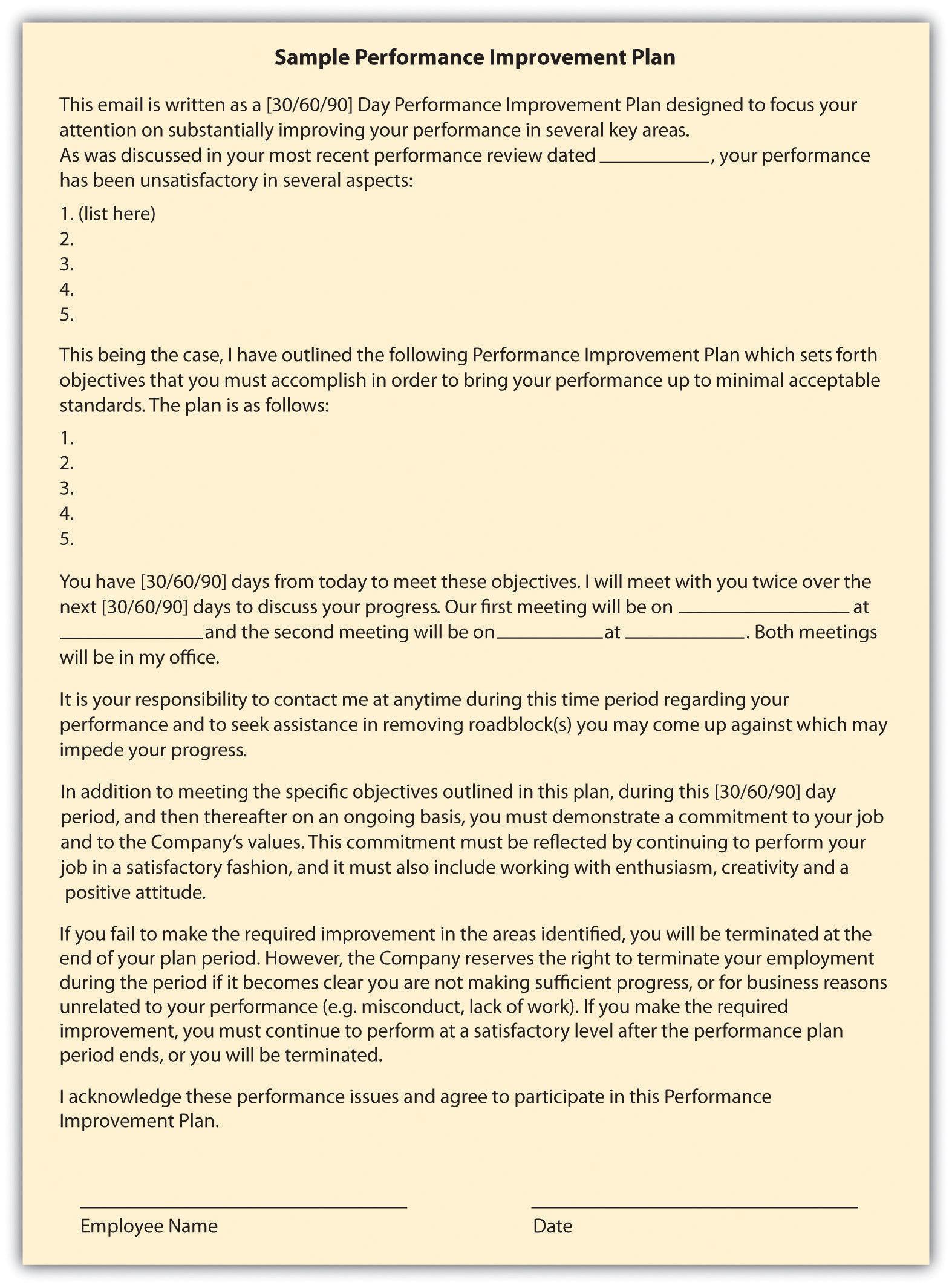
<div class="chapter standard" id="slug-5-4-cases-and-problems"><div class="chapter-title-wrap"><h3 class="chapter-number">16</h3><h2 class="chapter-title">5.4 Cases and Problems</h2></div><div class="ugc chapter-ugc"> <div class="5.4 cases-and-problems"><div class="textbox shaded"><h3>Chapter Summary</h3> <ul><li>The RECRUITMENT PROCESS provides the organization with a pool of qualified applicants.</li> <li>Some companies choose to hire INTERNAL CANDIDATES—that is, candidates who are already working for the organization. However, diversity is a consideration here as well.</li> <li>A JOB ANALYSIS is a systematic approach to determine what a person actually does in his or her job. This process might involve a questionnaire to all employees. Based on this analysis, an accurate JOB DESCRIPTION and JOB SPECIFICATION can be written. A job description lists the components of the job, while job specifications list the requirements to perform the job.</li> <li>IRCA stands for IMMIGRATION AND REFORM ACT. This law requires all employers to determine eligibility of an employee to work in the United States. The reporting form is called an I-9 and must be completed and kept on file (paper or electronic) for at least three years, but some states require this documentation to be kept on file for the duration of the employee’s period of employment.</li> <li>The PATRIOT ACT allows the government access to data that would normally be considered private, for example, an employee’s records and work voice mails and e-mails (without the company’s consent). The HR professional might consider letting employees know of the compliance with this law.</li> <li>The EQUAL EMPLOYMENT OPPORTUNITY COMMISSION (EEOC) is a federal agency charged with ensuring discrimination does not occur in the workplace. They oversee the EEO set of laws. Organizations must post EEO laws in a visible location at their workplace and also include them on job announcements.</li> <li>Related to the EEOC, the BONA FIDE OCCUPATIONAL QUALIFICATION (BFOQ) makes it legal to discriminate in hiring based on special circumstances, for example, requiring the retirement of airline pilots at a certain age due to safety concerns.</li> <li>DISPARATE IMPACT refers to a policy that may limit a protected EEO group from receiving fair treatment. Disparate impact might include a test or requirement that negatively impacts someone based on protected group status. An example is requiring a high school diploma, which may not directly impact the job. DISPARATE TREATMENT refers to discrimination against an individual, such as the hiring of one person over another based on race or gender.</li> <li>HR professionals must have a recruiting plan before posting any job description.</li> <li>Many organizations use recruiters. Recruiters can be executive recruiters, which means an outside firm performs the search. For temporary positions, a temporary or staffing firm such as Kelly Services might be used. Corporate recruiters work for the organization and function as a part of the HR team.</li> <li>Campus recruiting can be an effective way of recruiting for entry-level positions. This type of recruiting may require considerable effort in developing relationships with college campuses.</li> <li>Almost every profession has at least one professional association. Posting announcements on their websites can be an effective way of targeting for a specific job.</li> <li>Most companies will also use their own website for job postings, as well as other websites such as Monster and CareerBuilder.</li> <li>Social media is also a popular way to recruit. Usage of websites such as Twitter and Facebook can get the word out about a specific job opening, or give information about the company, which can result in more traffic being directed to the company’s website.</li> <li>Recruiting at special events such as job fairs is another option. Some organizations have specific job fairs for their company, depending on the size. Others may attend industry or job specific fairs to recruit specific individuals.</li> <li>SIGs or special/specific interest groups are usually very specialized. For example, female project managers may have an interest group that includes a discussion board for posting of job announcements.</li> <li>Employee referrals can be a great way to get interest for a posted position. Usually, incentives are offered to the employee for referring people they know. However, diversity can be an issue, as can nepotism.</li> <li>Our last consideration in the recruitment process is recruitment costs. We can determine this by looking at the total amount we have spent on all recruiting efforts compared to the number of hires. A YIELD RATIO is used to determine how effective recruiting efforts are in one area. For example, we can look at the number of total applicants received from a particular form of media, and divide that by the number of those applicants who make it to the next step in the process (e.g., they receive an interview).</li> </ul> </div> <div class="textbox examples"><h3><a id="_Toc450639157"></a><a id="_Toc452355617"></a><a id="_Toc473713983"></a>Chapter Case</h3> <p>Recruitment Statistics</p> <p>As the assistant to the human resources director at Tally Group, you normally answer phones and set appointments for the director. You are interested in developing skills in HRM, and one day, your HR director presents you with a great opportunity for you to show what you can do. She asks you to analyze last year’s recruitment data to determine which methods have worked best. As you look at the data, you aren’t sure how to start, but you remember something on this from your HRM class in college. After reviewing the data in your book, you feel confident to analyze these numbers. Please go ahead and perform calculations on these numbers, then provide answers to the questions that follow.</p> <table><tbody><tr class="-R" style="height: 0"><td class="-C" style="vertical-align: bottom;padding: 3.75pt 3.75pt 3.75pt 3.75pt;border: solid #000000 0.75pt"><p style="text-align: center"><strong>Method</strong></p> </td> <td class="-C" style="vertical-align: bottom;padding: 3.75pt 3.75pt 3.75pt 3.75pt;border: solid #000000 0.75pt"><p style="text-align: right"><strong>Total Number Recruited</strong></p> </td> <td class="-C" style="vertical-align: bottom;padding: 3.75pt 3.75pt 3.75pt 3.75pt;border: solid #000000 0.75pt"><p style="text-align: right"><strong>Yearly Cost ($)</strong></p> </td> </tr> <tr class="-R"><td class="-C" style="vertical-align: bottom;padding: 3.75pt 3.75pt 3.75pt 3.75pt;border: solid windowtext 0.75pt">Temporary placement firms</td> <td class="-C" style="vertical-align: bottom;padding: 3.75pt 3.75pt 3.75pt 3.75pt;border: solid windowtext 0.75pt"><p style="text-align: right">8</p> </td> <td class="-C" style="vertical-align: bottom;padding: 3.75pt 3.75pt 3.75pt 3.75pt;border: solid windowtext 0.75pt"><p style="text-align: right">3,200</p> </td> </tr> <tr class="-R"><td class="-C" style="vertical-align: bottom;padding: 3.75pt 3.75pt 3.75pt 3.75pt;border: solid windowtext 0.75pt">Campus recruiting</td> <td class="-C" style="vertical-align: bottom;padding: 3.75pt 3.75pt 3.75pt 3.75pt;border: solid windowtext 0.75pt"><p style="text-align: right">2</p> </td> <td class="-C" style="vertical-align: bottom;padding: 3.75pt 3.75pt 3.75pt 3.75pt;border: solid windowtext 0.75pt"><p style="text-align: right">1,500</p> </td> </tr> <tr class="-R"><td class="-C" style="vertical-align: bottom;padding: 3.75pt 3.75pt 3.75pt 3.75pt;border: solid windowtext 0.75pt">Professional association ads</td> <td class="-C" style="vertical-align: bottom;padding: 3.75pt 3.75pt 3.75pt 3.75pt;border: solid windowtext 0.75pt"><p style="text-align: right">10</p> </td> <td class="-C" style="vertical-align: bottom;padding: 3.75pt 3.75pt 3.75pt 3.75pt;border: solid windowtext 0.75pt"><p style="text-align: right">4,500</p> </td> </tr> <tr class="-R"><td class="-C" style="vertical-align: bottom;padding: 3.75pt 3.75pt 3.75pt 3.75pt;border: solid windowtext 0.75pt">Social media/company website</td> <td class="-C" style="vertical-align: bottom;padding: 3.75pt 3.75pt 3.75pt 3.75pt;border: solid windowtext 0.75pt"><p style="text-align: right">33</p> </td> <td class="-C" style="vertical-align: bottom;padding: 3.75pt 3.75pt 3.75pt 3.75pt;border: solid windowtext 0.75pt"><p style="text-align: right">300</p> </td> </tr> <tr class="-R"><td class="-C" style="vertical-align: bottom;padding: 3.75pt 3.75pt 3.75pt 3.75pt;border: solid windowtext 0.75pt">Job fair</td> <td class="-C" style="vertical-align: bottom;padding: 3.75pt 3.75pt 3.75pt 3.75pt;border: solid windowtext 0.75pt"><p style="text-align: right">3</p> </td> <td class="-C" style="vertical-align: bottom;padding: 3.75pt 3.75pt 3.75pt 3.75pt;border: solid windowtext 0.75pt"><p style="text-align: right">500</p> </td> </tr> <tr class="-R"><td class="-C" style="vertical-align: bottom;padding: 3.75pt 3.75pt 3.75pt 3.75pt;border: solid windowtext 0.75pt">Referrals</td> <td class="-C" style="vertical-align: bottom;padding: 3.75pt 3.75pt 3.75pt 3.75pt;border: solid windowtext 0.75pt"><p style="text-align: right">26</p> </td> <td class="-C" style="vertical-align: bottom;padding: 3.75pt 3.75pt 3.75pt 3.75pt;border: solid windowtext 0.75pt"><p style="text-align: right">26,000</p> </td> </tr> <tr><td class="-C" style="vertical-align: bottom;padding: 3.75pt 3.75pt 3.75pt 3.75pt;border: solid windowtext 0.75pt" colspan="3"><strong>Table 5.2</strong> Tally Group Recruiting Numbers, 2012</td> </tr> </tbody> </table> <p>Prepare a report summarizing your findings for the recruitment cost per hire and yield ratio for each type of recruiting method.</p> <p>Make a recommendation to your human resource director on where the department should spend more of its time recruiting.</p> </div> <div class="textbox shaded"><h3>Team Activities</h3> <p><strong>1:</strong> Students should be in teams of four or five. Choose a recruitment method from Table 5.2 &#8220;Tally Group Recruiting Numbers, 2012&#8243;and perform research on additional advantages and disadvantages of that method and then present ideas to the class.</p> <p><strong>2:</strong> Visit the National Occupational Codes (NOC) <a class="rId96" href="http://noc.esdc.gc.ca/">http://noc.esdc.gc.ca/</a> and view the list of job titles presented on the website. Create a sample job description for a job title of your team’s choice.</p> </div> </div> </div></div>
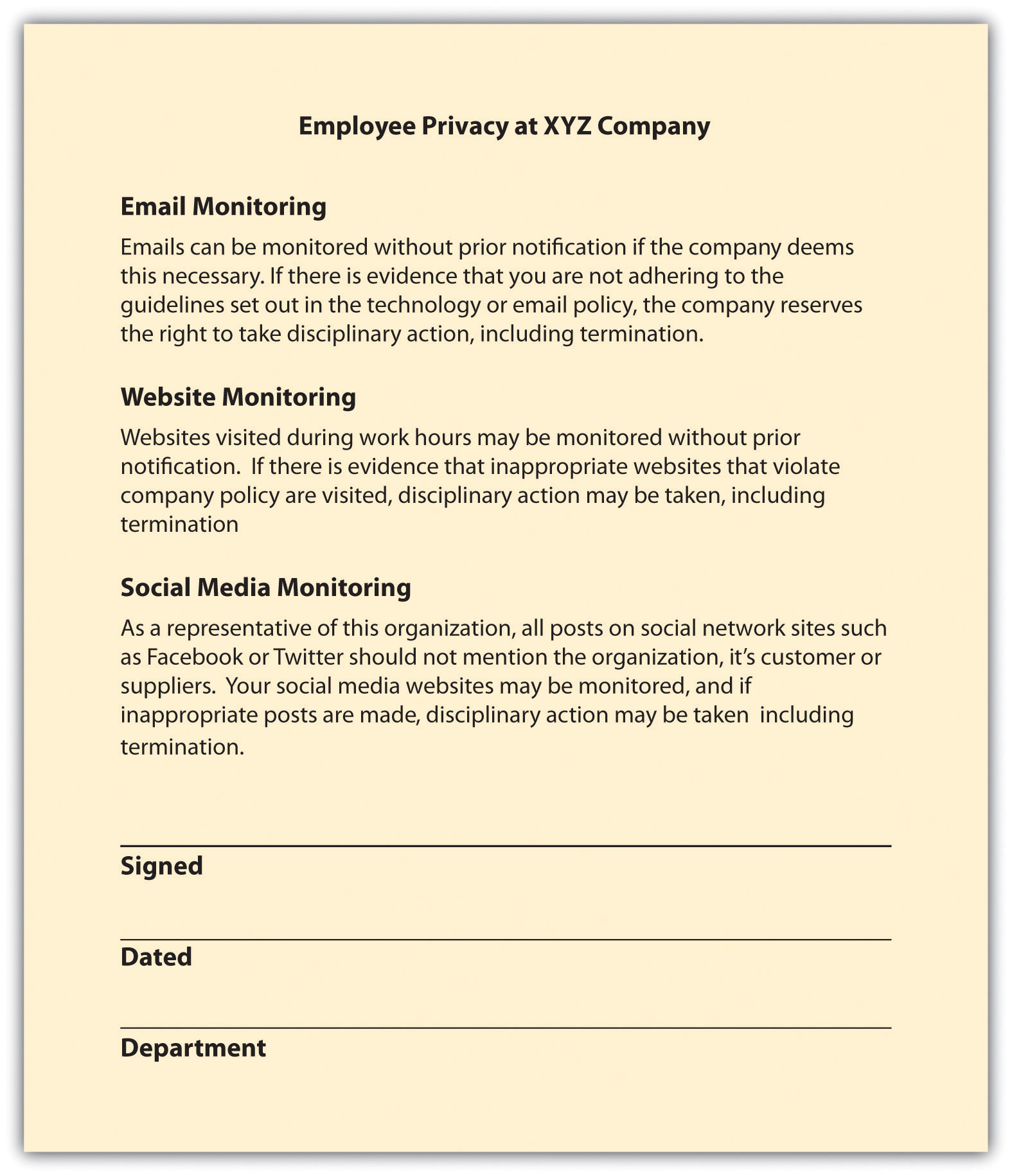
<div class="part " id="chapter-6"><div class="part-title-wrap"><h3 class="part-number">VI</h3><h1 class="part-title">Chapter 6: Selection</h1></div></div>
<div class="chapter standard" id="introduction-4"><div class="chapter-title-wrap"><h3 class="chapter-number">17</h3><h2 class="chapter-title">Introduction</h2></div><div class="ugc chapter-ugc"><h2>The Interview</h2> <p>Many of us have or will sit in a waiting room with our best clothes on awaiting a job (or school) interview. You can feel your palms sweat and thoughts race as you wait for your name to be called. You look around at the office environment and imagine yourself walking through those doors everyday. People walk by and smile, and overall, you have a really good first impression of the organization. You hope they like you. You tell yourself to remember to smile, while recalling all your experience that makes you the perfect person for this job. A moment of self-doubt may occur, as you wonder about the abilities of the other people being interviewed and hope you have more experience and make a better impression than they do. You hear your name, stand up, and give a firm handshake to the HR manager. The interview has begun.</p> <p>As she walks you back to a conference room, you think you see encouraging smiles as you pass by people. She asks you to take a chair and then tells you what the interview process will be like. She then asks the first question, “Tell me about yourself.” As you start discussing your experience, you feel yourself relax, just a little bit. After the interview finishes, she asks you to take a quick cognitive test, which you feel good about. She tells you she will be doing reference checks and will let you know by early next week.</p> <p>To get to this point, the hiring manager may have reviewed hundreds of résumés and developed criteria she would use for selection of the right person for the job. She has probably planned a time line for hiring, developed hiring criteria, determined a compensation package for the job, and enlisted help of other managers to interview candidates. She may have even performed a number of phone interviews before bringing only a few of the best candidates in for interviews. It is likely she has certain qualities in mind that she is hoping you or another candidate will possess. Much work goes into the process of hiring someone, with selection being an important step in that process. A hiring process done correctly is time-consuming and precise. The interviewer should already have questions determined and should be ready to sell the organization to the candidate as well. This chapter will discuss the main components to the selection process.</p> </div></div>
<div class="chapter standard" id="slug-6-1-the-selection-process"><div class="chapter-title-wrap"><h3 class="chapter-number">18</h3><h2 class="chapter-title">6.1 The Selection Process</h2></div><div class="ugc chapter-ugc"> <div class="6.1 the-selection-process"><div class="bcc-box bcc-highlight"><h3 itemprop="educationalUse">Learning Objectives</h3> <p>By the end of this section, you will be able to:</p> <ol><li>Name and discuss the steps in the selection process.</li> </ol> </div> <p>Once you have developed your recruitment plan, recruited people, and now have plenty of people to choose from, you can begin the selection process. The selection process refers to the steps involved in choosing people who have the right qualifications to fill a current or future job opening. Usually, managers and supervisors will be ultimately responsible for the hiring of individuals, but the role of human resource management (HRM) is to define and guide managers in this process. Similar to the recruitment process discussed in the chapter, &#8220;Recruitment&#8221;, the selection process is expensive. The time for all involved in the hiring process to review résumés, weight the applications, and interview the best candidates takes away time (and costs money) that those individuals could spend on other activities. In addition, there are the costs of testing candidates and bringing them in from out of town for interviews. In fact, the US Department of Labor and Statistics estimates the combined direct and indirect cost of hiring someone new can reach upwards of $40,000. [1] Because of the high cost, it is important to hire the right person from the beginning and ensure a fair selection process.</p> <div class="textbox shaded"><strong>Criteria development</strong> means determining which sources of information will be used for screening and how those sources will be scored during the interview.</div> <p>The selection process consists of five distinct aspects:</p> <ol><li><strong>Criteria development</strong>. All individuals involved in the hiring process should be properly trained on the steps for interviewing, including developing criteria, reviewing résumés, developing interview questions, and weighting the candidates. The first aspect to selection is planning the interview process, which includes criteria development. Criteria development means determining which sources of information will be used for screening and how those sources will be scored during the interview. The criteria should be related directly to the job analysis and the job specifications. This is discussed in Chapter 4 &#8220;Recruitment&#8221;. In fact, some aspects of the job analysis and job specifications may be the actual criteria. In addition to this, include things like personality or cultural fit, which would also be part of criteria development. This process usually involves discussing which skills, abilities, and personal characteristics are required to be successful at any given job. By developing the criteria before reviewing any résumés, the HR manager or manager can be sure he or she is being fair in selecting people to interview. Some organizations may need to develop an application or a biographical information sheet. Most of these are completed online and should include information about the candidate, education, and previous job experience.</li> <li><strong>Application and résumé review</strong>. Once the criteria have been developed (step one), applications can be reviewed. People have different methods of going through this process, but there are also computer programs that can search for keywords in résumés and narrow down the number of résumés that must be looked at and reviewed.</li> <li><strong>Interviewing</strong>. After the HR manager and/or manager have determined which applications meet the minimum criteria, he or she must select those people to be interviewed. Most people do not have time to review twenty or thirty candidates, so the field is sometimes narrowed even further with a phone interview. This is discussed in Section 6.3.1 &#8220;Types of Interviews&#8221;.</li> <li><strong>Test administration</strong>. Any number of tests may be administered before a hiring decision is made. These include drug tests, physical tests, personality tests, and cognitive tests. Some organizations also perform reference checks, credit report checks, and background checks. Types of tests are discussed in Section 6.4.1 &#8220;Testing&#8221;. Once the field of candidates has been narrowed down, tests can be administered.</li> <li><strong>Making the offer</strong>. The last step in the selection process is to offer a position to the chosen candidate. Development of an offer via e-mail or letter is sometimes a more formal part of this process. Compensation and benefits will be defined in an offer. We discuss this in  Chapter 6 &#8220;Compensation and Benefits&#8221;. <div id="attachment_485" style="width: 580px" class="wp-caption aligncenter"><a href="https://pressbooks.bccampus.ca/hrm1stcanadianedition/wp-content/uploads/sites/118/2017/03/Figure6.2.png"><img src="https://pressbooks.bccampus.ca/hrm1stcanadianedition/wp-content/uploads/sites/118/2017/03/Figure6.2.png" alt="" width="570" height="892" class="wp-image-485 size-full" srcset="https://pressbooks.bccampus.ca/hrm1stcanadianedition/wp-content/uploads/sites/118/2017/03/Figure6.2.png 570w, https://pressbooks.bccampus.ca/hrm1stcanadianedition/wp-content/uploads/sites/118/2017/03/Figure6.2-192x300.png 192w, https://pressbooks.bccampus.ca/hrm1stcanadianedition/wp-content/uploads/sites/118/2017/03/Figure6.2-65x102.png 65w, https://pressbooks.bccampus.ca/hrm1stcanadianedition/wp-content/uploads/sites/118/2017/03/Figure6.2-225x352.png 225w, https://pressbooks.bccampus.ca/hrm1stcanadianedition/wp-content/uploads/sites/118/2017/03/Figure6.2-350x548.png 350w" /></a> <p class="wp-caption-text"><strong>Figure 6.2</strong> The Selection Process at a Glance</p> </div> </li> </ol> <p><em>We will discuss each of these aspects in detail in this chapter.</em></p> <div class="textbox shaded"><h3>Fortune 500 Focus</h3> <p>In a 2010 interview, [3] Robert Selander, then CEO of MasterCard, cited presence as one of the most important aspects to acing an interview. He describes how, in any large organization, an employee will be expected to engage with a variety of stakeholders, from a member of Congress to a contractor replacing the carpet in the building. He says that a good employee—at any level of the organization—should be able to communicate well but also be able to communicate to a variety of stakeholders. We discuss communication in Chapter 9 &#8220;Successful Employee Communication&#8221;. Selander also says he will always ask the candidate about his or her weaknesses, but more importantly, how the candidate plans to address those weaknesses to make sure they do not become a barrier to success. He always asks the question “What can you do for us?” When asked if he could pose only one interview question, what would it be, his answer was, “Share with me two situations, work related that you are proud of, where something was achieved based on your own personal initiative and the other where the achievement was a result of the team getting something done that you could not have done alone.” In other words, Selander is looking for not only personal ability but the ability to work within a team to accomplish tasks. Selander offers advice to new college grads: try to find an organization where you can be involved and see all aspects of the business and be provided training to help you with certain skills that will be needed.</p> </div> <div class="textbox shaded"><h3>Human Resource Recall</h3> <p>When was the last time you interviewed for a job? Did the process seem to flow smoothly? Why or why not?</p> </div> <div class="bcc-box bcc-success"><h3 itemprop="educationalUse">Key Takeaways</h3> <ul><li>The selection process refers to the steps involved in choosing someone who has the right qualifications to fill a current or future job opening</li> <li>There are five main steps in the selection process. First, criteria are developed to determine how the person will be chosen. Second is a review of the applications and résumés, often done via a computer program that can find keywords. Next is interviewing the employee. The last steps involve testing, such as a personality test or drug test, and then finally, making the offer to the right candidate</li> </ul> </div> <div class="bcc-box bcc-info"><h3 itemprop="educationalUse">Exercises</h3> <p><strong>1:</strong> What components are included in the selection process? Which one do you think is the most important?</p> </div> <hr style="height: 1.5pt;text-align: center;border-style: none;border: 0;background-color: gray;color: gray" /> <p>[1] Leroy Hamm, “Pre-Employment Testing,” IHD Corporation, n.d., accessed August 2, 2011,<a class="rId98" target="_blank" href="http://www.ihdcorp.com/articles-hr/pre-employment-testing.htm">http://www.ihdcorp.com/articles-hr/pre-employment-testing.htm</a>.</p> <p>[2] KVUE News, “Re-Interview Process to Cost $150,000,” June 23, 2011, accessed August 2, 2011, <a class="rId99" target="_blank" href="http://www.kvue.com/news/local/AFD--124452379.html">http://www.kvue.com/news/local/AFD&#8211;124452379.html</a>.</p> <p>[3] Adam Bryant, “The X Factor When Hiring? Call It Presence,” June 26, 2010, New York Times, accessed July 12, 2011, <a class="rId100" target="_blank" href="http://www.nytimes.com/2010/06/27/business/27corner.html?scp=1&amp;sq=Selander&amp;st=cse&amp;pagewanted=1">http://www.nytimes.com/2010/06/27/business/27corner.html?scp=1&amp;sq=Selander&amp;st=cse&amp;pagewanted=1</a>.</p> </div> </div></div>
<div class="chapter standard" id="slug-6-2-criteria-development-and-resume-review"><div class="chapter-title-wrap"><h3 class="chapter-number">19</h3><h2 class="chapter-title">6.2 Criteria Development and Résumé Review</h2></div><div class="ugc chapter-ugc"> <div class="6.2 criteria-development-and-résumé-review"><div class="bcc-box bcc-highlight"><h3 itemprop="educationalUse">Learning Objectives</h3> <p>By the end of this section, you will be able to:</p> <ol><li>Be able to explain why criteria development is an important part of the selection process.</li> <li>Give examples of types of criteria that can be developed.</li> <li>Describe the advantages and disadvantages of internal and external candidates.</li> </ol> </div> <p>Before we begin to review résumés and applications, we must have a clear idea of the person we want to hire for the position. Obviously, the job specifications will help us know the minimum qualifications, such as education level and years of experience. However, additional criteria might include the attitude of the potential hire, the ability to take initiative, and other important personal characteristics and professional abilities that may not always be demonstrated in an application or résumé. A specific score on a personality test, quality of work samples, and other tools to determine qualifications should be included as part of the criteria. In other words, knowing exactly what you want before you even begin the process of looking through résumés will make this process much easier. In human resources, this is called KSAOs, or knowledge, skills, abilities, and other personal characteristics that make a person successful on the job. Some organizations, such as the United States Department of Veterans Affairs, require applicants to address each one of the KSAOs listed in the job position within their cover letter. [1]</p> </div> <h2>Criteria Development Considerations</h2> <p>Many HR professionals and managers develop the criteria for hiring, as well as the interview questions, before reviewing any résumés. This allows for a streamlined process with specific guidelines already set before reviewing a résumé. For example, criteria for a project management job might include the following:</p> <ol><li>Two years of experience managing a $2 million or more project budget</li> <li>A bachelor’s degree in business or closely related field</li> <li>Ability to work on multiple projects at once</li> <li>Problem-solving ability</li> <li>Conflict-management ability</li> <li>Ability to manage a team of five to six diverse workers</li> <li>Score of at least a 70 on cognitive ability test</li> <li>Score of excellent from most recent employer</li> </ol> <p>By setting criteria ahead of time, the hiring team has a clear picture of exactly what qualifications they are looking for. As a result, it is easier to determine who should move forward in the selection process. For example, if someone does not have a bachelor’s degree, given this is a criterion, their application materials can be filed away, perhaps for another job opening. Likewise, the HR manager can include those résumés with two or more years of experience and bachelor’s degree in the interview pile and then develop interview questions that show the candidates’ problem-solving, multitasking, and conflict-management abilities.</p> <p>Résumé parsing or résumé scanning software is readily available and can make the initial screening easier. For example, software allows the HR manager to include keywords such as bachelor’s degree or management. This software scans all received résumés and selects the ones that have the keywords. While it still may be necessary to review résumés, this type of software can save time having to look through résumés that obviously do not meet the minimum qualifications.</p> <h2>Validity and Reliability</h2> <p>Validity refers to how well a tool measures a person’s attributes for a specific job opening, i.e. are you measuring what you think you are measuring. Your criteria should be a valid indicator of future performance. For example, if you decide that a fitness test should be required for a job that requires physical strength, but the test emphasizes cardiovascular endurance, it may not be a valid predictor of whether a candidate could actually do the job.</p> <div class="textbox shaded"><strong>Validity</strong> refers to how well a tool measures a person’s attributes for a specific job opening</div> <p>A tool may include any and all of the following:</p> <ol><li>Résumé-scanning software</li> <li>Reference checks</li> <li>Cognitive ability tests</li> <li>Work samples</li> <li>Credit reports</li> <li>Biographical information blanks</li> <li>Weighted application forms</li> <li>Personality tests</li> <li>Interview questions</li> </ol> <p>For example, if you ask the same interview question of every applicant for the project management position, and the “right” answer always yields similar, positive results, such as the hiring of a successful employee every time, the question would be considered valid. Biographical information blanks (BIBs) are a useful part of the application process. A BIB is a series of questions about a person’s history that may have shaped his or her behavior. The BIB can be scored in the same way as an interview or a résumé, assuming the organization knows which types of answers are predictable for success in a given job. Similarly, a weighted application form involves selecting an employee characteristic to be measured and then identifying which questions on the application predict the desired behavior. Then scores are assigned to each predictor. Of course, the development of the scoring should be determined before any résumés and application forms have been reviewed. In other words, any tool you use to determine someone’s qualifications for a job should have validity to determine they are the right fit for the job. To determine the validity of your selection tools, you would need to gather information over time, to demonstrate that the tool is an accurate predictor of success in the job.</p> <div class="textbox shaded"><h3>Case: Validity &amp; the Meiorin Decision</h3> <p>In British Columbia (Public Service Employee Relations Comm.) v. B.C.G.E.U. (1999) , firefighter Tawney Meiorin challenged the validity of a fitness test for forest firefighters, alleging that it discriminated on the basis of sex and that the government failed to show that this discriminatory standard was a bona fide occupational requirement (“BFOR”). Meiroin has been successfully employed as a member of the Initial Attack Forest Firefighting crew for three years, prior to losing her job as a result of the new fitness standard. She failed to complete a run by the required time limit, missing it by seconds. Because men have a higher aerobic capacity than women, they are more able to meet the standard, so the test screened out more women than men. Despite the good intentions, research and thought that went into the development of the standard, the province was unable to demonstrate that the aerobic standard was reasonably necessary to perform the job safely and effectively.</p> </div> <p>According to the Merriam-Webster dictionary, reliability refers to the extent to which a measuring procedure yields the same results on repeated trials. Reliability refers to the degree in which other selection techniques yield similar data over time. We can test reliability by giving the same test repeatedly, or another test designed to measure the same thing. When we give an exam to students, we hope that the test is a valid indicator of whether the student has learned the concepts taught in the course. If we provided the same or similar exam to a student three times, and their score each time was approximately the same, the test is a reliable indicator of that student’s knowledge. Results do not have to be identical, only similar, in order to determine reliability, as there are factors that will legitimately provides a small amount of variation. For example, a student could be tired or have things on his or her mind which could cause them to get a lower score one time.</p> <h4>Fit Issues</h4> <p>Fit includes not only the right technical expertise, education, and experience but also fit in company culture and team culture. For example, at Facebook headquarters in Palo Alto, California, engineers are selected based on their willingness to take risks, as risk taking is nurtured at Facebook. [2] In addition to this component of their company culture, the company looks for the “hacker” personality, because a hacker is someone who finds ways around the constraints placed upon a system. At Zappos, profiled inthe chapter, &#8220;Recruitment&#8221;, the company culture is one focused on customer service and the willingness of people to provide the best customer service in all aspects of the business. At Amazon, the huge online retailer, a core value in their company culture is a focus on developing leaders to grow with the organization. If a potential candidate is not interested in long-term career growth, he or she might not be deemed an appropriate strategic fit with the organization. In today’s organizations, most people are required to work within teams. As a result, fit within a team is as important as company culture fit. Microsoft, for example, does an immense amount of teamwork. The company is structured so that there are marketers, accountants, developers, and many others working on one product at a time. As a result, Microsoft looks for not only company culture fit but also fit with other team members.</p> <h4>Reviewing Résumés</h4> <p>Once we have developed our criteria for a specific job, we can begin the review process. Everyone prefers to perform this differently. For example, all the hiring decision makers may review all résumés, list the people they would like to meet in person, and then compare the lists. Another method might be to rate each candidate and interview only those above a certain score. This is discussed in Section 6.4.2 &#8220;Selection Methods&#8221;. Obviously, much of the process will depend on the organization’s size and the type of job. None of this process can be done fairly without first setting criteria for the job.</p> <div class="textbox shaded"><p><strong>Disparate impact</strong> is unintended discrimination against a protected group as a whole through the use of a particular requirement.</p> </div> <p>When looking at résumés to determine whom to interview, a manager should be concerned with the concepts of disparate impact and disparate treatment. This is discussed in the chapter, &#8220;Recruitment&#8221;. Disparate impact is unintended discrimination against a protected group as a whole through the use of a particular requirement. Disparate impact may be present in the interviewing process, as well as other employment-related processes such as pay raises and promotions. For example, a requirement of being able to lift 110 pounds might be considered as having disparate impact on women, unless the job requires this ability. Every criteria developed should be closely considered to see if it might have disparate impact on a protected group of individuals. For example, the requirement of a certain credit score might have a negative impact on immigrants, who may not have a well-developed credit rating. However, if being able to manage money is an important requirement of the job, this requirement might not be discriminatory.</p> <p>Disparate treatment in hiring might include not interviewing a candidate because of one’s perception about the candidate’s age, race, or gender.</p> <p>The last consideration is the hiring of internal versus external candidates. An internal candidate is someone who already works within the organization, while an external candidate is someone who works outside the organization. A bidding process may occur to notify internal candidates of open positions. Generally speaking, it is best to go through a formal interview process with all candidates, even if they work within the organization. This way, an HR professional can be assured that disparate treatment does not occur because of favoritism. For example, a senior executive of your organization just left, and you believe the manager in that department is qualified to take over the position. Suppose, though, that the manager has been lobbying you for the job for some time and has even taken you out to lunch to talk about the job. While this person has maintained high visibility and lobbied for the promotion, there may be equally qualified internal candidates who did not use the same lobbying techniques. Automatically offering the position to this internal candidate might undermine others who are equally qualified. So while hiring internally can be a motivator, making assumptions about a particular person may not be a motivator to others. This is why it is best, even if you hire internally, to post a formal job announcement listing the job description and job qualifications, so everyone in the organization can have an equal opportunity to apply for the job.</p> <p>Once you have completed the criteria for the particular job and narrowed down the field, you can begin the interview process. We discuss this in Section 6.3 &#8220;Interviewing&#8221;.</p> <table><tbody><tr class="-R" style="height: 0"><td class="-C" style="vertical-align: bottom;padding: 3.75pt 3.75pt 3.75pt 3.75pt;border: solid #000000 0.75pt"></td> <td class="-C" style="vertical-align: bottom;padding: 3.75pt 3.75pt 3.75pt 3.75pt;border: solid #000000 0.75pt"><p style="text-align: center"><strong>Advantages</strong></p> </td> <td class="-C" style="vertical-align: bottom;padding: 3.75pt 3.75pt 3.75pt 3.75pt;border: solid #000000 0.75pt"><p style="text-align: center"><strong>Disadvantages</strong></p> </td> </tr> <tr class="-R"><td class="-C" style="vertical-align: bottom;padding: 3.75pt 3.75pt 3.75pt 3.75pt;border: solid windowtext 0.75pt" rowspan="4">Internal Candidates</td> <td class="-C" style="vertical-align: bottom;padding: 3.75pt 3.75pt 3.75pt 3.75pt;border: solid windowtext 0.75pt">Rewards contributions of current staff</td> <td class="-C" style="vertical-align: bottom;padding: 3.75pt 3.75pt 3.75pt 3.75pt;border: solid windowtext 0.75pt">Can produce “inbreeding,” which may reduce diversity and difference perspectives</td> </tr> <tr class="-R"><td class="-C" style="vertical-align: bottom;padding: 3.75pt 3.75pt 3.75pt 3.75pt;border: solid windowtext 0.75pt">Can be cost effective, as opposed to using a traditional recruitment strategy</td> <td class="-C" style="vertical-align: bottom;padding: 3.75pt 3.75pt 3.75pt 3.75pt;border: solid windowtext 0.75pt">May cause political infighting between people to obtain the promotions</td> </tr> <tr class="-R"><td class="-C" style="vertical-align: bottom;padding: 3.75pt 3.75pt 3.75pt 3.75pt;border: solid windowtext 0.75pt">Can improve morale</td> <td class="-C" style="vertical-align: bottom;padding: 3.75pt 3.75pt 3.75pt 3.75pt;border: solid windowtext 0.75pt" rowspan="2">Can create bad feelings if an internal candidate applies for a job and doesn’t get it</td> </tr> <tr class="-R"><td class="-C" style="vertical-align: bottom;padding: 3.75pt 3.75pt 3.75pt 3.75pt;border: solid windowtext 0.75pt">Knowing the past performance of the candidate can assist in knowing if they meet the criteria</td> </tr> <tr class="-R"><td class="-C" style="vertical-align: bottom;padding: 3.75pt 3.75pt 3.75pt 3.75pt;border: solid windowtext 0.75pt" rowspan="3">External Candidates</td> <td class="-C" style="vertical-align: bottom;padding: 3.75pt 3.75pt 3.75pt 3.75pt;border: solid windowtext 0.75pt">Brings new talent into the company</td> <td class="-C" style="vertical-align: bottom;padding: 3.75pt 3.75pt 3.75pt 3.75pt;border: solid windowtext 0.75pt">Implementation of recruitment strategy can be expensive</td> </tr> <tr class="-R"><td class="-C" style="vertical-align: bottom;padding: 3.75pt 3.75pt 3.75pt 3.75pt;border: solid windowtext 0.75pt">Can help an organization obtain diversity goals</td> <td class="-C" style="vertical-align: bottom;padding: 3.75pt 3.75pt 3.75pt 3.75pt;border: solid windowtext 0.75pt">Can cause morale problems for internal candidates</td> </tr> <tr class="-R"><td class="-C" style="vertical-align: bottom;padding: 3.75pt 3.75pt 3.75pt 3.75pt;border: solid windowtext 0.75pt">New ideas and insight brought into the company</td> <td class="-C" style="vertical-align: bottom;padding: 3.75pt 3.75pt 3.75pt 3.75pt;border: solid windowtext 0.75pt">Can take longer for training and orientation</td> </tr> <tr><td class="-C" style="vertical-align: bottom;padding: 3.75pt 3.75pt 3.75pt 3.75pt;border: solid windowtext 0.75pt" colspan="3"><strong>Table 6.1</strong> Possible Advantages and Disadvantages of Hiring an Internal versus an External Candidate</td> </tr> </tbody> </table> <h3>How Would You Handle This?</h3> <p><em>Poor Interviewer</em></p> <p><em>As the assistant to the HR manager, one of your jobs is to help managers get ready to interview candidates. When you offer help to Johnathan, he says he has interviewed hundreds of people and doesn’t need your help in planning the interview process. When you sit in the interview with him, he asks inappropriate questions that you don’t feel really assess the abilities of a candidate. How would you handle this?</em></p> <div class="bcc-box bcc-success"><h3 itemprop="educationalUse">Key Takeaways</h3> <ul><li>The first step in selection is to begin reviewing résumés. Even before you do this, though, it is important to develop criteria that each candidate will be measured against. This can come from the job description as well as the job qualifications.</li> <li>Other tools, such as cognitive ability tests, credit checks, and personality tests, can be used to determine qualifications. When developing your criteria for interviewing, determine the level the applicant needs to meet to meet the minimum criteria, for example, a minimum score on a personality test.</li> <li>We should be concerned with validity and reliability of measurement tools. VALIDITY refers to how valid the test is, that is, how well a test measures a candidate’s abilities to do a job. RELIABILITY refers to which selection techniques yield similar data or results over time. It is important to choose the right measurement tool used to determine whether the candidate meets the criteria.</li> <li>Setting criteria before the interview process starts ensures that DISPARATE IMPACT or DISPARATE TREATMENT does not occur in the interview process.</li> <li>When hiring, there is the option of internal and external candidates. Each has its own set of advantages and disadvantages. Internal candidates may be able to “hit the ground running,” but external candidates may come in with new perspectives. Even if an internal candidate seems to be the best hire, it is best to still perform the process of posting the job and interviewing, since other less vocal employees might be qualified internal candidates as well. In other words, don’t assume one person is the obvious choice for the promotion.</li> </ul> </div> <div class="bcc-box bcc-info"><h3 itemprop="educationalUse">Exercises</h3> <p><strong>1:</strong> Develop criteria for the position of a retail salesperson working in teams.</p> <p><strong>2:</strong> Describe the advantages and disadvantages of hiring an internal and external candidate. Give an example of when you don’t think an external candidate should be considered for a position.</p> <p><strong>3:</strong> How can development of criteria or minimum standards help in a case of disparate treatment accusations?</p> </div> <hr /> <p>[1] “What Are KSAs?” US Department of Veterans Affairs, accessed August 2, 2011,<a class="rId101" target="_blank" href="http://www.va.gov/jobs/hiring/apply/ksa.asp">http://www.va.gov/jobs/hiring/apply/ksa.asp</a>.</p> <p>[2] Ellen McGirt, “Most Innovative Companies,” Fast Company, February 2010, accessed July 12, 2011, <a class="rId102" target="_blank" href="http://www.fastcompany.com/mic/2010/profile/facebook">http://www.fastcompany.com/mic/2010/profile/facebook</a>.</p> <div id="sdfootnote8sym"><a href="#sdfootnote8anc">8</a> British Columbia (Public Service Employee Relations Commission) v. BCGSEU, [1999] 3 SCR 3, 1999 CanLII 652 (SCC), &lt;http://canlii.ca/t/1fqk1&gt;, retrieved on 2016-06-01</div> </div></div>
<div class="chapter standard" id="slug-6-3-interviewing"><div class="chapter-title-wrap"><h3 class="chapter-number">20</h3><h2 class="chapter-title">6.3 Interviewing</h2></div><div class="ugc chapter-ugc"> <div class="6.3 interviewing"><div class="bcc-box bcc-highlight"><h3 itemprop="educationalUse">Learning Objectives</h3> <p>By the end of this section, you will be able to:</p> <ol><li>Explain the various types of interviews and interview questions.</li> <li>Discuss interview methods and potential mistakes in interviewing candidates.</li> <li>Explain the interview process.</li> </ol> </div> <p>Interviewing people costs money. As a result, after candidates are selected, good use of time is critical to making sure the interview process allows for selection of the right candidate. In an unstructured interview, questions are changed to match the specific applicant; for example, questions about the candidate’s background in relation to their résumé might be used. In a structured interview, there is a set of standardized questions based on the job analysis, not on individual candidates’ résumés. While a structured interview might seem the best option to find out about a particular candidate, the bigger concern is that the interview revolves around the specific job for which the candidate is interviewing. In a structured interview, the expected or desired answers are determined ahead of time, which allows the interviewer to rate responses as the candidate provides answers. This allows for a fair interview process, according to the US Office of Personnel Management. [1] For purposes of this section, we will assume that all interviews you perform will be structured, unless otherwise noted.</p> <h4>Types of Interviews</h4> <p>Interview processes can be time-consuming, so it makes sense to choose the right type of interview(s) for the individual job. Some jobs, for example, may necessitate only one interview, while another may necessitate a telephone interview and at least one or two traditional interviews. Keep in mind, though, that there will likely be other methods with which to evaluate a candidate’s potential, such as testing. Testing is discussed inSection 6.4.1 &#8220;Testing&#8221;. Here are different types of interviews:</p> <ol><li><strong>Traditional interview.</strong> This type of interview normally takes place in the office. It consists of the interviewer and the candidate, and a series of questions are asked and answered.</li> <li><strong>Telephone interview.</strong> A telephone interview is often used to narrow the list of people receiving a traditional interview. It can be used to determine salary requirements or other data that might automatically rule out giving someone a traditional interview. For example, if you receive two hundred résumés and narrow these down to twenty-five, it is still unrealistic to interview twenty-five people in person. At this point, you may decide to conduct phone interviews of those twenty-five, which could narrow the in-person interviews to a more manageable ten or so people.</li> <li><strong>Panel interview.</strong> A panel interview occurs when several people are interviewing one candidate at the same time. While this type of interview can be nerve racking for the candidate, it can also be a more effective use of time. Consider some companies who require three to four people to interview candidates for a job. It would be unrealistic to ask the candidate to come in for three or four interviews, so it makes sense for them to be interviewed by everyone at once.</li> <li><strong>Information interview.</strong> Informational interviews are usually used when there is no specific job opening, but the candidate is exploring possibilities in a given career field. The advantage to conducting these types of interviews is the ability to find great people ahead of a job opening.</li> <li><strong>Meal interviews.</strong> Many organizations offer to take the candidate to lunch or dinner for the interview. This can allow for a more casual meeting where, as the interviewer, you might be able to gather more information about the person, such as their manners and treatment of waitstaff. This type of interview might be considered an unstructured interview, since it would tend to be more of a conversation as opposed to a session consisting of specific questions and answers.</li> <li><strong>Group interview.</strong> In a group interview, two or more candidates interview at the same time. This type of interview can be an excellent source of information if you need to know how they may relate to other people in their job.</li> <li><strong>Video interviews.</strong> Video interviews are the same as traditional interviews, except that video technology is used. This can be cost saving if one or more of your candidates are from out of town. Skype, for example, allows free video calls. An interview may not feel the same as a traditional interview, but the same information can be gathered about the candidate.</li> </ol> <p>It is likely you may use one or more of these types of interviews. For example, you may conduct phone interviews, then do a meal interview, and follow up with a traditional interview, depending on the type of job.</p> <h4>Interview Questions</h4> <p>There are two types of interview questions: Structured, and Unstructured. In an unstructured interview, the candidate essentially leads the discussion. Some very general questions that are planned ahead of time may be asked, but the candidate spends more time talking than the interviewer. The questions may be more open ended; for example you may ask, “What did you like best about your last job?” The advantage of this type of interview is that it can give candidates a good chance to show their abilities; however, the downside is that it may be hard to compare potential candidates, since questions are not set in advance. It relies on more of a “gut feeling” approach.</p> <p>There are two types of Structured interview questions: Behavioural, and Situational. Most interviews consist of many types of questions, but they usually lean toward situational interviews or behavior description interviews. A situational interview is one in which the candidate is given a sample situation and is asked how he or she might deal with the situation. In a behavior description interview, the candidate is asked questions about what he or she actually did in a variety of given situations. The assumption in this type of interview is that someone’s past experience or actions are an indicator of future behavior. These types of questions, as opposed to the old “tell me about yourself” questions, tend to assist the interviewer in knowing how a person would handle or has handled situations. These interview styles also use a structured method and provide a better basis for decision making. The other aspect of a structured interview is that the interviewers have a standardized scoring guide / grading rubric to assess the answers, usually on a scale of 1-5, but with a minimum of three criteria (Poor answer, satisfactory answer, exceptional answer). Interviewers must identify the critieria related to each score, and the result should be that the responses are rated consistently by the raters.</p> <div class="textbox shaded"><p>Examples of situational interview questions might include the following:</p> <ol><li>One of your employees is performing poorly, but you know he has some personal home issues he is dealing with. How would you handle complaints from his colleagues about lack of performance?</li> <li>A coworker has told you she called in sick three days last week because she actually decided to take a vacation. What would you do?</li> <li>You are rolling out a new sales plan on Tuesday, which is really important to ensure success in your organization. When you present it, the team is lukewarm on the plan. What would you do?</li> </ol> <p>Examples of behavior description interview questions might include the following:</p> <ol><li>Tell me about a time you had to make a hard decision. How did you handle this process?</li> <li>Give an example of how you handled an angry customer.</li> <li>Give an example of a situation in which you demonstrated leadership.</li> </ol> </div> <p>As you already know, there are many types of interview questions that would be considered illegal. Here are some examples:</p> <ol><li><strong>Race, ancestry, or place of origin.</strong> You cannot ask seemingly innocent questions such as “That’s a beautiful name, where is your family from?” This could indicate place of origin, which could result in bias or the perception of bias. You also cannot ask questions about citizenship, except by asking if a candidate is legally allowed to work in Canada. Questions about the first language of the candidate shouldn’t be asked, either. However, asking “Do you have any language abilities that would be helpful in this job?” or “Are you authorized to work in the United States?” would be acceptable.</li> <li><strong>Age.</strong> You cannot ask someone how old they are, and it is best to avoid questions that might indicate age, such as “When did you graduate from high school?” However, asking a young person whether they are 19 if they are expected to serve liquor would be acceptable, as that is a bona fide occupational requirement in B.C.</li> <li><strong>Marital status and Family Status.</strong> You can’t ask direct questions about marital status or ages of children. An alternative may be to ask, “Do you have any restrictions on your ability to travel, since this job requires 50 percent travel?”</li> <li><strong>Religion.</strong> It’s illegal to ask candidates about their religious affiliation.</li> <li><strong>Disabilities (physical or mental).</strong> You may not directly ask if the person has disabilities or recent illnesses. You can ask if the candidate is able to perform the functions of the job with or without reasonable accommodations.</li> <li><strong>Criminal record.</strong> While it is fine to perform a criminal record check, asking a candidate if they have ever been arrested is not appropriate; however, advising candidates that a criminal record check will be required is acceptable, if that is a BFOR for the position.</li> <li><strong>Political beliefs.</strong> Avoid asking questions about social organizations or clubs, unless they relate to the job.</li> </ol> <p>HR professionals and managers should be aware of their own body language in an interview. Some habits, such as nodding, can make the candidate think they are on the right track when answering a question. Also, be aware of a <strong>halo effect</strong> or reverse halo effect. This occurs when an interviewer becomes biased because of one positive or negative trait a candidate possesses. Interview bias can occur in almost any interview situation. Interview bias is when an interviewer makes assumptions about the candidate that may not be accurate. [2] These assumptions can be detrimental to an interview process. <strong>Contrast bias</strong> is a type of bias that occurs when comparing one candidate to others. It can result in one person looking particularly strong in an area, when in fact they look strong compared to the other candidates. A gut feeling bias is when an interviewer relies on an intuitive feeling about a candidate. <strong>Generalization bias</strong> can occur when an interviewer assumes that how someone behaves in an interview is how they always behave. For example, if a candidate is very nervous and stutters while talking, an assumption may be made that he or she always stutters. Another important bias called <strong>cultural noise bias</strong> occurs when a candidate thinks he or she knows what the interviewer wants to hear and answers the questions based on that assumption. <strong>Nonverbal behavior bias</strong> occurs when an interviewer likes an answer and smiles and nods, sending the wrong signal to the candidate. A <strong>similar to me bias</strong> (which could be considered discriminatory) results when an interviewer has a preference for a candidate because he or she views that person as having similar attributes as themselves. Finally, <strong>recency bias</strong> occurs when the interviewer remembers candidates interviewed most recently more so than the other candidates.</p> <div class="textbox shaded"><strong>Interview bias</strong> is when an interviewer makes assumptions about the candidate that may not be accurate. Biases include the Halo Effect, Contrast Bias, Generalization Bias, Cultural Noise Bias, Nonverbal Behaviour Bias, Similar to Me Bias, and Recency Bias</div> <div class="textbox shaded"><h3>Human Resource Recall</h3> <p>What are the dangers of a reverse halo effect? <em>A halo effect occurs when a desirable trait makes us believe all traits possessed by the candidate are desirable. This can be a major danger in interviewing candidates.</em></p> </div> </div> </div></div>
<div class="chapter standard" id="slug-6-4-testing-and-selecting"><div class="chapter-title-wrap"><h3 class="chapter-number">21</h3><h2 class="chapter-title">6.4 Testing and Selecting</h2></div><div class="ugc chapter-ugc"> <div class="6.4 testing-and-selecting"><div class="bcc-box bcc-highlight"><h3 itemprop="educationalUse">Learning Objectives</h3> <p>By the end of this section, you will be able to:</p> <ol><li>Explain the types of tests that can be administered as part of the selection process.</li> <li>Be able to discuss the types of selection models.</li> </ol> </div> <p>Besides the interview, we can also look at several other aspects that may predict success on the job. If any test is to be criteria for measuring a candidate, this should be communicated to each person interviewing, and criteria should be developed on specific test scores and expectations before interviewing and testing begins.</p> <h4>Testing</h4> <p>A variety of tests may be given upon successful completion of an interview. These employment tests can gauge a person’s KSAOs in relation to another candidate. The major categories of tests include the following:</p> <ol><li>Cognitive ability tests</li> <li>Personality tests</li> <li>Physical ability tests</li> <li>Job knowledge tests</li> <li>Work sample</li> </ol> <p>A number of written tests can be administered. A cognitive ability test can measure reasoning skills, math skills, and verbal skills. An aptitude test measures a person’s ability to learn new skills, while an achievement test measures someone’s current knowledge. Depending on the type of job, one or both will be better suited.</p> <p>A cognitive ability test measures intelligences, such as numerical ability and reasoning. The Scholastic Aptitude Test (SAT) is an example of a cognitive ability test. It is important to note that some cognitive ability tests can have disparate impact. For example, in EEOC v. Ford Motor Co. and United Automobile Workers of America, African Americans were rejected from an apprentice program after taking a cognitive test known as the Apprenticeship Training Selection System (ATSS). [1] The test showed significant disparate impact on African Americans, and it was then replaced by a different selection procedure, after costing Ford $8.55 million. Some sample test categories might include the following:</p> <ol><li>Reasoning questions</li> <li>Mathematical questions and calculations</li> <li>Verbal and/or vocabulary skills</li> </ol> <p>Aptitude tests can measure things such as mechanical aptitude and clerical aptitude (e.g., speed of typing or ability to use a particular computer program). Usually, an aptitude test asks specific questions related to the requirements of the job. To become a New York City police offer, for example, an aptitude test is required before an application will be considered. The written exam is given as a computerized test at a computerized testing center in the city. The test measures cognitive skills and observational skills (aptitude test) required for the job. [2]</p> <p>Personality tests such as Meyers-Briggs and the “Big Five” personality factors may be measured and then compared with successful employee scores. For example, The University of Missouri Health Care system recently launched a patient satisfaction initiative as part of its strategic plan. The plan includes training for current employees and personality testing for nursing, managerial, and physician candidates. [3] The goal of the test is to assess talent and to see if the candidate has the potential to meet the expectations of patients. They hired a private company, Talent Plus, who conducts the test via phone interviews. However, many companies administer tests themselves, and some tests are free and can be administered online.</p> <p>The Big Five personality test looks at extroversion, agreeableness, conscientiousness, neuroticism, and openness. Self-assessment statements might include the following:</p> <ol><li>I have an assertive personality.</li> <li>I am generally trusting.</li> <li>I am not always confident in my abilities.</li> <li>I have a hard time dealing with change.</li> </ol> <p>Some institutions also require physical ability tests; for example, to earn a position in a fire department, you may have to be able to carry one hundred pounds up three flights of stairs. If you use tests in your hiring processes, the key to making them useful is to determine a minimum standard or expectation, specifically related to the requirements of the job. An HR manager should also consider the legality of such tests. See the insert regarding the Meirin case.</p> <p>A job knowledge test measures the candidate’s level of understanding about a particular job. For example, a job knowledge test may require an engineer to write code in a given period of time or may ask candidates to solve a case study problem related to the job.</p> <p>Work sample tests ask candidates to show examples of work they have already done. In the advertising business, this may include a portfolio of designs, or for a project manager, this can include past project plans or budgets. When applying for a pharmaceutical representative position, a “brag book” might be required. [5] A brag book is a list of recommendation letters, awards, and achievements that the candidate shares with the interviewer. Work sample tests can be a useful way to test for KSAOs. These work samples can often be a good indicator of someone’s abilities in a specific area. As always, before looking at samples, the interviewer should have specific criteria or expectations developed so each candidate can be measured fairly.</p> <p>Once the interview is completed and testing occurs, other methods of checking KSAOs, including checking references, driving records, and credit history, can be performed. Some companies even use Facebook as a way of gauging the candidate’s professionalism.</p> <p>Reference checking is essential to verify a candidate’s background. It is an added assurance that the candidate’s abilities are parallel with what you were told in the interview. While employment dates and job titles can be verified with previous employers, many employers will not verify more than what can be verified in the employment record because of privacy laws. However, if you do find someone who is willing to discuss more than just dates and job titles, a list of questions is appropriate. Some of these questions might include the following:</p> <ol><li>What was the title and responsibilities of the position the candidate had while at your company?</li> <li>Do you think the candidate was qualified to assume those responsibilities?</li> <li>Does this person show up on time and have good attendance?</li> <li>Would you consider this person a team player?</li> <li>What are the three strongest and weakest characteristics of this candidate?</li> <li>Would you rehire this person?</li> </ol> <p>If a candidate will be driving a company car or vehicle, such as a UPS truck, driving records may be checked. Criminal background checks may also be used if the position will include interaction with the public. If the position requires handling of money, a credit check may be required, although a written notice is required to be given to the candidate before the credit check is carried out. In addition, written permission must be provided to the credit agency, and the applicants must receive a copy of the report and a copy of their rights under the Consumer Credit Reporting Reform Act (CCRRA). All these types of tests can be used to determine if someone has been honest about their past employment.</p> <p>Some companies require drug testing, which causes some debate. While some organizations say this is a safety issue (and pay lower insurance premiums), others say it is an invasion of privacy. As long as drug tests are administered for a defensible reason (safety), many organizations will continue to require them. Some organizations will also require physical examinations to ensure the candidate can perform the tasks required. A final form of testing is the honesty test. A number of “what would you do” questions are asked. The challenge with this type of test is that many people know the “right” answer but may not be honest in their responses.</p> <table><tbody><tr class="-R"><td class="-C" style="vertical-align: bottom;padding: 3.75pt 3.75pt 3.75pt 3.75pt;border: solid windowtext 0.75pt">Provocative or inappropriate photos or info</td> <td class="-C" style="vertical-align: bottom;padding: 3.75pt 3.75pt 3.75pt 3.75pt;border: solid windowtext 0.75pt">53%</td> </tr> <tr class="-R"><td class="-C" style="vertical-align: bottom;padding: 3.75pt 3.75pt 3.75pt 3.75pt;border: solid windowtext 0.75pt">Drinking or drug use</td> <td class="-C" style="vertical-align: bottom;padding: 3.75pt 3.75pt 3.75pt 3.75pt;border: solid windowtext 0.75pt">44%</td> </tr> <tr class="-R"><td class="-C" style="vertical-align: bottom;padding: 3.75pt 3.75pt 3.75pt 3.75pt;border: solid windowtext 0.75pt">Badmouthing previous employer, colleague, or client</td> <td class="-C" style="vertical-align: bottom;padding: 3.75pt 3.75pt 3.75pt 3.75pt;border: solid windowtext 0.75pt">35%</td> </tr> <tr class="-R"><td class="-C" style="vertical-align: bottom;padding: 3.75pt 3.75pt 3.75pt 3.75pt;border: solid windowtext 0.75pt">Poor communication skills</td> <td class="-C" style="vertical-align: bottom;padding: 3.75pt 3.75pt 3.75pt 3.75pt;border: solid windowtext 0.75pt">29%</td> </tr> <tr class="-R"><td class="-C" style="vertical-align: bottom;padding: 3.75pt 3.75pt 3.75pt 3.75pt;border: solid windowtext 0.75pt">Discriminatory comments</td> <td class="-C" style="vertical-align: bottom;padding: 3.75pt 3.75pt 3.75pt 3.75pt;border: solid windowtext 0.75pt">26%</td> </tr> <tr class="-R"><td class="-C" style="vertical-align: bottom;padding: 3.75pt 3.75pt 3.75pt 3.75pt;border: solid windowtext 0.75pt">Lied about qualifications</td> <td class="-C" style="vertical-align: bottom;padding: 3.75pt 3.75pt 3.75pt 3.75pt;border: solid windowtext 0.75pt">24%</td> </tr> <tr class="-R"><td class="-C" style="vertical-align: bottom;padding: 3.75pt 3.75pt 3.75pt 3.75pt;border: solid windowtext 0.75pt">Leaked confidential information about previous job</td> <td class="-C" style="vertical-align: bottom;padding: 3.75pt 3.75pt 3.75pt 3.75pt;border: solid windowtext 0.75pt">20%</td> </tr> <tr><td class="-C" style="vertical-align: bottom;padding: 3.75pt 3.75pt 3.75pt 3.75pt;border: solid windowtext 0.75pt" colspan="2"><strong>Table 6.2</strong> Reasons Why Employers Acted upon Data Found on Social Networking Sites</td> </tr> </tbody> </table> <p>Source: Kit Eaton “If You’re Applying for a Job, Censor Your Facebook Page,” Fast Company, August 19, 2009, accessed January 27, 2011,<a class="rId107" target="_blank" href="http://www.fastcompany.com/blog/kit-eaton/technomix/if-youre-applying-job-censor-your-facebook-page">http://www.fastcompany.com/blog/kit-eaton/technomix/if-youre-applying-job-censor-your-facebook-page</a>.</p> <p>Forty-five percent of organizations use social networking such as Facebook, Twitter, or LinkedIn to gather information about potential candidates. [6] See Table 6.2 &#8220;Reasons Why Employers Acted upon Data Found on Social Networking Sites&#8221; for the types of data found on social networking sites that disqualified candidates, according to an article by Fast Company. This can be an effective method to see the kind of image the candidate portrays in his or her personal time.</p> <h4>Selection Methods</h4> <p>A clinical selection approach is probably the most common selection method, and it involves all who will be making the decision to hire a candidate. The decision makers review the data and, based on what they learn from the candidate and the information available to them, decide who should be hired for a job. Because interviewers have a different perception about the strengths of a candidate, this method leaves room for error. One consideration is disparate treatment, in which one’s biases may result in not hiring candidates based on their age, race, or gender. One way to handle this and limit the personal stereotypes and perceptions of the interviewers is to use astatistical method in hiring.</p> <p>In the statistical method, a selection model is developed that assigns scores and gives more weight to specific factors, if necessary. For example, for some jobs, the ability to work in a team might be more important, while in others, knowledge of a specific computer program is more important. In this case, a weight can be assigned to each of the job criteria listed. For example, if the job is a project manager, ability to work with the client might be more important than how someone dresses for the interview. So, in the example shown in Figure 6.4 &#8220;Sample Selection Model, with Sample Scores and Weighting Filled In&#8221;, dress is weighted 1, while being able to give bad news to a client is weighted 5. In the example, the rating is multiplied by the weight to get the score for the particular job criteria. This method allows for a fairer process and can limit disparate treatment, although it may not limit disparate impact. A statistical method may work like this: you and the hiring team review the job analysis and job description and then determine the criteria for the job. You assign weights for each area and score ranges for each aspect of the criteria, rate candidates on each area as they interview, and then score tests or examine work samples. Once each hiring manager has scored each candidate, the hiring team can compare scores in each area and hopefully hire the best person in the best way. A sample candidate selection model is included in Figure 6.4 &#8220;Sample Selection Model, with Sample Scores and Weighting Filled In&#8221;.</p> <div id="attachment_492" style="width: 524px" class="wp-caption aligncenter"><a href="https://pressbooks.bccampus.ca/hrm1stcanadianedition/wp-content/uploads/sites/118/2017/03/Figure-6.4.png"><img src="https://pressbooks.bccampus.ca/hrm1stcanadianedition/wp-content/uploads/sites/118/2017/03/Figure-6.4.png" alt="" width="514" height="510" class="wp-image-492 size-full" srcset="https://pressbooks.bccampus.ca/hrm1stcanadianedition/wp-content/uploads/sites/118/2017/03/Figure-6.4.png 514w, https://pressbooks.bccampus.ca/hrm1stcanadianedition/wp-content/uploads/sites/118/2017/03/Figure-6.4-150x150.png 150w, https://pressbooks.bccampus.ca/hrm1stcanadianedition/wp-content/uploads/sites/118/2017/03/Figure-6.4-300x298.png 300w, https://pressbooks.bccampus.ca/hrm1stcanadianedition/wp-content/uploads/sites/118/2017/03/Figure-6.4-65x64.png 65w, https://pressbooks.bccampus.ca/hrm1stcanadianedition/wp-content/uploads/sites/118/2017/03/Figure-6.4-225x223.png 225w, https://pressbooks.bccampus.ca/hrm1stcanadianedition/wp-content/uploads/sites/118/2017/03/Figure-6.4-350x347.png 350w" /></a> <p class="wp-caption-text"><strong>Figure 6.4</strong> Sample Selection Model, with Sample Scores and Weighting Filled In</p> </div> <p>With the statistical approach, there is more objectivity than with the clinical approach. Statistical approaches include the compensatory model, multiple cutoff model, and the multiple hurdle model. In the compensatory model, a similar method of scoring is used as the weighted model but permits a high score in an important area to make up for a lower score in another area. In our Figure 6.4 &#8220;Sample Selection Model, with Sample Scores and Weighting Filled In&#8221; example, ability to give bad news to a client might outweigh a test score. These decisions would be made before the interviews happen.</p> <p>A multiple cutoff model requires that a candidate has a minimum score level on all selection criteria. In our Figure 6.4 &#8220;Sample Selection Model, with Sample Scores and Weighting Filled In&#8221; example, the candidate may be required to have a score of at least 2 out of 5 on each criteria. If this was the case, the candidate in Figure 6.4 &#8220;Sample Selection Model, with Sample Scores and Weighting Filled In&#8221; scored low on “bad news to a client,” meaning he or she wouldn’t get the job in a multiple cutoff model. In themultiple hurdle model, only candidates with high (preset) scores go to the next stages of the selection process. For example, the expectations might be to score a 4 on at least three of the items in Figure 6.4 &#8220;Sample Selection Model, with Sample Scores and Weighting Filled In&#8221;. If this were the case, this candidate might make it to the next level of the selection process, since he or she scored at least a 4 on three criteria areas.</p> <p>Once the discussion on whom to hire has occurred and a person has been selected, the final phase of the process is to make an offer to the candidate. This is discussed in Section 6.5 &#8220;Making the Offer&#8221;.</p> <div class="bcc-box bcc-success"><h3 itemprop="educationalUse">Key Takeaways</h3> <ul><li>Once the interview process is complete, some companies use other means of measuring candidates. For example, work samples are an excellent way of seeing how someone might perform at your company.</li> <li>An APTITUDE TEST or ACHIEVEMENT TEST can be given. An aptitude test measures how well someone might be able to do something, while an achievement test measures what the candidate already knows. Tests that measure cognitive ability and personality are examples.</li> <li>Some organizations also perform drug tests and physical tests. A physical test might consist of being able to lift a certain amount of weight, if required for the job. Honesty tests are also given; these measure the honesty level of the candidate. However, these tests may not be reliable, since someone can guess the “right” answer.</li> <li>Facebook, Twitter, and other social networking websites are also used to gather information about a candidate. Calling references is another option.</li> <li>Every person interviewing the candidate should have a selection model; this method utilizes a STATISTICAL APPROACH as opposed to a CLINICAL APPROACH. The selection table lists the criteria on the left and asks interviewers to provide a rating for each. This method can allow for a more consistent way of measuring candidates.</li> </ul> </div> <div class="bcc-box bcc-info"><h3 itemprop="educationalUse">Exercises</h3> <p><strong>1:</strong> Develop a sample candidate selection for your current job.</p> <p><strong>2:</strong> Visit your or another person’s Facebook page. Consider the content from an interviewer’s point of view. Should anything be removed or changed?</p> </div> <hr /> <p>[1] “Employment Tests and Selection Procedures,” US Equal Employment Opportunity Commission, accessed August 2, 2011,<a class="rId109" target="_blank" href="http://www.eeoc.gov/policy/docs/factemployment_procedures.html">http://www.eeoc.gov/policy/docs/factemployment_procedures.html</a>.</p> <p>[2] “Exam Schedule,” New York Police Department, accessed August 2, 2011,<a class="rId110" target="_blank" href="http://www.nypdrecruit.com/exam-center/exam-overview">http://www.nypdrecruit.com/exam-center/exam-overview</a>.</p> <p>[3] Janese Silvey, “MU Health Care to Renew Satisfaction Effort,” Columbia Daily Tribune, August 2, 2011, accessed August 2, 2011,<a class="rId111" target="_blank" href="http://www.columbiatribune.com/news/2011/aug/02/mu-health-care-to-renew-satisfaction-effort/">http://www.columbiatribune.com/news/2011/aug/02/mu-health-care-to-renew-satisfaction-effort/</a>.</p> <p>[4] “Employment Tests and Selection Procedures,” US Equal Employment Opportunity Commission, accessed August 2, 2011,<a class="rId112" target="_blank" href="http://www.eeoc.gov/policy/docs/factemployment_procedures.html">http://www.eeoc.gov/policy/docs/factemployment_procedures.html</a>.</p> <p>[5] Katharine Hansen, “So, You Want to Get into Paramedical Sales?” n.d., Quintessential Careers, accessed August 2, 2011,<a class="rId113" target="_blank" href="http://www.quintcareers.com/pharmaceutical_sales_careers.html">http://www.quintcareers.com/pharmaceutical_sales_careers.html</a>.</p> <p>[6] Kit Eaton, “If You’re Applying for a Job, Censor Your Facebook Page,” Fast Company, August 19, 2009, accessed January 27, 2011, <a class="rId114" target="_blank" href="http://www.fastcompany.com/blog/kit-eaton/technomix/if-youre-applying-job-censor-your-facebook-page">http://www.fastcompany.com/blog/kit-eaton/technomix/if-youre-applying-job-censor-your-facebook-page</a>.</p> </div> </div></div>
<div class="chapter standard" id="slug-6-5-making-the-offer"><div class="chapter-title-wrap"><h3 class="chapter-number">22</h3><h2 class="chapter-title">6.5 Making the Offer</h2></div><div class="ugc chapter-ugc"> <div class="6.5 making-the-offer"><div class="bcc-box bcc-highlight"><h3 itemprop="educationalUse">Learning Objectives</h3> <p>By the end of this section, you will be able to:</p> <ol><li>Explain the steps in making the offer to the candidate.</li> </ol> </div> <p>Oftentimes once the decision is made to hire a candidate, HR professionals feel their job is finished. But making the offer to the chosen candidate can be equally as important as the interview process. If the offer is not handled properly, you can lose the candidate, or if the candidates takes the job, he or she could start off on the wrong foot.</p> <p>According to Paul Falcone, vice president for human resources at the Fortune 500 company Time Warner, detailed information should be asked of the candidate before the offer is even made. [1] He says that as soon as the offer is made, power is shifted to the candidate. To handle this, he suggests asking salary questions in the interview, including the following:</p> <ol><li><strong>“If we were to make a job offer today, when would you be in a position to accept or reject the offer?”</strong> If the candidate answers “right now,” this indicates they do not have other job offers on the table or if they do, you are their first choice.</li> <li><strong>“At what point, dollar wise, would you accept our job offer and at what point, dollar wise would you reject the offer?”</strong> The advantage of using this strategy is that it gets to the point of understanding the candidate’s expectations. If the interviewee does not respond right away, you can clarify by asking, “I am asking this question because I would like to gauge your interest level. Share with me the ideal salary offer versus at what point you would be willing to walk away from this opportunity.”</li> </ol> <p>Asking these questions can assist in qualifying candidates, based on salary expectations. For example, if a candidate requests 20 percent more than you are able to pay for the job, this discussion can be had before the offer is even made, perhaps making this candidate no longer viable.</p> <p>Once you have determined in the interview process that the salary expectation is in the range of what you can offer, the first step is to make the offer as soon as the decision is made. In a tight labour market, waiting a week or two may impact your ability to hire your first choice. You probably already have a salary range in mind and can begin to narrow down the offer based on the individual’s KSAOs. Based on the range of salary you can offer, consider the following questions when making the offer to a candidate:</p> <ul><li>What is the scarcity of the particular skills set?</li> <li>What are the “going” wages in your geographic area?</li> <li>What are the current economic conditions?</li> <li>What is the current pay for similar positions in your organization?</li> <li>What is your organizational compensation strategy?</li> <li>What is the fair market value of the job?</li> <li>What is the level of the job within the organization?</li> <li>What are your budget constraints?</li> <li>How soon will the employee be productive in the organization?</li> <li>Are there other candidates equally qualified that might have lower salary expectations?</li> <li>What are the national and regional unemployment rates?</li> <li>If you cannot pay more, can you offer other perks such as a signing bonus or flexible work schedule?</li> </ul> <p>Once the offer has been made, it is reasonable to give the candidate some time to decide, but not too long, as this can result in losing other candidates should this candidate reject the job offer. It is likely the candidate may come back and ask for higher salary or benefits. Some tips to successfully negotiate are included below and in Video 6.4:</p> <ol><li>Be prepared. Know exactly what you can and can’t offer.</li> <li>Explain the career growth the organization can provide.</li> <li>Address the benefits of the candidate’s joining the organization.</li> <li>Discuss the entire offer, including other benefits offered to the employee.</li> <li>View the negotiation as a win-win situation.</li> <li>Be able to provide salary research of similar positions and competitors for the same job title.</li> <li>Use the trading technique. For example, “I cannot offer you the salary you are requesting right now, but what if we were able to review salary at your six-month performance review, assuming ____ objectives are met?”</li> </ol> <p>Once the phone call is made and the candidate accepts the offer, an e-mail or formal letter should follow, outlining details of the employment agreement. The employment agreement or offer letter should include the following:</p> <ol><li>Job title</li> <li>Salary</li> <li>Other compensation, such as bonuses or stock options</li> <li>Benefits, such as health-care coverage, RRSP’s and pension plans</li> <li>Vacation time/paid holidays</li> <li>Start date</li> <li>Noncompete agreement expectations</li> <li>Additional considerations such as relocation expenses</li> </ol> <p>Once the pay and benefits package has been successfully negotiated and the offer letter (or e-mail) sent, you should clarify acceptance details in writing and receive confirmation of the start date. It is not unusual for people in higher-level positions to need a month or even two to transition from their old jobs. During this period, make sure to stay in touch and even complete the new hire paperwork in the meantime.</p> <div class="bcc-box bcc-success"><h3 itemprop="educationalUse">Key Takeaways</h3> <ul><li>The HR professional’s job isn’t finished once the selection is made. The next step is to actually make the offer. This step is important, because if it isn’t done properly, you could lose the candidate or have ill feelings at the onset of the employment relationship.</li> <li>Once you have made the decision to hire someone, make the offer to the candidate right away. Normally this is done through a phone call and a follow-up e-mail, outlining the details of the offer.</li> <li>It is not unusual for someone to negotiate salary or benefits. Know how far you can negotiate and also be aware of how your current employees will be affected if you offer this person a higher salary.</li> <li>If you are having trouble coming to an agreement, be creative in what you can offer; for example, offer flextime instead of higher pay.</li> </ul> </div> <div class="bcc-box bcc-info"><h3 itemprop="educationalUse">Exercises</h3> <p><strong>1:</strong> Research “salary negotiation” on the Internet. What tips are provided for job seekers? Do you think these same tips could apply to the HR professional? Why or why not?</p> </div> <hr /> <p>[1] Paul Falcone, “The New Hire: Five Questions to Ask before Making the Job Offer,” n.d., Monster.com, accessed July 13, 2011, <a class="rId115" target="_blank" href="http://hiring.monster.com/hr/hr-best-practices/recruiting-hiring-advice/acquiring-job-candidates/making-a-job-offer.aspx">http://hiring.monster.com/hr/hr-best-practices/recruiting-hiring-advice/acquiring-job-candidates/making-a-job-offer.aspx</a>.</p> </div> </div></div>
<div class="chapter standard" id="slug-6-6-cases-and-problems"><div class="chapter-title-wrap"><h3 class="chapter-number">23</h3><h2 class="chapter-title">6.6 Cases and Problems</h2></div><div class="ugc chapter-ugc"> <div class="6.6 cases-and-problems"><div class="textbox shaded"><h3>Chapter Summary</h3> <ul><li>The SELECTION PROCESS refers to the steps involved in choosing someone who has the right qualifications to fill a current or future job opening.</li> <li>There are five main steps in the selection process. First, criteria should be developed to determine how the person will be chosen. Second, a review of the applications and résumés is conducted, often via a computer program that can find keywords. Next, interview the employee. The last steps involve administering tests, such as a personality test or drug test, and making the offer to the right candidate.</li> <li>The first step in selection is to review résumés. Even before you do this, though, it is important to develop criteria against which each candidate will be measured. Criteria can come from the job description as well as the job qualifications.</li> <li>Other tools, such as cognitive ability tests, credit checks, or personality tests, can be used to determine qualifications. When developing your criteria for interviewing, determine the level the applicant needs to meet to meet the minimum criteria—for example, a minimum score for a personality test.</li> <li>We should be concerned with validity and reliability of measurement tools. VALIDITY refers to how valid the test is—that is, how well a test measures a candidate’s abilities to do a job. RELIABILITY refers to which selection techniques yield similar data or results over time. It is important to choose the right measurement tool used to determine whether the candidate meets the criteria.</li> <li>Use of criteria before the interview process starts is also important to make sure DISPARATE IMPACT or DISPARATE TREATMENT do not occur in the interview process.</li> <li>When hiring, there is the option of internal and external candidates. Each has its own set of advantages and disadvantages. Internal candidates may be able to “hit the ground running” but external candidates may come in with new perspectives. Even if an internal candidate seems to be the best hire, it is best to still perform the process of posting the job and interviewing, since other less vocal employees might be qualified internal candidates as well. In other words, don’t assume one person is the obvious choice for the promotion.</li> <li>Traditional, telephone, panel, informational, meal, group, and video are types of interviews. A combination of several of these may be used to determine the best candidate for the job. A STRUCTURED INTERVIEW format means the questions are determined ahead of time, and UNSTRUCTURED means the questions are based on the individual applicant. The advantage of a structured interview is that all candidates are rated on the same criteria. Before interviewing occurs, criteria and questions for a structured interview should be developed.</li> <li>Interview questions can revolve around SITUATIONAL QUESTIONS or BEHAVIORAL QUESTIONS. Situational questions focus on asking someone what they would do in a given situation, while behavioral questions ask candidates what they would have done in certain situations.</li> <li>Interview questions about national origin, marital status, age, religion, and disabilities are illegal. To avoid any legal issues, it is important for interviewers to be trained on which questions cannot be asked. The HALO EFFECT, which assumes that one desirable trait means all traits are desirable, should also be avoided.</li> <li>The process involved in interviewing a person includes the following steps: recruit new candidates; establish criteria for which candidates will be rated; develop interview questions based on the analysis; set a time line for interviewing and decision making; connect schedules with others involved in the interview process; set up interviews with candidates and set up any testing procedures; interview the candidates and perform any necessary testing; and once all results are back, meet with the hiring team to discuss each candidate and make a decision based on the established criteria. Finally, put together an offer for the candidate.</li> <li>Developing a rapport, being honest, and managing the interview process are tips to having a successful interview.</li> <li>Once the interview process is complete, some companies use other means of measuring candidates. For example, work samples are an excellent way of seeing how someone might perform at your company.</li> <li>An APTITUDE TEST or ACHIEVEMENT TEST can be given. An aptitude test measures how well someone might be able to do something, while an achievement test measures what the candidate already knows. Tests that measure cognitive ability and personality are examples.</li> <li>Some organizations also perform drug tests and physical tests. A physical test might consist of being able to lift a certain amount of weight, if required for the job. Honesty tests are also given, which measure the honesty level of the candidate. However, these tests may not be reliable, since someone can guess the “right” answer.</li> <li>Facebook, Twitter, and other social networking websites are used to gather information about a candidate. Calling references is another option.</li> <li>Every person interviewing the candidate should have a selection model; this method utilizes a STATISTICAL APPROACH as opposed to a CLINICAL APPROACH. The selection table lists the criteria on the left and asks interviewers to provide a rating for each. This method can allow for a more consistent way of measuring candidates.</li> <li>The job of the HR professional isn’t finished once the selection is made. The next step is to make the offer. This step is important, because if it isn’t done properly, you could lose the candidate or have ill feelings at the onset of the employment relationship.</li> <li>Once you have made the decision to hire someone, make the offer to the candidate right away. Normally this is done through a phone call and a follow-up e-mail, outlining the details of the offer.</li> <li>It is not unusual for someone to negotiate salary or benefits. Know how far you can negotiate, and also be aware of how your current employees will be affected if you offer this person a higher salary.</li> <li>If you are having trouble coming to an agreement, be creative in what you can offer; for example, offer flextime instead of higher pay.</li> </ul> </div> <div class="textbox examples"><h3><a id="_Toc450639187"></a><a id="_Toc473714014"></a>Chapter Case</h3> <p>The Four-Fifths Rule</p> <p>The four-fifths rule is a way of measuring adverse impact in selection processes of organizations. It works like this: assume your organization requires a cognitive test for employment. You set a test score of 70 as the required pass rate for the candidate to be considered for an interview. Based on our numbers, if 50 percent of men passed this test with a score of 70, then four-fifths or 40 percent of women should also be able to pass the test. You might calculate it like this:</p> <table><tbody><tr class="-R" style="height: 0"><td class="-C" style="vertical-align: bottom;padding: 3.75pt 3.75pt 3.75pt 3.75pt;border: solid #000000 0.75pt"><p style="text-align: center"><strong>Gender</strong></p> </td> <td class="-C" style="vertical-align: bottom;padding: 3.75pt 3.75pt 3.75pt 3.75pt;border: solid #000000 0.75pt"><p style="text-align: center"><strong>Total who scored 70 or above</strong></p> </td> <td class="-C" style="vertical-align: bottom;padding: 3.75pt 3.75pt 3.75pt 3.75pt;border: solid #000000 0.75pt"><p style="text-align: center"><strong>Total who took the test</strong></p> </td> <td class="-C" style="vertical-align: bottom;padding: 3.75pt 3.75pt 3.75pt 3.75pt;border: solid #000000 0.75pt"><p style="text-align: center"><strong>Percent</strong></p> </td> </tr> <tr class="-R"><td class="-C" style="vertical-align: bottom;padding: 3.75pt 3.75pt 3.75pt 3.75pt;border: solid windowtext 0.75pt">Male</td> <td class="-C" style="vertical-align: bottom;padding: 3.75pt 3.75pt 3.75pt 3.75pt;border: solid windowtext 0.75pt">52</td> <td class="-C" style="vertical-align: bottom;padding: 3.75pt 3.75pt 3.75pt 3.75pt;border: solid windowtext 0.75pt">62</td> <td class="-C" style="vertical-align: bottom;padding: 3.75pt 3.75pt 3.75pt 3.75pt;border: solid windowtext 0.75pt">83.8 or 84% passed</td> </tr> <tr class="-R"><td class="-C" style="vertical-align: bottom;padding: 3.75pt 3.75pt 3.75pt 3.75pt;border: solid windowtext 0.75pt">Female</td> <td class="-C" style="vertical-align: bottom;padding: 3.75pt 3.75pt 3.75pt 3.75pt;border: solid windowtext 0.75pt">36</td> <td class="-C" style="vertical-align: bottom;padding: 3.75pt 3.75pt 3.75pt 3.75pt;border: solid windowtext 0.75pt">58</td> <td class="-C" style="vertical-align: bottom;padding: 3.75pt 3.75pt 3.75pt 3.75pt;border: solid windowtext 0.75pt">62.07 or 62%</td> </tr> </tbody> </table> <p>If you divide the total of who scored above 70 by the total number who took the test, it shows the percentage of 84 percent passed the test. If you divide the number of women who passed by the total number of women who took the test, you come up with 62 percent. Then divide 62 percent by 84 percent (62/84 = 73.8%). The resulting 74 percent means that it is below the 80 percent or the four-fifths rule, and this test could be considered to have disparate impact.</p> <p>52/62 = 84% of men who took the test passed the test36/58 = 62% of women who took the test passed the test62/84 = 73.8%, less than 80%, which could show disparate impact</p> <p>This is only an indicator as to how the selection process works for the organization, and other factors, such as sample size, can impact the reliability of this test. Using the tables below, please calculate possible disparate impact and then answer the questions that follow.</p> <table><tbody><tr class="-R" style="height: 0"><td class="-C" style="vertical-align: bottom;padding: 3.75pt 3.75pt 3.75pt 3.75pt;border: solid #000000 0.75pt"><p style="text-align: center"><strong>Place of Origin</strong></p> </td> <td class="-C" style="vertical-align: bottom;padding: 3.75pt 3.75pt 3.75pt 3.75pt;border: solid #000000 0.75pt"><p style="text-align: right"><strong>Passing Test Score</strong></p> </td> <td class="-C" style="vertical-align: bottom;padding: 3.75pt 3.75pt 3.75pt 3.75pt;border: solid #000000 0.75pt"><p style="text-align: right"><strong>Total Number Taking the Test</strong></p> </td> <td class="-C" style="vertical-align: bottom;padding: 3.75pt 3.75pt 3.75pt 3.75pt;border: solid #000000 0.75pt"><p style="text-align: center"><strong>Percent</strong></p> </td> </tr> <tr class="-R"><td class="-C" style="vertical-align: bottom;padding: 3.75pt 3.75pt 3.75pt 3.75pt;border: solid windowtext 0.75pt">Caucasians</td> <td class="-C" style="vertical-align: bottom;padding: 3.75pt 3.75pt 3.75pt 3.75pt;border: solid windowtext 0.75pt"><p style="text-align: right">56</p> </td> <td class="-C" style="vertical-align: bottom;padding: 3.75pt 3.75pt 3.75pt 3.75pt;border: solid windowtext 0.75pt"><p style="text-align: right">89</p> </td> <td class="-C" style="vertical-align: bottom;padding: 3.75pt 3.75pt 3.75pt 3.75pt;border: solid windowtext 0.75pt"></td> </tr> <tr class="-R"><td class="-C" style="vertical-align: bottom;padding: 3.75pt 3.75pt 3.75pt 3.75pt;border: solid windowtext 0.75pt">Minority groups</td> <td class="-C" style="vertical-align: bottom;padding: 3.75pt 3.75pt 3.75pt 3.75pt;border: solid windowtext 0.75pt"><p style="text-align: right">48</p> </td> <td class="-C" style="vertical-align: bottom;padding: 3.75pt 3.75pt 3.75pt 3.75pt;border: solid windowtext 0.75pt"><p style="text-align: right">62</p> </td> <td class="-C" style="vertical-align: bottom;padding: 3.75pt 3.75pt 3.75pt 3.75pt;border: solid windowtext 0.75pt"></td> </tr> <tr class="-R" style="height: 0"><td class="-C" style="vertical-align: bottom;padding: 3.75pt 3.75pt 3.75pt 3.75pt;border: solid #000000 0.75pt"><p style="text-align: center"><strong>Age</strong></p> </td> <td class="-C" style="vertical-align: bottom;padding: 3.75pt 3.75pt 3.75pt 3.75pt;border: solid #000000 0.75pt"><p style="text-align: right"><strong>Passing Test Score</strong></p> </td> <td class="-C" style="vertical-align: bottom;padding: 3.75pt 3.75pt 3.75pt 3.75pt;border: solid #000000 0.75pt"><p style="text-align: right"><strong>Total Number Taking the Test</strong></p> </td> <td class="-C" style="vertical-align: bottom;padding: 3.75pt 3.75pt 3.75pt 3.75pt;border: solid #000000 0.75pt"><p style="text-align: center"><strong>Percent</strong></p> </td> </tr> <tr class="-R"><td class="-C" style="vertical-align: bottom;padding: 3.75pt 3.75pt 3.75pt 3.75pt;border: solid windowtext 0.75pt">People under 40</td> <td class="-C" style="vertical-align: bottom;padding: 3.75pt 3.75pt 3.75pt 3.75pt;border: solid windowtext 0.75pt"><p style="text-align: right">28</p> </td> <td class="-C" style="vertical-align: bottom;padding: 3.75pt 3.75pt 3.75pt 3.75pt;border: solid windowtext 0.75pt"><p style="text-align: right">52</p> </td> <td class="-C" style="vertical-align: bottom;padding: 3.75pt 3.75pt 3.75pt 3.75pt;border: solid windowtext 0.75pt"></td> </tr> <tr class="-R"><td class="-C" style="vertical-align: bottom;padding: 3.75pt 3.75pt 3.75pt 3.75pt;border: solid windowtext 0.75pt">People over 40</td> <td class="-C" style="vertical-align: bottom;padding: 3.75pt 3.75pt 3.75pt 3.75pt;border: solid windowtext 0.75pt"><p style="text-align: right">23</p> </td> <td class="-C" style="vertical-align: bottom;padding: 3.75pt 3.75pt 3.75pt 3.75pt;border: solid windowtext 0.75pt"><p style="text-align: right">61</p> </td> <td class="-C" style="vertical-align: bottom;padding: 3.75pt 3.75pt 3.75pt 3.75pt;border: solid windowtext 0.75pt"></td> </tr> </tbody> </table> <table><tbody><tr class="-R" style="height: 0"><td class="-C" style="vertical-align: bottom;padding: 3.75pt 3.75pt 3.75pt 3.75pt;border: solid #000000 0.75pt"><p style="text-align: center"><strong>Gender</strong></p> </td> <td class="-C" style="vertical-align: bottom;padding: 3.75pt 3.75pt 3.75pt 3.75pt;border: solid #000000 0.75pt"><p style="text-align: right"><strong>Passing Test Score</strong></p> </td> <td class="-C" style="vertical-align: bottom;padding: 3.75pt 3.75pt 3.75pt 3.75pt;border: solid #000000 0.75pt"><p style="text-align: right"><strong>Total Number Taking the Test</strong></p> </td> <td class="-C" style="vertical-align: bottom;padding: 3.75pt 3.75pt 3.75pt 3.75pt;border: solid #000000 0.75pt"><p style="text-align: center"><strong>Percent</strong></p> </td> </tr> <tr class="-R"><td class="-C" style="vertical-align: bottom;padding: 3.75pt 3.75pt 3.75pt 3.75pt;border: solid windowtext 0.75pt">Male</td> <td class="-C" style="vertical-align: bottom;padding: 3.75pt 3.75pt 3.75pt 3.75pt;border: solid windowtext 0.75pt"><p style="text-align: right">71</p> </td> <td class="-C" style="vertical-align: bottom;padding: 3.75pt 3.75pt 3.75pt 3.75pt;border: solid windowtext 0.75pt"><p style="text-align: right">82</p> </td> <td class="-C" style="vertical-align: bottom;padding: 3.75pt 3.75pt 3.75pt 3.75pt;border: solid windowtext 0.75pt"></td> </tr> <tr class="-R"><td class="-C" style="vertical-align: bottom;padding: 3.75pt 3.75pt 3.75pt 3.75pt;border: solid windowtext 0.75pt">Female</td> <td class="-C" style="vertical-align: bottom;padding: 3.75pt 3.75pt 3.75pt 3.75pt;border: solid windowtext 0.75pt"><p style="text-align: right">64</p> </td> <td class="-C" style="vertical-align: bottom;padding: 3.75pt 3.75pt 3.75pt 3.75pt;border: solid windowtext 0.75pt"><p style="text-align: right">85</p> </td> <td class="-C" style="vertical-align: bottom;padding: 3.75pt 3.75pt 3.75pt 3.75pt;border: solid windowtext 0.75pt"></td> </tr> </tbody> </table> <p><strong>1.</strong> Please calculate the above numbers using the four-fifths rule. Based on your calculation:</p> <p style="padding-left: 30px"><strong>a.</strong> Which group or groups might be affected negatively by this test?</p> <p style="padding-left: 30px"><strong>b.</strong> What would be your considerations before changing any selection tools based on this data?</p> <p style="padding-left: 30px"><strong>c.</strong> How might you change your selection process to ensure disparate impact isn’t occurring at your organization?</p> </div> <div class="textbox shaded"><h3>Team Activity</h3> <p><strong>1:</strong> In a team of two, take the Big Five personality test online (<a class="rId116" target="_blank" href="http://www.outofservice.com/bigfive/">http://www.outofservice.com/bigfive/</a>) and compare scores.</p> <p><strong>2:</strong> Assume you are hiring a retail salesperson and plan to administer the same Big Five personality test you took above. In your team, develop minimum percentile scores for each of the five areas that would be acceptable for your new hire.</p> </div> </div> </div></div>
<div class="part " id="chapter-7-compensation-and-benefits"><div class="part-title-wrap"><h3 class="part-number">VII</h3><h1 class="part-title">Chapter 7: Compensation and Benefits</h1></div><div class="ugc part-ugc"> <div class="chapter-7:-compensation-and-benefits"><h2>Matching Compensation with Core Values</h2> <p style="background-color: #ffffff;">As you sit down to review the compensation package your company offers, one thing that stands out is that your compensation package no longer matches the core values of your organization. When your organization merged five years ago with a similar firm that specializes in online shoe retailing, your company had to hire hundreds of people to keep up with growth. As a result—and what happens with many companies—the compensation plans are not revised and revisited as they should be. The core values your company adopted from the merging company focused on customer service, freedom to work where employees felt they could be most productive, and continuing education of employees, whether or not the education was related to the organization. The compensation package, providing the basic salary, health benefits, and pension plans, seems a bit old-fashioned for the type of company yours has become.</p> <h6 class="textbox shaded"><span style="color: #ff6600;">Instead of guessing what employees would like to see in their compensation packages, develop a compensation survey to assess which benefits are most important to your employees.</span></h6> <p style="background-color: #ffffff;">After reviewing your company’s strategic plan and your human resource management (HRM) strategic plan, you begin to develop a compensation plan that includes salary, health benefits, and pension plans, but you feel it might be smart to better meet the needs of your employees by making some changes to these existing plans. For example, you are considering implementing a team bonus program for high customer service ratings and coverage for alternative forms of medicine, such as acupuncture and massage. Instead of guessing what employees would like to see in their compensation packages, you decide to develop a compensation survey to assess what benefits are most important to your employees. As you begin this task, you know it will be a lot of work, but it’s important to the continued recruitment, retention, and motivation of your current employees. In this chapter, we will discuss:</p> <ol><li style="background-color: #ffffff;">The goals of a compensation plan</li> <li style="background-color: #ffffff;">Developing a compensation package</li> <li style="background-color: #ffffff;">Types of pay systems</li> <li style="background-color: #ffffff;">Other types of compensation</li> </ol></div> </div></div>
<div class="chapter standard" id="introduction-5"><div class="chapter-title-wrap"><h3 class="chapter-number">24</h3><h2 class="chapter-title">Introduction</h2></div><div class="ugc chapter-ugc"><h2>Matching Compensation with Core Values</h2> <p>As you sit down to review the compensation package your company offers, one thing that stands out is that your compensation package no longer matches the core values of your organization. When your organization merged five years ago with a similar firm that specializes in online shoe retailing, your company had to hire hundreds of people to keep up with growth. As a result—and what happens with many companies—the compensation plans are not revised and revisited as they should be. The core values your company adopted from the merging company focused on customer service, freedom to work where employees felt they could be most productive, and continuing education of employees, whether or not the education was related to the organization. The compensation package, providing the basic salary, health benefits, and pension plans, seems a bit old-fashioned for the type of company yours has become.</p> <div class="textbox shaded">Instead of guessing what employees would like to see in their compensation packages, develop a compensation survey to assess which benefits are most important to your employees.</div> <p>After reviewing your company’s strategic plan and your human resource management (HRM) strategic plan, you begin to develop a compensation plan that includes salary, health benefits, and pension plans, but you feel it might be smart to better meet the needs of your employees by making some changes to these existing plans. For example, you are considering implementing a team bonus program for high customer service ratings and coverage for alternative forms of medicine, such as acupuncture and massage. Instead of guessing what employees would like to see in their compensation packages, you decide to develop a compensation survey to assess what benefits are most important to your employees. As you begin this task, you know it will be a lot of work, but it’s important to the continued recruitment, retention, and motivation of your current employees. In this chapter, we will discuss:</p> <ol><li>The goals of a compensation plan</li> <li>Developing a compensation package</li> <li>Types of pay systems</li> <li>Other types of compensation</li> </ol> </div></div>
<div class="chapter standard" id="slug-7-1-goals-of-a-compensation-plan"><div class="chapter-title-wrap"><h3 class="chapter-number">25</h3><h2 class="chapter-title">7.1 Goals of a Compensation Plan</h2></div><div class="ugc chapter-ugc"> <div class="7.1 goals-of-a-compensation-plan"><div class="bcc-box bcc-highlight"><h3 itemprop="educationalUse">Learning Objectives</h3> <p>By the end of this section, you will be able to:</p> <ol><li> Explain the goals of a compensation plan.</li> </ol> </div> <p>So far, we have discussed the process for strategic plan development and the recruitment and selection process. The next aspect of HRM is to develop compensation plans that will help in the recruitment and retention of employees. This is the topic of this chapter.</p> <p>Most of us, no matter how much we like our jobs, would not do them without a compensation package. When we think of compensation, often we think of only our paycheque, but compensation in terms of HRM is much broader. A compensation package can include pay, health-care benefits, and other benefits such as pension plans, which will all be discussed in this chapter. First, we need to understand the goals of compensation packages for employees, which is our focus for this section.</p> <p>The compensation package should be positive enough to <strong>attract</strong> the best people for the job. An organization that does not pay as well as others within the same industry will likely not be able to attract the best candidates, resulting in a poorer overall company performance.</p> <p>Once the best employees and talent come to work for your organization, you want the compensation to be competitive enough to <strong>motivate people to stay</strong> with your organization.</p> <p>Compensation can be used to <strong>improve morale, motivation, and satisfaction</strong> among employees. If employees are not satisfied, this can result not only in higher turnover but also in poor quality of work for those employees who do stay. A proper compensation plan can also increase loyalty in the organization. Pay systems can also be used to reward individual or team performance and encourage employees to work at their own peak performance. In fact, in the 2011 list of the Best Companies to Work For by Fortune magazine, all the companies who topped the list (SAS and Boston Consulting Group, for example) had satisfied employees—not only with their pay, but their entire benefits package. [1]</p> <p>With an appropriate pay system, companies find that customer service is better because employees are happier. In addition, having fairly compensated, motivated employees not only adds to the bottom line of the organization but also facilitates organizational growth and expansion. Motivated employees can also save the company money indirectly, by not taking sick days when the employee isn’t really sick, and companies with good pay packages find fewer disability claims as well.</p> <p>So far, our focus on HRM has been a strategic focus, and the same should be true for development of compensation packages. Before the package is developed for employees, it’s key to understand the role compensation plays in the bottom line of the organization. For example, in 2010, the US military spent 22 percent of its budget on personnel salaries. [2] One-fifth of the total budget—or more—is not uncommon for most US organizations, depending on the industry. As a result, it is easy to see why the compensation plan should be an important aspect of the overall HRM strategic plan. The next few sections will detail the aspects of creating the right compensation packages: for your organization, including legal considerations.</p> <div class="textbox shaded"><h3>Human Resource Recall</h3> <p>If you have had or currently have a job, do you feel the compensation plan motivated you? Why or why not?</p> </div> <div class="bcc-box bcc-success"><h3 itemprop="educationalUse">Key Takeaways</h3> <ul><li>A compensation package is an important part of the overall strategic HRM plan, since much of the company budget is for employee compensation.</li> <li>A COMPENSATION PACKAGE can include salary, bonuses, health-care plans, and a variety of other types of compensation.</li> <li>The goals of compensation are to attract people to work for your organization and to retain people who are already working in the organization.</li> <li>Compensation is also used to motivate employees to work at their peak performance and improve morale.</li> <li>Employees who are fairly compensated tend to provide better customer service, which can result in organizational growth and development.</li> </ul> </div> <div class="bcc-box bcc-info"><h3 itemprop="educationalUse">Exercises</h3> <p><strong>1:</strong> Visit a website that gives salary information for a variety of jobs, such as<a class="rId117" target="_blank" href="http://www.salary.com/"> </a> www.payscale.com. Using the search box, type in your ideal job and research salary information. What is the median salary for the job you searched? What is the lowest salary you would be willing to accept for this job? At which point would you be completely satisfied with the pay for this job?</p> </div> <hr style="height: 1.5pt;text-align: center;border-style: none;border: 0;background-color: gray;color: gray" /> <p>[1] “100 Best Companies to Work For,” CNN Money, accessed February 11, 2011,<a class="rId118" target="_blank" href="http://money.cnn.com/magazines/fortune/bestcompanies/2011/snapshots/1.html?iid=EL">http://money.cnn.com/magazines/fortune/bestcompanies/2011/snapshots/1.html?iid=EL</a>.</p> <p>[2] US Department of Defense, Financial Summary Tables, May 2009, accessed February 11, 2011, <a class="rId119" target="_blank" href="http://comptroller.defense.gov/defbudget/fy2010/fy2010_summary_tables_whole.pdf">http://comptroller.defense.gov/defbudget/fy2010/fy2010_summary_tables_whole.pdf</a>.</p> </div> </div></div>
<div class="chapter standard" id="slug-7-2-developing-a-compensation-package"><div class="chapter-title-wrap"><h3 class="chapter-number">26</h3><h2 class="chapter-title">7.2 Developing a Compensation Package</h2></div><div class="ugc chapter-ugc"> <div class="7.2 developing-a-compensation-package"><div class="bcc-box bcc-highlight"><h3 itemprop="educationalUse">Learning Objectives</h3> <p>By the end of this section, you will be able to:</p> <ol><li>Explain the internal and external considerations of compensation package development.</li> <li>Know how to develop a compensation philosophy.</li> </ol> </div> <p>According to the Society of Human Resource Management, a <strong>compensation philosophy</strong> is simply a formal statement documenting the company’s position about employee compensation. It explains the “why” behind employee pay and creates a framework for consistency. Your compensation philosophy is critical to organizational success. Before development of your compensation philosophies, there are some basic questions to address on your current compensation packages.</p> <ol><li>From the employee’s perspective, what is a fair wage?</li> <li>Are wages too high to achieve financial health in your organization?</li> <li>Do managers and employees know and buy-into your compensation philosophy?</li> <li>Does the pay scale reflect the importance of various job titles within the organization?</li> <li>Is your compensation good enough to retain employees?</li> <li>Are provincial laws being met with your compensation package?</li> <li>Is your compensation philosophy keeping in line with labour market changes, industry changes, and organizational changes?</li> </ol> <p>Once these basic questions are addressed, we can see where we might have “holes” in our compensation package and begin to develop new philosophies in line with our strategic plan, which benefits the organization. Some possible compensation policies might include the following:</p> <ol><li>Are salaries higher or lower depending on the location of the business? For example, orthopedic surgeons are paid higher in the North Central states ($537,000) than in Hawaii ($250,000), according to the Medscape Physical report of 2011. [1] Reasons could include cost of living in the area and fewer qualified people in a given area, giving them leverage to ask for a higher salary.</li> <li>Are salaries lower or higher than the average in your region or area? If the salary is lower, what other benefits will the employee receive to make up for this difference? For example, wages might not be as high, but offering flextime or free day care might offset the lower salary.</li> <li>Should there be a specific pay scale for each position in the organization, or should salaries be negotiated on an individual basis? If there is no set pay scale, how can you ensure individual salary offers are fair and nondiscriminatory?</li> <li>What balance of salary and other rewards, such as bonuses, should be part of your compensation package? For example, some organizations prefer to offer a lower salary, but through bonuses and profit sharing, the employee has the potential to earn more.</li> <li>When giving raises, will the employee’s tenure be a factor, or will pay increases be merit based only, or a combination of both?</li> </ol> <p>Let’s discuss some internal and external factors in determining compensation in more detail.</p> <h2>Internal and External Pay Factors</h2> <p>One major internal factor is the compensation strategy the company has decided to use. Sixty-two percent of organizations have a written, documented compensation policy. [2]</p> <p>Some organizations choose a market compensation policy, market plus, or market minus philosophy. A <strong>market compensation policy</strong> is to pay the going rate for a particular job, within a particular market based on research and salary studies. The organization that uses a <strong>market plus philosophy</strong> will determine the going rate and add a percentage to that rate, such as 5 percent. So if a particular job category median pays $57,000, the organization with a market plus of 5 percent philosophy will pay $59,850. A <strong>market minus philosophy</strong> pays a particular percentage less than the market; so in our example, if a company pays 5 percent less, the same job would pay $54,150. Organizations that follow a low-cost business model may adopt a market minus philosophy; it is also common in the non-profit sector, where passion for the work is the primary motivator, not salary. The University of Arizona, for example, posts its compensation philosophy on its website: [3]</p> <div class="textbox shaded"><p>A “market minus” compensation philosophy involves determining the market rate, and deducting a particular percentage from that.</p> </div> <p>In order to fulfill its mission, the University of Arizona shall maintain a compensation program directed toward attracting, retaining, and rewarding a qualified and diverse workforce. Within the boundaries of financial feasibility, employee compensation shall be externally competitive and internally equitable, and shall be based upon performance as recognized within the work unit.</p> <p>In addition to their compensation philosophy, the university lists compensation objectives, such as “average salaries will be targeted at the average salary levels of employees in comparable positions in our various labour markets.” This is an example of <strong>a market</strong> compensation policy.</p> <p>An example of an organization with a market plus philosophy is Cisco Systems, listed as one of the top-paying companies on Fortune’s annual list. [4] For example, they pay $131,716 for software engineers, while at Yahoo! software engineers are paid an average of $101,669, using a market philosophy. The pay at Cisco reflects its compensation philosophy and objectives:</p> <p>Cisco operates in the extremely competitive and rapidly changing high-technology industry. The Board&#8217;s Compensation Committee believes that the compensation programs for the executive officers should be designed to attract, motivate, and retain talented executives responsible for the success of Cisco and should be determined within a framework based on the achievement of designated financial targets, individual contribution, customer satisfaction, and financial performance relative to that of Cisco&#8217;s competitors. Within this overall philosophy, the Compensation Committee&#8217;s objectives are to do the following:</p> <ul><li>Offer a total compensation program that is flexible and takes into consideration the compensation practices of a group of specifically identified peer companies and other selected companies with which Cisco competes for executive talent</li> <li>Provide annual variable cash incentive awards that take into account Cisco&#8217;s overall financial performance in terms of designated corporate objectives, as well as individual contributions and a measure of customer satisfaction</li> <li>Align the financial interests of executive officers with those of shareholders by providing appropriate long-term, equity-based incentives</li> </ul> <p>An example of an organization with a market minus philosophy is Whole Foods. The executive compensation for Whole Foods is a maximum of nineteen times the average store worker (or $608,000), very low by Fortune 500 executive pay standards, which average 343 times. [5] According to John Mackey, Whole Foods CEO, paying on a market minus philosophy makes good business sense: “Fewer things harm an organization’s morale more than great disparities in compensation. When a workplace is perceived as unfair and greedy, it begins to destroy the social fabric of the organization.” [6] Another example of an organization with a market minus philosophy is Southwest Airlines in the United States. Despite the lower pay (and more hours), the organization boasts just a 1.4 percent turnover rate, which can be attributed not to pay but to the workplace culture and, as a result, loyalty to the company. [7] In Canada, Westjet shares a similar compensation philosophy and emphasis on workplace culture.</p> <p>There are many reasons why an organization would choose one philosophy over another. A market minus philosophy may tie into the company’s core values, as in Whole Foods, or it may be because the types of jobs require an unskilled workforce that may be easier and less expensive to replace. A company may use a market plus philosophy because the industry’s cutting-edge nature requires the best and the brightest.</p> <p>Other internal pay factors might include the employer’s ability to pay, the type of industry, and the value of the employee and the particular job to the organization. In addition, the presence of a union can lead to mandated pay scales.</p> <p>External pay factors can include the current economic state. For example, in June 2011, the US unemployment rate was 9.2 percent, which is quite high for the country. As a result of surplus workers, compensation may be reduced within organizations because of oversupply of workers. Inflation and cost of living in a given area can also determine compensation in a given market. In contrast, northern British Columbia has been experiencing low rates of unemployment, which drives up wages.</p> <p>Once an organization has looked at the internal and external forces affecting pay, it can begin to develop a pay system within the organization. We discuss how to develop a pay system in Section 7.3 &#8220;Types of Pay Systems&#8221;.</p> <div class="bcc-box bcc-success"><h3 itemprop="educationalUse">Key Takeaways</h3> <ul><li>Before beginning work on a pay system, some general questions need to be answered. Important starting points include questions ranging from what is a fair wage from the employees’ perspectives to how much can be paid but still retain financial health.</li> <li>After some pay questions are answered, a pay philosophy must be developed, based on internal and external factors. Some companies implement a market compensation philosophy, which pays the going market rate for a job. Other companies may decide to utilize a market plus philosophy, which pays higher than the average. A company could decide its pay philosophy is a market minus philosophy, which pays less than the market rate. For example, an organization may decide to pay lower salaries but offer more benefits.</li> <li>Once these tasks are done, the HR manager can then build a pay system that works for the size and industry of the organization.</li> </ul> </div> <div class="bcc-box bcc-info"><h3 itemprop="educationalUse">Exercises</h3> <p><strong>1:</strong> Think of your current organization or a past organization. What do you think their pay policy is/was? Describe and analyze whether you think it was or is effective. If you haven’t worked before, perform an Internet search on pay policies and describe/analyze the pay policy of an organization.</p> </div> <p>&nbsp;</p> <hr /> <p>[1] Laura Miller, “9 Statistics on Orthopedic Surgeon Compensation by Location,” OS Review, May 25, 2011, accessed August 3, 2011,<a class="rId120" target="_blank" href="http://www.beckersorthopedicandspine.com/orthopedic-spine-practices-improving-profits/item/4061-9-statistics-on-2010-orthopedic-surgeon-compensation-by-location">http://www.beckersorthopedicandspine.com/orthopedic-spine-practices-improving-profits/item/4061-9-statistics-on-2010-orthopedic-surgeon-compensation-by-location</a>.</p> <p>[2] Dow Scott, “Survey of Compensation Policies and Practices,” WorldatWork, accessed July 23, 2011, <a class="rId121" target="_blank" href="http://www.worldatwork.org/waw/research/html/comppol03.html">http://www.worldatwork.org/waw/research/html/comppol03.html</a>.</p> <p>[3] University of Arizona, “Compensation Philosophy,” accessed July 23, 2011,<a class="rId122" target="_blank" href="http://www.hr.arizona.edu/compensation_philosophy">http://www.hr.arizona.edu/compensation_philosophy</a>.</p> <p>[4] “Top 25 Paying Companies,” Fortune, accessed July 23, 2011,<a class="rId123" target="_blank" href="http://money.cnn.com/galleries/2011/pf/jobs/1101/gallery.best_companies_top_paying.fortune/14.html">http://money.cnn.com/galleries/2011/pf/jobs/1101/gallery.best_companies_top_paying.fortune/14.html</a>.</p> <p>[5] Ted Allen, “AFL-CIO Defends Pay Equality Disclosure Mandate,” ISS (blog), July 19, 2011, accessed July 23, 2011, <a class="rId124" target="_blank" href="http://blog.riskmetrics.com/gov/2011/07/afl-cio-defends-pay-equity-disclosure-mandate-1.html">http://blog.riskmetrics.com/gov/2011/07/afl-cio-defends-pay-equity-disclosure-mandate-1.html</a>.</p> <p>[6] Susanna Hamner and Tom McNichol, “Ripping Up the Rules of Management,” CNN Money, n.d., accessed July 23, 2011,<a class="rId125" target="_blank" href="http://money.cnn.com/galleries/2007/biz2/0705/gallery.contrarians.biz2/3.html">http://money.cnn.com/galleries/2007/biz2/0705/gallery.contrarians.biz2/3.html</a>.</p> <p>[7] Kelly Eggers, “Why It’s OK to Be Paid Less,” Fins Technology, n.d., accessed July 23, 2011,<a class="rId126" target="_blank" href="http://it-jobs.fins.com/Articles/SB130816636352923783/Why-It-s-Okay-to-Get-Paid-Less">http://it-jobs.fins.com/Articles/SB130816636352923783/Why-It-s-Okay -to-Get-Paid-Less</a>.</p> </div> </div></div>
<div class="chapter standard" id="slug-7-3-types-of-pay-systems"><div class="chapter-title-wrap"><h3 class="chapter-number">27</h3><h2 class="chapter-title">7.3 Types of Pay Systems</h2></div><div class="ugc chapter-ugc"> <div class="7.3 types-of-pay-systems"><div class="bcc-box bcc-highlight"><h3 itemprop="educationalUse">Learning Objectives</h3> <p>By the end of this section, you will be able to:</p> <ol><li>Explain types of job evaluation systems and their uses.</li> <li>Define and discuss the types of pay systems and factors determining the type of pay system used.</li> <li>Know the laws relating to compensation.</li> </ol> </div> <div id="attachment_291" style="width: 610px" class="wp-caption aligncenter"><a href="https://pressbooks.bccampus.ca/hrm1stcanadianedition/wp-content/uploads/sites/118/2017/03/HRM_ch7-2.jpg"><img src="https://pressbooks.bccampus.ca/hrm1stcanadianedition/wp-content/uploads/sites/118/2017/03/HRM_ch7-2-300x58.jpg" alt="" class="wp-image-291" width="600" height="117" srcset="https://pressbooks.bccampus.ca/hrm1stcanadianedition/wp-content/uploads/sites/118/2017/03/HRM_ch7-2-300x58.jpg 300w, https://pressbooks.bccampus.ca/hrm1stcanadianedition/wp-content/uploads/sites/118/2017/03/HRM_ch7-2-768x150.jpg 768w, https://pressbooks.bccampus.ca/hrm1stcanadianedition/wp-content/uploads/sites/118/2017/03/HRM_ch7-2-1024x200.jpg 1024w, https://pressbooks.bccampus.ca/hrm1stcanadianedition/wp-content/uploads/sites/118/2017/03/HRM_ch7-2-65x13.jpg 65w, https://pressbooks.bccampus.ca/hrm1stcanadianedition/wp-content/uploads/sites/118/2017/03/HRM_ch7-2-225x44.jpg 225w, https://pressbooks.bccampus.ca/hrm1stcanadianedition/wp-content/uploads/sites/118/2017/03/HRM_ch7-2-350x68.jpg 350w" /></a> <p class="wp-caption-text"><strong>Figure 7.2:</strong> The process for implementing compensation strategy</p> </div> <p>Once you have determined your compensation strategy based on internal and external factors, you will need to evaluate jobs, develop a pay system, and consider pay theories when making decisions. Next, you will determine the mix of pay you will use, taking into consideration legal implications.</p> <h4>Job Evaluation Systems</h4> <p>As mentioned when we discussed internal and external factors, the value of the job is a major factor when determining pay. There are several ways to determine the value of a job through job evaluation. <strong>Job evaluation</strong> is defined as the process of determining the relative worth of jobs to determine pay structure. Job evaluation can help us determine if pay is equitable and fair among our employees. There are several ways to perform a job evaluation. One of the simplest methods, used by smaller companies or within individual departments, is a <strong>job ranking</strong> system. In this type of evaluation, job titles are listed and ranked in order of importance to the organization. A <strong>paired comparison</strong> can also occur, in which individual jobs are compared with every other job, based on a ranking system, and an overall score is given for each job, determining the highest-valued job to the lowest-valued job. For example, in Table 7.1 &#8220;Example of a Paired Comparison for a Job Evaluation&#8221;, four jobs are compared based on a ranking of 0, 1, or 2. Zero indicates the job is less important than the one being compared, 1 means the job is about the same, and 2 means the job is more important. When the scores are added up, it is a quick way to see which jobs are of more importance to the organization. Of course, any person creating these rankings should be familiar with the duties of all the jobs. While this method may provide reasonably good results because of its simplicity, it doesn’t compare differences between jobs, which may have received the same rank of importance.</p> <div class="textbox shaded"><strong>Job evaluation</strong> is defined as the process of determining the relative worth of jobs to determine pay structure.</div> <table><tbody><tr class="-R" style="height: 0"><td class="-C" style="background-color: #465e3e;vertical-align: bottom;padding: 3.75pt 3.75pt 3.75pt 3.75pt;border: solid #000000 0.75pt"><strong>Job</strong></td> <td class="-C" style="background-color: #465e3e;vertical-align: bottom;padding: 3.75pt 3.75pt 3.75pt 3.75pt;border: solid #000000 0.75pt"><strong>Receptionist</strong></td> <td class="-C" style="background-color: #465e3e;vertical-align: bottom;padding: 3.75pt 3.75pt 3.75pt 3.75pt;border: solid #000000 0.75pt"><strong>Project Manager</strong></td> <td class="-C" style="background-color: #465e3e;vertical-align: bottom;padding: 3.75pt 3.75pt 3.75pt 3.75pt;border: solid #000000 0.75pt"><strong>Account Manager</strong></td> <td class="-C" style="background-color: #465e3e;vertical-align: bottom;padding: 3.75pt 3.75pt 3.75pt 3.75pt;border: solid #000000 0.75pt"><strong>Sales</strong></td> <td class="-C" style="background-color: #465e3e;vertical-align: bottom;padding: 3.75pt 3.75pt 3.75pt 3.75pt;border: solid #000000 0.75pt"><strong>Director</strong></td> </tr> <tr class="-R"><td class="-C" style="vertical-align: bottom;padding: 3.75pt 3.75pt 3.75pt 3.75pt;border: solid windowtext 0.75pt">Receptionist</td> <td class="-C" style="vertical-align: bottom;padding: 3.75pt 3.75pt 3.75pt 3.75pt;border: solid windowtext 0.75pt">X</td> <td class="-C" style="vertical-align: bottom;padding: 3.75pt 3.75pt 3.75pt 3.75pt;border: solid windowtext 0.75pt">0</td> <td class="-C" style="vertical-align: bottom;padding: 3.75pt 3.75pt 3.75pt 3.75pt;border: solid windowtext 0.75pt">0</td> <td class="-C" style="vertical-align: bottom;padding: 3.75pt 3.75pt 3.75pt 3.75pt;border: solid windowtext 0.75pt">0</td> <td class="-C" style="vertical-align: bottom;padding: 3.75pt 3.75pt 3.75pt 3.75pt;border: solid windowtext 0.75pt">0 = 4th</td> </tr> <tr class="-R"><td class="-C" style="vertical-align: bottom;padding: 3.75pt 3.75pt 3.75pt 3.75pt;border: solid windowtext 0.75pt">Project Administrative Assistant</td> <td class="-C" style="vertical-align: bottom;padding: 3.75pt 3.75pt 3.75pt 3.75pt;border: solid windowtext 0.75pt">1</td> <td class="-C" style="vertical-align: bottom;padding: 3.75pt 3.75pt 3.75pt 3.75pt;border: solid windowtext 0.75pt">X</td> <td class="-C" style="vertical-align: bottom;padding: 3.75pt 3.75pt 3.75pt 3.75pt;border: solid windowtext 0.75pt">0</td> <td class="-C" style="vertical-align: bottom;padding: 3.75pt 3.75pt 3.75pt 3.75pt;border: solid windowtext 0.75pt">0</td> <td class="-C" style="vertical-align: bottom;padding: 3.75pt 3.75pt 3.75pt 3.75pt;border: solid windowtext 0.75pt">1 = 3rd</td> </tr> <tr class="-R"><td class="-C" style="vertical-align: bottom;padding: 3.75pt 3.75pt 3.75pt 3.75pt;border: solid windowtext 0.75pt">Account Manager</td> <td class="-C" style="vertical-align: bottom;padding: 3.75pt 3.75pt 3.75pt 3.75pt;border: solid windowtext 0.75pt">2</td> <td class="-C" style="vertical-align: bottom;padding: 3.75pt 3.75pt 3.75pt 3.75pt;border: solid windowtext 0.75pt">1</td> <td class="-C" style="vertical-align: bottom;padding: 3.75pt 3.75pt 3.75pt 3.75pt;border: solid windowtext 0.75pt">X</td> <td class="-C" style="vertical-align: bottom;padding: 3.75pt 3.75pt 3.75pt 3.75pt;border: solid windowtext 0.75pt">0</td> <td class="-C" style="vertical-align: bottom;padding: 3.75pt 3.75pt 3.75pt 3.75pt;border: solid windowtext 0.75pt">3 = 2nd</td> </tr> <tr class="-R"><td class="-C" style="vertical-align: bottom;padding: 3.75pt 3.75pt 3.75pt 3.75pt;border: solid windowtext 0.75pt">Sales Director</td> <td class="-C" style="vertical-align: bottom;padding: 3.75pt 3.75pt 3.75pt 3.75pt;border: solid windowtext 0.75pt">2</td> <td class="-C" style="vertical-align: bottom;padding: 3.75pt 3.75pt 3.75pt 3.75pt;border: solid windowtext 0.75pt">2</td> <td class="-C" style="vertical-align: bottom;padding: 3.75pt 3.75pt 3.75pt 3.75pt;border: solid windowtext 0.75pt">2</td> <td class="-C" style="vertical-align: bottom;padding: 3.75pt 3.75pt 3.75pt 3.75pt;border: solid windowtext 0.75pt">X</td> <td class="-C" style="vertical-align: bottom;padding: 3.75pt 3.75pt 3.75pt 3.75pt;border: solid windowtext 0.75pt">6 = 1st</td> </tr> <tr class="-R"><td class="-C" style="vertical-align: bottom;padding: 3.75pt 3.75pt 3.75pt 3.75pt;border: solid #000000 0.75pt" colspan="6"><strong>Based on the paired ranking system, the sales director should have a higher salary than the project administrative assistant, because the ranking for that job is higher. Likewise, a receptionist should be paid less than the project administrative assistant because this job ranks lower.</strong></td> </tr> <tr><td class="-C" style="vertical-align: bottom;padding: 3.75pt 3.75pt 3.75pt 3.75pt;border: solid #000000 0.75pt" colspan="6"><strong>Table 7.1</strong> Example of a Paired Comparison for a Job Evaluation</td> </tr> </tbody> </table> <p>In a <strong>job classification system</strong>, every job is classified and grouped based on the knowledge and skills required for the job, years of experience, and amount of authority for that job. The government is perhaps the best known for this type of classification system. The Province of BC, for example, has job classification codes such as AO (Administrative Officer) or SPO (Social Program Officer). Then the jobs are divided into titles and classifications (for example, SPO 28, Team Leader). The federal government and most provincial governments use this type of system. Tied to each job are the basic function, characteristics, and typical work of that job classification, along with pay range data. A sample of a job classification system is shown in Table 7.2 &#8220;Example of a Job Classification System at the University of Washington&#8221;.</p> <table><tbody><tr class="-R" style="height: 0"><td class="-C" style="background-color: #465e3e;vertical-align: bottom;padding: 3.75pt 3.75pt 3.75pt 3.75pt;border: solid #000000 0.75pt"><strong>Job Code</strong></td> <td class="-C" style="background-color: #465e3e;vertical-align: bottom;padding: 3.75pt 3.75pt 3.75pt 3.75pt;border: solid #000000 0.75pt"><strong>Job Title</strong></td> <td class="-C" style="background-color: #465e3e;vertical-align: bottom;padding: 3.75pt 3.75pt 3.75pt 3.75pt;border: solid #000000 0.75pt"><strong>Representative Group</strong></td> <td class="-C" style="background-color: #465e3e;vertical-align: bottom;padding: 3.75pt 3.75pt 3.75pt 3.75pt;border: solid #000000 0.75pt"><strong>Pay Table</strong></td> <td class="-C" style="background-color: #465e3e;vertical-align: bottom;padding: 3.75pt 3.75pt 3.75pt 3.75pt;border: solid #000000 0.75pt"><strong>Pay Range</strong></td> <td class="-C" style="background-color: #465e3e;vertical-align: bottom;padding: 3.75pt 3.75pt 3.75pt 3.75pt;border: solid #000000 0.75pt"><strong>Minimum Mo. Rate</strong></td> <td class="-C" style="background-color: #465e3e;vertical-align: bottom;padding: 3.75pt 3.75pt 3.75pt 3.75pt;border: solid #000000 0.75pt"><strong>Maximum Mo. Incremental Rate</strong></td> <td class="-C" style="background-color: #465e3e;vertical-align: bottom;padding: 3.75pt 3.75pt 3.75pt 3.75pt;border: solid #000000 0.75pt"><strong>OT Eligible</strong></td> </tr> <tr class="-R" style="height: 49.25pt"><td class="-C" style="vertical-align: bottom;padding: 3.75pt 3.75pt 3.75pt 3.75pt;border: solid windowtext 0.75pt">7715</td> <td class="-C" style="vertical-align: bottom;padding: 3.75pt 3.75pt 3.75pt 3.75pt;border: solid windowtext 0.75pt">ACCELERATOR TECHNICIAN 1</td> <td class="-C" style="vertical-align: bottom;padding: 3.75pt 3.75pt 3.75pt 3.75pt;border: solid windowtext 0.75pt">SEIU Local 925 Clerical Nonsupervisory</td> <td class="-C" style="vertical-align: bottom;padding: 3.75pt 3.75pt 3.75pt 3.75pt;border: solid windowtext 0.75pt">B4</td> <td class="-C" style="vertical-align: bottom;padding: 3.75pt 3.75pt 3.75pt 3.75pt;border: solid windowtext 0.75pt">40</td> <td class="-C" style="vertical-align: bottom;padding: 3.75pt 3.75pt 3.75pt 3.75pt;border: solid windowtext 0.75pt">$2689</td> <td class="-C" style="vertical-align: bottom;padding: 3.75pt 3.75pt 3.75pt 3.75pt;border: solid windowtext 0.75pt">$3583</td> <td class="-C" style="vertical-align: bottom;padding: 3.75pt 3.75pt 3.75pt 3.75pt;border: solid windowtext 0.75pt">Y</td> </tr> <tr class="-R"><td class="-C" style="vertical-align: bottom;padding: 3.75pt 3.75pt 3.75pt 3.75pt;border: solid windowtext 0.75pt">7300</td> <td class="-C" style="vertical-align: bottom;padding: 3.75pt 3.75pt 3.75pt 3.75pt;border: solid windowtext 0.75pt">ACCOUNTANT 1</td> <td class="-C" style="vertical-align: bottom;padding: 3.75pt 3.75pt 3.75pt 3.75pt;border: solid windowtext 0.75pt">SEIU Local 925 Clerical Nonsupervisory</td> <td class="-C" style="vertical-align: bottom;padding: 3.75pt 3.75pt 3.75pt 3.75pt;border: solid windowtext 0.75pt">B4</td> <td class="-C" style="vertical-align: bottom;padding: 3.75pt 3.75pt 3.75pt 3.75pt;border: solid windowtext 0.75pt">40</td> <td class="-C" style="vertical-align: bottom;padding: 3.75pt 3.75pt 3.75pt 3.75pt;border: solid windowtext 0.75pt">$2689</td> <td class="-C" style="vertical-align: bottom;padding: 3.75pt 3.75pt 3.75pt 3.75pt;border: solid windowtext 0.75pt">$3583</td> <td class="-C" style="vertical-align: bottom;padding: 3.75pt 3.75pt 3.75pt 3.75pt;border: solid windowtext 0.75pt">Y</td> </tr> <tr class="-R"><td class="-C" style="vertical-align: bottom;padding: 3.75pt 3.75pt 3.75pt 3.75pt;border: solid windowtext 0.75pt">7301</td> <td class="-C" style="vertical-align: bottom;padding: 3.75pt 3.75pt 3.75pt 3.75pt;border: solid windowtext 0.75pt">ACCOUNTANT 2</td> <td class="-C" style="vertical-align: bottom;padding: 3.75pt 3.75pt 3.75pt 3.75pt;border: solid windowtext 0.75pt">SEIU Local 925 Clerical Nonsupervisory</td> <td class="-C" style="vertical-align: bottom;padding: 3.75pt 3.75pt 3.75pt 3.75pt;border: solid windowtext 0.75pt">B4</td> <td class="-C" style="vertical-align: bottom;padding: 3.75pt 3.75pt 3.75pt 3.75pt;border: solid windowtext 0.75pt">44</td> <td class="-C" style="vertical-align: bottom;padding: 3.75pt 3.75pt 3.75pt 3.75pt;border: solid windowtext 0.75pt">$2949</td> <td class="-C" style="vertical-align: bottom;padding: 3.75pt 3.75pt 3.75pt 3.75pt;border: solid windowtext 0.75pt">$3956</td> <td class="-C" style="vertical-align: bottom;padding: 3.75pt 3.75pt 3.75pt 3.75pt;border: solid windowtext 0.75pt">N</td> </tr> <tr class="-R"><td class="-C" style="vertical-align: bottom;padding: 3.75pt 3.75pt 3.75pt 3.75pt;border: solid windowtext 0.75pt">7302</td> <td class="-C" style="vertical-align: bottom;padding: 3.75pt 3.75pt 3.75pt 3.75pt;border: solid windowtext 0.75pt">ACCOUNTANT, SENIOR</td> <td class="-C" style="vertical-align: bottom;padding: 3.75pt 3.75pt 3.75pt 3.75pt;border: solid windowtext 0.75pt">SEIU Local 925 Clerical Nonsupervisory</td> <td class="-C" style="vertical-align: bottom;padding: 3.75pt 3.75pt 3.75pt 3.75pt;border: solid windowtext 0.75pt">B4</td> <td class="-C" style="vertical-align: bottom;padding: 3.75pt 3.75pt 3.75pt 3.75pt;border: solid windowtext 0.75pt">50</td> <td class="-C" style="vertical-align: bottom;padding: 3.75pt 3.75pt 3.75pt 3.75pt;border: solid windowtext 0.75pt">$3410</td> <td class="-C" style="vertical-align: bottom;padding: 3.75pt 3.75pt 3.75pt 3.75pt;border: solid windowtext 0.75pt">$4587</td> <td class="-C" style="vertical-align: bottom;padding: 3.75pt 3.75pt 3.75pt 3.75pt;border: solid windowtext 0.75pt">N</td> </tr> <tr class="-R"><td class="-C" style="vertical-align: bottom;padding: 3.75pt 3.75pt 3.75pt 3.75pt;border: solid windowtext 0.75pt">7011</td> <td class="-C" style="vertical-align: bottom;padding: 3.75pt 3.75pt 3.75pt 3.75pt;border: solid windowtext 0.75pt">ACCOUNTING SUPERVISOR</td> <td class="-C" style="vertical-align: bottom;padding: 3.75pt 3.75pt 3.75pt 3.75pt;border: solid windowtext 0.75pt">SEIU Local 925 Clerical Supervisory</td> <td class="-C" style="vertical-align: bottom;padding: 3.75pt 3.75pt 3.75pt 3.75pt;border: solid windowtext 0.75pt">B4</td> <td class="-C" style="vertical-align: bottom;padding: 3.75pt 3.75pt 3.75pt 3.75pt;border: solid windowtext 0.75pt">50</td> <td class="-C" style="vertical-align: bottom;padding: 3.75pt 3.75pt 3.75pt 3.75pt;border: solid windowtext 0.75pt">$3410</td> <td class="-C" style="vertical-align: bottom;padding: 3.75pt 3.75pt 3.75pt 3.75pt;border: solid windowtext 0.75pt">$4587</td> <td class="-C" style="vertical-align: bottom;padding: 3.75pt 3.75pt 3.75pt 3.75pt;border: solid windowtext 0.75pt">N</td> </tr> <tr class="-R"><td class="-C" style="vertical-align: bottom;padding: 3.75pt 3.75pt 3.75pt 3.75pt;border: solid windowtext 0.75pt">7045</td> <td class="-C" style="vertical-align: bottom;padding: 3.75pt 3.75pt 3.75pt 3.75pt;border: solid windowtext 0.75pt">ADMINISTRATIVE ASSISTANT A</td> <td class="-C" style="vertical-align: bottom;padding: 3.75pt 3.75pt 3.75pt 3.75pt;border: solid windowtext 0.75pt">SEIU Local 925 Clerical Nonsupervisory</td> <td class="-C" style="vertical-align: bottom;padding: 3.75pt 3.75pt 3.75pt 3.75pt;border: solid windowtext 0.75pt">B4</td> <td class="-C" style="vertical-align: bottom;padding: 3.75pt 3.75pt 3.75pt 3.75pt;border: solid windowtext 0.75pt">39</td> <td class="-C" style="vertical-align: bottom;padding: 3.75pt 3.75pt 3.75pt 3.75pt;border: solid windowtext 0.75pt">$2623</td> <td class="-C" style="vertical-align: bottom;padding: 3.75pt 3.75pt 3.75pt 3.75pt;border: solid windowtext 0.75pt">$3493</td> <td class="-C" style="vertical-align: bottom;padding: 3.75pt 3.75pt 3.75pt 3.75pt;border: solid windowtext 0.75pt">Y</td> </tr> <tr class="-R"><td class="-C" style="vertical-align: bottom;padding: 3.75pt 3.75pt 3.75pt 3.75pt;border: solid windowtext 0.75pt">7044</td> <td class="-C" style="vertical-align: bottom;padding: 3.75pt 3.75pt 3.75pt 3.75pt;border: solid windowtext 0.75pt">ADMINISTRATIVE ASSISTANT A-SUPV</td> <td class="-C" style="vertical-align: bottom;padding: 3.75pt 3.75pt 3.75pt 3.75pt;border: solid windowtext 0.75pt">SEIU Local 925 Clerical Supervisory</td> <td class="-C" style="vertical-align: bottom;padding: 3.75pt 3.75pt 3.75pt 3.75pt;border: solid windowtext 0.75pt">B4</td> <td class="-C" style="vertical-align: bottom;padding: 3.75pt 3.75pt 3.75pt 3.75pt;border: solid windowtext 0.75pt">41</td> <td class="-C" style="vertical-align: bottom;padding: 3.75pt 3.75pt 3.75pt 3.75pt;border: solid windowtext 0.75pt">$2751</td> <td class="-C" style="vertical-align: bottom;padding: 3.75pt 3.75pt 3.75pt 3.75pt;border: solid windowtext 0.75pt">$3667</td> <td class="-C" style="vertical-align: bottom;padding: 3.75pt 3.75pt 3.75pt 3.75pt;border: solid windowtext 0.75pt">Y</td> </tr> <tr class="-R"><td class="-C" style="vertical-align: bottom;padding: 3.75pt 3.75pt 3.75pt 3.75pt;border: solid windowtext 0.75pt">7046</td> <td class="-C" style="vertical-align: bottom;padding: 3.75pt 3.75pt 3.75pt 3.75pt;border: solid windowtext 0.75pt">ADMINISTRATIVE ASSISTANT B</td> <td class="-C" style="vertical-align: bottom;padding: 3.75pt 3.75pt 3.75pt 3.75pt;border: solid windowtext 0.75pt">SEIU Local 925 Clerical Supervisory</td> <td class="-C" style="vertical-align: bottom;padding: 3.75pt 3.75pt 3.75pt 3.75pt;border: solid windowtext 0.75pt">B4</td> <td class="-C" style="vertical-align: bottom;padding: 3.75pt 3.75pt 3.75pt 3.75pt;border: solid windowtext 0.75pt">42</td> <td class="-C" style="vertical-align: bottom;padding: 3.75pt 3.75pt 3.75pt 3.75pt;border: solid windowtext 0.75pt">$2816</td> <td class="-C" style="vertical-align: bottom;padding: 3.75pt 3.75pt 3.75pt 3.75pt;border: solid windowtext 0.75pt">$3763</td> <td class="-C" style="vertical-align: bottom;padding: 3.75pt 3.75pt 3.75pt 3.75pt;border: solid windowtext 0.75pt">Y</td> </tr> <tr class="-R"><td class="-C" style="vertical-align: bottom;padding: 3.75pt 3.75pt 3.75pt 3.75pt;border: solid windowtext 0.75pt">7080</td> <td class="-C" style="vertical-align: bottom;padding: 3.75pt 3.75pt 3.75pt 3.75pt;border: solid windowtext 0.75pt">ADMINISTRATIVE COORDINATOR</td> <td class="-C" style="vertical-align: bottom;padding: 3.75pt 3.75pt 3.75pt 3.75pt;border: solid windowtext 0.75pt">SEIU Local 925 Clerical Nonsupervisory</td> <td class="-C" style="vertical-align: bottom;padding: 3.75pt 3.75pt 3.75pt 3.75pt;border: solid windowtext 0.75pt">B4</td> <td class="-C" style="vertical-align: bottom;padding: 3.75pt 3.75pt 3.75pt 3.75pt;border: solid windowtext 0.75pt">37</td> <td class="-C" style="vertical-align: bottom;padding: 3.75pt 3.75pt 3.75pt 3.75pt;border: solid windowtext 0.75pt">$2506</td> <td class="-C" style="vertical-align: bottom;padding: 3.75pt 3.75pt 3.75pt 3.75pt;border: solid windowtext 0.75pt">$3325</td> <td class="-C" style="vertical-align: bottom;padding: 3.75pt 3.75pt 3.75pt 3.75pt;border: solid windowtext 0.75pt">Y</td> </tr> <tr class="-R"><td class="-C" style="vertical-align: bottom;padding: 3.75pt 3.75pt 3.75pt 3.75pt;border: solid #000000 0.75pt" colspan="8"><strong>Source: Reprinted from The University of Washington website, Compensation: A Division of Human Resources,</strong><a class="rId128" target="_blank" href="http://www.washington.edu/admin/hr/ocpsp/compensation/alpha.sort.files/alpha.sort.html">http://www.washington.edu/admin/hr/ocpsp/compensation/alpha.sort.files/alpha.sort.html</a><strong> (accessed September 14, 2011).</strong></td> </tr> <tr><td class="-C" style="vertical-align: bottom;padding: 3.75pt 3.75pt 3.75pt 3.75pt;border: solid #000000 0.75pt" colspan="8"><strong>Table 7.2</strong> Example of a Job Classification System at the University of Washington</td> </tr> </tbody> </table> <div class="textbox shaded">The point-factor system determines the value of a job by calculating the total points assigned to it, based on pre-determined compensable factors.</div> <p>Another type of job evaluation system is <strong>the point-factor system</strong>, which determines the value of a job by calculating the total points assigned to it. The points given to a specific job are called <strong>compensable factors</strong>. These can range from leadership ability to specific responsibilities and skills required for the job. Once the compensable factors are determined, each is given a weight compared to the importance of this skill or ability to the organization. When this system is applied to every job in the organization, expected compensable factors for each job are listed, along with corresponding points to determine which jobs have the most relative importance within the organization. Tompkins County in New York uses a point-factor system. Some of their compensable factors include the following:</p> <ol><li>Knowledge</li> <li>Autonomy</li> <li>Supervision</li> <li>Psychological demands</li> <li>Interpersonal skills</li> <li>Internal and external contacts</li> </ol> <div id="attachment_506" style="width: 610px" class="wp-caption aligncenter"><a href="https://pressbooks.bccampus.ca/hrm1stcanadianedition/wp-content/uploads/sites/118/2017/03/Figure-7.3.png"><img src="https://pressbooks.bccampus.ca/hrm1stcanadianedition/wp-content/uploads/sites/118/2017/03/Figure-7.3-300x108.png" alt="" width="600" height="217" class="wp-image-506" srcset="https://pressbooks.bccampus.ca/hrm1stcanadianedition/wp-content/uploads/sites/118/2017/03/Figure-7.3-300x108.png 300w, https://pressbooks.bccampus.ca/hrm1stcanadianedition/wp-content/uploads/sites/118/2017/03/Figure-7.3-65x23.png 65w, https://pressbooks.bccampus.ca/hrm1stcanadianedition/wp-content/uploads/sites/118/2017/03/Figure-7.3-225x81.png 225w, https://pressbooks.bccampus.ca/hrm1stcanadianedition/wp-content/uploads/sites/118/2017/03/Figure-7.3-350x126.png 350w, https://pressbooks.bccampus.ca/hrm1stcanadianedition/wp-content/uploads/sites/118/2017/03/Figure-7.3.png 720w" /></a> <p class="wp-caption-text"><strong>Figure 7.3</strong> Example of a Point-Factor System</p> </div> <p>In this point-factor system, autonomy ranks the highest and is given a weight of twenty-nine, while knowledge is given a rate of twenty, for example. Each of the compensable factors has a narrative that explains how points should be distributed for each factor. In this system, one hundred points are given for knowledge for a bachelor’s degree and two to three years of experience, and eighty points are given if an employee has an associate’s degree or high school diploma and two to three years of experience. The points are then multiplied by the weight (for knowledge, the weight is twenty) to give a final score on that compensable factor. After a score is developed for each, the employee is placed on the appropriate pay level for his or her score, as illustrated in Figure 7.3 &#8220;Example of a Point-Factor System&#8221;.</p> <div class="textbox shaded">The Hay profile method focuses on 3 factors: Know-how, Problem Solving, and Accountability.</div> <p>Another option for job evaluation is called the <strong>Hay profile method</strong>. This proprietary job evaluation method focuses on three factors called know-how, problem solving, and accountability. Within these factors are specific statements such as “procedural proficiency.” Each of these statements is given a point value in each category of know-how, problem solving, and accountability. Then job descriptions are reviewed and assigned a set of statements that most accurately reflect the job. The point values for each of the statements are added for each job description, providing a quantitative basis for job evaluation and eventually, compensation. An advantage of this method is its quantitative nature, but a disadvantage is the expense of performing an elaborate job evaluation.</p> </div> <div class="pay-grading-"><h2>Pay Grading</h2> <p>Once you have performed a job evaluation, you can move to the third step, which we call pay grading. This is the process of setting the pay scale for specific jobs or types of jobs.</p> <p>The first method to pay grade is to develop a variety of pay grade levels.  Figure 7.4 &#8220;Sample Pay Scale for General Federal Jobs&#8221;shows an example. Then once the levels are developed, each job is assigned a pay grade. When employees receive raises, their raises stay within the range of their individual pay grade, until they receive a promotion that may result in a higher pay grade. The advantage of this type of system is fairness. Everyone performing the same job is within a given range and there is little room for pay discrimination to occur. However, since the system is rigid, it may not be appropriate for some organizations in hiring the best people. Organizations that operate in several cities might use a pay grade scale, but they may add percentages based on where someone lives. For example, the cost of living in Spokane, Washington, is much lower than in New York City. If an organization has offices in both places, it may choose to add a percentage pay adjustment for people living within a geographic area—for example, 10 percent higher in New York.</p> <div id="attachment_507" style="width: 610px" class="wp-caption aligncenter"><a href="https://pressbooks.bccampus.ca/hrm1stcanadianedition/wp-content/uploads/sites/118/2017/03/Figure-7.4.png"><img src="https://pressbooks.bccampus.ca/hrm1stcanadianedition/wp-content/uploads/sites/118/2017/03/Figure-7.4-300x256.png" alt="" width="600" height="512" class="wp-image-507" srcset="https://pressbooks.bccampus.ca/hrm1stcanadianedition/wp-content/uploads/sites/118/2017/03/Figure-7.4-300x256.png 300w, https://pressbooks.bccampus.ca/hrm1stcanadianedition/wp-content/uploads/sites/118/2017/03/Figure-7.4-768x655.png 768w, https://pressbooks.bccampus.ca/hrm1stcanadianedition/wp-content/uploads/sites/118/2017/03/Figure-7.4-1024x873.png 1024w, https://pressbooks.bccampus.ca/hrm1stcanadianedition/wp-content/uploads/sites/118/2017/03/Figure-7.4-65x55.png 65w, https://pressbooks.bccampus.ca/hrm1stcanadianedition/wp-content/uploads/sites/118/2017/03/Figure-7.4-225x192.png 225w, https://pressbooks.bccampus.ca/hrm1stcanadianedition/wp-content/uploads/sites/118/2017/03/Figure-7.4-350x298.png 350w" /></a> <p class="wp-caption-text"><strong>Figure 7.4:</strong> Sample Pay Scale for General Federal Jobs</p> </div> <div class="textbox shaded"><strong>Pay grading</strong> is the process of setting the pay scale for specific jobs or types of jobs.</div> <p>One of the downsides to pay grading is the possible lack of motivation for employees to work harder. They know even if they perform tasks outside their job description, their pay level or pay grade will be the same. This can incubate a stagnant environment. Sometimes this system can also create too many levels of hierarchy. For large companies, this may work fine, but smaller, more agile organizations may use other methods to determine pay structure. For example, some organizations have moved to a delayering and <strong>banding</strong> process, which cuts down the number of pay levels within the organization. General Electric delayered pay grades in the mid-1990s because it found that employees were less likely to take a reassignment that was at a lower pay grade, even though the assignment might have been a good development opportunity.[1] So, delayering enables a broader range of pay and more flexibility within each level. Sometimes this type of process also occurs when a company downsizes. Let’s assume a company with five hundred employees has traditionally used a pay grade model but decided to move to a more flexible model. Rather than have, say, thirty pay levels, it may reduce this to five or six levels, with greater salary differentials within the grades themselves. This allows organizations to better reward performance, while still having a basic model for hiring managers to follow.</p> <p>Rather than use a pay grade scale, some organizations use a <strong>going rate model</strong>. In this model, analysis of the going rate for a particular job at a particular time is considered when creating the compensation package. This model can work well if market pressures or labour supply-and-demand pressures greatly impact your particular business. For example, if you need to attract the best project managers, but more are already employed (lack of supply)—and most companies are paying $75,000 for this position—you will likely need to pay the same or more, because of labour supply and demand. Many tools are available, such as payscale.com, to provide going rate information on particular jobs in every region of Canada.</p> <p>Another pay model is the <strong>management fit model</strong>. In this model, each manager makes a decision about who should be paid what when that person is hired. The downside to this model may be potential discrimination, halo effects, and resentment within the organization. Of course, these factors can create morale issues, the exact thing we want to avoid when compensating employees.</p> <p>In addition to the pay level models we just looked at, other considerations might include the following:</p> <ol><li><strong>Skill-based pay.</strong> With a skill-based pay system, salary levels are based on an employee’s skills, as opposed to job title. This method is implemented similarly to the pay grade model, but rather than job title, a set of skills is assigned a particular pay grade.</li> <li><strong>Competency-based pay.</strong> Rather than looking at specific skills, the competency-based approach looks at the employee’s traits or characteristics as opposed to a specific skills set. This model focuses more on what the employee can become as opposed to the skills he or she already has.</li> <li><strong>Broadbanding.</strong> Broadbanding is similar to a pay grade system, except all jobs in a particular category are assigned a specific pay category. For example, everyone working in customer service, or all administrative assistants (regardless of department), are paid within the same general band. McDonald’s uses this compensation philosophy in their corporate offices, stating that it allows for flexibility in terms of pay, movement, and growth of employees. [2]</li> <li><strong>Variable pay system.</strong> This type of system provides employees with a pay basis but then links the attainment of certain goals or achievements directly to their pay. For example, a salesperson may receive a certain base pay but earn more if he or she meets the sales quota.</li> </ol> <div class="textbox shaded"><strong>Equity theory</strong> &#8211; people will look at their own compensation packages and at their own inputs (the work performed) and compare that with others.</div> <h3>How Would You Handle This?</h3> <p><em>You have been working for your organization for five years. After lots of hard work, you are promoted to sales manager. One of your first tasks is to develop goals for your sales team, then create a budget based on these goals. First, you look at the salaries of all the sales staff to find major pay discrepancies. Some salespeople, who perform equally well, are paid much lower than some sales staff whom you consider to be nonperformers. As you dig deeper, you see this is a problem throughout the sales team. You are worried this might affect motivation for your team if they find out what others are making. How would you handle this?</em></p> <h4>Pay Theories</h4> <p>Now that we have discussed pay systems, it is important to look at some theories on pay that can be helpful to know when choosing the type of pay system your organization will use.</p> <p>The <strong>equity theory</strong> is concerned with the relational satisfaction employees get from pay and inputs they provide to the organization. It says that people will evaluate their own compensation by comparing their compensation to others’ compensation and their inputs to others’ inputs. In other words, people will look at their own compensation packages and at their own inputs (the work performed) and compare that with others. If they perceive this to be unfair, in that another person is paid more but they believe that person is doing less work, motivational issues can occur. For example, people may reduce their own inputs and not work as hard. Employees may also decide to leave the organization as a result of the perceived inequity. In HR, this is an important theory to understand, because even if someone is being paid fairly, they will always compare their own pay to that of others in the organization. The key here is perception, in that the fairness is based entirely on what the employee sees, not what may be the actual reality. Even though HR or management may feel employees are being paid fairly, this may not be the employee’s belief. In HR, we need to look at two factors related to pay equity: external pay equity and internal pay equity. External pay equity refers to what other people in similar organizations are being paid for a similar job. Internal pay equity focuses on employees within the same organization. Within the same organization, employees may look at higher level jobs, lower level jobs, and years with the organization to make their decision on pay equity. Consider Walmart, for example. In 2010, Michael Duke, CEO of Walmart, earned roughly $35 million in salary and other compensation, [3] while employees earned minimum wage or slightly higher. While Walmart contends that its wages are competitive in local markets, the retail giant makes no apologies for the pay difference, citing the need for a specialized skill set to be able to be the CEO of a Fortune 500 company. There are hundreds of articles addressing the issue of pay equity between upper level managers and employees of an organization. To make a compensation strategy work, the perceived inputs (the work) and outputs (the pay) need to match fairly.</p> <p>Developed by Canadian researcher on motivation Victor Vroom, the <strong>expectancy theory</strong> is another key theory in relation to pay. The expectancy theory says that employees will put in as much work as they expect to receive. In other words, if the employee perceives they are going to be paid favorably, they will work to achieve the outcomes. If they believe the rewards do not equal the amount of effort, they may not work as hard.</p> <div class="textbox shaded"><strong>Expectancy Theory</strong> tells us that if the employee perceives they are going to be paid favorably, they will work to achieve the outcomes. If they believe the rewards do not equal the amount of effort, they may not work as hard.</div> <p>The <strong>reinforcement theory</strong>, developed by Edward L. Thorndike, [4] says that if high performance is followed by some reward, that desired behavior will likely occur in the future. Likewise, if high performance isn’t followed by a reward, it is less likely the high performance will occur in the future. Consider an extreme example of the reinforcement theory in the world of finance. On Wall Street, bonuses for traders and bankers are a major part of their salary. The average bonus in 2010 was $128,530, [5] which does not take into account specific commissions on trades, which can greatly increase total compensation. One interesting consideration is the ethical implications of certain pay structures, particularly commission and bonus plans. For example, after the US government bailed out American International Group (AIG) with $170 billion in 2009, it was reported AIG would still provide some $165 million in bonuses to the same business unit that brought the company to near collapse, because of contractual issues. Traditionally, a bonus structure is designed to reward performance, rather than be a guaranteed part of the compensation plan, as was the case with AIG. Bonus and commission plans should be utilized to drive desired behavior and act as a reward for the desired behavior, as the reinforcement theory states.</p> <div class="textbox shaded"><strong>Reinforcement Theory</strong> – rewarded behaviours will be repeated.</div> <p>All these theories provide us information to make better decisions when developing our own pay systems. Other considerations are discussed next.</p> <h4>Pay Decision Considerations</h4> <p>Besides the motivational aspect of creating a pay structure, there are some other considerations. First, the size of the organization and the expected expansion of the organization will be a factor. For example, if you are the HR manager for a ten-person company, you likely use a going rate or management fit model. While this is appropriate for your company today, as your organization grows, it may be prudent to develop a more formal pay structure. Ascentium Corporation, based in Seattle, Washington, found this to be the case. When the company started with fewer than fifteen employees, a management fit model was used. As the company ballooned to over five hundred employees in four cities, a pay banding model had to be put into place for fairness.</p> <p>If your organization also operates overseas, a consideration is how domestic workers will be paid in comparison to the global market. One strategy is to develop a centralized compensation system, which would be one pay system for all employees, regardless of where they live. The downside to this is that the cost of living may be much less in some countries, making the centralized system possibly unfair to employees who live and work in more expensive countries. Another consideration is in what currency employees will be paid. Most US companies pay even their overseas workers in dollars, and not in the local currency where the employee is working. Currency valuation fluctuations could cause challenges in this regard. [6] We further discuss some global compensation policies in Chapter 14 &#8220;International HRM&#8221;.</p> <p>How you communicate your pay system is extremely important to enhance the motivation that can be created by fair and equitable wage. In addition, where possible, asking for participation from your employees through the use of pay attitude surveys, for example, can create a transparent compensation process, resulting in higher performing employees.</p> <p>Organizations should develop market pay surveys and review their wages constantly to ensure the organization is within expected ranges for the industry.</p> <div class="textbox shaded"><h3>Human Resource Recall</h3> <p>Why do you think a transparent compensation policy is so important to motivating a workforce?</p> </div> <table><tbody><tr class="-R"><td class="-C" style="vertical-align: bottom;padding: 3.75pt 3.75pt 3.75pt 3.75pt;border: solid windowtext 0.75pt">Pay</td> <td class="-C" style="vertical-align: bottom;padding: 3.75pt 3.75pt 3.75pt 3.75pt;border: solid windowtext 0.75pt">Attributes</td> </tr> <tr class="-R"><td class="-C" style="vertical-align: bottom;padding: 3.75pt 3.75pt 3.75pt 3.75pt;border: solid windowtext 0.75pt">Salary</td> <td class="-C" style="vertical-align: bottom;padding: 3.75pt 3.75pt 3.75pt 3.75pt;border: solid windowtext 0.75pt">Fixed compensation calculated on a weekly, biweekly, or monthly basis. No extra pay for overtime work.</td> </tr> <tr class="-R"><td class="-C" style="vertical-align: bottom;padding: 3.75pt 3.75pt 3.75pt 3.75pt;border: solid windowtext 0.75pt">Hourly Wage</td> <td class="-C" style="vertical-align: bottom;padding: 3.75pt 3.75pt 3.75pt 3.75pt;border: solid windowtext 0.75pt">Employees are paid on the basis of number of hours worked.</td> </tr> <tr class="-R"><td class="-C" style="vertical-align: bottom;padding: 3.75pt 3.75pt 3.75pt 3.75pt;border: solid windowtext 0.75pt">Piecework System</td> <td class="-C" style="vertical-align: bottom;padding: 3.75pt 3.75pt 3.75pt 3.75pt;border: solid windowtext 0.75pt">Employees are paid based on the number of items that are produced.</td> </tr> <tr class="-R"><td class="-C" style="vertical-align: bottom;padding: 3.75pt 3.75pt 3.75pt 3.75pt;border: solid windowtext 0.75pt">Incentive Plans</td> <td class="-C" style="vertical-align: bottom;padding: 3.75pt 3.75pt 3.75pt 3.75pt;border: solid windowtext 0.75pt">Attributes</td> </tr> <tr class="-R"><td class="-C" style="vertical-align: bottom;padding: 3.75pt 3.75pt 3.75pt 3.75pt;border: solid windowtext 0.75pt">Commission Plans</td> <td class="-C" style="vertical-align: bottom;padding: 3.75pt 3.75pt 3.75pt 3.75pt;border: solid windowtext 0.75pt">An employee may or may not receive a salary but will be paid extra (e.g., a percentage for every sale made).</td> </tr> <tr class="-R"><td class="-C" style="vertical-align: bottom;padding: 3.75pt 3.75pt 3.75pt 3.75pt;border: solid windowtext 0.75pt">Bonus Plans</td> <td class="-C" style="vertical-align: bottom;padding: 3.75pt 3.75pt 3.75pt 3.75pt;border: solid windowtext 0.75pt">Extra pay for meeting or beating some goal previously determined. Bonus plans can consist of monetary compensation, but also other forms such as time off or gift certificates.</td> </tr> <tr class="-R"><td class="-C" style="vertical-align: bottom;padding: 3.75pt 3.75pt 3.75pt 3.75pt;border: solid windowtext 0.75pt">Profit-Sharing Plans</td> <td class="-C" style="vertical-align: bottom;padding: 3.75pt 3.75pt 3.75pt 3.75pt;border: solid windowtext 0.75pt">Annual bonuses paid to employees based on the amount of profit the organization earned.</td> </tr> <tr class="-R"><td class="-C" style="vertical-align: bottom;padding: 3.75pt 3.75pt 3.75pt 3.75pt;border: solid windowtext 0.75pt">Gain-Sharing</td> <td class="-C" style="vertical-align: bottom;padding: 3.75pt 3.75pt 3.75pt 3.75pt;border: solid windowtext 0.75pt">When employees develop processes or methods to save a company money, savings are shared with employees. This works well for companies focused on reducing costs.</td> </tr> <tr class="-R"><td class="-C" style="vertical-align: bottom;padding: 3.75pt 3.75pt 3.75pt 3.75pt;border: solid windowtext 0.75pt">Stock Options</td> <td class="-C" style="vertical-align: bottom;padding: 3.75pt 3.75pt 3.75pt 3.75pt;border: solid windowtext 0.75pt">When an employee is given the right to purchase company stock at a particular rate in time. Please note that a stock “option” is different from the actual giving of stock, since the option infers the employee will buy the stock at a set rate, obviously, usually cheaper than the going rate.</td> </tr> <tr class="-R"><td class="-C" style="vertical-align: bottom;padding: 3.75pt 3.75pt 3.75pt 3.75pt;border: solid windowtext 0.75pt">Other Compensation</td> <td class="-C" style="vertical-align: bottom;padding: 3.75pt 3.75pt 3.75pt 3.75pt;border: solid windowtext 0.75pt">Attributes</td> </tr> <tr class="-R"><td class="-C" style="vertical-align: bottom;padding: 3.75pt 3.75pt 3.75pt 3.75pt;border: solid windowtext 0.75pt">Fringe Benefits</td> <td class="-C" style="vertical-align: bottom;padding: 3.75pt 3.75pt 3.75pt 3.75pt;border: solid windowtext 0.75pt">This can include a variety of options. Sick leave, paid vacation time, health club memberships, daycare services, company vehicles.</td> </tr> <tr class="-R"><td class="-C" style="vertical-align: bottom;padding: 3.75pt 3.75pt 3.75pt 3.75pt;border: solid windowtext 0.75pt">Health Benefits</td> <td class="-C" style="vertical-align: bottom;padding: 3.75pt 3.75pt 3.75pt 3.75pt;border: solid windowtext 0.75pt">Most organizations provide health and dental care benefits for employees. In addition, disability and life insurance benefits are offered.</td> </tr> <tr class="-R"><td class="-C" style="vertical-align: bottom;padding: 3.75pt 3.75pt 3.75pt 3.75pt;border: solid windowtext 0.75pt">Pension Plans</td> <td class="-C" style="vertical-align: bottom;padding: 3.75pt 3.75pt 3.75pt 3.75pt;border: solid windowtext 0.75pt">Many organizations provide a retirement plan for employees. The company works with a financial organization to set up the plan so employees can save money, and often, companies will “match” a percentage of what the employee contributes to the plan.</td> </tr> <tr><td style="vertical-align: bottom;padding: 3.75pt 3.75pt 3.75pt 3.75pt;border: solid windowtext 0.75pt" colspan="2"><strong>Table 7.3</strong> Types of Pay</td> </tr> </tbody> </table> </div> <div class="types-of-pay"><h3>Types of Pay</h3> <p>After a pay system has been developed, we can begin to look at specific methods of paying our employees. Remember that when we talk about compensation, we are referring to not only an actual paycheque but additional types of compensation, such as incentive plans that include bonuses and profit sharing. We can divide our total pay system into three categories: pay, incentives, and other types of compensation. Pay is the hourly, weekly, or monthly salary an employee earns. An incentive, often called a pay-for-performance incentive, is given for meeting certain performance standards, such as meeting sales targets. The advantage to incentive pay is that company goals can be linked directly to employee goals, resulting in higher pay for the employee and goal achievement by the organization. The following are desirable traits of incentive plans:</p> <ul><li>Clearly communicated</li> <li>Attainable but challenging</li> <li>Easily understandable</li> <li>Tied to company goals</li> </ul> <p>Table 7.3 &#8220;Types of Pay&#8221;  illustrates the three types of compensation.</p> <p>Most organizations use a combination of pay, incentives, and other compensation, as outlined in Table 7.3 &#8220;Types of Pay&#8221; , to develop the total compensation package.</p> <h4>Laws Relating to Pay</h4> <p>As you have already guessed from our earlier chapter discussions, people cannot be discriminated against when it comes to development of pay systems. One issue hotly debated is the issue of comparable worth. Comparable worth states that people should be given similar pay if they are performing the same type of job. Evidence over the years shows this isn’t the case, with women earning less than men in many industries. On average, a woman earns 79 cents for every $1.00 a man earns. For women of color, the gap is wider at 69 cents for African-American women and 59 cents for Latina women. [7] Many publications state that women earn less than men for a few reasons:</p> <ol><li>Women work fewer hours because of family care and maternity leave.</li> <li>The career path or job choice of women tends to be lower as a whole.</li> <li>There is a bias favoring men as the “breadwinners,” and therefore they are paid more.</li> <li>Women are valued less than men in the workplace.</li> <li>Women don’t negotiate salaries as well as men do.</li> </ol> <div class="textbox shaded">Worker’s Compensation insurance, Employment Insurance, and Canada Pension Plan contributions are legally mandated payroll deductions in Canada.</div> <p>While the reasons are certainly debatable, there is evidence that young women (without children) entering the workforce actually earn more than their male counterparts, owing to higher levels of education. [8] As you may remember from  the section on Human Rights, employers cannot discriminate against women on the basis of sex. In BC, the Human Rights Code states that, “An employer must not discriminate between employees by employing an employee of one sex for work at a rate of pay that is less than the rate of pay at which an employee of the other sex is employed for similar or substantially similar work.” But the Code clarifies that this doesn’t preclude employers from providing different levels of pay based on legitimate compensable factors, such as skill, seniority, merit systems or other reasonable justification. Most jurisdictions in Canada do not have pay equity legislation, with the exceptions of the federal government, Ontario and Quebec.</p> <p>In the United States, there has been some recent changes in pay equity legislation, including the Lilly Ledbetter Fair Pay Act of 2009, the first law signed by President Obama. This bill amends the Civil Rights Act stating that the 180-day statute of limitations for filing an equal pay lawsuit regarding pay discrimination resets with each discriminatory paycheque. The bill stemmed from a lawsuit against Goodyear Tire and Rubber Company by Lilly Ledbetter, who claimed that her nineteen-year career at the company consisted of unfair pay, compared to male workers in the organization. Her complaint was time barred by the US Supreme Court, and the new act addressed the time (180 days) constraint in which people have to file claims.</p> <p>As mentioned in the chapter on employment law, each jurisdiction in Canada establishes minimum standards for wages, overtime, and vacation allowance. Employers are responsible for other mandatory payments as well, including worker’s compensation insurance (WorkSafe BC premiums), Employment Insurance premiums (EI), and Canada Pension Plan (CPP) contributions.</p> <p>Employment Insurance provides for payments of unemployment compensation to workers who have lost their jobs through no fault of their own. Employees who have been laid off may qualify for EI payments if they have worked a certain number of hours. More information on eligibility for this program can be found on the <a class="rId131" href="http://www.esdc.gc.ca/en/reports/ei/regular_benefits/index.page">Government of Canada&#8217;s</a> website. EI contributions are one of the mandatory deductions from employees’ paycheques in Canada.</p> <div class="bcc-box bcc-success"><h3 itemprop="educationalUse">Key Takeaways</h3> <ul><li>A job evaluation system should be used to determine the relative value of one job to another. This is the first step in setting up a pay system.</li> <li>Several types of pay systems can be implemented. A PAY GRADE SYSTEM sets up specific pay levels for particular jobs, while a GOING RATE SYSTEM looks at the pay through the industry for a certain job title. MANAGEMENT fit gives maximum flexibility for managers to pay what they think someone should earn.</li> <li>HR managers can also develop pay systems based on skills and competency and utilize broadbanding, which is similar to pay grades. Another option might include variable pay.</li> <li>There are several motivational theories in regard to pay. First, the EQUITY THEORY says that people will evaluate their own satisfaction with their compensation by comparing it to others’ compensation. The EXPECTANCY THEORY says people will put in only as much work as they expect to receive in rewards. Finally, the REINFORCEMENT THEORY says if high performance is followed by a reward, high performance is likely to happen in the future.</li> <li>Other pay considerations include the size of the organization, whether the company is global, and the level of communication and employee involvement in compensation. HR managers should always be aware of what others are paying in the industry by performing market surveys.</li> <li>There are several laws pertaining to pay. Employment Standards establishes miminum requirements; Workers’ Compensation insurance, Employment Insurance, and Canada Pension Plan contributions are all mandatory payroll deductions in Canada.</li> </ul> </div> <div class="bcc-box bcc-info"><h3 itemprop="educationalUse">Exercises</h3> <p><strong>1:</strong> Name and describe three considerations in developing a pay system. Which do you think is best?</p> <p><strong>2:</strong> Which pay theory do you think is the most important when developing your pay system? Why?</p> <p><strong>3:</strong> Visit <a class="rId132" href="http://www.statcan.gc.ca/pub/75-006-x/2014001/article/14035-eng.htm">Statistics Canada</a> and read the article, “The Ups and Downs of the Minimum Wage”. Does the minimum wage legislation really benefit workers in Canada?</p> </div> <p>&nbsp;</p> <p>[1] Gerald Ferris, Handbook of Human Resource Management (Cambridge, MA: Blackwell, 1995).</p> <p>[2] McDonald’s Corporation, “Your Pay and Rewards,” accessed July 23, 2011,<a class="rId133" target="_blank" href="http://www.aboutmcdonalds.com/mcd/corporate_careers/benefits/highlights_of_what_we_offer/pay_and_rewards.html">http://www.aboutmcdonalds.com/mcd/corporate_careers/benefits/highlights_of_what_we_offer/pay_and_rewards.html</a>.</p> <p>[3] Alice Gomstyn, “Walmart CEO Pay,” ABC News Money, July 2, 1010, accessed July 23, 2011, http://abcnews.go.com/Business/walmart-ceo-pay-hour-workers-year/story?id=11067470.</p> <p>[4] Indiana University, “Edward L. Thorndike,” accessed February 14, 2011,<a class="rId134" target="_blank" href="http://www.indiana.edu/~intell/ethorndike.shtml">http://www.indiana.edu/~intell/ethorndike.shtml</a>.</p> <p>[5] Aaron Smith, “The 2010 Wall Street Bonus,” CNN Money, February 24, 2011, accessed July 23, 2011, <a class="rId135" target="_blank" href="http://money.cnn.com/2011/02/24/news/economy/wall_street_bonus/index.htm">http://money.cnn.com/2011/02/24/news/economy/wall_street_bonus/index.htm</a>.</p> <p>[6] Bobby Watson, “Global Pay Systems, Compensation in Support of a Multinational Strategy,” Compensation Benefits Review 37, no. 1 (2005): 33–36.</p> <p>[7] National Organization for Women, “Facts about Pay Equity,” accessed February 15, 2011,<a class="rId136" target="_blank" href="http://www.now.org/issues/economic/factsheet.html">http://www.now.org/issues/economic/factsheet.html</a>.</p> <p>[8] Conor Dougherty, “Young Women’s Pay Exceeds Male Peers,” Wall Street Journal, September 1, 2010.</p> <p>[9] US Department of Labor, “Child Labor,” accessed February 15, 2011,<a class="rId137" target="_blank" href="http://www.dol.gov/whd/childlabor.htm">http://www.dol.gov/whd/childlabor.htm</a>.</p> </div> </div></div>
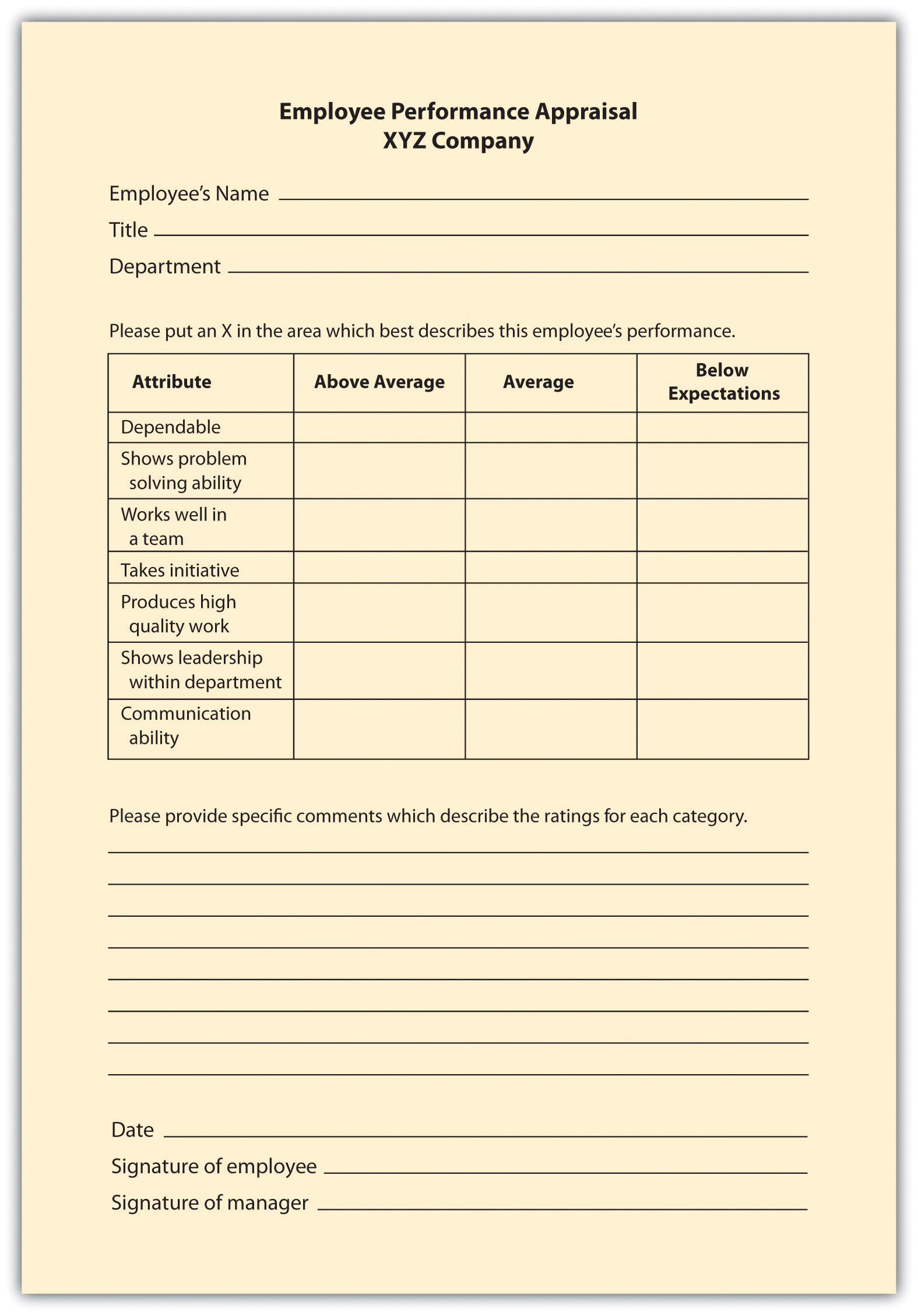
<div class="chapter standard" id="slug-7-4-other-types-of-compensation"><div class="chapter-title-wrap"><h3 class="chapter-number">28</h3><h2 class="chapter-title">7.4 Other Types of Compensation</h2></div><div class="ugc chapter-ugc"> <div class="7.4 other-types-of-compensation"><div class="bcc-box bcc-highlight"><h3 itemprop="educationalUse">Learning Objectives</h3> <p>By the end of this section, you will be able to:</p> <ol><li>Explain the various types of benefits that can be offered to employees.</li> </ol> </div> <p>As you already know, there is more to a compensation package than just pay. There are many other aspects to the creation of a good compensation package, including not only pay but incentive pay and other types of compensation. First, we will discuss benefits that are mandated by the federal government, and then we will discuss types of voluntary benefits, including both incentive pay and other types of compensation.</p> <h4>Voluntary: Incentive Pay Systems</h4> <p>As we discussed earlier, there are several types of incentive pay systems that can be tied directly to business objectives and the employees’ ability to help the company meet those objectives. They include commissions, bonuses, profit sharing, stock options, team pay, and merit pay.</p> <p><strong>Commissions</strong> are usually calculated on the basis of a percentage and earned based on the achievement of specific targets that have been agreed upon by the employee and employer. For example, many salespeople receive commissions from each item sold. Many commission incentive plans require employees to meet a minimum level of sales, who then are paid a commission on each sale beyond the minimum. A straight commission plan is one in which the employee receives no base pay and entire pay is based on meeting sales goals. Many plans, however, include a base pay and commission for each sale. Base pay is the guaranteed salary the employee earns. Remember that compensation can not go below the minimum wage established in law.</p> <p>Several types of <strong>bonuses</strong> can be given to employees as incentive pay. Meeting certain company goals or successfully completing a project or other objectives can be tied to a bonus, which is a one-time payment to an employee. A spot bonus is an unplanned bonus given to an employee for meeting a certain objective. These types of bonuses do not always have to be money; they can be other forms such as a gift certificate or trip. Fifty-eight percent of WorldatWork members [1] said that they provide spot bonuses to employees for special recognition above and beyond work performance.</p> <p>Some organizations choose to reward employees financially when the organization as a whole performs well, through the use of <strong>profit sharing</strong> as an incentive. For example, if an organization has a profit-sharing program of 2 percent for employees, the employees would earn 2 percent of the overall profit of the company. As you have guessed, this can be an excellent incentive for employees to both work as a team and also monitor their own personal performance so as not to let down the team. For example, in 2011, US automaker General Motors gave one of its highest profit-sharing payouts ever. Forty-five thousand employees received $189 million in a profit-sharing bonus, which equaled about $4,200 per person. [2] While <strong>profit sharing</strong> can be a great incentive, it can also be a large expense that should be carefully considered.</p> <p>Employee ownership of the organization is similar to profit sharing but with a few key differences. In this type of plan, employees are granted <strong>stock options</strong>, which allow the employees to buy stock at a fixed price. Then if the stock goes up in value, the employee earns the difference between what he or she paid and the value of the stock. With this type of incentive, employees are encouraged to act in the best interest of the organization. Some plans, called employee stock ownership plans, are different from stock options, in that in these plans the employee is given stock as reward for performance.</p> <p>In a smaller organization, team pay or <strong>group incentives</strong> can be popular. In this type of plan, if the group meets a specified goal, such as the increase of sales by 10 percent, the entire group receives a reward, which can consist of additional pay or bonus. Please note that this is different from individualized bonuses, discussed earlier, since the incentive is a reward for the group as opposed for the individual. In unionized organizations, performance-based pay is usually discouraged but unions look more favourably on group incentive plans than individual incentive plans.</p> <p><strong>Merit pay</strong> is a pay program that links pay to how well the employee performs within the job, and it is normally tied to performance appraisals. Merit base is normally an annual pay increase tied to performance. The problem with merit pay is that it may only be received once per year, limiting incentive flexibility. To make merit pay work, performance guidelines should be predetermined. Some organizations offer <strong>cost of living annual increases (COLAs),</strong> which is not tied to merit but is given to employees as an annual inflationary increase.</p> <div class="textbox shaded"><h3>Fortune 500 Focus</h3> <p>While the cost of health insurance premiums may be going up for most Americans, these premiums do not hit the individual employee’s pocketbook at Microsoft. Microsoft, based in Redmond, Washington, finds itself once again on the Fortune500 Best Companies to Work For list in several areas, including paying for 100 percent of employees’ health-care premiums. [3] In addition to cutting this cost for employees, Microsoft also offers domestic partner benefits, one of the first Fortune500 companies to do so. In 2005, Microsoft also began to offer partial coverage for transgender surgery to its existing health-care coverage, which earned Microsoft the highest attainable score by the Human Rights Campaign (HRC) Equality Index. [4] Microsoft also promotes fitness and wellness as part of its health-care plan, providing an on-site fitness center and subsidized gym memberships.</p> </div> <p>Paid Time Off: Time off is a benefit we should address, since this type of benefit varies greatly, especially in other parts of the world. French companies, for example, are mandated by law to provide five weeks of paid vacation time to employees. [8] In Canada, minimums are established in each jurisdiction. Here are the general types of time off:</p> <ul><li><strong>Paid Holidays:</strong> Many companies offer paid holidays on top of statutory holidays (such as New Year’s Day, Labour Day, Christmas, Canada Day), which are mandated by law. For example, although Easter Sunday and Easter Monday are not statutory holidays in BC, many employers choose to recognize them as a holiday day. These are often referred to as “bank holidays”. In Ontario, there are certain days, like Remembrance Day, that are not officially statutory holidays but there are special provisions in Ontario’s employment standards laws to deal with “voluntary statutory” holidays.</li> <li><strong>Sick Leave:</strong> The number of sick leave days can vary greatly among employers. The average in the United States is 8.4 paid sick days offered to employees per year. [9]</li> <li><strong>Paid Vacation:</strong> With full-time employment, many organizations also offer paid vacation to employees, and it is generally expected as part of the compensation package. According to a survey performed by Salary.com, the average number of paid vacation days in the United States is nine days for one year of service, fourteen days for five years of service, and seventeen days for ten years of service to the organization. [10] Organizations vary greatly in how vacation time is accrued. Some organizations give one hour for a certain number of days worked, while others require a waiting period before earning any paid time off (PTO). In addition, some organizations allow their employees to carry over unused vacation time from one year to the next, while other employees must use their vacation every year or risk losing it. Employment Standards legislation identifies the minimum number of weeks holiday and minimum vacation pay employees are entitled to; many employers choose to go beyond these minimums.</li> <li><strong>Paid Time Off (PTO):</strong> One option is to provide a set number of days off, which can be used for vacation time, holidays, and/or sick leave.</li> </ul> <p>To promote longevity, some organizations offer paid (or for example, 60 percent of salary paid) sabbaticals. For example, after five years of employment, the employee may take a paid sabbatical for one month.</p> <h4>A Final Note on Compensation and Benefits Strategy</h4> <p>When creating your compensation plan, of course the ability to recruit and retain should be an important factor. But also, consideration of your workforce needs is crucial to any successful compensation plan. The first step in development of a plan is to ask the employees what they care about. Some employees would rather receive more pay with fewer benefits or better benefits with fewer days off. Surveying the employees allows you, as the HR professional, to better understand the needs of your specific workforce. Once you have developed your plan, understand that it may change to best meet the needs of your business as it changes over time.</p> <p>Once the plan is developed, communicating the plan with your employees is also essential. Inform your employees via an HR blog, e-mails, and traditional methods such as face to face. Your employees might not always be aware of the benefits cost to the company, so making sure they know is your responsibility. For example, if you pay for 80 percent of the medical insurance premiums, let your employees know. This type of communication can go a long way to allowing the employees to see their value to you within the organization.</p> <div class="bcc-box bcc-success"><h3 itemprop="educationalUse">Key Takeaways</h3> <ul><li>Before beginning work on a pay system, some general questions need to be answered. Questions such as what is a fair wage from the employee’s perspective and how much can be paid but still retain financial health are important starting points.</li> <li>After some pay questions are answered, development of a pay philosophy must be developed. For example, an organization may decide to pay lower salaries but offer more benefits.</li> <li>Once these tasks are done, the HR manager can then build a pay system that works for the size and industry of the organization.</li> <li>Besides salary, one of the biggest expenses for compensation is medical benefits. These can include health benefits, vision, dental, and disability benefits.</li> <li>Canada Pension Plan, Worker’s Compensation premiums, and Unemployment Insurance premiums are required by law.</li> <li>Profit sharing is a benefit in which employees receive a percentage of profit the organization earns. Stock ownership plans are plans in which employees can purchase stock or are granted stock and become an owner in the organization.</li> <li>Team rewards are also a popular way to motivate employees. These can be in the form of compensation if a group or the company meets certain target goals.</li> <li>Paid time off, or PTO, can come in the form of holidays, vacation time, and sick leave. Usually, employees earn more days as they stay with the company.</li> <li>Communication with employees is key to a successful benefits strategy.</li> </ul> </div> <div class="bcc-box bcc-info"><h3 itemprop="educationalUse">Exercises</h3> <p><strong>1:</strong> Of the benefits we discussed, which ones are required by law? Which are not?</p> <p><strong>2:</strong> Describe the considerations when developing medical &amp; dental extended benefit packages. Which do you think would be the most important to you as the HR manager?</p> <p><strong>3:</strong> Visit websites of three companies you might be interested in working for. Review the incentives they offer and be prepared to discuss your findings in class.</p> </div> <hr /> <p>[1] WorldatWork, “Spot Bonus Survey,” July 2000, accessed July 23, 2011, http://www.worldatwork.org/waw/research/html/spotbonus-home.html.</p> <p>[2] Nick Bunkley, “GM Workers to Get $189 Million in Profit Sharing,” New York Times, February 14, 2011, accessed February 21, 2011,<a class="rId138" target="_blank" href="http://www.nytimes.com/2011/02/15/business/15auto.html?_r=2&amp;ref=business">http://www.nytimes.com/2011/02/15/business/15auto.html?_r=2&amp;ref=business</a>.</p> <p>[3] “100 Best Companies to Work For,” Fortune, accessed July 21, 2011,<a class="rId139" target="_blank" href="http://money.cnn.com/magazines/fortune/bestcompanies/2010/snapshots/51.html">http://money.cnn.com/magazines/fortune/bestcompanies/2010/snapshots/51.html</a>.</p> <p>[4] Gay, Lesbian, Bisexual, and Transgender Employees at Microsoft (GLEAM), Microsoft website, accessed July 21, 2011,<a class="rId140" target="_blank" href="http://www.microsoft.com/about/diversity/en/us/programs/ergen/gleam.aspx">http://www.microsoft.com/about/diversity/en/us/programs/ergen/gleam.aspx</a>.</p> <p>[5] Bureau of Labor Statistics, “Employee Benefits Survey,” 2010, accessed July 23, 2011, http://www.bls.gov/ncs/ebs/benefits/2010/ownership/private/table01a.htm.</p> <p>[6] Towers Watson, “2009 Health Care Cost Survey Reveals High-Performing Companies Gain Health Dividend,”</p> <p>[7] US Bureau of Labor Statistics, “Employee Benefits in the United States: March 2010,” news release, July 27, 2010, accessed September 12, 2011,<a class="rId141" target="_blank" href="http://www.bls.gov/ncs/ebs/sp/ebnr0016.txt">http://www.bls.gov/ncs/ebs/sp/ebnr0016.txt</a>.</p> <p>[8] Rebecca Leung, “France: Less Work, More Time Off,” CBS News, February 11, 2009, accessed July 23, 2011,<a class="rId142" target="_blank" href="http://www.cbsnews.com/stories/2005/06/27/60II/main704571.shtml">http://www.cbsnews.com/stories/2005/06/27/60II/main704571.shtml</a>.</p> <p>[9] HRM Guide, “Sick Day Entitlement Survey,” accessed February 21, 2011,<a class="rId143" target="_blank" href="http://www.hrmguide.com/health/sick-entitlement.htm">http://www.hrmguide.com/health/sick-entitlement.htm</a>.</p> <p>[10] Jessica Yang, “Paid Time Off from Work Survey,” Salary.com, accessed September 15, 2011, <a class="rId144" target="_blank" href="http://www.salary.com/Articles/ArticleDetail.asp?part=par088">http://www.salary.com/Articles/ArticleDetail.asp?part=par088</a>.</p> <h3>Chapter Summary</h3> <div class="textbox shaded"><ul><li>A COMPENSATION PACKAGE is an important part of the overall strategic HRM plan, since much of the company budget is for employee compensation.A compensation package can include salary, bonuses, health-care plans, and a variety of other types of compensation.</li> <li>The goals of compensation are first to attract people to work for your organization. Second, they can be used to retain people who are already working in the organization.</li> <li>Compensation is also used to motivate employees to work at their peak performance and improve morale of the organization.</li> <li>Employees who are fairly compensated tend to provide better customer service, which can result in organizational growth and development.</li> <li>Several types of pay systems can be implemented. A PAY GRADE SYSTEM sets up specific pay levels for particular jobs, while a GOING RATE SYSTEM looks at the pay throughout the industry for a certain job title. MANAGEMENT FIT gives maximum flexibility for managers to pay what they think someone should earn.</li> <li>HR managers can also develop pay systems based on skills and competency and utilize a broadbanding approach, which is similar to pay grades. Another option might include variable pay.</li> <li>There are several motivational theories in regard to pay. First, the EQUITY THEORY says that people will evaluate their own satisfaction with their compensation by comparing it to others’ compensation. The EXPECTANCY THEORY says people will put in only as much work as they expect to receive in rewards. Finally, the REINFORCEMENT THEORY says that if high performance is followed by a reward, high performance is likely to happen in the future.</li> <li>Other pay considerations include the size of the organization, whether the company is global, and the level of communication and employee involvement in compensation. HR managers should always be aware of what others are paying in the industry by performing market surveys.</li> <li>There are several laws pertaining to pay.</li> <li>Besides salary, one of the biggest expenses for compensation is medical benefits. These can include health benefits, vision, dental, and disability benefits.</li> <li>PROFIT SHARING is a benefit in which employees receive a percentage of profit the organization earns. STOCK OWNERSHIP PLANS are plans in which employees can purchase stock or are granted stock and become an owner in the organization.</li> <li>Team rewards are also a popular way to motivate employees. These can be in the form of compensation if a group or the company meets certain target goals.</li> <li>Canada Pension Plan, Worker’s Compensation premiums, and Unemployment Insurance premiums are required by law.</li> <li>Paid time off, or PTO, can come in the form of holidays, vacation time, and sick leave. Usually, employees earn more days as they stay with the company.</li> <li>Communication with employees is key to a successful benefits strategy. This includes communication before implementing the plan as well as communication about the plan.</li> </ul> </div> </div> </div></div>
<div class="chapter standard" id="slug-7-5-cases-and-problems"><div class="chapter-title-wrap"><h3 class="chapter-number">29</h3><h2 class="chapter-title">7.5 Cases and Problems</h2></div><div class="ugc chapter-ugc"> <div class="7.5 cases-and-problems"><div class="textbox examples"><h3>Chapter Case</h3> <p>PTO: Too Little or Too Much?</p> <p>You just finished analyzing information for the current compensation and benefits program. You find that some changes should be made, as the majority of employees (you have 120 employees) are not happy with what is being offered. In fact, the plan had not been revised in over fifteen years, making it dated and definitely ready for some changes.</p> <p>One of the major points of contention is the PTO the organization offers. Employees feel the current system of sick time and vacation time offers too few options. For example, one employee says, “I often come to work sick, so I can still have my vacation time for my vacation.” Another employee says, “I have given nine years to this organization, but I receive only three days more than someone who has just started.” Here is the current PTO offering:</p> <table><tbody><tr class="-R"><td class="-C" style="vertical-align: bottom;padding: 3.75pt 3.75pt 3.75pt 3.75pt;border: solid windowtext 0.75pt">1+ year</td> <td class="-C" style="vertical-align: bottom;padding: 3.75pt 3.75pt 3.75pt 3.75pt;border: solid windowtext 0.75pt">7 days</td> </tr> <tr class="-R"><td class="-C" style="vertical-align: bottom;padding: 3.75pt 3.75pt 3.75pt 3.75pt;border: solid windowtext 0.75pt">5+years</td> <td class="-C" style="vertical-align: bottom;padding: 3.75pt 3.75pt 3.75pt 3.75pt;border: solid windowtext 0.75pt">10 days</td> </tr> <tr class="-R"><td class="-C" style="vertical-align: bottom;padding: 3.75pt 3.75pt 3.75pt 3.75pt;border: solid windowtext 0.75pt">10+ years</td> <td class="-C" style="vertical-align: bottom;padding: 3.75pt 3.75pt 3.75pt 3.75pt;border: solid windowtext 0.75pt">14 days</td> </tr> </tbody> </table> <ol><li>What cost considerations would you take into account when revising this part of your compensation plan?</li> <li>What other considerations would you take into account when developing a new PTO plan?</li> <li>Propose a new plan and estimate the cost of your plan on an Excel spreadsheet. Be prepared to present to the board of directors.</li> </ol> </div> <div class="textbox shaded"><h3>Team Activity</h3> <p><strong>1:</strong> Work in teams of four or five. Assume your organization is expanding and wants to open a sales office overseas. What compensation factors would be a concern? Brainstorm a list and be prepared to present to the rest of the class.</p> <p><strong>2:</strong> Go to Canada’s <a class="rId145" href="http://www.jobbank.gc.ca/wage-outlook_search-eng.do?reportOption=wage">Job Bank Wage Outlook</a> and review the information on the Job Market Trends in teams of three. Pick three different jobs under the management category and record their average salary. Discuss reasons for the pay difference between the jobs you choose.</p> </div> </div> </div></div>
<div class="part " id="chapter-8-retention-and-motivation"><div class="part-title-wrap"><h3 class="part-number">VIII</h3><h1 class="part-title">Chapter 8: Retention and Motivation</h1></div></div>
<div class="chapter standard" id="introduction-6"><div class="chapter-title-wrap"><h3 class="chapter-number">30</h3><h2 class="chapter-title">Introduction</h2></div><div class="ugc chapter-ugc"><h2>Dissatisfaction Isn’t Always About Pay</h2> <p>As an HR consultant, your job normally involves reviewing HR strategic plans and systems of small to medium size companies, then making recommendations on how to improve. Most of the companies you work with do not have large HR departments, and they find it less expensive to hire you than to hire a full-time person.</p> <p>Your current client, Pacific Books, is a small online retailer with forty-seven employees. Pacific Books has had some challenges, and as the economy has improved, several employees have quit. They want you to look into this issue and provide a plan to improve retention.</p> <p>Pacific Books currently has just one person managing payroll and benefits. The individual managers in the organization are the ones who handle other HR aspects, such as recruiting and developing compensation plans. As you speak with the managers and the payroll and benefits manager, it is clear employees are not happy working for this organization. You are concerned that if the company does not improve its employee retention, they will spend an excessive amount of time trying to recruit and train new people, so retention of the current employees is important.</p> <p>As with most HR issues, rather than just guessing what employees want, you develop a survey to send to all employees, including management. You developed the survey on SurveyMonkey and asked employee satisfaction questions surrounding pay and benefits. However, you know that there are many other things that can cause someone to be unhappy at work, so to take this survey a step further, you decide to ask questions about the type of work employees are doing, management style, and work-life balance. Then you send out a link to all employees, giving them one week to take the survey.</p> <p>When the results come in, they are astounding. Out of the forty-seven employees, forty-three selected “dissatisfied” on at least four or more areas of the five-question survey. While some employees are not happy with pay and benefits, the results say that other areas of the organization are actually what are causing the dissatisfaction. Employees are feeling micromanaged and do not have freedom over their time. There are also questions of favoritism by some managers for some employees, who always seem to get the “best” projects. When you sit down with the CEO to discuss the survey results, at first she defends the organization by saying the company offers the highest salaries and best benefits in the industry, and she doesn’t understand how someone can be dissatisfied. You explain to her that employee retention and motivation is partly about pay and benefits, but it includes other aspects of the employee’s job, too. She listens intently and then asks you to develop a retention and motivation plan that can improve the organization.</p> </div></div>
<div class="chapter standard" id="slug-8-1-the-costs-of-turnover"><div class="chapter-title-wrap"><h3 class="chapter-number">31</h3><h2 class="chapter-title">8.1 The Costs of Turnover</h2></div><div class="ugc chapter-ugc"> <div class="8.1 the-costs-of-turnover"><div class="bcc-box bcc-highlight"><h3 itemprop="educationalUse">Learning Objectives</h3> <ol><li>Be able identify the difference between direct and indirect turnover costs.</li> <li>Describe some of the reasons why employees leave.</li> <li>Explain the components of a retention plan.</li> </ol> </div> <p>According to the book KEEPING THE PEOPLE WHO KEEP YOU IN BUSINESS by Leigh Branham, [1] the cost of losing an employee can range from 25 percent to 200 percent of that employee’s salary. Some of the costs cited revolve around customer service disruption and loss of morale among other employees, burnout of other employees, and the costs of hiring someone new. Losing an employee is called turnover.</p> <div class="textbox shaded">Losing an employee is called <strong>turnover</strong>. Turnover can be either voluntary or involuntary.</div> <p>There are two types of turnover, voluntary turnover and involuntary turnover. <strong>Voluntary turnover </strong>is the type of turnover that is initiated by the employee for many different reasons. Voluntary turnover can be somewhat predicted and addressed in HR, the focus of this chapter. <strong>Involuntary turnover </strong>is where the employee has no choice in their termination—for example, employer-initiated due to nonperformance. It has been suggested that replacement of an employee who is paid $8 per hour can range upwards of $4,000. [2] Turnover can be calculated by separations during the time period (month)/total number of employees midmonth × 100 = the percentage of turnover. For example, let’s assume there were three separations during the month of August and 115 employees midmonth. We can calculate turnover in this scenario by 3/115 × 100 = 2.6% turnover rate.</p> <div class="textbox shaded"><strong>Percentage of Turnover</strong> can be calculated by separations during the time period (month)/total number of employees midmonth × 100</div> <p>This gives us the overall turnover rate for our organization. We may want to calculate turnover rates based on region or department to gather more specific data. For example, let’s say of the three separations, two were in the accounting department. We have ten people in the accounting department. We can calculate that by accounting: 2/10 × 100 = 20% turnover rate.</p> <p>The turnover rate in accounting is alarmingly high compared to our company turnover rate. There may be something happening in this department to cause unusual turnover. Some of the possible reasons are discussed in Section 8.1.1 &#8220;Reasons for Voluntary Turnover&#8221;.</p> <p>In HR, we can separate the costs associated with turnover into <strong>indirect costs </strong>and <strong>direct costs. </strong>Direct turnover costs include the cost of leaving, replacement costs, and transition costs, while indirect turnover costs include the loss of production and reduced performance. The following are some examples of turnover costs: [3]</p> <ul><li>Recruitment of replacements</li> <li>Administrative hiring costs</li> <li>Lost productivity associated with the time between the loss of the employee and hiring of replacement</li> <li>Lost productivity due to a new employee learning the job</li> <li>Lost productivity associated with coworkers helping the new employee</li> <li>Costs of training</li> <li>Costs associated with the employee’s lack of motivation prior to leaving</li> <li>Sometimes, the costs of trade secrets and proprietary information shared by the employee who leaves</li> <li>Public relations costs</li> </ul> <p>To avoid these costs, development of retention plans is an important function of the HR strategic plan. Retention plans outline the strategies the organization will use to reduce turnover and address employee motivation.</p> <table><tbody><tr class="-R" style="height: 0"><td class="-C" style="background-color: #465e3e;vertical-align: bottom;padding: 3.75pt 3.75pt 3.75pt 3.75pt;border: solid #000000 0.75pt"><p style="text-align: center"><strong><br /> Direct<br /> </strong></p> </td> <td class="-C" style="background-color: #465e3e;vertical-align: bottom;padding: 3.75pt 3.75pt 3.75pt 3.75pt;border: solid #000000 0.75pt"><p style="text-align: center"><strong><br /> Indirect<br /> </strong></p> </td> </tr> <tr class="-R"><td class="-C" style="vertical-align: bottom;padding: 3.75pt 3.75pt 3.75pt 3.75pt;border: solid windowtext 0.75pt">Recruitment costs</td> <td class="-C" style="vertical-align: bottom;padding: 3.75pt 3.75pt 3.75pt 3.75pt;border: solid windowtext 0.75pt">Lost knowledge</td> </tr> <tr class="-R"><td class="-C" style="vertical-align: bottom;padding: 3.75pt 3.75pt 3.75pt 3.75pt;border: solid windowtext 0.75pt">Advertising costs for new position</td> <td class="-C" style="vertical-align: bottom;padding: 3.75pt 3.75pt 3.75pt 3.75pt;border: solid windowtext 0.75pt">Loss of productivity while new employee is brought up to speed</td> </tr> <tr class="-R"><td class="-C" style="vertical-align: bottom;padding: 3.75pt 3.75pt 3.75pt 3.75pt;border: solid windowtext 0.75pt">Orientation and training of new employee</td> <td class="-C" style="vertical-align: bottom;padding: 3.75pt 3.75pt 3.75pt 3.75pt;border: solid windowtext 0.75pt">Cost associated with lack of motivation prior to leaving</td> </tr> <tr class="-R"><td class="-C" style="vertical-align: bottom;padding: 3.75pt 3.75pt 3.75pt 3.75pt;border: solid windowtext 0.75pt">Severance costs</td> <td class="-C" style="vertical-align: bottom;padding: 3.75pt 3.75pt 3.75pt 3.75pt;border: solid windowtext 0.75pt" rowspan="4">Cost associated with loss of trade secrets</td> </tr> <tr class="-R"><td class="-C" style="vertical-align: bottom;padding: 3.75pt 3.75pt 3.75pt 3.75pt;border: solid windowtext 0.75pt">Testing costs</td> </tr> <tr class="-R"><td class="-C" style="vertical-align: bottom;padding: 3.75pt 3.75pt 3.75pt 3.75pt;border: solid windowtext 0.75pt">Time to interview new replacements</td> </tr> <tr class="-R"><td class="-C" style="vertical-align: bottom;padding: 3.75pt 3.75pt 3.75pt 3.75pt;border: solid windowtext 0.75pt">Time to recruit and train new hires</td> </tr> <tr><td class="-C" style="vertical-align: bottom;padding: 3.75pt 3.75pt 3.75pt 3.75pt;border: solid windowtext 0.75pt" colspan="2"><strong>Table 8.1</strong> Turnover Costs</td> </tr> </tbody> </table> <h2>Reasons for Voluntary Turnover</h2> <p>Before we discuss specific details on retention planning, it is important to address the reasons why people choose to leave an organization to begin with. One mistake HR professionals and managers make is to assume people leave solely on the basis of their unhappiness with their compensation packages. Many factors can cause demotivated employees, which we discuss in Section 8.2.1 &#8220;Theories on Job Dissatisfaction&#8221;.</p> <p>Once we find out what can cause voluntary turnover, we can develop retention strategies to reduce turnover. Some of the common reasons employees leave organizations can include the following:</p> <ol><li><strong>A poor match between the job and the skills of the employee.</strong> This issue is directly related to the recruitment process. When a poor match occurs, it can cause frustration for the employee and for the manager. Ensuring the recruitment phase is viable and sound is a first step to making sure the right match between job and skills occurs.</li> <li><strong>Lack of growth.</strong> Some employees feel “stuck” in their job and don’t see a way to have upward mobility in the organization. Implementing a training plan and developing a clearly defined path to job growth is a way to combat this reason for leaving.</li> <li><strong>Lack of internal pay equity.</strong> Some employees, while they may not feel dissatisfied with their own pay initially, may feel dissatisfaction when comparing their pay with others. Remember the pay equity theory discussed in Chapter 6 &#8220;Compensation and Benefits&#8221;? This theory relates to one reason why people leave.</li> <li><strong>Management.</strong> Many employees cite management as their reason for leaving. This can be attributed to overmanaging (micromanaging) people, managers not being fair or playing favorites, lack of or poor communication by managers, and unrealistic expectations of managers.</li> <li><strong>Workload.</strong> Some employees feel their workloads are too heavy, resulting in employees being spread thin and lacking satisfaction from their jobs, and possibly, lack of work-life balance as a result.</li> </ol> <p>We know that some people will move or perhaps their family situation changes. This type of turnover is normal and expected. Figure 8.2 &#8220;Common Reasons for Employee Turnover&#8221; shows other examples of why people leave organizations.</p> <div id="attachment_513" style="width: 610px" class="wp-caption aligncenter"><a href="https://pressbooks.bccampus.ca/hrm1stcanadianedition/wp-content/uploads/sites/118/2017/03/Figure-8.2.png"><img src="https://pressbooks.bccampus.ca/hrm1stcanadianedition/wp-content/uploads/sites/118/2017/03/Figure-8.2-300x300.png" alt="" width="600" height="598" class="wp-image-513" srcset="https://pressbooks.bccampus.ca/hrm1stcanadianedition/wp-content/uploads/sites/118/2017/03/Figure-8.2-300x300.png 300w, https://pressbooks.bccampus.ca/hrm1stcanadianedition/wp-content/uploads/sites/118/2017/03/Figure-8.2-150x150.png 150w, https://pressbooks.bccampus.ca/hrm1stcanadianedition/wp-content/uploads/sites/118/2017/03/Figure-8.2-768x765.png 768w, https://pressbooks.bccampus.ca/hrm1stcanadianedition/wp-content/uploads/sites/118/2017/03/Figure-8.2-1024x1021.png 1024w, https://pressbooks.bccampus.ca/hrm1stcanadianedition/wp-content/uploads/sites/118/2017/03/Figure-8.2-65x65.png 65w, https://pressbooks.bccampus.ca/hrm1stcanadianedition/wp-content/uploads/sites/118/2017/03/Figure-8.2-225x224.png 225w, https://pressbooks.bccampus.ca/hrm1stcanadianedition/wp-content/uploads/sites/118/2017/03/Figure-8.2-350x349.png 350w" /></a> <p class="wp-caption-text"><strong>Figure 8.2</strong> Common Reasons for Employee Turnover</p> </div> <div class="textbox shaded"><h3>Human Resource Recall</h3> <p>Do you feel your current or past organization did a good job of reducing turnover? Why or why not?</p> </div> <div class="bcc-box bcc-success"><h3 itemprop="educationalUse">Key Takeaways</h3> <ul><li>Retaining employees is an important component to a healthy organization. Losing an employee is called TURNOVER. Turnover can be very expensive to an organization, which is why it is important to develop retention plans to manage turnover.</li> <li>VOLUNTEARY TURNOVER is turnover that is initiated by the employee, while INVOLUNTARY TURNOVER is initiated by the organization for various reasons such as nonperformance.</li> <li>DIRECT TURNOVER COSTS and INDIRECT TURNOVER COSTS can include the costs associated with employee replacement, declining employee morale, or lost customers.</li> <li>Some of the reasons why employees leave can include a poor match between job and skills, no growth potential, pay inequity among employees, the fairness and communication style of management, and heavy workloads.</li> </ul> </div> <div class="bcc-box bcc-info"><h3 itemprop="educationalUse">Exercises</h3> <p style="background-color: #e3eff7;margin-left: 15pt;margin-right: 18.75pt"><strong>1:</strong> Perform an Internet search of average employee turnover cost and report findings from at least three different industries or companies.</p> </div> <hr style="height: 1.5pt;text-align: center;border-style: none;border: 0;background-color: gray;color: gray" /> <p>[1] Leigh Branham, Keeping the People Who Keep You in Business (New York: American Management Association, 2000), 6.</p> <p>[2] Noel Paiement “It Will Cost You $4,000 to Replace Just One $8 per Hour Employee,” Charity Village, July 13, 2009, accessed August 30, 2011, http://www.charityvillage.com/cv/research/rhr50.html.</p> <p>[3] Carl. P. Maertz, Jr. and M. A. Campion, “25 Years of Voluntary Turnover Research: A Review and Critique,” in International Review of Industrial and Organizational Psychology, vol. 13, ed. Cary L. Cooper and Ivan T. Robertson (London: John Wiley, 1998), 49–86.</p> </div> </div></div>
<div class="chapter standard" id="slug-8-2-retention-plans"><div class="chapter-title-wrap"><h3 class="chapter-number">32</h3><h2 class="chapter-title">8.2 Retention Plans</h2></div><div class="ugc chapter-ugc"> <div class="8.2 retention-plans"><div class="bcc-box bcc-highlight"><h3 itemprop="educationalUse">Learning Objectives</h3> <p>By the end of this section, you will be able to:</p> <ol><li>Be able to discuss some of the theories on job satisfaction and dissatisfaction.</li> <li>Explain the components of a retention plan.</li> </ol> </div> <p>Effective <strong>high-performance work systems (HPWS)</strong> is the name given to a set of systematic HR practices that create an environment where the employee has greater involvement and responsibility for the success of the organization. A high-performance work system is a strategic approach to many of the things we do in HR, including retention. Generally speaking, a HPWS gets employees involved in conceiving, designing, and implementing processes that are better for the company and better for the employee, which increases retention. Figure 8.4 &#8220;HR Components of a HPWS&#8221;gives an example of HR’s part in creating these systems.</p> <div class="textbox shaded"><strong>High-performance work system</strong> (HPWS) &#8211; a set of systematic HR practices that create an environment where the employee has greater involvement and responsibility for the success of the organization.</div> <div id="attachment_517" style="width: 610px" class="wp-caption aligncenter"><a href="https://pressbooks.bccampus.ca/hrm1stcanadianedition/wp-content/uploads/sites/118/2017/03/Figure-8.4.png"><img src="https://pressbooks.bccampus.ca/hrm1stcanadianedition/wp-content/uploads/sites/118/2017/03/Figure-8.4-300x294.png" alt="" width="600" height="589" class="wp-image-517" srcset="https://pressbooks.bccampus.ca/hrm1stcanadianedition/wp-content/uploads/sites/118/2017/03/Figure-8.4-300x294.png 300w, https://pressbooks.bccampus.ca/hrm1stcanadianedition/wp-content/uploads/sites/118/2017/03/Figure-8.4-768x754.png 768w, https://pressbooks.bccampus.ca/hrm1stcanadianedition/wp-content/uploads/sites/118/2017/03/Figure-8.4-1024x1005.png 1024w, https://pressbooks.bccampus.ca/hrm1stcanadianedition/wp-content/uploads/sites/118/2017/03/Figure-8.4-65x64.png 65w, https://pressbooks.bccampus.ca/hrm1stcanadianedition/wp-content/uploads/sites/118/2017/03/Figure-8.4-225x221.png 225w, https://pressbooks.bccampus.ca/hrm1stcanadianedition/wp-content/uploads/sites/118/2017/03/Figure-8.4-350x343.png 350w, https://pressbooks.bccampus.ca/hrm1stcanadianedition/wp-content/uploads/sites/118/2017/03/Figure-8.4.png 1447w" /></a> <p class="wp-caption-text"><strong>Figure 8.4</strong> HR Components of a HPWS</p> </div> <p>Keeping HPWS in mind, we can begin to develop retention plans. The first step in this process is to understand some of the theories on job satisfaction and dissatisfaction. Next, we can gather data as to the satisfaction level of our current employees. Then we can begin to implement specific strategies for employee retention.</p> <h4>Theories on Job Dissatisfaction</h4> <p>There are a number of theories that attempt to describe what makes a satisfied employee versus an unsatisfied employee. While you may have learned about these theories in another class, such as organizational behavior, they are worth a review here to help us better understand employee satisfaction from an HR perspective.</p> <h4>Progression of Job Withdrawal</h4> <p>The first step to developing a retention plan is understanding some of the theories surrounding job satisfaction. One of the basic theories is the progression of job withdrawal theory, developed by Dan Farrell and James Petersen. [1] It says that people develop a set of behaviors in succession to avoid their work situation. These behaviors include behavior change, physical withdrawal, and psychological withdrawal.</p> <p>Within the behavior change area, an employee will first try to change the situation that is causing the dissatisfaction. For example, if the employee is unhappy with the management style, he or she might consider asking for a department move. In the physical withdrawal phase, the employee does one of the following:</p> <ul><li>Leaves the job</li> <li>Takes an internal transfer</li> <li>Starts to become absent or tardy</li> </ul> <p>If an employee is unable to leave the job situation, he or she will experience psychological withdrawal. They will become disengaged and may show less job involvement and commitment to the organization, which can create large costs to the organization, such as dissatisfied customers.</p> <div id="attachment_518" style="width: 610px" class="wp-caption aligncenter"><a href="https://pressbooks.bccampus.ca/hrm1stcanadianedition/wp-content/uploads/sites/118/2017/03/Figure-8.5.png"><img src="https://pressbooks.bccampus.ca/hrm1stcanadianedition/wp-content/uploads/sites/118/2017/03/Figure-8.5-300x224.png" alt="" width="600" height="448" class="wp-image-518" srcset="https://pressbooks.bccampus.ca/hrm1stcanadianedition/wp-content/uploads/sites/118/2017/03/Figure-8.5-300x224.png 300w, https://pressbooks.bccampus.ca/hrm1stcanadianedition/wp-content/uploads/sites/118/2017/03/Figure-8.5-768x573.png 768w, https://pressbooks.bccampus.ca/hrm1stcanadianedition/wp-content/uploads/sites/118/2017/03/Figure-8.5-1024x764.png 1024w, https://pressbooks.bccampus.ca/hrm1stcanadianedition/wp-content/uploads/sites/118/2017/03/Figure-8.5-65x48.png 65w, https://pressbooks.bccampus.ca/hrm1stcanadianedition/wp-content/uploads/sites/118/2017/03/Figure-8.5-225x168.png 225w, https://pressbooks.bccampus.ca/hrm1stcanadianedition/wp-content/uploads/sites/118/2017/03/Figure-8.5-350x261.png 350w, https://pressbooks.bccampus.ca/hrm1stcanadianedition/wp-content/uploads/sites/118/2017/03/Figure-8.5.png 1480w" /></a> <p class="wp-caption-text"><strong>Figure 8.5</strong> Process of Job Withdrawal</p> </div> <h4>Hawthorne Studies</h4> <p>Between 1927 and 1932, a series of experiments were conducted by Elton Mayo in the Western Electric Hawthorne Works company in Illinois. [2] Mayo developed these experiments to see how the physical and environmental factors of the workplace, such as lighting and break times, would affect employee motivation.</p> <p>This was some of the first research performed that looked at human motivation at work. His results were surprising, as he found that no matter which experiments were performed, worker output improved. His conclusion and explanation for this was the simple fact the workers were happy to receive attention from researchers who expressed interest in them. As a result, these experiments, scheduled to last one year, extended to five years to increase the knowledge base about human motivation.</p> <p>The implication of this research applies to HR and managers even today. It tells us that our retention plans must include training and other activities that make the employee feel valued.</p> <h4>Maslow’s Hierarchy of Needs</h4> <p>In 1943, Abraham Maslow developed what was known as the theory of human motivation. [3] His theory was developed in an attempt to explain human motivation. According to Maslow, there is a hierarchy of five needs, and as one level of need is satisfied, it will no longer be a motivator. In other words, people start at the bottom of the hierarchy and work their way up. Maslow’s hierarchy consists of the following:</p> <ul><li style="background-color: #ffffff;margin-left: 0pt;text-indent: 0pt">Self-actualization needs</li> <li style="background-color: #ffffff;margin-left: 0pt;text-indent: 0pt">Esteem needs</li> <li style="background-color: #ffffff;margin-left: 0pt;text-indent: 0pt">Social needs</li> <li style="background-color: #ffffff;margin-left: 0pt;text-indent: 0pt">Safety needs</li> <li style="background-color: #ffffff;margin-left: 0pt;text-indent: 0pt">Physiological needs</li> </ul> <p>Physiological needs are our most basic needs, including food, water, and shelter. Safety needs at work might include feeling safe in the actual physical environment, or job security. As humans, we have the basic need to spend time with others. Esteem needs refer to the need we have to feel good about ourselves. Finally, self-actualization needs are the needs we have to better ourselves.</p> <p>The implications of his research tell us, for example, that as long as an employee’s physiological needs are met, increased pay may not be a motivator. Likewise, employees should be motivated at work by having all needs met. Needs might include, for example, fair pay, safety standards at work, opportunities to socialize, compliments to help raise our esteem, and training opportunities to further develop ourselves.</p> <h4>Herzberg Two-Factor Theory</h4> <p><strong>Hygiene factors</strong> are not necessarily motivators, but if they aren’t present, they could cause dissatisfaction and demotivation.<br /> In 1959, Frederick Herzberg published The Motivation to Work, [4] which described his studies to determine which aspects in a work environment caused satisfaction or dissatisfaction. He performed interviews in which employees were asked what pleased and displeased them about their work. From his research, he developed the <strong>motivation-hygiene theory</strong> to explain these results.</p> <p>The things that satisfied the employees were motivators, while the dissatisfiers were the hygiene factors. He further said the hygiene factors were not necessarily motivators, but if not present in the work environment, they would actually cause demotivation. In other words, the hygiene factors are expected and assumed, while they may not necessarily motivate.</p> <p>His research showed the following as the <strong>top six</strong><strong> </strong><strong>motivation factors</strong><strong>:</strong></p> <ol><li>Achievement</li> <li>Recognition</li> <li>The work itself</li> <li>Responsibility</li> <li>Advancement</li> <li>Growth</li> </ol> <p>The following were the top six hygiene factors:</p> <ol><li>Company policies</li> <li>Supervision</li> <li>Relationship with manager</li> <li>Work conditions</li> <li>Salary</li> <li>Relationship with peers</li> </ol> <p>The implication of this research is clear. Salary, for example, is on the hygiene factor list. Fair pay is expected, but it doesn’t actually motivate someone to do a better job. On the other hand, programs to further develop employees, such as management training programs, would be considered a motivator. Therefore, our retention plans should be focused on the area of fair salary of course, but if they take the direction of Herzberg’s motivational factors, the actual motivators tend to be the work and recognition surrounding the work performed.</p> <h4>McGregor</h4> <p>Douglas McGregor proposed the X-Y theory in his 1960 book called THE HUMAN SIDE OF ENTERPRISE . [5] McGregor’s theory gives us a starting point to understanding how management style can impact the retention of employees. His theory suggests two fundamental approaches to managing people. Theory X managers, who have an authoritarian management style, have the following fundamental management beliefs:</p> <ul><li>The average person dislikes work and will avoid it.</li> <li>Most people need to be threatened with punishment to work toward company goals.</li> <li>The average person needs to be directed.</li> <li>Most workers will avoid responsibility.</li> </ul> <p>Theory Y managers, on the other hand, have the following beliefs:</p> <ul><li>Most people want to make an effort at work.</li> <li>People will apply self-control and self-direction in pursuit of company objectives.</li> <li>Commitment to objectives is a function of expected rewards received.</li> <li>People usually accept and actually welcome responsibility.</li> <li>Most workers will use imagination and ingenuity in solving company problems.</li> </ul> <p>As you can see, these two belief systems have a large variance, and managers who manage under the X theory may have a more difficult time retaining workers and may see higher turnover rates. As a result, it is our job in HR to provide training opportunities in the area of management, so our managers can help motivate the employees. Training is a large part of the retention plan. This will be addressed in more detail in Section 8.3 &#8220;Implementing Retention Strategies&#8221;.</p> <div class="textbox shaded"><h3>Human Resource Recall</h3> <p>What are the disadvantages of taking a theory X approach with your employees?</p> </div> <h2>Carrot and Stick</h2> <p>It is unknown for sure where this term was first used, although some believe it was coined in the 1700s during the Seven Years’ War. In business today, the stick approach refers to “poking and prodding” to get employees to do something. The carrot approach refers to the offering of some reward or incentive to motivate employees. Many companies use the stick approach, as in the following examples:</p> <ul><li>If you don’t increase your sales by 10 percent, you will be fired.</li> <li>Everyone will have to take a pay cut if we don’t produce 15 percent more than we are currently producing.</li> </ul> <p>As you can see, the stick approach takes a punitive look at retention, and we know this may motivate for a short period of time, but not in the long term.</p> <p>The carrot approach might include the following:</p> <ul><li>If you increase sales by 10 percent, you will receive a bonus.</li> <li>If production increases by 15 percent, the entire team will receive an extra day off next month.</li> </ul> <p>The carrot approach takes a much more positive approach to employee motivation but still may not be effective. For example, this approach can actually demotivate employees if they do not feel the goal is achievable. Also, if organizations use this as the only motivational technique, ignoring physiological rewards such as career growth, this could be a detriment as well. This approach is used as a retention method, usually as part of a compensation plan.</p> <p>All the employee satisfaction theories we have discussed have implications for the development of our retention plans and reduction of turnover. These theories can be intertwined into the specific retention strategies we will implement. This is discussed in Section 8.3.1 &#8220;Salaries and Benefits&#8221;.</p> <h2>Sources of Employee Satisfaction Data</h2> <p>After we have an understanding of why employees leave and employee satisfaction theories, research is our next step in developing a retention plan that will work for your organization. There isn’t a “one size fits all” approach to retention planning, so the research component is essential to formulate a plan that will make a difference in turnover rates.</p> <p>Research can be performed in two ways. First, exit interviews of employees who are leaving the organization can provide important retention information. An exit interview is an interview performed by HR or a manager that seeks information as to what the employee liked at the organization and what they see should be improved. Exit interviews can be a valuable way to gather information about employee satisfaction and can serve as a starting point for determining any retention issues that may exist in the organization. However, the exit survey data should be reviewed over longer periods of time with several employees, so we can be sure we are not making retention plans based on the feedback of only a few people.</p> <div class="textbox shaded"><h3>Sample Exit Interview Questions</h3> <ol><li>What is your primary reason for leaving?</li> <li>What did you like most about your job?</li> <li>What did you like least about your job?</li> <li>Did you feel there was room for growth in your job?</li> <li>What incentives did you utilize while at our company?</li> <li>Which incentives would you change and why?</li> <li>Did you have enough training to do your job effectively?</li> </ol> </div> <p>The second way to perform research is through employee satisfaction surveys. Gallup and the Hay Group have both developed standardized and widely used measures of job satisfaction. The Work Environment Survey<a id="sdfootnote9anc" href="#sdfootnote9sym"><sup>9</sup></a> was developed by the BC provincial government, and is administered by BC Stats. Originally administered to all employees in the public service on an annual basis, since 2011 it is administered biennially. The value of an engagement survey is that an HR manager can measure job satisfaction over a period of time and compare current results to past results and even compare job satisfaction at their company versus their industry. This allows the HR manager to consider changes in the organization, such as a change in compensation structure, and see how job satisfaction is impacted by the change.</p> <p>Any type of survey can provide information on the employee’s satisfaction with their manager, workload, and other satisfaction and motivational issues. An example of a general employee satisfaction survey is shown in Figure 8.7 &#8220;A Sample Employee Satisfaction Survey&#8221;. However, a few things should be considered when developing an employee satisfaction survey:</p> <ol><li>Communicate the purpose and goal of the survey.</li> <li>Once the survey is complete, communicate what changes have been made as a result of the survey.</li> <li>Assure employees their responses will be anonymous and private.</li> <li>Involve management and leadership in the survey development.</li> <li>Ask clear, concise questions that get at the root of morale issues.</li> </ol> <p>Once data have been gathered and analyzed, we can formulate our retention plans. Our plan should always be tied to the strategic goals of the organization and the HPWS previously developed, and awareness of motivational theories should be coupled with the plans. Here are the components of a retention plan:</p> <ol><li>JDI survey results, other survey results, and exit interview findings</li> <li>Current retention plans, strengths, and weaknesses</li> <li>Goals of a retention plan (e.g., reduce turnover by 10 percent)</li> <li>Individual strategies to meet retention and turnover reduction goals.</li> <li>Budgeting. An understanding of how your retention plans will impact the payroll budget is important. See Video 8.2 for an example on how to calculate turnover costs and compare those to costs saved with an effective retention strategy.</li> </ol> <p>In Section 8.3 &#8220;Implementing Retention Strategies&#8221;, we will discuss the implementation of specific retention strategies.</p> <div class="bcc-box bcc-success"><h3 itemprop="educationalUse">Key Takeaways</h3> <ul><li>A high-performance work system (HPWS) is a set of systematic HR practices that create an environment where the employee has greater involvement and responsibility for the success of the organization. The overall company strategy should impact the HPWS HR develops in regard to retention.</li> <li>Retention plans are developed to address employee turnover, resulting in a more effective organization.</li> <li>The first step in developing a retention plan is to use exit interviews and/or surveys to find out the satisfaction level of employees. Once you have the data, you can begin to write the plan, making sure it is tied to the organizational objectives.</li> <li>A standardized and widely used measure of job satisfaction is the JDI survey, or the Job Descriptive Index. While JDI was initially developed in 1969 at Bowling Green State University, it has gone through extensive revisions, the most recent one in 2009. JDI looks at five aspects of job satisfaction, including present job, present pay, opportunities for promotion, supervision, and coworkers. [7]</li> <li>A retention plan normally consists of survey and exit interview analysis, any current plans and strengths and weaknesses of those plans, the goal of the retention plan, and finally, the specific strategies to be implemented.</li> <li>There are many motivation theories that attempt to explain people’s motivation or lack of motivation at work.</li> <li>The Hawthorne studies were a series of studies beginning in 1927 that initially looked at physical environments but found that people tended to be more motivated when they felt cared about. The implications to retention are clear, in that employees should feel cared about and developed within the organization.</li> <li>Maslow’s theory on motivation says that if someone already has a need met, giving them something to meet more of that need will no longer motivate. Maslow divided the needs into physiological, safety, social, esteem, and self-actualization needs. Many companies only motivate based on the low-level needs, such as pay. Development of training opportunities, for example, can motivate employees on high-level self-actualization needs.</li> <li>Herzberg developed motivational theories based on actual motivation factors and hygiene factors. Hygiene factors are those things that are expected in the workplace and will demotivate employees when absent but will not actually motivate when present. If managers try to motivate only on the basis of hygiene factors, turnover can be high. Motivation on both of his factors is key to a good retention plan.</li> <li>McGregor’s theory on motivation looked at managers’ attitudes toward employees. He found that theory X managers had more of a negative view of employees, while theory Y managers had a more positive view. Providing training to the managers in our organization can be a key retention strategy based on McGregor’s theory.</li> <li>The carrot-and-stick approach means you can get someone to do something by prodding or by offering some incentive to motivate them to do the work. This theory implies these are the only two methods to motivate, which of course, we know isn’t true. The implication of this in our retention plan is such that we must utilize a variety of methods to retain employees.</li> </ul> </div> <div class="bcc-box bcc-info"><h3 itemprop="educationalUse">Exercises</h3> <p><strong>1:</strong> What types of things will motivate you in your career? Name at least five things. Where would these fit on Maslow’s hierarchy of needs and Herzberg’s two-factor theory?</p> <p><strong>2:</strong> How can you apply each of these motivation techniques to motivation theories?</p> <p style="padding-left: 30px"><strong>a:</strong> Training</p> <p style="padding-left: 30px"><strong>b:</strong> Employee recognition programs</p> <p style="padding-left: 30px"><strong>c:</strong> Bonuses</p> <p style="padding-left: 30px"><strong>d:</strong> Management training for your current managers</p> <p style="padding-left: 30px"><strong>e:</strong> Profit sharing</p> </div> <hr /> <p>[1] Dan Farrell and James C. Petersen, “Commitment, Absenteeism and Turnover of New Employees: A Longitudinal Study,” Human Relations 37, no. 8 (August 1984): 681–692, accessed August 26, 2011,<a class="rId150" target="_blank" href="http://libres.uncg.edu/ir/uncg/f/J_Petersen_Commitment_1984.pdf">http://libres.uncg.edu/ir/uncg/f/J_Petersen_Commitment_1984.pdf</a>.</p> <p>[2] Elton Mayo, The Social Problems of an Industrial Civilization (1949; repr., New York: Arno Press, 2007).</p> <p>[3] Abraham Maslow, Toward a Psychology of Being, 3rd ed. (New York: Wiley, 1999).</p> <p>[4] Frederick Herzberg, Bernard Mausner, and Barbara Bloch Snyderman, The Motivation to Work (New Brunswick, NJ: Transaction Publishers, 1993).</p> <p>[5] Douglas McGregor, The Human Side of Enterprise (1960; repr., New York: McGraw-Hill, 2006).</p> <p>[6] “Job Descriptive Index,” JDI Research Group, Bowling Green State University, accessed July 29, 2011, <a class="rId151" target="_blank" href="http://www.bgsu.edu/departments/psych/io/jdi/page54706.html">http://www.bgsu.edu/departments/psych/io/jdi/page54706.html</a>.</p> <p>[7] “Job Descriptive Index,” JDI Research Group, Bowling Green State University, accessed July 29, 2011, <a class="rId152" target="_blank" href="http://www.bgsu.edu/departments/psych/io/jdi/page54706.html">http://www.bgsu.edu/departments/psych/io/jdi/page54706.html</a>.</p> <div id="sdfootnote9sym"><a href="#sdfootnote9anc">9</a>Retrieved from http://www2.gov.bc.ca/gov/content/careers-myhr/about-the-bc-public-service/engagement-recognition/wes on June 14, 2016</div> </div> </div></div>
<div class="chapter standard" id="slug-8-3-implementing-retention-strategies"><div class="chapter-title-wrap"><h3 class="chapter-number">33</h3><h2 class="chapter-title">8.3 Implementing Retention Strategies</h2></div><div class="ugc chapter-ugc"> <div class="bcc-box bcc-highlight"><h3 itemprop="educationalUse">Learning Objectives</h3> <p>By the end of this section, you will be able to:</p> <ol><li>Explain the strategies and considerations in development of a retention plan.</li> </ol> </div> <p>As we have addressed so far in this chapter, retention and reduction of turnover is paramount to a healthy organization. Performing research, such as calculating turnover rates, doing exit interviews, and surveying employees’ satisfaction, are the first steps. Once this is done, understanding motivational theories and the application of them in the retention plan can help reduce turnover. Next, we can apply specific retention strategies to include in our plans, while keeping our budget in mind. Some of the retention strategies discussed have already or will be discussed in their own chapters, but they are certainly worth a mention here as part of the overall plan.</p> <h2><a id="_Toc473714058"></a>Salaries and Benefits</h2> <p>As we know from previous chapters, a comprehensive compensation plan that includes not only pay but things such as health benefits and paid time off (PTO) is the first retention strategy that should be addressed. The compensation plan should not only help in recruitment of the right people but also help retain employees. Utilizing a pay banding system, in which the levels of compensation for jobs are clearly defined, is one way to ensure fairness exists within internal pay structures.</p> <p>As we know from this chapter, compensation is not everything. An employee can be well paid and have great benefits but still not be satisfied with the organization. Some of the considerations surrounding pay as a way to retain employees include the following:</p> <ol><li><strong>Instituting a standard process.</strong> Many organizations do not have set pay plans, which can result in unfairness when onboarding (the process of bringing someone “on board” with the company, including discussion and negotiation of compensation) or offering pay increases. Make sure the process for receiving pay raises is fair and defensible, so as not to appear to be discriminatory. This can be addressed in both your compensation planning process as well as your retention plan.</li> <li><strong>A pay communication strategy.</strong> Employees deserve to know how their pay rates are being determined. Transparency in the process of how raises are given and then communicating the process can help in your retention planning process. <strong>[1]</strong></li> <li><strong>Paid time off.</strong> Is your organization offering competitive PTO? Consider implementing a PTO system that is based on the amount of hours an employee works. For example, rather than developing a policy based on hours worked for the company, consider revising the policy so that for every X number of hours worked, PTO is earned. This can create fairness for the salaried employee, especially for those employees who may work more than the required forty hours.</li> </ol> <h2>Training and Development</h2> <p>To meet our higher level needs, humans need to experience self-growth. HR professionals and managers can help this process by offering training programs within the organization and paying for employees to attend career skill seminars and programs. In addition, many companies offer tuition reimbursement programs to help the employee earn a degree. Dick’s Drive-In, a local fast food restaurant in Seattle, Washington, offers $18,000 in scholarships over four years to employees working twenty hours per week. There is a six-month waiting period, and the employee must continue to work twenty hours per week. In a high turnover industry, Dick’s Drive-In boasts one of the highest retention rates around.</p> <h3>How Would You Handle This?</h3> <p><em>You work for a small organization in the HR department. One of your web developers schedules a meeting with you, and during the meeting she says that she doesn’t see any career growth for her in the organization. As a result, she confides that she is planning to leave the organization as soon as she can find another job. She is one of the best developers you have and you would hate to lose her.</em></p> <h2>Performance Appraisals</h2> <p>Chapter 11 &#8220;Employee Assessment&#8221; addresses performance appraisals. The performance appraisal is a formalized process to assess how well an employee does his or her job. The effectiveness of this process can contribute to employee retention, in that employees can gain constructive feedback on their job performance, and it can be an opportunity for the manager to work with the employee to set goals within the organization. This process can help ensure the employee’s upper level self-actualization needs are met, but it also can address some of the motivational factors discussed by Herzberg, such as achievement, recognition, and responsibility.</p> <div class="textbox shaded"><h3>Human Resource Recall</h3> <p>How important is PTO to you? How do you think the amount of PTO would affect your likelihood to accept one job over another?</p> </div> <h2>Succession Planning</h2> <p>Succession planning is a process of identifying and developing internal people who have the potential for filling positions. As we know, many people leave organizations because they do not see career growth or potential. One way we can combat this in our retention plan is to make sure we have a clear succession planning process that is communicated to employees. Succession planning is sometimes called the talent bench, because successful companies always have talented people “on the bench” or ready to do the job should a key position become vacant. The goals of most succession plans include the following: [2]</p> <ul><li>Identify high-potential employees capable of advancing to positions of higher responsibility.</li> <li>Ensure the development of these individuals to help them be “ready” to earn a promotion into a new position.</li> <li>Ensure diversity in the talent bench by creating a formal succession planning process.</li> <li>Succession planning must be just that: planned. This allows clear communication to the employees on how they can further develop within the organization, and it helps them see what skills they should master before that time comes.</li> </ul> <h2>Flextime, Telecommuting, and Sabbaticals</h2> <p>According to a Salary.com survey, the ability to work from home and flexible work schedules are benefits that would entice an employee to stay in their job. [3] The ability to implement this type of retention strategy might be difficult, depending on the type of business. For example, a retailer may not be able to implement this, since the sales associate must be in the store to assist customers. However, for many professions, it is a viable option, worth including in the retention plan and part of work-life balance, which we will discuss in Section 8.3.10 &#8220;Work-Life Balance&#8221;.</p> <p>Some companies, such as Recreational Equipment Incorporated, based in Seattle, offer twelve weeks of unpaid leave per year (beyond the twelve weeks required under the Family and Medical Leave Act) for the employee to pursue volunteering or traveling opportunities. In addition, with fifteen years of service with the company, paid sabbaticals are offered, which include four weeks plus already earned vacation time.</p> <h2>Management Training</h2> <p>As we discuss in  Section 8.1.1 &#8220;Reasons for Voluntary Turnover&#8221;, a manager can affect an employee’s willingness to stay on the job. In a recent Gallup poll of one million workers, a poor supervisor or manager is the number one reason why people leave their jobs. [4] Managers who bully, use the theory X approach, communicate poorly, or are incompetent may find it difficult to motivate employees to stay within the organization. While in HR we cannot control a manager’s behavior, we can provide training to create better management. Training of managers to be better communicators and motivators is a way to handle this retention issue. We will discuss training further in Chapter 8 &#8220;Training and Development&#8221;.</p> <h2>Conflict Management and Fairness</h2> <p>Perceptions on fairness and how organizations handle conflict can be a contributing factor to retention. Outcome fairness refers to the judgment that people make with respect to the outcomes they receive versus the outcomes received by others with whom they associate with. When people are deciding if something is fair, they will likely look at procedural justice, or the process used to determine the outcomes received. There are six main areas employees will use to determine the outcome fairness of a conflict:</p> <ul><li><strong>Consistency.</strong> The employee will determine if the procedures are applied consistently to other persons and throughout periods of time.</li> <li><strong>Bias suppression.</strong> The employee perceives the person making the decision does not have bias or vested interest in the outcome.</li> <li><strong>Information accuracy.</strong> The decision made is based on correct information.</li> <li><strong>Correctability.</strong> The decision is able to be appealed and mistakes in the decision process can be corrected.</li> <li><strong>Representativeness.</strong> The employee feels the concerns of all stakeholders involved have been taken into account.</li> <li><strong>Ethicality.</strong> The decision is in line with moral societal standards.</li> </ul> <p>For example, let’s suppose JoAnn just received a bonus and recognition at the company party for her contributions to an important company project. Another employee, Sam, might compare his inputs and outputs and determine it was unfair that JoAnn was recognized because he had worked on bigger projects and not received the same recognition or bonus. When we look at how our retention strategies are developed, we want to be sure they can apply to everyone in the organization; otherwise it may cause retention problems. Some of the procedures questioned could include the following:</p> <ul><li>How time off is requested</li> <li>How assignments of the “best” projects are given</li> <li>Division of work</li> <li>Promotion processes</li> <li>Pay processes</li> </ul> <p>While some of these policies may seem minor, they can make a big difference in retention. Besides development of fair policies, we should be sure that the policies are clearly communicated and any processes are communicated as well. These types of policies should be revisited yearly and addressed in the retention plan if it appears they are causing employee dissatisfaction.</p> <p>In addition to a sense of fairness within the organization, there should be a specific way (process) of managing conflict. If the organization is unionized, it is likely a grievance process is already in place to handle many types of conflicts. We will discuss this process in greater detail in &#8220;Working with Labour Unions&#8221;.</p> <p>There are four basic steps to handle conflict. First, the individuals in conflict should try to handle the conflict by discussing the problem with one another. If this doesn’t work, a panel of representatives from the organization should hear both sides of the dispute and make a recommendation. If this doesn’t work, the organization may want to consider mediation and, in extreme cases, arbitration. In mediation, a neutral third party from outside the organization hears both sides of a dispute and tries to get the parties to come to a resolution, while in arbitration, an outside person hears both sides and makes a specific decision about how things should proceed.</p> <div class="textbox shaded"><h3>Fortune 500 Focus</h3> <p>With over nineteen thousand employees in sixty countries, Google has seen its share of retention problems. [5] In late 2010, Googlers left the organization en masse to work for Facebook or Twitter. [6] Many who left were looking for pre–initial public offering (IPO) organizations to work with, something that Google couldn’t compete with, since it went IPO in April 2004. As a result of the high turnover, Google put its mathematical algorithms to work to determine which employees were most likely to leave, allowing HR to determine what departments to focus on in their retention plans. In 2011, Google gave every employee a 10 percent pay raise, and it continues to offer a variety of new and old perks, such as free food in any of its cafeterias, 20 percent of time to work on personal projects, and $175 peer spot bonuses. Google also offers free laundry services, climbing walls, tuition reimbursement, child-care centers, financial planning classes, and matching funds (up to $3,000 per employee) to nonprofit organizations. For all this, Google ranked number four on Fortune magazine’s list of 100 best companies to work for in 2011. [7] Some say it isn’t the perks, high pay, or bonuses but the company culture that Google creates. A weekly all-hands meeting with the founders, where people are encouraged to ask the founders questions, and a team focus meeting where everyone shares ideas are examples of the company culture Google creates. Google exemplifies the importance of culture in retention of employees.</p> </div> <h2>Job Design, Job Enlargement, and Empowerment</h2> <p>As we have discussed previously, one of the reasons for job dissatisfaction is the job itself. Ensuring we are appropriately matching skills with the job when we do our initial hiring is important. Revisiting the recruitment plan and selection process should be a consideration.</p> <p>Job enrichment means to enhance a job by adding more meaningful tasks to make the employee’s work more rewarding. For example, if a retail salesperson is good at creating eye-catching displays, allow him or her to practice this skill and assign tasks revolving around this. Job enrichment can fulfill the higher level of human needs while creating job satisfaction at the same time. In fact, research in this area by Richard Hackman and Greg Oldham [8] found that employees need the following to achieve job satisfaction:</p> <ul><li>Skill variety, or many different activities as part of the job</li> <li>Task identity, or being able to complete one task from beginning to end</li> <li>Task significance, or the degree to which the job has impact on others, internally or externally</li> <li>Autonomy, or freedom to make decisions within the job</li> <li>Feedback, or clear information about performance</li> </ul> <p>In addition, job enlargement, defined as the adding of new challenges or responsibilities to a current job, can create job satisfaction. Assigning employees to a special project or task is an example of job enlargement. Be cautioned, though, that some employees may resent additional work, and job enlargement could actually be a demotivator. Otherwise, knowing the employee and his or her goals and adding work that can be an end to these goals is the best way to achieve retention through job enlargement.</p> <p>Employee empowerment involves employees in their work by allowing them to make decisions and act upon those decisions, with the support of the organization. Employees who are not micromanaged and who have the power to determine the sequence of their own work day, for example, tend to be more satisfied than those who are not empowered. Empowerment can include the following:</p> <ul><li>Encourage innovation or new ways of doing things.</li> <li>Make sure employees have the information they need to do their jobs; for example, they are not dependent on managers for information in decision making.</li> <li>Use management styles that allow for participation, feedback, and ideas from employees.</li> </ul> <h2>Pay-for-Performance Strategies</h2> <p>In the Chapter &#8220;Compensation and Benefits&#8221;, we discussed several pay-for-performance strategies we can implement to motivate our employees. A pay-for-performance strategy means that employees are rewarded for meeting preset objectives within the organization. For example, in a merit-based pay system, the employee is rewarded for meeting or exceeding performance during a given time period. Rather than a set pay increase every year, the increase is based on performance. Some organizations offer bonuses to employees for meeting objectives, while some organizations offer team incentive pay if a team achieves a specific, predetermined outcome. For example, each player on the winning team of the 2010 NFL Super Bowl earned a team bonus of $83,000, [9] while the losing team of the Super Bowl took home $42,000. Players also earn money for each wild card game and payoff game. Some organizations also offer profit sharing, which is tied to a company’s overall performance. Gain sharing, different from profit sharing, focuses on improvement of productivity within the organization. For example, the city of Loveland in Colorado implemented a gain-sharing program that defined three criteria that needed to be met for employees to be given extra compensation. The city revenues had to exceed expenses, expenses had to be equal to or less than the previous year’s expenses, and a citizen satisfaction survey had to meet minimum requirements.</p> <p>To make sure a pay-for-performance system works, the organization needs to ensure the following:</p> <ul><li>Standards are specific and measureable.</li> <li>The system is applied fairly to all employees.</li> <li>The system is communicated clearly to employees.</li> <li>The best work from everyone in the organization is encouraged.</li> <li>Rewards are given to performers versus nonperformers.</li> <li>The system is updated as the business climate changes.</li> <li>There are substantial rewards for high performers.</li> </ul> <p>As we have already addressed, pay isn’t everything, but it certainly can be an important part of the employee retention plan and strategy.</p> <h2>Work-Life Balance</h2> <p>Work-life balance discussions originated during the 1960s and 1970s and pertained mostly to working mothers’ meeting the demands of family and work. During the 1980s, the realization that meeting a work-life balance is important (for all, not just working mothers) resulted in companies such as IBM implementing flextime and home-based work solutions. The growing awareness of the work-life balance problem continued into the 1990s, when policies were developed and implemented but not acted upon by managers and employees, according to Jim Bird in Employment Relations Today. [10] Today, work-life balance is considered an important topic, so much so that the World at Work Society offers special certifications in this area. The World at Work certification programs focus on creation of successful programs to attract, retain, and motivate employees.</p> <p>Karol Rose, author of WORK LIFE EFFECTIVENESS [11] says that most companies look at a systems approach of work-life balance, instead of a systems and individual approach. The systems approach to work-life balance includes policies and procedures that allow people flexibility, such as telecommuting and flextime options.</p> <p>According to Rose, looking at the individual differences is equally as important as the systems approach. Brad Harrington, the director of Boston College’s Center for Work and Family, stresses this issue: “Work-life balance comes down, not to an organizational strategy, but to an individual strategy.” For example, a single parent has a different work-life balance need than someone without children. In other words, as HR professionals, we can create work-life balance systems, but we should also look at individual approaches. For example, at Recreational Equipment Incorporated (REI),[12] they use the systems approach perspective and offer paid time off and sabbaticals, but their employee assistance program also offers access to services, referrals, and free consulting for the individual to find his or her perfect work-life balance. For this, REI receives a number nine ranking on FORTUNE&#8217;s list of best companies to work for in the area of work-life balance.</p> <p>The company culture can contribute greatly to work-life balance. Some organizations have a culture of flexibility that fares well for workers who do not want to feel tethered to an office, while some workers prefer to be in the office where more informal socializing can occur. While some companies promote work-life balance on paper, upper management needs to let employees know it is OK to take advantage of the alternatives to create a positive work-life balance. For example, companies place different levels of value on work-life options such as telecommuting. An organization may have a telecommuting option, but the employees must feel it is OK to use these options. Even in a company that has work-life balance systems, a manager who sends e-mails at 10 p.m. on Saturday night could be sending the wrong message to employees about the expectations, creating an environment in which work-life balance is not practiced in reality. O’Neill, a surf gear company in California, sends a strong message to its employees by offering half-day Fridays during the summer, [13] so employees can get a head start on the weekend.</p> <p>Jim Bird, in his work-life balance article in Employment Relations Today, suggests implementing a work-life balance training program that is dual purpose (can serve both personal interests and professional development). In other words, implement trainings in which the employee can develop both personal skills and interests that can translate into higher productivity at work.</p> <p>Besides the training program, Bird suggests creating a monthly work-life newsletter as an educational tool to show the company’s commitment to work-life balance. The newsletter can include interviews from respected employees and tips on how to create a work-life balance.</p> <p>Finally, training managers on the importance of work-life balance and how to create a culture that embraces this is a key way to use work-life balance as a retention strategy.</p> <h2>Other Retention Strategies</h2> <p>According to FORTUNE&#8217;s “100 Best Companies to Work For,” [14] retention strategies that are more unusual might be part of your retention plan. Some strategies from the list might include the following:</p> <ul><li>On-site daycare or daycare assistance</li> <li>Gym memberships or on-site gyms</li> <li>Concierge service to assist in party planning or dog grooming, for example</li> <li>On-site dry cleaning drop-off and pickup</li> <li>Car care, such as oil changes, on-site once a week</li> <li>On-site doggie daycare</li> <li>On-site yoga or other fitness classes</li> <li>“Summer Fridays,” when all employees work half days on Fridays during the summer</li> <li>Various support groups for cancer survivors, weight loss, or support in caring for aging parents</li> <li>Allowance for fertility treatment benefits</li> <li>On-site life coaches</li> <li>Peer-to-peer employee recognition programs</li> <li>Management recognition programs</li> </ul> <p>While some of these options may not work in your organization, we must remember to be creative when our goal is to retain our best employees and reduce turnover in our organizations. The bottom line is to create a plan and make sure the plan is communicated to all employees.</p> <div class="bcc-box bcc-success"><h3 itemprop="educationalUse">Key Takeaways</h3> <ul><li>Once you determine the employee’s level of satisfaction through exit interviews and surveys and understand motivational theories, you can begin to develop specific retention strategies.</li> <li>Of course, salary and benefits are a major component of retention strategies. Consistent pay systems and transparent processes as to how raises occur must be included in a retention plan (and compensation strategy).</li> <li>Training and development meets the higher level needs of the individual. Many companies offer paid tuition programs, reimbursement programs, and in-house training to increase the skills and knowledge of the employee.</li> <li>PERFORMANCE APPRAISALS provide an avenue for feedback and goal setting. They also allow for employees to be recognized for their contributions.</li> <li>SUCCESSION PLANS allow employees to see how they can continue their career with the organization, and they clearly detail what employees need to do to achieve career growth, without leaving your organization.</li> <li>Flextime and telecommuting options are worth considering as an addition to your retention plan. These types of plans allow the employee flexibility when developing his or her schedule and some control of his or her work. Some companies also offer paid or unpaid sabbaticals after a certain number of years with the company to pursue personal interests.</li> <li>Since one of the reasons people are dissatisfied at their job is because of the relationship with their manager, providing in-house training to all management team members to help them become better communicators and better managers can trickle down to the employee level, creating better relationships and resulting in better retention and less turnover.</li> <li>Reviewing company policies to ensure they are fair can contribute to better retention. For example, how projects are assigned or the process for requesting vacation time can contribute to dissatisfaction if the employee feels the processes are not fair.</li> <li>Review the JOB DESIGN to ensure the employee is experiencing growth within their job. Changing the job through EMPOWERMENT or JOB ENLARGEMENT to help the growth of the employee can create better retention.</li> <li>Other, more unique ways of retaining employees might include offering services to make the employee’s life easier, such as dry cleaning, daycare services, or on-site yoga classes.</li> </ul> </div> <div class="bcc-box bcc-info"><h3 itemprop="educationalUse">Exercises</h3> <p><strong>1:</strong> Research two different companies you might be interested in working for. When reviewing their list of benefits, which ones are offered that might motivate someone to stay with the organization?</p> </div> <hr style="height: 1.5pt;text-align: center;border-style: none;border: 0;background-color: gray;color: gray" /> <p>[1] “The Knowledge of Pay Study,” WorldatWork and The LeBlanc Group LLC, 2010, accessed February 26, 2011, <a class="rId153" href="http://www.worldatwork.org/waw/Content/research/html/research-home.jsp" target="_blank">http://www.worldatwork.org/waw/Content/research/html/research-home.jsp</a>.</p> <p>[2] William J. Rothwell and H. C. Kazanas, Building In-House Leadership and Management Development Programs: Their Creation, Management, and Continuous Improvement(Westport, CT: Quorum Books, 1999), 131.</p> <p>[3] “Employee Job Satisfaction and Retention Survey, 2007/2008,” Salary.com, 2008, accessed February 26, 2011, <a class="rId154" href="http://www.salary.com/docs/resources/JobSatSurvey_08.pdf" target="_blank">http://www.salary.com/docs/resources/JobSatSurvey_08.pdf</a>.</p> <p>[4] “No. 1 Reason People Quit Their jobs,” AOL News, Netscape, n.d., accessed July 28, 2011,<a class="rId155" href="http://webcenters.netscape.compuserve.com/whatsnew/package.jsp?name=fte/quitjobs/quitjobs&amp;floc=wn-dx" target="_blank">http://webcenters.netscape.compuserve.com/whatsnew/package.jsp?name=fte/quitjobs/quitjobs&amp;floc=wn-dx</a>.</p> <p>[5] “Our Philosophy,” Google, n.d., accessed July 28, 2011,<a class="rId156" href="http://www.google.com/about/corporate/company/tenthings.html" target="_blank">http://www.google.com/about/corporate/company/tenthings.html</a>.</p> <p>[6] Ben Popper, “Why Google’s Retention Plan Backfired,” CBS Business Network, September 16, 2010, accessed July 28, 2011, <a class="rId157" href="http://www.bnet.com/blog/high-tech/why-googles-retention-plan-backfired/1172" target="_blank">http://www.bnet.com/blog/high-tech/why-googles-retention-plan-backfired/1172</a>.</p> <p>[7] “100 Best Companies to Work For,” CNN Money, 2011, accessed July 28, 2011,<a class="rId158" href="http://money.cnn.com/magazines/fortune/bestcompanies/2011/snapshots/4.html" target="_blank">http://money.cnn.com/magazines/fortune/bestcompanies/2011/snapshots/4.html</a>.</p> <p>[8] Robert N. Ford, Motivation through the Work Itself (New York: American Management Association, 1969); William J. Paul, Keith B. Robertson, and Frederick Herzberg, “Job Enrichment Pays Off,” Harvard Business Review, March–April 1969, 61–78.</p> <p>[9] Darren Rovell, “How Much Do Players Get Paid for Winning the Super Bowl?” CNBC Sports, January 18, 2011, accessed July 29, 2011,<a class="rId159" href="http://www.cnbc.com/id/41138354/How_Much_Do_Players_Get_Paid_For_Winning_the_Super_Bowl" target="_blank">http://www.cnbc.com/id/41138354/How_Much_Do_Players_Get_Paid_For_Winning_the_Super_Bowl</a>.</p> <p>[10] Jim Bird, “Work-Life Balance: Doing It Right and Avoiding the Pitfalls,” Employment Relations Today 33, no. 3 (2006), reprinted on WorkLifeBalance.com, accessed July 29, 2011,<a class="rId160" href="http://www.worklifebalance.com/assets/pdfs/article3.pdf" target="_blank">http://www.worklifebalance.com/assets/pdfs/article3.pdf</a>.</p> <p>[11] Karol Rose, Work-life Effectiveness: Bottom-line Strategies for Today’s Workplace(Scottsdale, AZ: World at Work Press, 2006).</p> <p>[12] “Pay and Benefits: Total Rewards at REI,” Recreational Equipment Incorporated, n.d., accessed July 29, 2011, <a class="rId161" href="http://www.rei.com/jobs/pay.html" target="_blank">http://www.rei.com/jobs/pay.html</a>.</p> <p>[13] “Vans, Quiksilver, and California Top Skate Companies Offer Dream Careers to FIDM’s Graphic Design School Grads,” Fashion News, June 4, 2011, accessed July 29, 2011,<a class="rId162" href="http://www.fashionnews.com/2011/06/04/vans-quiksilver-californias-top-skate-companies-offer-dream-careers-to-fidms-graphic-design-school-grads" target="_blank">http://www.fashionnews.com/2011/06/04/vans-quiksilver-californias-top-skate-companies-offer-dream-careers-to-fidms-graphic -design-school-grads</a>.</p> <p>[14] “100 Best Companies to Work For,” CNN Money, 2011, accessed February 26, 2011,<a class="rId163" href="http://money.cnn.com/galleries/2011/news/companies/1101/gallery.bestcompanies_unusual_perks.fortune/5.html" target="_blank">http://money.cnn.com/galleries/2011/news/companies/1101/gallery.bestcompanies_unusual_perks.fortune/5.html</a>.</p> </div></div>
<div class="chapter standard" id="slug-8-4-cases-and-problems"><div class="chapter-title-wrap"><h3 class="chapter-number">34</h3><h2 class="chapter-title">8.4 Cases and Problems</h2></div><div class="ugc chapter-ugc"> <div class="textbox shaded"><h3>Chapter Summary</h3> <ul><li>Retaining employees is an important component to a healthy organization. Losing an employee is called TURNOVER.</li> <li>DIRECT TURNOVER COSTS and INDIRECT TURNOVER COSTS can include the costs associated with employee replacement, declining employee morale, or lost customers.</li> <li>A HIGH-PERFORMANCE WORK SYSTEM (HPWS) is a set of systematic HR practices that create an environment where the employee has greater involvement and responsibility for the success of the organization. The overall company strategy should impact the HPWS HR develops in regard to retention.</li> <li>RETENTION PLANS are developed to address employee turnover, resulting in a more effective organization.</li> <li>Some of the reasons why employees leave can include a poor match between job and skills, no growth potential, pay inequity among employees, the fairness and communication style of management, and heavy workloads.</li> <li>The first step in developing a retention plan is to use exit interviews and/or surveys to find out the satisfaction level of employees. Once you have the data, you can begin to write the plan, making sure it is tied to the organizational objectives.</li> <li>A retention plan normally consists of survey and exit interview analysis, any current plans and strengths and weaknesses of those plans, the goal of the retention plan, and the specific strategies to be implemented.</li> <li>There are many motivation theories that attempt to explain people’s motivation or lack of motivation at work.</li> <li>The Hawthorne studies were a series of studies beginning in 1927 that initially looked at physical environments but found that people tended to be more motivated when they felt cared about. The implications to retention are clear, in that employees should feel cared about and developed within the organization.</li> <li>Maslow’s theory on motivation says that if someone already has a need met, giving them something to meet more of that need will no longer motivate. Maslow divided the needs into physiological, safety, social, esteem, and self-actualization needs. Many companies only motivate based on the low-level needs, such as pay. Development of training opportunities, for example, can motivate employees on high-level self-actualization needs.</li> <li>Herzberg developed motivational theories based on actual motivation factors and hygiene factors. Hygiene factors are those things that are expected in the workplace and will demotivate employees when absent but will not actually motivate when present. If managers try to motivate only on the basis of hygiene factors, turnover can be high. Motivation on both factors is key to a good retention plan.</li> <li>McGregor’s theory on motivation looked at managers’ attitudes toward employees. He found that theory X managers had more of a negative view of employees, while theory Y managers had a more positive view. Providing training to the managers in our organization can be a key retention strategy, based on McGregor’s theory.</li> <li>The carrot-and-stick approach means you can get someone to do something by prodding or offering some incentive to motivate them to do the work. This theory implies these are the only two methods to motivate, which we know isn’t true. The implication of this in our retention plan is such that we must utilize a variety of methods to retain employees.</li> <li>Once you determine the employee’s level of satisfaction through exit interviews and surveys and understand motivational theories, you can develop specific retention strategies.</li> <li>Of course, salary and benefits are a major component of retention strategies. Consistent pay systems and transparent processes as to how raises occur must be included in a retention plan (and compensation strategy).</li> <li>Training and development meets the higher level needs of the individual. Many companies offer paid tuition programs, reimbursement programs, and in-house training to increase the skills and knowledge of the employee.</li> <li>PERFORMANCE APPRAISALS provide an avenue for feedback and goal setting. They also allow for employees to be recognized for their contributions.</li> <li>SUCCESSION PLANS allow employees to see how they can continue their career with the organization, and they clearly detail what employees need to do to achieve career growth-without leaving your organization.</li> <li>Flextime and telecommuting options are worth considering as an addition to your retention plan. These types of plans allow the employee flexibility when developing his or her schedule and some control of his or her work. Some companies also offer paid or unpaid sabbaticals after a certain number of years with the company to pursue personal interests.</li> <li>Since one of the reasons people are dissatisfied at their job is because of the relationship with their manager, providing in-house training to all management team members to help them become better communicators and better managers can trickle down to the employee level, creating better relationships and resulting in better retention and less turnover.</li> <li>Reviewing company policies to ensure they are fair can contribute to better retention. For example, how projects are assigned or the process for requesting vacation time can contribute to dissatisfaction if the employee feels the processes are not fair.</li> <li>Review the job design to ensure the employee is experiencing growth within their job. Changing the job through empowerment or job enlargement to help the growth of the employee can create better retention.</li> <li>Other, more unique ways of retaining employees might include offering services to make the employee’s life easier, such as dry cleaning, daycare services, or on-site yoga classes.</li> </ul> </div> <div class="textbox examples"><h3>Chapter Case</h3> <p>Turnover Analysis</p> <p>You recently completed your company’s new compensation plan. You are happy with the results but know there is more to retaining the employees than just pay, and you don’t currently have a retention plan. Your organization is a large staffing firm, consisting of several offices on the West Coast. The majority of employees are staffing recruiters, and they fill full-time and temporary positions for a variety of clients. One of the challenges you face is a difference in geographical areas, and as a result, there are differences in what may motivate employees.</p> <p>As you initially look at turnover numbers, you have the sense that turnover has increased over the last six months. Your initial thoughts are the need for a better retention strategy, utilizing a bonus structure as well as other methods of retention. Currently, your organization pays a straight salary to employees, does not offer flextime or telecommuting options, focuses on individual performance (number of staffing placements) rather than team performance, and provides five days of vacation for every two years with the organization.</p> <table><tbody><tr class="-R" style="height: 0"><td class="-C" style="background-color: #465e3e;vertical-align: bottom;padding: 3.75pt 3.75pt 3.75pt 3.75pt;border: solid #000000 0.75pt"><p style="text-align: center"><strong>Month</strong></p> </td> <td class="-C" style="background-color: #465e3e;vertical-align: bottom;padding: 3.75pt 3.75pt 3.75pt 3.75pt;border: solid #000000 0.75pt"><p style="text-align: right"><strong>Separated Employees</strong></p> </td> <td class="-C" style="background-color: #465e3e;vertical-align: bottom;padding: 3.75pt 3.75pt 3.75pt 3.75pt;border: solid #000000 0.75pt"><p style="text-align: right"><strong>Total Number of Employees Midmonth</strong></p> </td> </tr> <tr class="-R"><td class="-C" style="vertical-align: bottom;padding: 3.75pt 3.75pt 3.75pt 3.75pt;border: solid windowtext 0.75pt">March</td> <td class="-C" style="vertical-align: bottom;padding: 3.75pt 3.75pt 3.75pt 3.75pt;border: solid windowtext 0.75pt"><p style="text-align: right">12</p> </td> <td class="-C" style="vertical-align: bottom;padding: 3.75pt 3.75pt 3.75pt 3.75pt;border: solid windowtext 0.75pt"><p style="text-align: right">552</p> </td> </tr> <tr class="-R"><td class="-C" style="vertical-align: bottom;padding: 3.75pt 3.75pt 3.75pt 3.75pt;border: solid windowtext 0.75pt">April</td> <td class="-C" style="vertical-align: bottom;padding: 3.75pt 3.75pt 3.75pt 3.75pt;border: solid windowtext 0.75pt"><p style="text-align: right">14</p> </td> <td class="-C" style="vertical-align: bottom;padding: 3.75pt 3.75pt 3.75pt 3.75pt;border: solid windowtext 0.75pt"><p style="text-align: right">541</p> </td> </tr> <tr class="-R"><td class="-C" style="vertical-align: bottom;padding: 3.75pt 3.75pt 3.75pt 3.75pt;border: solid windowtext 0.75pt">May</td> <td class="-C" style="vertical-align: bottom;padding: 3.75pt 3.75pt 3.75pt 3.75pt;border: solid windowtext 0.75pt"><p style="text-align: right">16</p> </td> <td class="-C" style="vertical-align: bottom;padding: 3.75pt 3.75pt 3.75pt 3.75pt;border: solid windowtext 0.75pt"><p style="text-align: right">539</p> </td> </tr> <tr class="-R"><td class="-C" style="vertical-align: bottom;padding: 3.75pt 3.75pt 3.75pt 3.75pt;border: solid windowtext 0.75pt">June</td> <td class="-C" style="vertical-align: bottom;padding: 3.75pt 3.75pt 3.75pt 3.75pt;border: solid windowtext 0.75pt"><p style="text-align: right">20</p> </td> <td class="-C" style="vertical-align: bottom;padding: 3.75pt 3.75pt 3.75pt 3.75pt;border: solid windowtext 0.75pt"><p style="text-align: right">548</p> </td> </tr> <tr class="-R"><td class="-C" style="vertical-align: bottom;padding: 3.75pt 3.75pt 3.75pt 3.75pt;border: solid windowtext 0.75pt">July</td> <td class="-C" style="vertical-align: bottom;padding: 3.75pt 3.75pt 3.75pt 3.75pt;border: solid windowtext 0.75pt"><p style="text-align: right">22</p> </td> <td class="-C" style="vertical-align: bottom;padding: 3.75pt 3.75pt 3.75pt 3.75pt;border: solid windowtext 0.75pt"><p style="text-align: right">545</p> </td> </tr> </tbody> </table> <ol><li>Calculate monthly turnover for the past six months.</li> <li>What are the possible reasons for turnover in your organization and other organizations?</li> <li>What steps would you take to remedy the situation?</li> </ol> </div> <div class="textbox shaded"><h3>Team Activity</h3> <p><strong>1:</strong> Following is a list of some possible retention strategies. Rank each one in order of importance to you as an employee (1 being the most important), then share your rankings with classmates:</p> <p style="padding-left: 30px"><strong>a.</strong> Salary</p> <p style="padding-left: 30px"><strong>b.</strong> Opportunity for bonuses, profit sharing</p> <p style="padding-left: 30px"><strong>c.</strong> Benefits</p> <p style="padding-left: 30px"><strong>d.</strong> Opportunity to grow professionally with the organization</p> <p style="padding-left: 30px"><strong>e.</strong> Team bonuses</p> <p style="padding-left: 30px"><strong>f.</strong> More paid time off</p> <p style="padding-left: 30px"><strong>g.</strong> Option to telecommute</p> <p style="padding-left: 30px"><strong>h.</strong> Flextime scheduling</p> <p style="padding-left: 30px"><strong>i.</strong> Sense of empowerment</p> <p style="padding-left: 30px"><strong>j.</strong> Tuition reimbursement</p> <p style="padding-left: 30px"><strong>k.</strong> Job satisfaction</p> </div> </div></div>
<div class="part " id="chapter-9-training-and-development"><div class="part-title-wrap"><h3 class="part-number">IX</h3><h1 class="part-title">Chapter 9: Training and Development</h1></div></div>
<div class="chapter standard" id="introduction-7"><div class="chapter-title-wrap"><h3 class="chapter-number">35</h3><h2 class="chapter-title">Introduction</h2></div><div class="ugc chapter-ugc"> <div class="chapter-9:-training-and-development"><h2>Training: Not Like It Used to Be</h2> <p>Imagine this: You have a pile of work on your desk and as you get started, your Outlook calendar reminds you about a sexual harassment training in ten minutes. You groan to yourself, not looking forward to sitting in a conference room and seeing PowerPoint slide after PowerPoint slide. As you walk to the conference room, you run into a colleague who is taking the same training that day and commiserate on how boring this training is probably going to be. When you step into the conference room, however, you see something very different.</p> <p>Computers are set up at every chair with a video ready to start on the computer. The HR manager greets you and asks you to take a seat. When the training starts, you are introduced (via video) on each of the computers to a series of sexual harassment example scenarios. The videos stop, and there is a recorded discussion about what the videos portrayed. Your colleagues in the Washington, DC, office are able to see the same training and, via video conferencing, are able to participate in the discussions. It is highly interactive and interesting. Once the training is finished, there are assignments to be completed via specific channels that have been set up for this training. You communicate about the material and complete the assignments in teams with members of your Washington, DC, office. If you want to review the material, you simply click on a review and the entire session or parts of the training can be reviewed. In fact, on your bus ride home from work, you access the channels on your iPhone, chatting with a colleague in your other office about the sexual harassment training assignment you have due next week. You receive an e-mail from your HR manager asking you to complete a training assessment located in a specific channel in the software, and you happily comply because you have an entirely new perspective on what training can be.</p> <p>This is the training of today. No longer do people sit in hot, stuffy rooms to get training on boring content. Training has become highly interactive, technical, and interesting owing to the amount of multimedia we can use. Sun Microsystems, for example, has developed just the kind of software mentioned above, called Social Learning eXchange (SLX). This type of training allows people across the country to connect with each other, saving both money and time. In fact, Sun Microsystems received a Best Practices Award from TRAINING MAGAZINE for this innovative software in 2010. [1] The SLX software allows training to be delivered in an interactive manner in multiple locations. The implications of this type of software are numerous. For example, SLX is used at Sun Professional Services division by delivering instructional videos on tools and software, which employees can view at their own pace. [2] There is also a channel in the software that allows the vice president to communicate with employees on a regular basis to improve employee communications. In another example, this software can be used to quickly communicate product changes to the sales team, who then begin the process of positioning their products to consumers. Training videos, including breakout sessions, can save companies money by not requiring travel to a session. These can even be accessed using application technology on cell phones. Employees can obtain the training they need in the comfort of their own city, office, or home. Someone is sick the day the training is delivered? No problem; they can review the recorded training sessions.</p> <p>An estimated $1,400 per employee is spent on training annually, with training costs consuming 2.72 percent of the total payroll budget [3] for the average company. With such a large amount of funds at stake, HR managers must develop the right training programs to meet the needs; otherwise, these funds are virtually wasted. This chapter is all about how to assess, develop, implement, and measure an effective training program.</p> <hr /> <p>[1] “2010 Top 25 Winners,” Training Magazine, accessed July 25, 2010,<a class="rId164" target="_blank" href="http://www.trainingmag.com/article/2010-top-125-winners">http://www.trainingmag.com/article/2010-top-125-winners</a>.</p> <p>[2] “Video Community for the Enterprise,” Social Learning eXchange, accessed July 25, 2010,<a class="rId165" target="_blank" href="http://www.slideshare.net/sociallearningexchange/social-learning-exchange-slx?from=share_email">http://www.slideshare.net/sociallearningexchange/social-learning-exchange-slx?from=share_email</a>.</p> <p>[3] See the American Society for Training and Development Trend Review, ASTD Website, accessed July 25, 2010, <a class="rId166" target="_blank" href="http://www.astd.org/">http://www.astd.org/</a>.</p> </div> </div></div>
<div class="chapter standard" id="slug-9-1-steps-to-take-in-training-an-employee"><div class="chapter-title-wrap"><h3 class="chapter-number">36</h3><h2 class="chapter-title">9.1 Steps to Take in Training an Employee</h2></div><div class="ugc chapter-ugc"> <div class="9.1 steps-to-take-in-training-an-employee"><div class="bcc-box bcc-highlight"><h3 itemprop="educationalUse">Learning Objectives</h3> <p>By the end of this section, you will be able to:</p> <ol><li>Explain the four steps involved when training an employee</li> </ol> </div> <p>Any effective company has training in place to make sure employees can perform his or her job. During the recruitment and selection process, the right person should be hired to begin with. But even the right person may need training in how your company does things. Lack of training can result in lost productivity, lost customers, and poor relationships between employees and managers. It can also result in dissatisfaction, which means retention problems and high turnover. All these end up being direct costs to the organization. In fact, a study performed by the American Society for Training and Development (ASTD) found that 41 percent of employees at companies with poor training planned to leave within the year, but in companies with excellent training, only 12 percent planned to leave. [1] To reduce some costs associated with not training or undertraining, development of training programs can help with some of the risk. This is what this chapter will address.</p> <p>For effective employee training, there are four steps that generally occur. First, the new employee goes through an orientation, and then he or she will receive in-house training on job-specific areas. Next, the employee should be assigned a mentor, and then, as comfort with the job duties grows, he or she may engage in external training. Employee training and development is the process of helping employees develop their personal and organization skills, knowledge, and abilities.</p> <h2>Employee Orientation</h2> <p>The first step in training is an employee orientation. Employee orientation is the process used for welcoming a new employee into the organization. The importance of employee orientation is two-fold. First, the goal is for employees to gain an understanding of the company policies and learn how their specific job fits into the big picture. Employee orientation usually involves filling out employee paperwork such as RRSP’s and pension plans program forms.</p> <p>The goals of an orientation are as follows:</p> <p>To reduce start-up costs. If an orientation is done right, it can help get the employee up to speed on various policies and procedures, so the employee can start working right away. It can also be a way to ensure all hiring paperwork is filled out correctly, so the employee is paid on time.</p> <p>To reduce anxiety. Starting a new job can be stressful. One goal of an orientation is to reduce the stress and anxiety people feel when going into an unknown situation.</p> <p>To reduce employee turnover. Employee turnover tends to be higher when employees don’t feel valued or are not given the tools to perform. An employee orientation can show that the organization values the employee and provides tools necessary for a successful entry.</p> <p>To save time for the supervisor and coworkers. A well-done orientation makes for a better prepared employee, which means less time having to teach the employee.</p> <p>To set expectations and attitudes. If employees know from the start what the expectations are, they tend to perform better. Likewise, if employees learn the values and attitudes of the organization from the beginning, there is a higher chance of a successful tenure at the company.</p> <p>Some companies use employee orientation as a way to introduce employees not only to the company policies and procedures but also to the staff. For an example of an orientation schedule for the day, see Figure 9.1.</p> <ul><li>To reduce legal liability. Employees must be oriented to the occupational health and safety plan, including hazards in the work place. They must also understand the employer’s expectations regarding protecting the privacy of its customers or proprietary information, information security, and conduct in the workplace regarding bullying and harassment policies.</li> </ul> <div id="attachment_532" style="width: 610px" class="wp-caption aligncenter"><a href="https://pressbooks.bccampus.ca/hrm1stcanadianedition/wp-content/uploads/sites/118/2017/03/Figure-9.1.jpg"><img src="https://pressbooks.bccampus.ca/hrm1stcanadianedition/wp-content/uploads/sites/118/2017/03/Figure-9.1-300x266.jpg" alt="" width="600" height="531" class="wp-image-532" srcset="https://pressbooks.bccampus.ca/hrm1stcanadianedition/wp-content/uploads/sites/118/2017/03/Figure-9.1-300x266.jpg 300w, https://pressbooks.bccampus.ca/hrm1stcanadianedition/wp-content/uploads/sites/118/2017/03/Figure-9.1-768x680.jpg 768w, https://pressbooks.bccampus.ca/hrm1stcanadianedition/wp-content/uploads/sites/118/2017/03/Figure-9.1-1024x907.jpg 1024w, https://pressbooks.bccampus.ca/hrm1stcanadianedition/wp-content/uploads/sites/118/2017/03/Figure-9.1-65x58.jpg 65w, https://pressbooks.bccampus.ca/hrm1stcanadianedition/wp-content/uploads/sites/118/2017/03/Figure-9.1-225x199.jpg 225w, https://pressbooks.bccampus.ca/hrm1stcanadianedition/wp-content/uploads/sites/118/2017/03/Figure-9.1-350x310.jpg 350w, https://pressbooks.bccampus.ca/hrm1stcanadianedition/wp-content/uploads/sites/118/2017/03/Figure-9.1.jpg 1434w" /></a> <p class="wp-caption-text"><strong>Figure 9.1</strong> Some companies have very specific orientations, with a variety of people providing information to the new hires. This can create a welcoming environment, besides giving the employee the information they need. This is an example of one such orientation.</p> </div> <p>Source: Sample schedule courtesy of Louis Stokes Cleveland VA Medical Center,http://www.cleveland.va.gov/docs/NEOSchedule.pdf (accessed September 2, 2011).</p> <div class="textbox shaded"><h3>Human Resource Recall</h3> <p>Have you ever participated in an orientation? What was it like? What components did it have?</p> </div> <h2>In-House Training</h2> <p>In-house training programs are learning opportunities developed by the organization in which they are used. This is usually the second step in the training process and often is ongoing. In-house training programs can be training related to a specific job, such as how to use a particular kind of software. In a manufacturing setting, in-house training might include an employee learning how to use a particular kind of machinery.</p> <p>Many companies provide in-house training on various HR topics as well, meaning it doesn’t always have to relate to a specific job. Some examples of in-house training include the following:</p> <ul><li>Ethics training</li> <li>Sexual harassment training</li> <li>Multicultural training</li> <li>Communication training</li> <li>Management training</li> <li>Customer service training</li> <li>Operation of special equipment</li> <li>Training to do the job itself</li> <li>Basic skills training</li> </ul> <p>As you can tell by the list of topics, HR might sometimes create and deliver this training, but often a supervisor or manager delivers the training.</p> <h2>Mentoring</h2> <p>After the employee has completed orientation and in-house training, companies see the value in offering mentoring opportunities as the next step in training. Sometimes a mentor may be assigned during in-house training. A mentor is a trusted, experienced advisor who has direct investment in the development of an employee. A mentor may be a supervisor, but often a mentor is a colleague who has the experience and personality to help guide someone through processes. While mentoring may occur informally, a mentorship program can help ensure the new employee not only feels welcomed but is paired up with someone who already knows the ropes and can help guide the new employee through any on-the-job challenges.</p> <p>To work effectively, a mentoring program should become part of the company culture; in other words, new mentors should receive in-house training to be a mentor. Mentors are selected based on experience, willingness, and personality. IBM’s Integrated Supply Chain Division, for example, has successfully implemented a mentorship program. The company’s division boasts 19,000 employees and half of IBM’s revenues, making management of a mentorship program challenging. However, potential mentors are trained and put into a database where new employees can search attributes and strengths of mentors and choose the person who closely meets their needs. Then the mentor and mentee work together in development of the new employee. “We view this as a best practice,” says Patricia Lewis-Burton, vice president of human resources, Integrated Supply Chain Division. “We view it as something that is not left to human resources alone. In fact, the program is imbedded in the way our group does business.”[2]</p> <p>Some companies use short-term mentorship programs because they find employees training other employees to be valuable for all involved. Starbucks, for example, utilizes this approach. When it opens a new store in a new market, a team of experienced store managers and baristas are sent from existing stores to the new stores to lead the store-opening efforts, including training of new employees. [3]</p> <h2>External Training</h2> <p>External training includes any type of training that is not performed in-house. This is usually the last step in training, and it can be ongoing. It can include sending an employee to a seminar to help further develop leadership skills or helping pay tuition for an employee who wants to take a marketing class. To be a Ford automotive technician, for example, you must attend the Ford ASSET Program, which is a partnership between Ford Motor Company, Ford dealers, and select technical schools. [4]</p> <h3>How Would You Handle This?</h3> <p><em>To Train or Not to Train</em></p> <p><em>Towanda Michaels is the human resource manager at a medium-size pet supply wholesaler. Casey Cleps is a salesperson at the organization and an invaluable member of the team. Last year, his sales brought in about 20 percent of the company revenue alone. Everybody likes Casey: he is friendly, competent, and professional.</em></p> <p><em>Training is an important part of the company, and an e-mail was sent last month that said if employees do not complete the required safety training by July 1, they would be let go.</em></p> <p><em>It is July 15, and it has just come to Towanda’s attention that Casey has not completed the online safety training that is required for his job. When she approaches him about it, he says, “I am the best salesperson here; I can’t waste time doing training. I already know all the safety rules anyway.”</em></p> <p><em>Would you let Casey go, as stated in the e-mail? How would you handle this?</em></p> <div class="bcc-box bcc-success"><h3 itemprop="educationalUse">Key Takeaways</h3> <ul><li>EMPLOYEE TRAINING AND DEVELOPMENT is the framework for helping employees develop their personal and organizational skills, knowledge, and abilities. Training is important to employee retention.</li> <li>There are four steps in training that should occur. EMPLOYEE ORIENTATION has the purpose of welcoming new employees into the organization. An effective employee orientation can help reduce start-up costs, reduce anxiety for the employee, reduce turnover, save time for the supervisor and colleagues, and set expectations and attitudes.</li> <li>An IN-HOUSE TRAINING PROGRAM is any type of program in which the training is delivered by someone who works for the company. This could include management or HR. Examples might include sexual harassment training or ethics training. In-house training can also include components specific to a job, such as how to use a specific kind of software. In-house training is normally done as a second and ongoing step in employee development.</li> <li>A MENTOR form of training pairs a new employee with a seasoned employee. This is usually the third step in employee training. A mentor program for training should include a formalized program and process.</li> <li>EXTERNAL TRAINING is any type of training not performed in-house; part of the last training step, external training can also be ongoing. It can include sending employees to conferences or seminars for leadership development or even paying tuition for a class they want to take.</li> </ul> </div> <div class="textbox shaded"><h3>Exercises</h3> <p><strong>1:</strong> Why do you think some companies do not follow the four training steps? What are the advantages of doing so?</p> <p><strong>2:</strong> What qualities do you think a mentor should have? List at least five.</p> <p><strong>3:</strong> Have you ever worked with a mentor in a job, at school, or in extracurricular activities? Describe your experience.</p> </div> <hr /> <p>[1] Leigh Branham, The 7 Hidden Reasons Why Employees Leave (New York: American Management Association, 2005), 112–5.</p> <p>[2] Blyde Witt, “Serious Leadership: IBM Builds a Successful Mentoring Program,” Material Handling Management, December 1, 2005, accessed July 25, 2010,<a class="rId170" target="_blank" href="http://mhmonline.com/workforce-solutions/mhm_imp_4483/">http://mhmonline.com/workforce-solutions/mhm_imp_4483/</a>.</p> <p>[3] Arthur Thompson, “Starbucks Corporation,” July 24, 2011, accessed July 29, 2011,<a class="rId171" target="_blank" href="http://www.mhhe.com/business/management/thompson/11e/case/starbucks-2.html">http://www.mhhe.com/business/management/thompson/11e/case/starbucks-2.html</a>.</p> <p>[4] “Automotive Technology/Ford ASSET Course,” Sheridan Technical Center, accessed July 29, 2011, <a class="rId172" target="_blank" href="http://www.sheridantechnical.com/Default.aspx?tabid=692">http://www.sheridantechnical.com/Default.aspx?tabid=692</a>.</p> </div> </div></div>
<div class="chapter standard" id="slug-9-2-types-of-training"><div class="chapter-title-wrap"><h3 class="chapter-number">37</h3><h2 class="chapter-title">9.2 Types of Training</h2></div><div class="ugc chapter-ugc"> <div class="9.2 types-of-training"><div class="bcc-box bcc-highlight"><h3 itemprop="educationalUse">Learning Objectives</h3> <p>By the end of this section, you will be able to:</p> <ol><li>Be able to explain and give examples of the types of training that can be offered within an organization.</li> </ol> </div> <p>There are a number of different types of training we can use to engage an employee. These types are usually used in all steps in a training process (orientation, in-house, mentorship, and external training). The training utilized depends on the amount of resources available for training, the type of company, and the priority the company places on training. Companies such as The Cheesecake Factory, a family restaurant, make training a high priority. The company spends an average of $2,000 per hourly employee. This includes everyone from the dishwasher and managers to the servers. For The Cheesecake Factory, this expenditure has paid off. They measure the effectiveness of its training by looking at turnover, which is 15 percent below the industry average. [1] Servers make up 40 percent of the workforce and spend two weeks training to obtain certification. Thirty days later, they receive follow-up classes, and when the menu changes, they receive additional training. [2] Let’s take a look at some of the training we can offer our employees.</p> <p>As you will see from the types of training below, no one type would be enough for the jobs we do. Most HR managers use a variety of these types of training to develop a holistic employee.</p> <h2>Technical or Technology Training</h2> <p>Depending on the type of job, technical training will be required. Technical training is a type of training meant to teach the new employee the technological aspects of the job. In a retail environment, technical training might include teaching someone how to use the computer system to ring up customers. In a sales position, it might include showing someone how to use the customer relationship management (CRM) system to find new prospects. In a consulting business, technical training might be used so the consultant knows how to use the system to input the number of hours that should be charged to a client. In a restaurant, the server needs to be trained on how to use the system to process orders. Let’s assume your company has decided to switch to the newest version of Microsoft Office. This might require some technical training of the entire company to ensure everyone uses the technology effectively. Technical training is often performed in-house, but it can also be administered externally.</p> <h2>Quality Training</h2> <p>In a production-focused business, quality training is extremely important. Quality training refers to familiarizing employees with the means of preventing, detecting, and eliminating nonquality items, usually in an organization that produces a product. In a world where quality can set your business apart from competitors, this type of training provides employees with the knowledge to recognize products that are not up to quality standards and teaches them what to do in this scenario. Numerous organizations, such as the International Organization for Standardization (ISO), measure quality based on a number of metrics. This organization provides the stamp of quality approval for companies producing tangible products. ISO has developed quality standards for almost every field imaginable, not only considering product quality but also certifying companies in environmental management quality. ISO9000 is the set of standards for quality management, while ISO14000 is the set of standards for environmental management. ISO has developed 18,000 standards over the last 60 years. [3] With the increase in globalization, these international quality standards are more important than ever for business development. Some companies, like 3M, [4]choose to offer ISO training as external online training, employing companies such as QAI to deliver the training both online and in classrooms to employees.</p> <p>Training employees on quality standards, including ISO standards, can give them a competitive advantage. It can result in cost savings in production as well as provide an edge in marketing of the quality-controlled products. Some quality training can happen in-house, but organizations such as ISO also perform external training.</p> <h2>Skills Training</h2> <p>Skills training, the third type of training, includes proficiencies needed to actually perform the job. For example, an administrative assistant might be trained in how to answer the phone, while a salesperson at Best Buy might be trained in assessment of customer needs and on how to offer the customer information to make a buying decision. Think of skills training as the things you actually need to know to perform your job. A cashier needs to know not only the technology to ring someone up but what to do if something is priced wrong. Most of the time, skills training is given in-house and can include the use of a mentor. An example of a type of skills training is from AT&amp;T and Apple, [5] who in summer 2011 asked their managers to accelerate retail employee training on the iPhone 5, which was released to market in the fall.</p> <h2>Soft Skills Training</h2> <p>Our fourth type of training is called soft skills training. Soft skills refer to personality traits, social graces, communication, and personal habits that are used to characterize relationships with other people. Soft skills might include how to answer the phone or how to be friendly and welcoming to customers. It could include sexual harassment training and ethics training. In some jobs, necessary soft skills might include how to motivate others, maintain small talk, and establish rapport.</p> <p>In a retail or restaurant environment, soft skills are used in every interaction with customers and are a key component of the customer experience. In fact, according to a Computerworld magazine survey, executives say there is an increasing need for people who have not only the skills and technical skills to do a job but also the necessary soft skills, such as strong listening and communication abilities. [6] Many problems in organizations are due to a lack of soft skills, or interpersonal skills, not by problems with the business itself. As a result, HR and managers should work together to strengthen these employee skills. Soft skills training can be administered either in-house or externally.</p> <h2>Professional Training and Legal Training</h2> <p>In some jobs, professional training must be done on an ongoing basis. Professional training is a type of training required to be up to date in one’s own professional field. For example, tax laws change often, and as a result, an accountant for H&amp;R Block must receive yearly professional training on new tax codes. [7] Lawyers need professional training as laws change. A personal fitness trainer will undergo yearly certifications to stay up to date in new fitness and nutrition information.</p> <p>Some organizations have paid a high cost for not properly training their employees on the laws relating to their industry. In 2011, Massachusetts General Hospital paid over $1 million in fines related to privacy policies that were not followed. [8] As a result, the organization has agreed to develop training for workers on medical privacy. The fines could have been prevented if the organization had provided the proper training to begin with. Other types of legal training might include sexual harassment law training and discrimination law training.</p> <h2>Team Training</h2> <p>The goal of team training is to develop cohesiveness among team members, allowing them to get to know each other and facilitate relationship building. We can define team training as a process that empowers teams to improve decision making, problem solving, and team-development skills to achieve business results. Often this type of training can occur after an organization has been restructured and new people are working together or perhaps after a merger or acquisition. Some reasons for team training include the following:</p> <ul><li>Improving communication</li> <li>Making the workplace more enjoyable</li> <li>Motivating a team</li> <li>Getting to know each other</li> <li>Getting everyone “onto the same page,” including goal setting</li> <li>Teaching the team self-regulation strategies</li> <li>Helping participants to learn more about themselves (strengths and weaknesses)</li> <li>Identifying and utilizing the strengths of team members</li> <li>Improving team productivity</li> <li>Practicing effective collaboration with team members</li> </ul> <p>Team training can be administered either in-house or externally. Ironically, through the use of technology, team training no longer requires people to even be in the same room.</p> <div class="textbox shaded"><h3>Human Resource Recall</h3> <p>What kind of team training have you participated in? What was it like? Do you think it accomplished what it was supposed to accomplish?</p> </div> <h2>Managerial Training</h2> <p>After someone has spent time with an organization, they might be identified as a candidate for promotion. When this occurs, managerial training would occur. Topics might include those from our soft skills section, such as how to motivate and delegate, while others may be technical in nature. For example, if management uses a particular computer system for scheduling, the manager candidate might be technically trained. Some managerial training might be performed in-house while other training, such as leadership skills, might be performed externally.</p> <p>For example, Mastek, a global IT solutions and services provider, provides a program called “One Skill a Month,” which enables managers to learn skills such as delegation, coaching, and giving feedback. The average number of total training days at Mastek is 7.8 per employee [9] and includes managerial topics and soft skills topics such as e-mail etiquette. The goal of its training programs is to increase productivity, one of the organization’s core values.</p> <h2>Safety Training</h2> <p>Safety training is a type of training that occurs to ensure employees are protected from injuries caused by work-related accidents. Safety training is especially important for organizations that use chemicals or other types of hazardous materials in their production. Safety training can also include evacuation plans, fire drills, and workplace violence procedures. Safety training can also include the following:</p> <ul><li>Eye safety</li> <li>First aid</li> <li>Food service safety</li> <li>Hearing protection</li> <li>Asbestos</li> <li>Construction safety</li> <li>WHMIS</li> </ul> <p>WorkSafe BC, is the provincial agency charged with enforcement of safety and health regulation in B.C. Check out their website for training materials and resources. <a class="rId173" href="https://www.worksafebc.com/en/health-safety/create-manage/training-orientation">WorkSafe BC</a></p> <div class="textbox shaded"><h3>Starbucks Training Video</h3> <p>This is a short video Starbucks uses to train new employees on customer service.</p> <p>Please view this video at <a class="rId174" target="_blank" href="http://www.youtube.com/watch?v=OAmftgYEWqU">http://www.youtube.com/watch?v=OAmftgYEWqU</a>.</p> </div> <div class="bcc-box bcc-success"><h3 itemprop="educationalUse">Key Takeaways</h3> <ul><li>There are several types of training we can provide for employees. In all situations, a variety of training types will be used, depending on the type of job.</li> <li>TECHNICAL TRAINING addresses software or other programs that employees use while working for the organization.</li> <li>QUALITY TRAINING is a type of training that familiarizes all employees with the means to produce a good-quality product. The ISO sets the standard on quality for most production and environmental situations. ISO training can be done in-house or externally.</li> <li>SKILLS TRAINING focuses on the skills that the employee actually needs to know to perform their job. A mentor can help with this kind of training.</li> <li>Soft skills are those that do not relate directly to our job but are important. SOFT SKILLS training may train someone on how to better communicate and negotiate or provide good customer service.</li> <li>PROFESSIONAL TRAINING is normally given externally and might be obtaining certification or specific information needed about a profession to perform a job. For example, tax accountants need to be up to date on tax laws; this type of training is often external.</li> <li>TEAM TRAINING is a process that empowers teams to improve decision making, problem solving, and team-development skills. Team training can help improve communication and result in more productive businesses.</li> <li>To get someone ready to take on a management role, MANAGERIAL TRAINING might be given.</li> <li><span style="border: none windowtext 0pt;padding: 0">SAFETY TRAINING is important to make sure an organization is meeting Occupational Health &amp; Safety standards . Safety training can also include disaster planning.</span></li> </ul> </div> <div class="bcc-box bcc-info"><h3 itemprop="educationalUse">Exercises</h3> <p><strong>1:</strong> Which type of training do you think is most important for an administrative assistant? What about for a restaurant server? Explain your answer.</p> <p><strong>2:</strong> Research OSHA. What are some of the new standards and laws it has recently developed? Outline a training plan for the new standards.</p> </div> <hr /> <p>[1] Gina Ruiz, “Cheesecake Factory Cooks Up a Rigorous Employee Training Program,”Workforce Management, April 24, 2006, accessed July 25, 2010,<a class="rId175" target="_blank" href="http://www.workforce.com/section/11/feature/24/35/18/">http://www.workforce.com/section/11/feature/24/35/18/</a>.</p> <p>[2] Gina Ruiz, “Cheesecake Factory Cooks Up a Rigorous Employee Training Program,”Workforce Management, April 24, 2006, accessed July 25, 2010,<a class="rId176" target="_blank" href="http://www.workforce.com/section/11/feature/24/35/18/">http://www.workforce.com/section/11/feature/24/35/18/</a>.</p> <p>[3] “The ISO Story,” International Organization for Standards, accessed July 26, 2010,<a class="rId177" target="_blank" href="http://www.iso.org/iso/about/the_iso_story/iso_story_early_years.htm">http://www.iso.org/iso/about/the_iso_story/iso_story_early_years.htm</a>.</p> <p>[4] QAI website, accessed July 30, 2011, <a class="rId178" target="_blank" href="http://www.trainingforquality.com/Content.aspx?id=26">http://www.trainingforquality.com/Content.aspx?id=26</a>.</p> <p>[5] Lance Whitney, “Apple, AT&amp;T Reportedly Prepping Staff for iPhone 5 Launch,” CNET, July 26, 2011, accessed July 29, 2011, <a class="rId179" target="_blank" href="http://news.cnet.com/8301-13579_3-20083435-37/apple-at-t-reportedly-prepping-staff-for-iphone-5-launch/">http://news.cnet.com/8301-13579_3-20083435-37/apple-at-t-reportedly-prepping-staff-for-iphone-5-launch/</a>.</p> <p>[6] Thomas Hoffman, “Nine Nontechie Skills That Hiring Managers Wish You Had,”Computerworld, November 12, 2007, accessed July 26, 2010,<a class="rId180" target="_blank" href="http://www.computerworld.com/s/article/305966/Are_You_the_Complete_Package_">http://www.computerworld.com/s/article/305966/Are_You_the_Complete_Package_</a>.</p> <p>[7] Jeannine Silkey, “Tax Preparer Certifications,” Suite 101, January 28, 2010, accessed July 26, 2010, <a class="rId181" target="_blank" href="http://personal-tax-planning.suite101.com/article.cfm/tax-preparer-certifications">http://personal-tax-planning.suite101.com/article.cfm/tax-preparer-certifications</a>.</p> <p>[8] Julie Donnelly, “Mass. General to Pay $1M to Settle Privacy Claims,” Boston Business Journal, February 24, 1011, accessed February 26, 2011,<a class="rId182" target="_blank" href="http://www.bizjournals.com/boston/news/2011/02/24/mass-general-to-pay-1m-to-settle.html">http://www.bizjournals.com/boston/news/2011/02/24/mass-general-to-pay-1m-to-settle.html</a>.</p> <p>[9] Mastek website, accessed July 30, 2011, <a class="rId183" target="_blank" href="http://www.mastek.com/careers/learning-development.html">http://www.mastek.com/careers/learning-development.html</a>.</p> </div> </div></div>
<div class="chapter standard" id="slug-9-3-training-delivery-methods"><div class="chapter-title-wrap"><h3 class="chapter-number">38</h3><h2 class="chapter-title">9.3 Training Delivery Methods</h2></div><div class="ugc chapter-ugc"> <div class="9.3 training-delivery-methods"><div class="bcc-box bcc-highlight"><h3 itemprop="educationalUse">Learning Objectives</h3> <p>By the end of this section, you will be able to:</p> <ol><li>Explain the types of training delivery methods.</li> <li>Depending on the type of training occurring, you may choose one delivery method over another. This section discusses the types of delivery methods we can use to execute the types of training. Keep in mind, however, that most good training programs will use a variety of delivery methods.</li> </ol> </div> <h2>On-the-Job Coaching Training Delivery</h2> <p>On-the-job coaching is one way to facilitate employee skills training. On-the-job coaching refers to an approved person training an employee on the skills necessary to complete tasks. A manager or someone with experience shows the employee how to perform the actual job. The selection of an on-the-job coach can be done in a variety of ways, but usually the coach is selected based on personality, skills, and knowledge. This type of skills training is normally facilitated in-house. The disadvantage of this training revolves around the person delivering the training. If he or she is not a good communicator, the training may not work. Likewise, if this person has “other things to do,” he or she may not spend as much time required to train the person and provide guidance. In this situation, training can frustrate the new employee and may result in turnover.</p> <h2>Mentoring and Coaching Training Delivery</h2> <p>Mentoring is also a type of training delivery. A mentor is a trusted, experienced advisor who has direct investment in the development of an employee. Mentoring is a process by which an employee can be trained and developed by an experienced person. Normally, mentoring is used as a continuing method to train and develop an employee. One disadvantage of this type of training is possible communication style and personality conflict. It can also create overdependence in the mentee or micromanagement by the mentor. This is more different than on-the-job coaching, which tends to be short term and focuses on the skills needed to perform a particular job.</p> <h2>Brown Bag Lunch Training Delivery</h2> <p>Brown bag lunches are a training delivery method meant to create an informal atmosphere. As the name suggests, brown bag lunch training is one in which the training occurs during lunchtime, employees bring their food, and someone presents training information to them. The trainer could be HR or management or even another employee showing a new technical skill. Brown bag lunches can also be an effective way to perform team training, as it brings people together in a more relaxed atmosphere. Some companies offer brown bag lunch training for personal development as well. For example, HR might want to bring in a specialist on RRSP’s and pension plans plans, or perhaps an employee provides a slide presentation on a trip he or she has taken, discussing the things learned on the trip. One disadvantage to this type of training can be low attendance and garnering enough interest from employees who may not want to “work” during lunch breaks. There can also be inconsistency in messages if training is delivered and not everyone is present to hear the message.</p> <div class="textbox shaded"><h3>Human Resource Recall</h3> <p>What types of brown bag lunch training would employees be most willing to attend? Do you think this type of training should be required?</p> </div> <h2>Web-Based Training Delivery</h2> <p>Web-based training delivery has a number of names. It could be called e-learning or Internet-based, computer-based, or technology-based learning. No matter what it is called, any web-based training involves the use of technology to facilitate training. There are two types of web-based learning. First, synchronous learning uses instructor-led facilitation. Asynchronous learning is self-directed, and there is no instructor facilitating the course. There are several advantages to web-based training. First, it is available on demand, does not require travel, and can be cost efficient. However, disadvantages might include an impersonal aspect to the training and limited bandwidth or technology capabilities. [1]</p> <p>Web-based training delivery lends itself well to certain training topics. For example, this might be an appropriate delivery method for safety training, technical training, quality training, and professional training. However, for some training, such as soft-skills training, job skills training, managerial training, and team training, another more personalized method may be better for delivery. However, there are many different platforms that lend themselves to an interactive approach to training, such as Sun Microsystems’ Social Learning eXchange (SLX) training system, which has real-time video and recording capabilities. Hundreds of platforms are available to facilitate web-based training. DigitalChalk, for example, allows for both synchronous and asynchronous training and allows the instructor or human relations manager to track training progress and completion. [2] Some companies use SharePoint, an intranet platform, to store training videos and materials. [3] Blackboard and Angel (used primarily by higher education institutions) allows human resource managers to create training modules, which can be moderated by a facilitator or managed in a self-paced format. In any of the platforms available, media such as video and podcasts can be included within the training.</p> <p>Considerations for selecting a web-based platform include the following:</p> <ul><li>Is there a one-time fee or a per-user fee?</li> <li>Do the majority of your employees use a Mac or a PC, and how does the platform work with both systems?</li> <li>Is there enough bandwidth in your organization to support this type of platform?</li> <li>Is the platform flexible enough to meet your training needs?</li> <li>Does the software allow for collaboration and multimedia?</li> <li>Is there training for the trainer in adoption of this system? Is technical support offered?</li> </ul> <h2>Job Shadowing Training Delivery</h2> <p>Job shadowing is a training delivery method that places an employee who already has the skills with another employee who wants to develop those skills. Apprenticeships use job shadowing as one type of training method. For example, an apprentice electrician would shadow and watch the journeyman electrician perform the skills and tasks and learn by watching. Eventually, the apprentice would be able to learn the skills to do the job alone. The downside to this type of training is the possibility that the person job shadowing may learn “bad habits” or shortcuts to performing tasks that may not be beneficial to the organization.</p> <div class="textbox shaded"><h3>Fortune 500 Focus</h3> <p>It takes a lot of training for the Walt Disney Company to produce the best Mickey Mouse, Snow White, Aladdin, or Peter Pan. In Orlando at Disneyworld, most of this training takes place at Disney University. Disney University provides training to its 42,000 cast members (this is what Disney calls employees) in areas such as culinary arts, computer applications, and specific job components. Once hired, all cast members go through a two-day Disney training program called Traditions, where they learn the basics of being a good cast member and the history of the company. For all practical purposes, Traditions is a new employee orientation.</p> <p>Training doesn’t stop at orientation, though. While all positions receive extensive training, one of the most extensive trainings are especially for Disney characters, since their presence at the theme parks is a major part of the customer experience. To become a character cast member, a character performer audition is required. The auditions require dancing and acting, and once hired, the individual is given the job of several characters to play. After a two-week intensive training process on character history, personalities, and ability to sign the names of the characters (for the autograph books sold at the parks for kids), an exam is given. The exam tests competency in character understanding, and passing the exam is required to become hired. [4]</p> <p>While Disney University trains people for specific positions, it also offers an array of continuing development courses called Disney Development Connection. Disney says in 2010, more than 3,254,596 hours were spent training a variety of employees, [5] from characters to management. The training doesn’t stop at in-house training, either. Disney offers tuition reimbursement up to $700 per credit and pays for 100 percent of books and $100 per course for cost of other materials. In 2010, Disney paid over $8 million in tuition expenses for cast members. [6]</p> <p>Disney consistently ranks in “America’s Most Admired Companies” by Fortune Magazine, and its excellent training could be one of the many reasons.</p> </div> <h2>Job Swapping Training Delivery</h2> <p>Job swapping is a method for training in which two employees agree to change jobs for a period of time. Of course, with this training delivery method, other training would be necessary to ensure the employee learns the skills needed to perform the skills of the new job. Job swap options can be motivational to employees by providing a change of scenery. It can be great for the organization as well to cross-train employees in different types of jobs. However, the time spent learning can result in unproductive time and lost revenue.</p> <h2>Vestibule Training Delivery</h2> <p>In vestibule training, training is performed near the worksite in conference rooms, lecture rooms, and classrooms. This might be an appropriate method to deliver orientations and some skills-based training. For example, to become a journeyman electrician, an apprentice performs job shadowing, on-the-job training, and vestibule training to learn the law and codes related to electricity installation. During the busy holiday season, Macy’s uses vestibule training to teach new hires how to use the cash register system and provides skills training on how to provide great customer service. [7]</p> <p>Many organizations use vestibule training for technical training, safety training, professional training, and quality training. It can also be appropriate for managerial training, soft skills training, and team training. As you can tell, this delivery method, like web-based training delivery, is quite versatile. For some jobs or training topics, this may take too much time away from performing the actual “job,” which can result in lost productivity.</p> <h2>International Assignment Training</h2> <p>Since we are working within a global economy, it might be necessary to provide training to employees who are moving overseas or working overseas. Up to 40 percent of international assignments are terminated early because of a lack of international training. [8] Ensuring success overseas is reliant upon the local employee’s learning how to navigate in the new country. The following topics might be included in this type of training:</p> <ol><li>Cultural differences and similarities</li> <li>Insight and daily living in the country</li> <li>Social norms and etiquette</li> <li>Communication training, such as language skills</li> </ol> <p>This training is best delivered by a professional in the region or area in which the employee will be working. We discuss this topic in more detail in Chapter 14 &#8220;International HRM&#8221;.</p> <div class="bcc-box bcc-success"><h3 itemprop="educationalUse">Key Takeaways</h3> <ul><li>Training delivery methods are important to consider, depending on the type of training that needs to be performed.</li> <li>Most organizations do not use only one type of training delivery method; a combination of many methods will be used.</li> <li>ON-THE-JOB COACHING DELIVERY METHOD is a training delivery method in which an employee is assigned to a more experienced employee or manager to learn the skills needed for the job. This is similar to the MENTOR TRAINING DELIVERY METHOD, except a mentor training method is less about skills training and more about ongoing employee development.</li> <li>BROWN BAG LUNCH TRAINING DELIVERY is normally informal and can involve personal development as well as specific job-related skills.</li> <li>WEB BASED TRAINING is any type of training that is delivered using technology.</li> <li>There are numerous platforms that can be used for web-based training and considerations, such as cost, when selecting a platform for use.</li> <li>A SYNCHRONOUS TRAINING method is used for web-based training and refers to delivery that is led by a facilitator. An ASYNCHRONOUS training method is one that is self-directed.</li> <li>Job shadowing is a delivery method consisting of on-the-job training and the employee’s learning skills by watching someone more experienced.</li> <li>To motivate employees and allow them to develop new skills, job swappingtraining delivery may be used. This occurs when two people change jobs for a set period of time to learn new skills. With this method, it is likely that other methods will also be used, too.</li> <li>Vestibule training delivery is also known as “near site” training. It normally happens in a classroom, conference room, or lecture room and works well to deliver orientations and some skills-based training. Many organizations also use vestibule training for technical training, safety training, professional training, and quality training.</li> <li>Since many companies operate overseas, providing training to those employees with international assignments can better prepare them for living and working abroad.</li> </ul> </div> <div class="bcc-box bcc-info"><h3 itemprop="educationalUse">Exercises</h3> <p><strong>1:</strong> Do an Internet search on web-based training. Discuss two of the platforms you found. What are the features and benefits?</p> <p><strong>2:</strong> Which training delivery method do you think you personally would prefer in a job and why?</p> <p><strong>3:</strong> What do you see as advantages and disadvantages to each type of training method?</p> </div> <hr /> <p>[1] “Advantages and Disadvantages,” Web Based Training Information Center, accessed July 27, 2010, <a class="rId184" target="_blank" href="http://www.webbasedtraining.com/primer_advdis.aspx">http://www.webbasedtraining.com/primer_advdis.aspx</a>.</p> <p>[2] DigitalChalk website, accessed August 12, 2010, <a class="rId185" target="_blank" href="http://www.digitalchalk.com/">http://www.digitalchalk.com/</a>.</p> <p>[3] Microsoft’s SharePoint website, accessed August 12, 2010,<a class="rId186" target="_blank" href="http://sharepoint.microsoft.com/en-us/Pages/default.aspx">http://sharepoint.microsoft.com/en-us/Pages/default.aspx</a>.</p> <p>[4] Jim Hill, “Blood, Sweat, and Fur,” Jim Hill Media, May 2005, accessed July 30, 2011,<a class="rId187" target="_blank" href="http://jimhillmedia.com/guest_writers1/b/rob_bloom/archive/2005/05/03/1703.aspx">http://jimhillmedia.com/guest_writers1/b/rob_bloom/archive/2005/05/03/1703.aspx</a>.</p> <p>[5] “Training and Development,” Disney, accessed July 30, 2011,<a class="rId188" target="_blank" href="http://corporate.disney.go.com/citizenship2010/disneyworkplaces/overview/traininganddevelopment/">http://corporate.disney.go.com/citizenship2010/disneyworkplaces/overview/traininganddevelopment/</a>.</p> <p>[6] “Training and Development,” Disney, accessed July 30, 2011,<a class="rId189" target="_blank" href="http://corporate.disney.go.com/citizenship2010/disneyworkplaces/overview/traininganddevelopment/">http://corporate.disney.go.com/citizenship2010/disneyworkplaces/overview/traininganddevelopment/</a>.</p> <p>[7] Macy’s website, accessed July 27, 2010, <a class="rId190" target="_blank" href="http://www.macysjobs.com/about/">http://www.macysjobs.com/about/</a>.</p> <p>[8] Sherry E. Sullivan and Howard Tu, “Preparing Yourself for an International Assignment,” Bnet, accessed September 15, 2011,<a class="rId191" target="_blank" href="http://findarticles.com/p/articles/mi_m1038/is_n1_v37/ai_14922926/">http://findarticles.com/p/articles/mi_m1038/is_n1_v37/ai_14922926/</a>.</p> </div> </div></div>
<div class="chapter standard" id="slug-9-4-designing-a-training-program"><div class="chapter-title-wrap"><h3 class="chapter-number">39</h3><h2 class="chapter-title">9.4 Designing a Training Program</h2></div><div class="ugc chapter-ugc"> <div class="9.4 designing-a-training-program"><div class="bcc-box bcc-highlight"><h3 itemprop="educationalUse">Learning Objectives</h3> <p>By the end of this section, you will be able to:</p> <ol><li>Be able to design a training program framework.</li> <li>Understand the uses and applications of a career development program.</li> <li>The next step in the training process is to create a training framework that will help guide you as you set up a training program. Information on how to use the framework is included in this section.</li> </ol> </div> <h2>Training Program Framework Development</h2> <p>When developing your training plan, there are a number of considerations. Training is something that should be planned and developed in advance.</p> <p>The considerations for developing a training program are as follows:</p> <ol><li><strong>Needs assessment and learning objectives.</strong> This part of the framework development asks you to consider what kind of training is needed in your organization. Once you have determined the training needed, you can set learning objectives to measure at the end of the training.</li> <li><strong>Consideration of learning styles.</strong> Making sure to teach to a variety of learning styles is important to development of training programs.</li> <li><strong>Delivery mode. </strong>What is the best way to get your message across? Is web-based training more appropriate, or should mentoring be used? Can vestibule training be used for a portion of the training while job shadowing be used for some of the training, too? Most training programs will include a variety of delivery methods.</li> <li><strong>Budget.</strong> How much money do you have to spend on this training?</li> <li><strong>Delivery style.</strong> Will the training be self-paced or instructor led? What kinds of discussions and interactivity can be developed in conjunction with this training?</li> <li><strong>Audience.</strong> Who will be part of this training? Do you have a mix of roles, such as accounting people and marketing people? What are the job responsibilities of these individuals, and how can you make the training relevant to their individual jobs?</li> <li><strong>Content.</strong> What needs to be taught? How will you sequence the information?</li> <li><strong>Timelines.</strong> How long will it take to develop the training? Is there a deadline for training to be completed?</li> <li><strong>Communication.</strong> How will employees know the training is available to them?</li> <li><strong>Measuring effectiveness of training.</strong> How will you know if your training worked? What ways will you use to measure this?</li> </ol> <div id="attachment_541" style="width: 610px" class="wp-caption aligncenter"><a href="https://pressbooks.bccampus.ca/hrm1stcanadianedition/wp-content/uploads/sites/118/2017/03/Figure-9.6.png"><img src="https://pressbooks.bccampus.ca/hrm1stcanadianedition/wp-content/uploads/sites/118/2017/03/Figure-9.6-300x178.png" alt="" width="600" height="357" class="wp-image-541" srcset="https://pressbooks.bccampus.ca/hrm1stcanadianedition/wp-content/uploads/sites/118/2017/03/Figure-9.6-300x178.png 300w, https://pressbooks.bccampus.ca/hrm1stcanadianedition/wp-content/uploads/sites/118/2017/03/Figure-9.6-768x457.png 768w, https://pressbooks.bccampus.ca/hrm1stcanadianedition/wp-content/uploads/sites/118/2017/03/Figure-9.6-1024x609.png 1024w, https://pressbooks.bccampus.ca/hrm1stcanadianedition/wp-content/uploads/sites/118/2017/03/Figure-9.6-65x39.png 65w, https://pressbooks.bccampus.ca/hrm1stcanadianedition/wp-content/uploads/sites/118/2017/03/Figure-9.6-225x134.png 225w, https://pressbooks.bccampus.ca/hrm1stcanadianedition/wp-content/uploads/sites/118/2017/03/Figure-9.6-350x208.png 350w, https://pressbooks.bccampus.ca/hrm1stcanadianedition/wp-content/uploads/sites/118/2017/03/Figure-9.6.png 1596w" /></a> <p class="wp-caption-text"><strong>Figure 9.6</strong> Training Program Development Model</p> </div> <div class="textbox shaded"><h3>Human Resource Recall</h3> <p>Can you think of a time where you received training, but the facilitator did not connect with the audience? Does that ever happen in any of your classes (of course not this one, though)?</p> </div> <h2>Needs Assessment</h2> <p>The first step in developing a training program is to determine what the organization needs in terms of training. There are three levels of training needs assessment:organizational assessment, occupational (task) assessment, and individual assessment:</p> <ol><li><strong>Organizational assessment.</strong> In this type of needs assessment, we can determine the skills, knowledge, and abilities a company needs to meet its strategic objectives. This type of assessment considers things such as changing demographics and technological trends. Overall, this type of assessment looks at how the organization as a whole can handle its weaknesses while promoting strengths.</li> <li><strong>Occupational (task) assessment.</strong> This type of assessment looks at the specific tasks, skills knowledge, and abilities required to do jobs within the organization.</li> <li><strong>Individual assessment.</strong> An individual assessment looks at the performance of an individual employee and determines what training should be accomplished for that individual.</li> </ol> <p>We can apply each of these to our training plan. First, to perform an organizational assessment, we can look at future trends and our overall company’s strategic plan to determine training needs. We can also see how jobs and industries are changing, and knowing this, we can better determine the occupational and individual assessments.</p> <p>Researching training needs can be done through a variety of ways. One option is to use an online tool such as SurveyMonkey to poll employees on what types of training they would like to see offered.</p> <p>As you review performance evaluations turned in by your managers, you may see a pattern developing showing that employees are not meeting expectations. As a result, this may provide data as to where your training is lacking.</p> <p>There are also types of training that will likely be required for a job, such as technical training, safety training, quality training, and professional training. Each of these should be viewed as separate training programs, requiring an individual framework for each type of training. For example, an employee orientation framework will look entirely different from an in-house technical training framework.</p> <p>Training must be tied to job expectations. Any and all training developed should transfer directly to the skills of that particular employee. Reviewing the HR strategic plan and various job analyses may help you see what kind of training should be developed for specific job titles in your organization.</p> <h2>Learning Objectives</h2> <p>After you have determined what type of training should occur, learning objectives for the training should be set. A learning objective is what you want the learner to be able to do, explain, or demonstrate at the end of the training period. Good learning objectives are performance based and clear, and the end result of the learning objective can be observable or measured in some way. Examples of learning objectives might include the following:</p> <ol><li>Be able to explain the company policy on sexual harassment and give examples of sexual harassment.</li> <li>Be able to show the proper way to take a customer’s order.</li> <li>Perform a variety of customer needs analyses using company software.</li> <li>Understand and utilize the new expense-tracking software.</li> <li>Explain the safety procedure in handling chemicals.</li> <li>Be able to explain the types of communication styles and strategies to effectively deal with each style.</li> <li>Demonstrate ethics when handling customer complaints.</li> <li>Be able to effectively delegate to employees.</li> </ol> <p>Once we have set our learning objectives, we can utilize information on learning styles to then determine the best delivery mode for our training.</p> <h2>Learning Styles</h2> <p>Understanding learning styles is an important component to any training program. For our purposes, we will utilize a widely accepted learning style model. Recent research has shown that classifying people into learning styles may not be the best way to determine a style, and most people have a different style depending on the information being taught. In a study by Pashler et al., [1] the authors look at aptitude and personality as key traits when learning, as opposed to classifying people into categories of learning styles. Bearing this in mind, we will address a common approach to learning styles next.</p> <p>An effective trainer tries to develop training to meet the three different learning styles:[2]</p> <ol><li><strong>Visual learner.</strong> A visual learner usually has a clear “picture” of an experience. A visual learner often says things such as “I can see what you are saying” or “This looks good.” A visual learner is best reached using graphics, pictures, and figures.</li> <li><strong>Auditory learner.</strong> An auditory learner learns by sound. An auditory learner might say, “If I hear you right” or “What do you hear about this situation?” The auditory learner will learn by listening to a lecture or to someone explaining how to do something.</li> <li><strong>Kinesthetic learner.</strong> A kinesthetic learner learns by developing feelings toward an experience. These types of learners tend to learn by doing rather than listening or seeing someone else do it. This type of learner will often say things such as “This feels right.”</li> </ol> <p>Most individuals use more than one type of learning style, depending on what kinds of information they are processing. For example, in class you might be a visual learner, but when learning how to change a tire, you might be a kinesthetic learner.</p> <h2>Delivery Mode</h2> <p>Depending on the type of training that needs to be delivered, you will likely choose a different mode to deliver the training. An orientation might lend itself best to vestibule training, while sexual harassment training may be better for web-based training. When choosing a delivery mode, it is important to consider the audience and budget constrictions. For example, Oakwood Worldwide, a provider of temporary housing, recently won the Top 125 Training Award for its training and development programs.[3] It offers in-class and online classes for all associates and constantly add to its course catalog. This is a major recruitment as well as retention tool for its employees. In fact, the company credits this program for retaining 25 percent of its workforce for ten years or more. Table 9.1 &#8220;Types of Training and Delivery&#8221; looks at each of the types of training and suggests appropriate options for delivery modes.</p> <table><tbody><tr class="-R" style="height: 0"><td class="-C" style="background-color: #465e3e;vertical-align: bottom;padding: 3.75pt 3.75pt 3.75pt 3.75pt;border: solid #000000 0.75pt"><p style="text-align: center"><strong>Delivery Method</strong></p> </td> <td class="-C" style="background-color: #465e3e;vertical-align: bottom;padding: 3.75pt 3.75pt 3.75pt 3.75pt;border: solid #000000 0.75pt"><p style="text-align: center"><strong>Type of Training Suggested</strong></p> </td> </tr> <tr class="-R"><td class="-C" style="vertical-align: bottom;padding: 3.75pt 3.75pt 3.75pt 3.75pt;border: solid windowtext 0.75pt" rowspan="4">On-the-job coaching</td> <td class="-C" style="vertical-align: bottom;padding: 3.75pt 3.75pt 3.75pt 3.75pt;border: solid windowtext 0.75pt">Technical training</td> </tr> <tr class="-R"><td class="-C" style="vertical-align: bottom;padding: 3.75pt 3.75pt 3.75pt 3.75pt;border: solid windowtext 0.75pt">Skills training</td> </tr> <tr class="-R"><td class="-C" style="vertical-align: bottom;padding: 3.75pt 3.75pt 3.75pt 3.75pt;border: solid windowtext 0.75pt">Managerial training</td> </tr> <tr class="-R"><td class="-C" style="vertical-align: bottom;padding: 3.75pt 3.75pt 3.75pt 3.75pt;border: solid windowtext 0.75pt">Safety training</td> </tr> <tr class="-R"><td class="-C" style="vertical-align: bottom;padding: 3.75pt 3.75pt 3.75pt 3.75pt;border: solid windowtext 0.75pt" rowspan="4">Mentor</td> <td class="-C" style="vertical-align: bottom;padding: 3.75pt 3.75pt 3.75pt 3.75pt;border: solid windowtext 0.75pt">Technical training</td> </tr> <tr class="-R"><td class="-C" style="vertical-align: bottom;padding: 3.75pt 3.75pt 3.75pt 3.75pt;border: solid windowtext 0.75pt">Skills training</td> </tr> <tr class="-R"><td class="-C" style="vertical-align: bottom;padding: 3.75pt 3.75pt 3.75pt 3.75pt;border: solid windowtext 0.75pt">Managerial training</td> </tr> <tr class="-R"><td class="-C" style="vertical-align: bottom;padding: 3.75pt 3.75pt 3.75pt 3.75pt;border: solid windowtext 0.75pt">Safety training</td> </tr> <tr class="-R"><td class="-C" style="vertical-align: bottom;padding: 3.75pt 3.75pt 3.75pt 3.75pt;border: solid windowtext 0.75pt" rowspan="4">Brown bag lunch</td> <td class="-C" style="vertical-align: bottom;padding: 3.75pt 3.75pt 3.75pt 3.75pt;border: solid windowtext 0.75pt">Quality training</td> </tr> <tr class="-R"><td class="-C" style="vertical-align: bottom;padding: 3.75pt 3.75pt 3.75pt 3.75pt;border: solid windowtext 0.75pt">Soft skills training</td> </tr> <tr class="-R"><td class="-C" style="vertical-align: bottom;padding: 3.75pt 3.75pt 3.75pt 3.75pt;border: solid windowtext 0.75pt">Professional training</td> </tr> <tr class="-R"><td class="-C" style="vertical-align: bottom;padding: 3.75pt 3.75pt 3.75pt 3.75pt;border: solid windowtext 0.75pt">Safety training</td> </tr> <tr class="-R"><td class="-C" style="vertical-align: bottom;padding: 3.75pt 3.75pt 3.75pt 3.75pt;border: solid windowtext 0.75pt" rowspan="8">Web-based</td> <td class="-C" style="vertical-align: bottom;padding: 3.75pt 3.75pt 3.75pt 3.75pt;border: solid windowtext 0.75pt">Technical training</td> </tr> <tr class="-R"><td class="-C" style="vertical-align: bottom;padding: 3.75pt 3.75pt 3.75pt 3.75pt;border: solid windowtext 0.75pt">Quality training</td> </tr> <tr class="-R"><td class="-C" style="vertical-align: bottom;padding: 3.75pt 3.75pt 3.75pt 3.75pt;border: solid windowtext 0.75pt">Skills training</td> </tr> <tr class="-R"><td class="-C" style="vertical-align: bottom;padding: 3.75pt 3.75pt 3.75pt 3.75pt;border: solid windowtext 0.75pt">Soft skills training</td> </tr> <tr class="-R"><td class="-C" style="vertical-align: bottom;padding: 3.75pt 3.75pt 3.75pt 3.75pt;border: solid windowtext 0.75pt">Professional training</td> </tr> <tr class="-R"><td class="-C" style="vertical-align: bottom;padding: 3.75pt 3.75pt 3.75pt 3.75pt;border: solid windowtext 0.75pt">Team training</td> </tr> <tr class="-R"><td class="-C" style="vertical-align: bottom;padding: 3.75pt 3.75pt 3.75pt 3.75pt;border: solid windowtext 0.75pt">Managerial training</td> </tr> <tr class="-R"><td class="-C" style="vertical-align: bottom;padding: 3.75pt 3.75pt 3.75pt 3.75pt;border: solid windowtext 0.75pt">Safety training</td> </tr> <tr class="-R"><td class="-C" style="vertical-align: bottom;padding: 3.75pt 3.75pt 3.75pt 3.75pt;border: solid windowtext 0.75pt" rowspan="4">Job shadowing</td> <td class="-C" style="vertical-align: bottom;padding: 3.75pt 3.75pt 3.75pt 3.75pt;border: solid windowtext 0.75pt">Technical training</td> </tr> <tr class="-R"><td class="-C" style="vertical-align: bottom;padding: 3.75pt 3.75pt 3.75pt 3.75pt;border: solid windowtext 0.75pt">Quality training</td> </tr> <tr class="-R"><td class="-C" style="vertical-align: bottom;padding: 3.75pt 3.75pt 3.75pt 3.75pt;border: solid windowtext 0.75pt">Skills training</td> </tr> <tr class="-R"><td class="-C" style="vertical-align: bottom;padding: 3.75pt 3.75pt 3.75pt 3.75pt;border: solid windowtext 0.75pt">Safety training</td> </tr> <tr class="-R"><td class="-C" style="vertical-align: bottom;padding: 3.75pt 3.75pt 3.75pt 3.75pt;border: solid windowtext 0.75pt" rowspan="7">Job swapping</td> <td class="-C" style="vertical-align: bottom;padding: 3.75pt 3.75pt 3.75pt 3.75pt;border: solid windowtext 0.75pt">Technical training</td> </tr> <tr class="-R"><td class="-C" style="vertical-align: bottom;padding: 3.75pt 3.75pt 3.75pt 3.75pt;border: solid windowtext 0.75pt">Quality training</td> </tr> <tr class="-R"><td class="-C" style="vertical-align: bottom;padding: 3.75pt 3.75pt 3.75pt 3.75pt;border: solid windowtext 0.75pt">Skills training</td> </tr> <tr class="-R"><td class="-C" style="vertical-align: bottom;padding: 3.75pt 3.75pt 3.75pt 3.75pt;border: solid windowtext 0.75pt">Professional training</td> </tr> <tr class="-R"><td class="-C" style="vertical-align: bottom;padding: 3.75pt 3.75pt 3.75pt 3.75pt;border: solid windowtext 0.75pt">Team training</td> </tr> <tr class="-R"><td class="-C" style="vertical-align: bottom;padding: 3.75pt 3.75pt 3.75pt 3.75pt;border: solid windowtext 0.75pt">Managerial training</td> </tr> <tr class="-R"><td class="-C" style="vertical-align: bottom;padding: 3.75pt 3.75pt 3.75pt 3.75pt;border: solid windowtext 0.75pt">Safety training</td> </tr> <tr class="-R"><td class="-C" style="vertical-align: bottom;padding: 3.75pt 3.75pt 3.75pt 3.75pt;border: solid windowtext 0.75pt" rowspan="8">Vestibule training</td> <td class="-C" style="vertical-align: bottom;padding: 3.75pt 3.75pt 3.75pt 3.75pt;border: solid windowtext 0.75pt">Technical training</td> </tr> <tr class="-R"><td class="-C" style="vertical-align: bottom;padding: 3.75pt 3.75pt 3.75pt 3.75pt;border: solid windowtext 0.75pt">Quality training</td> </tr> <tr class="-R"><td class="-C" style="vertical-align: bottom;padding: 3.75pt 3.75pt 3.75pt 3.75pt;border: solid windowtext 0.75pt">Skills training</td> </tr> <tr class="-R"><td class="-C" style="vertical-align: bottom;padding: 3.75pt 3.75pt 3.75pt 3.75pt;border: solid windowtext 0.75pt">Soft skills training</td> </tr> <tr class="-R"><td class="-C" style="vertical-align: bottom;padding: 3.75pt 3.75pt 3.75pt 3.75pt;border: solid windowtext 0.75pt">Professional training</td> </tr> <tr class="-R"><td class="-C" style="vertical-align: bottom;padding: 3.75pt 3.75pt 3.75pt 3.75pt;border: solid windowtext 0.75pt">Team training</td> </tr> <tr class="-R"><td class="-C" style="vertical-align: bottom;padding: 3.75pt 3.75pt 3.75pt 3.75pt;border: solid windowtext 0.75pt">Managerial training</td> </tr> <tr class="-R"><td class="-C" style="vertical-align: bottom;padding: 3.75pt 3.75pt 3.75pt 3.75pt;border: solid windowtext 0.75pt">Safety training</td> </tr> <tr><td class="-C" style="vertical-align: bottom;padding: 3.75pt 3.75pt 3.75pt 3.75pt;border: solid windowtext 0.75pt" colspan="2"><strong>Table 9.1</strong> Types of Training and Delivery</td> </tr> </tbody> </table> <h2>Budget</h2> <p>How much money do you think the training will cost? The type of training performed will depend greatly on the budget. If you decide that web-based training is the right delivery mode, but you don’t have the budget to pay the user fee for the platform, this wouldn’t be the best option. Besides the actual cost of training, another cost consideration is people’s time. If employees are in training for two hours, what is the cost to the organization while they are not able to perform their job? A spreadsheet should be developed that lists the actual cost for materials, snacks, and other direct costs, but also the indirect costs, such as people’s time.</p> <h2>Delivery Style</h2> <p>Taking into consideration the delivery method, what is the best style to deliver this training? It’s also important to keep in mind that most people don’t learn through “death by PowerPoint”; they learn in a variety of ways, such as auditory, kinesthetic, or visual. Considering this, what kinds of ice breakers, breakout discussions, and activities can you incorporate to make the training as interactive as possible? Role plays and other games can make the training fun for employees. Many trainers implement online videos, podcasts, and other interactive media in their training sessions. This ensures different learning styles are met and also makes the training more interesting.</p> <h2>Audience</h2> <p>Considering your audience is an important aspect to training. How long have they been with the organization, or are they new employees? What departments do they work in? Knowing the answers to these questions can help you develop a relevant delivery style that makes for better training. For example, if you know that all the people attending the training are from the accounting department, examples you provide in the training can be focused on this type of job. If you have a mixed group, examples and discussions can touch on a variety of disciplines.</p> <h2>Content Development</h2> <p>The content you want to deliver is perhaps one of the most important parts in training and one of the most time-consuming to develop. Development of learning objectives or those things you want your learners to know after the training makes for a more focused training. Think of learning objectives as goals—what should someone know after completing this training? Here are some sample learning objectives:</p> <ol><li>Be able to define and explain the handling of hazardous materials in the workplace.</li> <li>Be able to utilize the team decision process model.</li> <li>Understand the definition of sexual harassment and be able to recognize sexual harassment in the workplace.</li> <li>Understand and be able to explain the company policies and structure.</li> </ol> <p>After you have developed the objectives and goals, you can begin to develop the content of the training. Consideration of the learning methods you will use, such as discussion and role playing, will be outlined in your content area.</p> <p>Development of content usually requires a development of learning objectives and then a brief outline of the major topics you wish to cover. With that outline, you can “fill in” the major topics with information. Based on this information, you can develop modules or PowerPoint slides, activities, discussion questions, and other learning techniques.</p> <h4>Timelines</h4> <p>For some types of training, time lines may be required to ensure the training has been done. This is often the case for safety training; usually the training should be done before the employee starts. In other words, in what time frame should an employee complete the training?</p> <p>Another consideration regarding time lines is how much time you think you need to give the training. Perhaps one hour will be enough, but sometimes, training may take a day or even a week. After you have developed your training content, you will likely have a good idea as to how long it will take to deliver it. Consider the fact that most people do not have a lot of time for training and keep the training time realistic and concise.</p> <p>From a long-term approach, it may not be cost effective to offer an orientation each time someone new is hired. One consideration might be to offer orientation training once per month so that all employees hired within that month are trained at the same time.</p> <p>Development of a dependable schedule for training might be ideal, as in the following example:</p> <ol><li>Orientation is offered on the first Thursday of every month.</li> <li>The second and third Tuesday will consist of vestibule training on management skills and communication.</li> <li>Twice yearly, in August and March, safety and sexual harassment training will be given to meet the legal company requirements.</li> </ol> <p>Developing a dependable training schedule allows for better communication to your staff, results in fewer communication issues surrounding training, and allows all employees to plan ahead to attend training.</p> <h2>Communication</h2> <p>Once you have developed your training, your next consideration is how you will communicate the available training to employees. In a situation such as an orientation, you will need to communicate to managers, staff, and anyone involved in the training the timing and confirm that it fits within their schedule. If it is an informal training, such as a brown bag lunch on RRSP’s and pension plans plans, this might involve determining the days and times that most people are in the office and might be able to participate. Because employees use Mondays and Fridays, respectively, to catch up and finish up work for the week, these days tend to be the worst for training.</p> <p>Consider utilizing your company’s intranet, e-mail, and even old-fashioned posters to communicate the training. Many companies have Listservs that can relay the message to only certain groups, if need be.</p> <div class="textbox shaded"><h3>Human Resource Recall</h3> <p>What can happen if training is not communicated to employees appropriately?</p> </div> <h2>Measuring Effectiveness</h2> <p>After we have completed the training, we want to make sure our training objectives were met. One model to measure effectiveness of training is the Kirkpatrick model, [4]developed in the 1950s. His model has four levels:</p> <p>Level 1 &#8211; Reaction: How did the participants react to the training program?</p> <p>Level 2 &#8211; Learning: To what extent did participants improve knowledge and skills?</p> <p>Level 3 &#8211; Behavior: Did behavior change as a result of the training?</p> <p>Level 4 &#8211; Results: What benefits to the organization resulted from the training?</p> <p>Each of Kirkpatrick’s levels can be assessed using a variety of methods. We will discuss those next.</p> <div id="attachment_543" style="width: 610px" class="wp-caption aligncenter"><a href="https://pressbooks.bccampus.ca/hrm1stcanadianedition/wp-content/uploads/sites/118/2017/03/Figure-9.7.png"><img src="https://pressbooks.bccampus.ca/hrm1stcanadianedition/wp-content/uploads/sites/118/2017/03/Figure-9.7-300x262.png" alt="" width="600" height="524" class="wp-image-543" srcset="https://pressbooks.bccampus.ca/hrm1stcanadianedition/wp-content/uploads/sites/118/2017/03/Figure-9.7-300x262.png 300w, https://pressbooks.bccampus.ca/hrm1stcanadianedition/wp-content/uploads/sites/118/2017/03/Figure-9.7-768x670.png 768w, https://pressbooks.bccampus.ca/hrm1stcanadianedition/wp-content/uploads/sites/118/2017/03/Figure-9.7-1024x894.png 1024w, https://pressbooks.bccampus.ca/hrm1stcanadianedition/wp-content/uploads/sites/118/2017/03/Figure-9.7-65x57.png 65w, https://pressbooks.bccampus.ca/hrm1stcanadianedition/wp-content/uploads/sites/118/2017/03/Figure-9.7-225x196.png 225w, https://pressbooks.bccampus.ca/hrm1stcanadianedition/wp-content/uploads/sites/118/2017/03/Figure-9.7-350x305.png 350w, https://pressbooks.bccampus.ca/hrm1stcanadianedition/wp-content/uploads/sites/118/2017/03/Figure-9.7.png 1462w" /></a> <p class="wp-caption-text"><strong>Figure 9.7</strong> Kirkpatrick’s Four Levels of Training Evaluation</p> </div> <p>Review the performance of the employees who received the training, and if possible review the performance of those who did not receive the training. For example, in your orientation training, if one of the learning objectives was to be able to request time off using the company intranet, and several employees who attended the training come back and ask for clarification on how to perform this task, it may mean the training didn’t work as well as you might have thought. In this case, it is important to go back and review the learning objectives and content of your training to ensure it can be more effective in the future.</p> <p>Many trainers also ask people to take informal, anonymous surveys after the training to gauge the training. These types of surveys can be developed quickly and easily through websites such as SurveyMonkey. Another option is to require a quiz at the end of the training to see how well the employees understand what you were trying to teach them. The quiz should be developed based on the learning objective you set for the training. For example, if a learning objective was to be able to follow OSHA standards, then a quiz might be developed specifically related to those standards. There are a number of online tools, some free, to develop quizzes and send them to people attending your training. For example, Wondershare QuizCreator [5] offers a free trial and enables the manager to track who took the quiz and how well they did. Once developed by the trainer, the quiz can be e-mailed to each participant and the manager can see how each trainee did on the final quiz. After you see how participants do on the quiz, you can modify the training for next time to highlight areas where participants needed improvement.</p> <p>It can be easy to forget about this step in the training process because usually we are so involved with the next task: we forget to ask questions about how something went and then take steps to improve it.</p> <p>One way to improve effectiveness of a training program is to offer rewards when employees meet training goals. For example, if budget allows, a person might receive a pay increase or other reward for each level of training completed.</p> <div id="attachment_544" style="width: 610px" class="wp-caption aligncenter"><a href="https://pressbooks.bccampus.ca/hrm1stcanadianedition/wp-content/uploads/sites/118/2017/03/Figure-9.8.png"><img src="https://pressbooks.bccampus.ca/hrm1stcanadianedition/wp-content/uploads/sites/118/2017/03/Figure-9.8-150x300.png" alt="" width="600" height="1197" class="wp-image-544" srcset="https://pressbooks.bccampus.ca/hrm1stcanadianedition/wp-content/uploads/sites/118/2017/03/Figure-9.8-150x300.png 150w, https://pressbooks.bccampus.ca/hrm1stcanadianedition/wp-content/uploads/sites/118/2017/03/Figure-9.8-768x1532.png 768w, https://pressbooks.bccampus.ca/hrm1stcanadianedition/wp-content/uploads/sites/118/2017/03/Figure-9.8-513x1024.png 513w, https://pressbooks.bccampus.ca/hrm1stcanadianedition/wp-content/uploads/sites/118/2017/03/Figure-9.8-65x130.png 65w, https://pressbooks.bccampus.ca/hrm1stcanadianedition/wp-content/uploads/sites/118/2017/03/Figure-9.8-225x449.png 225w, https://pressbooks.bccampus.ca/hrm1stcanadianedition/wp-content/uploads/sites/118/2017/03/Figure-9.8-350x698.png 350w" /></a> <p class="wp-caption-text"><strong>Figure 9.8</strong></p> </div> <h4>Career Development Programs and Succession Planning</h4> <p>Another important aspect to training is career development programs. A career development program is a process developed to help people manage their career, learn new things, and take steps to improve personally and professionally. Think of it as a training program of sorts, but for individuals. Sometimes career development programs are called professional development plans.</p> <div id="attachment_545" style="width: 610px" class="wp-caption aligncenter"><a href="https://pressbooks.bccampus.ca/hrm1stcanadianedition/wp-content/uploads/sites/118/2017/03/Figure-9.9.png"><img src="https://pressbooks.bccampus.ca/hrm1stcanadianedition/wp-content/uploads/sites/118/2017/03/Figure-9.9-246x300.png" alt="" width="600" height="733" class="wp-image-545" srcset="https://pressbooks.bccampus.ca/hrm1stcanadianedition/wp-content/uploads/sites/118/2017/03/Figure-9.9-246x300.png 246w, https://pressbooks.bccampus.ca/hrm1stcanadianedition/wp-content/uploads/sites/118/2017/03/Figure-9.9-768x938.png 768w, https://pressbooks.bccampus.ca/hrm1stcanadianedition/wp-content/uploads/sites/118/2017/03/Figure-9.9-838x1024.png 838w, https://pressbooks.bccampus.ca/hrm1stcanadianedition/wp-content/uploads/sites/118/2017/03/Figure-9.9-65x79.png 65w, https://pressbooks.bccampus.ca/hrm1stcanadianedition/wp-content/uploads/sites/118/2017/03/Figure-9.9-225x275.png 225w, https://pressbooks.bccampus.ca/hrm1stcanadianedition/wp-content/uploads/sites/118/2017/03/Figure-9.9-350x428.png 350w, https://pressbooks.bccampus.ca/hrm1stcanadianedition/wp-content/uploads/sites/118/2017/03/Figure-9.9.png 1212w" /></a> <p class="wp-caption-text"><strong>Figure 9.9</strong> Sample Career Development Plan Developed by an Employee and Commented on by Her Manager. As you can see, the employee developed goals and made suggestions on the types of training that could help her meet her goals. Based on this data, the manager suggested in-house training and external training for her to reach her goals within the organization.</p> </div> <p>Career development programs are necessary in today’s organizations for a variety of reasons. First, with a maturing baby-boom population, newer employees must be trained to take those jobs once baby boomers retire. Second, if an employee knows a particular path to career development is in place, this can increase motivation. A career development plan usually includes a list of short- and long-term goals that employees have pertaining to their current and future jobs and a planned sequence of formal and informal training and experiences needed to help them reach the goals. As this chapter has discussed, the organization can and should be instrumental in defining what types of training, both in-house and external, can be used to help develop employees.</p> <p>To help develop this type of program, managers can consider a few components: [6]</p> <ol><li><strong>Talk to employees.</strong> Although this may seem obvious, it doesn’t always happen. Talking with employees about their goals and what they hope to achieve can be a good first step in developing a formal career development program.</li> <li><strong>Create specific requirements for career development.</strong> Allow employees to see that if they do A, B, and C, they will be eligible for promotion. For example, to become a supervisor, maybe three years of experience, management training, and communication training are required. Perhaps an employee might be required to prove themselves in certain areas, such as “maintain and exceed sales quota for eight quarters” to be a sales manager. In other words, in career development there should be a clear process for the employees to develop themselves within the organization.</li> <li><strong>Use cross-training and job rotation.</strong> Cross-training is a method by which employees can gain management experience, even if for short periods of time. For example, when a manager is out of the office, putting an employee “in charge” can help the employee learn skills and abilities needed to perform that function appropriately. Through the use of job rotation, which involves a systematic movement of employees from job to job within an organization, employees can gain a variety of experiences to prepare them for upward movement in the organization.</li> <li><strong>Utilize mentors.</strong> Mentorship can be a great way for employees to understand what it takes to develop one’s career to the next level. A formal mentorship program in place with willing mentees can add value to your career development program.</li> </ol> <p>There are many tools on the web, including templates to help employees develop their own career development plans. Many organizations, in fact, ask employees to develop their own plans and use those as a starting point for understanding long-term career goals. Then hopefully the organization can provide them with the opportunities to meet these career goals. In the late 1980s, many employees felt that career opportunities at their current organizations dwindled after seeing the downsizing that occurred. It gave employees the feeling that companies were not going to help develop them, unless they took the initiative to do so themselves. Unfortunately, this attitude means that workers will not wait for career opportunities within the company, unless a clear plan and guide is put into place by the company. [7] Here is an example of a process that can be used to put a career development program in place: [8]</p> <ol><li>Meet individually with employees to identify their long-term career interests (this may be done by human resources or the direct manager).</li> <li>Identify resources within the organization that can help employees achieve their goals. Create new opportunities for training if you see a gap in needs versus what is currently offered.</li> <li>Prepare a plan for each employee, or ask them to prepare the plan.</li> <li>Meet with the employee to discuss the plan.</li> <li>During performance evaluations, revisit the plan and make changes as necessary.</li> </ol> <p>Identifying and developing a planning process not only helps the employee but also can assist the managers in supporting employees in gaining new skills, adding value, and motivating employees.</p> <div id="attachment_546" style="width: 610px" class="wp-caption aligncenter"><a href="https://pressbooks.bccampus.ca/hrm1stcanadianedition/wp-content/uploads/sites/118/2017/03/Figure-9.11.png"><img src="https://pressbooks.bccampus.ca/hrm1stcanadianedition/wp-content/uploads/sites/118/2017/03/Figure-9.11-300x252.png" alt="" width="600" height="504" class="wp-image-546" srcset="https://pressbooks.bccampus.ca/hrm1stcanadianedition/wp-content/uploads/sites/118/2017/03/Figure-9.11-300x252.png 300w, https://pressbooks.bccampus.ca/hrm1stcanadianedition/wp-content/uploads/sites/118/2017/03/Figure-9.11-768x645.png 768w, https://pressbooks.bccampus.ca/hrm1stcanadianedition/wp-content/uploads/sites/118/2017/03/Figure-9.11-1024x859.png 1024w, https://pressbooks.bccampus.ca/hrm1stcanadianedition/wp-content/uploads/sites/118/2017/03/Figure-9.11-65x55.png 65w, https://pressbooks.bccampus.ca/hrm1stcanadianedition/wp-content/uploads/sites/118/2017/03/Figure-9.11-225x189.png 225w, https://pressbooks.bccampus.ca/hrm1stcanadianedition/wp-content/uploads/sites/118/2017/03/Figure-9.11-350x294.png 350w, https://pressbooks.bccampus.ca/hrm1stcanadianedition/wp-content/uploads/sites/118/2017/03/Figure-9.11.png 1525w" /></a> <p class="wp-caption-text"><strong>Figure 9.11</strong> Career Development Planning Process</p> </div> <div class="bcc-box bcc-success"><h3 itemprop="educationalUse">Key Takeaways</h3> <ul><li>There are a number of key considerations in developing a training program. Training should not be handled casually but instead developed specifically to meet the needs of the organization. This can be done by a needs assessment consisting of three levels: ORGANIZATIONAL, OCCUPATIONAL, and INDIVIDUAL ASSESSMENT.</li> <li>The first consideration is the delivery mode; depending on the type of training and other factors, some modes might be better than others.</li> <li>Budget is a consideration in developing training. The cost of materials, but also the cost of time, should be considered.</li> <li>The delivery style must take into account people’s individual learning styles. The amount of lecture, discussion, role plays, and activities are considered part of delivery style.</li> <li>The audience for the training is an important aspect when developing training. This can allow the training to be better developed to meet the needs and the skills of a particular group of people.</li> <li>The content obviously is an important consideration. Learning objectives and goals for the training should be developed before content is developed.</li> <li>After content is developed, understanding the time constraints is an important aspect. Will the training take one hour or a day to deliver? What is the time line consideration in terms of when people should take the training?</li> <li>Letting people know when and where the training will take place is part of communication.</li> <li>The final aspect of developing a training framework is to consider how it will be measured. At the end, how will you know if the trainees learned what they needed to learn?</li> <li>A career development process can help retain good employees. It involves creating a specific program in which employee goals are identified and new training and opportunities are identified and created to help the employee in the career development process.</li> </ul> </div> <div class="bcc-box bcc-info"><h3 itemprop="educationalUse">Exercises</h3> <p><strong>1:</strong> Develop a rough draft of a training framework using for a job you find on Monster.com.</p> <p><strong>2:</strong> Write three learning objectives you think would be necessary when developing orientation training for a receptionist in an advertising firm.</p> <p><strong>3:</strong> Why is a career development plan important to develop personally, even if your company doesn’t have a formal plan in place? List at least three reasons and describe.</p> </div> <hr /> <p>[1] Harold Pashler, Mark McDaniel, Doug Rohrer, and Robert Bjork, “Learning Styles: Concepts and Evidence,” Psychological Science in the Public Interest 9, no. 3 (2008): 109–19, accessed February 26, 2011, <a class="rId197" target="_blank" href="http://www.psychologicalscience.org/journals/pspi/PSPI_9_3.pdf">http://www.psychologicalscience.org/journals/pspi/PSPI_9_3.pdf</a>.</p> <p>[2] “What’s YOUR Learning Style?” adapted from Instructor Magazine, University of South Dakota, August 1989, accessed July 28, 2010, <a class="rId198" target="_blank" href="http://people.usd.edu/~bwjames/tut/learning-style/">http://people.usd.edu/~bwjames/tut/learning-style/</a>.</p> <p>[3] “Oakwood Worldwide Honored by Training Magazine for Fifth Consecutive Year Training also Presents Oakwood with Best Practice Award,” press release, February 25, 2011,Marketwire, accessed February 26, 2011, <a class="rId199" target="_blank" href="http://www.live-pr.com/en/oakwood-worldwide-honored-by-training-magazine-r1048761409.htm">http://www.live-pr.com/en/oakwood-worldwide-honored-by-training-magazine-r1048761409.htm</a>.</p> <p>[4] Donald Kirkpatrick, Evaluating Training Programs, 3rd ed. (San Francisco: Berrett-Koehler, 2006).</p> <p>[5] WonderShare QuizCreator, accessed July 29, 2010, <a class="rId200" href="http://www.sameshow.com/quiz-creator.html" target="_blank">http://www.sameshow.com/quiz-creator.html#172</a>.</p> <p>[6] Martha Heller, “Six Tips for Effective Employee Development Programs,” CIO Magazine, June 15, 2005, accessed July 28, 2010,<a class="rId201" target="_blank" href="http://www.cio.com/article/29169/Six_Tips_for_Effective_Career_Development_Programs">http://www.cio.com/article/29169/Six_Tips_for_Effective_Career_Development_Programs</a>.</p> <p>[7] Peter Capelli, “A Balanced Plan for Career Development,” n.d., Microsoft, accessed July 29, 2010, <a class="rId202" target="_blank" href="http://office.microsoft.com/en-us/word-help/a-balanced-plan-for-career-development-HA001126815.aspx">http://office.microsoft.com/en-us/word-help/a-balanced-plan-for-career-development-HA001126815.aspx</a>.</p> <p>[8] Jose Trueba Adolfo, “The Career Development Plan: A Quick Guide for Managers and Supervisors,” n.d., National Career Development Association, accessed July 29, 2010,<a class="rId203" target="_blank" href="http://associationdatabase.com/aws/NCDA/pt/sd/news_article/6420/_PARENT/layout_details/false">http://associationdatabase.com/aws/NCDA/pt/sd/news_article/6420/_PARENT/layout_details/false</a>.</p> <div class="textbox shaded"><h2>Chapter Summary</h2> <ul><li>Employee training and development is a necessity in today’s work environment. Training and development can lead to lower turnover and increased motivation.</li> <li>There are four basic steps to employee training: employee orientation, in-house training, mentoring, and external training.</li> <li>Different types of training can be delivered, each falling into the steps of employee training. These include technical or technology training, quality training, skills training, soft skills training, professional training, team training, managerial training, and safety training.</li> <li>Within the types of training, we need to determine which method is best for the actual delivery of training. Options include on-the-job training, mentor training, brown bag lunches, web-based training, job shadowing, job swapping, and vestibule training.</li> <li>Development of a training development framework is the first step in solidifying the training.</li> <li>Considerations and steps to developing the training framework include determining the training needs, delivery modes, budget, delivery style, audience, content, time lines, communication of the training, and measurement of the training.</li> <li>Career development programs can be an essential piece to the training puzzle. A comprehensive program or plan, either developed by employees or administered by HR, can help with motivation and fill the gap when people in the organization leave or retire. It can also be used as a motivational tool.</li> </ul> </div> </div> </div></div>
<div class="chapter standard" id="slug-9-5-cases-and-problems"><div class="chapter-title-wrap"><h3 class="chapter-number">40</h3><h2 class="chapter-title">9.5 Cases and Problems</h2></div><div class="ugc chapter-ugc"> <div class="9.5 cases-and-problems"><div class="textbox examples"><h3>Chapter Case</h3> <p>New on the Job</p> <p>JoAnn Michaels just started her job as human resources manager at In the Dog House, a retail chain specializing in dog apparel and accessories. She is a good friend of yours you met in college.</p> <p>The organization has 35 stores with 250 employees in Washington, Idaho, and Oregon. As the chain has grown, the training programs have been conducted somewhat piecemeal. Upon visiting some of the stores in a three-week tour, JoAnn has realized that all the stores seem to have different ways of training their in-store employees.</p> <p>When she digs further, she realizes even the corporate offices, which employ seventy-five people, have no formal training program. In the past, they have done informal and optional brown bag lunch training to keep employees up to date. As a result, JoAnn develops a survey using SurveyMonkey and sends it to all seventy-five corporate employees. She created a rating system, with 1 meaning strongly disagree and 5 meaning strongly agree. Employees were not required to answer all questions, hence the variation in the number of responses column. After this task, JoAnn creates a slightly different survey and sends it to all store managers, asking them to encourage their retail employees to take the survey. The results are shown here.</p> <table><tbody><tr class="-R" style="height: 0"><td class="-C" style="background-color: #465e3e;vertical-align: bottom;padding: 3.75pt 3.75pt 3.75pt 3.75pt;border: solid #000000 0.75pt" colspan="3"><p style="text-align: center"><strong>In the Dog House Corporate Employee Survey Results</strong></p> </td> </tr> <tr class="-R"><td class="-C" style="vertical-align: bottom;padding: 3.75pt 3.75pt 3.75pt 3.75pt;border: solid windowtext 0.75pt">Question</td> <td class="-C" style="vertical-align: bottom;padding: 3.75pt 3.75pt 3.75pt 3.75pt;border: solid windowtext 0.75pt"><p style="text-align: right">Number of Responses</p> </td> <td class="-C" style="vertical-align: bottom;padding: 3.75pt 3.75pt 3.75pt 3.75pt;border: solid windowtext 0.75pt"><p style="text-align: right">Average Rating</p> </td> </tr> <tr class="-R"><td class="-C" style="vertical-align: bottom;padding: 3.75pt 3.75pt 3.75pt 3.75pt;border: solid windowtext 0.75pt">I am paid fairly.</td> <td class="-C" style="vertical-align: bottom;padding: 3.75pt 3.75pt 3.75pt 3.75pt;border: solid windowtext 0.75pt"><p style="text-align: right">73</p> </td> <td class="-C" style="vertical-align: bottom;padding: 3.75pt 3.75pt 3.75pt 3.75pt;border: solid windowtext 0.75pt"><p style="text-align: right">3.9</p> </td> </tr> <tr class="-R"><td class="-C" style="vertical-align: bottom;padding: 3.75pt 3.75pt 3.75pt 3.75pt;border: solid windowtext 0.75pt">I feel my group works well as a team.</td> <td class="-C" style="vertical-align: bottom;padding: 3.75pt 3.75pt 3.75pt 3.75pt;border: solid windowtext 0.75pt"><p style="text-align: right">69</p> </td> <td class="-C" style="vertical-align: bottom;padding: 3.75pt 3.75pt 3.75pt 3.75pt;border: solid windowtext 0.75pt"><p style="text-align: right">2.63</p> </td> </tr> <tr class="-R"><td class="-C" style="vertical-align: bottom;padding: 3.75pt 3.75pt 3.75pt 3.75pt;border: solid windowtext 0.75pt">I appreciate the amount of soft skills training offered at In the Dog House.</td> <td class="-C" style="vertical-align: bottom;padding: 3.75pt 3.75pt 3.75pt 3.75pt;border: solid windowtext 0.75pt"><p style="text-align: right">74</p> </td> <td class="-C" style="vertical-align: bottom;padding: 3.75pt 3.75pt 3.75pt 3.75pt;border: solid windowtext 0.75pt"><p style="text-align: right">2.1</p> </td> </tr> <tr class="-R"><td class="-C" style="vertical-align: bottom;padding: 3.75pt 3.75pt 3.75pt 3.75pt;border: solid windowtext 0.75pt">I can see myself growing professionally here.</td> <td class="-C" style="vertical-align: bottom;padding: 3.75pt 3.75pt 3.75pt 3.75pt;border: solid windowtext 0.75pt"><p style="text-align: right">69</p> </td> <td class="-C" style="vertical-align: bottom;padding: 3.75pt 3.75pt 3.75pt 3.75pt;border: solid windowtext 0.75pt"><p style="text-align: right">1.95</p> </td> </tr> <tr class="-R"><td class="-C" style="vertical-align: bottom;padding: 3.75pt 3.75pt 3.75pt 3.75pt;border: solid windowtext 0.75pt">I feel I am paid fairly.</td> <td class="-C" style="vertical-align: bottom;padding: 3.75pt 3.75pt 3.75pt 3.75pt;border: solid windowtext 0.75pt"><p style="text-align: right">74</p> </td> <td class="-C" style="vertical-align: bottom;padding: 3.75pt 3.75pt 3.75pt 3.75pt;border: solid windowtext 0.75pt"><p style="text-align: right">3.8</p> </td> </tr> <tr class="-R"><td class="-C" style="vertical-align: bottom;padding: 3.75pt 3.75pt 3.75pt 3.75pt;border: solid windowtext 0.75pt">I have all the tools and equipment I need to do my job.</td> <td class="-C" style="vertical-align: bottom;padding: 3.75pt 3.75pt 3.75pt 3.75pt;border: solid windowtext 0.75pt"><p style="text-align: right">67</p> </td> <td class="-C" style="vertical-align: bottom;padding: 3.75pt 3.75pt 3.75pt 3.75pt;border: solid windowtext 0.75pt"><p style="text-align: right">4.2</p> </td> </tr> <tr class="-R"><td class="-C" style="vertical-align: bottom;padding: 3.75pt 3.75pt 3.75pt 3.75pt;border: solid windowtext 0.75pt">I feel confident if there were an emergency at the office, I would know what to do and could help others.</td> <td class="-C" style="vertical-align: bottom;padding: 3.75pt 3.75pt 3.75pt 3.75pt;border: solid windowtext 0.75pt"><p style="text-align: right">73</p> </td> <td class="-C" style="vertical-align: bottom;padding: 3.75pt 3.75pt 3.75pt 3.75pt;border: solid windowtext 0.75pt"><p style="text-align: right">2.67</p> </td> </tr> <tr class="-R"><td class="-C" style="vertical-align: bottom;padding: 3.75pt 3.75pt 3.75pt 3.75pt;border: solid windowtext 0.75pt">I think my direct supervisor is an excellent manager.</td> <td class="-C" style="vertical-align: bottom;padding: 3.75pt 3.75pt 3.75pt 3.75pt;border: solid windowtext 0.75pt"><p style="text-align: right">55</p> </td> <td class="-C" style="vertical-align: bottom;padding: 3.75pt 3.75pt 3.75pt 3.75pt;border: solid windowtext 0.75pt"><p style="text-align: right">2.41</p> </td> </tr> <tr class="-R"><td class="-C" style="vertical-align: bottom;padding: 3.75pt 3.75pt 3.75pt 3.75pt;border: solid windowtext 0.75pt">The orientation training I received was helpful in understanding the expectations of the job.</td> <td class="-C" style="vertical-align: bottom;padding: 3.75pt 3.75pt 3.75pt 3.75pt;border: solid windowtext 0.75pt"><p style="text-align: right">75</p> </td> <td class="-C" style="vertical-align: bottom;padding: 3.75pt 3.75pt 3.75pt 3.75pt;border: solid windowtext 0.75pt"><p style="text-align: right">3.1</p> </td> </tr> <tr class="-R"><td class="-C" style="vertical-align: bottom;padding: 3.75pt 3.75pt 3.75pt 3.75pt;border: solid windowtext 0.75pt">I would take training related to my job knowing there would be a reward offered for doing so.</td> <td class="-C" style="vertical-align: bottom;padding: 3.75pt 3.75pt 3.75pt 3.75pt;border: solid windowtext 0.75pt"><p style="text-align: right">71</p> </td> <td class="-C" style="vertical-align: bottom;padding: 3.75pt 3.75pt 3.75pt 3.75pt;border: solid windowtext 0.75pt"><p style="text-align: right">4.24</p> </td> </tr> <tr class="-R" style="height: 0"><td class="-C" style="background-color: #465e3e;vertical-align: bottom;padding: 3.75pt 3.75pt 3.75pt 3.75pt;border: solid #000000 0.75pt" colspan="3"><p style="text-align: center"><strong>In the Dog House Retail Employee Survey Results</strong></p> </td> </tr> <tr class="-R"><td class="-C" style="vertical-align: bottom;padding: 3.75pt 3.75pt 3.75pt 3.75pt;border: solid windowtext 0.75pt">Question</td> <td class="-C" style="vertical-align: bottom;padding: 3.75pt 3.75pt 3.75pt 3.75pt;border: solid windowtext 0.75pt"><p style="text-align: right">Number of Responses</p> </td> <td class="-C" style="vertical-align: bottom;padding: 3.75pt 3.75pt 3.75pt 3.75pt;border: solid windowtext 0.75pt"><p style="text-align: right">Average Rating</p> </td> </tr> <tr class="-R"><td class="-C" style="vertical-align: bottom;padding: 3.75pt 3.75pt 3.75pt 3.75pt;border: solid windowtext 0.75pt">I am content with the benefits I am receiving.</td> <td class="-C" style="vertical-align: bottom;padding: 3.75pt 3.75pt 3.75pt 3.75pt;border: solid windowtext 0.75pt"><p style="text-align: right">143</p> </td> <td class="-C" style="vertical-align: bottom;padding: 3.75pt 3.75pt 3.75pt 3.75pt;border: solid windowtext 0.75pt"><p style="text-align: right">1.2</p> </td> </tr> <tr class="-R"><td class="-C" style="vertical-align: bottom;padding: 3.75pt 3.75pt 3.75pt 3.75pt;border: solid windowtext 0.75pt">I feel my store works well as a team.</td> <td class="-C" style="vertical-align: bottom;padding: 3.75pt 3.75pt 3.75pt 3.75pt;border: solid windowtext 0.75pt"><p style="text-align: right">190</p> </td> <td class="-C" style="vertical-align: bottom;padding: 3.75pt 3.75pt 3.75pt 3.75pt;border: solid windowtext 0.75pt"><p style="text-align: right">4.1</p> </td> </tr> <tr class="-R"><td class="-C" style="vertical-align: bottom;padding: 3.75pt 3.75pt 3.75pt 3.75pt;border: solid windowtext 0.75pt">I appreciate the amount of product training and information offered at In the Dog House.</td> <td class="-C" style="vertical-align: bottom;padding: 3.75pt 3.75pt 3.75pt 3.75pt;border: solid windowtext 0.75pt"><p style="text-align: right">182</p> </td> <td class="-C" style="vertical-align: bottom;padding: 3.75pt 3.75pt 3.75pt 3.75pt;border: solid windowtext 0.75pt"><p style="text-align: right">2.34</p> </td> </tr> <tr class="-R"><td class="-C" style="vertical-align: bottom;padding: 3.75pt 3.75pt 3.75pt 3.75pt;border: solid windowtext 0.75pt">I can see myself growing professionally here.</td> <td class="-C" style="vertical-align: bottom;padding: 3.75pt 3.75pt 3.75pt 3.75pt;border: solid windowtext 0.75pt"><p style="text-align: right">158</p> </td> <td class="-C" style="vertical-align: bottom;padding: 3.75pt 3.75pt 3.75pt 3.75pt;border: solid windowtext 0.75pt"><p style="text-align: right">1.99</p> </td> </tr> <tr class="-R"><td class="-C" style="vertical-align: bottom;padding: 3.75pt 3.75pt 3.75pt 3.75pt;border: solid windowtext 0.75pt">I feel I am paid fairly.</td> <td class="-C" style="vertical-align: bottom;padding: 3.75pt 3.75pt 3.75pt 3.75pt;border: solid windowtext 0.75pt"><p style="text-align: right">182</p> </td> <td class="-C" style="vertical-align: bottom;padding: 3.75pt 3.75pt 3.75pt 3.75pt;border: solid windowtext 0.75pt"><p style="text-align: right">3.2</p> </td> </tr> <tr class="-R"><td class="-C" style="vertical-align: bottom;padding: 3.75pt 3.75pt 3.75pt 3.75pt;border: solid windowtext 0.75pt">My supervisor works with my schedule, so I work at times that are convenient for me.</td> <td class="-C" style="vertical-align: bottom;padding: 3.75pt 3.75pt 3.75pt 3.75pt;border: solid windowtext 0.75pt"><p style="text-align: right">172</p> </td> <td class="-C" style="vertical-align: bottom;padding: 3.75pt 3.75pt 3.75pt 3.75pt;border: solid windowtext 0.75pt"><p style="text-align: right">3.67</p> </td> </tr> <tr class="-R"><td class="-C" style="vertical-align: bottom;padding: 3.75pt 3.75pt 3.75pt 3.75pt;border: solid windowtext 0.75pt">I feel confident if I had to evacuate the store, I would know what to do and could help customers.</td> <td class="-C" style="vertical-align: bottom;padding: 3.75pt 3.75pt 3.75pt 3.75pt;border: solid windowtext 0.75pt"><p style="text-align: right">179</p> </td> <td class="-C" style="vertical-align: bottom;padding: 3.75pt 3.75pt 3.75pt 3.75pt;border: solid windowtext 0.75pt"><p style="text-align: right">2.88</p> </td> </tr> <tr class="-R"><td class="-C" style="vertical-align: bottom;padding: 3.75pt 3.75pt 3.75pt 3.75pt;border: solid windowtext 0.75pt">I think my store manager is a great manager.</td> <td class="-C" style="vertical-align: bottom;padding: 3.75pt 3.75pt 3.75pt 3.75pt;border: solid windowtext 0.75pt"><p style="text-align: right">139</p> </td> <td class="-C" style="vertical-align: bottom;padding: 3.75pt 3.75pt 3.75pt 3.75pt;border: solid windowtext 0.75pt"><p style="text-align: right">3.34</p> </td> </tr> <tr class="-R"><td class="-C" style="vertical-align: bottom;padding: 3.75pt 3.75pt 3.75pt 3.75pt;border: solid windowtext 0.75pt">The orientation training I received was helpful in understanding the expectations of the job.</td> <td class="-C" style="vertical-align: bottom;padding: 3.75pt 3.75pt 3.75pt 3.75pt;border: solid windowtext 0.75pt"><p style="text-align: right">183</p> </td> <td class="-C" style="vertical-align: bottom;padding: 3.75pt 3.75pt 3.75pt 3.75pt;border: solid windowtext 0.75pt"><p style="text-align: right">4.3</p> </td> </tr> <tr class="-R"><td class="-C" style="vertical-align: bottom;padding: 3.75pt 3.75pt 3.75pt 3.75pt;border: solid windowtext 0.75pt">I am interested in developing my career at In the Dog House.</td> <td class="-C" style="vertical-align: bottom;padding: 3.75pt 3.75pt 3.75pt 3.75pt;border: solid windowtext 0.75pt"><p style="text-align: right">174</p> </td> <td class="-C" style="vertical-align: bottom;padding: 3.75pt 3.75pt 3.75pt 3.75pt;border: solid windowtext 0.75pt"><p style="text-align: right">1.69</p> </td> </tr> <tr><td></td> <td></td> <td></td> </tr> </tbody> </table> <p>Based on the information JoAnn received from her survey, she decided some changes need to be made. JoAnn asks you to meet for coffee and take a look at the results. After you review them, JoAnn asks you the following questions. How would you respond to each?</p> <ol><li>“Obviously, I need to start working on some training programs. Which topics do you think I should start with?”</li> <li>“How do I go about developing a training program that will be really useful and make people excited? What are the steps I need to take?”</li> <li>“How should I communicate the training program to the corporate and retail employees? Should the new training I develop be communicated in the same way?”</li> <li>“Do you think that we should look at changing pay and benefits? Why or why not?”</li> <li>“Can you please help me draft a training program framework for what we have discussed? Do you think I should design one for both the corporate offices and one for the retail stores?” (Hint: Look at Figure 9.8 for guidelines.)</li> </ol> </div> <div class="textbox shaded"><h3>Team Activity</h3> <p><strong>1:</strong> In teams of three to four, outline a two-hour training program for managers to better understand motivation for their employees. Motivation is discussed in Chapter 7 &#8220;Retention and Motivation&#8221;. Use the training development model discussed in this chapter. Your training should address learning objectives, delivery modes, budget, delivery style, time line, communication, and measurement. Prepare a five-minute presentation to present in class.</p> <p><strong>2:</strong> Using the same plan above, plan and deliver the content to the rest of the class.</p> </div> </div> </div></div>
<div class="part " id="chapter-10-successful-employee-communication"><div class="part-title-wrap"><h3 class="part-number">X</h3><h1 class="part-title">Chapter 10: Successful Employee Communication</h1></div></div>
<div class="chapter standard" id="introduction-8"><div class="chapter-title-wrap"><h3 class="chapter-number">41</h3><h2 class="chapter-title">Introduction</h2></div><div class="ugc chapter-ugc"><h2>The Biggest Challenge</h2> <p>Casey is seated at his desk reviewing his human resource strategic plan when Lily walks in, obviously upset. Her facial expressions show she is upset, and after she enters, she crosses her arms while standing in front of Casey’s desk. Casey thinks Lily is a very hard worker and does an excellent job managing people as the manager of her marketing department. Lately, she has been having trouble with some of her employees.</p> <p>“Casey,” she says, “I really need to vent. Can I sit down and talk with you?” Casey offers Lily a seat and she sits down. She tells Casey that Sam, a marketing manager, made snide and underhanded comments during a meeting this morning. “For example, when I asked the status on one of our projects, Sam said snidely, ‘Why don’t you ask one of your marketing assistants? They are doing such a great job, after all.’ I suspect he is upset with something I wrote on my blog last week. As you know, I started the blog to continually let employees know of changes in the department and to provide feedback. In last week’s blog, I wrote about what a great job the marketing assistants are doing in my department.”</p> <p>Lily goes on, “So I pulled him aside after the meeting and asked him about his comment. He said that he was upset that I had given feedback to the marketing assistants because he feels that as their manager, it is his job to do that. He felt I had stepped on his toes and the toes of other marketing managers.”</p> <p>Casey thinks about the situation and asks Lily if she apologized. Lily responds, “I didn’t feel like I needed to. I do think the marketing assistants are doing a good job, and I don’t need to apologize for mentioning that. I am just trying to raise morale among them. You know, two marketing assistants have quit in the last three months.”</p> <p>Casey leans back in his chair and gives some thought as to how to advise Lily. He suggests that Lily speak with Sam directly (not via e-mail) and tell him that her intention was only positive and not meant to be harmful, and see what happens. Lily thinks about that and says she will try to see Sam later today. When she leaves, Casey sits back and thinks about how communication is one of the biggest challenges in any job, but especially in human resources.</p> </div></div>
<div class="chapter standard" id="slug-10-1-communication-strategies"><div class="chapter-title-wrap"><h3 class="chapter-number">42</h3><h2 class="chapter-title">10.1 Communication Strategies</h2></div><div class="ugc chapter-ugc"> <div class="10.1 communication-strategies"><div class="bcc-box bcc-highlight"><h3 itemprop="educationalUse">Learning Objectives</h3> <p>By the end of this section, you will be able to:</p> <ol><li>Explain the concept of emotional intelligence</li> <li>Describe the four types of communication in the workplace</li> <li>Explain the various communication styles and identify your own style</li> <li>Define nonverbal communication and describe the importance of it in an HR setting</li> </ol> </div> <p>Communication, as you see in our opening scenario, is key to a successful career as a human resource manager (HRM) or as a manager. While communication is likely discussed in several of your business classes, it should also be addressed in an HRM book, since much of what we do in HR is based on effective communication.</p> <p>How many times do miscommunications happen on a daily basis, either in your personal life or at your job? The good news is that we can all get better at communication. The first thing we need to do is learn how we can communicate with our employees. Then we will want to look at our own communication style and compare that with other styles. Have you ever spoken with someone you just didn’t “get”? It is probably because you have different communication styles. We address this in Section 10.1.3 &#8220;Communication Styles&#8221;. Body language is also a key contributor to communication; in fact, as was suggested in the late 1960s by researcher Albert Mehrabian, body language makes up 93 percent of our communication. [1] Part of communication is also looking at the way we manage people. Depending on our style of management, we may use a variety of management styles to communicate things we need done or to give performance feedback. One major way companies communicate with employees is through the use of meetings. Some meetings can be very effective, but as you probably already know, many meetings aren’t very productive. We will discuss some strategies to help you run a more effective meeting.</p> <h2>Communication and Emotional Intelligence (EI)</h2> <p>One of the most important aspects to good communication is emotional intelligence (EI). Emotional intelligence is different from IQ. First, EI predicts much of life success, much more than IQ, in fact. [2] The great thing about EI is that it can actually improve over time, unlike IQ, which stays the same over a lifetime. According to Daniel Goleman, [3] a researcher on EI, there are five main aspects or domains to EI:</p> <ol><li>Knowing your emotions</li> <li>Managing your emotions</li> <li>Motivating yourself</li> <li>Recognizing and understanding other people’s emotions</li> <li>Managing relationships</li> </ol> <p>First, let’s discuss knowing your emotions. If we don’t know how we feel about something, it can be difficult to communicate. It may seem obvious to know what we are feeling from moment to moment, but oftentimes we do not. How we feel impacts our body language as well as our verbal communication. For example, let’s say you just got home from work and had a really crummy day. When you get home, you find that your spouse has not unloaded the dishwasher yet, as you had agreed. Tie this with a crummy day, and you might communicate differently about it than if you had a great day.</p> <p>On the other hand, if you recognize that you are tired and a bit cranky, your awareness of these emotions allows you to manage them. The third aspect of EI, motivating yourself, goes without saying in a management or human resource role. This is the key not only to career success but also to personal success.</p> <p>The last two domains of EI revolve around being able to see and understand emotions in other people, which in turn can benefit the relationship. Let’s say, in the situation above, you get home and the dishwasher isn’t unloaded, but you recognize immediately through body language and facial expressions that your spouse is extremely upset by something. Seeing this emotion in someone else may help you decide if you should mention the dishwasher—or not—at this specific time. But what if you didn’t recognize this emotion and raised your voice to your spouse about the unloaded dishwasher? It will probably result in an argument. Using this example, I am sure you can see how this translates into the workplace. Emotional intelligence allows us to work better with people, understand them, and communicate with them.</p> <div class="textbox shaded"><h3>Human Resource Recall</h3> <p>Do you think you are a good communicator? What could you improve?</p> </div> <h2>Communication Directions</h2> <p>As you already know, communication in companies is key to having a successful organization. Those companies who communicate well with their employees end up with more loyal and motivated workers. Those that don’t communicate well, though, see increased turnover, absenteeism, dissatisfied customers, higher product defect rates, lack of focus on business objectives, and lack of innovation. [4] Proper communication can result in a sense of belonging and self-worth, leading to less turnover and absenteeism, which is mentioned in the opening scenario. In Section 10.1.3 &#8220;Communication Styles&#8221;, we discuss some of the ways we can stay connected with our employees.</p> <p><strong>Four main types of communications</strong> occur within a company: upward communication, downward communication, diagonal communication, and horizontal communication. Each type of communication can serve a different purpose in human resources, and many messages may be sent in a variety of ways.</p> <p><em><strong>Upward communication</strong></em> is when the lower levels of an organization communicate with the upper levels of an organization. Some examples might be an employee satisfaction survey using online survey tools such as SurveyMonkey. These kinds of tools can be used to determine the changes that should occur in a company. Oftentimes human resource departments may develop a survey such as this to find out how satisfied the employees are with things such as benefits. Then the organization can make changes based on the satisfaction level of the employees. Employees might also engage in upward communication in a given work situation. They might tell their manager their plate is full and they can’t take on any new projects. This is considered upward communication, too.</p> <p><em><strong>Downward communication</strong></em> is the opposite of upward communication, in that the communication occurs from the upper levels of an organization down to the lower levels of the organization. A manager explaining how to do a task to an employee would be considered downward communication. Development of training programs to communicate safety in the organization might be another example. A change in a pay or bonus structure would be communicated using the downward approach as well.</p> <p>A <em><strong>diagonal communication</strong></em> approach occurs when interdepartmental communication occurs with people at different levels of the organization. When the human resources assistant speaks with the marketing manager about the hiring of a new employee in marketing, this would be considered diagonal communication.</p> <p><em><strong>Horizontal communication</strong></em> occurs when people of the same level in an organization, for example, a marketing manager and a human resource manager, communicate usually to coordinate work between departments. An accounting manager might share information with a production manager so the production manager knows how much budget they have left.</p> <div id="attachment_551" style="width: 610px" class="wp-caption aligncenter"><a href="https://pressbooks.bccampus.ca/hrm1stcanadianedition/wp-content/uploads/sites/118/2017/03/Figure-10.1.png"><img src="https://pressbooks.bccampus.ca/hrm1stcanadianedition/wp-content/uploads/sites/118/2017/03/Figure-10.1-188x300.png" alt="" width="600" height="959" class="wp-image-551" srcset="https://pressbooks.bccampus.ca/hrm1stcanadianedition/wp-content/uploads/sites/118/2017/03/Figure-10.1-188x300.png 188w, https://pressbooks.bccampus.ca/hrm1stcanadianedition/wp-content/uploads/sites/118/2017/03/Figure-10.1-768x1227.png 768w, https://pressbooks.bccampus.ca/hrm1stcanadianedition/wp-content/uploads/sites/118/2017/03/Figure-10.1-641x1024.png 641w, https://pressbooks.bccampus.ca/hrm1stcanadianedition/wp-content/uploads/sites/118/2017/03/Figure-10.1-65x104.png 65w, https://pressbooks.bccampus.ca/hrm1stcanadianedition/wp-content/uploads/sites/118/2017/03/Figure-10.1-225x360.png 225w, https://pressbooks.bccampus.ca/hrm1stcanadianedition/wp-content/uploads/sites/118/2017/03/Figure-10.1-350x559.png 350w, https://pressbooks.bccampus.ca/hrm1stcanadianedition/wp-content/uploads/sites/118/2017/03/Figure-10.1.png 1552w" /></a> <p class="wp-caption-text"><strong>Figure 10.1</strong> Types of Communication Flow in Organizations</p> </div> <p>Within all the communication methods we discussed, there are a variety of approaches. Of course, the most obvious is the informal communication that occurs. An e-mail may be sent or a phone call made. Meetings are another way to communicate information. Companies can also use more formal means to communicate. A blog would be an example. Many companies use blogs to communicate information such as financial numbers, changes to policy, and other “state of the business” information. This type of information is often downward communication. However, blogs are not just for upper management anymore. Companies are using microblogs more and more to ensure that people in various departments stay connected with each other, especially when tasks tend to be very interdependent.</p> <p>Companies also use social networking sites to keep in touch, such as Twitter and Facebook. For example, Alcatel-Lucent, a 77,000-employee telecommunications company in Europe, found that using social media keeps a large number of employees connected and tends to be a low or no-cost method of communicating. Rather than sending e-mail to their employees telling them to expect updates via these methods, the news is spread via word of mouth as most of the employees blog or use Facebook or other social media to communicate. In fact, Alcatel-Lucent has over eight hundred groups in its system, ranging from business related to ones social in nature. [5] Use of this type of technology can result in upward, downward, horizontal, and diagonal communication all at once.</p> <p>Companies also use intranets to communicate information to their employees. An intranet is an internal website, meaning that others generally cannot log in and see information there. The intranet may include information on pay and vacation time as well as recent happenings, awards, and achievements.</p> <h2>Communication Styles</h2> <p>In addition to the communication that occurs within organizations, each of us has our own individual communication style. Many organizations give tests that may indicate their candidate’s preferred style, providing information on the best job fit.</p> <p>Our communication styles can determine how well we communicate with others, how well we are understood, and even how well we get along with others. As you can imagine, our personality types and our communication styles are very similar. Keep in mind, though, that no one person is “always” one style. We can change our style depending on the situation. The more we can understand our own dominant communication style and pinpoint the styles of others, the better we can communicate. The styles are expresser, driver, relater, and analytical. Let’s discuss each of these styles next.</p> <p>People with an expresser communication style tend to get excited. They like challenges and rely heavily on hunches and feelings. Depending on the type of business, this can be a downfall as sometimes hard data should be used for decision-making purposes. These people are easily recognized because they don’t like too many facts or boring explanations and tend to be antsy if they feel their time is being wasted with too many facts.</p> <p>People with a driver style like to have their own way and tend to be decisive. They have strong viewpoints, which they are not afraid to share with others. They like to take charge in their jobs but also in the way they communicate. Drivers usually get right to the point and not waste time with small talk.</p> <p>People with a relater style like positive attention and want to be regarded warmly. They want others to care about them and treat them well. Because relaters value friendships, a good way to communicate well with them is to create a communication environment where they can feel close to others.</p> <p>People with an analytical communication style will ask a lot of questions and behave methodically. They don’t like to be pressured to make a decision and prefer to be structured. They are easily recognized by the high number of questions they ask.</p> <table><tbody><tr class="-R" style="height: 0"><td class="-C" style="background-color: #465e3e;vertical-align: bottom;padding: 3.75pt 3.75pt 3.75pt 3.75pt;border: solid #000000 0.75pt"></td> <td class="-C" style="background-color: #465e3e;vertical-align: bottom;padding: 3.75pt 3.75pt 3.75pt 3.75pt;border: solid #000000 0.75pt"><p style="text-align: center"><strong>Passive</strong></p> </td> <td class="-C" style="background-color: #465e3e;vertical-align: bottom;padding: 3.75pt 3.75pt 3.75pt 3.75pt;border: solid #000000 0.75pt"><p style="text-align: center"><strong>Assertive</strong></p> </td> <td class="-C" style="background-color: #465e3e;vertical-align: bottom;padding: 3.75pt 3.75pt 3.75pt 3.75pt;border: solid #000000 0.75pt"><p style="text-align: center"><strong>Aggressive</strong></p> </td> </tr> <tr class="-R"><td class="-C" style="vertical-align: bottom;padding: 3.75pt 3.75pt 3.75pt 3.75pt;border: solid windowtext 0.75pt">Definition</td> <td class="-C" style="vertical-align: bottom;padding: 3.75pt 3.75pt 3.75pt 3.75pt;border: solid windowtext 0.75pt">Communication style in which you put the rights of others before your own, minimizing your own self-worth</td> <td class="-C" style="vertical-align: bottom;padding: 3.75pt 3.75pt 3.75pt 3.75pt;border: solid windowtext 0.75pt">Communication style in which you stand up for your rights while maintaining respect for the rights of others</td> <td class="-C" style="vertical-align: bottom;padding: 3.75pt 3.75pt 3.75pt 3.75pt;border: solid windowtext 0.75pt">Communication style in which you stand up for your rights but you violate the rights of others</td> </tr> <tr class="-R"><td class="-C" style="vertical-align: bottom;padding: 3.75pt 3.75pt 3.75pt 3.75pt;border: solid windowtext 0.75pt" rowspan="3">Implications to others</td> <td class="-C" style="vertical-align: bottom;padding: 3.75pt 3.75pt 3.75pt 3.75pt;border: solid windowtext 0.75pt">my feelings are not important</td> <td class="-C" style="vertical-align: bottom;padding: 3.75pt 3.75pt 3.75pt 3.75pt;border: solid windowtext 0.75pt">we are both important</td> <td class="-C" style="vertical-align: bottom;padding: 3.75pt 3.75pt 3.75pt 3.75pt;border: solid windowtext 0.75pt">your feelings are not important</td> </tr> <tr class="-R"><td class="-C" style="vertical-align: bottom;padding: 3.75pt 3.75pt 3.75pt 3.75pt;border: solid windowtext 0.75pt">I don&#8217;t matter</td> <td class="-C" style="vertical-align: bottom;padding: 3.75pt 3.75pt 3.75pt 3.75pt;border: solid windowtext 0.75pt">we both matter</td> <td class="-C" style="vertical-align: bottom;padding: 3.75pt 3.75pt 3.75pt 3.75pt;border: solid windowtext 0.75pt">you don&#8217;t matter</td> </tr> <tr class="-R"><td class="-C" style="vertical-align: bottom;padding: 3.75pt 3.75pt 3.75pt 3.75pt;border: solid windowtext 0.75pt">I think I&#8217;m inferior</td> <td class="-C" style="vertical-align: bottom;padding: 3.75pt 3.75pt 3.75pt 3.75pt;border: solid windowtext 0.75pt">I think we are equal</td> <td class="-C" style="vertical-align: bottom;padding: 3.75pt 3.75pt 3.75pt 3.75pt;border: solid windowtext 0.75pt">I think I&#8217;m superior</td> </tr> <tr class="-R"><td class="-C" style="vertical-align: bottom;padding: 3.75pt 3.75pt 3.75pt 3.75pt;border: solid windowtext 0.75pt" rowspan="2">Verbal styles</td> <td class="-C" style="vertical-align: bottom;padding: 3.75pt 3.75pt 3.75pt 3.75pt;border: solid windowtext 0.75pt">apologetic</td> <td class="-C" style="vertical-align: bottom;padding: 3.75pt 3.75pt 3.75pt 3.75pt;border: solid windowtext 0.75pt">I statements</td> <td class="-C" style="vertical-align: bottom;padding: 3.75pt 3.75pt 3.75pt 3.75pt;border: solid windowtext 0.75pt">you statements</td> </tr> <tr class="-R"><td class="-C" style="vertical-align: bottom;padding: 3.75pt 3.75pt 3.75pt 3.75pt;border: solid windowtext 0.75pt">overly soft or tentative voice</td> <td class="-C" style="vertical-align: bottom;padding: 3.75pt 3.75pt 3.75pt 3.75pt;border: solid windowtext 0.75pt">firm voice</td> <td class="-C" style="vertical-align: bottom;padding: 3.75pt 3.75pt 3.75pt 3.75pt;border: solid windowtext 0.75pt">loud voice</td> </tr> <tr class="-R"><td class="-C" style="vertical-align: bottom;padding: 3.75pt 3.75pt 3.75pt 3.75pt;border: solid windowtext 0.75pt" rowspan="2">Nonverbal styles</td> <td class="-C" style="vertical-align: bottom;padding: 3.75pt 3.75pt 3.75pt 3.75pt;border: solid windowtext 0.75pt">looking down or away</td> <td class="-C" style="vertical-align: bottom;padding: 3.75pt 3.75pt 3.75pt 3.75pt;border: solid windowtext 0.75pt">looking direct</td> <td class="-C" style="vertical-align: bottom;padding: 3.75pt 3.75pt 3.75pt 3.75pt;border: solid windowtext 0.75pt">staring, narrow eyes</td> </tr> <tr class="-R"><td class="-C" style="vertical-align: bottom;padding: 3.75pt 3.75pt 3.75pt 3.75pt;border: solid windowtext 0.75pt">stooped posture, excessive head nodding</td> <td class="-C" style="vertical-align: bottom;padding: 3.75pt 3.75pt 3.75pt 3.75pt;border: solid windowtext 0.75pt">relaxed posture, smooth and relaxed movements</td> <td class="-C" style="vertical-align: bottom;padding: 3.75pt 3.75pt 3.75pt 3.75pt;border: solid windowtext 0.75pt">tense, clenched fists, rigid posture, pointing fingers</td> </tr> <tr class="-R"><td class="-C" style="vertical-align: bottom;padding: 3.75pt 3.75pt 3.75pt 3.75pt;border: solid windowtext 0.75pt" rowspan="5">Potential consequences</td> <td class="-C" style="vertical-align: bottom;padding: 3.75pt 3.75pt 3.75pt 3.75pt;border: solid windowtext 0.75pt">lowered self-esteem</td> <td class="-C" style="vertical-align: bottom;padding: 3.75pt 3.75pt 3.75pt 3.75pt;border: solid windowtext 0.75pt">higher self-esteem</td> <td class="-C" style="vertical-align: bottom;padding: 3.75pt 3.75pt 3.75pt 3.75pt;border: solid windowtext 0.75pt">guilt</td> </tr> <tr class="-R"><td class="-C" style="vertical-align: bottom;padding: 3.75pt 3.75pt 3.75pt 3.75pt;border: solid windowtext 0.75pt">anger at self</td> <td class="-C" style="vertical-align: bottom;padding: 3.75pt 3.75pt 3.75pt 3.75pt;border: solid windowtext 0.75pt">self-respect</td> <td class="-C" style="vertical-align: bottom;padding: 3.75pt 3.75pt 3.75pt 3.75pt;border: solid windowtext 0.75pt">anger from others</td> </tr> <tr class="-R"><td class="-C" style="vertical-align: bottom;padding: 3.75pt 3.75pt 3.75pt 3.75pt;border: solid windowtext 0.75pt">false feelings of inferiority</td> <td class="-C" style="vertical-align: bottom;padding: 3.75pt 3.75pt 3.75pt 3.75pt;border: solid windowtext 0.75pt">respect from others</td> <td class="-C" style="vertical-align: bottom;padding: 3.75pt 3.75pt 3.75pt 3.75pt;border: solid windowtext 0.75pt">lowered self-esteem</td> </tr> <tr class="-R"><td class="-C" style="vertical-align: bottom;padding: 3.75pt 3.75pt 3.75pt 3.75pt;border: solid windowtext 0.75pt">disrespect from others</td> <td class="-C" style="vertical-align: bottom;padding: 3.75pt 3.75pt 3.75pt 3.75pt;border: solid windowtext 0.75pt" rowspan="2">respect of others</td> <td class="-C" style="vertical-align: bottom;padding: 3.75pt 3.75pt 3.75pt 3.75pt;border: solid windowtext 0.75pt">disrespect from others</td> </tr> <tr class="-R"><td class="-C" style="vertical-align: bottom;padding: 3.75pt 3.75pt 3.75pt 3.75pt;border: solid windowtext 0.75pt">pitied by others</td> <td class="-C" style="vertical-align: bottom;padding: 3.75pt 3.75pt 3.75pt 3.75pt;border: solid windowtext 0.75pt">feared by others</td> </tr> <tr><td style="vertical-align: bottom;padding: 3.75pt 3.75pt 3.75pt 3.75pt;border: solid windowtext 0.75pt" colspan="4"><strong>Table 10.1</strong> Which One of These Communication Styles Do You Tend to Use?</td> </tr> </tbody> </table> <p>Let’s discuss an example of how these communication styles might interact. Let’s assume an analytical communicator and a relater are beginning a meeting where the purpose is to develop a project time line. The analytical communicator will be focused on the time line and not necessarily the rapport building that the relater would be focused on. The conversation might go something like this:</p> <table><tbody><tr class="-R"><td class="-C" style="background-color: #eae3d8;vertical-align: middle;padding: 3.75pt 3.75pt 3.75pt 3.75pt">Relater:</td> <td class="-C" style="background-color: #eae3d8;vertical-align: bottom;padding: 3.75pt 3.75pt 3.75pt 3.75pt">What are you doing this weekend? I am going to my son’s baseball game. It is supposed to be hot—I am looking forward to it.</td> </tr> <tr class="-R"><td class="-C" style="background-color: #eae3d8;vertical-align: middle;padding: 3.75pt 3.75pt 3.75pt 3.75pt">Analytical:</td> <td class="-C" style="background-color: #eae3d8;vertical-align: bottom;padding: 3.75pt 3.75pt 3.75pt 3.75pt">That’s great. OK, so I was thinking a start date of August 1st for this project. I can get Kristin started on a to-do list for the project.</td> </tr> <tr class="-R"><td class="-C" style="background-color: #eae3d8;vertical-align: bottom;padding: 3.75pt 3.75pt 3.75pt 3.75pt">Relater:</td> <td class="-C" style="background-color: #eae3d8;vertical-align: bottom;padding: 3.75pt 3.75pt 3.75pt 3.75pt">That would be great. Kristin is a really hard worker, and I’m sure she won’t miss any details.</td> </tr> <tr class="-R"><td class="-C" style="background-color: #eae3d8;vertical-align: middle;padding: 3.75pt 3.75pt 3.75pt 3.75pt">Analytical:</td> <td class="-C" style="background-color: #eae3d8;vertical-align: bottom;padding: 3.75pt 3.75pt 3.75pt 3.75pt">Yes, she’s OK. So, your team will need to start development now with a start day coming up. How are you going to go about this?</td> </tr> </tbody> </table> <p>How do these two personality styles walk away from this conversation? First, the relater may feel ignored or rejected, because the analytical communicator didn’t want to discuss weekend details. The analytical communicator may feel annoyed that the relater is wasting time talking about personal things when they have a goal to set a project time line. These types of small miscommunications in business are what can create low morale, absenteeism, and other workplace issues. Understanding which style we tend to use can be the key in determining how we communicate with others. Here is another, personal example of these communication styles and how a conversation might go:</p> <table><tbody><tr class="-R"><td class="-C" style="background-color: #eae3d8;vertical-align: middle;padding: 3.75pt 3.75pt 3.75pt 3.75pt">Expresser, to his partner:</td> <td class="-C" style="background-color: #eae3d8;vertical-align: middle;padding: 3.75pt 3.75pt 3.75pt 3.75pt">I am really excited for our hiking trip this weekend.</td> </tr> <tr class="-R"><td class="-C" style="background-color: #eae3d8;vertical-align: middle;padding: 3.75pt 3.75pt 3.75pt 3.75pt">Driver:</td> <td class="-C" style="background-color: #eae3d8;vertical-align: middle;padding: 3.75pt 3.75pt 3.75pt 3.75pt">I still think we should leave on Thursday night rather than Friday.</td> </tr> <tr class="-R"><td class="-C" style="background-color: #eae3d8;vertical-align: middle;padding: 3.75pt 3.75pt 3.75pt 3.75pt">Expresser:</td> <td class="-C" style="background-color: #eae3d8;vertical-align: middle;padding: 3.75pt 3.75pt 3.75pt 3.75pt">I told you, I don’t think I can get all day Friday off. Besides, we won’t have much time to explore anyway, if we get there on Thursday, it will already be dark.</td> </tr> <tr class="-R"><td class="-C" style="background-color: #eae3d8;vertical-align: middle;padding: 3.75pt 3.75pt 3.75pt 3.75pt">Driver:</td> <td class="-C" style="background-color: #eae3d8;vertical-align: middle;padding: 3.75pt 3.75pt 3.75pt 3.75pt">It won’t be dark; we will get there around 7, before anyone else, if we leave after work.</td> </tr> <tr class="-R"><td class="-C" style="background-color: #eae3d8;vertical-align: middle;padding: 3.75pt 3.75pt 3.75pt 3.75pt">Expresser:</td> <td class="-C" style="background-color: #eae3d8;vertical-align: middle;padding: 3.75pt 3.75pt 3.75pt 3.75pt">I planned the trip. I am the one who went and got our food and permits, I don’t see why you have to change it.</td> </tr> <tr class="-R"><td class="-C" style="background-color: #eae3d8;vertical-align: middle;padding: 3.75pt 3.75pt 3.75pt 3.75pt">Driver:</td> <td class="-C" style="background-color: #eae3d8;vertical-align: middle;padding: 3.75pt 3.75pt 3.75pt 3.75pt">You didn’t plan the trip; I am the one who applied for the permits.</td> </tr> </tbody> </table> <p>In this situation, you can see that the expresser is just excited about the trip and brings up the conversation as such. The driver has a tendency to be competitive and wants to win, hence his willingness to get there Thursday before everyone else. The expresser, on the other hand, tried to sell his ideas and didn’t get the feedback he felt he deserved for planning the trip, which made the communication start to go south.</p> <p>In addition to our communication personalities, people tend to communicate based on one of three styles. First, a <strong>passive communicator</strong> tends to put the rights of others before his or her own. Passive communicators tend to be apologetic or sound tentative when they speak. They do not speak up if they feel like they are being wronged.</p> <p>An <strong>aggressive communicator</strong>, on the other hand, will come across as standing up for his or her rights, while possibly violating the rights of others. This person tends to communicate in a way that tells others they don’t matter, or their feelings don’t matter.</p> <p>An <strong>assertive communicator</strong> respects his rights and the rights of others when communicating. This person tends to be direct but not insulting or offensive. The assertive communicator stands up for his or her own rights but makes sure the rights of others aren’t affected.</p> <p>Have you heard of a <strong>passive-aggressive communicator</strong>? This person tends to be passive but later aggressive by perhaps making negative comments about others or making snide or underhanded comments. This person might express his or her negative feelings in an indirect way, instead of being direct. For example, you are trying to complete a project for a client and the deadline is three days away. You and your team are working frantically to finish. You ask one of your employees to come in to work on Saturday morning to finish up the loose ends, so the project will be ready to present to the client on Monday. Your employee agrees, but when you show up on Monday, the project isn’t ready to present. You find out that this person had plans on Saturday but wasn’t direct with you about this. So the project didn’t get completed, and you had to change the appointment with the client. Later, you also find out that this employee was complaining to everyone else that you had asked her to come in on Saturday. As you can see from this example, passive-aggressive behavior doesn’t benefit anyone. The employee should have been direct and simply said, “I can’t come in on Saturday, but I can come in Sunday or work late Friday night.” Ideally, we want to be assertive communicators, as this shows our own self-esteem but at the same time respects others and isn’t misleading to others, either.</p> <p>When dealing with someone who exhibits passive-aggressive behavior, it is best to just be direct with them. Tell that person you would rather she be direct than not show up. Oftentimes passive-aggressive people try to play the martyr or the victim. Do not allow such people to press your buttons and get you to feel sorry for them. This gives them control and can allow them to take advantage.</p> <h2>Nonverbal Communication</h2> <p>Now that we have discussed the types of communication in organizations and different verbal communication styles, it is only appropriate to discuss body language as well. Most successful HR professionals are excellent at reading and understanding nonverbal language, especially during the interview process. The interviewer’s nonverbal language can also help or hinder a candidate, so we want to be careful of our nonverbal language when interviewing someone. Nonverbal language accounts for a large part of communication. Without seeing and hearing the nonverbal clues, it is easier to have misunderstandings. Nonverbal language can include facial expressions, eye contact, standing or sitting posture, and the position of our hands. Our tone of voice, loudness or softness, and gestures can also be part of body language. The better we can get at knowing what our own body language is telling others and reading others’ body language, the better we can get at communicating well with others.</p> <h2>Strategic HR Communication Style in Organizations</h2> <p>Consider the use of digital forms of communication, such as e-mail and text messaging. These forms of communication do not allow us to read another’s body language, which can often result in misconceptions about what another is saying. Use of “smiley” icons can make this clearer, but often people cannot detect sarcasm and other nonverbal communication cues. If you have something important to communicate, it is better to communicate most of the time in person or via phone, so you can hear tone and see facial expressions.</p> <h3>How Would You Handle This?</h3> <p><em>She Said What?</em></p> <p><em>As the HR manager, you have a meeting scheduled in a few minutes with Adeline. Adeline is the accounting manager for a small firm in Boise, Idaho. She has four people who report to her, Alan being one of them. Alan manages three people in his position as account director. Adeline just left a meeting with one of Alan’s employees, who complained of Alan’s communication style and threatened to quit. She said that Alan belittles them and withholds information. She also complained of Alan making inappropriate comments, which were meant as a joke but were offensive. How would you handle this?</em></p> <div id="attachment_552" style="width: 610px" class="wp-caption aligncenter"><a href="https://pressbooks.bccampus.ca/hrm1stcanadianedition/wp-content/uploads/sites/118/2017/03/Figure-10.2.png"><img src="https://pressbooks.bccampus.ca/hrm1stcanadianedition/wp-content/uploads/sites/118/2017/03/Figure-10.2-300x82.png" alt="" width="600" height="164" class="wp-image-552" srcset="https://pressbooks.bccampus.ca/hrm1stcanadianedition/wp-content/uploads/sites/118/2017/03/Figure-10.2-300x82.png 300w, https://pressbooks.bccampus.ca/hrm1stcanadianedition/wp-content/uploads/sites/118/2017/03/Figure-10.2-768x210.png 768w, https://pressbooks.bccampus.ca/hrm1stcanadianedition/wp-content/uploads/sites/118/2017/03/Figure-10.2-1024x280.png 1024w, https://pressbooks.bccampus.ca/hrm1stcanadianedition/wp-content/uploads/sites/118/2017/03/Figure-10.2-65x18.png 65w, https://pressbooks.bccampus.ca/hrm1stcanadianedition/wp-content/uploads/sites/118/2017/03/Figure-10.2-225x61.png 225w, https://pressbooks.bccampus.ca/hrm1stcanadianedition/wp-content/uploads/sites/118/2017/03/Figure-10.2-350x96.png 350w" /></a> <p class="wp-caption-text"><strong>Figure 10.2</strong> What Are Each of These Images Telling Us?</p> </div> <p>Another note to consider on body language is how body language can be different across cultures. For example, the OK sign (thumb and pointer figure put together to form a circle) means “great” or “fine” in the United States, but in Brazil, Germany, and Russia, this sign would be considered both rude and offensive. In Japan, this sign means you want the store to give you change in coins. When traveling, we often take for granted that gestures, and even interpersonal distance, or how far apart we stand from another person, are the same at home, but obviously this is not the case. Different nonverbal language can be different wherever you go, so reading up on the place you will visit can ensure you won’t offend anyone while there. Having this information can also help us train our employees for overseas assignments.</p> <h2>Listening</h2> <p>Listening is obviously an important part of communication. There are three main types of listening. <strong>Competitive or combative listening</strong> happens when we are focused on sharing our own point of view instead of listening to someone else. In <strong>passive listening</strong>, we are interesting in hearing the other person and assume we hear and understand what the person says correctly, without verifying. In <strong>active listening</strong>, we are interested in what the other person has to say and we are active in checking our understanding with the speaker. For example, we may restate what the person has said and then verify our understanding is correct. The feedback process is the main difference between passive listening and active listening.</p> <div id="attachment_553" style="width: 610px" class="wp-caption aligncenter"><a href="https://pressbooks.bccampus.ca/hrm1stcanadianedition/wp-content/uploads/sites/118/2017/03/Figure-10.3.png"><img src="https://pressbooks.bccampus.ca/hrm1stcanadianedition/wp-content/uploads/sites/118/2017/03/Figure-10.3-300x262.png" alt="" width="600" height="524" class="wp-image-553" srcset="https://pressbooks.bccampus.ca/hrm1stcanadianedition/wp-content/uploads/sites/118/2017/03/Figure-10.3-300x262.png 300w, https://pressbooks.bccampus.ca/hrm1stcanadianedition/wp-content/uploads/sites/118/2017/03/Figure-10.3-768x670.png 768w, https://pressbooks.bccampus.ca/hrm1stcanadianedition/wp-content/uploads/sites/118/2017/03/Figure-10.3-1024x894.png 1024w, https://pressbooks.bccampus.ca/hrm1stcanadianedition/wp-content/uploads/sites/118/2017/03/Figure-10.3-65x57.png 65w, https://pressbooks.bccampus.ca/hrm1stcanadianedition/wp-content/uploads/sites/118/2017/03/Figure-10.3-225x196.png 225w, https://pressbooks.bccampus.ca/hrm1stcanadianedition/wp-content/uploads/sites/118/2017/03/Figure-10.3-350x305.png 350w, https://pressbooks.bccampus.ca/hrm1stcanadianedition/wp-content/uploads/sites/118/2017/03/Figure-10.3.png 1546w" /></a> <p class="wp-caption-text"><strong>Figure 10.3</strong> Active listening involves four phases. [6]</p> </div> <div class="bcc-box bcc-success"><h3 itemprop="educationalUse">Key Takeaways</h3> <ul><li>EMOTIONAL INTELLIGENCE can be improved over time, unlike IQ, which stays stable throughout life.</li> <li>Emotional intelligence includes knowing and managing your emotions, motivating yourself, recognizing and understanding other people’s emotions, and managing relationships.</li> <li>There are four types of communication at work: DOWNWARD, UPWARD, HORIZONTAL, and DIAGONAL. All types of communication can happen at once, especially with the use of blogs and social networking sites.</li> <li>Companies that use good communication tend to have less turnover and less absenteeism.</li> <li>There are four main types of communication styles: EXPRESSER, DRIVER, RELATER, and ANALYTICAL. The better we can understand our own style of communication and the communication styles of others, the easier it will be to communicate with them.</li> <li>Passive, aggressive, and passive-aggressive behaviors are not healthy ways of communicating. Assertive behavior, on the other hand, respects one’s own rights and the rights of others.</li> <li>NONVERBAL COMMUNICATIONS is one of the most important tools we can use to communicate how we feel. Watching others’ body language can give us signals as to how they may really feel.</li> <li>Listening is also an important part of communication. ACTIVE LISTENING occurs when we are interested in what the other person has to say, and we check with the speaker to make sure we understand what they have said. COMPETITIVE OR COMBATIVE LISTENING is when we are focused on sharing our own point of view. PASSIVE LISTENING is when we listen to someone, but do not verify that we understand what someone is saying.</li> </ul> </div> <div class="bcc-box bcc-info"><h3 itemprop="educationalUse">Exercises</h3> <p><strong>1:</strong> Learn more about your EI by going to<a class="rId207" target="_blank" href="http://www.queendom.com/tests/access_page/index.htm?idRegTest=1121">http://www.queendom.com/tests/access_page/index.htm?idRegTest=1121</a> and taking the test. Then answer the following questions:</p> <p style="padding-left: 30px"><strong>a:</strong> What did the test say about your EI?</p> <p style="padding-left: 30px"><strong>b:</strong> What are some things you can do to improve your EI? What strategies might you use to improve your EI?</p> <p style="padding-left: 30px"><strong>c:</strong> Which communication style, the expresser, driver, relater, or analytical, do you typically use? How can you get better at understanding other people’s style and get comfortable communicating in their style?</p> <p style="padding-left: 30px">Do you tend to be passive, assertive, or aggressive? Give an example of when you used each style and discuss the result.</p> <p style="padding-left: 30px">Take a few hours and watch the body language of the people in your workplace or personal life. Pay careful attention, really being aware of body language. What was the situation? What kinds of body language did they show?</p> </div> <p>&nbsp;</p> <hr /> <p>[1] Albert Mehrabian and Susan R. Ferris, “Inference of Attitudes from Nonverbal Communication in Two Channels,” Journal of Consulting Psychology 31, no. 3 (1967): 248–58.</p> <p>[2] Daniel Goleman, Emotional Intelligence (New York: Bantam Books, 2005).</p> <p>[3] Daniel Goleman, Emotional Intelligence (New York: Bantam Books, 2005).</p> <p>[4] “Effective Communication in the Workplace,” Business Performance, accessed July 19, 2010, <a class="rId208" target="_blank" href="http://www.businessperform.com/workplace-communication/workplace_communication.html">http://www.businessperform.com/workplace-communication/workplace_communication.html</a>.</p> <p>[5] Sharon Gaudin, “Alcatel-Lucent Gets Social with Company Communication,”Computerworld, accessed July 19, 2010,<a class="rId209" target="_blank" href="http://www.computerworld.com/s/article/9179169/Alcatel_Lucent_gets_social_with_company_communication">http://www.computerworld.com/s/article/9179169/Alcatel_Lucent_gets_social_with_company_communication</a>.</p> <p>[6] Lyman Steil, Larry Barker, and Kittie Watson, “SIER Hierarchy of Active Listening,” Provenmodels, accessed August 1, 2011, <a class="rId210" target="_blank" href="http://www.provenmodels.com/554">http://www.provenmodels.com/554</a>.</p> </div> </div></div>
<div class="chapter standard" id="slug-10-2-management-styles"><div class="chapter-title-wrap"><h3 class="chapter-number">43</h3><h2 class="chapter-title">10.2 Management Styles</h2></div><div class="ugc chapter-ugc"> <div class="10.2 management-styles"><div class="bcc-box bcc-highlight"><h3 itemprop="educationalUse">Learning Objectives</h3> <p>By the end of this section, you will be able to:</p> <ol><li>Define the various types of management styles.</li> <li>Explain how we can determine which style to use in a variety of situations.</li> </ol> </div> <p>Management style ties in very closely with communication style. There isn’t necessarily one management style that is better than another; they are simply different and might be used in a variety of situations. HR managers can provide training on each of these areas since management style impacts the ability and motivation of employees to do their jobs.</p> <div class="textbox shaded"><h3>Fortune 500 Focus</h3> <p>One of the most famous Fortune 500 management styles is the GE Way, which has been discussed in numerous books and articles. In fact, GE has traditionally been the recruiting ground for other companies’ CEO searches. When Jack Welch, the famous GE CEO known for several books on his management style, including Winning, retired and was replaced, it took less than a week for the two runners-up for his job to be offered jobs at other Fortune 500 companies. Home Depot recruited Robert Nardellia and 3M recruited W. James McNearney. [1] However, the command-and-control management style responsible for the success of GE did not work out well for several former GE executives. Command-and-control style is based on military management. The idea is to get people to do what you tell them to do, and if they don’t, there are major penalties, similar to an autocratic style. Many say that Nardellia was unsuccessful at Home Depot because of this ingrained management style learned at GE. [2] For example, Nardellia insisted that shelves be stocked during off hours, and he instituted formal inventory control. Unfortunately, he didn’t understand most employees were not looking to rise within the organization, so the extra work didn’t provide any upside for the individuals, causing high turnover. An autocratic style may work well in some organizations, well enough for numerous books to be written, but management style isn’t always transferable to other organizations, as Nardellia found out at Home Depot.</p> <p>Management styles are one of the most challenging topics we can deal with in a work setting. Everyone is different; everyone has a preference for which style motivates them the best in a variety of situations. Oftentimes managers make the mistake of using the same style for everyone, regardless of ability or motivation. In this section, we will discuss some of the main management styles and how to know which one to use in a specific situation.</p> </div> <h2>Task Style versus People-Centered Style</h2> <p>When we look at the styles of management, we see that most styles fall into one of two categories, a task-oriented management style or a people-centered style.</p> <p>A manager with a task-oriented style will focus on the technical or task aspects of the job. The concern for this manager is that employees know what is expected of them and have the tools needed to do their job.</p> <p>A people-oriented style is more concerned with the relationships in the workplace. The manager emphasizes the interpersonal relations, as opposed to the task. The manager is most concerned about the welfare of the employee and tends to be friendly and trusting.</p> <p>Understanding these two main differences in management style, we will now look at other possible styles a manager might use.</p> <h2>Participatory, Directing, or Teamwork Styles</h2> <p>Utilization of a participatory management style involves both a task-oriented style and a people-centered style. This style emphasizes how the employee’s assigned task fits into the bigger picture. This style will provide support and input where needed. As a result, the focus is on the task but also on the person and the relationships required to get the task done. This style might be used when the employees are experienced and the deadlines reasonable enough to provide the time needed to focus both on the task and the person. If more hands-on management is required, [3] adirecting management style might be appropriate. Consider a very tight deadline or an emergency situation in which someone needs to be calling the shots. For example, in your doggie treats business, you just received an order for one hundred dog cookies by later this afternoon. You might consider using a directing style to make sure it gets done on time. This style doesn’t focus on the person, but rather focuses on getting the task done; hence it tends to be more of a task-oriented style.</p> <p>A manager who uses a teamwork management style believes there is a value (or necessity) in having people work in teams. As a result, this style tends to require a people-centered approach. Relationships are most important, and assuming the individuals work well together, the task will be successfully accomplished. The advantage to this style, given the type of task and situation, is that as a manager you are able to pool resources and abilities from several different people. Use of a team style can also provide big benefits for the company. For example, Google uses a teamwork approach it calls “grouplets.” Google believes that individuals should be able to spend time on something that interests them and is also company related. Engineers at Google spend 20 percent of their time on this endeavor. As a result, grouplets are formed, and the grouplet works on their idea with no specific budget. Some of the best ideas from Google have come through this teamwork process. Gmail, in fact, was developed using a grouplet. [4]</p> <h2>Autocratic, Participative, and Free-Reign Styles</h2> <p>An autocratic style of management involves the task-oriented style. The focus is on getting things done, and relationships are secondary. This type of manager tends to tell people what to do and takes a “my way or the highway” approach. Another description for this type of manager is a taskmaster. This person uses his or her authority and makes all the decisions as to who does what, how it is done, and when it should get done.</p> <p>On the other hand, a participative style constantly seeks input from the employees. Setting goals, making plans, and determining objectives are viewed as a group effort, rather than the manager making all the decisions.</p> <p>At the other extreme, a free-rein style gives employees total freedom to make decisions on how things will get done. The manager may establish a few objectives, but the employees can decide how those objectives are met. In other words, the leader tends to be removed from the day-to-day activities but is available to help employees deal with any situation that may come up.</p> <h2>Path Goal Model for Leadership</h2> <p>The path goal theory says that the role of a leader is to define goals and lay down the path for the employees to meet those goals. Aspects include clarification of the task and scope of the process. Clarification of the employee’s role and clarification around how the success of the task will be measured are key aspects in this model. The leader also is involved in guidance and coaching surrounding the goal and removes obstacles for employees that might affect the completion of the task. The path goal theory says that if employees are satisfied by the leadership style, they will be motivated toward the goals of leadership. Part of the model also stresses that the skills, experience, and environmental contingencies of the job play a role in the success of the leader.</p> <div id="attachment_557" style="width: 610px" class="wp-caption aligncenter"><a href="https://pressbooks.bccampus.ca/hrm1stcanadianedition/wp-content/uploads/sites/118/2017/03/Figure-10.4.png"><img src="https://pressbooks.bccampus.ca/hrm1stcanadianedition/wp-content/uploads/sites/118/2017/03/Figure-10.4-288x300.png" alt="" width="600" height="625" class="wp-image-557" srcset="https://pressbooks.bccampus.ca/hrm1stcanadianedition/wp-content/uploads/sites/118/2017/03/Figure-10.4-288x300.png 288w, https://pressbooks.bccampus.ca/hrm1stcanadianedition/wp-content/uploads/sites/118/2017/03/Figure-10.4-768x800.png 768w, https://pressbooks.bccampus.ca/hrm1stcanadianedition/wp-content/uploads/sites/118/2017/03/Figure-10.4-983x1024.png 983w, https://pressbooks.bccampus.ca/hrm1stcanadianedition/wp-content/uploads/sites/118/2017/03/Figure-10.4-65x68.png 65w, https://pressbooks.bccampus.ca/hrm1stcanadianedition/wp-content/uploads/sites/118/2017/03/Figure-10.4-225x234.png 225w, https://pressbooks.bccampus.ca/hrm1stcanadianedition/wp-content/uploads/sites/118/2017/03/Figure-10.4-350x365.png 350w, https://pressbooks.bccampus.ca/hrm1stcanadianedition/wp-content/uploads/sites/118/2017/03/Figure-10.4.png 1253w" /></a> <p class="wp-caption-text"><strong>Figure 10.4</strong> Path Goal Model for Leadership</p> </div> <h2>Applying Management Styles</h2> <p>It is great to talk about management style, but application of that management style, especially in an HR environment, is just as important as knowing the management styles. In this section, we will discuss how and when you might use each style when managing people.</p> <p>Another way we can view leadership is through the situational leadership model.[5] This model, developed by Ken Blanchard (author of the ONE MINUTE MANAGER series of books), does a good job explaining how we might use one type of management style versus another.</p> <p>The model looks at three areas: the relationship behavior of the manager, the task behavior of the manager, and the readiness of employees. The relationship behavior means how supportive the manager needs to be in helping employees. Task behavior refers to the type of style the manager should use when managing employees, based on their readiness level. Readiness includes the willingness and skills to perform the task at hand. Depending on where the employees fall in each of these areas, you might use a different management style:</p> <ul><li>D4—High Competence, High Commitment—Experienced at the job and comfortable with their own ability to do it well. May even be more skilled than the leader.</li> <li>D3—High Competence, Variable Commitment—Experienced and capable, but may lack the confidence to go it alone or the motivation to do it well/quickly.</li> <li>D2—Some Competence, Low Commitment—May have some relevant skills but won’t be able to do the job without help. The task or the situation may be new to them.</li> <li>D1—Low Competence, High Commitment—Generally lacking the specific skills required for the job at hand but has the confidence and/or motivation to tackle it.</li> </ul> <p>Based on the readiness and commitment of the employee, the leader can see what management style and level of support the employee should experience: [6]</p> <ul><li>S1—Telling/Directing—High task focus, low relationship focus—Leaders define the roles and tasks of the “follower” and supervise them closely. Decisions are made by the leader and announced, so communication is largely one way. This style can be used with people who lack competence but are enthusiastic and committed and who need direction and supervision to get them started.</li> <li>S2—Selling/Coaching—High task focus, high relationship focus—Leaders still define roles and tasks but seek ideas and suggestions from the follower. Decisions remain the leader’s prerogative, but communication is much more two-way. This approach can be used with people who have some competence but lack commitment and who need direction and supervision because they are still relatively inexperienced. These individuals may also need support and praise to build their self-esteem and involvement in decision making to restore their commitment.</li> <li>S3—Participating/Supporting—Low task focus, high relationship focus—Leaders pass day-to-day decisions, such as task allocation and processes, to the follower. The leader facilitates and takes part in decisions, but control is given to the follower. This style can be used with people who have the necessary competence but lack confidence or motivation. These individuals may need little direction because of their skills, but support is necessary to bolster their confidence and motivation.</li> <li>S4—Delegating—Low task focus, low relationship focus—Leaders are still involved in decisions and problem solving, but control is with the follower. The follower decides when and how the leader will be involved. This style would work with people who have both competence and commitment and who are able and willing to work on a project by themselves with little supervision or support.</li> </ul> <p>The bottom line when discussing management style is that no one style works best in all situations. We may be more comfortable with one style versus another, but we need to change our management style depending on the person and task we are working with. For example, if you have an employee who is brand new, you will likely work with that person using a more directive style. As she develops, you might change to a participative style. Likewise, someone who does good work and has lots of experience may prefer a free-rein style. Many managers make the mistake of trying to use the same style with every person in every situation. To be a great manager, we must change our styles based on the situation and the individual involved.</p> <p>How does this relate to human resources? First, in HR, we are the “go to” people when there are communication issues or issues between management and employees. By understanding these styles ourselves, it will be easier to communicate with and provide solutions for the people we work with. We might even be able to use this information to develop management training, which can result in better communication and higher productivity.</p> <div id="attachment_559" style="width: 610px" class="wp-caption aligncenter"><a href="https://pressbooks.bccampus.ca/hrm1stcanadianedition/wp-content/uploads/sites/118/2017/03/Figure-10.5.png"><img src="https://pressbooks.bccampus.ca/hrm1stcanadianedition/wp-content/uploads/sites/118/2017/03/Figure-10.5-217x300.png" alt="" width="600" height="828" class="wp-image-559" srcset="https://pressbooks.bccampus.ca/hrm1stcanadianedition/wp-content/uploads/sites/118/2017/03/Figure-10.5-217x300.png 217w, https://pressbooks.bccampus.ca/hrm1stcanadianedition/wp-content/uploads/sites/118/2017/03/Figure-10.5-768x1060.png 768w, https://pressbooks.bccampus.ca/hrm1stcanadianedition/wp-content/uploads/sites/118/2017/03/Figure-10.5-742x1024.png 742w, https://pressbooks.bccampus.ca/hrm1stcanadianedition/wp-content/uploads/sites/118/2017/03/Figure-10.5-65x90.png 65w, https://pressbooks.bccampus.ca/hrm1stcanadianedition/wp-content/uploads/sites/118/2017/03/Figure-10.5-225x310.png 225w, https://pressbooks.bccampus.ca/hrm1stcanadianedition/wp-content/uploads/sites/118/2017/03/Figure-10.5-350x483.png 350w, https://pressbooks.bccampus.ca/hrm1stcanadianedition/wp-content/uploads/sites/118/2017/03/Figure-10.5.png 1366w" /></a> <p class="wp-caption-text"><strong>Figure 10.5</strong> Blanchard&#8217;s Situational Leadership Model</p> </div> <div class="textbox shaded"><h3>Human Resource Recall</h3> <p>What kind of management style does your supervisor use? Is it effective?</p> </div> <div class="bcc-box bcc-success"><h3 itemprop="educationalUse">Key Takeaways</h3> <ul><li>Just like in communication, a different management style should be used depending on the employee.</li> <li>TASK STYLES focus on getting the job done, while PEOPLE-CENTERED STYLES focus on relationships.</li> <li>A PARTICIPATORY style involves both task-oriented and people-centered styles. ADIRECTING STYLE  is focused on the task and doesn’t allow for employee participation. A teamwork style focuses on teamwork and is a people-oriented style. The advantage of this style is the ability to use strengths from everyone on the team.</li> <li>An AUTOCRATIC style doesn’t allow much room for employee decision making; the focus is on getting the task done. A PARTICIPATIVE style constantly requires input from employees. The FREE-REIN style gives employees freedom to make decisions on how things will get done.</li> <li>The SITUATIONAL LEADERSHIP MODEL, which looks at relationship behavior, task behavior, and the readiness of employees, is used to recommend different management styles.</li> <li>No one management style works in all situations. Just like with communication, you will likely want to vary your approach based on the situation to get the best results.</li> </ul> </div> <div class="bcc-box bcc-info" style="padding-left: 30px"><h3 itemprop="educationalUse">Exercises</h3> <p><strong>1:</strong> Why is it important to understand management style if you are an HR professional or manager? Discuss at least three points.</p> <p><strong>2:</strong> What combinations of management style might you use in each of these situations and why?</p> <p style="padding-left: 30px">a. You are considering a major change in the way your company does business. Your staff has an excellent record of achieving goals, and your relationship with them is trusting and supportive.</p> <p style="padding-left: 30px">b. Your employees do a great job. A situation has developed in which you need to make quick decisions and finish a project by the end of the week.</p> <p style="padding-left: 30px">c. Your employees arehaving trouble getting the job done. Their performance as a whole is less than expected..</p> <p style="padding-left: 30px">d. You have an employee who is very motivated but has little experience.</p> </div> <hr style="padding-left: 30px" /> <p style="padding-left: 30px">[1] Claudia Deutsch, “The GE Way Isn’t for Everyone,” New York Times, January 7, 2007, accessed August 1, 2011,<a class="rId213" target="_blank" href="http://www.nytimes.com/2007/01/04/business/worldbusiness/04iht-ge.4102488.html">http://www.nytimes.com/2007/01/04/business/worldbusiness/04iht-ge.4102488.html</a>.</p> <p style="padding-left: 30px">[2] Claudia Deutsch, “The GE Way Isn’t for Everyone,” New York Times, January 7, 2007, accessed August 1, 2011,<a class="rId214" target="_blank" href="http://www.nytimes.com/2007/01/04/business/worldbusiness/04iht-ge.4102488.html">http://www.nytimes.com/2007/01/04/business/worldbusiness/04iht-ge.4102488.html</a>.</p> <p style="padding-left: 30px">[3] “Three Effective Management Styles,” Dun &amp; Bradstreet Credibility Corp., 2010, accessed February 5, 2010, <a class="rId215" target="_blank" href="http://smallbusiness.dnb.com/human-resources/workforce-management/11438-1.html">http://smallbusiness.dnb.com/human-resources/workforce-management/11438-1.html</a>.</p> <p style="padding-left: 30px">[4] Bharat Mediratta, as told to Julie Bick, “The Google Way: Give Engineers Room,” New York Times, October 21, 2007, accessed February 15, 2010,<a class="rId216" target="_blank" href="http://www.nytimes.com/2007/10/21/jobs/21pre.html">http://www.nytimes.com/2007/10/21/jobs/21pre.html</a>.</p> <p style="padding-left: 30px">[5] Ken Blanchard, Patricia Zigarmi, and Drea Zigarmi, Leadership and the One Minute Manager (New York: HarperCollins Entertainment, 2000).</p> <p style="padding-left: 30px">[6] Situational Leadership Grid, Chimaera Consulting, 2008, accessed February 4, 2010,<a class="rId217" target="_blank" href="http://www.chimaeraconsulting.com/sitleader.htm">http://www.chimaeraconsulting.com/sitleader.htm</a>.</p> <div class="textbox shaded" style="padding-left: 30px"><h3 style="padding-left: 30px">Chapter Summary</h3> <ul><li style="padding-left: 30px">EMOTIONAL INTELLIGENCE can be improved over time, unlike IQ, which stays stable throughout life.</li> <li style="padding-left: 30px">Emotional intelligence includes knowing and managing your emotions, motivating yourself, recognizing and understanding other people’s emotions, and managing relationships.</li> <li style="padding-left: 30px">There are four types of communication at work: DOWNWARD, UPWARD, HORIZONTAL, and DIAGONAL. All types of communication can happen at once, especially with the use of blogs and social networking sites.</li> <li style="padding-left: 30px">Companies that use good communication tend to have less turnover and less absenteeism.</li> <li style="padding-left: 30px">There are four main types of communication styles: EXPRESSER, DRIVER, RELATER, and ANALYTICAL. The better we can understand our own style of communication and the communication styles of others, the easier it will be to communicate with them.</li> <li style="padding-left: 30px">Passive, aggressive, and passive-aggressive behaviors are not healthy ways of communicating. Assertive behavior, on the other hand, respects one’s own rights and the rights of others.</li> <li style="padding-left: 30px">NONVERBAL COMMUNICATION is one of the most important tools we can use to communicate how we feel. Watching others’ body language can give us signals as to how they may really feel.</li> <li style="padding-left: 30px">Just like in communication, a different management style should be used depending on the employee.</li> <li style="padding-left: 30px">Task styles focus on getting the job done, while people-centered styles focus on relationships.</li> <li style="padding-left: 30px">A PARTICIPATORY STYLE involves both task-oriented and people-centered styles. A DIRECTING STYLE is focused on the task and doesn’t allow for employee participation. A teamwork style focuses on teamwork and is a people-oriented style. The advantage of this style is the ability to use strengths from everyone on the team.</li> <li style="padding-left: 30px">An AUTOCRATIC STYLE doesn’t allow much room for employee decision making; the focus is on getting the task done. A PARTICIPATIVE style constantly requires input from employees. The FREE-REIN style gives employees freedom to make decisions on how things will get done.</li> <li style="padding-left: 30px">The SITUATIONAL LEADERSHIP MODEL, which looks at relationship behavior, task behavior, and the readiness of employees, is used to recommend different management styles.</li> <li style="padding-left: 30px">No one management style works in all situations. Just like with communication, you will likely want to vary your approach based on the situation to get the best results.</li> </ul> </div> </div> </div></div>
<div class="chapter standard" id="slug-10-3-cases-and-problems"><div class="chapter-title-wrap"><h3 class="chapter-number">44</h3><h2 class="chapter-title">10.3 Cases and Problems</h2></div><div class="ugc chapter-ugc"> <div class="10.3 cases-and-problems"><div class="textbox examples"><h3>Chapter Case</h3> <p>Management Style, Applied</p> <p>You recently completely overhauled several aspects of employee benefits, including health insurance and compensation packages. You have also developed clear succession plans and career development plans to assist in the retention of your current employees. You are pretty excited about the changes and feel they are better for the employees, while costing your organization less money. These plans came from your development of a strategic plan and goals set last year. You think these plans will result in lower turnover.</p> <p>However, in four recent exit interviews, the former employees mentioned the lack of communication from your department on the changes you made. They said they did not feel well informed and are disappointed they were not notified. In addition, they complained of micromanagement on the part of two particular managers. They said they spend half of their day responding to their managers with project updates, instead of working on the projects themselves. As you begin to think about these exit interviews, you realize that development of the strategic plan and implementing it simply isn’t enough; you must communicate the changes to employees as well. You also have a bit of concern about the management styles mentioned and think it might be a good time to offer training on effective management to your entire company.</p> <ol><li>Using concepts from this chapter and other HRM chapters, develop an outline for a training program on effective management.</li> <li>Discuss some of the ways you can communicate the following topics to the employees: changes to benefits, training opportunities, compensation plans, and succession plans.</li> </ol> </div> <div class="textbox shaded"><h3>Team Activity</h3> <p><strong>1:</strong> In groups of three to five, prepare a presentation you could give to a team of managers on management style and communication. In your presentation, address how management style affects employee retention.</p> </div> </div> </div></div>
<div class="part " id="chapter-11-managing-employee-performance"><div class="part-title-wrap"><h3 class="part-number">XI</h3><h1 class="part-title">Chapter 11: Managing Employee Performance</h1></div></div>
<div class="chapter standard" id="introduction-9"><div class="chapter-title-wrap"><h3 class="chapter-number">45</h3><h2 class="chapter-title">Introduction</h2></div><div class="ugc chapter-ugc"><h2>A Dilemma</h2> <p>You have been the store manager for a large coffee shop for three years but have never had this type of problem employee to handle before, and you schedule a meeting to speak with your HR manager about it. Jake, one of your best employees, has recently begun to have some problems. He is showing up to work late at least twice per week, and he missed the mandatory employee meeting on Saturday morning. When you ask him about it, he says that he is having some personal problems and will try to get better.</p> <p>For a bit of time, Jake does get better, comes to work on time, and is his normal, pleasant self when helping customers. However, the situation gets more serious two weeks later when Jake comes to work wearing the same clothes he wore to work the day before. You pull Jake aside and ask him what is happening. He says his wife kicked him out of the house last night and he stayed with a friend, but he didn’t have time to gather any of his belongings when he left his house. You accept his answer and hope that things will get better.</p> <p>A week later, when Jake arrives for his 10–7 shift, he is obviously drunk. He is talking and laughing loudly, smells of alcohol, and has a hard time standing up. You pull him aside and decide to have a serious talk with him. You confront him about his drinking and he says he is just tired from everything happening with his wife. You point out the smell and the inability to stand up, and Jake starts crying and says he is going through a divorce. He begs for you to give him another chance. You tell him you will think about it, but in the meantime, you send him home.</p> <p>The meeting with HR is this afternoon and you feel nervous. You want to do what is right for Jake, but you also know this kind of disruptive behavior can’t continue. You like Jake as a person and he is normally a good employee, so you don’t want to fire him. When you meet with the HR manager, he discusses your options. The options, he says, are based on a discipline process developed by HR, and the process helps to ensure that the firing of an employee is both legal and fair. As you review the process, you realize that ignoring the behavior early on has an effect on what you can do now. Since you didn’t talk to Jake about his attendance or discuss supports available to help him through his personal problems, more work needs to be done before you can consider a disciplinary process. You hope that Jake can improve so it doesn’t come down to that.</p> </div></div>
<div class="chapter standard" id="slug-11-1-handling-performance"><div class="chapter-title-wrap"><h3 class="chapter-number">46</h3><h2 class="chapter-title">11.1 Handling Performance</h2></div><div class="ugc chapter-ugc"> <div class="11.1 handling-performance"><div class="bcc-box bcc-highlight"><h3 itemprop="educationalUse">Learning Objectives</h3> <p>By the end of this section, you will be able to:</p> <ol><li>Explain the types of performance issues that occur in the workplace, and the internal and external reasons for poor performance.</li> <li>Understand how to develop a process for handling employee performance issues.</li> <li>Be able to discuss considerations for initiating layoffs or downsizing.</li> </ol> </div> <p>As you know from reading this book so far, the time and money investment in a new employee is overwhelming. The cost to select, hire, and train a new employee is staggering. But what if that new employee isn’t working out? This next section will provide some examples of performance issues and examples of processes to handle these types of employee problems.</p> <h2>Types of Performance Issues</h2> <p>One of the most difficult parts of managing others isn’t when they are doing a great job—it is when they aren’t doing a good job. In this section, we will address some examples of performance issues and how to handle them.</p> <ol><li><strong>Constantly late or leaves early.</strong> While we know that flexible schedules can provide a work-life balance, managing this flexible schedule is key. Some employees may take advantage and, instead of working at home, perform nonwork-related tasks instead.</li> <li><strong>Too much time spent doing personal things at work.</strong> Most companies have a policy about using a computer or phone for personal use. For most companies, some personal use is fine, but it can become a problem if someone doesn’t know where to draw the line.</li> <li><strong>Inability to handle proprietary information.</strong> Many companies handle important client and patient information. The ability to keep this information private for the protection of others is important to the success of the company.</li> <li><strong>Family issues.</strong> Child-care issues, divorce, or other family challenges can cause absenteeism, but also poor work quality. Absenteeism is defined as a habitual pattern of not being at work. Note that in some cases, employers cannot discipline and must accommodate to the point of undue hardship according to the Human Rights Act. For more information on this, refer to the chapter on the Legal Environment in Canada.</li> <li><strong>Drug and alcohol abuse.</strong> Drug and alcohol abuse contribute to workplace accidents and injuries. As addictions are treated as a disability in Canada, how you handle these situations may depend upon whether an employee is a recreational user or has an addiction. This is complicated by the fact that denial is a symptom of addiction, so simply asking the individual whether they have an addiction is not sufficient.  Please keep in mind that when we talk about substance abuse, we are talking about not only illegal drugs but prescription drug abuse as well. Substance abuse can cause obvious problems, such as tardiness, absenteeism, and nonperformance, but it can also result in accidents or other more serious issues.</li> <li><strong>Nonperforming.</strong> Sometimes employees are just not performing at their peak. Some causes may include family or personal issues, but oftentimes it can mean motivational issues or lack of tools and/or ability to do their current job.</li> <li><strong>Conflicts with management or other employees.</strong> While it is normal to have the occasional conflict at work, some employees seem to have more than the average owing to personality issues. Of course, this affects an organization’s productivity.</li> <li><strong>Theft.</strong> The numbers surrounding employee theft are staggering. The Retail Council of Canada indicates that 33% of all theft is due to employee theft.[3] Obviously, this is a serious employee problem that must be addressed.</li> <li><strong>Ethical breaches.</strong> The most commonly reported ethical breaches by employees include lying, withholding information, abusive behavior, and misreporting time or hours worked, according to a National Business Ethics study. [4] Sharing certain proprietary information when it is against company policy and violating noncompete agreements are also considered ethical violations. Many companies also have a nonfraternization policy that restricts managers from socializing with nonmanagement employees.</li> <li><strong>Harassment.</strong> Engagement of sexual harassment, bullying, or other types of harassment would be considered an issue to be dealt with immediately and, depending on the severity, may result in immediate termination.</li> </ol> <p>Employee conduct outside the workplace. Speaking poorly of the organization on blogs or Facebook is an example of conduct occurring outside the workplace that could violate company policy. Violating specific company policies outside work could also result in termination. For example, in 2010, thirteen Virgin Atlantic employees were fired after posting criticisms about customers and joking about the lack of safety on Virgin airplanes in a public Facebook group. [5]In another example, an NFL Indianapolis Colts cheerleader was fired after racy Playboy promotional photos surfaced (before she became a cheerleader) that showed her wearing only body paint. [6]</p> <p>While certainly not exhaustive, this list provides some insight into the types of problems that may be experienced. As you can see, some of these problems are more serious than others. Some issues may only require a warning, while some may require immediate dismissal. As an HR professional, it is your job to develop policies and procedures for dealing with such problems. Let’s discuss these next.</p> <div class="textbox shaded"><h3>Fortune 500 Focus</h3> <p>To handle attendance problems at many organizations, a no-fault attendance plan is put into place. In this type of plan, employees are allowed a certain number of absences; when they exceed that number, a progressive discipline process begins and might result in dismissal of the employee. A no-fault attendance policy means there are no excused or unexcused absences, and all absences count against an employee. For example, a company might give one point for an absence that is called in the night before work, a half point for a tardy, and two points for a no-call and no-show absence. When an employee reaches a certain number determined by the company, he or she is disciplined. This type of policy is advantageous in industries in which unplanned absences have a direct effect on productivity, such as manufacturing and production. Another advantage is that managers do not need to make judgment calls on what is an excused versus an unexcused absence, and this can result in fairness to all employees.</p> <p>One such company with a no-fault attendance policy is Verizon Communications. However, the Equal Employment Opportunity Commission (EEOC) investigated this policy and announced that Verizon will pay $20 million to resolve a disability discrimination lawsuit. [7] The lawsuit said that the company, through use of the no-fault attendance policy, denied reasonable accommodations required by the Americans with Disabilities Act (ADA). As a result, hundreds of Verizon employees were disciplined or fired. In this case, the EEOC cites paid or unpaid leave as one way for an employer to provide reasonable accommodations for an employee with a disability. The policy specified there would be no exceptions made to the no-fault attendance policy to accommodate employees with ADA disabilities. When discussing the case, the EEOC chair justified the agency’s position by saying, “Flexibility on leave can enable a worker with a disability to remain employed and productive, a win for the worker, employer, and the economy. By contrast, an inflexible leave policy may deny workers with disabilities a reasonable accommodation.” [8] Part of the settlement also involved additional training to Verizon employees on ADA and how to administer the attendance plan. This successful lawsuit shows that even the most seemingly clear performance expectations must be flexible to meet legal obligations. While this is an American case, policies such as this would not withstand a challenge under Canada’s federal or provincial Human Rights legislation, either.</p> </div> <div class="textbox shaded"><h3>Human Resource Recall</h3> <p>What would you do if you saw a coworker taking a box of pens home from the office?</p> </div> <h4>What Influences Performance?</h4> <p>When you consider the amount of time it takes to recruit, hire, and train someone, it can be disappointing to find that a person has performance issues. Sometimes performance issues can be related to something personal, such as drug or alcohol abuse, but often it is a combination of factors. Some of these factors can be internal while others may be external.</p> <table><tbody><tr class="-R"><td class="-C" style="background-color: #465e3e"><strong>Internal factors</strong> may include the following:</td> <td class="-C" style="background-color: #465e3e"><strong>External factors</strong> may include the following:</td> </tr> <tr class="-R"><td class="-C" style="background-color: transparent">Career goals are not being met with the job.</td> <td class="-C" style="background-color: transparent">External motivation factors are absent.</td> </tr> <tr class="-R"><td class="-C" style="background-color: transparent">Conflict with other employees or the manager.</td> <td class="-C" style="background-color: transparent">The job design is incorrect.</td> </tr> <tr class="-R"><td class="-C" style="background-color: transparent">Expectations are not in line with the employee’s abilities.</td> <td class="-C" style="background-color: transparent">The employee doesn’t have correct equipment or tools to perform the job.</td> </tr> <tr class="-R"><td class="-C" style="background-color: transparent">The employee sees unfairness in the workplace.</td> <td class="-C" style="background-color: transparent">There is a lack of management support.</td> </tr> <tr class="-R"><td class="-C" style="background-color: transparent">The employee manages time poorly.</td> <td class="-C" style="background-color: transparent">The employee’s skills and job are mismatched.</td> </tr> <tr class="-R"><td class="-C" style="background-color: transparent">The employee is dissatisfied with the job.</td> <td class="-C" style="background-color: transparent"></td> </tr> <tr><td colspan="2"><strong>Table 10.1</strong> Factors Influencing Performance</td> </tr> </tbody> </table> <p>All the internal reasons speak to the importance once again of hiring the right person to begin with. The external reasons may be something that can be easily addressed and fixed. Whether the reason is internal or external, performance issues must be handled in a timely manner.</p> <h2>Defining Discipline</h2> <p>If an employee is not meeting the expectations, discipline might need to occur. Discipline is defined as the process that corrects undesirable behavior. The goal of a discipline process shouldn’t necessarily be to punish, but to help the employee meet performance expectations. Often supervisors choose not to apply discipline procedures because they have not documented past employee actions or did not want to take the time to handle the situation. When this occurs, the organization lacks consistency among managers, possibility resulting in motivational issues for other employees and loss of productivity.</p> <div class="textbox shaded"><strong>Discipline</strong> &#8211; the process that corrects undesirable behavior.</div> <p>To have an effective discipline process, rules and policies need to be in place and communicated so all employees know the expectations. Here are some guidelines on creation of rules and organizational policies:</p> <ol><li>All rules or procedures should be in a written document.</li> <li>Rules should be related to safety and productivity of the organization.</li> <li>Rules should be written clearly, so no ambiguity occurs between different managers.</li> <li>Supervisors, managers, and human resources should communicate rules clearly in orientation, training, and via other methods.</li> <li>Rules should be revised periodically, as the organization’s needs change.</li> </ol> <div class="textbox shaded">The point of written rules is to maintain consistency.</div> <p>Of course, there is a balance between too many “rules” and giving employees freedom to do their work. However, the point of written rules is to maintain consistency. Suppose, for example, you have a manager in operations and a manager in marketing. They both lead with a different style; the operations manager has a more rigid management style, while the marketing manager uses more of a laissez-faire approach. Suppose one employee in each of the areas is constantly late to work. The marketing manager may not do anything about it, while the operations manager may decide each tardy day merits a “write-up,” and after three write-ups, the employee is let go. See how lack of consistency might be a problem? If this employee is let go, he or she might be able to successfully file a lawsuit for wrongful termination, since another employee with the same performance issue was not let go. <strong>Wrongful dismissal</strong> means an employer has terminated an employee without notice or without just cause. According to the Canadian Bar Association, <strong>just cause</strong> “means that you did not perform your job duties or you did something seriously wrong, like stealing from your employer or unreasonably refusing to follow your supervisor’s directions.”<a id="sdfootnote10anc" href="#sdfootnote10sym"><sup>10</sup></a> To avoid such situations, a consistent approach to managing employee performance is a crucial part of the human resources job.</p> <div class="textbox shaded">Wrongful dismissal means an employer has terminated an employee without notice or without just cause. Just Cause – legal term for terminating employment without notice, due to poor performance or misconduct.</div> <h2>The Role of the Performance Appraisal in Discipline</h2> <p>Besides the written rules, each individual job analysis should have rules and policies that apply to that specific job. The performance appraisal is a systematic process to evaluate employees on (at least) an annual basis. The organization’s performance appraisal and general rules and policies should be the tools that measure the employee’s overall performance. If an employee breaks the rules or does not meet expectations of the performance appraisal, the performance issue model, which we will discuss next, can be used to correct the behavior.</p> <div class="textbox shaded">The performance appraisal is a systematic process to evaluate employees on (at least) an annual basis.</div> <h2><strong>Performance Issue Model</strong></h2> <p>Because of the many varieties of performance issues, we will not discuss how to handle each type in detail here. Instead, we present a model that can be used to develop policies around performance, for fairness and consistency.</p> <p>We can view performance issues in one of four areas.</p> <p><strong>Mandated issues</strong> are serious and must be addressed immediately. A mandated issue is one that goes beyond the company and is part of the law that governs the organization. Examples of mandated issues might include an employee sharing information that violates privacy laws, not following safety procedures, or engaging in sexual harassment. For example, let’s say a hospital employee posts something on his Facebook page that violates patient privacy. This would be considered a mandated issue (to not violate privacy laws) and could put the hospital in serious trouble. These types of issues need to be handled swiftly. A written policy detailing how this type of issue would be handled is crucial. In our example above, the policy may state that the employee is immediately fired for this type of violation. Or, it may mean this employee is required to go through privacy training again and is given a written warning. Whatever the result, developing a policy on how mandated issues will be handled is important for consistency.</p> <div id="attachment_566" style="width: 310px" class="wp-caption aligncenter"><a href="https://pressbooks.bccampus.ca/hrm1stcanadianedition/wp-content/uploads/sites/118/2017/03/Figure-11.1.png"><img src="https://pressbooks.bccampus.ca/hrm1stcanadianedition/wp-content/uploads/sites/118/2017/03/Figure-11.1-109x300.png" alt="" width="300" height="828" class="wp-image-566" srcset="https://pressbooks.bccampus.ca/hrm1stcanadianedition/wp-content/uploads/sites/118/2017/03/Figure-11.1-109x300.png 109w, https://pressbooks.bccampus.ca/hrm1stcanadianedition/wp-content/uploads/sites/118/2017/03/Figure-11.1-371x1024.png 371w, https://pressbooks.bccampus.ca/hrm1stcanadianedition/wp-content/uploads/sites/118/2017/03/Figure-11.1-65x179.png 65w, https://pressbooks.bccampus.ca/hrm1stcanadianedition/wp-content/uploads/sites/118/2017/03/Figure-11.1-225x621.png 225w, https://pressbooks.bccampus.ca/hrm1stcanadianedition/wp-content/uploads/sites/118/2017/03/Figure-11.1-350x966.png 350w, https://pressbooks.bccampus.ca/hrm1stcanadianedition/wp-content/uploads/sites/118/2017/03/Figure-11.1.png 418w" /></a> <p class="wp-caption-text"><strong>Figure 11.1</strong> The Process for Handling Performance Issues</p> </div> <p>The second performance issue is called a <strong>single incident</strong>. Perhaps the employee misspeaks and insults some colleagues or perhaps he or she was over budget or late on a project. These types of incidents are usually best solved with a casual conversation to let the employee know what he or she did wasn’t appropriate. Consider this type of misstep a development opportunity for your employee. Coaching and working with the employee on this issue can be the best way to nip this problem before it gets worse.</p> <p>Often when single incidents are not immediately corrected, they can evolve into a <strong>behavior pattern</strong>, which is our third type of performance issue. This can occur when the employee doesn’t think the incident is a big deal because he hasn’t been correct before or may not even realize his is doing something wrong. In this case, it’s important to talk with the employee and let him know what is expected.</p> <p>If the employee has been corrected for a behavior pattern but continues to exhibit the same behavior, we call this a <strong>persistent pattern</strong>. Often you see employees correct the problem after an initial discussion but then fall back into old habits. If they do not self-correct, it could be they do not have the training or the skills to perform the job. In this phase of handling performance issues, it is important to let the employee know that the problem is serious and further action will be taken if it continues. If you believe the employee just doesn’t have the skills or knowledge to perform the job, asking him or her about this could be helpful to getting to the root of the problem as well. If the employee continues to be nonperforming, you may consider utilizing the progressive discipline process before initiating an employee separation. However, investigating the performance issue should occur before implementing any sort of discipline.</p> <h2>Investigation of Performance Issues</h2> <p>When an employee is having a performance issue, often it is our responsibility as HR professionals to investigate the situation. Training managers on how to document performance failings is the first step in this process. Proper documentation is necessary should the employee need to be terminated later for the performance issue. The documentation should include the following information:</p> <ol><li>Date of incident</li> <li>Time of incident</li> <li>Location (if applicable) of incident</li> <li>A description of the performance issue</li> <li>Notes on the discussion with the employee on the performance issue</li> <li>An improvement plan, if necessary</li> <li>Next steps, should the employee commit the same infraction</li> <li>Signatures from both the manager and employee</li> </ol> <p>With this proper documentation, the employee and the manager will clearly know the next steps that will be taken should the employee commit the infraction in the future. Once the issue has been documented, the manager and employee should meet about the infraction. This type of meeting is called an investigative interview and is used to make sure the employee is fully aware of the discipline issue. This also allows the employee the opportunity to explain his or her side of the story. These types of meetings should always be conducted in private, never in the presence of other employees.</p> <p>In unionized organizations, however, the employee is entitled to union representation at the investigative / disciplinary interview.</p> <h2><strong>Options for Handling Performance Issues</strong></h2> <p>Our last phase of dealing with employee problems would be a disciplinary intervention. Often this is called the progressive discipline process. It refers to a series of steps taking corrective action on nonperformance issues. The progressive discipline process is useful if the offense is not serious and does not demand immediate dismissal, such as employee theft. The progressive discipline process should be documented and applied to all employees committing the same offenses. The steps in progressive discipline normally are the following:</p> <ol><li>First offense: Unofficial verbal warning. Counseling and restatement of expectations.</li> <li>Second offense: Official written warning, documented in employee file.</li> <li>Third offense: Second official warning. Improvement plan (discussed later) may be developed. Documented in employee file.</li> <li>Fourth offense: Possible suspension or other punishment, documented in employee file.</li> <li>Fifth offense: Termination and/or alternative dispute resolution.</li> </ol> <h2>Sample Progressive Discipline Policy<a id="sdfootnote11anc" href="#sdfootnote11sym"><sup>11</sup></a></h2> <p style="margin-left: 18pt">Go2HR provides programs and services to support BC employers in the tourism and hospitality industry. One of the services they provide are sample policies, such as this one<a id="sdfootnote12anc" href="#sdfootnote12sym"><sup>12</sup></a>:</p> <div class="textbox shaded"><p>The following progressive discipline actions should be performed given the nature of the offence (serious offences such as physical or sexual assault and/or theft will have zero tolerance).<strong>1. Verbal Warning</strong></p> <ul><li>Employee will be given a verbal warning regarding the undesirable behaviour or action.</li> <li>Employee will be given an explanation of when and how the behaviour or action took place. This will include the reason as to why the behaviour or action was unacceptable</li> <li>Employee will be given an opportunity to explain the situation and their actions. This should be his/her opportunity to give their side of the story.</li> <li>Employee will be given a description the desirable and/or acceptable behaviour or actions.</li> <li>Employee will be informed that further disciplinary action, up to and including termination, will follow if unacceptable behaviour continues.</li> <li>Employee will be explained that the incident will not go into their file, but that it will be taken note of in order to follow up on possible further disciplinary incidents.</li> </ul> <p><strong>NOTE</strong>: Some examples of reasons for verbal warnings are:<br /> <br style="clear: both" />First late arrival for scheduled shift, first incident of not following proper work procedures, first incident of not wearing a proper uniform.</p> <p><strong>2. Written Warning</strong></p> <ul><li>Employee will be given a written warning regarding his/her undesirable behaviour or action in the event that the behaviour or action had either been discussed in a previous verbal warning or the behaviour or action was considerably severe in nature.</li> <li>Employee will be given an explanation of when and how the undesirable behaviour or action took place. This will include the reason why the behaviour or action was unacceptable.</li> <li>Employee will be given an opportunity to explain the situation and his/her actions. This should be his/her opportunity to give their side of the story.</li> <li>Employee will be given a description of the desirable and/or acceptable behaviour or actions.</li> <li>Employee will be provided with a copy of the written warning and another will be placed in the employee’s file.</li> <li>Employee will sign the document as proof that he/she has received it.</li> <li>Employee will be explained that future disciplinary problems will be addressed with further progressive disciplinary actions up to and including termination.</li> </ul> <p><strong>NOTE</strong>: Some examples of reasons for written warnings are:<br /> <br style="clear: both" />Inappropriate or rude interaction with a customer such as a raised voice, sarcastic comments, or impatience, not showing up for a scheduled shift with no reasonable explanation, insubordination such as talking back to management or lack of adherence to service standards.</p> <p><strong>3. Suspension</strong></p> <ul><li>Employee will be given written documentation regarding the suspension in relation to the undesirable behaviour or action in the event that the behaviour or action had either been discussed in a previous verbal or written warning or the behaviour or action was considerably severe in nature.</li> <li>The documentation will include information on the offence and the length of the term of suspension and why the employee has been suspended.</li> <li>Employee will be given an explanation of when and how the undesirable behaviour or action took place. This will include the reason why the behaviour or action was unacceptable.</li> <li>Employee will be given a description of the desirable and/or acceptable behaviour or actions.</li> <li>Employee will be provided a copy of the suspension and another copy will be placed in the employee’s file.</li> <li>Employee will sign the document as proof that he/she has received it.</li> <li>Employee will be explained that future disciplinary problems will be addressed with further progressive disciplinary actions up to and including termination.</li> </ul> <p><strong>NOTE</strong>: Some examples of reasons for suspensions are:<br /> <br style="clear: both" />Repetitive lateness or absences with no reasonable explanation, an incident of verbal abuse to customer, co-worker or management and repetitive lack of adherence to appearance or service standards.</p> <p><strong>4. Termination</strong></p> <ul><li>Employee will be given written documentation regarding his/her termination and the undesirable behaviour or action leading to and justifying the termination.</li> <li>Documentation should include information on the offence and previous disciplinary communications with the employee.</li> <li>Employee will be given a description of when and how the unacceptable behaviour or action took place. This will include the reason why the behaviour or action was unacceptable.</li> <li>Employee will be given a description of the desirable and/or acceptable behaviour or actions.</li> <li>Employee will be provided with a copy of the termination notice and another copy will be placed in the employee’s file.</li> <li>Employee will be escorted from the location maintaining the dignity of the terminated employee by not making obvious to other employees that the employee has been terminated and for what reasons.</li> </ul> <p><strong>NOTE</strong>: Some examples of reasons for termination are:<br /> <br style="clear: both" />Physical or sexual assault, theft, repeated unsuccessful disciplinary attempts.</p> </div> <div class="textbox shaded"><strong>Mitigating Factors</strong> – contextual factors that the courts consider when determining whether termination is the appropriate level of discipline.</div> <p>Even when an employer has cause for discipline, they may not have sufficient grounds for termination unless the employer has followed and documented a progressive discipline approach, or the incident was so severe (for example, theft) that it breaks the trust between the employer and employee. Generall the courts examine “Mitigating Factors” when determining whether a termination was warranted. <strong>Mitigating Factors include:</strong></p> <ul><li>The employee’s prior work record and length of time they worked for the employer</li> <li>Inconsistent application of rules</li> <li>Premeditation (if any)</li> <li>Remorse / likeliood to repeat</li> <li>Provocation (if any)</li> <li>Was this an isolated event or part of an ongoing pattern</li> <li>Economic hardship – for instance if the person is the sole caregiver of a disabled child, the courts might indicate a less severe form of punishment would be more appropriate.</li> <li>Seriousness of the offence</li> </ul> <div class="textbox shaded"><p><strong>The Seven Tests of Just Cause</strong>The seven test[s] of just cause represent a practical and effective way to determine whether a proposed disciplinary action is firmly and fairly grounded. It is fair to assume that these tests will be applied by arbitrators in the event that disciplinary actions are challenged, and it is therefore good practice to apply them prospectively when considering the imposition of progressive discipline.</p> <p>Seven tests:</p> <p><strong>1. Notice</strong></p> <ul><li>Prior to imposition of discipline, employee must have notice of rules and expectations.</li> <li>Establish through: <ul><li>New employee orientation <ul><li>Orientation checklists</li> <li>Receipts for departmental handbooks</li> </ul> </li> </ul> </li> <li>Periodic reinforcement/coaching</li> </ul> <p><strong>2. Reasonable Rules and Orders</strong></p> <ul><li>Cannot be inconsistent with collective bargaining agreement(s)</li> <li>Cannot be arbitrary or capricious</li> <li>Must be reasonably related to business necessity</li> </ul> <p><strong>3. Investigation</strong></p> <ul><li>Must be thorough; consider all evidence, pro and con.</li> <li>Must be timely: <ul><li>Should be completed expeditiously</li> <li>Occurs before discipline imposed</li> </ul> </li> <li>Give accused opportunity to respond (Loudermill hearing).</li> <li>Allow union representation (Weingarten rights).</li> </ul> <p><strong>4. Fair Investigation</strong></p> <ul><li>Result must not be forgone conclusion.</li> <li>Test assumptions/bias.</li> </ul> <p><strong>5. Proof</strong></p> <ul><li>Level of proof is normally substantial evidence.</li> <li>Greater proof required for more serious allegations.</li> </ul> <p><strong>6. Equal Treatment</strong></p> <p>Equal treatment must be balanced against just application:</p> <ul><li>Rules must be applied even-handedly and without discrimination.</li> <li>Rules must be applied justly.</li> <li>DON&#8217;T BLINDLY APPLY THE SAME RULE TO ALL SITUATIONS—MANAGERS/SUPERVISORS ARE EXPECTED TO EXERCISE JUDGEMENT</li> </ul> <p><strong>7. Penalty</strong></p> <ul><li>Must be fair, not arbitrary and capricious, or based on emotional response.</li> <li>Factor in length of service, prior performance history, and previous progressive discipline.</li> </ul> <p>Source: Reprinted from the University of Iowa’s Office of the Vice President for Research, <a class="rId219" target="_blank" href="http://research.uiowa.edu/pimgr/?get=discipline">http://research.uiowa.edu/pimgr/?get=discipline</a><br /> and <a class="rId220" target="_blank" href="http://research.uiowa.edu/pimgr/?get=7steps">http://research.uiowa.edu/pimgr/?get=7steps</a><br /> (accessed September 15, 2011).</p> <p>Another option for handling continued infractions is to consider putting the employee on an improvement plan, which outlines the expectations and steps the employee should take to improve performance. We address this in greater detail in Chapter 11 &#8220;Employee Assessment&#8221;. The plan is detailed and outlined and ensures both parties understand the specific expectations for improvement. If the improvement plan does not work, a progressive discipline process might be used.</p> <div id="attachment_567" style="width: 610px" class="wp-caption aligncenter"><a href="https://pressbooks.bccampus.ca/hrm1stcanadianedition/wp-content/uploads/sites/118/2017/03/Figure-11.2.png"><img src="https://pressbooks.bccampus.ca/hrm1stcanadianedition/wp-content/uploads/sites/118/2017/03/Figure-11.2-222x300.png" alt="" width="600" height="812" class="wp-image-567" srcset="https://pressbooks.bccampus.ca/hrm1stcanadianedition/wp-content/uploads/sites/118/2017/03/Figure-11.2-222x300.png 222w, https://pressbooks.bccampus.ca/hrm1stcanadianedition/wp-content/uploads/sites/118/2017/03/Figure-11.2-768x1039.png 768w, https://pressbooks.bccampus.ca/hrm1stcanadianedition/wp-content/uploads/sites/118/2017/03/Figure-11.2-757x1024.png 757w, https://pressbooks.bccampus.ca/hrm1stcanadianedition/wp-content/uploads/sites/118/2017/03/Figure-11.2-65x88.png 65w, https://pressbooks.bccampus.ca/hrm1stcanadianedition/wp-content/uploads/sites/118/2017/03/Figure-11.2-225x304.png 225w, https://pressbooks.bccampus.ca/hrm1stcanadianedition/wp-content/uploads/sites/118/2017/03/Figure-11.2-350x473.png 350w, https://pressbooks.bccampus.ca/hrm1stcanadianedition/wp-content/uploads/sites/118/2017/03/Figure-11.2.png 1574w" /></a> <p class="wp-caption-text"><strong>Figure 11.2</strong> Sample of a Performance Improvement Plan</p> </div> <p>Whichever direction is taken with disciplining of the employee, documentation is key throughout the process to avoid wrongful termination issues.</p> </div> <h4>Alternative Dispute Resolution</h4> <p>Another option in handling disputes, performance issues, and terminations is alternative dispute resolution (ADR). This method can be effective in getting two parties to come to a resolution. In ADR, an unbiased third party looks at the facts in the case and tries to help the parties come to an agreement. In mediation, the third party facilitates the resolution process, but the results of the process are not binding for either party. This is different from arbitration, in which a person reviews the case and makes a resolution or a decision on the situation. The benefits of ADR are lower cost and flexibility, as opposed to taking the issue to court.</p> <p>Some organizations use a step-review system. In this type of system, the performance issue is reviewed by consecutively higher levels of management, should there be disagreement by the employee in a discipline procedure. Some organizations also implement a peer resolution system. In this type of system, a committee of management and employees is formed to review employee complaints or discipline issues. In this situation, the peer review system normally involves the peer group reviewing the documentation and rendering a decision. Another type of ADR is called the ombudsman system. In this system, a person is selected (or elected) to be the designated individual for employees to go to should they have a complaint or an issue with a discipline procedure. In this situation, the ombudsman utilizes problem-solving approaches to resolve the issue. For example, at National Geographic Traveler Magazine an ombudsman handles employee complaints and issues and also customer complaints about travel companies.</p> <h4>Employee Separation</h4> <p>Employee separation can occur in any of these scenarios. First, the employee resigns and decides to leave the organization. Second, the employee is terminated for one or more of the performance issues listed previously. Lastly, absconding is when the employee decides to leave the organization without resigning and following the normal process. For example, if an employee simply stops showing up to work without notifying anyone of his or her departure, this would be considered absconding. Let’s discuss each of these in detail. Employee separation costs can be expensive. In the second quarter in 2011, for example, Halliburton reported $8 million in employee separation costs. [11]</p> <div class="textbox shaded"><strong>Resignation</strong> means the employee chooses to leave the organization.</div> <p><strong>Resignation</strong> means the employee chooses to leave the organization. First, if an employee resigns, normally he or she will provide the manager with a formal resignation e-mail. Then the HR professional usually schedules an exit interview, which can consist of an informal confidential discussion as to why the employee is leaving the organization. If HR thinks the issue or reasons for leaving can be fixed, he or she may discuss with the manager if the resignation will be accepted. Assuming the resignation is accepted, the employee will work with the manager to determine a plan for his or her workload. Some managers may prefer the employee leave right away and will redistribute the workload. For some jobs, it may make sense for the employee to finish the current project and then depart. This will vary from job to job, but two weeks’ notice is normally the standard time for resignations.</p> <p>If it is determined an employee should be terminated, different steps would be taken than in a resignation. First, documentation is necessary, which should have occurred in the progressive discipline process. Performance appraisals, performance improvement plans, and any other performance warnings the employee received should be readily available before meeting with the employee. It should be noted that the reliability and validity of performance appraisals should be checked before dismissing an employee based upon them. Questionable performance appraisals come from the real-world conditions common to rating situations, particularly because of limitations in the abilities of the raters. [12] Reliability and validity of performance appraisals are discussed in detail in Chapter 11 &#8220;Employee Assessment&#8221;.</p> <p>Remember that if the discipline process is followed as outlined prior, a termination for nonperformance should never be a surprise to an employee. Normally, the manager and HR manager would meet with the employee to deliver the news. It should be delivered with compassion but be direct and to the point. Depending on previous contracts, the employee may be entitled to a severance package. A severance package can include pay, benefits, or other compensation for which an employee is entitled when they leave the organization. The purpose of a severance plan is to assist the employee while he or she seeks other employment. The HR professional normally develops this type of package in conjunction with the manager. Some considerations in developing a severance package (preferably before anyone is terminated) might include the following:</p> <ol><li>How the severance will be paid (i.e., lump sum or in x equal increments)</li> <li>Which situations will pay a severance and which will not. For example, if an employee is terminated for violation of a sexual harassment policy, is a severance still paid?</li> <li>A formula for how severance will be paid, based on work group, years with the organization, etc.</li> <li>Legal documents, such as legal releases and noncompete agreements</li> <li>How accrued vacation and/or sick leave will be paid, if at all</li> </ol> <p>The last topic that we should discuss in this section is the case of an absconded employee. If an employee stops showing up to work, a good effort to contact this person should be the first priority. If after three days this person has not been reachable and has not contacted the company, it would be prudent to stop pay and seek legal help to recover any company items he or she has, such as laptops or parking passes.</p> <div class="bcc-box bcc-success"><h3 itemprop="educationalUse">Key Takeaways</h3> <ul><li>Performance issues in the workplace are common. Examples of performance issues might include constant tardiness, too much time at work handling personal issues, mishandling of proprietary information, family issues, drug and alcohol problems, nonperformance, theft, or conflicts in the workplace.</li> <li>Employees choose to leave organizations for internal and external reasons. Some of these may include a mismatch of career goals, conflict, too high expectations, time-management issues, and mismatch of job and skills.</li> <li>HR professionals should develop a set of policies that deal with performance issues in the workplace. The advantage of having such a policy is that it can eliminate WRONGFUL TERMINATION legal action.</li> <li>A mandated issue is usually one that deals with safety or legal issues that go beyond the workplace. An infringement of this type of issue requires immediate attention.</li> <li>A single incident may include a misstep of the employee, and he or she should immediately be spoken with to ensure it doesn’t happen again.</li> <li>A behavior pattern occurs when an employee consistently exhibits a performance issue. This type of issue should be discussed with the employee and plans taken, such as more training, to ensure it does not continue. A persistent pattern occurs when an employee consistently exhibits a performance issue and does not improve, despite HR’s talking with him or her.</li> <li>At some point during the persistent pattern, disciplinary action will likely need to be taken. It is important to develop consistent procedures on how to record and handle disciplinary issues. Most employers use a progressive discipline process to accomplish this goal.</li> <li>Employee separation occurs in one of three ways. First, the employee resignsfrom the organization. Second, the employee is terminated for performance issues, and third, an employee absconds. Absconds means the employee abandons his or her job without submitting a formal resignation.</li> <li>In some cases, a severance package may be offered to the employee upon his or her departure from the organization.</li> </ul> </div> <div class="bcc-box bcc-info"><h3 itemprop="educationalUse">Exercises</h3> <p><strong>1:</strong> What are some considerations before developing a severance package? What are the advantages of offering a severance package to your departing employees?</p> <p><strong>2:</strong> What are some common performance issues? What is HR’s role in handling these issues?</p> </div> <hr /> <p>[1] Retail Council of Canada, “Securing the Bottom Line: Canadian Retail Security Survey 2012,” accessed January 31, 2017, <a class="rId222" href="https://www.pwc.com/ca/en/retail.../pwc-security-survey-2012-10-29-en.pdf">https://www.pwc.com/ca/en/retail&#8230;/pwc-security-survey-2012-10-29-en.pdf</a> <i></i></p> <p>[2] Barry Fisher, “Targeting Prescription Drug Abuse,” Ventura County Star, March 6, 2011, accessed March 8, 2011, <a class="rId223" target="_blank" href="http://www.vcstar.com/news/2011/mar/06/targeting-prescription-drug-abuse/">http://www.vcstar.com/news/2011/mar/06/targeting-prescription-drug-abuse/</a>.</p> <p>[3] “Employee Theft and Legal Aspects,” Net Industries, accessed March 8, 2011,<a class="rId224" target="_blank" href="http://law.jrank.org/pages/1084/Employee-Theft-Legal-Aspects-Estimates-cost.html">http://law.jrank.org/pages/1084/Employee-Theft-Legal-Aspects-Estimates-cost.html</a>.</p> <p>[4] “Careers By the Numbers,” InfoWorld, October 2, 2000, accessed August 1, 2011,<a class="rId225" href="http://books.google.com/books?id=ST0EAAAAMBAJ&amp;pg=PA93&amp;lpg=PA93&amp;dq=Careers+By+the+Numbers+InfoWorld+October+2,+2000&amp;source=bl&amp;ots=KU2eMTa3C3&amp;sig=rU3s8ywYcc0ZkUbuydMO3wrO1Rc&amp;hl=en&amp;sa=X&amp;ei=yoVsT6PfGYSw0QH11u3TBg&amp;ved=0CCIQ6AEwAA" target="_blank">http://books.google.com/books?id=ST0EAAAAMBAJ&amp;pg=PA93&amp;lpg=PA93&amp;dq=Careers+By+the+Numbers +InfoWorld+October+2,+2000&amp;source=bl&amp;ots=KU2eMTa3C3&amp;sig=rU3s8ywYcc0Z kUbuydMO3wrO1Rc&amp;hl=en&amp;sa=X&amp;ei=yoVsT6PfGYSw0QH11u3TBg&amp;ved=0CCIQ6 AEwAA#v=onepage&amp;q= Careers%20By%20the%20Numbers%20InfoWorld%20October %202%2C%202000&amp;f=false</a>.</p> <p>[5] Catherine Smith, “Fired Over Facebook,” Huffington Post, July 2010, accessed August 1, 2011, <a class="rId226" href="http://www.huffingtonpost.com/2010/07/26/fired-over-facebook-posts_n_659170.html" target="_blank">http://www.huffingtonpost.com/2010/07/26/fired-over-facebook-posts_n_659170.html#s115752&amp;title=13_Virgin_Atlantic</a>.</p> <p>[6] Rick Chandler, “Ex-Colts Cheerleader Sues Team Over Dismissal for Playboy Pics,” NBC Sports, May 11, 2011, accessed August 1, 2011,<a class="rId227" target="_blank" href="http://offthebench.nbcsports.com/2011/05/11/ex-colts-cheerleader-sues-team-over-dismissal-for-playboy-pics/">http://offthebench.nbcsports.com/2011/05/11/ex-colts-cheerleader-sues-team-over-dismissal-for-playboy-pics/</a>.</p> <p>[7] Jim Evans, “EEOC Finds Fault with Company’s No Fault Attendance Plan,” Zanesville Times, July 17, 2011, accessed August 1, 2011,<a class="rId228" target="_blank" href="http://www.businessmanagementdaily.com/19860/eeoc-finds-fault-with-no-fault-attendance-policies">http://www.businessmanagementdaily.com/19860/eeoc-finds-fault-with-no-fault-attendance-policies</a>.</p> <p>[8] Jim Evans, “EEOC Finds Fault with Company’s No Fault Attendance Plan,” Zanesville Times, July 17, 2011, accessed August 1, 2011,<a class="rId229" target="_blank" href="http://www.businessmanagementdaily.com/19860/eeoc-finds-fault-with-no-fault-attendance-policies">http://www.businessmanagementdaily.com/19860/eeoc-finds-fault-with-no-fault-attendance-policies</a>.</p> <p>[9] National Labor Relations Board website, “Administrative Law Judge Orders San Juan Company to Respect Employee Weingarten Rights,” March 28, 2011, accessed August 17, 2011.</p> <p>[10] National Labor Relations Board website, “Administrative Law Judge Orders San Juan Company to Respect Employee Weingarten Rights,” March 28, 2011, accessed August 17, 2011.</p> <p>[11] Brad Lemaire, “Halliburton Posts 54% Q2 Growth,” Proactive Investors, July 18, 2011, accessed August 1, 2011,<a class="rId230" target="_blank" href="http://www.proactiveinvestors.com/companies/news/16404/halliburton-posts-54-q2-profit-growth-16404.html">http://www.proactiveinvestors.com/companies/news/16404/halliburton-posts-54-q2-profit-growth-16404.html</a>.</p> <p>[12] Jeff Weekley, Academy of Management Journal 32, no. 1 (1989): 213–22.</p> <div id="sdfootnote10sym"><a href="#sdfootnote10anc">10</a> “If You’re Fired – Wrongful Dismissal”. Canadian Bar Association, British Columbia Branch. http://www.cbabc.org/For-the-Public/Dial-A-Law/Scripts/Employment-and-Social-Benefits/241 Accessed June 20, 2016</div> <div id="sdfootnote11sym"><a href="#sdfootnote11anc">11</a> Copyright © 2016 go2 Tourism HR Society. All Rights Reserved. Republished under license. https://www.go2hr.ca/articles/sample-progressive-discipline-policy Accessed June 20, 2016</div> <div id="sdfootnote12sym"><a href="#sdfootnote12anc">12</a> Go2HR , https://www.go2hr.ca/ accessed January 31, 2016</div> </div> </div></div>
<div class="chapter standard" id="slug-11-2-employee-rights"><div class="chapter-title-wrap"><h3 class="chapter-number">47</h3><h2 class="chapter-title">11.2 Employee Rights</h2></div><div class="ugc chapter-ugc"> <div class="11.2 employee-rights"><div class="bcc-box bcc-highlight"><h3 itemprop="educationalUse">Learning Objectives</h3> <p>By the end of this section, you will be able to:</p> <ol><li>Be able to explain employee rights.</li> <li>Define unions and explain their relation to the HRM function.</li> </ol> </div> <p>Employee rights is defined as the ability to receive fair treatment from employers. This section will discuss employee rights surrounding job protection, privacy, and unionization.</p> <p>Constructive dismissal means the employee resigned, but only because the work conditions were so intolerable that he or she had no choice. This usually involves either intimidation, manipulation, or changing the employment contract without sufficient notice. For instance, changing an employee’s title or status, or hours of work, could be considered constructive dismissal. If the courts find that an employee was constructively dismissed, the employer will be liable for a severance package and potentially punitive damages as well.</p> <h2>Privacy Rights</h2> <p>Technology makes it possible to more easily monitor aspects of employees’ jobs, although a policy on this subject should be considered before implementing it. In regard to privacy, a question exists whether an employer should be allowed to monitor an employee’s online activities. This may include work e-mail, websites visited using company property, and also personal activity online.</p> <p>Digital Footprints, Inc. is a company that specializes in tracking the digital movements of employees and can provide reports to the organization by tracking these footprints. This type of technology might look for patterns, word usage, and other communication patterns between individuals. This monitoring can be useful in determining violations of workplace policies, such as sexual harassment. This type of software and management can be expensive, so before launching it, it’s imperative to address its value in the workplace.</p> <p>Another privacy concern can include monitoring of employee postings on external websites. Companies such as Social Sentry, under contract, monitor employee postings on sites such as Facebook, Twitter, LinkedIn, and YouTube. [4] Lawyers warn, however, that this type of monitoring should only be done if the employee has consented. [5]</p> <p>Employees have a right to see their personnel files and the right to see and correct any incorrect information within their files.</p> <div id="attachment_570" style="width: 610px" class="wp-caption aligncenter"><a href="https://pressbooks.bccampus.ca/hrm1stcanadianedition/wp-content/uploads/sites/118/2017/03/Figure-11.3.png"><img src="https://pressbooks.bccampus.ca/hrm1stcanadianedition/wp-content/uploads/sites/118/2017/03/Figure-11.3-258x300.png" alt="" width="600" height="698" class="wp-image-570" srcset="https://pressbooks.bccampus.ca/hrm1stcanadianedition/wp-content/uploads/sites/118/2017/03/Figure-11.3-258x300.png 258w, https://pressbooks.bccampus.ca/hrm1stcanadianedition/wp-content/uploads/sites/118/2017/03/Figure-11.3-768x893.png 768w, https://pressbooks.bccampus.ca/hrm1stcanadianedition/wp-content/uploads/sites/118/2017/03/Figure-11.3-881x1024.png 881w, https://pressbooks.bccampus.ca/hrm1stcanadianedition/wp-content/uploads/sites/118/2017/03/Figure-11.3-65x76.png 65w, https://pressbooks.bccampus.ca/hrm1stcanadianedition/wp-content/uploads/sites/118/2017/03/Figure-11.3-225x262.png 225w, https://pressbooks.bccampus.ca/hrm1stcanadianedition/wp-content/uploads/sites/118/2017/03/Figure-11.3-350x407.png 350w, https://pressbooks.bccampus.ca/hrm1stcanadianedition/wp-content/uploads/sites/118/2017/03/Figure-11.3.png 1575w" /></a> <p class="wp-caption-text"><strong>Figure 11.3</strong> Sample Policies on Privacy Relating to Technology</p> </div> <div class="textbox shaded"><p>CONSTRUCTIVE DISMISSAL means the conditions are so poor that the employee had no choice but to leave the organization</p> <p>The privacy of employees is an issue that HR must address. It is prudent to develop policies surrounding what type of monitoring may occur within an organization. For example, some organizations monitor e-mail, computer usage, and even postings on social network sites.</p> </div> <hr /> <p>[4] Teneros Corporation, “Social Sentry Lets Employers Track Their Workers across the Internet,” accessed March 17, 2011,<a class="rId232" target="_blank" href="http://www.readwriteweb.com/archives/social_sentry_track_employees_across_the_web.php">http://www.readwriteweb.com/archives/social_sentry_track_employees_across_the_web.php</a>.</p> <p>[5] People Management, “Employers Should Have Monitoring Policy for Social Networks,” accessed March 17, 2011,<a class="rId233" target="_blank" href="http://www.peoplemanagement.co.uk/pm/articles/2011/02/employers-should-have-monitoring-policy-for-social-networks.htm">http://www.peoplemanagement.co.uk/pm/articles/2011/02/employers-should-have-monitoring-policy-for-social-networks.htm</a>.</p> <p>[6] Rodney Ho, “Chadd Scott Said He Was Fired for Tweets about Delta,” Access Atlanta (blog), accessed March 16, 2011, <a class="rId234" target="_blank" href="http://blogs.ajc.com/radio-tv-talk/2011/03/15/680the-fans-chadd-scott-said-he-was-fired-for-tweets-about-delta-airlines/?cxntlid=thbz_hm">http://blogs.ajc.com/radio-tv-talk/2011/03/15/680the-fans-chadd-scott-said-he-was-fired-for-tweets-about-delta-airlines/?cxntlid=thbz_hm</a>.</p> <p>[7] US Equal Employment Opportunity Commission, “The ADA, Your Responsibilities as an Employer,” accessed August 1, 2011, <a class="rId235" target="_blank" href="http://www.eeoc.gov/facts/ada17.html">http://www.eeoc.gov/facts/ada17.html</a>.</p> <p>[9] John Hughes, “You’re Fired Doesn’t Mean Fired to Four of 10 Air Traffic Controllers,”Bloomberg News, July 24, 2011, accessed August 1, 2011,<a class="rId236" target="_blank" href="http://www.bloomberg.com/news/2011-07-25/-you-re-fired-doesn-t-mean-fired-to-four-of-10-air-controllers.html">http://www.bloomberg.com/news/2011-07-25/-you-re-fired-doesn-t-mean-fired-to-four-of-10-air-controllers.html</a>.</p> </div> </div></div>
<div class="chapter standard" id="slug-11-3-cases-and-problems"><div class="chapter-title-wrap"><h3 class="chapter-number">48</h3><h2 class="chapter-title">11.3 Cases and Problems</h2></div><div class="ugc chapter-ugc"> <div class="textbox shaded"><h3>Chapter Summary</h3> <ul><li>Performance issues in the workplace are common. Examples of performance issues include constant tardiness, too much time at work handling personal issues, mishandling of proprietary information, family issues, drug and alcohol problems, nonperformance, theft, and conflicts in the workplace.</li> <li>Employees choose to leave organizations for internal and external reasons. Some of these may include a mismatch of career goals, conflict, too high expectations, time-management issues, and a mismatch between job and skills.</li> <li>HR professionals should develop a set of policies that deal with performance issues in the workplace. The advantage to having such policies is that they can eliminate WRONGFUL DISMISSAL legal action.</li> <li>A mandated issue is usually one that deals with safety or legal issues that go beyond the workplace. An infringement of this type of issue requires immediate attention.</li> <li>A single incident may include a misstep of the employee, and the employee should immediately be spoken with about it, to ensure it doesn’t happen again.</li> <li>A behavior pattern occurs when an employee consistently exhibits a performance issue. This type of issue should be discussed with the employee and actions taken, such as providing more training, to ensure it does not continue. A persistent pattern occurs when an employee consistently exhibits a performance issue and does not improve, despite HR’s talking with him or her.</li> <li>At some point during the persistent pattern, disciplinary action will likely need to be taken. It is important to develop consistent procedures on how to record and handle disciplinary issues.</li> <li>Employee separation occurs in one of three ways. First, the employee resigns from the organization. Second, the employee is terminated for performance issues, and third, an employee absconds. ABSCONDS means the employee abandons his or her job without submitting a formal resignation.</li> <li>In some cases, a severance package may be offered to the employee upon his or her departure from the organization.</li> <li>CONSTRUCTIVE DISMISSAL means the conditions are so poor that the employee has no choice but to leave the organization.</li> <li>The privacy of employees is an issue that HR must address. It is prudent to develop policies surrounding what type of monitoring may occur within an organization. For example, some organizations monitor e-mail, computer usage, and even postings on social network sites.</li> </ul> </div> <div class="textbox shaded"><h3>Team Activities</h3> <p><strong>1.</strong> In a team of three to four people, discuss each of the situations and determine if you think the employee should receive immediate termination or a progressive discipline process, and provide justification for your responses:</p> <p style="padding-left: 30px"><strong>a.</strong> The employee stole one pack of office paper, stating he would be using it at home to perform his job.</p> <p style="padding-left: 30px"><strong>b.</strong> An employee posted how boring her job is on a Facebook status update. You know she is Facebook friends with several clients.</p> <p style="padding-left: 30px"><strong>c.</strong> The employee groped a colleague in the break room.</p> <p style="padding-left: 30px"><strong>d.</strong> You saw the employee’s résumé posted on LinkedIn, stating she was looking for a new job.</p> <p style="padding-left: 30px"><strong>e.</strong> The manager has told you the employee is difficult to work with and not liked by his colleagues.</p> <p>In teams of three to four, discuss the following situation: Your marketing manager has just told you she plans to dismiss her administrative assistant for nonperformance and needs help designing a severance package. The administrative assistant was with the organization for two-and-a-half years and his current salary is $35,670. What would you suggest he be offered? Discuss and be prepared to share your ideas with the class.</p> </div> </div></div>
<div class="part " id="chapter-12-employee-assessment"><div class="part-title-wrap"><h3 class="part-number">XII</h3><h1 class="part-title">Chapter 12: Employee Assessment</h1></div></div>
<div class="chapter standard" id="introduction-10"><div class="chapter-title-wrap"><h3 class="chapter-number">49</h3><h2 class="chapter-title">Introduction</h2></div><div class="ugc chapter-ugc"><h2>A Tough Conversation</h2> <p>As you wake up this morning, you think about the performance evaluation you will give one of your employees, Sean, later this morning. Sean has been with your company for two years, and over the last six months his performance has begun to slide. As the manager, it is your responsibility to talk with him about performance, which you have done on several occasions. However, the performance evaluation will make his nonperformance more formalized. You know that Sean has had some personal troubles that can account for some of the performance issues, but despite this, you really need to get his performance up to par. Your goal in the performance evaluation interview today is to create an improvement plan for Sean, while documenting his nonperformance.</p> <p>When you arrive at work, you look over the essay rating part of Sean’s evaluation. It details two client project deadlines that were missed, as well as the over-budget amounts of the two client projects. It was Sean’s responsibility to oversee both aspects of this project. When Sean arrives at your office, you greet him, ask him to take a seat, and begin to discuss the evaluation with him.</p> <p>“Sean, while you have always been a high performer, these last few months have been lackluster. On two of your projects, you were over budget and late. The client commented on both of these aspects when it filled out the client evaluation. As a result, you can see this is documented in your performance evaluation.”</p> <p>Using defensive nonverbal language, Sean says, “Missing the project deadlines and budget wasn’t my fault. Emily said everything was under control, and I trusted her. She is the one who should have a bad performance review.”</p> <p>You say, “Ultimately, as the account director, you are responsible, as outlined in your job description. As you know, it is important to manage the accountability within your team, and in this case, you didn’t perform. In fact, in your 360 reviews, several of your colleagues suggested you were not putting in enough time on the projects and seemed distracted.”</p> <p>“I really dislike those 360 reviews. It really is just a popularity contest, anyway,” Sean says. “So, am I fired for these two mistakes?” You have worked with people who exhibited this type of defensive behavior before, and you know it is natural for people to feel like they need to defend themselves when having this type of conversation. You decide to move the conversation ahead and focus on future behavior rather than past behavior.</p> <p>You say, “Sean, you normally add a lot of value to the organization. Although these issues will be documented in your performance evaluation, I believe you can produce high-quality work. As a result, let’s work together to develop an improvement plan so you can continue to add value to the organization. The improvement plan addresses project deadlines and budgets, and I think you will find it helpful for your career development.”</p> <p>Sean agrees begrudgingly and you begin to show him the improvement plan document the company uses, so you can fill it out together.</p> <p>When you head home after work, you think about the day’s events and about Sean. As you had suspected, he was defensive at first but seemed enthusiastic to work on the improvement plan after you showed him the document. You feel positive that this performance evaluation was a step in the right direction to ensure Sean continues to be a high producer in the company, despite these mistakes.</p> <div class="textbox shaded">A <strong>performance evaluation system</strong> is a systematic way to examine how well an employee is performing in his or her job. It provides a formal, structured way to give feedback to an employee.</div> <p>&nbsp;</p> </div></div>
<div class="chapter standard" id="slug-12-1-performance-evaluation-systems"><div class="chapter-title-wrap"><h3 class="chapter-number">50</h3><h2 class="chapter-title">12.1 Performance Evaluation Systems</h2></div><div class="ugc chapter-ugc"> <div class="12.1 performance-evaluation-systems"><div class="bcc-box bcc-highlight"><h3 itemprop="educationalUse">Learning Objectives</h3> <p>By the end of this section, you will be able to:</p> <ol><li>Define the reasons for a formal performance evaluation system</li> <li>Explain the process to develop a performance review system</li> </ol> </div> <p>A performance evaluation system is a systematic way to examine how well an employee is performing in his or her job. If you notice, the word systematic implies the performance evaluation process should be a planned system that allows feedback to be given in a formal—as opposed to informal—sense. Performance evaluations can also be called performance appraisals, performance assessments, or employee appraisals.</p> <p>There are four reasons why a systematic performance evaluation system should be implemented.</p> <ol><li>It encourages positive performance and behavior.</li> <li>It is a way to satisfy employee curiosity as to how well they are performing in their job.</li> <li>It can be used as a tool to develop employees.</li> <li>It can provide a basis for pay raises, promotions, and legal disciplinary actions.</li> </ol> <div class="textbox shaded"><strong>Span of control</strong> refers to the number of employees that report to one supervisor or manager.</div> </div> <h2 class="12.1 performance-evaluation-systems">Designing a Performance Appraisal System</h2> <div class="12.1 performance-evaluation-systems"><p>There are a number of things to consider before designing or revising an existing performance appraisal system. Some researchers suggest that the performance appraisal system is perhaps one of the most important parts of the organization, [1]while others suggest that performance appraisal systems are ultimately flawed, [2]making them worthless. For the purpose of this chapter, let’s assume we can create a performance appraisal system that will provide value to the organization and the employee. When designing this process, we should recognize that any process has its limitations, but if we plan it correctly, we can minimize some of these.</p> <p>The first step in the process is to determine how often performance appraisals should be given. Please keep in mind that managers should constantly be giving feedback to employees, and this process is a more formal way of doing so. Some organizations choose to give performance evaluations once per year; ideally, the system should provide quarterly “checkups” or reviews to ensure employees are on target. Some organizations aspire to this, but find that in reality, not all employees get an annual evaluation and even more don’t get the quarterly checkups. The challenge for front line supervisors and managers is the time it takes to write the evaluation and discuss it with the employee. If done well, it could take several hours for just one employee. Your organization might decide to have more or less frequent evaluations, depending on the average supervisor to employee ratio. For example, if most of your managers have five or ten people to manage (this is called span of control), it might be worthwhile to give performance evaluations more than once per year, since the time cost isn’t high. If most of your managers have twenty or more employees, it may not be feasible to perform this process more than once per year. To determine costs of your performance evaluations, see Table 12.1 &#8220;Estimating the Costs of Performance Evaluations&#8221;. Asking for feedback from managers and employees is also a good way to determine how often performance evaluations should be given.</p> <table><tbody><tr class="-R" style="height: 0"><td class="-C" style="background-color: #465e3e;vertical-align: bottom;padding: 3.75pt 3.75pt 3.75pt 3.75pt;border: solid #000000 0.75pt" colspan="2"><p style="text-align: center"><strong>Narrow Span of Control</strong></p> </td> </tr> <tr class="-R"><td class="-C" style="vertical-align: bottom;padding: 3.75pt 3.75pt 3.75pt 3.75pt;border: solid windowtext 0.75pt">Average span of control</td> <td class="-C" style="vertical-align: bottom;padding: 3.75pt 3.75pt 3.75pt 3.75pt;border: solid windowtext 0.75pt">8</td> </tr> <tr class="-R"><td class="-C" style="vertical-align: bottom;padding: 3.75pt 3.75pt 3.75pt 3.75pt;border: solid windowtext 0.75pt">Average time to complete one written review</td> <td class="-C" style="vertical-align: bottom;padding: 3.75pt 3.75pt 3.75pt 3.75pt;border: solid windowtext 0.75pt">1 hour</td> </tr> <tr class="-R"><td class="-C" style="vertical-align: bottom;padding: 3.75pt 3.75pt 3.75pt 3.75pt;border: solid windowtext 0.75pt">Average time to discuss with employee</td> <td class="-C" style="vertical-align: bottom;padding: 3.75pt 3.75pt 3.75pt 3.75pt;border: solid windowtext 0.75pt">1 hour</td> </tr> <tr class="-R"><td class="-C" style="vertical-align: bottom;padding: 3.75pt 3.75pt 3.75pt 3.75pt;border: solid windowtext 0.75pt">Administrative time to set up meetings with employees</td> <td class="-C" style="vertical-align: bottom;padding: 3.75pt 3.75pt 3.75pt 3.75pt;border: solid windowtext 0.75pt">1/2 hour</td> </tr> </tbody> </table> <p>8 employees × 2 hours per employee + 1/2 hour administrative time to set up times to meet with employees = 16.5 hours of time for one manager to complete all performance reviews</p> <table><tbody><tr class="-R" style="height: 0"><td class="-C" style="background-color: #465e3e;vertical-align: bottom;padding: 3.75pt 3.75pt 3.75pt 3.75pt;border: solid #000000 0.75pt" colspan="2"><p style="text-align: center"><strong>Wider Span of Control</strong></p> </td> </tr> <tr class="-R"><td class="-C" style="vertical-align: bottom;padding: 3.75pt 3.75pt 3.75pt 3.75pt;border: solid windowtext 0.75pt">Average span of control</td> <td class="-C" style="vertical-align: bottom;padding: 3.75pt 3.75pt 3.75pt 3.75pt;border: solid windowtext 0.75pt">25</td> </tr> <tr class="-R"><td class="-C" style="vertical-align: bottom;padding: 3.75pt 3.75pt 3.75pt 3.75pt;border: solid windowtext 0.75pt">Average time to complete one written review</td> <td class="-C" style="vertical-align: bottom;padding: 3.75pt 3.75pt 3.75pt 3.75pt;border: solid windowtext 0.75pt">1 hour</td> </tr> <tr class="-R"><td class="-C" style="vertical-align: bottom;padding: 3.75pt 3.75pt 3.75pt 3.75pt;border: solid windowtext 0.75pt">Average time to discuss with employee</td> <td class="-C" style="vertical-align: bottom;padding: 3.75pt 3.75pt 3.75pt 3.75pt;border: solid windowtext 0.75pt">1 hour</td> </tr> <tr class="-R"><td class="-C" style="vertical-align: bottom;padding: 3.75pt 3.75pt 3.75pt 3.75pt;border: solid windowtext 0.75pt">Administrative time to set up meetings with employees</td> <td class="-C" style="vertical-align: bottom;padding: 3.75pt 3.75pt 3.75pt 3.75pt;border: solid windowtext 0.75pt">1 hour</td> </tr> <tr><td style="vertical-align: bottom;padding: 3.75pt 3.75pt 3.75pt 3.75pt;border: solid windowtext 0.75pt" colspan="2"><strong>Table 12.1</strong> Estimating the Costs of Performance Evaluations</td> </tr> </tbody> </table> <p>25 employees × 2 hours per employee + 1 hour administrative time to set up times to meet with employees = 51 hours</p> <p>Once you have the number of hours it takes, you can multiply that by your manager’s hourly pay to get an estimated cost to the organization</p> <p>16 hours × $50 per hour = $85051 hours × $50 per hour = $2550</p> <p><strong>Should pay increases be tied to performance evaluations?</strong> This might be the second consideration before development of a performance evaluation process. There is research that shows employees have a greater acceptance of performance reviews if the review is linked to rewards. [3]</p> <p>The third consideration should include goal setting. In other words, what goals does the organization hope to achieve with the performance appraisal process?</p> <div class="textbox shaded">A <strong>360-degree performance appraisal method</strong> is a way to appraise performance by using several sources to measure the employee’s effectiveness, including reports from their manager, colleagues, direct reports, clients or customers, and themselves.</div> <p>Once the frequency, rewards, and goals have been determined, it is time to begin to formalize the process. First, we will need to develop the actual forms that will be used to evaluate each job within the organization. Every performance evaluation should be directly tied with that employee’s job description.</p> <p>Determining who should evaluate the performance of the employee is the next decision. It could be their direct manager (most common method), subordinates, customers or clients, self, and/or peers. Table 12.2 &#8220;Advantages and Disadvantages of Each Source for Performance Evaluations&#8221; shows some of the advantages and disadvantages for each source of information for performance evaluations. Ultimately, using a variety of sources might garner the best results.</p> <p>A <strong>360-degree performance appraisal</strong> method is a way to appraise performance by using several sources to measure the employee’s effectiveness. Organizations must be careful when using peer-reviewed information. For example, in the Mathewson v. Aloha Airlines case, peer evaluations were found to be retaliatory against a pilot who had crossed picket lines during the pilot’s union strike against a different airline.</p> <p>Management of this process can be time-consuming for the HR professional. That’s why there are many software programs available to help administer and assess 360 review feedback. Halogen 360, for example, is used by Princess Cruises and media companies such as MSNBC. [4] This type of software allows the HR professional to set criteria and easily send links to customers, peers, or managers, who provide the information requested. Then the data are gathered and a report is automatically generated, which an employee can use for quick feedback. Other similar types of software include Carbon360 and Argos.</p> <h2>Performance Appraisal System Errors</h2> <p>Before we begin to develop our performance review process, it is important to note some of the errors that can occur during this process. First, halo effects can occur when the source or the rater feels one aspect of the performance is high and therefore rates all areas high. A mistake in rating can also occur when we compare one employee to another, as opposed to the job description’s standards. Sometimes halo effects will occur because the rater is uncomfortable rating someone low on a performance assessment item. Of course, when this occurs, it makes the performance evaluation less valuable for employee development. Proper training on how to manage a performance appraisal interview is a good way to avoid this. We discuss this later in this chapter.</p> <p><strong>Validity</strong> issues are the extent to which the tool measures the relevant aspects of performance. The aspects of performance should be based on the key skills and responsibilities of the job, and these should be reviewed often to make sure they are still applicable to the job analysis and description.</p> <div class="textbox shaded"><strong>Acceptability</strong> refers to how well members of the organization, manager and employees, accept the performance evaluation tool as a valid measure of performance. <strong>Specificity</strong> tells employees the job expectations and how they can be met.</div> <p><strong>Reliability</strong> refers to how consistent the same measuring tool works throughout the organization (or job title). When we look at reliability in performance appraisals, we ask ourselves if two raters were to rate an employee, how close would the ratings be? If the ratings would be far apart from one another, the method may have reliability issues. To prevent this kind of issue, we can make sure that performance standards are written in a way that will make them measurable. For example, instead of “increase sales” as a performance standard, we may want to say, “increase sales by 10 percent from last year.” This performance standard is easily measured and allows us to ensure the accuracy of our performance methods.</p> <p>Acceptability refers to how well members of the organization, manager and employees, accept the performance evaluation tool as a valid measure of performance. For example, let’s assume the current measurement tools of Blewett Gravel, Inc. are in place and show validity for each job function. However, managers don’t think the tool is useful because they take too much time. As a result, they spend minimal time on the evaluation. This could mean the current process is flawed because of acceptability error.</p> <p>Another consideration is the <strong>specificity</strong>, which tells employees the job expectations and how they can be met. If they are not specific enough, the tool is not useful to the employee for development or to the manager to ensure the employee is meeting expectations. Finally, after we have developed our process, we need to create a time line and educate managers and employees on the process. This can be done through formal training and communicated through company blogs or e-mails. According to Robert Kent, [5] teaching people how to receive benefit from the feedback they receive can be an important part of the process as well.</p> <table><tbody><tr class="-R" style="height: 0"><td class="-C" style="background-color: #465e3e;vertical-align: bottom;padding: 3.75pt 3.75pt 3.75pt 3.75pt;border: solid #000000 0.75pt"><p style="text-align: center"><strong>Source</strong></p> </td> <td class="-C" style="background-color: #465e3e;vertical-align: bottom;padding: 3.75pt 3.75pt 3.75pt 3.75pt;border: solid #000000 0.75pt"><p style="text-align: center"><strong>Advantages</strong></p> </td> <td class="-C" style="background-color: #465e3e;vertical-align: bottom;padding: 3.75pt 3.75pt 3.75pt 3.75pt;border: solid #000000 0.75pt"><p style="text-align: center"><strong>Disadvantages</strong></p> </td> </tr> <tr class="-R"><td class="-C" style="vertical-align: bottom;padding: 3.75pt 3.75pt 3.75pt 3.75pt;border: solid windowtext 0.75pt" rowspan="2">Manager/Supervisor</td> <td class="-C" style="vertical-align: bottom;padding: 3.75pt 3.75pt 3.75pt 3.75pt;border: solid windowtext 0.75pt">Usually has extensive knowledge of the employee’s performance and abilities</td> <td class="-C" style="vertical-align: bottom;padding: 3.75pt 3.75pt 3.75pt 3.75pt;border: solid windowtext 0.75pt" rowspan="2">Bias</td> </tr> <tr class="-R"><td class="-C" style="vertical-align: bottom;padding: 3.75pt 3.75pt 3.75pt 3.75pt;border: solid windowtext 0.75pt">Favoritism</td> </tr> <tr class="-R"><td class="-C" style="vertical-align: bottom;padding: 3.75pt 3.75pt 3.75pt 3.75pt;border: solid windowtext 0.75pt">Self</td> <td class="-C" style="vertical-align: bottom;padding: 3.75pt 3.75pt 3.75pt 3.75pt;border: solid windowtext 0.75pt">Self-analysis can help with employee growth</td> <td class="-C" style="vertical-align: bottom;padding: 3.75pt 3.75pt 3.75pt 3.75pt;border: solid windowtext 0.75pt">In the employee’s interest to inflate his or her own ratings</td> </tr> <tr class="-R"><td class="-C" style="vertical-align: bottom;padding: 3.75pt 3.75pt 3.75pt 3.75pt;border: solid windowtext 0.75pt" rowspan="3">Peer</td> <td class="-C" style="vertical-align: bottom;padding: 3.75pt 3.75pt 3.75pt 3.75pt;border: solid windowtext 0.75pt">Works well when the supervisor doesn’t always directly observe the employee</td> <td class="-C" style="vertical-align: bottom;padding: 3.75pt 3.75pt 3.75pt 3.75pt;border: solid windowtext 0.75pt">Relationships can create bias in the review</td> </tr> <tr class="-R"><td class="-C" style="vertical-align: bottom;padding: 3.75pt 3.75pt 3.75pt 3.75pt;border: solid windowtext 0.75pt">Can bring a different perspective, since peers know the job well</td> <td class="-C" style="vertical-align: bottom;padding: 3.75pt 3.75pt 3.75pt 3.75pt;border: solid windowtext 0.75pt" rowspan="2">If evaluations are tied to pay, this can put both the employee and the peer in an awkward situation</td> </tr> <tr class="-R"><td class="-C" style="vertical-align: bottom;padding: 3.75pt 3.75pt 3.75pt 3.75pt;border: solid windowtext 0.75pt">If confidential, may create mistrust within the organization</td> </tr> <tr class="-R"><td class="-C" style="vertical-align: bottom;padding: 3.75pt 3.75pt 3.75pt 3.75pt;border: solid windowtext 0.75pt" rowspan="2">Customer/Client</td> <td class="-C" style="vertical-align: bottom;padding: 3.75pt 3.75pt 3.75pt 3.75pt;border: solid windowtext 0.75pt">Customers often have the best view of employee behavior</td> <td class="-C" style="vertical-align: bottom;padding: 3.75pt 3.75pt 3.75pt 3.75pt;border: solid windowtext 0.75pt">Can be expensive to obtain this feedback</td> </tr> <tr class="-R"><td class="-C" style="vertical-align: bottom;padding: 3.75pt 3.75pt 3.75pt 3.75pt;border: solid windowtext 0.75pt">Can enhance long-term relationships with the customer by asking for feedback</td> <td class="-C" style="vertical-align: bottom;padding: 3.75pt 3.75pt 3.75pt 3.75pt;border: solid windowtext 0.75pt">Possible bias</td> </tr> <tr class="-R"><td class="-C" style="vertical-align: bottom;padding: 3.75pt 3.75pt 3.75pt 3.75pt;border: solid windowtext 0.75pt" rowspan="5">Subordinate</td> <td class="-C" style="vertical-align: bottom;padding: 3.75pt 3.75pt 3.75pt 3.75pt;border: solid windowtext 0.75pt">Data garnered can include how well the manager treats employees</td> <td class="-C" style="vertical-align: bottom;padding: 3.75pt 3.75pt 3.75pt 3.75pt;border: solid windowtext 0.75pt">Possible retaliation if results are not favorable</td> </tr> <tr class="-R"><td class="-C" style="vertical-align: bottom;padding: 3.75pt 3.75pt 3.75pt 3.75pt;border: solid windowtext 0.75pt">Can determine if employees feel there is favoritism within their department</td> <td class="-C" style="vertical-align: bottom;padding: 3.75pt 3.75pt 3.75pt 3.75pt;border: solid windowtext 0.75pt" rowspan="2">Rating inflation</td> </tr> <tr class="-R"><td class="-C" style="vertical-align: bottom;padding: 3.75pt 3.75pt 3.75pt 3.75pt;border: solid windowtext 0.75pt">Subordinates may not understand the “big picture” and rate low as a result</td> </tr> <tr class="-R"><td class="-C" style="vertical-align: bottom;padding: 3.75pt 3.75pt 3.75pt 3.75pt;border: solid windowtext 0.75pt">Can be used as a self-development tool for managers</td> <td class="-C" style="vertical-align: bottom;padding: 3.75pt 3.75pt 3.75pt 3.75pt;border: solid windowtext 0.75pt" rowspan="2">If confidential, may create mistrust within the organization</td> </tr> <tr class="-R"><td class="-C" style="vertical-align: bottom;padding: 3.75pt 3.75pt 3.75pt 3.75pt;border: solid windowtext 0.75pt">If nothing changes despite the evaluation, could create motivational issues among employees</td> </tr> <tr><td style="vertical-align: bottom;padding: 3.75pt 3.75pt 3.75pt 3.75pt;border: solid windowtext 0.75pt" colspan="3"><strong>Table 12.2</strong> Advantages and Disadvantages of Each Source for Performance Evaluations</td> </tr> </tbody> </table> <div class="textbox shaded"><h3>Human Resource Recall</h3> <p>What are the steps we should take when developing a performance review process?</p> </div> <div class="bcc-box bcc-success"><h3 itemprop="educationalUse">Key Takeaways</h3> <ul><li>A PERFORMANCE EVALUATION SYSTEM is a systematic way to examine how well an employee is performing in his or her job.</li> <li>The use of the term SYSTEMATIC implies the process should be planned.</li> <li>Depending on which research you read, some believe the performance evaluation system is one of the most important to consider in HRM, but others view it as a flawed process, which makes it less valuable and therefore ineffective.</li> <li>The first step in designing a performance appraisal process is to determine how often the appraisals will be given. Consideration of time and effort to administer the evaluation should be a deciding factor.</li> <li>Many companies offer pay increases as part of the system, while some companies prefer to separate the process. Determine how this will be handled in the next step in the performance appraisal development process.</li> <li>Goals of the performance evaluation should be discussed before the process is developed. In other words, what does the company hope to gain from this process? Asking managers and employees for their feedback on this is an important part of this consideration.</li> <li>After determining how often the evaluations should be given, if pay will be tied to the evaluations and goals, you can now sit down and develop the process. First, determine what forms will be used to administer the process.</li> <li>After you have determined what forms will be used (or developed), determine who will be the source for the information. Perhaps managers, peers, or customers would be an option. A 360 REVIEW PROCESS combines several sources for a more thorough review.</li> <li>There are some errors that can occur in the process. These include HALO EFFECTS or comparing an employee to another as opposed to rating employees only on the objectives. Other errors might include VALIDITY, RELIABILITY, ACCEPTABILITY, and SPECIFICITY.</li> <li>Performance evaluations should always be based on the actual job description.</li> <li>Our last step in development of this process is to communicate the process and train employees and managers on the process. Also, training on how best to use feedback is the final and perhaps most important step of the process.</li> </ul> </div> <div class="bcc-box bcc-info"><h3 itemprop="educationalUse">Exercises</h3> <p><strong>1:</strong> Perform an Internet search on 360 review software. Compare at least two types of software and discuss advantages and disadvantages of each.</p> <p><strong>2:</strong> Discuss the advantages and disadvantages of each type of performance evaluation source.</p> </div> <hr /> <p>[1] J. Lawrie, “Prepare for a Performance Appraisal,” Personnel Journal 69 (April 1990): 132–36.</p> <p>[2] Marjorie Derven, “The Paradox of Performance Appraisals,” Personnel Journal 69 (February 1990): 107–11.</p> <p>[3] Brendan Bannister and David Balkin, “Performance Evaluation and Compensation Feedback Messages: An Integrated Model,” Journal of Occupational Psychology 63 (June 1990): 97–111.</p> <p>[4] Halogen Software, accessed March 22, 2011, <a class="rId237" target="_blank" href="http://www.halogensoftware.com/">http://www.halogensoftware.com</a>.</p> <p>[5] Robert Kent, “Why You Should Think Twice about 360 Performance Reviews,” ManagerWise, accessed March 22, 2011, <a class="rId238" target="_blank" href="http://www.managerwise.com/article.phtml?id=128">http://www.managerwise.com/article.phtml?id=128</a>.</p> <p>[6] Hubert Field and William Holley, “The Relationship of Performance Appraisal System Characteristics to Verdicts in Selected Employment Discrimination Cases,” Academy of Management Journal 25, no. 2 (1982): 392–406.</p> </div> </div></div>
<div class="chapter standard" id="slug-12-2-appraisal-methods"><div class="chapter-title-wrap"><h3 class="chapter-number">51</h3><h2 class="chapter-title">12.2 Appraisal Methods</h2></div><div class="ugc chapter-ugc"> <div class="12.2 appraisal-methods"><div class="bcc-box bcc-highlight"><h3 itemprop="educationalUse">Learning Objectives</h3> <p>By the end of this section, you will be able to:</p> <ol><li>Be able to describe the various appraisal methods.</li> </ol> </div> <p>It probably goes without saying that different industries and jobs need different kinds of appraisal methods. For our purposes, we will discuss some of the main ways to assess performance in a performance evaluation form. Of course, these will change based upon the job specifications for each position within the company. In addition to industry-specific and job-specific methods, many organizations will use these methods in combination, as opposed to just one method. There are three main methods of determining performance. The first is the <strong>trait method</strong>, in which managers look at an employee’s specific traits in relation to the job, such as friendliness to the customer. The <strong>behavioral </strong>method looks at individual actions within a specific job. Comparative methods compare one employee with other employees. <strong>Results methods</strong> are focused on employee accomplishments, such as whether or not employees met a quota.</p> <p>Within the categories of performance appraisals, there are two main aspects to appraisal methods. First, the <strong>criteria</strong> are the aspects the employee is actually being evaluated on, which should be tied directly to the employee᾿s job description. Second, the rating is the <strong>type of scale </strong>that will be used to rate each criterion in a performance evaluation: for example, scales of 1–5, essay ratings, or yes/no ratings. Tied to the rating and criteria is the weighting each item will be given. For example, if “communication” and “interaction with client” are two criteria, the interaction with the client may be weighted more than communication, depending on the job type. We will discuss the types of criteria and rating methods next.</p> <h4>Graphic Rating Scale</h4> <p>The graphic rating scale, a behavioral method, is perhaps the most popular choice for performance evaluations. This type of evaluation lists traits required for the job and asks the source to rate the individual on each attribute. A discrete scale is one that shows a number of different points. The ratings can include a scale of 1–10; excellent, average, or poor; or meets, exceeds, or doesn’t meet expectations, for example. A continuous scale shows a scale and the manager puts a mark on the continuum scale that best represents the employee’s performance. For example:</p> <table><tbody><tr class="-R"><td class="-C" style="vertical-align: bottom;padding: 3.75pt 3.75pt 3.75pt 3.75pt;border: solid windowtext 0.75pt">Poor</td> <td class="-C" style="vertical-align: bottom;padding: 3.75pt 3.75pt 3.75pt 3.75pt;border: solid windowtext 0.75pt"><p style="text-align: center">—</p> </td> <td class="-C" style="vertical-align: bottom;padding: 3.75pt 3.75pt 3.75pt 3.75pt;border: solid windowtext 0.75pt"><p style="text-align: center">—</p> </td> <td class="-C" style="vertical-align: bottom;padding: 3.75pt 3.75pt 3.75pt 3.75pt;border: solid windowtext 0.75pt"><p style="text-align: center">—</p> </td> <td class="-C" style="vertical-align: bottom;padding: 3.75pt 3.75pt 3.75pt 3.75pt;border: solid windowtext 0.75pt"><p style="text-align: center">—</p> </td> <td class="-C" style="vertical-align: bottom;padding: 3.75pt 3.75pt 3.75pt 3.75pt;border: solid windowtext 0.75pt"><p style="text-align: center">—</p> </td> <td class="-C" style="vertical-align: bottom;padding: 3.75pt 3.75pt 3.75pt 3.75pt;border: solid windowtext 0.75pt"><p style="text-align: center">—</p> </td> <td class="-C" style="vertical-align: bottom;padding: 3.75pt 3.75pt 3.75pt 3.75pt;border: solid windowtext 0.75pt"><p style="text-align: center">—</p> </td> <td class="-C" style="vertical-align: bottom;padding: 3.75pt 3.75pt 3.75pt 3.75pt;border: solid windowtext 0.75pt"><p style="text-align: center">—</p> </td> <td class="-C" style="vertical-align: bottom;padding: 3.75pt 3.75pt 3.75pt 3.75pt;border: solid windowtext 0.75pt"><p style="text-align: right">Excellent</p> </td> </tr> </tbody> </table> <p>The disadvantage of this type of scale is the subjectivity that can occur. This type of scale focuses on behavioral traits and is not specific enough to some jobs. Development of specific criteria can save an organization in legal costs; in order to terminate an employee without notice for poor performance, an employer must demonstrate <strong>culpability</strong>, as discussed in Chapter 10.</p> <p>Many organizations use a graphic rating scale in conjunction with other appraisal methods to further solidify the tool’s validity. For example, some organizations use a mixed standard scale, which is similar to a graphic rating scale. This scale includes a series of mixed statements representing excellent, average, and poor performance, and the manager is asked to rate a “+” (performance is better than stated), “0” (performance is at stated level), or “−” (performance is below stated level). Mixed standard statements might include the following:</p> <ul><li>The employee gets along with most coworkers and has had only a few interpersonal issues.</li> <li>This employee takes initiative.</li> <li>The employee consistently turns in below-average work.</li> <li>The employee always meets established deadlines.</li> </ul> <p>An example of a graphic rating scale is shown in Figure 12.1 &#8220;Example of Graphic Rating Scale&#8221;.</p> <h2>Essay Appraisal</h2> <p>In an essay appraisal, the source answers a series of questions about the employee’s performance in essay form. This can be a trait method and/or a behavioral method, depending on how the manager writes the essay. These statements may include strengths and weaknesses about the employee or statements about past performance. They can also include specific examples of past performance. The disadvantage of this type of method (when not combined with other rating systems) is that the manager’s writing ability can contribute to the effectiveness of the evaluation. Also, managers may write less or more, which means less consistency between performance appraisals by various managers.</p> <h2>Checklist Scale</h2> <div id="attachment_580" style="width: 610px" class="wp-caption aligncenter"><a href="https://pressbooks.bccampus.ca/hrm1stcanadianedition/wp-content/uploads/sites/118/2017/04/Figure-12.1.png"><img src="https://pressbooks.bccampus.ca/hrm1stcanadianedition/wp-content/uploads/sites/118/2017/04/Figure-12.1-209x300.png" alt="" width="600" height="860" class="wp-image-580" srcset="https://pressbooks.bccampus.ca/hrm1stcanadianedition/wp-content/uploads/sites/118/2017/04/Figure-12.1-209x300.png 209w, https://pressbooks.bccampus.ca/hrm1stcanadianedition/wp-content/uploads/sites/118/2017/04/Figure-12.1-768x1101.png 768w, https://pressbooks.bccampus.ca/hrm1stcanadianedition/wp-content/uploads/sites/118/2017/04/Figure-12.1-714x1024.png 714w, https://pressbooks.bccampus.ca/hrm1stcanadianedition/wp-content/uploads/sites/118/2017/04/Figure-12.1-65x93.png 65w, https://pressbooks.bccampus.ca/hrm1stcanadianedition/wp-content/uploads/sites/118/2017/04/Figure-12.1-225x323.png 225w, https://pressbooks.bccampus.ca/hrm1stcanadianedition/wp-content/uploads/sites/118/2017/04/Figure-12.1-350x502.png 350w, https://pressbooks.bccampus.ca/hrm1stcanadianedition/wp-content/uploads/sites/118/2017/04/Figure-12.1.png 1575w" /></a> <p class="wp-caption-text"><strong>Figure 12.1</strong> Example of Graphic Rating Scale</p> </div> <p>A checklist method for performance evaluations lessens the subjectivity, although subjectivity will still be present in this type of rating system. With a checklist scale, a series of questions is asked and the manager simply responds yes or no to the questions, which can fall into either the behavioral or the trait method, or both. Another variation to this scale is a check mark in the criteria the employee meets, and a blank in the areas the employee does not meet. The challenge with this format is that it doesn’t allow more detailed answers and analysis of the performance criteria, unless combined with another method, such as essay ratings. A sample of a checklist scale is provided in Figure 12.3 &#8220;Example of Checklist Scale&#8221;.</p> <div id="attachment_581" style="width: 610px" class="wp-caption aligncenter"><a href="https://pressbooks.bccampus.ca/hrm1stcanadianedition/wp-content/uploads/sites/118/2017/04/Figure-12.2.png"><img src="https://pressbooks.bccampus.ca/hrm1stcanadianedition/wp-content/uploads/sites/118/2017/04/Figure-12.2-209x300.png" alt="" width="600" height="860" class="wp-image-581" srcset="https://pressbooks.bccampus.ca/hrm1stcanadianedition/wp-content/uploads/sites/118/2017/04/Figure-12.2-209x300.png 209w, https://pressbooks.bccampus.ca/hrm1stcanadianedition/wp-content/uploads/sites/118/2017/04/Figure-12.2-768x1101.png 768w, https://pressbooks.bccampus.ca/hrm1stcanadianedition/wp-content/uploads/sites/118/2017/04/Figure-12.2-714x1024.png 714w, https://pressbooks.bccampus.ca/hrm1stcanadianedition/wp-content/uploads/sites/118/2017/04/Figure-12.2-65x93.png 65w, https://pressbooks.bccampus.ca/hrm1stcanadianedition/wp-content/uploads/sites/118/2017/04/Figure-12.2-225x323.png 225w, https://pressbooks.bccampus.ca/hrm1stcanadianedition/wp-content/uploads/sites/118/2017/04/Figure-12.2-350x502.png 350w, https://pressbooks.bccampus.ca/hrm1stcanadianedition/wp-content/uploads/sites/118/2017/04/Figure-12.2.png 1575w" /></a> <p class="wp-caption-text"><strong>Figure 12.2</strong> Example of Essay Rating</p> </div> <div id="attachment_582" style="width: 610px" class="wp-caption aligncenter"><a href="https://pressbooks.bccampus.ca/hrm1stcanadianedition/wp-content/uploads/sites/118/2017/04/Figure-12.3.png"><img src="https://pressbooks.bccampus.ca/hrm1stcanadianedition/wp-content/uploads/sites/118/2017/04/Figure-12.3-209x300.png" alt="" width="600" height="860" class="wp-image-582" srcset="https://pressbooks.bccampus.ca/hrm1stcanadianedition/wp-content/uploads/sites/118/2017/04/Figure-12.3-209x300.png 209w, https://pressbooks.bccampus.ca/hrm1stcanadianedition/wp-content/uploads/sites/118/2017/04/Figure-12.3-768x1101.png 768w, https://pressbooks.bccampus.ca/hrm1stcanadianedition/wp-content/uploads/sites/118/2017/04/Figure-12.3-714x1024.png 714w, https://pressbooks.bccampus.ca/hrm1stcanadianedition/wp-content/uploads/sites/118/2017/04/Figure-12.3-65x93.png 65w, https://pressbooks.bccampus.ca/hrm1stcanadianedition/wp-content/uploads/sites/118/2017/04/Figure-12.3-225x323.png 225w, https://pressbooks.bccampus.ca/hrm1stcanadianedition/wp-content/uploads/sites/118/2017/04/Figure-12.3-350x502.png 350w, https://pressbooks.bccampus.ca/hrm1stcanadianedition/wp-content/uploads/sites/118/2017/04/Figure-12.3.png 1575w" /></a> <p class="wp-caption-text"><strong>Figure 12.3</strong> Example of Checklist Scale</p> </div> <h2>Critical Incident Appraisals</h2> <p>This method of appraisal, while more time-consuming for the manager, can be effective at providing specific examples of behavior. With a critical incident appraisal, the manager records examples of the employee’s effective and ineffective behavior during the time period between evaluations, which is in the behavioral category. When it is time for the employee to be reviewed, the manager will pull out this file and formally record the incidents that occurred over the time period. The disadvantage of this method is the tendency to record only negative incidents instead of postive ones. However, this method can work well if the manager has the proper training to record incidents (perhaps by keeping a weekly diary) in a fair manner. This approach can also work well when specific jobs vary greatly from week to week, unlike, for example, a factory worker who routinely performs the same weekly tasks.</p> <h2>Work Standards Approach</h2> <p>For certain jobs in which productivity is most important, awork standards approach could be the more effective way of evaluating employees. With this results-focused approach, a minimum level is set and the employee’s performance evaluation is based on this level. For example, if a sales person does not meet a quota of $1 million, this would be recorded as nonperforming. The downside is that this method does not allow for reasonable deviations. For example, if the quota isn’t made, perhaps the employee just had a bad month but normally performs well. This approach works best in long-term situations, in which a reasonable measure of performance can be over a certain period of time. This method is also used in manufacuring situations where production is extremely important. For example, in an automotive assembly line, the focus is on how many cars are built in a specified period, and therefore, employee performance is measured this way, too. Since this approach is centered on production, it doesn’t allow for rating of other factors, such as ability to work on a team or communication skills, which can be an important part of the job, too.</p> <h2>Ranking Methods</h2> <p>In a ranking method system (also called stack ranking), employees in a particular department are ranked based on their value to the manager or supervisor. This system is a comparative method for performance evaluations. The manager will have a list of all employees and will first choose the most valuable employee and put that name at the top. Then he or she will choose the least valuable employee and put that name at the bottom of the list. With the remaining employees, this process would be repeated. Obviously, there is room for bias with this method, and it may not work well in a larger organization, where managers may not interact with each employee on a day-to-day basis.</p> <p>To make this type of evaluation most valuable (and legal), each supervisor should use the same criteria to rank each individual. Otherwise, if criteria are not clearly developed, validity and halo effects could be present. The Roper v. Exxon Corp case illustrates the need for clear guidelines when using a ranking system. At Exxon, the legal department attorneys were annually evaluated and then ranked based on input from attorneys, supervisors, and clients. Based on the feedback, each attorney for Exxon was ranked based on their relative contribution and performance. Each attorney was given a group percentile rank (i.e., 99 percent was the best-performing attorney). When Roper was in the bottom 10 percent for three years and was informed of his separation with the company, he filed an age discrimination lawsuit. The courts found no correlation between age and the lowest-ranking individuals, and because Exxon had a set of established ranking criteria, they won the case. [1]</p> <p>Another consideration is the effect on employee morale should the rankings be made public. If they are not made public, morale issues may still exist, as the perception might be that management has “secret” documents.</p> <div class="textbox shaded"><h3>Fortune 500 Focus</h3> <p>Critics have long said that a forced ranking system can be detrimental to morale; it focuses too much on individual performance as opposed to team performance. Some say a forced ranking system promotes too much competition in the workplace. However, many Fortune 500 companies use this system and have found it works for their culture. General Electric (GE) used perhaps one of the most well-known forced ranking systems. In this system, every year managers placed their employees into one of three categories: “A” employees are the top 20 percent, “B” employees are the middle 70 percent, and “C” performers are the bottom 10 percent. In GE’s system, the bottom 10 percent are usually either let go or put on a performance plan. The top 20 percent are given more responsibility and perhaps even promoted. However, even GE has reinvented this stringent forced ranking system. In 2006, it changed the system to remove references to the 20/70/10 split, and GE now presents the curve as a guideline. This gives more freedom for managers to distribute employees in a less stringent manner. [2]</p> <p>The advantages of a forced ranking system include that it creates a high-performance work culture and establishes well-defined consequences for not meeting performance standards. In recent research, a forced ranking system seems to correlate well with return on investment to shareholders. For example, the study[3] shows that companies who use individual criteria (as opposed to overall performance) to measure performance outperform those who measure performance based on overall company success. To make a ranking system work, it is key to ensure managers have a firm grasp on the criteria on which employees will be ranked. Companies using forced rankings without set criteria open themselves to lawsuits, because it would appear the rankings happen based on favoritism rather than quantifiable performance data. For example, Ford in the past used forced ranking systems but eliminated the system after settling class action lawsuits that claimed discrimination. [4] Conoco also has settled lawsuits over its forced ranking systems, as domestic employees claimed the system favored foreign workers. [5] To avoid these issues, the best way to develop and maintain a forced ranking system is to provide each employee with specific and measurable objectives, and also provide management training so the system is executed in a fair, quantifiable manner.</p> <p>In a forced distribution system, like the one used by GE, employees are ranked in groups based on high performers, average performers, and nonperformers. The trouble with this system is that it does not consider that all employees could be in the top two categories, high or average performers, and requires that some employees be put in the nonperforming category.</p> <p>In a paired comparison system, the manager must compare every employee with every other employee within the department or work group. Each employee is compared with another, and out of the two, the higher performer is given a score of 1. Once all the pairs are compared, the scores are added. This method takes a lot of time and, again, must have specific criteria attached to it when comparing employees.</p> </div> <div class="textbox shaded"><h3>Human Resource Recall</h3> <p>How can you make sure the performance appraisal ties into a specific job description?</p> </div> <h2>Management by Objectives (MBO)</h2> <p>Management by objectives (MBOs) is a concept developed by Peter Drucker in his 1954 book The Practice of Management. [6] This method is results oriented and similar to the work standards approach, with a few differences. First, the manager and employee sit down together and develop objectives for the time period. Then when it is time for the performance evaluation, the manager and employee sit down to review the goals that were set and determine whether they were met. The advantage of this is the open communication between the manager and the employee. The employee also has “buy-in” since he or she helped set the goals, and the evaluation can be used as a method for further skill development. This method is best applied for positions that are not routine and require a higher level of thinking to perform the job. To be efficient at MBOs, the managers and employee should be able to write strong objectives. To write objectives, they should be SMART: [7]</p> <ol><li><strong>Specific.</strong> There should be one key result for each MBO. What is the result that should be achieved?</li> <li><strong>Measurable.</strong> At the end of the time period, it should be clear if the goal was met or not. Usually a number can be attached to an objective to make it measurable, for example “sell $1,000,000 of new business in the third quarter.”</li> <li><strong>Attainable.</strong> The objective should not be impossible to attain. It should be challenging, but not impossible.</li> <li><strong>Result oriented.</strong> The objective should be tied to the company’s mission and values. Once the objective is made, it should make a difference in the organization as a whole.</li> <li><strong>Time limited.</strong> The objective should have a reasonable time to be accomplished, but not too much time.</li> </ol> <h3>Setting MBOs with Employees</h3> <p>To make MBOs an effective performance evaluation tool, it is a good idea to train managers and determine which job positions could benefit most from this type of method. You may find that for some more routine positions, such as administrative assistants, another method could work better.</p> <h2>Behaviorally Anchored Rating Scale (BARS)</h2> <p>A BARS method first determines the main performance dimensions of the job, for example, interpersonal relationships. Then the tool utilizes narrative information, such as from a critical incidents file, and assigns quantified ranks to each expected behavior. In this system, there is a specific narrative outlining what exemplifies a “good” and “poor” behavior for each category. The advantage of this type of system is that it focuses on the desired behaviors that are important to complete a task or perform a specific job. This method combines a graphic rating scale with a critical incidents system. The US Army Research Institute [8] developed a BARS scale to measure the abilities of tactical thinking skills for combat leaders. Figure 12.4 &#8220;Example of BARS&#8221; provides an example of how the Army measures these skills.</p> <div id="attachment_583" style="width: 610px" class="wp-caption aligncenter"><a href="https://pressbooks.bccampus.ca/hrm1stcanadianedition/wp-content/uploads/sites/118/2017/04/Figure-12.4.png"><img src="https://pressbooks.bccampus.ca/hrm1stcanadianedition/wp-content/uploads/sites/118/2017/04/Figure-12.4-212x300.png" alt="" width="600" height="849" class="wp-image-583" srcset="https://pressbooks.bccampus.ca/hrm1stcanadianedition/wp-content/uploads/sites/118/2017/04/Figure-12.4-212x300.png 212w, https://pressbooks.bccampus.ca/hrm1stcanadianedition/wp-content/uploads/sites/118/2017/04/Figure-12.4-768x1087.png 768w, https://pressbooks.bccampus.ca/hrm1stcanadianedition/wp-content/uploads/sites/118/2017/04/Figure-12.4-723x1024.png 723w, https://pressbooks.bccampus.ca/hrm1stcanadianedition/wp-content/uploads/sites/118/2017/04/Figure-12.4-65x92.png 65w, https://pressbooks.bccampus.ca/hrm1stcanadianedition/wp-content/uploads/sites/118/2017/04/Figure-12.4-225x318.png 225w, https://pressbooks.bccampus.ca/hrm1stcanadianedition/wp-content/uploads/sites/118/2017/04/Figure-12.4-350x495.png 350w" /></a> <p class="wp-caption-text"><strong>Figure 12.4</strong> Example of BARS</p> </div> <div id="attachment_584" style="width: 610px" class="wp-caption aligncenter"><a href="https://pressbooks.bccampus.ca/hrm1stcanadianedition/wp-content/uploads/sites/118/2017/04/Figure-12.5.png"><img src="https://pressbooks.bccampus.ca/hrm1stcanadianedition/wp-content/uploads/sites/118/2017/04/Figure-12.5-237x300.png" alt="" width="600" height="760" class="wp-image-584" srcset="https://pressbooks.bccampus.ca/hrm1stcanadianedition/wp-content/uploads/sites/118/2017/04/Figure-12.5-237x300.png 237w, https://pressbooks.bccampus.ca/hrm1stcanadianedition/wp-content/uploads/sites/118/2017/04/Figure-12.5-768x973.png 768w, https://pressbooks.bccampus.ca/hrm1stcanadianedition/wp-content/uploads/sites/118/2017/04/Figure-12.5-809x1024.png 809w, https://pressbooks.bccampus.ca/hrm1stcanadianedition/wp-content/uploads/sites/118/2017/04/Figure-12.5-65x82.png 65w, https://pressbooks.bccampus.ca/hrm1stcanadianedition/wp-content/uploads/sites/118/2017/04/Figure-12.5-225x285.png 225w, https://pressbooks.bccampus.ca/hrm1stcanadianedition/wp-content/uploads/sites/118/2017/04/Figure-12.5-350x443.png 350w" /></a> <p class="wp-caption-text"><strong>Figure 12.5</strong> More Examples of Performance Appraisal Types</p> </div> <h3>How Would You Handle This?</h3> <p><em>Playing Favorites</em></p> <p><em>You were just promoted to manager of a high-end retail store. As you are sorting through your responsibilities, you receive an e-mail from HR outlining the process for performance evaluations. You are also notified that you must give two performance evaluations within the next two weeks. This concerns you, because you don’t know any of the employees and their abilities yet. You aren’t sure if you should base their performance on what you see in a short time period or if you should ask other employees for their thoughts on their peers’ performance. As you go through the files on the computer, you find a critical incident file left from the previous manager, and you think this might help. As you look through it, it is obvious the past manager had “favorite” employees and you aren’t sure if you should base the evaluations on this information. How would you handle this?</em></p> <table><tbody><tr class="-R" style="height: 0"><td class="-C" style="background-color: #465e3e;vertical-align: bottom;padding: 3.75pt 3.75pt 3.75pt 3.75pt;border: solid #000000 0.75pt"><p style="text-align: center"><strong>Type of Performance Appraisal Method</strong></p> </td> <td class="-C" style="background-color: #465e3e;vertical-align: bottom;padding: 3.75pt 3.75pt 3.75pt 3.75pt;border: solid #000000 0.75pt"><p style="text-align: center"><strong>Advantages</strong></p> </td> <td class="-C" style="background-color: #465e3e;vertical-align: bottom;padding: 3.75pt 3.75pt 3.75pt 3.75pt;border: solid #000000 0.75pt"><p style="text-align: center"><strong>Disadvantages</strong></p> </td> </tr> <tr class="-R"><td class="-C" style="vertical-align: bottom;padding: 3.75pt 3.75pt 3.75pt 3.75pt;border: solid windowtext 0.75pt" rowspan="2">Graphic Rating Scale</td> <td class="-C" style="vertical-align: bottom;padding: 3.75pt 3.75pt 3.75pt 3.75pt;border: solid windowtext 0.75pt">Inexpensive to develop</td> <td class="-C" style="vertical-align: bottom;padding: 3.75pt 3.75pt 3.75pt 3.75pt;border: solid windowtext 0.75pt">Subjectivity</td> </tr> <tr class="-R"><td class="-C" style="vertical-align: bottom;padding: 3.75pt 3.75pt 3.75pt 3.75pt;border: solid windowtext 0.75pt">Easily understood by employees and managers</td> <td class="-C" style="vertical-align: bottom;padding: 3.75pt 3.75pt 3.75pt 3.75pt;border: solid windowtext 0.75pt">Can be difficult to use in making compensation and promotion decisions</td> </tr> <tr class="-R"><td class="-C" style="vertical-align: bottom;padding: 3.75pt 3.75pt 3.75pt 3.75pt;border: solid windowtext 0.75pt" rowspan="3">Essay</td> <td class="-C" style="vertical-align: bottom;padding: 3.75pt 3.75pt 3.75pt 3.75pt;border: solid windowtext 0.75pt" rowspan="3">Can easily provide feedback on the positive abilities of the employee</td> <td class="-C" style="vertical-align: bottom;padding: 3.75pt 3.75pt 3.75pt 3.75pt;border: solid windowtext 0.75pt">Subjectivity</td> </tr> <tr class="-R"><td class="-C" style="vertical-align: bottom;padding: 3.75pt 3.75pt 3.75pt 3.75pt;border: solid windowtext 0.75pt">Writing ability of reviewer impacts validity</td> </tr> <tr class="-R"><td class="-C" style="vertical-align: bottom;padding: 3.75pt 3.75pt 3.75pt 3.75pt;border: solid windowtext 0.75pt">Time consuming (if not combined with other methods)</td> </tr> <tr class="-R"><td class="-C" style="vertical-align: bottom;padding: 3.75pt 3.75pt 3.75pt 3.75pt;border: solid windowtext 0.75pt">Checklist scale</td> <td class="-C" style="vertical-align: bottom;padding: 3.75pt 3.75pt 3.75pt 3.75pt;border: solid windowtext 0.75pt">Measurable traits can point out specific behavioral expectations</td> <td class="-C" style="vertical-align: bottom;padding: 3.75pt 3.75pt 3.75pt 3.75pt;border: solid windowtext 0.75pt">Does not allow for detailed answers or explanations (unless combined with another method)</td> </tr> <tr class="-R"><td class="-C" style="vertical-align: bottom;padding: 3.75pt 3.75pt 3.75pt 3.75pt;border: solid windowtext 0.75pt" rowspan="2">Critical Incidents</td> <td class="-C" style="vertical-align: bottom;padding: 3.75pt 3.75pt 3.75pt 3.75pt;border: solid windowtext 0.75pt">Provides specific examples</td> <td class="-C" style="vertical-align: bottom;padding: 3.75pt 3.75pt 3.75pt 3.75pt;border: solid windowtext 0.75pt" rowspan="2">Tendency to report negative incidents</td> </tr> <tr class="-R"><td class="-C" style="vertical-align: bottom;padding: 3.75pt 3.75pt 3.75pt 3.75pt;border: solid windowtext 0.75pt">Time consuming for manager</td> </tr> <tr class="-R"><td class="-C" style="vertical-align: bottom;padding: 3.75pt 3.75pt 3.75pt 3.75pt;border: solid windowtext 0.75pt">Work Standards Approach</td> <td class="-C" style="vertical-align: bottom;padding: 3.75pt 3.75pt 3.75pt 3.75pt;border: solid windowtext 0.75pt">Ability to measure specific components of the job</td> <td class="-C" style="vertical-align: bottom;padding: 3.75pt 3.75pt 3.75pt 3.75pt;border: solid windowtext 0.75pt">Does not allow for deviations</td> </tr> <tr class="-R"><td class="-C" style="vertical-align: bottom;padding: 3.75pt 3.75pt 3.75pt 3.75pt;border: solid windowtext 0.75pt" rowspan="3">Ranking</td> <td class="-C" style="vertical-align: bottom;padding: 3.75pt 3.75pt 3.75pt 3.75pt;border: solid windowtext 0.75pt">Can create a high-performance work culture</td> <td class="-C" style="vertical-align: bottom;padding: 3.75pt 3.75pt 3.75pt 3.75pt;border: solid windowtext 0.75pt" rowspan="3">Possible bias</td> </tr> <tr class="-R"><td class="-C" style="vertical-align: bottom;padding: 3.75pt 3.75pt 3.75pt 3.75pt;border: solid windowtext 0.75pt">Validity depends on the amount of interaction between employees and manager</td> </tr> <tr class="-R"><td class="-C" style="vertical-align: bottom;padding: 3.75pt 3.75pt 3.75pt 3.75pt;border: solid windowtext 0.75pt">Can negatively affect teamwork</td> </tr> <tr class="-R"><td class="-C" style="vertical-align: bottom;padding: 3.75pt 3.75pt 3.75pt 3.75pt;border: solid windowtext 0.75pt" rowspan="2">MBOs</td> <td class="-C" style="vertical-align: bottom;padding: 3.75pt 3.75pt 3.75pt 3.75pt;border: solid windowtext 0.75pt">Open communication</td> <td class="-C" style="vertical-align: bottom;padding: 3.75pt 3.75pt 3.75pt 3.75pt;border: solid windowtext 0.75pt" rowspan="2">Many only work for some types of job titles</td> </tr> <tr class="-R"><td class="-C" style="vertical-align: bottom;padding: 3.75pt 3.75pt 3.75pt 3.75pt;border: solid windowtext 0.75pt">Employee may have more “buy-in”</td> </tr> <tr class="-R"><td class="-C" style="vertical-align: bottom;padding: 3.75pt 3.75pt 3.75pt 3.75pt;border: solid windowtext 0.75pt" rowspan="3">BARS</td> <td class="-C" style="vertical-align: bottom;padding: 3.75pt 3.75pt 3.75pt 3.75pt;border: solid windowtext 0.75pt">Focus is on desired behaviors</td> <td class="-C" style="vertical-align: bottom;padding: 3.75pt 3.75pt 3.75pt 3.75pt;border: solid windowtext 0.75pt" rowspan="3">Time consuming to set up</td> </tr> <tr class="-R"><td class="-C" style="vertical-align: bottom;padding: 3.75pt 3.75pt 3.75pt 3.75pt;border: solid windowtext 0.75pt">Scale is for each specific job</td> </tr> <tr class="-R"><td class="-C" style="vertical-align: bottom;padding: 3.75pt 3.75pt 3.75pt 3.75pt;border: solid windowtext 0.75pt">Desired behaviors are clearly outlined</td> </tr> <tr class="-R"><td class="-C" style="vertical-align: bottom;padding: 3.75pt 3.75pt 3.75pt 3.75pt;border: solid #000000 0.75pt" colspan="3"><p style="text-align: center"><strong>No one performance appraisal is best, so most companies use a variety of methods to ensure the best results.</strong></p> </td> </tr> <tr><td style="vertical-align: bottom;padding: 3.75pt 3.75pt 3.75pt 3.75pt;border: solid #000000 0.75pt" colspan="3"><strong>Table 12.3</strong> Advantages and Disadvantages of Each Performance Appraisal Method</td> </tr> </tbody> </table> <div class="bcc-box bcc-success"><h3 itemprop="educationalUse">Key Takeaways</h3> <ul><li>When developing performance appraisal criteria, it is important to remember the criteria should be job specific and industry specific.</li> <li>The performance appraisal CRITERIA should be based on the job specifications of each specific job. General performance criteria are not an effective way to evaluate an employee.</li> <li>The rating is the scale that will be used to evaluate each criteria item. There are a number of different rating methods, including scales of 1–5, yes or no questions, and essay.</li> <li>In a GRAPHIC RATING performance evaluation, employees are rated on certain desirable attributes. A variety of rating scales can be used with this method. The disadvantage is possible subjectivity.</li> <li>An ESSAY PERFORMANCE EVALUATION will ask the manager to provide commentary on specific aspects of the employee’s job performance.</li> <li>A CHECKLIST utilizes a yes or no rating selection, and the criteria are focused on components of the employee’s job.</li> <li>Some managers keep a CRITICAL INCIDENTS FILE. These incidents serve as specific examples to be written about in a performance appraisal. The downside is the tendency to record only negative incidents and the time it can take to record this.</li> <li>The WORK STANDARDS performance appraisal approach looks at minimum standards of productivity and rates the employee performance based on minimum expectations. This method is often used for sales forces or manufacturing settings where productivity is an important aspect.</li> <li>In a ranking performance evaluation system, the manager ranks each employee from most valuable to least valuable. This can create morale issues within the workplace.</li> <li>An MBO or MANAGEMENT BY OBJECTIVES system is where the manager and employee sit down together, determine objectives, then after a period of time, the manager assesses whether those objectives have been met. This can create great development opportunities for the employee and a good working relationship between the employee and manager.</li> <li>An MBO’s objectives should be SMART: specific, measurable, attainable, results oriented, and time limited.</li> <li>A BARS approach uses a rating scale but provides specific narratives on what constitutes good or poor performance.</li> </ul> </div> <div class="bcc-box bcc-info"><h3 itemprop="educationalUse">Exercises</h3> <p><strong>1:</strong> Review each of the appraisal methods and discuss which one you might use for the following types of jobs, and discuss your choices.</p> <p style="padding-left: 30px"><strong>a.</strong> Administrative Assistant</p> <p style="padding-left: 30px"><strong>b.</strong> Chief Executive Officer</p> <p style="padding-left: 30px"><strong>c.</strong> Human Resource Manager</p> <p style="padding-left: 30px"><strong>d.</strong> Retail Store Assistant Manager</p> </div> <hr /> <p>[1] Richard Grote, Forced Ranking: Making Performance Management Work (Boston: Harvard Business School Press, 2005).</p> <p>[2] “The Struggle to Measure Performance,” BusinessWeek, January 9, 2006, accessed August 15, 2011, <a class="rId244" target="_blank" href="http://www.businessweek.com/magazine/content/06_02/b3966060.htm">http://www.businessweek.com/magazine/content/06_02/b3966060.htm</a>.</p> <p>[3] Lisa Sprenkel, “Forced Ranking: A Good Thing for Business?” Workforce Management, n.d., accessed August 15, 2011, <a class="rId245" target="_blank" href="http://homepages.uwp.edu/crooker/790-iep-pm/Articles/meth-fd-workforce.pdf">http://homepages.uwp.edu/crooker/790-iep-pm/Articles/meth-fd-workforce.pdf</a>.</p> <p>[4] Mark Lowery, “Forcing the Issue,” Human Resource Executive Online, n.d., accessed August 15, 2011, <a class="rId246" target="_blank" href="http://www.hrexecutive.com/HRE/story.jsp?storyId=4222111&amp;query=ranks">http://www.hrexecutive.com/HRE/story.jsp?storyId=4222111&amp;query=ranks</a>.</p> <p>[5] Mark Lowery, “Forcing the Issue,” Human Resource Executive Online, n.d., accessed August 15, 2011, <a class="rId247" target="_blank" href="http://hre.lrp.com/HRE/story.jsp?query=ranking&amp;storyId=4222111">http://hre.lrp.com/HRE/story.jsp?query=ranking&amp;storyId=4222111</a>.</p> <p>[6] Peter Drucker, The Practice of Management (New York: Harper, 2006).</p> <p>[7] George T. Doran, “There’s a S.M.A.R.T. Way to Write Management’s Goals and Objectives,”Management Review 70, no. 11 (1981): 35.</p> <p>[8] Jennifer Phillips, Jennifer Shafter, Karol Ross, Donald Cox, and Scott Shadrick, Behaviorally Anchored Rating Scales for the Assessment of Tactical Thinking Mental Models (Research Report 1854), June 2006, US Army Research Institute for the Behavioral and Social Sciences, accessed August 15, 2011, <a class="rId248" target="_blank" href="http://www.hqda.army.mil/ari/pdf/RR1854.pdf">http://www.hqda.army.mil/ari/pdf/RR1854.pdf</a>.</p> </div> </div></div>
<div class="chapter standard" id="slug-12-3-completing-and-conducting-the-appraisal"><div class="chapter-title-wrap"><h3 class="chapter-number">52</h3><h2 class="chapter-title">12.3 Completing and Conducting the Appraisal</h2></div><div class="ugc chapter-ugc"> <div class="12.3 completing-and-conducting-the-appraisal"><div class="bcc-box bcc-highlight"><h3 itemprop="educationalUse">Learning Objectives</h3> <p>By the end of this section, you will be able to:</p> <ol><li>Be able to discuss best practices in performance review planning.</li> <li>Be able to write an improvement plan for an employee.</li> </ol> </div> <p>So far, we have discussed the necessity of providing formal feedback to employees through a systematic performance evaluation system. We have stressed the importance of making sure the HR professional knows how often performance evaluations should be given and if they are tied to pay increases.</p> <p>The next step is to make sure you know the goals of the performance evaluation; for example, is the goal to improve performance and also identify people for succession planning? You will then determine the source for the performance evaluation data, and then create criteria and rating scales that relate directly to the employee’s job description. Once this is done, the successful functioning of the performance evaluation system largely depends on the HR professional to implement and communicate the system to managers and employees. This will be the primary focus of our next section.</p> <h2>Best Practices in Performance Appraisals</h2> <p>The most important things to remember when developing a performance evaluation system include the following:</p> <div id="attachment_587" style="width: 610px" class="wp-caption aligncenter"><a href="https://pressbooks.bccampus.ca/hrm1stcanadianedition/wp-content/uploads/sites/118/2017/03/Figure-12.6.png"><img src="https://pressbooks.bccampus.ca/hrm1stcanadianedition/wp-content/uploads/sites/118/2017/03/Figure-12.6-300x278.png" alt="" width="600" height="557" class="wp-image-587" srcset="https://pressbooks.bccampus.ca/hrm1stcanadianedition/wp-content/uploads/sites/118/2017/03/Figure-12.6-300x278.png 300w, https://pressbooks.bccampus.ca/hrm1stcanadianedition/wp-content/uploads/sites/118/2017/03/Figure-12.6-768x713.png 768w, https://pressbooks.bccampus.ca/hrm1stcanadianedition/wp-content/uploads/sites/118/2017/03/Figure-12.6-1024x950.png 1024w, https://pressbooks.bccampus.ca/hrm1stcanadianedition/wp-content/uploads/sites/118/2017/03/Figure-12.6-65x60.png 65w, https://pressbooks.bccampus.ca/hrm1stcanadianedition/wp-content/uploads/sites/118/2017/03/Figure-12.6-225x209.png 225w, https://pressbooks.bccampus.ca/hrm1stcanadianedition/wp-content/uploads/sites/118/2017/03/Figure-12.6-350x325.png 350w, https://pressbooks.bccampus.ca/hrm1stcanadianedition/wp-content/uploads/sites/118/2017/03/Figure-12.6.png 1154w" /></a> <p class="wp-caption-text"><strong>Figure 12.6</strong> Best Practices in Performance Appraisal Systems</p> </div> <ul><li>Make sure the evaluation has a direct relationship to the job. Consider developing specific criteria for each job, based on the individual job specifications and description.</li> <li>Involve managers when developing the process. Garner their feedback to obtain “buy-in” for the process.</li> <li>Consider involving the employee in the process by asking the employee to fill out a self-evaluation.</li> <li>Use a variety of methods to rate and evaluate the employee.</li> <li>Avoid bias by standardizing performance evaluations systems for each job.</li> <li>Give feedback on performance throughout the year, not just during performance review times.</li> <li>Make sure the goals of the performance evaluation tie into the organizational and department goals.</li> <li>Ensure the performance appraisal criteria also tie into the goals of the organization, for a strategic HRM approach.</li> <li>Review the evaluation for each job title often, since jobs and expectations change.</li> </ul> <p>As you can see from Figure 12.7 &#8220;Performance Review System&#8221;, the performance appraisal aspect is just one part of the total process. We can call this a performance review system. The first step of the process is goal setting with the employee. This could mean showing the employee his or her performance appraisal criteria or sitting down with the employee to develop MBOs. The basic idea here is that the employee should know the expectations and how his or her job performance will be rated.</p> <p>Constant monitoring, feedback, and coaching are the next step. Ensuring the employee knows what he or she is doing well and is not doing well in a more informal manner will allow for a more productive employee.</p> <div id="attachment_588" style="width: 610px" class="wp-caption aligncenter"><a href="https://pressbooks.bccampus.ca/hrm1stcanadianedition/wp-content/uploads/sites/118/2017/03/Figure-12.7.png"><img src="https://pressbooks.bccampus.ca/hrm1stcanadianedition/wp-content/uploads/sites/118/2017/03/Figure-12.7-300x279.png" alt="" width="600" height="557" class="wp-image-588" srcset="https://pressbooks.bccampus.ca/hrm1stcanadianedition/wp-content/uploads/sites/118/2017/03/Figure-12.7-300x279.png 300w, https://pressbooks.bccampus.ca/hrm1stcanadianedition/wp-content/uploads/sites/118/2017/03/Figure-12.7-768x713.png 768w, https://pressbooks.bccampus.ca/hrm1stcanadianedition/wp-content/uploads/sites/118/2017/03/Figure-12.7-1024x951.png 1024w, https://pressbooks.bccampus.ca/hrm1stcanadianedition/wp-content/uploads/sites/118/2017/03/Figure-12.7-65x60.png 65w, https://pressbooks.bccampus.ca/hrm1stcanadianedition/wp-content/uploads/sites/118/2017/03/Figure-12.7-225x209.png 225w, https://pressbooks.bccampus.ca/hrm1stcanadianedition/wp-content/uploads/sites/118/2017/03/Figure-12.7-350x325.png 350w, https://pressbooks.bccampus.ca/hrm1stcanadianedition/wp-content/uploads/sites/118/2017/03/Figure-12.7.png 1425w" /></a> <p class="wp-caption-text"><strong>Figure 12.7</strong> Performance Review System</p> </div> <p>Next, of course, is the formal performance evaluation process. Choosing the criteria, rating scale, and source of the evaluation are steps we have already discussed. The next step is to work with the employee to develop improvement plans (if necessary) and offer any rewards as a result of excellent performance. The process then begins again, setting new goals with the employee.</p> <h2>Training Managers and Employees</h2> <p>As HR professionals, we know the importance of performance evaluation systems in developing employees, but this may not always be apparent to the managers we work with on a daily basis. It is our job to educate managers and employees on the standards for completing performance evaluation forms as well as train them on how to complete the necessary documents (criteria and ratings), how to develop improvement plans when necessary, and how to deliver the performance appraisal interview.</p> <h2>Employee Feedback</h2> <p>First, after you have developed the new performance appraisal system (or adjusted an old one), consider offering training on how to effectively use it. The training, if required, can save time later and make the process more valuable. What we want to avoid is making it seem as if the performance appraisal process is “just one more thing” for managers to do. Show the value of the system in your training or, better yet, involve managers in developing the process to begin with.</p> <p>Set standards should be developed for managers filling out the performance ratings and criteria. The advantage of this is accuracy of data and limiting possible bias. Consider these “ground rules” to ensure that information is similar no matter which manager is writing the evaluation:</p> <ol><li>Use only factual information and avoid opinion or perception.</li> <li>For each section, comments should be at least two sentences in length, and examples of employee behavior should be provided.</li> <li>Reviews must be complete and shared with the employee before the deadline.</li> <li>Make messages clear and direct.</li> <li>Focus on observable behaviors.</li> <li>Once your managers are trained, understand how to fill out the forms, and are comfortable with the ground rules associated with the process, we can coach them on how to prepare for performance evaluations. For example, here are the steps you may want to discuss with your managers who provide performance evaluations:</li> <li>Review the employee’s last performance evaluation. Note goals from the previous evaluation period.</li> <li>Review the employee’s file and speak with other managers who interface with this person. In other words, gather data about performance.</li> </ol> <ol><li>Fill out the necessary forms for this employee’s appraisal. Note which areas you want to address in the appraisal interview with the employee.</li> <li>If your organization bases pay increases on the performance evaluation, know the pay increase you are able to offer the employee.</li> <li>Write any improvement plans as necessary.</li> <li>Schedule a time and date with the employee.</li> </ol> <p>Most people feel nervous about giving and receiving performance evaluations. One way to limit this is to show the employee the written evaluation before the interview, so the employee knows what to expect. To keep it a two-way conversation, many organizations have the employee fill out the same evaluation, and answers from the employee and manager are compared and discussed in the interview. When the manager meets with the employee to discuss the performance evaluation, the manager should be clear, direct, and to the point about positives and weaknesses. The manager should also discuss goals for the upcoming period, as well as any pay increases or improvement plans as a result of the evaluation. The manager should also be prepared for questions, concerns, and reasons for an employee’s not being able to meet performance standards.</p> <p>Improvement plans should not be punitive, but the goal of an improvement plan should be to help the employee succeed. Improvement plans are discussed in Chapter 7 &#8220;Retention and Motivation&#8221;. Coaching and development should occur throughout the employee’s tenure, and he or she should know before the performance evaluation whether expectations are not being met. This way, the introduction of an improvement plan is not a surprise. There are six main components to an employee improvement plan:</p> <ol><li>Define the problem.</li> <li>Discuss the behaviors that should be modified, based on the problem.</li> <li>List specific strategies to modify the behavior.</li> <li>Develop long- and short-term goals.</li> <li>Define a reasonable time line for improvements.</li> <li>Schedule “check-in” dates to discuss the improvement plan.</li> </ol> <p>An employee improvement plan works best if it is written with the employee, to obtain maximum buy-in. Once you have developed the process and your managers are comfortable with it, the process must be managed. This is addressed in Section 12.3.3 &#8220;Organizing the Performance Appraisal Process&#8221;.</p> <h2>Organizing the Performance Appraisal Process</h2> <p>While it will be up to the individual manager to give performance appraisals to employees, as an HR professional, it will be up to you to develop the process (which we have already discussed) and to manage the process. Here are some things to consider to effectively manage the process:</p> <ol><li>Provide each manager with a job description for each employee. The job description should highlight the expectations of each job title and provide a sound basis for review.</li> <li>Provide each manager with necessary documents, such as the criteria and rating sheets for each job description.</li> <li>Give the manager instructions and ground rules for filling out the documents.</li> <li>Work with the manager on pay increases for each employee, if your organization has decided to tie performance evaluations with pay increases.</li> <li>Provide coaching assistance on objectives development and improvement plans, if necessary.</li> <li>Give time lines to the manager for each performance review he or she is responsible for writing.</li> </ol> <p>Most HR professionals will keep a spreadsheet or other document that lists all employees, their manager, and time lines for completion of performance evaluations. This makes it easier to keep track of when performance evaluations should be given.</p> <p>Of course, the above process assumes the organization is not using software to manage performance evaluations. Numerous types of software are available that allow the HR professional to manage key job responsibilities and goals for every employee in the organization. This software tracks progress on those goals and allows the manager to enter notes (critical incidents files) online. The software can track 360 reviews and send e-mail reminders when it is time for an employee or manager to complete evaluations. This type of software can allow for a smoother, more streamlined process. Of course, as with any new system, it can be time-consuming to set up and train managers and employees on how to use the system. However, many organizations find the initial time to set up software or web-based performance evaluation systems well worth the easier recording and tracking of performance goals.</p> <p>No matter how the system is managed, it must be managed and continually developed to meet the ultimate goal—continuing development of employees.</p> <h2>Performance Appraisal Interviews</h2> <p>Once a good understanding of the process is developed, it is time to think about the actual meeting with the employee. A performance review process could be intricately detailed and organized, but if the meeting with the employee doesn’t go well, the overall strategic objective of performance reviews may not be met. In Norman R. F. Maier’s famous book The Appraisal Interview, he addressed three types of appraisal interview styles. The first is the tell and sell interview. In this type of interview, the manager does most of the talking and passes his or her view to the employee. In the tell and listen type of interview, the manager communicates feedback and then addresses the employee’s thoughts about the interview. In the problem-solving interview, the employee and the manager discuss the things that are going well and those that are not going well, which can make for a more productive discussion. To provide the best feedback to the employee, consider the following:</p> <ol><li><strong>Be direct and specific.</strong> Use examples to show where the employee has room for improvement and where the employee exceeds expectations, such as, “The expectation is zero accidents, and you have not had any accidents this year.”</li> <li><strong>Do not be personal; always compare the performance to the standard.</strong> For example, instead of saying, “You are too slow on the production line,” say, the “expectations are ten units per hour, and currently you are at eight units.”</li> <li><strong>Remember, it is a development opportunity.</strong> As a result, encourage the employee to talk. Understand what the employee feels he does well and what he thinks he needs to improve.</li> <li><strong>Thank the employee and avoid criticism.</strong> Instead of the interview being a list of things the employee doesn’t do well (which may give the feeling of criticizing), thank the employee for what the employee does well, and work on action plans together to fix anything the employee isn’t doing well. Think of it as a team effort to get the performance to the standard it needs to be.</li> </ol> <p>The result of a completed performance evaluation usually means there are a variety of ramifications that can occur after evaluating employee performance:</p> <ol><li>The employee now has written, documented feedback on his or her performance.</li> <li>The organization has documented information on low performance, in case the employee needs to be dismissed.</li> <li>The employee has performed well and is eligible for a raise.</li> <li>The employee has performed well and could be promoted.</li> <li>Performance is not up to expectations, so an improvement plan should be put into place.</li> <li>The employee hasn’t done well, improvement plans have not worked (the employee has been warned before), and the employee should be dismissed.</li> </ol> <p>In each of these cases, planning in advance of the performance appraisal interview is important, so all information is available to communicate to the employee. Consider Robin, an employee at Blewett Gravel who was told she was doing an excellent job. Robin was happy with the performance appraisal and when asked about promotion opportunities, the manager said none was available. This can devalue a positive review and impact employee motivation. The point, of course, is to use performance evaluations as a development tool, which will positively impact employee motivation.</p> <div class="bcc-box bcc-success"><h3 itemprop="educationalUse">Key Takeaways</h3> <ul><li>There are many best practices to consider when developing, implementing, and managing a performance appraisal system. First, the appraisal system must always tie into organization goals and the individual employee’s job description.</li> <li>Involvement of managers in the process can initiate buy-in.</li> <li>Consider using self-evaluation tools as a method to create a two-way conversation between the manager and the employee.</li> <li>Use a variety of rating methods to ensure a more unbiased result. For example, using peer evaluations in conjunction with self- and manager evaluations can create a clearer picture of employee performance.</li> <li>Be aware of bias that can occur with performance appraisal systems.</li> <li>Feedback should be given throughout the year, not just at performance appraisal time.</li> <li>The goals of a performance evaluation system should tie into the organization’s strategic plan, and the goals for employees should tie into the organization’s strategic plan as well.</li> <li>The process for managing performance evaluations should include goal setting, monitoring and coaching, and doing the formal evaluation process. The evaluation process should involve rewards or improvement plans where necessary. At the end of the evaluation period, new goals should be developed and the process started over again.</li> <li>It is the HR professional’s job to make sure managers and employees are trained on the performance evaluation process.</li> <li>Standards should be developed for filling out employee evaluations, to ensure consistency and avoid bias.</li> <li>The HR professional can assist managers by providing best practices information on how to discuss the evaluation with the employee.</li> <li>Sometimes when performance is not up to standard, an improvement plan may be necessary. The improvement plan identifies the problem, the expected behavior, and the strategies needed to meet the expected behavior. The improvement plan should also address goals, time lines to meet the goals, and check-in dates for status on the goals.</li> <li>It is the job of the HR professional to organize the process for the organization. HR should provide the manager with training, necessary documents (such as criteria and job descriptions), instructions, pay increase information, and coaching, should the manager have to develop improvement plans.</li> <li>Some HR professionals organize the performance evaluation information in an Excel spreadsheet that lists all employees, job descriptions, and due dates for performance evaluations.</li> <li>There are many types of software programs available to manage the process. This software can manage complicated 360 review processes, self-evaluations, and manager’s evaluations. Some software can also provide time line information and even send out e-mail reminders.</li> <li>The performance evaluation process should be constantly updated and managed to ensure the results contribute to the success of the organization.</li> <li>A variety of ramifications can occur, from the employee’s earning a raise to possible dismissal, all of which should be determined ahead of the performance appraisal interview.</li> </ul> </div> <div class="bcc-box bcc-info"><h3 itemprop="educationalUse">Exercises</h3> <p><strong>1:</strong> What are the important aspects of an improvement plan? Why are these so important?</p> <p><strong>2:</strong> Name and describe three best practices for a performance evaluation system.</p> </div> </div> </div></div>
<div class="chapter standard" id="slug-12-4-cases-and-problems"><div class="chapter-title-wrap"><h3 class="chapter-number">53</h3><h2 class="chapter-title">12.4 Cases and Problems</h2></div><div class="ugc chapter-ugc"> <div class="12.4 cases-and-problems"><div class="textbox shaded"><h3>Chapter Summary</h3> <ul><li>A PERFORMANCE EVALUATION SYSTEM is a systematic way to examine how well an employee is performing in his or her job.</li> <li>The use of the term SYSTEMATIC implies the process should be planned.</li> <li>Depending on which research you read, some believe the performance evaluation system is one of the most important to consider in HRM, but others view it as a flawed process, which makes it less valuable and therefore ineffective.</li> <li>The first step in designing a performance appraisal process is to determine how often the appraisals will be given. Consideration of time and effort to administer the evaluation should be a deciding factor.</li> <li>Many companies offer pay increases as part of the system, while some companies prefer to separate the process. Determining how this will be handled is the next step in the performance appraisal development process.</li> <li>Goals of the performance evaluation should be discussed before the process is developed. In other words, what does the company hope to gain from this process? Asking managers and employees for their feedback on this is an important part of this consideration.</li> <li>After determining how often the evaluations should be given, and if pay will be tied to the evaluations and goals, you can now sit down and develop the process. First, determine what forms will be used to administer the process.</li> <li>After you have determined what forms will be used (or developed), determine who will be the source for the information. Managers, peers, and customers are options. A 360 REVIEW PROCESS combines several sources for a more thorough review.</li> <li>There are some errors that can occur in the process. These include HALO EFFECTS or comparing an employee to another as opposed to rating them only on the objectives.</li> <li>Performance evaluations should always be based on the actual job description.</li> <li>Our last step in the development of this process is to communicate the process and train our employees and managers on the process. Also, training on how best to use feedback is the final and perhaps most important step of the process.</li> <li>When developing performance appraisal CRITERIA, it is important to remember the criteria should be job specific and industry specific.</li> <li>The performance appraisal criteria should be based on the job specifications of each specific job. General performance criteria are not an effective way to evaluate an employee.</li> <li>The rating is the scale that will be used to evaluate each criteria item. There are a number of different rating methods, including scales of 1–5, yes or no questions, and essay.</li> <li>In a graphic rating performance evaluation, employees are rated on certain desirable attributes. A variety of rating scales can be used with this method. The disadvantage is possible subjectivity.</li> <li>An essay performance evaluation will ask the manager to provide commentary on specific aspects of the employee’s job performance.</li> <li>A checklist utilizes a yes or no rating selection, and the criteria are focused on components of the employee’s job.</li> <li>Some managers keep a critical incidents file. These incidents serve as specific examples to be written about in a performance appraisal. The downside is the tendency to record only negative incidents and the time it can take to record this.</li> <li>The WORK STANDARDS performance appraisal approach looks at minimum standards of productivity and rates the employee performance based on minimum expectations. This method is often used for sales forces or manufacturing settings where productivity is an important aspect.</li> <li>In a ranking performance evaluation system, the manager ranks each employee from most valuable to least valuable. This can create morale issues within the workplace.</li> <li>An MBO or MANAGEMENT BY OBJECTIVES system is where the manager and employee sit down together, determine objectives, then after a period of time, the manager assesses whether those objectives have been met. This can create great development opportunities for the employee and a good working relationship between the employee and manager.</li> <li>An MBO’s objectives should be SMART: specific, measurable, attainable, results oriented, and time limited.</li> <li>A BARS approach uses a rating scale but provides specific narratives on what constitutes good or poor performance.</li> <li>There are many best practices to consider when developing, implementing, and managing a performance appraisal system. First, the appraisal system must always tie into organization goals and the individual employee’s job description.</li> <li>Involvement of managers in the process can initiate buy-in for the process.</li> <li>Consider using self-evaluation tools as a method to create a two-way conversation between the manager and the employee.</li> <li>Use a variety of rating methods to ensure a more unbiased result. For example, using peer evaluations in conjunction with self and manager evaluations can create a clearer picture of employee performance.</li> <li>Be aware of bias that can occur with performance appraisal systems.</li> <li>Feedback should be given throughout the year, not just at performance appraisal time.</li> <li>The goals of a performance evaluation system should tie into the organization’s strategic plan, and the goals for employees should tie into the organization’s strategic plan as well.</li> <li>The process for managing performance evaluations should include goal setting, monitoring and coaching, and doing the formal evaluation process. The evaluation process should involve rewards or improvement plans where necessary. At the end of the evaluation period, new goals should be developed and the process started over again.</li> <li>It is the HR professional’s job to make sure managers and employees are trained on the performance evaluation process.</li> <li>Standards should be developed for filling out employee evaluations, to ensure consistency and avoid bias.</li> <li>The HR professional can assist managers by providing best practices information on how to discuss the evaluation with the employee.</li> <li>Sometimes when performance is not up to standard, an improvement plan may be necessary. The improvement plan identifies the problem, the expected behavior, and the strategies needed to meet the expected behavior. The improvement plan should also address goals, time lines to meet the goals, and check-in dates for status on the goals.</li> <li>It is the job of the HR professional to organize the process for the organization. HR should provide the manager with training, necessary documents (such as criteria and job descriptions), instructions, pay increase information, and coaching, should the manager have to develop improvement plans.</li> <li>Some HR professionals organize the performance evaluation information in an Excel spreadsheet that lists all employees, job descriptions, and due dates for performance evaluations.</li> <li>There are many types of software available to manage the process. This software can manage complicated 360 review processes, self-evaluations, and manager’s evaluations. Some software can also provide time line information and even send out e-mail reminders.</li> <li>The performance evaluation process should be constantly updated and managed to ensure the results contribute to the success of the organization.</li> </ul> </div> <div class="textbox examples"><h3>Chapter Case</h3> <p>Revamping the System</p> <p>It is your first six months at your new job as an HR assistant at Groceries for You, a home delivery grocery service. When you ask the HR director, Chang, about performance evaluations, he just rolls his eyes and tells you to schedule a meeting in his Outlook calendar to discuss them. In the meantime, you gather some data that might be helpful in your discussion with Chang.</p> <table><tbody><tr class="-R"><td class="-C" style="vertical-align: bottom;padding: 3.75pt 3.75pt 3.75pt 3.75pt;border: solid windowtext 0.75pt">Number of managers</td> <td class="-C" style="vertical-align: bottom;padding: 3.75pt 3.75pt 3.75pt 3.75pt;border: solid windowtext 0.75pt">4</td> </tr> <tr class="-R"><td class="-C" style="vertical-align: bottom;padding: 3.75pt 3.75pt 3.75pt 3.75pt;border: solid windowtext 0.75pt">Number of employees</td> <td class="-C" style="vertical-align: bottom;padding: 3.75pt 3.75pt 3.75pt 3.75pt;border: solid windowtext 0.75pt">82</td> </tr> <tr class="-R"><td class="-C" style="vertical-align: bottom;padding: 3.75pt 3.75pt 3.75pt 3.75pt;border: solid windowtext 0.75pt" rowspan="3">Average span of control</td> <td class="-C" style="vertical-align: bottom;padding: 3.75pt 3.75pt 3.75pt 3.75pt;border: solid windowtext 0.75pt">Delivery—38</td> </tr> <tr class="-R"><td class="-C" style="vertical-align: bottom;padding: 3.75pt 3.75pt 3.75pt 3.75pt;border: solid windowtext 0.75pt">Warehouse—24</td> </tr> <tr class="-R"><td class="-C" style="vertical-align: bottom;padding: 3.75pt 3.75pt 3.75pt 3.75pt;border: solid windowtext 0.75pt">Marketing/technology—16</td> </tr> <tr class="-R"><td class="-C" style="vertical-align: bottom;padding: 3.75pt 3.75pt 3.75pt 3.75pt;border: solid windowtext 0.75pt" rowspan="8">Job types</td> <td class="-C" style="vertical-align: bottom;padding: 3.75pt 3.75pt 3.75pt 3.75pt;border: solid windowtext 0.75pt">11—customer service</td> </tr> <tr class="-R"><td class="-C" style="vertical-align: bottom;padding: 3.75pt 3.75pt 3.75pt 3.75pt;border: solid windowtext 0.75pt">1—delivery manager</td> </tr> <tr class="-R"><td class="-C" style="vertical-align: bottom;padding: 3.75pt 3.75pt 3.75pt 3.75pt;border: solid windowtext 0.75pt">1—warehouse manager</td> </tr> <tr class="-R"><td class="-C" style="vertical-align: bottom;padding: 3.75pt 3.75pt 3.75pt 3.75pt;border: solid windowtext 0.75pt">1—marketing and technology manager</td> </tr> <tr class="-R"><td class="-C" style="vertical-align: bottom;padding: 3.75pt 3.75pt 3.75pt 3.75pt;border: solid windowtext 0.75pt">38—delivery drivers</td> </tr> <tr class="-R"><td class="-C" style="vertical-align: bottom;padding: 3.75pt 3.75pt 3.75pt 3.75pt;border: solid windowtext 0.75pt">24—warehouse workers</td> </tr> <tr class="-R"><td class="-C" style="vertical-align: bottom;padding: 3.75pt 3.75pt 3.75pt 3.75pt;border: solid windowtext 0.75pt">1—tech support</td> </tr> <tr class="-R"><td class="-C" style="vertical-align: bottom;padding: 3.75pt 3.75pt 3.75pt 3.75pt;border: solid windowtext 0.75pt">5—marketing and website design</td> </tr> </tbody> </table> <p>When you meet, Chang is very forward with you about the current process. “Right now, managers groan when they are told they need to complete evaluations. The evaluations are general—we use the same form for all jobs in the organization. It appears that promotion decisions are not based on the evaluations but instead tend to be based on subjective criteria, such as how well the manager likes the individual. We really need to get a handle on this system, but I haven’t had the time to do it. I am hoping you can make some recommendations for our system and present them to me and then to the managers during next month’s meeting. Can you do this?”</p> <ol><li>Detail each step you will take as you develop a new performance evaluation system.</li> <li>Identify specifics such as source, type of rating system, and criteria plans for each job category. Discuss budget for each performance evaluation. Address how you will obtain management buy-in for the new process.</li> <li>Develop PowerPoint slides for your presentation to management about your proposed process and forms.</li> </ol> </div> <div class="textbox shaded"><h3>Team Activity</h3> <p>In a group of three to four, develop a performance evaluation sheet, using at least two methods, for the following job description, and present to the class:</p> <p><strong>Job Class Specification for:</strong></p> <p><strong>ACCOUNTANT</strong></p> <p>NOC: 1111</p> <p><strong>Summary:</strong></p> <p>Financial auditors examine and analyze the accounting and financial records of individuals and establishments to ensure accuracy and compliance with established accounting standards and procedures. Accountants plan, organize and administer accounting systems for individuals and establishments. Articling students in accounting firms are included in this unit group. Financial auditors and accountants are employed by auditing and accounting firms throughout the private and public sectors, or they may be self-employed.</p> <p><strong>Main Duties:</strong></p> <ul><li>Plan, set up and administer accounting systems and prepare financial information for individuals, departments within organizations, businesses and other establishments</li> <li>Examine accounting records and prepare financial statements and reports</li> <li>Develop and maintain cost finding, reporting and internal control procedures</li> <li>Examine financial accounts and records and prepare income tax returns from accounting records</li> <li>Analyze financial statements and reports and provide financial, business and tax advice</li> <li>May act as a trustee in bankruptcy proceedings</li> <li>May supervise and train articling students, other accountants or administrative technicians.</li> </ul> <p><strong>Requirements:</strong></p> <ul><li>Chartered accountants require a university degree and</li> <li>Completion of a professional training program approved by a provincial institute of chartered accountants and two years of on-the-job training and</li> <li>Membership in a provincial Institute of Chartered Accountants upon successful completion of the Uniform Evaluation (UFE).</li> </ul> <p>Work Environment/Physical Demands:</p> <p>Work is performed in an office environment.</p> </div> </div> </div></div>
<div class="part " id="chapter-13-working-with-labour-unions"><div class="part-title-wrap"><h3 class="part-number">XIII</h3><h1 class="part-title">Chapter 13: Working with Labour Unions</h1></div></div>
<div class="chapter standard" id="introduction-11"><div class="chapter-title-wrap"><h3 class="chapter-number">54</h3><h2 class="chapter-title">Introduction</h2></div><div class="ugc chapter-ugc"><h2>Unhappy Employees Could Equal Unionization</h2> <p>As the HR manager for a two-hundred-person company, you tend to have a pretty good sense of employee morale. Recently, you are concerned because it seems that morale is low, because of pay and the increasing health benefit costs to employees. You discuss these concerns with upper-level management, but owing to financial pressures, the company is not able to give pay raises this year.</p> <p>One afternoon, the manager of the marketing department comes to you with this concern, but also with some news. She tells you that she has heard talk of employees unionizing if they do not receive pay raises within the next few months. She expresses that the employees are very unhappy and productivity is suffering as a result. She says that employees have already started the unionization process by contacting the BC Labour Relations Board and are in the process of proving worker support for unionization. As you mull over this news, you are concerned because the organization has always had a family atmosphere, and a union might change this. You are also concerned about the financial pressures to the organization should the employees unionize and negotiate higher pay. You know that all managers are legally bound by rules relating to unionization, and you need a refresher on what these rules are. You decide to call a meeting first with the CEO and then with managers to discuss strategy and inform them of the legal implications of this process.</p> <p>&nbsp;</p> </div></div>
<div class="chapter standard" id="slug-13-1-the-nature-of-unions"><div class="chapter-title-wrap"><h3 class="chapter-number">55</h3><h2 class="chapter-title">13.1 The Nature of Unions</h2></div><div class="ugc chapter-ugc"> <div class="13.1 the-nature-of-unions"><div class="bcc-box bcc-highlight"><h3 itemprop="educationalUse">Learning Objectives</h3> <p>By the end of this section, you will be able to:</p> <ol><li>Be able to discuss the history of Labour unions.</li> <li>Explain some of the reasons for a decline in union membership over the past sixty years.</li> <li>Be able to explain the process of unionization and laws that relate to unionization.</li> </ol> </div> <p>A Labour union, or union, is defined as workers banding together to meet common goals, such as better pay, benefits, or promotion rules. In Canada, 28.8 percent of workers belong to a union, down from 37.6 percent in 1981.<a id="sdfootnote13anc" href="#sdfootnote13sym"><sup>13</sup></a> In this section, we will discuss the history of unions, reasons for decline in union membership, labour laws, and the process employees go through to form a union. First, however, we should discuss some of the reasons why people join unions.</p> <p>People may feel their economic needs are not being met with their current wages and benefits and believe that a union can help them receive better economic prospects. Fairness in the workplace is another reason why people join unions. They may feel that scheduling, vacation time, transfers, and promotions are not given fairly and feel that a union can help eliminate some of the unfairness associated with these processes. Let’s discuss some basic information about unions before we discuss the unionization process.</p> <div id="sdfootnote13sym"><a href="#sdfootnote13anc">13</a> “Unionization Rates Falling”, Statistics Canada, Canadian Megatrends. March 31, 2016. http://www.statcan.gc.ca/pub/11-630-x/11-630-x2015005-eng.htm Accessed on June 28, 2016</div> </div> <div class="history-of-the-labour-movement"><h3>History of the Labour Movement</h3> <p>In the late 1800’s, the employment relationship between workers and employers were defined by the “Masters and Servants Act”, which described its purpose as “the better regulations of servants, labourers and work people.” These laws upheld an employer’s right to demand obedience and loyalty from their employees; trade unions were illegal, and jail sentences of hard labour were used to enforce the Act. Employers were permitted to set all the terms and conditions of employment. Under the British North America Acts (BNA), the United Kingdom retained legislative control over Canada so UK laws were also Canadian laws. Trade unions were developed in Europe during the Industrial Revolution, when employees had little skill and employers had all the power, which resulted in employees being treated unfairly and being underpaid. With the development of a skilled worker class which formed craft guilds, some workers were able to drive wages in an industry up by restricting the number of people trained to do the job. This was the start of the labour union movement.</p> <div class="textbox shaded">The <strong>Rand Formula</strong> is a union security clause that states that even if a worker opts out of joining a union that has been established through a certification process, that worker must still pay union dues. <strong>Dues check-off</strong> refers to the process of employers deducting union dues from workers paycheques and remitting the dues directly to the union.</div> <p>In 1872, 1500 workers in Hamilton Ontario defied the law and took to the streets to demand a reduction in the length of the workday, from 12 to 9 hours. This was an illegal strike and the first major organized protest of its kind in Ontario. While not immediately successful, it did influence Sir John A. Macdonald, Canada’s first Prime Minister, to pass the Trade Union Act of 1872 which allowed workers to join unions (however it was still illegal to strike). The legacy of the Nine Hour Movement is that it established a maximum workday, after which a worker would be entitled to “overtime” wages. The history of the labour movement in Canada is the history of worker’s rights in Canada. Canadian unions do not fight only for their members, but to establish minimum standards for all workers. In BC today, the standard workday is now 8 hours, after which workers are entitled to overtime pay. We have seen the establishment of pension plans, rest breaks, minimum wages, rules regarding payroll reductions, rules regarding terminations, and even our view of workers themselves evolve thanks to the lobbying and coordination by the labour movement. Rather than being viewed as an extension of factory machinery, or as obedient servants, the worker is now seen as a valuable partner to the employer, and entitled to a reasonable share of a business’s profits in exchange for their labour. It was only in 1944 that Canada required employers to recognize and negotiate with unions chosen by their employees, via an emergency order-in-council PC 1003 (essentially the same as the Wagner Act passed in the United States several years earlier). Finally, in 1948 the Industrial Relations and Disputes Investigation Act was passed, which forms the foundation of our provincial Labour Code. In 1945, Justice Ivan Rand developed the Rand formula, which requires all employees to pay union dues, whether or not the employees chose to be members of the union. This limited the desirability of “opting out” of unionization, which has the effect of stabilizing union membership and providing unions with financial security.</p> <p>Many unions belong to the BC Federation of Labour, which is a provincial labour organization that lobbies for legislative changes with the provincial Employment Standards Act, Labour Code, or other provincial and territorial laws. They may also belong to the Canadian Labour Congress, a national organization that lobbies at the federal level. They describe their mandate as being “a positive force for democratic social change” through advocacy, education, and research.<a id="sdfootnote14anc" href="#sdfootnote14sym"><sup>14</sup></a> At the community level, there is usually a Labour Council which unions will belong to, and the goal of the local labour council is to improve connection between the labour movement and community members. Locals are the union groups that organize a specific worksite. Local unions focus on collective bargaining agreements and other labour concerns specific to the area. Every local union has a volunteer union steward who represents the interests of union members. Normally, union stewards are elected by their peers.</p> <h2>Current Union Challenges</h2> <p>The Labour movement is currently experiencing several challenges, including a decrease in union membership, globalization, and employers’ focus on maintaining nonunion status. As mentioned in the opening of this section, Canada has seen a steady decline in unionization rates, particularly in the 1980s and 1990s. Traditionally, industrial sectors such as forestry, mining, manufacturing and construction have been highly unionized; as we’ve seen employment in these occupations decline due to technology and globalization, it has impacted our national unionization rates. The public sector has also been an area of high unionization rates, and as municipal, provincial and federal governments have reduced staffing levels, this has impacted our national unionization rates as well. The unionization rate in Canada is much higher than that in the United States, most likely due to more worker-friendly labour laws.</p> <p>Statistics on a worldwide scale show unions in all countries declining but still healthy in some countries. For example, in eight of the twenty-seven European Union member states, more than half the working population is part of a union. In fact, in the most populated countries, unionization rates are still at three times the unionization rate of the United States. [5] Italy has a unionization rate of 30 percent of all workers, while the UK has 29 percent, and Germany has a unionization rate of 27 percent.</p> <p>Globalization is also a challenge for labour organizations today. As more and more goods and services are produced overseas, unions lose not only membership but union values in the stronghold of worker culture. As globalization has increased, unions have continued to demand more governmental control but have been only somewhat successful in these attempts. For example, free trade agreements such as the North American Free Trade Agreement (NAFTA) have made it easier and more lucrative for companies to manufacture goods overseas. For example, La-Z-Boy and Whirlpool closed production facilities in Dayton and Cleveland, Ohio, and built new factories in Mexico to take advantage of cheaper labour and less stringent environmental standards. Globalization creates options for companies to produce goods wherever they think is best to produce them. In 2012, Caterpillar closed its locomotive factory in London, Ontario, and relocated to Indiana, which had passed “Right to Work” legislation which makes union membership voluntary<a id="sdfootnote15anc" href="#sdfootnote15sym"><sup>15</sup></a>. In 2015, Caterpillar announced it intends to move some of its production lines from Illinois to Mexico.</p> <div class="textbox shaded"><h3>Human Resource Recall</h3> <p>When you are hired for your first job or your next job, do you think you would prefer to be part of a union or not?</p> </div> <p>There are a number of reasons why companies do not want unions in their organizations, which we will discuss in greater detail later. One of the main reasons, however, is increased cost, less flexibility and less management control. As a result, many companies prefer a union-free work environment. In doing so, they try to provide higher wages and benefits so workers do not feel compelled to join a union. Companies that want to stay union free constantly monitor their retention strategies and policies.</p> <h4>Current Labour Union Laws</h4> <p>Provincial and Territorial Labour Codes are administered by Labour Relations Boards. These Boards define the rights of employers and employees, define unfair labour practices, establish the process with which a union can be certified to represent a group of employees, establish rules for collective bargaining, strikes, lockouts and picketing, provide mediation and arbitration services, hear complaints and enforce the Labour Code.</p> <h2>The Unionization or Certification Process</h2> <div id="attachment_592" style="width: 610px" class="wp-caption aligncenter"><a href="https://pressbooks.bccampus.ca/hrm1stcanadianedition/wp-content/uploads/sites/118/2017/03/Figure-13.4.png"><img src="https://pressbooks.bccampus.ca/hrm1stcanadianedition/wp-content/uploads/sites/118/2017/03/Figure-13.4-300x190.png" alt="" width="600" height="380" class="wp-image-592" srcset="https://pressbooks.bccampus.ca/hrm1stcanadianedition/wp-content/uploads/sites/118/2017/03/Figure-13.4-300x190.png 300w, https://pressbooks.bccampus.ca/hrm1stcanadianedition/wp-content/uploads/sites/118/2017/03/Figure-13.4-65x41.png 65w, https://pressbooks.bccampus.ca/hrm1stcanadianedition/wp-content/uploads/sites/118/2017/03/Figure-13.4-225x143.png 225w, https://pressbooks.bccampus.ca/hrm1stcanadianedition/wp-content/uploads/sites/118/2017/03/Figure-13.4-350x222.png 350w, https://pressbooks.bccampus.ca/hrm1stcanadianedition/wp-content/uploads/sites/118/2017/03/Figure-13.4.png 688w" /></a> <p class="wp-caption-text"><strong>Figure 13.4</strong> The Unionization Process in British Columbia</p> </div> <p>There are one of two ways in which a unionization process can begin. First, the union may contact several employees and discuss the possibility of a union, or employees may decide to unionize on their own. The union will then help employees gather signatures to demonstrate that the employees want to be part of a union. The certification process itself depends on jurisdiction (provincial or federal), and varies amongst the provinces and territories. In British Columbia, the first step for a group of employees wanting to form a union is to establish an organizing committee. That committee then needs to determine whether they should form their own union, or join an existing union. The benefit of forming their own union is that the union will be completely responsive to the needs and desires of the employees at that particular work location. The advantage to joining an existing union is that the union can provide the organizing committee with a considerable amount of knowledge and support during the certification and collective bargaining process. Once they’ve made that decision, the contact the BC Labour Relations Board (BCLRB) to indicate their intention. This starts a 90 day window, and during that time the organizing committee must get a minimum of 45% of the employees to sign a card assigning their bargaining rights to the union. Once the mandatory number of signatures have been collected, the cards are sent to the BCLRB, which verifies the cards by comparing them to a list of current employees. In industries with high amounts of turnover, achieving 45% of current employees can be a challenging task. If the organizing committee satisfies the requirement to demonstrate support for a union, the BCLRB will call a vote within 10 days. At least 55% of the employees must participate in the vote for the vote to be valid; this ensures that the outcome of the vote represents the desires of the majority. Of the employees who participate in the vote, the majority of them must vote for the union in order for the union to become the legally recognized bargaining agent for that workplace.</p> <div id="attachment_594" style="width: 610px" class="wp-caption aligncenter"><a href="https://pressbooks.bccampus.ca/hrm1stcanadianedition/wp-content/uploads/sites/118/2017/03/Figure-13.5.png"><img src="https://pressbooks.bccampus.ca/hrm1stcanadianedition/wp-content/uploads/sites/118/2017/03/Figure-13.5-300x197.png" alt="" width="600" height="393" class="wp-image-594" srcset="https://pressbooks.bccampus.ca/hrm1stcanadianedition/wp-content/uploads/sites/118/2017/03/Figure-13.5-300x197.png 300w, https://pressbooks.bccampus.ca/hrm1stcanadianedition/wp-content/uploads/sites/118/2017/03/Figure-13.5-65x43.png 65w, https://pressbooks.bccampus.ca/hrm1stcanadianedition/wp-content/uploads/sites/118/2017/03/Figure-13.5-225x147.png 225w, https://pressbooks.bccampus.ca/hrm1stcanadianedition/wp-content/uploads/sites/118/2017/03/Figure-13.5-350x229.png 350w, https://pressbooks.bccampus.ca/hrm1stcanadianedition/wp-content/uploads/sites/118/2017/03/Figure-13.5.png 734w" /></a> <p class="wp-caption-text"><strong>Figure 13.5</strong> The Unionization Process, Federal jurisdiction</p> </div> <p>In previous chapters, we have mentioned that certain industries (chartered banks, airlines and airports, media and communications companies, Canada Post, interprovincial shipping and transportation companies, among others) fall under federal jurisdiction. The process is slightly different for these workplaces. In addition to working with the Canada Labour Relations Board, the organizing committee has six months to gather the required support for certification, but in addition to signing cards each of the employees must also pay $5. However, only 35% of the employee signatures are required, compared to 45% in BC provincial jurisdiction, and if more than 50% of the employees sign cards, the union can be automatically certified without a vote.</p> <div id="attachment_595" style="width: 610px" class="wp-caption aligncenter"><a href="https://pressbooks.bccampus.ca/hrm1stcanadianedition/wp-content/uploads/sites/118/2017/03/Figure-13.6.png"><img src="https://pressbooks.bccampus.ca/hrm1stcanadianedition/wp-content/uploads/sites/118/2017/03/Figure-13.6-300x138.png" alt="" width="600" height="275" class="wp-image-595" srcset="https://pressbooks.bccampus.ca/hrm1stcanadianedition/wp-content/uploads/sites/118/2017/03/Figure-13.6-300x138.png 300w, https://pressbooks.bccampus.ca/hrm1stcanadianedition/wp-content/uploads/sites/118/2017/03/Figure-13.6-768x353.png 768w, https://pressbooks.bccampus.ca/hrm1stcanadianedition/wp-content/uploads/sites/118/2017/03/Figure-13.6-1024x470.png 1024w, https://pressbooks.bccampus.ca/hrm1stcanadianedition/wp-content/uploads/sites/118/2017/03/Figure-13.6-65x30.png 65w, https://pressbooks.bccampus.ca/hrm1stcanadianedition/wp-content/uploads/sites/118/2017/03/Figure-13.6-225x103.png 225w, https://pressbooks.bccampus.ca/hrm1stcanadianedition/wp-content/uploads/sites/118/2017/03/Figure-13.6-350x161.png 350w, https://pressbooks.bccampus.ca/hrm1stcanadianedition/wp-content/uploads/sites/118/2017/03/Figure-13.6.png 1261w" /></a> <p class="wp-caption-text"><strong>Figure 13.5</strong> Things That Shouldn’t Be Said to Employees during a Unionization Process</p> </div> <div class="textbox shaded"><strong>Unfair Labour Practices</strong> – an employer must not interfere with the formation, selection or administration of a trade union.</div> <p>Once the Labour Board is involved, there are many limits as to what the employer can say or do during the process to prevent unionization of the organization. Employers must not engage in <em>unfair labour practices</em>. It is advisable for HR and management to be educated on what can legally and illegally be said during this process. It is illegal to threaten or intimidate employees if they are discussing a union. You cannot threaten job, pay, or benefits loss as a result of forming a union. Figure 13.5 &#8220;Things That Shouldn’t Be Said to Employees during a Unionization Process&#8221; includes information on what should legally be avoided if employees are considering unionization. Managers may provide factual information that is supported by data, but should avoid providing their opinion or uttering any statement that could be perceived as a threat.</p> <p>Unions believe that it is in the best interest of workers to be represented by a union, and will occasionally engage in campaigns to encourage workers to join. The United Food and Commercial Workers (UFCW), for example, has a “Wake Up Walmart Campaign” that targets the labour practices of this organization.</p> <h2>Who Forms the Bargaining Unit?</h2> <p>Not all employees at a company will become members of the bargaining unit. Sometimes the employer and union will disagree on who should be included, or who should be excluded from the bargaining unit. In this case, both parties will make their case to the Labour Relations Board, and an Arbitrator will make a decision after considering four factors:</p> <ol><li><strong>Management</strong> employees are generally excluded from union membership. A “manager” is anyone who has access to confidential labour relations information, or financial or strategic information that could compromise the employer’s position in collective bargaining. Generally Directors, employees who work in Human Resource departments, and Financial Officers are excluded from the bargaining unit. Sometimes front line supervisors are included in the bargaining unit, but generally these supervisors are unable to make independent decisions about hiring, firing and discipline without the approval of another manager or Human Resources.</li> <li><strong>Employee wishes</strong> – if a particular group of employees does not want to join the union, their wishes will be considered and weighed against the other three factors.</li> <li><strong>Community of Interests</strong> – employees in a bargaining unit should have similar terms and conditions of employment, so at the bargaining table the members have similar interests. Sometimes you will see different groups of employees being represented by different unions, because they do not share a community of interest. For example, if warehouse workers want to unionize, the office administrative staff may not share a community of interest because they work different hours, don’t have to do physical work, don’t have to do outside work, may have different educational requirements to be hired, etc.</li> <li><strong>Employer Structure</strong> – Do employees work at the same location, or separate locations? If separate, what is the distance between them and how often do they interact? Do they share a common supervisor or management structure? For example, a business in Prince George may also have an office in Vanderhoof; those employees may report to the Prince George supervisor, and it would make sense to consider them all one bargaining unit. But that same company may have offices in Vancouver, and it may make less sense to treat them all as one unit.</li> </ol> <div class="textbox shaded"><h3>Unions at the College of New Caledonia</h3> <p>Unions at the College of New CaledoniaThe College of New Caledonia (CNC) has its main campus in Prince George, B.C., but also has satellite campuses in Quesnel, Mackenzie, Vanderhoof, Fort St James, and Burns Lake. There are two unions at CNC. Operational staff are members of CUPE. Operational staff include anyone who helps make the college run, other than faculty and management. These employees ensure that the power and lights are on, the campus is clean, that your registration forms are processed, monies collected, and also provide a myriad of student support services. Faculty are members of the Faculty Association. All Faculty at all campuses belong to the same union – their working conditions and shifts are similar, they report to a common management structure, and the campuses are not so far apart that they would be considered separate entities. Administration is excluded from union membership, because they have access to sensitive information and make decisions about staffing levels, strategy and finance. Administration includes the Deans, the Human Resources Office, and Executive (President, Vice President, Chief Financial Officer, etc).</p> </div> <h2>Embracing or Avoiding Unionization</h2> <p>In Canada, many employers in heavily unionized industries accept unionization as inevitable. Other employers attempt to provide competitive wages, safe working conditions, good benefits packages and fair leadership so that employees won’t be interested in joining a union. Unions can impact a company’s profits because they tend to drive up total compensation, particularly benefit packages. They can have an impact on staffing and selection processes, performance management procedures, as well as the discipline and termination process.</p> <p>Some employees prefer not to work in an unionized environment, as well. Some of those reasons include:</p> <ul><li>Union dues are costly.</li> <li>Employees could be forced to go on strike.</li> <li>Employees and management may no longer be able to discuss matters informally and individually.</li> <li>Individual issues may not be discussed.</li> <li>Many decisions within a union, such as vacation time, salary and promotions, are based on seniority only.</li> </ul> <div class="textbox shaded"><h3>Fortune 500 Focus</h3> <p>Perhaps no organization is better known for its antiunion stance than Walmart. Walmart has over 3,800 stores in the United States and over 4,800 internationally with $419 billion in sales. [8] Walmart employs more than 2 million associates worldwide. [9] The billions of dollars Walmart earns do not immunize the company to trouble. In 2005, the company’s vice president, Tom Coughlin, was forced to resign after admitting that between $100,000 and $500,000 was spent for undeclared purposes, but it was eventually found that the money was spent to keep the United Food and Commercial Workers union (UFCW) out of Walmart [10](he was found guilty and sentenced to two years of house arrest).</p> <p>Other claims surrounding union busting are the closing of entire stores, such as the Jonquiere, Quebec store which was closed after being certified, and the Walmart Tire and Lube Express department in Gatineau, Quebec, [11] when discussions of unionization occurred. Other reports of union busting include the accusation that company policy requires store managers to report rumors of unionizing to corporate headquarters. Once the report is made, all Labour decisions for that store are handled by the corporate offices instead of the store manager. According to Labour unions in the United States, Walmart is willing to work with international Labour unions but continues to fiercely oppose unionization in the United States. In one example, after butchers at a Jacksonville, Texas, Walmart voted to unionize, Walmart eliminated all US meat-cutting departments.</p> <p>A group called OUR Walmart (Organization United for Respect), financed by the United Food and Commercial Workers* (UFCW) union, has stemmed from the accusations of union busting. Walmart spokesperson David Tovar says he sees the group as a Trojan horse assembled by Labour organizations to lay the groundwork for full-fledged unionization and seek media attention to fulfill their agenda. While the organization’s activities may walk a fine line between legal and illegal union practices under the Taft-Hartley Act, this new group will certainly affect the future of unionization at Walmart in its US stores.</p> <p>*Note: UFCW was part of the AFL-CIO until 2005 and now is an independent national union.</p> </div> <div class="bcc-box bcc-success"><h3 itemprop="educationalUse">Key Takeaways</h3> <ul><li>Union membership in Canada has been slowly declining. Today, union membership consists of about 28.8 percent of the workforce, while in 1981 it consisted of 37.6% of the workforce.</li> <li>The reasons for decline are varied, depending on whom you ask. Some say the moving of jobs overseas is the reason for the decline, or reductions in the numbers of government employees, or the use of technology which has also reduced the number of employees required in manufacturing, mining and forestry.</li> <li>The labour movement is responsible for many of the working conditions we take for granted today, such as an 8 hour workday and overtime pay.</li> <li>The United States has a low number of union members compared with other countries. Much of Europe, for example, has over 30 percent of their workforce in Labour unions, while in some countries as much as 50 percent of the workforce are members of a Labour union.</li> <li>The  LABOUR RELATIONS BOARD is the overseeing body for labour unions, and it handles disputes between companies as well as facilitates the process of new labour unions in the developing stages. Its job is to enforce the labour code. Each province and territory has its own Labour Board and Labour Code, in addition to the national Labour Board that governs unions and employers in industries that fall under federal jurisdiction.</li> <li>To form a union in BC, the organizers have 90 days to collect signatures from 45 percent of the employees in the proposed bargaining unit. If this occurs, the BC Labour Relations Board will facilitate a card check to determine the signatures are valid. If they are valid, a vote will be called within 10 days, 55% of all employees must participate in the vote and the majority must vote for the union in order for it to be certified. The employer and union must then negotiate in good faith.</li> <li>To form a union in a federally regulated industry, the organizers have 6 months to collect signatures and $5 from 35 percent of the employees in the proposed bargaining unit; if more than 50% of the employees indicate their support for the union, it can be certified without a vote.</li> <li>Unions affects costs and operations, including staffing and selection practices, promotions, performance measurement, discipline and termination, and pay and benefits. Some companies will try to prevent a union from organizing in their workplace.</li> <li>In order to determine an appropriate bargaining unit, the Labour Board will hear arguments from the union and employer, and then make a decision after considering four factors: Management, Employee Wishes, Community of Interest, and Employer Structure.</li> </ul> </div> <div class="bcc-box bcc-info"><h3 itemprop="educationalUse">Exercises</h3> <p><strong>1:</strong> Visit the BC Labour Relations Board website. View the Decisions section and look at “Leading LRB Decisions”. Pick one of them, and determine why the decision is so important. Discuss it in at least two paragraphs, stating your opinion on this case.</p> <p><strong>2:</strong> Would you like to work in a unionized organization? Why or why not? List the advantages and disadvantages of unions to the employee and the company.</p> </div> <hr /> <p>[1] “Union Members: 2010,” Bureau of Labour Statistics, US Department of Labour, news release, January 21, 2011, accessed April 4, 2011, <a class="rId264" target="_blank" href="http://www.bls.gov/news.release/pdf/union2.pdf">http://www.bls.gov/news.release/pdf/union2.pdf</a>.</p> <p>[2] “Teamsters Escalate BMW Protests across America,” PR Newswire, August 2, 2011, accessed August 15, 2011, <a class="rId265" target="_blank" href="http://www.teamster.org/content/teamsters-escalate-bmw-protests-across-america">http://www.teamster.org/content/teamsters-escalate-bmw-protests-across-america</a>.</p> <p>[3] Gerald Friedman, “Labour Unions in the United States,” Economic History Association, February 2, 2010, accessed April 4, 2011,<a class="rId266" target="_blank" href="http://eh.net/encyclopedia/article/friedman.unions.us">http://eh.net/encyclopedia/article/friedman.unions.us</a>.</p> <p>[4] Claude Fischer, “Why Has Union Membership Declined?” Economist’s View, September 11, 2010, accessed April 11, 2011,<a class="rId267" target="_blank" href="http://economistsview.typepad.com/economistsview/2010/09/why-has-union-membership-declined.html">http://economistsview.typepad.com/economistsview/2010/09/why-has-union-membership-declined.html</a>.</p> <p>[5] Federation of European Employers, “Trade Unions across Europe,” accessed April 4, 2011,<a class="rId268" target="_blank" href="http://www.fedee.com/tradeunions.html">http://www.fedee.com/tradeunions.html</a>.</p> <p>[6] “Federal Judge Orders Employer to Reinstate Three Memphis Warehouse Workers and Stop Threatening Union Supporters While Case Proceeds at NLRB,” Office of Public Affairs, National Labour Relations Board, news release, April 7, 2011, accessed April 7, 2011,<a class="rId269" target="_blank" href="http://www.nlrb.gov/news/federal-judge-orders-employer-reinstate-three-memphis-warehouse-workers-and-stop-threatening-un">http://www.nlrb.gov/news/federal-judge-orders-employer-reinstate-three-memphis-warehouse-workers- and-stop-threatening-un</a>.</p> <p>[7] Change to Win website, accessed April 7, 2011, <a class="rId270" target="_blank" href="http://www.changetowin.org/">http://www.changetowin.org</a>.</p> <p>[8] “Investors,” Walmart Corporate, 2011, accessed August 15, 2011,<a class="rId271" target="_blank" href="http://investors.walmartstores.com/phoenix.zhtml?c=112761&amp;p=irol-irhome">http://investors.walmartstores.com/phoenix.zhtml?c=112761&amp;p=irol-irhome</a>.</p> <p>[9] “Investors,” Walmart Corporate, 2011, accessed August 15, 2011,<a class="rId272" target="_blank" href="http://investors.walmartstores.com/phoenix.zhtml?c=112761&amp;p=irol-irhome">http://investors.walmartstores.com/phoenix.zhtml?c=112761&amp;p=irol-irhome</a>.</p> <p>[10] Los AngelesTimes Wire Services, “Wal-Mart Accused of Unfair Labour Practices,” accessed September 15, 2011, <a class="rId273" target="_blank" href="http://articles.latimes.com/2005/apr/13/business/fi-walmart13">http://articles.latimes.com/2005/apr/13/business/fi-walmart13</a>.</p> <p>[11] UFCW Canada, “Want a Union? You’re Fired,” n.d., accessed August 15, 2011,<a class="rId274" target="_blank" href="http://www.ufcw.ca/index.php?option=com_multicategories&amp;view=article&amp;id=1935&amp;Itemid=98&amp;lang=en">http://www.ufcw.ca/index.php?option=com_multicategories&amp;view=article&amp;id=1935&amp;Itemid=98&amp;lang=en</a>.</p> <p>[12] “Union Push in For-Profit Higher Ed,” Inside Higher Ed, May 24, 2010, accessed August 15, 2011, <a class="rId275" target="_blank" href="http://www.insidehighered.com/news/2010/05/24/union">http://www.insidehighered.com/news/2010/05/24/union</a>.</p> <div id="sdfootnote14sym"><a href="#sdfootnote14anc">14</a> http://canadianlabour.ca/about-clc Accessed on June 28, 2016</div> <div id="sdfootnote15sym"><a href="#sdfootnote15anc">15</a>“Caterpillar to Close Ontario Locomotive Office, Sets Layoffs”, The Globe &amp; Mail, Thursday October 15, 2015. http://www.theglobeandmail.com/report-on-business/caterpillar-closes-diesel-office-lays-off-50-in-london-ont/article26833707/ Accessed on June 28, 2016</div> </div> </div></div>
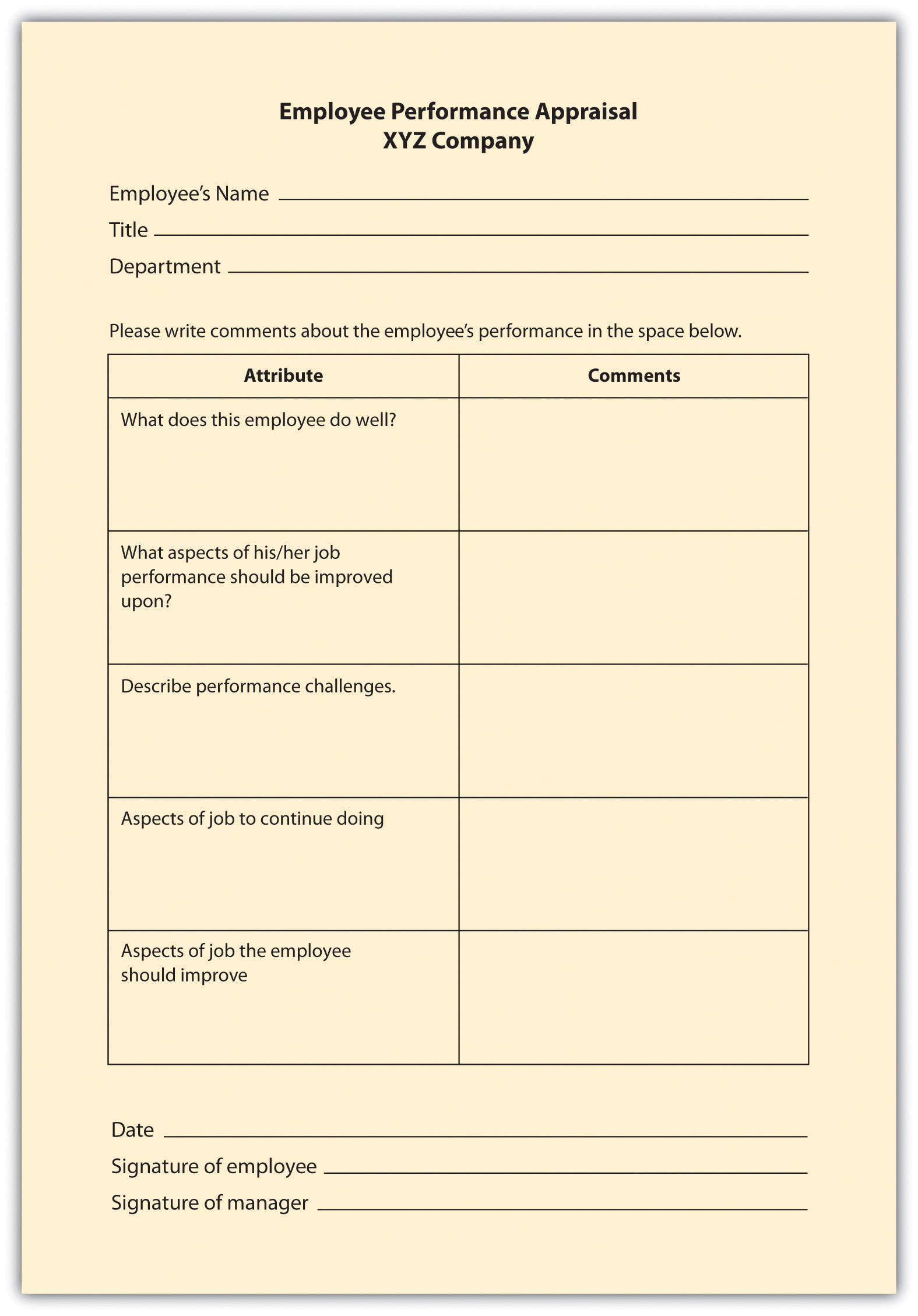
<div class="chapter standard" id="slug-13-2-collective-bargaining"><div class="chapter-title-wrap"><h3 class="chapter-number">56</h3><h2 class="chapter-title">13.2 Collective Bargaining</h2></div><div class="ugc chapter-ugc"> <div class="13.2 collective-bargaining"><div class="bcc-box bcc-highlight"><h3 itemprop="educationalUse">Learning Objectives</h3> <p>By the end of this section, you will be able to:</p> <ol><li>Be able to describe the process of collective bargaining.</li> <li>Understand the types of bargaining issues and the rights of management.</li> <li>Discuss some strategies when working with unions.</li> </ol> </div> <p>When employees of an organization vote to unionize, the process for collective bargaining begins. Collective bargaining is the process of negotiations between the company and representatives of the union. The goal is for management and the union to reach a contract agreement, which is put into place for a specified period of time. Once this time is up, a new contract is negotiated. In this section, we will discuss the components of the collective bargaining agreement.</p> <div class="textbox shaded"><strong>Collective Agreement:</strong> A contract negotiated between the employer and union, identifying the terms and conditions of employment. Contracts are negotiated for a finite term and must be re-negotiated when they expire.</div> <h2>The Process of Collective Bargaining</h2> <p>In any bargaining agreement, certain management rights are not negotiable, including the right to manage and operate the business, hire, promote, or discharge employees. However, in the negotiated agreement there may be a process outlined by the union for how these processes should work. Management rights also include the ability of the organization to direct the work of the employees and to establish operational policies. As an HR professional sits at the bargaining table, it is important to be strategic in the process and tie the strategic plan with the concessions the organization is willing to make and the concessions the organization will not make.</p> <p>Another important point in the collective bargaining process is the aspect of union security. Obviously, it is in the union’s best interest to collect dues from members and recruit as many new members as possible. A <strong>union shop</strong> requires a person to join the union within a certain time period of joining the organization. A <strong>closed shop</strong> means that a person must be a union member to be hired.</p> <p>In a collective bargaining process, both parties are legally bound to bargain in <strong>good faith</strong>. This means they have a mutual obligation to participate actively in the deliberations and indicate a desire to find a basis for agreement.</p> <h3>Examples of Bargaining Topics</h3> <ul><li>Pay rate and structure</li> <li>Health benefits</li> <li>Incentive programs</li> <li>Job classification</li> <li>Performance assessment procedure</li> <li>Vacation time and sick leave</li> <li>Health plans</li> <li>Layoff procedures</li> <li>Seniority</li> <li>Training process</li> <li>Severance pay</li> <li>Tools provided to employees</li> <li>Process for new applicants</li> </ul> <div id="attachment_598" style="width: 610px" class="wp-caption aligncenter"><a href="https://pressbooks.bccampus.ca/hrm1stcanadianedition/wp-content/uploads/sites/118/2017/03/Figure-13.7.png"><img src="https://pressbooks.bccampus.ca/hrm1stcanadianedition/wp-content/uploads/sites/118/2017/03/Figure-13.7-300x132.png" alt="" width="600" height="265" class="wp-image-598" srcset="https://pressbooks.bccampus.ca/hrm1stcanadianedition/wp-content/uploads/sites/118/2017/03/Figure-13.7-300x132.png 300w, https://pressbooks.bccampus.ca/hrm1stcanadianedition/wp-content/uploads/sites/118/2017/03/Figure-13.7-768x339.png 768w, https://pressbooks.bccampus.ca/hrm1stcanadianedition/wp-content/uploads/sites/118/2017/03/Figure-13.7-1024x452.png 1024w, https://pressbooks.bccampus.ca/hrm1stcanadianedition/wp-content/uploads/sites/118/2017/03/Figure-13.7-65x29.png 65w, https://pressbooks.bccampus.ca/hrm1stcanadianedition/wp-content/uploads/sites/118/2017/03/Figure-13.7-225x99.png 225w, https://pressbooks.bccampus.ca/hrm1stcanadianedition/wp-content/uploads/sites/118/2017/03/Figure-13.7-350x154.png 350w" /></a> <p class="wp-caption-text"><strong>Figure 13.7</strong> Steps in Collective Bargaining</p> </div> <p>The collective bargaining process has five main steps; we will discuss each of these steps next. The first step is the preparation of both parties. The negotiation team should consist of individuals with knowledge of the organization and the skills to be an effective negotiator. An understanding of the working conditions and dissatisfaction with working conditions is an important part of this preparation step. Establishing objectives for the negotiation and reviewing the old contract are key components to this step. The management team should also prepare and anticipate union demands, to better prepare for compromises.</p> <p>The second step of the process involves both parties agreeing on how the time lines will be set for the negotiations. In addition, setting ground rules for how the negotiation will occur is an important step, as it lays the foundation for the work to come.</p> <p>In the third step, each party comes to the table with proposals. It will likely involve initial opening statements and options that exist to resolve any situations that exist. The key to a successful proposal is to come to the table with a “let’s make this work” attitude. An initial discussion is had and then each party generally goes back to determine which requests it can honor and which it can’t. At this point, another meeting is generally set up to continue further discussion.</p> <p>Once the group comes to an agreement or settlement (which may take many months and proposals), a new contract is written and the union members vote on whether to accept the agreement. If the union doesn’t agree, then the process begins all over again.</p> <h2>Ramifications of a Bargaining Impasse</h2> <p>When the two parties are unable to reach consensus on the collective bargaining agreement, this is called a <strong>bargaining impasse</strong>. In BC, it is illegal for a union to go on strike while a collective agreement remains in force. If it expires before a new agreement is negotiated, the union is in a “strike position” and can ask members to vote on whether they could or should go on strike. This is called a <strong>strike mandate</strong>, and is often used to attempt to apply pressure on the employer. It should be noted that before a company can go on strike, they must provide the employer with a 72 hour <strong>strike notice</strong>. A <strong>lockout</strong> is a work stoppage that is initiated by the employer. The goal of a lockout, which prevents workers from working, is to put pressure on the union to accept the contract. A lockout can only be legally conducted when the existing collective bargaining agreement has expired and there is truly an impasse in contract negotiations. In summer 2011, the National Basketball Association locked out players when the collective bargaining agreement expired, jeopardizing the 2011–12 season [5] while putting pressure on the players to accept the agreement. Similarly, the goal of a strike is to put pressure on the organization to accept the proposed contract. Some organizations will impose a lockout if workers engage in slowdowns, an intentional reduction in productivity. Some unions will engage in a <strong>slowdown</strong> instead of a strike, because the workers still earn pay, while in a strike they do not. Some unions will engage in <strong>rotating strikes</strong>, where employees in a certain location will go on strike for a set period of time, then return to work and another work unit will go on strike. This can minimize the financial cost of a strike to workers, while still being disruptive to the employer. In 2011, Canada Post responded to a series of rotating strikes by initiating a lockout, in order to pressure the union to come back to the bargaining table. <strong>Sympathy strikes</strong> are work stoppages by other unions designed to show support for the union on strike. Sympathy strikes are prohibited by the Canada Labour Code, however provincially they may be permitted as a form of political protest.</p> <div class="textbox shaded"><h3>Human Resource Recall</h3> <p>How would you feel about going on strike? What kinds of situations may cause you to do so?</p> </div> <h2>Working with Labour Unions</h2> <p>First and foremost, when working with labour unions, a clear understanding of the contract is imperative for all HR professionals and managers. The contract (also called the collective bargaining agreement) is the guiding document for all decisions relating to employees. All HR professionals and managers should have intimate knowledge of the document and be aware of the components of the contract that can affect dealings with employees. The agreement outlines all requirements of managers and usually outlines how discipline, promotion, and transfers will work.</p> <p>Because as managers and HR professionals we will be working with members of the union on a daily basis, a positive relationship can not only assist the day-to-day operations but also create an easier bargaining process. Solicitation of input from the union before decisions are made can be one step to creating this positive relationship. Transparent communication is another way to achieve this goal.</p> <p>In HR, one of the major aspects of working with Labour unions is management of the union contract. We discuss the grievance process in Section 13.3 &#8220;Administration of the Collective Bargaining Agreement&#8221;.</p> <h3>How Would You Handle This?</h3> <p><em>Union Busting</em></p> <p><em>The employees in your organization are unhappy with several aspects of their job, including pay. You have tried to solve this issue by creating new compensation plans, but with no avail. You hear talk of unionizing. When you bring this issue to your CEO, she vehemently opposes unions and tells you to let the employees know that if they choose to unionize, they will all lose their jobs. Knowing the CEO’s threat is illegal, and knowing you may lose your job if the workers decide to unionize, how would you handle this?</em></p> <div class="bcc-box bcc-success"><h3 itemprop="educationalUse">Key Takeaways</h3> <ul><li>In a UNION SHOP, people must join the union within a specified time period after joining the organization.</li> <li>A CLOSED SHOP allows only union members to apply and be hired for a job.</li> <li>COLLECTIVE BARGAINING is the process of negotiating the contract with union representatives. Collective bargaining, to be legal, must always be done in good faith.</li> <li>The collective bargaining process can take time. Both parties prepare for the process by gathering information and reviewing the old contract. They then set time lines for the bargaining and reveal their wants and negotiate those wants. A BARGAINING IMPASSE occurs when members cannot come to an agreement.</li> <li>When a bargaining impasse occurs, a STRIKE or LOCKOUT of workers can occur.</li> <li>Some tips for working with unions include knowing and following the contract, involving unions in company decisions, and communicating with transparency.</li> </ul> </div> <div class="bcc-box bcc-info"><h3 itemprop="educationalUse">Exercises</h3> <p><strong>1:</strong> Research negotiation techniques, then list and describe the options. Which do you think would work best when negotiating with unions?</p> <p><strong>2:</strong> Of the list of bargaining issues, which would be most important to you and why?</p> </div> <hr /> <p>[1] “Best Workforces Are in Right to Work States,” Redstate, June 30, 2011, accessed August 14, 2011, <a class="rId277" target="_blank" href="http://www.redstate.com/laborunionreport/2011/06/30/best-workforces-are-in-right-to-work-states-survey-finds/">http://www.redstate.com/Labourunionreport/2011/06/30/best-workforces-are-in-right-to-work-states-survey-finds/</a>.</p> <p>[2] “Right to Work for Less,” AFL-CIO, accessed August 14, 2011,<a class="rId278" target="_blank" href="http://www.aflcio.org/issues/legislativealert/stateissues/work/">http://www.aflcio.org/issues/legislativealert/stateissues/work/</a>.</p> <p>[3] Dan Goldberg, “Verizon Strike Could Last Months,” New Jersey News, August 7, 2011, accessed August 15, 2011,<a class="rId279" target="_blank" href="http://www.nj.com/news/index.ssf/2011/08/verizon_workers_outline_differ.html">http://www.nj.com/news/index.ssf/2011/08/verizon_workers_outline_differ.html</a>.</p> <p>[4] Dan Goldberg, “Verizon Strike Could Last Months,” New Jersey News, August 7, 2011, accessed August 15, 2011,<a class="rId280" target="_blank" href="http://www.nj.com/news/index.ssf/2011/08/verizon_workers_outline_differ.html">http://www.nj.com/news/index.ssf/2011/08/verizon_workers_outline_differ.html</a>.</p> <p>[5] Steve Kyler, “Division among Owners?” HoopsWorld, August 8, 2011, accessed August 15, 2011, <a class="rId281" target="_blank" href="http://www.hoopsworld.com/Story.asp?story_id=20549">http://www.hoopsworld.com/Story.asp?story_id=20549</a>.</p> </div> </div></div>
<div class="chapter standard" id="slug-13-3-administration-of-the-collective-bargaining-agreement"><div class="chapter-title-wrap"><h3 class="chapter-number">57</h3><h2 class="chapter-title">13.3 Administration of the Collective Bargaining Agreement</h2></div><div class="ugc chapter-ugc"> <div class="13.3 administration-of-the-collective-bargaining-agreement"><div class="bcc-box bcc-highlight"><h3 itemprop="educationalUse">Learning Objectives</h3> <p>By the end of this section, you will be able to:</p> <ol><li>Be able to interpret language in a collective agreement.</li> <li>Be able to explain how to manage the grievance process.</li> </ol> </div> <p>Language in a collective agreement is normally drafted very carefully. Employers must be cautious when interpreting the agreement, as there must be consistency in practice across the organization. If one supervisor interprets a clause one way and grants a benefit, and another supervisor has a different interpretation and denies the same benefit, there is a lack of fairness in the process, and it will likely result in a grievance.</p> <p>When interpreting a clause in the agreement, words such as “may”, “will usually”, or “normally” imply discretion, meaning that you can say yes or no depending on the circumstances. Other articles will use much more precise language: “shall”, “will”, and “must” permit no discretion on the part of the supervisor or manager. To interpret an article, a supervisor must:</p> <ol><li>Pay attention to the context – does the situation match the situation in the collective agreement?</li> <li>Make note of the specific language – what discretion, if any, is permitted by the language in the collective agreement?</li> <li>What is the common practice in the organization? Your interpretation and application should be consistent with other supervisors and managers. If you are unsure, check with the Human Resources department.</li> </ol> <p>A grievance procedure or process is normally created within the collective bargaining agreement. The grievance procedure outlines the process by which grievances over contract violations will be handled. This will be the focus of our next section.</p> <h2>Procedures for Grievances</h2> <p>A violation of the contract terms or perception of violation normally results in a grievance. The process is specific to each contract, so we will discuss the process in generalities. A grievance is normally initiated by an employee and then handled by union representatives. Most contracts specify how the grievance is to be initiated, the steps to complete the procedure, and identification of representatives from both sides who will hear the grievance. Normally, the HR department is involved in most steps of this process. Since HRM has intimate knowledge of the contract, it makes sense for them to be involved. The basic process is shown in Figure 13.8 &#8220;A Sample Grievance Process&#8221;.</p> <div id="attachment_604" style="width: 610px" class="wp-caption aligncenter"><a href="https://pressbooks.bccampus.ca/hrm1stcanadianedition/wp-content/uploads/sites/118/2017/03/Figure-13.8.png"><img src="https://pressbooks.bccampus.ca/hrm1stcanadianedition/wp-content/uploads/sites/118/2017/03/Figure-13.8-300x134.png" alt="" width="600" height="267" class="wp-image-604" srcset="https://pressbooks.bccampus.ca/hrm1stcanadianedition/wp-content/uploads/sites/118/2017/03/Figure-13.8-300x134.png 300w, https://pressbooks.bccampus.ca/hrm1stcanadianedition/wp-content/uploads/sites/118/2017/03/Figure-13.8-768x342.png 768w, https://pressbooks.bccampus.ca/hrm1stcanadianedition/wp-content/uploads/sites/118/2017/03/Figure-13.8-1024x456.png 1024w, https://pressbooks.bccampus.ca/hrm1stcanadianedition/wp-content/uploads/sites/118/2017/03/Figure-13.8-65x29.png 65w, https://pressbooks.bccampus.ca/hrm1stcanadianedition/wp-content/uploads/sites/118/2017/03/Figure-13.8-225x100.png 225w, https://pressbooks.bccampus.ca/hrm1stcanadianedition/wp-content/uploads/sites/118/2017/03/Figure-13.8-350x156.png 350w" /></a> <p class="wp-caption-text"><strong>Figure 13.8</strong> A Sample Grievance Process</p> </div> <p>The first step is normally an informal conversation with the manager, employee, and possibly a union representative. Many grievances never go further than this step, because often the complaint is a result of a misunderstanding.</p> <p>If the complaint is unresolved at this point, the union will normally initiate the grievance process by formally expressing it in writing. At this time, HR and management may discuss the grievance with a union representative. If the result is unsatisfactory to both parties, the complaint may be brought to the company’s union grievance committee. This can be in the form of an informal meeting or a more formal hearing.</p> <p>After discussion, management will then submit a formalized response to the grievance. It may decide to remedy the grievance or may outline why the complaint does not violate the contract. At this point, the process is escalated.</p> <p>Further discussion will likely occur, and if management and the union cannot come to an agreement, the dispute will normally be brought to a mediator or arbitrator, who will work with the union and management to try and resolve the issue. A <strong>mediator</strong>  acts as an impartial third party and tries to resolve the issue. Any recommendation made by the mediator is not binding for either of the parties involved. Mediators can work both on grievance processes and collective bargaining issues. For example, when the National Football League (NFL) and its players failed to reach a collective bargaining agreement, they agreed to try mediation. [1] In this case, the agreement to go to mediation was a positive sign after several months of failed negotiations. In the end, the mediation worked, and the NFL players started the 2011–12 season on time. In Washington State (as well as most other states), a nonprofit organization is available to assist in mediations (either grievance or collective bargaining related) and arbitrations. The goal of such an organization is to avoid disruptions to public services and to facilitate the dispute resolution process. In Washington, the organization is called the Public Employment Relations Commission (PERC). Figure 13.9 &#8220;The Mediation Process for the Public Employment Relations Commission in Washington State&#8221;shows the typical grievance handling process utilizing the free PERC services.</p> <p>If no resolution develops, an arbitrator might be asked to review the evidence and make a decision. An <strong>arbitrator</strong> is an impartial third party who ultimately makes a binding decision in the situation. Thus arbitration is the final aspect of a grievance.</p> <p><strong>Some examples of grievances might include the following:</strong></p> <ol><li>One employee was promoted over another, even though he had seniority.</li> <li>An employee doesn’t have the tools needed to perform his or her job, as outlined in the contract.</li> <li>An employee was terminated, although the termination violated the rules of the contract.</li> <li>An employee was improperly trained on chemical handling in a department.</li> </ol> <p>Most grievances fall within one of four categories. There are individual/personal grievances, in which one member of the union feels he or she has been mistreated. A group grievance occurs if several union members have been mistreated in the same way. A policy grievance deals with basic contract issues surrounding seniority or pay, for example. Policy grievances are filed by the union, not an individual. The important things to remember about a grievance are that it should not be taken personally and, if used correctly can be a fair, clear process to solving problems within the organization.</p> <div class="bcc-box bcc-success"><h3 itemprop="educationalUse">Key Takeaways</h3> <ul><li>To interpret an article in the collective agreement, supervisors must pay attention to the context, evaluate whether the contract language permits any discretion, and determine the common practice in the organization to ensure consistency.</li> <li>The GRIEVANCE PROCESS is a formal process to address any complaints about contract violations.</li> <li>The grievance process varies from contract to contract. It is an important part of the contract that ensures a fair process for both union members and management.</li> <li>HR is normally involved in this process, since it has intimate knowledge of the contract and laws that guide the contract.</li> <li>The grievance process can consist of any number of steps. First, the complaint is discussed with the manager, employee, and union representative. If no solution occurs, the grievance is put into writing by the union. Then HR, management, and the union discuss the process, sometimes in the form of a hearing in which both sides are able to express their opinion.</li> <li>Management then expresses its decision in writing to the union.</li> <li>If the union decides to escalate the grievance, an ARBITRATOR may be brought in to make the final binding decision.</li> <li>There are four main types of grievances. First, the INDIVIDUAL GRIEVANCE is filed when one member of the union feels mistreated. A GROUP GRIEVANCE occurs when several members of the union feel they have been mistreated and file a grievance as a group. A POLICY GRIEVANCE is filed by the union and is usually based on a larger issue, such as a policy or contract issue.</li> <li>Grievances should not be taken personally and should be considered a fair way in which to solve problems that can come up between the union and management.</li> </ul> </div> <div class="bcc-box bcc-info"><h3 itemprop="educationalUse">Exercises</h3> <p><strong>1:</strong> What are the advantages of a grievance process? What disadvantages do you see with a formalized grievance proces</p> </div> <p>[1] Associated Press, “NFL, Union Agree to Mediation,” February 17, 2011, accessed August 15, 2011, <a class="rId283" target="_blank" href="http://msn.foxsports.com/nfl/story/NFL-players-union-agree-to-mediation-federal-for-labor-talks-CBA-021711">http://msn.foxsports.com/nfl/story/NFL-players-union-agree-to-mediation-federal-for-Labour-talks-CBA-021711</a>.</p> <div class="textbox shaded"><h3>Chapter Summary</h3> <ul><li>Union membership in Canada has been slowly declining. Today, union membership consists of about 28.8 percent of the workforce, while in 1981 it consisted of 37.6% of the workforce.</li> <li>The reasons for decline are varied, depending on whom you ask. Some say the moving of jobs overseas is the reason for the decline, or reductions in the numbers of government employees, or the use of technology which has also reduced the number of employees required in manufacturing, mining and forestry.</li> <li>The labour movement is responsible for many of the working conditions we take for granted today, such as an 8 hour workday and overtime pay.</li> <li>The United States has a low number of union members compared with other countries. Much of Europe, for example, has over 30 percent of their workforce in Labour unions, while in some countries as much as 50 percent of the workforce are members of a Labour union.</li> <li>The LABOUR RELATIONS BOARD is the overseeing body for labour unions, and it handles disputes between companies as well as facilitates the process of new labour unions in the developing stages. Its job is to enforce the labour code. Each province and territory has its own Labour Board and Labour Code, in addition to the national Labour Board that governs unions and employers in industries that fall under federal jurisdiction.</li> <li>To form a union in BC, the organizers have 90 days to collect signatures from 45 percent of the employees in the proposed bargaining unit. If this occurs, the BC Labour Relations Board will facilitate a card check to determine the signatures are valid. If they are valid, a vote will be called within 10 days, 55% of all employees must participate in the vote and the majority must vote for the union in order for it to be certified. The employer and union must then negotiate in good faith.</li> <li>To form a union in a federally regulated industry, the organizers have 6 months to collect signatures and $5 from 35 percent of the employees in the proposed bargaining unit; if more than 50% of the employees indicate their support for the union, it can be certified without a vote.</li> <li>Unions affects costs and operations, including staffing and selection practices, promotions, performance measurement, discipline and termination, and pay and benefits. Some companies will try to prevent a union from organizing in their workplace.</li> <li>In order to determine an appropriate bargaining unit, the Labour Board will hear arguments from the union and employer, and then make a decision after considering four factors: Management, Employee Wishes, Community of Interest, and Employer Structure.</li> <li>In a UNION SHOP, people must join the union within a specified time period after joining the organization.</li> <li>A CLOSE SHOP allows only union members to apply and be hired for a job.</li> <li>COLLECTIVE BARGAINING is the process of negotiating the contract with union representatives. Collective bargaining, to be legal, must always be done in good faith.</li> <li>The collective bargaining process can take time. Both parties prepare for the process by gathering information and reviewing the old contract. They then set time lines for the bargaining and reveal their wants and negotiate those wants. A bargaining impasse occurs when members cannot come to an agreement.</li> <li>When a bargaining impasse occurs, a STRIKE or LOCKOUT of workers can occur.</li> <li>Some tips for working with unions include knowing and following the contract, involving unions in company decisions, and communicating with transparency.</li> <li>To interpret an article in the collective agreement, supervisors must pay attention to the context, evaluate whether the contract language permits any discretion, and determine the common practice in the organization to ensure consistency.</li> <li>The grievance process is a formal process to address any complaints about contract violations.</li> <li>The grievance process varies from contract to contract. It is an important part of the contract that ensures a fair process for both union members and management.</li> <li>HR is normally involved in this process, since it has intimate knowledge of the contract and laws that guide the contract.</li> <li>The grievance process can consist of any number of steps. First, the complaint is discussed with the manager, employee, and union representative. If no solution occurs, the grievance is put into writing by the union. Then HR, management, and the union discuss the process, sometimes in the form of a hearing in which both sides are able to express their opinion.</li> <li>Management then expresses its decision in writing to the union.</li> <li>If the union decides to escalate the grievance, an ARBITRATOR may be brought in to make the final binding decision.</li> <li>There are four main types of grievances. First, the INDIVIDUAL GRIEVANCE is filed when one member of the union feels mistreated. A GROUP GRIEVANCE occurs when several members of the union feel they have been mistreated and file a grievance as a group. A POLICY GRIEVANCE is filed by the union and is usually based on a larger issue, such as a policy or contract issue.</li> <li>Grievances should not be taken personally and should be considered a fair way in which to solve problems that can come up between the union and management.</li> </ul> </div> </div> </div></div>
<div class="chapter standard" id="slug-13-4-cases-and-problems"><div class="chapter-title-wrap"><h3 class="chapter-number">58</h3><h2 class="chapter-title">13.4 Cases and Problems</h2></div><div class="ugc chapter-ugc"> <div class="13.4 cases-and-problems"><div class="textbox examples"><h3>Chapter Case</h3> <p>But I Didn’t Know</p> <p>After a meeting with the operations manager of your organization, you close the door to your office so you can think of strategies to resolve an issue that has come up. The operations manager casually mentioned he had just finished granted Special Leave – Household Emergency to an employee who had to take his dog to the vet. This clause in the collective agreement was intended to give employees time to deal with an emergency such as burst pipes or a fire. The operations manager, being new both to the company and to a union shop, wasn’t aware of the intent of this clause in the collective agreement. You worry that if other employees get wind of this, your costs could escalate rapidly as the majority of your employees have some sort of pet. Collective agreement language must be interpreted and applied consistently across the organization. Of course, the challenge is that the manager already told this person he would be receiving the day off with pay as a Special Leave. You know you need to act fast to remedy this situation.</p> <ol><li>As an HR professional, what should you have done initially to prevent this issue from happening?</li> <li>Outline a specific strategy to implement stating how you will prevent this from happening in the future.</li> <li>What would you do about the day off with pay that was already promised to the employee?</li> <li>If the union files a grievance, what type of grievance do you think it would be? Provide reasoning for your answer.</li> <li>If the union does file a grievance, draft a response to the grievance to share with your upper-level managers as a starting point for discussion on how to remedy the situation.</li> </ol> </div> <div class="textbox shaded"><h3>Team Activity</h3> <p><strong>1:</strong> Break into teams of four or five. Please choose the following roles for each of your team members:</p> <p style="padding-left: 30px"><strong>a.</strong> Mediator</p> <p style="padding-left: 30px"><strong>b.</strong> Manager</p> <p style="padding-left: 30px"><strong>c.</strong> HR professional</p> <p style="padding-left: 30px"><strong>d.</strong> Employee</p> <p>Once roles are chosen, please determine a solution or make a recommendation for the following situation (remember, this is a role play; you may make reasonable assumptions): The employee believes the performance evaluation the manager gave was unfair and has filed a grievance about it. The employee shows proof of a good attendance record and three letters from colleagues stating the high quality of her work. The manager contends the employee does not use time wisely at work, hence the 3 out of 5 rating. The manager is able to show several examples of poor time usage.</p> </div> </div> </div></div>
<div class="part " id="chapter-14-safety-and-health-at-work"><div class="part-title-wrap"><h3 class="part-number">XIV</h3><h1 class="part-title">Chapter 14: Safety and Health at Work</h1></div></div>
<div class="chapter standard" id="introduction-12"><div class="chapter-title-wrap"><h3 class="chapter-number">59</h3><h2 class="chapter-title">Introduction</h2></div><div class="ugc chapter-ugc"><h2>Training for Safety</h2> <p>As the HR manager of a large construction company, your workers’ health and safety is of paramount concern. Last week, you calculated an incidence rate of 7.5 accidents per 100 employees. When you compared these numbers to last year, you found the number had significantly increased, as it was 4.2 the year prior. This is concerning, because you know an unsafe workplace is not only bad for employees and bad for business, but it could result in fines from WorkSafe BC. You ask your operations managers to meet with you about the situation. When you bring this to his attention, he doesn’t seem at all concerned about the almost double increase in accidents over the last year. He says the increase in accidents is a result of scaffolding falling during a building project where several workers were hurt. He says this one accident skewed the numbers. He mentions that the supervisor responsible for the scaffolding had been let go six months ago for other reasons, and he assures you that there is no reason to be concerned. A few weeks after this conversation, two of your workers spend time in the hospital because of a falling scaffolding injury. Again, you approach the operations manager and he assures you that those employees were just new and he will implement proper procedures. You know the incident will result in another high incident percentage, even if there isn’t another accident the rest of the year. You look back over ten years of accident reports and find there are three areas for which your company seems to have 90 percent of all accidents. You decide you will develop a training program to address these safety issues in your workplace. You refer to your HRM textbook for tips on how to prepare and communicate this training to your employees. When you present this option to your operations manager, he says that employees don’t have the time to take from their jobs to go through this training and suggests you just let it go. You are prepared for this response, and you give him the dollar figure of money lost owing to worker injury in your organization. This gets his attention, especially when you compare it to the small cost of doing a two-hour training for all employees. Both of you check your schedules to find the best day of the week to schedule the training, for minimum impact on employees’ work.</p> </div></div>
<div class="chapter standard" id="slug-14-1-workplace-safety-and-health-laws"><div class="chapter-title-wrap"><h3 class="chapter-number">60</h3><h2 class="chapter-title">14.1 Workplace Safety and Health Laws</h2></div><div class="ugc chapter-ugc"> <div class="14.1 workplace-safety-and-health-laws"><div class="bcc-box bcc-highlight"><h3 itemprop="educationalUse">Learning Objectives</h3> <p>By the end of this section, you will be able to:</p> <ol><li>Explain Occupational Health &amp; Safety laws</li> <li>Explain right-to-know laws</li> </ol> </div> <p>Workplace safety is the responsibility of everyone in the organization. HR professionals and managers, however, play a large role in developing standards, making sure safety and health laws are followed, and tracking workplace accidents.</p> <h2>The need for Occupational Health &amp; Safety Laws</h2> <p>In 2014 (the most recent data available at the time of this writing), 173 work-related deaths were reported in BC, as well as 146,814 injuries. <a id="sdfootnote16anc" href="#sdfootnote16sym"><sup>16</sup></a> These injuries represent 2.6 million days lost from work. This staggering number represents not only the cost to employees’ well-being but also financial and time costs to the company. This is why health and safety is a key component of any human resource management (HRM) strategic plan. The costs of workplace injuries includes:</p> <ul><li>Lost productivity</li> <li>Lost wages</li> <li>Medical expenses</li> <li>Disability compensation</li> <li>Physical and psychological suffering</li> </ul> <h2>About WorkSafe B.C. and Worker’s Compensation</h2> <p>The Workmen’s Compensation Act came into force in 1917, when the Workmen’s Compensation Board was created in BC. In the early 1900s, forestry, fishing and mining were the province’s core industries, and working conditions were dangerous. Loggers and mill workers were at risk of being badly injured and permanently maimed, but Vancouver Island’s coal mines were some of the most dangerous in the world. At the time, injured workers were often terminated from employment and received very little compensation for their injuries. Widows of workers killed on the job were also given very little support. Workmen’s Compensation was an insurance plan that ensured that injured workers and their families were provided for. Today, WorkSafe B.C. administers and enforces the Workers Compensation Act, Occupational Health and Safety (OHS) Regulations, and the Workers’ Compensation program. One of their primary goals of WorkSafe B.C. is to foster the improvement of occupational health and safety in workplaces. This is accomplished by setting and enforcing standards and by providing training, outreach, education, and assistance.</p> <p>Examples (not at all an exhaustive list) of the types of safety regulations that are overseen by WorkSafe B.C. include:</p> <ol><li><strong>Personal protective clothing and equipment</strong>. This can include wearing safety boots, hearing protection, safety glasses or visors, respiratory protection, and hard hats.</li> <li><strong>Fall protection</strong>. Slips, trips, and falls constitute a significant number of workplace injuries, in all occupations. Passageways, storerooms, and work places must be kept in a clean, organized, and safe condition to eliminate tripping hazards. Individuals working at higher elevations, such as window cleaners or roofers, must also wear harnesses to catch them if they fall.</li> <li><strong>De-energization and lockout</strong>. Moving machine parts require safeguards (depending upon the industry) to prevent crushed fingers, hands, amputations, burns, or blindness. Safeguards might include a guard attached to the machine, but locking machines and ensuring they can’t be turned on is critical when an employee is reaching in to clear, clean or maintain equipment.</li> <li><strong>Confined spaces</strong>. Workers often have to enter confined spaces such as sheds or tanks, and can be overcome by toxins in the air, heat, or suffocation. Additional precautions are required.</li> <li><strong>Evacuation and rescue</strong>. Workers must have unimpeded exits – no locks or fastening to prevent free escape, except in institutions such as prisons. All exits must be marked visibly with signage.</li> <li><strong>Chemical Agents and Biological Agents</strong>. Employees must be aware of all potential hazards when they are handling dangerous goods or chemicals, how to deal with spills and how to administer first aid.</li> <li><strong>Standards for fire equipment</strong>. Fire extinguishers are required to be on-site for use by employees, and must be properly maintained.</li> <li><strong>Violence in the workplace</strong>. Many occupations – policing, nursing, social workers – must provide services to customers / clients who could potentially become violent. Employers must have policies and procedures in place that minimize the risk to their workers.</li> </ol> <p>HR professionals and managers should have a good understanding of these laws and make sure, no matter which industry, that occupational health and safety standards are followed in the workplace. These standards are normally part of the overall strategic HRM plan of any organization and are even more crucial to organizations involved in manufacturing.</p> <p>WorkSafe B.C. fines companies who violate safety regulations. For example, on June 20, 2016, <em>The Prince George Citizen</em> reported that WorkSafe B.C. fined North Central Roofing Ltd. $7,500 after two employees were found working without proper fall protection in place. This was the third fine levied against the company in six months.<a id="sdfootnote17anc" href="#sdfootnote17sym"><sup>17</sup></a> On December 16, 2015, Brink Forest Products in Prince George was fined $137,546.93 after an inspection in 2014 revealed accumulations of combustible dust. WorkSafeBC reported that “The firm’s failure to control and remove hazardous accumulations of combustible dust was a repeated and high-risk violation.” Brink Forest Products is appealing the penalty.<a id="sdfootnote18anc" href="#sdfootnote18sym"><sup>18</sup></a> In 2014, WorkSafe B.C. imposed 433 penalties on BC employers, totaling $5,994,974.00.<a id="sdfootnote19anc" href="#sdfootnote19sym"><sup>19</sup></a></p> <h2>Worker Rights</h2> <p>In BC, workers have three rights:</p> <ol><li>Right to a healthy and safe workplace</li> <li>Right to safety training and orientation</li> <li>Right to refuse unsafe work.</li> </ol> <p>Training and orientation must include informing workers of these three rights, notifying them of any hazards in the workplace, and training them on safe work procedures. In addition, any organization that manufactures, processes, or stores certain hazardous chemicals must provide employees with material safety data sheet (MSDS), as the data lists not only the chemical components but health risks of the substance, how to handle the material safely, and how to administer first aid in the case of an accident.</p> <p>WHMIS (Workplace Hazard Management Information Systems) training ensures that employees recognize hazard symbols on containers and know where to find the MSDS information.</p> <p>Health Canada distributes a poster identifying the hazard symbols of WHMIS. Learn more about the Workplace Hazardous Materials Information System (WHMIS) here: <a class="rId284" href="http://www.hc-sc.gc.ca/ewh-semt/occup-travail/whmis-simdut/index-eng.php">http://www.hc-sc.gc.ca/ewh-semt/occup-travail/whmis-simdut/index-eng.php</a></p> <p>Occupational Health and Safety regulations vary from province to province. Always be aware of the laws in the province in which your company is operating.</p> <div class="textbox shaded"><h3>Human Resource Recall</h3> <p>How do you think the OHS requirements apply to office work settings?</p> </div> <h2>OHS Enforcement</h2> <p>The record-keeping aspect of OHS is perhaps as important as following the laws. Companies having more than twenty employees with a moderate to high risk workplace, and more than 50 workers in low risk workplaces, must initiate and maintain an occupational health and safety program. This program must include training, regular inspections, policies, meetings, investigations, and the maintenance of records and statistics. The purpose of the record keeping does not imply that the employee or the company is at fault for a illness or injury. In addition, just because a record is kept doesn’t mean the employee will be eligible for worker’s compensation. The record-keeping aspect normally refers to the keeping inspections, meetings, incidents and investigations. Many employers track incidence rates in order to determine the effectiveness of their OHS program, using the following formula:</p> <div class="textbox shaded"><p style="text-align: center"><strong>Incidence rate=</strong></p> <p style="text-align: center"><strong># of injuries and illness × 200,000 total hours worked by all employees in the period</strong></p> </div> <p>Two hundred thousand is the standard figure used, as it represents one hundred full-time employees who work forty hours per week for fifty weeks per year. An HR professional can then use this data and compare it to other companies in the same industry to see how its business is meeting safety standards compared with other businesses. This calculation provides comparable information, no matter the size of the company. If the incidence rate is higher than the average, the HR professional might consider developing training surrounding safety in the workplace.</p> <p>Knowing what should be reported and what shouldn’t be reported is an important component to OHS.  According to the Act, an employer must immediately report any accident that:</p> <ul><li>results in a serious injury (requiring medical attention) or death of a worker;</li> <li>A major structural failure or collapse</li> <li>A major release of a hazardous substance</li> <li>A fire or explosion that could cause serious injury</li> </ul> <p>The employer must also conduct a preliminary investigation into the incident within 48 hours.</p> <p>Besides requiring reporting, WorkSafe B.C. also performs inspections. They prioritize inspections according to the type of industry (higher risk industries take precedence), sites where there has been an incident of death or serious harm, or the potential for serious harm, and sites from which they have received complaints from workers.</p> <p>Most site visits are unannounced and begin with the inspector introducing himself or herself. Prior to this, the inspector has performed research on the organization to be inspected. Once the inspector arrives, a representative of the organization is assigned to accompany the inspector and the inspector discusses the reasons for the site visit. The inspector then walks around, pointing out any obvious violations, and then the inspector and representative discuss the findings. Within six months a complete report is sent, along with any citations or fines based on what the inspector found. If the organization is in disagreement with the violation or citation, a follow-up meeting with WorkSafe B.C. is scheduled. In the event a fine has been levied, WorkSafe B.C. has an appeal process.</p> <div class="textbox shaded"><h3>Westray Mining Disaster</h3> <p>In 1992, a coal mine disaster in Nova Scotia resulted in the deaths of 26 miners, after an explosion of methane gas. Safety concerns had been raised to the company by employees and government inspectors, but the company failed to respond appropriately. After the explosion, a Royal Commission of Inquiry was established to investigate the incident, and one of the recommendations of that commission was to create an amendment to the criminal code. Bill C-45 came into law 12 years later.</p> </div> <p>WorkSafe B.C. has several penalties (per violation) it can assess on organizations, ranging from an immediate stop work order or administrative penalties of up to $1,010.33 or fines of up to $1,374,716.89. The higher penalties often are a result of very serious offenses, in which an employee could have been killed, but also are imposed for willful offenses that the employer was aware could cause serious injury or death and did nothing about them. This is considered blatant indifference to the law. In practice, penalties rarely exceed $150,000, but employers and managers can also be charged criminally if they were aware of a dangerous situation and did nothing to resolve it. Bill C-45 (also known as the Westray Act) became law in Canada in 2004 attributes criminal liability to organizations or supervisors that failed to take reasonable steps to ensure safety of workers. Penalties include fines and / or jail time.</p> <div class="bcc-box bcc-success"><h3 itemprop="educationalUse">Key Takeaways</h3> <ul><li>In 2014, 173 work-related deaths were reported in BC, as well as 146,814 injuries.</li> <li>The costs of workplace injuries include lost productivity, lost wages, medical expenses, disability compensation, and physical and psychological suffering.</li> <li>Workers have a right to a healthy and safe workplace, right to be trained, and the right to refuse unsafe work. They also have a duty to follow the employer’s health and safety plan and policies.</li> <li>WHMIS is the Workplace Hazardous Materials Information System. Material Safety Data Sheets (MSDS) identify information about how to handle a substance, and how to respond to exposure.</li> <li>Employers must document and maintain records for all workplace accidents or illness. Serious incidents must be reported immediately to WorkSafe B.C. , and investigated by the employer within 48 hours.</li> <li>WorkSafe B.C. can inspect any site without prior notification. Usually, the inspector will gather information, visit the site, and ask for an employer representative. The site visit will be performed, followed by discussion with the company representative. Within six months of the visit, a report and any penalties will be communicated.</li> <li>The Westray Mining disaster resulted in the development of Bill C-45, which allows employers and supervisors to be charged criminally after a serious offense. Penalties include fines and jail time.</li> </ul> </div> <div class="bcc-box bcc-info"><h3 itemprop="educationalUse">Exercises</h3> <p><strong>1:</strong> Research the Internet for recent OHS violations and write two paragraphs describing one.</p> <p><strong>2:</strong> Research possible strategies to reduce OHS violations and write a paragraph on at least two methods.</p> <p><strong>3:</strong> Google Bill C-45; how many criminal convictions have there been since the law was passed in 2004? What were the circumstances surrounding the cases?</p> </div> <hr /> <div id="sdfootnote16sym"><a href="#sdfootnote16anc">16</a> Statistics 2014, WorkSafe BC. www.worksafebc.com/publications/reports/annual_reports Accessed July 5, 2016</div> <div id="sdfootnote17sym"><a href="#sdfootnote17anc">17</a> Roofer Fined for Unsafe Worksite. Prince George Citizen, June 20, 2016. http://www.princegeorgecitizen.com/news/local-news/roofer-fined-for-unsafe-worksite-1.2283092 Accessed July 5, 2016.</div> <div id="sdfootnote18sym"><a href="#sdfootnote18anc">18</a> WorkSafe BC, Penalties. https://www.worksafebc.com/en/health-safety/create-manage/incident-investigations/penalties/ Accessed July 5, 2016</div> <div id="sdfootnote19sym"><a href="#sdfootnote19anc">19</a> Statistics 2014, WorkSafe BC. www.worksafebc.com/publications/reports/annual_reports Accessed July 5, 2016</div> </div> </div></div>
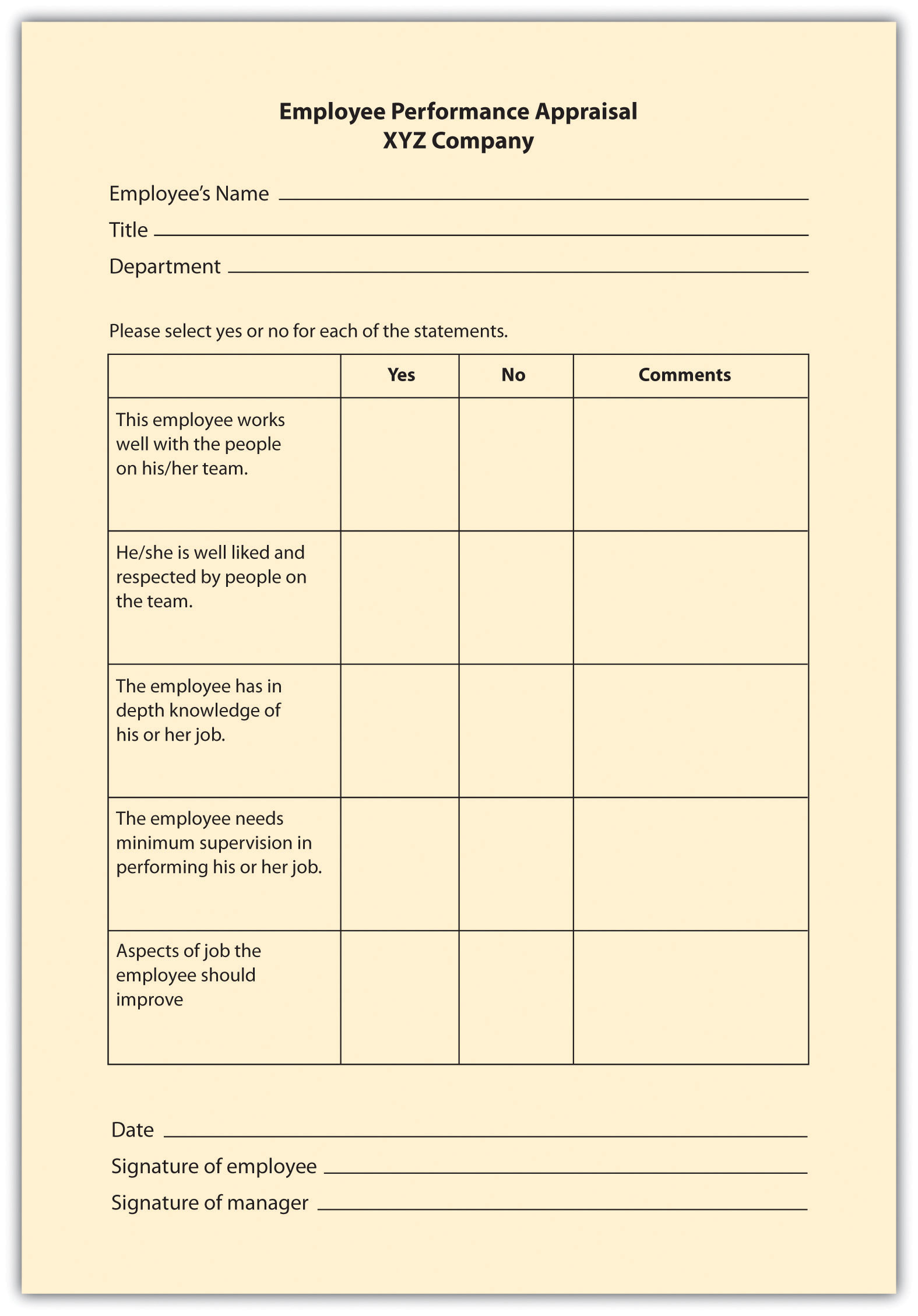
<div class="chapter standard" id="slug-14-2-health-hazards-at-work"><div class="chapter-title-wrap"><h3 class="chapter-number">61</h3><h2 class="chapter-title">14.2 Health Hazards at Work</h2></div><div class="ugc chapter-ugc"> <div class="14.2 health-hazards-at-work"><div class="bcc-box bcc-highlight"><h3 itemprop="educationalUse">Learning Objectives</h3> <p>By the end of this section, you will be able to:</p> <ol><li>Be able to explain health concerns that can affect employees at work.</li> </ol> </div> <p>While WORKSAFE B.C. covers many areas relating to health and safety at work, a few other areas are also important to mention. Stress management, office-related injuries such as carpal tunnel syndrome, and no-fragrance areas are all contemporary issues surrounding employee health and safety. We will discuss these issues in this section.</p> <h2>Stress</h2> <p>In its annual survey on stress in America, [1] the American Psychological Association found that money (76 percent), work (70 percent), and the economy (65 percent) remain the most oft-cited sources of stress for Americans. Job instability is on the rise as a source of stress: nearly half (49 percent) of adults reported that job instability was a source of stress in 2010 (compared to 44 percent in 2009). At the same time, fewer Americans are satisfied with the ways their employers help them balance work and nonwork demands (36 percent in 2010 compared to 42 percent in 2009). The implications of these findings are obviously important for HRM professionals.</p> <p>Before we discuss what HR professionals can do, let’s discuss some basic information about stress. As it is currently used, the term stress was coined by Hans Selye in 1936, who defined it as “the nonspecific response of the body to any demand for change.” [2]In other words, we can say that stress is the reaction we have to a stressor. Astressor is some activity, event, or other stimulus that causes either a positive or negative reaction in the body. Despite what people may think, some stress is actually good. For example, receiving a promotion at work may cause stress, but this kind of stress is considered to be positive. Stress is very much a personal thing, and depending on individual personalities, people may have different opinions about what is a stressor and what is not. For example, a professor does not normally find public speaking to be a stressor, while someone who does not do it on a daily basis may be very stressed about having to speak in public.</p> <h3>Stress Management</h3> <p>Selye recognized that not all stress is negative. Positive stress is called eustress. This type of stress is healthy and gives a feeling of fulfillment and other positive feelings. Eustress can cause us to push ourselves harder to meet an end goal. On the other hand,distress is the term used for negative stress. While eustress can push us, distress does not produce positive feelings and can go on for a long time without relief. We can further classify distress by chronic stress, which is prolonged exposure to stress, and acute stress, which is short-term high stress. For example, someone who receives little or no positive result from stress and is continuously stressed may experience chronic stress. Acute stress occurs in shorter bursts and may be experienced while someone is on a tight deadline for a project.</p> <p>Two other terms related to stress are hyperstress and hypostress. Hyperstress is a type of stress in which there are extremes with little or no relief for a long period of time. This type of stress often results in burnout. Hypostress is the lack of eustress or distress in someone’s life. Remember, some stress can be good and pushes us to work harder. We see this type of stress with people who may work in a factory or other type of repetitive job. The effect of this type of stress is usually feelings of restlessness.</p> <div id="attachment_612" style="width: 610px" class="wp-caption aligncenter"><a href="https://pressbooks.bccampus.ca/hrm1stcanadianedition/wp-content/uploads/sites/118/2017/03/Figure-14.3.png"><img src="https://pressbooks.bccampus.ca/hrm1stcanadianedition/wp-content/uploads/sites/118/2017/03/Figure-14.3-298x300.png" alt="" width="600" height="603" class="wp-image-612" srcset="https://pressbooks.bccampus.ca/hrm1stcanadianedition/wp-content/uploads/sites/118/2017/03/Figure-14.3-298x300.png 298w, https://pressbooks.bccampus.ca/hrm1stcanadianedition/wp-content/uploads/sites/118/2017/03/Figure-14.3-150x150.png 150w, https://pressbooks.bccampus.ca/hrm1stcanadianedition/wp-content/uploads/sites/118/2017/03/Figure-14.3-65x65.png 65w, https://pressbooks.bccampus.ca/hrm1stcanadianedition/wp-content/uploads/sites/118/2017/03/Figure-14.3-225x226.png 225w, https://pressbooks.bccampus.ca/hrm1stcanadianedition/wp-content/uploads/sites/118/2017/03/Figure-14.3-350x352.png 350w, https://pressbooks.bccampus.ca/hrm1stcanadianedition/wp-content/uploads/sites/118/2017/03/Figure-14.3.png 739w" /></a> <p class="wp-caption-text"><strong>Figure 14.3</strong> The Stress Curve Source: Adapted from P. Nixon, 1979.</p> </div> <p>One last important thing to note is how a person goes through the cycle of stress. Figure 14.3 &#8220;The Stress Curve&#8221; shows an example of how stress is good up to a point, but beyond that point, the person is fatigued and negatively affected by the stress. Bear in mind, this varies from person to person based on personality type and stress-coping mechanisms.</p> <p>As you have already guessed, stress on the job creates productivity issues, which is why it concerns HR professionals. We know that stress can cause headaches, stomach issues, and other negative effects that can result in lost productivity but also result in less creative work. Stress can raise health insurance costs and cause employee turnover. Because of this, according to HR Magazine, [3] many employers are taking the time to identify the chief workplace stressors in employees’ lives. With this information, steps can be taken to reduce or eliminate such stress.</p> <p>PricewaterhouseCoopers, for example, implemented several strategies to reduce stress in its workplace. The firm restructured its work teams so that rather than having one employee work with one client, teams of employees work with groups of clients. Rather than having an employee say, “I can’t go to my son’s baseball game because I need to wait for this client call,” this arrangement allows employees to cover for each other.</p> <p>The organization also requires employees to take vacation time and even promotes it with posters throughout the office. In fact, even weekends are precious at PricewaterhouseCoopers. If an employee sends an e-mail on the weekend, a popup screen reminds her or him it is the weekend and it is time to disconnect.</p> <h3>Being a Student Can Be Stressful</h3> <p>Here are the most common stressors for college students:</p> <ul><li>Death of a loved one</li> <li>Relocating to a new city or province</li> <li>Divorce of parents</li> <li>Encounter with the legal system</li> <li>Transfer to a new school</li> <li>Marriage</li> <li>Lost job</li> <li>Elected to leadership position</li> <li>New romantic relationship</li> <li>Serious argument with close friend</li> <li>Increase in course load or difficulty of courses</li> <li>Change in health of family member</li> <li>First semester in college</li> <li>Failed important course</li> <li>Major personal injury or illness</li> <li>Change in living conditions</li> <li>Argument with instructor</li> <li>Outstanding achievement</li> <li>Change in social life</li> <li>Change in sleeping habits</li> <li>Lower grades than expected</li> <li>Breakup of relationship</li> <li>New job</li> <li>Financial problems</li> <li>Change in eating habits</li> <li>Chronic car trouble</li> <li>Pregnancy</li> <li>Too many missed classes</li> <li>Long commute to work/school</li> <li>Working more than one job</li> <li>Impending graduation</li> <li>Argument with family member</li> <li>Sexual concerns</li> <li>Changes in alcohol and/or drug use</li> <li>Roommate problems</li> <li>Raising children</li> </ul> <p>Offering flextime is also a way to reduce employee stress. It allows employees to arrange their work and family schedule to one that reduces stress for them. This type of creative scheduling, according to Von Madsen, HR manager at ARUP Laboratories, [4]allows employees to work around a schedule that suits them best. Other creative ways to reduce stress might be to offer concierge services, on-site child care, wellness initiatives, and massage therapy. All these options can garner loyalty and higher productivity from employees.</p> <div class="textbox shaded"><h3>Human Resource Recall</h3> <p>What does your organization do to reduce stress? What should it do that it is not doing?</p> </div> <h2>Repetitive Strain Injuries</h2> <p>Repetitive Strain Injuries (RSIs) are injuries to the fingers, hands, arms, or shoulders that result from repetitive motions such as typing.</p> <p>Carpal tunnel syndrome, or CTS, is a common cumulative disorder in which the hand and wrist is particularly affected. CTS is a disabling syndrome that fortunately can be prevented or at least minimized. According to one study of CTS, [5] the percentage of a workday at a computer, posture while at the workstation, and the individual’s body features all contribute to this workplace issue. More recently, RSI can be found in people who text a lot or use their smartphones to type or surf the Internet.</p> <div id="attachment_614" style="width: 610px" class="wp-caption aligncenter"><a href="https://pressbooks.bccampus.ca/hrm1stcanadianedition/wp-content/uploads/sites/118/2017/03/Figure-14.4.png"><img src="https://pressbooks.bccampus.ca/hrm1stcanadianedition/wp-content/uploads/sites/118/2017/03/Figure-14.4-300x264.png" alt="" width="600" height="528" class="wp-image-614" srcset="https://pressbooks.bccampus.ca/hrm1stcanadianedition/wp-content/uploads/sites/118/2017/03/Figure-14.4-300x264.png 300w, https://pressbooks.bccampus.ca/hrm1stcanadianedition/wp-content/uploads/sites/118/2017/03/Figure-14.4-768x676.png 768w, https://pressbooks.bccampus.ca/hrm1stcanadianedition/wp-content/uploads/sites/118/2017/03/Figure-14.4-1024x902.png 1024w, https://pressbooks.bccampus.ca/hrm1stcanadianedition/wp-content/uploads/sites/118/2017/03/Figure-14.4-65x57.png 65w, https://pressbooks.bccampus.ca/hrm1stcanadianedition/wp-content/uploads/sites/118/2017/03/Figure-14.4-225x198.png 225w, https://pressbooks.bccampus.ca/hrm1stcanadianedition/wp-content/uploads/sites/118/2017/03/Figure-14.4-350x308.png 350w" /></a> <p class="wp-caption-text"><strong>Figure 14.4</strong> Example of an OSHA Standard for Retail Grocery Stores to Avoid RSI Source:http://www.osha.gov/ergonomics/guidelines/retailgrocery/retailgrocery.html#storewide (accessed September 2, 2011).</p> </div> <p>There are a number of keyboards, chairs, and other devices that can help limit or prevent RSI issues. RSI disorders cost companies money through higher health-care costs and worker’s compensation payments. OHS Regulations have specific requirements related to musculoskeletal injuries.</p> <p>Microsoft is attempting to relieve RSI by developing “surface” technology. First introduced in 2007, the system is controlled through intuitive touch rather than the traditional mouse and keyboard. Microsoft and Samsung in early 2011 introduced the newest consumer-ready product, which looks like a large tablet (or iPad) used to perform the same functions as one normally would on her computer. [7]</p> <h3>How Would You Handle This?</h3> <p><em>To Tell or Not?</em></p> <p><em>You work for a large multinational organization as a manager on the factory floor. One of your employees was moving large barrels of chemicals from one workstation to another, when the barrel burst and gave him mild burns. When you talk with him about it, he says it was his own fault, and he doesn’t want to take any days off or see a doctor. How would you handle this?</em></p> <h4> Video Display Terminals (VDTs)</h4> <p>In 1984, only 25 percent of people used computers at work, and today that number is 68 percent. [8] Awareness of the effects of computer monitors and other similar terminals are necessary to ensure a healthy workplace. Vision problems; fatigue; eye strain; and neck, back, arm, and muscle pain are common for frequent users of VDTs. OSHA in the United States recommends taking a break after every hour on a computer screen and reducing glare on screens. Proper posture and seat adjustment also limits the amount of injuries due to VDTs.</p> <h2>Chemical and environmental Sensitivities</h2> <p>The World Health Organization defines a disability as an umbrella term that covers impairments, activity limitations, and participation restrictions. People with environmental sensitivities may experience adverse reactions to chemicals found in buildings, such as flooring, or other products that contain fragrance. In Canada, individuals who have documented environmental sensitivities are eligible for reasonable accommodations in the workplace. Symptoms can include headache, dizziness, inability to breathe, muscle pain, and many more depending on the person. As a result, implementing policies surrounding fragrances in the workplace may be a best practice to keep employees safe and healthy Some examples of such policies might include the following:</p> <ol><li>Institute a fragrance-free workplace policy (e.g., no scented lotions, hair products, or perfumes).</li> <li>Limit use of restroom air fresheners, cleaning agents, and candles.</li> <li>Ensure the ventilation system is in good working order.</li> <li>Provide a workspace with windows where possible.</li> <li>Consider providing an alternate workspace.</li> <li>Be cautious of remodels, renovations, and other projects that may cause excessive dust and odors.</li> </ol> <p>Many employers are reluctant to require employees to refrain from wearing or using scented products. In this case, rather than creating a policy, it might be worthwhile to simply request a fragrance-free zone from employees through e-mail and other means of communication. An example of such a policy is used by Kaiser Permanente:</p> <div class="textbox shaded"><p>We recognize that exposure to strong scents and fragrances in the environment can cause discomfort, as well as directly impact the health of some individuals. Since we hope to support a healthful environment for employees, physicians, and visitors, it is the intent of Quality and Operations Support to strive for a fragrance-controlled workplace. Therefore, for the comfort and health of all, use of scents and fragrant products by QOS employees, other than minimally scented personal care products, is strongly discouraged. [10]</p> </div> <h2>Workplace Violence and Bullying</h2> <p>In 2014, WorkSafe B.C. mandated that employers have policies in place to address bullying and harassment. Policies must address:</p> <ul><li>How and when investigations will be conducted</li> <li>What will be included in the investigation</li> <li>The roles and responsibilities of employers, supervisors, workers and others</li> <li>Follow-up to the investigations (corrective actions, time frame, etc)</li> <li>Record-keeping requirements.</li> </ul> <p>WorkSafe B.C. provides a number of resources to employers, including sample policies, a handbook and a guide for small businesses. You can see them here: <a class="rId289" href="https://www.worksafebc.com/en/health-safety/hazards-exposures/bullying-harassment/resource-toolkit">https://www.worksafebc.com/en/health-safety/hazards-exposures/bullying-harassment/resource-toolkit</a></p> <p>Workplace bullying is defined as a tendency of individuals or groups to use persistent or repeated aggressive or unreasonable behavior against a coworker or subordinate. The Workplace Bullying Institute found that 35 percent of workers have reported being bullied at work. This number is worth considering, given that workplace bullying reduces productivity with missed work days and turnover. The Workplace Bullying Institute found that litigation and settlement of bullying lawsuits can cost organizations $100,000 to millions of dollars, in addition to the bad publicity that may be created. Examples of workplace bullying include the following:</p> <ol><li>Unwarranted or invalid criticism</li> <li>Blame without factual information</li> <li>Being treated differently than the rest of your work group</li> <li>Humiliation</li> <li>Unrealistic work deadlines</li> <li>Spreading rumors</li> <li>Undermining or deliberately impeding a person’s work</li> </ol> <h2>Workplace Violence</h2> <div class="textbox shaded"><p>A video on workplace violence training.</p> <p>Please view this video at <a class="rId290" target="_blank" href="http://www.youtube.com/watch?v=oiuWLkdUZ5o">http://www.youtube.com/watch?v=oiuWLkdUZ5o</a>.</p> </div> <p>Anyone exhibiting one or more of these pre-incident indicators should get the attention of HRM. The HR professional should take appropriate action such as discussing the problem with the employee and offering counseling.</p> <p>In 2014, the Workers Compensation Appeal Tribunal (2014) ruled on a case of a nurse who stated she had developed psychological difficulties due to a co-worker’s bullying and harassment. The nurse applied to the Workers’ Compensation Board (WCB) for compensation. She indicated the bullying and harassment had taken place over a period of about six months. Her doctor indicated that the bully’s self-esteem was enhanced by making the nurse look and feel inferior, stupid and wrong. She was mocked, ostracized, gossiped about, and experienced sarcasm and aggressive body language. Another nurse indicated she had also suffered bullying at the hands of the same co-worker. This nurse confirmed that the bully had focused her attention onto this other nurse. Management seemed unable to deal with the issue. Specific incidents included physically blocking and intimidating her, sabotaging her work, yelling at her and criticizing her. She was going home at the end of the day in tears and dreading her next shift. After the appeal hearing, the Worker’s Compensation Appeal Tribunal found that the nurse had been bullied and was entitled to compensation.<a id="sdfootnote20anc" href="#sdfootnote20sym"><sup>20</sup></a></p> <p>A safe work culture doesn’t happen by requiring training sessions every year; it occurs by creating an environment in which people can recognize hazards and have the authority and ability to fix them. Instead of safety being a management focus only, every employee should take interest by being alert to the safety issues that can exist. If an employee is unable to handle the situation on his or her own, the manager should then take suggestions from employees seriously; making the change and then communicating the change to the employee can be an important component of a safe and healthy workplace.</p> <p>A culture that promotes safety is one that never puts cost or production numbers ahead of safety. You do not want to create a culture in which health and safety priorities compete with production speedup, which can lead to a dangerous situation.</p> <p>Possible techniques you can implement to have a safe and healthy work environment include the following:</p> <ol><li>Know the occupational health and safety laws in your jurisdiction.</li> <li>Provide training to employees on health and safety laws and workplace policies and procedures.</li> <li>Have a written policy for how violations will be handled.</li> <li>Commit the resources (time and money) necessary to ensure a healthy work environment.</li> <li>Involve employees in safety and health discussions, as they may have good ideas as to how the organization can improve.</li> <li>Make safety part of an employee’s job description; in other words, hold employees accountable for always practicing safety at work.</li> <li>Understand how the health (or lack of health) of your employees contributes to or takes away from the bottom line and implement policies and programs to assist in this effort.</li> </ol> <div class="bcc-box bcc-success"><h3 itemprop="educationalUse">Key Takeaways</h3> <ul><li>Stress is a major concern for organizations, since it can decrease productivity in the workplace. There are several types of stress.</li> <li>EUSTRESS is a positive type of stress that can cause people to work harder toward a goal. DISTRESS, on the other hand, is a type of negative stress.</li> <li>ACUTE STRESS occurs in short bursts, such as when finishing a project, while CHRONIC STRESS tends to persist for long periods of time.</li> <li>HYPERSTRESS is stress that is unrelieved for long periods of time and can often result in employee burnout. HYPOSTRESS is the lack of eustress in one’s life, which can be as damaging as other types of stress, since stress is sometimes what pushes people harder.</li> <li>HR professionals can encourage employees to take vacation time, offer flextime, and encourage employees to take weekends off to help reduce stress.</li> <li>REPETETIVE STRAIN INJURIES (RSI) affects the hands, fingers, arms, or shoulders as a result of continuous repetitive motions. CARPEL TUNNEL SYNDROME (CTS) is a type of RSI that affects the hand and wrist. People with these disorders often work in a factory or at a desk where they are doing repetitive motions constantly, such as typing or cashiering.</li> <li>Reduce RSI in the workplace by ensuring employees are provided with proper equipment and training.</li> <li>MULTIPLE CHEMICAL SENSITIVITY (MCS) or ENVIRONMENTAL SENSITIVITY is extreme sensitivity to chemicals found in products such as hairsprays or lotions. Some individuals are extremely sensitive to other types of chemicals, such as those used in the manufacturing of carpets.</li> <li>Environmental sensitivity can be considered a disability if it limits one or more life activities. In this case, reasonable accommodations must be made, such as implementing fragrance-free zones.</li> <li>WORKPLACE BULLYING is when a person is aggressive and unreasonable in his or her behavior toward another individual. Cyberbullying is similar, except technology is used to humiliate and intimidate the employee.</li> <li>To maintain a healthful working environment, know health and safety regulations and policies and make sure people are trained on the policies. Also ensure that specific policies on all areas of health and safety are communicated and employees are trained in those areas where necessary.</li> </ul> </div> <div class="bcc-box bcc-info"><h3 itemprop="educationalUse">Exercises</h3> <p><strong>1:</strong> Research examples of workplace bullying, write two paragraphs about two examples, and share your findings with the class.</p> </div> <p>[1] American Psychological Association, “Key Findings,” news release, n.d., accessed April 17, 2011, <a class="rId291" target="_blank" href="http://www.apa.org/news/press/releases/stress/key-findings.aspx">http://www.apa.org/news/press/releases/stress/key-findings.aspx</a>.</p> <p>[2] The American Institute of Stress, accessed September 15, 2011,<a class="rId292" target="_blank" href="http://www.stress.org/topic-definition-stress.htm">http://www.stress.org/topic-definition-stress.htm</a>.</p> <p>[3] Kathryn Tyler, “Stress Management,” HR Magazine, September 1, 2006, accessed April 19, 2011, <a class="rId293" target="_blank" href="http://www.shrm.org/Publications/hrmagazine/EditorialContent/Pages/0906tyler.aspx">http://www.shrm.org/Publications/hrmagazine/EditorialContent/Pages/0906tyler.aspx</a>.</p> <p>[4] Kathryn Tyler, “Stress Management,” HR Magazine, September 1, 2006, accessed April 19, 2011, <a class="rId294" target="_blank" href="http://www.shrm.org/Publications/hrmagazine/EditorialContent/Pages/0906tyler.aspx">http://www.shrm.org/Publications/hrmagazine/EditorialContent/Pages/0906tyler.aspx</a>.</p> <p>[5] A. C. Matias, G. Salvendy, and T. Kuczek, Ergonomics Journal 41, no. 2 (1998): 213–26, accessed April 19, 2011, <a class="rId295" target="_blank" href="http://www.ncbi.nlm.nih.gov/pubmed/9494433">http://www.ncbi.nlm.nih.gov/pubmed/9494433</a>.</p> <p>[6] “OSHA Protocol for Developing Industry-Specific and Task-Specific Ergonomics Guidelines,” Occupational Safety and Health Administration, accessed April 25, 2011,<a class="rId296" target="_blank" href="http://www.osha.gov/SLTC/ergonomics/protocol.html">http://www.osha.gov/SLTC/ergonomics/protocol.html</a>.</p> <p>[7] Microsoft News Center, “Microsoft and Samsung Unveil the Next Generation of Surface,” news release, January 2011, accessed August 21, 2011,<a class="rId297" target="_blank" href="http://www.microsoft.com/presspass/press/2011/jan11/01-06mssurfacesamsungpr.mspx">http://www.microsoft.com/presspass/press/2011/jan11/01-06mssurfacesamsungpr.mspx</a>.</p> <p>[8] “Survey Shows Widespread Enthusiasm for High Technology,” NPR Online, n.d., accessed August 20, 2011, <a class="rId298" target="_blank" href="http://www.npr.org/programs/specials/poll/technology/">http://www.npr.org/programs/specials/poll/technology/</a>.</p> <p>[9] “Section 902: Definition of the Term Disability,” Equal Employment Opportunity Commission, accessed April 25, 2011, <a class="rId299" href="http://www.eeoc.gov/policy/docs/902cm.html" target="_blank">http://www.eeoc.gov/policy/docs/902cm.html#902.1</a>.</p> <p>[10] Kaiser Permanente Fragrance Policy, accessed September 15, 2011,<a class="rId300" target="_blank" href="http://users.lmi.net/wilworks/ehnlinx/k.htm">http://users.lmi.net/wilworks/ehnlinx/k.htm</a>.</p> <p>[11] International Labor Organization, “Your Safety and Health at Work: Chemicals in the Workplace,” accessed April 25, 2011, <a class="rId301" target="_blank" href="http://actrav.itcilo.org/actrav-english/telearn/osh/kemi/ciwmain.htm">http://actrav.itcilo.org/actrav-english/telearn/osh/kemi/ciwmain.htm</a>.</p> <p>[12] Julie Steenhuysen, “26 US States Have Comprehensive Smoking Bans,” Reuters, April 21, 2011, accessed April 25, 2011, <a class="rId302" target="_blank" href="http://www.reuters.com/article/2011/04/21/usa-smoking-idUSN2128332820110421">http://www.reuters.com/article/2011/04/21/usa-smoking-idUSN2128332820110421</a>.</p> <p>[13] “Insurer Humana Inc. Won’t Hire Smokers in Arizona,” Associated Press, June 30, 2011, accessed August 20, 2011, <a class="rId303" target="_blank" href="http://finance.yahoo.com/news/Insurer-Humana-Inc-wont-hire-apf-961910618.html?x=0&amp;.v=1">http://finance.yahoo.com/news/Insurer-Humana-Inc-wont-hire-apf-961910618.html?x=0&amp;.v=1</a>.</p> <p>[14] “Workplace Substance Abuse,” Occupational Safety and Health Administration, accessed August 20, 2011, <a class="rId304" target="_blank" href="http://www.osha.gov/SLTC/substanceabuse/index.html">http://www.osha.gov/SLTC/substanceabuse/index.html</a>.</p> <p>[15] T. Buddy, “Substance Abuse in the Workplace,” About.com, November 20, 2011, accessed August 20, 2011, <a class="rId305" target="_blank" href="http://alcoholism.about.com/cs/work/a/aa990120.htm">http://alcoholism.about.com/cs/work/a/aa990120.htm</a>.</p> <p>[16] “Workplace Violence” (OSHA Fact Sheet), Occupational Safety and Health Administration, accessed April 25, 2011, <a class="rId306" target="_blank" href="http://www.osha.gov/OshDoc/data_General_Facts/factsheet-workplace-violence.pdf">http://www.osha.gov/OshDoc/data_General_Facts/factsheet-workplace-violence.pdf</a>.</p> <p>[17] Jurg Mattman, “Pre-Incident Indicators,” Workplace Violence Research Institute, June 2010, accessed April 27, 2011, <a class="rId307" target="_blank" href="http://www.nesdis.noaa.gov/RESPECT/pdf/RESPECT-Pre-IncidentIndicators24Jun09.pdf">http://www.nesdis.noaa.gov/RESPECT/pdf/RESPECT-Pre-IncidentIndicators24Jun09.pdf</a>.</p> <p>[18] Karen Klein, “Employers Can’t Ignore Workplace Bullies,” Bloomberg Businessweek, May 7, 2008, accessed August 20, 2011,<a class="rId308" target="_blank" href="http://www.businessweek.com/smallbiz/content/may2008/sb2008057_530667.htm">http://www.businessweek.com/smallbiz/content/may2008/sb2008057_530667.htm</a>.</p> <p>[19] Madeleine White, “Are Cyber Bullies Worse for Victims than Real Bullies?” Globe and Mail, August 8, 2011, accessed August 20, 2011, <a class="rId309" target="_blank" href="http://www.theglobeandmail.com/life/the-hot-button/are-cyber-bullies-worse-for-victims-than-real-bullies/article2122943/">http://www.theglobeandmail.com/life/the-hot-button/are-cyber-bullies-worse-for-victims-than-real-bullies/article2122943/</a></p> <p>[20]<a></a> Madeleine White, “Are Cyber Bullies Worse for Victims than Real Bullies?” Globe and Mail, August 8, 2011, accessed August 20, 2011, <a class="rId310" target="_blank" href="http://www.theglobeandmail.com/life/the-hot-button/are-cyber-bullies-worse-for-victims-than-real-bullies/article2122943/">http://www.theglobeandmail.com/life/the-hot-button/are-cyber-bullies-worse-for-victims-than-real-bullies/article2122943/</a>.</p> <p>[21]<a></a> National Conference of State Legislatures, “State Cyberstalking, Cyberharassment, and Cyberbullying Laws,” January 26, 2011, accessed August 20, 2011,<a class="rId311" target="_blank" href="http://www.ncsl.org/default.aspx?tabid=13495">http://www.ncsl.org/default.aspx?tabid=13495</a>.</p> <p>[22]<a></a> Daniel Solove, “Off Campus Cyberbullying and the First Amendment,” Huffington Post, July 28, 2011, accessed August 20, 2011, <a class="rId312" target="_blank" href="http://www.huffingtonpost.com/daniel-j-solove/offcampus-cyberbullying-a_b_911654.html">http://www.huffingtonpost.com/daniel-j-solove/offcampus-cyberbullying-a_b_911654.html</a>.</p> <p>[23]<a></a> Patricia Hart, “Attorneys Seek to Question Texas Comptroller Over Exposed Info,”Houston Chronicle, April 26, 2011, accessed April 27, 2011,<a class="rId313" target="_blank" href="http://www.chron.com/disp/story.mpl/metropolitan/7537769.html">http://www.chron.com/disp/story.mpl/metropolitan/7537769.html</a>.</p> <p>[24]<a></a> “Electronic Monitoring and Surveillance Survey,” American Management Association, 2007, accessed April 27, 2011, <a class="rId314" target="_blank" href="http://press.amanet.org/press-releases/177/2007-electronic-monitoring-surveillance-survey/">http://press.amanet.org/press-releases/177/2007-electronic-monitoring-surveillance-survey/</a>.</p> <p>[25]<a></a> “Employee Privacy Policy,” Agrium Inc., accessed August 21, 2011,<a class="rId315" target="_blank" href="http://www.agrium.com/employee_privacy.jsp">http://www.agrium.com/employee_privacy.jsp</a>.</p> <p>[26]<a></a> Donald Sears, “Gym Memberships and Wellness Programs Remain Standard Employee Benefits,” The Ladders Career Line, July 21, 2009, accessed April 27, 2011, <a class="rId316" target="_blank" href="http://www.career-line.com/job-search/gym-memberships-and-wellness-programs-remain-standard-employee-benefits/">http://www.career-line.com/job-search/gym-memberships-and-wellness-programs-remain-standard-employee-benefits/</a>.</p> <div class="textbox shaded"><h3>Chapter Summary</h3> <ul><li>In 2014, 173 work-related deaths were reported in BC, as well as 146,814 injuries.</li> <li>The costs of workplace injuries include lost productivity, lost wages, medical expenses, disability compensation, and physical and psychological suffering.</li> <li>Workers have a right to a healthy and safe workplace, right to be trained, and the right to refuse unsafe work. They also have a duty to follow the employer’s health and safety plan and policies.</li> <li>WHMIS is the Workplace Hazardous Materials Information System. Material Safety Data Sheets (MSDS) identify information about how to handle a substance, and how to respond to exposure.</li> <li>Employers must document and maintain records for all workplace accidents or illness. Serious incidents must be reported immediately to WorkSafe B.C. , and investigated by the employer within 48 hours.</li> <li>WorkSafe B.C. can inspect any site without prior notification. Usually, the inspector will gather information, visit the site, and ask for an employer representative. The site visit will be performed, followed by discussion with the company representative. Within six months of the visit, a report and any penalties will be communicated.</li> <li>The Westray Mining disaster resulted in the development of Bill C-45, which allows employers and supervisors to be charged criminally after a serious offence. Penalties include fines and jail time.</li> <li>Stress is a major concern for organizations, since it can decrease productivity in the workplace. There are several types of stress.</li> <li>EUSTRESS is a positive type of stress that can cause people to work harder toward a goal. Distress, on the other hand, is a type of negative stress.</li> <li>ACUTE STRESS occurs in short bursts, such as when finishing a project, while chronic stress tends to persist for long periods of time.</li> <li>HYPERSTRESS is stress that is unrelieved for long periods of time and can often result in employee burnout. HYPOSTRESS is the lack of eustress in one’s life, which can be as damaging as other types of stress, since stress is sometimes what pushes people harder.</li> <li>HR professionals can encourage employees to take vacation time, offer flextime, and encourage employees to take weekends off to help reduce stress.</li> <li>REPETETIVE STRAIN INJURIES (RSI) affects the hands, fingers, arms, or shoulders as a result of continuous repetitive motions. Carpel tunnel syndrome (CTS) is a type of RSI that affects the hand and wrist. People with these disorders often work in a factory or at a desk where they are doing repetitive motions constantly, such as typing or cashiering.</li> <li>Reduce RSI in the workplace by ensuring employees are provided with proper equipment and training.</li> <li>MULTIPLE CHEMICAL SENSITIVITY (MCS) or ENVIRONMENTAL SENSITIVITY is extreme sensitivity to chemicals found in products such as hairsprays or lotions. Some individuals are extremely sensitive to other types of chemicals, such as those used in the manufacturing of carpets.</li> <li>Environmental sensitivity can be considered a disability if it limits one or more life activities. In this case, reasonable accommodations must be made, such as implementing fragrance-free zones.</li> <li>WORKPLACE BULLYING is when a person is aggressive and unreasonable in his or her behavior toward another individual. CYBERBULLYING is similar, except technology is used to humiliate and intimidate the employee.</li> <li>To maintain a healthful working environment, know health and safety regulations and policies and make sure people are trained on the policies. Also ensure that specific policies on all areas of health and safety are communicated and employees are trained in those areas where necessary.</li> </ul> </div> <div id="sdfootnote20sym"><a href="#sdfootnote20anc">20</a> WCAT-2014-01458 (Re), 2014 CanLII 41927 (BC WCAT), http://canlii.ca/t/g871x, retrieved on 2016-07-05</div> </div> </div></div>
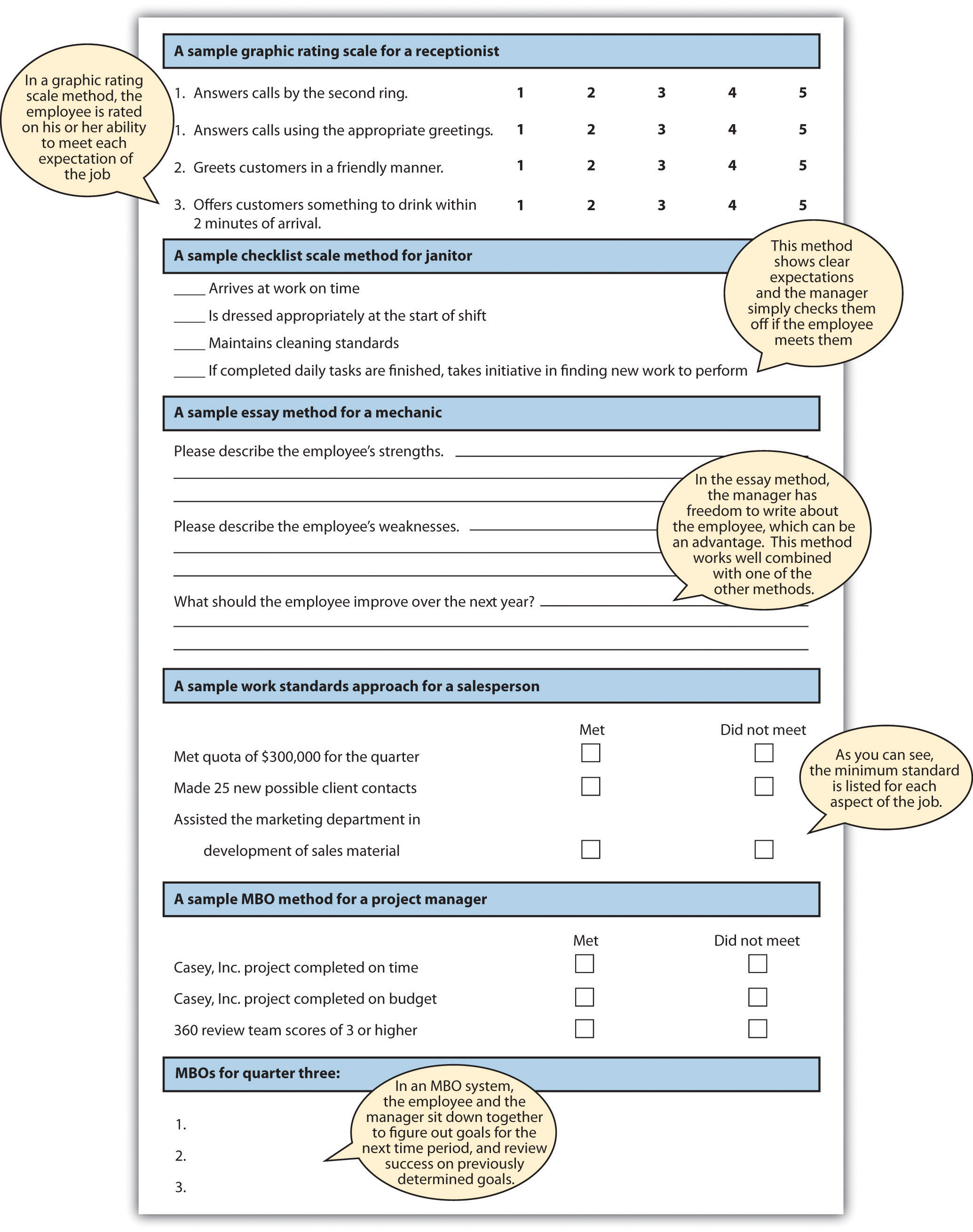
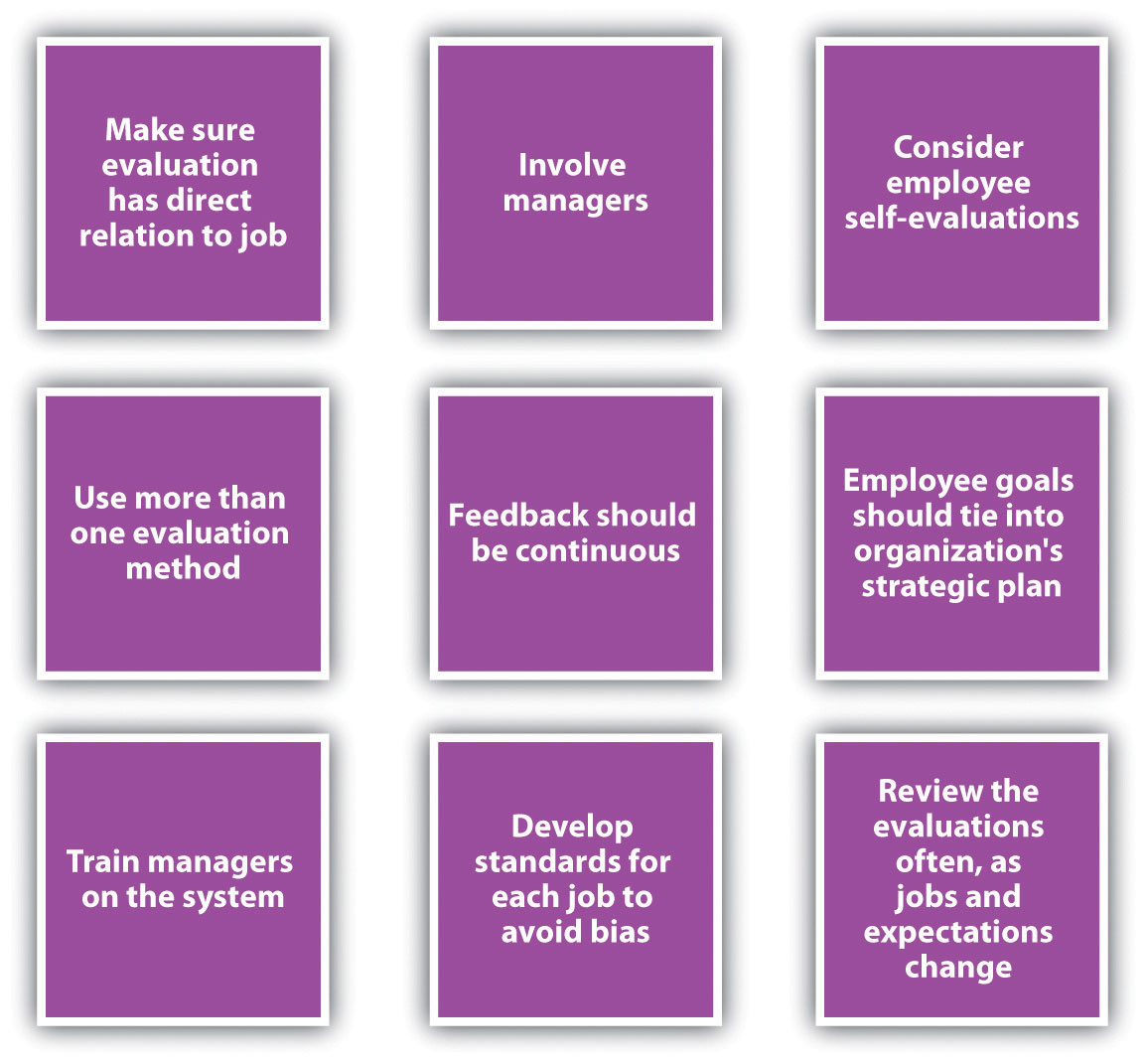
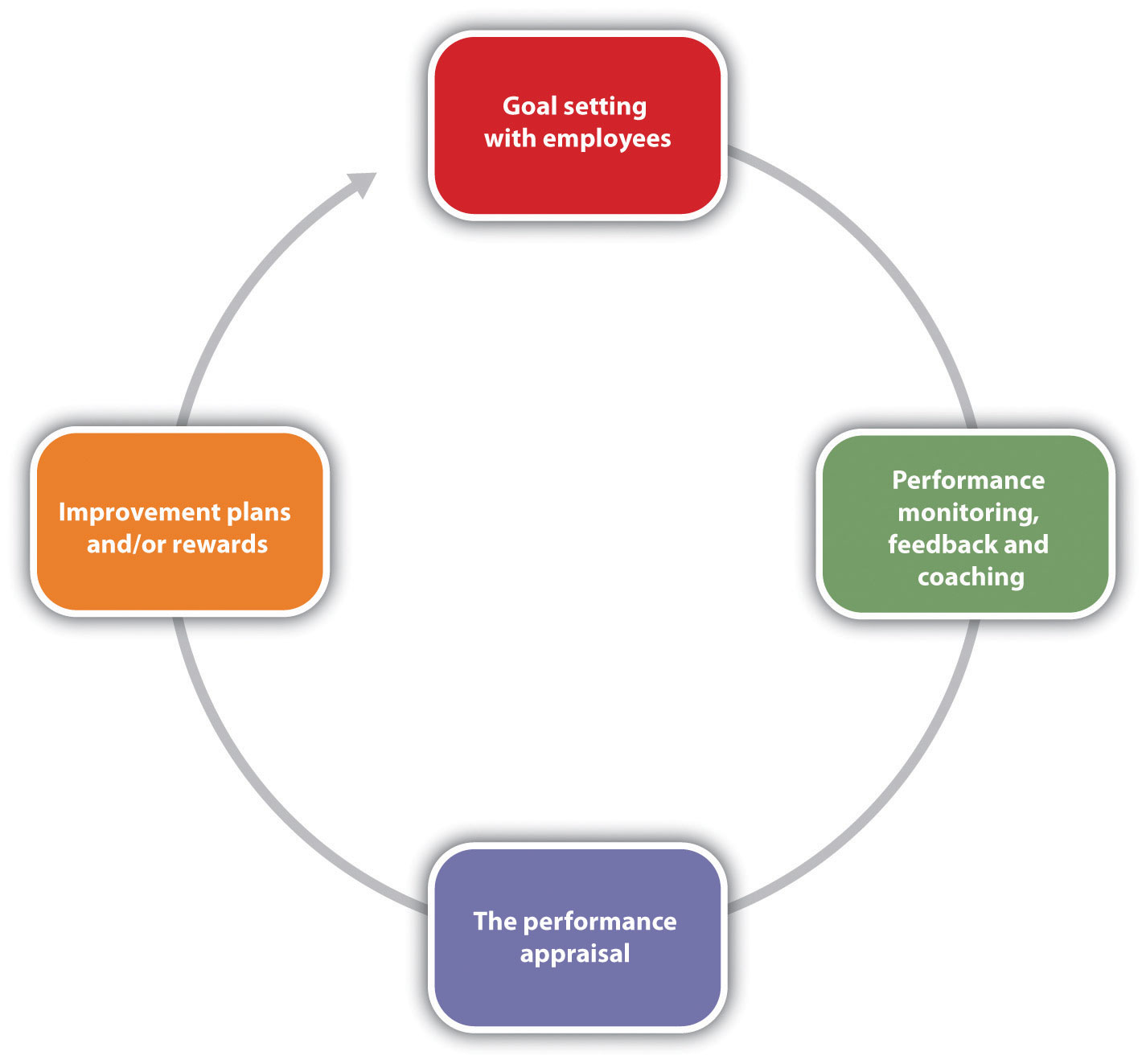
<div class="chapter standard" id="slug-14-3-cases-and-problems"><div class="chapter-title-wrap"><h3 class="chapter-number">62</h3><h2 class="chapter-title">14.3 Cases and Problems</h2></div><div class="ugc chapter-ugc"> <div class="14.3cases-and-problems"><div class="textbox examples"><h3>Chapter Case</h3> <p>Bullying Ming</p> <p>You just ended a meeting with Ming (one of your six employees), who gave you some disturbing information. She feels she is being bullied by one of her coworkers and is seeking your advice on how to handle it. Ming said that Mindy has been saying “good morning” to everyone as she walks by their office but doesn’t say it to Ming. Ming also said that Mindy organized a farewell lunch for one of your departing employees last week and didn’t invite Ming. She also told you of nasty things that Mindy tells other colleagues about her. For example, last month when Ming ran into Mindy at the grocery store, Mindy told everyone the next day the medications that Ming had in her cart, which included medication for irritable bowel syndrome. Ming also showed you an e-mail that Mindy had sent blaming Ming for the loss of one of Mindy’s clients. Mindy had copied the entire department on the e-mail. Ming thinks that other employees have been reluctant to involve her in projects as a result of this e-mail. Ming left your office quite upset, and you think you may need to take some action.</p> <ul><li>Do you think Ming is correct in saying Mindy is bullying her? What are the indications of bullying?</li> <li>What advice would you give to Ming?</li> <li>How would you handle this situation with Mindy, without embarrassing Ming?</li> </ul> </div> <div class="textbox shaded"><h3>Team Activity</h3> <p><strong>1:</strong> Calculate the yearly incidence rates for Organic Foods Company:</p> <p style="padding-left: 30px"><strong>a.</strong> 2010: 10 injuries with 300,000 hours worked</p> <p style="padding-left: 30px"><strong>b.</strong> 2011: 5 injuries with 325,000 hours worked</p> <p style="padding-left: 30px"><strong>c.</strong> 2012: 20 injuries with 305,000 hours worked</p> <p><strong>2:</strong> What are some of the possible causes for the increase in incidence rates</p> </div> </div> </div></div>
<div class="part " id="main-body"><div class="part-title-wrap"><h3 class="part-number">XV</h3><h1 class="part-title">Chapter 15: International HRM</h1></div></div>
<div class="chapter standard" id="introduction-13"><div class="chapter-title-wrap"><h3 class="chapter-number">63</h3><h2 class="chapter-title">Introduction</h2></div><div class="ugc chapter-ugc"> <div class="chapter-15:-international-hrm"><h2>Things Weren’t What They Seemed</h2> <p>When your organization decided to go “global” two years ago, the executives didn’t know what they were getting into. While the international market was attractive for your company’s product, the overall plan wasn’t executed well. The organization was having great success selling its baby bath product in the domestic market, and once that market was saturated, the organization decided to sell the product in South America. Millions of dollars’ worth of research went into product marketing, and great success was had selling the product internationally. It was only when the organization decided to develop a sales presence in Peru and purchase a company there that the problems started. While market research had been done on the product itself, the executives of the company did little research to find out the cultural, economic, and legal aspects of doing business in that country. It was assumed that the Peru office would run just like the Canadian office in terms of benefits, compensation, and hiring practices. This is where the strategy went wrong.</p> <p>Many cultural aspects presented themselves. When executives visited the Peru office, the meeting was scheduled for 9 a.m., and executives were annoyed that the meeting didn’t actually start until 9:45 a.m. When the annoyed executives started in on business immediately, the Peruvian executives disapproved, but the Canadian executives thought they disapproved of the ideas and weren’t aware that the disapproval came from the fact that Peruvians place a high emphasis on relationships, and it was rude to get down to business right away. When the executives walked around the office and spoke with various employees, this blunder cost respect from the Peruvian executives. Because Peru has a hierarchical structure, it was considered inappropriate for the executives to engage employees in this way; they should have been speaking with management instead.</p> <p>Besides the cultural misunderstandings, executives had grossly underestimated the cost of compensation in Peru. Peru requires that all employees receive a bonus on the Peruvian Independence Day and another on Christmas. The bonus is similar to the monthly salary. After a year of service, Peruvians are allowed to go on paid vacation for thirty calendar days. Higher benefit costs were also an issue as well, since Peru requires workers to contribute 22 percent of their income to pension plans, and the company is required to pay 9 percent of salaries toward social (universal) health insurance. Life insurance is also required to be paid by the employer after four years of service, and severance payments are compulsory if the organization has a work stoppage or slowdown.</p> <p>As you wade through the variety of rules and regulations, you think that this could have been avoided if research had been performed before the buyout happened. If this had occurred, your company would have known the actual costs to operate overseas and could have planned better.</p> <p>Source: Based on information from CIA World Factbook and PKF Business Advisors.</p> </div> </div></div>
<div class="chapter standard" id="slug-15-1-offshoring-outsourcing"><div class="chapter-title-wrap"><h3 class="chapter-number">64</h3><h2 class="chapter-title">15.1 Offshoring, Outsourcing</h2></div><div class="ugc chapter-ugc"> <div class="15.1 offshoring,-outsourcing"><div class="bcc-box bcc-highlight"><h3 itemprop="educationalUse">Learning Objectives</h3> <p>By the end of this section, you will be able to:</p> <ol><li>Be able to explain the terminology related to international HRM.</li> <li>Define global HRM strategies.</li> <li>Explain the impact of culture on HRM practices.</li> </ol> </div> <p>As you already know, this chapter is all about strategic human resource management (HRM) in a global environment.</p> <p>Before we begin to discuss HRM in a global environment, it is important to define a few terms, some of which you may already know. First, offshoring is when a business relocates or moves some or part of its operations to another country. Outsourcing involves contracting with another company (onshore or offshore) to perform some business-related task. For example, a company may decide to outsource its accounting operations to a company that specializes in accounting, rather than have an in-house department perform this function. Thus a company can outsource the accounting department, and if the function operates in another country, this would also be offshoring. The focus of this chapter will be on the HRM function when work is offshored.</p> <div class="textbox shaded"><em><strong>Outsourcing</strong> </em>involves contracting with another company (onshore or offshore) to perform some business-related task.</div> <div class="textbox shaded"><em><strong>Offshoring</strong> </em>is when a business relocates or moves some or part of its operations to another country</div> <h2>The Global Environment</h2> <p>Although the terms international, global multinational, and transnational tend to be used interchangeably, there are distinct differences. First, a domestic market is one in which a product or service is sold only within the borders of that country. An international market is one in which a company may find that it has saturated the domestic market for the product, so it seeks out international markets in which to sell its product. Since international markets use their existing resources to expand, they do not respond to local markets as well as a global organization. A global organization is one in which a product is being sold globally, and the organization looks at the world as its market. The local responsiveness is high with a global organization. A multinational is a company that produces and sells products in other markets, unlike an international market in which products are produced domestically and then sold overseas. A transnational company is a complex organization with a corporate office, but the difference is that much of the decision making, research and development, and marketing are left up to the individual foreign market. The advantage to a transnational is the ability to respond locally to market demands and needs. The challenge in this type of organization is the ability to integrate the international offices. Coca-Cola, for example, engaged first in the domestic market, sold products in an international market, and then became multinational. The organization then realized they could obtain certain production and market efficiencies in transitioning to a transnational company, taking advantage of the local market knowledge.</p> <div class="textbox shaded"><p>A <em><strong>domestic market</strong></em> is one in which a product or service is sold only within the borders of that country.An <em><strong>international market</strong></em> is one in which a company may find that it has saturated the domestic market for the product, so it seeks out international markets in which to sell its product.</p> <p>A <em><strong>global organization</strong></em> is one in which a product is being sold globally, and the organization looks at the world as its market</p> <p>A <em><strong>transnational company</strong></em> is a complex organization with a corporate office, but the difference is that much of the decision making, research and development, and marketing are left up to the individual foreign market.</p> </div> <table><tbody><tr class="-R"><td class="-C" style="background-color: #465e3e;vertical-align: bottom;padding: 3.75pt 3.75pt 3.75pt 3.75pt;border: solid windowtext 0.75pt">Global</td> <td class="-C" style="background-color: #465e3e;vertical-align: bottom;padding: 3.75pt 3.75pt 3.75pt 3.75pt;border: solid windowtext 0.75pt">Transnational</td> </tr> <tr class="-R"><td class="-C" style="vertical-align: bottom;padding: 3.75pt 3.75pt 3.75pt 3.75pt;border: solid windowtext 0.75pt">Centrally controlled operations</td> <td class="-C" style="vertical-align: bottom;padding: 3.75pt 3.75pt 3.75pt 3.75pt;border: solid windowtext 0.75pt">Foreign offices have control over production, markets</td> </tr> <tr class="-R"><td class="-C" style="vertical-align: bottom;padding: 3.75pt 3.75pt 3.75pt 3.75pt;border: solid windowtext 0.75pt">No need for home office integration, since home office makes all decisions</td> <td class="-C" style="vertical-align: bottom;padding: 3.75pt 3.75pt 3.75pt 3.75pt;border: solid windowtext 0.75pt">Integration with home office</td> </tr> <tr class="-R"><td class="-C" style="vertical-align: bottom;padding: 3.75pt 3.75pt 3.75pt 3.75pt;border: solid windowtext 0.75pt">Views the world as its market</td> <td class="-C" style="vertical-align: bottom;padding: 3.75pt 3.75pt 3.75pt 3.75pt;border: solid windowtext 0.75pt" rowspan="2">High local responsiveness</td> </tr> <tr class="-R"><td class="-C" style="vertical-align: bottom;padding: 3.75pt 3.75pt 3.75pt 3.75pt;border: solid windowtext 0.75pt">Low market responsiveness, since it is centrally controlled</td> </tr> <tr class="-R"><td class="-C" style="background-color: #465e3e;vertical-align: bottom;padding: 3.75pt 3.75pt 3.75pt 3.75pt;border: solid windowtext 0.75pt">International</td> <td class="-C" style="background-color: #465e3e;vertical-align: bottom;padding: 3.75pt 3.75pt 3.75pt 3.75pt;border: solid windowtext 0.75pt">Multinational</td> </tr> <tr class="-R"><td class="-C" style="vertical-align: bottom;padding: 3.75pt 3.75pt 3.75pt 3.75pt;border: solid windowtext 0.75pt">Centrally controlled</td> <td class="-C" style="vertical-align: bottom;padding: 3.75pt 3.75pt 3.75pt 3.75pt;border: solid windowtext 0.75pt">Foreign offices are viewed as subsidiaries</td> </tr> <tr class="-R"><td class="-C" style="vertical-align: bottom;padding: 3.75pt 3.75pt 3.75pt 3.75pt;border: solid windowtext 0.75pt">No need for home office integration, as home office makes all decisions</td> <td class="-C" style="vertical-align: bottom;padding: 3.75pt 3.75pt 3.75pt 3.75pt;border: solid windowtext 0.75pt">Home office still has much control</td> </tr> <tr class="-R"><td class="-C" style="vertical-align: bottom;padding: 3.75pt 3.75pt 3.75pt 3.75pt;border: solid windowtext 0.75pt">Uses existing production to sell products overseas</td> <td class="-C" style="vertical-align: bottom;padding: 3.75pt 3.75pt 3.75pt 3.75pt;border: solid windowtext 0.75pt" rowspan="2">High local responsiveness</td> </tr> <tr class="-R"><td class="-C" style="vertical-align: bottom;padding: 3.75pt 3.75pt 3.75pt 3.75pt;border: solid windowtext 0.75pt">Low market responsiveness</td> </tr> <tr><td style="vertical-align: bottom;padding: 3.75pt 3.75pt 3.75pt 3.75pt;border: solid windowtext 0.75pt" colspan="2"><strong>Table 15.1</strong> Differences between International, Global, Multinational, and Transnational Companies</td> </tr> </tbody> </table> <p>Globalization has had far-reaching effects in business but also in strategic HRM planning. The signing of trade agreements, growth of new markets such as China, education, economics, and legal implications all impact international business.</p> <p>Trade agreements have made trade easier for companies. A trade agreement is an agreement between two or more countries to reduce barriers to trade. For example, the European Union consists of twenty-seven countries (currently, with five additional countries as applicants) with the goal of eliminating trade barriers. The North American Trade Agreement (NAFTA) lifts barriers to trade between Canada, the United States, and Mexico. The result of these trade agreements and many others is that doing business overseas is a necessity for organizations. It can result in less expensive production and more potential customers. Because of this, along with the strategic planning aspects of a global operation, human resources needs to be strategic as well. Part of this strategic process can include staffing differences, compensation differences, differences in employment law, and necessary training to prepare the workforce for a global perspective. Through the use of trade agreements and growth of new markets, such as the Chinese market, there are more places available to sell products, which means companies must be strategically positioned to sell the right product in the right market. High performance in these markets requires human capital that is able to make these types of decisions.</p> <p>The level of education in the countries in which business operates is very important to the HR manager. Before a business decides to expand into a particular country, knowledge of the education, skills, and abilities of workers in that country can mean a successful venture or an unsuccessful one if the human capital needs are not met. Much of a country’s human capital depends on the importance of education to that particular country. In Denmark, for example, college educations are free and therefore result in a high percentage of well-educated people. In Somalia, with a GDP of $600 per person per year, the focus is not on education but on basic needs and survival.</p> <p>Economics heavily influences HRM. Because there is economic incentive to work harder in capitalist societies, individuals may be more motivated than in communist societies. The motivation comes from workers knowing that if they work hard for something, it cannot be taken away by the government, through direct seizure or through higher taxes. Since costs of labour are one of the most important strategic considerations, understanding of compensation systems (often based on economics of the country) is an important topic. This is discussed in more detail in Section 15.3.3 &#8220;Compensation and Rewards&#8221;.</p> <p>The legal system practiced in a country has a great effect on the types of compensation; union issues; how people are hired, fired, and laid off; and safety issues. Rules on discrimination, for example, are set by the country. In China, for example, it is acceptable to ask someone their age, marital status, and other questions that would be considered illegal in Canada. In another legal example, in Costa Rica, “aguinaldos” also known as a thirteenth month salary, is required in December. [2]This is a legal requirement for all companies operating in Costa Rica. We discuss more specifics about international laws in Section 15.3.5 &#8220;The International Labour Environment&#8221;.</p> <table><tbody><tr class="-R"><td class="-C" style="background-color: #465e3e"><strong>Rank</strong></td> <td class="-C" style="background-color: #465e3e"><strong>Company</strong></td> <td class="-C" style="background-color: #465e3e"><strong>Revenues </strong> <p><strong>($ millions)</strong></p></td> <td class="-C" style="background-color: #465e3e"><strong>Profits </strong> <p><strong>($ millions)</strong></p></td> </tr> <tr class="-R"><td class="-C">1</td> <td class="-C">Walmart Stores</td> <td class="-C">408,214</td> <td class="-C">14,335</td> </tr> <tr class="-R"><td class="-C">2</td> <td class="-C">Royal Dutch Shell</td> <td class="-C">285,129</td> <td class="-C">12,518</td> </tr> <tr class="-R"><td class="-C">3</td> <td class="-C">Exxon Mobil</td> <td class="-C">284,650</td> <td class="-C">19,280</td> </tr> <tr class="-R"><td class="-C">4</td> <td class="-C">BP</td> <td class="-C">246,138</td> <td class="-C">16,578</td> </tr> <tr class="-R"><td class="-C">5</td> <td class="-C">Toyota Motor</td> <td class="-C">204,106</td> <td class="-C">2,256</td> </tr> <tr class="-R"><td class="-C">6</td> <td class="-C">Japan Post Holdings</td> <td class="-C">202,196</td> <td class="-C">4,849</td> </tr> <tr class="-R"><td class="-C">7</td> <td class="-C">Sinopec</td> <td class="-C">187,518</td> <td class="-C">5,756</td> </tr> <tr class="-R"><td class="-C">8</td> <td class="-C">State Grid</td> <td class="-C">184,496</td> <td class="-C">−343</td> </tr> <tr class="-R"><td class="-C">9</td> <td class="-C">AXA</td> <td class="-C">175,257</td> <td class="-C">5,012</td> </tr> <tr class="-R"><td class="-C">10</td> <td class="-C">China National Petroleum</td> <td class="-C">165,496</td> <td class="-C">10,272</td> </tr> <tr class="-R"><td class="-C">11</td> <td class="-C">Chevron</td> <td class="-C">163,527</td> <td class="-C">10,483</td> </tr> <tr class="-R"><td class="-C">12</td> <td class="-C">ING Group</td> <td class="-C">163,204</td> <td class="-C">−1,300</td> </tr> <tr class="-R"><td class="-C">13</td> <td class="-C">General Electric</td> <td class="-C">156,779</td> <td class="-C">11,025</td> </tr> <tr class="-R"><td class="-C">14</td> <td class="-C">Total</td> <td class="-C">155,887</td> <td class="-C">11,741</td> </tr> <tr class="-R"><td class="-C">15</td> <td class="-C">Bank of America Corp.</td> <td class="-C">150,450</td> <td class="-C">6,276</td> </tr> <tr class="-R"><td class="-C">16</td> <td class="-C">Volkswagen</td> <td class="-C">146,205</td> <td class="-C">1,334</td> </tr> <tr class="-R"><td class="-C">17</td> <td class="-C">ConocoPhillips</td> <td class="-C">139,515</td> <td class="-C">4,858</td> </tr> <tr class="-R"><td class="-C">18</td> <td class="-C">BNP Paribas</td> <td class="-C">130,708</td> <td class="-C">8,106</td> </tr> <tr class="-R"><td class="-C">19</td> <td class="-C">Assicurazioni Generali</td> <td class="-C">126,012</td> <td class="-C">1,820</td> </tr> <tr class="-R"><td class="-C">20</td> <td class="-C">Allianz</td> <td class="-C">125,999</td> <td class="-C">5,973</td> </tr> <tr class="-R"><td class="-C">21</td> <td class="-C">AT&amp;T</td> <td class="-C">123,018</td> <td class="-C">12,535</td> </tr> <tr class="-R"><td class="-C">22</td> <td class="-C">Carrefour</td> <td class="-C">121,452</td> <td class="-C">454</td> </tr> <tr class="-R"><td class="-C">23</td> <td class="-C">Ford Motor</td> <td class="-C">118,308</td> <td class="-C">2,717</td> </tr> <tr class="-R"><td class="-C">24</td> <td class="-C">ENI</td> <td class="-C">117,235</td> <td class="-C">6,070</td> </tr> <tr class="-R"><td class="-C">25</td> <td class="-C">J.P. Morgan Chase &amp; Co.</td> <td class="-C">115,632</td> <td class="-C">11,728</td> </tr> <tr class="-R"><td class="-C">26</td> <td class="-C">Hewlett-Packard</td> <td class="-C">114,552</td> <td class="-C">7,660</td> </tr> <tr class="-R"><td class="-C">27</td> <td class="-C">E.ON</td> <td class="-C">113,849</td> <td class="-C">11,670</td> </tr> <tr class="-R"><td class="-C">28</td> <td class="-C">Berkshire Hathaway</td> <td class="-C">112,493</td> <td class="-C">8,055</td> </tr> <tr class="-R"><td class="-C">29</td> <td class="-C">GDF Suez</td> <td class="-C">111,069</td> <td class="-C">6,223</td> </tr> <tr class="-R"><td class="-C">30</td> <td class="-C">Daimler</td> <td class="-C">109,700</td> <td class="-C">−3,670</td> </tr> <tr class="-R"><td class="-C">31</td> <td class="-C">Nippon Telegraph &amp; Telephone</td> <td class="-C">109,656</td> <td class="-C">5,302</td> </tr> <tr class="-R"><td class="-C">32</td> <td class="-C">Samsung Electronics</td> <td class="-C">108,927</td> <td class="-C">7,562</td> </tr> <tr class="-R"><td class="-C">33</td> <td class="-C">Citigroup</td> <td class="-C">108,785</td> <td class="-C">−1,606</td> </tr> <tr class="-R"><td class="-C">34</td> <td class="-C">McKesson</td> <td class="-C">108,702</td> <td class="-C">1,263</td> </tr> <tr class="-R"><td class="-C">35</td> <td class="-C">Verizon Communications</td> <td class="-C">107,808</td> <td class="-C">3,651</td> </tr> <tr class="-R"><td class="-C">36</td> <td class="-C">Crédit Agricole</td> <td class="-C">106,538</td> <td class="-C">1,564</td> </tr> <tr class="-R"><td class="-C">37</td> <td class="-C">Banco Santander</td> <td class="-C">106,345</td> <td class="-C">12,430</td> </tr> <tr class="-R"><td class="-C">38</td> <td class="-C">General Motors</td> <td class="-C">104,589</td> <td class="-C">—</td> </tr> <tr class="-R"><td class="-C">39</td> <td class="-C">HSBC Holdings</td> <td class="-C">103,736</td> <td class="-C">5,834</td> </tr> <tr class="-R"><td class="-C">40</td> <td class="-C">Siemens</td> <td class="-C">103,605</td> <td class="-C">3,097</td> </tr> <tr class="-R"><td class="-C">41</td> <td class="-C">American International Group</td> <td class="-C">103,189</td> <td class="-C">−10,949</td> </tr> <tr class="-R"><td class="-C">42</td> <td class="-C">Lloyds Banking Group</td> <td class="-C">102,967</td> <td class="-C">4,409</td> </tr> <tr class="-R"><td class="-C">43</td> <td class="-C">Cardinal Health</td> <td class="-C">99,613</td> <td class="-C">1,152</td> </tr> <tr class="-R"><td class="-C">44</td> <td class="-C">Nestlé</td> <td class="-C">99,114</td> <td class="-C">9,604</td> </tr> <tr class="-R"><td class="-C">45</td> <td class="-C">CVS Caremark</td> <td class="-C">98,729</td> <td class="-C">3,696</td> </tr> <tr class="-R"><td class="-C">46</td> <td class="-C">Wells Fargo</td> <td class="-C">98,636</td> <td class="-C">12,275</td> </tr> <tr class="-R"><td class="-C">47</td> <td class="-C">Hitachi</td> <td class="-C">96,593</td> <td class="-C">−1,152</td> </tr> <tr class="-R"><td class="-C">48</td> <td class="-C">International Business Machines</td> <td class="-C">95,758</td> <td class="-C">13,425</td> </tr> <tr class="-R"><td class="-C">49</td> <td class="-C">Dexia Group</td> <td class="-C">95,144</td> <td class="-C">1,404</td> </tr> <tr class="-R"><td class="-C">50</td> <td class="-C">Gazprom</td> <td class="-C">94,472</td> <td class="-C">24,556</td> </tr> <tr class="-R"><td class="-C">51</td> <td class="-C">Honda Motor</td> <td class="-C">92,400</td> <td class="-C">2,891</td> </tr> <tr class="-R"><td class="-C">52</td> <td class="-C">Électricité de France</td> <td class="-C">92,204</td> <td class="-C">5,428</td> </tr> <tr class="-R"><td class="-C">53</td> <td class="-C">Aviva</td> <td class="-C">92,140</td> <td class="-C">1,692</td> </tr> <tr class="-R"><td class="-C">54</td> <td class="-C">Petrobras</td> <td class="-C">91,869</td> <td class="-C">15,504</td> </tr> <tr class="-R"><td class="-C">55</td> <td class="-C">Royal Bank of Scotland</td> <td class="-C">91,767</td> <td class="-C">−4,167</td> </tr> <tr class="-R"><td class="-C">56</td> <td class="-C">PDVSA</td> <td class="-C">91,182</td> <td class="-C">1,608</td> </tr> <tr class="-R"><td class="-C">57</td> <td class="-C">Metro</td> <td class="-C">91,152</td> <td class="-C">532</td> </tr> <tr class="-R"><td class="-C">58</td> <td class="-C">Tesco</td> <td class="-C">90,234</td> <td class="-C">3,690</td> </tr> <tr class="-R"><td class="-C">59</td> <td class="-C">Deutsche Telekom</td> <td class="-C">89,794</td> <td class="-C">491</td> </tr> <tr class="-R"><td class="-C">60</td> <td class="-C">Enel</td> <td class="-C">89,329</td> <td class="-C">7,499</td> </tr> <tr class="-R"><td class="-C">61</td> <td class="-C">UnitedHealth Group</td> <td class="-C">87,138</td> <td class="-C">3,822</td> </tr> <tr class="-R"><td class="-C">62</td> <td class="-C">Société Générale</td> <td class="-C">84,157</td> <td class="-C">942</td> </tr> <tr class="-R"><td class="-C">63</td> <td class="-C">Nissan Motor</td> <td class="-C">80,963</td> <td class="-C">456</td> </tr> <tr class="-R"><td class="-C">64</td> <td class="-C">Pemex</td> <td class="-C">80,722</td> <td class="-C">−7,011</td> </tr> <tr class="-R"><td class="-C">65</td> <td class="-C">Panasonic</td> <td class="-C">79,893</td> <td class="-C">−1,114</td> </tr> <tr class="-R"><td class="-C">66</td> <td class="-C">Procter &amp; Gamble</td> <td class="-C">79,697</td> <td class="-C">13,436</td> </tr> <tr class="-R"><td class="-C">67</td> <td class="-C">LG</td> <td class="-C">78,892</td> <td class="-C">1,206</td> </tr> <tr class="-R"><td class="-C">68</td> <td class="-C">Telefónica</td> <td class="-C">78,853</td> <td class="-C">10,808</td> </tr> <tr class="-R"><td class="-C">69</td> <td class="-C">Sony</td> <td class="-C">77,696</td> <td class="-C">−439</td> </tr> <tr class="-R"><td class="-C">70</td> <td class="-C">Kroger</td> <td class="-C">76,733</td> <td class="-C">70</td> </tr> <tr class="-R"><td class="-C">71</td> <td class="-C">Groupe BPCE</td> <td class="-C">76,464</td> <td class="-C">746</td> </tr> <tr class="-R"><td class="-C">72</td> <td class="-C">Prudential</td> <td class="-C">75,010</td> <td class="-C">1,054</td> </tr> <tr class="-R"><td class="-C">73</td> <td class="-C">Munich Re Group</td> <td class="-C">74,764</td> <td class="-C">3,504</td> </tr> <tr class="-R"><td class="-C">74</td> <td class="-C">Statoil</td> <td class="-C">74,000</td> <td class="-C">2,912</td> </tr> <tr class="-R"><td class="-C">75</td> <td class="-C">Nippon Life Insurance</td> <td class="-C">72,051</td> <td class="-C">2,624</td> </tr> <tr class="-R"><td class="-C">76</td> <td class="-C">AmerisourceBergen</td> <td class="-C">71,789</td> <td class="-C">503</td> </tr> <tr class="-R"><td class="-C">77</td> <td class="-C">China Mobile Communications</td> <td class="-C">71,749</td> <td class="-C">11,656</td> </tr> <tr class="-R"><td class="-C">78</td> <td class="-C">Hyundai Motor</td> <td class="-C">71,678</td> <td class="-C">2,330</td> </tr> <tr class="-R"><td class="-C">79</td> <td class="-C">Costco Wholesale</td> <td class="-C">71,422</td> <td class="-C">1,086</td> </tr> <tr class="-R"><td class="-C">80</td> <td class="-C">Vodafone</td> <td class="-C">70,899</td> <td class="-C">13,782</td> </tr> <tr class="-R"><td class="-C">81</td> <td class="-C">BASF</td> <td class="-C">70,461</td> <td class="-C">1,960</td> </tr> <tr class="-R"><td class="-C">82</td> <td class="-C">BMW</td> <td class="-C">70,444</td> <td class="-C">284</td> </tr> <tr class="-R"><td class="-C">83</td> <td class="-C">Zurich Financial Services</td> <td class="-C">70,272</td> <td class="-C">3,215</td> </tr> <tr class="-R"><td class="-C">84</td> <td class="-C">Valero Energy</td> <td class="-C">70,035</td> <td class="-C">−1,982</td> </tr> <tr class="-R"><td class="-C">85</td> <td class="-C">Fiat</td> <td class="-C">69,639</td> <td class="-C">−1,165</td> </tr> <tr class="-R"><td class="-C">86</td> <td class="-C">Deutsche Post</td> <td class="-C">69,427</td> <td class="-C">895</td> </tr> <tr class="-R"><td class="-C">87</td> <td class="-C">Industrial &amp; Commercial Bank of China</td> <td class="-C">69,295</td> <td class="-C">18,832</td> </tr> <tr class="-R"><td class="-C">88</td> <td class="-C">Archer Daniels Midland</td> <td class="-C">69,207</td> <td class="-C">1,707</td> </tr> <tr class="-R"><td class="-C">89</td> <td class="-C">Toshiba</td> <td class="-C">68,731</td> <td class="-C">−213</td> </tr> <tr class="-R"><td class="-C">90</td> <td class="-C">Legal &amp; General Group</td> <td class="-C">68,290</td> <td class="-C">1,346</td> </tr> <tr class="-R"><td class="-C">91</td> <td class="-C">Boeing</td> <td class="-C">68,281</td> <td class="-C">1,312</td> </tr> <tr class="-R"><td class="-C">92</td> <td class="-C">US Postal Service</td> <td class="-C">68,090</td> <td class="-C">−3,794</td> </tr> <tr class="-R"><td class="-C">93</td> <td class="-C">Lukoil</td> <td class="-C">68,025</td> <td class="-C">7,011</td> </tr> <tr class="-R"><td class="-C">94</td> <td class="-C">Peugeot</td> <td class="-C">67,297</td> <td class="-C">−1,614</td> </tr> <tr class="-R"><td class="-C">95</td> <td class="-C">CNP Assurances</td> <td class="-C">66,556</td> <td class="-C">1,396</td> </tr> <tr class="-R"><td class="-C">96</td> <td class="-C">Barclays</td> <td class="-C">66,533</td> <td class="-C">14,648</td> </tr> <tr class="-R"><td class="-C">97</td> <td class="-C">Home Depot</td> <td class="-C">66,176</td> <td class="-C">2,661</td> </tr> <tr class="-R"><td class="-C">98</td> <td class="-C">Target</td> <td class="-C">65,357</td> <td class="-C">2,488</td> </tr> <tr class="-R"><td class="-C">99</td> <td class="-C">ArcelorMittal</td> <td class="-C">65,110</td> <td class="-C">118</td> </tr> <tr class="-R"><td class="-C">100</td> <td class="-C">WellPoint</td> <td class="-C">65,028</td> <td class="-C">4,746</td> </tr> <tr class="-R"><td class="-C" colspan="4">Source: Adapted from FORTUNE 500 List 2010,http://money.cnn.com/magazines/fortune/global500/2010/full_list/ (accessed August 11, 2011).</td> </tr> <tr><td colspan="4"><strong>Table 15.2</strong> Top Global 100 Companies</td> </tr> </tbody> </table> <h2>HRM Global Strategies</h2> <p>When discussing HRM from the global perspective, there are many considerations. Culture, language, management styles, and laws would all be considerations before implementing HRM strategies. Beechler et al. [3] argued that for multinational companies, identifying the best HRM processes for the entire organization isn’t the goal, but rather finding the best fit between the firm’s external environment (i.e., the law) and the company’s overall strategy, HRM policies, and implementation of those policies. To this end, Adler and Bartholomew developed a set of transnational competencies that are required for business to thrive in a global business environment.[4] A transnational scope means that HRM decisions can be made based on an international scope; that is, HRM strategic decisions can be made from the global perspective rather than a domestic one. With this HRM strategy, decisions take into consideration the needs of all employees in all countries in which the company operates. The concern is the ability to establish standards that are fair for all employees, regardless of which country they operate in. A transnational representation means that the composition of the firm’s managers and executives should be a multinational one. A transnational process, then, refers to the extent to which ideas that contribute to the organization come from a variety of perspectives and ideas from all countries in which the organization operates. Ideally, all company processes will be based on the transnational approach. This approach means that multicultural understanding is taken into consideration, and rather than trying to get international employees to fit within the scope of the domestic market, a more holistic approach to HRM is used. Using a transnational approach means that HRM policies and practices are a crucial part of a successful business, because they can act as mechanisms for coordination and control for the international operations. [5] In other words, HRM can be the glue that sticks many independent operations together.</p> <div class="textbox shaded"><p><strong>Hofstede’s Five Cultural Dimensions:</strong></p> <ol><li>Individualism-collectivism</li> <li>Power Distance</li> <li>Uncertainty avoidance</li> <li>Masculinity and femininity</li> <li>Long-term or short-term orientation</li> </ol> </div> <p>Before we look at HRM strategy on the global level, let’s discuss some of the considerations before implementing HRM systems.</p> <h2>Culture as a Major Aspect of HRM Overseas</h2> <p>Culture is a key component to managing HRM on a global scale. Understanding culture but also appreciating cultural differences can help the HRM strategy be successful in any country. Geert Hofstede, a researcher in the area of culture, developed a list of five cultural dimensions that can help define how cultures are different. [6]</p> <p>The first dimension of culture is <strong>individualism-collectivism</strong>. In this dimension, Hofstede describes the degree to which individuals are integrated into groups. For example the United States is an individualist society, and so is Canada; that is, each person looks after him- or herself and immediate family. There is more focus on individual accomplishments as opposed to group accomplishments. In a collective society, societies are based on cohesive groups, whether it be family groups or work groups. As a result, the focus is on the good of the group, rather than the individual.</p> <p><strong>Power distance</strong>, Hofstede’s second dimension, refers to the extent to which the less powerful members of organizations accept that power is not distributed equally. For example, some societies may seek to eliminate differences in power and wealth, while others prefer a higher power distance. From an HRM perspective, these differences may become clear when employees are asked to work in cross-functional teams. A Danish manager may have no problem taking advice from employees because of the low power distance of his culture, but a Saudi Arabian manager may have issues with an informal relationship with employees, because of the high power distance.</p> <p><strong>Uncertainty avoidance</strong> refers to how a society tolerates uncertainty. Countries that focus more on avoidance tend to minimize the uncertainty and therefore have stricter laws, rules, and other safety measures. Countries that are more tolerant of uncertainty tend to be more easygoing and relaxed. Consider the situation in which a company in the United States decides to apply the same HRM strategy to its operations in Peru. The United States has an uncertainty avoidance score of 46, which means the society is more comfortable with uncertainty. Peru has a high uncertainty avoidance, with a score of 87, indicating the society’s low level of tolerance for uncertainty. Let’s suppose a major part of the pay structure is bonuses. Would it make sense to implement this same compensation plan in international operations? Probably not.</p> <p><strong>Masculinity and femininity</strong> refers to the distribution of emotional roles between genders, and which gender norms are accepted by society. For example, in countries that are focused on femininity, traditional “female” values such as caring are more important than, say, showing off. The implications to HRM are huge. For example, Sweden has a more feminine culture, which is demonstrated in its management practices. A major component in managers’ performance appraisals is to provide mentoring to employees. A manager coming from a more masculine culture may not be able to perform this aspect of the job as well, or he or she may take more practice to be able to do it.</p> <p>The last dimension is <strong>long-term–short-term orientation</strong>, which refers to the society’s time horizons. A long-term orientation would focus on future rewards for work now, persistence, and ordering of relationships by status. A short-term orientation may focus on values related to the past and present such as national pride or fulfillment of current obligations. We can see HRM dimensions with this orientation in succession planning, for example. In China the person getting promoted might be the person who has been with the company the longest, whereas in short-term orientation countries like Canada and the United States, promotion is usually based on merit. A Canadian working for a Chinese company may get upset to see someone promoted who doesn’t do as good of a job, just because they have been there longer, and vice versa.</p> <p>Based on Hofstede’s dimensions, you can see the importance of culture to development of an international HRM strategy. To utilize a transnational strategy, all these components should be factored into all decisions such as hiring, compensation, and training. Since culture is a key component in HRM, it is important now to define some other elements of culture.</p> <p>Culture refers to the socially accepted ways of life within a society. Some of these components might include language, norms, values, rituals, and material culture such as art, music, and tools used in that culture. Language is perhaps one of the most obvious parts of culture. Often language can define a culture and of course is necessary to be able to do business. HRM considerations for language might include something as simple as what language (the home country or host country) will documents be sent in? Is there a standard language the company should use within its communications?</p> <div id="attachment_619" style="width: 610px" class="wp-caption aligncenter"><a href="https://pressbooks.bccampus.ca/hrm1stcanadianedition/wp-content/uploads/sites/118/2017/02/Figure-15.3.png"><img src="https://pressbooks.bccampus.ca/hrm1stcanadianedition/wp-content/uploads/sites/118/2017/02/Figure-15.3-300x153.png" alt="" width="600" height="306" class="wp-image-619" srcset="https://pressbooks.bccampus.ca/hrm1stcanadianedition/wp-content/uploads/sites/118/2017/02/Figure-15.3-300x153.png 300w, https://pressbooks.bccampus.ca/hrm1stcanadianedition/wp-content/uploads/sites/118/2017/02/Figure-15.3-768x392.png 768w, https://pressbooks.bccampus.ca/hrm1stcanadianedition/wp-content/uploads/sites/118/2017/02/Figure-15.3-65x33.png 65w, https://pressbooks.bccampus.ca/hrm1stcanadianedition/wp-content/uploads/sites/118/2017/02/Figure-15.3-225x115.png 225w, https://pressbooks.bccampus.ca/hrm1stcanadianedition/wp-content/uploads/sites/118/2017/02/Figure-15.3-350x179.png 350w, https://pressbooks.bccampus.ca/hrm1stcanadianedition/wp-content/uploads/sites/118/2017/02/Figure-15.3.png 790w" /></a> <p class="wp-caption-text"><strong>Table 14.3</strong> Examples of Countries and Hofstede&#8217;s Dimensions</p> </div> <p>&nbsp;</p> <div class="textbox shaded"><h3>Fortune 500 Focus</h3> <p>For anyone who has traveled, seeing a McDonald’s overseas is common, owing to the need to expand markets. McDonald’s is perhaps one of the best examples of using cultural sensitivity in setting up its operations despite criticism for aggressive globalization. Since food is usually a large part of culture, McDonald’s knew that when globalizing, it had to take culture into consideration to be successful. For example, when McDonald’s decided to enter the Indian market in 2009, it knew it needed a vegetarian product. After several hundred versions, local McDonald’s executives finally decided on the McSpicy Paneer as the main menu item. The spicy Paneer is made from curd cheese and reflects the values and norms of the culture.[7]</p> <p>In Japan, McDonald’s developed the Teriyaki Burger and started selling green tea ice cream. When McDonald’s first started competing in Japan, there really was no competition at all, but not for the reason you might think. Japanese people looked at McDonald’s as a snack rather than a meal because of their cultural values. Japanese people believe that meals should be shared, which can be difficult with McDonald’s food. Second, the meal did not consist of rice, and a real Japanese meal includes rice—a part of the national identity [8] and values. Most recently, McDonald’s introduced the McBaguette in France to align with French cultural values. [9] The McBaguettes will be produced in France and come with a variety of jams, a traditional French breakfast. Just like in product development, HRM must understand the differences between cultures to create the best HRM systems that work for the individual culture.</p> <p>Norms are shared expectations about what is considered correct and normal behavior. Norms allow a society to predict the expected behavior and be able to act in this manner. For many companies operating in Canada, a norm might be to dress down for work, no suit required. But if doing business overseas, that country’s norm might be to wear a suit. Not understanding the norms of a culture can offend potential clients, customers, and colleagues.</p> <p>Values, another part of culture, classify things as good or bad within a society. Values can evoke strong emotional feelings from a person or a society. For example, burning of the flag results in strong emotions because values (love of country and the symbols that represent it) are a key component of how people view themselves, and how a culture views society. In April 2011, a pastor in Florida burned a holy book, the Koran, which sparked outrage from the Muslim community all over the world. This is an example of a strongly held value that when challenged can result in community rage. [10]</p> <p>Rituals are scripted ways of interacting that usually result in a specific series of events. Consider a wedding in North America, for example. The basic wedding rituals (first dance, cutting of cake, speech from best man and bridesmaid) are practiced throughout society. Besides the more formalized rituals within a society, such as weddings or funerals, daily rituals, such as asking someone “How are you?” (when you really don’t want to know the answer) are part of culture, too. Even bonding rituals such as how business cards are exchanged and the amount of eye contact given in a social situation can all be rituals as well.</p> <p>The material items a culture holds important, such as artwork, technology, and architecture, can be considered material culture. Material culture can range from symbolic items, such as a crucifix, or everyday items, such as a Crockpot or juicer. Understanding the material importance of certain items to a country can result in a better understanding of culture overall.</p> </div> <div class="textbox shaded"><h3>Human Resource Recall</h3> <p>Which component of culture do you think is the most important in HRM? Why?</p> </div> <div class="bcc-box bcc-success"><h3 itemprop="educationalUse">Key Takeaways</h3> <ul><li>OFFSHORING is when a business relocates or moves part of its operations to a country different from the one it currently operates in.</li> <li>OUTSOURCING is when a company contracts with another company to do some work for another. This can occur domestically or in an offshoring situation.</li> <li>DOMESTIC market means that a product is sold only within the country that the business operates in.</li> <li>An INTERNATIONAL market means that an organization is selling products in other countries, while a MULTINATIONAL one means that not only are products being sold in a country, but operations are set up and run in a country other than where the business began.</li> <li>The goal of any HRM strategy is to be transnational, which consists of three components. First, the TRANSNATIONAL SCOPE involves the ability to make decisions on a global level rather than a domestic one. TRANSNATIONAL REPRESENTATION means that managers from all countries in which the business operates are involved in business decisions. Finally, a TRANSNATIONAL PROCESS means that the organization can involve a variety of perspectives, rather than only a domestic one.</li> <li>Part of understanding HRM internationally is to understand culture. Hofstede developed five dimensions of culture. First, there is the INDIVIDUALISM-COLLECTIVISM aspect, which refers to the tendency of a country to focus on individuals versus the good of the group.</li> <li>The second Hofstede dimension is POWER DISTANCE, that is, how willing people are to accept unequal distributions of power.</li> <li>The third is UNCERTAINTY AVOIDANCE, which means how willing the culture is to accept not knowing future outcomes.</li> <li>A MASCULINE-FEMININE dimension refers to the acceptance of traditional male and female characteristics.</li> <li>Finally, Hofstede focused on a country’s LONG-TERM ORIENTATION versus SHORT-TERM ORIENTATION in decision making.</li> <li>Other aspects of culture include norms, values, rituals, and material culture. Norms are the generally accepted way of doing things, and values are those things the culture finds important. Every country has its own set of RITUALS for ceremonies but also for everyday interactions. MATERIAL CULTURE refers to the material goods, such as art, the culture finds important.</li> <li>Other HRM aspects to consider when entering a foreign market are the economics, the law, and the level of education and skill level of the human capital in that country.</li> </ul> </div> <div class="bcc-box bcc-info"><h3 itemprop="educationalUse">Exercises</h3> <p><strong>1:</strong> Visit <a class="rId318" target="_blank" href="http://www.geert-hofstede.com/">http://www.geert-hofstede.com/</a> and view the cultural dimensions of three countries. Then write a paragraph comparing and contrasting all three.</p> </div> <hr /> <p>[1] “Global Remuneration Professional,” WorldatWork Society of Certified Professionals, accessed August 10, 2010,<a class="rId319" target="_blank" href="http://www.worldatworksociety.org/society/certification/html/certification-grp.jsp">http://www.worldatworksociety.org/society/certification/html/certification-grp.jsp</a>.</p> <p>[2] “Labor Laws and Policy,” The Real Costa Rica, accessed April 29, 2011,<a class="rId320" target="_blank" href="http://www.therealcostarica.com/costa_rica_business/costa_rica_labor_law.html">http://www.therealcostarica.com/costa_rica_business/costa_rica_labor_law.html</a>.</p> <p>[3] Schon Beechler, Vladimir Pucik, John Stephan, and Nigel Campbell, “The Transnational Challenge: Performance and Expatriate Presence in the Overseas Affiliates of Japanese MNCs,” in Japanese Firms in Transition: Responding to the Globalization Challenge, Advances in International Management, vol. 17, ed. Tom Roehl and Allan Bird (Bingley, UK: Emerald Group, 2004), 215–42.</p> <p>[4] Nancy J. Adler and Susan Bartholomew, “Managing Globally Competent People,” Executive6, no. 3 (1992): 52–65.</p> <p>[5] Markus Pudelko and Anne-Wil Harzing, “Country-of-Origin, Localization, or Dominance Effect? An Empirical Investigation of HRM Practices in Foreign Subsidiaries,” Human Resource Management 46, no. 4 (2007): 535–59.</p> <p>[6] Geert Hofstede, Cultural Dimensions website, accessed April 29, 2011, <a class="rId321" target="_blank" href="http://www.geert-hofstede.com/">http://www.geert-hofstede.com/</a>.</p> <p>[7] Gus Lubin, “A Brilliant Lesson in Globalization from McDonalds,” Business Insider, June 16, 2011, accessed August 13, 2011, <a class="rId322" target="_blank" href="http://www.businessinsider.com/a-brilliant-lesson-in-globalization-from-mcdonalds-2011-6">http://www.businessinsider.com/a-brilliant-lesson-in-globalization-from-mcdonalds-2011-6</a>.</p> <p>[8] Emiko Ohnuki-Tierney, “McDonald’s in Japan: Changing Manners and Etiquette,” in Golden Arches East: McDonald’s in East Asia, ed. J. L. Watson (Stanford, CA: Stanford University Press, 1997), 161-82.</p> <p>[9] Sarah Rappanport, “McDonalds Introduces France to the McBaguette,” Business Insider Europe, July 29, 2011, accessed August 12, 2011,<a class="rId323" target="_blank" href="http://www.businessinsider.com/mcbaguette-mcdonalds-france-2011-7">http://www.businessinsider.com/mcbaguette-mcdonalds-france-2011-7</a>.</p> <p>[10] Sarah Drury, “Violent Protests Over Koran Burning Spread,” ABC News, April 4, 2011, accessed April 27, 2011, <a class="rId324" target="_blank" href="http://www.abc.net.au/worldtoday/content/2011/s3181541.htm">http://www.abc.net.au/worldtoday/content/2011/s3181541.htm</a>.</p> </div> </div></div>
<div class="chapter standard" id="slug-15-2-staffing-internationally"><div class="chapter-title-wrap"><h3 class="chapter-number">65</h3><h2 class="chapter-title">15.2 Staffing Internationally</h2></div><div class="ugc chapter-ugc"> <div class="15.2 staffing-internationally"><div class="bcc-box bcc-highlight"><h3 itemprop="educationalUse">Learning Objectives</h3> <p>By the end of this section, you will be able to:</p> <ol><li>Be able to explain the three staffing strategies for international businesses and the advantages and disadvantages for each.</li> <li>Explain the reasons for expatriate failures.</li> </ol> </div> <p>One of the major decisions for HRM when a company decides to operate overseas is how the overseas operation will be staffed. This is the focus of this section.</p> <h2>Types of Staffing Strategy</h2> <div class="textbox shaded"><strong>Expatriates</strong>: employees from the home country are given international assignments.</div> <p>There are three main staffing strategies a company can implement when entering an overseas market, with each having its advantages and disadvantages. The first strategy is a home-country national strategy. This staffing strategy uses employees from the home country to live and work in the country. These individuals are called <strong>expatriates</strong>. The second staffing strategy is a host-country national strategy, which means to employ people who were born in the country in which the business is operating. Finally, a third-country national strategy means to employee people from an entirely different country from the home country and host country.</p> <table><tbody><tr class="-R" style="height: 0"><td class="-C" style="background-color: #465e3e;vertical-align: bottom;padding: 3.75pt 3.75pt 3.75pt 3.75pt;border: solid #000000 0.75pt"></td> <td class="-C" style="background-color: #465e3e;vertical-align: bottom;padding: 3.75pt 3.75pt 3.75pt 3.75pt;border: solid #000000 0.75pt"><p style="text-align: center"><strong>Home-Country National</strong></p> </td> <td class="-C" style="background-color: #465e3e;vertical-align: bottom;padding: 3.75pt 3.75pt 3.75pt 3.75pt;border: solid #000000 0.75pt"><p style="text-align: center"><strong>Host-Country National</strong></p> </td> <td class="-C" style="background-color: #465e3e;vertical-align: bottom;padding: 3.75pt 3.75pt 3.75pt 3.75pt;border: solid #000000 0.75pt"><p style="text-align: center"><strong>Third-Country National</strong></p> </td> </tr> <tr class="-R"><td class="-C" style="background-color: #465e3e;vertical-align: middle;padding: 3.75pt 3.75pt 3.75pt 3.75pt;border: solid windowtext 0.75pt" rowspan="5"><p style="text-align: center;margin-left: 5.65pt;margin-right: 5.65pt"><strong>Advantages</strong></p> </td> <td class="-C" style="background-color: #eae3d8;vertical-align: middle;padding: 3.75pt 3.75pt 3.75pt 3.75pt;border: solid windowtext 0.75pt">Greater control of organization</td> <td class="-C" style="background-color: #dfd4e2;vertical-align: middle;padding: 3.75pt 3.75pt 3.75pt 3.75pt;border: solid windowtext 0.75pt">Language barrier is eliminated</td> <td class="-C" style="background-color: #eae3d8;vertical-align: middle;padding: 3.75pt 3.75pt 3.75pt 3.75pt;border: solid windowtext 0.75pt">The third-country national may be better equipped to bring the international perspective to the business</td> </tr> <tr class="-R"><td class="-C" style="background-color: #eae3d8;vertical-align: middle;padding: 3.75pt 3.75pt 3.75pt 3.75pt;border: solid windowtext 0.75pt">Managers gain experience in local markets</td> <td class="-C" style="background-color: #dfd4e2;vertical-align: middle;padding: 3.75pt 3.75pt 3.75pt 3.75pt;border: solid windowtext 0.75pt">Possible better understanding of local rules and laws</td> <td class="-C" style="background-color: #eae3d8;vertical-align: middle;padding: 3.75pt 3.75pt 3.75pt 3.75pt;border: solid windowtext 0.75pt" rowspan="4">Costs associated with hiring such as visas may be less expensive than with home-country nationals</td> </tr> <tr class="-R" style="height: 11.8pt"><td class="-C" style="background-color: #eae3d8;vertical-align: middle;padding: 3.75pt 3.75pt 3.75pt 3.75pt;border: solid windowtext 0.75pt">Possible greater understanding and implementation of business strategy</td> <td class="-C" style="background-color: #dfd4e2;vertical-align: middle;padding: 3.75pt 3.75pt 3.75pt 3.75pt;border: solid windowtext 0.75pt" rowspan="3">Hiring costs such as visas are eliminated</td> </tr> <tr class="-R" style="height: 11.8pt"><td class="-C" style="background-color: #eae3d8;vertical-align: middle;padding: 3.75pt 3.75pt 3.75pt 3.75pt;border: solid windowtext 0.75pt">Cultural understanding</td> </tr> <tr class="-R"><td class="-C" style="background-color: #eae3d8;vertical-align: middle;border-top: solid windowtext 0.75pt;border-right: solid windowtext 0.75pt;border-bottom: solid windowtext 4.5pt;border-left: solid windowtext 0.75pt;padding: 3.75pt 3.75pt 3.75pt 3.75pt">Morale builder for employees of host country</td> </tr> <tr class="-R"><td class="-C" style="background-color: #465e3e;vertical-align: middle;border-top: solid windowtext 0.75pt;border-bottom: solid windowtext 0.75pt;border-left: solid windowtext 0.75pt;padding: 3.75pt 3.75pt 3.75pt 3.75pt" rowspan="4"><p style="text-align: center;margin-left: 5.65pt;margin-right: 5.65pt"><strong>Disadvantages</strong></p> </td> <td class="-C" style="background-color: #eae3d8;vertical-align: middle;border-top: solid windowtext 4.5pt;border-right: solid windowtext 0.75pt;padding: 3.75pt 3.75pt 3.75pt 3.75pt">Adapting to foreign environment may be difficult for manager and family, and result in less productivity</td> <td class="-C" style="background-color: #dfd4e2;vertical-align: middle;border-top: solid windowtext 4.5pt;border-right: solid windowtext 0.75pt;border-left: solid windowtext 0.75pt;padding: 3.75pt 3.75pt 3.75pt 3.75pt">Host-country manager may not understand business objectives as well without proper training</td> <td class="-C" style="background-color: #eae3d8;vertical-align: middle;border-top: solid windowtext 4.5pt;border-left: solid windowtext 0.75pt;padding: 3.75pt 3.75pt 3.75pt 3.75pt">Must consider traditional national hostilities</td> </tr> <tr class="-R"><td class="-C" style="background-color: #eae3d8;vertical-align: middle;border-right: solid windowtext 0.75pt;border-bottom: solid windowtext 0.75pt;border-left: solid windowtext 0.75pt;padding: 3.75pt 3.75pt 3.75pt 3.75pt">Expatriate may not have cultural sensitivity</td> <td class="-C" style="background-color: #dfd4e2;vertical-align: middle;border-right: solid windowtext 0.75pt;border-bottom: solid windowtext 0.75pt;border-left: solid windowtext 0.75pt;padding: 3.75pt 3.75pt 3.75pt 3.75pt" rowspan="3">May create a perception of “us” versus “them”</td> <td class="-C" style="background-color: #eae3d8;vertical-align: middle;border-right: solid windowtext 0.75pt;border-bottom: solid windowtext 0.75pt;border-left: solid windowtext 0.75pt;padding: 3.75pt 3.75pt 3.75pt 3.75pt">The host government and/or local business may resent hiring a third-country national</td> </tr> <tr class="-R"><td class="-C" style="background-color: #eae3d8;vertical-align: bottom;padding: 3.75pt 3.75pt 3.75pt 3.75pt;border: solid windowtext 0.75pt">Language barriers</td> <td class="-C" style="background-color: #eae3d8;vertical-align: bottom;padding: 3.75pt 3.75pt 3.75pt 3.75pt;border: solid windowtext 0.75pt" rowspan="2">Can affect motivation of local workers</td> </tr> <tr class="-R"><td class="-C" style="background-color: #eae3d8;vertical-align: bottom;padding: 3.75pt 3.75pt 3.75pt 3.75pt;border: solid windowtext 0.75pt">Cost of visa and hiring factors</td> </tr> <tr><td style="background-color: #eae3d8;vertical-align: bottom;padding: 3.75pt 3.75pt 3.75pt 3.75pt;border: solid windowtext 0.75pt" colspan="4"><strong>Table 15.4</strong> Advantages and Disadvantages of the Three Staffing Strategies</td> </tr> </tbody> </table> <p>Table 15.4 &#8220;Advantages and Disadvantages of the Three Staffing Strategies&#8221; lists advantages and disadvantages of each type of staffing strategy. Whichever strategy is chosen, communication with the home office and strategic alignment with overseas operations need to occur for a successful venture.</p> <div class="textbox shaded"><h3>Human Resource Recall</h3> <p>Compare and contrast a home-country versus a host-country staffing strategy.</p> </div> <h2>Expatriates</h2> <p>According to Simcha Ronen, a researcher on international assignments, there are five categories that determine expatriate success. They include job factors, relational dimensions, motivational state, family situation, and language skills. The likelihood the assignment will be a success depends on the attributes listed in Table 15.5 &#8220;Categories of Expatriate Success Predictors with Examples&#8221;. As a result, the appropriate selection process and training can prevent some of these failings. Family stress, cultural inflexibility, emotional immaturity, too much responsibility, and longer work hours (which draw the expatriate away from family, who could also be experiencing culture shock) are some of the reasons cited for expatriate failure.</p> <table><tbody><tr class="-R" style="height: 0"><td class="-C" style="background-color: #465e3e;vertical-align: bottom;padding: 3.75pt 3.75pt 3.75pt 3.75pt;border: solid #000000 0.75pt"><p style="text-align: center"><strong>Job Factors</strong></p> </td> <td class="-C" style="background-color: #465e3e;vertical-align: bottom;padding: 3.75pt 3.75pt 3.75pt 3.75pt;border: solid #000000 0.75pt"><p style="text-align: center"><strong>Relational Dimensions</strong></p> </td> <td class="-C" style="background-color: #465e3e;vertical-align: bottom;padding: 3.75pt 3.75pt 3.75pt 3.75pt;border: solid #000000 0.75pt"><p style="text-align: center"><strong>Motivational State</strong></p> </td> <td class="-C" style="background-color: #465e3e;vertical-align: bottom;padding: 3.75pt 3.75pt 3.75pt 3.75pt;border: solid #000000 0.75pt"><p style="text-align: center"><strong>Family Situation</strong></p> </td> <td class="-C" style="background-color: #465e3e;vertical-align: bottom;padding: 3.75pt 3.75pt 3.75pt 3.75pt;border: solid #000000 0.75pt"><p style="text-align: center"><strong>Language Skills</strong></p> </td> </tr> <tr class="-R"><td class="-C" style="vertical-align: bottom;padding: 3.75pt 3.75pt 3.75pt 3.75pt;border: solid windowtext 0.75pt">Technical skills</td> <td class="-C" style="vertical-align: bottom;padding: 3.75pt 3.75pt 3.75pt 3.75pt;border: solid windowtext 0.75pt">Tolerance for ambiguity</td> <td class="-C" style="vertical-align: bottom;padding: 3.75pt 3.75pt 3.75pt 3.75pt;border: solid windowtext 0.75pt">Belief in the mission</td> <td class="-C" style="vertical-align: bottom;padding: 3.75pt 3.75pt 3.75pt 3.75pt;border: solid windowtext 0.75pt">Willingness of spouse to live abroad</td> <td class="-C" style="vertical-align: bottom;padding: 3.75pt 3.75pt 3.75pt 3.75pt;border: solid windowtext 0.75pt">Host-country language</td> </tr> <tr class="-R"><td class="-C" style="vertical-align: bottom;padding: 3.75pt 3.75pt 3.75pt 3.75pt;border: solid windowtext 0.75pt">Familiarity with host country and headquarters operations</td> <td class="-C" style="vertical-align: bottom;padding: 3.75pt 3.75pt 3.75pt 3.75pt;border: solid windowtext 0.75pt">Behavioral flexibility</td> <td class="-C" style="vertical-align: bottom;padding: 3.75pt 3.75pt 3.75pt 3.75pt;border: solid windowtext 0.75pt">Congruence with career path</td> <td class="-C" style="vertical-align: bottom;padding: 3.75pt 3.75pt 3.75pt 3.75pt;border: solid windowtext 0.75pt">Adaptive and supportive spouse</td> <td class="-C" style="vertical-align: bottom;padding: 3.75pt 3.75pt 3.75pt 3.75pt;border: solid windowtext 0.75pt" rowspan="4">Nonverbal communication</td> </tr> <tr class="-R"><td class="-C" style="vertical-align: bottom;padding: 3.75pt 3.75pt 3.75pt 3.75pt;border: solid windowtext 0.75pt">Managerial skills</td> <td class="-C" style="vertical-align: bottom;padding: 3.75pt 3.75pt 3.75pt 3.75pt;border: solid windowtext 0.75pt">Nonjudgmentalism</td> <td class="-C" style="vertical-align: bottom;padding: 3.75pt 3.75pt 3.75pt 3.75pt;border: solid windowtext 0.75pt">Interest in overseas experience</td> <td class="-C" style="vertical-align: bottom;padding: 3.75pt 3.75pt 3.75pt 3.75pt;border: solid windowtext 0.75pt" rowspan="3">Stable marriage</td> </tr> <tr class="-R"><td class="-C" style="vertical-align: bottom;padding: 3.75pt 3.75pt 3.75pt 3.75pt;border: solid windowtext 0.75pt" rowspan="2">Administrative competence</td> <td class="-C" style="vertical-align: bottom;padding: 3.75pt 3.75pt 3.75pt 3.75pt;border: solid windowtext 0.75pt">Cultural empathy and low ethnocentrism</td> <td class="-C" style="vertical-align: bottom;padding: 3.75pt 3.75pt 3.75pt 3.75pt;border: solid windowtext 0.75pt">Interest in specific host-country culture</td> </tr> <tr class="-R"><td class="-C" style="vertical-align: bottom;padding: 3.75pt 3.75pt 3.75pt 3.75pt;border: solid windowtext 0.75pt">Interpersonal skills</td> <td class="-C" style="vertical-align: bottom;padding: 3.75pt 3.75pt 3.75pt 3.75pt;border: solid windowtext 0.75pt">Willingness to acquire new patterns of behavior and attitudes</td> </tr> <tr><td style="vertical-align: bottom;padding: 3.75pt 3.75pt 3.75pt 3.75pt;border: solid windowtext 0.75pt" colspan="5"><strong>Table 15.5</strong> Categories of Expatriate Success Predictors with Examples</td> </tr> </tbody> </table> <p>Source: Adapted from Simcha Ronen, Training the International Assignee (San Francisco: Jossey-Bass, 1989), 426–40.</p> <div id="attachment_623" style="width: 610px" class="wp-caption aligncenter"><a href="https://pressbooks.bccampus.ca/hrm1stcanadianedition/wp-content/uploads/sites/118/2017/02/Figure-15.2.png"><img src="https://pressbooks.bccampus.ca/hrm1stcanadianedition/wp-content/uploads/sites/118/2017/02/Figure-15.2-300x45.png" alt="" width="600" height="90" class="wp-image-623" srcset="https://pressbooks.bccampus.ca/hrm1stcanadianedition/wp-content/uploads/sites/118/2017/02/Figure-15.2-300x45.png 300w, https://pressbooks.bccampus.ca/hrm1stcanadianedition/wp-content/uploads/sites/118/2017/02/Figure-15.2-768x115.png 768w, https://pressbooks.bccampus.ca/hrm1stcanadianedition/wp-content/uploads/sites/118/2017/02/Figure-15.2-1024x154.png 1024w, https://pressbooks.bccampus.ca/hrm1stcanadianedition/wp-content/uploads/sites/118/2017/02/Figure-15.2-65x10.png 65w, https://pressbooks.bccampus.ca/hrm1stcanadianedition/wp-content/uploads/sites/118/2017/02/Figure-15.2-225x34.png 225w, https://pressbooks.bccampus.ca/hrm1stcanadianedition/wp-content/uploads/sites/118/2017/02/Figure-15.2-350x53.png 350w" /></a> <p class="wp-caption-text"><strong>Figure 15.2</strong> Phases of Expatriate Adjustment</p> </div> <p>Most expatriates go through four phases of adjustment when they move overseas for an assignment. They include elation/honeymoon, resistance, adaption, and biculturalism. In the elation phase, the employee is excited about the new surroundings and finds the culture exotic and stimulating. In the resistance phase, the employee may start to make frequent comparisons between home and host country and may seek out reminders of home. Frustration may occur because of everyday living, such as language and cultural differences. During the adaptation phase, the employee gains language skills and starts to adjust to life overseas. Sometimes during this phase, expatriates may even tend to reject their own culture. In this phase, the expatriate is embracing life overseas. In the last phase, biculturalism, the expatriate embraces the new culture and begins to appreciate his old life at home equally as much as his new life overseas. Many of the problems associated with expatriate failures, such as family life and cultural stress, have diminished.</p> <h2>Host-Country National</h2> <p>The advantage, as shown in Table 15.4 &#8220;Advantages and Disadvantages of the Three Staffing Strategies&#8221;, of hiring a host-country national can be an important consideration when designing the staffing strategy. First, it is less costly in both moving expenses and training to hire a local person. Some of the less obvious expenses, however, may be the fact that a host-country national may be more productive from the start, as he or she does not have many of the cultural challenges associated with an overseas assignment. The host-country national already knows the culture and laws, for example. In Russia, 42 percent of respondents in an expatriate survey said that companies operating there are starting to replace expatriates with local specialists. In fact, many of the respondents want the Russian government to limit the number of expatriates working for a company to 10 percent. [1] When globalization first occurred, it was more likely that expatriates would be sent to host countries, but in 2011, many global companies are comfortable that the skills, knowledge, and abilities of managers exist in the countries in which they operate, making the hiring of a host-country national a favorable choice. Also important are the connections the host-country nationals may have. For example, Shiv Argawal, CEO of ABC Consultants in India, says, “An Indian CEO helps influence policy and regulations in the host country, and this is the factor that would make a global company consider hiring local talent as opposed to foreign talent.” [2]</p> <h2>Third-Country Nationals</h2> <p>One of the best examples of third-country nationals is the US military. The US military has more than seventy thousand third-country nationals working for the military in places such as Iraq and Afghanistan. For example, a recruitment firm hired by the US military called Meridian Services Agency recruits hairstylists, construction workers, and electricians from all over the world to fill positions on military bases. [3] Most companies who utilize third-country national labour are not new to multinational businesses. The majority of companies who use third-country national staffing have many operations already overseas. One example is a multinational company based in the United States that also has operations in Spain and transfers a Spanish manager to set up new operations in Argentina. This would be opposed to the company in the United States sending an American (expatriate) manager to Argentina. In this case, the third-country national approach might be the better approach because of the language aspect (both Spain and Argentina speak Spanish), which can create fewer costs in the long run. In fact, many American companies are seeing the value in hiring third-country nationals for overseas assignments. In an International Assignments Survey,[4] 61 percent of United States–based companies surveyed increased the use of third-country nationals by 61 percent, and of that number, 35 percent have increased the use of third-country nationals to 50 percent of their workforce. The main reason why companies use third-country nationals as a staffing strategy is the ability of a candidate to represent the company’s interests and transfer corporate technology and competencies. Sometimes the best person to do this isn’t based in the host country.</p> <div class="bcc-box bcc-success"><h3 itemprop="educationalUse">Key Takeaways</h3> <ul><li>There are three types of staffing strategies for an international business. First, in the HOME-COUNTRY NATIONAL STRATEGY, people are employed from the home country to live and work in the country. These individuals are called EXPATRIATES. One advantage of this type of strategy is easier application of business objectives, although an expatriate may not be culturally versed or well accepted by the host-country employees.</li> <li>In a HOST-COUNTRY STRATEGY, workers are employed within that country to manage the operations of the business. Visas and language barriers are advantages of this type of hiring strategy.</li> <li>A THIRD-COUNTRY NATIONAL STAFFING STRATEGY means someone from a country, different from home or host country, will be employed to work overseas. There can be visa advantages to using this staffing strategy, although a disadvantage might be morale lost by host-country employees.</li> </ul> </div> <div class="bcc-box bcc-info"><h3 itemprop="educationalUse">Exercises</h3> <p><strong>1:</strong> Choose a country you would enjoy working in, and visit that country’s embassy page. Discuss the requirements to obtain a work visa in that country.</p> <p><strong>2:</strong> How would you personally prepare an expatriate for an international assignment? Perform additional research if necessary and outline a plan.</p> </div> <hr /> <p>[1] “Russia Starts to Abolish Expat jobs,” Expat Daily, April 27, 2011, accessed August 11, 2011, <a class="rId326" target="_blank" href="http://www.expat-daily.com/news/russia-starts-to-abolish-expat-jobs/">http://www.expat-daily.com/news/russia-starts-to-abolish-expat-jobs/</a>.</p> <p>[2] Divya Rajagorpal and MC Govardhanna Rangan, “Global Firms Prefer Local Executives to Expats to Run Indian Operation,” Economic Times, April 20, 2011, accessed September 15, 2011, <a class="rId327" target="_blank" href="http://articles.economictimes.indiatimes.com/2011-04-20/news/29450955_1_global-firms-joint-ventures-investment-banking">http://articles.economictimes.indiatimes.com/2011-04-20/news/29450955_1_global-firms-joint-ventures-investment-banking</a>.</p> <p>[3] Sarah Stillman, “The Invisible Army,” New Yorker, June 6, 2011, accessed August 11, 2011,<a class="rId328" target="_blank" href="http://www.newyorker.com/reporting/2011/06/06/110606fa_fact_stillman">http://www.newyorker.com/reporting/2011/06/06/110606fa_fact_stillman</a>.</p> <p>[4] “More Third Country Nationals Being Used,” n.d., SHRM India, accessed August 11, 2011,<a class="rId329" target="_blank" href="http://www.shrmindia.org/more-third-country-nationals-being-used">http://www.shrmindia.org/more-third-country-nationals-being-used</a>.</p> </div> </div></div>
<div class="chapter standard" id="slug-15-3-international-hrm-considerations"><div class="chapter-title-wrap"><h3 class="chapter-number">66</h3><h2 class="chapter-title">15.3 International HRM Considerations</h2></div><div class="ugc chapter-ugc"> <div class="15.3 international-hrm-considerations"><div class="bcc-box bcc-highlight"><h3 itemprop="educationalUse">Learning Objectives</h3> <p>By the end of this section, you will be able to:</p> <ol><li>Be able to explain how the selection process for an expatriate differs from a domestic process.</li> <li>Explain possible expatriate training topics and the importance of each.</li> <li>Identify the performance review and legal differences for international assignments.</li> <li>Explain the logistical considerations for expatriate assignments.</li> </ol> </div> <p>In an international environment, as long as proper research is performed, most HRM concepts can be applied. The important thing to consider is proper research and understanding of cultural, economic, and legal differences between countries. This section will provide an overview of some specific considerations for an international business, keeping in mind that with awareness, any HRM concept can be applied to the international environment. In addition, it is important to mention again that host-country offices should be in constant communication with home-country offices to ensure policies and practices are aligned with the organization.</p> <h2>Recruitment and Selection</h2> <p>As we discussed in Section 15.2 &#8220;Staffing Internationally&#8221;, understanding which staffing strategy to use is the first aspect of hiring the right person for the overseas assignment. The ideal candidate for an overseas assignment normally has the following characteristics:</p> <ol><li>Managerial competence: technical skills, leadership skills, knowledge specific to the company operations.</li> <li>Training: The candidate either has or is willing to be trained on the language and culture of the host country.</li> <li>Adaptability: The ability to deal with new, uncomfortable, or unfamiliar situations and the ability to adjust to the culture in which the candidate will be assigned.</li> </ol> <p>As we discussed earlier, when selecting an expatriate or a third-country national for the job, assuring that the candidate has the job factors, relational dimensions, motivational state, family situation, and language skills (or can learn) is a key consideration in hiring the right person. Some of the costs associated with failure of an expatriate or third-country national might include the following:</p> <ol><li>Damage to host-country relationships</li> <li>Motivation of host-country staff</li> <li>Costs associated with recruitment and relocation</li> <li>Possible loss of that employee once he or she returns</li> <li>Missed opportunities to further develop the market</li> </ol> <p>Because success on an overseas assignment has such complex factors, the selection process for this individual should be different from the selection process when hiring domestically. The process should start with the job analysis, as we discussed in the chapter, &#8220;Recruitment&#8221;. The job analysis and job description should be different for the overseas assignment, since we know that certain competencies (besides technical ones) are important for success. Most of those competencies have little to do with the person’s ability to do the job but are related to his or her ability to do the job in a new cultural setting. <b>These additional competencies (besides the skills needed for the job) may be considered:</b></p> <ol><li>Experience working internationally</li> <li>Extroverted</li> <li>Stress tolerance</li> <li>Language skills</li> <li>Cultural experiences</li> </ol> <p>Once the key success factors are determined, many of which can be based on previous overseas assignments successes, we can begin to develop a pool of internal candidates who possess the additional competencies needed for a successful overseas assignment.</p> <p>To develop the pool, career development questions on the performance review can be asked to determine the employee’s interest in an overseas assignment. Interest is an important factor; otherwise, the chance of success is low. If there is interest, this person can be recorded as a possible applicant. An easy way to keep track of interested people is to keep a spreadsheet of interested parties, skills, languages spoken, cultural experiences, abilities, and how the candidates meet the competencies you have already developed.</p> <p>Once an overseas assignment is open, you can view the pool of interested parties and choose the ones to interview who meet the competencies required for the particular assignment.</p> <div id="attachment_626" style="width: 610px" class="wp-caption aligncenter"><a href="https://pressbooks.bccampus.ca/hrm1stcanadianedition/wp-content/uploads/sites/118/2017/02/Figure-15.3_3.png"><img src="https://pressbooks.bccampus.ca/hrm1stcanadianedition/wp-content/uploads/sites/118/2017/02/Figure-15.3_3-300x139.png" alt="" width="600" height="278" class="wp-image-626" srcset="https://pressbooks.bccampus.ca/hrm1stcanadianedition/wp-content/uploads/sites/118/2017/02/Figure-15.3_3-300x139.png 300w, https://pressbooks.bccampus.ca/hrm1stcanadianedition/wp-content/uploads/sites/118/2017/02/Figure-15.3_3-768x356.png 768w, https://pressbooks.bccampus.ca/hrm1stcanadianedition/wp-content/uploads/sites/118/2017/02/Figure-15.3_3-1024x475.png 1024w, https://pressbooks.bccampus.ca/hrm1stcanadianedition/wp-content/uploads/sites/118/2017/02/Figure-15.3_3-65x30.png 65w, https://pressbooks.bccampus.ca/hrm1stcanadianedition/wp-content/uploads/sites/118/2017/02/Figure-15.3_3-225x104.png 225w, https://pressbooks.bccampus.ca/hrm1stcanadianedition/wp-content/uploads/sites/118/2017/02/Figure-15.3_3-350x162.png 350w" /></a> <p class="wp-caption-text"><strong>Figure 15.3</strong> Sample Selection Process for Overseas Assignments</p> </div> <h2> Training</h2> <p>Much of the training may include cultural components, which were cited by 73 percent of successful expatriates as key ingredients to success. [1]</p> <p>Training isn’t always easy, though. The goal is not to help someone learn a language or cultural traditions but to ensure they are immersed in the sociocultural aspects of the new culture they are living in. Roger N. Blakeney, [2] an international business researcher, identifies two main pathways to adapting to a new culture. First, people adjust quickly from the psychological perspective but not the social one. Blakeney argues that adjusting solely from the psychological perspective does not make an effective expatriate. Although it may take more time to adjust, he says that to be fully immersed and to fully understand and be productive in a culture, the expatriate must also have sociocultural adaption. In other words, someone who can adjust from a sociocultural perspective ends up performing better because he or she has a deeper level of understanding of the culture. Determining whether your candidate can gain this deeper level would figure in your selection process.</p> <div id="attachment_627" style="width: 610px" class="wp-caption aligncenter"><a href="https://pressbooks.bccampus.ca/hrm1stcanadianedition/wp-content/uploads/sites/118/2017/02/Figure-15.4.png"><img src="https://pressbooks.bccampus.ca/hrm1stcanadianedition/wp-content/uploads/sites/118/2017/02/Figure-15.4-300x229.png" alt="" width="600" height="459" class="wp-image-627" srcset="https://pressbooks.bccampus.ca/hrm1stcanadianedition/wp-content/uploads/sites/118/2017/02/Figure-15.4-300x229.png 300w, https://pressbooks.bccampus.ca/hrm1stcanadianedition/wp-content/uploads/sites/118/2017/02/Figure-15.4-768x587.png 768w, https://pressbooks.bccampus.ca/hrm1stcanadianedition/wp-content/uploads/sites/118/2017/02/Figure-15.4-1024x783.png 1024w, https://pressbooks.bccampus.ca/hrm1stcanadianedition/wp-content/uploads/sites/118/2017/02/Figure-15.4-65x50.png 65w, https://pressbooks.bccampus.ca/hrm1stcanadianedition/wp-content/uploads/sites/118/2017/02/Figure-15.4-225x172.png 225w, https://pressbooks.bccampus.ca/hrm1stcanadianedition/wp-content/uploads/sites/118/2017/02/Figure-15.4-350x268.png 350w" /></a> <p class="wp-caption-text"><strong>Figure 15.4</strong> Blakeney’s Model of Psychological versus Sociocultural Adaption</p> </div> <p>Source: Roger Blakeney, “Psychological Adjustment and Sociocultural Adaptation: Coping on International Assignments” (paper, Annual Meeting of Academy of Management, Atlanta, GA, 2006).<br /> One of the key decisions in any global organization is whether training should be performed in-house or an outside company should be hired to provide the training. For example, Communicaid offers online and on-site training on a variety of topics listed. Whether in-house or external training is performed, there are five main components of training someone for an overseas assignment:</p> <ol><li>Language</li> <li>Culture</li> <li>Goal setting</li> <li>Managing family and stress</li> <li>Repatriation</li> </ol> <p>Training on languages is a basic yet necessary factor to the success of the assignment. Although to many, English is the international business language, we shouldn’t discount the ability to speak the language of the country in which one is living. Consider Japan’s largest online retailer, Rakuten, Inc. It mandated that English will be the standard language by March 2012. [3] Other employers, such as Nissan and Sony, have made similar mandates or have already implemented an English-only policy. Despite this, a large percentage of your employee’s time will be spent outside work, where mastery of the language is important to enjoy living in another country. In addition, being able to discuss and negotiate in the mother tongue of the country can give your employee greater advantages when working on an overseas assignment. Part of language, as we discussed in Chapter 9, isn’t only about what you say but also includes all the nonverbal aspects of language. Consider the following examples:</p> <ul><li>In the United States, they place their palms upward and use one finger to call someone over. In Malaysia, this is only used for calling animals. In much of Europe, calling someone over is done with palm down, making a scratching motion with the fingers (as opposed to one finger in the United States). In Columbia, soft handclaps are used.</li> <li>In many business situations in North America, it is common to cross your legs, pointing the soles of your shoes to someone. In Southeast Asia, this is an insult since the feet are the dirtiest and lowest part of the body.</li> <li>Spatial differences are an aspect of nonverbal language as well. In Canada, we tend to stand thirty-six inches (an arm length) from people, but in Chile, for example, the space is much smaller.</li> <li>Proper greetings of business colleagues differ from country to country.</li> <li>The amount of eye contact varies. For example, in Canada it is normal to make constant eye contact with the person you are speaking with, but in Japan it would be rude to make constant eye contact with someone with more age or seniority.</li> </ul> <p>The goal of cultural training is to train employees what the “norms” are in a particular culture. Many of these norms come from history, past experience, and values. Cultural training can include any of the following topics:</p> <ol><li>Etiquette</li> <li>Management styles</li> <li>History</li> <li>Religion</li> <li>The arts</li> <li>Food</li> <li>Geography</li> <li>Logistics aspects, such as transportation and currency</li> <li>Politics</li> </ol> <p>Cultural training is important. Although cultural implications are not often discussed openly, not understanding the culture can harm the success of a manager when on overseas assignment. For example, when Revlon expanded its business into Brazil, one of the first products it marketed was a Camellia flower scented perfume. What the expatriate managers didn’t realize is that the Camellia flower is used for funerals, so of course, the product failed in that country. [4] Cultural implications, such as management style, are not always so obvious. Consider the US manager who went to Mexico to manage a production line. He applied the same management style that worked well in America, asking a lot of questions and opinions of employees. When employees started to quit, he found out later that employees expect managers to be the authority figure, and when the manager asked questions, they assumed he didn’t know what he was doing.</p> <p>Training on the goals and expectations for the expatriate worker is important. Since most individuals take an overseas assignment to boost their careers, having clear expectations and understanding of what they are expected to accomplish sets the expatriate up for success.</p> <p>Because moving to a new place, especially a new country, is stressful, it is important to train the employee on managing stress, homesickness, culture shock, and likely a larger workload than the employee may have had at home. Some stress results from insecurity and homesickness. It is important to note that much of this stress occurs on the family as well. The expatriate may be performing and adjusting well, but if the family isn’t, this can cause greater stress on the employee, resulting in a failed assignment. Four stages of expatriate stress identified in the Selyes model, the General Adaption Syndrome, are shown in Figure 15.5 &#8220;General Adaption Syndrome to Explain Expatriate Stress&#8221;. The success of overseas employees depends greatly on their ability to adjust, and training employees on the stages of adjustment they will feel may help ease this problem.</p> <div id="attachment_628" style="width: 610px" class="wp-caption aligncenter"><a href="https://pressbooks.bccampus.ca/hrm1stcanadianedition/wp-content/uploads/sites/118/2017/02/Figure-15.5.png"><img src="https://pressbooks.bccampus.ca/hrm1stcanadianedition/wp-content/uploads/sites/118/2017/02/Figure-15.5-300x300.png" alt="" width="600" height="601" class="wp-image-628" srcset="https://pressbooks.bccampus.ca/hrm1stcanadianedition/wp-content/uploads/sites/118/2017/02/Figure-15.5-300x300.png 300w, https://pressbooks.bccampus.ca/hrm1stcanadianedition/wp-content/uploads/sites/118/2017/02/Figure-15.5-150x150.png 150w, https://pressbooks.bccampus.ca/hrm1stcanadianedition/wp-content/uploads/sites/118/2017/02/Figure-15.5-768x769.png 768w, https://pressbooks.bccampus.ca/hrm1stcanadianedition/wp-content/uploads/sites/118/2017/02/Figure-15.5-1024x1024.png 1024w, https://pressbooks.bccampus.ca/hrm1stcanadianedition/wp-content/uploads/sites/118/2017/02/Figure-15.5-65x65.png 65w, https://pressbooks.bccampus.ca/hrm1stcanadianedition/wp-content/uploads/sites/118/2017/02/Figure-15.5-225x225.png 225w, https://pressbooks.bccampus.ca/hrm1stcanadianedition/wp-content/uploads/sites/118/2017/02/Figure-15.5-350x350.png 350w, https://pressbooks.bccampus.ca/hrm1stcanadianedition/wp-content/uploads/sites/118/2017/02/Figure-15.5.png 1167w" /></a> <p class="wp-caption-text"><strong>Figure 15.5</strong> General Adaption Syndrome to Explain Expatriate Stress</p> </div> <p>Source: Bala Koteswari and Mousumi Bhattacharya, “Managing Expatriate Stress,”Delhi Business Review 8, no. 1 (2007): 89–98.</p> <p>Spouses and children of the employee may also experience much of the stress the expatriate feels. Children’s attendance at new schools and lack of social networks, as well as possible sacrifice of a spouse’s career goal, can negatively impact the assignment. Many companies offer training not only for the employee but for the entire family when engaging in an overseas assignment. For example, global technology and manufacturing company Honeywell offers employees and their families a two-day cultural orientation on the region they will be living in. [5] Some of the reasons for lack of adjustment by family members might include the following:</p> <ol><li>Language issues</li> <li>Social issues</li> <li>Schooling</li> <li>Housing</li> <li>Medical services</li> </ol> <p>The ability of the organization to meet these family needs makes for a more successful assignment. For example, development of an overseas network to provide social outlets, activities, schooling and housing options, assignment of mentors to the spouse, and other methods can help ease the transition.</p> <p>Finally, repatriation is the process of helping employees make the transition to their home country. Many employees experience reverse culture shock upon returning home, which is a psychological phenomenon that can lead to feelings of fear, helplessness, irritability, and disorientation. All these factors can cause employees to leave the organization soon after returning from an assignment, and to take their knowledge with them. One problem with repatriation is that the expatriate and family have assumed things stayed the same at home, while in fact friends may have moved, friends changed, or new managers may have been hired along with new employees. Although the manager may be on the same level as other managers when he or she returns, the manager may have less informal authority and clout than managers who have been working in the particular office for a period of time. An effective repatriation program can cost $3,500 to $10,000 per family, but the investment is worth it given the critical skills the managers will have gained and can share with the organization. In fact, many expatriates fill leadership positions within organizations, leveraging the skills they gained overseas. One such example is FedEx president and CEO David Bronczek and executive vice president Michael Drucker. Tom Mullady, the manager of international compensation planning at FedEx, makes the case for a good repatriation program when he says, “As we become more and more global, it shows that experience overseas is leveraged back home.” [6]</p> <p>Repatriation planning should happen before the employee leaves on assignment and should be a continuous process throughout the assignment and upon return. The process can include the following:</p> <ul><li>Training and counseling on overseas assignment before leaving</li> <li>Clear understanding of goals before leaving, so the expatriate can have a clear sense as to what new skills and knowledge he or she will bring back home</li> <li>Job guarantee upon return (Deloitte and Touche, for example, discusses which job each of the two hundred expats will take after returning, before the person leaves, and offers a written letter of commitment. [7])</li> <li>Assigning the expatriate a mentor, ideally a former expatriate</li> <li>Keeping communication from home open, such as company newsletters and announcements</li> <li>Free return trips home to stay in touch with friends and family</li> <li>Counseling (at Honeywell, employees and families go through a repatriation program within six months of returning. [8])</li> <li>Sponsoring brown bag lunches where the expatriate can discuss what he or she learned while overseas</li> <li>Trying to place expatriates in positions where they can conduct business with employees and clients from where they lived</li> </ul> <p>It is also important to note that offering an employee an international assignment can help develop that person’s understanding of the business, management style, and other business-related development. Working overseas can be a crucial component to succession planning. It can also be a morale booster for other employees, who see that the chosen expatriate is further able to develop his or her career within the organization.</p> <p>While the focus of this section has been on expatriate assignments, the same information on training is true for third-country nationals.</p> <p>If it is decided that host-country nationals will be hired, different training considerations might occur. For example, will they spend some time at your domestic corporate headquarters to learn the business, then apply what they learned when they go home? Or, does it make more sense to send a domestic manager overseas to train the host-country manager and staff? Training will obviously vary based on the type of business and the country, and it may make sense to gain input from host-country managers as opposed to developing training on your own. As we have already discussed in this chapter, an understanding of the cultural components is the first step to developing training that can be utilized in any country.</p> <h2>Compensation and Rewards</h2> <p>There are a few options when choosing compensation for a global business. The first option is to maintain companywide pay scales and policies, so for example, all sales staff are paid the same no matter what country they are in. This can reduce inequalities and simplify recording keeping, but it does not address some key issues. First, this compensation policy does not address that it can be much more expensive to live in one place versus another. A salesperson working in Japan has much higher living expenses than a salesperson working in Peru, for example. As a result, the majority of organizations thus choose to use a pay banding system based on regions, such as South America, Europe, and North America. This is called alocalized compensation strategy. Microsoft and Kraft Foods both use this approach. This method provides the best balance of cost-of-living considerations.</p> <p>However, regional pay banding is not necessarily the ideal solution if the goal is to motivate expatriates to move. For example, if the employee has been asked to move from Japan to Peru and the salary is different, by half, for example, there is little motivation for that employee to want to take an assignment in Peru, thus limiting the potential benefits of mobility for employees and for the company.</p> <p>One possible option is to pay a similar base salary companywide or region- wide and offer expatriates an allowance based on specific market conditions in each country. [9]This is called the balance sheet approach. With this compensation approach, the idea is that the expatriate should have the same standard of living that he or she would have had at home. Four groups of expenses are looked at in this approach:</p> <ol><li>Income taxes</li> <li>Housing</li> <li>Goods and services</li> <li>Base salary</li> <li>Overseas premium</li> </ol> <p>The HR professional would estimate these expenses within the home country and costs for the same items in the host country. The employer then pays differences. In addition, the base salary will normally be in the same range as the home-country salary, and an overseas premium might be paid owing to the challenge of an overseas assignment. An overseas premium is an additional bonus for agreeing to take an overseas assignment. There are many companies specializing in cost-of-living data, such as Mercer Reports. It provides cost-of-living information at a cost of $600 per year. Table 15.6 &#8220;The Balance Sheet Approach to Compensation&#8221; shows a hypothetical example of how the balance sheet approach would work.</p> <p>Other compensation issues, which will vary greatly from country to country, might include the following:</p> <ol><li><strong>The cost of benefits in another country.</strong> Many countries offer universal health care (offset by higher taxes), and therefore the employee would have health benefits covered while working and paying taxes in that country. Canada, Finland, and Japan are examples of countries that have this type of coverage. In countries such as Singapore, all residents receive a catastrophic policy from the government, but they need to purchase additional insurance for routine care. [10] A number of organizations offer health care for expatriates relocating to another country in which health care is not already provided.</li> <li><strong>Legally mandated (or culturally accepted) amount of vacation days.</strong> For example, in Australia twenty paid vacation days are required, ten in Canada, thirty in Finland, and five in the Philippines. The average number of US worker vacation days is fifteen, although the number of days is not federally mandated by the government, as with the other examples. [11]</li> <li><strong>Legal requirements of profit sharing.</strong> For example, in France, the government heavily regulates profit sharing programs. [12]</li> <li><strong>Pay system that works with the country culture, such as pay systems based on seniority.</strong> For example, Chinese culture focuses heavily on seniority, and pay scales should be developed according to seniority. In Figure 15.6 &#8220;Hourly World Compensation Comparisons for Manufacturing Jobs&#8221;, examples of hourly compensation for manufacturing workers are compared.</li> <li><strong>Thirteenth month (bonus) structures and expected (sometimes mandated) annual lump-sum payments.</strong> Compensation issues are a major consideration in motivating overseas employees. A systematic system should be in place to ensure fairness in compensation for all expatriates.</li> </ol> <table><tbody><tr class="-R" style="height: 0"><td class="-C" style="background-color: #465e3e;vertical-align: bottom;padding: 3.75pt 3.75pt 3.75pt 3.75pt;border: solid #000000 0.75pt"></td> <td class="-C" style="background-color: #465e3e;vertical-align: bottom;padding: 3.75pt 3.75pt 3.75pt 3.75pt;border: solid #000000 0.75pt"><p style="text-align: center"><b></b><b>Chicago, IL</b></p> </td> <td class="-C" style="background-color: #465e3e;vertical-align: bottom;padding: 3.75pt 3.75pt 3.75pt 3.75pt;border: solid #000000 0.75pt"><p style="text-align: center"><b></b><b>Tokyo</b></p> </td> <td class="-C" style="background-color: #465e3e;vertical-align: bottom;padding: 3.75pt 3.75pt 3.75pt 3.75pt;border: solid #000000 0.75pt"><p style="text-align: center"><b></b><b>Allowance</b></p> </td> </tr> <tr class="-R"><td class="-C" style="vertical-align: bottom;padding: 3.75pt 3.75pt 3.75pt 3.75pt;border: solid windowtext 0.75pt">Tax rate</td> <td class="-C" style="vertical-align: bottom;padding: 3.75pt 3.75pt 3.75pt 3.75pt;border: solid windowtext 0.75pt">30%</td> <td class="-C" style="vertical-align: bottom;padding: 3.75pt 3.75pt 3.75pt 3.75pt;border: solid windowtext 0.75pt">35%</td> <td class="-C" style="vertical-align: bottom;padding: 3.75pt 3.75pt 3.75pt 3.75pt;border: solid windowtext 0.75pt">5% or $288/month</td> </tr> <tr class="-R"><td class="-C" style="vertical-align: bottom;padding: 3.75pt 3.75pt 3.75pt 3.75pt;border: solid windowtext 0.75pt">Housing</td> <td class="-C" style="vertical-align: bottom;padding: 3.75pt 3.75pt 3.75pt 3.75pt;border: solid windowtext 0.75pt">$1250</td> <td class="-C" style="vertical-align: bottom;padding: 3.75pt 3.75pt 3.75pt 3.75pt;border: solid windowtext 0.75pt">$1800</td> <td class="-C" style="vertical-align: bottom;padding: 3.75pt 3.75pt 3.75pt 3.75pt;border: solid windowtext 0.75pt">$550</td> </tr> <tr class="-R"><td class="-C" style="vertical-align: bottom;padding: 3.75pt 3.75pt 3.75pt 3.75pt;border: solid windowtext 0.75pt">Base salary</td> <td class="-C" style="vertical-align: bottom;padding: 3.75pt 3.75pt 3.75pt 3.75pt;border: solid windowtext 0.75pt">$5400</td> <td class="-C" style="vertical-align: bottom;padding: 3.75pt 3.75pt 3.75pt 3.75pt;border: solid windowtext 0.75pt">$5,750</td> <td class="-C" style="vertical-align: bottom;padding: 3.75pt 3.75pt 3.75pt 3.75pt;border: solid windowtext 0.75pt">$350</td> </tr> <tr class="-R"><td class="-C" style="vertical-align: bottom;padding: 3.75pt 3.75pt 3.75pt 3.75pt;border: solid windowtext 0.75pt">Overseas premium</td> <td class="-C" style="vertical-align: bottom;padding: 3.75pt 3.75pt 3.75pt 3.75pt;border: solid windowtext 0.75pt"></td> <td class="-C" style="vertical-align: bottom;padding: 3.75pt 3.75pt 3.75pt 3.75pt;border: solid windowtext 0.75pt">15%</td> <td class="-C" style="vertical-align: bottom;padding: 3.75pt 3.75pt 3.75pt 3.75pt;border: solid windowtext 0.75pt">$810</td> </tr> <tr class="-R"><td class="-C" style="vertical-align: bottom;padding: 3.75pt 3.75pt 3.75pt 3.75pt;border: solid windowtext 0.75pt">Total allowance</td> <td class="-C" style="vertical-align: bottom;padding: 3.75pt 3.75pt 3.75pt 3.75pt;border: solid windowtext 0.75pt"></td> <td class="-C" style="vertical-align: bottom;padding: 3.75pt 3.75pt 3.75pt 3.75pt;border: solid windowtext 0.75pt"></td> <td class="-C" style="vertical-align: bottom;padding: 3.75pt 3.75pt 3.75pt 3.75pt;border: solid windowtext 0.75pt">$1998</td> </tr> <tr class="-R"><td class="-C" style="vertical-align: bottom;padding: 3.75pt 3.75pt 3.75pt 3.75pt;border: solid windowtext 0.75pt">Total salary and allowance</td> <td class="-C" style="vertical-align: bottom;padding: 3.75pt 3.75pt 3.75pt 3.75pt;border: solid windowtext 0.75pt">$5400</td> <td class="-C" style="vertical-align: bottom;padding: 3.75pt 3.75pt 3.75pt 3.75pt;border: solid windowtext 0.75pt"></td> <td class="-C" style="vertical-align: bottom;padding: 3.75pt 3.75pt 3.75pt 3.75pt;border: solid windowtext 0.75pt">$7748</td> </tr> <tr><td style="vertical-align: bottom;padding: 3.75pt 3.75pt 3.75pt 3.75pt;border: solid windowtext 0.75pt" colspan="4"><strong>Table 15.6</strong> The Balance Sheet Approach to Compensation</td> </tr> </tbody> </table> <h2>Performance Evaluations</h2> <p>The challenge in overseas performance evaluations is determining who should rate the performance of the expatriate. While it might make sense to have the host-country employees and managers rate the expatriate, cultural differences may make this process ineffective. Cultural challenges may make the host country rate the expatriate more harshly, or in some cases, such as Indonesia, harmony is more important than productivity, so it may be likely an Indonesia employee or manager rates the expatriate higher, to keep harmony in the workplace. [13]</p> <div style="width: 1694px" class="wp-caption aligncenter"><a href="https://pressbooks.bccampus.ca/hrm1stcanadianedition/wp-content/uploads/sites/118/2017/02/image50-46.jpg"><img src="https://pressbooks.bccampus.ca/hrm1stcanadianedition/wp-content/uploads/sites/118/2017/02/image50-46.jpg" width="1684" height="840" alt="image" /></a> <p class="wp-caption-text"><strong>Figure 15.6</strong> Hourly World Compensation Comparisons for Manufacturing Jobs</p> </div> <p>Source: Bureau of Labor Statistics, Division of International Labor Comparisons, International Comparisons of Hourly Compensation costs in Manufacturing, 2009,http://www.bls.gov/news.release/ichcc.toc.htm (accessed September 16, 2011).<br /> If the home-country manager rates the performance of the expatriate, he or she may not have a clear indication of the performance, since the manager and expatriate do not work together on a day-to-day basis. A study performed by Gregersen, Hite, and Black suggests that a balanced set of raters from host and home countries and more frequent appraisals relate positively to the accuracy of performance evaluations. [14] They also suggest that the use of a standardized form relates negatively to perceived accuracy. Carrie Shearer, an international HR expert, concurs by stating that the standardized form, if used, should also include special aspects for the expatriate manager, such as how well the expatriate fits in with the culture and adaptation ability. [15]</p> <p>Besides determining who should rate the expatriate’s performance, the HR professional should determine the criteria for evaluating the expatriate. Since it is likely the expatriate’s job will be different overseas, the previous criteria used may not be helpful in the evaluation process. The criteria used to rate the performance should be determined ahead of time, before the expatriate leaves on assignment. This is part of the training process we discussed earlier. Having a clear picture of the rating criteria for an overseas assignment makes it both useful for the development of the employee and for the organization as a tool. A performance appraisal also offers a good opportunity for the organization to obtain feedback about how well the assignment is going and to determine whether enough support is being provided to the expatriate.</p> <h2> The International Labour Environment</h2> <p>As we have already alluded to in this chapter, understanding of laws and how they relate to host-country employees and expatriates can vary from country to country. Because of this, individual research on laws in the specific countries is necessary to ensure adherence:</p> <ol><li>Worker safety laws</li> <li>Worker compensation laws</li> <li>Safety requirements</li> <li>Working age restrictions</li> <li>Maternity/paternity leaves</li> <li>Unionization laws</li> <li>Vacation time requirements</li> <li>Average work week hours</li> <li>Privacy laws</li> <li>Disability laws</li> <li>Multiculturalism and diverse workplace, antidiscrimination law</li> <li>Taxation</li> </ol> <p>As you can tell from this list, the considerable HRM factors when doing business overseas should be thoroughly researched.</p> <p>One important factor worth mentioning here is labour unions. As you remember from the chapter, &#8220;Working with Labour Unions&#8221;, labour unions have a much lower membership in the United States. Collective bargaining is the process of developing an employment contract between a union and management within an organization. Support for labour unions is demonstrated by the laws of the country. In Canada as well as European countries like France, for example, some of the labour unions are closely tied with political parties in the country.</p> <p>Some countries, such as Germany, engage in codetermination, mandated by the government. Codetermination is the practice of company shareholders’ and employees’ being represented in equal numbers on the boards of organizations, for organizations with five hundred or more employees. The advantage of this system is the sharing of power throughout all levels of the organization; however, some critics feel it is not the place of government to tell companies how their corporation should be run. The goal of such a mandate is to reduce labour conflict issues and increase bargaining power of workers.</p> <p>Taxation of expatriates is an important aspect of international HRM. Of course, taxes are different in every country, and it is up to the HR professional to know how taxes will affect the compensation of the expatriate. Canada has income tax treaties with eighty-seven countries<a id="sdfootnote21anc" href="#sdfootnote21sym"><sup>21</sup></a>, including India, China and the United States. This means that taxing authorities of treaty countries can share information (such as income and foreign taxes paid) on residents living in other countries. Canadian citizens must file a tax return, even if they have not lived in Canada during the tax year.  Foreign tax credits allow expatriates working abroad to claim taxes paid overseas on their Canadian tax forms, reducing or eliminating double taxation. Many organizations with expatriate workers choose to enlist the help of tax accountants for their workers to ensure workers are paying the correct amount of taxes both abroad and in Canada.</p> <table><tbody><tr class="-R" style="height: 0"><td class="-C" style="background-color: #465e3e;vertical-align: bottom;padding: 3.75pt 3.75pt 3.75pt 3.75pt;border: solid #000000 0.75pt"></td> <td class="-C" style="background-color: #465e3e;vertical-align: bottom;padding: 3.75pt 3.75pt 3.75pt 3.75pt;border: solid #000000 0.75pt"><p style="text-align: center"><b></b><b>Canada</b></p> </td> <td class="-C" style="background-color: #465e3e;vertical-align: bottom;padding: 3.75pt 3.75pt 3.75pt 3.75pt;border: solid #000000 0.75pt"><p style="text-align: center"><b></b><b>China*</b></p> </td> </tr> <tr class="-R"><td class="-C" style="vertical-align: bottom;padding: 3.75pt 3.75pt 3.75pt 3.75pt;border: solid windowtext 0.75pt">Employment Contracts</td> <td class="-C" style="vertical-align: bottom;padding: 3.75pt 3.75pt 3.75pt 3.75pt;border: solid windowtext 0.75pt">If no paper contract, there is an <i>implied</i> contract.</td> <td class="-C" style="vertical-align: bottom;padding: 3.75pt 3.75pt 3.75pt 3.75pt;border: solid windowtext 0.75pt">Contract employment system. All employees must have a written contract</td> </tr> <tr class="-R"><td class="-C" style="vertical-align: bottom;padding: 3.75pt 3.75pt 3.75pt 3.75pt;border: solid windowtext 0.75pt" rowspan="2">Layoffs</td> <td class="-C" style="vertical-align: bottom;padding: 3.75pt 3.75pt 3.75pt 3.75pt;border: solid windowtext 0.75pt">Severance or notice required</td> <td class="-C" style="vertical-align: bottom;padding: 3.75pt 3.75pt 3.75pt 3.75pt;border: solid windowtext 0.75pt" rowspan="2">Company must be on verge of bankruptcy before it can lay off employees</td> </tr> <tr class="-R"><td class="-C" style="vertical-align: bottom;padding: 3.75pt 3.75pt 3.75pt 3.75pt;border: solid windowtext 0.75pt">Special rules for larger company restructuring</td> </tr> <tr class="-R"><td class="-C" style="vertical-align: bottom;padding: 3.75pt 3.75pt 3.75pt 3.75pt;border: solid windowtext 0.75pt">Termination</td> <td class="-C" style="vertical-align: bottom;padding: 3.75pt 3.75pt 3.75pt 3.75pt;border: solid windowtext 0.75pt">Notice or “just cause” required; notice is not required if an employer has just cause.</td> <td class="-C" style="vertical-align: bottom;padding: 3.75pt 3.75pt 3.75pt 3.75pt;border: solid windowtext 0.75pt">Employees can only be terminated for cause, and cause must be clearly proved. They must be given 30 days’ notice, except in the case of extreme circumstances, like theft</td> </tr> <tr class="-R"><td class="-C" style="vertical-align: bottom;padding: 3.75pt 3.75pt 3.75pt 3.75pt;border: solid windowtext 0.75pt">Overtime</td> <td class="-C" style="vertical-align: bottom;padding: 3.75pt 3.75pt 3.75pt 3.75pt;border: solid windowtext 0.75pt">None required for salaried employees, but required for most hourly employees</td> <td class="-C" style="vertical-align: bottom;padding: 3.75pt 3.75pt 3.75pt 3.75pt;border: solid windowtext 0.75pt">Employees who work more than 40 hours must be paid overtime</td> </tr> <tr class="-R"><td class="-C" style="vertical-align: bottom;padding: 3.75pt 3.75pt 3.75pt 3.75pt;border: solid windowtext 0.75pt">Bonuses</td> <td class="-C" style="vertical-align: bottom;padding: 3.75pt 3.75pt 3.75pt 3.75pt;border: solid windowtext 0.75pt">Up to individual company</td> <td class="-C" style="vertical-align: bottom;padding: 3.75pt 3.75pt 3.75pt 3.75pt;border: solid windowtext 0.75pt">A 13-month bonus is customary, but not required, right before the Chinese New Year</td> </tr> <tr class="-R" style="height: 76.9pt"><td class="-C" style="vertical-align: bottom;padding: 3.75pt 3.75pt 3.75pt 3.75pt;border: solid windowtext 0.75pt">Vacation</td> <td class="-C" style="vertical-align: bottom;padding: 3.75pt 3.75pt 3.75pt 3.75pt;border: solid windowtext 0.75pt">Mandated by governments. In BC: <p>First year: no vacation</p> <p>Year 2: 5 days</p> <p>Year 3: 10 days</p> <p>Year 6: 15 days</p></td> <td class="-C" style="vertical-align: bottom;border-top: solid windowtext 0.75pt;border-right: solid windowtext 0.75pt;border-left: solid windowtext 0.75pt;padding: 3.75pt 3.75pt 3.75pt 3.75pt">Mandated by government: <p>First year: no vacation</p> <p>Year 2–9: 5 days</p> <p>Years 10–19: 10 days</p> <p>20 years or more: 15 days</p></td> </tr> <tr class="-R"><td class="-C" style="vertical-align: bottom;padding: 3.75pt 3.75pt 3.75pt 3.75pt;border: solid windowtext 0.75pt">Paid Statutory Holidays</td> <td class="-C" style="vertical-align: bottom;padding: 3.75pt 3.75pt 3.75pt 3.75pt;border: solid windowtext 0.75pt">Statutory holidays pay and vacation pay required by provinces. 9 total in BC</td> <td class="-C" style="vertical-align: bottom;padding: 3.75pt 3.75pt 3.75pt 3.75pt;border: solid windowtext 0.75pt">3 total. Chinese New Year, International Labour Day, and National Day. However, workers must “make up” the days by working a day on the previous weekend</td> </tr> <tr class="-R"><td class="-C" style="vertical-align: bottom;padding: 3.75pt 3.75pt 3.75pt 3.75pt;border: solid windowtext 0.75pt">Pension Plan</td> <td class="-C" style="vertical-align: bottom;padding: 3.75pt 3.75pt 3.75pt 3.75pt;border: solid windowtext 0.75pt">CPP contributions mandatory, private pensions are voluntary</td> <td class="-C" style="vertical-align: bottom;padding: 3.75pt 3.75pt 3.75pt 3.75pt;border: solid windowtext 0.75pt">Greater percentages are paid by employer: 22% of salary paid by employer, 8% paid by employee</td> </tr> <tr class="-R"><td class="-C" style="vertical-align: bottom;padding: 3.75pt 3.75pt 3.75pt 3.75pt;border: solid windowtext 0.75pt">Discrimination Laws</td> <td class="-C" style="vertical-align: bottom;padding: 3.75pt 3.75pt 3.75pt 3.75pt;border: solid windowtext 0.75pt">Human Rights Laws in place federally and provincially</td> <td class="-C" style="vertical-align: bottom;padding: 3.75pt 3.75pt 3.75pt 3.75pt;border: solid windowtext 0.75pt">Laws are in place but not enforced</td> </tr> <tr class="-R"><td class="-C" style="vertical-align: bottom;padding: 3.75pt 3.75pt 3.75pt 3.75pt;border: solid windowtext 0.75pt">Maternity Leave</td> <td class="-C" style="vertical-align: bottom;padding: 3.75pt 3.75pt 3.75pt 3.75pt;border: solid windowtext 0.75pt">Mandatory leave, pay provided by Employment Insurance <p>Both maternity and parental leave provided</p></td> <td class="-C" style="vertical-align: bottom;padding: 3.75pt 3.75pt 3.75pt 3.75pt;border: solid windowtext 0.75pt">90 days’ maternity leave</td> </tr> <tr class="-R"><td class="-C" style="vertical-align: bottom;padding: 3.75pt 3.75pt 3.75pt 3.75pt;border: solid #000000 0.75pt" colspan="3"><p style="text-align: center"><b>*In China, all employees are covered by the Labour Contract Law.</b></p> </td> </tr> <tr><td style="vertical-align: bottom;padding: 3.75pt 3.75pt 3.75pt 3.75pt;border: solid #000000 0.75pt" colspan="3"><strong>Table 15.7</strong> Examples of HRM-Related Law Differences between Canada and China</td> </tr> </tbody> </table> <p>Source: Harris and Moure, pllc, “China Employment Contracts, Ten Things to Consider,” China Law Blog,<a class="rId336" target="_blank" href="http://www.chinalawblog.com/2010/04/china_employment_contracts_ten.html">http://www.chinalawblog.com/2010/04/china_employment_contracts_ten.html</a>(accessed August 13, 2011) and Cindy Zhang, “Employment Law in China,” June 21, 2011, <a class="rId337" target="_blank" href="http://www.attorneycz.com/">http://www.attorneycz.com/</a> (accessed August 13, 2011).</p> <h2> Logistics of International Assignments</h2> <p>As you learned earlier, providing training for the expatriate is an important part of a successful assignment. However, many of the day-to-day aspects of living are important, too.</p> <p>One of the most important logistical aspects is to make sure the employee can legally work in the country where you will be sending him or her, and ensuring his or her family has appropriate documentation as well. A visa is permission from the host country to visit, live, or work in that country. Obtaining visas is normally the job of an HR professional. For example, the majority of countries require that all Canadian citizens have a valid passport to travel to a foreign country. This is the first step to ensuring your host-country national or third-country national can travel and work in that country.</p> <p>Next, understanding the different types of visas is a component to this process. For example, what kind of visa is required. It is important to mention that most countries have several types of visas, such as the following:</p> <ol><li>Visas for crew members working on ships or airlines</li> <li>Tourist visas</li> <li>Student visas</li> <li>Employment visas for long-term employment at a foreign company</li> <li>Business visas</li> </ol> <p>The visa process and time line can vary greatly depending on the country for which the visa is required. For example, obtaining a visa to work in China may take six months or longer. The best place to research this topic is on the country’s embassy website.</p> <p>Besides ensuring the expatriate can legally work in the country, other considerations are worth mentioning as well:</p> <ol><li><strong>Housing.</strong> Where will I live is one of the most important questions that an expatriate may ask. The HR professional can help this process by outsourcing a leasing or rental company in the city where the expatriate will live to find a rental that meets the expectations of the expatriate. Choosing a place to live ahead of time can reduce stress (one of the causes of failure for assignments) for the expatriate and his or her family. Allowances may be made for housing costs, as discussed in the compensation section.</li> <li><strong>Moving belongings.</strong> Determination of how belongings left behind will be stored at home or if those items will be brought to the host country is another logistical consideration. If items will be brought, beyond what can be carried in a suitcase, the HR professional may want to consider hiring a moving logistics company that specializes in expatriate moves to help with this process.</li> <li><strong>The possibility of return trips home.</strong> As part of the initial discussion, the option of offering return trips home can make repatriation and performance reviews with home-country managers easier. This also gives the expatriate and his or her family the opportunity to visit with family and friends, reducing reverse culture shock upon return.</li> <li><strong>Schooling.</strong> Some organizations may want to provide information on the schooling system to the expatriate, if he or she has children. Schools begin at different times of the year, and this information can make the registration process for school easier on the family.</li> <li><strong>Spousal job.</strong> We know already from earlier in this chapter that one of the biggest challenges facing expatriates (and reasons for failure) is unhappiness of the spouse. He or she may have had a career at home and given that up while the spouse takes an assignment. HR professionals might consider offering job search services as part of the allowance discussed earlier in this chapter. Lockheed Martin, for example, offers job search services to spouses moving overseas. [17]</li> </ol> <p>In any situation, support from the HR professional will help make the assignment a success, which shows that HRM practices should be aligned with company goals.</p> <div class="textbox shaded"><h3>How Would You Handle This?</h3> <p><em>Visa Blues</em></p> <p><em>Your manager has just notified you that one of your marketing managers has taken an assignment in China to work for one year. You tell your manager you will begin the visa process for employment. She disagrees and tells you it will be quicker to just get a tourist visa. You mention this is illegal and could get the employee and company in trouble, but she insists on your getting a tourist visa so the employee can leave within the month. How would you handle this?</em></p> </div> <div class="bcc-box bcc-success"><h3 itemprop="educationalUse">Key Takeaways</h3> <ul><li>Personality traits are a key component to determining whether someone is a good fit for an overseas assignment. Since 73 percent of overseas assignments fail, ensuring the right match up front is important.</li> <li>The ideal expatriate is able to deal with change, is flexible, and has the support of his or her family. Ideal expatriates are also organized, take risks, and are good at asking for help.</li> <li>The adjustment period an expatriate goes through depends on his or her initial preparation. Blakeney said there are two levels of adjustment: psychological adjustment and sociocultural adjustment. Although the psychological may take less time, it is the sociocultural adjustment that will allow the assignment to be successful.</li> <li>Training is a key component in the HRM global plan, whether expatriates or host-country nationals are to be hired. Both will require a different type of training. Training can reduce culture shock and stress.</li> <li>Consideration of the expatriate’s family and their ability to adjust can make a more successful overseas assignment</li> <li>Compensation is another consideration of a global business. The BALANCE SHEET APPROACH pays the expatriate extra allowances, such as living expenses, for taking an international assignment.</li> <li>Other considerations such as vacation days, health-care benefits, and profit-sharing programs are important as well.</li> <li>Laws of each country should be carefully evaluated from an HRM strategic perspective. Laws relating to disabilities, pregnancy, and safety, for example, should be understood before doing business overseas.</li> <li>Labour unions have different levels of involvement in different parts of the world. For example, Germany has CODETERMINATION, a policy that requires companies to have employees sit on various boards.</li> <li>Canada has treaties with eighty-seven countries to share information about expatriates. Canada offers FOREIGN TAX CREDITS to help expatriates avoid double taxation. However, Canadian citizens must file taxes every year, even if they have not lived in Canada during that year.</li> <li>Logistical help can be important to ensuring the success of an overseas assignment. Help with finding a place to live, finding a job for a spouse, and moving can make the difference between a successful assignment and an unsuccessful one.</li> <li>It is important to research the type of visa needed from a particular country by using that country’s embassy website.</li> </ul> </div> <div class="bcc-box bcc-info"><h3 itemprop="educationalUse">Exercises</h3> <p><strong>1:</strong> Research the country of your choice. Discuss at least five of the aspects you should know as an HRM professional about doing business in that country.</p> </div> <hr style="height: 1.5pt;text-align: center;border-style: none;border: 0;background-color: gray;color: gray" /> <p>[1] The Economist Intelligence Unit, Up or Out: Next Moves for the Modern Expatriate, 2010, accessed April 28, 2011, <a class="rId338" target="_blank" href="http://graphics.eiu.com/upload/eb/LON_PL_Regus_WEB2.pdf">http://graphics.eiu.com/upload/eb/LON_PL_Regus_WEB2.pdf</a>.</p> <p>[2] Roger Blakeney, “Psychological Adjustment and Sociocultural Adaptation: Coping on International Assignments” (paper, Annual Meeting of Academy of Management, Atlanta, GA, 2006).</p> <p>[3] Jeff Thredgold, “English Is Increasingly the International Language of Business,” Deseret News, December 14, 2010, accessed August 11, 2011,<a class="rId339" target="_blank" href="http://www.deseretnews.com/article/700091766/English-is-increasingly-the-international-language-of-business.html">http://www.deseretnews.com/article/700091766/English-is-increasingly-the-international-language-of-business.html</a>.</p> <p>[4] Sudipta Roy, “Brand Failures: A Consumer Perspective to Formulate a MNC Entry Strategy” (postgraduate diploma, XLRI School of Business and Human Resources, 1998), accessed August 12, 2011, <a class="rId340" target="_blank" href="http://sudiptaroy.tripod.com/dissfin.pdf">http://sudiptaroy.tripod.com/dissfin.pdf</a>.</p> <p>[5] Leslie Gross Klaff, “The Right Way to Bring Expats Home,” BNET, July 2002, accessed August 12, 2011, <a class="rId341" target="_blank" href="http://findarticles.com/p/articles/mi_m0FXS/is_7_81/ai_89269493/">http://findarticles.com/p/articles/mi_m0FXS/is_7_81/ai_89269493/</a>.</p> <p>[6] Leslie Gross Klaff, “The Right Way to Bring Expats Home,” BNET, July 2002, accessed August 12, 2011, <a class="rId342" target="_blank" href="http://findarticles.com/p/articles/mi_m0FXS/is_7_81/ai_89269493/">http://findarticles.com/p/articles/mi_m0FXS/is_7_81/ai_89269493/</a></p> <p>[7] Leslie Gross Klaff, “The Right Way to Bring Expats Home,” BNET, July 2002, accessed August 12, 2011, <a class="rId343" target="_blank" href="http://findarticles.com/p/articles/mi_m0FXS/is_7_81/ai_89269493/">http://findarticles.com/p/articles/mi_m0FXS/is_7_81/ai_89269493/</a></p> <p>[8] Leslie Gross Klaff, “The Right Way to Bring Expats Home,” BNET, July 2002, accessed August 12, 2011, <a class="rId344" target="_blank" href="http://findarticles.com/p/articles/mi_m0FXS/is_7_81/ai_89269493/">http://findarticles.com/p/articles/mi_m0FXS/is_7_81/ai_89269493/</a></p> <p>[9] J. Cartland, “Reward Policies in a Global Corporation,” Business Quarterly, Autumn 1993, 93–96.</p> <p>[10] Countries with Universal Healthcare (no date), accessed August 11, 2011,<a class="rId345" target="_blank" href="http://truecostblog.com/2009/08/09/countries-with-universal-healthcare-by-date/">http://truecostblog.com/2009/08/09/countries-with-universal-healthcare-by-date/</a>.</p> <p>[11] Jeanne Sahadi, “Who Gets the Most (and Least) Vacation” CNN Money, June 14, 2007, accessed August 11, 2011, <a class="rId346" target="_blank" href="http://money.cnn.com/2007/06/12/pf/vacation_days_worldwide/">http://money.cnn.com/2007/06/12/pf/vacation_days_worldwide/</a>.</p> <p>[12] Wilke, Maack, und Partner, “Profit-Sharing,” Country Reports on Financial Participation in Europe, 2007, worker-participation.eu, 2007, accessed August 12, 2011, <a class="rId347" target="_blank" href="http://www.worker-participation.eu/National-Industrial-Relations/Across-Europe/Financial-Participation/Profit-sharing">http://www.worker-participation.eu/National-Industrial-Relations/Across-Europe/Financial-Participation/Profit-sharing</a>.</p> <p>[13] George Whitfield, “Do as I Say, Not as I Do: Annual Performance Appraisal and Evaluation in Indonesia” n.d., Living in Indonesia, accessed August 11, 2011,<a class="rId348" target="_blank" href="http://www.expat.or.id/business/annualperformanceappraisal.html">http://www.expat.or.id/business/annualperformanceappraisal.html</a>.</p> <p>[14] Hal Gregersen, Julie Hite, and Steward Black, “Expatriate Performance Appraisal in US Multinational Firms,” Journal of International Business Studies 27, no. 4 (1996): 711–38.</p> <p>[15] Carrie Shearer, “Expat Performance Appraisal: A Two Tier Process?” October 8, 2004, Expatrica.com, accessed August 12, 2011, <a class="rId349" target="_blank" href="http://www.expatica.com/hr/story/expat-performance-appraisal-a-two-tier-process-10529.html">http://www.expatica.com/hr/story/expat-performance-appraisal-a-two-tier-process-10529.html</a>.</p> <p>[16] Internal Revenue Service, “Foreign Tax Credit,” accessed August 13, 2011,<a class="rId350" target="_blank" href="http://www.irs.gov/businesses/article/0,,id=183263,00.html">http://www.irs.gov/businesses/article/0,,id=183263,00.html</a>.</p> <p>[17] Maureen Minehan, “Six Job Search Tips for Expatriate Spouses,” n.d., Expatica, accessed August 12, 2011, <a class="rId351" target="_blank" href="http://www.expatica.com/nl/essentials_moving_to/essentials/six-job-search-tips-for-expatriate-spouses-327_9125.html">http://www.expatica.com/nl/essentials_moving_to/essentials/six-job-search-tips-for-expatriate-spouses-327_9125.html</a>.</p> <div class="textbox shaded"><h3>Chapter Summary</h3> <ul><li>OFFSHORING is when a business relocates or moves part of its operations to a country different from the one it currently operates in.</li> <li>OUTSOURCING is when a company contracts with another company to do some work for another. This can occur domestically or in an offshoring situation.</li> <li>DOMESTIC market means that a product is sold only within the country that the business operates in.</li> <li>An INTERNATIONAL market means that an organization is selling products in other countries, while a MULTINATIONAL one means that not only are products being sold in a country, but operations are set up and run in a country other than where the business began.</li> <li>The goal of any HRM strategy is to be transnational, which consists of three components. First, the TRANSNATIONAL SCOPE involves the ability to make decisions on a global level rather than a domestic one. TRANSNATIONAL REPRESENTATION means that managers from all countries in which the business operates are involved in business decisions. Finally, a TRANSNATIONAL PROCESS means that the organization can involve a variety of perspectives, rather than only a domestic one.</li> <li>Part of understanding HRM internationally is to understand culture. Hofstede developed five dimensions of culture. First, there is the INDIVIDUALISM-COLLECTIVISM aspect, which refers to the tendency of a country to focus on individuals versus the good of the group.</li> <li>The second Hofstede dimension is POWER DISTANCE, that is, how willing people are to accept unequal distributions of power.</li> <li>The third is UNCERTAINTY AVOIDANCE, which means how willing the culture is to accept not knowing future outcomes.</li> <li>A MASCULINE-FEMININE dimension refers to the acceptance of traditional male and female characteristics.</li> <li>Finally, Hofstede focused on a country’s LONG-TERM ORIENTATION versus SHORT-TERM ORIENTATION in decision making.</li> <li>Other aspects of culture include norms, values, rituals, and material culture. NORMS are the generally accepted way of doing things, and the VALUES are those things the culture finds important. Every country has its own set of RITUALS for ceremonies but also for everyday interactions. MATERIAL CULTURE refers to the material goods, such as art, the culture finds important.</li> <li>Other HRM aspects to consider when entering a foreign market are the economics, the law, and the level of education and skill level of the human capital in that country.</li> <li>There are three types of staffing strategies for an international business. First, in the HOME-COUNTRY NATIONAL STRATEGY, people are employed from the home country to live and work in the country. These individuals are called EXPATRIATES. One advantage of this type of strategy is easier application of business objectives, although an expatriate may not be culturally versed or well accepted by the host-country employees.</li> <li>In a HOST-COUNTRY STRATEGY, workers are employed within that country to manage the operations of the business. Visas and language barriers are advantages of this type of hiring strategy.</li> <li>A THIRD-COUNTRY NATIONAL STAFFING STRATEGY means someone from a country, different from home or host country, will be employed to work overseas. There can be visa advantages to using this staffing strategy, although a disadvantage might be morale lost by host-country employees.</li> <li>Personality traits are a key component to determining whether someone is a good fit for an overseas assignment. Since 73 percent of overseas assignments fail, ensuring the right match up front is important.</li> <li>The ideal expatriate is able to deal with change, is flexible, and has the support of his or her family. Ideal expatriates are also organized, take risks, and are good at asking for help.</li> <li>The adjustment period an expatriate goes through depends on his or her initial preparation. Blakeney said there are two levels of adjustment: psychological adjustment and sociocultural adjustment. Although the psychological adjustment may take less time, it is the sociocultural adjustment that will allow the assignment to be successful.</li> <li>Training is a key component in the HRM global plan, whether expatriates or host-country nationals are to be hired. Both will require a different type of training. The expatriate should receive extensive training on culture, language, and adjustment.</li> <li>Compensation is another consideration of a global business. Most companies keep a standard regional salary but may offer allowances for some expenses. Cost of living, taxes, and other considerations are important.</li> <li>Performance should be evaluated by both host-country and home-country managers and employees. The criteria should be determined ahead of time.</li> <li>Laws of each country should be carefully evaluated from an HRM strategic perspective. Laws relating to disabilities, pregnancy, and safety, for example, should be understood before doing business overseas.</li> <li>Logistical help can be important to ensuring the successful overseas assignment. Help with finding a place to live, finding a job for a spouse, and moving can make the difference between a successful assignment and an unsuccessful one.</li> <li>Canada has treaties with eighty-seven countries to share information about expatriates. Canada offers FOREIGN TAX CREDITS to help expatriates avoid double taxation. However, Canadian citizens must file taxes every year, even if they have not lived in Canada during that year. It is important to research the type of visa needed from a particular country by using that country’s embassy website.</li> </ul> </div> <div id="sdfootnote21sym"><a href="#sdfootnote21anc">21</a> Department of Finance, Government of Canada. https://www.fin.gc.ca/treaties-conventions/in_force&#8211;eng.asp Accessed July 11, 2016</div> </div> </div></div>
<div class="chapter standard" id="slug-15-4-cases-and-problems"><div class="chapter-title-wrap"><h3 class="chapter-number">67</h3><h2 class="chapter-title">15.4 Cases and Problems</h2></div><div class="ugc chapter-ugc"> <div class="15.4 cases-and-problems"><div class="textbox examples"><h3>Chapter Case</h3> <p>Fish to Go Is Going Places</p> <p>Your company, Fish to Go, is a quick service restaurant specializing in fish tacos. Your success in Canada has been excellent, and your company has decided to develop an international strategy to further develop your market share. As the vice president for human resources, you have been asked to develop an international staffing strategy. The organization has decided that it makes the most sense to hire host-country nationals to manage the restaurants. Your current Fish to Go managers earn upwards of $45,000 per year, plus 2 percent profit sharing. The organization is also looking to you to determine and develop a comprehensive training program for your host-country managers. A training program is also needed for employees, but you have decided to wait and develop this with input from the host-country managers. Fish to Go has identified Mexico and the UK as the first two countries that will be entered. Perform the necessary research to prepare a PowerPoint presentation to the board of directors.</p> <ul><li>What are the advantages of choosing a host-country national staffing strategy?</li> <li>Develop a compensation plan for each of the two countries, revising the current compensation for managers in Canada, if necessary. The compensation plan should include salary, benefits, and any fringe benefits to attract the most qualified people. The plan should also address any legal compensation requirements for both countries.</li> <li>Develop an outline for a training plan, making reasonable assumptions about the information a new manager would need to know at Fish to Go.</li> </ul> </div> <div class="textbox shaded"><h3>Team Activity</h3> <p><strong>1:</strong> What are four major considerations for aligning the HRM strategy with an overall globalization strategy? Discuss each and rank them in order of importance.</p> <p><strong>2:</strong> Find a team with an even number of members. Split each team into “reasons for localized compensation” and “reasons for regional or global compensation.” Be prepared to debate the issue with prepared points.</p> </div> </div> </div></div>
<div class="back-matter miscellaneous" id="glossary"><div class="back-matter-title-wrap"><h3 class="back-matter-number">1</h3><h1 class="back-matter-title">Glossary</h1></div><div class="ugc back-matter-ugc"><p><strong>adverse impact/effect </strong>(Chapter 2.2) When an adopted policy or practice has a negative impact on members of a protected group.</p> <p><strong>baby boomers</strong> (Chapter 1.3) A generation of people born between 1946 and 1965.</p> <p><strong>bona fide occupational requirement (BFOR)</strong> (Chapter 2.2) Allows employers to discriminate and adopt discriminating policies if they have a legitimate reason to do so.</p> <p><strong>cafeteria plans</strong> (Chapter 1.3) A flexible benefit plan that gives all employees a minimum level of benefits and a set amount to spend on flexible benefits, such as additional health care or vacation time.</p> <p><strong>Canadian Constitution</strong> (Chapter 2.1) The highest level of legal authority in Canada, which outlines our rights and freedoms. The Constitution inspired the various human rights codes and acts in Canada and has had a profound effect on employment and labour law.</p> <p><strong>captial </strong>(Chapter 1.1) All resources a company uses to generate revenue.</p> <p><strong>code of conduct</strong> (Chapter 1.3) A document outlining the expected ethical behaviour of employees in a company.</p> <p><strong>common law</strong> (Chapter 2.1) Law created by judges when they interpret and apply statutory laws to specific cases. Often referred to as “case law.”</p> <p><strong>compensation</strong> (Chapter 1.1) Anything employees receive for their work.</p> <p><strong>contract law </strong>(Chapter 2.1) Collective agreements between employers and employees/unions and employment letters</p> <p><strong>cyberloafing</strong> (Chapter 1.3) When an employee uses a work computer during work time for personal reasons.</p> <p><strong>discrimination </strong>(Chapter 2.2) A policy or practice that has a disproportionate impact (adverse effect) on a group of people protected under human rights legislation. It can be intentional or unintentional.</p> <p><strong>diversity</strong> (Chapter 4.1) The differences between people.</p> <p><strong>external environment</strong> (Chapter 1.1) Outside forces that the company has no direct control over but could positively or negatively affect human resources and the organization.</p> <p><strong>flexible schedules</strong> (Chapter 1.1) When employees are permitted to set their own schedules.</p> <p><strong>Generation Y (millennials)</strong> (Chapter 1.3) A generation of people form between 1981 and 1999.</p> <p><strong>HR plan</strong> (Chapter 3.1) The specific activities carried out to achieve the HRM strategic plan.</p> <p><strong>HRM strategy</strong> (Chapter 3.1) The major objectives the organization wants to achieve.</p> <p><strong>HRM strategic plan</strong> (Chapter 3.1) An elaborate and systematic plan of action developed by an HR department to carry out the HRM strategy.</p> <p><strong>human resource management (HRM) </strong>(Chapter 1.1) The process of employing people, training them, compensating them, developing policies relating to the workplace, and developing strategies to retain employees.</p> <p><strong>multiculturalism</strong> (Chapter 4.1) Focuses on inclusiveness, understanding, respect, and an analysis of power.</p> <p><strong>multi-generational</strong> (Chapter 3.1) A work force or company made up of people of a wide range of ages.</p> <p><strong>offshoring</strong> (Chapter 1.3) The movement of jobs overseas to contain costs.</p> <p><strong>organizational life cycle </strong>(Chapter 3.1) The introduction, growth, maturity, and decline of the organization, which can determine staffing, compensation, training, and labour or employees relations strategies.</p> <p><strong>persuasive argument</strong> (Chapter 2.1) When one party in a court case refers to a similar case decided in another jurisdiction or a lower court.</p> <p><strong>privilege</strong> (Chapter 4.1) Comes from being part of a system where your race, gender, and sexual orientation is predominant in setting societal rules and norms. People who have it often don’t recognize it.</p> <p><strong>protected groups</strong> (Chapter 2.2) Specific groups of people identified in the human rights code who share an attribute that is defined as &#8220;prohibited grounds&#8221; for discrimination under the human rights act.</p> <p><strong>retention</strong> (Chapter 1.1) The process of keeping and motivating employees to stay with the organization.</p> <p><strong>staffing</strong> (Chapter 1.1) The entire hiring process, from posting a job to negotiating a salary package.</p> <p><strong>statutory law</strong> (Chapter 2.1) Written law that is created, debated, and voted upon by elected officials.</p> <p><strong>telecommuting</strong> (Chapter 1.1) When employees work from home or a remote location for a specified period of time.</p> <p><strong>tribunal</strong> (Chapter 2.1) A board, panel, or committee tasked with making decisions.</p> <p><strong>turnover </strong>(Chapter 1.3) The number of employees who leave a company in a particular period of time.</p> <p><strong>undue hardship</strong> (Chapter 2.2) When an employer cannot bear the costs of accommodating an employee.</p> </div></div>
</body>
</html>