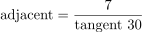
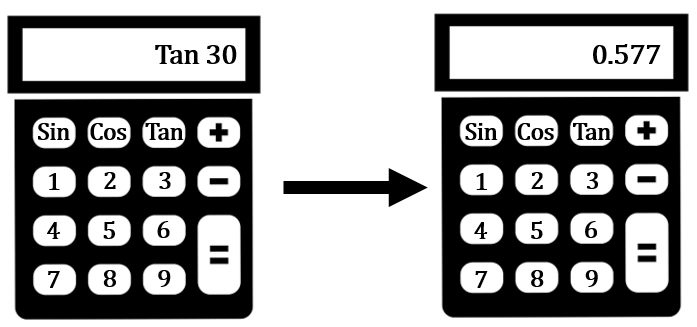
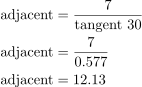
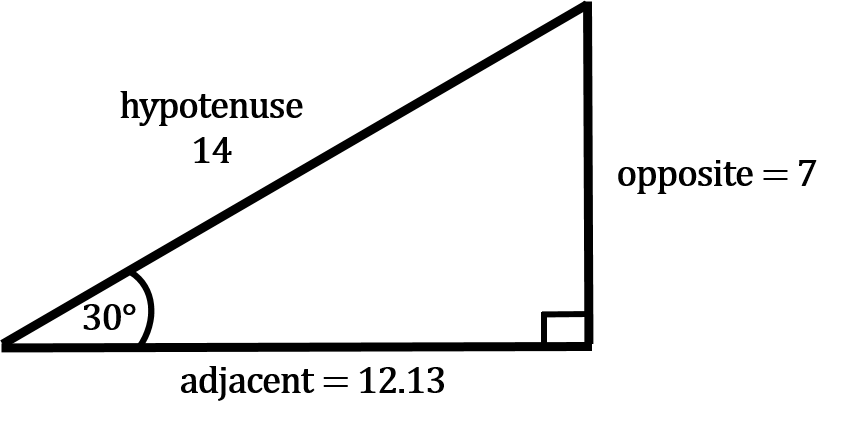
<?xml version="1.0" encoding="UTF-8"?>
<!DOCTYPE html PUBLIC "-//W3C//DTD XHTML 1.1//EN" "http://www.w3.org/TR/xhtml11/DTD/xhtml11.dtd">
<html xmlns="http://www.w3.org/1999/xhtml" xml:lang="en">
<head>
<meta content="text/html; charset=UTF-8" http-equiv="content-type" />
<meta http-equiv="Content-Language" content="en" />
<meta name="generator" content="Pressbooks 6.22.1" />
<meta name="pb-authors" content="Mark Overgaard" />
<meta name="pb-authors" content="Chad Flinn" />
<meta name="pb-title" content="Math for Trades: Volume 3" />
<meta name="pb-language" content="en-ca" />
<meta name="pb-cover-image" content="https://pressbooks.bccampus.ca/mathfortradesvolume3/wp-content/uploads/sites/1574/2022/02/math-for-trades-volume-3.png" />
<meta name="pb-primary-subject" content="PBW" />
<meta name="pb-publisher" content="BCcampus" />
<meta name="pb-publisher-city" content="Victoria, B.C." />
<meta name="pb-copyright-holder" content="Mark Overgaard and Chad Flinn" />
<meta name="pb-book-license" content="cc-by" />
<meta name="pb-custom-copyright" content="© 2022 Mark Overgaard and Chad FlinnThe CC licence permits you to retain, reuse, copy, redistribute, and revise this book—in whole or in part—for free providing the author is attributed as follows:Math for Trades: Volume 3 by Chad Flinn and Mark Overgaard is licensed under a CC BY 4.0 licence.If you redistribute all or part of this book, it is recommended the following statement be added to the copyright page so readers can access the original book at no cost:Download for free from the B.C. Open Textbook Collection.Sample APA-style citation (7th Edition):Overgaard, M., &amp; Flinn, C. (2022). Math for Trades: Volume 3. BCcampus. https://pressbooks.bccampus.ca/mathfortradesvolume3/Cover image attribution:“School supplies on table in classroom” by Katerina Holmes is used under the Pexels licence.Ebook ISBN:Print ISBN:Visit BCcampus Open Education to learn about open education in British Columbia." />
<meta name="pb-about-unlimited" content="The Math for Trades: Volume 3 textbook continues the tradition that Math for Trades: Volume 1 and Math for Trades: Volume 2 started. This volume continues the journey through math with topics such as capacities, pressure and total force, grade and total fall and trigonometry. These topics take the foundation that as been built in the first two volumes and adds new layers. Once again the material is presented from a trades perspective with easy-to-understand examples and video explanations accompanying questions. There is also a voiceover which follows along with each section and chapter. This material should provide useful in the continuation of your trades training." />
<meta name="pb-about-50" content="The Math for Trades: Volume 3 textbook continues the tradition that Math for Trades: Volume 1 and Math for Trades: Volume 2 started. This volume continues the journey through math with topics such as capacities, pressure and total force, grade and total fall and trigonometry. These topics take the foundation that as been built in the first two volumes and adds new layers. Once again the material is presented from a trades perspective with easy-to-understand examples and video explanations accompanying questions. There is also a voiceover which follows along with each section and chapter. This material should provide useful in the continuation of your trades training." />
<meta name="pb-additional-subjects" content="TTVR, TNT, PBC, PB" />
<meta name="pb-publication-date" content="1659484800" />
<title>Math for Trades: Volume 3</title>
</head>
<body lang='en' >
<div id="half-title-page"><h1 class="title">Math for Trades: Volume 3</h1></div>
<div id="title-page">
			<h1 class="title">Math for Trades: Volume 3</h1>
		<h2 class="subtitle"></h2>
					<p class="author">Mark Overgaard and Chad Flinn</p>
								<p class="publisher">BCcampus</p>
		<p class="publisher-city">Victoria, B.C.</p>
	</div>
<div id="copyright-page">
	<div class="ugc">
					
<div class="license-attribution"><p><img src="https://pressbooks.bccampus.ca/mathfortradesvolume3/wp-content/themes/pressbooks-book/packages/buckram/assets/images/cc-by.svg" alt="Icon for the Creative Commons Attribution 4.0 International License" /></p><p>Math for Trades: Volume 3 Copyright © 2022 by <span>Mark Overgaard and Chad Flinn</span> is licensed under a <a rel="license" href="https://creativecommons.org/licenses/by/4.0/">Creative Commons Attribution 4.0 International License</a>, except where otherwise noted.</p></div>

							<p>© 2022 Mark Overgaard and Chad Flinn</p><p>The CC licence permits you to retain, reuse, copy, redistribute, and revise this book—in whole or in part—for free providing the author is attributed as follows:</p><div class="textbox"><a href="https://pressbooks.bccampus.ca/mathfortradesvolume3/"><em>Math for Trades: Volume 3</em> </a>by Chad Flinn and Mark Overgaard is licensed under a <a href="http://creativecommons.org/licenses/by/4.0/">CC BY 4.0 licence</a>.</div><p>If you redistribute all or part of this book, it is recommended the following statement be added to the copyright page so readers can access the original book at no cost:</p><div class="textbox">Download for free from the <a href="https://open.bccampus.ca/find-open-textbooks/">B.C. Open Textbook Collection</a>.</div><p><strong>Sample APA-style citation (7th Edition):</strong></p><div class="textbox">Overgaard, M., &#38; Flinn, C. (2022). <i>Math for Trades: Volume 3</i>. BCcampus. https://pressbooks.bccampus.ca/mathfortradesvolume3/</div><p><strong>Cover image attribution:</strong></p><div class="textbox">&#8220;<a href="https://www.pexels.com/photo/school-supplies-on-table-in-classroom-5905612/">School supplies on table in classroom</a>&#8221; by <a href="https://www.pexels.com/@katerina-holmes/">Katerina Holmes</a> is used under the <a href="https://www.pexels.com/license/">Pexels licence</a>.</div><p><strong>Ebook ISBN:</strong></p><p><strong>Print ISBN:</strong></p><p>Visit <a href="http://open.bccampus.ca/">BCcampus Open Education</a> to learn about open education in British Columbia.</p>
							</div>
</div>
<div id="toc">
	<h1>Contents</h1>
	<ul>
					<li class="front-matter introduction">
	<a href="#front-matter-introduction">
		<span class="toc-chapter-title">Accessibility Statement</span>
							</a>
	</li>

					<li class="front-matter post-introduction miscellaneous">
	<a href="#front-matter-for-students-how-to-access-and-use-this-textbook">
		<span class="toc-chapter-title">For Students: How to Access and Use this Textbook</span>
							</a>
	</li>

					<li class="front-matter miscellaneous">
	<a href="#front-matter-about-bccampus-open-education">
		<span class="toc-chapter-title">About BCcampus Open Education</span>
							</a>
	</li>

					<li class="part">
	<a href="#part-main-body">
					Capacities
			</a>
</li>

					<li class="chapter standard">
	<a href="#chapter-capacities">
		<span class="toc-chapter-title">Gallons</span>
							</a>
	</li>

					<li class="chapter standard">
	<a href="#chapter-litres">
		<span class="toc-chapter-title">Litres</span>
							</a>
	</li>

					<li class="chapter standard">
	<a href="#chapter-working-between-gallons-and-litres">
		<span class="toc-chapter-title">Working Between Gallons and Litres</span>
							</a>
	</li>

					<li class="chapter standard">
	<a href="#chapter-weight-of-water">
		<span class="toc-chapter-title">Weight of Water</span>
							</a>
	</li>

					<li class="chapter standard">
	<a href="#chapter-capacities-quiz">
		<span class="toc-chapter-title">Capacities Quiz</span>
							</a>
	</li>

					<li class="part">
	<a href="#part-pressure-and-total-force">
					Pressure and Total Force
			</a>
</li>

					<li class="chapter standard">
	<a href="#chapter-pressure-and-force">
		<span class="toc-chapter-title">Pressure and Force</span>
							</a>
	</li>

					<li class="chapter standard">
	<a href="#chapter-using-water-as-a-guide-for-determining-pressure">
		<span class="toc-chapter-title">Using Water as a Guide for Determining Pressure</span>
							</a>
	</li>

					<li class="chapter standard">
	<a href="#chapter-calculating-total-force">
		<span class="toc-chapter-title">Calculating Total Force</span>
							</a>
	</li>

					<li class="chapter standard">
	<a href="#chapter-pressure-and-total-force-quiz">
		<span class="toc-chapter-title">Pressure and Total Force Quiz</span>
							</a>
	</li>

					<li class="part">
	<a href="#part-grade-and-total-fall">
					Grade and Total Fall
			</a>
</li>

					<li class="chapter standard">
	<a href="#chapter-the-three-ways-grade-is-defined">
		<span class="toc-chapter-title">The Three Ways Grade is Defined</span>
							</a>
	</li>

					<li class="chapter standard">
	<a href="#chapter-working-between-the-grades">
		<span class="toc-chapter-title">Working Between The Types of Grade</span>
							</a>
	</li>

					<li class="chapter standard">
	<a href="#chapter-calculating-fall">
		<span class="toc-chapter-title">Calculating Fall</span>
							</a>
	</li>

					<li class="chapter standard">
	<a href="#chapter-finding-grade-and-finding-length">
		<span class="toc-chapter-title">Calculating Grade or Length</span>
							</a>
	</li>

					<li class="chapter standard">
	<a href="#chapter-grade-and-total-fall-quiz">
		<span class="toc-chapter-title">Grade and Total Fall Quiz</span>
							</a>
	</li>

					<li class="part">
	<a href="#part-trigonometry">
					Trigonometry
			</a>
</li>

					<li class="chapter standard">
	<a href="#chapter-the-basics-of-triangles">
		<span class="toc-chapter-title">The Basics of Triangles</span>
							</a>
	</li>

					<li class="chapter standard">
	<a href="#chapter-introduction-to-trigonometry">
		<span class="toc-chapter-title">Introduction to Trigonometry</span>
							</a>
	</li>

					<li class="chapter standard">
	<a href="#chapter-the-sin-function">
		<span class="toc-chapter-title">Using Trigonometry to Find Side Lengths</span>
							</a>
	</li>

					<li class="chapter standard">
	<a href="#chapter-using-soh-cah-toa-to-find-angles">
		<span class="toc-chapter-title">Using Trigonometry to Find Angles</span>
							</a>
	</li>

					<li class="chapter standard">
	<a href="#chapter-triangle-quiz">
		<span class="toc-chapter-title">Triangle quiz</span>
							</a>
	</li>

					<li class="part">
	<a href="#part-practice-test">
					Practice Test
			</a>
</li>

					<li class="back-matter miscellaneous">
	<a href="#back-matter-versioning-history">
		<span class="toc-chapter-title">Versioning History</span>
							</a>
	</li>

			</ul>
</div>
<div class="front-matter introduction " id="front-matter-introduction" title="Accessibility Statement">
	<div class="front-matter-title-wrap">
		<p class="front-matter-number">1</p>
		<h1 class="front-matter-title"><span class="display-none">Accessibility Statement</span></h1>
								</div>
	<div class="ugc front-matter-ugc">
				 <p>BCcampus Open Education believes that education must be available to everyone. This means supporting the creation of free, open, and accessible educational resources. We are actively committed to increasing the accessibility and usability of the textbooks we produce.</p> <h1>Accessibility of This Textbook</h1> <p>The web version of this resource <span style="color: #0000ff;"><a href="https://pressbooks.bccampus.ca/mathfortradesvolume3/" data-url="https://pressbooks.bccampus.ca/mathfortradesvolume3/">Math for Trades: Volume 3</a></span>&nbsp;has been designed to meet <a href="https://www.w3.org/TR/WCAG20/" data-url="https://www.w3.org/TR/WCAG20/">Web Content Accessibility Guidelines 2.0</a>, level AA. In addition, it follows all guidelines in <a href="https://opentextbc.ca/accessibilitytoolkit/back-matter/appendix-checklist-for-accessibility-toolkit/" data-url="https://opentextbc.ca/accessibilitytoolkit/back-matter/appendix-checklist-for-accessibility-toolkit/">Appendix A: Checklist for Accessibility</a> of the <a href="https://opentextbc.ca/accessibilitytoolkit/" data-url="https://opentextbc.ca/accessibilitytoolkit/"><em>Accessibility Toolkit – 2nd Edition</em></a>. It includes:</p> <ul><li><strong>Easy navigation</strong>. This text has a linked table of contents and uses headings in each chapter to make navigation easy.</li> <li><strong>Accessible math equations</strong>. Many of the equations in this text have been written in LaTeX and rendered with MathJax, which makes them accessible to people using screen readers that are set up to read MathML. The rest of the equations are rendered as images with appropriate alternative text.</li> <li><strong>Accessible videos</strong>. All videos in this text have captions.</li> <li><strong>Accessible images</strong>. All images in this text that convey information have alternative text. Images that are decorative have empty alternative text.</li> <li><strong>Accessible links</strong>. All links use descriptive link text.</li> </ul> <table class="grid" style="width: 100%;"><caption>Accessibility Checklist</caption> <tbody><tr><th scope="col">Element</th> <th scope="col">Requirements</th> <th scope="col">Pass?</th> </tr> <tr><th scope="row">Headings</th> <td>Content is organized under headings and subheadings that are used sequentially.</td> <td>Yes</td> </tr> <tr><th scope="row">Images</th> <td>Images that convey information include alternative text descriptions. These descriptions are provided in the alt text field, in the surrounding text, or linked to as a long description.</td> <td>Yes</td> </tr> <tr><th scope="row">Images</th> <td>Images and text do not rely on colour to convey information.</td> <td>Yes</td> </tr> <tr><th scope="row">Images</th> <td>Images that are purely decorative or are already described in the surrounding text contain empty alternative text descriptions. (Descriptive text is unnecessary if the image doesn’t convey contextual content information.)</td> <td>Yes</td> </tr> <tr><th scope="row">Tables</th> <td>Tables include row and/or column headers that have the correct scope assigned.</td> <td>Yes</td> </tr> <tr><th scope="row">Tables</th> <td>Tables include a title or caption.</td> <td>No</td> </tr> <tr><th scope="row">Tables</th> <td>Tables do not have merged or split cells.</td> <td>Yes</td> </tr> <tr><th scope="row">Tables</th> <td>Tables have adequate cell padding.</td> <td>Yes</td> </tr> <tr><th scope="row">Links</th> <td>The link text describes the destination of the link.</td> <td>Yes</td> </tr> <tr><th scope="row">Links</th> <td>Links do not open new windows or tabs. If they do, a textual reference is included in the link text.</td> <td>Yes</td> </tr> <tr><th><strong>Links</strong></th> <td>Links to files include the file type in the link text.</td> <td>Yes</td> </tr> <tr><th><strong>Audio</strong></th> <td>All audio content includes a transcript that includes all speech content and relevant descriptions of non-speech audio and speaker names/headings where necessary.</td> <td>Yes</td> </tr> <tr><th scope="row">Video</th> <td>All videos include high-quality (i.e., not machine generated) captions of all speech content and relevant non-speech content.</td> <td>Yes</td> </tr> <tr><th scope="row">Video</th> <td>All videos with contextual visuals (graphs, charts, etc.) are described audibly in the video.</td> <td>Yes</td> </tr> <tr><th>H5P</th> <td>All H5P activities have been tested for accessibility by the H5P team and have passed their testing.</td> <td>Yes</td> </tr> <tr><th>H5P</th> <td>All H5P activities that include images, videos, and/or audio content meet the accessibility requirements for those media types.</td> <td>Yes</td> </tr> <tr><th scope="row">Formulas</th> <td>Formulas have been created using LaTeX and are rendered with MathJax.</td> <td>Yes</td> </tr> <tr><th scope="row">Formulas</th> <td>If LaTeX is not an option, formulas are images with alternative text descriptions.</td> <td>Yes</td> </tr> <tr><th scope="row">Font</th> <td>Font size is 12 point or higher for body text.</td> <td>Yes</td> </tr> <tr><th scope="row">Font</th> <td>Font size is 9 point for footnotes or endnotes.</td> <td>Yes</td> </tr> <tr><th scope="row">Font</th> <td>Font size can be zoomed to 200% in the webbook or eBook formats.</td> <td>Yes</td> </tr> </tbody> </table> <h1>Known Accessibility Issues and Areas for Improvement</h1> <p>Not all tables include a title or caption.</p> <h1>Let Us Know if You are Having Problems Accessing This Book</h1> <p>We are always looking for ways to make our textbooks more accessible. If you have problems accessing this textbook, please contact us to let us know so we can fix the issue.</p> <p>Please include the following information:</p> <ul><li>The name of the textbook</li> <li>The location of the problem by providing a web address or page description.</li> <li>A description of the problem</li> <li>The computer, software, browser, and any assistive technology you are using that can help us diagnose and solve your issue (e.g., Windows 10, Google Chrome (Version 65.0.3325.181), NVDA screen reader)</li> </ul> <p>You can contact us one of the following ways:</p> <ul><li>Web form: <a href="https://open.bccampus.ca/contact-us/" data-url="https://open.bccampus.ca/contact-us/">BCcampus IT Support</a></li> <li>Web form: <a href="https://open.bccampus.ca/reporting-an-open-textbook-error/" data-url="https://open.bccampus.ca/reporting-an-open-textbook-error/">Report an Error</a></li> </ul> <p>This statement was last updated on August 3rd, 2022.</p> <p>The Accessibility Checklist table was adapted from one originally created by the <a href="https://press.rebus.community/the-rebus-guide-to-publishing-open-textbooks/back-matter/accessibility-assessment/" data-url="https://press.rebus.community/the-rebus-guide-to-publishing-open-textbooks/back-matter/accessibility-assessment/">Rebus Community</a> and shared under a <a href="https://creativecommons.org/licenses/by/4.0/" data-url="https://creativecommons.org/licenses/by/4.0/">CC BY 4.0 License</a>.</p> 
	</div>


	</div>
<div class="front-matter miscellaneous post-introduction " id="front-matter-for-students-how-to-access-and-use-this-textbook" title="For Students: How to Access and Use this Textbook">
	<div class="front-matter-title-wrap">
		<p class="front-matter-number">2</p>
		<h1 class="front-matter-title">For Students: How to Access and Use this Textbook</h1>
								</div>
	<div class="ugc front-matter-ugc">
				 <p>This textbook is available in the following formats:</p> <ul><li><strong>Online webbook</strong>. You can read this textbook online on a computer or mobile device in one of the following browsers: Chrome, Firefox, Edge, and Safari.</li> <li><strong>PDF</strong>. You can download this book as a PDF to read on a computer (Digital PDF) or print it out (Print PDF).</li> <li><strong>Mobile</strong>. If you want to read this textbook on your phone or tablet, you can use the EPUB (eReader) file.</li> <li><strong>HTML</strong>. An HTML file can be opened in a browser. It has very little style so it doesn’t look very nice, but some people might find it useful.</li> </ul> <p>For more information about the accessibility of this textbook, see the Accessibility Statement.</p> <p>You can access the online webbook and download any of the formats for free here: <a href="https://pressbooks.bccampus.ca/mathfortradesvolume3/" data-url="https://pressbooks.bccampus.ca/mathfortradesvolume3/"><em>Math for Trades: Volume 3</em></a>. To download the book in a different format, look for the “Download this book” drop-down menu and select the file type you want.</p> <table class="aligncenter" style="width: 100%; height: 326px;"><caption>How can I use the different formats?</caption> <tbody><tr><th style="width: 9.74874%;" scope="col">Format</th> <th style="width: 11.1558%;" scope="col">Internet required?</th> <th style="width: 12.1608%;" scope="col">Device</th> <th style="width: 20.3015%;" scope="col">Required apps</th> <th style="width: 33.0653%;" scope="col">Accessibility Features</th> <th style="width: 13.6683%;" scope="col">Screen reader compatible</th> </tr> <tr><td style="width: 9.74874%;">Online webbook</td> <td style="width: 11.1558%;">Yes</td> <td style="width: 12.1608%;">Computer, tablet, phone</td> <td style="text-align: left; width: 20.3015%;">An Internet browser (Chrome, Firefox, Edge, or Safari)</td> <td style="width: 33.0653%;">WCAG 2.0 AA compliant, option to enlarge text, and compatible with browser text-to-speech tools</td> <td style="width: 13.6683%;">Yes</td> </tr> <tr><td style="width: 9.74874%;">PDF</td> <td style="width: 11.1558%;">No</td> <td style="width: 12.1608%;">Computer, print copy</td> <td style="width: 20.3015%;">Adobe Reader (for reading on a computer) or a printer</td> <td style="width: 33.0653%;">Ability to highlight and annotate the text. If reading on the computer, you can zoom in.</td> <td style="width: 13.6683%;">Unsure</td> </tr> <tr><td style="width: 9.74874%;">EPUB</td> <td style="width: 11.1558%;">No</td> <td style="width: 12.1608%;">Computer, tablet, phone</td> <td style="width: 20.3015%;">An eReader app</td> <td style="width: 33.0653%;">Option to enlarge text, change font style, size, and colour.</td> <td style="width: 13.6683%;">Unsure</td> </tr> <tr><td style="width: 9.74874%;">HTML</td> <td style="width: 11.1558%;">No</td> <td style="width: 12.1608%;">Computer, tablet, phone</td> <td style="width: 20.3015%;">An Internet browser (Chrome, Firefox, Edge, or Safari)</td> <td style="width: 33.0653%;">WCAG 2.0 AA compliant and compatible with browser text-to-speech tools.</td> <td style="width: 13.6683%;">Yes</td> </tr> </tbody> </table> <h1 style="text-align: left;">Tips for Using This Textbook</h1> <ul><li><strong>Search the textbook</strong>. <ul><li>If using the online webbook, you can use the search bar in the top right corner to search the entire book for a key word or phrase. To search a specific chapter, open that chapter and use your browser’s search feature by hitting <strong>[Cntr] + [f]</strong> on your keyboard if using a Windows computer or <strong>[Command] + [f] </strong>if using a Mac computer.</li> <li>The <strong>[Cntr] + [f]</strong> and <strong>[Command] + [f]</strong> keys will also allow you to search a PDF, HTML, and EPUB files if you are reading them on a computer.</li> <li>If using an eBook app to read this textbook, the app should have a built-in search tool.</li> </ul> </li> <li><strong>Navigate the textbook</strong>. <ul><li>This textbook has a table of contents to help you navigate through the book easier. If using the online webbook, you can find the full table of contents on the book’s homepage or by selecting “Contents” from the top menu when you are in a chapter.</li> </ul> </li> <li><strong>Annotate the textbook</strong>. <ul><li>If you like to highlight or write on your textbooks, you can do that by getting a print copy, using the Digital PDF in Adobe Reader, or using the highlighting tools in eReader apps.</li> </ul> </li> </ul> <h1>Webbook vs. All Other Formats</h1> <p>The webbook includes H5P tests, videos for practice questions and solutions, and an audio version of each chapter. If you are not using the webbook to access this textbook, this content will not be included. Instead, your copy of the text will provided a link to where you can access that content online.</p> <p>Even if you decide to use a PDF or a print copy to access the textbook, you can access the webbook and download any other formats at any time.</p> 
	</div>


	</div>
<div class="front-matter miscellaneous post-introduction " id="front-matter-about-bccampus-open-education" title="About BCcampus Open Education">
	<div class="front-matter-title-wrap">
		<p class="front-matter-number">3</p>
		<h1 class="front-matter-title">About BCcampus Open Education</h1>
								</div>
	<div class="ugc front-matter-ugc">
				 <p>by was funded by BCcampus Open Education.</p> <p><a href="https://open.bccampus.ca/" data-url="https://open.bccampus.ca/">BCcampus Open Education</a> began in 2012 as the B.C. Open Textbook Project with the goal of making post-secondary education in British Columbia more accessible by reducing students’ costs through the use of open textbooks and other OER. <a href="https://bccampus.ca/about-us/" rel="noopener" data-url="https://bccampus.ca/about-us/">BCcampus</a> supports the post-secondary institutions of British Columbia as they adapt and evolve their teaching and learning practices to enable powerful learning opportunities for the students of B.C. BCcampus Open Education is funded by the <a href="https://www2.gov.bc.ca/gov/content/governments/organizational-structure/ministries-organizations/ministries/advanced-education-skills-training" rel="noopener" data-url="https://www2.gov.bc.ca/gov/content/governments/organizational-structure/ministries-organizations/ministries/advanced-education-skills-training">British Columbia Ministry of Advanced Education and Skills Training</a> and the <a href="http://www.hewlett.org/" rel="noopener" data-url="http://www.hewlett.org/">Hewlett Foundation</a>.</p> <p>Open educational resources (OER) are teaching, learning, and research resources that, through permissions granted by the copyright holder, allow others to use, distribute, keep, or make changes to them. Our open textbooks are openly licensed using a <a href="https://creativecommons.org/licenses/" data-url="https://creativecommons.org/licenses/">Creative Commons licence</a> and are offered in various eBook formats free of charge, or as printed books that are available at cost.</p> <p>For more information about open education in British Columbia, please visit the <a href="https://open.bccampus.ca/" data-url="https://open.bccampus.ca/">BCcampus Open Education</a> website. If you are an instructor who is using this book for a course, please fill out our <a href="https://open.bccampus.ca/use-open-textbooks/tell-us-youre-using-an-open-textbook/" data-url="https://open.bccampus.ca/use-open-textbooks/tell-us-youre-using-an-open-textbook/">Adoption of an Open Textbook</a> form.</p> <div class="textbox">This book was produced using the following styles: <a href="https://pressbooks.bccampus.ca/mathfortradesvolume3/wp-content/uploads/sites/1574/2022/05/MathForTradesV3-StyleSheet.docx" data-url="https://pressbooks.bccampus.ca/mathfortradesvolume3/wp-content/uploads/sites/1574/2022/05/MathForTradesV3-StyleSheet.docx">MathForTradesV3-StyleSheet [Word file]</a></div> 
	</div>


	</div>
<div class="part-wrapper" id="part-main-body-wrapper">
    <div class="part  " id="part-main-body">
	<div class="part-title-wrap">
		<p class="part-number">I</p>
		<h1 class="part-title">Capacities</h1>
	</div>
	<div class="ugc part-ugc">
		<p><img class="aligncenter wp-image-329" src="https://pressbooks.bccampus.ca/mathfortradesvolume3/wp-content/uploads/sites/1574/2021/12/Picture2-5.png" alt="" width="200" height="205" srcset="https://pressbooks.bccampus.ca/mathfortradesvolume3/wp-content/uploads/sites/1574/2021/12/Picture2-5.png 562w, https://pressbooks.bccampus.ca/mathfortradesvolume3/wp-content/uploads/sites/1574/2021/12/Picture2-5-293x300.png 293w, https://pressbooks.bccampus.ca/mathfortradesvolume3/wp-content/uploads/sites/1574/2021/12/Picture2-5-65x67.png 65w, https://pressbooks.bccampus.ca/mathfortradesvolume3/wp-content/uploads/sites/1574/2021/12/Picture2-5-225x230.png 225w, https://pressbooks.bccampus.ca/mathfortradesvolume3/wp-content/uploads/sites/1574/2021/12/Picture2-5-350x358.png 350w" sizes="auto, (max-width: 200px) 100vw, 200px" title="" /></p> <div class="textbox textbox--learning-objectives"><div class="textbox__header"><p class="textbox__title">Outcomes</p> </div> <div class="textbox__content"><ul><li>Understanding and working with gallons</li> <li>Understanding and working with litres</li> <li>Working between gallons and litres</li> <li>Understanding the weight of water</li> </ul> </div> </div>
	</div>
			
				
	</div>
<div class="chapter standard " id="chapter-capacities" title="Gallons">
	<div class="chapter-title-wrap">
		<p class="chapter-number">1</p>
		<h1 class="chapter-title">Gallons</h1>
								</div>
	<div class="ugc chapter-ugc">
				 <p style="text-align: center">Click play on the following audio player to listen along as you read this section.</p> <div class="textbox interactive-content interactive-content--oembed"><span class="interactive-content__icon"></span> <p>One or more interactive elements has been excluded from this version of the text. You can view them online here: <a href="#oembed-4" title="1.1 Gallons" data-url="https://pressbooks.bccampus.ca/mathfortradesvolume3/?p=5#oembed-4">https://pressbooks.bccampus.ca/mathfortradesvolume3/?p=5#oembed-4</a> </p> </div> <p><img class="alignleft wp-image-35" src="https://pressbooks.bccampus.ca/mathfortradesvolume3/wp-content/uploads/sites/1574/2021/12/Picture1.jpg" alt="A cube made out of squares." width="187" height="148" srcset="https://pressbooks.bccampus.ca/mathfortradesvolume3/wp-content/uploads/sites/1574/2021/12/Picture1.jpg 323w, https://pressbooks.bccampus.ca/mathfortradesvolume3/wp-content/uploads/sites/1574/2021/12/Picture1-300x238.jpg 300w, https://pressbooks.bccampus.ca/mathfortradesvolume3/wp-content/uploads/sites/1574/2021/12/Picture1-65x52.jpg 65w, https://pressbooks.bccampus.ca/mathfortradesvolume3/wp-content/uploads/sites/1574/2021/12/Picture1-225x178.jpg 225w" sizes="auto, (max-width: 187px) 100vw, 187px" title="" /></p> <p class="cover4" style="text-align: left; text-align: left;"><span xml:lang="EN-US">In the previous chapter we took a look at volume, what it is and how to calculate it. When dealing with volume we ended up working with units such as cubic feet, cubic inches or cubic meters.</span><span xml:lang="EN-US">&nbsp;</span></p> <p class="cover4" style="text-align: left; text-align: left;"><span xml:lang="EN-US">Let’s quickly revisit the definition of volume: </span><strong><span xml:lang="EN-US">Volume is the space which takes up a three dimensional object.</span></strong></p> <p class="cover4" style="text-align: left; text-align: left;"><span xml:lang="EN-US">What if I was to talk about volume but using the term capacity instead? Would that change your idea of what volume looks like? What does the term capacity bring to mind when you hear the word?</span></p> <p class="cover4" style="text-align: left; text-align: left;"><span xml:lang="EN-US">Capacity is often referred to as the largest amount of something (possibly a solid, liquid or gas) that can be held or contained in a specific volume. You might be thinking that you’ve heard capacity mentioned in other ways such as the amount of people that can fit into a stadium or large venue. You would be correct.</span></p> <p><img class="alignleft wp-image-39" src="https://pressbooks.bccampus.ca/mathfortradesvolume3/wp-content/uploads/sites/1574/2021/12/Picture4-300x200.jpg" alt="Seats in a sports stadium" width="250" height="167" srcset="https://pressbooks.bccampus.ca/mathfortradesvolume3/wp-content/uploads/sites/1574/2021/12/Picture4-300x200.jpg 300w, https://pressbooks.bccampus.ca/mathfortradesvolume3/wp-content/uploads/sites/1574/2021/12/Picture4-65x43.jpg 65w, https://pressbooks.bccampus.ca/mathfortradesvolume3/wp-content/uploads/sites/1574/2021/12/Picture4-225x150.jpg 225w, https://pressbooks.bccampus.ca/mathfortradesvolume3/wp-content/uploads/sites/1574/2021/12/Picture4-350x233.jpg 350w, https://pressbooks.bccampus.ca/mathfortradesvolume3/wp-content/uploads/sites/1574/2021/12/Picture4.jpg 576w" sizes="auto, (max-width: 250px) 100vw, 250px" title="" /></p> <p style="text-align: left;">An example would be the capacity of the University of Michigan football team stadium. It was built in 1926 and has a capacity of 107,601 people. You heard that right. It holds over 100,000 people. Crazy! In this case we would use the term capacity to describe the number of people that can fit into the stadium. The stadium is also referred to as “The Big House” for obvious reasons. Although this is not the type of capacity we will be dealing with it’s still a pretty cool ex</p> <p><img class="wp-image-50 alignright" src="https://pressbooks.bccampus.ca/mathfortradesvolume3/wp-content/uploads/sites/1574/2021/12/Picture15-123x300.png" alt="Mouse clicking. Takes you to Differences Between Volume and Capacity link" width="46" height="112" srcset="https://pressbooks.bccampus.ca/mathfortradesvolume3/wp-content/uploads/sites/1574/2021/12/Picture15-123x300.png 123w, https://pressbooks.bccampus.ca/mathfortradesvolume3/wp-content/uploads/sites/1574/2021/12/Picture15-65x158.png 65w, https://pressbooks.bccampus.ca/mathfortradesvolume3/wp-content/uploads/sites/1574/2021/12/Picture15.png 124w" sizes="auto, (max-width: 46px) 100vw, 46px" title="" /></p> <p style="text-align: left;">ample of another version of capacity.</p> <p class="cover4" style="text-align: left; text-align: left;"><span xml:lang="EN-US">I’m going to leave it there regarding the difference between volume and capacity but if you would like to learn more check out the following website: <a href="https://keydifferences.com/difference-between-volume-and-capacity.html" data-url="https://keydifferences.com/difference-between-volume-and-capacity.html">Differences Between Volume and Capacity</a></span></p> <p><img class="alignleft wp-image-51" src="https://pressbooks.bccampus.ca/mathfortradesvolume3/wp-content/uploads/sites/1574/2021/12/Picture16-300x225.jpg" alt="" width="200" height="150" srcset="https://pressbooks.bccampus.ca/mathfortradesvolume3/wp-content/uploads/sites/1574/2021/12/Picture16-300x225.jpg 300w, https://pressbooks.bccampus.ca/mathfortradesvolume3/wp-content/uploads/sites/1574/2021/12/Picture16-1024x768.jpg 1024w, https://pressbooks.bccampus.ca/mathfortradesvolume3/wp-content/uploads/sites/1574/2021/12/Picture16-768x576.jpg 768w, https://pressbooks.bccampus.ca/mathfortradesvolume3/wp-content/uploads/sites/1574/2021/12/Picture16-1536x1152.jpg 1536w, https://pressbooks.bccampus.ca/mathfortradesvolume3/wp-content/uploads/sites/1574/2021/12/Picture16-2048x1536.jpg 2048w, https://pressbooks.bccampus.ca/mathfortradesvolume3/wp-content/uploads/sites/1574/2021/12/Picture16-65x49.jpg 65w, https://pressbooks.bccampus.ca/mathfortradesvolume3/wp-content/uploads/sites/1574/2021/12/Picture16-225x169.jpg 225w, https://pressbooks.bccampus.ca/mathfortradesvolume3/wp-content/uploads/sites/1574/2021/12/Picture16-350x263.jpg 350w" sizes="auto, (max-width: 200px) 100vw, 200px" title="" /></p> <p>If you were asked to find the capacity of the gas can to the left what type of units would you be using to give your answer?</p> <p style="text-align: left;">For many of us the first thing that might come to mind would be the term gallon or litre and as it turns out these are the exact terms we use when describing capacities. We’ll start with gallons.</p> <h1 style="text-align: left;">Gallons</h1> <p><img class="alignleft wp-image-42" src="https://pressbooks.bccampus.ca/mathfortradesvolume3/wp-content/uploads/sites/1574/2021/12/Picture7-300x199.jpg" alt="" width="200" height="133" srcset="https://pressbooks.bccampus.ca/mathfortradesvolume3/wp-content/uploads/sites/1574/2021/12/Picture7-300x199.jpg 300w, https://pressbooks.bccampus.ca/mathfortradesvolume3/wp-content/uploads/sites/1574/2021/12/Picture7-65x43.jpg 65w, https://pressbooks.bccampus.ca/mathfortradesvolume3/wp-content/uploads/sites/1574/2021/12/Picture7-225x150.jpg 225w, https://pressbooks.bccampus.ca/mathfortradesvolume3/wp-content/uploads/sites/1574/2021/12/Picture7-350x233.jpg 350w, https://pressbooks.bccampus.ca/mathfortradesvolume3/wp-content/uploads/sites/1574/2021/12/Picture7.jpg 516w" sizes="auto, (max-width: 200px) 100vw, 200px" title="" /></p> <p class="cover4" style="text-align: left; text-align: left;"><span xml:lang="EN-US">When you think of gallons what is the first thing that comes to mind? For me its either gasoline that goes into a car or maybe milk. The funny thing about that is we actually measure both of these things in litres here in Canada. Whatever the case I still think of putting gallons of gas into my car rather than litres although in the future I might not be thinking of putting either gallons or litres as we might all be headed towards electric vehicles anyway.</span></p> <p>Let’s break it down even further. Are you aware that gallons can be expressed two different ways? There is the imperial Gallon and the U.S. gallon. Here in Canada we generally deal with imperial gallons but as we also deal with the United States when it comes to products such as hot water tanks and boilers we should also be familiar with the U.S. gallon.</p> <div class="textbox shaded"><p><em><strong>Question: </strong></em>Which do you think is bigger, the imperial gallon or the U.S. gallon?</p> <p><em><strong>Answer: </strong></em>We’ll answer that in the last part of this section. If you’re curious and can’t wait until the end and want to dive ahead then maybe take a look online and see if you can find the answer.</p> </div> <p><img class="alignleft wp-image-37 size-medium" src="https://pressbooks.bccampus.ca/mathfortradesvolume3/wp-content/uploads/sites/1574/2021/12/Picture2-200x300.jpg" alt="" width="200" height="300" srcset="https://pressbooks.bccampus.ca/mathfortradesvolume3/wp-content/uploads/sites/1574/2021/12/Picture2-200x300.jpg 200w, https://pressbooks.bccampus.ca/mathfortradesvolume3/wp-content/uploads/sites/1574/2021/12/Picture2-65x98.jpg 65w, https://pressbooks.bccampus.ca/mathfortradesvolume3/wp-content/uploads/sites/1574/2021/12/Picture2-225x338.jpg 225w, https://pressbooks.bccampus.ca/mathfortradesvolume3/wp-content/uploads/sites/1574/2021/12/Picture2.jpg 312w" sizes="auto, (max-width: 200px) 100vw, 200px" title="" /></p> <p class="cover4" style="text-align: left; text-align: left;"><span xml:lang="EN-US">The imperial gallon story originates in jolly ‘ole England. The English Weights and Measures Act came into being during the 1800’s which made the British Imperial System the go to place for defining units. As a result the imperial gallon replaced the wine, ale and corn gallons then in use.</span><span xml:lang="EN-US">&nbsp;</span></p> <p class="cover4" style="text-align: left; text-align: left;"><span xml:lang="EN-US">Maybe the first thing we should do is try and visualize the size of an imperial gallon. If we are going to do that we should have a reference or starting point.</span></p> <p class="cover4" style="text-align: left; text-align: left;"><span xml:lang="EN-US">Let’s go back to the cubic foot that we talked about in the last chapter. Remember that a cubic foot has 3 dimensions and we referred to it in terms of volume. Its one foot by one foot by one foot.</span></p> <p><a href="https://pressbooks.bccampus.ca/mathfortradesvolume3/wp-content/uploads/sites/1574/2021/12/Picture3.png" data-url="https://pressbooks.bccampus.ca/mathfortradesvolume3/wp-content/uploads/sites/1574/2021/12/Picture3.png"><img class="aligncenter wp-image-38" src="https://pressbooks.bccampus.ca/mathfortradesvolume3/wp-content/uploads/sites/1574/2021/12/Picture3-300x288.png" alt="1 foot by 1 foot by 1 foot cube." width="300" height="288" srcset="https://pressbooks.bccampus.ca/mathfortradesvolume3/wp-content/uploads/sites/1574/2021/12/Picture3-300x288.png 300w, https://pressbooks.bccampus.ca/mathfortradesvolume3/wp-content/uploads/sites/1574/2021/12/Picture3-65x62.png 65w, https://pressbooks.bccampus.ca/mathfortradesvolume3/wp-content/uploads/sites/1574/2021/12/Picture3-225x216.png 225w, https://pressbooks.bccampus.ca/mathfortradesvolume3/wp-content/uploads/sites/1574/2021/12/Picture3-350x336.png 350w, https://pressbooks.bccampus.ca/mathfortradesvolume3/wp-content/uploads/sites/1574/2021/12/Picture3.png 409w" sizes="auto, (max-width: 300px) 100vw, 300px" title="" /></a></p> <p>As an imperial gallon refers to capacity it is referring to an amount of stuff. For our purposes that stuff can be either a solid, liquid or a gas. The question then becomes “how many imperial gallons does it take to fill up a cubic foot?”</p> <p>Wait a minute? Maybe it’s the other way around. Maybe an imperial gallon contains so much stuff that putting it into a cubic foot will overflow the cubic foot?</p> <p style="text-align: center"><strong><em>Any guesses on which can hold more stuff?</em></strong></p> <p><img class="aligncenter wp-image-60" src="https://pressbooks.bccampus.ca/mathfortradesvolume3/wp-content/uploads/sites/1574/2021/12/Picture17-300x228.jpg" alt="" width="250" height="190" srcset="https://pressbooks.bccampus.ca/mathfortradesvolume3/wp-content/uploads/sites/1574/2021/12/Picture17-300x228.jpg 300w, https://pressbooks.bccampus.ca/mathfortradesvolume3/wp-content/uploads/sites/1574/2021/12/Picture17-65x49.jpg 65w, https://pressbooks.bccampus.ca/mathfortradesvolume3/wp-content/uploads/sites/1574/2021/12/Picture17-225x171.jpg 225w, https://pressbooks.bccampus.ca/mathfortradesvolume3/wp-content/uploads/sites/1574/2021/12/Picture17-350x266.jpg 350w, https://pressbooks.bccampus.ca/mathfortradesvolume3/wp-content/uploads/sites/1574/2021/12/Picture17.jpg 470w" sizes="auto, (max-width: 250px) 100vw, 250px" title="" /></p> <p style="text-align: center"><em><strong>Check out the answer below.</strong></em></p> <p><img class="aligncenter wp-image-61" src="https://pressbooks.bccampus.ca/mathfortradesvolume3/wp-content/uploads/sites/1574/2021/12/Picture18.png" alt="Continue below" width="399" height="371" srcset="https://pressbooks.bccampus.ca/mathfortradesvolume3/wp-content/uploads/sites/1574/2021/12/Picture18.png 566w, https://pressbooks.bccampus.ca/mathfortradesvolume3/wp-content/uploads/sites/1574/2021/12/Picture18-300x279.png 300w, https://pressbooks.bccampus.ca/mathfortradesvolume3/wp-content/uploads/sites/1574/2021/12/Picture18-65x60.png 65w, https://pressbooks.bccampus.ca/mathfortradesvolume3/wp-content/uploads/sites/1574/2021/12/Picture18-225x209.png 225w, https://pressbooks.bccampus.ca/mathfortradesvolume3/wp-content/uploads/sites/1574/2021/12/Picture18-350x325.png 350w" sizes="auto, (max-width: 399px) 100vw, 399px" title="" /></p> <p>As it turns out a cubic foot is quite a bit larger than an imperial gallon. In fact it’s 6.24 times larger meaning that you can fit 6.24 imperial gallons into a cubic foot.</p> <p><a href="https://pressbooks.bccampus.ca/mathfortradesvolume3/wp-content/uploads/sites/1574/2021/12/Picture5.png" data-url="https://pressbooks.bccampus.ca/mathfortradesvolume3/wp-content/uploads/sites/1574/2021/12/Picture5.png"><img class="aligncenter wp-image-40" src="https://pressbooks.bccampus.ca/mathfortradesvolume3/wp-content/uploads/sites/1574/2021/12/Picture5-1024x589.png" alt="6.24 imperial gallons fit in one cubic foot." width="578" height="333" srcset="https://pressbooks.bccampus.ca/mathfortradesvolume3/wp-content/uploads/sites/1574/2021/12/Picture5-1024x589.png 1024w, https://pressbooks.bccampus.ca/mathfortradesvolume3/wp-content/uploads/sites/1574/2021/12/Picture5-300x173.png 300w, https://pressbooks.bccampus.ca/mathfortradesvolume3/wp-content/uploads/sites/1574/2021/12/Picture5-768x442.png 768w, https://pressbooks.bccampus.ca/mathfortradesvolume3/wp-content/uploads/sites/1574/2021/12/Picture5-65x37.png 65w, https://pressbooks.bccampus.ca/mathfortradesvolume3/wp-content/uploads/sites/1574/2021/12/Picture5-225x129.png 225w, https://pressbooks.bccampus.ca/mathfortradesvolume3/wp-content/uploads/sites/1574/2021/12/Picture5-350x201.png 350w, https://pressbooks.bccampus.ca/mathfortradesvolume3/wp-content/uploads/sites/1574/2021/12/Picture5.png 1403w" sizes="auto, (max-width: 578px) 100vw, 578px" title="" /></a></p> <p>This leads up to our first capacity translation.</p> <p><a href="https://pressbooks.bccampus.ca/mathfortradesvolume3/wp-content/uploads/sites/1574/2021/12/Picture19png.png" data-url="https://pressbooks.bccampus.ca/mathfortradesvolume3/wp-content/uploads/sites/1574/2021/12/Picture19png.png"><img class="aligncenter wp-image-64" src="https://pressbooks.bccampus.ca/mathfortradesvolume3/wp-content/uploads/sites/1574/2021/12/Picture19png.png" alt="1 cubic foot = 6.24 imperial gallons" width="330" height="145" srcset="https://pressbooks.bccampus.ca/mathfortradesvolume3/wp-content/uploads/sites/1574/2021/12/Picture19png.png 601w, https://pressbooks.bccampus.ca/mathfortradesvolume3/wp-content/uploads/sites/1574/2021/12/Picture19png-300x132.png 300w, https://pressbooks.bccampus.ca/mathfortradesvolume3/wp-content/uploads/sites/1574/2021/12/Picture19png-65x29.png 65w, https://pressbooks.bccampus.ca/mathfortradesvolume3/wp-content/uploads/sites/1574/2021/12/Picture19png-225x99.png 225w, https://pressbooks.bccampus.ca/mathfortradesvolume3/wp-content/uploads/sites/1574/2021/12/Picture19png-350x154.png 350w" sizes="auto, (max-width: 330px) 100vw, 330px" title="" /></a></p> <p>Now we can get the volume of a cubic foot and translate that into imperial gallons.</p> <p>Let’s try an example.</p> <div class="textbox textbox--examples"><div class="textbox__header"><p class="textbox__title">Example</p> </div> <div class="textbox__content"><p><img class="alignleft wp-image-48" style="color: #373d3f;font-weight: bold;font-size: 1em" src="https://pressbooks.bccampus.ca/mathfortradesvolume3/wp-content/uploads/sites/1574/2021/12/Picture13-300x200.jpg" alt="" width="200" height="133" srcset="https://pressbooks.bccampus.ca/mathfortradesvolume3/wp-content/uploads/sites/1574/2021/12/Picture13-300x200.jpg 300w, https://pressbooks.bccampus.ca/mathfortradesvolume3/wp-content/uploads/sites/1574/2021/12/Picture13-65x43.jpg 65w, https://pressbooks.bccampus.ca/mathfortradesvolume3/wp-content/uploads/sites/1574/2021/12/Picture13-225x150.jpg 225w, https://pressbooks.bccampus.ca/mathfortradesvolume3/wp-content/uploads/sites/1574/2021/12/Picture13-350x233.jpg 350w, https://pressbooks.bccampus.ca/mathfortradesvolume3/wp-content/uploads/sites/1574/2021/12/Picture13.jpg 545w" sizes="auto, (max-width: 200px) 100vw, 200px" title="" /></p> <p>Let’s create a question which not only involves cubic feet and imperial gallons but which also involves a little math from the previous chapters.</p> <p>A swimming pool is 30 feet long, 15 feet wide and 4 feet deep. How many imperial gallons does the pool hold?</p> <p><strong><em>(Note: I’m going to have to write a lot of math books before I can afford that place on the left)</em></strong></p> <p><strong>Step 1:</strong> Organize your thoughts. Figure out what the question is asking and what direction you want to take to get there. What you’ll need to do first is calculate the volume in cubic feet given the dimension of the pool.</p> <p><strong>Step 2: </strong>Write down the formula for calculating volume and then calculate the volume.</p> <p style="text-align: center"></p><p class="ql-center-displayed-equation" style="line-height: 71px;"><span class="ql-right-eqno">&nbsp; </span> <span class="ql-left-eqno">&nbsp; </span><img src="https://pressbooks.bccampus.ca/mathfortradesvolume3/wp-content/ql-cache/quicklatex.com-e89e9ec0bd0bb49705847779e954b091_l3.svg" height="71" width="270" class="ql-img-displayed-equation quicklatex-auto-format" alt="\begin{equation*} \begin{split} \text{Volume} &amp;amp; = \text{length} \times \text{width} \times \text{height} \\ &amp;amp; = 30 \text{ feet} \times 15 \text{ feet} \times 4 \text{ feet} \\ &amp;amp;= 1800 ft^3\end{split} \end{equation}" title="Rendered by QuickLaTeX.com" /></p> <p>We’ve established that the volume of the pool is 1800 cubic feet. We also know the relationship between cubic feet and imperial gallons. Therefore we should be able to calculate the capacity of the pool in imperial gallons.</p> <p style="text-align: center"><img src="https://pressbooks.bccampus.ca/mathfortradesvolume3/wp-content/ql-cache/quicklatex.com-6341539f61782d1696436557b4312ff8_l3.svg" class="ql-img-inline-formula quicklatex-auto-format" alt="1 \text{ cubic foot} = 6.24 \text{ imperial gallons}" title="Rendered by QuickLaTeX.com" height="17" width="275" style="vertical-align: -4px;" /></p> <p><strong style="text-align: initial;font-size: 1em">Step 3:</strong> <span style="text-align: initial;font-size: 1em">Work this into an equation using the cross multiplying technique.</span></p> <p style="text-align: center"><img src="https://pressbooks.bccampus.ca/mathfortradesvolume3/wp-content/ql-cache/quicklatex.com-d5dc98016a7bff22e4c7093177b2f859_l3.svg" class="ql-img-inline-formula quicklatex-auto-format" alt="\dfrac{1 \text{ cubic foot}}{1800 \text{ cubic feet}} = \dfrac{6.24 \text{ imperial gallons}}{\text{X imperial gallons}}" title="Rendered by QuickLaTeX.com" height="41" width="304" style="vertical-align: -16px;" /></p> <p style="text-align: center"></p><p class="ql-center-displayed-equation" style="line-height: 42px;"><span class="ql-right-eqno">&nbsp; </span> <span class="ql-left-eqno">&nbsp; </span><img src="https://pressbooks.bccampus.ca/mathfortradesvolume3/wp-content/ql-cache/quicklatex.com-bba721cce15d0756f000717fd8e92720_l3.svg" height="42" width="161" class="ql-img-displayed-equation quicklatex-auto-format" alt="\begin{equation*} \begin{split}1 \times \text{ X} &amp;amp;= 1800 \times 6.24 \\ \text{X} &amp;amp;= 11,232 \end{split}\end{equation}" title="Rendered by QuickLaTeX.com" /></p> <p style="text-align: center"><img src="https://pressbooks.bccampus.ca/mathfortradesvolume3/wp-content/ql-cache/quicklatex.com-92bfbfcb509f8dc811548fc6c680e50e_l3.svg" class="ql-img-inline-formula quicklatex-auto-format" alt="\text{answer} = 11,232 \text{ imperial gallons}" title="Rendered by QuickLaTeX.com" height="16" width="258" style="vertical-align: -4px;" /></p> </div> </div> <p><img class="alignleft wp-image-49" src="https://pressbooks.bccampus.ca/mathfortradesvolume3/wp-content/uploads/sites/1574/2021/12/Picture14-300x200.jpg" alt="" width="200" height="133" srcset="https://pressbooks.bccampus.ca/mathfortradesvolume3/wp-content/uploads/sites/1574/2021/12/Picture14-300x200.jpg 300w, https://pressbooks.bccampus.ca/mathfortradesvolume3/wp-content/uploads/sites/1574/2021/12/Picture14-65x43.jpg 65w, https://pressbooks.bccampus.ca/mathfortradesvolume3/wp-content/uploads/sites/1574/2021/12/Picture14-225x150.jpg 225w, https://pressbooks.bccampus.ca/mathfortradesvolume3/wp-content/uploads/sites/1574/2021/12/Picture14-350x233.jpg 350w, https://pressbooks.bccampus.ca/mathfortradesvolume3/wp-content/uploads/sites/1574/2021/12/Picture14.jpg 537w" sizes="auto, (max-width: 200px) 100vw, 200px" title="" /></p> <p>Now let’s move on to the U.S. gallon. We’ll use the same logic when dealing with a U.S. gallon as we did when we were dealing with the imperial gallon.</p> <p style="text-align: left">How about a little history first. Back in 1776 the American Colonies decided it was time to become independent of the British Empire and the United States was born. Okay, that might have been a bit of a simplistic summary but you get the idea. The newly formed United States decided to adopt the Queen Ann gallon. Queen Anne ruled England around 1706 and during this time the wine gallon became the standard measurement for a gallon. A wine gallon was 231 cubic inches which works out to approximately 3.78 liters (remember those two numbers as they could come in handy later). Essentially this was the standard used in England when America revolted and became its own country.</p> <p>Let’s starting talking about the capacity of a U.S. gallon. Once again we’ll use a cubic foot as our standard.</p> <p><a href="https://pressbooks.bccampus.ca/mathfortradesvolume3/wp-content/uploads/sites/1574/2021/12/Picture3.png" data-url="https://pressbooks.bccampus.ca/mathfortradesvolume3/wp-content/uploads/sites/1574/2021/12/Picture3.png"><img class="aligncenter wp-image-38" src="https://pressbooks.bccampus.ca/mathfortradesvolume3/wp-content/uploads/sites/1574/2021/12/Picture3-300x288.png" alt="1 foot by 1 foot by 1 foot cube." width="300" height="288" srcset="https://pressbooks.bccampus.ca/mathfortradesvolume3/wp-content/uploads/sites/1574/2021/12/Picture3-300x288.png 300w, https://pressbooks.bccampus.ca/mathfortradesvolume3/wp-content/uploads/sites/1574/2021/12/Picture3-65x62.png 65w, https://pressbooks.bccampus.ca/mathfortradesvolume3/wp-content/uploads/sites/1574/2021/12/Picture3-225x216.png 225w, https://pressbooks.bccampus.ca/mathfortradesvolume3/wp-content/uploads/sites/1574/2021/12/Picture3-350x336.png 350w, https://pressbooks.bccampus.ca/mathfortradesvolume3/wp-content/uploads/sites/1574/2021/12/Picture3.png 409w" sizes="auto, (max-width: 300px) 100vw, 300px" title="" /></a></p> <div class="textbox shaded"><p><em><strong>Question:</strong> </em>“Do you think that if you poured one U.S. gallon into a cubic foot it would fill up the cubic foot to the point where it overflowed or do you think you would need more than one U.S. gallon to fill up a cubic foot?”</p> </div> <p>Maybe we should reference an imperial gallon here. Remember that it took 6.24 imperial gallons to fill up a cubic foot. I would think that although an imperial gallon and a U.S. gallon are most likely different they are probably somewhat close in size as they are both gallons. From this assumption I would conclude that a U.S. gallon (like an imperial gallon) is smaller than a cubic foot.</p> <p><a href="https://pressbooks.bccampus.ca/mathfortradesvolume3/wp-content/uploads/sites/1574/2021/12/Picture20.png" data-url="https://pressbooks.bccampus.ca/mathfortradesvolume3/wp-content/uploads/sites/1574/2021/12/Picture20.png"><img class="aligncenter wp-image-72" src="https://pressbooks.bccampus.ca/mathfortradesvolume3/wp-content/uploads/sites/1574/2021/12/Picture20.png" alt="A US gallon is smaller than a cubic foot. It takes 7.48 US gallons to fill up a one cubic foot container." width="497" height="280" srcset="https://pressbooks.bccampus.ca/mathfortradesvolume3/wp-content/uploads/sites/1574/2021/12/Picture20.png 970w, https://pressbooks.bccampus.ca/mathfortradesvolume3/wp-content/uploads/sites/1574/2021/12/Picture20-300x169.png 300w, https://pressbooks.bccampus.ca/mathfortradesvolume3/wp-content/uploads/sites/1574/2021/12/Picture20-768x432.png 768w, https://pressbooks.bccampus.ca/mathfortradesvolume3/wp-content/uploads/sites/1574/2021/12/Picture20-65x37.png 65w, https://pressbooks.bccampus.ca/mathfortradesvolume3/wp-content/uploads/sites/1574/2021/12/Picture20-225x127.png 225w, https://pressbooks.bccampus.ca/mathfortradesvolume3/wp-content/uploads/sites/1574/2021/12/Picture20-350x197.png 350w" sizes="auto, (max-width: 497px) 100vw, 497px" title="" /></a></p> <p><a href="https://pressbooks.bccampus.ca/mathfortradesvolume3/wp-content/uploads/sites/1574/2021/12/Picture6.png" data-url="https://pressbooks.bccampus.ca/mathfortradesvolume3/wp-content/uploads/sites/1574/2021/12/Picture6.png"><img class="aligncenter wp-image-41" src="https://pressbooks.bccampus.ca/mathfortradesvolume3/wp-content/uploads/sites/1574/2021/12/Picture6.png" alt="7.48 US gallons fit in one cubic foot." width="585" height="337" srcset="https://pressbooks.bccampus.ca/mathfortradesvolume3/wp-content/uploads/sites/1574/2021/12/Picture6.png 1403w, https://pressbooks.bccampus.ca/mathfortradesvolume3/wp-content/uploads/sites/1574/2021/12/Picture6-300x173.png 300w, https://pressbooks.bccampus.ca/mathfortradesvolume3/wp-content/uploads/sites/1574/2021/12/Picture6-1024x589.png 1024w, https://pressbooks.bccampus.ca/mathfortradesvolume3/wp-content/uploads/sites/1574/2021/12/Picture6-768x442.png 768w, https://pressbooks.bccampus.ca/mathfortradesvolume3/wp-content/uploads/sites/1574/2021/12/Picture6-65x37.png 65w, https://pressbooks.bccampus.ca/mathfortradesvolume3/wp-content/uploads/sites/1574/2021/12/Picture6-225x129.png 225w, https://pressbooks.bccampus.ca/mathfortradesvolume3/wp-content/uploads/sites/1574/2021/12/Picture6-350x201.png 350w" sizes="auto, (max-width: 585px) 100vw, 585px" title="" /></a></p> <p>This leads up to our second capacity translation:</p> <p><a href="https://pressbooks.bccampus.ca/mathfortradesvolume3/wp-content/uploads/sites/1574/2021/12/Picture45-1.png" data-url="https://pressbooks.bccampus.ca/mathfortradesvolume3/wp-content/uploads/sites/1574/2021/12/Picture45-1.png"><img class="aligncenter wp-image-834" src="https://pressbooks.bccampus.ca/mathfortradesvolume3/wp-content/uploads/sites/1574/2021/12/Picture45-1.png" alt="1 cubic foot = 7.48 US gallons" width="331" height="166" srcset="https://pressbooks.bccampus.ca/mathfortradesvolume3/wp-content/uploads/sites/1574/2021/12/Picture45-1.png 529w, https://pressbooks.bccampus.ca/mathfortradesvolume3/wp-content/uploads/sites/1574/2021/12/Picture45-1-300x150.png 300w, https://pressbooks.bccampus.ca/mathfortradesvolume3/wp-content/uploads/sites/1574/2021/12/Picture45-1-65x33.png 65w, https://pressbooks.bccampus.ca/mathfortradesvolume3/wp-content/uploads/sites/1574/2021/12/Picture45-1-225x113.png 225w, https://pressbooks.bccampus.ca/mathfortradesvolume3/wp-content/uploads/sites/1574/2021/12/Picture45-1-350x175.png 350w" sizes="auto, (max-width: 331px) 100vw, 331px" title="" /></a></p> <p>Now we can calculate volume in cubic feet and translate that into U.S. gallons.</p> <p>Let’s try an example.</p> <div class="textbox textbox--examples"><div class="textbox__header"><p class="textbox__title">Example</p> </div> <div class="textbox__content"><p><img class="alignleft wp-image-78" src="https://pressbooks.bccampus.ca/mathfortradesvolume3/wp-content/uploads/sites/1574/2021/12/Picture22-300x169.jpg" alt="" width="200" height="112" srcset="https://pressbooks.bccampus.ca/mathfortradesvolume3/wp-content/uploads/sites/1574/2021/12/Picture22-300x169.jpg 300w, https://pressbooks.bccampus.ca/mathfortradesvolume3/wp-content/uploads/sites/1574/2021/12/Picture22-65x37.jpg 65w, https://pressbooks.bccampus.ca/mathfortradesvolume3/wp-content/uploads/sites/1574/2021/12/Picture22-225x127.jpg 225w, https://pressbooks.bccampus.ca/mathfortradesvolume3/wp-content/uploads/sites/1574/2021/12/Picture22-350x197.jpg 350w, https://pressbooks.bccampus.ca/mathfortradesvolume3/wp-content/uploads/sites/1574/2021/12/Picture22.jpg 674w" sizes="auto, (max-width: 200px) 100vw, 200px" title="" /></p> <p>The Amazon River in South America is the largest river in the world in regards to discharge by volume. The volume (or flow) of the Amazon is 209,027 cubic meters per second. Yes you read that correctly. That’s per second!!!</p> <p>How many U.S. gallons per second flows in the Amazon?</p> <p><strong>Step 1: </strong>As our U.S. gallon capacity translation deals with cubic feet and not cubic meters our first step it to change the cubic meters into cubic feet. For that we need to go back a chapter or two and find the number which translates cubic meters into cubic feet.</p> <p style="text-align: center"><img src="https://pressbooks.bccampus.ca/mathfortradesvolume3/wp-content/ql-cache/quicklatex.com-cf25552eccad243194b52f3e7569de8a_l3.svg" class="ql-img-inline-formula quicklatex-auto-format" alt="1 \text{cubic meter} = 35.31 \text{cubic feet}" title="Rendered by QuickLaTeX.com" height="13" width="236" style="vertical-align: 0px;" /></p> <p><strong>Step 2:</strong> Change the cubic meters into cubic feet. Once again we cross multiply.</p> <p style="text-align: center"><img src="https://pressbooks.bccampus.ca/mathfortradesvolume3/wp-content/ql-cache/quicklatex.com-c433aa67a1655d7965a01df00df01e7d_l3.svg" class="ql-img-inline-formula quicklatex-auto-format" alt="\dfrac{1 \text{ cubic foot}}{209,207 \text{ cubic meters}} = \dfrac{35.31 \text{ cubic feet}}{\text{X cubic feet}}" title="Rendered by QuickLaTeX.com" height="41" width="313" style="vertical-align: -16px;" /></p> <p style="text-align: center"></p><p class="ql-center-displayed-equation" style="line-height: 43px;"><span class="ql-right-eqno">&nbsp; </span> <span class="ql-left-eqno">&nbsp; </span><img src="https://pressbooks.bccampus.ca/mathfortradesvolume3/wp-content/ql-cache/quicklatex.com-339abb3df2da40fa7252a84e62db9ddd_l3.svg" height="43" width="195" class="ql-img-displayed-equation quicklatex-auto-format" alt="\begin{equation*} \begin{split}1 \times \text{ X} &amp;amp;= 209,207 \times 35.31 \\ \text{X} &amp;amp;= 7387,099.17 \end{split}\end{equation}" title="Rendered by QuickLaTeX.com" /></p> <p style="text-align: center"><img src="https://pressbooks.bccampus.ca/mathfortradesvolume3/wp-content/ql-cache/quicklatex.com-0f2b0f3fb940e2b1e6f4891e9185706f_l3.svg" class="ql-img-inline-formula quicklatex-auto-format" alt="\text{answer} = 7,387,099.17 \text{ imperial gallons}" title="Rendered by QuickLaTeX.com" height="17" width="306" style="vertical-align: -4px;" /></p> <p><strong>Step 3:</strong> Convert the cubic feet into U.S. gallons remembering that 1 cubic foot contains 7.48 U.S. gallons.</p> <p style="text-align: center"><img src="https://pressbooks.bccampus.ca/mathfortradesvolume3/wp-content/ql-cache/quicklatex.com-fd83bc812950c523f58af403853a8fc8_l3.svg" class="ql-img-inline-formula quicklatex-auto-format" alt="\dfrac{1 \text{ cubic foot}}{7,387,099.17 \text{ cubic feet}} = \dfrac{7.48 \text{ U.S. gallons}}{\text{X US. gallons}}" title="Rendered by QuickLaTeX.com" height="41" width="339" style="vertical-align: -16px;" /></p> <p style="text-align: center"></p><p class="ql-center-displayed-equation" style="line-height: 43px;"><span class="ql-right-eqno">&nbsp; </span> <span class="ql-left-eqno">&nbsp; </span><img src="https://pressbooks.bccampus.ca/mathfortradesvolume3/wp-content/ql-cache/quicklatex.com-352344f226c8308f754b2557c3e3fb5a_l3.svg" height="43" width="227" class="ql-img-displayed-equation quicklatex-auto-format" alt="\begin{equation*} \begin{split}1 \times \text{ X} &amp;amp;= 7,387,099.17 \times 7.48 \\ \text{X} &amp;amp;= 55,255,501.8 \end{split}\end{equation}" title="Rendered by QuickLaTeX.com" /></p> <p style="text-align: center"><img src="https://pressbooks.bccampus.ca/mathfortradesvolume3/wp-content/ql-cache/quicklatex.com-60f95657e27d9a0e1dbd80db0ade35d3_l3.svg" class="ql-img-inline-formula quicklatex-auto-format" alt="\text{answer} = 55,255,501.8 \text{ imperial gallons}" title="Rendered by QuickLaTeX.com" height="17" width="306" style="vertical-align: -4px;" /></p> </div> </div> <p>Remember the question we asked in the first part of this section?</p> <div class="textbox shaded"><p><em><strong>Question:&nbsp;</strong></em>Do you think an imperial gallon is bigger than a U.S. gallon or do you think a U.S. gallon is bigger than an imperial gallon?</p> <p><a href="https://pressbooks.bccampus.ca/mathfortradesvolume3/wp-content/uploads/sites/1574/2021/12/Picture43.png" data-url="https://pressbooks.bccampus.ca/mathfortradesvolume3/wp-content/uploads/sites/1574/2021/12/Picture43.png"><img class="aligncenter wp-image-101 size-full" src="https://pressbooks.bccampus.ca/mathfortradesvolume3/wp-content/uploads/sites/1574/2021/12/Picture43.png" alt="Is the imperial gallon greater than the U.S. gallon or is the U.S. gallon greater than imperial gallon?" width="1078" height="506" srcset="https://pressbooks.bccampus.ca/mathfortradesvolume3/wp-content/uploads/sites/1574/2021/12/Picture43.png 1078w, https://pressbooks.bccampus.ca/mathfortradesvolume3/wp-content/uploads/sites/1574/2021/12/Picture43-300x141.png 300w, https://pressbooks.bccampus.ca/mathfortradesvolume3/wp-content/uploads/sites/1574/2021/12/Picture43-1024x481.png 1024w, https://pressbooks.bccampus.ca/mathfortradesvolume3/wp-content/uploads/sites/1574/2021/12/Picture43-768x360.png 768w, https://pressbooks.bccampus.ca/mathfortradesvolume3/wp-content/uploads/sites/1574/2021/12/Picture43-65x31.png 65w, https://pressbooks.bccampus.ca/mathfortradesvolume3/wp-content/uploads/sites/1574/2021/12/Picture43-225x106.png 225w, https://pressbooks.bccampus.ca/mathfortradesvolume3/wp-content/uploads/sites/1574/2021/12/Picture43-350x164.png 350w" sizes="auto, (max-width: 1078px) 100vw, 1078px" title="" /></a></p> </div> <p>Before we answer the question why don’t we put the two capacity translations back up.</p> <p style="text-align: center"><img src="https://pressbooks.bccampus.ca/mathfortradesvolume3/wp-content/ql-cache/quicklatex.com-6341539f61782d1696436557b4312ff8_l3.svg" class="ql-img-inline-formula quicklatex-auto-format" alt="1 \text{ cubic foot} = 6.24 \text{ imperial gallons}" title="Rendered by QuickLaTeX.com" height="17" width="275" style="vertical-align: -4px;" /></p> <p style="text-align: center"><img src="https://pressbooks.bccampus.ca/mathfortradesvolume3/wp-content/ql-cache/quicklatex.com-abde09b480a345a4483be91d53da72ba_l3.svg" class="ql-img-inline-formula quicklatex-auto-format" alt="1 \text{ cubic foot} = 7.48 \text{ U.S. gallons}" title="Rendered by QuickLaTeX.com" height="17" width="245" style="vertical-align: -4px;" /></p> <p><img class="alignleft wp-image-83 size-thumbnail" src="https://pressbooks.bccampus.ca/mathfortradesvolume3/wp-content/uploads/sites/1574/2021/12/Picture27-150x150.png" alt="" width="150" height="150" title="" /></p> <p>The natural instinct, or maybe we should say logic, seems to be that since 7.48 is larger than 6.24 then it would make sense that the U.S. gallon is bigger.</p> <p>In fact it’s the other way around. You would require 6.24 imperial gallons in order to fill up a cubic foot. You would need more than that (7.48) when dealing with U.S. gallons. If it takes more U.S. gallons then each of those U.S. gallons must not be as big as an imperial gallon.</p> <p>And in fact this is the case. An imperial gallon is about 20% bigger than a U.S. gallon. That why in the end of the day it takes more U.S. gallons to fill up a cubic foot.</p> <p><a href="https://pressbooks.bccampus.ca/mathfortradesvolume3/wp-content/uploads/sites/1574/2021/12/Picture28.png" data-url="https://pressbooks.bccampus.ca/mathfortradesvolume3/wp-content/uploads/sites/1574/2021/12/Picture28.png"><img class="aligncenter wp-image-84" src="https://pressbooks.bccampus.ca/mathfortradesvolume3/wp-content/uploads/sites/1574/2021/12/Picture28.png" alt="Imperial gallon is 20% bigger than the US gallon" width="623" height="320" srcset="https://pressbooks.bccampus.ca/mathfortradesvolume3/wp-content/uploads/sites/1574/2021/12/Picture28.png 908w, https://pressbooks.bccampus.ca/mathfortradesvolume3/wp-content/uploads/sites/1574/2021/12/Picture28-300x154.png 300w, https://pressbooks.bccampus.ca/mathfortradesvolume3/wp-content/uploads/sites/1574/2021/12/Picture28-768x394.png 768w, https://pressbooks.bccampus.ca/mathfortradesvolume3/wp-content/uploads/sites/1574/2021/12/Picture28-65x33.png 65w, https://pressbooks.bccampus.ca/mathfortradesvolume3/wp-content/uploads/sites/1574/2021/12/Picture28-225x115.png 225w, https://pressbooks.bccampus.ca/mathfortradesvolume3/wp-content/uploads/sites/1574/2021/12/Picture28-350x180.png 350w" sizes="auto, (max-width: 623px) 100vw, 623px" title="" /></a></p> <p>Let’s take it one step further and do the math.</p> <p>If we say that the imperial gallon is 20% larger than a U.S. gallon then it would make sense that:</p> <p style="text-align: center"><img src="https://pressbooks.bccampus.ca/mathfortradesvolume3/wp-content/ql-cache/quicklatex.com-47a55d51bb235dca482da6b627ddd756_l3.svg" class="ql-img-inline-formula quicklatex-auto-format" alt="\text{U.S. gallon} + 20\% = \text{ imperial gallon}" title="Rendered by QuickLaTeX.com" height="18" width="285" style="vertical-align: -4px;" /></p> <p><img class="alignleft wp-image-87 size-thumbnail" src="https://pressbooks.bccampus.ca/mathfortradesvolume3/wp-content/uploads/sites/1574/2021/12/Picture31-150x150.png" alt="" width="150" height="150" title="" /></p> <p>So how do we prove that?</p> <p>I guess the easiest way might be to convert gallons back into cubic feet and then compare the numbers.</p> <p>Let’s start with imperial gallons.</p> <p><a href="https://pressbooks.bccampus.ca/mathfortradesvolume3/wp-content/uploads/sites/1574/2021/12/Picture30.png" data-url="https://pressbooks.bccampus.ca/mathfortradesvolume3/wp-content/uploads/sites/1574/2021/12/Picture30.png"><img class="aligncenter wp-image-86" src="https://pressbooks.bccampus.ca/mathfortradesvolume3/wp-content/uploads/sites/1574/2021/12/Picture30.png" alt="Going from imperial gallon to cubic feet." width="360" height="51" srcset="https://pressbooks.bccampus.ca/mathfortradesvolume3/wp-content/uploads/sites/1574/2021/12/Picture30.png 578w, https://pressbooks.bccampus.ca/mathfortradesvolume3/wp-content/uploads/sites/1574/2021/12/Picture30-300x43.png 300w, https://pressbooks.bccampus.ca/mathfortradesvolume3/wp-content/uploads/sites/1574/2021/12/Picture30-65x9.png 65w, https://pressbooks.bccampus.ca/mathfortradesvolume3/wp-content/uploads/sites/1574/2021/12/Picture30-225x32.png 225w, https://pressbooks.bccampus.ca/mathfortradesvolume3/wp-content/uploads/sites/1574/2021/12/Picture30-350x50.png 350w" sizes="auto, (max-width: 360px) 100vw, 360px" title="" /></a></p> <p style="text-align: center"><img src="https://pressbooks.bccampus.ca/mathfortradesvolume3/wp-content/ql-cache/quicklatex.com-888369a727123396fdd0e2c77a48aeab_l3.svg" class="ql-img-inline-formula quicklatex-auto-format" alt="\dfrac{1 \text{ cubic foot}}{X \text{ cubic feet}} = \dfrac{6.24 \text{ imperial gallons}}{1 \text{ imperial gallon}}" title="Rendered by QuickLaTeX.com" height="41" width="285" style="vertical-align: -16px;" /></p> <p style="text-align: center"></p><p class="ql-center-displayed-equation" style="line-height: 82px;"><span class="ql-right-eqno">&nbsp; </span> <span class="ql-left-eqno">&nbsp; </span><img src="https://pressbooks.bccampus.ca/mathfortradesvolume3/wp-content/ql-cache/quicklatex.com-33b871a15da930cb7e321c4d533654f0_l3.svg" height="82" width="131" class="ql-img-displayed-equation quicklatex-auto-format" alt="\begin{equation*} \begin{split}1 \times \text 1 &amp;amp;= X \times 6.24 \\ \text{X} &amp;amp;= \dfrac{1}{6.24} \\ \text{X} &amp;amp;= 0.160\end{split}\end{equation}" title="Rendered by QuickLaTeX.com" /></p> <p style="text-align: center"><img src="https://pressbooks.bccampus.ca/mathfortradesvolume3/wp-content/ql-cache/quicklatex.com-116b6586a92c96f19e8e9951a3a22fb2_l3.svg" class="ql-img-inline-formula quicklatex-auto-format" alt="\text{answer} = 0.160 \text{ cubic feet}" title="Rendered by QuickLaTeX.com" height="14" width="196" style="vertical-align: -1px;" /></p> <p>Now let’s convert the U.S. gallons into cubic feet.</p> <p><a href="https://pressbooks.bccampus.ca/mathfortradesvolume3/wp-content/uploads/sites/1574/2021/12/Picture33.png" data-url="https://pressbooks.bccampus.ca/mathfortradesvolume3/wp-content/uploads/sites/1574/2021/12/Picture33.png"><img class="aligncenter wp-image-89" src="https://pressbooks.bccampus.ca/mathfortradesvolume3/wp-content/uploads/sites/1574/2021/12/Picture33.png" alt="Going from U.S. gallons to cubic feet." width="362" height="56" srcset="https://pressbooks.bccampus.ca/mathfortradesvolume3/wp-content/uploads/sites/1574/2021/12/Picture33.png 530w, https://pressbooks.bccampus.ca/mathfortradesvolume3/wp-content/uploads/sites/1574/2021/12/Picture33-300x46.png 300w, https://pressbooks.bccampus.ca/mathfortradesvolume3/wp-content/uploads/sites/1574/2021/12/Picture33-65x10.png 65w, https://pressbooks.bccampus.ca/mathfortradesvolume3/wp-content/uploads/sites/1574/2021/12/Picture33-225x35.png 225w, https://pressbooks.bccampus.ca/mathfortradesvolume3/wp-content/uploads/sites/1574/2021/12/Picture33-350x54.png 350w" sizes="auto, (max-width: 362px) 100vw, 362px" title="" /></a></p> <p style="text-align: center"><img src="https://pressbooks.bccampus.ca/mathfortradesvolume3/wp-content/ql-cache/quicklatex.com-66cd2233d15425c25ce172de89f0cec1_l3.svg" class="ql-img-inline-formula quicklatex-auto-format" alt="\dfrac{1 \text{ cubic foot}}{X \text{ cubic feet}} = \dfrac{7.48 \text{ U.S. gallons}}{1 \text{ U.S. gallon}}" title="Rendered by QuickLaTeX.com" height="41" width="254" style="vertical-align: -16px;" /></p> <p style="text-align: center"></p><p class="ql-center-displayed-equation" style="line-height: 83px;"><span class="ql-right-eqno">&nbsp; </span> <span class="ql-left-eqno">&nbsp; </span><img src="https://pressbooks.bccampus.ca/mathfortradesvolume3/wp-content/ql-cache/quicklatex.com-890417ae14545e6d083c92e090f42851_l3.svg" height="83" width="131" class="ql-img-displayed-equation quicklatex-auto-format" alt="\begin{equation*} \begin{split}1 \times \text 1 &amp;amp;= X \times 7.48 \\ \text{X} &amp;amp;= \dfrac{1}{7.48} \\ \text{X} &amp;amp;= 0.133\end{split}\end{equation}" title="Rendered by QuickLaTeX.com" /></p> <p style="text-align: center"><img src="https://pressbooks.bccampus.ca/mathfortradesvolume3/wp-content/ql-cache/quicklatex.com-049395b6dfa081ddb4b32e81e2cb335f_l3.svg" class="ql-img-inline-formula quicklatex-auto-format" alt="\text{answer} = 0.133 \text{ cubic feet}" title="Rendered by QuickLaTeX.com" height="14" width="196" style="vertical-align: -1px;" /></p> <p>If we were to continue with the math we would say that:</p> <p style="text-align: center"><img src="https://pressbooks.bccampus.ca/mathfortradesvolume3/wp-content/ql-cache/quicklatex.com-2ae854c565fde4cb877e7a7512a43c44_l3.svg" class="ql-img-inline-formula quicklatex-auto-format" alt="\text{U.S. gallons }+ 20\% = \text{ imperial gallons}" title="Rendered by QuickLaTeX.com" height="18" width="305" style="vertical-align: -4px;" /></p> <p style="text-align: center">or</p> <p style="text-align: center"></p><p class="ql-center-displayed-equation" style="line-height: 38px;"><span class="ql-right-eqno">&nbsp; </span> <span class="ql-left-eqno">&nbsp; </span><img src="https://pressbooks.bccampus.ca/mathfortradesvolume3/wp-content/ql-cache/quicklatex.com-4e3dc90635c2fc1d322aeb8e0b69239e_l3.svg" height="38" width="296" class="ql-img-displayed-equation quicklatex-auto-format" alt="\begin{equation*}\begin{split}\text{U.S. gallons } \times 1.2 &amp;amp;= \text{ imperial gallons} \\ 0.133 \times 1.2 &amp;amp;= 0.160 \end{split} \end{equation}" title="Rendered by QuickLaTeX.com" /></p> <p>&nbsp;</p> <p><a href="https://pressbooks.bccampus.ca/mathfortradesvolume3/wp-content/uploads/sites/1574/2021/12/Picture44.png" data-url="https://pressbooks.bccampus.ca/mathfortradesvolume3/wp-content/uploads/sites/1574/2021/12/Picture44.png"><img class="aligncenter wp-image-104 size-medium" src="https://pressbooks.bccampus.ca/mathfortradesvolume3/wp-content/uploads/sites/1574/2021/12/Picture44-296x300.png" alt="We are using the cubic foot equivalents of both U.S. and imperial gallons. Multiplying by 1.2 is the same as adding 20%." width="296" height="300" srcset="https://pressbooks.bccampus.ca/mathfortradesvolume3/wp-content/uploads/sites/1574/2021/12/Picture44-296x300.png 296w, https://pressbooks.bccampus.ca/mathfortradesvolume3/wp-content/uploads/sites/1574/2021/12/Picture44-65x66.png 65w, https://pressbooks.bccampus.ca/mathfortradesvolume3/wp-content/uploads/sites/1574/2021/12/Picture44-225x228.png 225w, https://pressbooks.bccampus.ca/mathfortradesvolume3/wp-content/uploads/sites/1574/2021/12/Picture44-350x355.png 350w, https://pressbooks.bccampus.ca/mathfortradesvolume3/wp-content/uploads/sites/1574/2021/12/Picture44.png 541w" sizes="auto, (max-width: 296px) 100vw, 296px" title="" /></a></p> <p><img class="alignleft wp-image-92" src="https://pressbooks.bccampus.ca/mathfortradesvolume3/wp-content/uploads/sites/1574/2021/12/Picture38-300x200.jpg" alt="" width="255" height="170" srcset="https://pressbooks.bccampus.ca/mathfortradesvolume3/wp-content/uploads/sites/1574/2021/12/Picture38-300x200.jpg 300w, https://pressbooks.bccampus.ca/mathfortradesvolume3/wp-content/uploads/sites/1574/2021/12/Picture38-65x43.jpg 65w, https://pressbooks.bccampus.ca/mathfortradesvolume3/wp-content/uploads/sites/1574/2021/12/Picture38-225x150.jpg 225w, https://pressbooks.bccampus.ca/mathfortradesvolume3/wp-content/uploads/sites/1574/2021/12/Picture38-350x233.jpg 350w, https://pressbooks.bccampus.ca/mathfortradesvolume3/wp-content/uploads/sites/1574/2021/12/Picture38.jpg 472w" sizes="auto, (max-width: 255px) 100vw, 255px" title="" /></p> <p>Now go and plug the numbers into your calculator just to confirm.</p> <p>As you see it turns out to be true. You might not get exactly 0.160 but that is just due to a little rounding here and there.</p> <p>What we proved is that an imperial gallon is indeed 20% larger than a U.S. gallon.</p> <p>We could have also done this mathematical trick:</p> <p style="text-align: center"><img src="https://pressbooks.bccampus.ca/mathfortradesvolume3/wp-content/ql-cache/quicklatex.com-deaa83dc09a19706d94820a714aacbb4_l3.svg" class="ql-img-inline-formula quicklatex-auto-format" alt="6.24 \times 1.2 = 7.48" title="Rendered by QuickLaTeX.com" height="13" width="131" style="vertical-align: 0px;" /></p> <p><img class="alignleft wp-image-95" src="https://pressbooks.bccampus.ca/mathfortradesvolume3/wp-content/uploads/sites/1574/2021/12/Picture41-224x300.png" alt="Man named Hanford. He has question marks around his head with confused expression." width="128" height="171" srcset="https://pressbooks.bccampus.ca/mathfortradesvolume3/wp-content/uploads/sites/1574/2021/12/Picture41-224x300.png 224w, https://pressbooks.bccampus.ca/mathfortradesvolume3/wp-content/uploads/sites/1574/2021/12/Picture41-65x87.png 65w, https://pressbooks.bccampus.ca/mathfortradesvolume3/wp-content/uploads/sites/1574/2021/12/Picture41-225x302.png 225w, https://pressbooks.bccampus.ca/mathfortradesvolume3/wp-content/uploads/sites/1574/2021/12/Picture41.png 336w" sizes="auto, (max-width: 128px) 100vw, 128px" title="" /></p> <p>The guy to the left is Hanford. He’s wondering why I went through all that math to make a relatively simple point.</p> <p>Well it’s because learning to understand math from a conceptual level and being able to prove that concept will help you grasp math at much more of a fundamental level. If you can wrap your head around these concepts and truly understand them rather than memorizing them then math not only makes a lot more sense but it becomes more enjoyable.</p> <p>Hanford: “I can see that. The more I understand where numbers are derived from and the more I understand math conceptually the easier it seems to become for me. I’m memorizing less and applying more.”</p> <p><img class="aligncenter wp-image-94 size-medium" src="https://pressbooks.bccampus.ca/mathfortradesvolume3/wp-content/uploads/sites/1574/2021/12/Picture40-300x205.png" alt="" width="300" height="205" srcset="https://pressbooks.bccampus.ca/mathfortradesvolume3/wp-content/uploads/sites/1574/2021/12/Picture40-300x205.png 300w, https://pressbooks.bccampus.ca/mathfortradesvolume3/wp-content/uploads/sites/1574/2021/12/Picture40-65x44.png 65w, https://pressbooks.bccampus.ca/mathfortradesvolume3/wp-content/uploads/sites/1574/2021/12/Picture40-225x154.png 225w, https://pressbooks.bccampus.ca/mathfortradesvolume3/wp-content/uploads/sites/1574/2021/12/Picture40-350x239.png 350w, https://pressbooks.bccampus.ca/mathfortradesvolume3/wp-content/uploads/sites/1574/2021/12/Picture40.png 627w" sizes="auto, (max-width: 300px) 100vw, 300px" title="" /></p> <p>In a sense it’s like the trades. Let’s take the automotive trade as an example. It’s one thing to learn how to drive a car and remember all the different aspects of driving but it takes it to a whole other level when you can get under the hood and begin to understand what is actually happening when the car is in operation.</p> <p>Add to that the ability to fix any issues that come up takes it another level.</p> <p>The same thing can be applied to math. It’s one thing to memorize a formula and add numbers to it but it’s a whole other level when you can conceptualize the formula and really understand where it comes from.</p> <p>Alright that’s enough of the logic talk. Why don’t you try a couple of practice questions. Make sure to check out the video answers once you are done.</p> <h1><strong>Practice Questions</strong></h1> <div class="textbox textbox--exercises"><div class="textbox__header"><p class="textbox__title">Question 1</p> </div> <div class="textbox__content"><p><img class="alignleft wp-image-109 size-medium" src="https://pressbooks.bccampus.ca/mathfortradesvolume3/wp-content/uploads/sites/1574/2021/12/Picture45-300x200.jpg" alt="Nine barrels made of dark wood." width="300" height="200" srcset="https://pressbooks.bccampus.ca/mathfortradesvolume3/wp-content/uploads/sites/1574/2021/12/Picture45-300x200.jpg 300w, https://pressbooks.bccampus.ca/mathfortradesvolume3/wp-content/uploads/sites/1574/2021/12/Picture45-65x43.jpg 65w, https://pressbooks.bccampus.ca/mathfortradesvolume3/wp-content/uploads/sites/1574/2021/12/Picture45-225x150.jpg 225w, https://pressbooks.bccampus.ca/mathfortradesvolume3/wp-content/uploads/sites/1574/2021/12/Picture45-350x233.jpg 350w, https://pressbooks.bccampus.ca/mathfortradesvolume3/wp-content/uploads/sites/1574/2021/12/Picture45.jpg 523w" sizes="auto, (max-width: 300px) 100vw, 300px" title="" /></p> <p>The barrels to the left are used for making red wine in the Okanagan region of southern British Columbia. That region of the province is known for its warm, dry climate and great for growing the grapes used for making wine.</p> <p>Aldo is a Sommelier and is calculating how much wine all the barrels in the picture to the left can hold. In case you were curious a wine sommelier is a person who is a trained and knowledgeable wine professional. He has been told that each barrel has a volume of 9.65 cubic feet. Calculate the total number of imperial gallons of wine in all the barrels.</p> <div class="textbox interactive-content interactive-content--oembed"><span class="interactive-content__icon"></span> <p>One or more interactive elements has been excluded from this version of the text. You can view them online here: <a href="#oembed-5" title="Math for Trades Gallons #1" data-url="https://pressbooks.bccampus.ca/mathfortradesvolume3/?p=5#oembed-5">https://pressbooks.bccampus.ca/mathfortradesvolume3/?p=5#oembed-5</a> </p> </div> <p><span style="text-align: initial;font-size: 0.9em"><a href="https://en.wikipedia.org/wiki/Sommelier" data-url="https://en.wikipedia.org/wiki/Sommelier"><img class="wp-image-50 alignnone" src="https://pressbooks.bccampus.ca/mathfortradesvolume3/wp-content/uploads/sites/1574/2021/12/Picture15-123x300.png" alt="" width="44" height="108" srcset="https://pressbooks.bccampus.ca/mathfortradesvolume3/wp-content/uploads/sites/1574/2021/12/Picture15-123x300.png 123w, https://pressbooks.bccampus.ca/mathfortradesvolume3/wp-content/uploads/sites/1574/2021/12/Picture15-65x158.png 65w, https://pressbooks.bccampus.ca/mathfortradesvolume3/wp-content/uploads/sites/1574/2021/12/Picture15.png 124w" sizes="auto, (max-width: 44px) 100vw, 44px" title="" /></a> If you want to know more about sommeliers check out the following link: </span><a style="text-align: initial;font-size: 0.9em" href="https://en.wikipedia.org/wiki/Sommelier" data-url="https://en.wikipedia.org/wiki/Sommelier">Sommelier</a><span style="text-align: initial;font-size: 0.9em">.</span></p> </div> </div> <div class="textbox textbox--exercises"><div class="textbox__header"><p class="textbox__title">Question 2</p> </div> <div class="textbox__content"><p><img class="alignleft wp-image-119 size-medium" src="https://pressbooks.bccampus.ca/mathfortradesvolume3/wp-content/uploads/sites/1574/2021/12/Picture47-300x199.jpg" alt="" width="300" height="199" srcset="https://pressbooks.bccampus.ca/mathfortradesvolume3/wp-content/uploads/sites/1574/2021/12/Picture47-300x199.jpg 300w, https://pressbooks.bccampus.ca/mathfortradesvolume3/wp-content/uploads/sites/1574/2021/12/Picture47-65x43.jpg 65w, https://pressbooks.bccampus.ca/mathfortradesvolume3/wp-content/uploads/sites/1574/2021/12/Picture47-225x150.jpg 225w, https://pressbooks.bccampus.ca/mathfortradesvolume3/wp-content/uploads/sites/1574/2021/12/Picture47-350x233.jpg 350w, https://pressbooks.bccampus.ca/mathfortradesvolume3/wp-content/uploads/sites/1574/2021/12/Picture47.jpg 525w" sizes="auto, (max-width: 300px) 100vw, 300px" title="" /></p> <p>A high rise building is under construction in the heart of Vancouver. The carpentry and steel trades are working together to create concrete support columns in the building. There are a total of 14 support columns. Each column is 2 feet by 2 feet by 10 feet. Normally concrete is ordered in cubic yards but we’re going to mix it up a bit here and put our order in U.S. gallons.</p> <p>How many U.S. gallons of concrete would we have to order to fill up all 14 of the columns?</p> <div class="textbox interactive-content interactive-content--oembed"><span class="interactive-content__icon"></span> <p>One or more interactive elements has been excluded from this version of the text. You can view them online here: <a href="#oembed-6" title="Math for Trades Gallons #2" data-url="https://pressbooks.bccampus.ca/mathfortradesvolume3/?p=5#oembed-6">https://pressbooks.bccampus.ca/mathfortradesvolume3/?p=5#oembed-6</a> </p> </div> <p><a href="https://www.familyhandyman.com/article/how-to-estimate-a-concrete-order/" data-url="https://www.familyhandyman.com/article/how-to-estimate-a-concrete-order/"><img class="alignnone wp-image-50" src="https://pressbooks.bccampus.ca/mathfortradesvolume3/wp-content/uploads/sites/1574/2021/12/Picture15-123x300.png" alt="" width="40" height="98" srcset="https://pressbooks.bccampus.ca/mathfortradesvolume3/wp-content/uploads/sites/1574/2021/12/Picture15-123x300.png 123w, https://pressbooks.bccampus.ca/mathfortradesvolume3/wp-content/uploads/sites/1574/2021/12/Picture15-65x158.png 65w, https://pressbooks.bccampus.ca/mathfortradesvolume3/wp-content/uploads/sites/1574/2021/12/Picture15.png 124w" sizes="auto, (max-width: 40px) 100vw, 40px" title="" /></a> If you want to know more about ordering concrete click the following link: <a href="https://www.familyhandyman.com/article/how-to-estimate-a-concrete-order/" data-url="https://www.familyhandyman.com/article/how-to-estimate-a-concrete-order/">How to Estimate a Concrete Order</a>.</p> </div> </div> 

	</div>


	</div>
<div class="chapter standard " id="chapter-litres" title="Litres">
	<div class="chapter-title-wrap">
		<p class="chapter-number">2</p>
		<h1 class="chapter-title">Litres</h1>
								</div>
	<div class="ugc chapter-ugc">
				 <p style="text-align: center">Click play on the following audio player to listen along as you read this section.</p> <div class="textbox interactive-content interactive-content--oembed"><span class="interactive-content__icon"></span> <p>One or more interactive elements has been excluded from this version of the text. You can view them online here: <a href="#oembed-4" title="1.2 Litres" data-url="https://pressbooks.bccampus.ca/mathfortradesvolume3/?p=25#oembed-4">https://pressbooks.bccampus.ca/mathfortradesvolume3/?p=25#oembed-4</a> </p> </div> <p>Before we even begin to talk about this topic we need to get one thing out of the way. What is the correct spelling of the word? Is it litres or liters?</p> <p><a href="https://pressbooks.bccampus.ca/mathfortradesvolume3/wp-content/uploads/sites/1574/2021/12/Picture19.png" data-url="https://pressbooks.bccampus.ca/mathfortradesvolume3/wp-content/uploads/sites/1574/2021/12/Picture19.png"><img class="aligncenter wp-image-140 size-medium" src="https://pressbooks.bccampus.ca/mathfortradesvolume3/wp-content/uploads/sites/1574/2021/12/Picture19-300x151.png" alt="litres or liters?" width="300" height="151" srcset="https://pressbooks.bccampus.ca/mathfortradesvolume3/wp-content/uploads/sites/1574/2021/12/Picture19-300x151.png 300w, https://pressbooks.bccampus.ca/mathfortradesvolume3/wp-content/uploads/sites/1574/2021/12/Picture19-65x33.png 65w, https://pressbooks.bccampus.ca/mathfortradesvolume3/wp-content/uploads/sites/1574/2021/12/Picture19-225x113.png 225w, https://pressbooks.bccampus.ca/mathfortradesvolume3/wp-content/uploads/sites/1574/2021/12/Picture19-350x176.png 350w, https://pressbooks.bccampus.ca/mathfortradesvolume3/wp-content/uploads/sites/1574/2021/12/Picture19.png 627w" sizes="auto, (max-width: 300px) 100vw, 300px" title="" /></a></p> <p>In reality both of those spellings are correct. It just depends on which reality you live in. If you are living in the United States then the correct spelling is <strong>LITERS. </strong>If you living in Canada then the correct spelling it <strong>LITRES.</strong></p> <p><img class="alignleft wp-image-322" src="https://pressbooks.bccampus.ca/mathfortradesvolume3/wp-content/uploads/sites/1574/2021/12/Picture7-3-300x254.png" alt="" width="179" height="151" srcset="https://pressbooks.bccampus.ca/mathfortradesvolume3/wp-content/uploads/sites/1574/2021/12/Picture7-3-300x254.png 300w, https://pressbooks.bccampus.ca/mathfortradesvolume3/wp-content/uploads/sites/1574/2021/12/Picture7-3-65x55.png 65w, https://pressbooks.bccampus.ca/mathfortradesvolume3/wp-content/uploads/sites/1574/2021/12/Picture7-3-225x190.png 225w, https://pressbooks.bccampus.ca/mathfortradesvolume3/wp-content/uploads/sites/1574/2021/12/Picture7-3-350x296.png 350w, https://pressbooks.bccampus.ca/mathfortradesvolume3/wp-content/uploads/sites/1574/2021/12/Picture7-3.png 491w" sizes="auto, (max-width: 179px) 100vw, 179px" title="" /></p> <p>As this book is being written in Canada it is only natural that we are going to spell it:</p> <p style="text-align: center"><strong><em>L&nbsp;&nbsp; I&nbsp;&nbsp; T&nbsp;&nbsp; R&nbsp;&nbsp; E&nbsp;&nbsp; S</em></strong></p> <p>&nbsp;</p> <p>Now let’s go into a short introduction.</p> <p><img class="alignleft wp-image-323" src="https://pressbooks.bccampus.ca/mathfortradesvolume3/wp-content/uploads/sites/1574/2021/12/Picture8-6.png" alt="" width="164" height="185" srcset="https://pressbooks.bccampus.ca/mathfortradesvolume3/wp-content/uploads/sites/1574/2021/12/Picture8-6.png 254w, https://pressbooks.bccampus.ca/mathfortradesvolume3/wp-content/uploads/sites/1574/2021/12/Picture8-6-65x73.png 65w, https://pressbooks.bccampus.ca/mathfortradesvolume3/wp-content/uploads/sites/1574/2021/12/Picture8-6-225x253.png 225w" sizes="auto, (max-width: 164px) 100vw, 164px" title="" /></p> <p>The litre is also a unit of measurement when dealing with capacities but unlike gallons litres only comes in one variety. A litre is a litre is a litre is a litre. A litre is similar in capacity to 1.75 English pints and is exactly 1000 cubic centimeters. Once again we end up back to the fact that metric is sooooo easy to work with as everything is based on multiples of 10.&nbsp; Later on in this chapter we’ll convert from gallons to litres and then back again.</p> <p><img class="alignleft wp-image-123 size-thumbnail" src="https://pressbooks.bccampus.ca/mathfortradesvolume3/wp-content/uploads/sites/1574/2021/12/Picture2-150x150.png" alt="" width="150" height="150" title="" /></p> <p>In beer terminology (because in my mind everyone likes beer) a growler is the term used to describe a bottle filled with beer. A growler is usually 2 litres in capacity. Breweries also sell beer in one litre bottles which are often referred to as Boston rounds. The term Boston round actually just refers to the type of bottle used and not volume. Below is a picture of a couple of beer growlers. For math purposes remember they are 2 litres.</p> <p><img class="aligncenter wp-image-124" src="https://pressbooks.bccampus.ca/mathfortradesvolume3/wp-content/uploads/sites/1574/2021/12/Picture3-300x226.jpg" alt="three 2 litre growler beers" width="268" height="194" title="" /></p> <p>So now that we have the beer situation out of the way let’s get to exactly how much a litre is.</p> <p>When dealing with gallons we converted them to cubic feet. We kept everything in imperial units of measure. As litres is metric we’ll convert it into cubic meters.</p> <div class="textbox shaded"><p><strong><em>Question</em>:</strong> Do you think a litre is more or less than a cubic meter?</p> </div> <p>I think this one is a bit easier to visualise than the gallon so I’ll just go ahead and give you the answer.</p> <p><strong><em>A CUBIC METER IS LARGER……..A LOT LARGER</em></strong></p> <p>The relationship is as follows:</p> <p style="text-align: center"><img src="https://pressbooks.bccampus.ca/mathfortradesvolume3/wp-content/ql-cache/quicklatex.com-fe40efd3cf022f85f98304aa2e27ef0d_l3.svg" class="ql-img-inline-formula quicklatex-auto-format" alt="1 \text{ cubic meter} = 1000 \text{ litres}" title="Rendered by QuickLaTeX.com" height="12" width="208" style="vertical-align: 0px;" /></p> <p>&nbsp;</p> <p><a href="https://pressbooks.bccampus.ca/mathfortradesvolume3/wp-content/uploads/sites/1574/2021/12/Picture9-4.png" data-url="https://pressbooks.bccampus.ca/mathfortradesvolume3/wp-content/uploads/sites/1574/2021/12/Picture9-4.png"><img class="aligncenter wp-image-325" src="https://pressbooks.bccampus.ca/mathfortradesvolume3/wp-content/uploads/sites/1574/2021/12/Picture9-4.png" alt="1000 litres fit into 1 cubic metre" width="477" height="274" srcset="https://pressbooks.bccampus.ca/mathfortradesvolume3/wp-content/uploads/sites/1574/2021/12/Picture9-4.png 1407w, https://pressbooks.bccampus.ca/mathfortradesvolume3/wp-content/uploads/sites/1574/2021/12/Picture9-4-300x172.png 300w, https://pressbooks.bccampus.ca/mathfortradesvolume3/wp-content/uploads/sites/1574/2021/12/Picture9-4-1024x587.png 1024w, https://pressbooks.bccampus.ca/mathfortradesvolume3/wp-content/uploads/sites/1574/2021/12/Picture9-4-768x440.png 768w, https://pressbooks.bccampus.ca/mathfortradesvolume3/wp-content/uploads/sites/1574/2021/12/Picture9-4-65x37.png 65w, https://pressbooks.bccampus.ca/mathfortradesvolume3/wp-content/uploads/sites/1574/2021/12/Picture9-4-225x129.png 225w, https://pressbooks.bccampus.ca/mathfortradesvolume3/wp-content/uploads/sites/1574/2021/12/Picture9-4-350x201.png 350w" sizes="auto, (max-width: 477px) 100vw, 477px" title="" /></a></p> <p>Once again as with everything in metric it’s easy to remember. As this is so easy to remember we’ll get right to the examples as there is not a whole bunch of explaining that needs to be done.</p> <div class="textbox textbox--examples"><div class="textbox__header"><p class="textbox__title">Example</p> </div> <div class="textbox__content"><p>How many litres are there in 5.78 cubic meters?</p> <p><strong>Step 1: </strong>Write down the relationship you are going to use.</p> <p style="text-align: center"><img src="https://pressbooks.bccampus.ca/mathfortradesvolume3/wp-content/ql-cache/quicklatex.com-fe40efd3cf022f85f98304aa2e27ef0d_l3.svg" class="ql-img-inline-formula quicklatex-auto-format" alt="1 \text{ cubic meter} = 1000 \text{ litres}" title="Rendered by QuickLaTeX.com" height="12" width="208" style="vertical-align: 0px;" /></p> <p><strong>Step 2: </strong>Cross multiply.</p> <p style="text-align: center"><img src="https://pressbooks.bccampus.ca/mathfortradesvolume3/wp-content/ql-cache/quicklatex.com-ac14f170318dfce869b73ab6fca54f41_l3.svg" class="ql-img-inline-formula quicklatex-auto-format" alt="\dfrac{1 \text{ cubic meter}}{5.78 \text{ cubic meters}} = \dfrac{1000 \text{ litres}}{\text{X litres}}" title="Rendered by QuickLaTeX.com" height="36" width="243" style="vertical-align: -12px;" /></p> <p style="text-align: center"></p><p class="ql-center-displayed-equation" style="line-height: 66px;"><span class="ql-right-eqno">&nbsp; </span> <span class="ql-left-eqno">&nbsp; </span><img src="https://pressbooks.bccampus.ca/mathfortradesvolume3/wp-content/ql-cache/quicklatex.com-6767300430f9d370812f3f152397eab0_l3.svg" height="66" width="155" class="ql-img-displayed-equation quicklatex-auto-format" alt="\begin{equation*} \begin{split}1 \times \text{X} &amp;amp;= 5.78 \times 1000 \\ \text{X} &amp;amp;= 5.78 \times 1000 \\ \text{X} &amp;amp;= 5780 \end{split}\end{equation}" title="Rendered by QuickLaTeX.com" /></p> <p style="text-align: center"><img src="https://pressbooks.bccampus.ca/mathfortradesvolume3/wp-content/ql-cache/quicklatex.com-0f312d74cbaa21f86b65adbdb1050063_l3.svg" class="ql-img-inline-formula quicklatex-auto-format" alt="\text{answer} = 5780 \text{ litres}" title="Rendered by QuickLaTeX.com" height="14" width="157" style="vertical-align: -1px;" /></p> </div> </div> <div class="textbox textbox--examples"><div class="textbox__header"><p class="textbox__title">Example</p> </div> <div class="textbox__content"><p>Let’s try the reverse. If we had 3287 litres how many cubic meters would that be?</p> <p><strong>Step 1: </strong>Write down the relationship you are going to use.</p> <p style="text-align: center"><img src="https://pressbooks.bccampus.ca/mathfortradesvolume3/wp-content/ql-cache/quicklatex.com-fe40efd3cf022f85f98304aa2e27ef0d_l3.svg" class="ql-img-inline-formula quicklatex-auto-format" alt="1 \text{ cubic meter} = 1000 \text{ litres}" title="Rendered by QuickLaTeX.com" height="12" width="208" style="vertical-align: 0px;" /></p> <p><strong>Step 2:&nbsp; </strong>Cross multiply.</p> <p style="text-align: center"><img src="https://pressbooks.bccampus.ca/mathfortradesvolume3/wp-content/ql-cache/quicklatex.com-be5f8143a9b4e673578451c0814c2df1_l3.svg" class="ql-img-inline-formula quicklatex-auto-format" alt="\dfrac{1 \text{ cubic meter}}{\text{X cubic meters}} = \dfrac{1000 \text{ litres}}{3287 \text{ litres}}" title="Rendered by QuickLaTeX.com" height="36" width="225" style="vertical-align: -12px;" /></p> <p style="text-align: center"></p><p class="ql-center-displayed-equation" style="line-height: 83px;"><span class="ql-right-eqno">&nbsp; </span> <span class="ql-left-eqno">&nbsp; </span><img src="https://pressbooks.bccampus.ca/mathfortradesvolume3/wp-content/ql-cache/quicklatex.com-b1b87f5cdd0fac3594826cc07c1d36a0_l3.svg" height="83" width="159" class="ql-img-displayed-equation quicklatex-auto-format" alt="\begin{equation*} \begin{split}1 \times 3287 &amp;amp;= \text{X} \times 1000 \\ \text{X} &amp;amp;= \dfrac{3287}{1000} \\ \text{X} &amp;amp;= 3.287 \end{split}\end{equation}" title="Rendered by QuickLaTeX.com" /></p> <p style="text-align: center"><img src="https://pressbooks.bccampus.ca/mathfortradesvolume3/wp-content/ql-cache/quicklatex.com-3b03ffb4a51f36a5fd4bb9d4a87c93eb_l3.svg" class="ql-img-inline-formula quicklatex-auto-format" alt="\text{answer} = 3.287 \text{ cubic meters}" title="Rendered by QuickLaTeX.com" height="14" width="221" style="vertical-align: -1px;" /></p> </div> </div> <p>Try a couple practice questions and check out the video answers to see how you did.</p> <h1>Practice Questions</h1> <div class="textbox textbox--exercises"><div class="textbox__header"><p class="textbox__title">Question 1</p> </div> <div class="textbox__content"><p><img class="alignleft wp-image-146" src="https://pressbooks.bccampus.ca/mathfortradesvolume3/wp-content/uploads/sites/1574/2021/12/Picture20-300x201.jpg" alt="" width="235" height="153" title="" /></p> <p>We’re going to go back to our winemaking and another winemaker for this one. Pier-Alexis is a sommelier who plans to start his own winery. He lets his assistant calculate how much wine the vineyard he is looking to purchase will make.</p> <p>His assistant ends up calculating the final answer in cubic meters of wine which is of no use to Pier – Alexis. He wants to calculate the amount of wine in litres. His assistant has stated that the vineyard will produce approximately 12.79 cubic meters of wine. How many litres of wine is this?</p> <div class="textbox interactive-content interactive-content--oembed"><span class="interactive-content__icon"></span> <p>One or more interactive elements has been excluded from this version of the text. You can view them online here: <a href="#oembed-5" title="Math for Trades Litres #1" data-url="https://pressbooks.bccampus.ca/mathfortradesvolume3/?p=25#oembed-5">https://pressbooks.bccampus.ca/mathfortradesvolume3/?p=25#oembed-5</a> </p> </div> </div> </div> <div class="textbox textbox--exercises"><div class="textbox__header"><p class="textbox__title">Question 2</p> </div> <div class="textbox__content"><p><img class="alignleft wp-image-327" src="https://pressbooks.bccampus.ca/mathfortradesvolume3/wp-content/uploads/sites/1574/2021/12/Picture1-6-300x200.jpg" alt="" width="236" height="157" srcset="https://pressbooks.bccampus.ca/mathfortradesvolume3/wp-content/uploads/sites/1574/2021/12/Picture1-6-300x200.jpg 300w, https://pressbooks.bccampus.ca/mathfortradesvolume3/wp-content/uploads/sites/1574/2021/12/Picture1-6-65x43.jpg 65w, https://pressbooks.bccampus.ca/mathfortradesvolume3/wp-content/uploads/sites/1574/2021/12/Picture1-6-225x150.jpg 225w, https://pressbooks.bccampus.ca/mathfortradesvolume3/wp-content/uploads/sites/1574/2021/12/Picture1-6-350x233.jpg 350w, https://pressbooks.bccampus.ca/mathfortradesvolume3/wp-content/uploads/sites/1574/2021/12/Picture1-6.jpg 467w" sizes="auto, (max-width: 236px) 100vw, 236px" title="" /></p> <p>Emily has decided to build a pool in the backyard of her family home. The pool is 9.78 meters long by 5 meters wide by 1.3 meters deep. Calculate the number of litres it takes to fill up the pool. Keep in mind that that pool is only filled up 90%.</p> <div class="textbox interactive-content interactive-content--oembed"><span class="interactive-content__icon"></span> <p>One or more interactive elements has been excluded from this version of the text. You can view them online here: <a href="#oembed-6" title="Math for Trades LItres #2" data-url="https://pressbooks.bccampus.ca/mathfortradesvolume3/?p=25#oembed-6">https://pressbooks.bccampus.ca/mathfortradesvolume3/?p=25#oembed-6</a> </p> </div> </div> </div> 
	</div>


	</div>
<div class="chapter standard " id="chapter-working-between-gallons-and-litres" title="Working Between Gallons and Litres">
	<div class="chapter-title-wrap">
		<p class="chapter-number">3</p>
		<h1 class="chapter-title">Working Between Gallons and Litres</h1>
								</div>
	<div class="ugc chapter-ugc">
				 <p style="text-align: center">Click play on the following audio player to listen along as you read this section.</p> <div class="textbox interactive-content interactive-content--oembed"><span class="interactive-content__icon"></span> <p>One or more interactive elements has been excluded from this version of the text. You can view them online here: <a href="#oembed-4" title="1.3 Working Between Gallons and Litres" data-url="https://pressbooks.bccampus.ca/mathfortradesvolume3/?p=29#oembed-4">https://pressbooks.bccampus.ca/mathfortradesvolume3/?p=29#oembed-4</a> </p> </div> <p><img class="aligncenter wp-image-148" src="https://pressbooks.bccampus.ca/mathfortradesvolume3/wp-content/uploads/sites/1574/2021/12/Picture1-1.jpg" alt="" width="564" height="271" srcset="https://pressbooks.bccampus.ca/mathfortradesvolume3/wp-content/uploads/sites/1574/2021/12/Picture1-1.jpg 764w, https://pressbooks.bccampus.ca/mathfortradesvolume3/wp-content/uploads/sites/1574/2021/12/Picture1-1-300x144.jpg 300w, https://pressbooks.bccampus.ca/mathfortradesvolume3/wp-content/uploads/sites/1574/2021/12/Picture1-1-65x31.jpg 65w, https://pressbooks.bccampus.ca/mathfortradesvolume3/wp-content/uploads/sites/1574/2021/12/Picture1-1-225x108.jpg 225w, https://pressbooks.bccampus.ca/mathfortradesvolume3/wp-content/uploads/sites/1574/2021/12/Picture1-1-350x168.jpg 350w" sizes="auto, (max-width: 564px) 100vw, 564px" title="" />Let’s start with what we know.</p> <p style="text-align: center"></p><p class="ql-center-displayed-equation" style="line-height: 101px;"><span class="ql-right-eqno">&nbsp; </span> <span class="ql-left-eqno">&nbsp; </span><img src="https://pressbooks.bccampus.ca/mathfortradesvolume3/wp-content/ql-cache/quicklatex.com-14545f11b6138b4debd818e6e0908a51_l3.svg" height="101" width="314" class="ql-img-displayed-equation quicklatex-auto-format" alt="\begin{equation*}\begin{split} 1 ft^3 &amp;amp;= 6.24 \text{ imperial gallons} \\ 1 ft^3 &amp;amp;= 7.48 \text{ U.S. gallons} \\ 1 \text{ imperial gallon} &amp;amp;= 1.2 \text{ U.S. gallons} \\ 1 m^3 &amp;amp;= 1000 \text{ litres} \end{split}\end{equation}" title="Rendered by QuickLaTeX.com" /></p> <p><img class="alignleft wp-image-162" src="https://pressbooks.bccampus.ca/mathfortradesvolume3/wp-content/uploads/sites/1574/2021/12/Picture11-300x176.jpg" alt="&amp;quot;Goal&amp;quot; spelled out with scrabble tiles." width="242" height="142" srcset="https://pressbooks.bccampus.ca/mathfortradesvolume3/wp-content/uploads/sites/1574/2021/12/Picture11-300x176.jpg 300w, https://pressbooks.bccampus.ca/mathfortradesvolume3/wp-content/uploads/sites/1574/2021/12/Picture11-65x38.jpg 65w, https://pressbooks.bccampus.ca/mathfortradesvolume3/wp-content/uploads/sites/1574/2021/12/Picture11-225x132.jpg 225w, https://pressbooks.bccampus.ca/mathfortradesvolume3/wp-content/uploads/sites/1574/2021/12/Picture11-350x205.jpg 350w, https://pressbooks.bccampus.ca/mathfortradesvolume3/wp-content/uploads/sites/1574/2021/12/Picture11.jpg 547w" sizes="auto, (max-width: 242px) 100vw, 242px" title="" /></p> <p>Our goal in this chapter is to take all this information and figure out the relationship between gallons and litres. What we should calculate first is some type of common ground between the variables.</p> <p>In the end the simplest way to express the common ground between the three might just be cubic feet. If we could calculate how many cubic feet are in an imperial gallon, a U.S. gallon as well as a litre then we could find the relationship between the three.</p> <p>If you remember we already calculated the number of cubic feet in an imperial gallon as well as a U.S. gallon.</p> <p>Here are those numbers once again.</p> <p style="text-align: center"><img src="https://pressbooks.bccampus.ca/mathfortradesvolume3/wp-content/ql-cache/quicklatex.com-0c9710c3877db5808abc4afa149867eb_l3.svg" class="ql-img-inline-formula quicklatex-auto-format" alt="1 \text{ imperial gallon} = 0.160 \text{ cubic feet}" title="Rendered by QuickLaTeX.com" height="17" width="273" style="vertical-align: -4px;" /></p> <p style="text-align: center"><img src="https://pressbooks.bccampus.ca/mathfortradesvolume3/wp-content/ql-cache/quicklatex.com-865578cf273a7c846e97096487a959cc_l3.svg" class="ql-img-inline-formula quicklatex-auto-format" alt="1 \text{ U.S. gallon} = 0.133 \text{ cubic feet}" title="Rendered by QuickLaTeX.com" height="17" width="242" style="vertical-align: -4px;" /></p> <p>Let’s throw down some logic right about now to work through this. Remember back a few chapters ago we found out the following:</p> <p style="text-align: center"><img src="https://pressbooks.bccampus.ca/mathfortradesvolume3/wp-content/ql-cache/quicklatex.com-70cfd9cfb0bd3f03eb46ba24ad85bdbe_l3.svg" class="ql-img-inline-formula quicklatex-auto-format" alt="1 \text{ cubic meter} = 35.31 \text{ cubic feet}" title="Rendered by QuickLaTeX.com" height="13" width="248" style="vertical-align: 0px;" /></p> <p>Now in this chapter we determined that:</p> <p style="text-align: center"><img src="https://pressbooks.bccampus.ca/mathfortradesvolume3/wp-content/ql-cache/quicklatex.com-fe40efd3cf022f85f98304aa2e27ef0d_l3.svg" class="ql-img-inline-formula quicklatex-auto-format" alt="1 \text{ cubic meter} = 1000 \text{ litres}" title="Rendered by QuickLaTeX.com" height="12" width="208" style="vertical-align: 0px;" /></p> <p>Well then it makes sense that:</p> <p style="text-align: center"><img src="https://pressbooks.bccampus.ca/mathfortradesvolume3/wp-content/ql-cache/quicklatex.com-d4855a37c23e9079d663cf82f2cd7820_l3.svg" class="ql-img-inline-formula quicklatex-auto-format" alt="35.31 \text{ cubic feet} = 1000 \text{ litres}" title="Rendered by QuickLaTeX.com" height="13" width="225" style="vertical-align: 0px;" /></p> <p>We can use this last nugget of information in order to calculate the number of cubic feet in one litre. We’ll cross multiply as that seems to come in handy for this type of stuff. First let’s take a look at a little visual which takes us through the logic we just went through.</p> <p><a href="https://pressbooks.bccampus.ca/mathfortradesvolume3/wp-content/uploads/sites/1574/2021/12/Picture1-2.png" data-url="https://pressbooks.bccampus.ca/mathfortradesvolume3/wp-content/uploads/sites/1574/2021/12/Picture1-2.png"><img class="aligncenter wp-image-337" src="https://pressbooks.bccampus.ca/mathfortradesvolume3/wp-content/uploads/sites/1574/2021/12/Picture1-2.png" alt="If A = B and A = C then B = C where A = 1 cubic meter, B = 35.31 cubic feet, C = 1000 litres." width="328" height="468" srcset="https://pressbooks.bccampus.ca/mathfortradesvolume3/wp-content/uploads/sites/1574/2021/12/Picture1-2.png 544w, https://pressbooks.bccampus.ca/mathfortradesvolume3/wp-content/uploads/sites/1574/2021/12/Picture1-2-210x300.png 210w, https://pressbooks.bccampus.ca/mathfortradesvolume3/wp-content/uploads/sites/1574/2021/12/Picture1-2-65x93.png 65w, https://pressbooks.bccampus.ca/mathfortradesvolume3/wp-content/uploads/sites/1574/2021/12/Picture1-2-225x321.png 225w, https://pressbooks.bccampus.ca/mathfortradesvolume3/wp-content/uploads/sites/1574/2021/12/Picture1-2-350x499.png 350w" sizes="auto, (max-width: 328px) 100vw, 328px" title="" /></a></p> <p>Now back to cross multiplying in order to find the number of cubic feet in one litre.</p> <p style="text-align: center"><img src="https://pressbooks.bccampus.ca/mathfortradesvolume3/wp-content/ql-cache/quicklatex.com-9884ca9dfbd8e52347ae93f51bc4b662_l3.svg" class="ql-img-inline-formula quicklatex-auto-format" alt="\dfrac{35.31 \text{ cubic feet}}{\text{X cubic feet}} = \dfrac{1000 \text{ litres}}{1 \text{litre}}" title="Rendered by QuickLaTeX.com" height="37" width="228" style="vertical-align: -12px;" /></p> <p style="text-align: center"><img src="https://pressbooks.bccampus.ca/mathfortradesvolume3/wp-content/ql-cache/quicklatex.com-3b37645745286cf9d6272fa7aad25617_l3.svg" class="ql-img-inline-formula quicklatex-auto-format" alt="35.31 \times 1 = \text{X} \times 1000" title="Rendered by QuickLaTeX.com" height="13" width="166" style="vertical-align: 0px;" /></p> <p style="text-align: center"></p><p class="ql-center-displayed-equation" style="line-height: 59px;"><span class="ql-right-eqno">&nbsp; </span> <span class="ql-left-eqno">&nbsp; </span><img src="https://pressbooks.bccampus.ca/mathfortradesvolume3/wp-content/ql-cache/quicklatex.com-c4a138ee0874489fc53e62fae07db335_l3.svg" height="59" width="165" class="ql-img-displayed-equation quicklatex-auto-format" alt="\begin{equation*}\begin{split}\text{X} &amp;amp;= \dfrac{35.31}{1000} \\ \text{X} &amp;amp;= 0.0353 \text{ cubic feet}\end{split}\end{equation}" title="Rendered by QuickLaTeX.com" /></p> <p style="text-align: center"><img src="https://pressbooks.bccampus.ca/mathfortradesvolume3/wp-content/ql-cache/quicklatex.com-8aba7926f88f2c1f35e0146fac418f2a_l3.svg" class="ql-img-inline-formula quicklatex-auto-format" alt="\text{answer} = 0.0353 \text{ cubic feet}" title="Rendered by QuickLaTeX.com" height="14" width="205" style="vertical-align: -1px;" /></p> <p>As you can see I’ve taken this to four decimal places. This is not something I usually do but as this is a small number being more exact will help us get a more exact answer in the end.</p> <p>We can now write down each of the capacities in cubic feet.</p> <p style="text-align: center"></p><p class="ql-center-displayed-equation" style="line-height: 66px;"><span class="ql-right-eqno">&nbsp; </span> <span class="ql-left-eqno">&nbsp; </span><img src="https://pressbooks.bccampus.ca/mathfortradesvolume3/wp-content/ql-cache/quicklatex.com-7576b8dca6309b0527e14fd6de382839_l3.svg" height="66" width="282" class="ql-img-displayed-equation quicklatex-auto-format" alt="\begin{equation*}\begin{split}1 \text{ imperial gallon} &amp;amp;= 0.160 \text{ cubic feet} \\ 1 \text{ U.S. gallon} &amp;amp;= 0.133 \text{ cubic feet} \\ 1 \text{ litre} &amp;amp;= 0.0353 \text{ cubic feet} \end{split}\end{equation}" title="Rendered by QuickLaTeX.com" /></p> <p>From those three pieces of information we should be able to calculate the relationship between litres and gallons. We’ll start with imperial gallons. Once again let’s do a little cross multiplying.</p> <p style="text-align: center"><img src="https://pressbooks.bccampus.ca/mathfortradesvolume3/wp-content/ql-cache/quicklatex.com-8f7b3ff773b3440a4a381cf025b88530_l3.svg" class="ql-img-inline-formula quicklatex-auto-format" alt="\dfrac{1 \text{ litre}}{\text{X litres}} = \dfrac{0.0353 \text{ cubic feet}}{0.160 \text{ cubic feet}}" title="Rendered by QuickLaTeX.com" height="37" width="215" style="vertical-align: -12px;" /></p> <p style="text-align: center">Remember that the 0.160 cubic feet in the above equation represents the number of cubic feet in an imperial gallon.</p> <p style="text-align: center"><img src="https://pressbooks.bccampus.ca/mathfortradesvolume3/wp-content/ql-cache/quicklatex.com-a14716c9baceaeb778686061c9ed5e29_l3.svg" class="ql-img-inline-formula quicklatex-auto-format" alt="1 \times 0.160 = \text{X} \times 0.0353" title="Rendered by QuickLaTeX.com" height="13" width="179" style="vertical-align: 0px;" /></p> <p style="text-align: center"></p><p class="ql-center-displayed-equation" style="line-height: 58px;"><span class="ql-right-eqno">&nbsp; </span> <span class="ql-left-eqno">&nbsp; </span><img src="https://pressbooks.bccampus.ca/mathfortradesvolume3/wp-content/ql-cache/quicklatex.com-a5af1d12f1872eb3b0294b44467ad7f8_l3.svg" height="58" width="89" class="ql-img-displayed-equation quicklatex-auto-format" alt="\begin{equation*}\begin{split}\text{X} &amp;amp;= \dfrac{0.160}{0.0353} \\ \text{X} &amp;amp;= 4.54\end{split}\end{equation}" title="Rendered by QuickLaTeX.com" /></p> <p style="text-align: center"><img src="https://pressbooks.bccampus.ca/mathfortradesvolume3/wp-content/ql-cache/quicklatex.com-150b9b1cbf53f43e20667534b2e15271_l3.svg" class="ql-img-inline-formula quicklatex-auto-format" alt="\text{answer} = 4.54 \text{ litres}" title="Rendered by QuickLaTeX.com" height="14" width="153" style="vertical-align: -1px;" /></p> <p>So in the end we get:</p> <p style="text-align: center"><img src="https://pressbooks.bccampus.ca/mathfortradesvolume3/wp-content/ql-cache/quicklatex.com-46a67cb881d5fb5fddafbe7461b42dc7_l3.svg" class="ql-img-inline-formula quicklatex-auto-format" alt="1 \text{ imperial gallon} = 4.54 \text{ litres}" title="Rendered by QuickLaTeX.com" height="17" width="230" style="vertical-align: -4px;" /></p> <p><img class="alignleft wp-image-123" src="https://pressbooks.bccampus.ca/mathfortradesvolume3/wp-content/uploads/sites/1574/2021/12/Picture2-300x280.png" alt="Note" width="143" height="133" srcset="https://pressbooks.bccampus.ca/mathfortradesvolume3/wp-content/uploads/sites/1574/2021/12/Picture2-300x280.png 300w, https://pressbooks.bccampus.ca/mathfortradesvolume3/wp-content/uploads/sites/1574/2021/12/Picture2-65x61.png 65w, https://pressbooks.bccampus.ca/mathfortradesvolume3/wp-content/uploads/sites/1574/2021/12/Picture2-225x210.png 225w, https://pressbooks.bccampus.ca/mathfortradesvolume3/wp-content/uploads/sites/1574/2021/12/Picture2-350x327.png 350w, https://pressbooks.bccampus.ca/mathfortradesvolume3/wp-content/uploads/sites/1574/2021/12/Picture2.png 376w" sizes="auto, (max-width: 143px) 100vw, 143px" title="" /></p> <p>If you had gone through and done the math above you would find that it actually comes out to 4.53. No worries though. The reason its off by 0.01 is due to rounding earlier on in the process. For our purposes we’ll always go with 1 imperial gallon = 4.54 litres.</p> <p>Next up is U.S. gallons. Do the same cross multiplying.</p> <p style="text-align: center"><img src="https://pressbooks.bccampus.ca/mathfortradesvolume3/wp-content/ql-cache/quicklatex.com-c0f4d4fe5f5a21f2d144561e54f9924b_l3.svg" class="ql-img-inline-formula quicklatex-auto-format" alt="\dfrac{1 \text{ litre}}{\text{X litres}} = \dfrac{0.0353 \text{ cubic feet}}{0.133 \text{ cubic feet}}" title="Rendered by QuickLaTeX.com" height="37" width="215" style="vertical-align: -12px;" /></p> <p style="text-align: center"><img src="https://pressbooks.bccampus.ca/mathfortradesvolume3/wp-content/ql-cache/quicklatex.com-ac627f0dc581b2817faba68a66dea168_l3.svg" class="ql-img-inline-formula quicklatex-auto-format" alt="1 \times 0.133 = \text{X} \times 0.0353" title="Rendered by QuickLaTeX.com" height="13" width="179" style="vertical-align: 0px;" /></p> <p style="text-align: center"></p><p class="ql-center-displayed-equation" style="line-height: 58px;"><span class="ql-right-eqno">&nbsp; </span> <span class="ql-left-eqno">&nbsp; </span><img src="https://pressbooks.bccampus.ca/mathfortradesvolume3/wp-content/ql-cache/quicklatex.com-0953c944c4a71739eec086f66bd169e8_l3.svg" height="58" width="89" class="ql-img-displayed-equation quicklatex-auto-format" alt="\begin{equation*}\begin{split}\text{X} &amp;amp;= \dfrac{0.133}{0.0353} \\ \text{X} &amp;amp;= 3.78\end{split}\end{equation}" title="Rendered by QuickLaTeX.com" /></p> <p style="text-align: center"><img src="https://pressbooks.bccampus.ca/mathfortradesvolume3/wp-content/ql-cache/quicklatex.com-0a9bcf478c87b2011fa13f3e61466d86_l3.svg" class="ql-img-inline-formula quicklatex-auto-format" alt="\text{answer} = 3.78 \text{ litres}" title="Rendered by QuickLaTeX.com" height="14" width="153" style="vertical-align: -1px;" /></p> <p>Once again going through the actual math would give us an answer of 3.77. We’re off by 0.01 due to rounding so in the end the number we always want to go with is 1 U.S. gallon = 3.78 litres.</p> <p>So in the end we get that:</p> <p style="text-align: center"><img src="https://pressbooks.bccampus.ca/mathfortradesvolume3/wp-content/ql-cache/quicklatex.com-eb57af13b8ca838146f4fa68d24eb150_l3.svg" class="ql-img-inline-formula quicklatex-auto-format" alt="1 \text{ U.S. gallon} = 3.78 \text{ litres}" title="Rendered by QuickLaTeX.com" height="17" width="199" style="vertical-align: -4px;" /></p> <p>Now we have the numbers we are looking for. Just for fun take 3.78 and add 20 percent to it. Remember that an imperial gallon is twenty percent larger than a U.S. gallon. You can do this mathematically by multiplying by 1.2.</p> <p style="text-align: center"><img src="https://pressbooks.bccampus.ca/mathfortradesvolume3/wp-content/ql-cache/quicklatex.com-f6ee4cdb5deb2db520c97ec94a327e45_l3.svg" class="ql-img-inline-formula quicklatex-auto-format" alt="3.78 \times 1.2 = 4.54" title="Rendered by QuickLaTeX.com" height="13" width="131" style="vertical-align: 0px;" /></p> <p><img class="aligncenter wp-image-157" src="https://pressbooks.bccampus.ca/mathfortradesvolume3/wp-content/uploads/sites/1574/2021/12/Picture10-300x226.jpg" alt="Three faces drawn on paper. One is happy, one is indifferent and one is uphappy. A checkmark is next to the happy face." width="232" height="175" srcset="https://pressbooks.bccampus.ca/mathfortradesvolume3/wp-content/uploads/sites/1574/2021/12/Picture10-300x226.jpg 300w, https://pressbooks.bccampus.ca/mathfortradesvolume3/wp-content/uploads/sites/1574/2021/12/Picture10-65x49.jpg 65w, https://pressbooks.bccampus.ca/mathfortradesvolume3/wp-content/uploads/sites/1574/2021/12/Picture10-225x169.jpg 225w, https://pressbooks.bccampus.ca/mathfortradesvolume3/wp-content/uploads/sites/1574/2021/12/Picture10-350x263.jpg 350w, https://pressbooks.bccampus.ca/mathfortradesvolume3/wp-content/uploads/sites/1574/2021/12/Picture10.jpg 371w" sizes="auto, (max-width: 232px) 100vw, 232px" title="" /></p> <p style="text-align: center"><em><strong>It’s all working out and everyone is happy!</strong></em></p> <p>Here’s a quick summary.</p> <p><img class="aligncenter wp-image-134" src="https://pressbooks.bccampus.ca/mathfortradesvolume3/wp-content/uploads/sites/1574/2021/12/Picture13.png" alt="1 imperial gallon = 4.54 litres. 1 U.S. gallon = 3.78 litres." width="655" height="144" srcset="https://pressbooks.bccampus.ca/mathfortradesvolume3/wp-content/uploads/sites/1574/2021/12/Picture13.png 1019w, https://pressbooks.bccampus.ca/mathfortradesvolume3/wp-content/uploads/sites/1574/2021/12/Picture13-300x66.png 300w, https://pressbooks.bccampus.ca/mathfortradesvolume3/wp-content/uploads/sites/1574/2021/12/Picture13-768x169.png 768w, https://pressbooks.bccampus.ca/mathfortradesvolume3/wp-content/uploads/sites/1574/2021/12/Picture13-65x14.png 65w, https://pressbooks.bccampus.ca/mathfortradesvolume3/wp-content/uploads/sites/1574/2021/12/Picture13-225x49.png 225w, https://pressbooks.bccampus.ca/mathfortradesvolume3/wp-content/uploads/sites/1574/2021/12/Picture13-350x77.png 350w" sizes="auto, (max-width: 655px) 100vw, 655px" title="" /></p> <p><img class="alignleft wp-image-764" src="https://pressbooks.bccampus.ca/mathfortradesvolume3/wp-content/uploads/sites/1574/2021/12/Picture12-3-300x200.jpg" alt="" width="260" height="174" srcset="https://pressbooks.bccampus.ca/mathfortradesvolume3/wp-content/uploads/sites/1574/2021/12/Picture12-3-300x200.jpg 300w, https://pressbooks.bccampus.ca/mathfortradesvolume3/wp-content/uploads/sites/1574/2021/12/Picture12-3-65x43.jpg 65w, https://pressbooks.bccampus.ca/mathfortradesvolume3/wp-content/uploads/sites/1574/2021/12/Picture12-3-225x150.jpg 225w, https://pressbooks.bccampus.ca/mathfortradesvolume3/wp-content/uploads/sites/1574/2021/12/Picture12-3-350x234.jpg 350w, https://pressbooks.bccampus.ca/mathfortradesvolume3/wp-content/uploads/sites/1574/2021/12/Picture12-3.jpg 491w" sizes="auto, (max-width: 260px) 100vw, 260px" title="" /></p> <p>We’re going to move on to some example in a second but I’d like to make a suggestion at this point. We’ve just gone through a fair bit of math and calculated a number of numbers.</p> <p>You might want to go back to the start of this section and reread it before moving on. Maybe try taking some notes and summarizing what you just read through.</p> <div class="textbox textbox--examples"><div class="textbox__header"><p class="textbox__title">Example</p> </div> <div class="textbox__content"><p><img class="alignleft wp-image-135" src="https://pressbooks.bccampus.ca/mathfortradesvolume3/wp-content/uploads/sites/1574/2021/12/Picture14-300x187.png" alt="" width="225" height="140" srcset="https://pressbooks.bccampus.ca/mathfortradesvolume3/wp-content/uploads/sites/1574/2021/12/Picture14-300x187.png 300w, https://pressbooks.bccampus.ca/mathfortradesvolume3/wp-content/uploads/sites/1574/2021/12/Picture14-65x40.png 65w, https://pressbooks.bccampus.ca/mathfortradesvolume3/wp-content/uploads/sites/1574/2021/12/Picture14-225x140.png 225w, https://pressbooks.bccampus.ca/mathfortradesvolume3/wp-content/uploads/sites/1574/2021/12/Picture14-350x218.png 350w, https://pressbooks.bccampus.ca/mathfortradesvolume3/wp-content/uploads/sites/1574/2021/12/Picture14.png 451w" sizes="auto, (max-width: 225px) 100vw, 225px" title="" /></p> <p>A fish tank has a capacity of 828 imperial gallons. How many litres does the fish tank contain if it is filled right to the top?</p> <p>&nbsp;</p> <p style="text-align: left"><strong>Step 1: </strong>Write down the formula you’ll be working with.</p> <p style="text-align: center"><img src="https://pressbooks.bccampus.ca/mathfortradesvolume3/wp-content/ql-cache/quicklatex.com-89b66b53f6cc0c75eeeb50bf30dcca50_l3.svg" class="ql-img-inline-formula quicklatex-auto-format" alt="1 \text{ imperial gallon} = 4.54 litres" title="Rendered by QuickLaTeX.com" height="17" width="227" style="vertical-align: -4px;" /></p> <p><strong>&nbsp;Step 2: </strong>Get your cross multiplying going.</p> <p style="text-align: center"><img src="https://pressbooks.bccampus.ca/mathfortradesvolume3/wp-content/ql-cache/quicklatex.com-99c0b407076a45350c1a20928932ebfb_l3.svg" class="ql-img-inline-formula quicklatex-auto-format" alt="\dfrac{1 \text{ imperial gallon}}{828\text{ imperial gallons}} = \dfrac{4.54 \text{ litres}}{\text{X litres}}" title="Rendered by QuickLaTeX.com" height="41" width="259" style="vertical-align: -16px;" /></p> <p style="text-align: center"></p><p class="ql-center-displayed-equation" style="line-height: 39px;"><span class="ql-right-eqno">&nbsp; </span> <span class="ql-left-eqno">&nbsp; </span><img src="https://pressbooks.bccampus.ca/mathfortradesvolume3/wp-content/ql-cache/quicklatex.com-15fe9b40d1b130ec7836244aaabe8315_l3.svg" height="39" width="147" class="ql-img-displayed-equation quicklatex-auto-format" alt="\begin{equation*}\begin{split}1 \times \text{X} &amp;amp;= 828 \times 4.54 \\ \text{X} &amp;amp;= 3759\end{split}\end{equation}" title="Rendered by QuickLaTeX.com" /></p> <p style="text-align: center"><img src="https://pressbooks.bccampus.ca/mathfortradesvolume3/wp-content/ql-cache/quicklatex.com-6a922e013defa191b9faca876f341eaa_l3.svg" class="ql-img-inline-formula quicklatex-auto-format" alt="\text{answer} = 3759 \text{ litres}" title="Rendered by QuickLaTeX.com" height="14" width="157" style="vertical-align: -1px;" /></p> </div> </div> <div class="textbox textbox--examples"><div class="textbox__header"><p class="textbox__title">Example</p> </div> <div class="textbox__content"><p><img class="alignleft wp-image-170" src="https://pressbooks.bccampus.ca/mathfortradesvolume3/wp-content/uploads/sites/1574/2021/12/Picture14-1-293x300.png" alt="" width="128" height="131" srcset="https://pressbooks.bccampus.ca/mathfortradesvolume3/wp-content/uploads/sites/1574/2021/12/Picture14-1-293x300.png 293w, https://pressbooks.bccampus.ca/mathfortradesvolume3/wp-content/uploads/sites/1574/2021/12/Picture14-1-65x67.png 65w, https://pressbooks.bccampus.ca/mathfortradesvolume3/wp-content/uploads/sites/1574/2021/12/Picture14-1-225x230.png 225w, https://pressbooks.bccampus.ca/mathfortradesvolume3/wp-content/uploads/sites/1574/2021/12/Picture14-1-350x358.png 350w, https://pressbooks.bccampus.ca/mathfortradesvolume3/wp-content/uploads/sites/1574/2021/12/Picture14-1.png 703w" sizes="auto, (max-width: 128px) 100vw, 128px" title="" /></p> <p>A gas can contains 10 litres. How many U.S. gallons does it contain?</p> <p>&nbsp;</p> <p>&nbsp;</p> <p><strong>Step 1: </strong>Write down the formula you’ll we working with.</p> <p style="text-align: center"><img src="https://pressbooks.bccampus.ca/mathfortradesvolume3/wp-content/ql-cache/quicklatex.com-eb57af13b8ca838146f4fa68d24eb150_l3.svg" class="ql-img-inline-formula quicklatex-auto-format" alt="1 \text{ U.S. gallon} = 3.78 \text{ litres}" title="Rendered by QuickLaTeX.com" height="17" width="199" style="vertical-align: -4px;" /></p> <p><strong>Step 2: </strong>Cross multiply</p> <p style="text-align: center"><img src="https://pressbooks.bccampus.ca/mathfortradesvolume3/wp-content/ql-cache/quicklatex.com-722d23faf585935cf3bf893cd4e0f842_l3.svg" class="ql-img-inline-formula quicklatex-auto-format" alt="\dfrac{1 \text{ U.S. gallon}}{\text{X U.S. gallons}} = \dfrac{3.78 \text{ litres}}{10\text{ litres}}" title="Rendered by QuickLaTeX.com" height="41" width="215" style="vertical-align: -16px;" /></p> <p style="text-align: center"><img src="https://pressbooks.bccampus.ca/mathfortradesvolume3/wp-content/ql-cache/quicklatex.com-d7d668133951483a6060884c30e38041_l3.svg" class="ql-img-inline-formula quicklatex-auto-format" alt="1 \times 10 = \text{X} \times 3.78" title="Rendered by QuickLaTeX.com" height="13" width="138" style="vertical-align: 0px;" /></p> <p style="text-align: center"></p><p class="ql-center-displayed-equation" style="line-height: 58px;"><span class="ql-right-eqno">&nbsp; </span> <span class="ql-left-eqno">&nbsp; </span><img src="https://pressbooks.bccampus.ca/mathfortradesvolume3/wp-content/ql-cache/quicklatex.com-43a5fbef57d0f6c9e99bb75adc1fce2f_l3.svg" height="58" width="71" class="ql-img-displayed-equation quicklatex-auto-format" alt="\begin{equation*}\begin{split}\text{X} &amp;amp;= \dfrac{10}{3.78} \\ \text{X} &amp;amp;= 2.65\end{split}\end{equation}" title="Rendered by QuickLaTeX.com" /></p> <p style="text-align: center"><img src="https://pressbooks.bccampus.ca/mathfortradesvolume3/wp-content/ql-cache/quicklatex.com-aecc5f01db7b1946a36fccaa1ebb6764_l3.svg" class="ql-img-inline-formula quicklatex-auto-format" alt="\text{answer} = 2.65 \text{ U.S. gallons}" title="Rendered by QuickLaTeX.com" height="17" width="207" style="vertical-align: -4px;" /></p> </div> </div> <p>Try a couple practice questions yourself and check the video answers to see how you did.</p> <h1>Practice Questions</h1> <div class="textbox textbox--exercises"><div class="textbox__header"><p class="textbox__title">Question 1</p> </div> <div class="textbox__content"><p><img class="alignleft wp-image-343" src="https://pressbooks.bccampus.ca/mathfortradesvolume3/wp-content/uploads/sites/1574/2021/12/Picture4-2-215x300.jpg" alt="" width="163" height="262" title="" /></p> <p>Rory is a plumber and is called to replace a leaking hot water tank. Otto is the Swiss homeowner and tells her the capacity of the hot water tank in litres. Rory is required to purchase a new hot water tank but the capacities are all in U.S. gallons. Also note that the new hot water tank must be 20% larger than the old one due to the fact that the old one could not keep up with demand. The current size of the hot water tank is 126 litres. What is the size of the new tank in U.S. gallons?</p> <div class="textbox interactive-content interactive-content--oembed"><span class="interactive-content__icon"></span> <p>One or more interactive elements has been excluded from this version of the text. You can view them online here: <a href="#oembed-5" title="Math for Trades Gallons to litres #1" data-url="https://pressbooks.bccampus.ca/mathfortradesvolume3/?p=29#oembed-5">https://pressbooks.bccampus.ca/mathfortradesvolume3/?p=29#oembed-5</a> </p> </div> </div> </div> <div class="textbox textbox--exercises"><div class="textbox__header"><p class="textbox__title">Question 2</p> </div> <div class="textbox__content"><p><img class="alignleft wp-image-341" src="https://pressbooks.bccampus.ca/mathfortradesvolume3/wp-content/uploads/sites/1574/2021/12/Picture3-1-300x199.jpg" alt="" width="264" height="174" srcset="https://pressbooks.bccampus.ca/mathfortradesvolume3/wp-content/uploads/sites/1574/2021/12/Picture3-1-300x199.jpg 300w, https://pressbooks.bccampus.ca/mathfortradesvolume3/wp-content/uploads/sites/1574/2021/12/Picture3-1-65x43.jpg 65w, https://pressbooks.bccampus.ca/mathfortradesvolume3/wp-content/uploads/sites/1574/2021/12/Picture3-1.jpg 474w" sizes="auto, (max-width: 264px) 100vw, 264px" title="" /></p> <p>Kiendra is a hydronic heating specialist who installs and services boiler systems around the city of Victoria. Boiler systems may require glycol (essentially anitfreeze) and the current system Kiendra is working on requires 20 litres of glycol to be added. How many imperial gallons would this work out to be?</p> <div class="textbox interactive-content interactive-content--oembed"><span class="interactive-content__icon"></span> <p>One or more interactive elements has been excluded from this version of the text. You can view them online here: <a href="#oembed-6" title="Math for Trades Gallons to litres #2" data-url="https://pressbooks.bccampus.ca/mathfortradesvolume3/?p=29#oembed-6">https://pressbooks.bccampus.ca/mathfortradesvolume3/?p=29#oembed-6</a> </p> </div> </div> </div> 
	</div>


	</div>
<div class="chapter standard " id="chapter-weight-of-water" title="Weight of Water">
	<div class="chapter-title-wrap">
		<p class="chapter-number">4</p>
		<h1 class="chapter-title">Weight of Water</h1>
								</div>
	<div class="ugc chapter-ugc">
				 <p style="text-align: center">Click play on the following audio player to listen along as you read this section.</p> <div class="textbox interactive-content interactive-content--oembed"><span class="interactive-content__icon"></span> <p>One or more interactive elements has been excluded from this version of the text. You can view them online here: <a href="#oembed-5" title="1.4 Weight of Water" data-url="https://pressbooks.bccampus.ca/mathfortradesvolume3/?p=31#oembed-5">https://pressbooks.bccampus.ca/mathfortradesvolume3/?p=31#oembed-5</a> </p> </div> <p><img class="alignleft wp-image-179" src="https://pressbooks.bccampus.ca/mathfortradesvolume3/wp-content/uploads/sites/1574/2021/12/picture6-2-300x186.png" alt="A fish in a tank." width="234" height="145" srcset="https://pressbooks.bccampus.ca/mathfortradesvolume3/wp-content/uploads/sites/1574/2021/12/picture6-2-300x186.png 300w, https://pressbooks.bccampus.ca/mathfortradesvolume3/wp-content/uploads/sites/1574/2021/12/picture6-2-65x40.png 65w, https://pressbooks.bccampus.ca/mathfortradesvolume3/wp-content/uploads/sites/1574/2021/12/picture6-2-225x140.png 225w, https://pressbooks.bccampus.ca/mathfortradesvolume3/wp-content/uploads/sites/1574/2021/12/picture6-2-350x217.png 350w, https://pressbooks.bccampus.ca/mathfortradesvolume3/wp-content/uploads/sites/1574/2021/12/picture6-2.png 662w" sizes="auto, (max-width: 234px) 100vw, 234px" title="" />Have you ever taken a container and filled it with water then lifted it and then realised that it weighs more than you think? If you’ve done this before then you realise that water itself is quite heavy.</p> <p>The picture above is the same fish tank from a previous example. We spent the last couple sections figuring out the number of gallons or litres given cubic volume. Now our goal becomes figuring out the weight of the water contained in objects such as a fish tank.</p> <p><img class="alignleft wp-image-178" src="https://pressbooks.bccampus.ca/mathfortradesvolume3/wp-content/uploads/sites/1574/2021/12/Picture6-215x300.jpg" alt="" width="182" height="254" srcset="https://pressbooks.bccampus.ca/mathfortradesvolume3/wp-content/uploads/sites/1574/2021/12/Picture6-215x300.jpg 215w, https://pressbooks.bccampus.ca/mathfortradesvolume3/wp-content/uploads/sites/1574/2021/12/Picture6-65x91.jpg 65w, https://pressbooks.bccampus.ca/mathfortradesvolume3/wp-content/uploads/sites/1574/2021/12/Picture6-225x315.jpg 225w, https://pressbooks.bccampus.ca/mathfortradesvolume3/wp-content/uploads/sites/1574/2021/12/Picture6-350x489.jpg 350w, https://pressbooks.bccampus.ca/mathfortradesvolume3/wp-content/uploads/sites/1574/2021/12/Picture6.jpg 354w" sizes="auto, (max-width: 182px) 100vw, 182px" title="" /></p> <p>Knowing the capacity of an object as well as the weight of water needed to fill that object is helpful in the pipefitting trade. For example let’s say that you a have a 40 U.S. gallon hot water tank. How much would it weigh once it was filled with water? If you needed to move the tank would you rather have the tank full of water or empty? Knowing the weight of the water in the tank might help you make your decision.</p> <p>The weight of water changes slightly due to the temperature of the water. Actually it’s not the weight of the water that changes but the density of the water. The molecules weigh the same but the number of molecules in a given space changes. Cold water weighs more than warm water due to the fact that in the warm water the molecules are moving around faster and end up being farther apart from each other. Take a look at the picture below.</p> <p><img class="aligncenter wp-image-180 size-medium" src="https://pressbooks.bccampus.ca/mathfortradesvolume3/wp-content/uploads/sites/1574/2021/12/Picture7-300x165.png" alt="Water molecules spaced closer together on the left and then farther apart on the right." width="300" height="165" srcset="https://pressbooks.bccampus.ca/mathfortradesvolume3/wp-content/uploads/sites/1574/2021/12/Picture7-300x165.png 300w, https://pressbooks.bccampus.ca/mathfortradesvolume3/wp-content/uploads/sites/1574/2021/12/Picture7-65x36.png 65w, https://pressbooks.bccampus.ca/mathfortradesvolume3/wp-content/uploads/sites/1574/2021/12/Picture7-225x124.png 225w, https://pressbooks.bccampus.ca/mathfortradesvolume3/wp-content/uploads/sites/1574/2021/12/Picture7-350x193.png 350w, https://pressbooks.bccampus.ca/mathfortradesvolume3/wp-content/uploads/sites/1574/2021/12/Picture7.png 400w" sizes="auto, (max-width: 300px) 100vw, 300px" title="" /></p> <p>The two pictures represent water molecules bonding together. The picture on the left is an example of cold water molecules while the picture on the right is an example of warm water molecules. If you were to take an imperial gallon of cold water and weigh it, it would weigh more than an imperial gallon of warm water due to the larger separation of the molecules in the warm water.</p> <p>Okay, now that we’ve gotten that out of the way we need a starting point and that starting point will be the weight of a cubic foot of water. Anyone want to guess how much one cubic foot of water weighs?</p> <p><img class="aligncenter wp-image-181 size-full" src="https://pressbooks.bccampus.ca/mathfortradesvolume3/wp-content/uploads/sites/1574/2021/12/Picture8-2.png" alt="Two people, Mark and Chad, crouched down talking with a container filled with one cubic foot of water sitting between them." width="643" height="418" srcset="https://pressbooks.bccampus.ca/mathfortradesvolume3/wp-content/uploads/sites/1574/2021/12/Picture8-2.png 643w, https://pressbooks.bccampus.ca/mathfortradesvolume3/wp-content/uploads/sites/1574/2021/12/Picture8-2-300x195.png 300w, https://pressbooks.bccampus.ca/mathfortradesvolume3/wp-content/uploads/sites/1574/2021/12/Picture8-2-65x42.png 65w, https://pressbooks.bccampus.ca/mathfortradesvolume3/wp-content/uploads/sites/1574/2021/12/Picture8-2-225x146.png 225w, https://pressbooks.bccampus.ca/mathfortradesvolume3/wp-content/uploads/sites/1574/2021/12/Picture8-2-350x228.png 350w" sizes="auto, (max-width: 643px) 100vw, 643px" title="" /></p> <div class="textbox shaded"><p><strong>Mark:</strong> Hey Chad, how much do you think the water weighs in this cubic foot filled with<br /> water?</p> <p><strong>Chad: </strong>No idea. I’m an electrician and not a plumber.</p> <p><strong>Mark: </strong>Good point. If anyone ever asks you this question in the future you can tell them that 1 cubic foot filled with water weighs 62.4 pounds.</p> <p><strong>Chad: </strong>Wow. That’s more that I would figure. It doesn’t look that heavy.<strong>&nbsp;</strong></p> <p><strong>Mark: </strong>Exactly. It’s a little deceptive. That’s why it’s important to take into the account<br /> the weight of water when dealing with piping or other vessels which are filled with<br /> water.</p> </div> <p><strong>Note part 1:</strong> Mark is the guy on the left having a bad hair day and Chad is the guy on the right with the toque.</p> <p><img class="alignleft wp-image-173" src="https://pressbooks.bccampus.ca/mathfortradesvolume3/wp-content/uploads/sites/1574/2021/12/Picture1.png" alt="" width="128" height="147" srcset="https://pressbooks.bccampus.ca/mathfortradesvolume3/wp-content/uploads/sites/1574/2021/12/Picture1.png 236w, https://pressbooks.bccampus.ca/mathfortradesvolume3/wp-content/uploads/sites/1574/2021/12/Picture1-65x75.png 65w, https://pressbooks.bccampus.ca/mathfortradesvolume3/wp-content/uploads/sites/1574/2021/12/Picture1-225x259.png 225w" sizes="auto, (max-width: 128px) 100vw, 128px" title="" /></p> <p><strong>Note part 2:</strong> After Mark taught Chad all about the weight of water they decided to check out the weight of beer and headed to local pub. They didn’t figure anything out about the weight of beer but they did find out the pub had good beer.</p> <p>Our first number and basically the starting point for all this is:</p> <p style="text-align: center"><img src="https://pressbooks.bccampus.ca/mathfortradesvolume3/wp-content/ql-cache/quicklatex.com-501e942ee2965638428d3a22449aa354_l3.svg" class="ql-img-inline-formula quicklatex-auto-format" alt="1 \text{ cubic foot of water} = 62.4 \text{ pounds}" title="Rendered by QuickLaTeX.com" height="17" width="277" style="vertical-align: -4px;" /></p> <p>From that number we can derive the weight of an imperial gallon, a U.S. gallon and a litre using the relationship between those numbers and cubic feet.</p> <p style="text-align: center"></p><p class="ql-center-displayed-equation" style="line-height: 78px;"><span class="ql-right-eqno">&nbsp; </span> <span class="ql-left-eqno">&nbsp; </span><img src="https://pressbooks.bccampus.ca/mathfortradesvolume3/wp-content/ql-cache/quicklatex.com-58c4449c45863023f0d30ddf5880c240_l3.svg" height="78" width="217" class="ql-img-displayed-equation quicklatex-auto-format" alt="\begin{equation*}\begin{split} 1 \text{ imperial gallon} &amp;amp;= 0.160 ft^3 \\ 1 \text{ U.S. gallon} &amp;amp;= 0.133 ft^3 \\ 1 \text{ litre} &amp;amp;= 0.353 ft^3 \end{split}\end{equation}" title="Rendered by QuickLaTeX.com" /></p> <p>At this point you have probably developed some pretty slick math skills. Try using those numbers above to derive the weight of an imperial gallon, a U.S. gallon and a litre in pounds.</p> <p>Check out the video answer below to see if you were correct.</p> <div class="textbox interactive-content interactive-content--oembed"><span class="interactive-content__icon"></span> <p>One or more interactive elements has been excluded from this version of the text. You can view them online here: <a href="#oembed-6" title="Math for Trades Weight of water example" data-url="https://pressbooks.bccampus.ca/mathfortradesvolume3/?p=31#oembed-6">https://pressbooks.bccampus.ca/mathfortradesvolume3/?p=31#oembed-6</a> </p> </div> <p>Let’s go through one last math conversion. Now that you’ve figured out litre of water weighs 2.2 pounds, how many kilograms is that.</p> <p>Back a few chapters ago we figured out that 1 kilogram = 2.2 pounds so in the end of the day 1 litre = 1 kilogram.</p> <p><img class="alignleft wp-image-176 size-medium" src="https://pressbooks.bccampus.ca/mathfortradesvolume3/wp-content/uploads/sites/1574/2021/12/Picture4-1-300x145.jpg" alt="" width="300" height="145" srcset="https://pressbooks.bccampus.ca/mathfortradesvolume3/wp-content/uploads/sites/1574/2021/12/Picture4-1-300x145.jpg 300w, https://pressbooks.bccampus.ca/mathfortradesvolume3/wp-content/uploads/sites/1574/2021/12/Picture4-1-65x31.jpg 65w, https://pressbooks.bccampus.ca/mathfortradesvolume3/wp-content/uploads/sites/1574/2021/12/Picture4-1-225x109.jpg 225w, https://pressbooks.bccampus.ca/mathfortradesvolume3/wp-content/uploads/sites/1574/2021/12/Picture4-1-350x169.jpg 350w, https://pressbooks.bccampus.ca/mathfortradesvolume3/wp-content/uploads/sites/1574/2021/12/Picture4-1.jpg 749w" sizes="auto, (max-width: 300px) 100vw, 300px" title="" /></p> <p>How handy is that! The logic then goes that if 1 litre = 1 kilogram and there are 1000 litres in a cubic meter then 1 cubic meter filled with water weighs 1000 kilograms.</p> <p>This is why working with metric can be so much easier than imperial. Once again everything revolves are the number 10.</p> <p>Before we go on to some practice questions let’s put all the numbers together one last time.</p> <p style="text-align: center"><img src="https://pressbooks.bccampus.ca/mathfortradesvolume3/wp-content/ql-cache/quicklatex.com-328355dff5308866d24f986df320eb4e_l3.svg" class="ql-img-inline-formula quicklatex-auto-format" alt="1 \text{ cubic foot} = 62.4 \text{ lbs}" title="Rendered by QuickLaTeX.com" height="13" width="174" style="vertical-align: 0px;" /></p> <p style="text-align: center"><img src="https://pressbooks.bccampus.ca/mathfortradesvolume3/wp-content/ql-cache/quicklatex.com-d4e6b92f70a4812e8764e6527d88e10f_l3.svg" class="ql-img-inline-formula quicklatex-auto-format" alt="1 \text{ imperial gallon} = 10 \text{ lbs}" title="Rendered by QuickLaTeX.com" height="16" width="199" style="vertical-align: -4px;" /></p> <p style="text-align: center"><img src="https://pressbooks.bccampus.ca/mathfortradesvolume3/wp-content/ql-cache/quicklatex.com-3bdf773f88c6eb336c8c2164b906fdda_l3.svg" class="ql-img-inline-formula quicklatex-auto-format" alt="1 \text{ U.S. gallon} = 8.33 \text{ lbs}" title="Rendered by QuickLaTeX.com" height="16" width="182" style="vertical-align: -4px;" /></p> <p style="text-align: center"><img src="https://pressbooks.bccampus.ca/mathfortradesvolume3/wp-content/ql-cache/quicklatex.com-0ab6c970795efb6b03d4d955187a7303_l3.svg" class="ql-img-inline-formula quicklatex-auto-format" alt="1 \text{ litre} = 2.2 \text{ lbs (1 kg)}" title="Rendered by QuickLaTeX.com" height="19" width="171" style="vertical-align: -5px;" /></p> <p><img class="aligncenter wp-image-352" src="https://pressbooks.bccampus.ca/mathfortradesvolume3/wp-content/uploads/sites/1574/2021/12/Picture10-5.png" alt="" width="221" height="222" srcset="https://pressbooks.bccampus.ca/mathfortradesvolume3/wp-content/uploads/sites/1574/2021/12/Picture10-5.png 335w, https://pressbooks.bccampus.ca/mathfortradesvolume3/wp-content/uploads/sites/1574/2021/12/Picture10-5-300x300.png 300w, https://pressbooks.bccampus.ca/mathfortradesvolume3/wp-content/uploads/sites/1574/2021/12/Picture10-5-150x150.png 150w, https://pressbooks.bccampus.ca/mathfortradesvolume3/wp-content/uploads/sites/1574/2021/12/Picture10-5-65x65.png 65w, https://pressbooks.bccampus.ca/mathfortradesvolume3/wp-content/uploads/sites/1574/2021/12/Picture10-5-225x226.png 225w" sizes="auto, (max-width: 221px) 100vw, 221px" title="" /></p> <p>Use the information above for the following examples. You’ll need the weight of an imperial gallon of water as well as the weight of a U.S. gallon of water.</p> <div class="textbox textbox--examples"><div class="textbox__header"><p class="textbox__title">Examples</p> </div> <div class="textbox__content"><p>A hot water tank contains 30 imperial gallons. What is the weight of the water in the tank when fully filled?</p> <p><strong>Step 1: </strong>Write down the relationship you will be working with.</p> <p style="text-align: center"><img src="https://pressbooks.bccampus.ca/mathfortradesvolume3/wp-content/ql-cache/quicklatex.com-a4ea3d51473c851a8a98782a54008017_l3.svg" class="ql-img-inline-formula quicklatex-auto-format" alt="1 \text{ imperial gallon} = 10 \text{ pounds}" title="Rendered by QuickLaTeX.com" height="16" width="233" style="vertical-align: -4px;" /></p> <p><strong>Step 2:</strong> Cross multiply.</p> <p style="text-align: center"><img src="https://pressbooks.bccampus.ca/mathfortradesvolume3/wp-content/ql-cache/quicklatex.com-5561b0e547d88f74a38c66c60fdd927b_l3.svg" class="ql-img-inline-formula quicklatex-auto-format" alt="\dfrac{1 \text{ imperial gallon}}{30 \text{ imperial gallons}} = \dfrac{10 \text{ pounds}}{\text{X pounds}}" title="Rendered by QuickLaTeX.com" height="40" width="254" style="vertical-align: -16px;" /></p> <p style="text-align: center"></p><p class="ql-center-displayed-equation" style="line-height: 38px;"><span class="ql-right-eqno">&nbsp; </span> <span class="ql-left-eqno">&nbsp; </span><img src="https://pressbooks.bccampus.ca/mathfortradesvolume3/wp-content/ql-cache/quicklatex.com-f1312fa45d355b1d877df2e809cba13a_l3.svg" height="38" width="123" class="ql-img-displayed-equation quicklatex-auto-format" alt="\begin{equation*}\begin{split}1 \times \text{X} &amp;amp;= 30 \times 10 \\ \text{X} &amp;amp;= 300\end{split}\end{equation}" title="Rendered by QuickLaTeX.com" /></p> <p style="text-align: center"><img src="https://pressbooks.bccampus.ca/mathfortradesvolume3/wp-content/ql-cache/quicklatex.com-3157a4ca3b9673649c295e280aab70fc_l3.svg" class="ql-img-inline-formula quicklatex-auto-format" alt="\text{answer} = 300 \text{ pounds}" title="Rendered by QuickLaTeX.com" height="16" width="165" style="vertical-align: -4px;" /></p> </div> </div> <div class="textbox textbox--examples"><div class="textbox__header"><p class="textbox__title">Examples</p> </div> <div class="textbox__content"><p>We’ll make this easy and stick with our hot water tank example except this time the weight of the water in the tank is 333 pounds. Calculate the number of U.S. gallons in the tank.</p> <p><strong>Step 1: </strong>Write down the relationship you will be working with.</p> <p style="text-align: center"><img src="https://pressbooks.bccampus.ca/mathfortradesvolume3/wp-content/ql-cache/quicklatex.com-b058804faa9cc1f3d77e31dbb6420548_l3.svg" class="ql-img-inline-formula quicklatex-auto-format" alt="1 \text{ U.S. gallons} = 8.33 \text{ pounds}" title="Rendered by QuickLaTeX.com" height="16" width="223" style="vertical-align: -4px;" /></p> <p><strong>Step 2:</strong> Cross multiply.</p> <p style="text-align: center"><img src="https://pressbooks.bccampus.ca/mathfortradesvolume3/wp-content/ql-cache/quicklatex.com-39833be670fd33400c5ebf36c265d4a2_l3.svg" class="ql-img-inline-formula quicklatex-auto-format" alt="\dfrac{1 \text{ U.S. gallon}}{\text{X U.S. gallons}} = \dfrac{8.33 \text{ pounds}}{333\text{ pounds}}" title="Rendered by QuickLaTeX.com" height="40" width="233" style="vertical-align: -16px;" /></p> <p style="text-align: center"><img src="https://pressbooks.bccampus.ca/mathfortradesvolume3/wp-content/ql-cache/quicklatex.com-5e6ff16f6391e6533c62d7bf2e5136f5_l3.svg" class="ql-img-inline-formula quicklatex-auto-format" alt="1 \times 333 = \text{X} \times 8.33" title="Rendered by QuickLaTeX.com" height="12" width="147" style="vertical-align: 0px;" /></p> <p style="text-align: center"></p><p class="ql-center-displayed-equation" style="line-height: 58px;"><span class="ql-right-eqno">&nbsp; </span> <span class="ql-left-eqno">&nbsp; </span><img src="https://pressbooks.bccampus.ca/mathfortradesvolume3/wp-content/ql-cache/quicklatex.com-4dbedff20c87a9844c14e8cd12a0b097_l3.svg" height="58" width="78" class="ql-img-displayed-equation quicklatex-auto-format" alt="\begin{equation*}\begin{split}\text{X} &amp;amp;= \dfrac{333}{8.33} \\ \text{X} &amp;amp;= 39.98\end{split}\end{equation}" title="Rendered by QuickLaTeX.com" /></p> <p style="text-align: center"><img src="https://pressbooks.bccampus.ca/mathfortradesvolume3/wp-content/ql-cache/quicklatex.com-ebbb570c4b1972ea723750eb652d4543_l3.svg" class="ql-img-inline-formula quicklatex-auto-format" alt="\text{answer} = 39.98 \text{ U.S. gallons}" title="Rendered by QuickLaTeX.com" height="16" width="216" style="vertical-align: -4px;" /></p> </div> </div> <p>Now try a couple practice questions on your own. Make sure to check the video answer below each question once you are done.</p> <h1>Practice Questions</h1> <div class="textbox textbox--exercises"><div class="textbox__header"><p class="textbox__title">Question 1</p> </div> <div class="textbox__content"><p><img class="alignleft wp-image-356" src="https://pressbooks.bccampus.ca/mathfortradesvolume3/wp-content/uploads/sites/1574/2021/12/Picture12-5-150x300.png" alt="" width="94" height="188" srcset="https://pressbooks.bccampus.ca/mathfortradesvolume3/wp-content/uploads/sites/1574/2021/12/Picture12-5-150x300.png 150w, https://pressbooks.bccampus.ca/mathfortradesvolume3/wp-content/uploads/sites/1574/2021/12/Picture12-5-65x130.png 65w, https://pressbooks.bccampus.ca/mathfortradesvolume3/wp-content/uploads/sites/1574/2021/12/Picture12-5.png 211w" sizes="auto, (max-width: 94px) 100vw, 94px" title="" /></p> <p>Billie the boiler maker is filling up a boiler with water. The boiler itself weighs 200 pounds and the boiler holds 25 imperial gallons of water. How much is the total weight of the boiler and the water in the boiler.</p> <div class="textbox interactive-content interactive-content--oembed"><span class="interactive-content__icon"></span> <p>One or more interactive elements has been excluded from this version of the text. You can view them online here: <a href="#oembed-7" title="Math for Trades Weight of water #1" data-url="https://pressbooks.bccampus.ca/mathfortradesvolume3/?p=31#oembed-7">https://pressbooks.bccampus.ca/mathfortradesvolume3/?p=31#oembed-7</a> </p> </div> </div> </div> <div class="textbox textbox--exercises"><div class="textbox__header"><p class="textbox__title">Question 2</p> </div> <div class="textbox__content"><p><img class="alignleft wp-image-359 size-full" src="https://pressbooks.bccampus.ca/mathfortradesvolume3/wp-content/uploads/sites/1574/2021/12/Picture14-2-e1649791964845.jpg" alt="" width="332" height="216" srcset="https://pressbooks.bccampus.ca/mathfortradesvolume3/wp-content/uploads/sites/1574/2021/12/Picture14-2-e1649791964845.jpg 332w, https://pressbooks.bccampus.ca/mathfortradesvolume3/wp-content/uploads/sites/1574/2021/12/Picture14-2-e1649791964845-300x195.jpg 300w, https://pressbooks.bccampus.ca/mathfortradesvolume3/wp-content/uploads/sites/1574/2021/12/Picture14-2-e1649791964845-65x42.jpg 65w, https://pressbooks.bccampus.ca/mathfortradesvolume3/wp-content/uploads/sites/1574/2021/12/Picture14-2-e1649791964845-225x146.jpg 225w" sizes="auto, (max-width: 332px) 100vw, 332px" title="" /></p> <p>Dexter installs pools for a living in Las Vegas. He is currently installing a pool on the roof of a 3 story house. The pool is 20 feet long by 10 feet wide by 5 feet deep. He is required to tell the engineer how much water the pool will hold in pounds when completely filled. Calculate the weight of the water in pounds using U.S. gallons as your reference. Remember that you’ll first have to calculate the volume of the pool in cubic feet and then translate to U.S. gallons before getting your final answer.</p> <div class="textbox interactive-content interactive-content--oembed"><span class="interactive-content__icon"></span> <p>One or more interactive elements has been excluded from this version of the text. You can view them online here: <a href="#oembed-8" title="Math for Trades Weight of Water #2" data-url="https://pressbooks.bccampus.ca/mathfortradesvolume3/?p=31#oembed-8">https://pressbooks.bccampus.ca/mathfortradesvolume3/?p=31#oembed-8</a> </p> </div> </div> </div> 
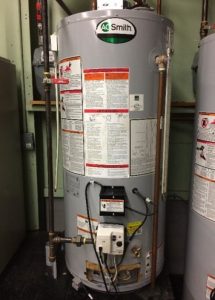
	</div>


	</div>
<div class="chapter standard " id="chapter-capacities-quiz" title="Capacities Quiz">
	<div class="chapter-title-wrap">
		<p class="chapter-number">5</p>
		<h1 class="chapter-title">Capacities Quiz</h1>
								</div>
	<div class="ugc chapter-ugc">
				 <div class="textbox interactive-content"><span class="interactive-content__icon"></span> <p>An interactive H5P element has been excluded from this version of the text. You can view it online here:<br /> <a href="https://pressbooks.bccampus.ca/mathfortradesvolume3/?p=705#h5p-1" title="Capacities Quiz" data-url="https://pressbooks.bccampus.ca/mathfortradesvolume3/?p=705#h5p-1">https://pressbooks.bccampus.ca/mathfortradesvolume3/?p=705#h5p-1</a> </p> </div> 
	</div>


	</div>

</div>
<div class="part-wrapper" id="part-pressure-and-total-force-wrapper">
    <div class="part  " id="part-pressure-and-total-force">
	<div class="part-title-wrap">
		<p class="part-number">II</p>
		<h1 class="part-title">Pressure and Total Force</h1>
	</div>
	<div class="ugc part-ugc">
		<p><img class="aligncenter wp-image-362" src="https://pressbooks.bccampus.ca/mathfortradesvolume3/wp-content/uploads/sites/1574/2021/12/Picture1-7.jpg" alt="" width="199" height="199" srcset="https://pressbooks.bccampus.ca/mathfortradesvolume3/wp-content/uploads/sites/1574/2021/12/Picture1-7.jpg 700w, https://pressbooks.bccampus.ca/mathfortradesvolume3/wp-content/uploads/sites/1574/2021/12/Picture1-7-300x300.jpg 300w, https://pressbooks.bccampus.ca/mathfortradesvolume3/wp-content/uploads/sites/1574/2021/12/Picture1-7-150x150.jpg 150w, https://pressbooks.bccampus.ca/mathfortradesvolume3/wp-content/uploads/sites/1574/2021/12/Picture1-7-65x65.jpg 65w, https://pressbooks.bccampus.ca/mathfortradesvolume3/wp-content/uploads/sites/1574/2021/12/Picture1-7-225x225.jpg 225w, https://pressbooks.bccampus.ca/mathfortradesvolume3/wp-content/uploads/sites/1574/2021/12/Picture1-7-350x350.jpg 350w" sizes="auto, (max-width: 199px) 100vw, 199px" title="" /></p> <div class="textbox textbox--learning-objectives"><div class="textbox__header"><p class="textbox__title">Outcomes</p> </div> <div class="textbox__content"><ul><li>Differentiate between pressure and total force</li> <li>Calculate pressure based on the height of water in a system</li> <li>Calculate total force</li> </ul> </div> </div>
	</div>
			
				
	</div>
<div class="chapter standard " id="chapter-pressure-and-force" title="Pressure and Force">
	<div class="chapter-title-wrap">
		<p class="chapter-number">6</p>
		<h1 class="chapter-title">Pressure and Force</h1>
								</div>
	<div class="ugc chapter-ugc">
				 <p style="text-align: center">Click play on the following audio player to listen along as you read this section.</p> <div class="textbox interactive-content interactive-content--oembed"><span class="interactive-content__icon"></span> <p>One or more interactive elements has been excluded from this version of the text. You can view them online here: <a href="#oembed-2" title="2.1 Pressure and Force" data-url="https://pressbooks.bccampus.ca/mathfortradesvolume3/?p=191#oembed-2">https://pressbooks.bccampus.ca/mathfortradesvolume3/?p=191#oembed-2</a> </p> </div> <p><img class="aligncenter wp-image-201" src="https://pressbooks.bccampus.ca/mathfortradesvolume3/wp-content/uploads/sites/1574/2021/12/Picture5.jpg" alt="" width="526" height="242" srcset="https://pressbooks.bccampus.ca/mathfortradesvolume3/wp-content/uploads/sites/1574/2021/12/Picture5.jpg 650w, https://pressbooks.bccampus.ca/mathfortradesvolume3/wp-content/uploads/sites/1574/2021/12/Picture5-300x138.jpg 300w, https://pressbooks.bccampus.ca/mathfortradesvolume3/wp-content/uploads/sites/1574/2021/12/Picture5-65x30.jpg 65w, https://pressbooks.bccampus.ca/mathfortradesvolume3/wp-content/uploads/sites/1574/2021/12/Picture5-225x104.jpg 225w, https://pressbooks.bccampus.ca/mathfortradesvolume3/wp-content/uploads/sites/1574/2021/12/Picture5-350x161.jpg 350w" sizes="auto, (max-width: 526px) 100vw, 526px" title="" /></p> <p>Imagine you are playing in the World Cup of Soccer and you line up to take a penalty kick. If you score your team wins but if you miss you won’t be the most popular person in your home country. Would you feel pressure? How would you describe that pressure?</p> <p>Thankfully we’re not going to talk about that kind of pressure in this section. We are going to talk about the pressure exerted from one object or source to another. Take a look at the following picture to see an example of pressure.</p> <p><img class="aligncenter wp-image-208 size-medium" src="https://pressbooks.bccampus.ca/mathfortradesvolume3/wp-content/uploads/sites/1574/2021/12/picture12-2-300x160.png" alt="A hand holding a wrench and tightening a nut on a bolt." width="300" height="160" srcset="https://pressbooks.bccampus.ca/mathfortradesvolume3/wp-content/uploads/sites/1574/2021/12/picture12-2-300x160.png 300w, https://pressbooks.bccampus.ca/mathfortradesvolume3/wp-content/uploads/sites/1574/2021/12/picture12-2-1024x548.png 1024w, https://pressbooks.bccampus.ca/mathfortradesvolume3/wp-content/uploads/sites/1574/2021/12/picture12-2-768x411.png 768w, https://pressbooks.bccampus.ca/mathfortradesvolume3/wp-content/uploads/sites/1574/2021/12/picture12-2-1536x821.png 1536w, https://pressbooks.bccampus.ca/mathfortradesvolume3/wp-content/uploads/sites/1574/2021/12/picture12-2-2048x1095.png 2048w, https://pressbooks.bccampus.ca/mathfortradesvolume3/wp-content/uploads/sites/1574/2021/12/picture12-2-65x35.png 65w, https://pressbooks.bccampus.ca/mathfortradesvolume3/wp-content/uploads/sites/1574/2021/12/picture12-2-225x120.png 225w, https://pressbooks.bccampus.ca/mathfortradesvolume3/wp-content/uploads/sites/1574/2021/12/picture12-2-350x187.png 350w" sizes="auto, (max-width: 300px) 100vw, 300px" title="" /></p> <p class="cover4" style="text-align: left; text-align: left;"><span xml:lang="EN-US">In the picture above a person is applying pressure to the wrench in order to turn the nut on the bolt. Force also comes into play here and is a very similar concept. This chapter will talk about both pressure and force and the relationship between the two.</span></p> <h1>The Difference Between Pressure and Force</h1> <p>If you have ever used the words pressure and force interchangeably you are not alone. For many of us the words mean the same thing but in fact there is a difference between them. Here’s the quick and easy version of how the two words differ.</p> <p style="text-align: center"><strong>Force is the total impact of one object on another while pressure is the ratio of that force to the area over which it is applied.</strong></p> <p>What we have is two concepts that are indeed very similar but at the same time have some differences. Take a look at the picture below.</p> <p><img class="aligncenter wp-image-202" src="https://pressbooks.bccampus.ca/mathfortradesvolume3/wp-content/uploads/sites/1574/2021/12/Picture6-1.jpg" alt="A hockey stick hitting a hockey puck" width="352" height="234" srcset="https://pressbooks.bccampus.ca/mathfortradesvolume3/wp-content/uploads/sites/1574/2021/12/Picture6-1.jpg 547w, https://pressbooks.bccampus.ca/mathfortradesvolume3/wp-content/uploads/sites/1574/2021/12/Picture6-1-300x200.jpg 300w, https://pressbooks.bccampus.ca/mathfortradesvolume3/wp-content/uploads/sites/1574/2021/12/Picture6-1-65x43.jpg 65w, https://pressbooks.bccampus.ca/mathfortradesvolume3/wp-content/uploads/sites/1574/2021/12/Picture6-1-225x150.jpg 225w, https://pressbooks.bccampus.ca/mathfortradesvolume3/wp-content/uploads/sites/1574/2021/12/Picture6-1-350x233.jpg 350w" sizes="auto, (max-width: 352px) 100vw, 352px" title="" /></p> <p>The hardest slapshot every recorded was by defenseman Zdeno Chara when he was with the Boston Bruins of the National Hockey League. He shot the puck an incredible 108.8 miles per hour. Not bad!</p> <p>Now in order to move the puck from stationary to 108.8 mph he had to apply force to the puck.</p> <p>Force is defined as a push or a pull that makes an object change its state of motion. In this case Zdeno created a very large push to get the puck moving that fast.</p> <p>So right about now you might be asking, “Well, if that is force, then what is pressure?” Could we say that Zdeno put a lot of pressure into the shot? In fact he did. As stated earlier, pressure is very similar to force.</p> <p>Pressure is the force over a certain area. Basically pressure is force per unit area.</p> <p style="text-align: center"><strong>Pressure = force per unit area</strong></p> <p><img class="wp-image-210 aligncenter" src="https://pressbooks.bccampus.ca/mathfortradesvolume3/wp-content/uploads/sites/1574/2021/12/Picture12.jpg" alt="" width="242" height="181" srcset="https://pressbooks.bccampus.ca/mathfortradesvolume3/wp-content/uploads/sites/1574/2021/12/Picture12.jpg 355w, https://pressbooks.bccampus.ca/mathfortradesvolume3/wp-content/uploads/sites/1574/2021/12/Picture12-300x225.jpg 300w, https://pressbooks.bccampus.ca/mathfortradesvolume3/wp-content/uploads/sites/1574/2021/12/Picture12-65x49.jpg 65w, https://pressbooks.bccampus.ca/mathfortradesvolume3/wp-content/uploads/sites/1574/2021/12/Picture12-225x169.jpg 225w, https://pressbooks.bccampus.ca/mathfortradesvolume3/wp-content/uploads/sites/1574/2021/12/Picture12-350x262.jpg 350w" sizes="auto, (max-width: 242px) 100vw, 242px" title="" /></p> <p><span style="text-align: initial;font-size: 14pt">How much of the puck do you think comes into contact with the stick? Whatever that area is it would be the area that the force is transferred to.</span></p> <p>What we say is that there is a certain amount of pressure applied to the puck. The most common example of pressure we would find in the trades would be pounds per square inch. When the player strikes the puck he/she transfers the energy from the stick to the puck.</p> <p style="text-align: center"><strong>Pressure: A force over a defined area</strong></p> <p style="text-align: center"><strong>Example: pounds per square inch (psi)</strong></p> <p>If we can determine that the puck has had a certain amount of pounds per square inch exerted on it, then to calculate force we just need to find the area that the pressure is transferred onto to the puck. It is preferable that this area be in square inches as this will work well with a pressure in pounds per square inch.</p> <p style="text-align: center"><strong>Force: Takes the pressure and applies it to the whole area of the object that is affected.</strong></p> <p>Take a look at the picture below for one last clarification.</p> <p><img class="aligncenter wp-image-211" src="https://pressbooks.bccampus.ca/mathfortradesvolume3/wp-content/uploads/sites/1574/2021/12/Picture13-1.jpg" alt="B.C. Place Stadium. The roof is white, puffy, and inflated." width="493" height="203" srcset="https://pressbooks.bccampus.ca/mathfortradesvolume3/wp-content/uploads/sites/1574/2021/12/Picture13-1.jpg 763w, https://pressbooks.bccampus.ca/mathfortradesvolume3/wp-content/uploads/sites/1574/2021/12/Picture13-1-300x123.jpg 300w, https://pressbooks.bccampus.ca/mathfortradesvolume3/wp-content/uploads/sites/1574/2021/12/Picture13-1-65x27.jpg 65w, https://pressbooks.bccampus.ca/mathfortradesvolume3/wp-content/uploads/sites/1574/2021/12/Picture13-1-225x93.jpg 225w, https://pressbooks.bccampus.ca/mathfortradesvolume3/wp-content/uploads/sites/1574/2021/12/Picture13-1-350x144.jpg 350w" sizes="auto, (max-width: 493px) 100vw, 493px" title="" /></p> <p>The picture is of BC Place Stadium in downtown Vancouver. It shows the roof that was originally on before it was changed to the new “open and close” concept roof.</p> <p>The interesting thing about this roof is that it was kept inflated by pressure. As it turns out the pressure on the inside of the stadium was just slightly higher than the pressure on the outside of the stadium, thus keeping the roof up.</p> <p>This difference of pressure can be as little as 0.037 psi. Therefore the pressure exerted on the inside of the roof is 0.037 pounds on every square inch of the roof.</p> <p>The total force is simply the amount of pressure exerted on one square inch and then multiplied by how many square inches there are on the inside of the roof.</p> <p>This small pressure difference from the outside of the roof to the inside of the roof is enough to keep the roof inflated.</p> <p>Now that we have an idea what pressure is how do we calculate it? Well the easiest way to calculate is to use a pressure gauge.</p> <p><img class="wp-image-203 aligncenter" src="https://pressbooks.bccampus.ca/mathfortradesvolume3/wp-content/uploads/sites/1574/2021/12/Picture7-1.jpg" alt="" width="185" height="247" srcset="https://pressbooks.bccampus.ca/mathfortradesvolume3/wp-content/uploads/sites/1574/2021/12/Picture7-1.jpg 327w, https://pressbooks.bccampus.ca/mathfortradesvolume3/wp-content/uploads/sites/1574/2021/12/Picture7-1-224x300.jpg 224w, https://pressbooks.bccampus.ca/mathfortradesvolume3/wp-content/uploads/sites/1574/2021/12/Picture7-1-65x87.jpg 65w, https://pressbooks.bccampus.ca/mathfortradesvolume3/wp-content/uploads/sites/1574/2021/12/Picture7-1-225x301.jpg 225w" sizes="auto, (max-width: 185px) 100vw, 185px" title="" /></p> <p class="cover4" style="text-align: left; text-align: left;"><span xml:lang="EN-US">The above picture is an example of a pressure gauge rated in pounds per square inch. If you were to attach this gauge to a piping system it would indicate the pressure of the liquid or gas in that system above atmospheric pressure.</span><span xml:lang="EN-US">&nbsp;</span></p> <p class="cover4" style="text-align: left; text-align: left;"><span xml:lang="EN-US">Pounds per square in not the only way we measure pressure. Below are three of the more common units used when dealing with pressure.</span></p> <p style="text-align: center"><strong>Pounds per square inch (psi)</strong></p> <p style="text-align: center"><strong>Newton per square meter (AKA pascal) (N/m2)</strong></p> <p style="text-align: center"><strong>Kilograms per square centimeter (Kg/cm2)</strong></p> <p>Remember that pressure is a force on a unit of area.</p> <p><a href="https://pressbooks.bccampus.ca/mathfortradesvolume3/wp-content/uploads/sites/1574/2021/12/Picture14-2.png" data-url="https://pressbooks.bccampus.ca/mathfortradesvolume3/wp-content/uploads/sites/1574/2021/12/Picture14-2.png"><img class="aligncenter wp-image-213" src="https://pressbooks.bccampus.ca/mathfortradesvolume3/wp-content/uploads/sites/1574/2021/12/Picture14-2.png" alt="Pressure is a force (F) on a unit of area (A). A flat surface showing vertical lines of force pressure down on a part of that surface." width="677" height="281" srcset="https://pressbooks.bccampus.ca/mathfortradesvolume3/wp-content/uploads/sites/1574/2021/12/Picture14-2.png 1001w, https://pressbooks.bccampus.ca/mathfortradesvolume3/wp-content/uploads/sites/1574/2021/12/Picture14-2-300x124.png 300w, https://pressbooks.bccampus.ca/mathfortradesvolume3/wp-content/uploads/sites/1574/2021/12/Picture14-2-768x318.png 768w, https://pressbooks.bccampus.ca/mathfortradesvolume3/wp-content/uploads/sites/1574/2021/12/Picture14-2-65x27.png 65w, https://pressbooks.bccampus.ca/mathfortradesvolume3/wp-content/uploads/sites/1574/2021/12/Picture14-2-225x93.png 225w, https://pressbooks.bccampus.ca/mathfortradesvolume3/wp-content/uploads/sites/1574/2021/12/Picture14-2-350x145.png 350w" sizes="auto, (max-width: 677px) 100vw, 677px" title="" /></a></p> <p>As stated before we don’t physically calculate pressure ourselves but we do it with the help of a pressure gauge. In the piping field we are generally dealing with the pressure of liquids or gases inside containers or pipes.</p> <p>For example a compressed gas cylinder filled with medical gas might be filled to 2000 psi or a water system in a house might be tested to 200 psi. We would know this by looking at a pressure gauge attached to the cylinder or piping system.</p> <p><img class="aligncenter wp-image-214" src="https://pressbooks.bccampus.ca/mathfortradesvolume3/wp-content/uploads/sites/1574/2021/12/Picture15-2.png" alt="On the left are gauges attached to a piping system and on the right are gauges attached to cylinders." width="706" height="238" srcset="https://pressbooks.bccampus.ca/mathfortradesvolume3/wp-content/uploads/sites/1574/2021/12/Picture15-2.png 997w, https://pressbooks.bccampus.ca/mathfortradesvolume3/wp-content/uploads/sites/1574/2021/12/Picture15-2-300x101.png 300w, https://pressbooks.bccampus.ca/mathfortradesvolume3/wp-content/uploads/sites/1574/2021/12/Picture15-2-768x259.png 768w, https://pressbooks.bccampus.ca/mathfortradesvolume3/wp-content/uploads/sites/1574/2021/12/Picture15-2-65x22.png 65w, https://pressbooks.bccampus.ca/mathfortradesvolume3/wp-content/uploads/sites/1574/2021/12/Picture15-2-225x76.png 225w, https://pressbooks.bccampus.ca/mathfortradesvolume3/wp-content/uploads/sites/1574/2021/12/Picture15-2-350x118.png 350w" sizes="auto, (max-width: 706px) 100vw, 706px" title="" /></p> <p>So in summary we have two concepts. One is force which is the amount of push of pull on an object. We then have pressure. That’s when we take the force and apply it to a particular area. In the next section we will take a look at how water plays a role in determining pressure and ultimately force.</p> 
	</div>


	</div>
<div class="chapter standard " id="chapter-using-water-as-a-guide-for-determining-pressure" title="Using Water as a Guide for Determining Pressure">
	<div class="chapter-title-wrap">
		<p class="chapter-number">7</p>
		<h1 class="chapter-title">Using Water as a Guide for Determining Pressure</h1>
								</div>
	<div class="ugc chapter-ugc">
				 <p style="text-align: center">Click play on the following audio player to listen along as you read this section.</p> <div class="textbox interactive-content interactive-content--oembed"><span class="interactive-content__icon"></span> <p>One or more interactive elements has been excluded from this version of the text. You can view them online here: <a href="#oembed-4" title="2.2 Using Water as a Guide for Determining Pressure" data-url="https://pressbooks.bccampus.ca/mathfortradesvolume3/?p=193#oembed-4">https://pressbooks.bccampus.ca/mathfortradesvolume3/?p=193#oembed-4</a> </p> </div> <p>&nbsp;</p> <p>&nbsp;</p> <p><img class="wp-image-382 aligncenter" src="https://pressbooks.bccampus.ca/mathfortradesvolume3/wp-content/uploads/sites/1574/2021/12/Picture5-3.jpg" alt="" width="376" height="225" srcset="https://pressbooks.bccampus.ca/mathfortradesvolume3/wp-content/uploads/sites/1574/2021/12/Picture5-3.jpg 501w, https://pressbooks.bccampus.ca/mathfortradesvolume3/wp-content/uploads/sites/1574/2021/12/Picture5-3-300x180.jpg 300w, https://pressbooks.bccampus.ca/mathfortradesvolume3/wp-content/uploads/sites/1574/2021/12/Picture5-3-65x39.jpg 65w, https://pressbooks.bccampus.ca/mathfortradesvolume3/wp-content/uploads/sites/1574/2021/12/Picture5-3-225x135.jpg 225w, https://pressbooks.bccampus.ca/mathfortradesvolume3/wp-content/uploads/sites/1574/2021/12/Picture5-3-350x210.jpg 350w" sizes="auto, (max-width: 376px) 100vw, 376px" title="" /></p> <p style="text-align: left">What does water have to do with determining pressure? Well all liquids including water have weight and that weight can translate into pressure. If I was to take one cubic foot of water and weigh it we would find that it weighs 62.4 pounds.</p> <p><a href="https://pressbooks.bccampus.ca/mathfortradesvolume3/wp-content/uploads/sites/1574/2021/12/Picture1-3.png" data-url="https://pressbooks.bccampus.ca/mathfortradesvolume3/wp-content/uploads/sites/1574/2021/12/Picture1-3.png"><img class="aligncenter wp-image-384" src="https://pressbooks.bccampus.ca/mathfortradesvolume3/wp-content/uploads/sites/1574/2021/12/Picture1-3.png" alt="A cubic foot filled with water weighs 62.4 pounds." width="346" height="355" srcset="https://pressbooks.bccampus.ca/mathfortradesvolume3/wp-content/uploads/sites/1574/2021/12/Picture1-3.png 827w, https://pressbooks.bccampus.ca/mathfortradesvolume3/wp-content/uploads/sites/1574/2021/12/Picture1-3-293x300.png 293w, https://pressbooks.bccampus.ca/mathfortradesvolume3/wp-content/uploads/sites/1574/2021/12/Picture1-3-768x788.png 768w, https://pressbooks.bccampus.ca/mathfortradesvolume3/wp-content/uploads/sites/1574/2021/12/Picture1-3-65x67.png 65w, https://pressbooks.bccampus.ca/mathfortradesvolume3/wp-content/uploads/sites/1574/2021/12/Picture1-3-225x231.png 225w, https://pressbooks.bccampus.ca/mathfortradesvolume3/wp-content/uploads/sites/1574/2021/12/Picture1-3-350x359.png 350w" sizes="auto, (max-width: 346px) 100vw, 346px" title="" /></a></p> <p>If I was to take that water and pour it into a container or into a pipe the weight of the water would exert a pressure onto the container or the pipe. The amount of pressure that it exerts depends on the height of the water. The higher the height of the water the greater the pressure exerted at the base of that container or pipe.</p> <p><img class="aligncenter wp-image-219" src="https://pressbooks.bccampus.ca/mathfortradesvolume3/wp-content/uploads/sites/1574/2021/12/Picture1-3.jpg" alt="" width="266" height="199" srcset="https://pressbooks.bccampus.ca/mathfortradesvolume3/wp-content/uploads/sites/1574/2021/12/Picture1-3.jpg 471w, https://pressbooks.bccampus.ca/mathfortradesvolume3/wp-content/uploads/sites/1574/2021/12/Picture1-3-300x224.jpg 300w, https://pressbooks.bccampus.ca/mathfortradesvolume3/wp-content/uploads/sites/1574/2021/12/Picture1-3-65x49.jpg 65w, https://pressbooks.bccampus.ca/mathfortradesvolume3/wp-content/uploads/sites/1574/2021/12/Picture1-3-225x168.jpg 225w, https://pressbooks.bccampus.ca/mathfortradesvolume3/wp-content/uploads/sites/1574/2021/12/Picture1-3-350x262.jpg 350w" sizes="auto, (max-width: 266px) 100vw, 266px" title="" /></p> <p>For example the water in the glass above exerts a pressure on all sides of the glass including the bottom. To calculate the pressure at the bottom of the glass we would need to find out the height of the water in the glass. It doesn’t matter what size the glass is only the height of it.</p> <h1>The <strong>Relationship Between Water, Height and Pressure</strong></h1> <p>The relationship between water, height and pressure is constant. If we were to take a column of water 1 foot high and use a pressure gauge at the bottom to measure the pressure it would read 0.433 psi.</p> <p><a href="https://pressbooks.bccampus.ca/mathfortradesvolume3/wp-content/uploads/sites/1574/2021/12/Picture24-2.png" data-url="https://pressbooks.bccampus.ca/mathfortradesvolume3/wp-content/uploads/sites/1574/2021/12/Picture24-2.png"><img class="aligncenter wp-image-387" src="https://pressbooks.bccampus.ca/mathfortradesvolume3/wp-content/uploads/sites/1574/2021/12/Picture24-2.png" alt="A one foot high column of water with a pressure gauge at the bottom reading 0.433 psi." width="350" height="334" srcset="https://pressbooks.bccampus.ca/mathfortradesvolume3/wp-content/uploads/sites/1574/2021/12/Picture24-2.png 674w, https://pressbooks.bccampus.ca/mathfortradesvolume3/wp-content/uploads/sites/1574/2021/12/Picture24-2-300x286.png 300w, https://pressbooks.bccampus.ca/mathfortradesvolume3/wp-content/uploads/sites/1574/2021/12/Picture24-2-65x62.png 65w, https://pressbooks.bccampus.ca/mathfortradesvolume3/wp-content/uploads/sites/1574/2021/12/Picture24-2-225x215.png 225w, https://pressbooks.bccampus.ca/mathfortradesvolume3/wp-content/uploads/sites/1574/2021/12/Picture24-2-350x334.png 350w" sizes="auto, (max-width: 350px) 100vw, 350px" title="" /></a></p> <p>This is our constant when dealing with water and it remains consistent as we add more water. If we filled the column with more water that number on the pressure gauge would go up accordingly.</p> <p><img class="aligncenter wp-image-243" src="https://pressbooks.bccampus.ca/mathfortradesvolume3/wp-content/uploads/sites/1574/2021/12/Picture4-3.png" alt="P.S.I." width="201" height="166" srcset="https://pressbooks.bccampus.ca/mathfortradesvolume3/wp-content/uploads/sites/1574/2021/12/Picture4-3.png 473w, https://pressbooks.bccampus.ca/mathfortradesvolume3/wp-content/uploads/sites/1574/2021/12/Picture4-3-300x247.png 300w, https://pressbooks.bccampus.ca/mathfortradesvolume3/wp-content/uploads/sites/1574/2021/12/Picture4-3-65x54.png 65w, https://pressbooks.bccampus.ca/mathfortradesvolume3/wp-content/uploads/sites/1574/2021/12/Picture4-3-225x186.png 225w, https://pressbooks.bccampus.ca/mathfortradesvolume3/wp-content/uploads/sites/1574/2021/12/Picture4-3-350x289.png 350w" sizes="auto, (max-width: 201px) 100vw, 201px" title="" /></p> <p>One thing I want to bring to your attention is the fact that we are measuring pressure. At this point we should remind ourselves that pressure is a force per unit area. In this case its pounds per square inch or psi. Regardless of the area at the bottom of the container we are only calculating the force on one square inch. Keep this in mind as later on in the chapter we’ll start to expand the concept and deal with the total area and eventually the total force.</p> <p>As stated previously when we add more height in terms of water the relationship between the height and the pressure remains constant. What we would find is the following:</p> <p style="text-align: center"><img src="https://pressbooks.bccampus.ca/mathfortradesvolume3/wp-content/ql-cache/quicklatex.com-c828c1facd99ae6433bd600c3ca4fb07_l3.svg" class="ql-img-inline-formula quicklatex-auto-format" alt="\text{PSI} = \text{ height in feet} \times 0.433" title="Rendered by QuickLaTeX.com" height="17" width="223" style="vertical-align: -4px;" /></p> <p>What this relationship is saying is that for every foot we go up in height we add 0.433 pounds per square inch at the base of an object. Keep in mind that we are talking about water here and specifically the density and weight of water. Other liquids will have their own density and therefore the psi at the bottom of a column of another liquid would be different than that of water. I’ll go through an example of this in a bit but let’s just stick to water for now.</p> <div class="textbox textbox--examples"><div class="textbox__header"><p class="textbox__title">Example</p> </div> <div class="textbox__content"><p><img class="alignleft wp-image-220" src="https://pressbooks.bccampus.ca/mathfortradesvolume3/wp-content/uploads/sites/1574/2021/12/Picture2-1-300x225.jpg" alt="" width="189" height="142" srcset="https://pressbooks.bccampus.ca/mathfortradesvolume3/wp-content/uploads/sites/1574/2021/12/Picture2-1-300x225.jpg 300w, https://pressbooks.bccampus.ca/mathfortradesvolume3/wp-content/uploads/sites/1574/2021/12/Picture2-1-65x49.jpg 65w, https://pressbooks.bccampus.ca/mathfortradesvolume3/wp-content/uploads/sites/1574/2021/12/Picture2-1-225x169.jpg 225w, https://pressbooks.bccampus.ca/mathfortradesvolume3/wp-content/uploads/sites/1574/2021/12/Picture2-1-350x263.jpg 350w, https://pressbooks.bccampus.ca/mathfortradesvolume3/wp-content/uploads/sites/1574/2021/12/Picture2-1.jpg 469w" sizes="auto, (max-width: 189px) 100vw, 189px" title="" /></p> <p>A piping system is filled with water. The piping system consists of pipe which extends through three floors of a building and has a total height of 27 feet. What would be the pressure exerted at the base of the piping system?</p> </div> <div class="textbox__content"><p><img class="alignleft wp-image-221 size-full" src="https://pressbooks.bccampus.ca/mathfortradesvolume3/wp-content/uploads/sites/1574/2021/12/Picture3-4.png" alt="Note" width="150" height="147" srcset="https://pressbooks.bccampus.ca/mathfortradesvolume3/wp-content/uploads/sites/1574/2021/12/Picture3-4.png 150w, https://pressbooks.bccampus.ca/mathfortradesvolume3/wp-content/uploads/sites/1574/2021/12/Picture3-4-65x64.png 65w" sizes="auto, (max-width: 150px) 100vw, 150px" title="" /></p> <p>In order to answer the question we don’t actually need to know how the piping is configured. It doesn’t matter if the piping goes straight down or offsets at some point during it’s run. The only thing we need to know is how high the piping goes. This is the determinant when calculating pressure. Check out the drawing below to see what I mean.</p> <p>&nbsp;</p> <p><img class="aligncenter wp-image-389" src="https://pressbooks.bccampus.ca/mathfortradesvolume3/wp-content/uploads/sites/1574/2021/12/Picture27-2.png" alt="There are two options for pipe to travel. One option is straight down 27 ft, the other is to detour then come back straight." width="502" height="466" srcset="https://pressbooks.bccampus.ca/mathfortradesvolume3/wp-content/uploads/sites/1574/2021/12/Picture27-2.png 941w, https://pressbooks.bccampus.ca/mathfortradesvolume3/wp-content/uploads/sites/1574/2021/12/Picture27-2-300x278.png 300w, https://pressbooks.bccampus.ca/mathfortradesvolume3/wp-content/uploads/sites/1574/2021/12/Picture27-2-768x713.png 768w, https://pressbooks.bccampus.ca/mathfortradesvolume3/wp-content/uploads/sites/1574/2021/12/Picture27-2-65x60.png 65w, https://pressbooks.bccampus.ca/mathfortradesvolume3/wp-content/uploads/sites/1574/2021/12/Picture27-2-225x209.png 225w, https://pressbooks.bccampus.ca/mathfortradesvolume3/wp-content/uploads/sites/1574/2021/12/Picture27-2-350x325.png 350w" sizes="auto, (max-width: 502px) 100vw, 502px" title="" /></p> <p>Regardless of how the pipe is run the vertical distance from the beginning to the end is still 27 feet. This would be the number you would use to calculate the psi at the base of the pipe for each scenario. Now go through and check out how its done.</p> <p><strong>Step 1:&nbsp; &nbsp; </strong>As always identify what the question is asking. In this case we are looking to find the pressure at the base of a given piping system.</p> <p><strong>Step 2:&nbsp;&nbsp;&nbsp; </strong>Write down the formula you’ll be working with.</p> <p style="text-align: center"><img src="https://pressbooks.bccampus.ca/mathfortradesvolume3/wp-content/ql-cache/quicklatex.com-c828c1facd99ae6433bd600c3ca4fb07_l3.svg" class="ql-img-inline-formula quicklatex-auto-format" alt="\text{PSI} = \text{ height in feet} \times 0.433" title="Rendered by QuickLaTeX.com" height="17" width="223" style="vertical-align: -4px;" /></p> <p><strong>Step 3</strong>:&nbsp;&nbsp;&nbsp;&nbsp; Cross multiply.</p> <p style="text-align: center"><img src="https://pressbooks.bccampus.ca/mathfortradesvolume3/wp-content/ql-cache/quicklatex.com-60028dbc4efa6eecc11d17f7cbe9db59_l3.svg" class="ql-img-inline-formula quicklatex-auto-format" alt="\dfrac{1 \text{ foot of height}}{27 \text{ feet of height}} = \dfrac{0.433 \text{ psi}}{\text{X psi}}" title="Rendered by QuickLaTeX.com" height="41" width="222" style="vertical-align: -16px;" /></p> <p style="text-align: center"></p><p class="ql-center-displayed-equation" style="line-height: 66px;"><span class="ql-right-eqno">&nbsp; </span> <span class="ql-left-eqno">&nbsp; </span><img src="https://pressbooks.bccampus.ca/mathfortradesvolume3/wp-content/ql-cache/quicklatex.com-5c084606852c614266da2ddf9fde8f0f_l3.svg" height="66" width="147" class="ql-img-displayed-equation quicklatex-auto-format" alt="\begin{equation*}\begin{split}1 \times \text{X} &amp;amp;= 27 \times 0.433 \\ \text{X} &amp;amp;= 27 \times 0.433 \\ \text{X} &amp;amp;= 11.69\end{split}\end{equation}" title="Rendered by QuickLaTeX.com" /></p> <p style="text-align: center"><img src="https://pressbooks.bccampus.ca/mathfortradesvolume3/wp-content/ql-cache/quicklatex.com-927bc3ccd1ee54b9b1084ca7b867875f_l3.svg" class="ql-img-inline-formula quicklatex-auto-format" alt="\text{answer} = 11.69 \text{ psi}" title="Rendered by QuickLaTeX.com" height="16" width="145" style="vertical-align: -4px;" /></p> </div> </div> <p>Therefore every inch of pipe at the bottom of the piping system experiences 11.69 pounds of pressure on it.</p> <p>This type of relationship holds true for all liquids with the only difference being that the constant used will change when dealing with those different liquids.</p> <p>If we were to add another liquid such as mercury we would have a totally different relationship. Let’s take a little detour and check it out.</p> <p><img class="aligncenter wp-image-226" src="https://pressbooks.bccampus.ca/mathfortradesvolume3/wp-content/uploads/sites/1574/2021/12/Picture8-3.png" alt="" width="300" height="150" srcset="https://pressbooks.bccampus.ca/mathfortradesvolume3/wp-content/uploads/sites/1574/2021/12/Picture8-3.png 632w, https://pressbooks.bccampus.ca/mathfortradesvolume3/wp-content/uploads/sites/1574/2021/12/Picture8-3-300x150.png 300w, https://pressbooks.bccampus.ca/mathfortradesvolume3/wp-content/uploads/sites/1574/2021/12/Picture8-3-65x33.png 65w, https://pressbooks.bccampus.ca/mathfortradesvolume3/wp-content/uploads/sites/1574/2021/12/Picture8-3-225x113.png 225w, https://pressbooks.bccampus.ca/mathfortradesvolume3/wp-content/uploads/sites/1574/2021/12/Picture8-3-350x175.png 350w" sizes="auto, (max-width: 300px) 100vw, 300px" title="" /></p> <p><img class="alignright wp-image-225" src="https://pressbooks.bccampus.ca/mathfortradesvolume3/wp-content/uploads/sites/1574/2021/12/Picture7-2.jpg" alt="" width="200" height="300" srcset="https://pressbooks.bccampus.ca/mathfortradesvolume3/wp-content/uploads/sites/1574/2021/12/Picture7-2.jpg 298w, https://pressbooks.bccampus.ca/mathfortradesvolume3/wp-content/uploads/sites/1574/2021/12/Picture7-2-200x300.jpg 200w, https://pressbooks.bccampus.ca/mathfortradesvolume3/wp-content/uploads/sites/1574/2021/12/Picture7-2-65x98.jpg 65w, https://pressbooks.bccampus.ca/mathfortradesvolume3/wp-content/uploads/sites/1574/2021/12/Picture7-2-225x338.jpg 225w" sizes="auto, (max-width: 200px) 100vw, 200px" title="" /></p> <p>The thermometer to the right has a bulb filled with mercury.</p> <p>Mercury has a different density than water and therefore a different weight. One cubic foot of mercury weighs more than water. In fact it weighs a lot more. If we were to use mercury as our gauge to measure psi we would need to use the following relationship.</p> <p style="text-align: center"><img src="https://pressbooks.bccampus.ca/mathfortradesvolume3/wp-content/ql-cache/quicklatex.com-90fad1698d7a9d018d497811c10c061e_l3.svg" class="ql-img-inline-formula quicklatex-auto-format" alt="\text{PSI} = \text{ height in feet} \times 5.88" title="Rendered by QuickLaTeX.com" height="17" width="214" style="vertical-align: -4px;" /></p> <p>What you can see from this is that mercury is indeed heavier than water and that filling a tube or pipe up with mercury one foot in height would end up giving you 5.88 psi at the base of that object.</p> <p>Visually it would look like the diagram below. One cylinder is filled with mercury while the other is filled with water. Both are filled to a height of one foot. If we were to put a pressure gauge at the bottom of each one we would get different readings.</p> <div class="wp-caption aligncenter" id="attachment_392" aria-describedby="caption-attachment-392" style="width: 651px"><a href="https://pressbooks.bccampus.ca/mathfortradesvolume3/wp-content/uploads/sites/1574/2021/12/Picture31-1.png" data-url="https://pressbooks.bccampus.ca/mathfortradesvolume3/wp-content/uploads/sites/1574/2021/12/Picture31-1.png"><img class="wp-image-392" src="https://pressbooks.bccampus.ca/mathfortradesvolume3/wp-content/uploads/sites/1574/2021/12/Picture31-1.png" alt="" width="651" height="416" srcset="https://pressbooks.bccampus.ca/mathfortradesvolume3/wp-content/uploads/sites/1574/2021/12/Picture31-1.png 984w, https://pressbooks.bccampus.ca/mathfortradesvolume3/wp-content/uploads/sites/1574/2021/12/Picture31-1-300x191.png 300w, https://pressbooks.bccampus.ca/mathfortradesvolume3/wp-content/uploads/sites/1574/2021/12/Picture31-1-768x490.png 768w, https://pressbooks.bccampus.ca/mathfortradesvolume3/wp-content/uploads/sites/1574/2021/12/Picture31-1-65x41.png 65w, https://pressbooks.bccampus.ca/mathfortradesvolume3/wp-content/uploads/sites/1574/2021/12/Picture31-1-225x144.png 225w, https://pressbooks.bccampus.ca/mathfortradesvolume3/wp-content/uploads/sites/1574/2021/12/Picture31-1-350x223.png 350w" sizes="auto, (max-width: 651px) 100vw, 651px" title="" /></a><div class="wp-caption-text" id="caption-attachment-392">Two cylinders filled with liquid at a height of one foot. One is filled with water with a PSI of 0.433, the other is filled with mercury with a PSI of 5.88.</div></div> <p>You can see that the pounds per square at the base of the cylinder is much greater for mercury than for water due to the fact that mercury has a greater density and weighs more.</p> <p><img class="wp-image-228 aligncenter" src="https://pressbooks.bccampus.ca/mathfortradesvolume3/wp-content/uploads/sites/1574/2021/12/Picture10-2.png" alt="" width="290" height="200" srcset="https://pressbooks.bccampus.ca/mathfortradesvolume3/wp-content/uploads/sites/1574/2021/12/Picture10-2.png 412w, https://pressbooks.bccampus.ca/mathfortradesvolume3/wp-content/uploads/sites/1574/2021/12/Picture10-2-300x207.png 300w, https://pressbooks.bccampus.ca/mathfortradesvolume3/wp-content/uploads/sites/1574/2021/12/Picture10-2-65x45.png 65w, https://pressbooks.bccampus.ca/mathfortradesvolume3/wp-content/uploads/sites/1574/2021/12/Picture10-2-225x155.png 225w, https://pressbooks.bccampus.ca/mathfortradesvolume3/wp-content/uploads/sites/1574/2021/12/Picture10-2-350x241.png 350w" sizes="auto, (max-width: 290px) 100vw, 290px" title="" /></p> <p>Our detour is almost over. When dealing with piping systems we fill them up with water for testing purposes. We can fill the systems up to a particular height and then calculate how much pressure there is at the base of the system.</p> <p>Water is a convenient liquid to use for testing purposes as its plentiful and easily available not to mention the fact that it’s not harmful although trying telling the boss that when you’ve flooded a suite with water. It seems pretty harmful then.</p> <p><img class="aligncenter wp-image-229" src="https://pressbooks.bccampus.ca/mathfortradesvolume3/wp-content/uploads/sites/1574/2021/12/Picture11-1.jpg" alt="" width="270" height="178" srcset="https://pressbooks.bccampus.ca/mathfortradesvolume3/wp-content/uploads/sites/1574/2021/12/Picture11-1.jpg 371w, https://pressbooks.bccampus.ca/mathfortradesvolume3/wp-content/uploads/sites/1574/2021/12/Picture11-1-300x198.jpg 300w, https://pressbooks.bccampus.ca/mathfortradesvolume3/wp-content/uploads/sites/1574/2021/12/Picture11-1-65x43.jpg 65w, https://pressbooks.bccampus.ca/mathfortradesvolume3/wp-content/uploads/sites/1574/2021/12/Picture11-1-225x149.jpg 225w, https://pressbooks.bccampus.ca/mathfortradesvolume3/wp-content/uploads/sites/1574/2021/12/Picture11-1-350x231.jpg 350w" sizes="auto, (max-width: 270px) 100vw, 270px" title="" /></p> <p>The question becomes “What is mercury used for?” Well if you’ve ever been in a hospital room you’ve most likely come across a situation where mercury is used when dealing with pressure.</p> <p>Mercury is often used as a gauge when dealing with vacuums but not the kind that are used for cleaning up a room.</p> <p>A vacuum occurs when we get to pressures below atmospheric pressure or 14.7 psia. Vacuum pumps intended to remove excess fluid from patients do this by creating a vacuum or suction. The pressure of this suction is measured in inches of mercury or you might see it written as “Hg” with Hg being the symbol for mercury.</p> <p>As it turns out 2.04 inches of mercury is equal to 1 psi.</p> <p><img class="aligncenter wp-image-230" src="https://pressbooks.bccampus.ca/mathfortradesvolume3/wp-content/uploads/sites/1574/2021/12/Picture12-1.jpg" alt="" width="305" height="212" srcset="https://pressbooks.bccampus.ca/mathfortradesvolume3/wp-content/uploads/sites/1574/2021/12/Picture12-1.jpg 488w, https://pressbooks.bccampus.ca/mathfortradesvolume3/wp-content/uploads/sites/1574/2021/12/Picture12-1-300x208.jpg 300w, https://pressbooks.bccampus.ca/mathfortradesvolume3/wp-content/uploads/sites/1574/2021/12/Picture12-1-65x45.jpg 65w, https://pressbooks.bccampus.ca/mathfortradesvolume3/wp-content/uploads/sites/1574/2021/12/Picture12-1-225x156.jpg 225w, https://pressbooks.bccampus.ca/mathfortradesvolume3/wp-content/uploads/sites/1574/2021/12/Picture12-1-350x243.jpg 350w" sizes="auto, (max-width: 305px) 100vw, 305px" title="" /></p> <p>Alright. We’ve gone on a bit of a detour but let’s get back on track.</p> <p>We came here to talk about water and how it translates into pounds per square inch.</p> <p>We already calculated that having a column of water one foot in height gives us 0.433 psi at the base of that column.</p> <p>Reminder: It doesn’t matter what the area is at the base of the column as the pressure is measure for each and every square inch. We’ll work the area into the equation later in the chapter.</p> <p>For now let’s concentrate on filling the column up with more water. How high do you think we would have to fill the column in order to get a pressure at the base of 1 psi?</p> <p>Take a look at the following picture.</p> <p><a href="https://pressbooks.bccampus.ca/mathfortradesvolume3/wp-content/uploads/sites/1574/2021/12/Picture14-3.png" data-url="https://pressbooks.bccampus.ca/mathfortradesvolume3/wp-content/uploads/sites/1574/2021/12/Picture14-3.png"><img class="aligncenter wp-image-232" src="https://pressbooks.bccampus.ca/mathfortradesvolume3/wp-content/uploads/sites/1574/2021/12/Picture14-3.png" alt="A column of water 2.31 feet in height with a pressure of 1 psi." width="275" height="355" srcset="https://pressbooks.bccampus.ca/mathfortradesvolume3/wp-content/uploads/sites/1574/2021/12/Picture14-3.png 456w, https://pressbooks.bccampus.ca/mathfortradesvolume3/wp-content/uploads/sites/1574/2021/12/Picture14-3-233x300.png 233w, https://pressbooks.bccampus.ca/mathfortradesvolume3/wp-content/uploads/sites/1574/2021/12/Picture14-3-65x84.png 65w, https://pressbooks.bccampus.ca/mathfortradesvolume3/wp-content/uploads/sites/1574/2021/12/Picture14-3-225x290.png 225w, https://pressbooks.bccampus.ca/mathfortradesvolume3/wp-content/uploads/sites/1574/2021/12/Picture14-3-350x451.png 350w" sizes="auto, (max-width: 275px) 100vw, 275px" title="" /></a></p> <p>As you can see filling up the column of water to a height of 2.31 feet gives us a pressure at the base of 1 psi.</p> <p>This is where things get interesting if you like math. There is a relationship between the numbers 0.433 and 2.31.</p> <p>What we have are the numbers 1, 0.433 and 2.31. We’ll arrange them to form an equation.</p> <p style="text-align: center"><img src="https://pressbooks.bccampus.ca/mathfortradesvolume3/wp-content/ql-cache/quicklatex.com-d845ed089433d3ee3b27ff02f4267924_l3.svg" class="ql-img-inline-formula quicklatex-auto-format" alt="\dfrac{1}{2.31} = 0.433" title="Rendered by QuickLaTeX.com" height="36" width="98" style="vertical-align: -12px;" /></p> <p style="text-align: center">OR…</p> <p style="text-align: center"><img src="https://pressbooks.bccampus.ca/mathfortradesvolume3/wp-content/ql-cache/quicklatex.com-0747e098e59e7fafefc27fc16da0aa02_l3.svg" class="ql-img-inline-formula quicklatex-auto-format" alt="\dfrac{1}{0.433} = 2.31" title="Rendered by QuickLaTeX.com" height="36" width="97" style="vertical-align: -12px;" /></p> <p style="text-align: center">OR…</p> <p style="text-align: center"><img src="https://pressbooks.bccampus.ca/mathfortradesvolume3/wp-content/ql-cache/quicklatex.com-b54202e960b4bd6854974498f74bf61d_l3.svg" class="ql-img-inline-formula quicklatex-auto-format" alt="2.31 \times 0.433 = 1" title="Rendered by QuickLaTeX.com" height="12" width="125" style="vertical-align: 0px;" /></p> <p>The idea is that there is a definite relationship between the three numbers. Whichever way you look at it is up to you. Personally I go with the first version of the equation. In my head this is the easiest one to visualise.</p> <p>So in summary we can say that when dealing with water we get:</p> <p style="text-align: center"><img src="https://pressbooks.bccampus.ca/mathfortradesvolume3/wp-content/ql-cache/quicklatex.com-874b72d3e3cd4e555094264f1e77f184_l3.svg" class="ql-img-inline-formula quicklatex-auto-format" alt="1 \text{ ft} = 0.433 \text{ psi}" title="Rendered by QuickLaTeX.com" height="17" width="118" style="vertical-align: -4px;" /></p> <p style="text-align: center"><img src="https://pressbooks.bccampus.ca/mathfortradesvolume3/wp-content/ql-cache/quicklatex.com-dd594c7a6dd56250b370ddc9730c7aa6_l3.svg" class="ql-img-inline-formula quicklatex-auto-format" alt="2.31 \text{ ft} = 1 \text{ psi}" title="Rendered by QuickLaTeX.com" height="17" width="110" style="vertical-align: -4px;" /></p> <div class="textbox textbox--examples"><div class="textbox__header"><p class="textbox__title">Example</p> </div> <div class="textbox__content"><p>What we’ll do here is go through an example of calculating psi using both the number 0.433 and the number 2.31.</p> <p>A column of water stands 17.78 feet high. What is the pressure at the base of the column?</p> <p>We’ll start by using the number 0.433.</p> <p>&nbsp;</p> <p><strong>Step 1:</strong> Write down the formula you will be working with.</p> <p style="text-align: center"><img src="https://pressbooks.bccampus.ca/mathfortradesvolume3/wp-content/ql-cache/quicklatex.com-c828c1facd99ae6433bd600c3ca4fb07_l3.svg" class="ql-img-inline-formula quicklatex-auto-format" alt="\text{PSI} = \text{ height in feet} \times 0.433" title="Rendered by QuickLaTeX.com" height="17" width="223" style="vertical-align: -4px;" /></p> <p><strong>Step 2:</strong> Cross multiply.</p> <p style="text-align: center"><img src="https://pressbooks.bccampus.ca/mathfortradesvolume3/wp-content/ql-cache/quicklatex.com-1b46047108804809b29c1829fa285f19_l3.svg" class="ql-img-inline-formula quicklatex-auto-format" alt="\dfrac{1 \text{ foot of height}}{17.78 \text{ feet of height}} = \dfrac{0.433 \text{ psi}}{\text{X psi}}" title="Rendered by QuickLaTeX.com" height="41" width="245" style="vertical-align: -16px;" /></p> <p style="text-align: center"></p><p class="ql-center-displayed-equation" style="line-height: 66px;"><span class="ql-right-eqno">&nbsp; </span> <span class="ql-left-eqno">&nbsp; </span><img src="https://pressbooks.bccampus.ca/mathfortradesvolume3/wp-content/ql-cache/quicklatex.com-c580ed28bae938476830e951460d3eda_l3.svg" height="66" width="169" class="ql-img-displayed-equation quicklatex-auto-format" alt="\begin{equation*}\begin{split}1 \times \text{X} &amp;amp;= 17.78 \times 0.433 \\ \text{X} &amp;amp;= 17.78 \times 0.433 \\ \text{X} &amp;amp;= 7.70\end{split}\end{equation}" title="Rendered by QuickLaTeX.com" /></p> <p style="text-align: center"><img src="https://pressbooks.bccampus.ca/mathfortradesvolume3/wp-content/ql-cache/quicklatex.com-0fad891060801534c08c3f6291542a73_l3.svg" class="ql-img-inline-formula quicklatex-auto-format" alt="\text{answer} = 7.70 \text{ psi}" title="Rendered by QuickLaTeX.com" height="17" width="136" style="vertical-align: -4px;" /></p> <p>Now we’ll move onto using the number 2.31 and see if we get the same answer.</p> <p><strong>Step 1:</strong> Write down the formula you will be working with.</p> <p style="text-align: center"><img src="https://pressbooks.bccampus.ca/mathfortradesvolume3/wp-content/ql-cache/quicklatex.com-620f3406b6fc18f8ee03be9e11a9ab1d_l3.svg" class="ql-img-inline-formula quicklatex-auto-format" alt="\text{PSI} = \dfrac{\text{height}}{2.31}" title="Rendered by QuickLaTeX.com" height="36" width="102" style="vertical-align: -12px;" /></p> <p><strong>Step 2:</strong> Cross multiply.</p> <p style="text-align: center"><img src="https://pressbooks.bccampus.ca/mathfortradesvolume3/wp-content/ql-cache/quicklatex.com-46dcbf21596f214b62d8df9811c60614_l3.svg" class="ql-img-inline-formula quicklatex-auto-format" alt="\dfrac{2.31 \text{ foot of height}}{17.78 \text{ feet of height}} = \dfrac{1 \text{ psi}}{\text{X psi}}" title="Rendered by QuickLaTeX.com" height="41" width="217" style="vertical-align: -16px;" /></p> <p style="text-align: center"><img src="https://pressbooks.bccampus.ca/mathfortradesvolume3/wp-content/ql-cache/quicklatex.com-84293266be9ce40a7b27f91c32abbb2c_l3.svg" class="ql-img-inline-formula quicklatex-auto-format" alt="1 \times 17.78 = \text{X} \times 2.31" title="Rendered by QuickLaTeX.com" height="13" width="160" style="vertical-align: 0px;" /></p> <p style="text-align: center"></p><p class="ql-center-displayed-equation" style="line-height: 59px;"><span class="ql-right-eqno">&nbsp; </span> <span class="ql-left-eqno">&nbsp; </span><img src="https://pressbooks.bccampus.ca/mathfortradesvolume3/wp-content/ql-cache/quicklatex.com-97a4f351d875a0bba19e0f027d2d3387_l3.svg" height="59" width="80" class="ql-img-displayed-equation quicklatex-auto-format" alt="\begin{equation*}\begin{split}\text{X} &amp;amp;= \dfrac{17.78}{2.31} \\ \text{X} &amp;amp;= 7.70\end{split}\end{equation}" title="Rendered by QuickLaTeX.com" /></p> <p style="text-align: center"><img src="https://pressbooks.bccampus.ca/mathfortradesvolume3/wp-content/ql-cache/quicklatex.com-0fad891060801534c08c3f6291542a73_l3.svg" class="ql-img-inline-formula quicklatex-auto-format" alt="\text{answer} = 7.70 \text{ psi}" title="Rendered by QuickLaTeX.com" height="17" width="136" style="vertical-align: -4px;" /></p> </div> </div> <p>Note the minor difference in the way the formula is set up. In the first scenario we took the height and MULTIPLIED it by 0.433 while in the second scenario we took the height and DIVIDED it by 2.31.</p> <p>This is due to the fact that it takes 2.31 feet of head to create 1 psi. Mathematically this means that any height that we have has to be divided by 2.31 in order to get psi.</p> <p><a href="https://pressbooks.bccampus.ca/mathfortradesvolume3/wp-content/uploads/sites/1574/2021/12/Picture18-2.png" data-url="https://pressbooks.bccampus.ca/mathfortradesvolume3/wp-content/uploads/sites/1574/2021/12/Picture18-2.png"><img class="aligncenter wp-image-236" src="https://pressbooks.bccampus.ca/mathfortradesvolume3/wp-content/uploads/sites/1574/2021/12/Picture18-2.png" alt="Number of feet divided by number of feet it takes to get 1 psi, which is 2.31, equals psi" width="330" height="245" srcset="https://pressbooks.bccampus.ca/mathfortradesvolume3/wp-content/uploads/sites/1574/2021/12/Picture18-2.png 1110w, https://pressbooks.bccampus.ca/mathfortradesvolume3/wp-content/uploads/sites/1574/2021/12/Picture18-2-300x223.png 300w, https://pressbooks.bccampus.ca/mathfortradesvolume3/wp-content/uploads/sites/1574/2021/12/Picture18-2-1024x760.png 1024w, https://pressbooks.bccampus.ca/mathfortradesvolume3/wp-content/uploads/sites/1574/2021/12/Picture18-2-768x570.png 768w, https://pressbooks.bccampus.ca/mathfortradesvolume3/wp-content/uploads/sites/1574/2021/12/Picture18-2-65x48.png 65w, https://pressbooks.bccampus.ca/mathfortradesvolume3/wp-content/uploads/sites/1574/2021/12/Picture18-2-225x167.png 225w, https://pressbooks.bccampus.ca/mathfortradesvolume3/wp-content/uploads/sites/1574/2021/12/Picture18-2-350x260.png 350w" sizes="auto, (max-width: 330px) 100vw, 330px" title="" /></a></p> <p>The other way is simply accounting for the fact that every foot of head gives us 0.433 psi so we end up multiplying to get the proper psi.</p> <p><a href="https://pressbooks.bccampus.ca/mathfortradesvolume3/wp-content/uploads/sites/1574/2021/12/Picture19-1.png" data-url="https://pressbooks.bccampus.ca/mathfortradesvolume3/wp-content/uploads/sites/1574/2021/12/Picture19-1.png"><img class="aligncenter wp-image-237" src="https://pressbooks.bccampus.ca/mathfortradesvolume3/wp-content/uploads/sites/1574/2021/12/Picture19-1.png" alt="Number of feet multiplied by number of psi we get from one foot, which is 0.433, equals psi" width="324" height="227" srcset="https://pressbooks.bccampus.ca/mathfortradesvolume3/wp-content/uploads/sites/1574/2021/12/Picture19-1.png 1186w, https://pressbooks.bccampus.ca/mathfortradesvolume3/wp-content/uploads/sites/1574/2021/12/Picture19-1-300x210.png 300w, https://pressbooks.bccampus.ca/mathfortradesvolume3/wp-content/uploads/sites/1574/2021/12/Picture19-1-1024x717.png 1024w, https://pressbooks.bccampus.ca/mathfortradesvolume3/wp-content/uploads/sites/1574/2021/12/Picture19-1-768x538.png 768w, https://pressbooks.bccampus.ca/mathfortradesvolume3/wp-content/uploads/sites/1574/2021/12/Picture19-1-65x46.png 65w, https://pressbooks.bccampus.ca/mathfortradesvolume3/wp-content/uploads/sites/1574/2021/12/Picture19-1-225x158.png 225w, https://pressbooks.bccampus.ca/mathfortradesvolume3/wp-content/uploads/sites/1574/2021/12/Picture19-1-350x245.png 350w" sizes="auto, (max-width: 324px) 100vw, 324px" title="" /></a></p> <p><img class="alignleft wp-image-231" src="https://pressbooks.bccampus.ca/mathfortradesvolume3/wp-content/uploads/sites/1574/2021/12/Picture13-2.png" alt="" width="106" height="107" srcset="https://pressbooks.bccampus.ca/mathfortradesvolume3/wp-content/uploads/sites/1574/2021/12/Picture13-2.png 202w, https://pressbooks.bccampus.ca/mathfortradesvolume3/wp-content/uploads/sites/1574/2021/12/Picture13-2-150x150.png 150w, https://pressbooks.bccampus.ca/mathfortradesvolume3/wp-content/uploads/sites/1574/2021/12/Picture13-2-65x65.png 65w" sizes="auto, (max-width: 106px) 100vw, 106px" title="" /></p> <p>Why are we going through this concept with a little extra zest you ask?</p> <p>The answer lies in the fact that we end up using psi quite often in the trades. More importantly we end up using water as the driving force behind calculating psi.</p> <p><img class="aligncenter wp-image-238" src="https://pressbooks.bccampus.ca/mathfortradesvolume3/wp-content/uploads/sites/1574/2021/12/Picture20-1.jpg" alt="" width="308" height="205" srcset="https://pressbooks.bccampus.ca/mathfortradesvolume3/wp-content/uploads/sites/1574/2021/12/Picture20-1.jpg 555w, https://pressbooks.bccampus.ca/mathfortradesvolume3/wp-content/uploads/sites/1574/2021/12/Picture20-1-300x199.jpg 300w, https://pressbooks.bccampus.ca/mathfortradesvolume3/wp-content/uploads/sites/1574/2021/12/Picture20-1-65x43.jpg 65w, https://pressbooks.bccampus.ca/mathfortradesvolume3/wp-content/uploads/sites/1574/2021/12/Picture20-1-225x150.jpg 225w, https://pressbooks.bccampus.ca/mathfortradesvolume3/wp-content/uploads/sites/1574/2021/12/Picture20-1-350x233.jpg 350w" sizes="auto, (max-width: 308px) 100vw, 308px" title="" /></p> <p>Industries such as pump manufacturers differentiate pumps by their ability to move water to different heights as well as there ability to create pressure.</p> <p>Pump specifications can be determined in either psi or feet of head. Being able to translate back and forth between the two will help guide you in pump selection.</p> <p><a href="https://www.tacocomfort.com/product-category/products/pumps/" data-url="https://www.tacocomfort.com/product-category/products/pumps/"><img class="alignleft wp-image-198" src="https://pressbooks.bccampus.ca/mathfortradesvolume3/wp-content/uploads/sites/1574/2021/12/Picture2-2.png" alt="" width="60" height="146" srcset="https://pressbooks.bccampus.ca/mathfortradesvolume3/wp-content/uploads/sites/1574/2021/12/Picture2-2.png 124w, https://pressbooks.bccampus.ca/mathfortradesvolume3/wp-content/uploads/sites/1574/2021/12/Picture2-2-123x300.png 123w, https://pressbooks.bccampus.ca/mathfortradesvolume3/wp-content/uploads/sites/1574/2021/12/Picture2-2-65x158.png 65w" sizes="auto, (max-width: 60px) 100vw, 60px" title="" /></a></p> <p>If you want to know more about pumps and specifications hit the following link: <a href="https://www.tacocomfort.com/product-category/products/pumps/" data-url="https://www.tacocomfort.com/product-category/products/pumps/">Pumps &amp; Circulators</a>. You can scroll through the website and check out different pumps, their applications and their specifications</p> <p>Let’s break it down even further. Remember that one foot equals 12 inches. This means that 2.31 feet would equal 27.72 inches.</p> <p><a href="https://pressbooks.bccampus.ca/mathfortradesvolume3/wp-content/uploads/sites/1574/2021/12/Picture21-1.png" data-url="https://pressbooks.bccampus.ca/mathfortradesvolume3/wp-content/uploads/sites/1574/2021/12/Picture21-1.png"><img class="aligncenter wp-image-239" src="https://pressbooks.bccampus.ca/mathfortradesvolume3/wp-content/uploads/sites/1574/2021/12/Picture21-1.png" alt="Shows relationship between inches and feet. 0 feet equals 0 inches, 1 foot equals 12 inches, 2.31 feet equals 27.72 inches." width="507" height="256" srcset="https://pressbooks.bccampus.ca/mathfortradesvolume3/wp-content/uploads/sites/1574/2021/12/Picture21-1.png 778w, https://pressbooks.bccampus.ca/mathfortradesvolume3/wp-content/uploads/sites/1574/2021/12/Picture21-1-300x152.png 300w, https://pressbooks.bccampus.ca/mathfortradesvolume3/wp-content/uploads/sites/1574/2021/12/Picture21-1-768x388.png 768w, https://pressbooks.bccampus.ca/mathfortradesvolume3/wp-content/uploads/sites/1574/2021/12/Picture21-1-65x33.png 65w, https://pressbooks.bccampus.ca/mathfortradesvolume3/wp-content/uploads/sites/1574/2021/12/Picture21-1-225x114.png 225w, https://pressbooks.bccampus.ca/mathfortradesvolume3/wp-content/uploads/sites/1574/2021/12/Picture21-1-350x177.png 350w" sizes="auto, (max-width: 507px) 100vw, 507px" title="" /></a></p> <p>What we’ve created is another relationship between water, psi and height.</p> <p style="text-align: center"><img src="https://pressbooks.bccampus.ca/mathfortradesvolume3/wp-content/ql-cache/quicklatex.com-ec7e90298f2963d54d3c119377631697_l3.svg" class="ql-img-inline-formula quicklatex-auto-format" alt="1 \text{ PSI}" title="Rendered by QuickLaTeX.com" height="12" width="42" style="vertical-align: 0px;" /></p> <p style="text-align: center"><img src="https://pressbooks.bccampus.ca/mathfortradesvolume3/wp-content/ql-cache/quicklatex.com-b618ac8a312e651b8206cf45bc8a7342_l3.svg" class="ql-img-inline-formula quicklatex-auto-format" alt="=" title="Rendered by QuickLaTeX.com" height="5" width="13" style="vertical-align: 2px;" /></p> <p style="text-align: center"><img src="https://pressbooks.bccampus.ca/mathfortradesvolume3/wp-content/ql-cache/quicklatex.com-ed1a5581295f0ec0555dc3d782003dc9_l3.svg" class="ql-img-inline-formula quicklatex-auto-format" alt="2.31 \text{ feet of head}" title="Rendered by QuickLaTeX.com" height="14" width="129" style="vertical-align: -1px;" /></p> <p style="text-align: center"><img src="https://pressbooks.bccampus.ca/mathfortradesvolume3/wp-content/ql-cache/quicklatex.com-b618ac8a312e651b8206cf45bc8a7342_l3.svg" class="ql-img-inline-formula quicklatex-auto-format" alt="=" title="Rendered by QuickLaTeX.com" height="5" width="13" style="vertical-align: 2px;" /></p> <p style="text-align: center"><img src="https://pressbooks.bccampus.ca/mathfortradesvolume3/wp-content/ql-cache/quicklatex.com-70083441af1e8da7c52170b752c8fbf9_l3.svg" class="ql-img-inline-formula quicklatex-auto-format" alt="27.72 \text{ inches water column}" title="Rendered by QuickLaTeX.com" height="14" width="205" style="vertical-align: -1px;" /></p> <p>Note that we can also write down 27.72 inches of water column as 27.72″ w.c.</p> <p>Now you might be asking yourself “Where would we use inches of water column to measure pressure?” It’s a good question. We can all visualise using psi to measure water pressure as we fill piping systems up with water for testing purposes but once we get down to inches water column we really are getting to small increments.</p> <p><img class="wp-image-395 alignleft" src="https://pressbooks.bccampus.ca/mathfortradesvolume3/wp-content/uploads/sites/1574/2021/12/Picture32-300x200.jpg" alt="" width="243" height="163" srcset="https://pressbooks.bccampus.ca/mathfortradesvolume3/wp-content/uploads/sites/1574/2021/12/Picture32-300x200.jpg 300w, https://pressbooks.bccampus.ca/mathfortradesvolume3/wp-content/uploads/sites/1574/2021/12/Picture32-65x43.jpg 65w, https://pressbooks.bccampus.ca/mathfortradesvolume3/wp-content/uploads/sites/1574/2021/12/Picture32-225x150.jpg 225w, https://pressbooks.bccampus.ca/mathfortradesvolume3/wp-content/uploads/sites/1574/2021/12/Picture32-350x233.jpg 350w, https://pressbooks.bccampus.ca/mathfortradesvolume3/wp-content/uploads/sites/1574/2021/12/Picture32.jpg 536w" sizes="auto, (max-width: 243px) 100vw, 243px" title="" /></p> <p>In the gas fitting trade the gas pressure sent to appliances can often be quite small. In fact when the gas finally gets to most residential appliances the pressure is well below 1 psi. So instead of saying that the pressure is 0.25 psi or 0.17 psi we break the feet down into inches and refer to pressure in terms of inches of water column.</p> <p>For example the most common gas pressure that residential gas fired appliances deal with once the gas gets through the gas valve and into the burners is 3.5 inches of water column. We might also see it written as:</p> <p style="text-align: center"><img src="https://pressbooks.bccampus.ca/mathfortradesvolume3/wp-content/ql-cache/quicklatex.com-60aa9efd6d33f4d09d2f6135e437603b_l3.svg" class="ql-img-inline-formula quicklatex-auto-format" alt="3.5&amp;quot; \text{w.c.}" title="Rendered by QuickLaTeX.com" height="13" width="62" style="vertical-align: 0px;" /></p> <div class="textbox textbox--examples"><div class="textbox__header"><p class="textbox__title">Example</p> </div> <div class="textbox__content"><p>How many psi are there in 3.5” w.c.?</p> <p><strong>Step 1</strong>: Write down the formula you’ll be working with.</p> <p style="text-align: center"><img src="https://pressbooks.bccampus.ca/mathfortradesvolume3/wp-content/ql-cache/quicklatex.com-3d03b3d6f29b7bb5a1e90345470896ed_l3.svg" class="ql-img-inline-formula quicklatex-auto-format" alt="1 \text{ PSI} = 27.72&amp;quot; \text{ w.c.}" title="Rendered by QuickLaTeX.com" height="13" width="151" style="vertical-align: 0px;" /></p> <p><strong>Step 2: </strong>Cross multiply.</p> <p style="text-align: center"><img src="https://pressbooks.bccampus.ca/mathfortradesvolume3/wp-content/ql-cache/quicklatex.com-bd8d4fe66c9f620280eecb7b5794d0a4_l3.svg" class="ql-img-inline-formula quicklatex-auto-format" alt="\dfrac{1 \text{ PSI}}{\text{X PSI}} = \dfrac{27.72&amp;quot; \text{ w.c.}}{3.5&amp;quot;\text{ w.c.}}" title="Rendered by QuickLaTeX.com" height="37" width="161" style="vertical-align: -12px;" /></p> <p style="text-align: center"><img src="https://pressbooks.bccampus.ca/mathfortradesvolume3/wp-content/ql-cache/quicklatex.com-34d7a050b187a0ad12c1e40a3a8aaaf7_l3.svg" class="ql-img-inline-formula quicklatex-auto-format" alt="1 \times 3.5 = \text{X} \times 27.72" title="Rendered by QuickLaTeX.com" height="13" width="151" style="vertical-align: 0px;" /></p> <p style="text-align: center"></p><p class="ql-center-displayed-equation" style="line-height: 59px;"><span class="ql-right-eqno">&nbsp; </span> <span class="ql-left-eqno">&nbsp; </span><img src="https://pressbooks.bccampus.ca/mathfortradesvolume3/wp-content/ql-cache/quicklatex.com-ae36807ac5fa30196853fe6efc36f896_l3.svg" height="59" width="80" class="ql-img-displayed-equation quicklatex-auto-format" alt="\begin{equation*}\begin{split}\text{X} &amp;amp;= \dfrac{3.5}{27.72} \\ \text{X} &amp;amp;= 0.126\end{split}\end{equation}" title="Rendered by QuickLaTeX.com" /></p> <p style="text-align: center"><img src="https://pressbooks.bccampus.ca/mathfortradesvolume3/wp-content/ql-cache/quicklatex.com-7008e57d9a4dfbb228e1c2ba0ab780f3_l3.svg" class="ql-img-inline-formula quicklatex-auto-format" alt="\text{answer} = 0.126 \text{ PSI}" title="Rendered by QuickLaTeX.com" height="13" width="151" style="vertical-align: -1px;" /></p> </div> </div> <p>What you can see from this answer is that it’s far easier to deal with gas pressures in this particular situation using inches of water column rather than PSI. Reading 3.5 inches of water column on a pressure gauge is easier to comprehend than reading 0.126 psi even through they refer to the same pressure.</p> <p>In the end what we have is another way to describe the pressure in systems using water as our guiding force.</p> <p><img class="wp-image-399 aligncenter" src="https://pressbooks.bccampus.ca/mathfortradesvolume3/wp-content/uploads/sites/1574/2021/12/Picture33.jpg" alt="" width="300" height="174" srcset="https://pressbooks.bccampus.ca/mathfortradesvolume3/wp-content/uploads/sites/1574/2021/12/Picture33.jpg 486w, https://pressbooks.bccampus.ca/mathfortradesvolume3/wp-content/uploads/sites/1574/2021/12/Picture33-300x174.jpg 300w, https://pressbooks.bccampus.ca/mathfortradesvolume3/wp-content/uploads/sites/1574/2021/12/Picture33-65x38.jpg 65w, https://pressbooks.bccampus.ca/mathfortradesvolume3/wp-content/uploads/sites/1574/2021/12/Picture33-225x131.jpg 225w, https://pressbooks.bccampus.ca/mathfortradesvolume3/wp-content/uploads/sites/1574/2021/12/Picture33-350x203.jpg 350w" sizes="auto, (max-width: 300px) 100vw, 300px" title="" /></p> <p>Why don’t we just go through a quick little recap of all the numbers we’ve now dealt with in this section.<a id="fig7.1" data-url=""></a></p> <div class="wp-caption aligncenter" id="attachment_400" aria-describedby="caption-attachment-400" style="width: 1962px"><a href="https://pressbooks.bccampus.ca/mathfortradesvolume3/wp-content/uploads/sites/1574/2021/12/Picture34-1.png" data-url="https://pressbooks.bccampus.ca/mathfortradesvolume3/wp-content/uploads/sites/1574/2021/12/Picture34-1.png"><img class="wp-image-400 size-full" src="https://pressbooks.bccampus.ca/mathfortradesvolume3/wp-content/uploads/sites/1574/2021/12/Picture34-1.png" alt="Shows relationship between all the numbers associated with pressure when dealing with water. Image description available." width="1962" height="848" srcset="https://pressbooks.bccampus.ca/mathfortradesvolume3/wp-content/uploads/sites/1574/2021/12/Picture34-1.png 1962w, https://pressbooks.bccampus.ca/mathfortradesvolume3/wp-content/uploads/sites/1574/2021/12/Picture34-1-300x130.png 300w, https://pressbooks.bccampus.ca/mathfortradesvolume3/wp-content/uploads/sites/1574/2021/12/Picture34-1-1024x443.png 1024w, https://pressbooks.bccampus.ca/mathfortradesvolume3/wp-content/uploads/sites/1574/2021/12/Picture34-1-768x332.png 768w, https://pressbooks.bccampus.ca/mathfortradesvolume3/wp-content/uploads/sites/1574/2021/12/Picture34-1-1536x664.png 1536w, https://pressbooks.bccampus.ca/mathfortradesvolume3/wp-content/uploads/sites/1574/2021/12/Picture34-1-65x28.png 65w, https://pressbooks.bccampus.ca/mathfortradesvolume3/wp-content/uploads/sites/1574/2021/12/Picture34-1-225x97.png 225w, https://pressbooks.bccampus.ca/mathfortradesvolume3/wp-content/uploads/sites/1574/2021/12/Picture34-1-350x151.png 350w" sizes="auto, (max-width: 1962px) 100vw, 1962px" title="" /></a><div class="wp-caption-text" id="caption-attachment-400"><strong>Figure 7.1:</strong> A flow chart showing the relationship between all the numbers associated with pressure when dealing with water. <a href="#fig7.1_desc" data-url="https://pressbooks.bccampus.ca/mathfortradesvolume3/chapter/using-water-as-a-guide-for-determining-pressure/#fig7.1_desc">[Image Description]</a></div></div> <p>Try a couple practice questions on your own. Make sure to check the video answer below each question once you are done.</p> <h1>Practice Questions</h1> <div class="textbox textbox--exercises"><div class="textbox__header"><p class="textbox__title">Question 1</p> </div> <div class="textbox__content"><p><img class="wp-image-405 alignleft" src="https://pressbooks.bccampus.ca/mathfortradesvolume3/wp-content/uploads/sites/1574/2021/12/Picture35-1-254x300.png" alt="" width="166" height="247" title="" /></p> <p>Marcus&nbsp; has installed drainage piping in a building and now he’s required to test that piping by filling it up with water. He knows that the couplings he’s using to hold the pipe together can handle about 15 psi. The piping he’s testing runs through 3 stories for a total of 32 feet. Can the coupling at the base of the piping run handle the pressure from the water within the pipe?</p> <div class="textbox interactive-content interactive-content--oembed"><span class="interactive-content__icon"></span> <p>One or more interactive elements has been excluded from this version of the text. You can view them online here: <a href="#oembed-5" title="Math for Trades Pressure and force #1" data-url="https://pressbooks.bccampus.ca/mathfortradesvolume3/?p=193#oembed-5">https://pressbooks.bccampus.ca/mathfortradesvolume3/?p=193#oembed-5</a> </p> </div> </div> </div> <div class="textbox textbox--exercises"><div class="textbox__header"><p class="textbox__title">Question 2</p> </div> <div class="textbox__content"><p><img class="wp-image-406 size-medium alignleft" src="https://pressbooks.bccampus.ca/mathfortradesvolume3/wp-content/uploads/sites/1574/2021/12/Picture36-300x83.jpg" alt="" width="300" height="83" srcset="https://pressbooks.bccampus.ca/mathfortradesvolume3/wp-content/uploads/sites/1574/2021/12/Picture36-300x83.jpg 300w, https://pressbooks.bccampus.ca/mathfortradesvolume3/wp-content/uploads/sites/1574/2021/12/Picture36-768x211.jpg 768w, https://pressbooks.bccampus.ca/mathfortradesvolume3/wp-content/uploads/sites/1574/2021/12/Picture36-65x18.jpg 65w, https://pressbooks.bccampus.ca/mathfortradesvolume3/wp-content/uploads/sites/1574/2021/12/Picture36-225x62.jpg 225w, https://pressbooks.bccampus.ca/mathfortradesvolume3/wp-content/uploads/sites/1574/2021/12/Picture36-350x96.jpg 350w, https://pressbooks.bccampus.ca/mathfortradesvolume3/wp-content/uploads/sites/1574/2021/12/Picture36.jpg 960w" sizes="auto, (max-width: 300px) 100vw, 300px" title="" /></p> <p>Grace is a gas fitter for a golf course in the West Kootenay region of British Columbia. They are looking to add a new boiler to the system. The boiler will be run using propane and the pressure from the gas regulator is required to be 11 inches of water column. Assuming water as our pressure measuring standard what is the pressure in pounds per square inch.</p> <div class="textbox interactive-content interactive-content--oembed"><span class="interactive-content__icon"></span> <p>One or more interactive elements has been excluded from this version of the text. You can view them online here: <a href="#oembed-6" title="Math for Trades Pressure and Force #2" data-url="https://pressbooks.bccampus.ca/mathfortradesvolume3/?p=193#oembed-6">https://pressbooks.bccampus.ca/mathfortradesvolume3/?p=193#oembed-6</a> </p> </div> </div> </div> <h1>Image Descriptions</h1> <p><strong><a id="fig7.1_desc" data-url=""></a>Figure 7.1:</strong> A flow chart showing the relationship between all the numbers associated with pressure when dealing with water.</p> <ol><li>Started by taking water and filling up a pipe one foot in height</li> <li>What we ended up with was: 1 foot = 0.433 psi</li> <li>Then we filled the pipe up to get to 1 psi of pressure</li> <li>What we ended up with was: 1 psi = 2.31 feet of head</li> <li>We then translated 2.31 feet into inches: 2.31 feet = 27.72 inches</li> <li>This then leads up to the fact that: 1 psi = 27.72″ w.c. <a href="#fig7.1" data-url="https://pressbooks.bccampus.ca/mathfortradesvolume3/chapter/using-water-as-a-guide-for-determining-pressure/#fig7.1">[Return to image]</a></li> </ol> 
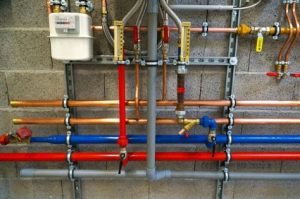
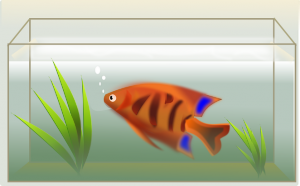
	</div>


	</div>
<div class="chapter standard " id="chapter-calculating-total-force" title="Calculating Total Force">
	<div class="chapter-title-wrap">
		<p class="chapter-number">8</p>
		<h1 class="chapter-title">Calculating Total Force</h1>
								</div>
	<div class="ugc chapter-ugc">
				 <p style="text-align: center">Click play on the following audio player to listen along as you read this section.</p> <div class="textbox interactive-content interactive-content--oembed"><span class="interactive-content__icon"></span> <p>One or more interactive elements has been excluded from this version of the text. You can view them online here: <a href="#oembed-4" title="2.3 Calculating Total Force" data-url="https://pressbooks.bccampus.ca/mathfortradesvolume3/?p=195#oembed-4">https://pressbooks.bccampus.ca/mathfortradesvolume3/?p=195#oembed-4</a> </p> </div> <p><img class="aligncenter wp-image-408" src="https://pressbooks.bccampus.ca/mathfortradesvolume3/wp-content/uploads/sites/1574/2021/12/Picture13-3.png" alt="Up to this point..." width="404" height="234" srcset="https://pressbooks.bccampus.ca/mathfortradesvolume3/wp-content/uploads/sites/1574/2021/12/Picture13-3.png 1500w, https://pressbooks.bccampus.ca/mathfortradesvolume3/wp-content/uploads/sites/1574/2021/12/Picture13-3-300x174.png 300w, https://pressbooks.bccampus.ca/mathfortradesvolume3/wp-content/uploads/sites/1574/2021/12/Picture13-3-1024x593.png 1024w, https://pressbooks.bccampus.ca/mathfortradesvolume3/wp-content/uploads/sites/1574/2021/12/Picture13-3-768x444.png 768w, https://pressbooks.bccampus.ca/mathfortradesvolume3/wp-content/uploads/sites/1574/2021/12/Picture13-3-65x38.png 65w, https://pressbooks.bccampus.ca/mathfortradesvolume3/wp-content/uploads/sites/1574/2021/12/Picture13-3-225x130.png 225w, https://pressbooks.bccampus.ca/mathfortradesvolume3/wp-content/uploads/sites/1574/2021/12/Picture13-3-350x203.png 350w" sizes="auto, (max-width: 404px) 100vw, 404px" title="" /></p> <p>So far we’ve determined that pressure is a force per unit area and that pressure can be stated in different ways with pounds per square inch being the most common. We calculated the pressure at the base of an object or piping system filled with water.</p> <p>Now it’s time to calculate the total force at the base of an object or piping system given the pressure exerted at its base. As before we will use water as the fluid in the example questions.</p> <p>Take a look at the figure below and then read the explanation below that.</p> <p><a href="https://pressbooks.bccampus.ca/mathfortradesvolume3/wp-content/uploads/sites/1574/2021/12/Picture1-1.png" data-url="https://pressbooks.bccampus.ca/mathfortradesvolume3/wp-content/uploads/sites/1574/2021/12/Picture1-1.png"><img class="aligncenter wp-image-254" src="https://pressbooks.bccampus.ca/mathfortradesvolume3/wp-content/uploads/sites/1574/2021/12/Picture1-1.png" alt="1, A cylinder. 2, the base of the cylinder. 3, individual square inches on the base of that cylinder." width="634" height="296" srcset="https://pressbooks.bccampus.ca/mathfortradesvolume3/wp-content/uploads/sites/1574/2021/12/Picture1-1.png 1463w, https://pressbooks.bccampus.ca/mathfortradesvolume3/wp-content/uploads/sites/1574/2021/12/Picture1-1-300x140.png 300w, https://pressbooks.bccampus.ca/mathfortradesvolume3/wp-content/uploads/sites/1574/2021/12/Picture1-1-1024x477.png 1024w, https://pressbooks.bccampus.ca/mathfortradesvolume3/wp-content/uploads/sites/1574/2021/12/Picture1-1-768x358.png 768w, https://pressbooks.bccampus.ca/mathfortradesvolume3/wp-content/uploads/sites/1574/2021/12/Picture1-1-65x30.png 65w, https://pressbooks.bccampus.ca/mathfortradesvolume3/wp-content/uploads/sites/1574/2021/12/Picture1-1-225x105.png 225w, https://pressbooks.bccampus.ca/mathfortradesvolume3/wp-content/uploads/sites/1574/2021/12/Picture1-1-350x163.png 350w" sizes="auto, (max-width: 634px) 100vw, 634px" title="" /></a></p> <p><img class="aligncenter wp-image-262 size-full" src="https://pressbooks.bccampus.ca/mathfortradesvolume3/wp-content/uploads/sites/1574/2021/12/Picture10-3.png" alt="One" width="88" height="107" srcset="https://pressbooks.bccampus.ca/mathfortradesvolume3/wp-content/uploads/sites/1574/2021/12/Picture10-3.png 88w, https://pressbooks.bccampus.ca/mathfortradesvolume3/wp-content/uploads/sites/1574/2021/12/Picture10-3-65x79.png 65w" sizes="auto, (max-width: 88px) 100vw, 88px" title="" /></p> <p>Start with an object filled with water. In this case a cylinder or possibly something like a hot water tank. The object will be three dimensional and have a height, width and depth.</p> <p><img class="aligncenter wp-image-263 size-full" src="https://pressbooks.bccampus.ca/mathfortradesvolume3/wp-content/uploads/sites/1574/2021/12/Picture11-2.png" alt="Two" width="88" height="107" srcset="https://pressbooks.bccampus.ca/mathfortradesvolume3/wp-content/uploads/sites/1574/2021/12/Picture11-2.png 88w, https://pressbooks.bccampus.ca/mathfortradesvolume3/wp-content/uploads/sites/1574/2021/12/Picture11-2-65x79.png 65w" sizes="auto, (max-width: 88px) 100vw, 88px" title="" /></p> <p>This is the base of the object. As we are calculating total force at the base of this object we have to decide what the base consists of and define its parameters.</p> <p><img class="aligncenter wp-image-264 size-full" src="https://pressbooks.bccampus.ca/mathfortradesvolume3/wp-content/uploads/sites/1574/2021/12/Picture12-3.png" alt="Three" width="88" height="107" srcset="https://pressbooks.bccampus.ca/mathfortradesvolume3/wp-content/uploads/sites/1574/2021/12/Picture12-3.png 88w, https://pressbooks.bccampus.ca/mathfortradesvolume3/wp-content/uploads/sites/1574/2021/12/Picture12-3-65x79.png 65w" sizes="auto, (max-width: 88px) 100vw, 88px" title="" /></p> <p>The base has been expanded for visual purposes to allow for the introduction of a few square inches inserted into the base. As stated previously we are calculating pressure in pounds per square inch therefore it’s going to be important to find the area at the base in square inches.</p> <p><img class="wp-image-255 aligncenter" src="https://pressbooks.bccampus.ca/mathfortradesvolume3/wp-content/uploads/sites/1574/2021/12/Picture2-2.jpg" alt="" width="512" height="161" srcset="https://pressbooks.bccampus.ca/mathfortradesvolume3/wp-content/uploads/sites/1574/2021/12/Picture2-2.jpg 741w, https://pressbooks.bccampus.ca/mathfortradesvolume3/wp-content/uploads/sites/1574/2021/12/Picture2-2-300x94.jpg 300w, https://pressbooks.bccampus.ca/mathfortradesvolume3/wp-content/uploads/sites/1574/2021/12/Picture2-2-65x20.jpg 65w, https://pressbooks.bccampus.ca/mathfortradesvolume3/wp-content/uploads/sites/1574/2021/12/Picture2-2-225x71.jpg 225w, https://pressbooks.bccampus.ca/mathfortradesvolume3/wp-content/uploads/sites/1574/2021/12/Picture2-2-350x110.jpg 350w" sizes="auto, (max-width: 512px) 100vw, 512px" title="" /></p> <p style="text-align: left">After all that we can put everything together to get our total force formula.</p> <p style="text-align: center"><img src="https://pressbooks.bccampus.ca/mathfortradesvolume3/wp-content/ql-cache/quicklatex.com-c3daca1815fd9283b17f8694b577ce22_l3.svg" class="ql-img-inline-formula quicklatex-auto-format" alt="\text{total force} = \text{ area} \times \text{ psi}" title="Rendered by QuickLaTeX.com" height="17" width="191" style="vertical-align: -4px;" /></p> <p><img class="alignleft wp-image-221" src="https://pressbooks.bccampus.ca/mathfortradesvolume3/wp-content/uploads/sites/1574/2021/12/Picture3-4.png" alt="Note" width="122" height="119" srcset="https://pressbooks.bccampus.ca/mathfortradesvolume3/wp-content/uploads/sites/1574/2021/12/Picture3-4.png 150w, https://pressbooks.bccampus.ca/mathfortradesvolume3/wp-content/uploads/sites/1574/2021/12/Picture3-4-65x64.png 65w" sizes="auto, (max-width: 122px) 100vw, 122px" title="" /></p> <p>There are a couple things to note here.</p> <p>1) The area must be in square inches<br /> 2) The height used to determine psi must be in feet.</p> <p>This <span style="text-align: initial;font-size: 14pt">concept occasionally mixes people up as one part of the equation is calculated using inches and the other part is calculated using feet. This is generally opposite from what we’ve been saying in most of this math journey where we’ve made sure all the variables must be in the same unit. Let’s head off to an example to put all this together.</span></p> <div class="textbox textbox--examples"><div class="textbox__header"><p class="textbox__title">Example</p> </div> <div class="textbox__content"><p><a href="https://pressbooks.bccampus.ca/mathfortradesvolume3/wp-content/uploads/sites/1574/2021/12/Picture4-4.png" data-url="https://pressbooks.bccampus.ca/mathfortradesvolume3/wp-content/uploads/sites/1574/2021/12/Picture4-4.png"><img class="aligncenter wp-image-257" src="https://pressbooks.bccampus.ca/mathfortradesvolume3/wp-content/uploads/sites/1574/2021/12/Picture4-4.png" alt="A rectangle with a height of 13 inches, width of 8 inches, and length of 32 inches." width="572" height="201" srcset="https://pressbooks.bccampus.ca/mathfortradesvolume3/wp-content/uploads/sites/1574/2021/12/Picture4-4.png 888w, https://pressbooks.bccampus.ca/mathfortradesvolume3/wp-content/uploads/sites/1574/2021/12/Picture4-4-300x105.png 300w, https://pressbooks.bccampus.ca/mathfortradesvolume3/wp-content/uploads/sites/1574/2021/12/Picture4-4-768x270.png 768w, https://pressbooks.bccampus.ca/mathfortradesvolume3/wp-content/uploads/sites/1574/2021/12/Picture4-4-65x23.png 65w, https://pressbooks.bccampus.ca/mathfortradesvolume3/wp-content/uploads/sites/1574/2021/12/Picture4-4-225x79.png 225w, https://pressbooks.bccampus.ca/mathfortradesvolume3/wp-content/uploads/sites/1574/2021/12/Picture4-4-350x123.png 350w" sizes="auto, (max-width: 572px) 100vw, 572px" title="" /></a></p> <p>Calculate the force at the base of the tank pictured above. Assume that the tank is filled with water.</p> <p><strong>Step 1:</strong> Write down the formula you’ll be working with.</p> <p><a href="https://pressbooks.bccampus.ca/mathfortradesvolume3/wp-content/uploads/sites/1574/2021/12/Picture5-4.png" data-url="https://pressbooks.bccampus.ca/mathfortradesvolume3/wp-content/uploads/sites/1574/2021/12/Picture5-4.png"><img class="aligncenter wp-image-258" src="https://pressbooks.bccampus.ca/mathfortradesvolume3/wp-content/uploads/sites/1574/2021/12/Picture5-4.png" alt="Total force = area times psi. Area is length times width, square inches. Psi is height times 0.433 in feet, pounds per square inch.per square inch." width="516" height="195" srcset="https://pressbooks.bccampus.ca/mathfortradesvolume3/wp-content/uploads/sites/1574/2021/12/Picture5-4.png 809w, https://pressbooks.bccampus.ca/mathfortradesvolume3/wp-content/uploads/sites/1574/2021/12/Picture5-4-300x113.png 300w, https://pressbooks.bccampus.ca/mathfortradesvolume3/wp-content/uploads/sites/1574/2021/12/Picture5-4-768x290.png 768w, https://pressbooks.bccampus.ca/mathfortradesvolume3/wp-content/uploads/sites/1574/2021/12/Picture5-4-65x25.png 65w, https://pressbooks.bccampus.ca/mathfortradesvolume3/wp-content/uploads/sites/1574/2021/12/Picture5-4-225x85.png 225w, https://pressbooks.bccampus.ca/mathfortradesvolume3/wp-content/uploads/sites/1574/2021/12/Picture5-4-350x132.png 350w" sizes="auto, (max-width: 516px) 100vw, 516px" title="" /></a></p> <p>Note that in this case we have a rectangular tank with the area of the base being the length multiplied by the width.</p> <p style="text-align: center"><img src="https://pressbooks.bccampus.ca/mathfortradesvolume3/wp-content/ql-cache/quicklatex.com-f6e5bd4201e68fc7628264d6e3373ddf_l3.svg" class="ql-img-inline-formula quicklatex-auto-format" alt="\text{total force} = (l \times w) \times (height \times 0.433)" title="Rendered by QuickLaTeX.com" height="19" width="305" style="vertical-align: -5px;" /></p> <p><strong>Step 2: </strong>Write down the variables and put them in proper units to work with.</p> <p><a href="https://pressbooks.bccampus.ca/mathfortradesvolume3/wp-content/uploads/sites/1574/2021/12/Picture7-1.png" data-url="https://pressbooks.bccampus.ca/mathfortradesvolume3/wp-content/uploads/sites/1574/2021/12/Picture7-1.png"><img class="aligncenter wp-image-260" src="https://pressbooks.bccampus.ca/mathfortradesvolume3/wp-content/uploads/sites/1574/2021/12/Picture7-1.png" alt="Height must be in feet. Convert 13 inches to feet by dividing 13 inches by 12 inches which equals 1.08 feet." width="625" height="276" srcset="https://pressbooks.bccampus.ca/mathfortradesvolume3/wp-content/uploads/sites/1574/2021/12/Picture7-1.png 987w, https://pressbooks.bccampus.ca/mathfortradesvolume3/wp-content/uploads/sites/1574/2021/12/Picture7-1-300x133.png 300w, https://pressbooks.bccampus.ca/mathfortradesvolume3/wp-content/uploads/sites/1574/2021/12/Picture7-1-768x339.png 768w, https://pressbooks.bccampus.ca/mathfortradesvolume3/wp-content/uploads/sites/1574/2021/12/Picture7-1-65x29.png 65w, https://pressbooks.bccampus.ca/mathfortradesvolume3/wp-content/uploads/sites/1574/2021/12/Picture7-1-225x99.png 225w, https://pressbooks.bccampus.ca/mathfortradesvolume3/wp-content/uploads/sites/1574/2021/12/Picture7-1-350x155.png 350w" sizes="auto, (max-width: 625px) 100vw, 625px" title="" /></a></p> <p><strong>Step 3: </strong>Plug the reworked variables into the equation.</p> <p style="text-align: center"></p><p class="ql-center-displayed-equation" style="line-height: 100px;"><span class="ql-right-eqno">&nbsp; </span> <span class="ql-left-eqno">&nbsp; </span><img src="https://pressbooks.bccampus.ca/mathfortradesvolume3/wp-content/ql-cache/quicklatex.com-7c06b59167bdc7e95fec72be483d13e3_l3.svg" height="100" width="393" class="ql-img-displayed-equation quicklatex-auto-format" alt="\begin{equation*}\begin{split} \text{total force} &amp;amp;= (l \times w) \times (height \times 0.433) \\ \text{total force} &amp;amp;= (32in \times 8 in) \times (1.08 ft \times 0.433 \text{ psi/ft}) \\ \text{total force} &amp;amp;= (256 in^2) \times (0.464 \text{ psi}) \\ \text{total force} &amp;amp;= 118.78 \text{ pounds} \end{split}\end{equation}" title="Rendered by QuickLaTeX.com" /></p> <p style="text-align: center"><img src="https://pressbooks.bccampus.ca/mathfortradesvolume3/wp-content/ql-cache/quicklatex.com-cbdd32d19f44c1a5670658c24c19fe50_l3.svg" class="ql-img-inline-formula quicklatex-auto-format" alt="118.78 lbs" title="Rendered by QuickLaTeX.com" height="13" width="70" style="vertical-align: 0px;" /></p> </div> </div> <p>Note the units that we end up with. We end up with pounds as our total force. The inches in the area at the base and the inches in the pounds per square inch cancel each other out. This leaves us with just pounds as an answer.</p> <p>The total force at the base of the tank works out to be 188.78 pounds. There are 256 square inches at the base and each square inch has 0.464 pounds of force acting on it. Take a look at the plan view below for a better understanding.</p> <div class="textbox shaded"><h6><strong>Question:&nbsp; </strong>What is a plan view?</h6> <h6><strong>Answer:</strong> A plan view is when you look at an object from above. It’s as if you had a bird’s eye view of an object.<a id="fig8.1" data-url=""></a></h6> <div class="wp-caption aligncenter" id="attachment_412" aria-describedby="caption-attachment-412" style="width: 700px"><a href="https://pressbooks.bccampus.ca/mathfortradesvolume3/wp-content/uploads/sites/1574/2021/12/Picture14-5.png" data-url="https://pressbooks.bccampus.ca/mathfortradesvolume3/wp-content/uploads/sites/1574/2021/12/Picture14-5.png"><img class="wp-image-412" src="https://pressbooks.bccampus.ca/mathfortradesvolume3/wp-content/uploads/sites/1574/2021/12/Picture14-5.png" alt="Indicates square inches at the base of a rectangle and how to calculate total force. Image description available." width="700" height="448" srcset="https://pressbooks.bccampus.ca/mathfortradesvolume3/wp-content/uploads/sites/1574/2021/12/Picture14-5.png 1081w, https://pressbooks.bccampus.ca/mathfortradesvolume3/wp-content/uploads/sites/1574/2021/12/Picture14-5-300x192.png 300w, https://pressbooks.bccampus.ca/mathfortradesvolume3/wp-content/uploads/sites/1574/2021/12/Picture14-5-1024x656.png 1024w, https://pressbooks.bccampus.ca/mathfortradesvolume3/wp-content/uploads/sites/1574/2021/12/Picture14-5-768x492.png 768w, https://pressbooks.bccampus.ca/mathfortradesvolume3/wp-content/uploads/sites/1574/2021/12/Picture14-5-65x42.png 65w, https://pressbooks.bccampus.ca/mathfortradesvolume3/wp-content/uploads/sites/1574/2021/12/Picture14-5-225x144.png 225w, https://pressbooks.bccampus.ca/mathfortradesvolume3/wp-content/uploads/sites/1574/2021/12/Picture14-5-350x224.png 350w" sizes="auto, (max-width: 700px) 100vw, 700px" title="" /></a><div class="wp-caption-text" id="caption-attachment-412"><strong>Figure 8.1:</strong> A drawing indicating square inches at the base of a rectangle and explanations used to calculate total force. <a href="#fig8.1_desc" data-url="https://pressbooks.bccampus.ca/mathfortradesvolume3/chapter/calculating-total-force/#fig8.1_desc">[Image Description]</a></div></div> </div> <p><img class="aligncenter wp-image-427" src="https://pressbooks.bccampus.ca/mathfortradesvolume3/wp-content/uploads/sites/1574/2021/12/Picture20-2.png" alt="" width="226" height="196" srcset="https://pressbooks.bccampus.ca/mathfortradesvolume3/wp-content/uploads/sites/1574/2021/12/Picture20-2.png 651w, https://pressbooks.bccampus.ca/mathfortradesvolume3/wp-content/uploads/sites/1574/2021/12/Picture20-2-300x260.png 300w, https://pressbooks.bccampus.ca/mathfortradesvolume3/wp-content/uploads/sites/1574/2021/12/Picture20-2-65x56.png 65w, https://pressbooks.bccampus.ca/mathfortradesvolume3/wp-content/uploads/sites/1574/2021/12/Picture20-2-225x195.png 225w, https://pressbooks.bccampus.ca/mathfortradesvolume3/wp-content/uploads/sites/1574/2021/12/Picture20-2-350x303.png 350w" sizes="auto, (max-width: 226px) 100vw, 226px" title="" /></p> <p>Here’s another scenario but this time we’ll switch things up a little. Say we have a piping system filled with water which is pressurised by a pump. We’ll add a gate valve into the system. This valve is closed and holding water back from one side of the system.</p> <p>The system has been pressurized to 50 psi. Note in this example the height of the system does not matter like it did in the previous example. We don’t have to calculate psi as it is given to us. What we are required to find out is how much force is acting upon the gate valve.</p> <p>Now as before we would use the same formula which requires psi and area. For our example we’ll say that we have a six inch gate valve. What we have is 50 psi acting on a 6 inch gate valve. What is the total force acting on the gate valve?<a id="fig8.2" data-url=""></a></p> <div class="wp-caption aligncenter" id="attachment_416" aria-describedby="caption-attachment-416" style="width: 718px"><a href="https://pressbooks.bccampus.ca/mathfortradesvolume3/wp-content/uploads/sites/1574/2021/12/Picture15-6.png" data-url="https://pressbooks.bccampus.ca/mathfortradesvolume3/wp-content/uploads/sites/1574/2021/12/Picture15-6.png"><img class="wp-image-416" src="https://pressbooks.bccampus.ca/mathfortradesvolume3/wp-content/uploads/sites/1574/2021/12/Picture15-6.png" alt="A 6 inch gate valve with 50 pounds per square inch acting on it. Image description available." width="718" height="339" srcset="https://pressbooks.bccampus.ca/mathfortradesvolume3/wp-content/uploads/sites/1574/2021/12/Picture15-6.png 1561w, https://pressbooks.bccampus.ca/mathfortradesvolume3/wp-content/uploads/sites/1574/2021/12/Picture15-6-300x142.png 300w, https://pressbooks.bccampus.ca/mathfortradesvolume3/wp-content/uploads/sites/1574/2021/12/Picture15-6-1024x483.png 1024w, https://pressbooks.bccampus.ca/mathfortradesvolume3/wp-content/uploads/sites/1574/2021/12/Picture15-6-768x363.png 768w, https://pressbooks.bccampus.ca/mathfortradesvolume3/wp-content/uploads/sites/1574/2021/12/Picture15-6-1536x725.png 1536w, https://pressbooks.bccampus.ca/mathfortradesvolume3/wp-content/uploads/sites/1574/2021/12/Picture15-6-65x31.png 65w, https://pressbooks.bccampus.ca/mathfortradesvolume3/wp-content/uploads/sites/1574/2021/12/Picture15-6-225x106.png 225w, https://pressbooks.bccampus.ca/mathfortradesvolume3/wp-content/uploads/sites/1574/2021/12/Picture15-6-350x165.png 350w" sizes="auto, (max-width: 718px) 100vw, 718px" title="" /></a><div class="wp-caption-text" id="caption-attachment-416">Figure 8.2: A 6 inch gate valve with 50 pounds per square inch acting on it. <a href="#fig8.2_desc" data-url="https://pressbooks.bccampus.ca/mathfortradesvolume3/chapter/calculating-total-force/#fig8.2_desc">[Image Description]</a></div></div> <p><strong>Step 1:</strong> Write down the formula you are going to work with.</p> <p style="text-align: center"><img src="https://pressbooks.bccampus.ca/mathfortradesvolume3/wp-content/ql-cache/quicklatex.com-3a18f7c5e8a546dac76b64bdc3163406_l3.svg" class="ql-img-inline-formula quicklatex-auto-format" alt="\text{total force} = \text{ area} \times \text{psi}" title="Rendered by QuickLaTeX.com" height="17" width="185" style="vertical-align: -4px;" /></p> <p>Here is the formula for area of a circle.</p> <p style="text-align: center"><img src="https://pressbooks.bccampus.ca/mathfortradesvolume3/wp-content/ql-cache/quicklatex.com-f99c2d4f5ca11378233d722fd68c250f_l3.svg" class="ql-img-inline-formula quicklatex-auto-format" alt="\text{area} = \pi \times r^2" title="Rendered by QuickLaTeX.com" height="16" width="104" style="vertical-align: -1px;" /></p> <p>We could then rewrite the formula.</p> <p style="text-align: center"><img src="https://pressbooks.bccampus.ca/mathfortradesvolume3/wp-content/ql-cache/quicklatex.com-ff0b7a22ef323c1bcee72346aee791ee_l3.svg" class="ql-img-inline-formula quicklatex-auto-format" alt="\text{total force} = (\pi \times r^2) \times \text{psi}" title="Rendered by QuickLaTeX.com" height="20" width="209" style="vertical-align: -5px;" /></p> <p><strong>Step 2:&nbsp;</strong>Insert the variables into the equation making sure that theyare in the correct units.</p> <p style="text-align: center"></p><p class="ql-center-displayed-equation" style="line-height: 103px;"><span class="ql-right-eqno">&nbsp; </span> <span class="ql-left-eqno">&nbsp; </span><img src="https://pressbooks.bccampus.ca/mathfortradesvolume3/wp-content/ql-cache/quicklatex.com-733bca98f05f3b62415cf28cd29fd7d2_l3.svg" height="103" width="215" class="ql-img-displayed-equation quicklatex-auto-format" alt="\begin{equation*}\begin{split}\text{total force} &amp;amp;= (\pi \times r^2) \times \text{ psi} \\ &amp;amp;= (\pi \times 3^2) \times 50 \\ &amp;amp;= 28.26 \times 50 \\ &amp;amp;= 1413 \text{ pounds}\end{split}\end{equation}" title="Rendered by QuickLaTeX.com" /></p> <p>There you have it. The total force acting upon the gate valve is 1,413 pounds given that it’s a six inch gate valve and has 50 psi acting upon it.</p> <p>Give the following practice questions a try. Make sure to check out the video answer which goes along with the question once you have completed the question.</p> <h1>Practice Questions</h1> <div class="textbox textbox--exercises"><div class="textbox__header"><p class="textbox__title">Question 1</p> </div> <div class="textbox__content"><p><img class="alignleft wp-image-431" src="https://pressbooks.bccampus.ca/mathfortradesvolume3/wp-content/uploads/sites/1574/2021/12/Picture24-3.png" alt="" width="166" height="166" srcset="https://pressbooks.bccampus.ca/mathfortradesvolume3/wp-content/uploads/sites/1574/2021/12/Picture24-3.png 388w, https://pressbooks.bccampus.ca/mathfortradesvolume3/wp-content/uploads/sites/1574/2021/12/Picture24-3-300x300.png 300w, https://pressbooks.bccampus.ca/mathfortradesvolume3/wp-content/uploads/sites/1574/2021/12/Picture24-3-150x150.png 150w, https://pressbooks.bccampus.ca/mathfortradesvolume3/wp-content/uploads/sites/1574/2021/12/Picture24-3-65x65.png 65w, https://pressbooks.bccampus.ca/mathfortradesvolume3/wp-content/uploads/sites/1574/2021/12/Picture24-3-225x225.png 225w, https://pressbooks.bccampus.ca/mathfortradesvolume3/wp-content/uploads/sites/1574/2021/12/Picture24-3-350x350.png 350w" sizes="auto, (max-width: 166px) 100vw, 166px" title="" /></p> <p>Haiko installs gravity fed water systems which are a water source for either a single home or a number of homes in a small area. The gravity fed tank is 72 feet above the house and the water is supplied by a 1 1/2 inch pipe. What is the pressure available at the house?</p> <div class="textbox interactive-content interactive-content--oembed"><span class="interactive-content__icon"></span> <p>One or more interactive elements has been excluded from this version of the text. You can view them online here: <a href="#oembed-5" title="Math for Trades Total Force #1" data-url="https://pressbooks.bccampus.ca/mathfortradesvolume3/?p=195#oembed-5">https://pressbooks.bccampus.ca/mathfortradesvolume3/?p=195#oembed-5</a> </p> </div> </div> </div> <div class="textbox textbox--exercises"><div class="textbox__header"><p class="textbox__title">Question 2</p> </div> <div class="textbox__content"><p><img class="wp-image-430 alignleft" src="https://pressbooks.bccampus.ca/mathfortradesvolume3/wp-content/uploads/sites/1574/2021/12/Picture23-3-300x200.png" alt="" width="204" height="136" srcset="https://pressbooks.bccampus.ca/mathfortradesvolume3/wp-content/uploads/sites/1574/2021/12/Picture23-3-300x200.png 300w, https://pressbooks.bccampus.ca/mathfortradesvolume3/wp-content/uploads/sites/1574/2021/12/Picture23-3-65x43.png 65w, https://pressbooks.bccampus.ca/mathfortradesvolume3/wp-content/uploads/sites/1574/2021/12/Picture23-3-225x150.png 225w, https://pressbooks.bccampus.ca/mathfortradesvolume3/wp-content/uploads/sites/1574/2021/12/Picture23-3-350x233.png 350w, https://pressbooks.bccampus.ca/mathfortradesvolume3/wp-content/uploads/sites/1574/2021/12/Picture23-3.png 617w" sizes="auto, (max-width: 204px) 100vw, 204px" title="" /></p> <p>Rolf is a Swiss born sprinkler fitter installing a new sprinkler system in an old run down warehouse now being used as a compostable coffee pod manufacturer. They will hopefully have the capability to make 50 million compostable coffee pods by the middle of next year.</p> <p>The sprinkler system has to be tested to 50 psi above the maximum pressure for about 2 hours. In this case the maximum pressure is 120 psi. The piping is all going to be 4 inch and there is a gate valve at the end of the system preventing water from getting into an unfinished part of the system. Calculate the total force acting on that gate valve.</p> <div class="textbox interactive-content interactive-content--oembed"><span class="interactive-content__icon"></span> <p>One or more interactive elements has been excluded from this version of the text. You can view them online here: <a href="#oembed-6" title="Math for Trades Total Force #2" data-url="https://pressbooks.bccampus.ca/mathfortradesvolume3/?p=195#oembed-6">https://pressbooks.bccampus.ca/mathfortradesvolume3/?p=195#oembed-6</a> </p> </div> </div> </div> <h1>Image Descriptions</h1> <p><strong><a id="fig8.1_desc" data-url=""></a>Figure 8.1:</strong> Showing the plan view of an object. The plan view is represented by a blue rectangle and red blocks indicate each square inch of the blue rectangle.</p> <ol><li>The base of the rectangular tank is made up of 256 of these [red blocks].</li> <li>Each one has a force of 0.464 pounds acting on it.</li> <li>What we end up with is 0.464 pounds per each square inch.</li> <li>Calculating the total force on all the square inches gets us 118.78 pounds. <a style="text-align: initial;font-size: 14pt" href="#fig8.1" data-url="https://pressbooks.bccampus.ca/mathfortradesvolume3/chapter/calculating-total-force/#fig8.1">[Return to image]</a></li> </ol> <p><a id="fig8.2_desc" data-url=""></a><strong>Figure 8.2:</strong> A gate valve is used to shut off flow in a piping system. It’s used primarily as a fully open or fully closed valve. A gate valve is constructed so that flow is not lessened when fully open and completely shut off when fully closed. Pictured is a 6 inch gate valve with 50 pounds per square inch acting on it. The pipe is 6 inches. The flow is left to right. <a href="#fig8.2" data-url="https://pressbooks.bccampus.ca/mathfortradesvolume3/chapter/calculating-total-force/#fig8.2">[Return to image]</a></p> 

	</div>


	</div>
<div class="chapter standard " id="chapter-pressure-and-total-force-quiz" title="Pressure and Total Force Quiz">
	<div class="chapter-title-wrap">
		<p class="chapter-number">9</p>
		<h1 class="chapter-title">Pressure and Total Force Quiz</h1>
								</div>
	<div class="ugc chapter-ugc">
				 <div class="textbox interactive-content"><span class="interactive-content__icon"></span> <p>An interactive H5P element has been excluded from this version of the text. You can view it online here:<br /> <a href="https://pressbooks.bccampus.ca/mathfortradesvolume3/?p=707#h5p-2" title="Pressure and Total Force Quiz" data-url="https://pressbooks.bccampus.ca/mathfortradesvolume3/?p=707#h5p-2">https://pressbooks.bccampus.ca/mathfortradesvolume3/?p=707#h5p-2</a> </p> </div> 
	</div>


	</div>

</div>
<div class="part-wrapper" id="part-grade-and-total-fall-wrapper">
    <div class="part  " id="part-grade-and-total-fall">
	<div class="part-title-wrap">
		<p class="part-number">III</p>
		<h1 class="part-title">Grade and Total Fall</h1>
	</div>
	<div class="ugc part-ugc">
		<p><img class="aligncenter wp-image-786" src="https://pressbooks.bccampus.ca/mathfortradesvolume3/wp-content/uploads/sites/1574/2021/12/Picture1-8.jpg" alt="" width="322" height="214" srcset="https://pressbooks.bccampus.ca/mathfortradesvolume3/wp-content/uploads/sites/1574/2021/12/Picture1-8.jpg 963w, https://pressbooks.bccampus.ca/mathfortradesvolume3/wp-content/uploads/sites/1574/2021/12/Picture1-8-300x200.jpg 300w, https://pressbooks.bccampus.ca/mathfortradesvolume3/wp-content/uploads/sites/1574/2021/12/Picture1-8-768x512.jpg 768w, https://pressbooks.bccampus.ca/mathfortradesvolume3/wp-content/uploads/sites/1574/2021/12/Picture1-8-65x43.jpg 65w, https://pressbooks.bccampus.ca/mathfortradesvolume3/wp-content/uploads/sites/1574/2021/12/Picture1-8-225x150.jpg 225w, https://pressbooks.bccampus.ca/mathfortradesvolume3/wp-content/uploads/sites/1574/2021/12/Picture1-8-350x233.jpg 350w" sizes="auto, (max-width: 322px) 100vw, 322px" title="" /></p> <div class="textbox textbox--learning-objectives"><div class="textbox__header"><p class="textbox__title">Outcomes</p> </div> <div class="textbox__content"><ul><li>Identifying the three ways grade is defined</li> <li>Working between the types of grade</li> <li>Calculating fall</li> <li>Calculating grade or length</li> </ul> </div> </div>
	</div>
			
				
	</div>
<div class="chapter standard " id="chapter-the-three-ways-grade-is-defined" title="The Three Ways Grade is Defined">
	<div class="chapter-title-wrap">
		<p class="chapter-number">10</p>
		<h1 class="chapter-title">The Three Ways Grade is Defined</h1>
								</div>
	<div class="ugc chapter-ugc">
				 <p style="text-align: center;">Click play on the following audio player to listen along as you read this section.</p> <div class="textbox interactive-content interactive-content--oembed"><span class="interactive-content__icon"></span> <p>One or more interactive elements has been excluded from this version of the text. You can view them online here: <a href="#oembed-2" title="3.1 The Three Ways Grade is Defined" data-url="https://pressbooks.bccampus.ca/mathfortradesvolume3/?p=272#oembed-2">https://pressbooks.bccampus.ca/mathfortradesvolume3/?p=272#oembed-2</a> </p> </div> <p><img class="wp-image-276 alignleft" src="https://pressbooks.bccampus.ca/mathfortradesvolume3/wp-content/uploads/sites/1574/2021/12/Picture1-4-300x201.jpg" alt="" width="257" height="172" srcset="https://pressbooks.bccampus.ca/mathfortradesvolume3/wp-content/uploads/sites/1574/2021/12/Picture1-4-300x201.jpg 300w, https://pressbooks.bccampus.ca/mathfortradesvolume3/wp-content/uploads/sites/1574/2021/12/Picture1-4-65x43.jpg 65w, https://pressbooks.bccampus.ca/mathfortradesvolume3/wp-content/uploads/sites/1574/2021/12/Picture1-4-225x150.jpg 225w, https://pressbooks.bccampus.ca/mathfortradesvolume3/wp-content/uploads/sites/1574/2021/12/Picture1-4-350x234.jpg 350w, https://pressbooks.bccampus.ca/mathfortradesvolume3/wp-content/uploads/sites/1574/2021/12/Picture1-4.jpg 588w" sizes="auto, (max-width: 257px) 100vw, 257px" title="" /></p> <p>The picture to the left is a waterfall and as the name suggests the water travels from a high point to a low point. We could say that the water “falls” from the high point to the low point due to the effects of gravity.</p> <p>If we apply this to the math we’re going through later in this section we would use the term “total fall” and essentially we’d be defining the vertical distance that an object moves.</p> <p>If an object moves from point A to point B just using a vertical motion (like the waterfall) then there would be no horizontal movement during that time. If you think about any water fall you might have encountered they generally go straight down.</p> <p><a href="https://pressbooks.bccampus.ca/mathfortradesvolume3/wp-content/uploads/sites/1574/2021/12/Picture2-3.png" data-url="https://pressbooks.bccampus.ca/mathfortradesvolume3/wp-content/uploads/sites/1574/2021/12/Picture2-3.png"><img class="aligncenter wp-image-277 size-full" src="https://pressbooks.bccampus.ca/mathfortradesvolume3/wp-content/uploads/sites/1574/2021/12/Picture2-3.png" alt="An arrow points down vertically from A to B." width="69" height="259" srcset="https://pressbooks.bccampus.ca/mathfortradesvolume3/wp-content/uploads/sites/1574/2021/12/Picture2-3.png 69w, https://pressbooks.bccampus.ca/mathfortradesvolume3/wp-content/uploads/sites/1574/2021/12/Picture2-3-65x244.png 65w" sizes="auto, (max-width: 69px) 100vw, 69px" title="" /></a></p> <p>What if it didn’t go down in a straight line but also moved horizontally as well as vertically?</p> <p><a href="https://pressbooks.bccampus.ca/mathfortradesvolume3/wp-content/uploads/sites/1574/2021/12/Picture3-6.png" data-url="https://pressbooks.bccampus.ca/mathfortradesvolume3/wp-content/uploads/sites/1574/2021/12/Picture3-6.png"><img class="aligncenter wp-image-278 size-full" src="https://pressbooks.bccampus.ca/mathfortradesvolume3/wp-content/uploads/sites/1574/2021/12/Picture3-6.png" alt="An arrow points down both horizontally and vertically from A to B from left to right." width="301" height="132" srcset="https://pressbooks.bccampus.ca/mathfortradesvolume3/wp-content/uploads/sites/1574/2021/12/Picture3-6.png 301w, https://pressbooks.bccampus.ca/mathfortradesvolume3/wp-content/uploads/sites/1574/2021/12/Picture3-6-65x29.png 65w, https://pressbooks.bccampus.ca/mathfortradesvolume3/wp-content/uploads/sites/1574/2021/12/Picture3-6-225x99.png 225w" sizes="auto, (max-width: 301px) 100vw, 301px" title="" /></a></p> <p>We still have a vertical drop in this case but it just takes a while to get there. We can measure the horizontal distance it takes to get from “A” to “B”. Take a look at the piece of pipe below. It goes horizontal but falls a little during that time.</p> <p><a href="https://pressbooks.bccampus.ca/mathfortradesvolume3/wp-content/uploads/sites/1574/2021/12/Picture26-1.png" data-url="https://pressbooks.bccampus.ca/mathfortradesvolume3/wp-content/uploads/sites/1574/2021/12/Picture26-1.png"><img class="aligncenter wp-image-433" src="https://pressbooks.bccampus.ca/mathfortradesvolume3/wp-content/uploads/sites/1574/2021/12/Picture26-1.png" alt="A piece of cast iron drainage pipe with arrows indicating that it goes both vertically and horizontally." width="632" height="184" srcset="https://pressbooks.bccampus.ca/mathfortradesvolume3/wp-content/uploads/sites/1574/2021/12/Picture26-1.png 930w, https://pressbooks.bccampus.ca/mathfortradesvolume3/wp-content/uploads/sites/1574/2021/12/Picture26-1-300x87.png 300w, https://pressbooks.bccampus.ca/mathfortradesvolume3/wp-content/uploads/sites/1574/2021/12/Picture26-1-768x223.png 768w, https://pressbooks.bccampus.ca/mathfortradesvolume3/wp-content/uploads/sites/1574/2021/12/Picture26-1-65x19.png 65w, https://pressbooks.bccampus.ca/mathfortradesvolume3/wp-content/uploads/sites/1574/2021/12/Picture26-1-225x65.png 225w, https://pressbooks.bccampus.ca/mathfortradesvolume3/wp-content/uploads/sites/1574/2021/12/Picture26-1-350x102.png 350w" sizes="auto, (max-width: 632px) 100vw, 632px" title="" /></a></p> <p style="text-align: left;">Combining the vertical distance travelled with the horizontal distance travelled we can calculate what is known as the grade. You will also hear the grade referred to as slope. We will be using grade during this portion of the book but using the word slope generally indicates the same thing.</p> <p><a href="https://pressbooks.bccampus.ca/mathfortradesvolume3/wp-content/uploads/sites/1574/2021/12/Picture26-1.png" data-url="https://pressbooks.bccampus.ca/mathfortradesvolume3/wp-content/uploads/sites/1574/2021/12/Picture26-1.png"><img class="alignleft wp-image-433" src="https://pressbooks.bccampus.ca/mathfortradesvolume3/wp-content/uploads/sites/1574/2021/12/Picture26-1.png" alt="A piece of cast iron drainage pipe with arrows indicating that it goes both vertically and horizontally." width="299" height="87" srcset="https://pressbooks.bccampus.ca/mathfortradesvolume3/wp-content/uploads/sites/1574/2021/12/Picture26-1.png 930w, https://pressbooks.bccampus.ca/mathfortradesvolume3/wp-content/uploads/sites/1574/2021/12/Picture26-1-300x87.png 300w, https://pressbooks.bccampus.ca/mathfortradesvolume3/wp-content/uploads/sites/1574/2021/12/Picture26-1-768x223.png 768w, https://pressbooks.bccampus.ca/mathfortradesvolume3/wp-content/uploads/sites/1574/2021/12/Picture26-1-65x19.png 65w, https://pressbooks.bccampus.ca/mathfortradesvolume3/wp-content/uploads/sites/1574/2021/12/Picture26-1-225x65.png 225w, https://pressbooks.bccampus.ca/mathfortradesvolume3/wp-content/uploads/sites/1574/2021/12/Picture26-1-350x102.png 350w" sizes="auto, (max-width: 299px) 100vw, 299px" title="" /></a></p> <p style="text-align: left;">Take a look at the cast iron drainage pipe again. You can see that it’s grading down as it goes from left to right. Drainage pipe usually contains soil and waste which drains by gravity. If gravity is to do its work then we must have a grade on the pipe. With drainage pipe we generally refer to the slope in inches per foot. The pipe will fall vertically a certain amount on inches (or fraction of an inch) for every foot that it travels horizontally.</p> <p style="text-align: left;">Here is another scenario. Have you ever been on a road trip and come across a hill that goes down very steep? The picture below is a road sign that lets drivers know the road is going to grade down at a rate of 7%. Percentage is another way we can define grade.</p> <p><a href="https://pressbooks.bccampus.ca/mathfortradesvolume3/wp-content/uploads/sites/1574/2021/12/Picture4-5.png" data-url="https://pressbooks.bccampus.ca/mathfortradesvolume3/wp-content/uploads/sites/1574/2021/12/Picture4-5.png"><img class="aligncenter wp-image-279 size-medium" src="https://pressbooks.bccampus.ca/mathfortradesvolume3/wp-content/uploads/sites/1574/2021/12/Picture4-5-300x189.png" alt="A road sign indicating that the road ahead has a grade of 7 percent." width="300" height="189" srcset="https://pressbooks.bccampus.ca/mathfortradesvolume3/wp-content/uploads/sites/1574/2021/12/Picture4-5-300x189.png 300w, https://pressbooks.bccampus.ca/mathfortradesvolume3/wp-content/uploads/sites/1574/2021/12/Picture4-5-65x41.png 65w, https://pressbooks.bccampus.ca/mathfortradesvolume3/wp-content/uploads/sites/1574/2021/12/Picture4-5-225x142.png 225w, https://pressbooks.bccampus.ca/mathfortradesvolume3/wp-content/uploads/sites/1574/2021/12/Picture4-5-350x221.png 350w, https://pressbooks.bccampus.ca/mathfortradesvolume3/wp-content/uploads/sites/1574/2021/12/Picture4-5.png 485w" sizes="auto, (max-width: 300px) 100vw, 300px" title="" /></a></p> <p>If we were to go back to our percentage chapter we would say that 7% is like saying 7 out of 100. What this means is that for every 100 feet driven horizontally the road would drop down 7 feet vertically.</p> <p>We’ve just gone over two of the three ways we define grade in the trades. Any guesses what the third way is?</p> <p><img class="aligncenter wp-image-231" src="https://pressbooks.bccampus.ca/mathfortradesvolume3/wp-content/uploads/sites/1574/2021/12/Picture13-2.png" alt="" width="254" height="255" srcset="https://pressbooks.bccampus.ca/mathfortradesvolume3/wp-content/uploads/sites/1574/2021/12/Picture13-2.png 202w, https://pressbooks.bccampus.ca/mathfortradesvolume3/wp-content/uploads/sites/1574/2021/12/Picture13-2-150x150.png 150w, https://pressbooks.bccampus.ca/mathfortradesvolume3/wp-content/uploads/sites/1574/2021/12/Picture13-2-65x65.png 65w" sizes="auto, (max-width: 254px) 100vw, 254px" title="" /></p> <p style="text-align: center;">Three ways to define grade:</p> <ol><li style="list-style-type: none;"><ol><li style="list-style-type: none;"><ol><li style="list-style-type: none;"><ol><li style="list-style-type: none;"><ol><li style="list-style-type: none;"><ol><li style="list-style-type: none;"><ol><li style="list-style-type: none;"><ol style="text-align: center;"><li style="text-align: left;">inches per foot</li> <li style="text-align: left;">percentage</li> <li style="text-align: left;">?????</li> </ol> </li> </ol> </li> </ol> </li> </ol> </li> </ol> </li> </ol> </li> </ol> </li> </ol> <p>Answer down below……….</p> <p><img class="aligncenter wp-image-61" src="https://pressbooks.bccampus.ca/mathfortradesvolume3/wp-content/uploads/sites/1574/2021/12/Picture18.png" alt="Continue below." width="410" height="381" srcset="https://pressbooks.bccampus.ca/mathfortradesvolume3/wp-content/uploads/sites/1574/2021/12/Picture18.png 566w, https://pressbooks.bccampus.ca/mathfortradesvolume3/wp-content/uploads/sites/1574/2021/12/Picture18-300x279.png 300w, https://pressbooks.bccampus.ca/mathfortradesvolume3/wp-content/uploads/sites/1574/2021/12/Picture18-65x60.png 65w, https://pressbooks.bccampus.ca/mathfortradesvolume3/wp-content/uploads/sites/1574/2021/12/Picture18-225x209.png 225w, https://pressbooks.bccampus.ca/mathfortradesvolume3/wp-content/uploads/sites/1574/2021/12/Picture18-350x325.png 350w" sizes="auto, (max-width: 410px) 100vw, 410px" title="" /></p> <div class="textbox shaded"><em><strong>ANSWER: </strong></em>A ratio is the third way we can define grade.</div> <p>Now let’s go through each of the three ways to express grade a little more thoroughly.</p> <h1>Grade Expressed in Inches Per Foot</h1> <p><img class="alignleft wp-image-280" src="https://pressbooks.bccampus.ca/mathfortradesvolume3/wp-content/uploads/sites/1574/2021/12/Picture5-1.jpg" alt="" width="203" height="153" srcset="https://pressbooks.bccampus.ca/mathfortradesvolume3/wp-content/uploads/sites/1574/2021/12/Picture5-1.jpg 513w, https://pressbooks.bccampus.ca/mathfortradesvolume3/wp-content/uploads/sites/1574/2021/12/Picture5-1-300x226.jpg 300w, https://pressbooks.bccampus.ca/mathfortradesvolume3/wp-content/uploads/sites/1574/2021/12/Picture5-1-65x49.jpg 65w, https://pressbooks.bccampus.ca/mathfortradesvolume3/wp-content/uploads/sites/1574/2021/12/Picture5-1-225x169.jpg 225w, https://pressbooks.bccampus.ca/mathfortradesvolume3/wp-content/uploads/sites/1574/2021/12/Picture5-1-350x263.jpg 350w" sizes="auto, (max-width: 203px) 100vw, 203px" title="" /></p> <p>Pipe trades workers run pipe requiring grade. As previously stated the waste material running through drainage pipe moves due to gravity and therefore the pipe needs to move both horizontally while at the same time moving vertically. This ensures the smooth movement of the material within the pipe.</p> <p>Drainage pipe generally runs at ¼ inch per foot. What this means is that for every foot the pipe travels horizontally the pipe falls or drops ¼ inch vertically. This allows the water, soil or waste to move downward simply due to the effects of gravity.</p> <p>The following are more examples of grades specified in inches per foot.</p> <table class="grid" style="border-collapse: collapse; width: 100%; height: 90px;"><tbody><tr style="height: 18px;"><td style="width: 50%; height: 18px;"><img src="https://pressbooks.bccampus.ca/mathfortradesvolume3/wp-content/ql-cache/quicklatex.com-f2c986d9b3f8dc7529f2aec5d642f709_l3.svg" class="ql-img-inline-formula quicklatex-auto-format" alt="\dfrac{3}{8} \text{ inches per foot}" title="Rendered by QuickLaTeX.com" height="36" width="130" style="vertical-align: -12px;" /></td> <td style="width: 50%; height: 18px;"><img src="https://pressbooks.bccampus.ca/mathfortradesvolume3/wp-content/ql-cache/quicklatex.com-747c0e848acee174d54b5198794819df_l3.svg" class="ql-img-inline-formula quicklatex-auto-format" alt="3/8&amp;quot;/ft" title="Rendered by QuickLaTeX.com" height="19" width="61" style="vertical-align: -5px;" /></td> </tr> <tr style="height: 18px;"><td style="width: 50%; height: 18px;"><img src="https://pressbooks.bccampus.ca/mathfortradesvolume3/wp-content/ql-cache/quicklatex.com-a30c01bc534969842893ce05ca90c0d1_l3.svg" class="ql-img-inline-formula quicklatex-auto-format" alt="\dfrac{3}{16} \text{ inches per foot}" title="Rendered by QuickLaTeX.com" height="36" width="139" style="vertical-align: -12px;" /></td> <td style="width: 50%; height: 18px;"><img src="https://pressbooks.bccampus.ca/mathfortradesvolume3/wp-content/ql-cache/quicklatex.com-71cafadbc676c8b3f70ed7d615979f47_l3.svg" class="ql-img-inline-formula quicklatex-auto-format" alt="3/16&amp;quot;/ft" title="Rendered by QuickLaTeX.com" height="19" width="70" style="vertical-align: -5px;" /></td> </tr> <tr style="height: 18px;"><td style="width: 50%; height: 18px;"><img src="https://pressbooks.bccampus.ca/mathfortradesvolume3/wp-content/ql-cache/quicklatex.com-4d5169ee30be85caa44cebd4ad207ec5_l3.svg" class="ql-img-inline-formula quicklatex-auto-format" alt="\dfrac{1}{8} \text{ inches per foot}" title="Rendered by QuickLaTeX.com" height="36" width="130" style="vertical-align: -12px;" /></td> <td style="width: 50%; height: 18px;"><img src="https://pressbooks.bccampus.ca/mathfortradesvolume3/wp-content/ql-cache/quicklatex.com-577dcb1af5289cf9700c374da4438b2f_l3.svg" class="ql-img-inline-formula quicklatex-auto-format" alt="1/8&amp;quot;/ft" title="Rendered by QuickLaTeX.com" height="19" width="60" style="vertical-align: -5px;" /></td> </tr> <tr style="height: 18px;"><td style="width: 50%; height: 18px;"><img src="https://pressbooks.bccampus.ca/mathfortradesvolume3/wp-content/ql-cache/quicklatex.com-2ba84e7a27f74d5b945e2e1e27aeb3c8_l3.svg" class="ql-img-inline-formula quicklatex-auto-format" alt="\dfrac{3}{32} \text{ inches per foot}" title="Rendered by QuickLaTeX.com" height="36" width="139" style="vertical-align: -12px;" /></td> <td style="width: 50%; height: 18px;"><img src="https://pressbooks.bccampus.ca/mathfortradesvolume3/wp-content/ql-cache/quicklatex.com-a99b5bde83e232fc008ebc86f9352896_l3.svg" class="ql-img-inline-formula quicklatex-auto-format" alt="3/32&amp;quot;/ft" title="Rendered by QuickLaTeX.com" height="19" width="70" style="vertical-align: -5px;" /></td> </tr> </tbody> </table> <p>In each case, it’s stated that an object is falling vertically at a rate of fractions of an inch for every foot that it travels horizontally. Take a look at the piece of pipe below. Note that in this case it’s running level therefore no grade. We’ll also state that this pipe is one foot long.</p> <p><a href="https://pressbooks.bccampus.ca/mathfortradesvolume3/wp-content/uploads/sites/1574/2021/12/Picture9-3.png" data-url="https://pressbooks.bccampus.ca/mathfortradesvolume3/wp-content/uploads/sites/1574/2021/12/Picture9-3.png"><img class="aligncenter wp-image-284" src="https://pressbooks.bccampus.ca/mathfortradesvolume3/wp-content/uploads/sites/1574/2021/12/Picture9-3.png" alt="A one foot level piece of pipe with a level sitting on it." width="402" height="179" srcset="https://pressbooks.bccampus.ca/mathfortradesvolume3/wp-content/uploads/sites/1574/2021/12/Picture9-3.png 664w, https://pressbooks.bccampus.ca/mathfortradesvolume3/wp-content/uploads/sites/1574/2021/12/Picture9-3-300x134.png 300w, https://pressbooks.bccampus.ca/mathfortradesvolume3/wp-content/uploads/sites/1574/2021/12/Picture9-3-65x29.png 65w, https://pressbooks.bccampus.ca/mathfortradesvolume3/wp-content/uploads/sites/1574/2021/12/Picture9-3-225x100.png 225w, https://pressbooks.bccampus.ca/mathfortradesvolume3/wp-content/uploads/sites/1574/2021/12/Picture9-3-350x156.png 350w" sizes="auto, (max-width: 402px) 100vw, 402px" title="" /></a></p> <p>Now we’ll grade that pipe at 3/8 of an inch per foot or 3/8”/ft. Take a look at the picture below.</p> <p><a href="https://pressbooks.bccampus.ca/mathfortradesvolume3/wp-content/uploads/sites/1574/2021/12/Picture8-5.png" data-url="https://pressbooks.bccampus.ca/mathfortradesvolume3/wp-content/uploads/sites/1574/2021/12/Picture8-5.png"><img class="aligncenter wp-image-283" src="https://pressbooks.bccampus.ca/mathfortradesvolume3/wp-content/uploads/sites/1574/2021/12/Picture8-5.png" alt="A one foot piece of pipe with a level on it. The pipe is grading at three eights of an inch per foot." width="438" height="197" srcset="https://pressbooks.bccampus.ca/mathfortradesvolume3/wp-content/uploads/sites/1574/2021/12/Picture8-5.png 776w, https://pressbooks.bccampus.ca/mathfortradesvolume3/wp-content/uploads/sites/1574/2021/12/Picture8-5-300x135.png 300w, https://pressbooks.bccampus.ca/mathfortradesvolume3/wp-content/uploads/sites/1574/2021/12/Picture8-5-768x345.png 768w, https://pressbooks.bccampus.ca/mathfortradesvolume3/wp-content/uploads/sites/1574/2021/12/Picture8-5-65x29.png 65w, https://pressbooks.bccampus.ca/mathfortradesvolume3/wp-content/uploads/sites/1574/2021/12/Picture8-5-225x101.png 225w, https://pressbooks.bccampus.ca/mathfortradesvolume3/wp-content/uploads/sites/1574/2021/12/Picture8-5-350x157.png 350w" sizes="auto, (max-width: 438px) 100vw, 438px" title="" /></a></p> <p>You’ll note the pipe is one foot long but in this case it’s grading down as you go from left to right. During the length of its run it falls (or drops) 3/8 of an inch. This indicates that the grade on the pipe is 3/8”/ft</p> <p>If you had a 2 foot piece of pipe which graded at 3/8”/ft then it would fall 3/8” for each foot of length. Later on in the chapter we’ll build this into our formula when we start calculating the total fall a pipe has during the length of its run.</p> <p>One thing to note here is that this type of grade has specific units to it. The grade MUST be expressed in inches per foot.</p> <h1>Grade <strong>Expressed as a ratio</strong></h1> <p>A few chapters back we talked about ratios. An example would be 1 in a 100 or written out it would look like the figure down below.</p> <p style="text-align: center;"><img src="https://pressbooks.bccampus.ca/mathfortradesvolume3/wp-content/ql-cache/quicklatex.com-3713fea185de401b451191720e4774eb_l3.svg" class="ql-img-inline-formula quicklatex-auto-format" alt="1:100 \text{ or } \dfrac{1}{100}" title="Rendered by QuickLaTeX.com" height="36" width="106" style="vertical-align: -12px;" /></p> <p>In terms of grade we would say that for every 100 units we move horizontally we end up falling one unit. Notice that we’re using the word units but don’t actually specify the units in the grade. When grade is expressed in inches per foot we are attaching units to the grade but when dealing with a ratio there are no specific units.</p> <p>Although the grade itself does not have specific units we will still be dealing with units of some sort when dealing with the length of a pipe or object. We could refer to all the normal types of units for length we have referenced during this book such as inches, feet, centimeters, meters, yards, miles or any other unit measuring length.</p> <p>Here are a few examples of grade when dealing with ratios.</p> <table class="grid" style="border-collapse: collapse; width: 100%;"><tbody><tr><td style="width: 25%;"><img src="https://pressbooks.bccampus.ca/mathfortradesvolume3/wp-content/ql-cache/quicklatex.com-a6911056ce8b24fe8a37666e3ddf5759_l3.svg" class="ql-img-inline-formula quicklatex-auto-format" alt="\dfrac{1}{25}" title="Rendered by QuickLaTeX.com" height="36" width="18" style="vertical-align: -12px;" /></td> <td style="width: 25%;"><img src="https://pressbooks.bccampus.ca/mathfortradesvolume3/wp-content/ql-cache/quicklatex.com-a6911056ce8b24fe8a37666e3ddf5759_l3.svg" class="ql-img-inline-formula quicklatex-auto-format" alt="\dfrac{1}{25}" title="Rendered by QuickLaTeX.com" height="36" width="18" style="vertical-align: -12px;" /></td> <td style="width: 25%;"><img src="https://pressbooks.bccampus.ca/mathfortradesvolume3/wp-content/ql-cache/quicklatex.com-a6911056ce8b24fe8a37666e3ddf5759_l3.svg" class="ql-img-inline-formula quicklatex-auto-format" alt="\dfrac{1}{25}" title="Rendered by QuickLaTeX.com" height="36" width="18" style="vertical-align: -12px;" /></td> <td style="width: 25%;"><img src="https://pressbooks.bccampus.ca/mathfortradesvolume3/wp-content/ql-cache/quicklatex.com-c09d5f9192bed46a35929d92e31e9685_l3.svg" class="ql-img-inline-formula quicklatex-auto-format" alt="\dfrac{1}{200}" title="Rendered by QuickLaTeX.com" height="36" width="27" style="vertical-align: -12px;" /></td> </tr> </tbody> </table> <p>Maybe it would be a good idea now to show a visual like we did with inches per foot. Check out the drawing below to see how this works.</p> <p><a href="https://pressbooks.bccampus.ca/mathfortradesvolume3/wp-content/uploads/sites/1574/2021/12/Picture27-3.png" data-url="https://pressbooks.bccampus.ca/mathfortradesvolume3/wp-content/uploads/sites/1574/2021/12/Picture27-3.png"><img class="aligncenter wp-image-441" src="https://pressbooks.bccampus.ca/mathfortradesvolume3/wp-content/uploads/sites/1574/2021/12/Picture27-3.png" alt="A piece of pipe of 50 units of length with a level on it. The pipe has a 1 unit fall." width="583" height="262" srcset="https://pressbooks.bccampus.ca/mathfortradesvolume3/wp-content/uploads/sites/1574/2021/12/Picture27-3.png 777w, https://pressbooks.bccampus.ca/mathfortradesvolume3/wp-content/uploads/sites/1574/2021/12/Picture27-3-300x135.png 300w, https://pressbooks.bccampus.ca/mathfortradesvolume3/wp-content/uploads/sites/1574/2021/12/Picture27-3-768x345.png 768w, https://pressbooks.bccampus.ca/mathfortradesvolume3/wp-content/uploads/sites/1574/2021/12/Picture27-3-65x29.png 65w, https://pressbooks.bccampus.ca/mathfortradesvolume3/wp-content/uploads/sites/1574/2021/12/Picture27-3-225x101.png 225w, https://pressbooks.bccampus.ca/mathfortradesvolume3/wp-content/uploads/sites/1574/2021/12/Picture27-3-350x157.png 350w" sizes="auto, (max-width: 583px) 100vw, 583px" title="" /></a></p> <p>What the drawing above is indicating is that for every 50 units of length an object travels horizontally it ends up falling 1 unit vertically. What this tells us is that the grade on the object is 1 in 50. Written as a ratio it would look like the fraction below.</p> <p style="text-align: center;"><img src="https://pressbooks.bccampus.ca/mathfortradesvolume3/wp-content/ql-cache/quicklatex.com-5966993892f2e71e820d4e98c4e4f38c_l3.svg" class="ql-img-inline-formula quicklatex-auto-format" alt="\dfrac{1}{50}" title="Rendered by QuickLaTeX.com" height="36" width="18" style="vertical-align: -12px;" /></p> <p>We could attach any unit here. If we stated that the object went 50 feet horizontally then we can conclude that the object fell 1 foot during that time. If the object went 50 meters horizontally then it would fall 1 meter.</p> <h1>Grade Expressed As a Percent</h1> <p>The third way to express grade is as a percent such as 1%, 1.04%, 2% and so on. One of the issues that arises in this case is the manner in which we are shown the grade. If we are told the grade is 2% that won’t actually work for us when we are calculating the total fall later on down the road. As a number it’s fine but to work with it mathematically we have to rework the 2% and get it into a format that is usable.</p> <p><img class="wp-image-295 alignnone" src="https://pressbooks.bccampus.ca/mathfortradesvolume3/wp-content/uploads/sites/1574/2021/12/Picture22-1.png" alt="two percent" width="93" height="74" srcset="https://pressbooks.bccampus.ca/mathfortradesvolume3/wp-content/uploads/sites/1574/2021/12/Picture22-1.png 269w, https://pressbooks.bccampus.ca/mathfortradesvolume3/wp-content/uploads/sites/1574/2021/12/Picture22-1-65x51.png 65w, https://pressbooks.bccampus.ca/mathfortradesvolume3/wp-content/uploads/sites/1574/2021/12/Picture22-1-225x177.png 225w" sizes="auto, (max-width: 93px) 100vw, 93px" title="" />We’ll stay with the example of a 2% grade. If we were to go back to our chapter on percent we would see that saying 2% is like saying 2 out of 100.</p> <p style="text-align: center;"><img src="https://pressbooks.bccampus.ca/mathfortradesvolume3/wp-content/ql-cache/quicklatex.com-5739670f4f82d95d55cfd2043e07c87e_l3.svg" class="ql-img-inline-formula quicklatex-auto-format" alt="\dfrac{2}{100}" title="Rendered by QuickLaTeX.com" height="36" width="27" style="vertical-align: -12px;" /></p> <p>You may have noticed that working between a ratio and percent is rather straight forward. Now we could go ahead and use that ratio as our grade. But in this case what we really want to figure out is how we can change the percent to a number we can work with that doesn’t resemble a ratio but its own distinct grade.</p> <p>Once again visualize that 2% is like 2 out of one hundred.&nbsp; If we were to take that 2 and divide it by 100 we would end up with 0.02. This is what we are looking for and this is the number we would end up using in our formula when calculating total fall.</p> <p style="text-align: center;"><img src="https://pressbooks.bccampus.ca/mathfortradesvolume3/wp-content/ql-cache/quicklatex.com-b4383e03282797f0f27e64a495c8ecc5_l3.svg" class="ql-img-inline-formula quicklatex-auto-format" alt="2 \div 100 = 0.02" title="Rendered by QuickLaTeX.com" height="13" width="112" style="vertical-align: -1px;" /></p> <p>Mathematically we take 2% and start with 2 over 100 which ends up as 2 divided by 100 which then goes to 0.02. As stated before 2% is like saying 0.02 when using it in a math formula.</p> <p><a href="https://pressbooks.bccampus.ca/mathfortradesvolume3/wp-content/uploads/sites/1574/2021/12/Picture11-3.png" data-url="https://pressbooks.bccampus.ca/mathfortradesvolume3/wp-content/uploads/sites/1574/2021/12/Picture11-3.png"><img class="aligncenter wp-image-286" src="https://pressbooks.bccampus.ca/mathfortradesvolume3/wp-content/uploads/sites/1574/2021/12/Picture11-3.png" alt="2 over 100 is equal to 2 divided by 100 is equal to 0.02" width="253" height="209" srcset="https://pressbooks.bccampus.ca/mathfortradesvolume3/wp-content/uploads/sites/1574/2021/12/Picture11-3.png 479w, https://pressbooks.bccampus.ca/mathfortradesvolume3/wp-content/uploads/sites/1574/2021/12/Picture11-3-300x248.png 300w, https://pressbooks.bccampus.ca/mathfortradesvolume3/wp-content/uploads/sites/1574/2021/12/Picture11-3-65x54.png 65w, https://pressbooks.bccampus.ca/mathfortradesvolume3/wp-content/uploads/sites/1574/2021/12/Picture11-3-225x186.png 225w, https://pressbooks.bccampus.ca/mathfortradesvolume3/wp-content/uploads/sites/1574/2021/12/Picture11-3-350x289.png 350w" sizes="auto, (max-width: 253px) 100vw, 253px" title="" /></a></p> <p>Now instead of going through that on paper or in your mind a much simpler way (assuming you understand the math first) is to take any percentage and move the decimal point two places to the left. Check out the examples below and remember we’re doing this so that later when we are dealing with the total fall formula we have numbers that work in the formula.</p> <table class="grid" style="border-collapse: collapse; width: 100%;"><tbody><tr><th style="width: 50%;" scope="col">Percentages</th> <th style="width: 50%;" scope="col">Decimals</th> </tr> <tr><td style="width: 50%;">2%</td> <td style="width: 50%;">0.02</td> </tr> <tr><td style="width: 50%;">5%</td> <td style="width: 50%;">0.05</td> </tr> <tr><td style="width: 50%;">3%</td> <td style="width: 50%;">0.03</td> </tr> <tr><td style="width: 50%;">1.04%</td> <td style="width: 50%;">0.0104</td> </tr> <tr><td style="width: 50%;">0.76%</td> <td style="width: 50%;">0.0076</td> </tr> </tbody> </table> <p>So a quick recap shows us that there are 3 ways to express grade.</p> <table class="grid" style="border-collapse: collapse; width: 100%;"><tbody><tr><th style="width: 50%;" scope="col">Ways to Express Grade</th> <th style="width: 50%;" scope="col">Examples</th> </tr> <tr><td style="width: 50%;">Inches per foot</td> <td style="width: 50%;">3/8 inches per foot</td> </tr> <tr><td style="width: 50%;">Ratio</td> <td style="width: 50%;">1/50</td> </tr> <tr><td style="width: 50%;">Percent</td> <td style="width: 50%;">2% or 0.02</td> </tr> </tbody> </table> <p>&nbsp;</p> 
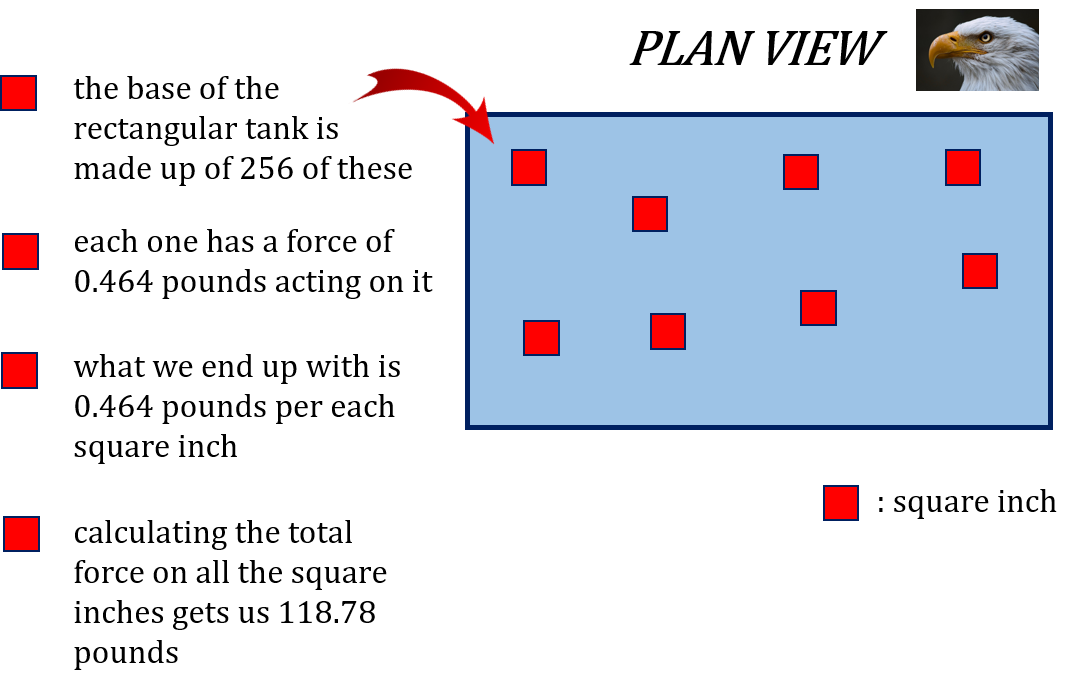

	</div>


	</div>
<div class="chapter standard " id="chapter-working-between-the-grades" title="Working Between The Types of Grade">
	<div class="chapter-title-wrap">
		<p class="chapter-number">11</p>
		<h1 class="chapter-title">Working Between The Types of Grade</h1>
								</div>
	<div class="ugc chapter-ugc">
				 <p style="text-align: center;">Click play on the following audio player to listen along as you read this section.</p> <p></p> <div class="textbox interactive-content interactive-content--audio"><span class="interactive-content__icon"></span> <p>One or more interactive elements has been excluded from this version of the text. You can view them online here: <a href="https://pressbooks.bccampus.ca/mathfortradesvolume3/?p=514#audio-514-1" title="Working Between The Types of Grade">https://pressbooks.bccampus.ca/mathfortradesvolume3/?p=514#audio-514-1</a> </p> </div> <p>&nbsp;</p> <p>Now that we’ve established the three ways we can express grade why don’t we start to work between them.</p> <p><img class="wp-image-445 aligncenter" src="https://pressbooks.bccampus.ca/mathfortradesvolume3/wp-content/uploads/sites/1574/2021/12/Picture29-3.png" alt="" width="190" height="223" srcset="https://pressbooks.bccampus.ca/mathfortradesvolume3/wp-content/uploads/sites/1574/2021/12/Picture29-3.png 361w, https://pressbooks.bccampus.ca/mathfortradesvolume3/wp-content/uploads/sites/1574/2021/12/Picture29-3-256x300.png 256w, https://pressbooks.bccampus.ca/mathfortradesvolume3/wp-content/uploads/sites/1574/2021/12/Picture29-3-65x76.png 65w, https://pressbooks.bccampus.ca/mathfortradesvolume3/wp-content/uploads/sites/1574/2021/12/Picture29-3-225x264.png 225w, https://pressbooks.bccampus.ca/mathfortradesvolume3/wp-content/uploads/sites/1574/2021/12/Picture29-3-350x410.png 350w" sizes="auto, (max-width: 190px) 100vw, 190px" title="" /></p> <p>We’ll start with what I think is the easiest and that’s ratio and percent. We actually covered it a little in the last section but let’s go through a more thorough explanation.</p> <h1>Ratio to Percent and Back</h1> <p>Going from a ratio to a percent is straight forward when we have the ratio as a number over 100 like 2 over 100.</p> <p style="text-align: center;"><img src="https://pressbooks.bccampus.ca/mathfortradesvolume3/wp-content/ql-cache/quicklatex.com-5739670f4f82d95d55cfd2043e07c87e_l3.svg" class="ql-img-inline-formula quicklatex-auto-format" alt="\dfrac{2}{100}" title="Rendered by QuickLaTeX.com" height="36" width="27" style="vertical-align: -12px;" /></p> <p>As percent means “per one hundred” we end up with 2 percent or 2 out of one hundred. That’s quick and easy.</p> <p>The problem comes in when we have something not out of 100 such as five over eighty seven.</p> <p style="text-align: center;"><img src="https://pressbooks.bccampus.ca/mathfortradesvolume3/wp-content/ql-cache/quicklatex.com-05624ff475bf1e399e69496918c53cad_l3.svg" class="ql-img-inline-formula quicklatex-auto-format" alt="\dfrac{5}{87}" title="Rendered by QuickLaTeX.com" height="37" width="18" style="vertical-align: -12px;" /></p> <p>Now I can imagine a few of the tradespeople out there might be saying to themselves at this point “We would never end up working with a ratio such as this.” and you would be right. This is not a typical trades number to work with but go ahead and use it just for the purpose of math.</p> <p>Let’s go through the two steps needed to do this.</p> <p><strong>Step 1:&nbsp;</strong>Change the ratio (or fraction) to a decimal.</p> <p style="text-align: center;"><img src="https://pressbooks.bccampus.ca/mathfortradesvolume3/wp-content/ql-cache/quicklatex.com-f25fc550ab88a3ba5f2c8b2d79ee527e_l3.svg" class="ql-img-inline-formula quicklatex-auto-format" alt="\dfrac{5}{87} = 5 \div 87 = 0.057" title="Rendered by QuickLaTeX.com" height="37" width="156" style="vertical-align: -12px;" /></p> <p>Later when we are calculating the total fall on an object using percent the number 0.057 would actually be the number we would work with in the formula. If we want to see what the percent is then we would still have to do&nbsp; the next step.</p> <p><strong>Step 2:&nbsp;</strong>Change the decimal into a percent.</p> <p style="text-align: center;"><img src="https://pressbooks.bccampus.ca/mathfortradesvolume3/wp-content/ql-cache/quicklatex.com-f156b74854d95c711bc77000422a4685_l3.svg" class="ql-img-inline-formula quicklatex-auto-format" alt="0.057 \times 100 = 5.7\%" title="Rendered by QuickLaTeX.com" height="15" width="149" style="vertical-align: -1px;" /></p> <p>By multiplying it by 100 we are basically going back to “per one hundred” and that gives us an answer of 5.7%</p> <p>Now let’s go the other way and go from a percent back to a ratio.</p> <p><img class="alignleft wp-image-451" src="https://pressbooks.bccampus.ca/mathfortradesvolume3/wp-content/uploads/sites/1574/2021/12/Picture34-2.png" alt="" width="74" height="71" srcset="https://pressbooks.bccampus.ca/mathfortradesvolume3/wp-content/uploads/sites/1574/2021/12/Picture34-2.png 394w, https://pressbooks.bccampus.ca/mathfortradesvolume3/wp-content/uploads/sites/1574/2021/12/Picture34-2-300x288.png 300w, https://pressbooks.bccampus.ca/mathfortradesvolume3/wp-content/uploads/sites/1574/2021/12/Picture34-2-65x62.png 65w, https://pressbooks.bccampus.ca/mathfortradesvolume3/wp-content/uploads/sites/1574/2021/12/Picture34-2-225x216.png 225w, https://pressbooks.bccampus.ca/mathfortradesvolume3/wp-content/uploads/sites/1574/2021/12/Picture34-2-350x336.png 350w" sizes="auto, (max-width: 74px) 100vw, 74px" title="" /></p> <p>The easiest way to do this might just be to go backwards and start with 5.7% and turn it into a ratio.</p> <p>&nbsp;</p> <p><strong>Step 1:&nbsp;</strong>Change the percent into a decimal.</p> <p style="text-align: center;"><img src="https://pressbooks.bccampus.ca/mathfortradesvolume3/wp-content/ql-cache/quicklatex.com-0c8f1c8dcec65cddc02cc0aa43fbee4f_l3.svg" class="ql-img-inline-formula quicklatex-auto-format" alt="5.7 \div 100 = 0.057" title="Rendered by QuickLaTeX.com" height="14" width="136" style="vertical-align: -1px;" /></p> <p><strong>Step 2:</strong> Change the decimal into a ratio. We know from up above that the ratio is going end up being over 87 so we can work to that.</p> <p style="text-align: center;"><img src="https://pressbooks.bccampus.ca/mathfortradesvolume3/wp-content/ql-cache/quicklatex.com-9a01fe2a69ca5a1777b6d957708a9adc_l3.svg" class="ql-img-inline-formula quicklatex-auto-format" alt="\dfrac{0.057}{1} \times \dfrac{87}{87} = \dfrac{5}{87}" title="Rendered by QuickLaTeX.com" height="37" width="129" style="vertical-align: -12px;" /></p> <p>First of all the number 0.057 can be written as 0.057 over 1. This gets us into a format which is easy to work with and can visually help us understand what is going on.</p> <p>We then take both parts of the ratio (or fraction if you will) and multiply them by 87. This ensures that we get a number over 87. What we end up with is what we started with in the beginning.</p> <p><img class="wp-image-456 alignleft" src="https://pressbooks.bccampus.ca/mathfortradesvolume3/wp-content/uploads/sites/1574/2021/12/Picture2-4-300x300.jpg" alt="" width="227" height="227" srcset="https://pressbooks.bccampus.ca/mathfortradesvolume3/wp-content/uploads/sites/1574/2021/12/Picture2-4-300x300.jpg 300w, https://pressbooks.bccampus.ca/mathfortradesvolume3/wp-content/uploads/sites/1574/2021/12/Picture2-4-150x150.jpg 150w, https://pressbooks.bccampus.ca/mathfortradesvolume3/wp-content/uploads/sites/1574/2021/12/Picture2-4-65x65.jpg 65w, https://pressbooks.bccampus.ca/mathfortradesvolume3/wp-content/uploads/sites/1574/2021/12/Picture2-4-225x225.jpg 225w, https://pressbooks.bccampus.ca/mathfortradesvolume3/wp-content/uploads/sites/1574/2021/12/Picture2-4.jpg 351w" sizes="auto, (max-width: 227px) 100vw, 227px" title="" /></p> <p>Wait a minute! The only way we knew that it was going to be a ratio out of 87 is because that is what we started with. What if we didn’t know that? What would we do?</p> <p>Basically we would bring that ratio back to a number over one hundred. And in the end we would end up with 5.7 over 100.</p> <p style="text-align: center;"><img src="https://pressbooks.bccampus.ca/mathfortradesvolume3/wp-content/ql-cache/quicklatex.com-c8f50ff06384c8c377826ff0d14444ce_l3.svg" class="ql-img-inline-formula quicklatex-auto-format" alt="\dfrac{0.057}{1} \times \dfrac{100}{100} = \dfrac{5.7}{100}" title="Rendered by QuickLaTeX.com" height="37" width="147" style="vertical-align: -12px;" /></p> <p>Not a nice round number like the first one but still the correct answer. Let’s move on.</p> <h1>Inches Per Foot to Ratio and Back</h1> <p>This is where things get a little more challenging as changing inches per foot to a ratio involves a couple different units. We have inches, we have feet and then we end up with no units in the ratio. So how do we do this? The first thing we should think about if we are to end up with no units there must be a spot where the units are mathematically cancelled out. Think about that as we go through an example.</p> <p>Let’s start with one of the more common grades and that is one quarter inch per foot.</p> <p style="text-align: center;"><img src="https://pressbooks.bccampus.ca/mathfortradesvolume3/wp-content/ql-cache/quicklatex.com-a46f70796f3edb63ab9cc03e51e34c89_l3.svg" class="ql-img-inline-formula quicklatex-auto-format" alt="\dfrac{1}{4} \text{ inch per foot or } 1/4&amp;quot;/ft" title="Rendered by QuickLaTeX.com" height="36" width="205" style="vertical-align: -12px;" /></p> <p>Go back to the statement above which stated we should think about how to mathematically cancel out the units to get to no units.</p> <p><img class="aligncenter wp-image-459" src="https://pressbooks.bccampus.ca/mathfortradesvolume3/wp-content/uploads/sites/1574/2021/12/Picture3-2.jpg" alt="Word &amp;quot;problem&amp;quot; crossed out. &amp;quot;Solution&amp;quot; written underneath." width="331" height="174" srcset="https://pressbooks.bccampus.ca/mathfortradesvolume3/wp-content/uploads/sites/1574/2021/12/Picture3-2.jpg 460w, https://pressbooks.bccampus.ca/mathfortradesvolume3/wp-content/uploads/sites/1574/2021/12/Picture3-2-300x158.jpg 300w, https://pressbooks.bccampus.ca/mathfortradesvolume3/wp-content/uploads/sites/1574/2021/12/Picture3-2-65x34.jpg 65w, https://pressbooks.bccampus.ca/mathfortradesvolume3/wp-content/uploads/sites/1574/2021/12/Picture3-2-225x118.jpg 225w, https://pressbooks.bccampus.ca/mathfortradesvolume3/wp-content/uploads/sites/1574/2021/12/Picture3-2-350x184.jpg 350w" sizes="auto, (max-width: 331px) 100vw, 331px" title="" /></p> <p>Do you see the problem here? How do we cancel when the units are different? We have inches and feet. The solution lies in the idea that we have to change both units into the same thing. This means we have to change both to either inches or both to feet. For our purposes we’ll switch them to inches.</p> <p><strong>Step 1:</strong> Change both inches and feet into inches and put them in a ratio.</p> <table class="grid" style="border-collapse: collapse; width: 100%;"><tbody><tr><td style="width: 50%; text-align: center;"><img src="https://pressbooks.bccampus.ca/mathfortradesvolume3/wp-content/ql-cache/quicklatex.com-c4d312113019e2344eabdd44b5f58cea_l3.svg" class="ql-img-inline-formula quicklatex-auto-format" alt="\dfrac{1}{4} \text{ inches} = 0.25 \text{ inches}" title="Rendered by QuickLaTeX.com" height="36" width="172" style="vertical-align: -12px;" /></td> </tr> <tr><td style="width: 50%; text-align: center;"><img src="https://pressbooks.bccampus.ca/mathfortradesvolume3/wp-content/ql-cache/quicklatex.com-5533b481749e1d40a8995de2763f8271_l3.svg" class="ql-img-inline-formula quicklatex-auto-format" alt="1 \text{ foot} = 12 \text{ inches}" title="Rendered by QuickLaTeX.com" height="13" width="139" style="vertical-align: 0px;" /></td> </tr> <tr><td style="width: 50%; text-align: center;"><img src="https://pressbooks.bccampus.ca/mathfortradesvolume3/wp-content/ql-cache/quicklatex.com-a546705230241d2442a4e2af0ace1a81_l3.svg" class="ql-img-inline-formula quicklatex-auto-format" alt="\text{ratio } \dfrac{0.25 \text{ inches}}{12 \text{ inches}}" title="Rendered by QuickLaTeX.com" height="37" width="129" style="vertical-align: -12px;" /></td> </tr> </tbody> </table> <p><strong>Step 2:</strong> At this point we have a ratio but does that ratio really work for us all that well? Personally I’d like to see the ratio out of 50 or even better yet out of 100.</p> <p><img class="aligncenter wp-image-461" src="https://pressbooks.bccampus.ca/mathfortradesvolume3/wp-content/uploads/sites/1574/2021/12/Picture4-3.jpg" alt="" width="198" height="140" srcset="https://pressbooks.bccampus.ca/mathfortradesvolume3/wp-content/uploads/sites/1574/2021/12/Picture4-3.jpg 428w, https://pressbooks.bccampus.ca/mathfortradesvolume3/wp-content/uploads/sites/1574/2021/12/Picture4-3-300x212.jpg 300w, https://pressbooks.bccampus.ca/mathfortradesvolume3/wp-content/uploads/sites/1574/2021/12/Picture4-3-65x46.jpg 65w, https://pressbooks.bccampus.ca/mathfortradesvolume3/wp-content/uploads/sites/1574/2021/12/Picture4-3-225x159.jpg 225w, https://pressbooks.bccampus.ca/mathfortradesvolume3/wp-content/uploads/sites/1574/2021/12/Picture4-3-350x247.jpg 350w" sizes="auto, (max-width: 198px) 100vw, 198px" title="" /></p> <p>How do we get the ratio to be out of 100? The answer lies in getting the 12 inches to 100. We do this by figuring out how many times 12 goes into 100 and then we multiply both parts of the ratio by that number. Check out the math below to see how that works.</p> <table class="grid" style="border-collapse: collapse; width: 100%; height: 54px;"><tbody><tr style="height: 18px;"><th style="width: 40.1923%; height: 18px;" scope="row">Start with</th> <td style="width: 59.8077%; height: 18px;"><img src="https://pressbooks.bccampus.ca/mathfortradesvolume3/wp-content/ql-cache/quicklatex.com-ee41befd982c1abcd4534233df00f5ff_l3.svg" class="ql-img-inline-formula quicklatex-auto-format" alt="\dfrac{100}{12} = 8.33" title="Rendered by QuickLaTeX.com" height="36" width="84" style="vertical-align: -12px;" /></td> </tr> <tr style="height: 18px;"><th style="width: 40.1923%; height: 18px;" scope="row">Next</th> <td style="width: 59.8077%; height: 18px;"><img src="https://pressbooks.bccampus.ca/mathfortradesvolume3/wp-content/ql-cache/quicklatex.com-81f64d5630d089d549328ac624e4dec2_l3.svg" class="ql-img-inline-formula quicklatex-auto-format" alt="\dfrac{0.25 \times 8.33}{12 \times 8.33}" title="Rendered by QuickLaTeX.com" height="37" width="85" style="vertical-align: -12px;" /></td> </tr> <tr style="height: 18px;"><th style="width: 40.1923%; height: 18px;" scope="row">End with</th> <td style="width: 59.8077%; height: 18px;"><img src="https://pressbooks.bccampus.ca/mathfortradesvolume3/wp-content/ql-cache/quicklatex.com-e78ae38833368f789e2a066c7396e388_l3.svg" class="ql-img-inline-formula quicklatex-auto-format" alt="\dfrac{2.08}{100}" title="Rendered by QuickLaTeX.com" height="36" width="32" style="vertical-align: -12px;" /></td> </tr> </tbody> </table> <p>In the end a grade of one quarter of an inch per foot gives us a grade of two point zero eight over one hundred as a ratio. Now let’s go backwards.</p> <p><img class="wp-image-451 alignleft" src="https://pressbooks.bccampus.ca/mathfortradesvolume3/wp-content/uploads/sites/1574/2021/12/Picture34-2.png" alt="" width="130" height="125" srcset="https://pressbooks.bccampus.ca/mathfortradesvolume3/wp-content/uploads/sites/1574/2021/12/Picture34-2.png 394w, https://pressbooks.bccampus.ca/mathfortradesvolume3/wp-content/uploads/sites/1574/2021/12/Picture34-2-300x288.png 300w, https://pressbooks.bccampus.ca/mathfortradesvolume3/wp-content/uploads/sites/1574/2021/12/Picture34-2-65x62.png 65w, https://pressbooks.bccampus.ca/mathfortradesvolume3/wp-content/uploads/sites/1574/2021/12/Picture34-2-225x216.png 225w, https://pressbooks.bccampus.ca/mathfortradesvolume3/wp-content/uploads/sites/1574/2021/12/Picture34-2-350x336.png 350w" sizes="auto, (max-width: 130px) 100vw, 130px" title="" /></p> <p>Let’s go from a ratio back to inches per foot. We’ll start with a grade of one over 50.</p> <p style="text-align: center;"><img src="https://pressbooks.bccampus.ca/mathfortradesvolume3/wp-content/ql-cache/quicklatex.com-70d1ec617005680b7310ae32723e43ed_l3.svg" class="ql-img-inline-formula quicklatex-auto-format" alt="\dfrac{1}{50} \text{ or } 1:50" title="Rendered by QuickLaTeX.com" height="36" width="89" style="vertical-align: -12px;" /></p> <p>What do we do now? At this point I want you to just think for a few seconds about how you would approach this. Even as I’m sitting here writing this part of the book I’m talking to myself and asking myself that question.</p> <p><strong>Me:</strong> Hey self, what am I supposed to do now?</p> <p><strong>Self:</strong> Well think about it for a minute. Somehow you’ve got to get the one and the fifty into inches and feet. What are some thoughts coming into your head?</p> <p><strong>Me:&nbsp;</strong>Well if this is a ratio then if the object travelled 50 feet horizontally it would fall 1 foot vertically.</p> <p><strong>Self:&nbsp;</strong>True.</p> <p><a href="https://pressbooks.bccampus.ca/mathfortradesvolume3/wp-content/uploads/sites/1574/2021/12/Picture43-1.png" data-url="https://pressbooks.bccampus.ca/mathfortradesvolume3/wp-content/uploads/sites/1574/2021/12/Picture43-1.png"><img class="aligncenter wp-image-467" src="https://pressbooks.bccampus.ca/mathfortradesvolume3/wp-content/uploads/sites/1574/2021/12/Picture43-1.png" alt="A fifty foot long piece of pipe with a one foot drop." width="420" height="188" srcset="https://pressbooks.bccampus.ca/mathfortradesvolume3/wp-content/uploads/sites/1574/2021/12/Picture43-1.png 777w, https://pressbooks.bccampus.ca/mathfortradesvolume3/wp-content/uploads/sites/1574/2021/12/Picture43-1-300x134.png 300w, https://pressbooks.bccampus.ca/mathfortradesvolume3/wp-content/uploads/sites/1574/2021/12/Picture43-1-768x344.png 768w, https://pressbooks.bccampus.ca/mathfortradesvolume3/wp-content/uploads/sites/1574/2021/12/Picture43-1-65x29.png 65w, https://pressbooks.bccampus.ca/mathfortradesvolume3/wp-content/uploads/sites/1574/2021/12/Picture43-1-225x101.png 225w, https://pressbooks.bccampus.ca/mathfortradesvolume3/wp-content/uploads/sites/1574/2021/12/Picture43-1-350x157.png 350w" sizes="auto, (max-width: 420px) 100vw, 420px" title="" /></a></p> <p><strong>Me:</strong> It could also mean that if the pipe travelled 50 inches horizontally then it would fall one inch vertically.</p> <p><strong>Self:</strong> Also true.</p> <p><a href="https://pressbooks.bccampus.ca/mathfortradesvolume3/wp-content/uploads/sites/1574/2021/12/Picture44-1.png" data-url="https://pressbooks.bccampus.ca/mathfortradesvolume3/wp-content/uploads/sites/1574/2021/12/Picture44-1.png"><img class="aligncenter wp-image-468" src="https://pressbooks.bccampus.ca/mathfortradesvolume3/wp-content/uploads/sites/1574/2021/12/Picture44-1.png" alt="A fifty inch long piece of pipe with a one inch drop." width="437" height="196" srcset="https://pressbooks.bccampus.ca/mathfortradesvolume3/wp-content/uploads/sites/1574/2021/12/Picture44-1.png 776w, https://pressbooks.bccampus.ca/mathfortradesvolume3/wp-content/uploads/sites/1574/2021/12/Picture44-1-300x135.png 300w, https://pressbooks.bccampus.ca/mathfortradesvolume3/wp-content/uploads/sites/1574/2021/12/Picture44-1-768x344.png 768w, https://pressbooks.bccampus.ca/mathfortradesvolume3/wp-content/uploads/sites/1574/2021/12/Picture44-1-65x29.png 65w, https://pressbooks.bccampus.ca/mathfortradesvolume3/wp-content/uploads/sites/1574/2021/12/Picture44-1-225x101.png 225w, https://pressbooks.bccampus.ca/mathfortradesvolume3/wp-content/uploads/sites/1574/2021/12/Picture44-1-350x157.png 350w" sizes="auto, (max-width: 437px) 100vw, 437px" title="" /></a></p> <p><strong>Me:</strong> I guess we could apply that to centimeters, millimeters, meters, yards, miles or decimeters as well.</p> <p><strong>Self: </strong>Why don’t we just stick with feet and inches. Pick which one of the two you want to work with in the start.</p> <p><strong>Me:&nbsp;</strong>We dealt with inches in the first one so let’s do that again.</p> <p style="text-align: center;"><img src="https://pressbooks.bccampus.ca/mathfortradesvolume3/wp-content/ql-cache/quicklatex.com-afcadf061340ad89be71930a48dcaf9d_l3.svg" class="ql-img-inline-formula quicklatex-auto-format" alt="\dfrac{1 \text{ inch}}{50 \text{ inches}} \text{ or } 1\text{ inch }:50 \text{ inches}" title="Rendered by QuickLaTeX.com" height="36" width="238" style="vertical-align: -12px;" /></p> <p><strong>Self:&nbsp;</strong>At this point the 1 inch works as we’re looking for inches per foot but the 50 inches has to be put into feet. To do this we’ll take the fifty and divide it by 12. This will get us into feet.</p> <p style="text-align: center;"><img src="https://pressbooks.bccampus.ca/mathfortradesvolume3/wp-content/ql-cache/quicklatex.com-d207067d48fd6ee45211bd2324d93671_l3.svg" class="ql-img-inline-formula quicklatex-auto-format" alt="\dfrac{50}{12} = 4.167" title="Rendered by QuickLaTeX.com" height="37" width="84" style="vertical-align: -12px;" /></p> <p><strong>Me:</strong> Okay. I’m seeing where you’re going with this. I’m picking up what you’re putting down. Now we have to put 4.167 into a ratio.</p> <p><strong>Self:</strong> Yup.</p> <p style="text-align: center;"><img src="https://pressbooks.bccampus.ca/mathfortradesvolume3/wp-content/ql-cache/quicklatex.com-befb4ec0aefa1dbceae9d9ea04d064ed_l3.svg" class="ql-img-inline-formula quicklatex-auto-format" alt="\dfrac{1 \text{ inch}}{4.167 \text{ feet}}" title="Rendered by QuickLaTeX.com" height="36" width="75" style="vertical-align: -12px;" /></p> <p><strong>Me: </strong>I see we’re not quite there yet.</p> <p><strong>Self:&nbsp;</strong>Correct. Remember the grade is expressed in inches per foot therefore we must get the 4.167 feet back to one foot. The easiest way to do this is to divide both parts of the ratio by 4.167. We’ll then end up with one foot.</p> <table class="grid" style="border-collapse: collapse; width: 100%; height: 54px;"><tbody><tr style="height: 18px;"><th style="width: 40.1923%; height: 18px;" scope="row">Start with</th> <td style="width: 59.8077%; height: 18px;"><img src="https://pressbooks.bccampus.ca/mathfortradesvolume3/wp-content/ql-cache/quicklatex.com-befb4ec0aefa1dbceae9d9ea04d064ed_l3.svg" class="ql-img-inline-formula quicklatex-auto-format" alt="\dfrac{1 \text{ inch}}{4.167 \text{ feet}}" title="Rendered by QuickLaTeX.com" height="36" width="75" style="vertical-align: -12px;" /></td> </tr> <tr style="height: 18px;"><th style="width: 40.1923%; height: 18px;" scope="row">Next</th> <td style="width: 59.8077%; height: 18px;"><img src="https://pressbooks.bccampus.ca/mathfortradesvolume3/wp-content/ql-cache/quicklatex.com-1429763add402b1f4b7c6914296504b4_l3.svg" class="ql-img-inline-formula quicklatex-auto-format" alt="\dfrac{1 \div 4.167}{4.147 \div 4.167}" title="Rendered by QuickLaTeX.com" height="38" width="103" style="vertical-align: -13px;" /></td> </tr> <tr style="height: 18px;"><th style="width: 40.1923%; height: 18px;" scope="row">End with</th> <td style="width: 59.8077%; height: 18px;"><img src="https://pressbooks.bccampus.ca/mathfortradesvolume3/wp-content/ql-cache/quicklatex.com-d596d0ffafaf6422cae9bd6ed35a02d8_l3.svg" class="ql-img-inline-formula quicklatex-auto-format" alt="\dfrac{0.24 \text{ inches}}{1 \text{ foot}}" title="Rendered by QuickLaTeX.com" height="36" width="85" style="vertical-align: -12px;" /></td> </tr> </tbody> </table> <p><strong>Self:&nbsp;</strong>We end up with 0.24 inches per foot. This is basically one quarter on an inch per foot.</p> <p><img class="alignleft wp-image-474" src="https://pressbooks.bccampus.ca/mathfortradesvolume3/wp-content/uploads/sites/1574/2021/12/Picture7-4-300x169.jpg" alt="Solution" width="217" height="122" srcset="https://pressbooks.bccampus.ca/mathfortradesvolume3/wp-content/uploads/sites/1574/2021/12/Picture7-4-300x169.jpg 300w, https://pressbooks.bccampus.ca/mathfortradesvolume3/wp-content/uploads/sites/1574/2021/12/Picture7-4-65x37.jpg 65w, https://pressbooks.bccampus.ca/mathfortradesvolume3/wp-content/uploads/sites/1574/2021/12/Picture7-4-225x127.jpg 225w, https://pressbooks.bccampus.ca/mathfortradesvolume3/wp-content/uploads/sites/1574/2021/12/Picture7-4-350x197.jpg 350w, https://pressbooks.bccampus.ca/mathfortradesvolume3/wp-content/uploads/sites/1574/2021/12/Picture7-4.jpg 501w" sizes="auto, (max-width: 217px) 100vw, 217px" title="" /></p> <p>I know I’ve said this before but I’m going to say it again. Learning the concepts surrounding math is far more important than memorization. In the end you already have an idea what the solution is going to be. You just have to put all the pieces of the puzzle together. You don’t need to memorize each piece of the puzzle but what you do instead is generate each piece of the puzzle as you go. This is accomplished by taking some time to understand what the question is asking and beginning to draw out the route you take to get there. Keep that in mind as you go through this book.</p> <p><img class="aligncenter wp-image-475" src="https://pressbooks.bccampus.ca/mathfortradesvolume3/wp-content/uploads/sites/1574/2021/12/Picture8-2.jpg" alt="What&amp;#039;s next" width="309" height="206" srcset="https://pressbooks.bccampus.ca/mathfortradesvolume3/wp-content/uploads/sites/1574/2021/12/Picture8-2.jpg 421w, https://pressbooks.bccampus.ca/mathfortradesvolume3/wp-content/uploads/sites/1574/2021/12/Picture8-2-300x200.jpg 300w, https://pressbooks.bccampus.ca/mathfortradesvolume3/wp-content/uploads/sites/1574/2021/12/Picture8-2-65x43.jpg 65w, https://pressbooks.bccampus.ca/mathfortradesvolume3/wp-content/uploads/sites/1574/2021/12/Picture8-2-225x150.jpg 225w, https://pressbooks.bccampus.ca/mathfortradesvolume3/wp-content/uploads/sites/1574/2021/12/Picture8-2-350x234.jpg 350w" sizes="auto, (max-width: 309px) 100vw, 309px" title="" /></p> <h1>Inches Per Foot to Percent and Back</h1> <p>We’ve already gone through a lot of the initial math regarding inches per foot in the last example. We’ll work with one quarter of an inch per foot and just skip a bit of the math that we already did before. Remember that the whole idea is that we have to get the inches per foot to work for us. That means we have to get both of the units to be the same. In this case we will once again go with inches.</p> <table class="grid" style="border-collapse: collapse; width: 100%; height: 54px;"><tbody><tr style="height: 18px;"><th style="width: 40.1923%; height: 18px;" scope="row">Start with</th> <td style="width: 59.8077%; height: 18px;"><img src="https://pressbooks.bccampus.ca/mathfortradesvolume3/wp-content/ql-cache/quicklatex.com-3b6bf56c28fcffb69d73d9156f5bb123_l3.svg" class="ql-img-inline-formula quicklatex-auto-format" alt="\dfrac{1}{4}&amp;quot; \text{ per foot}" title="Rendered by QuickLaTeX.com" height="36" width="86" style="vertical-align: -12px;" /></td> </tr> <tr style="height: 18px;"><th style="width: 40.1923%; height: 18px;" scope="row">Next</th> <td style="width: 59.8077%; height: 18px;"><img src="https://pressbooks.bccampus.ca/mathfortradesvolume3/wp-content/ql-cache/quicklatex.com-97e8653cbc1126b588c2761dc834c268_l3.svg" class="ql-img-inline-formula quicklatex-auto-format" alt="\dfrac{0.25 \text{ inches}}{12 \text{ inches}}" title="Rendered by QuickLaTeX.com" height="37" width="85" style="vertical-align: -12px;" /></td> </tr> <tr style="height: 18px;"><th style="width: 40.1923%; height: 18px;" scope="row">End with</th> <td style="width: 59.8077%; height: 18px;"><img src="https://pressbooks.bccampus.ca/mathfortradesvolume3/wp-content/ql-cache/quicklatex.com-817af8f49b8184b0f5d7a76a9211a744_l3.svg" class="ql-img-inline-formula quicklatex-auto-format" alt="0.0208" title="Rendered by QuickLaTeX.com" height="12" width="50" style="vertical-align: 0px;" /></td> </tr> </tbody> </table> <p>What we have in the end is 0.0208. What does that do for us? There are actually two parts to this answer.</p> <p>If we were trying to find the total fall on an object the number 0.0208 is what we would use in the formula. If we wanted to find out what 0.0208 is as a percent then we have to change the number. How we do this is by multiplying by 100.</p> <p style="text-align: center;"><img src="https://pressbooks.bccampus.ca/mathfortradesvolume3/wp-content/ql-cache/quicklatex.com-ba01ca2ba1c02204ef1ee919e1f68f4b_l3.svg" class="ql-img-inline-formula quicklatex-auto-format" alt="0.0208 \times 100 = 2.08\%" title="Rendered by QuickLaTeX.com" height="15" width="167" style="vertical-align: -1px;" /></p> <p>In the end of the day we have a 2.08 percent grade.</p> <p><a href="https://pressbooks.bccampus.ca/mathfortradesvolume3/wp-content/uploads/sites/1574/2021/12/Picture51.png" data-url="https://pressbooks.bccampus.ca/mathfortradesvolume3/wp-content/uploads/sites/1574/2021/12/Picture51.png"><img class="aligncenter wp-image-481 size-full" src="https://pressbooks.bccampus.ca/mathfortradesvolume3/wp-content/uploads/sites/1574/2021/12/Picture51.png" alt="A road with a grade of 2.08%. For plumbers, that is one quarter inch per foot." width="485" height="431" srcset="https://pressbooks.bccampus.ca/mathfortradesvolume3/wp-content/uploads/sites/1574/2021/12/Picture51.png 485w, https://pressbooks.bccampus.ca/mathfortradesvolume3/wp-content/uploads/sites/1574/2021/12/Picture51-300x267.png 300w, https://pressbooks.bccampus.ca/mathfortradesvolume3/wp-content/uploads/sites/1574/2021/12/Picture51-65x58.png 65w, https://pressbooks.bccampus.ca/mathfortradesvolume3/wp-content/uploads/sites/1574/2021/12/Picture51-225x200.png 225w, https://pressbooks.bccampus.ca/mathfortradesvolume3/wp-content/uploads/sites/1574/2021/12/Picture51-350x311.png 350w" sizes="auto, (max-width: 485px) 100vw, 485px" title="" /></a></p> <p><img class="wp-image-451 alignleft" src="https://pressbooks.bccampus.ca/mathfortradesvolume3/wp-content/uploads/sites/1574/2021/12/Picture34-2.png" alt="" width="96" height="93" srcset="https://pressbooks.bccampus.ca/mathfortradesvolume3/wp-content/uploads/sites/1574/2021/12/Picture34-2.png 394w, https://pressbooks.bccampus.ca/mathfortradesvolume3/wp-content/uploads/sites/1574/2021/12/Picture34-2-300x288.png 300w, https://pressbooks.bccampus.ca/mathfortradesvolume3/wp-content/uploads/sites/1574/2021/12/Picture34-2-65x62.png 65w, https://pressbooks.bccampus.ca/mathfortradesvolume3/wp-content/uploads/sites/1574/2021/12/Picture34-2-225x216.png 225w, https://pressbooks.bccampus.ca/mathfortradesvolume3/wp-content/uploads/sites/1574/2021/12/Picture34-2-350x336.png 350w" sizes="auto, (max-width: 96px) 100vw, 96px" title="" /></p> <p>Now let’s do the reverse. We’ll go from a percent back into inches per foot.</p> <p>This time we’ll start with 3 percent and work our way back to inches per foot.</p> <table class="grid" style="border-collapse: collapse; width: 100%;"><tbody><tr><th style="width: 50%;" scope="row">Start with</th> <td style="width: 50%;"><img src="https://pressbooks.bccampus.ca/mathfortradesvolume3/wp-content/ql-cache/quicklatex.com-f20e7f98738ff476f1b01bb0cfa18bf8_l3.svg" class="ql-img-inline-formula quicklatex-auto-format" alt="3\%" title="Rendered by QuickLaTeX.com" height="15" width="23" style="vertical-align: -1px;" /></td> </tr> <tr><th style="width: 50%;" scope="row">This can be written one of two ways</th> <td style="width: 50%;"><img src="https://pressbooks.bccampus.ca/mathfortradesvolume3/wp-content/ql-cache/quicklatex.com-f325ce478e729b3fb48ca88bb60d6fa3_l3.svg" class="ql-img-inline-formula quicklatex-auto-format" alt="\dfrac{3}{100} \text{ or } 0.03" title="Rendered by QuickLaTeX.com" height="36" width="88" style="vertical-align: -12px;" /></td> </tr> </tbody> </table> <p>We’ll use the ratio 3 over one hundred as it’s easier to work with. Remember that in the case of a ratio there are no units. What we are saying with a 3 percent grade is that for every 100 units that the object goes horizontally it falls 3 units vertically.</p> <p>Now if we are changing the grade to inches per foot we could then say that for every 100 feet that the object goes horizontally it falls 3 feet vertically.</p> <p><a href="https://pressbooks.bccampus.ca/mathfortradesvolume3/wp-content/uploads/sites/1574/2021/12/Picture53.png" data-url="https://pressbooks.bccampus.ca/mathfortradesvolume3/wp-content/uploads/sites/1574/2021/12/Picture53.png"><img class="aligncenter wp-image-485" style="margin-top: 0.5em; margin-bottom: 0.5em; text-align: center;" src="https://pressbooks.bccampus.ca/mathfortradesvolume3/wp-content/uploads/sites/1574/2021/12/Picture53.png" alt="A one hundred feet long piece of pipe with a three feet drop." width="477" height="214" srcset="https://pressbooks.bccampus.ca/mathfortradesvolume3/wp-content/uploads/sites/1574/2021/12/Picture53.png 776w, https://pressbooks.bccampus.ca/mathfortradesvolume3/wp-content/uploads/sites/1574/2021/12/Picture53-300x135.png 300w, https://pressbooks.bccampus.ca/mathfortradesvolume3/wp-content/uploads/sites/1574/2021/12/Picture53-768x344.png 768w, https://pressbooks.bccampus.ca/mathfortradesvolume3/wp-content/uploads/sites/1574/2021/12/Picture53-65x29.png 65w, https://pressbooks.bccampus.ca/mathfortradesvolume3/wp-content/uploads/sites/1574/2021/12/Picture53-225x101.png 225w, https://pressbooks.bccampus.ca/mathfortradesvolume3/wp-content/uploads/sites/1574/2021/12/Picture53-350x157.png 350w" sizes="auto, (max-width: 477px) 100vw, 477px" title="" /></a></p> <p>Let’s start to look at this from a mathematical perspective. If the object falls 3 feet we could then say it falls 36 inches.</p> <p><a href="https://pressbooks.bccampus.ca/mathfortradesvolume3/wp-content/uploads/sites/1574/2021/12/Picture54.png" data-url="https://pressbooks.bccampus.ca/mathfortradesvolume3/wp-content/uploads/sites/1574/2021/12/Picture54.png"><img class="aligncenter wp-image-486" src="https://pressbooks.bccampus.ca/mathfortradesvolume3/wp-content/uploads/sites/1574/2021/12/Picture54.png" alt="A one hundred feet long piece of pipe with a thirty six inch drop." width="426" height="191" srcset="https://pressbooks.bccampus.ca/mathfortradesvolume3/wp-content/uploads/sites/1574/2021/12/Picture54.png 777w, https://pressbooks.bccampus.ca/mathfortradesvolume3/wp-content/uploads/sites/1574/2021/12/Picture54-300x134.png 300w, https://pressbooks.bccampus.ca/mathfortradesvolume3/wp-content/uploads/sites/1574/2021/12/Picture54-768x344.png 768w, https://pressbooks.bccampus.ca/mathfortradesvolume3/wp-content/uploads/sites/1574/2021/12/Picture54-65x29.png 65w, https://pressbooks.bccampus.ca/mathfortradesvolume3/wp-content/uploads/sites/1574/2021/12/Picture54-225x101.png 225w, https://pressbooks.bccampus.ca/mathfortradesvolume3/wp-content/uploads/sites/1574/2021/12/Picture54-350x157.png 350w" sizes="auto, (max-width: 426px) 100vw, 426px" title="" /></a></p> <p>It looks as though we are starting to get somewhere. We are starting to get to that “inches per foot” grade we are looking for. The only issue we have to solve is the fact that at the moment we are dealing with one hundred feet. We have to get that down to one foot. In this case we take the one hundred and divide it by one hundred. That leaves us with one. We also do this to the 36 inches to keep things mathematically consistent.</p> <p style="text-align: center;"><img src="https://pressbooks.bccampus.ca/mathfortradesvolume3/wp-content/ql-cache/quicklatex.com-eec9cf0227c76c6dce65e024c0f97d98_l3.svg" class="ql-img-inline-formula quicklatex-auto-format" alt="\dfrac{36}{100} \div \dfrac{100}{100} = \dfrac{0.36 \text{ inches}}{1 \text{ foot}}" title="Rendered by QuickLaTeX.com" height="36" width="191" style="vertical-align: -12px;" /></p> <p>Now we’re really getting somewhere. I think we’re almost there. The only thing left to do is change the 0.36 inches into some type of fraction of an inch. We can put it into quarters of an inch, eighths of an inch, sixteenths of an inch or even thirty seconds of an inch. For our purposes let’s go with eighths of an inch.</p> <p><a href="https://opentextbc.ca/mathfortrades1/" data-url="https://opentextbc.ca/mathfortrades1/"><img class="alignleft wp-image-491" src="https://pressbooks.bccampus.ca/mathfortradesvolume3/wp-content/uploads/sites/1574/2021/12/Picture56.png" alt="" width="169" height="229" srcset="https://pressbooks.bccampus.ca/mathfortradesvolume3/wp-content/uploads/sites/1574/2021/12/Picture56.png 409w, https://pressbooks.bccampus.ca/mathfortradesvolume3/wp-content/uploads/sites/1574/2021/12/Picture56-221x300.png 221w, https://pressbooks.bccampus.ca/mathfortradesvolume3/wp-content/uploads/sites/1574/2021/12/Picture56-65x88.png 65w, https://pressbooks.bccampus.ca/mathfortradesvolume3/wp-content/uploads/sites/1574/2021/12/Picture56-225x305.png 225w, https://pressbooks.bccampus.ca/mathfortradesvolume3/wp-content/uploads/sites/1574/2021/12/Picture56-350x474.png 350w" sizes="auto, (max-width: 169px) 100vw, 169px" title="" /></a></p> <p>By the way if you don’t quite remember how to go from decimals of an inch to fractions of an inch you can always go back to <a href="https://opentextbc.ca/mathfortrades1/" data-url="https://opentextbc.ca/mathfortrades1/">the first volume of Math for Trades</a> and do a little refresher. If you do remember check out the answer just below.</p> <p style="text-align: center;"><img src="https://pressbooks.bccampus.ca/mathfortradesvolume3/wp-content/ql-cache/quicklatex.com-8a32a1f73e9eb5cecb44f483f229455f_l3.svg" class="ql-img-inline-formula quicklatex-auto-format" alt="0.36\text{ inches} \times 8 = \dfrac{2.88}{8} = \dfrac{3}{8}" title="Rendered by QuickLaTeX.com" height="36" width="208" style="vertical-align: -12px;" /></p> <p>In the end a grade of 3 percent changed to inches per foot works out to be 3/8″/ft.</p> <p style="text-align: center;"><img src="https://pressbooks.bccampus.ca/mathfortradesvolume3/wp-content/ql-cache/quicklatex.com-f2c986d9b3f8dc7529f2aec5d642f709_l3.svg" class="ql-img-inline-formula quicklatex-auto-format" alt="\dfrac{3}{8} \text{ inches per foot}" title="Rendered by QuickLaTeX.com" height="36" width="130" style="vertical-align: -12px;" /></p> <p>Try a few practice questions. Check the videos answers to see how you did.</p> <h1>Practice Questions</h1> <div class="textbox textbox--exercises"><div class="textbox__header"><p class="textbox__title">Question 1</p> </div> <div class="textbox__content"><p><a href="https://pressbooks.bccampus.ca/mathfortradesvolume3/wp-content/uploads/sites/1574/2022/01/Picture59.png" data-url="https://pressbooks.bccampus.ca/mathfortradesvolume3/wp-content/uploads/sites/1574/2022/01/Picture59.png"><img class="alignleft wp-image-548" src="https://pressbooks.bccampus.ca/mathfortradesvolume3/wp-content/uploads/sites/1574/2022/01/Picture59.png" alt="" width="81" height="140" srcset="https://pressbooks.bccampus.ca/mathfortradesvolume3/wp-content/uploads/sites/1574/2022/01/Picture59.png 177w, https://pressbooks.bccampus.ca/mathfortradesvolume3/wp-content/uploads/sites/1574/2022/01/Picture59-173x300.png 173w, https://pressbooks.bccampus.ca/mathfortradesvolume3/wp-content/uploads/sites/1574/2022/01/Picture59-65x113.png 65w" sizes="auto, (max-width: 81px) 100vw, 81px" title="" /></a></p> <p>A road grades down at 7%. What would that grade be translated into inches per foot. Put your answer in eighths of an inch.</p> <p></p> <div class="textbox interactive-content interactive-content--video"><span class="interactive-content__icon"></span> <p>One or more interactive elements has been excluded from this version of the text. You can view them online here: <a href="https://pressbooks.bccampus.ca/mathfortradesvolume3/?p=514#video-514-1" title="Working Between The Types of Grade">https://pressbooks.bccampus.ca/mathfortradesvolume3/?p=514#video-514-1</a> </p> </div> </div> </div> <div class="textbox textbox--exercises"><div class="textbox__header"><p class="textbox__title">Question 2</p> </div> <div class="textbox__content"><p><a href="https://pressbooks.bccampus.ca/mathfortradesvolume3/wp-content/uploads/sites/1574/2022/01/Picture60.png" data-url="https://pressbooks.bccampus.ca/mathfortradesvolume3/wp-content/uploads/sites/1574/2022/01/Picture60.png"><img class="alignleft wp-image-549" src="https://pressbooks.bccampus.ca/mathfortradesvolume3/wp-content/uploads/sites/1574/2022/01/Picture60.png" alt="" width="295" height="132" srcset="https://pressbooks.bccampus.ca/mathfortradesvolume3/wp-content/uploads/sites/1574/2022/01/Picture60.png 777w, https://pressbooks.bccampus.ca/mathfortradesvolume3/wp-content/uploads/sites/1574/2022/01/Picture60-300x134.png 300w, https://pressbooks.bccampus.ca/mathfortradesvolume3/wp-content/uploads/sites/1574/2022/01/Picture60-768x344.png 768w, https://pressbooks.bccampus.ca/mathfortradesvolume3/wp-content/uploads/sites/1574/2022/01/Picture60-65x29.png 65w, https://pressbooks.bccampus.ca/mathfortradesvolume3/wp-content/uploads/sites/1574/2022/01/Picture60-225x101.png 225w, https://pressbooks.bccampus.ca/mathfortradesvolume3/wp-content/uploads/sites/1574/2022/01/Picture60-350x157.png 350w" sizes="auto, (max-width: 295px) 100vw, 295px" title="" /></a></p> <p>A piece of pipe grades down at a rate of 3/8″ per foot. What would that grade be as a ratio over 100?</p> <div class="textbox interactive-content interactive-content--oembed"><span class="interactive-content__icon"></span> <p>One or more interactive elements has been excluded from this version of the text. You can view them online here: <a href="#oembed-3" title="Math for Trades Grade #2" data-url="https://pressbooks.bccampus.ca/mathfortradesvolume3/?p=514#oembed-3">https://pressbooks.bccampus.ca/mathfortradesvolume3/?p=514#oembed-3</a> </p> </div> <p>&nbsp;</p> <p>&nbsp;</p> </div> </div> <div class="textbox textbox--exercises"><div class="textbox__header"><p class="textbox__title">Question 3</p> </div> <div class="textbox__content"><p><img class="alignleft wp-image-552" src="https://pressbooks.bccampus.ca/mathfortradesvolume3/wp-content/uploads/sites/1574/2022/01/Picture9.jpg" alt="" width="215" height="121" srcset="https://pressbooks.bccampus.ca/mathfortradesvolume3/wp-content/uploads/sites/1574/2022/01/Picture9.jpg 498w, https://pressbooks.bccampus.ca/mathfortradesvolume3/wp-content/uploads/sites/1574/2022/01/Picture9-300x169.jpg 300w, https://pressbooks.bccampus.ca/mathfortradesvolume3/wp-content/uploads/sites/1574/2022/01/Picture9-65x37.jpg 65w, https://pressbooks.bccampus.ca/mathfortradesvolume3/wp-content/uploads/sites/1574/2022/01/Picture9-225x127.jpg 225w, https://pressbooks.bccampus.ca/mathfortradesvolume3/wp-content/uploads/sites/1574/2022/01/Picture9-350x197.jpg 350w" sizes="auto, (max-width: 215px) 100vw, 215px" title="" /></p> <p>The piping for a fire sprinkler system is run at a grade of 7:198. What is this grade expressed as a percent?</p> <p>Note: My apologies to all those sprinkler fitters out there. This is not a realistic grade for the pipe you run. Take one for the purpose of math.</p> <div class="textbox interactive-content interactive-content--oembed"><span class="interactive-content__icon"></span> <p>One or more interactive elements has been excluded from this version of the text. You can view them online here: <a href="#oembed-4" title="Math for Trades Grade #3" data-url="https://pressbooks.bccampus.ca/mathfortradesvolume3/?p=514#oembed-4">https://pressbooks.bccampus.ca/mathfortradesvolume3/?p=514#oembed-4</a> </p> </div> </div> </div> 
	</div>


	</div>
<div class="chapter standard " id="chapter-calculating-fall" title="Calculating Fall">
	<div class="chapter-title-wrap">
		<p class="chapter-number">12</p>
		<h1 class="chapter-title">Calculating Fall</h1>
								</div>
	<div class="ugc chapter-ugc">
				 <p style="text-align: center">Click play on the following audio player to listen along as you read this section.</p> <div class="textbox interactive-content interactive-content--oembed"><span class="interactive-content__icon"></span> <p>One or more interactive elements has been excluded from this version of the text. You can view them online here: <a href="#oembed-5" title="3.3 Calculating Fall" data-url="https://pressbooks.bccampus.ca/mathfortradesvolume3/?p=274#oembed-5">https://pressbooks.bccampus.ca/mathfortradesvolume3/?p=274#oembed-5</a> </p> </div> <p><img class="aligncenter wp-image-299" src="https://pressbooks.bccampus.ca/mathfortradesvolume3/wp-content/uploads/sites/1574/2021/12/Picture1-5.jpg" alt="" width="326" height="217" srcset="https://pressbooks.bccampus.ca/mathfortradesvolume3/wp-content/uploads/sites/1574/2021/12/Picture1-5.jpg 553w, https://pressbooks.bccampus.ca/mathfortradesvolume3/wp-content/uploads/sites/1574/2021/12/Picture1-5-300x200.jpg 300w, https://pressbooks.bccampus.ca/mathfortradesvolume3/wp-content/uploads/sites/1574/2021/12/Picture1-5-65x43.jpg 65w, https://pressbooks.bccampus.ca/mathfortradesvolume3/wp-content/uploads/sites/1574/2021/12/Picture1-5-225x150.jpg 225w, https://pressbooks.bccampus.ca/mathfortradesvolume3/wp-content/uploads/sites/1574/2021/12/Picture1-5-350x233.jpg 350w" sizes="auto, (max-width: 326px) 100vw, 326px" title="" /></p> <p>In the last section we looked at the three ways grade is expressed and how to work between them. Now we need to put that to work in an equation which can give us the total fall of an object.</p> <p>Take a look at the guy above. Any guesses on the grade he’s falling at?</p> <p>The first thing we do is look at what we are calculating and then figure out what variables we need. Let’s go back to this drawing from the last section.</p> <p><a href="https://pressbooks.bccampus.ca/mathfortradesvolume3/wp-content/uploads/sites/1574/2021/12/Picture8-5.png" data-url="https://pressbooks.bccampus.ca/mathfortradesvolume3/wp-content/uploads/sites/1574/2021/12/Picture8-5.png"><img class="aligncenter wp-image-283" src="https://pressbooks.bccampus.ca/mathfortradesvolume3/wp-content/uploads/sites/1574/2021/12/Picture8-5.png" alt="A 1 foot long piece of pipe with a three eighths inch fall." width="487" height="219" srcset="https://pressbooks.bccampus.ca/mathfortradesvolume3/wp-content/uploads/sites/1574/2021/12/Picture8-5.png 776w, https://pressbooks.bccampus.ca/mathfortradesvolume3/wp-content/uploads/sites/1574/2021/12/Picture8-5-300x135.png 300w, https://pressbooks.bccampus.ca/mathfortradesvolume3/wp-content/uploads/sites/1574/2021/12/Picture8-5-768x345.png 768w, https://pressbooks.bccampus.ca/mathfortradesvolume3/wp-content/uploads/sites/1574/2021/12/Picture8-5-65x29.png 65w, https://pressbooks.bccampus.ca/mathfortradesvolume3/wp-content/uploads/sites/1574/2021/12/Picture8-5-225x101.png 225w, https://pressbooks.bccampus.ca/mathfortradesvolume3/wp-content/uploads/sites/1574/2021/12/Picture8-5-350x157.png 350w" sizes="auto, (max-width: 487px) 100vw, 487px" title="" /></a></p> <p>If we start from the basics which is one foot and go from there we can build our formula.</p> <p><a href="https://pressbooks.bccampus.ca/mathfortradesvolume3/wp-content/uploads/sites/1574/2021/12/Picture26-2.png" data-url="https://pressbooks.bccampus.ca/mathfortradesvolume3/wp-content/uploads/sites/1574/2021/12/Picture26-2.png"><img class="aligncenter wp-image-306" src="https://pressbooks.bccampus.ca/mathfortradesvolume3/wp-content/uploads/sites/1574/2021/12/Picture26-2.png" alt="What variables do you think are needed?" width="337" height="169" srcset="https://pressbooks.bccampus.ca/mathfortradesvolume3/wp-content/uploads/sites/1574/2021/12/Picture26-2.png 663w, https://pressbooks.bccampus.ca/mathfortradesvolume3/wp-content/uploads/sites/1574/2021/12/Picture26-2-300x150.png 300w, https://pressbooks.bccampus.ca/mathfortradesvolume3/wp-content/uploads/sites/1574/2021/12/Picture26-2-65x33.png 65w, https://pressbooks.bccampus.ca/mathfortradesvolume3/wp-content/uploads/sites/1574/2021/12/Picture26-2-225x113.png 225w, https://pressbooks.bccampus.ca/mathfortradesvolume3/wp-content/uploads/sites/1574/2021/12/Picture26-2-350x175.png 350w" sizes="auto, (max-width: 337px) 100vw, 337px" title="" /></a></p> <p>I think we would all agree we need grade. In this particular case we can use a grade of inches per foot as we have a one foot piece of pipe falling three eighths of an inch. In our drawing we dealt with one foot but in reality we’ll more than likely be dealing with pipe that is longer than that. In the end it works out that we also need the length.</p> <p><a href="https://pressbooks.bccampus.ca/mathfortradesvolume3/wp-content/uploads/sites/1574/2021/12/Picture13-2.jpg" data-url="https://pressbooks.bccampus.ca/mathfortradesvolume3/wp-content/uploads/sites/1574/2021/12/Picture13-2.jpg"><img class="aligncenter wp-image-300" src="https://pressbooks.bccampus.ca/mathfortradesvolume3/wp-content/uploads/sites/1574/2021/12/Picture13-2.jpg" alt="conclusion" width="323" height="182" srcset="https://pressbooks.bccampus.ca/mathfortradesvolume3/wp-content/uploads/sites/1574/2021/12/Picture13-2.jpg 594w, https://pressbooks.bccampus.ca/mathfortradesvolume3/wp-content/uploads/sites/1574/2021/12/Picture13-2-300x169.jpg 300w, https://pressbooks.bccampus.ca/mathfortradesvolume3/wp-content/uploads/sites/1574/2021/12/Picture13-2-65x37.jpg 65w, https://pressbooks.bccampus.ca/mathfortradesvolume3/wp-content/uploads/sites/1574/2021/12/Picture13-2-225x127.jpg 225w, https://pressbooks.bccampus.ca/mathfortradesvolume3/wp-content/uploads/sites/1574/2021/12/Picture13-2-350x197.jpg 350w" sizes="auto, (max-width: 323px) 100vw, 323px" title="" /></a></p> <p style="text-align: center">In conclusion we only require two variables.</p> <p style="text-align: center">1) Length<br /> 2) Grade</p> <p>From this we can now build our formula.</p> <p style="text-align: center"><img src="https://pressbooks.bccampus.ca/mathfortradesvolume3/wp-content/ql-cache/quicklatex.com-fdaba38c1e76c2c4bfb5580177cc3552_l3.svg" class="ql-img-inline-formula quicklatex-auto-format" alt="\text{Total fall} = \text{length} \times \text{grade}" title="Rendered by QuickLaTeX.com" height="17" width="207" style="vertical-align: -4px;" /></p> <p>It’s not actually the toughest formula to remember as there are only 3 variables if you include the answer. The trickiest part might just be dealing with the units as there are a few ways to express grade.</p> <p>Usually we start off with the easiest example and then go to the harder ones but in this case we’ll start with the hardest.</p> <h1>Working With The Grade in Inches Per Foot</h1> <p>Expressing grade in inches per foot sets the formula up in a certain way.</p> <p><img class="wp-image-498 alignleft" src="https://pressbooks.bccampus.ca/mathfortradesvolume3/wp-content/uploads/sites/1574/2021/12/Picture1-4.png" alt="" width="63" height="63" srcset="https://pressbooks.bccampus.ca/mathfortradesvolume3/wp-content/uploads/sites/1574/2021/12/Picture1-4.png 377w, https://pressbooks.bccampus.ca/mathfortradesvolume3/wp-content/uploads/sites/1574/2021/12/Picture1-4-300x300.png 300w, https://pressbooks.bccampus.ca/mathfortradesvolume3/wp-content/uploads/sites/1574/2021/12/Picture1-4-150x150.png 150w, https://pressbooks.bccampus.ca/mathfortradesvolume3/wp-content/uploads/sites/1574/2021/12/Picture1-4-65x65.png 65w, https://pressbooks.bccampus.ca/mathfortradesvolume3/wp-content/uploads/sites/1574/2021/12/Picture1-4-225x225.png 225w, https://pressbooks.bccampus.ca/mathfortradesvolume3/wp-content/uploads/sites/1574/2021/12/Picture1-4-350x350.png 350w" sizes="auto, (max-width: 63px) 100vw, 63px" title="" /></p> <p>Attention! The following is a very important point.</p> <p style="text-align: center"><strong>As the grade in this particular case is in inches per foot we MUST have the length in feet.&nbsp;</strong></p> <p>&nbsp;</p> <p style="text-align: center"><strong>Grade is expressed in inches per foot.</strong></p> <p style="text-align: center"><strong>The length must be expressed in feet.</strong></p> <p style="text-align: center"><strong>The total fall ends up being in inches.</strong></p> <p>Here’s how it works mathematically.</p> <p style="text-align: center"><img src="https://pressbooks.bccampus.ca/mathfortradesvolume3/wp-content/ql-cache/quicklatex.com-6f5d7e5d7dc2650529a9d364cbefd607_l3.svg" class="ql-img-inline-formula quicklatex-auto-format" alt="\text{Total fall (inches)} = \text{length (feet)} \times \text{grade (inches/foot)}" title="Rendered by QuickLaTeX.com" height="19" width="427" style="vertical-align: -5px;" /></p> <p style="text-align: center">or written another way…</p> <p style="text-align: center"><img src="https://pressbooks.bccampus.ca/mathfortradesvolume3/wp-content/ql-cache/quicklatex.com-6a4ce141d6302d06e3ca869be5db789e_l3.svg" class="ql-img-inline-formula quicklatex-auto-format" alt="\text{inches} = \text{feet} \times \text{inches/foot}" title="Rendered by QuickLaTeX.com" height="19" width="206" style="vertical-align: -5px;" /></p> <p>The feet and the foot cancel each other out leaving just inches.</p> <p style="text-align: center"></p><p class="ql-center-displayed-equation" style="line-height: 62px;"><span class="ql-right-eqno">&nbsp; </span> <span class="ql-left-eqno">&nbsp; </span><img src="https://pressbooks.bccampus.ca/mathfortradesvolume3/wp-content/ql-cache/quicklatex.com-1d19671f9258b8a4f0950c75eaaf76e2_l3.svg" height="62" width="174" class="ql-img-displayed-equation quicklatex-auto-format" alt="\begin{equation*}\begin{split}\text{inches} &amp;amp;= \cancel{feet} \times \dfrac{\text{inches}}{\cancel{foot}} \\ \text{inches} &amp;amp;= \text{inches}\end{split}\end{equation}" title="Rendered by QuickLaTeX.com" /></p> <div class="textbox textbox--examples"><div class="textbox__header"><p class="textbox__title">Example</p> </div> <div class="textbox__content"><p><img class="wp-image-502 alignleft" src="https://pressbooks.bccampus.ca/mathfortradesvolume3/wp-content/uploads/sites/1574/2021/12/Picture2-5-300x167.jpg" alt="" width="226" height="126" srcset="https://pressbooks.bccampus.ca/mathfortradesvolume3/wp-content/uploads/sites/1574/2021/12/Picture2-5-300x167.jpg 300w, https://pressbooks.bccampus.ca/mathfortradesvolume3/wp-content/uploads/sites/1574/2021/12/Picture2-5-65x36.jpg 65w, https://pressbooks.bccampus.ca/mathfortradesvolume3/wp-content/uploads/sites/1574/2021/12/Picture2-5-225x125.jpg 225w, https://pressbooks.bccampus.ca/mathfortradesvolume3/wp-content/uploads/sites/1574/2021/12/Picture2-5-350x195.jpg 350w, https://pressbooks.bccampus.ca/mathfortradesvolume3/wp-content/uploads/sites/1574/2021/12/Picture2-5.jpg 603w" sizes="auto, (max-width: 226px) 100vw, 226px" title="" /></p> <p>A plumber must install 250 feet of pipe in a parkade. The pipe is to be graded at ¼ inch per foot. How far does the pipe fall vertically in the 250 feet.</p> <p>&nbsp;</p> <p><strong>Step 1:&nbsp; </strong>Start with the formula.</p> <p style="text-align: center"><img src="https://pressbooks.bccampus.ca/mathfortradesvolume3/wp-content/ql-cache/quicklatex.com-fdaba38c1e76c2c4bfb5580177cc3552_l3.svg" class="ql-img-inline-formula quicklatex-auto-format" alt="\text{Total fall} = \text{length} \times \text{grade}" title="Rendered by QuickLaTeX.com" height="17" width="207" style="vertical-align: -4px;" /></p> <p><strong>Step 2:&nbsp; </strong>Define your variables and make sure they are in the correct units.</p> <p style="text-align: center"><img src="https://pressbooks.bccampus.ca/mathfortradesvolume3/wp-content/ql-cache/quicklatex.com-ea9891daa747829c4fe92fcc170235d1_l3.svg" class="ql-img-inline-formula quicklatex-auto-format" alt="\text{Length} = 250 \text{ feet}" title="Rendered by QuickLaTeX.com" height="17" width="138" style="vertical-align: -4px;" /></p> <p style="text-align: center"><img src="https://pressbooks.bccampus.ca/mathfortradesvolume3/wp-content/ql-cache/quicklatex.com-af88fe430294949e92ad5e80e07c39b9_l3.svg" class="ql-img-inline-formula quicklatex-auto-format" alt="\text{Grade} = \dfrac{1}{4} \text{ in/ft}" title="Rendered by QuickLaTeX.com" height="36" width="125" style="vertical-align: -12px;" /></p> <p style="text-align: left"><strong>Step 3:&nbsp; </strong>Plug the variables into the formula.<strong>&nbsp; &nbsp; &nbsp; &nbsp; &nbsp; &nbsp; &nbsp;</strong></p> <p style="text-align: center"></p><p class="ql-center-displayed-equation" style="line-height: 101px;"><span class="ql-right-eqno">&nbsp; </span> <span class="ql-left-eqno">&nbsp; </span><img src="https://pressbooks.bccampus.ca/mathfortradesvolume3/wp-content/ql-cache/quicklatex.com-a8e9bb458e9e819c4b48b8ced8c9ffeb_l3.svg" height="101" width="247" class="ql-img-displayed-equation quicklatex-auto-format" alt="\begin{equation*}\begin{split} \text{Total fall} &amp;amp;= 250 \text{ feet} \times \dfrac{1}{4} \text{ inch/ft} \\ \text{Total fall} &amp;amp;= 250 \times \dfrac{1}{4} \\ \text{Total fall} &amp;amp;= 62.5 \text{ inches} \end{split}\end{equation}" title="Rendered by QuickLaTeX.com" /></p> </div> </div> <p>I know we’ve already talked about this but I want to bring up one point again. Note the total fall ends up in inches for this particular situation. This is key and very important.</p> <p>Having said that let’s move on to another example involving grade in inches per foot. Maybe take a shot at doing this one yourself before moving on to the answer.</p> <p><img class="alignleft wp-image-310" src="https://pressbooks.bccampus.ca/mathfortradesvolume3/wp-content/uploads/sites/1574/2021/12/Picture29-2-300x300.png" alt="Question" width="83" height="83" srcset="https://pressbooks.bccampus.ca/mathfortradesvolume3/wp-content/uploads/sites/1574/2021/12/Picture29-2-300x300.png 300w, https://pressbooks.bccampus.ca/mathfortradesvolume3/wp-content/uploads/sites/1574/2021/12/Picture29-2-150x150.png 150w, https://pressbooks.bccampus.ca/mathfortradesvolume3/wp-content/uploads/sites/1574/2021/12/Picture29-2-65x65.png 65w, https://pressbooks.bccampus.ca/mathfortradesvolume3/wp-content/uploads/sites/1574/2021/12/Picture29-2-225x225.png 225w, https://pressbooks.bccampus.ca/mathfortradesvolume3/wp-content/uploads/sites/1574/2021/12/Picture29-2-350x350.png 350w, https://pressbooks.bccampus.ca/mathfortradesvolume3/wp-content/uploads/sites/1574/2021/12/Picture29-2.png 720w" sizes="auto, (max-width: 83px) 100vw, 83px" title="" /></p> <p><span style="text-align: initial;font-size: 14pt">What is the total fall of a piece of pipe which travels 439 feet at a grade of 3/8 inches/ft?</span></p> <p><img class="aligncenter wp-image-61" src="https://pressbooks.bccampus.ca/mathfortradesvolume3/wp-content/uploads/sites/1574/2021/12/Picture18.png" alt="" width="300" height="279" srcset="https://pressbooks.bccampus.ca/mathfortradesvolume3/wp-content/uploads/sites/1574/2021/12/Picture18.png 566w, https://pressbooks.bccampus.ca/mathfortradesvolume3/wp-content/uploads/sites/1574/2021/12/Picture18-300x279.png 300w, https://pressbooks.bccampus.ca/mathfortradesvolume3/wp-content/uploads/sites/1574/2021/12/Picture18-65x60.png 65w, https://pressbooks.bccampus.ca/mathfortradesvolume3/wp-content/uploads/sites/1574/2021/12/Picture18-225x209.png 225w, https://pressbooks.bccampus.ca/mathfortradesvolume3/wp-content/uploads/sites/1574/2021/12/Picture18-350x325.png 350w" sizes="auto, (max-width: 300px) 100vw, 300px" title="" /></p> <p><strong>Step 1:&nbsp; </strong>Start with the formula.</p> <p style="text-align: center"><img src="https://pressbooks.bccampus.ca/mathfortradesvolume3/wp-content/ql-cache/quicklatex.com-fdaba38c1e76c2c4bfb5580177cc3552_l3.svg" class="ql-img-inline-formula quicklatex-auto-format" alt="\text{Total fall} = \text{length} \times \text{grade}" title="Rendered by QuickLaTeX.com" height="17" width="207" style="vertical-align: -4px;" /></p> <p><strong>Step 2:&nbsp; </strong>Define your variables and make sure they are in the correct units.<strong>&nbsp;&nbsp;</strong></p> <p style="text-align: center"><img src="https://pressbooks.bccampus.ca/mathfortradesvolume3/wp-content/ql-cache/quicklatex.com-1af43ae259def1f5218753ee74390900_l3.svg" class="ql-img-inline-formula quicklatex-auto-format" alt="\text{Length} = 439 \text{ feet}" title="Rendered by QuickLaTeX.com" height="17" width="138" style="vertical-align: -4px;" /></p> <p style="text-align: center"><img src="https://pressbooks.bccampus.ca/mathfortradesvolume3/wp-content/ql-cache/quicklatex.com-337c07537afe1b5289b4b1e687dcfed9_l3.svg" class="ql-img-inline-formula quicklatex-auto-format" alt="\text{Grade} = \dfrac{3}{8} \text{ in/ft}" title="Rendered by QuickLaTeX.com" height="36" width="125" style="vertical-align: -12px;" /></p> <p><strong>Step 3:&nbsp; </strong>Plug the variables into the formula.</p> <p style="text-align: center"></p><p class="ql-center-displayed-equation" style="line-height: 78px;"><span class="ql-right-eqno">&nbsp; </span> <span class="ql-left-eqno">&nbsp; </span><img src="https://pressbooks.bccampus.ca/mathfortradesvolume3/wp-content/ql-cache/quicklatex.com-0d8c3a5f50efa765ffa03898b23dd42a_l3.svg" height="78" width="247" class="ql-img-displayed-equation quicklatex-auto-format" alt="\begin{equation*}\begin{split} \text{Total fall} &amp;amp;= 439 \text{ feet} \times \dfrac{3}{8} \text{ inch/ft} \\ \text{Total fall} &amp;amp;= 439 \times \dfrac{3}{8} \end{split}\end{equation}" title="Rendered by QuickLaTeX.com" /></p> <p><strong>Note:</strong> What you might think of doing at this point is to change the 3/8 into a decimal which might make it easier to work with.</p> <p style="text-align: center"><img src="https://pressbooks.bccampus.ca/mathfortradesvolume3/wp-content/ql-cache/quicklatex.com-e0ab74a8848cb1644a99656fda62617b_l3.svg" class="ql-img-inline-formula quicklatex-auto-format" alt="3 \div 8 = 0.375" title="Rendered by QuickLaTeX.com" height="14" width="103" style="vertical-align: -1px;" /></p> <p>You could then plug that into the formula.</p> <p style="text-align: center"><img src="https://pressbooks.bccampus.ca/mathfortradesvolume3/wp-content/ql-cache/quicklatex.com-30db4bdd95b9b38aa7ca9de879cb3b75_l3.svg" class="ql-img-inline-formula quicklatex-auto-format" alt="\text{Total fall} = 439 \times 0.375" title="Rendered by QuickLaTeX.com" height="14" width="183" style="vertical-align: -1px;" /></p> <p>Either way you end up with the same answer.</p> <p style="text-align: center"><img src="https://pressbooks.bccampus.ca/mathfortradesvolume3/wp-content/ql-cache/quicklatex.com-44097d1dc684f3c29de877ed4300ed1b_l3.svg" class="ql-img-inline-formula quicklatex-auto-format" alt="\text{Total fall} = 164.63 \text{ inches}" title="Rendered by QuickLaTeX.com" height="14" width="197" style="vertical-align: -1px;" /></p> <p>Let’s step it up a notch and put the answer into eighths of an inch.</p> <p><strong>Step 4: </strong>Take the decimals of an inch and multiply it by 8. This turns the 0.63 inches into eighths of an inch.</p> <p style="text-align: center"><img src="https://pressbooks.bccampus.ca/mathfortradesvolume3/wp-content/ql-cache/quicklatex.com-ec7444085acc1095d3ce4da879ccdf1f_l3.svg" class="ql-img-inline-formula quicklatex-auto-format" alt="0.63 \times 8 = 5.04" title="Rendered by QuickLaTeX.com" height="13" width="118" style="vertical-align: 0px;" /></p> <p>In this case we round the 5.04 down to 5 and we end up with 5/8.</p> <p>In the end our final answer becomes 164 5/8 inches.</p> <p>Okay. Now that we have the hardest one out of the way it’s time to move onto the easier ones. Let’s start with the ratio.</p> <h1>Working With Grade as a Ratio</h1> <p>The reason a ratio is easier to work with as a grade is that it doesn’t come with any units. Why is this easier you ask? Well it works out that the total fall and the length are in the same units. There are no issues like there are when the grade is in inches per foot.</p> <p>So for example if the length is in feet then the total fall is in feet. If the length is in miles then the total fall is in miles. It works out that when it comes to the grade being in a ratio things become much easier. Take a look at the following example.</p> <div class="textbox textbox--examples"><div class="textbox__header"><p class="textbox__title">Example</p> </div> <div class="textbox__content"><p><img class="alignleft wp-image-505" src="https://pressbooks.bccampus.ca/mathfortradesvolume3/wp-content/uploads/sites/1574/2021/12/Picture3-3.jpg" alt="" width="203" height="114" srcset="https://pressbooks.bccampus.ca/mathfortradesvolume3/wp-content/uploads/sites/1574/2021/12/Picture3-3.jpg 336w, https://pressbooks.bccampus.ca/mathfortradesvolume3/wp-content/uploads/sites/1574/2021/12/Picture3-3-300x169.jpg 300w, https://pressbooks.bccampus.ca/mathfortradesvolume3/wp-content/uploads/sites/1574/2021/12/Picture3-3-65x37.jpg 65w, https://pressbooks.bccampus.ca/mathfortradesvolume3/wp-content/uploads/sites/1574/2021/12/Picture3-3-225x127.jpg 225w" sizes="auto, (max-width: 203px) 100vw, 203px" title="" /></p> <p>A tunnel is dug a length of 79 meters. The tunnel must slope downwards at a grade of 1 in 50. Note that saying the grade as 1 in 50 is the same as referring to it as a ratio of 1:50. What is the total fall of the tunnel?</p> <p style="text-align: left"><strong>Step 1:&nbsp; </strong>Start with the formula.</p> <p style="text-align: center"><img src="https://pressbooks.bccampus.ca/mathfortradesvolume3/wp-content/ql-cache/quicklatex.com-fdaba38c1e76c2c4bfb5580177cc3552_l3.svg" class="ql-img-inline-formula quicklatex-auto-format" alt="\text{Total fall} = \text{length} \times \text{grade}" title="Rendered by QuickLaTeX.com" height="17" width="207" style="vertical-align: -4px;" /></p> <p><strong>Step 2:&nbsp; </strong>Define your variables and make sure they are in the correct units.</p> <p style="text-align: center"><img src="https://pressbooks.bccampus.ca/mathfortradesvolume3/wp-content/ql-cache/quicklatex.com-bf1989018389989606745d645bba63a5_l3.svg" class="ql-img-inline-formula quicklatex-auto-format" alt="\text{Length} = 79 \text{ meters}" title="Rendered by QuickLaTeX.com" height="17" width="154" style="vertical-align: -4px;" /></p> <p style="text-align: center"><img src="https://pressbooks.bccampus.ca/mathfortradesvolume3/wp-content/ql-cache/quicklatex.com-20619dd39b6295afb5736f95ff613661_l3.svg" class="ql-img-inline-formula quicklatex-auto-format" alt="\text{Grade} = \dfrac{1}{50}" title="Rendered by QuickLaTeX.com" height="36" width="91" style="vertical-align: -12px;" /></p> <p><strong>Step 3:&nbsp; </strong>Plug the variables into the formula.</p> <p style="text-align: center"></p><p class="ql-center-displayed-equation" style="line-height: 59px;"><span class="ql-right-eqno">&nbsp; </span> <span class="ql-left-eqno">&nbsp; </span><img src="https://pressbooks.bccampus.ca/mathfortradesvolume3/wp-content/ql-cache/quicklatex.com-4b12c6389831f623c278fe870a185a30_l3.svg" height="59" width="271" class="ql-img-displayed-equation quicklatex-auto-format" alt="\begin{equation*}\begin{split} \text{Total fall} &amp;amp;= 79 \text{ meters} \times \dfrac{1}{50} \text{ inch/ft} \\ \text{Total fall} &amp;amp;= 1.58 \text{ meters} \end{split}\end{equation}" title="Rendered by QuickLaTeX.com" /></p> <p>Now try another example. Maybe try this one before moving on to the answer</p> </div> </div> <p><img class="wp-image-506 alignleft" src="https://pressbooks.bccampus.ca/mathfortradesvolume3/wp-content/uploads/sites/1574/2021/12/Picture4-4-300x200.jpg" alt="" width="185" height="123" srcset="https://pressbooks.bccampus.ca/mathfortradesvolume3/wp-content/uploads/sites/1574/2021/12/Picture4-4-300x200.jpg 300w, https://pressbooks.bccampus.ca/mathfortradesvolume3/wp-content/uploads/sites/1574/2021/12/Picture4-4-65x43.jpg 65w, https://pressbooks.bccampus.ca/mathfortradesvolume3/wp-content/uploads/sites/1574/2021/12/Picture4-4-225x150.jpg 225w, https://pressbooks.bccampus.ca/mathfortradesvolume3/wp-content/uploads/sites/1574/2021/12/Picture4-4-350x233.jpg 350w, https://pressbooks.bccampus.ca/mathfortradesvolume3/wp-content/uploads/sites/1574/2021/12/Picture4-4.jpg 546w" sizes="auto, (max-width: 185px) 100vw, 185px" title="" /></p> <p>A 175 foot length of sprinkler pipe needs to be run in a building at a grade of 1 in 200. What is the total fall of the sprinkler pipe?</p> <p><img class="aligncenter wp-image-61" src="https://pressbooks.bccampus.ca/mathfortradesvolume3/wp-content/uploads/sites/1574/2021/12/Picture18.png" alt="" width="301" height="280" srcset="https://pressbooks.bccampus.ca/mathfortradesvolume3/wp-content/uploads/sites/1574/2021/12/Picture18.png 566w, https://pressbooks.bccampus.ca/mathfortradesvolume3/wp-content/uploads/sites/1574/2021/12/Picture18-300x279.png 300w, https://pressbooks.bccampus.ca/mathfortradesvolume3/wp-content/uploads/sites/1574/2021/12/Picture18-65x60.png 65w, https://pressbooks.bccampus.ca/mathfortradesvolume3/wp-content/uploads/sites/1574/2021/12/Picture18-225x209.png 225w, https://pressbooks.bccampus.ca/mathfortradesvolume3/wp-content/uploads/sites/1574/2021/12/Picture18-350x325.png 350w" sizes="auto, (max-width: 301px) 100vw, 301px" title="" /></p> <p><strong>Step 1:&nbsp; </strong>Start with the formula.</p> <p style="text-align: center"><img src="https://pressbooks.bccampus.ca/mathfortradesvolume3/wp-content/ql-cache/quicklatex.com-fdaba38c1e76c2c4bfb5580177cc3552_l3.svg" class="ql-img-inline-formula quicklatex-auto-format" alt="\text{Total fall} = \text{length} \times \text{grade}" title="Rendered by QuickLaTeX.com" height="17" width="207" style="vertical-align: -4px;" /></p> <p><strong>Step 2:&nbsp; </strong>Define your variables and make sure they are in the correct units.</p> <p style="text-align: center"><img src="https://pressbooks.bccampus.ca/mathfortradesvolume3/wp-content/ql-cache/quicklatex.com-147b56bff09ea12374733122ec2a0d66_l3.svg" class="ql-img-inline-formula quicklatex-auto-format" alt="\text{Length} = 175 \text{ feet}" title="Rendered by QuickLaTeX.com" height="17" width="138" style="vertical-align: -4px;" /></p> <p style="text-align: center"><img src="https://pressbooks.bccampus.ca/mathfortradesvolume3/wp-content/ql-cache/quicklatex.com-f38fe140cc3d35c6a03fe63a3ef28fd1_l3.svg" class="ql-img-inline-formula quicklatex-auto-format" alt="\text{Grade} = \dfrac{1}{200}" title="Rendered by QuickLaTeX.com" height="36" width="100" style="vertical-align: -12px;" /></p> <p><strong>Step 3:&nbsp; </strong>Plug the variables into the formula.</p> <p style="text-align: center"></p><p class="ql-center-displayed-equation" style="line-height: 59px;"><span class="ql-right-eqno">&nbsp; </span> <span class="ql-left-eqno">&nbsp; </span><img src="https://pressbooks.bccampus.ca/mathfortradesvolume3/wp-content/ql-cache/quicklatex.com-8b1096096c689c4135c6937cb30a8d04_l3.svg" height="59" width="206" class="ql-img-displayed-equation quicklatex-auto-format" alt="\begin{equation*}\begin{split} \text{Total fall} &amp;amp;= 175 \text{ feet} \times \dfrac{1}{200} \\ \text{Total fall} &amp;amp;= 0.875 \text{ feet} \end{split}\end{equation}" title="Rendered by QuickLaTeX.com" /></p> <h1>Working With Grade as a Percent</h1> <p>Working with grade as a percent means the total fall ends up being in the same units that the length is expressed in. Once again this is due to the fact that when percentages are expressed in the total fall formula they come with no units.</p> <p>There is one thing to remember though.</p> <p><a href="https://pressbooks.bccampus.ca/mathfortradesvolume3/wp-content/uploads/sites/1574/2021/12/Picture14-1.jpg" data-url="https://pressbooks.bccampus.ca/mathfortradesvolume3/wp-content/uploads/sites/1574/2021/12/Picture14-1.jpg"><img class="aligncenter wp-image-301" src="https://pressbooks.bccampus.ca/mathfortradesvolume3/wp-content/uploads/sites/1574/2021/12/Picture14-1-300x90.jpg" alt="Remember" width="295" height="88" srcset="https://pressbooks.bccampus.ca/mathfortradesvolume3/wp-content/uploads/sites/1574/2021/12/Picture14-1-300x90.jpg 300w, https://pressbooks.bccampus.ca/mathfortradesvolume3/wp-content/uploads/sites/1574/2021/12/Picture14-1-768x231.jpg 768w, https://pressbooks.bccampus.ca/mathfortradesvolume3/wp-content/uploads/sites/1574/2021/12/Picture14-1-65x20.jpg 65w, https://pressbooks.bccampus.ca/mathfortradesvolume3/wp-content/uploads/sites/1574/2021/12/Picture14-1-225x68.jpg 225w, https://pressbooks.bccampus.ca/mathfortradesvolume3/wp-content/uploads/sites/1574/2021/12/Picture14-1-350x105.jpg 350w, https://pressbooks.bccampus.ca/mathfortradesvolume3/wp-content/uploads/sites/1574/2021/12/Picture14-1.jpg 929w" sizes="auto, (max-width: 295px) 100vw, 295px" title="" /></a></p> <p>We’ll generally be given a percent expressed in a form like the figure below.</p> <p><img class="aligncenter wp-image-507" src="https://pressbooks.bccampus.ca/mathfortradesvolume3/wp-content/uploads/sites/1574/2021/12/Picture5-5.png" alt="2 percent" width="115" height="93" srcset="https://pressbooks.bccampus.ca/mathfortradesvolume3/wp-content/uploads/sites/1574/2021/12/Picture5-5.png 197w, https://pressbooks.bccampus.ca/mathfortradesvolume3/wp-content/uploads/sites/1574/2021/12/Picture5-5-65x52.png 65w" sizes="auto, (max-width: 115px) 100vw, 115px" title="" /></p> <p>As we discussed in the previous section this format won’t work for us in the formula. It must be changed into decimal form in order for us to use it. This is done by taking the 2 and dividing it by 100.</p> <p><img class="aligncenter wp-image-313" src="https://pressbooks.bccampus.ca/mathfortradesvolume3/wp-content/uploads/sites/1574/2021/12/Picture3-7.png" alt="2 divided by 100 equals 0.02. We need to work with the number 0.02" width="474" height="112" srcset="https://pressbooks.bccampus.ca/mathfortradesvolume3/wp-content/uploads/sites/1574/2021/12/Picture3-7.png 744w, https://pressbooks.bccampus.ca/mathfortradesvolume3/wp-content/uploads/sites/1574/2021/12/Picture3-7-300x71.png 300w, https://pressbooks.bccampus.ca/mathfortradesvolume3/wp-content/uploads/sites/1574/2021/12/Picture3-7-65x15.png 65w, https://pressbooks.bccampus.ca/mathfortradesvolume3/wp-content/uploads/sites/1574/2021/12/Picture3-7-225x53.png 225w, https://pressbooks.bccampus.ca/mathfortradesvolume3/wp-content/uploads/sites/1574/2021/12/Picture3-7-350x82.png 350w" sizes="auto, (max-width: 474px) 100vw, 474px" title="" /></p> <p>Okay. So now that we have that out of the way let’s try an example.</p> <div class="textbox textbox--examples"><div class="textbox__header"><p class="textbox__title">Example</p> </div> <div class="textbox__content"><p><img class="wp-image-310 alignleft" src="https://pressbooks.bccampus.ca/mathfortradesvolume3/wp-content/uploads/sites/1574/2021/12/Picture29-2-300x300.png" alt="" width="90" height="90" srcset="https://pressbooks.bccampus.ca/mathfortradesvolume3/wp-content/uploads/sites/1574/2021/12/Picture29-2-300x300.png 300w, https://pressbooks.bccampus.ca/mathfortradesvolume3/wp-content/uploads/sites/1574/2021/12/Picture29-2-150x150.png 150w, https://pressbooks.bccampus.ca/mathfortradesvolume3/wp-content/uploads/sites/1574/2021/12/Picture29-2-65x65.png 65w, https://pressbooks.bccampus.ca/mathfortradesvolume3/wp-content/uploads/sites/1574/2021/12/Picture29-2-225x225.png 225w, https://pressbooks.bccampus.ca/mathfortradesvolume3/wp-content/uploads/sites/1574/2021/12/Picture29-2-350x350.png 350w, https://pressbooks.bccampus.ca/mathfortradesvolume3/wp-content/uploads/sites/1574/2021/12/Picture29-2.png 720w" sizes="auto, (max-width: 90px) 100vw, 90px" title="" /></p> <p>A length of pipe is required to be run a distance of 154 feet. The jobsite specifications state that the pipe must be run at a grade of 2%. What is the total fall of the pipe during its run?</p> <p><strong>Step 1:&nbsp; </strong>Start with the formula.</p> <p style="text-align: center"><img src="https://pressbooks.bccampus.ca/mathfortradesvolume3/wp-content/ql-cache/quicklatex.com-fdaba38c1e76c2c4bfb5580177cc3552_l3.svg" class="ql-img-inline-formula quicklatex-auto-format" alt="\text{Total fall} = \text{length} \times \text{grade}" title="Rendered by QuickLaTeX.com" height="17" width="207" style="vertical-align: -4px;" /></p> <p><strong>Step 2:&nbsp; </strong>Define your variables and make sure they are in the correct units.</p> <p style="text-align: center"><img src="https://pressbooks.bccampus.ca/mathfortradesvolume3/wp-content/ql-cache/quicklatex.com-e6f0a692fb613104b1424b4c251b6f57_l3.svg" class="ql-img-inline-formula quicklatex-auto-format" alt="\text{Length} = 154 \text{ feet}" title="Rendered by QuickLaTeX.com" height="17" width="138" style="vertical-align: -4px;" /></p> <p style="text-align: center"><img src="https://pressbooks.bccampus.ca/mathfortradesvolume3/wp-content/ql-cache/quicklatex.com-17cdae2a54bfa7a487e665f6744b1082_l3.svg" class="ql-img-inline-formula quicklatex-auto-format" alt="\text{Grade} = 2\%" title="Rendered by QuickLaTeX.com" height="15" width="94" style="vertical-align: -1px;" /></p> <p style="text-align: left">&nbsp; Convert the ratio into a workable form.</p> <p style="text-align: center"><img src="https://pressbooks.bccampus.ca/mathfortradesvolume3/wp-content/ql-cache/quicklatex.com-b4383e03282797f0f27e64a495c8ecc5_l3.svg" class="ql-img-inline-formula quicklatex-auto-format" alt="2 \div 100 = 0.02" title="Rendered by QuickLaTeX.com" height="13" width="112" style="vertical-align: -1px;" /></p> <p><strong>Step 3:&nbsp; </strong>Plug the variables into the formula.</p> <p style="text-align: center"></p><p class="ql-center-displayed-equation" style="line-height: 40px;"><span class="ql-right-eqno">&nbsp; </span> <span class="ql-left-eqno">&nbsp; </span><img src="https://pressbooks.bccampus.ca/mathfortradesvolume3/wp-content/ql-cache/quicklatex.com-2b6936855a8a4f3f96704704199e18f7_l3.svg" height="40" width="207" class="ql-img-displayed-equation quicklatex-auto-format" alt="\begin{equation*}\begin{split} \text{Total fall} &amp;amp;= 154 \text{ feet} \times 0.02 \\ \text{Total fall} &amp;amp;= 3.08 \text{ feet} \end{split}\end{equation}" title="Rendered by QuickLaTeX.com" /></p> </div> </div> <p><img class="wp-image-310 alignleft" src="https://pressbooks.bccampus.ca/mathfortradesvolume3/wp-content/uploads/sites/1574/2021/12/Picture29-2-300x300.png" alt="" width="111" height="111" srcset="https://pressbooks.bccampus.ca/mathfortradesvolume3/wp-content/uploads/sites/1574/2021/12/Picture29-2-300x300.png 300w, https://pressbooks.bccampus.ca/mathfortradesvolume3/wp-content/uploads/sites/1574/2021/12/Picture29-2-150x150.png 150w, https://pressbooks.bccampus.ca/mathfortradesvolume3/wp-content/uploads/sites/1574/2021/12/Picture29-2-65x65.png 65w, https://pressbooks.bccampus.ca/mathfortradesvolume3/wp-content/uploads/sites/1574/2021/12/Picture29-2-225x225.png 225w, https://pressbooks.bccampus.ca/mathfortradesvolume3/wp-content/uploads/sites/1574/2021/12/Picture29-2-350x350.png 350w, https://pressbooks.bccampus.ca/mathfortradesvolume3/wp-content/uploads/sites/1574/2021/12/Picture29-2.png 720w" sizes="auto, (max-width: 111px) 100vw, 111px" title="" />Here’s another one. Try it on your own before looking at the answer down below.</p> <p>A city drainage pipe runs through a neighborhood servicing the houses in the area. The drainage pipe runs a distance of 375 meters. It is required to be run at a grade of 1 percent. What is the total fall on the drainage pipe from beginning to end?</p> <p><img class="aligncenter wp-image-61" src="https://pressbooks.bccampus.ca/mathfortradesvolume3/wp-content/uploads/sites/1574/2021/12/Picture18.png" alt="" width="307" height="285" srcset="https://pressbooks.bccampus.ca/mathfortradesvolume3/wp-content/uploads/sites/1574/2021/12/Picture18.png 566w, https://pressbooks.bccampus.ca/mathfortradesvolume3/wp-content/uploads/sites/1574/2021/12/Picture18-300x279.png 300w, https://pressbooks.bccampus.ca/mathfortradesvolume3/wp-content/uploads/sites/1574/2021/12/Picture18-65x60.png 65w, https://pressbooks.bccampus.ca/mathfortradesvolume3/wp-content/uploads/sites/1574/2021/12/Picture18-225x209.png 225w, https://pressbooks.bccampus.ca/mathfortradesvolume3/wp-content/uploads/sites/1574/2021/12/Picture18-350x325.png 350w" sizes="auto, (max-width: 307px) 100vw, 307px" title="" /></p> <p><strong>Step 1:&nbsp; </strong>Start with the formula.</p> <p style="text-align: center"><img src="https://pressbooks.bccampus.ca/mathfortradesvolume3/wp-content/ql-cache/quicklatex.com-fdaba38c1e76c2c4bfb5580177cc3552_l3.svg" class="ql-img-inline-formula quicklatex-auto-format" alt="\text{Total fall} = \text{length} \times \text{grade}" title="Rendered by QuickLaTeX.com" height="17" width="207" style="vertical-align: -4px;" /></p> <p><strong>Step 2:&nbsp; </strong>Define your variables and make sure they are in the correct units.</p> <p style="text-align: center"><img src="https://pressbooks.bccampus.ca/mathfortradesvolume3/wp-content/ql-cache/quicklatex.com-076560268d88bc6abcb0a61fcde6efe5_l3.svg" class="ql-img-inline-formula quicklatex-auto-format" alt="\text{Length} = 375 \text{ meters}" title="Rendered by QuickLaTeX.com" height="17" width="163" style="vertical-align: -4px;" /></p> <p style="text-align: center"><img src="https://pressbooks.bccampus.ca/mathfortradesvolume3/wp-content/ql-cache/quicklatex.com-d41add5a0979da48b3b1bdf0dd93ab8b_l3.svg" class="ql-img-inline-formula quicklatex-auto-format" alt="\text{Grade} = 1\%" title="Rendered by QuickLaTeX.com" height="15" width="94" style="vertical-align: -1px;" /></p> <p style="text-align: left">Convert the grade into a workable form.</p> <p style="text-align: center"><img src="https://pressbooks.bccampus.ca/mathfortradesvolume3/wp-content/ql-cache/quicklatex.com-874b57f48b1f113b33ef5ae2c503ec1d_l3.svg" class="ql-img-inline-formula quicklatex-auto-format" alt="1 \div 100 = 0.01" title="Rendered by QuickLaTeX.com" height="13" width="111" style="vertical-align: -1px;" /></p> <p><strong>Step 3:&nbsp; </strong>Plug the variables into the formula.</p> <p style="text-align: center"></p><p class="ql-center-displayed-equation" style="line-height: 40px;"><span class="ql-right-eqno">&nbsp; </span> <span class="ql-left-eqno">&nbsp; </span><img src="https://pressbooks.bccampus.ca/mathfortradesvolume3/wp-content/ql-cache/quicklatex.com-146c4ab3c9287ecef6b1138c04fd92f2_l3.svg" height="40" width="231" class="ql-img-displayed-equation quicklatex-auto-format" alt="\begin{equation*}\begin{split} \text{Total fall} &amp;amp;= 375 \text{ meters} \times 0.01 \\ \text{Total fall} &amp;amp;= 3.75 \text{ meters} \end{split}\end{equation}" title="Rendered by QuickLaTeX.com" /></p> <p>Try a few practice questions and check out the video answers to see how you did.</p> <h1>Practice Questions</h1> <div class="textbox textbox--exercises"><div class="textbox__header"><p class="textbox__title">Question 1</p> </div> <div class="textbox__content"><p><img class="alignleft wp-image-558" src="https://pressbooks.bccampus.ca/mathfortradesvolume3/wp-content/uploads/sites/1574/2021/12/Picture32-1.png" alt="" width="99" height="100" srcset="https://pressbooks.bccampus.ca/mathfortradesvolume3/wp-content/uploads/sites/1574/2021/12/Picture32-1.png 281w, https://pressbooks.bccampus.ca/mathfortradesvolume3/wp-content/uploads/sites/1574/2021/12/Picture32-1-150x150.png 150w, https://pressbooks.bccampus.ca/mathfortradesvolume3/wp-content/uploads/sites/1574/2021/12/Picture32-1-65x65.png 65w, https://pressbooks.bccampus.ca/mathfortradesvolume3/wp-content/uploads/sites/1574/2021/12/Picture32-1-225x227.png 225w" sizes="auto, (max-width: 99px) 100vw, 99px" title="" /></p> <p>A pipe runs 220 feet and has a grade of 2%. What is the total fall on the pipe?</p> <div class="textbox interactive-content interactive-content--oembed"><span class="interactive-content__icon"></span> <p>One or more interactive elements has been excluded from this version of the text. You can view them online here: <a href="#oembed-6" title="Math for Trades Fall #1" data-url="https://pressbooks.bccampus.ca/mathfortradesvolume3/?p=274#oembed-6">https://pressbooks.bccampus.ca/mathfortradesvolume3/?p=274#oembed-6</a> </p> </div> </div> </div> <div class="textbox textbox--exercises"><div class="textbox__header"><p class="textbox__title">Question 2</p> </div> <div class="textbox__content"><p><img class="wp-image-559" src="https://pressbooks.bccampus.ca/mathfortradesvolume3/wp-content/uploads/sites/1574/2021/12/Picture33-2.png" alt="" width="140" height="111" srcset="https://pressbooks.bccampus.ca/mathfortradesvolume3/wp-content/uploads/sites/1574/2021/12/Picture33-2.png 371w, https://pressbooks.bccampus.ca/mathfortradesvolume3/wp-content/uploads/sites/1574/2021/12/Picture33-2-300x239.png 300w, https://pressbooks.bccampus.ca/mathfortradesvolume3/wp-content/uploads/sites/1574/2021/12/Picture33-2-65x52.png 65w, https://pressbooks.bccampus.ca/mathfortradesvolume3/wp-content/uploads/sites/1574/2021/12/Picture33-2-225x179.png 225w, https://pressbooks.bccampus.ca/mathfortradesvolume3/wp-content/uploads/sites/1574/2021/12/Picture33-2-350x278.png 350w" sizes="auto, (max-width: 140px) 100vw, 140px" title="" />A pipe has a grade of 1 in 50. If the pipe runs for 75 meters what is the total fall?</p> <div class="textbox interactive-content interactive-content--oembed"><span class="interactive-content__icon"></span> <p>One or more interactive elements has been excluded from this version of the text. You can view them online here: <a href="#oembed-7" title="Math for Trades Fall #2" data-url="https://pressbooks.bccampus.ca/mathfortradesvolume3/?p=274#oembed-7">https://pressbooks.bccampus.ca/mathfortradesvolume3/?p=274#oembed-7</a> </p> </div> <p>&nbsp;</p> </div> </div> <div class="textbox textbox--exercises"><div class="textbox__header"><p class="textbox__title">Question 3</p> </div> <div class="textbox__content"><p><img class="alignleft wp-image-561" src="https://pressbooks.bccampus.ca/mathfortradesvolume3/wp-content/uploads/sites/1574/2021/12/Picture15.jpg" alt="" width="157" height="105" srcset="https://pressbooks.bccampus.ca/mathfortradesvolume3/wp-content/uploads/sites/1574/2021/12/Picture15.jpg 438w, https://pressbooks.bccampus.ca/mathfortradesvolume3/wp-content/uploads/sites/1574/2021/12/Picture15-300x201.jpg 300w, https://pressbooks.bccampus.ca/mathfortradesvolume3/wp-content/uploads/sites/1574/2021/12/Picture15-65x43.jpg 65w, https://pressbooks.bccampus.ca/mathfortradesvolume3/wp-content/uploads/sites/1574/2021/12/Picture15-225x151.jpg 225w, https://pressbooks.bccampus.ca/mathfortradesvolume3/wp-content/uploads/sites/1574/2021/12/Picture15-350x234.jpg 350w" sizes="auto, (max-width: 157px) 100vw, 157px" title="" /></p> <p>What is the total fall on a pipe which runs 124 feet with a grade of 1/8” per foot?</p> <div class="textbox interactive-content interactive-content--oembed"><span class="interactive-content__icon"></span> <p>One or more interactive elements has been excluded from this version of the text. You can view them online here: <a href="#oembed-8" title="Math for Trades Fall #3" data-url="https://pressbooks.bccampus.ca/mathfortradesvolume3/?p=274#oembed-8">https://pressbooks.bccampus.ca/mathfortradesvolume3/?p=274#oembed-8</a> </p> </div> <p>&nbsp;</p> </div> </div> 
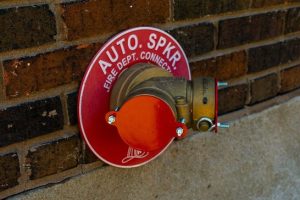

	</div>


	</div>
<div class="chapter standard " id="chapter-finding-grade-and-finding-length" title="Calculating Grade or Length">
	<div class="chapter-title-wrap">
		<p class="chapter-number">13</p>
		<h1 class="chapter-title">Calculating Grade or Length</h1>
								</div>
	<div class="ugc chapter-ugc">
				 <p style="text-align: center">Click play on the following audio player to listen along as you read this section.</p> <div class="textbox interactive-content interactive-content--oembed"><span class="interactive-content__icon"></span> <p>One or more interactive elements has been excluded from this version of the text. You can view them online here: <a href="#oembed-5" title="3.4 Calculating Grade or Length" data-url="https://pressbooks.bccampus.ca/mathfortradesvolume3/?p=512#oembed-5">https://pressbooks.bccampus.ca/mathfortradesvolume3/?p=512#oembed-5</a> </p> </div> <p><img class="wp-image-600 aligncenter" src="https://pressbooks.bccampus.ca/mathfortradesvolume3/wp-content/uploads/sites/1574/2022/01/Picture8.jpg" alt="" width="776" height="308" srcset="https://pressbooks.bccampus.ca/mathfortradesvolume3/wp-content/uploads/sites/1574/2022/01/Picture8.jpg 962w, https://pressbooks.bccampus.ca/mathfortradesvolume3/wp-content/uploads/sites/1574/2022/01/Picture8-300x119.jpg 300w, https://pressbooks.bccampus.ca/mathfortradesvolume3/wp-content/uploads/sites/1574/2022/01/Picture8-768x305.jpg 768w, https://pressbooks.bccampus.ca/mathfortradesvolume3/wp-content/uploads/sites/1574/2022/01/Picture8-65x26.jpg 65w, https://pressbooks.bccampus.ca/mathfortradesvolume3/wp-content/uploads/sites/1574/2022/01/Picture8-225x89.jpg 225w, https://pressbooks.bccampus.ca/mathfortradesvolume3/wp-content/uploads/sites/1574/2022/01/Picture8-350x139.jpg 350w" sizes="auto, (max-width: 776px) 100vw, 776px" title="" /></p> <p>So far in this chapter we’ve gone through the motions to end up finding the total fall on an object given its length and grade. This will work well for us in all kinds of situations in the field.</p> <p>But from a math perspective we should also be able to rework the formula to solve for length or grade.</p> <p>Let’s start by just putting up the total fall formula once again.</p> <p style="text-align: center"><img src="https://pressbooks.bccampus.ca/mathfortradesvolume3/wp-content/ql-cache/quicklatex.com-5066f3635dc54e37e99f0fed634e6482_l3.svg" class="ql-img-inline-formula quicklatex-auto-format" alt="\text{Total fall} = \text{length}\times\text{grade}" title="Rendered by QuickLaTeX.com" height="17" width="207" style="vertical-align: -4px;" /></p> <p>Instructors and students quite often use a triangle to solve for the variables in a formula when there are three variables in that formula. As we have three variables in the total fall formula why don’t we go ahead and use this method. Check out the drawing below to get an idea of what I’m talking about.</p> <p><a href="https://pressbooks.bccampus.ca/mathfortradesvolume3/wp-content/uploads/sites/1574/2022/01/Picture1-1.png" data-url="https://pressbooks.bccampus.ca/mathfortradesvolume3/wp-content/uploads/sites/1574/2022/01/Picture1-1.png"><img class="aligncenter wp-image-592" src="https://pressbooks.bccampus.ca/mathfortradesvolume3/wp-content/uploads/sites/1574/2022/01/Picture1-1.png" alt="Total fall is T F, length is L and grade is G. Their relationship is T F over L times G." width="816" height="308" srcset="https://pressbooks.bccampus.ca/mathfortradesvolume3/wp-content/uploads/sites/1574/2022/01/Picture1-1.png 1127w, https://pressbooks.bccampus.ca/mathfortradesvolume3/wp-content/uploads/sites/1574/2022/01/Picture1-1-300x113.png 300w, https://pressbooks.bccampus.ca/mathfortradesvolume3/wp-content/uploads/sites/1574/2022/01/Picture1-1-1024x386.png 1024w, https://pressbooks.bccampus.ca/mathfortradesvolume3/wp-content/uploads/sites/1574/2022/01/Picture1-1-768x290.png 768w, https://pressbooks.bccampus.ca/mathfortradesvolume3/wp-content/uploads/sites/1574/2022/01/Picture1-1-65x25.png 65w, https://pressbooks.bccampus.ca/mathfortradesvolume3/wp-content/uploads/sites/1574/2022/01/Picture1-1-225x85.png 225w, https://pressbooks.bccampus.ca/mathfortradesvolume3/wp-content/uploads/sites/1574/2022/01/Picture1-1-350x132.png 350w" sizes="auto, (max-width: 816px) 100vw, 816px" title="" /></a></p> <p>From this triangle we can get all three versions of the formula.</p> <p><a href="https://pressbooks.bccampus.ca/mathfortradesvolume3/wp-content/uploads/sites/1574/2022/01/Picture2-1.png" data-url="https://pressbooks.bccampus.ca/mathfortradesvolume3/wp-content/uploads/sites/1574/2022/01/Picture2-1.png"><img class="aligncenter wp-image-593" src="https://pressbooks.bccampus.ca/mathfortradesvolume3/wp-content/uploads/sites/1574/2022/01/Picture2-1-300x258.png" alt="total fall TF equals length L times grade G" width="238" height="205" srcset="https://pressbooks.bccampus.ca/mathfortradesvolume3/wp-content/uploads/sites/1574/2022/01/Picture2-1-300x258.png 300w, https://pressbooks.bccampus.ca/mathfortradesvolume3/wp-content/uploads/sites/1574/2022/01/Picture2-1-65x56.png 65w, https://pressbooks.bccampus.ca/mathfortradesvolume3/wp-content/uploads/sites/1574/2022/01/Picture2-1-225x193.png 225w, https://pressbooks.bccampus.ca/mathfortradesvolume3/wp-content/uploads/sites/1574/2022/01/Picture2-1-350x301.png 350w, https://pressbooks.bccampus.ca/mathfortradesvolume3/wp-content/uploads/sites/1574/2022/01/Picture2-1.png 368w" sizes="auto, (max-width: 238px) 100vw, 238px" title="" /></a><a href="https://pressbooks.bccampus.ca/mathfortradesvolume3/wp-content/uploads/sites/1574/2022/01/Picture5-1.png" data-url="https://pressbooks.bccampus.ca/mathfortradesvolume3/wp-content/uploads/sites/1574/2022/01/Picture5-1.png"><img class="aligncenter wp-image-596" src="https://pressbooks.bccampus.ca/mathfortradesvolume3/wp-content/uploads/sites/1574/2022/01/Picture5-1.png" alt="total fall equals length times grade" width="409" height="63" srcset="https://pressbooks.bccampus.ca/mathfortradesvolume3/wp-content/uploads/sites/1574/2022/01/Picture5-1.png 630w, https://pressbooks.bccampus.ca/mathfortradesvolume3/wp-content/uploads/sites/1574/2022/01/Picture5-1-300x46.png 300w, https://pressbooks.bccampus.ca/mathfortradesvolume3/wp-content/uploads/sites/1574/2022/01/Picture5-1-65x10.png 65w, https://pressbooks.bccampus.ca/mathfortradesvolume3/wp-content/uploads/sites/1574/2022/01/Picture5-1-225x35.png 225w, https://pressbooks.bccampus.ca/mathfortradesvolume3/wp-content/uploads/sites/1574/2022/01/Picture5-1-350x54.png 350w" sizes="auto, (max-width: 409px) 100vw, 409px" title="" /></a></p> <p><a href="https://pressbooks.bccampus.ca/mathfortradesvolume3/wp-content/uploads/sites/1574/2022/01/Picture3-1.png" data-url="https://pressbooks.bccampus.ca/mathfortradesvolume3/wp-content/uploads/sites/1574/2022/01/Picture3-1.png"><img class="aligncenter wp-image-594" src="https://pressbooks.bccampus.ca/mathfortradesvolume3/wp-content/uploads/sites/1574/2022/01/Picture3-1-300x258.png" alt="Total Fall TF divided by Grade G equals Length L" width="236" height="203" srcset="https://pressbooks.bccampus.ca/mathfortradesvolume3/wp-content/uploads/sites/1574/2022/01/Picture3-1-300x258.png 300w, https://pressbooks.bccampus.ca/mathfortradesvolume3/wp-content/uploads/sites/1574/2022/01/Picture3-1-65x56.png 65w, https://pressbooks.bccampus.ca/mathfortradesvolume3/wp-content/uploads/sites/1574/2022/01/Picture3-1-225x193.png 225w, https://pressbooks.bccampus.ca/mathfortradesvolume3/wp-content/uploads/sites/1574/2022/01/Picture3-1-350x301.png 350w, https://pressbooks.bccampus.ca/mathfortradesvolume3/wp-content/uploads/sites/1574/2022/01/Picture3-1.png 368w" sizes="auto, (max-width: 236px) 100vw, 236px" title="" /></a><a href="https://pressbooks.bccampus.ca/mathfortradesvolume3/wp-content/uploads/sites/1574/2022/01/Picture6-1.png" data-url="https://pressbooks.bccampus.ca/mathfortradesvolume3/wp-content/uploads/sites/1574/2022/01/Picture6-1.png"><img class="aligncenter wp-image-597" src="https://pressbooks.bccampus.ca/mathfortradesvolume3/wp-content/uploads/sites/1574/2022/01/Picture6-1.png" alt="length equals total fall over grade." width="289" height="93" srcset="https://pressbooks.bccampus.ca/mathfortradesvolume3/wp-content/uploads/sites/1574/2022/01/Picture6-1.png 391w, https://pressbooks.bccampus.ca/mathfortradesvolume3/wp-content/uploads/sites/1574/2022/01/Picture6-1-300x97.png 300w, https://pressbooks.bccampus.ca/mathfortradesvolume3/wp-content/uploads/sites/1574/2022/01/Picture6-1-65x21.png 65w, https://pressbooks.bccampus.ca/mathfortradesvolume3/wp-content/uploads/sites/1574/2022/01/Picture6-1-225x73.png 225w, https://pressbooks.bccampus.ca/mathfortradesvolume3/wp-content/uploads/sites/1574/2022/01/Picture6-1-350x113.png 350w" sizes="auto, (max-width: 289px) 100vw, 289px" title="" /></a></p> <p><a href="https://pressbooks.bccampus.ca/mathfortradesvolume3/wp-content/uploads/sites/1574/2022/01/Picture4-1.png" data-url="https://pressbooks.bccampus.ca/mathfortradesvolume3/wp-content/uploads/sites/1574/2022/01/Picture4-1.png"><img class="aligncenter wp-image-595" src="https://pressbooks.bccampus.ca/mathfortradesvolume3/wp-content/uploads/sites/1574/2022/01/Picture4-1-300x258.png" alt="Grade G equals total Fall TF divided by Length L" width="235" height="202" srcset="https://pressbooks.bccampus.ca/mathfortradesvolume3/wp-content/uploads/sites/1574/2022/01/Picture4-1-300x258.png 300w, https://pressbooks.bccampus.ca/mathfortradesvolume3/wp-content/uploads/sites/1574/2022/01/Picture4-1-65x56.png 65w, https://pressbooks.bccampus.ca/mathfortradesvolume3/wp-content/uploads/sites/1574/2022/01/Picture4-1-225x193.png 225w, https://pressbooks.bccampus.ca/mathfortradesvolume3/wp-content/uploads/sites/1574/2022/01/Picture4-1-350x301.png 350w, https://pressbooks.bccampus.ca/mathfortradesvolume3/wp-content/uploads/sites/1574/2022/01/Picture4-1.png 368w" sizes="auto, (max-width: 235px) 100vw, 235px" title="" /></a><a href="https://pressbooks.bccampus.ca/mathfortradesvolume3/wp-content/uploads/sites/1574/2022/01/Picture7-1.png" data-url="https://pressbooks.bccampus.ca/mathfortradesvolume3/wp-content/uploads/sites/1574/2022/01/Picture7-1.png"><img class="aligncenter wp-image-598" src="https://pressbooks.bccampus.ca/mathfortradesvolume3/wp-content/uploads/sites/1574/2022/01/Picture7-1.png" alt="grade equals total fall over length" width="263" height="87" srcset="https://pressbooks.bccampus.ca/mathfortradesvolume3/wp-content/uploads/sites/1574/2022/01/Picture7-1.png 378w, https://pressbooks.bccampus.ca/mathfortradesvolume3/wp-content/uploads/sites/1574/2022/01/Picture7-1-300x99.png 300w, https://pressbooks.bccampus.ca/mathfortradesvolume3/wp-content/uploads/sites/1574/2022/01/Picture7-1-65x21.png 65w, https://pressbooks.bccampus.ca/mathfortradesvolume3/wp-content/uploads/sites/1574/2022/01/Picture7-1-225x74.png 225w, https://pressbooks.bccampus.ca/mathfortradesvolume3/wp-content/uploads/sites/1574/2022/01/Picture7-1-350x116.png 350w" sizes="auto, (max-width: 263px) 100vw, 263px" title="" /></a></p> <p>That’s the magic of the mathematical triangle. It can help you solve for any of the variables in a formula with three variables. If you ever run across other formulas with three variables give it a try. In fact the next chapter deals with trigonometry and you can use this triangle method to solve for a lot of stuff.</p> <p>As we’ve already talked about and solved problems for total grade we’ll just stick to the other two variables. We’ll do a couple examples solving for length and a couple solving for grade.</p> <h1>Solving for Length</h1> <p>Start with the formula.</p> <p style="text-align: center"><img src="https://pressbooks.bccampus.ca/mathfortradesvolume3/wp-content/ql-cache/quicklatex.com-0a8cf757f9a9d13850742be45ffa89d5_l3.svg" class="ql-img-inline-formula quicklatex-auto-format" alt="\text{length } = \dfrac{\text{total fall}}{\text{grade}}" title="Rendered by QuickLaTeX.com" height="41" width="147" style="vertical-align: -16px;" /></p> <p>We’ll do examples using each of the three types of grade.</p> <div class="textbox textbox--examples"><div class="textbox__header"><p class="textbox__title">Example</p> </div> <div class="textbox__content"><p><img class="alignleft wp-image-800" src="https://pressbooks.bccampus.ca/mathfortradesvolume3/wp-content/uploads/sites/1574/2022/01/Picture11-300x200.jpg" alt="" width="197" height="131" srcset="https://pressbooks.bccampus.ca/mathfortradesvolume3/wp-content/uploads/sites/1574/2022/01/Picture11-300x200.jpg 300w, https://pressbooks.bccampus.ca/mathfortradesvolume3/wp-content/uploads/sites/1574/2022/01/Picture11-65x43.jpg 65w, https://pressbooks.bccampus.ca/mathfortradesvolume3/wp-content/uploads/sites/1574/2022/01/Picture11-225x150.jpg 225w, https://pressbooks.bccampus.ca/mathfortradesvolume3/wp-content/uploads/sites/1574/2022/01/Picture11-350x234.jpg 350w, https://pressbooks.bccampus.ca/mathfortradesvolume3/wp-content/uploads/sites/1574/2022/01/Picture11.jpg 509w" sizes="auto, (max-width: 197px) 100vw, 197px" title="" /></p> <p>Pipe is run where the total fall from one side to the other is 0.59 meters. The grade on the pipe is a ratio of 1 in 50. What length of pipe must be run in order to achieve this total fall.</p> <p>&nbsp;</p> <p><strong>Step 1:</strong> Write down the formula you’ll be working with.</p> <p style="text-align: center"><img src="https://pressbooks.bccampus.ca/mathfortradesvolume3/wp-content/ql-cache/quicklatex.com-0a8cf757f9a9d13850742be45ffa89d5_l3.svg" class="ql-img-inline-formula quicklatex-auto-format" alt="\text{length } = \dfrac{\text{total fall}}{\text{grade}}" title="Rendered by QuickLaTeX.com" height="41" width="147" style="vertical-align: -16px;" /></p> <p><strong>Step 2:</strong> Write down the variables making sure they are in units you can work with.</p> <p style="text-align: center"><img src="https://pressbooks.bccampus.ca/mathfortradesvolume3/wp-content/ql-cache/quicklatex.com-118233db4a2dc4c20240d8a8d293129f_l3.svg" class="ql-img-inline-formula quicklatex-auto-format" alt="\text{total fall: } 0.59 \text{ meters}" title="Rendered by QuickLaTeX.com" height="14" width="169" style="vertical-align: -1px;" /></p> <p style="text-align: center"><img src="https://pressbooks.bccampus.ca/mathfortradesvolume3/wp-content/ql-cache/quicklatex.com-6e1b2944dff1ab181720a020f87b42ab_l3.svg" class="ql-img-inline-formula quicklatex-auto-format" alt="\text{grade: } 1/50" title="Rendered by QuickLaTeX.com" height="19" width="91" style="vertical-align: -5px;" /></p> <p><strong>Step 3:</strong> Plug in the variables and solve.</p> <p style="text-align: center"><img src="https://pressbooks.bccampus.ca/mathfortradesvolume3/wp-content/ql-cache/quicklatex.com-a72b94d0fb301fcb900a7324f6515c14_l3.svg" class="ql-img-inline-formula quicklatex-auto-format" alt="\text{length} = \dfrac{0.59}{\dfrac{1}{50}}" title="Rendered by QuickLaTeX.com" height="59" width="106" style="vertical-align: -34px;" /></p> <p>Mathematically this is the same as saying point five nine multiplied by fifty.</p> <p style="text-align: center"></p><p class="ql-center-displayed-equation" style="line-height: 43px;"><span class="ql-right-eqno">&nbsp; </span> <span class="ql-left-eqno">&nbsp; </span><img src="https://pressbooks.bccampus.ca/mathfortradesvolume3/wp-content/ql-cache/quicklatex.com-5dd3c7c5c7242b6dad0a07aa31c4cdfa_l3.svg" height="43" width="162" class="ql-img-displayed-equation quicklatex-auto-format" alt="\begin{equation*}\begin{split} \text{length} &amp;amp;= 0.59 \times 50 \\ \text{length} &amp;amp;= 29.5 \text{ meters} \end{split}\end{equation}" title="Rendered by QuickLaTeX.com" /></p> </div> </div> <div class="textbox textbox--examples"><div class="textbox__header"><p class="textbox__title">Example</p> </div> <div class="textbox__content"><p><img class="alignleft wp-image-801" src="https://pressbooks.bccampus.ca/mathfortradesvolume3/wp-content/uploads/sites/1574/2022/01/Picture12-300x200.jpg" alt="" width="219" height="146" srcset="https://pressbooks.bccampus.ca/mathfortradesvolume3/wp-content/uploads/sites/1574/2022/01/Picture12-300x200.jpg 300w, https://pressbooks.bccampus.ca/mathfortradesvolume3/wp-content/uploads/sites/1574/2022/01/Picture12-65x43.jpg 65w, https://pressbooks.bccampus.ca/mathfortradesvolume3/wp-content/uploads/sites/1574/2022/01/Picture12-225x150.jpg 225w, https://pressbooks.bccampus.ca/mathfortradesvolume3/wp-content/uploads/sites/1574/2022/01/Picture12-350x233.jpg 350w, https://pressbooks.bccampus.ca/mathfortradesvolume3/wp-content/uploads/sites/1574/2022/01/Picture12.jpg 510w" sizes="auto, (max-width: 219px) 100vw, 219px" title="" /></p> <p>Pipe for a compressed air system is run with a grade of 1%. The total fall on the pipe from one side of a building to the other side of a building is 17 inches. What is the length of pipe that has been run.</p> <p>&nbsp;</p> <p><strong>Step 1:</strong> Write down the formula you’ll be working with.</p> <p style="text-align: center"><img src="https://pressbooks.bccampus.ca/mathfortradesvolume3/wp-content/ql-cache/quicklatex.com-0a8cf757f9a9d13850742be45ffa89d5_l3.svg" class="ql-img-inline-formula quicklatex-auto-format" alt="\text{length } = \dfrac{\text{total fall}}{\text{grade}}" title="Rendered by QuickLaTeX.com" height="41" width="147" style="vertical-align: -16px;" /></p> <p><strong>Step 2:</strong> Write down the variables making sure they are in units you can work with.</p> <p style="text-align: center"><img src="https://pressbooks.bccampus.ca/mathfortradesvolume3/wp-content/ql-cache/quicklatex.com-b64fcdc6451104c9171d609647329309_l3.svg" class="ql-img-inline-formula quicklatex-auto-format" alt="\text{total fall: } 17 \text{ inches}" title="Rendered by QuickLaTeX.com" height="14" width="150" style="vertical-align: -1px;" /></p> <p style="text-align: center"><img src="https://pressbooks.bccampus.ca/mathfortradesvolume3/wp-content/ql-cache/quicklatex.com-25415c82647dd39c742c0c1060d779d5_l3.svg" class="ql-img-inline-formula quicklatex-auto-format" alt="\text{grade: } 1\% \text{ or }0.01" title="Rendered by QuickLaTeX.com" height="18" width="137" style="vertical-align: -4px;" /></p> <p><strong>Step 3:</strong> Plug in the variables and solve.</p> <p style="text-align: center"></p><p class="ql-center-displayed-equation" style="line-height: 63px;"><span class="ql-right-eqno">&nbsp; </span> <span class="ql-left-eqno">&nbsp; </span><img src="https://pressbooks.bccampus.ca/mathfortradesvolume3/wp-content/ql-cache/quicklatex.com-951d7d60bae202d9bc551630933abe79_l3.svg" height="63" width="160" class="ql-img-displayed-equation quicklatex-auto-format" alt="\begin{equation*}\begin{split} \text{length} &amp;amp;= \dfrac{17}{0.01} \\ \text{length} &amp;amp;= 1700 \text{ inches} \end{split}\end{equation}" title="Rendered by QuickLaTeX.com" /></p> </div> </div> <p><img class="wp-image-607 aligncenter" src="https://pressbooks.bccampus.ca/mathfortradesvolume3/wp-content/uploads/sites/1574/2022/01/Picture12-1-252x300.png" alt="" width="149" height="177" srcset="https://pressbooks.bccampus.ca/mathfortradesvolume3/wp-content/uploads/sites/1574/2022/01/Picture12-1-252x300.png 252w, https://pressbooks.bccampus.ca/mathfortradesvolume3/wp-content/uploads/sites/1574/2022/01/Picture12-1-65x77.png 65w, https://pressbooks.bccampus.ca/mathfortradesvolume3/wp-content/uploads/sites/1574/2022/01/Picture12-1-225x267.png 225w, https://pressbooks.bccampus.ca/mathfortradesvolume3/wp-content/uploads/sites/1574/2022/01/Picture12-1.png 323w" sizes="auto, (max-width: 149px) 100vw, 149px" title="" /></p> <p>Remember that when dealing with percent the total fall and the length will be in similar units. As I wrote this I originally put in the length as 1700 feet. This is an easy mistake to make and one to really look out for.</p> <div class="textbox textbox--examples"><div class="textbox__header"><p class="textbox__title">Example</p> </div> <div class="textbox__content"><p><img class="wp-image-802 alignleft" src="https://pressbooks.bccampus.ca/mathfortradesvolume3/wp-content/uploads/sites/1574/2022/01/Picture13-300x200.jpg" alt="" width="243" height="162" srcset="https://pressbooks.bccampus.ca/mathfortradesvolume3/wp-content/uploads/sites/1574/2022/01/Picture13-300x200.jpg 300w, https://pressbooks.bccampus.ca/mathfortradesvolume3/wp-content/uploads/sites/1574/2022/01/Picture13-65x43.jpg 65w, https://pressbooks.bccampus.ca/mathfortradesvolume3/wp-content/uploads/sites/1574/2022/01/Picture13-225x150.jpg 225w, https://pressbooks.bccampus.ca/mathfortradesvolume3/wp-content/uploads/sites/1574/2022/01/Picture13-350x233.jpg 350w, https://pressbooks.bccampus.ca/mathfortradesvolume3/wp-content/uploads/sites/1574/2022/01/Picture13.jpg 486w" sizes="auto, (max-width: 243px) 100vw, 243px" title="" />Pipe is run in a parkade and the total fall from one side to the other is 1 foot 3 inches. The grade on the pipe is 1/8″ per foot. How far does the pipe go at that grade?</p> <p>&nbsp;</p> <p><strong>Step 1:</strong> Write down the formula you’ll be working with.</p> <p style="text-align: center"><img src="https://pressbooks.bccampus.ca/mathfortradesvolume3/wp-content/ql-cache/quicklatex.com-0a8cf757f9a9d13850742be45ffa89d5_l3.svg" class="ql-img-inline-formula quicklatex-auto-format" alt="\text{length } = \dfrac{\text{total fall}}{\text{grade}}" title="Rendered by QuickLaTeX.com" height="41" width="147" style="vertical-align: -16px;" /></p> <p><strong>Step 2:</strong> Write down the variables making sure they are in units you can work with.</p> <p style="text-align: center"><img src="https://pressbooks.bccampus.ca/mathfortradesvolume3/wp-content/ql-cache/quicklatex.com-768dab8ed092862721206ce6ac06a0e3_l3.svg" class="ql-img-inline-formula quicklatex-auto-format" alt="\text{total fall: } 1 \text{ foot } 3 \text{ inches}" title="Rendered by QuickLaTeX.com" height="14" width="192" style="vertical-align: -1px;" /></p> <p style="text-align: center"><img src="https://pressbooks.bccampus.ca/mathfortradesvolume3/wp-content/ql-cache/quicklatex.com-5155740245d6c4f1fce163dcbf3d8110_l3.svg" class="ql-img-inline-formula quicklatex-auto-format" alt="\text{grade: } 1/8&amp;quot;/ft" title="Rendered by QuickLaTeX.com" height="19" width="116" style="vertical-align: -5px;" /></p> <p>Note that when dealing with the grade in inches per foot the total fall must be in inches. Therefore the 1 foot 3 inches must be changed to 15 inches.</p> <p style="text-align: center"><img src="https://pressbooks.bccampus.ca/mathfortradesvolume3/wp-content/ql-cache/quicklatex.com-ac44bbab37b27ce8c9b8e184921d5009_l3.svg" class="ql-img-inline-formula quicklatex-auto-format" alt="\text{total fall: } 15 \text{ inches}" title="Rendered by QuickLaTeX.com" height="14" width="150" style="vertical-align: -1px;" /></p> <p><strong>Step 3:</strong> Plug in the variables and solve.</p> <p style="text-align: center"></p><p class="ql-center-displayed-equation" style="line-height: 67px;"><span class="ql-right-eqno">&nbsp; </span> <span class="ql-left-eqno">&nbsp; </span><img src="https://pressbooks.bccampus.ca/mathfortradesvolume3/wp-content/ql-cache/quicklatex.com-e5f3fd08ae64a835608919eeb5a098f1_l3.svg" height="67" width="148" class="ql-img-displayed-equation quicklatex-auto-format" alt="\begin{equation*}\begin{split} \text{length} &amp;amp;= \dfrac{15}{1/8&amp;quot;/\text{foot}} \\ \text{length} &amp;amp;= 120 \text{ feet} \end{split}\end{equation}" title="Rendered by QuickLaTeX.com" /></p> </div> </div> <p>Once again remember that when using the total fall formula with inches per foot as the grade the length always ends up being in feet.</p> <h1>Solving For Grade</h1> <p><img class="wp-image-613 aligncenter" src="https://pressbooks.bccampus.ca/mathfortradesvolume3/wp-content/uploads/sites/1574/2022/01/Picture9-1-300x155.jpg" alt="" width="267" height="138" srcset="https://pressbooks.bccampus.ca/mathfortradesvolume3/wp-content/uploads/sites/1574/2022/01/Picture9-1-300x155.jpg 300w, https://pressbooks.bccampus.ca/mathfortradesvolume3/wp-content/uploads/sites/1574/2022/01/Picture9-1-65x34.jpg 65w, https://pressbooks.bccampus.ca/mathfortradesvolume3/wp-content/uploads/sites/1574/2022/01/Picture9-1-225x116.jpg 225w, https://pressbooks.bccampus.ca/mathfortradesvolume3/wp-content/uploads/sites/1574/2022/01/Picture9-1-350x181.jpg 350w, https://pressbooks.bccampus.ca/mathfortradesvolume3/wp-content/uploads/sites/1574/2022/01/Picture9-1.jpg 602w" sizes="auto, (max-width: 267px) 100vw, 267px" title="" /></p> <p>This might actually get a bit trickier than just solving for length.</p> <p><a href="https://pressbooks.bccampus.ca/mathfortradesvolume3/wp-content/uploads/sites/1574/2022/01/Picture29-2.png" data-url="https://pressbooks.bccampus.ca/mathfortradesvolume3/wp-content/uploads/sites/1574/2022/01/Picture29-2.png"><img class="aligncenter wp-image-804" src="https://pressbooks.bccampus.ca/mathfortradesvolume3/wp-content/uploads/sites/1574/2022/01/Picture29-2-300x214.png" alt="Important" width="240" height="171" srcset="https://pressbooks.bccampus.ca/mathfortradesvolume3/wp-content/uploads/sites/1574/2022/01/Picture29-2-300x214.png 300w, https://pressbooks.bccampus.ca/mathfortradesvolume3/wp-content/uploads/sites/1574/2022/01/Picture29-2-65x46.png 65w, https://pressbooks.bccampus.ca/mathfortradesvolume3/wp-content/uploads/sites/1574/2022/01/Picture29-2-225x161.png 225w, https://pressbooks.bccampus.ca/mathfortradesvolume3/wp-content/uploads/sites/1574/2022/01/Picture29-2-350x250.png 350w, https://pressbooks.bccampus.ca/mathfortradesvolume3/wp-content/uploads/sites/1574/2022/01/Picture29-2.png 476w" sizes="auto, (max-width: 240px) 100vw, 240px" title="" /></a></p> <p>When finding the grade the units really come into play. Remember that for both percent and a ratio there are actually no units in the grade. This means that when solving the problems we must make sure to cancel out units to leave us with none. In the end its important when finding those two grades that both the length and the total fall are in the same units. When I go through the examples just below I’ll show you what I mean.</p> <p>When using inches per foot it’s also important to note what the units are in. Remember that the grade must end up being in inches per foot. This means that the length must be in feet while the total fall must be in inches. If this is not the case then the variables must be changed to match this.</p> <p>Let’s head straight to some examples so you can see what I’m talking about.</p> <div class="textbox textbox--examples"><div class="textbox__header"><p class="textbox__title">Example</p> </div> <div class="textbox__content"><p><img class="wp-image-806 alignleft" src="https://pressbooks.bccampus.ca/mathfortradesvolume3/wp-content/uploads/sites/1574/2022/01/Picture14.jpg" alt="" width="204" height="136" srcset="https://pressbooks.bccampus.ca/mathfortradesvolume3/wp-content/uploads/sites/1574/2022/01/Picture14.jpg 592w, https://pressbooks.bccampus.ca/mathfortradesvolume3/wp-content/uploads/sites/1574/2022/01/Picture14-300x200.jpg 300w, https://pressbooks.bccampus.ca/mathfortradesvolume3/wp-content/uploads/sites/1574/2022/01/Picture14-65x43.jpg 65w, https://pressbooks.bccampus.ca/mathfortradesvolume3/wp-content/uploads/sites/1574/2022/01/Picture14-225x150.jpg 225w, https://pressbooks.bccampus.ca/mathfortradesvolume3/wp-content/uploads/sites/1574/2022/01/Picture14-350x233.jpg 350w" sizes="auto, (max-width: 204px) 100vw, 204px" title="" /></p> <p>Pipe is run where the total fall from one side to the other is 0.59 meters. The length of the pipe is 29.5 meters. What is the grade expressed as a ratio over 50?</p> <p>&nbsp;</p> <p><strong>Step 1:</strong> Write down the formula you’ll be working with.</p> <p style="text-align: center"><img src="https://pressbooks.bccampus.ca/mathfortradesvolume3/wp-content/ql-cache/quicklatex.com-375a70cbbd90b3a45442bffe276035db_l3.svg" class="ql-img-inline-formula quicklatex-auto-format" alt="\text{grade} = \dfrac{\text{total fall}}{\text{length}}" title="Rendered by QuickLaTeX.com" height="41" width="135" style="vertical-align: -16px;" /></p> <p><strong>Step 2:</strong> Write down the variables making sure they are in units you can work with.</p> <p style="text-align: center"><img src="https://pressbooks.bccampus.ca/mathfortradesvolume3/wp-content/ql-cache/quicklatex.com-118233db4a2dc4c20240d8a8d293129f_l3.svg" class="ql-img-inline-formula quicklatex-auto-format" alt="\text{total fall: } 0.59 \text{ meters}" title="Rendered by QuickLaTeX.com" height="14" width="169" style="vertical-align: -1px;" /></p> <p style="text-align: center"><img src="https://pressbooks.bccampus.ca/mathfortradesvolume3/wp-content/ql-cache/quicklatex.com-249cd01c7cc581cee01cf50d976ef5fa_l3.svg" class="ql-img-inline-formula quicklatex-auto-format" alt="\text{length: }29.5 \text{ meters}" title="Rendered by QuickLaTeX.com" height="17" width="150" style="vertical-align: -4px;" /></p> <p><img class="wp-image-616 alignleft" src="https://pressbooks.bccampus.ca/mathfortradesvolume3/wp-content/uploads/sites/1574/2022/01/Picture14-1.png" alt="" width="127" height="121" srcset="https://pressbooks.bccampus.ca/mathfortradesvolume3/wp-content/uploads/sites/1574/2022/01/Picture14-1.png 180w, https://pressbooks.bccampus.ca/mathfortradesvolume3/wp-content/uploads/sites/1574/2022/01/Picture14-1-65x62.png 65w" sizes="auto, (max-width: 127px) 100vw, 127px" title="" /></p> <p>&nbsp;</p> <p>Note that both variables are in the same units. This works.</p> <p>&nbsp;</p> <p><strong>Step 3:</strong> Plug in the variables and solve.</p> <p style="text-align: center"></p><p class="ql-center-displayed-equation" style="line-height: 63px;"><span class="ql-right-eqno">&nbsp; </span> <span class="ql-left-eqno">&nbsp; </span><img src="https://pressbooks.bccampus.ca/mathfortradesvolume3/wp-content/ql-cache/quicklatex.com-51c94a56f832fbcd469e49c7c2fcd878_l3.svg" height="63" width="100" class="ql-img-displayed-equation quicklatex-auto-format" alt="\begin{equation*}\begin{split} \text{grade} &amp;amp;= \dfrac{0.59}{29.5} \\ \text{grade} &amp;amp;= 0.02 \end{split}\end{equation}" title="Rendered by QuickLaTeX.com" /></p> </div> </div> <p><a href="https://pressbooks.bccampus.ca/mathfortradesvolume3/wp-content/uploads/sites/1574/2022/01/Picture18-1.png" data-url="https://pressbooks.bccampus.ca/mathfortradesvolume3/wp-content/uploads/sites/1574/2022/01/Picture18-1.png"><img class="aligncenter wp-image-620" src="https://pressbooks.bccampus.ca/mathfortradesvolume3/wp-content/uploads/sites/1574/2022/01/Picture18-1-300x180.png" alt="Goal" width="172" height="103" srcset="https://pressbooks.bccampus.ca/mathfortradesvolume3/wp-content/uploads/sites/1574/2022/01/Picture18-1-300x180.png 300w, https://pressbooks.bccampus.ca/mathfortradesvolume3/wp-content/uploads/sites/1574/2022/01/Picture18-1-65x39.png 65w, https://pressbooks.bccampus.ca/mathfortradesvolume3/wp-content/uploads/sites/1574/2022/01/Picture18-1-225x135.png 225w, https://pressbooks.bccampus.ca/mathfortradesvolume3/wp-content/uploads/sites/1574/2022/01/Picture18-1-350x210.png 350w, https://pressbooks.bccampus.ca/mathfortradesvolume3/wp-content/uploads/sites/1574/2022/01/Picture18-1.png 491w" sizes="auto, (max-width: 172px) 100vw, 172px" title="" /></a></p> <p>Our final goal is to get the grade to a ratio of 1:50. The question is how do we go about getting to that. Follow the math here as this is where it gets a bit tricky.</p> <p>Start off by putting the answer into a ratio over 1.</p> <p style="text-align: center"></p><p class="ql-center-displayed-equation" style="line-height: 60px;"><span class="ql-right-eqno">&nbsp; </span> <span class="ql-left-eqno">&nbsp; </span><img src="https://pressbooks.bccampus.ca/mathfortradesvolume3/wp-content/ql-cache/quicklatex.com-df41089f1d4a188b0c5c35358bbfc520_l3.svg" height="60" width="100" class="ql-img-displayed-equation quicklatex-auto-format" alt="\begin{equation*}\begin{split}\text{grade} &amp;amp;= 0.02 \\ \text{grade} &amp;amp;= \dfrac{0.02}{1} \end{split}\end{equation}" title="Rendered by QuickLaTeX.com" /></p> <p>Now take that ratio over 1 and get it into a ratio over 50. We do this by multiplying both the top and bottom by 50.</p> <p style="text-align: center"></p><p class="ql-center-displayed-equation" style="line-height: 79px;"><span class="ql-right-eqno">&nbsp; </span> <span class="ql-left-eqno">&nbsp; </span><img src="https://pressbooks.bccampus.ca/mathfortradesvolume3/wp-content/ql-cache/quicklatex.com-c6a89742b447530962895f7c24d842a8_l3.svg" height="79" width="144" class="ql-img-displayed-equation quicklatex-auto-format" alt="\begin{equation*}\begin{split}\text{grade} &amp;amp;= \dfrac{0.02}{1} \times \dfrac{50}{50} \\ \text{grade} &amp;amp;= \dfrac{1}{50} \end{split}\end{equation}" title="Rendered by QuickLaTeX.com" /></p> <p>There you have it.</p> <div class="textbox textbox--examples"><div class="textbox__header"><p class="textbox__title">Example</p> </div> <div class="textbox__content"><p><img class="wp-image-807 alignleft" src="https://pressbooks.bccampus.ca/mathfortradesvolume3/wp-content/uploads/sites/1574/2022/01/Picture15-300x200.jpg" alt="" width="259" height="172" srcset="https://pressbooks.bccampus.ca/mathfortradesvolume3/wp-content/uploads/sites/1574/2022/01/Picture15-300x200.jpg 300w, https://pressbooks.bccampus.ca/mathfortradesvolume3/wp-content/uploads/sites/1574/2022/01/Picture15-65x43.jpg 65w, https://pressbooks.bccampus.ca/mathfortradesvolume3/wp-content/uploads/sites/1574/2022/01/Picture15-225x150.jpg 225w, https://pressbooks.bccampus.ca/mathfortradesvolume3/wp-content/uploads/sites/1574/2022/01/Picture15-350x233.jpg 350w, https://pressbooks.bccampus.ca/mathfortradesvolume3/wp-content/uploads/sites/1574/2022/01/Picture15.jpg 510w" sizes="auto, (max-width: 259px) 100vw, 259px" title="" /></p> <p>Pipe for a compressed air system has a length of 141 feet 8 inches. The total fall on the pipe from one side of a building to the other side of a building is 17 inches. What percent grade is the pipe run at?</p> <p>&nbsp;</p> <p style="text-align: left"><strong>Step 1:</strong> Write down the formula you’ll be working with.</p> <p style="text-align: center"><img src="https://pressbooks.bccampus.ca/mathfortradesvolume3/wp-content/ql-cache/quicklatex.com-375a70cbbd90b3a45442bffe276035db_l3.svg" class="ql-img-inline-formula quicklatex-auto-format" alt="\text{grade} = \dfrac{\text{total fall}}{\text{length}}" title="Rendered by QuickLaTeX.com" height="41" width="135" style="vertical-align: -16px;" /></p> <p><strong>Step 2:</strong> Write down the variables making sure they are in units you can work with.</p> <p style="text-align: center"><img src="https://pressbooks.bccampus.ca/mathfortradesvolume3/wp-content/ql-cache/quicklatex.com-b64fcdc6451104c9171d609647329309_l3.svg" class="ql-img-inline-formula quicklatex-auto-format" alt="\text{total fall: } 17 \text{ inches}" title="Rendered by QuickLaTeX.com" height="14" width="150" style="vertical-align: -1px;" /></p> <p style="text-align: center"><img src="https://pressbooks.bccampus.ca/mathfortradesvolume3/wp-content/ql-cache/quicklatex.com-c353d804860ba38d45410c93f5d78714_l3.svg" class="ql-img-inline-formula quicklatex-auto-format" alt="\text{length: }141 \text{ feet } 8 \text{ inches}" title="Rendered by QuickLaTeX.com" height="17" width="189" style="vertical-align: -4px;" /></p> <p>So we have a slight problem here. The total fall is in inches while the length is in feet and inches. We have to make them both the same units. What we’ll do here is change the 141 feet and turn it into inches and then add the 8 inches.</p> <p style="text-align: center"></p><p class="ql-center-displayed-equation" style="line-height: 42px;"><span class="ql-right-eqno">&nbsp; </span> <span class="ql-left-eqno">&nbsp; </span><img src="https://pressbooks.bccampus.ca/mathfortradesvolume3/wp-content/ql-cache/quicklatex.com-4549446fdf1d997b91c885080a318164_l3.svg" height="42" width="283" class="ql-img-displayed-equation quicklatex-auto-format" alt="\begin{equation*}\begin{split} 141 \text{ feet} \times 12 in/ft &amp;amp;= 1692 \text{ inches} \\ 1692 \text{ inches} + 8\text{ inches} &amp;amp;= 1700 \text{ inches}\end{split}\end{equation}" title="Rendered by QuickLaTeX.com" /></p> <p><strong>Step 3:</strong> Plug in the variables and solve.</p> <p style="text-align: center"></p><p class="ql-center-displayed-equation" style="line-height: 63px;"><span class="ql-right-eqno">&nbsp; </span> <span class="ql-left-eqno">&nbsp; </span><img src="https://pressbooks.bccampus.ca/mathfortradesvolume3/wp-content/ql-cache/quicklatex.com-3353d5ab1d70ff2a849e27f0d41184f7_l3.svg" height="63" width="104" class="ql-img-displayed-equation quicklatex-auto-format" alt="\begin{equation*}\begin{split} \text{grade} &amp;amp;= \dfrac{17}{1700} \\ \text{grade} &amp;amp;= 0.01 \end{split}\end{equation}" title="Rendered by QuickLaTeX.com" /></p> <p><strong>Step 4:</strong> Change the decimal into a percent by multiplying by 100.</p> <p style="text-align: center"><img src="https://pressbooks.bccampus.ca/mathfortradesvolume3/wp-content/ql-cache/quicklatex.com-6f0686b93137947a7c2a817eaa52b634_l3.svg" class="ql-img-inline-formula quicklatex-auto-format" alt="0.01 \times 100 = 1\%" title="Rendered by QuickLaTeX.com" height="15" width="126" style="vertical-align: -1px;" /></p> </div> </div> <div class="textbox textbox--examples"><div class="textbox__header"><p class="textbox__title">Example</p> </div> <div class="textbox__content"><p><img class="wp-image-808 alignleft" src="https://pressbooks.bccampus.ca/mathfortradesvolume3/wp-content/uploads/sites/1574/2022/01/Picture16-300x200.jpg" alt="" width="146" height="97" srcset="https://pressbooks.bccampus.ca/mathfortradesvolume3/wp-content/uploads/sites/1574/2022/01/Picture16-300x200.jpg 300w, https://pressbooks.bccampus.ca/mathfortradesvolume3/wp-content/uploads/sites/1574/2022/01/Picture16-65x43.jpg 65w, https://pressbooks.bccampus.ca/mathfortradesvolume3/wp-content/uploads/sites/1574/2022/01/Picture16-225x150.jpg 225w, https://pressbooks.bccampus.ca/mathfortradesvolume3/wp-content/uploads/sites/1574/2022/01/Picture16-350x234.jpg 350w, https://pressbooks.bccampus.ca/mathfortradesvolume3/wp-content/uploads/sites/1574/2022/01/Picture16.jpg 670w" sizes="auto, (max-width: 146px) 100vw, 146px" title="" /></p> <p>Pipe is run in a parkade and the total fall from one side to the other is 1 foot 3 inches. The total length of pipe is 120 feet. What is the grade on the pipe in inches per foot. Put your answer to the nearest eighth of a foot.</p> <p><strong>Step 1:</strong> Write down the formula you’ll be working with.</p> <p style="text-align: center"><img src="https://pressbooks.bccampus.ca/mathfortradesvolume3/wp-content/ql-cache/quicklatex.com-375a70cbbd90b3a45442bffe276035db_l3.svg" class="ql-img-inline-formula quicklatex-auto-format" alt="\text{grade} = \dfrac{\text{total fall}}{\text{length}}" title="Rendered by QuickLaTeX.com" height="41" width="135" style="vertical-align: -16px;" /></p> <p><strong>Step 2:</strong> Write down the variables making sure they are in units you can work with.</p> <p style="text-align: center"><img src="https://pressbooks.bccampus.ca/mathfortradesvolume3/wp-content/ql-cache/quicklatex.com-1491968e896c28ca229fa391bc7f4e11_l3.svg" class="ql-img-inline-formula quicklatex-auto-format" alt="\text{total fall: } 1 \text{ foot} 3 \text{ inches}" title="Rendered by QuickLaTeX.com" height="14" width="187" style="vertical-align: -1px;" /></p> <p style="text-align: center"><img src="https://pressbooks.bccampus.ca/mathfortradesvolume3/wp-content/ql-cache/quicklatex.com-d6e24432d3f07692b0c3a07e2a7a7db6_l3.svg" class="ql-img-inline-formula quicklatex-auto-format" alt="\text{length: }120 \text{ feet}" title="Rendered by QuickLaTeX.com" height="17" width="121" style="vertical-align: -4px;" /></p> <p>In this case the length is good but the total fall must be in inches for this version of the formula to work. One foot 3 inches is equal to 15 inches.</p> <p style="text-align: center"><img src="https://pressbooks.bccampus.ca/mathfortradesvolume3/wp-content/ql-cache/quicklatex.com-916bea1b2823cfb9183b9bf584309408_l3.svg" class="ql-img-inline-formula quicklatex-auto-format" alt="\text{total fall: }15 \text{ inches}" title="Rendered by QuickLaTeX.com" height="14" width="150" style="vertical-align: -1px;" /></p> <p><strong>Step 3:</strong> Plug in the variables and solve. Remember that the grade has to be in inches per foot so we need to divide each part of the equation by 120.</p> <p style="text-align: center"><img src="https://pressbooks.bccampus.ca/mathfortradesvolume3/wp-content/ql-cache/quicklatex.com-0e0434302f33986f0bfd840a31c3a606_l3.svg" class="ql-img-inline-formula quicklatex-auto-format" alt="\text{grade} = \dfrac{15 \text{ inches}}{120 \text{ feet}} \div \dfrac{120}{120} = \dfrac{0.125 \text{ inches}}{1 \text{ foot}}" title="Rendered by QuickLaTeX.com" height="37" width="312" style="vertical-align: -12px;" /></p> <p>We’re almost there. To turn the 0.125 inches into eights of an inch we multiply the 0.125 by 8.</p> <p style="text-align: center"><img src="https://pressbooks.bccampus.ca/mathfortradesvolume3/wp-content/ql-cache/quicklatex.com-8da3c0660ddf5c17972dc68c736f04e7_l3.svg" class="ql-img-inline-formula quicklatex-auto-format" alt="0.125 \times 8 = 1" title="Rendered by QuickLaTeX.com" height="13" width="103" style="vertical-align: 0px;" /></p> <p>This represents 1/8 inch and in the end the grade is 1/8 of an inch per foot.</p> <p style="text-align: center"><img src="https://pressbooks.bccampus.ca/mathfortradesvolume3/wp-content/ql-cache/quicklatex.com-d85502aa56e945cf69d8818e56b1ef6f_l3.svg" class="ql-img-inline-formula quicklatex-auto-format" alt="1/8&amp;quot; \text{ per foot}" title="Rendered by QuickLaTeX.com" height="19" width="101" style="vertical-align: -5px;" /></p> </div> </div> <p>Okay now its your turn to give it a shot. Try the practice questions and check out the video answers when you are done.</p> <h1>Practice Questions</h1> <div class="textbox textbox--exercises"><div class="textbox__header"><p class="textbox__title">Question 1</p> </div> <div class="textbox__content"><p><img class="wp-image-636 alignleft" src="https://pressbooks.bccampus.ca/mathfortradesvolume3/wp-content/uploads/sites/1574/2022/01/Picture10-300x200.jpg" alt="" width="203" height="135" srcset="https://pressbooks.bccampus.ca/mathfortradesvolume3/wp-content/uploads/sites/1574/2022/01/Picture10-300x200.jpg 300w, https://pressbooks.bccampus.ca/mathfortradesvolume3/wp-content/uploads/sites/1574/2022/01/Picture10-65x43.jpg 65w, https://pressbooks.bccampus.ca/mathfortradesvolume3/wp-content/uploads/sites/1574/2022/01/Picture10-225x150.jpg 225w, https://pressbooks.bccampus.ca/mathfortradesvolume3/wp-content/uploads/sites/1574/2022/01/Picture10-350x234.jpg 350w, https://pressbooks.bccampus.ca/mathfortradesvolume3/wp-content/uploads/sites/1574/2022/01/Picture10.jpg 539w" sizes="auto, (max-width: 203px) 100vw, 203px" title="" /></p> <p>Don is running sprinkler lines in the underground parkade for a 30 story office building in downtown Vancouver. His task is to run a sprinkler line from one side of the parkade to the other. If the sprinkler line is graded at 1/125 and the total fall does not exceed 0.5 meters then the sprinkler line will end up running from one side of the parkade to the other. What is the length of the sprinkler pipe?</p> <div class="textbox interactive-content interactive-content--oembed"><span class="interactive-content__icon"></span> <p>One or more interactive elements has been excluded from this version of the text. You can view them online here: <a href="#oembed-6" title="Math for Trades Finding grade or length #1" data-url="https://pressbooks.bccampus.ca/mathfortradesvolume3/?p=512#oembed-6">https://pressbooks.bccampus.ca/mathfortradesvolume3/?p=512#oembed-6</a> </p> </div> </div> </div> <div class="textbox textbox--exercises"><div class="textbox__header"><p class="textbox__title">Question 2</p> </div> <div class="textbox__content"><div class="wp-caption alignleft" id="attachment_637" aria-describedby="caption-attachment-637" style="width: 141px"><img class="wp-image-637" src="https://pressbooks.bccampus.ca/mathfortradesvolume3/wp-content/uploads/sites/1574/2022/01/Picture27-300x300.png" alt="" width="141" height="141" srcset="https://pressbooks.bccampus.ca/mathfortradesvolume3/wp-content/uploads/sites/1574/2022/01/Picture27-300x300.png 300w, https://pressbooks.bccampus.ca/mathfortradesvolume3/wp-content/uploads/sites/1574/2022/01/Picture27-150x150.png 150w, https://pressbooks.bccampus.ca/mathfortradesvolume3/wp-content/uploads/sites/1574/2022/01/Picture27-65x65.png 65w, https://pressbooks.bccampus.ca/mathfortradesvolume3/wp-content/uploads/sites/1574/2022/01/Picture27-225x225.png 225w, https://pressbooks.bccampus.ca/mathfortradesvolume3/wp-content/uploads/sites/1574/2022/01/Picture27-350x350.png 350w, https://pressbooks.bccampus.ca/mathfortradesvolume3/wp-content/uploads/sites/1574/2022/01/Picture27.png 550w" sizes="auto, (max-width: 141px) 100vw, 141px" title="" /><div class="wp-caption-text" id="caption-attachment-637">.</div></div> <p>Rachel runs her own plumbing company. She’s been asked to run an underground storm drainage line from one catch basin to a catch basin located at the other end of the property. The grade can not exceed 2% and the total fall on the pipe cannot exceed 25 inches. What is the maximum length the pipe can run in feet and inches?</p> <div class="textbox interactive-content interactive-content--oembed"><span class="interactive-content__icon"></span> <p>One or more interactive elements has been excluded from this version of the text. You can view them online here: <a href="#oembed-7" title="Math for Trades Finding Grade or length #2" data-url="https://pressbooks.bccampus.ca/mathfortradesvolume3/?p=512#oembed-7">https://pressbooks.bccampus.ca/mathfortradesvolume3/?p=512#oembed-7</a> </p> </div> <p>&nbsp;</p> </div> </div> <div class="textbox textbox--exercises"><div class="textbox__header"><p class="textbox__title">Question 3</p> </div> <div class="textbox__content"><p><img class="wp-image-638 alignleft" src="https://pressbooks.bccampus.ca/mathfortradesvolume3/wp-content/uploads/sites/1574/2022/01/Picture28-300x155.png" alt="" width="211" height="109" srcset="https://pressbooks.bccampus.ca/mathfortradesvolume3/wp-content/uploads/sites/1574/2022/01/Picture28-300x155.png 300w, https://pressbooks.bccampus.ca/mathfortradesvolume3/wp-content/uploads/sites/1574/2022/01/Picture28-65x34.png 65w, https://pressbooks.bccampus.ca/mathfortradesvolume3/wp-content/uploads/sites/1574/2022/01/Picture28-225x117.png 225w, https://pressbooks.bccampus.ca/mathfortradesvolume3/wp-content/uploads/sites/1574/2022/01/Picture28-350x181.png 350w, https://pressbooks.bccampus.ca/mathfortradesvolume3/wp-content/uploads/sites/1574/2022/01/Picture28.png 529w" sizes="auto, (max-width: 211px) 100vw, 211px" title="" /></p> <p>Chad just bought himself a farm in Alberta and needs to run some drainage pipe from one barn to the other. The length of the pipe will be 200 feet and the total fall on the pipe will be 24 inches. What will the grade be in order for those numbers to work? Put your answer as a percentage.</p> <div class="textbox interactive-content interactive-content--oembed"><span class="interactive-content__icon"></span> <p>One or more interactive elements has been excluded from this version of the text. You can view them online here: <a href="#oembed-8" title="Math for Trades Finding grade or length #3" data-url="https://pressbooks.bccampus.ca/mathfortradesvolume3/?p=512#oembed-8">https://pressbooks.bccampus.ca/mathfortradesvolume3/?p=512#oembed-8</a> </p> </div> </div> </div> 

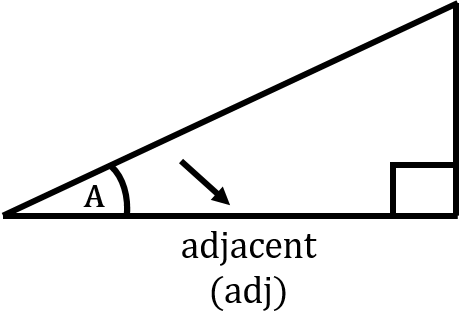
	</div>


	</div>
<div class="chapter standard " id="chapter-grade-and-total-fall-quiz" title="Grade and Total Fall Quiz">
	<div class="chapter-title-wrap">
		<p class="chapter-number">14</p>
		<h1 class="chapter-title">Grade and Total Fall Quiz</h1>
								</div>
	<div class="ugc chapter-ugc">
				 <div class="textbox interactive-content"><span class="interactive-content__icon"></span> <p>An interactive H5P element has been excluded from this version of the text. You can view it online here:<br /> <a href="https://pressbooks.bccampus.ca/mathfortradesvolume3/?p=710#h5p-3" title="Total Fall and Grade Quiz" data-url="https://pressbooks.bccampus.ca/mathfortradesvolume3/?p=710#h5p-3">https://pressbooks.bccampus.ca/mathfortradesvolume3/?p=710#h5p-3</a> </p> </div> 
	</div>


	</div>

</div>
<div class="part-wrapper" id="part-trigonometry-wrapper">
    <div class="part  " id="part-trigonometry">
	<div class="part-title-wrap">
		<p class="part-number">IV</p>
		<h1 class="part-title">Trigonometry</h1>
	</div>
	<div class="ugc part-ugc">
		<p><img class="aligncenter wp-image-811" src="https://pressbooks.bccampus.ca/mathfortradesvolume3/wp-content/uploads/sites/1574/2022/01/Picture1-2.jpg" alt="" width="495" height="279" srcset="https://pressbooks.bccampus.ca/mathfortradesvolume3/wp-content/uploads/sites/1574/2022/01/Picture1-2.jpg 960w, https://pressbooks.bccampus.ca/mathfortradesvolume3/wp-content/uploads/sites/1574/2022/01/Picture1-2-300x169.jpg 300w, https://pressbooks.bccampus.ca/mathfortradesvolume3/wp-content/uploads/sites/1574/2022/01/Picture1-2-768x433.jpg 768w, https://pressbooks.bccampus.ca/mathfortradesvolume3/wp-content/uploads/sites/1574/2022/01/Picture1-2-65x37.jpg 65w, https://pressbooks.bccampus.ca/mathfortradesvolume3/wp-content/uploads/sites/1574/2022/01/Picture1-2-225x127.jpg 225w, https://pressbooks.bccampus.ca/mathfortradesvolume3/wp-content/uploads/sites/1574/2022/01/Picture1-2-350x197.jpg 350w" sizes="auto, (max-width: 495px) 100vw, 495px" title="" /></p> <div class="textbox textbox--learning-objectives"><div class="textbox__header"><p class="textbox__title">Outcomes</p> </div> <div class="textbox__content"><ul><li>Understanding the basics of triangles</li> <li>An introduction to trigonometry</li> <li>Using trigonometry to find side lengths</li> <li>Using trigonometry to find angles</li> </ul> </div> </div>
	</div>
			
				
	</div>
<div class="chapter standard " id="chapter-the-basics-of-triangles" title="The Basics of Triangles">
	<div class="chapter-title-wrap">
		<p class="chapter-number">15</p>
		<h1 class="chapter-title">The Basics of Triangles</h1>
								</div>
	<div class="ugc chapter-ugc">
				 <p style="text-align: center">Click play on the following audio player to listen along as you read this section.</p> <div class="textbox interactive-content interactive-content--oembed"><span class="interactive-content__icon"></span> <p>One or more interactive elements has been excluded from this version of the text. You can view them online here: <a href="#oembed-4" title="4.1 The Basics of Triangles" data-url="https://pressbooks.bccampus.ca/mathfortradesvolume3/?p=520#oembed-4">https://pressbooks.bccampus.ca/mathfortradesvolume3/?p=520#oembed-4</a> </p> </div> <p><img class="wp-image-531 aligncenter" src="https://pressbooks.bccampus.ca/mathfortradesvolume3/wp-content/uploads/sites/1574/2022/01/Picture1.png" alt="" width="299" height="224" srcset="https://pressbooks.bccampus.ca/mathfortradesvolume3/wp-content/uploads/sites/1574/2022/01/Picture1.png 677w, https://pressbooks.bccampus.ca/mathfortradesvolume3/wp-content/uploads/sites/1574/2022/01/Picture1-300x225.png 300w, https://pressbooks.bccampus.ca/mathfortradesvolume3/wp-content/uploads/sites/1574/2022/01/Picture1-65x49.png 65w, https://pressbooks.bccampus.ca/mathfortradesvolume3/wp-content/uploads/sites/1574/2022/01/Picture1-225x169.png 225w, https://pressbooks.bccampus.ca/mathfortradesvolume3/wp-content/uploads/sites/1574/2022/01/Picture1-350x263.png 350w" sizes="auto, (max-width: 299px) 100vw, 299px" title="" /></p> <p>You might be asking yourself right about now “Why do we learn about triangles in the trades?” Didn’t we finish with those way back in grade school?” Well believe it or not there are many situations where components or parts of systems in the trades have a triangle in their shape.</p> <p>Knowing how to calculate the lengths of the sides of those triangles and even the angles involved might just come into play during your trades career.</p> <p><img class="wp-image-563 aligncenter" src="https://pressbooks.bccampus.ca/mathfortradesvolume3/wp-content/uploads/sites/1574/2022/01/Picture1-300x200.jpg" alt="" width="185" height="123" srcset="https://pressbooks.bccampus.ca/mathfortradesvolume3/wp-content/uploads/sites/1574/2022/01/Picture1-300x200.jpg 300w, https://pressbooks.bccampus.ca/mathfortradesvolume3/wp-content/uploads/sites/1574/2022/01/Picture1-65x43.jpg 65w, https://pressbooks.bccampus.ca/mathfortradesvolume3/wp-content/uploads/sites/1574/2022/01/Picture1-225x150.jpg 225w, https://pressbooks.bccampus.ca/mathfortradesvolume3/wp-content/uploads/sites/1574/2022/01/Picture1-350x233.jpg 350w, https://pressbooks.bccampus.ca/mathfortradesvolume3/wp-content/uploads/sites/1574/2022/01/Picture1.jpg 510w" sizes="auto, (max-width: 185px) 100vw, 185px" title="" /></p> <p>A good example of that would be a set of stairs. Take a look at the set of stairs to the left and note any triangle formed from those stairs.</p> <p><img class="wp-image-564 alignleft" src="https://pressbooks.bccampus.ca/mathfortradesvolume3/wp-content/uploads/sites/1574/2022/01/Picture3-300x278.png" alt="" width="185" height="175" title="" /></p> <p>A carpenter making stairs will be required to know how many stairs will be in a stair case. He or she will also be required to know the height of the stairs as well as how the stairs are sloped. All in all the carpenter ends up using math, angles and triangles in the calculations.</p> <p><img class="aligncenter wp-image-565" src="https://pressbooks.bccampus.ca/mathfortradesvolume3/wp-content/uploads/sites/1574/2022/01/Picture2.png" alt="A pipe with a change of direction. The slope of this change is the hypotenuse of a right angle triangle." width="592" height="136" srcset="https://pressbooks.bccampus.ca/mathfortradesvolume3/wp-content/uploads/sites/1574/2022/01/Picture2.png 815w, https://pressbooks.bccampus.ca/mathfortradesvolume3/wp-content/uploads/sites/1574/2022/01/Picture2-300x69.png 300w, https://pressbooks.bccampus.ca/mathfortradesvolume3/wp-content/uploads/sites/1574/2022/01/Picture2-768x176.png 768w, https://pressbooks.bccampus.ca/mathfortradesvolume3/wp-content/uploads/sites/1574/2022/01/Picture2-65x15.png 65w, https://pressbooks.bccampus.ca/mathfortradesvolume3/wp-content/uploads/sites/1574/2022/01/Picture2-225x52.png 225w, https://pressbooks.bccampus.ca/mathfortradesvolume3/wp-content/uploads/sites/1574/2022/01/Picture2-350x80.png 350w" sizes="auto, (max-width: 592px) 100vw, 592px" title="" /></p> <p>Another example would be when steam fitters are running pipe which changes direction. This change in direction is what is known as an offset. The change in direction might be 30 degrees, 60 degrees or 45 degrees. The properties of triangles are then used in order to calculate the dimensions of that offset.</p> <p>Let’s start by identifying the parts of a triangle.</p> <h1><strong>Parts of a Triangle</strong></h1> <p><img class="aligncenter wp-image-568 size-medium" src="https://pressbooks.bccampus.ca/mathfortradesvolume3/wp-content/uploads/sites/1574/2022/01/Picture4-300x173.png" alt="" width="300" height="173" srcset="https://pressbooks.bccampus.ca/mathfortradesvolume3/wp-content/uploads/sites/1574/2022/01/Picture4-300x173.png 300w, https://pressbooks.bccampus.ca/mathfortradesvolume3/wp-content/uploads/sites/1574/2022/01/Picture4-65x38.png 65w, https://pressbooks.bccampus.ca/mathfortradesvolume3/wp-content/uploads/sites/1574/2022/01/Picture4-225x130.png 225w, https://pressbooks.bccampus.ca/mathfortradesvolume3/wp-content/uploads/sites/1574/2022/01/Picture4-350x202.png 350w, https://pressbooks.bccampus.ca/mathfortradesvolume3/wp-content/uploads/sites/1574/2022/01/Picture4.png 684w" sizes="auto, (max-width: 300px) 100vw, 300px" title="" /></p> <p>As we all know a triangle has three sides and those sides have a relationship with each other depending on the angles between them.</p> <p>The main characteristic of a triangle (other than the fact that it has three sides) is that the three angles within the triangle always add up to 180 degrees. No exceptions.</p> <p><a href="https://pressbooks.bccampus.ca/mathfortradesvolume3/wp-content/uploads/sites/1574/2022/01/Picture5.png" data-url="https://pressbooks.bccampus.ca/mathfortradesvolume3/wp-content/uploads/sites/1574/2022/01/Picture5.png"><img class="aligncenter wp-image-569" src="https://pressbooks.bccampus.ca/mathfortradesvolume3/wp-content/uploads/sites/1574/2022/01/Picture5.png" alt="An obtuse right triangle with angles marked A, B and C." width="504" height="216" srcset="https://pressbooks.bccampus.ca/mathfortradesvolume3/wp-content/uploads/sites/1574/2022/01/Picture5.png 1908w, https://pressbooks.bccampus.ca/mathfortradesvolume3/wp-content/uploads/sites/1574/2022/01/Picture5-300x128.png 300w, https://pressbooks.bccampus.ca/mathfortradesvolume3/wp-content/uploads/sites/1574/2022/01/Picture5-1024x437.png 1024w, https://pressbooks.bccampus.ca/mathfortradesvolume3/wp-content/uploads/sites/1574/2022/01/Picture5-768x328.png 768w, https://pressbooks.bccampus.ca/mathfortradesvolume3/wp-content/uploads/sites/1574/2022/01/Picture5-1536x656.png 1536w, https://pressbooks.bccampus.ca/mathfortradesvolume3/wp-content/uploads/sites/1574/2022/01/Picture5-65x28.png 65w, https://pressbooks.bccampus.ca/mathfortradesvolume3/wp-content/uploads/sites/1574/2022/01/Picture5-225x96.png 225w, https://pressbooks.bccampus.ca/mathfortradesvolume3/wp-content/uploads/sites/1574/2022/01/Picture5-350x150.png 350w" sizes="auto, (max-width: 504px) 100vw, 504px" title="" /></a></p> <p>This means that angle “A” plus angle “B” plus angle “C” will add up to 180 degrees. If we know two of the angles it automatically means that we know the third.</p> <p>For our purposes we will always be dealing with what is known as a right triangle. A right triangle is one in which one of the angles is 90 degrees. Take a look at the figure below to see what I mean.</p> <p><a href="https://pressbooks.bccampus.ca/mathfortradesvolume3/wp-content/uploads/sites/1574/2022/01/Picture6.png" data-url="https://pressbooks.bccampus.ca/mathfortradesvolume3/wp-content/uploads/sites/1574/2022/01/Picture6.png"><img class="alignleft wp-image-570" src="https://pressbooks.bccampus.ca/mathfortradesvolume3/wp-content/uploads/sites/1574/2022/01/Picture6.png" alt="A right angle triangle with A and C marked angles and B denoting the 90-degree angle." width="300" height="153" srcset="https://pressbooks.bccampus.ca/mathfortradesvolume3/wp-content/uploads/sites/1574/2022/01/Picture6.png 461w, https://pressbooks.bccampus.ca/mathfortradesvolume3/wp-content/uploads/sites/1574/2022/01/Picture6-300x153.png 300w, https://pressbooks.bccampus.ca/mathfortradesvolume3/wp-content/uploads/sites/1574/2022/01/Picture6-65x33.png 65w, https://pressbooks.bccampus.ca/mathfortradesvolume3/wp-content/uploads/sites/1574/2022/01/Picture6-225x115.png 225w, https://pressbooks.bccampus.ca/mathfortradesvolume3/wp-content/uploads/sites/1574/2022/01/Picture6-350x178.png 350w" sizes="auto, (max-width: 300px) 100vw, 300px" title="" /></a></p> <p>In the figure to the left angle “B” is the right angle meaning that it’s 90 degrees.</p> <p>This also means that angle “A” and angle “C” must add up to 90 degrees to make a total of 180 degrees.</p> <p>The right angle is always identified by the box that it is enclosed in. Angles other than 90 degrees will be represented by a curved line.</p> <p>The sides of the triangle also have names and those names all start with what is known as the identified angle. The identified angle will be the one which has the curved line attached to it. Take a look at the following triangle to see what I mean.</p> <p><a href="https://pressbooks.bccampus.ca/mathfortradesvolume3/wp-content/uploads/sites/1574/2022/01/Picture7.png" data-url="https://pressbooks.bccampus.ca/mathfortradesvolume3/wp-content/uploads/sites/1574/2022/01/Picture7.png"><img class="alignleft wp-image-572" src="https://pressbooks.bccampus.ca/mathfortradesvolume3/wp-content/uploads/sites/1574/2022/01/Picture7.png" alt="A right triangle with A marked as the only angle across from 90 degree angle." width="300" height="153" srcset="https://pressbooks.bccampus.ca/mathfortradesvolume3/wp-content/uploads/sites/1574/2022/01/Picture7.png 461w, https://pressbooks.bccampus.ca/mathfortradesvolume3/wp-content/uploads/sites/1574/2022/01/Picture7-300x153.png 300w, https://pressbooks.bccampus.ca/mathfortradesvolume3/wp-content/uploads/sites/1574/2022/01/Picture7-65x33.png 65w, https://pressbooks.bccampus.ca/mathfortradesvolume3/wp-content/uploads/sites/1574/2022/01/Picture7-225x115.png 225w, https://pressbooks.bccampus.ca/mathfortradesvolume3/wp-content/uploads/sites/1574/2022/01/Picture7-350x178.png 350w" sizes="auto, (max-width: 300px) 100vw, 300px" title="" /></a></p> <p>The right angle is always identified but this is not the angle we are referring to.</p> <p>What we are referring to is angle “A”. It’s identified not only by the letter “A” but also by the curved line enclosing the angle.</p> <p>This is our starting point.</p> <p>I’ll give you the names of the three sides before letting you know which ones they are. See if you can figure out which is which just from the names.</p> <p style="text-align: center">1) Opposite</p> <p style="text-align: center">2) Adjacent</p> <p style="text-align: center">3) Hypotenuse</p> <p>Which side do you think each of these refers to? Take a look at the following three diagrams to find out.</p> <p>The opposite side is the side opposite the identified angle. Makes sense.</p> <p><a href="https://pressbooks.bccampus.ca/mathfortradesvolume3/wp-content/uploads/sites/1574/2022/01/Picture8.png" data-url="https://pressbooks.bccampus.ca/mathfortradesvolume3/wp-content/uploads/sites/1574/2022/01/Picture8.png"><img class="aligncenter wp-image-574" src="https://pressbooks.bccampus.ca/mathfortradesvolume3/wp-content/uploads/sites/1574/2022/01/Picture8.png" alt="A right triangle with angle A. An arrow is pointing to the opposite side. O P P is short for opposite." width="438" height="160" srcset="https://pressbooks.bccampus.ca/mathfortradesvolume3/wp-content/uploads/sites/1574/2022/01/Picture8.png 643w, https://pressbooks.bccampus.ca/mathfortradesvolume3/wp-content/uploads/sites/1574/2022/01/Picture8-300x110.png 300w, https://pressbooks.bccampus.ca/mathfortradesvolume3/wp-content/uploads/sites/1574/2022/01/Picture8-65x24.png 65w, https://pressbooks.bccampus.ca/mathfortradesvolume3/wp-content/uploads/sites/1574/2022/01/Picture8-225x82.png 225w, https://pressbooks.bccampus.ca/mathfortradesvolume3/wp-content/uploads/sites/1574/2022/01/Picture8-350x128.png 350w" sizes="auto, (max-width: 438px) 100vw, 438px" title="" /></a></p> <p>Following that same mode of thinking the adjacent side is the side directly adjacent to the identified angle.</p> <p>Now if you are looking at the triangle and saying “wait a minute” there are two adjacent sides to the identified angle you are correct. The one we are referring to as the adjacent is the same side that has the 90 degree angle.</p> <p><a href="https://pressbooks.bccampus.ca/mathfortradesvolume3/wp-content/uploads/sites/1574/2022/01/Picture9.png" data-url="https://pressbooks.bccampus.ca/mathfortradesvolume3/wp-content/uploads/sites/1574/2022/01/Picture9.png"><img class="aligncenter wp-image-575" src="https://pressbooks.bccampus.ca/mathfortradesvolume3/wp-content/uploads/sites/1574/2022/01/Picture9.png" alt="A right triangle with angle A. An arrow is pointing to the adjacent side. A D J is short for adjacent." width="314" height="228" srcset="https://pressbooks.bccampus.ca/mathfortradesvolume3/wp-content/uploads/sites/1574/2022/01/Picture9.png 461w, https://pressbooks.bccampus.ca/mathfortradesvolume3/wp-content/uploads/sites/1574/2022/01/Picture9-300x218.png 300w, https://pressbooks.bccampus.ca/mathfortradesvolume3/wp-content/uploads/sites/1574/2022/01/Picture9-65x47.png 65w, https://pressbooks.bccampus.ca/mathfortradesvolume3/wp-content/uploads/sites/1574/2022/01/Picture9-225x164.png 225w, https://pressbooks.bccampus.ca/mathfortradesvolume3/wp-content/uploads/sites/1574/2022/01/Picture9-350x254.png 350w" sizes="auto, (max-width: 314px) 100vw, 314px" title="" /></a></p> <p>I’m going to guess that you figured out which side is the hypotenuse as there is only one option left. It doesn’t leave much room for debate.</p> <p>The hypotenuse is always the longest of the three sides and is always directly opposite the 90 degree angle.</p> <p><a href="https://pressbooks.bccampus.ca/mathfortradesvolume3/wp-content/uploads/sites/1574/2022/01/Picture10.png" data-url="https://pressbooks.bccampus.ca/mathfortradesvolume3/wp-content/uploads/sites/1574/2022/01/Picture10.png"><img class="aligncenter wp-image-576" src="https://pressbooks.bccampus.ca/mathfortradesvolume3/wp-content/uploads/sites/1574/2022/01/Picture10.png" alt="A right triangle with angle A. An arrow is pointing to the hypotenuse. H Y P is short for hypotenuse." width="304" height="162" srcset="https://pressbooks.bccampus.ca/mathfortradesvolume3/wp-content/uploads/sites/1574/2022/01/Picture10.png 461w, https://pressbooks.bccampus.ca/mathfortradesvolume3/wp-content/uploads/sites/1574/2022/01/Picture10-300x160.png 300w, https://pressbooks.bccampus.ca/mathfortradesvolume3/wp-content/uploads/sites/1574/2022/01/Picture10-65x35.png 65w, https://pressbooks.bccampus.ca/mathfortradesvolume3/wp-content/uploads/sites/1574/2022/01/Picture10-225x120.png 225w, https://pressbooks.bccampus.ca/mathfortradesvolume3/wp-content/uploads/sites/1574/2022/01/Picture10-350x187.png 350w" sizes="auto, (max-width: 304px) 100vw, 304px" title="" /></a></p> <h1>Pythagorean Theorem</h1> <p><img class="wp-image-579 aligncenter" src="https://pressbooks.bccampus.ca/mathfortradesvolume3/wp-content/uploads/sites/1574/2022/01/Picture2-300x156.jpg" alt="" width="412" height="214" srcset="https://pressbooks.bccampus.ca/mathfortradesvolume3/wp-content/uploads/sites/1574/2022/01/Picture2-300x156.jpg 300w, https://pressbooks.bccampus.ca/mathfortradesvolume3/wp-content/uploads/sites/1574/2022/01/Picture2-768x399.jpg 768w, https://pressbooks.bccampus.ca/mathfortradesvolume3/wp-content/uploads/sites/1574/2022/01/Picture2-65x34.jpg 65w, https://pressbooks.bccampus.ca/mathfortradesvolume3/wp-content/uploads/sites/1574/2022/01/Picture2-225x117.jpg 225w, https://pressbooks.bccampus.ca/mathfortradesvolume3/wp-content/uploads/sites/1574/2022/01/Picture2-350x182.jpg 350w, https://pressbooks.bccampus.ca/mathfortradesvolume3/wp-content/uploads/sites/1574/2022/01/Picture2.jpg 842w" sizes="auto, (max-width: 412px) 100vw, 412px" title="" /></p> <p>The next phase of our triangle education involves a guy with an interesting name. His name was Pythagoras and he lived a long time ago in Greece. He was a philosopher who is credited with a bunch of philosophical stuff as well as some math. One of the mathematical things he discovered was eventually named after him. The Pythagorean theorem.</p> <p>His idea was that as long as you know two of the three sides in any right triangle you can figure out the third using a mathematical formula. Take a look at the following triangle to start. Always remember that the triangle must be a right triangle in order for the Pythagorean theorem&nbsp; to work.</p> <p><a href="https://pressbooks.bccampus.ca/mathfortradesvolume3/wp-content/uploads/sites/1574/2022/01/Picture11.png" data-url="https://pressbooks.bccampus.ca/mathfortradesvolume3/wp-content/uploads/sites/1574/2022/01/Picture11.png"><img class="aligncenter wp-image-580" src="https://pressbooks.bccampus.ca/mathfortradesvolume3/wp-content/uploads/sites/1574/2022/01/Picture11.png" alt="A right triangle with opposite side A, adjacent side B, and hypotenuse C." width="343" height="161" srcset="https://pressbooks.bccampus.ca/mathfortradesvolume3/wp-content/uploads/sites/1574/2022/01/Picture11.png 620w, https://pressbooks.bccampus.ca/mathfortradesvolume3/wp-content/uploads/sites/1574/2022/01/Picture11-300x141.png 300w, https://pressbooks.bccampus.ca/mathfortradesvolume3/wp-content/uploads/sites/1574/2022/01/Picture11-65x31.png 65w, https://pressbooks.bccampus.ca/mathfortradesvolume3/wp-content/uploads/sites/1574/2022/01/Picture11-225x106.png 225w, https://pressbooks.bccampus.ca/mathfortradesvolume3/wp-content/uploads/sites/1574/2022/01/Picture11-350x164.png 350w" sizes="auto, (max-width: 343px) 100vw, 343px" title="" /></a></p> <p>Note that the only angle that we know for sure is the right angle. It doesn’t actually matter what the other two angles are. Mathematically there is a definite relationship between the three sides………and here it is!</p> <p style="text-align: center"><img src="https://pressbooks.bccampus.ca/mathfortradesvolume3/wp-content/ql-cache/quicklatex.com-82914ce3a9c7a41ed8df9c012d338e0d_l3.svg" class="ql-img-inline-formula quicklatex-auto-format" alt="a^2 + b^2 = c^2" title="Rendered by QuickLaTeX.com" height="17" width="93" style="vertical-align: -2px;" /></p> <p>That’s it. The most challenging part here is working with the equation and moving the numbers around so we can solve for any of the three sides. This goes back to an earlier chapter in the book where we learned how to work with formulas and transpose formulas. If you need a refresher on transposing please refer to the earlier chapter. There might also be a goofy video somewhere with me and that guy Chad in it.</p> <p>We need to be able to solve for not only side “C” but also side “B” and side “A”.</p> <p>We start with………….</p> <p style="text-align: center"><img src="https://pressbooks.bccampus.ca/mathfortradesvolume3/wp-content/ql-cache/quicklatex.com-aab8da75d8207b02ddcc0b287757c164_l3.svg" class="ql-img-inline-formula quicklatex-auto-format" alt="c^2 = a^ + b^2" title="Rendered by QuickLaTeX.com" height="15" width="75" style="vertical-align: 0px;" /></p> <p>From this we get…………</p> <p style="text-align: center"><img src="https://pressbooks.bccampus.ca/mathfortradesvolume3/wp-content/ql-cache/quicklatex.com-f98c960516a857fa9cdb78ab2ea05245_l3.svg" class="ql-img-inline-formula quicklatex-auto-format" alt="a^2 = c^2 - b^2" title="Rendered by QuickLaTeX.com" height="15" width="93" style="vertical-align: 0px;" /></p> <p>And also…………</p> <p style="text-align: center"><img src="https://pressbooks.bccampus.ca/mathfortradesvolume3/wp-content/ql-cache/quicklatex.com-8557c47fefe156f60393e3d7a07d75ab_l3.svg" class="ql-img-inline-formula quicklatex-auto-format" alt="b^2 = c^2 - a^2" title="Rendered by QuickLaTeX.com" height="15" width="92" style="vertical-align: 0px;" /></p> <p>That’s the three versions of the formula. The only problem is that everything is still squared. Finding an answer that is squared doesn’t work for us so what we end up doing is square rooting the answer to get our final answer.</p> <p>Like so………..</p> <p style="text-align: center"><img src="https://pressbooks.bccampus.ca/mathfortradesvolume3/wp-content/ql-cache/quicklatex.com-a75262eca620a9bd8d2336c154f33850_l3.svg" class="ql-img-inline-formula quicklatex-auto-format" alt="c^2 = c \times c" title="Rendered by QuickLaTeX.com" height="15" width="76" style="vertical-align: 0px;" /></p> <p>And……….</p> <p style="text-align: center"><img src="https://pressbooks.bccampus.ca/mathfortradesvolume3/wp-content/ql-cache/quicklatex.com-3bd3c8a69c7dec41635f5257fcb059c9_l3.svg" class="ql-img-inline-formula quicklatex-auto-format" alt="\sqrt{c^2} = c" title="Rendered by QuickLaTeX.com" height="18" width="61" style="vertical-align: -1px;" /></p> <p>Now going back to transposing equations we remember that whatever we do to one side we must do to the other. Therefore if we square root one side we must do that to the other side as well.</p> <p style="text-align: center"><img src="https://pressbooks.bccampus.ca/mathfortradesvolume3/wp-content/ql-cache/quicklatex.com-1fc2981d118f7cf82707224ba5d256b7_l3.svg" class="ql-img-inline-formula quicklatex-auto-format" alt="\sqrt{c^2} = \sqrt{a^2 + b^2}" title="Rendered by QuickLaTeX.com" height="19" width="123" style="vertical-align: -2px;" /></p> <p>And we get…..</p> <p style="text-align: center"><img src="https://pressbooks.bccampus.ca/mathfortradesvolume3/wp-content/ql-cache/quicklatex.com-2f19d8660c4b57dbdcdc8d02b3bb0201_l3.svg" class="ql-img-inline-formula quicklatex-auto-format" alt="c = \sqrt{a^2 + b^2}" title="Rendered by QuickLaTeX.com" height="18" width="101" style="vertical-align: -2px;" /></p> <p>This is the formula we’re required to work with and we can do the same thing for both side “A” and side “B”. Before we go any further take the formula and solve for both side “A” and side ‘B”. Once you have solved for both take a look down below to see if you were correct.</p> <p><img class="aligncenter wp-image-61" src="https://pressbooks.bccampus.ca/mathfortradesvolume3/wp-content/uploads/sites/1574/2021/12/Picture18.png" alt="Continue Below" width="368" height="342" srcset="https://pressbooks.bccampus.ca/mathfortradesvolume3/wp-content/uploads/sites/1574/2021/12/Picture18.png 566w, https://pressbooks.bccampus.ca/mathfortradesvolume3/wp-content/uploads/sites/1574/2021/12/Picture18-300x279.png 300w, https://pressbooks.bccampus.ca/mathfortradesvolume3/wp-content/uploads/sites/1574/2021/12/Picture18-65x60.png 65w, https://pressbooks.bccampus.ca/mathfortradesvolume3/wp-content/uploads/sites/1574/2021/12/Picture18-225x209.png 225w, https://pressbooks.bccampus.ca/mathfortradesvolume3/wp-content/uploads/sites/1574/2021/12/Picture18-350x325.png 350w" sizes="auto, (max-width: 368px) 100vw, 368px" title="" /></p> <p>Solving for side “A” or side “B” gets us the following:</p> <p style="text-align: center"><img src="https://pressbooks.bccampus.ca/mathfortradesvolume3/wp-content/ql-cache/quicklatex.com-e2325969085793c4547ecbbb7dcd18c3_l3.svg" class="ql-img-inline-formula quicklatex-auto-format" alt="a = \sqrt{c^2 - b^2}" title="Rendered by QuickLaTeX.com" height="18" width="101" style="vertical-align: -2px;" /></p> <p style="text-align: center"><img src="https://pressbooks.bccampus.ca/mathfortradesvolume3/wp-content/ql-cache/quicklatex.com-329e5dc0a38d19fa329aae65d0be4d1e_l3.svg" class="ql-img-inline-formula quicklatex-auto-format" alt="b = \sqrt{c^2 - a^2}" title="Rendered by QuickLaTeX.com" height="18" width="101" style="vertical-align: -2px;" /></p> <p>What this means is that no matter what the angles are in a right triangle we can calculate the length of any of the sides as long as we have the lengths of the other two sides. Let’s go through an example.</p> <div class="textbox textbox--examples"><div class="textbox__header"><p class="textbox__title">Example</p> </div> <div class="textbox__content"><p>You have a right angle triangle. Side A is 12 and side B is 14. What is the length of side C?</p> <p><a href="https://pressbooks.bccampus.ca/mathfortradesvolume3/wp-content/uploads/sites/1574/2022/01/Picture22-1.png" data-url="https://pressbooks.bccampus.ca/mathfortradesvolume3/wp-content/uploads/sites/1574/2022/01/Picture22-1.png"><img class="aligncenter wp-image-642" src="https://pressbooks.bccampus.ca/mathfortradesvolume3/wp-content/uploads/sites/1574/2022/01/Picture22-1.png" alt="A right triangle where opposite side A equals 12, adjacent side B equals 14, and hypotenuse C is unknown." width="326" height="150" srcset="https://pressbooks.bccampus.ca/mathfortradesvolume3/wp-content/uploads/sites/1574/2022/01/Picture22-1.png 744w, https://pressbooks.bccampus.ca/mathfortradesvolume3/wp-content/uploads/sites/1574/2022/01/Picture22-1-300x138.png 300w, https://pressbooks.bccampus.ca/mathfortradesvolume3/wp-content/uploads/sites/1574/2022/01/Picture22-1-65x30.png 65w, https://pressbooks.bccampus.ca/mathfortradesvolume3/wp-content/uploads/sites/1574/2022/01/Picture22-1-225x104.png 225w, https://pressbooks.bccampus.ca/mathfortradesvolume3/wp-content/uploads/sites/1574/2022/01/Picture22-1-350x161.png 350w" sizes="auto, (max-width: 326px) 100vw, 326px" title="" /></a><strong>Step 1:</strong> Write down the formula and rearrange to solve for C.</p> <p style="text-align: center"><img src="https://pressbooks.bccampus.ca/mathfortradesvolume3/wp-content/ql-cache/quicklatex.com-aab8da75d8207b02ddcc0b287757c164_l3.svg" class="ql-img-inline-formula quicklatex-auto-format" alt="c^2 = a^ + b^2" title="Rendered by QuickLaTeX.com" height="15" width="75" style="vertical-align: 0px;" /></p> <p style="text-align: center"><img src="https://pressbooks.bccampus.ca/mathfortradesvolume3/wp-content/ql-cache/quicklatex.com-2f19d8660c4b57dbdcdc8d02b3bb0201_l3.svg" class="ql-img-inline-formula quicklatex-auto-format" alt="c = \sqrt{a^2 + b^2}" title="Rendered by QuickLaTeX.com" height="18" width="101" style="vertical-align: -2px;" /></p> <p><strong>Step 2:</strong> Write down the variables.</p> <p style="text-align: center"><img src="https://pressbooks.bccampus.ca/mathfortradesvolume3/wp-content/ql-cache/quicklatex.com-810a65f6d991abddd91f8b2a3e063bdb_l3.svg" class="ql-img-inline-formula quicklatex-auto-format" alt="A = 12" title="Rendered by QuickLaTeX.com" height="13" width="54" style="vertical-align: 0px;" /></p> <p style="text-align: center"><img src="https://pressbooks.bccampus.ca/mathfortradesvolume3/wp-content/ql-cache/quicklatex.com-981ade85f2095c615edd37d3f96f736c_l3.svg" class="ql-img-inline-formula quicklatex-auto-format" alt="B = 14" title="Rendered by QuickLaTeX.com" height="12" width="56" style="vertical-align: 0px;" /></p> <p><strong>Step 3:</strong> Plug the variables into the formula and work through it.</p> <p style="text-align: center"></p><p class="ql-center-displayed-equation" style="line-height: 104px;"><span class="ql-right-eqno">&nbsp; </span> <span class="ql-left-eqno">&nbsp; </span><img src="https://pressbooks.bccampus.ca/mathfortradesvolume3/wp-content/ql-cache/quicklatex.com-9efa705a70796022608fb0414879effc_l3.svg" height="104" width="122" class="ql-img-displayed-equation quicklatex-auto-format" alt="\begin{equation*}\begin{split} c &amp;amp;= \sqrt{12^2 + 14^2} \\ c &amp;amp;= \sqrt{144 + 196} \\ c &amp;amp;= \sqrt{340} \\ c &amp;amp;= 18.44 \end{split} \end{equation}" title="Rendered by QuickLaTeX.com" /></p> </div> </div> <div class="textbox textbox--examples"><div class="textbox__header"><p class="textbox__title">Examples</p> </div> <div class="textbox__content"><p>What if we had to solve for side A? How would that look? Take a look at the following figure.</p> <p><a href="https://pressbooks.bccampus.ca/mathfortradesvolume3/wp-content/uploads/sites/1574/2022/01/Picture24-1.png" data-url="https://pressbooks.bccampus.ca/mathfortradesvolume3/wp-content/uploads/sites/1574/2022/01/Picture24-1.png"><img class="alignleft wp-image-644" src="https://pressbooks.bccampus.ca/mathfortradesvolume3/wp-content/uploads/sites/1574/2022/01/Picture24-1.png" alt="A right triangle where adjacent side B equals 10, hypotenuse C equals 22, and opposite side A is unknown." width="285" height="274" srcset="https://pressbooks.bccampus.ca/mathfortradesvolume3/wp-content/uploads/sites/1574/2022/01/Picture24-1.png 609w, https://pressbooks.bccampus.ca/mathfortradesvolume3/wp-content/uploads/sites/1574/2022/01/Picture24-1-300x289.png 300w, https://pressbooks.bccampus.ca/mathfortradesvolume3/wp-content/uploads/sites/1574/2022/01/Picture24-1-65x63.png 65w, https://pressbooks.bccampus.ca/mathfortradesvolume3/wp-content/uploads/sites/1574/2022/01/Picture24-1-225x217.png 225w, https://pressbooks.bccampus.ca/mathfortradesvolume3/wp-content/uploads/sites/1574/2022/01/Picture24-1-350x337.png 350w" sizes="auto, (max-width: 285px) 100vw, 285px" title="" /></a></p> <p><strong>Step 1:</strong> Write down the formula you are going to use and rearrange the formula if necessary.</p> <p style="text-align: center"><img src="https://pressbooks.bccampus.ca/mathfortradesvolume3/wp-content/ql-cache/quicklatex.com-f1bd6051d00cde5cc320a0815eb518f4_l3.svg" class="ql-img-inline-formula quicklatex-auto-format" alt="c^2 = a^2 + b^2" title="Rendered by QuickLaTeX.com" height="17" width="93" style="vertical-align: -2px;" /></p> <p style="text-align: center"><img src="https://pressbooks.bccampus.ca/mathfortradesvolume3/wp-content/ql-cache/quicklatex.com-e2325969085793c4547ecbbb7dcd18c3_l3.svg" class="ql-img-inline-formula quicklatex-auto-format" alt="a = \sqrt{c^2 - b^2}" title="Rendered by QuickLaTeX.com" height="18" width="101" style="vertical-align: -2px;" /></p> <p><strong>Step 2:</strong> Write down the variables</p> <p style="text-align: center"><img src="https://pressbooks.bccampus.ca/mathfortradesvolume3/wp-content/ql-cache/quicklatex.com-c064e77fed31e4971f53ceb6b4ab3726_l3.svg" class="ql-img-inline-formula quicklatex-auto-format" alt="C = 22" title="Rendered by QuickLaTeX.com" height="12" width="55" style="vertical-align: 0px;" /></p> <p style="text-align: center"><img src="https://pressbooks.bccampus.ca/mathfortradesvolume3/wp-content/ql-cache/quicklatex.com-04dba4605a464d9883f2efbe8bd2cdd6_l3.svg" class="ql-img-inline-formula quicklatex-auto-format" alt="B = 10" title="Rendered by QuickLaTeX.com" height="12" width="56" style="vertical-align: 0px;" /></p> <p><strong>Step 3:</strong> Plug the variables into the formula and work through it.</p> <p style="text-align: center"></p><p class="ql-center-displayed-equation" style="line-height: 104px;"><span class="ql-right-eqno">&nbsp; </span> <span class="ql-left-eqno">&nbsp; </span><img src="https://pressbooks.bccampus.ca/mathfortradesvolume3/wp-content/ql-cache/quicklatex.com-926ef7f0ec1dd7bf5d877cbc3d5fe268_l3.svg" height="104" width="124" class="ql-img-displayed-equation quicklatex-auto-format" alt="\begin{equation*}\begin{split} a &amp;amp;= \sqrt{22^2 - 10^2} \\ a &amp;amp;= \sqrt{484 - 100} \\ a &amp;amp;= \sqrt{384} \\ a &amp;amp;= 19.60 \end{split} \end{equation}" title="Rendered by QuickLaTeX.com" /></p> </div> </div> <p>Now try a couple questions for yourself. Make sure to check the video answers once you are done.</p> <h1>Practice Questions</h1> <div class="textbox textbox--exercises"><div class="textbox__header"><p class="textbox__title">Question 1</p> </div> <div class="textbox__content"><p><a href="https://pressbooks.bccampus.ca/mathfortradesvolume3/wp-content/uploads/sites/1574/2022/01/Picture28-1.png" data-url="https://pressbooks.bccampus.ca/mathfortradesvolume3/wp-content/uploads/sites/1574/2022/01/Picture28-1.png"><img class="alignnone wp-image-650" src="https://pressbooks.bccampus.ca/mathfortradesvolume3/wp-content/uploads/sites/1574/2022/01/Picture28-1.png" alt="A right triangle where opposite side A equals 6, adjacent side B equals 8, and hypotenuse C is unknown." width="295" height="160" srcset="https://pressbooks.bccampus.ca/mathfortradesvolume3/wp-content/uploads/sites/1574/2022/01/Picture28-1.png 632w, https://pressbooks.bccampus.ca/mathfortradesvolume3/wp-content/uploads/sites/1574/2022/01/Picture28-1-300x163.png 300w, https://pressbooks.bccampus.ca/mathfortradesvolume3/wp-content/uploads/sites/1574/2022/01/Picture28-1-65x35.png 65w, https://pressbooks.bccampus.ca/mathfortradesvolume3/wp-content/uploads/sites/1574/2022/01/Picture28-1-225x122.png 225w, https://pressbooks.bccampus.ca/mathfortradesvolume3/wp-content/uploads/sites/1574/2022/01/Picture28-1-350x190.png 350w" sizes="auto, (max-width: 295px) 100vw, 295px" title="" /></a>Find side C if side A is 6 and side B is 8.</p> <div class="textbox interactive-content interactive-content--oembed"><span class="interactive-content__icon"></span> <p>One or more interactive elements has been excluded from this version of the text. You can view them online here: <a href="#oembed-5" title="Math for Trades The basics of triangles #1" data-url="https://pressbooks.bccampus.ca/mathfortradesvolume3/?p=520#oembed-5">https://pressbooks.bccampus.ca/mathfortradesvolume3/?p=520#oembed-5</a> </p> </div> </div> </div> <div class="textbox textbox--exercises"><div class="textbox__header"><p class="textbox__title">Question 2</p> </div> <div class="textbox__content"><p><a href="https://pressbooks.bccampus.ca/mathfortradesvolume3/wp-content/uploads/sites/1574/2022/01/Picture29.png" data-url="https://pressbooks.bccampus.ca/mathfortradesvolume3/wp-content/uploads/sites/1574/2022/01/Picture29.png"><img class="alignnone wp-image-651" src="https://pressbooks.bccampus.ca/mathfortradesvolume3/wp-content/uploads/sites/1574/2022/01/Picture29.png" alt="A right triangle where opposite side A equals 7, hypotenuse C equals 17, and adjacent side B is unknown." width="301" height="151" srcset="https://pressbooks.bccampus.ca/mathfortradesvolume3/wp-content/uploads/sites/1574/2022/01/Picture29.png 683w, https://pressbooks.bccampus.ca/mathfortradesvolume3/wp-content/uploads/sites/1574/2022/01/Picture29-300x151.png 300w, https://pressbooks.bccampus.ca/mathfortradesvolume3/wp-content/uploads/sites/1574/2022/01/Picture29-65x33.png 65w, https://pressbooks.bccampus.ca/mathfortradesvolume3/wp-content/uploads/sites/1574/2022/01/Picture29-225x113.png 225w, https://pressbooks.bccampus.ca/mathfortradesvolume3/wp-content/uploads/sites/1574/2022/01/Picture29-350x176.png 350w" sizes="auto, (max-width: 301px) 100vw, 301px" title="" /></a>Find side B if side C is 17 and side A is 7.</p> <div class="textbox interactive-content interactive-content--oembed"><span class="interactive-content__icon"></span> <p>One or more interactive elements has been excluded from this version of the text. You can view them online here: <a href="#oembed-6" title="Math for Trades The basics of triangles #2" data-url="https://pressbooks.bccampus.ca/mathfortradesvolume3/?p=520#oembed-6">https://pressbooks.bccampus.ca/mathfortradesvolume3/?p=520#oembed-6</a> </p> </div> </div> </div> 
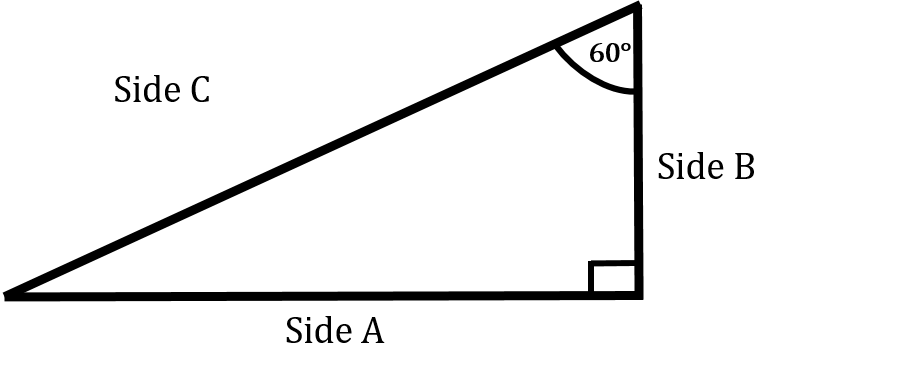
	</div>


	</div>
<div class="chapter standard " id="chapter-introduction-to-trigonometry" title="Introduction to Trigonometry">
	<div class="chapter-title-wrap">
		<p class="chapter-number">16</p>
		<h1 class="chapter-title">Introduction to Trigonometry</h1>
								</div>
	<div class="ugc chapter-ugc">
				 <p style="text-align: center">Click play on the following audio player to listen along as you read this section.</p> <div class="textbox interactive-content interactive-content--oembed"><span class="interactive-content__icon"></span> <p>One or more interactive elements has been excluded from this version of the text. You can view them online here: <a href="#oembed-2" title="4.2 Introduction to Trigonometry" data-url="https://pressbooks.bccampus.ca/mathfortradesvolume3/?p=522#oembed-2">https://pressbooks.bccampus.ca/mathfortradesvolume3/?p=522#oembed-2</a> </p> </div> <p>&nbsp;</p> <p>In the last section we took a look at the basics of triangles. We used the Pythagorean theorem to solve for any side of a right triangle. The only requirement was that we know what the length of the other two sides were.</p> <p>When using the Pythagorean theorem we didn’t need to know any of the angles within the triangle. The only thing we needed to make sure was that one of the angles was a right angle.</p> <p>Take a look at the drawing below. It shows a right triangle with the other two angles both being forty five degrees.<a href="https://pressbooks.bccampus.ca/mathfortradesvolume3/wp-content/uploads/sites/1574/2022/01/Picture1-2.png" data-url="https://pressbooks.bccampus.ca/mathfortradesvolume3/wp-content/uploads/sites/1574/2022/01/Picture1-2.png"><img class="aligncenter wp-image-653" src="https://pressbooks.bccampus.ca/mathfortradesvolume3/wp-content/uploads/sites/1574/2022/01/Picture1-2.png" alt="A 45 Degree right triangle with sides A, B, and C." width="396" height="227" srcset="https://pressbooks.bccampus.ca/mathfortradesvolume3/wp-content/uploads/sites/1574/2022/01/Picture1-2.png 818w, https://pressbooks.bccampus.ca/mathfortradesvolume3/wp-content/uploads/sites/1574/2022/01/Picture1-2-300x172.png 300w, https://pressbooks.bccampus.ca/mathfortradesvolume3/wp-content/uploads/sites/1574/2022/01/Picture1-2-768x440.png 768w, https://pressbooks.bccampus.ca/mathfortradesvolume3/wp-content/uploads/sites/1574/2022/01/Picture1-2-65x37.png 65w, https://pressbooks.bccampus.ca/mathfortradesvolume3/wp-content/uploads/sites/1574/2022/01/Picture1-2-225x129.png 225w, https://pressbooks.bccampus.ca/mathfortradesvolume3/wp-content/uploads/sites/1574/2022/01/Picture1-2-350x201.png 350w" sizes="auto, (max-width: 396px) 100vw, 396px" title="" /></a></p> <p>This is a special triangle when dealing with the construction trades. When piping is offset it’s quite often done using forty five degree fittings. What we end up making is this special version of a triangle.</p> <p>Some of you may already have run across this in either your studies or even in the field. What you might remember is that side “C” is 1.414 times larger than either side “A” or side “B”.</p> <p>So how did we determine that? Well that number comes from trigonometry.&nbsp;It is also the case that side A and B are equal.</p> <p>Trigonometry is a system which allows us to calculate the values of any angle or side in a right triangle. It deals with more than what Pythagoras figured out when dealing with triangles.</p> <p>Given enough information we can find any of the angles or any of the sides. Trigonometry allows us to work with triangles to a much greater extent than we have being doing up to this point.</p> <h1>The Relationship between the Sides and Angles in a Right Triangle</h1> <p><img class="alignleft wp-image-656" src="https://pressbooks.bccampus.ca/mathfortradesvolume3/wp-content/uploads/sites/1574/2022/01/Picture2-2.png" alt="A right triangle with sides 1, 2, 3 and angles 4, 5, 6. 5 is 90 degrees and 3 is the hypotenuse." width="221" height="212" srcset="https://pressbooks.bccampus.ca/mathfortradesvolume3/wp-content/uploads/sites/1574/2022/01/Picture2-2.png 468w, https://pressbooks.bccampus.ca/mathfortradesvolume3/wp-content/uploads/sites/1574/2022/01/Picture2-2-300x287.png 300w, https://pressbooks.bccampus.ca/mathfortradesvolume3/wp-content/uploads/sites/1574/2022/01/Picture2-2-65x62.png 65w, https://pressbooks.bccampus.ca/mathfortradesvolume3/wp-content/uploads/sites/1574/2022/01/Picture2-2-225x215.png 225w, https://pressbooks.bccampus.ca/mathfortradesvolume3/wp-content/uploads/sites/1574/2022/01/Picture2-2-350x335.png 350w" sizes="auto, (max-width: 221px) 100vw, 221px" title="" /></p> <p>We noted in the last chapter that there are six pieces of information in a right triangle. There are the three sides and the three angles. The only thing we know for sure is that one of the angles is 90 degrees. So in this case number 5 is a given at 90 degrees.</p> <p>When working with trigonometry it is required that you have 3 of those 6 pieces of information given in order to figure out the other three. As just stated one of the three is the 90 degree angle. Essentially you need the 90 degree plus two other pieces of information.</p> <p>Remember we also named the three sides of the triangle depending on the angle of reference. The names become very important when dealing with trigonometry. They end up defining how we go about finding the unknown variable.</p> <p><img class="aligncenter wp-image-657" src="https://pressbooks.bccampus.ca/mathfortradesvolume3/wp-content/uploads/sites/1574/2022/01/Picture3-2.png" alt="A right triangle with labeled hypotenuse, opposite, and adjacent sides." width="304" height="163" srcset="https://pressbooks.bccampus.ca/mathfortradesvolume3/wp-content/uploads/sites/1574/2022/01/Picture3-2.png 702w, https://pressbooks.bccampus.ca/mathfortradesvolume3/wp-content/uploads/sites/1574/2022/01/Picture3-2-300x161.png 300w, https://pressbooks.bccampus.ca/mathfortradesvolume3/wp-content/uploads/sites/1574/2022/01/Picture3-2-65x35.png 65w, https://pressbooks.bccampus.ca/mathfortradesvolume3/wp-content/uploads/sites/1574/2022/01/Picture3-2-225x121.png 225w, https://pressbooks.bccampus.ca/mathfortradesvolume3/wp-content/uploads/sites/1574/2022/01/Picture3-2-350x187.png 350w" sizes="auto, (max-width: 304px) 100vw, 304px" title="" /></p> <p>This is an important point when dealing with trigonometry. Naming the sides of a triangle properly allows us to use the formulas in trigonometry properly. This leads us into the next part part……the angles.</p> <h1>The Angles</h1> <p>This topic might get a little tricky so pay attention.</p> <p><img class="aligncenter wp-image-658" src="https://pressbooks.bccampus.ca/mathfortradesvolume3/wp-content/uploads/sites/1574/2022/01/Picture4-2.png" alt="Attention" width="301" height="100" srcset="https://pressbooks.bccampus.ca/mathfortradesvolume3/wp-content/uploads/sites/1574/2022/01/Picture4-2.png 693w, https://pressbooks.bccampus.ca/mathfortradesvolume3/wp-content/uploads/sites/1574/2022/01/Picture4-2-300x100.png 300w, https://pressbooks.bccampus.ca/mathfortradesvolume3/wp-content/uploads/sites/1574/2022/01/Picture4-2-65x22.png 65w, https://pressbooks.bccampus.ca/mathfortradesvolume3/wp-content/uploads/sites/1574/2022/01/Picture4-2-225x75.png 225w, https://pressbooks.bccampus.ca/mathfortradesvolume3/wp-content/uploads/sites/1574/2022/01/Picture4-2-350x116.png 350w" sizes="auto, (max-width: 301px) 100vw, 301px" title="" /></p> <p>Angles within a right triangle can be referred to by the relationship between two of the sides within that triangle. We’ll start by stating the three names that we will be working with.</p> <p style="text-align: center"><strong>Sine&nbsp;&nbsp;&nbsp;&nbsp;&nbsp;&nbsp;&nbsp;&nbsp;&nbsp;&nbsp;&nbsp;&nbsp;&nbsp;&nbsp;&nbsp;&nbsp;&nbsp;&nbsp; Cosine &nbsp;&nbsp;&nbsp;&nbsp;&nbsp;&nbsp;&nbsp;&nbsp;&nbsp;&nbsp;&nbsp;&nbsp;&nbsp;&nbsp;&nbsp;&nbsp;&nbsp;&nbsp;&nbsp; Tangent</strong></p> <p>It would be fair to say that these names refer more to the relationship between sides than to the actual names of the angles.</p> <p>For example, sine is the relationship between the opposite side and the hypotenuse. The relationship between the two will give you a number and this number will generate an angle using a calculator.</p> <p>Let’s go back to our triangle with a reference angle “A” to see how this works.</p> <p><img class="aligncenter wp-image-855" src="https://pressbooks.bccampus.ca/mathfortradesvolume3/wp-content/uploads/sites/1574/2022/01/Picture6-3.png" alt="A right triangle with an angle A and hypotenuse, opposite, and adjacent sides." width="301" height="161" srcset="https://pressbooks.bccampus.ca/mathfortradesvolume3/wp-content/uploads/sites/1574/2022/01/Picture6-3.png 702w, https://pressbooks.bccampus.ca/mathfortradesvolume3/wp-content/uploads/sites/1574/2022/01/Picture6-3-300x160.png 300w, https://pressbooks.bccampus.ca/mathfortradesvolume3/wp-content/uploads/sites/1574/2022/01/Picture6-3-65x35.png 65w, https://pressbooks.bccampus.ca/mathfortradesvolume3/wp-content/uploads/sites/1574/2022/01/Picture6-3-225x120.png 225w, https://pressbooks.bccampus.ca/mathfortradesvolume3/wp-content/uploads/sites/1574/2022/01/Picture6-3-350x187.png 350w" sizes="auto, (max-width: 301px) 100vw, 301px" title="" /></p> <p>Our reference angle is “A”. From this we can derive which side is the opposite, adjacent and hypotenuse.</p> <p>The idea is the value of angle “A” defines the relationship between the sides.</p> <p>This is where trigonometry steps in and states how everything goes together. What you end up with is the following.</p> <p style="text-align: center"><strong>SOH CAH TOA</strong></p> <p>What SOH CAH TOA defines is actually the three formulas we work with in trigonometry. We’ll break it down even further.</p> <table class="grid" style="border-collapse: collapse;width: 100%"><tbody><tr><td style="width: 33.3333%;text-align: center"><strong>SOH</strong></td> <td style="width: 33.3333%;text-align: center"><strong>CAH</strong></td> <td style="width: 33.3333%;text-align: center"><strong>TOA</strong></td> </tr> <tr><td style="width: 33.3333%"><img src="https://pressbooks.bccampus.ca/mathfortradesvolume3/wp-content/ql-cache/quicklatex.com-3aa7abe1ef8e35ed048f3604b6d5d611_l3.svg" class="ql-img-inline-formula quicklatex-auto-format" alt="\text{Sine } \theta = \dfrac{\text{opposite}}{\text{hypotenuse}}" title="Rendered by QuickLaTeX.com" height="40" width="160" style="vertical-align: -16px;" /></td> <td style="width: 33.3333%"><img src="https://pressbooks.bccampus.ca/mathfortradesvolume3/wp-content/ql-cache/quicklatex.com-87f180b5ba7238ce11f9284ee38e669a_l3.svg" class="ql-img-inline-formula quicklatex-auto-format" alt="\text{Cosine } \theta = \dfrac{\text{adjacent}}{\text{hypotenuse}}" title="Rendered by QuickLaTeX.com" height="40" width="179" style="vertical-align: -16px;" /></td> <td style="width: 33.3333%"><img src="https://pressbooks.bccampus.ca/mathfortradesvolume3/wp-content/ql-cache/quicklatex.com-aa76090f706f9d0945f1d25c82668bc0_l3.svg" class="ql-img-inline-formula quicklatex-auto-format" alt="\text{Tangent } \theta = \dfrac{\text{opposite}}{\text{adjacent}}" title="Rendered by QuickLaTeX.com" height="40" width="169" style="vertical-align: -16px;" /></td> </tr> </tbody> </table> <p>Note: the symbol “θ” is the Greek letter theta and is used to refer to the measured angle.</p> <p>If you find the relationship between the opposite side and the hypotenuse what you end up finding is the angle referred to as sine.</p> <p>Stated another way the angle of sine can be found by dividing the opposite side of the triangle by the hypotenuse.</p> <p>Trigonometry is not all that complicated in the end of the day but because there are a few words (including trigonometry) that might be unfamiliar to students it sometimes seems to be just a little out of reach.</p> <p>What we’ll do in the next parts of the chapter is break each of three formulas down into their basic parts and go through some examples. In the end of the day if you can just remember two things about trigonometry then you are almost there.</p> <div class="textbox shaded"><ol><li style="text-align: left">Trigonometry is simply the relationship between sides and the relationship between those sides will end up telling you the angle you’re dealing with.</li> <li>SOH CAH TOA is pronounced “so……ca……toe……ah”</li> </ol> </div> <p>You’re already halfway there.</p> 
	</div>


	</div>
<div class="chapter standard " id="chapter-the-sin-function" title="Using Trigonometry to Find Side Lengths">
	<div class="chapter-title-wrap">
		<p class="chapter-number">17</p>
		<h1 class="chapter-title">Using Trigonometry to Find Side Lengths</h1>
								</div>
	<div class="ugc chapter-ugc">
				 <p style="text-align: center">Click play on the following audio player to listen along as you read this section.</p> <div class="textbox interactive-content interactive-content--oembed"><span class="interactive-content__icon"></span> <p>One or more interactive elements has been excluded from this version of the text. You can view them online here: <a href="#oembed-5" title="4.3 Using Trigonometry to Find Side Lengths" data-url="https://pressbooks.bccampus.ca/mathfortradesvolume3/?p=524#oembed-5">https://pressbooks.bccampus.ca/mathfortradesvolume3/?p=524#oembed-5</a> </p> </div> <p>&nbsp;</p> <p>Our goal in this section is to take the information given to us regarding a triangle and find the missing side. Take a look at the triangle below and note the identified angle.</p> <p><a href="https://pressbooks.bccampus.ca/mathfortradesvolume3/wp-content/uploads/sites/1574/2022/01/Picture1-3.png" data-url="https://pressbooks.bccampus.ca/mathfortradesvolume3/wp-content/uploads/sites/1574/2022/01/Picture1-3.png"><img class="aligncenter wp-image-665" src="https://pressbooks.bccampus.ca/mathfortradesvolume3/wp-content/uploads/sites/1574/2022/01/Picture1-3.png" alt="A right triangle with a 30 degree angle and sides labeled hypotenuse, opposite, and adjacent." width="380" height="210" srcset="https://pressbooks.bccampus.ca/mathfortradesvolume3/wp-content/uploads/sites/1574/2022/01/Picture1-3.png 771w, https://pressbooks.bccampus.ca/mathfortradesvolume3/wp-content/uploads/sites/1574/2022/01/Picture1-3-300x166.png 300w, https://pressbooks.bccampus.ca/mathfortradesvolume3/wp-content/uploads/sites/1574/2022/01/Picture1-3-768x424.png 768w, https://pressbooks.bccampus.ca/mathfortradesvolume3/wp-content/uploads/sites/1574/2022/01/Picture1-3-65x36.png 65w, https://pressbooks.bccampus.ca/mathfortradesvolume3/wp-content/uploads/sites/1574/2022/01/Picture1-3-225x124.png 225w, https://pressbooks.bccampus.ca/mathfortradesvolume3/wp-content/uploads/sites/1574/2022/01/Picture1-3-350x193.png 350w" sizes="auto, (max-width: 380px) 100vw, 380px" title="" /></a></p> <p>Given the identified angle we can then name each of the three sides. If we know one of those sides we could find the other two.</p> <p>This is where we use trigonometry. Let’s say the side we know is the opposite side which has a value of 7. And then let’s say the side we wanted to find out was the hypotenuse.</p> <p><a href="https://pressbooks.bccampus.ca/mathfortradesvolume3/wp-content/uploads/sites/1574/2022/01/Picture2-3.png" data-url="https://pressbooks.bccampus.ca/mathfortradesvolume3/wp-content/uploads/sites/1574/2022/01/Picture2-3.png"><img class="aligncenter wp-image-666" src="https://pressbooks.bccampus.ca/mathfortradesvolume3/wp-content/uploads/sites/1574/2022/01/Picture2-3.png" alt="A right triangle with a 30 degree angle where the opposite side is 7 and the adjacent and hypotenuse are unknown." width="352" height="197" srcset="https://pressbooks.bccampus.ca/mathfortradesvolume3/wp-content/uploads/sites/1574/2022/01/Picture2-3.png 841w, https://pressbooks.bccampus.ca/mathfortradesvolume3/wp-content/uploads/sites/1574/2022/01/Picture2-3-300x168.png 300w, https://pressbooks.bccampus.ca/mathfortradesvolume3/wp-content/uploads/sites/1574/2022/01/Picture2-3-768x430.png 768w, https://pressbooks.bccampus.ca/mathfortradesvolume3/wp-content/uploads/sites/1574/2022/01/Picture2-3-65x36.png 65w, https://pressbooks.bccampus.ca/mathfortradesvolume3/wp-content/uploads/sites/1574/2022/01/Picture2-3-225x126.png 225w, https://pressbooks.bccampus.ca/mathfortradesvolume3/wp-content/uploads/sites/1574/2022/01/Picture2-3-350x196.png 350w" sizes="auto, (max-width: 352px) 100vw, 352px" title="" /></a></p> <p>In order to solve for the hypotenuse we first decide which of the three trigonometry formulas works for us. Keep in mind that the two sides we are dealing with are the opposite (which we have) and the hypotenuse (which we need to find).</p> <table class="grid" style="border-collapse: collapse;width: 100%"><tbody><tr><td style="width: 33.3333%;text-align: center"><strong>SOH</strong></td> <td style="width: 33.3333%;text-align: center"><strong>CAH</strong></td> <td style="width: 33.3333%;text-align: center"><strong>TOA</strong></td> </tr> <tr><td style="width: 33.3333%"><img src="https://pressbooks.bccampus.ca/mathfortradesvolume3/wp-content/ql-cache/quicklatex.com-3aa7abe1ef8e35ed048f3604b6d5d611_l3.svg" class="ql-img-inline-formula quicklatex-auto-format" alt="\text{Sine } \theta = \dfrac{\text{opposite}}{\text{hypotenuse}}" title="Rendered by QuickLaTeX.com" height="40" width="160" style="vertical-align: -16px;" /></td> <td style="width: 33.3333%"><img src="https://pressbooks.bccampus.ca/mathfortradesvolume3/wp-content/ql-cache/quicklatex.com-87f180b5ba7238ce11f9284ee38e669a_l3.svg" class="ql-img-inline-formula quicklatex-auto-format" alt="\text{Cosine } \theta = \dfrac{\text{adjacent}}{\text{hypotenuse}}" title="Rendered by QuickLaTeX.com" height="40" width="179" style="vertical-align: -16px;" /></td> <td style="width: 33.3333%"><img src="https://pressbooks.bccampus.ca/mathfortradesvolume3/wp-content/ql-cache/quicklatex.com-aa76090f706f9d0945f1d25c82668bc0_l3.svg" class="ql-img-inline-formula quicklatex-auto-format" alt="\text{Tangent } \theta = \dfrac{\text{opposite}}{\text{adjacent}}" title="Rendered by QuickLaTeX.com" height="40" width="169" style="vertical-align: -16px;" /></td> </tr> </tbody> </table> <p>From the three formulas we can see that the sine formula will work as it deals with the opposite and the hypotenuse. Now we need to rework the formula to solve for the hypotenuse.</p> <p style="text-align: center"><img src="https://pressbooks.bccampus.ca/mathfortradesvolume3/wp-content/ql-cache/quicklatex.com-3aa7abe1ef8e35ed048f3604b6d5d611_l3.svg" class="ql-img-inline-formula quicklatex-auto-format" alt="\text{Sine } \theta = \dfrac{\text{opposite}}{\text{hypotenuse}}" title="Rendered by QuickLaTeX.com" height="40" width="160" style="vertical-align: -16px;" /></p> <p style="text-align: center"><img src="https://pressbooks.bccampus.ca/mathfortradesvolume3/wp-content/ql-cache/quicklatex.com-b6ec622483bd718c7808a58be7eb86a8_l3.svg" class="ql-img-inline-formula quicklatex-auto-format" alt="\text{hypotenuse } = \dfrac{\text{opposite}}{\text{Sine } \theta}" title="Rendered by QuickLaTeX.com" height="36" width="183" style="vertical-align: -12px;" /></p> <p>The next step is to plug in the numbers and get an answer.</p> <p style="text-align: center"><img src="https://pressbooks.bccampus.ca/mathfortradesvolume3/wp-content/ql-cache/quicklatex.com-80586ec2699d1f87659fb275305be7a2_l3.svg" class="ql-img-inline-formula quicklatex-auto-format" alt="\text{hypotenuse } = \dfrac{7}{\text{Sine }30}" title="Rendered by QuickLaTeX.com" height="37" width="175" style="vertical-align: -12px;" /></p> <p>&nbsp;</p> <p><img class="wp-image-87 alignleft" src="https://pressbooks.bccampus.ca/mathfortradesvolume3/wp-content/uploads/sites/1574/2021/12/Picture31-300x223.png" alt="" width="237" height="176" srcset="https://pressbooks.bccampus.ca/mathfortradesvolume3/wp-content/uploads/sites/1574/2021/12/Picture31-300x223.png 300w, https://pressbooks.bccampus.ca/mathfortradesvolume3/wp-content/uploads/sites/1574/2021/12/Picture31-65x48.png 65w, https://pressbooks.bccampus.ca/mathfortradesvolume3/wp-content/uploads/sites/1574/2021/12/Picture31-225x167.png 225w, https://pressbooks.bccampus.ca/mathfortradesvolume3/wp-content/uploads/sites/1574/2021/12/Picture31-350x260.png 350w, https://pressbooks.bccampus.ca/mathfortradesvolume3/wp-content/uploads/sites/1574/2021/12/Picture31.png 479w" sizes="auto, (max-width: 237px) 100vw, 237px" title="" /></p> <p>So far so good except what do we do with the “sine 30”. That’s not a number we can work with.</p> <p>Well sine 30 is the number we get from using trigonometry. What this represents is the relationship between the opposite and the hypotenuse with the identified angle being 30 degrees.</p> <p>What we need to do now is plug that into our calculator to get the number that represents sine 30. What you should find on your calculator in a button labelled “SIN”.</p> <p>This stands for sine. Now hit that button and enter 30. What do you get? Check out below to see if you get the same thing.</p> <p><a href="https://pressbooks.bccampus.ca/mathfortradesvolume3/wp-content/uploads/sites/1574/2022/01/Picture6-2.png" data-url="https://pressbooks.bccampus.ca/mathfortradesvolume3/wp-content/uploads/sites/1574/2022/01/Picture6-2.png"><img class="aligncenter wp-image-672" src="https://pressbooks.bccampus.ca/mathfortradesvolume3/wp-content/uploads/sites/1574/2022/01/Picture6-2.png" alt="Two calculators, showing the equation sine of 30 and the result, which is 0.50." width="444" height="206" srcset="https://pressbooks.bccampus.ca/mathfortradesvolume3/wp-content/uploads/sites/1574/2022/01/Picture6-2.png 704w, https://pressbooks.bccampus.ca/mathfortradesvolume3/wp-content/uploads/sites/1574/2022/01/Picture6-2-300x139.png 300w, https://pressbooks.bccampus.ca/mathfortradesvolume3/wp-content/uploads/sites/1574/2022/01/Picture6-2-65x30.png 65w, https://pressbooks.bccampus.ca/mathfortradesvolume3/wp-content/uploads/sites/1574/2022/01/Picture6-2-225x104.png 225w, https://pressbooks.bccampus.ca/mathfortradesvolume3/wp-content/uploads/sites/1574/2022/01/Picture6-2-350x162.png 350w" sizes="auto, (max-width: 444px) 100vw, 444px" title="" /></a></p> <p>So the sine of 30 degrees is 0.5. Here it is mathematically.</p> <p style="text-align: center"><img src="https://pressbooks.bccampus.ca/mathfortradesvolume3/wp-content/ql-cache/quicklatex.com-3aa7abe1ef8e35ed048f3604b6d5d611_l3.svg" class="ql-img-inline-formula quicklatex-auto-format" alt="\text{Sine } \theta = \dfrac{\text{opposite}}{\text{hypotenuse}}" title="Rendered by QuickLaTeX.com" height="40" width="160" style="vertical-align: -16px;" /></p> <p style="text-align: center"><img src="https://pressbooks.bccampus.ca/mathfortradesvolume3/wp-content/ql-cache/quicklatex.com-b52c41d53e7983df630d4b6bb1726756_l3.svg" class="ql-img-inline-formula quicklatex-auto-format" alt="\text{Sine } 30^\circ = \dfrac{\text{opposite}}{\text{hypotenuse}} = 0.5" title="Rendered by QuickLaTeX.com" height="40" width="224" style="vertical-align: -16px;" /></p> <p>Mathematically what this is saying is if the identified angle is 30 degrees then the relationship between the opposite and the hypotenuse is 0.5. Essentially this means that the opposite side is 0.5 times the length of the hypotenuse whenever the identified angle is 30 degrees. We can now solve for the hypotenuse.</p> <p style="text-align: center"></p><p class="ql-center-displayed-equation" style="line-height: 63px;"><span class="ql-right-eqno">&nbsp; </span> <span class="ql-left-eqno">&nbsp; </span><img src="https://pressbooks.bccampus.ca/mathfortradesvolume3/wp-content/ql-cache/quicklatex.com-27dee42402f61bde42df5a3f878b3931_l3.svg" height="63" width="136" class="ql-img-displayed-equation quicklatex-auto-format" alt="\begin{equation*}\begin{split} \text{hypotenuse} &amp;amp;= \dfrac{7}{0.5}\\ \text{hypotenuse} &amp;amp;= 14 \end{split}\end{equation}" title="Rendered by QuickLaTeX.com" /></p> <p><img class="aligncenter wp-image-675" src="https://pressbooks.bccampus.ca/mathfortradesvolume3/wp-content/uploads/sites/1574/2022/01/Picture9-2.png" alt="A right triangle with a 30 degree angle where the opposite side is 7, the hypotenuse is 14, and the adjacent is unknown." width="334" height="169" srcset="https://pressbooks.bccampus.ca/mathfortradesvolume3/wp-content/uploads/sites/1574/2022/01/Picture9-2.png 841w, https://pressbooks.bccampus.ca/mathfortradesvolume3/wp-content/uploads/sites/1574/2022/01/Picture9-2-300x152.png 300w, https://pressbooks.bccampus.ca/mathfortradesvolume3/wp-content/uploads/sites/1574/2022/01/Picture9-2-768x389.png 768w, https://pressbooks.bccampus.ca/mathfortradesvolume3/wp-content/uploads/sites/1574/2022/01/Picture9-2-65x33.png 65w, https://pressbooks.bccampus.ca/mathfortradesvolume3/wp-content/uploads/sites/1574/2022/01/Picture9-2-225x114.png 225w, https://pressbooks.bccampus.ca/mathfortradesvolume3/wp-content/uploads/sites/1574/2022/01/Picture9-2-350x177.png 350w" sizes="auto, (max-width: 334px) 100vw, 334px" title="" /></p> <p>Let’s take that same triangle we used up above and instead of trying to find the hypotenuse we’ll find the adjacent side.</p> <p><img class="aligncenter wp-image-676" src="https://pressbooks.bccampus.ca/mathfortradesvolume3/wp-content/uploads/sites/1574/2022/01/Picture10-2.png" alt="A right triangle with a 30 degree angle where the opposite side is 7, the hypotenuse is 14, and the adjacent is unknown." width="394" height="220" srcset="https://pressbooks.bccampus.ca/mathfortradesvolume3/wp-content/uploads/sites/1574/2022/01/Picture10-2.png 841w, https://pressbooks.bccampus.ca/mathfortradesvolume3/wp-content/uploads/sites/1574/2022/01/Picture10-2-300x168.png 300w, https://pressbooks.bccampus.ca/mathfortradesvolume3/wp-content/uploads/sites/1574/2022/01/Picture10-2-768x429.png 768w, https://pressbooks.bccampus.ca/mathfortradesvolume3/wp-content/uploads/sites/1574/2022/01/Picture10-2-65x36.png 65w, https://pressbooks.bccampus.ca/mathfortradesvolume3/wp-content/uploads/sites/1574/2022/01/Picture10-2-225x126.png 225w, https://pressbooks.bccampus.ca/mathfortradesvolume3/wp-content/uploads/sites/1574/2022/01/Picture10-2-350x196.png 350w" sizes="auto, (max-width: 394px) 100vw, 394px" title="" /></p> <p><span style="text-align: initial;font-size: 14pt">In this case we know what the opposite side is and we are looking to find the adjacent side. Once again let’s look at the three trigonometry functions and see which one works for us.</span></p> <table class="grid" style="border-collapse: collapse;width: 100%"><tbody><tr><td style="width: 33.3333%;text-align: center"><strong>SOH</strong></td> <td style="width: 33.3333%;text-align: center"><strong>CAH</strong></td> <td style="width: 33.3333%;text-align: center"><strong>TOA</strong></td> </tr> <tr><td style="width: 33.3333%"><img src="https://pressbooks.bccampus.ca/mathfortradesvolume3/wp-content/ql-cache/quicklatex.com-3aa7abe1ef8e35ed048f3604b6d5d611_l3.svg" class="ql-img-inline-formula quicklatex-auto-format" alt="\text{Sine } \theta = \dfrac{\text{opposite}}{\text{hypotenuse}}" title="Rendered by QuickLaTeX.com" height="40" width="160" style="vertical-align: -16px;" /></td> <td style="width: 33.3333%"><img src="https://pressbooks.bccampus.ca/mathfortradesvolume3/wp-content/ql-cache/quicklatex.com-87f180b5ba7238ce11f9284ee38e669a_l3.svg" class="ql-img-inline-formula quicklatex-auto-format" alt="\text{Cosine } \theta = \dfrac{\text{adjacent}}{\text{hypotenuse}}" title="Rendered by QuickLaTeX.com" height="40" width="179" style="vertical-align: -16px;" /></td> <td style="width: 33.3333%"><img src="https://pressbooks.bccampus.ca/mathfortradesvolume3/wp-content/ql-cache/quicklatex.com-aa76090f706f9d0945f1d25c82668bc0_l3.svg" class="ql-img-inline-formula quicklatex-auto-format" alt="\text{Tangent } \theta = \dfrac{\text{opposite}}{\text{adjacent}}" title="Rendered by QuickLaTeX.com" height="40" width="169" style="vertical-align: -16px;" /></td> </tr> </tbody> </table> <p>In this case we can use the tangent function. Take that formula and solve for the adjacent side.</p> <p style="text-align: center"><img src="https://pressbooks.bccampus.ca/mathfortradesvolume3/wp-content/ql-cache/quicklatex.com-7ae8ed914e01c74c61e9dbbdc1bc3b47_l3.svg" class="ql-img-inline-formula quicklatex-auto-format" alt="\text{tangent } \theta = \dfrac{\text{opposite}}{\text{adjacent}}" title="Rendered by QuickLaTeX.com" height="40" width="165" style="vertical-align: -16px;" /></p> <p style="text-align: center"><img src="https://pressbooks.bccampus.ca/mathfortradesvolume3/wp-content/ql-cache/quicklatex.com-f34fdd4f6f0e5dd1af78ba19db98d381_l3.svg" class="ql-img-inline-formula quicklatex-auto-format" alt="\text{adjacent} = \dfrac{\text{opposite}}{\text{tangent } \theta}" title="Rendered by QuickLaTeX.com" height="40" width="165" style="vertical-align: -16px;" /></p> <p>Sometimes you might see tangent written as just “TAN” in the formula. No worries though. It means the same thing as tangent.</p> <p>Now plug the numbers in.</p> <p style="text-align: center"><img src="https://pressbooks.bccampus.ca/mathfortradesvolume3/wp-content/ql-cache/quicklatex.com-35c3589d333f4ece2bc0a0ef35a68a9a_l3.svg" class="ql-img-inline-formula quicklatex-auto-format" alt="\text{adjacent} = \dfrac{7}{\text{tangent } 30}" title="Rendered by QuickLaTeX.com" height="41" width="174" style="vertical-align: -16px;" /></p> <p>Go to your calculator and put in the tangent of 30.</p> <p><img class="aligncenter wp-image-681" src="https://pressbooks.bccampus.ca/mathfortradesvolume3/wp-content/uploads/sites/1574/2022/01/Picture14-2.png" alt="A right triangle with a 30 degree angle where the opposite side is 7, the hypotenuse is 14, and the adjacent is 12.13" width="428" height="201" srcset="https://pressbooks.bccampus.ca/mathfortradesvolume3/wp-content/uploads/sites/1574/2022/01/Picture14-2.png 697w, https://pressbooks.bccampus.ca/mathfortradesvolume3/wp-content/uploads/sites/1574/2022/01/Picture14-2-300x141.png 300w, https://pressbooks.bccampus.ca/mathfortradesvolume3/wp-content/uploads/sites/1574/2022/01/Picture14-2-65x30.png 65w, https://pressbooks.bccampus.ca/mathfortradesvolume3/wp-content/uploads/sites/1574/2022/01/Picture14-2-225x106.png 225w, https://pressbooks.bccampus.ca/mathfortradesvolume3/wp-content/uploads/sites/1574/2022/01/Picture14-2-350x164.png 350w" sizes="auto, (max-width: 428px) 100vw, 428px" title="" /></p> <p>Here we are getting the relationship between the opposite and the adjacent side given that the identified angle is 30 degrees. What the number is saying is&nbsp; the opposite side is 0.577 times the length of the adjacent side. Now we can go ahead and calculate the adjacent side.</p> <p style="text-align: center"></p><p class="ql-center-displayed-equation" style="line-height: 108px;"><span class="ql-right-eqno">&nbsp; </span> <span class="ql-left-eqno">&nbsp; </span><img src="https://pressbooks.bccampus.ca/mathfortradesvolume3/wp-content/ql-cache/quicklatex.com-a84c5308415352c3c2358956f5ed7e8a_l3.svg" height="108" width="174" class="ql-img-displayed-equation quicklatex-auto-format" alt="\begin{equation*}\begin{split} \text{adjacent} &amp;amp;= \dfrac{7}{\text{tangent } 30}\\ \text{adjacent} &amp;amp;= \dfrac{7}{0.577} \\ \text{adjacent} &amp;amp;= 12.13 \end{split}\end{equation}" title="Rendered by QuickLaTeX.com" /></p> <p><a href="https://pressbooks.bccampus.ca/mathfortradesvolume3/wp-content/uploads/sites/1574/2022/01/Picture16-2.png" data-url="https://pressbooks.bccampus.ca/mathfortradesvolume3/wp-content/uploads/sites/1574/2022/01/Picture16-2.png"><img class="aligncenter wp-image-684" src="https://pressbooks.bccampus.ca/mathfortradesvolume3/wp-content/uploads/sites/1574/2022/01/Picture16-2.png" alt="A right triangle with a 30 degree angle where the opposite side is 7, the hypotenuse is 14, and the adjacent is 12.13" width="402" height="203" srcset="https://pressbooks.bccampus.ca/mathfortradesvolume3/wp-content/uploads/sites/1574/2022/01/Picture16-2.png 841w, https://pressbooks.bccampus.ca/mathfortradesvolume3/wp-content/uploads/sites/1574/2022/01/Picture16-2-300x152.png 300w, https://pressbooks.bccampus.ca/mathfortradesvolume3/wp-content/uploads/sites/1574/2022/01/Picture16-2-768x388.png 768w, https://pressbooks.bccampus.ca/mathfortradesvolume3/wp-content/uploads/sites/1574/2022/01/Picture16-2-65x33.png 65w, https://pressbooks.bccampus.ca/mathfortradesvolume3/wp-content/uploads/sites/1574/2022/01/Picture16-2-225x114.png 225w, https://pressbooks.bccampus.ca/mathfortradesvolume3/wp-content/uploads/sites/1574/2022/01/Picture16-2-350x177.png 350w" sizes="auto, (max-width: 402px) 100vw, 402px" title="" /></a></p> <p>There you have it. We knew the identified angle was 30 degrees and we had one of the sides. From that we were able to use trigonometry to find the other two sides.</p> <p>But wait! We used the sine function and the tangent function to find the missing sides but we didn’t need to use the cosine function. Maybe we should take a look at the cosine function and use the same identified angle of 30 degrees and work with that.</p> <p>First of all let’s take a look at the cosine function.</p> <table class="grid" style="border-collapse: collapse;width: 100%"><tbody><tr><td style="width: 33.3333%;text-align: center"><strong>SOH</strong></td> <td style="width: 33.3333%;text-align: center"><strong>CAH</strong></td> <td style="width: 33.3333%;text-align: center"><strong>TOA</strong></td> </tr> <tr><td style="width: 33.3333%"><img src="https://pressbooks.bccampus.ca/mathfortradesvolume3/wp-content/ql-cache/quicklatex.com-3aa7abe1ef8e35ed048f3604b6d5d611_l3.svg" class="ql-img-inline-formula quicklatex-auto-format" alt="\text{Sine } \theta = \dfrac{\text{opposite}}{\text{hypotenuse}}" title="Rendered by QuickLaTeX.com" height="40" width="160" style="vertical-align: -16px;" /></td> <td style="width: 33.3333%"><img src="https://pressbooks.bccampus.ca/mathfortradesvolume3/wp-content/ql-cache/quicklatex.com-87f180b5ba7238ce11f9284ee38e669a_l3.svg" class="ql-img-inline-formula quicklatex-auto-format" alt="\text{Cosine } \theta = \dfrac{\text{adjacent}}{\text{hypotenuse}}" title="Rendered by QuickLaTeX.com" height="40" width="179" style="vertical-align: -16px;" /></td> <td style="width: 33.3333%"><img src="https://pressbooks.bccampus.ca/mathfortradesvolume3/wp-content/ql-cache/quicklatex.com-aa76090f706f9d0945f1d25c82668bc0_l3.svg" class="ql-img-inline-formula quicklatex-auto-format" alt="\text{Tangent } \theta = \dfrac{\text{opposite}}{\text{adjacent}}" title="Rendered by QuickLaTeX.com" height="40" width="169" style="vertical-align: -16px;" /></td> </tr> </tbody> </table> <p>The cosine function requires that we have either the adjacent or the hypotenuse. I know that at this point we know both of those but for the purpose of math let’s use the adjacent to find the hypotenuse. First let’s rearrange the formula to find the hypotenuse.</p> <p style="text-align: center"><img src="https://pressbooks.bccampus.ca/mathfortradesvolume3/wp-content/ql-cache/quicklatex.com-87f180b5ba7238ce11f9284ee38e669a_l3.svg" class="ql-img-inline-formula quicklatex-auto-format" alt="\text{Cosine } \theta = \dfrac{\text{adjacent}}{\text{hypotenuse}}" title="Rendered by QuickLaTeX.com" height="40" width="179" style="vertical-align: -16px;" /></p> <p style="text-align: center"></p><p class="ql-center-displayed-equation" style="line-height: 79px;"><span class="ql-right-eqno">&nbsp; </span> <span class="ql-left-eqno">&nbsp; </span><img src="https://pressbooks.bccampus.ca/mathfortradesvolume3/wp-content/ql-cache/quicklatex.com-fe33c1469a895aaa150ebec3e86c449c_l3.svg" height="79" width="188" class="ql-img-displayed-equation quicklatex-auto-format" alt="\begin{equation*}\begin{split} \text{hypotenuse} &amp;amp;= \dfrac{\text{adjacent}}{\text{Cosine }\theta} \\ \text{hypotenuse} &amp;amp;= \dfrac{12.13}{\text{Cosine }30} \end{split}\end{equation}" title="Rendered by QuickLaTeX.com" /></p> <p>From this point we need to go back to our calculator to find&nbsp; the cosine of 30 degrees. Remember that this number represents the relationship between the adjacent side and the hypotenuse.</p> <p><a href="https://pressbooks.bccampus.ca/mathfortradesvolume3/wp-content/uploads/sites/1574/2022/01/Picture20-2.png" data-url="https://pressbooks.bccampus.ca/mathfortradesvolume3/wp-content/uploads/sites/1574/2022/01/Picture20-2.png"><img class="aligncenter wp-image-688" src="https://pressbooks.bccampus.ca/mathfortradesvolume3/wp-content/uploads/sites/1574/2022/01/Picture20-2.png" alt="Two calculators, showing the equation cosine of 30 and the result, which is 0.866" width="445" height="209" srcset="https://pressbooks.bccampus.ca/mathfortradesvolume3/wp-content/uploads/sites/1574/2022/01/Picture20-2.png 697w, https://pressbooks.bccampus.ca/mathfortradesvolume3/wp-content/uploads/sites/1574/2022/01/Picture20-2-300x141.png 300w, https://pressbooks.bccampus.ca/mathfortradesvolume3/wp-content/uploads/sites/1574/2022/01/Picture20-2-65x30.png 65w, https://pressbooks.bccampus.ca/mathfortradesvolume3/wp-content/uploads/sites/1574/2022/01/Picture20-2-225x106.png 225w, https://pressbooks.bccampus.ca/mathfortradesvolume3/wp-content/uploads/sites/1574/2022/01/Picture20-2-350x164.png 350w" sizes="auto, (max-width: 445px) 100vw, 445px" title="" /></a></p> <p>Take that number and plug it in to the formula and see what you get.</p> <p style="text-align: center"></p><p class="ql-center-displayed-equation" style="line-height: 104px;"><span class="ql-right-eqno">&nbsp; </span> <span class="ql-left-eqno">&nbsp; </span><img src="https://pressbooks.bccampus.ca/mathfortradesvolume3/wp-content/ql-cache/quicklatex.com-c4e8b62c9b9aa55d13ae259780865574_l3.svg" height="104" width="188" class="ql-img-displayed-equation quicklatex-auto-format" alt="\begin{equation*}\begin{split} \text{hypotenuse} &amp;amp;= \dfrac{12.13}{\text{Cosine } 30} \\ \text{hypotenuse} &amp;amp;= \dfrac{12.13}{0.866} \\ \text{hypotenuse} &amp;amp;= 14.20 \end{split}\end{equation}" title="Rendered by QuickLaTeX.com" /></p> <p>We are off by just a little as we had previously calculated that the hypotenuse was 14. This slight difference is due to rounding during our calculations. In the end of the day we used all three trigonometry formulas (or trigonometric functions) to solve for the sides of the triangle.</p> <p>At this point we’ll do a couple more examples before letting you tackle a few on your own.</p> <div class="textbox textbox--examples"><div class="textbox__header"><p class="textbox__title">Example</p> </div> <div class="textbox__content"><p><a href="https://pressbooks.bccampus.ca/mathfortradesvolume3/wp-content/uploads/sites/1574/2022/01/Picture22-2.png" data-url="https://pressbooks.bccampus.ca/mathfortradesvolume3/wp-content/uploads/sites/1574/2022/01/Picture22-2.png"><img class="alignleft wp-image-691" src="https://pressbooks.bccampus.ca/mathfortradesvolume3/wp-content/uploads/sites/1574/2022/01/Picture22-2.png" alt="A right triangle with a 60 degree angle with opposite side A, adjacent side B, and hypotenuse C." width="301" height="153" srcset="https://pressbooks.bccampus.ca/mathfortradesvolume3/wp-content/uploads/sites/1574/2022/01/Picture22-2.png 735w, https://pressbooks.bccampus.ca/mathfortradesvolume3/wp-content/uploads/sites/1574/2022/01/Picture22-2-300x153.png 300w, https://pressbooks.bccampus.ca/mathfortradesvolume3/wp-content/uploads/sites/1574/2022/01/Picture22-2-65x33.png 65w, https://pressbooks.bccampus.ca/mathfortradesvolume3/wp-content/uploads/sites/1574/2022/01/Picture22-2-225x114.png 225w, https://pressbooks.bccampus.ca/mathfortradesvolume3/wp-content/uploads/sites/1574/2022/01/Picture22-2-350x178.png 350w" sizes="auto, (max-width: 301px) 100vw, 301px" title="" /></a></p> <p>&nbsp;</p> <p>Find the length of side B given that side A is 14 and the identified angle is 60 degrees.</p> <p>&nbsp;</p> <p><strong>Step 1:</strong> Figure out which of the three trigonometry formulas you will be using.</p> <p>In this case side A is the opposite side and side B is the adjacent side. We also know that the identified angle is 60 degrees. We will use tangent as we know the opposite side and need to find the adjacent side.</p> <p style="text-align: center"><img src="https://pressbooks.bccampus.ca/mathfortradesvolume3/wp-content/ql-cache/quicklatex.com-aa76090f706f9d0945f1d25c82668bc0_l3.svg" class="ql-img-inline-formula quicklatex-auto-format" alt="\text{Tangent } \theta = \dfrac{\text{opposite}}{\text{adjacent}}" title="Rendered by QuickLaTeX.com" height="40" width="169" style="vertical-align: -16px;" /></p> <p><strong>Step 2:&nbsp;</strong>Rework the formula to solve for the adjacent side.</p> <p style="text-align: center"><img src="https://pressbooks.bccampus.ca/mathfortradesvolume3/wp-content/ql-cache/quicklatex.com-aa76090f706f9d0945f1d25c82668bc0_l3.svg" class="ql-img-inline-formula quicklatex-auto-format" alt="\text{Tangent } \theta = \dfrac{\text{opposite}}{\text{adjacent}}" title="Rendered by QuickLaTeX.com" height="40" width="169" style="vertical-align: -16px;" /></p> <p style="text-align: center"><img src="https://pressbooks.bccampus.ca/mathfortradesvolume3/wp-content/ql-cache/quicklatex.com-25dae48232bdf5940b09d70babf9ec39_l3.svg" class="ql-img-inline-formula quicklatex-auto-format" alt="\text{adjacent} = \dfrac{\text{opposite}}{\text{tangent }\theta}" title="Rendered by QuickLaTeX.com" height="40" width="165" style="vertical-align: -16px;" /></p> <p><strong>Step 3: </strong>Plug in the numbers and solve.</p> <p style="text-align: center"></p><p class="ql-center-displayed-equation" style="line-height: 107px;"><span class="ql-right-eqno">&nbsp; </span> <span class="ql-left-eqno">&nbsp; </span><img src="https://pressbooks.bccampus.ca/mathfortradesvolume3/wp-content/ql-cache/quicklatex.com-8437a029efdb5e2e3bd49a74c3cc256d_l3.svg" height="107" width="174" class="ql-img-displayed-equation quicklatex-auto-format" alt="\begin{equation*}\begin{split} \text{adjacent} &amp;amp;= \dfrac{14}{\text{tangent } 60} \\ \text{adjacent} &amp;amp;= \dfrac{14}{1.73} \\ \text{adjacent} &amp;amp;= 8.09 \end{split}\end{equation}" title="Rendered by QuickLaTeX.com" /></p> </div> </div> <div class="textbox textbox--examples"><div class="textbox__header"><p class="textbox__title">Example</p> </div> <div class="textbox__content"><p><a href="https://pressbooks.bccampus.ca/mathfortradesvolume3/wp-content/uploads/sites/1574/2022/01/Picture26-2.png" data-url="https://pressbooks.bccampus.ca/mathfortradesvolume3/wp-content/uploads/sites/1574/2022/01/Picture26-2.png"><img class="alignleft wp-image-695" src="https://pressbooks.bccampus.ca/mathfortradesvolume3/wp-content/uploads/sites/1574/2022/01/Picture26-2.png" alt="A right triangle with a 23 degree angle with adjacent side A, opposite side B, and hypotenuse C." width="322" height="139" srcset="https://pressbooks.bccampus.ca/mathfortradesvolume3/wp-content/uploads/sites/1574/2022/01/Picture26-2.png 736w, https://pressbooks.bccampus.ca/mathfortradesvolume3/wp-content/uploads/sites/1574/2022/01/Picture26-2-300x129.png 300w, https://pressbooks.bccampus.ca/mathfortradesvolume3/wp-content/uploads/sites/1574/2022/01/Picture26-2-65x28.png 65w, https://pressbooks.bccampus.ca/mathfortradesvolume3/wp-content/uploads/sites/1574/2022/01/Picture26-2-225x97.png 225w, https://pressbooks.bccampus.ca/mathfortradesvolume3/wp-content/uploads/sites/1574/2022/01/Picture26-2-350x151.png 350w" sizes="auto, (max-width: 322px) 100vw, 322px" title="" /></a></p> <p>Solve for side C if side A is 17 and the identified angle is 23 degrees.</p> <p>&nbsp;</p> <p><strong>Step 1:</strong> Figure out which of the three trigonometry formulas you’ll be using.</p> <p>In this case side B is the opposite side and side A is the adjacent side. We are looking to find side C which is the hypotenuse. We know the identified angle is 23 degrees and we know that the adjacent side is 17. We will end up using cosine so solve this question.</p> <p style="text-align: center"><img src="https://pressbooks.bccampus.ca/mathfortradesvolume3/wp-content/ql-cache/quicklatex.com-87f180b5ba7238ce11f9284ee38e669a_l3.svg" class="ql-img-inline-formula quicklatex-auto-format" alt="\text{Cosine } \theta = \dfrac{\text{adjacent}}{\text{hypotenuse}}" title="Rendered by QuickLaTeX.com" height="40" width="179" style="vertical-align: -16px;" /></p> <p><strong>Step 2:&nbsp;</strong>Rework the formula to solve for the hypotenuse.</p> <p style="text-align: center"><img src="https://pressbooks.bccampus.ca/mathfortradesvolume3/wp-content/ql-cache/quicklatex.com-87f180b5ba7238ce11f9284ee38e669a_l3.svg" class="ql-img-inline-formula quicklatex-auto-format" alt="\text{Cosine } \theta = \dfrac{\text{adjacent}}{\text{hypotenuse}}" title="Rendered by QuickLaTeX.com" height="40" width="179" style="vertical-align: -16px;" /></p> <p style="text-align: center"><img src="https://pressbooks.bccampus.ca/mathfortradesvolume3/wp-content/ql-cache/quicklatex.com-17724ff2f92921cecc60531c1eec4de1_l3.svg" class="ql-img-inline-formula quicklatex-auto-format" alt="\text{hypotenuse} = \dfrac{\text{adjacent}}{\text{Cosine }\theta}" title="Rendered by QuickLaTeX.com" height="36" width="179" style="vertical-align: -12px;" /></p> <p>&nbsp;</p> <p><strong>Step 3: </strong>Plug in the numbers and solve.</p> <p style="text-align: center"></p><p class="ql-center-displayed-equation" style="line-height: 105px;"><span class="ql-right-eqno">&nbsp; </span> <span class="ql-left-eqno">&nbsp; </span><img src="https://pressbooks.bccampus.ca/mathfortradesvolume3/wp-content/ql-cache/quicklatex.com-6c2cbd259abe8b0deb60fdfa9c72673d_l3.svg" height="105" width="188" class="ql-img-displayed-equation quicklatex-auto-format" alt="\begin{equation*}\begin{split} \text{hypotenuse} &amp;amp;= \dfrac{17}{\text{Cosine } 23} \\ \text{hypotenuse} &amp;amp;= \dfrac{17}{0.92} \\ \text{hypotenuse} &amp;amp;= 18.48 \end{split}\end{equation}" title="Rendered by QuickLaTeX.com" /></p> </div> </div> <p>Now try a couple questions for yourself. Make sure to check the video answers once you are done.</p> <h1>Practice Questions</h1> <div class="textbox textbox--exercises"><div class="textbox__header"><p class="textbox__title">Question 1</p> </div> <div class="textbox__content"><p><a href="https://pressbooks.bccampus.ca/mathfortradesvolume3/wp-content/uploads/sites/1574/2022/01/Picture30.png" data-url="https://pressbooks.bccampus.ca/mathfortradesvolume3/wp-content/uploads/sites/1574/2022/01/Picture30.png"><img class="alignleft wp-image-701" src="https://pressbooks.bccampus.ca/mathfortradesvolume3/wp-content/uploads/sites/1574/2022/01/Picture30.png" alt="A right triangle with a 45 degree angle with adjacent side A, opposite side B, and hypotenuse C." width="278" height="212" srcset="https://pressbooks.bccampus.ca/mathfortradesvolume3/wp-content/uploads/sites/1574/2022/01/Picture30.png 490w, https://pressbooks.bccampus.ca/mathfortradesvolume3/wp-content/uploads/sites/1574/2022/01/Picture30-300x228.png 300w, https://pressbooks.bccampus.ca/mathfortradesvolume3/wp-content/uploads/sites/1574/2022/01/Picture30-65x49.png 65w, https://pressbooks.bccampus.ca/mathfortradesvolume3/wp-content/uploads/sites/1574/2022/01/Picture30-225x171.png 225w, https://pressbooks.bccampus.ca/mathfortradesvolume3/wp-content/uploads/sites/1574/2022/01/Picture30-350x266.png 350w" sizes="auto, (max-width: 278px) 100vw, 278px" title="" /></a>Find the length of side C given that the length of side B is 20.</p> <div class="textbox interactive-content interactive-content--oembed"><span class="interactive-content__icon"></span> <p>One or more interactive elements has been excluded from this version of the text. You can view them online here: <a href="#oembed-6" title="Math for Trades Using SOH CAH TOA #1 (Sine)" data-url="https://pressbooks.bccampus.ca/mathfortradesvolume3/?p=524#oembed-6">https://pressbooks.bccampus.ca/mathfortradesvolume3/?p=524#oembed-6</a> </p> </div> </div> </div> <div class="textbox textbox--exercises"><div class="textbox__header"><p class="textbox__title">Question 2</p> </div> <div class="textbox__content"><p><a href="https://pressbooks.bccampus.ca/mathfortradesvolume3/wp-content/uploads/sites/1574/2022/01/Picture31.png" data-url="https://pressbooks.bccampus.ca/mathfortradesvolume3/wp-content/uploads/sites/1574/2022/01/Picture31.png"><img class="alignleft wp-image-702" src="https://pressbooks.bccampus.ca/mathfortradesvolume3/wp-content/uploads/sites/1574/2022/01/Picture31.png" alt="A right triangle with a 30 degree angle with adjacent side A, opposite side B, and hypotenuse C." width="316" height="153" srcset="https://pressbooks.bccampus.ca/mathfortradesvolume3/wp-content/uploads/sites/1574/2022/01/Picture31.png 658w, https://pressbooks.bccampus.ca/mathfortradesvolume3/wp-content/uploads/sites/1574/2022/01/Picture31-300x145.png 300w, https://pressbooks.bccampus.ca/mathfortradesvolume3/wp-content/uploads/sites/1574/2022/01/Picture31-65x31.png 65w, https://pressbooks.bccampus.ca/mathfortradesvolume3/wp-content/uploads/sites/1574/2022/01/Picture31-225x109.png 225w, https://pressbooks.bccampus.ca/mathfortradesvolume3/wp-content/uploads/sites/1574/2022/01/Picture31-350x169.png 350w" sizes="auto, (max-width: 316px) 100vw, 316px" title="" /></a>Find the length of side A given that the length of side C is 29.</p> <div class="textbox interactive-content interactive-content--oembed"><span class="interactive-content__icon"></span> <p>One or more interactive elements has been excluded from this version of the text. You can view them online here: <a href="#oembed-7" title="Math for Trades Using SOH CAH TOA #2 (Cosine)" data-url="https://pressbooks.bccampus.ca/mathfortradesvolume3/?p=524#oembed-7">https://pressbooks.bccampus.ca/mathfortradesvolume3/?p=524#oembed-7</a> </p> </div> </div> </div> <div class="textbox textbox--exercises"><div class="textbox__header"><p class="textbox__title">Question 3</p> </div> <div class="textbox__content"><p><a href="https://pressbooks.bccampus.ca/mathfortradesvolume3/wp-content/uploads/sites/1574/2022/01/Picture32.png" data-url="https://pressbooks.bccampus.ca/mathfortradesvolume3/wp-content/uploads/sites/1574/2022/01/Picture32.png"><img class="alignleft wp-image-703" src="https://pressbooks.bccampus.ca/mathfortradesvolume3/wp-content/uploads/sites/1574/2022/01/Picture32.png" alt="A right triangle with a 60 degree angle with opposite side A, adjacent side B, and hypotenuse C." width="359" height="147" srcset="https://pressbooks.bccampus.ca/mathfortradesvolume3/wp-content/uploads/sites/1574/2022/01/Picture32.png 916w, https://pressbooks.bccampus.ca/mathfortradesvolume3/wp-content/uploads/sites/1574/2022/01/Picture32-300x123.png 300w, https://pressbooks.bccampus.ca/mathfortradesvolume3/wp-content/uploads/sites/1574/2022/01/Picture32-768x314.png 768w, https://pressbooks.bccampus.ca/mathfortradesvolume3/wp-content/uploads/sites/1574/2022/01/Picture32-65x27.png 65w, https://pressbooks.bccampus.ca/mathfortradesvolume3/wp-content/uploads/sites/1574/2022/01/Picture32-225x92.png 225w, https://pressbooks.bccampus.ca/mathfortradesvolume3/wp-content/uploads/sites/1574/2022/01/Picture32-350x143.png 350w" sizes="auto, (max-width: 359px) 100vw, 359px" title="" /></a>Find the length of side A given that the length of side B is 12.</p> <div class="textbox interactive-content interactive-content--oembed"><span class="interactive-content__icon"></span> <p>One or more interactive elements has been excluded from this version of the text. You can view them online here: <a href="#oembed-8" title="Math for Trades Using SOH CAH TOA #3 (Tangent)" data-url="https://pressbooks.bccampus.ca/mathfortradesvolume3/?p=524#oembed-8">https://pressbooks.bccampus.ca/mathfortradesvolume3/?p=524#oembed-8</a> </p> </div> </div> </div> 
	</div>


	</div>
<div class="chapter standard " id="chapter-using-soh-cah-toa-to-find-angles" title="Using Trigonometry to Find Angles">
	<div class="chapter-title-wrap">
		<p class="chapter-number">18</p>
		<h1 class="chapter-title">Using Trigonometry to Find Angles</h1>
								</div>
	<div class="ugc chapter-ugc">
				 <p style="text-align: center">Click play on the following audio player to listen along as you read this section.</p> <div class="textbox interactive-content interactive-content--oembed"><span class="interactive-content__icon"></span> <p>One or more interactive elements has been excluded from this version of the text. You can view them online here: <a href="#oembed-5" title="4.4 Using Trigonometry to Find Angles" data-url="https://pressbooks.bccampus.ca/mathfortradesvolume3/?p=717#oembed-5">https://pressbooks.bccampus.ca/mathfortradesvolume3/?p=717#oembed-5</a> </p> </div> <p>In the last section we used trigonometry to find the length of different sides of a right triangle given an identified angle and the length of one side. Now we approach it from a different angle. We’ll have situations where we are given two of the side lengths and maybe all three. The unknown will now be the identified angle. We’ll know which angle it is but we won’t know the value of that angle in degrees.</p> <p>First things first. Let’s put up the SOH CAH TOA formulas just to remind us what we’re working with.</p> <table class="grid" style="border-collapse: collapse;width: 100%"><tbody><tr><td style="width: 33.3333%;text-align: center"><strong>SOH</strong></td> <td style="width: 33.3333%;text-align: center"><strong>CAH</strong></td> <td style="width: 33.3333%;text-align: center"><strong>TOA</strong></td> </tr> <tr><td style="width: 33.3333%"><img src="https://pressbooks.bccampus.ca/mathfortradesvolume3/wp-content/ql-cache/quicklatex.com-3aa7abe1ef8e35ed048f3604b6d5d611_l3.svg" class="ql-img-inline-formula quicklatex-auto-format" alt="\text{Sine } \theta = \dfrac{\text{opposite}}{\text{hypotenuse}}" title="Rendered by QuickLaTeX.com" height="40" width="160" style="vertical-align: -16px;" /></td> <td style="width: 33.3333%"><img src="https://pressbooks.bccampus.ca/mathfortradesvolume3/wp-content/ql-cache/quicklatex.com-87f180b5ba7238ce11f9284ee38e669a_l3.svg" class="ql-img-inline-formula quicklatex-auto-format" alt="\text{Cosine } \theta = \dfrac{\text{adjacent}}{\text{hypotenuse}}" title="Rendered by QuickLaTeX.com" height="40" width="179" style="vertical-align: -16px;" /></td> <td style="width: 33.3333%"><img src="https://pressbooks.bccampus.ca/mathfortradesvolume3/wp-content/ql-cache/quicklatex.com-aa76090f706f9d0945f1d25c82668bc0_l3.svg" class="ql-img-inline-formula quicklatex-auto-format" alt="\text{Tangent } \theta = \dfrac{\text{opposite}}{\text{adjacent}}" title="Rendered by QuickLaTeX.com" height="40" width="169" style="vertical-align: -16px;" /></td> </tr> </tbody> </table> <p>What we learned previously was that the identified angle created a relationship between the sides. If we had an angle of 30 degrees then that would dictate the relationship between the opposite, adjacent and hypotenuse sides. If we know one of the sides in the following diagram we could find the other two sides given that the identified and is 30 degrees.</p> <p><a href="https://pressbooks.bccampus.ca/mathfortradesvolume3/wp-content/uploads/sites/1574/2022/01/Picture31.png" data-url="https://pressbooks.bccampus.ca/mathfortradesvolume3/wp-content/uploads/sites/1574/2022/01/Picture31.png"><img class="aligncenter wp-image-702" src="https://pressbooks.bccampus.ca/mathfortradesvolume3/wp-content/uploads/sites/1574/2022/01/Picture31.png" alt="A right angle with a 30 degree angle and adjacent side A, opposite side B, and hypotenuse C." width="401" height="194" srcset="https://pressbooks.bccampus.ca/mathfortradesvolume3/wp-content/uploads/sites/1574/2022/01/Picture31.png 658w, https://pressbooks.bccampus.ca/mathfortradesvolume3/wp-content/uploads/sites/1574/2022/01/Picture31-300x145.png 300w, https://pressbooks.bccampus.ca/mathfortradesvolume3/wp-content/uploads/sites/1574/2022/01/Picture31-65x31.png 65w, https://pressbooks.bccampus.ca/mathfortradesvolume3/wp-content/uploads/sites/1574/2022/01/Picture31-225x109.png 225w, https://pressbooks.bccampus.ca/mathfortradesvolume3/wp-content/uploads/sites/1574/2022/01/Picture31-350x169.png 350w" sizes="auto, (max-width: 401px) 100vw, 401px" title="" /></a></p> <p>We are now doing the reverse. We’ll know the sides so we can calculate the relationship between them but then we have to translate that relationship into an angle. That’s the new goal. Take a look at the drawing below to see what I mean.</p> <p><a href="https://pressbooks.bccampus.ca/mathfortradesvolume3/wp-content/uploads/sites/1574/2022/02/Picture1.png" data-url="https://pressbooks.bccampus.ca/mathfortradesvolume3/wp-content/uploads/sites/1574/2022/02/Picture1.png"><img class="aligncenter wp-image-721" src="https://pressbooks.bccampus.ca/mathfortradesvolume3/wp-content/uploads/sites/1574/2022/02/Picture1.png" alt="A right triangle with adjacent side A equal to 4, opposite side B equal to 3, and hypotenuse C equal to 5. Angle is unknown." width="356" height="196" srcset="https://pressbooks.bccampus.ca/mathfortradesvolume3/wp-content/uploads/sites/1574/2022/02/Picture1.png 970w, https://pressbooks.bccampus.ca/mathfortradesvolume3/wp-content/uploads/sites/1574/2022/02/Picture1-300x165.png 300w, https://pressbooks.bccampus.ca/mathfortradesvolume3/wp-content/uploads/sites/1574/2022/02/Picture1-768x423.png 768w, https://pressbooks.bccampus.ca/mathfortradesvolume3/wp-content/uploads/sites/1574/2022/02/Picture1-65x36.png 65w, https://pressbooks.bccampus.ca/mathfortradesvolume3/wp-content/uploads/sites/1574/2022/02/Picture1-225x124.png 225w, https://pressbooks.bccampus.ca/mathfortradesvolume3/wp-content/uploads/sites/1574/2022/02/Picture1-350x193.png 350w" sizes="auto, (max-width: 356px) 100vw, 356px" title="" /></a></p> <p>Let’s use the drawing above and go through the thought process.</p> <p>We know all three sides so technically we can use any of the three formulas to work with. For our purposes we’ll go with the sine function.</p> <p style="text-align: center"><img src="https://pressbooks.bccampus.ca/mathfortradesvolume3/wp-content/ql-cache/quicklatex.com-3aa7abe1ef8e35ed048f3604b6d5d611_l3.svg" class="ql-img-inline-formula quicklatex-auto-format" alt="\text{Sine } \theta = \dfrac{\text{opposite}}{\text{hypotenuse}}" title="Rendered by QuickLaTeX.com" height="40" width="160" style="vertical-align: -16px;" /></p> <p>We know that the opposite side is 3 and the hypotenuse is 5 so we can go ahead and plug in those numbers.</p> <p style="text-align: center"></p><p class="ql-center-displayed-equation" style="line-height: 104px;"><span class="ql-right-eqno">&nbsp; </span> <span class="ql-left-eqno">&nbsp; </span><img src="https://pressbooks.bccampus.ca/mathfortradesvolume3/wp-content/ql-cache/quicklatex.com-22c5be5da4061479d125100b74ba0925_l3.svg" height="104" width="160" class="ql-img-displayed-equation quicklatex-auto-format" alt="\begin{equation*}\begin{split}\text{Sine } \theta &amp;amp;= \dfrac{\text{opposite}}{\text{hypotenuse}} \\ \text{Sine } \theta &amp;amp;= \dfrac{3}{5} \\ \text{Sine } \theta &amp;amp;= 0.6\end{split}\end{equation}" title="Rendered by QuickLaTeX.com" /></p> <p>We’ve calculated that the relationship between the opposite and the hypotenuse is 0.6. The opposite is 0.6 times the length of the hypotenuse given the identified angle. The question then becomes “What is the value of the identified angle?”</p> <p><img class="alignleft wp-image-725" src="https://pressbooks.bccampus.ca/mathfortradesvolume3/wp-content/uploads/sites/1574/2022/02/Picture4-287x300.png" alt="" width="135" height="141" srcset="https://pressbooks.bccampus.ca/mathfortradesvolume3/wp-content/uploads/sites/1574/2022/02/Picture4-287x300.png 287w, https://pressbooks.bccampus.ca/mathfortradesvolume3/wp-content/uploads/sites/1574/2022/02/Picture4-65x68.png 65w, https://pressbooks.bccampus.ca/mathfortradesvolume3/wp-content/uploads/sites/1574/2022/02/Picture4-225x235.png 225w, https://pressbooks.bccampus.ca/mathfortradesvolume3/wp-content/uploads/sites/1574/2022/02/Picture4.png 343w" sizes="auto, (max-width: 135px) 100vw, 135px" title="" /></p> <p>This is where we need to go back to our calculator.</p> <p>How does this work on our calculator? When we used the sine, cosine or tangent function combined with the identified angle we were able to get the relationship between sides.</p> <p>Now we take that relationship and plug it into the calculator to get the identified angle. This is the point where things may get a bit tricky depending on what type of calculator you have.</p> <p>For most of us it should work something like the following. If you take a look at your calculator you’ll have a number of functions on it. Included in those function is the sine, cosine and tangent buttons. What you’ll also notice is that you have either a <strong>second function </strong>or a <strong>shift button.</strong></p> <p><a href="https://pressbooks.bccampus.ca/mathfortradesvolume3/wp-content/uploads/sites/1574/2022/02/Picture5.png" data-url="https://pressbooks.bccampus.ca/mathfortradesvolume3/wp-content/uploads/sites/1574/2022/02/Picture5.png"><img class="aligncenter wp-image-731" src="https://pressbooks.bccampus.ca/mathfortradesvolume3/wp-content/uploads/sites/1574/2022/02/Picture5.png" alt="Leftmost button on first row is shift. Sin, cos and tan buttons are located on the fourth row." width="201" height="392" srcset="https://pressbooks.bccampus.ca/mathfortradesvolume3/wp-content/uploads/sites/1574/2022/02/Picture5.png 371w, https://pressbooks.bccampus.ca/mathfortradesvolume3/wp-content/uploads/sites/1574/2022/02/Picture5-154x300.png 154w, https://pressbooks.bccampus.ca/mathfortradesvolume3/wp-content/uploads/sites/1574/2022/02/Picture5-65x127.png 65w, https://pressbooks.bccampus.ca/mathfortradesvolume3/wp-content/uploads/sites/1574/2022/02/Picture5-225x438.png 225w, https://pressbooks.bccampus.ca/mathfortradesvolume3/wp-content/uploads/sites/1574/2022/02/Picture5-350x682.png 350w" sizes="auto, (max-width: 201px) 100vw, 201px" title="" /></a></p> <p>If you go and press that “shift” or “second function” button what you’ll end up doing is taking those functions including the sine, cosine and tangent functions and using them for another function. Hence the name second function. In this case what you end up doing is shifting from sine, cosine and tangent to sine<sup>-1</sup>, cosine<sup>-1</sup> or tangent<sup>-1</sup>. We are essentially reversing the process.</p> <p><a href="https://pressbooks.bccampus.ca/mathfortradesvolume3/wp-content/uploads/sites/1574/2022/02/Picture6.png" data-url="https://pressbooks.bccampus.ca/mathfortradesvolume3/wp-content/uploads/sites/1574/2022/02/Picture6.png"><img class="aligncenter wp-image-733" src="https://pressbooks.bccampus.ca/mathfortradesvolume3/wp-content/uploads/sites/1574/2022/02/Picture6.png" alt="Sin, Cos and Tan buttons. Above them are the inverse sin, inverse cos, and inverse tan respectively. Press shift to access." width="307" height="140" srcset="https://pressbooks.bccampus.ca/mathfortradesvolume3/wp-content/uploads/sites/1574/2022/02/Picture6.png 724w, https://pressbooks.bccampus.ca/mathfortradesvolume3/wp-content/uploads/sites/1574/2022/02/Picture6-300x137.png 300w, https://pressbooks.bccampus.ca/mathfortradesvolume3/wp-content/uploads/sites/1574/2022/02/Picture6-65x30.png 65w, https://pressbooks.bccampus.ca/mathfortradesvolume3/wp-content/uploads/sites/1574/2022/02/Picture6-225x103.png 225w, https://pressbooks.bccampus.ca/mathfortradesvolume3/wp-content/uploads/sites/1574/2022/02/Picture6-350x160.png 350w" sizes="auto, (max-width: 307px) 100vw, 307px" title="" /></a></p> <p>Okay great but what exactly does that do for us? Once we get into that second function mode we can take the relationship between the two sides and work backwards to find the identified angle. Let’s use the example up above to see what I mean.</p> <p style="text-align: center"></p><p class="ql-center-displayed-equation" style="line-height: 104px;"><span class="ql-right-eqno">&nbsp; </span> <span class="ql-left-eqno">&nbsp; </span><img src="https://pressbooks.bccampus.ca/mathfortradesvolume3/wp-content/ql-cache/quicklatex.com-22c5be5da4061479d125100b74ba0925_l3.svg" height="104" width="160" class="ql-img-displayed-equation quicklatex-auto-format" alt="\begin{equation*}\begin{split}\text{Sine } \theta &amp;amp;= \dfrac{\text{opposite}}{\text{hypotenuse}} \\ \text{Sine } \theta &amp;amp;= \dfrac{3}{5} \\ \text{Sine } \theta &amp;amp;= 0.6\end{split}\end{equation}" title="Rendered by QuickLaTeX.com" /></p> <p>We’ve calculated that the relationship between the opposite and the hypotenuse is 0.6. We can then use the sine function, or more specifically the sin<sup>-1&nbsp;</sup>function to find the identified angle. Now what we need to plug into the calculator is as follows. We start by pressing the shift or second function button. This changes sin to sin<sup>-1.&nbsp;</sup>Now press the sin button. Then finish it off by entering in 0.6. What do you get?</p> <p style="text-align: center"><img src="https://pressbooks.bccampus.ca/mathfortradesvolume3/wp-content/ql-cache/quicklatex.com-f6e126c6f177613bc78312ff72a08ec0_l3.svg" class="ql-img-inline-formula quicklatex-auto-format" alt="sin^{-1}0.6 = 36.87" title="Rendered by QuickLaTeX.com" height="15" width="131" style="vertical-align: 0px;" /></p> <p>We can round this up to 37. What we have just determined is that if the relationship between the opposite and the hypotenuse is 0.6 then the angle needed to generate that (the identified angle) is 37 degrees.</p> <p style="text-align: center"><a href="https://pressbooks.bccampus.ca/mathfortradesvolume3/wp-content/uploads/sites/1574/2022/02/Picture7-e1651697355474.png" data-url="https://pressbooks.bccampus.ca/mathfortradesvolume3/wp-content/uploads/sites/1574/2022/02/Picture7-e1651697355474.png"><img class="alignleft wp-image-737" src="https://pressbooks.bccampus.ca/mathfortradesvolume3/wp-content/uploads/sites/1574/2022/02/Picture7-e1651697355474.png" alt="A right triangle with 37 degree angle. Adjacent side A equal to 4, opposite side B equal to 3, and hypotenuse C equal to 5." width="295" height="164" srcset="https://pressbooks.bccampus.ca/mathfortradesvolume3/wp-content/uploads/sites/1574/2022/02/Picture7-e1651697355474.png 961w, https://pressbooks.bccampus.ca/mathfortradesvolume3/wp-content/uploads/sites/1574/2022/02/Picture7-e1651697355474-300x167.png 300w, https://pressbooks.bccampus.ca/mathfortradesvolume3/wp-content/uploads/sites/1574/2022/02/Picture7-e1651697355474-768x428.png 768w, https://pressbooks.bccampus.ca/mathfortradesvolume3/wp-content/uploads/sites/1574/2022/02/Picture7-e1651697355474-65x36.png 65w, https://pressbooks.bccampus.ca/mathfortradesvolume3/wp-content/uploads/sites/1574/2022/02/Picture7-e1651697355474-225x125.png 225w, https://pressbooks.bccampus.ca/mathfortradesvolume3/wp-content/uploads/sites/1574/2022/02/Picture7-e1651697355474-350x195.png 350w" sizes="auto, (max-width: 295px) 100vw, 295px" title="" /></a></p> <p class="ql-center-displayed-equation" style="line-height: 104px;"><span class="ql-right-eqno">&nbsp; </span> <span class="ql-left-eqno">&nbsp; </span><img src="https://pressbooks.bccampus.ca/mathfortradesvolume3/wp-content/ql-cache/quicklatex.com-22c5be5da4061479d125100b74ba0925_l3.svg" height="104" width="160" class="ql-img-displayed-equation quicklatex-auto-format" alt="\begin{equation*}\begin{split}\text{Sine } \theta &amp;amp;= \dfrac{\text{opposite}}{\text{hypotenuse}} \\ \text{Sine } \theta &amp;amp;= \dfrac{3}{5} \\ \text{Sine } \theta &amp;amp;= 0.6\end{split}\end{equation}" title="Rendered by QuickLaTeX.com" /></p> <p>&nbsp;</p> <p>Let’s go through another example.</p> <div class="textbox textbox--examples"><div class="textbox__header"><p class="textbox__title">Example</p> </div> <div class="textbox__content"><p><a href="https://pressbooks.bccampus.ca/mathfortradesvolume3/wp-content/uploads/sites/1574/2022/02/Picture8.png" data-url="https://pressbooks.bccampus.ca/mathfortradesvolume3/wp-content/uploads/sites/1574/2022/02/Picture8.png"><img class="alignleft wp-image-740" src="https://pressbooks.bccampus.ca/mathfortradesvolume3/wp-content/uploads/sites/1574/2022/02/Picture8.png" alt="A right triangle with adjacent side A equal to 17, opposite side B equal to 10. Hypotenuse C and angle unknown." width="302" height="116" srcset="https://pressbooks.bccampus.ca/mathfortradesvolume3/wp-content/uploads/sites/1574/2022/02/Picture8.png 827w, https://pressbooks.bccampus.ca/mathfortradesvolume3/wp-content/uploads/sites/1574/2022/02/Picture8-300x115.png 300w, https://pressbooks.bccampus.ca/mathfortradesvolume3/wp-content/uploads/sites/1574/2022/02/Picture8-768x295.png 768w, https://pressbooks.bccampus.ca/mathfortradesvolume3/wp-content/uploads/sites/1574/2022/02/Picture8-65x25.png 65w, https://pressbooks.bccampus.ca/mathfortradesvolume3/wp-content/uploads/sites/1574/2022/02/Picture8-225x87.png 225w, https://pressbooks.bccampus.ca/mathfortradesvolume3/wp-content/uploads/sites/1574/2022/02/Picture8-350x135.png 350w" sizes="auto, (max-width: 302px) 100vw, 302px" title="" /></a></p> <p>Find the identified angle if Side A is 17 and Side B is 10.</p> <p>&nbsp;</p> <p><strong>Step 1:</strong> Determine which of the three trigonometry functions you’ll be working with. In this case we have the opposite and the adjacent sides so we’ll work with the tangent function.</p> <p style="text-align: center"><img src="https://pressbooks.bccampus.ca/mathfortradesvolume3/wp-content/ql-cache/quicklatex.com-7ae8ed914e01c74c61e9dbbdc1bc3b47_l3.svg" class="ql-img-inline-formula quicklatex-auto-format" alt="\text{tangent } \theta = \dfrac{\text{opposite}}{\text{adjacent}}" title="Rendered by QuickLaTeX.com" height="40" width="165" style="vertical-align: -16px;" /></p> <p><strong>Step 2: </strong>Plug in the numbers and calculate.</p> <p style="text-align: center"></p><p class="ql-center-displayed-equation" style="line-height: 108px;"><span class="ql-right-eqno">&nbsp; </span> <span class="ql-left-eqno">&nbsp; </span><img src="https://pressbooks.bccampus.ca/mathfortradesvolume3/wp-content/ql-cache/quicklatex.com-04c727ed340cdacd4dd93b5b5a4cb916_l3.svg" height="108" width="165" class="ql-img-displayed-equation quicklatex-auto-format" alt="\begin{equation*}\begin{split} \text{tangent } \theta &amp;amp;= \dfrac{\text{opposite}}{\text{adjacent}} \\ \text{tangent } \theta &amp;amp;= \dfrac{10}{17} \\ \text{tangent } \theta &amp;amp;= 0.588 \end{split}\end{equation}" title="Rendered by QuickLaTeX.com" /></p> <p><strong>Step 3:&nbsp;</strong>Take this number and plug it into our calculator using the tan<sup>-1</sup> function.</p> <p style="text-align: center"><img src="https://pressbooks.bccampus.ca/mathfortradesvolume3/wp-content/ql-cache/quicklatex.com-0525a0d1ef4f042984c55dd12405b169_l3.svg" class="ql-img-inline-formula quicklatex-auto-format" alt="\text{tangent }34.55^\circ = 0.588" title="Rendered by QuickLaTeX.com" height="17" width="177" style="vertical-align: -4px;" /></p> <p>We can round this up to 35 degrees to make things easier.</p> </div> </div> <div class="textbox textbox--examples"><div class="textbox__header"><p class="textbox__title">Example</p> </div> <div class="textbox__content"><p><a href="https://pressbooks.bccampus.ca/mathfortradesvolume3/wp-content/uploads/sites/1574/2022/02/Picture11.png" data-url="https://pressbooks.bccampus.ca/mathfortradesvolume3/wp-content/uploads/sites/1574/2022/02/Picture11.png"><img class="alignleft wp-image-743" src="https://pressbooks.bccampus.ca/mathfortradesvolume3/wp-content/uploads/sites/1574/2022/02/Picture11.png" alt="A right triangle with adjacent side A equal to 14, hypotenuse C equal to 17. Opposite side B and angle unknown." width="330" height="127" srcset="https://pressbooks.bccampus.ca/mathfortradesvolume3/wp-content/uploads/sites/1574/2022/02/Picture11.png 827w, https://pressbooks.bccampus.ca/mathfortradesvolume3/wp-content/uploads/sites/1574/2022/02/Picture11-300x115.png 300w, https://pressbooks.bccampus.ca/mathfortradesvolume3/wp-content/uploads/sites/1574/2022/02/Picture11-768x295.png 768w, https://pressbooks.bccampus.ca/mathfortradesvolume3/wp-content/uploads/sites/1574/2022/02/Picture11-65x25.png 65w, https://pressbooks.bccampus.ca/mathfortradesvolume3/wp-content/uploads/sites/1574/2022/02/Picture11-225x87.png 225w, https://pressbooks.bccampus.ca/mathfortradesvolume3/wp-content/uploads/sites/1574/2022/02/Picture11-350x135.png 350w" sizes="auto, (max-width: 330px) 100vw, 330px" title="" /></a>Find the identified angle if Side A is 14 and Side C is 17.</p> <p>&nbsp;</p> <p><strong>Step 1:</strong> Determine which of the three trigonometry functions you’ll be working with. In this case we have both the adjacent side and the hypotenuse so we will work with the cosine function.</p> <p style="text-align: center"><img src="https://pressbooks.bccampus.ca/mathfortradesvolume3/wp-content/ql-cache/quicklatex.com-e71c61ca3f0e0960b7b32e02419dcba5_l3.svg" class="ql-img-inline-formula quicklatex-auto-format" alt="\text{cosine } \theta = \dfrac{\text{adjacent}}{\text{hypotenuse}}" title="Rendered by QuickLaTeX.com" height="40" width="174" style="vertical-align: -16px;" /></p> <p><strong>Step 2: </strong>Plug in the numbers and calculate.</p> <p style="text-align: center"></p><p class="ql-center-displayed-equation" style="line-height: 104px;"><span class="ql-right-eqno">&nbsp; </span> <span class="ql-left-eqno">&nbsp; </span><img src="https://pressbooks.bccampus.ca/mathfortradesvolume3/wp-content/ql-cache/quicklatex.com-da39d09817a142aa8f06c049ad65c5cc_l3.svg" height="104" width="174" class="ql-img-displayed-equation quicklatex-auto-format" alt="\begin{equation*}\begin{split} \text{cosine } \theta &amp;amp;= \dfrac{\text{adjacent}}{\text{hypotenuse}} \\ \text{cosine } \theta &amp;amp;= \dfrac{14}{17} \\ \text{cosine } \theta &amp;amp;= 0.823 \end{split}\end{equation}" title="Rendered by QuickLaTeX.com" /></p> <p><strong>Step 3:&nbsp;</strong>Take this number and plug it into our calculator using the cos<sup>-1</sup> function.</p> <p style="text-align: center"><img src="https://pressbooks.bccampus.ca/mathfortradesvolume3/wp-content/ql-cache/quicklatex.com-720f42e894d632050381a39136a4e069_l3.svg" class="ql-img-inline-formula quicklatex-auto-format" alt="\text{cosine }34.61^\circ = 0.823" title="Rendered by QuickLaTeX.com" height="12" width="165" style="vertical-align: 0px;" /></p> <p>Once again we can round this up to 35 degrees to make things easier.</p> </div> </div> <p>Now try a couple questions for yourself. Make sure to check the video answers once you are done.</p> <h1>Practice Questions</h1> <div class="textbox textbox--exercises"><div class="textbox__header"><p class="textbox__title">Question 1</p> </div> <div class="textbox__content"><p><a href="https://pressbooks.bccampus.ca/mathfortradesvolume3/wp-content/uploads/sites/1574/2022/02/Picture15-1.png" data-url="https://pressbooks.bccampus.ca/mathfortradesvolume3/wp-content/uploads/sites/1574/2022/02/Picture15-1.png"><img class="alignleft wp-image-751" src="https://pressbooks.bccampus.ca/mathfortradesvolume3/wp-content/uploads/sites/1574/2022/02/Picture15-1.png" alt="A right triangle with adjacent side A, opposite side B, and hypotenuse C. Angle is unknown." width="250" height="190" srcset="https://pressbooks.bccampus.ca/mathfortradesvolume3/wp-content/uploads/sites/1574/2022/02/Picture15-1.png 490w, https://pressbooks.bccampus.ca/mathfortradesvolume3/wp-content/uploads/sites/1574/2022/02/Picture15-1-300x228.png 300w, https://pressbooks.bccampus.ca/mathfortradesvolume3/wp-content/uploads/sites/1574/2022/02/Picture15-1-65x49.png 65w, https://pressbooks.bccampus.ca/mathfortradesvolume3/wp-content/uploads/sites/1574/2022/02/Picture15-1-225x171.png 225w, https://pressbooks.bccampus.ca/mathfortradesvolume3/wp-content/uploads/sites/1574/2022/02/Picture15-1-350x266.png 350w" sizes="auto, (max-width: 250px) 100vw, 250px" title="" /></a></p> <p>Find the identified angle if Side A is 10 and Side C is 14.14.</p> <div class="textbox interactive-content interactive-content--oembed"><span class="interactive-content__icon"></span> <p>One or more interactive elements has been excluded from this version of the text. You can view them online here: <a href="#oembed-6" title="Math for Trades Using SOH CAH TOA to find angles (Cosine)" data-url="https://pressbooks.bccampus.ca/mathfortradesvolume3/?p=717#oembed-6">https://pressbooks.bccampus.ca/mathfortradesvolume3/?p=717#oembed-6</a> </p> </div> </div> </div> <div class="textbox textbox--exercises"><div class="textbox__header"><p class="textbox__title">Question 2</p> </div> <div class="textbox__content"><p><img class="alignleft wp-image-752" src="https://pressbooks.bccampus.ca/mathfortradesvolume3/wp-content/uploads/sites/1574/2022/02/Picture16.png" alt="A right triangle with adjacent side A, opposite side B, and hypotenuse C. Angle is unknown." width="301" height="145" srcset="https://pressbooks.bccampus.ca/mathfortradesvolume3/wp-content/uploads/sites/1574/2022/02/Picture16.png 658w, https://pressbooks.bccampus.ca/mathfortradesvolume3/wp-content/uploads/sites/1574/2022/02/Picture16-300x145.png 300w, https://pressbooks.bccampus.ca/mathfortradesvolume3/wp-content/uploads/sites/1574/2022/02/Picture16-65x31.png 65w, https://pressbooks.bccampus.ca/mathfortradesvolume3/wp-content/uploads/sites/1574/2022/02/Picture16-225x108.png 225w, https://pressbooks.bccampus.ca/mathfortradesvolume3/wp-content/uploads/sites/1574/2022/02/Picture16-350x169.png 350w" sizes="auto, (max-width: 301px) 100vw, 301px" title="" /></p> <p>Find the identified angle if Side B is 12 and Side C is 27.</p> <div class="textbox interactive-content interactive-content--oembed"><span class="interactive-content__icon"></span> <p>One or more interactive elements has been excluded from this version of the text. You can view them online here: <a href="#oembed-7" title="Math for Trades Using SOH CAH TOA to find angles (Sine)" data-url="https://pressbooks.bccampus.ca/mathfortradesvolume3/?p=717#oembed-7">https://pressbooks.bccampus.ca/mathfortradesvolume3/?p=717#oembed-7</a> </p> </div> </div> </div> <div class="textbox textbox--exercises"><div class="textbox__header"><p class="textbox__title">Question 3</p> </div> <div class="textbox__content"><p><img class="alignleft wp-image-753" src="https://pressbooks.bccampus.ca/mathfortradesvolume3/wp-content/uploads/sites/1574/2022/02/Picture17.png" alt="A right triangle with opposite side A, adjacent side B, and hypotenuse C. Angle is unknown." width="362" height="148" srcset="https://pressbooks.bccampus.ca/mathfortradesvolume3/wp-content/uploads/sites/1574/2022/02/Picture17.png 916w, https://pressbooks.bccampus.ca/mathfortradesvolume3/wp-content/uploads/sites/1574/2022/02/Picture17-300x123.png 300w, https://pressbooks.bccampus.ca/mathfortradesvolume3/wp-content/uploads/sites/1574/2022/02/Picture17-768x314.png 768w, https://pressbooks.bccampus.ca/mathfortradesvolume3/wp-content/uploads/sites/1574/2022/02/Picture17-65x27.png 65w, https://pressbooks.bccampus.ca/mathfortradesvolume3/wp-content/uploads/sites/1574/2022/02/Picture17-225x92.png 225w, https://pressbooks.bccampus.ca/mathfortradesvolume3/wp-content/uploads/sites/1574/2022/02/Picture17-350x143.png 350w" sizes="auto, (max-width: 362px) 100vw, 362px" title="" /></p> <p>Find the identified angle if Side A is 20 and Side B is 25.</p> <div class="textbox interactive-content interactive-content--oembed"><span class="interactive-content__icon"></span> <p>One or more interactive elements has been excluded from this version of the text. You can view them online here: <a href="#oembed-8" title="Math for Trades Using SOH CAH TOA to find angles (Tangent)" data-url="https://pressbooks.bccampus.ca/mathfortradesvolume3/?p=717#oembed-8">https://pressbooks.bccampus.ca/mathfortradesvolume3/?p=717#oembed-8</a> </p> </div> </div> </div> 
	</div>


	</div>
<div class="chapter standard " id="chapter-triangle-quiz" title="Triangle quiz">
	<div class="chapter-title-wrap">
		<p class="chapter-number">19</p>
		<h1 class="chapter-title">Triangle quiz</h1>
								</div>
	<div class="ugc chapter-ugc">
				 <div class="textbox interactive-content"><span class="interactive-content__icon"></span> <p>An interactive H5P element has been excluded from this version of the text. You can view it online here:<br /> <a href="https://pressbooks.bccampus.ca/mathfortradesvolume3/?p=713#h5p-4" title="Triangles Quiz" data-url="https://pressbooks.bccampus.ca/mathfortradesvolume3/?p=713#h5p-4">https://pressbooks.bccampus.ca/mathfortradesvolume3/?p=713#h5p-4</a> </p> </div> 
	</div>


	</div>

</div>
<div class="part-wrapper" id="part-practice-test-wrapper">
    <div class="part  " id="part-practice-test">
	<div class="part-title-wrap">
		<p class="part-number">V</p>
		<h1 class="part-title">Practice Test</h1>
	</div>
	<div class="ugc part-ugc">
		<div class="textbox interactive-content"><span class="interactive-content__icon"></span> <p>An interactive H5P element has been excluded from this version of the text. You can view it online here:<br /> <a href="https://pressbooks.bccampus.ca/mathfortradesvolume3/?p=715#h5p-5" title="Practice Test" data-url="https://pressbooks.bccampus.ca/mathfortradesvolume3/?p=715#h5p-5">https://pressbooks.bccampus.ca/mathfortradesvolume3/?p=715#h5p-5</a> </p> </div>
	</div>
			
				
	</div>

</div>
<div class="back-matter miscellaneous " id="back-matter-versioning-history" title="Versioning History">
	<div class="back-matter-title-wrap">
		<p class="back-matter-number">1</p>
		<h1 class="back-matter-title">Versioning History</h1>
								</div>
	<div class="ugc back-matter-ugc">
				 <p>This page provides a record of edits and changes made to this book since its initial publication. Whenever edits or updates are made in the text, we provide a record and description of those changes here. If the change is minor, the version number increases by 0.01. If the edits involve substantial updates, the version number increases to the next full number.<br /> The files posted by this book always reflect the most recent version. If you find an error in this book, please fill out the <a href="https://open.bccampus.ca/browse-our-collection/reporting-an-error/" data-url="https://open.bccampus.ca/browse-our-collection/reporting-an-error/">Report an Error</a> form.</p> <table style="border-collapse: collapse; width: 100%;"><tbody><tr><th style="width: 10%;" scope="col">Version</th> <th style="width: 15%;" scope="col">Date</th> <th style="width: 35%;" scope="col">Change</th> <th style="width: 40%;" scope="col">Details</th> </tr> <tr><td style="width: 10%;">1.00</td> <td style="width: 15%;">August 3, 2022</td> <td style="width: 35%;">Book published.</td> <td style="width: 40%;"></td> </tr> </tbody> </table> 
	</div>


	</div>

</body>
</html>