7 Indigenous Data Sovereignty
Previous Lesson
Lesson 7 of 18
Not all data can, or should, be made open. Increased attention to data sharing creates tensions between openness and the rights of Indigenous Peoples to control and use data for their collective benefit (RDA International Indigenous Data Sovereignty Interest Group, 2019).
Indigenous data sovereignty “is linked with indigenous peoples’ right to maintain, control, protect and develop their cultural heritage, traditional knowledge and traditional cultural expressions, as well as their right to maintain, control, protect and develop their intellectual property over these” (Kukutai & Taylor, 2016, p. xxii).
There are two sets of principles that will be presented here that are relevant when considering Indigenous data sovereignty and good research practice:
- The CARE Principles for Indigenous Data Governance, put together by the Global Indigenous Data Alliance
- The OCAP® Principles, maintained by the First Nations Information Governance Centre
Deeper engagement with these principles and the communities involved in, or affected by, your research should be an important part of your research practice.
CARE Principles
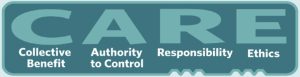
The CARE Principles include:
- Collective Benefit
- Authority to Control
- Responsibility
- Ethics
Downloadable versions of the principles are available from the Global Indigenous Data Alliance.
OCAP®
OCAP® is a set of principles that are specific to First Nations in Canada that have been developed by the First Nations Information Governance Centre. They are specific to the Canadian context and were developed as a tool to support First Nations data and information sovereignty.
The principles of OCAP® include:
- Ownership
- Control
- Access
- Possession
Online training on the fundamentals of OCAP® is available from the First Nations Information Governance Centre.