1. WHAT IS TECHNICAL COMMUNICATION?
1.1 Problem-Solving Approach to Communications Tasks
Eduard Cojoc-Wisernig and Suzan Last
In the workplace, many of the communications tasks you perform are designed to solve a problem or improve a situation. The message itself can sometimes function as the solution, or it can be one of the tools you use to find and implement the solution. Whether you are working for a client, for your employer, with your team, or for someone else, you will typically use some sort of design process to tackle and solve the problem. Applying a similar design process to communication tasks can help you create a systematic approach for addressing the situation appropriately and effectively.
Design processes may differ depending on the kind of problem being solved or the kind of design your aiming for. The process for designing an industrial manufacturing plant may look different from the process for designing a new software application, a user manual, a municipal water treatment facility, or a biomedical device. But in all cases, the first step in designing any solution is to clearly define the problem.
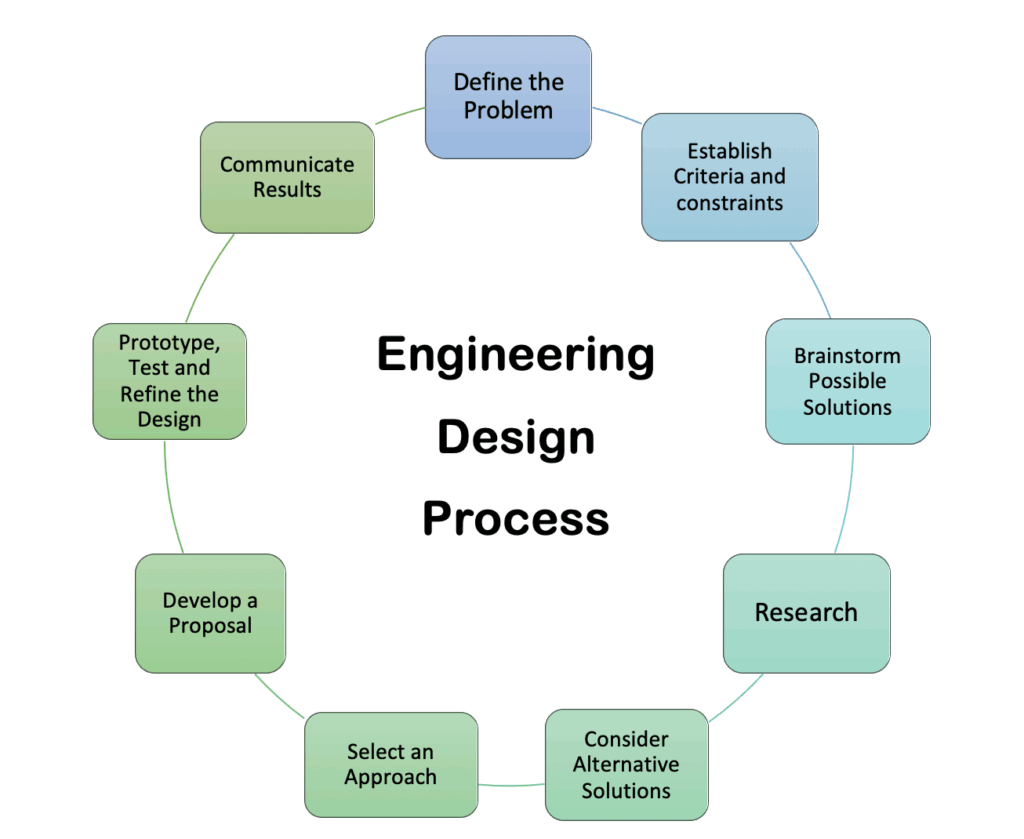
Albert Einstein supposedly asserted that if he had 1 hour to save the world, he would spend 55 minutes defining the problem. Whether or not he actually said this, the sentiment remains valid. You cannot begin to work on solutions until you have a clear understanding of the problem, its impacts, and the goals you want to achieve. It often takes significant time and effort to develop this thorough understanding. Poor communication at the problem definition stage can derail a project from the start.
The video below by design engineer Jordan Robert provides clear examples of why spending time at the beginning to understand and fully define the problem before trying to solve it is time well spent; and why failing to do so can have serious consequences.
Flemming and Johnston[1] have argued that problem definition “may be the most important cognitive activity in creative problem solving,” but that many novice engineers lack the skills and clear framework to effectively define a wide range of real-world problems. The next section seeks to address this by providing you with an adaptable framework for defining a problem.
Problem Definition Framework
Defining the problem helps you understand it in complex and sophisticated ways that allow you to come up with effective solutions. There isn’t just one way to define a problem, but Barry Hyman’s Problem Formulation model[2] offers a useful and adaptable approach. His framework for defining a problem consists of 4 key elements: Need, Goal, Objectives, and Constraints
STEP 1: Understand the Need (“unsatisfactory situation”)
Identifying the need for a solution entails studying, understanding, and describing the “unsatisfactory situation” that creates the need for a solution. This statement might answer questions such as: What is wrong with the way things currently are? What negative effects does (or could) this situation cause? For whom? You will likely need to do background research to supply data that quantifies these negative effects. More importantly, you need to understand and develop empathy for the people and environments experiencing those impacts. Different people or groups might experience the impacts of the problem differently, so it’s important to understand the range of experiences.
Modern engineering requires not only data, but also empathy to fully understand the need. To consider who you need to understand and empathize with — and likely consult with while defining and addressing the problem — you might use the Four I Framework:
- Impacted: who is directly or indirectly impacted by this problem? What is their lived experience?
- Invested: Who has a clear stake in addressing this problem? Who is directly invested (financially, emotionally, politically, etc)
- Influential: who has the power to make decisions, direct resources, fund, or block the project? (City council, regulatory boards, policy makers, clients, etc)
- Interested: Who cares about this problem or is simply interested in it? (Local citizens, advocacy groups, neighbours, etc.)
Clearly there may be some overlap in these categories. Someone negatively impacted by a current situation may also be highly invested in solving it; someone who is financially invested may also have a great deal of influence. The critical thing to understand about the need statement is that it explains why a solution is needed; it does not offer a solution. (For example, “I need a pizza” is not a need statement (despite the word “need” in it); it suggests the possible solution for the real need, which can be stated as “I’m hungry.”
STEP 2: Establish a Goal (what “solved” looks like)
The goal statement describes what the improved, “satisfactory” situation will look like once a solution has been implemented. At this point, you are still not describing how to solve it, only the goal that any proposed solution should achieve (e.g. “not feel hungry any more”). The broader you make your goal, the more open-ended your problem is, allowing for a wider variety of creative solutions. A narrowly focused goal (“eat something that will satisfy hunger”) limits your scope to a smaller number and variety of possible solutions. A narrow goal may make it easier to find a solution quickly, but a broader goal will encourage you to “think outside the box” and come with more original and innovative ideas.
STEP 3: Define Measurable Objectives (the “should” criteria)
You will need to define the specific and measurable objectives that any solution to the problem should try to optimize. You will use these criteria to “grade” solution ideas. Objectives are often framed as “should” statements: A good solution “should + verb.” Since you will need to measure how well a solution achieves an objective, these verbs should suggest a form of measurement. A good solution should “minimize” environmental impact, “maximize” efficiency, “reduce” cost, “increase” accessibility for people with limited manual dexterity, etc. You can make your objectives more specific by adding measurement units and limits:
| Vague Objectives | Measurable Objectives |
|---|---|
| The solution should be light | The solution should be light enough to carry easily with one hand (ideally under 5 kg) |
| The solution should be fast | The system should be able to process at least 500 concurrent user requests with less than 50ms of latency. |
| The solution should be sustainable | The design should minimize municipal water use during operation.
The design should maximize the use of post-consumer recycled plastics, aiming for at least 80%. |
STEP 4: Identify Constraints (the “must” criteria)
Constraints define the absolute limits that any feasible solution must adhere to in order to be acceptable. These are the strict “pass/fail” or “go/no-go” conditions. If a solution violates a constraint, it is rejected (“fails”). Typical constraints include
- Budget: solution must not cost more than $10,000 to implement; or must have a payback period of less than 15 years
- Time: The solution must be fully implemented within 1 year
- Space: The solution must fit within a 1.5 x 1.5m area within the existing utility room, without requiring structural renovation.
- Regulations/Standards: the solution must abide by all municipal safety codes and standards.
- Range limits: the design must travel at a speed between 30 – 60 cm/ second
- Baselines: the solution must meet minimal accessibility requirements; the appliance must achieve a minimum Energy Star rating.
NOTE that sustainability and accessibility are increasingly treated as crucial requirements in modern engineering design.
EXAMPLE Problem Definition
NEED: (the “unsatisfactory situation”): it’s 7pm and I’m really hungry! I haven’t eaten since noon, and have worked hard all day. I still need to do 2 hours of homework before bed to study for a midterm tomorrow morning
GOAL: not feel hungry (very broad); eat a satisfying dinner (more specific) so that I can focus on studying, and get a good night’s sleep.
OBJECTIVES: My dinner should try to optimize the following:
- Be ready to eat quickly, ideally within 60 minutes (faster time = higher score)
- Require minimal effort (solutions that require less effort will score higher than solutions that require more effort)
- Be nutritious (ideally have 3 food groups, including protein and vegetable)
- Taste good (at least a 3 on my personal “deliciousness” scale of 1-5)
- Be satisfying (sufficient quantity and density of calories)
CONSTRAINTS: My dinner must
- not cost any money (I’m broke!)
- require only ingredients that I currently have access to (I’m too tired to go shopping)
- not contain peanuts (I have an allergy).
Now you can look through your cupboards and fridge to starting coming up with solutions. You might think outside the box and see if you can get a friend to bring you food; maybe you have a “free meal” with Door Dash. If you go with the broader goal (not feel hungry), you might find innovative ways to eliminate hunger without eating food, but you would have to revise your objectives and constraints accordingly (feel sated, be able to focus on homework for at least 2 hours, be able to sleep for at least 7 hours, not risk health, etc).
Communication as Solution
Hopefully, it has become clear that the engineering design process and the writing process have a lot in common! You can apply Hyman’s model directly to your communications tasks.
Think of a document you have to write as a solution to a specific problem. Before you begin drafting, you must define the communication problem you want to solve:
Understand the Need: consider what gave rise to the need to communicate. Does someone lack sufficient information to perform a task, make a decision, or take a position on an issue? Did someone request information? Is there some unsatisfactory situation that needs to be remedied by communicating with your audience? What specifically is unsatisfactory about it? Consider what research you might need to conduct to better understand your audience and the problem that needs solving. For example
A potential client lacks sufficient information to decide if my proposed heating solution is feasible and affordable.
My instructor lacks sufficient examples of my written work to assign a grade for how well I met the course learning objectives.
Establish a Goal: What is your desired outcome? Consider your purpose in writing. What do you want your reader to do, think, or know after reading? Do you want your reader to make a decision? Change their opinion or behaviour? Follow a course of action? For example
Provide the client with enough information, in an effective and readable format, to confidently hire our firm to build the solution.
Provide my instructor with samples of my writing that demonstrate that I have not only achieved the course learning objectives, but exceeded expectations (and get an A).
Define Objectives: What specific criteria should your document meet to effectively meet your audience’s expectations? What genre, style, content and format will be most effective in communicating your message? How will it be “graded”? For example: The document should use clear headings for readability, include specific information about costs and benefits, and use persuasive, evidence-based arguments supported by credible sources. To clarify the objectives, you might
Review the client’s RFP to see what specific objectives it lists and how your proposal will be assessed.
Review the Assignment Description and Grading Rubric for your assignment to determine specific requirements and learning objectives that your instructor will use to evaluate your work. For instance, it should be clear, concise, coherent, concrete and correct.
Identify Constraints: what are the pass/fail conditions that this document must adhere to? For example: The proposal must be no longer than 5 pages, must be submitted as a PDF by Friday at 5:00 PM, and must strictly follow IEEE citation style. Consider your rhetorical situation. What conditions exist that present barriers or challenges to communication? How can you address them? For example,
How much time is your audience willing to spend reading this?
What format and style do they require? Is there a Style Guide you must follow? A template you must use?
How much time do you have to create it? Do you have a deadline? (due date)
Are there requirements for using sources? (academic integrity rules, minimum number of sources, etc.)
Keep in mind that the document you produce is ultimately evaluated in terms of how well it responds to the “problem” — that is, how well it meets the overall goal and demonstrates achievement of specific objectives while abiding by constraints.
EXAMPLE: The Prompt Engineering Parallel
In the modern workplace, engineers sometimes use Generative AI to brainstorm, write code, or review documents. Have you ever received a useless or hallucinated response from an AI? It is likely because your prompt was a “poorly defined problem.”
Think about this as a communication problem. You want AI to generate a solution you can work with, so you have to define the problem effectively. When writing a prompt for a Large Language Model (LLM), you can apply Hyman’s model directly:
Need: “I am struggling to understand the difference between torque and horsepower.”
Goal: “Explain the concepts to me at a 1st year university level so I can apply my understanding on my first-year physics exam.”
Objectives: “Use examples and analogies related to bicycles or other familiar mechanical objects to help be understand the principles.”
Constraints: “Do not use calculus. The explanation must be under 300 words.”
By explicitly defining the objectives and constraints of your prompt request, you are more likely to receive a useful solution (output) from the AI.
The Spectrum of Engineering Problems
Hyman’s formulation offers a framework for defining a specific problem. However, different kinds of problems will require you to adapt this model to address them. Problems exist on a spectrum, from close-ended problems (with one correct solution) to fully open-ended problems with innumerable possible solutions. To accurately define a problem, you will need to understand what kind of problem you are tackling.
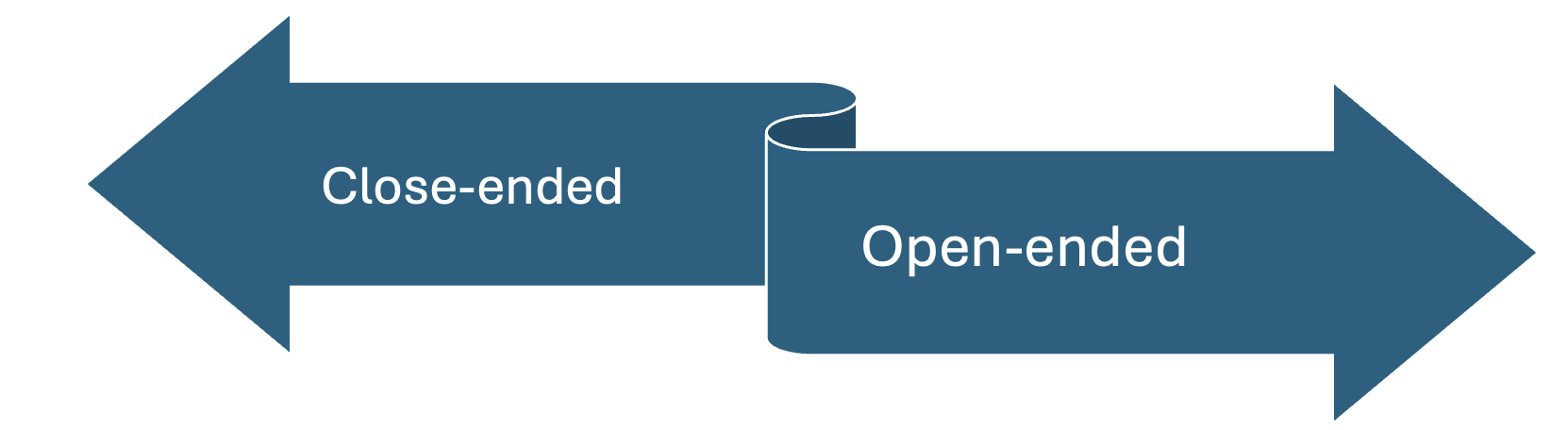
| Closed-Ended Problems: These problems have a single, unique, correct solution that does not change over time. You just need to find the correct answer (solve for X).
For Example: calculating the exact voltage drop across a specific resistor in a simple circuit; calculating the volume of a cylinder, or the area of a triangle. |
Open-Ended Problems: There is no single “right” answer, only “better or worse” solutions that must be carefully evaluated against measurable objectives and constraints. These require judgment and critical thinking.
For example: “Design a system to reduce traffic congestion in the downtown core.” |
Very few real-world engineering problems are fully close-ended (constrained to one solution) or fully open ended (no constraints at all allowing innumerable solutions). Most fall somewhere in between. The more open-ended the problem, the more creativity, critical thinking, and decision-making skills are needed to define and address the problem. Defining clearly measurable objectives and identifying constraints helps you to move the problem into a more manageable area on the spectrum.
A Note on “Wicked” Problems
At the far end of the open-ended side of the spectrum, we have what Rittell and Webber[3] call “wicked” problems. These “unsatisfactory situations” are complex, contested, and continually evolving, and therefore almost impossible to clearly or conclusively define, let alone solve completely. They tend be complex societal and policy problems that have innumerable causes and that cannot be easily dealt with using a technical or scientific problem-solving approach. Think climate crisis, homelessness, poverty, unequal access to health care, COVID 19 pandemic, terrorism, artificial intelligence, etc.
The wicked problem may resist a singular definition because
- It might be perceived differently by different people with conflicting ideological approaches; without agreement on the problem (or why a solution is needed), it is difficult to come up with an effective response
- The problem may have many interconnected causes
- People might experience the impacts of the situation differently, and may have varying or even competing ideas of what an improved situation (goal) might look like.
- It is difficult to come up with clear metrics (objectives) for testing solutions that everyone can agree on, and set limitations (constraints).
Without clearly defined goals and measurable objectives, it is hard to determine what “success” might look like. These problems also tend to be “high stakes,” having significant social and environmental impacts on a variety of people, organizations, and environments. This makes experimentation with different solution options challenging, as there may be dire consequences to “failing” in this experimentation process.
Where a “tame” problem is relatively easy to define, and the effectiveness of solutions can be easily measured, a wicked problem cannot be easily defined, and there are no clear solutions; the “right solution” that can totally address and solve the problem does not exist. Solutions can be considered “better” or “worse,” or even “right” and “wrong” simultaneously by different people using divergent criteria. Trying to address wicked problems requires judgment, compromise and ongoing assessment and adaptation to the continually evolving situation and varying contexts. It also requires very careful and thoughtful communication strategies! Because every approach requires trade-offs and compromises where a valuable outcome might need to be sacrificed, every decision is provisional and open to criticism.
This sounds dire, but the wicked problem framework can be helpful, and even reassuring, as it helps those trying to tackle such problems to remember that the complexity of this issue has no single, correct, perfect solution: it’s not that you lack the skill or knowledge to find it; it’s that it does not exist. However, wicked problems do require you to have a sophisticated understanding of
- the interconnected contexts and how they might evolve
- the potentially conflicting needs and values of a wide range of the people, groups and environments involved
- the various trade-offs that need to be negotiated
- the need for continual assessment and iteration.
How you communicate about wicked problems is critically important, given the many perspectives and ideologies involved. The way you define it, how you frame it rhetorically, how you talk about the people who are impacted, will all convey crucial information about your approach that could either win you support or provoke opposition. Wicked problems are clearly the most challenging to address, but they are the ones that we most need solutions for!
EXERCISE 1.2 – Apply the Wicked Problem Framework
Corbin et al. in “The Wicked Problem of AI and Assessment”[4], describe the issue of students using AI to help them complete their writing assignments, as well as how professors should assess these students’ work in university, as a “wicked” problem.
Discuss how this issue fits into the “wicked problem framework” by considering the following:
- how might the many impacted parties (student, professors, administrators, employers, etc) see the problem differently?
- what kinds of solutions have been proposed and how might the many possible solutions be better or worse depending on context?
- How can we address all the interconnected issues (learning, grade inflation, academic integrity, instructor and student work-loads, environmental impacts of resource use, etc.) that need to be considered?
Articulate your own perspective on the problem, and then try to understand and empathize with other perspectives that might differ from your own.
EXERCISE 1.3 – Review Objectives and Constraints
Based on the example problem definition described earlier in this section (It’s 7 pm and I’m hungry!), categorize each of the following criteria as either an objective or a constraint. For objectives, define the measurement parameters you would use to “grade” each solution option on a scale of 1-3 (3 being the best). How would you rank the objectives from most important to least important to achieve?
- My meal must contain at least 20 grams of protein
- My meal should have at least one vegetable
- I need to keep the cost as low as possible
- The meal cannot cost more than $20
- I’d like to optimize nutritional content
- The meal must be gluten free
- I don’t want to spend a lot of effort on making the meal
- I want to eat as soon as possible
- My meal must be ready by 8:00 pm at the latest
- I like to use locally produced food products whenever possible
Imagine that based on the contents of your kitchen, you came up with 3 possible solutions. Rank these solutions based on how well they meet your objectives and constraints:
Kraft dinner and canned green beans
Week-old leftover chicken and 3 veggie stir fry (found hiding at the back of the fridge)
Tomato, mushroom and cheese omelette
- S.A.C. Flemming and C.R Johnston, “The nature of a problem, problem diagnosis, and engineering design.” Canadian Engineering Education Association (CEEA) Conference Proceedings, paper 112, June 2020. ↵
- B. Hyman, “Ch. 2: Problem formulation,” in Fundamentals of Engineering Design, Upper Saddle River, NJ: Prentice Hall, 2002, pp. 40-54. ↵
- H. W. Rittell and M. M. Webber, “Dilemmas in a general theory of planning.” Policy Sciences vol. 4(2), pp. 155–169, 1974. https://doi.org/10.1007/BF01405730. ↵
- T. Corbin, M. Bearman, D. Boud, & P. Dawson, P. (2025). The wicked problem of AI and assessment. Assessment & Evaluation in Higher Education, 1–17, 2025 https://doi.org/10.1080/02602938.2025.2553340 ↵