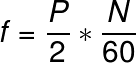
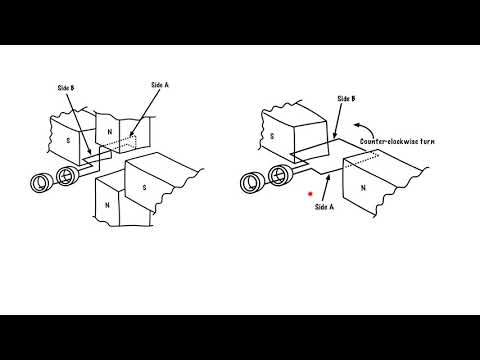
<?xml version="1.0" encoding="UTF-8"?>
<!DOCTYPE html PUBLIC "-//W3C//DTD XHTML 1.1//EN" "http://www.w3.org/TR/xhtml11/DTD/xhtml11.dtd">
<html xmlns="http://www.w3.org/1999/xhtml" xml:lang="en">
<head>
<meta content="text/html; charset=UTF-8" http-equiv="content-type" />
<meta http-equiv="Content-Language" content="en" />
<meta name="generator" content="Pressbooks 5.6.3" />
<meta name="pb-authors" content="Chad Flinn" />
<meta name="pb-editors" content="" />
<meta name="pb-translators" content="" />
<meta name="pb-reviewers" content="" />
<meta name="pb-illustrators" content="" />
<meta name="pb-contributors" content="" />
<meta name="pb-title" content="Trigonometry and Single Phase AC Generation for Electricians" />
<meta name="pb-language" content="en-ca" />
<meta name="pb-cover-image" content="https://pressbooks.bccampus.ca/trigforelectricians/wp-content/uploads/sites/496/2018/08/Copy-of-An-electricians-guide-to_.jpg" />
<meta name="pb-book-license" content="cc-by" />
<meta name="pb-primary-subject" content="PBMB" />
<meta name="pb-publisher" content="BCIT" />
<meta name="pb-publisher-city" content="Vancouver, BC" />
<meta name="pb-copyright-year" content="2018" />
<meta name="pb-copyright-holder" content="BCIT" />
<meta name="pb-custom-copyright" content="© 2018 BCITAll images are under the same licence as the book, unless otherwise noted.The CC licence permits you to retain, reuse, copy, redistribute, and revise this book — in whole or in part — for free providing the author is attributed as follows:Trigonometry and Single Phase AC Generation for Electricians by Chad Flinn is used under a CC BY 4.0 International Licence.This textbook can be referenced. In APA citation style, it would appear as follows:Flinn, C. (2018). Trigonometry and Single Phase AC Generation for Electricians. Vancouver, B.C.: BCIT. Retrieved from https://pressbooks.bccampus.ca/trigforelectricians" />
<meta name="pb-publication-date" content="1544745600" />
<meta name="pb-about-50" content="To understand electrical theory, it is important to have a grasp of trigonometry. Whether we are talking about single phase or polyphase power, trigonometry is a key concept. This textbook, divided into three sections, provides easy-to-understand and enjoyable lessons on trigonometry, vectors and AC generation for those training and working as electricians." />
<meta name="pb-about-unlimited" content="To understand electrical theory, it is important to have a grasp of trigonometry. Whether we are talking about single phase or polyphase power, trigonometry is a key concept. This textbook, divided into three sections, provides easy-to-understand and enjoyable lessons on trigonometry, vectors and AC generation for those training and working as electricians." />
<meta name="pb-additional-subjects" content="PB" />
<meta name="pb-short-title" content="Trigonometry" />
<meta name="pb-keywords-tags" content="electrical, trigonometry, Pythagorus, theorem, vector, AC generation," />
<meta name="pb-bisac-subject" content="TEC007000 TECHNOLOGY &amp; ENGINEERING / Electrical" />
<title>Trigonometry and Single Phase AC Generation for Electricians</title>
</head>
<body lang='en' >
<div id="half-title-page"><h1 class="title">Trigonometry and Single Phase AC Generation for Electricians</h1></div>
<div id="title-page"><h1 class="title">Trigonometry and Single Phase AC Generation for Electricians</h1><h2 class="subtitle"></h2><h3 class="author">Chad Flinn</h3><h3 class="author"></h3><h4 class="publisher">BCIT</h4><h5 class="publisher-city">Vancouver, BC</h5></div>
<div id="copyright-page"><div class="ugc">
<div class="license-attribution"><p><img src="https://pressbooks.bccampus.ca/trigforelectricians/wp-content/themes/pressbooks-book/packages/buckram/assets/images/cc-by.svg" alt="Icon for the Creative Commons Attribution 4.0 International License" /></p><p>Trigonometry and Single Phase AC Generation for Electricians by BCIT is licensed under a <a rel="license" href="https://creativecommons.org/licenses/by/4.0/">Creative Commons Attribution 4.0 International License</a>, except where otherwise noted.</p></div>
<p>© 2018 BCIT</p><p>All images are under the same licence as the book, unless otherwise noted.</p><p>The CC licence permits you to retain, reuse, copy, redistribute, and revise this book &#8212; in whole or in part &#8212; for free providing the author is attributed as follows:</p><ul><li><em>Trigonometry and Single Phase AC Generation for Electricians</em> by Chad Flinn is used under a <a href="https://creativecommons.org/licenses/by/4.0/">CC BY 4.0 International Licence</a>.</li></ul><p>This textbook can be referenced. In APA citation style, it would appear as follows:</p><ul><li>Flinn, C. (2018). <em>Trigonometry and Single Phase AC Generation for Electricians</em>. Vancouver, B.C.: BCIT. Retrieved from https://pressbooks.bccampus.ca/trigforelectricians</li></ul></div></div>
<div id="toc"><h1>Contents</h1><ul><li class="front-matter introduction"><a href="#front-matter-introduction"><span class="toc-chapter-title">About the Book</span></a></li><li class="part"><a href="#part-trigonometry">Trigonometry</a></li><li class="chapter standard"><a href="#chapter-chapter-1"><span class="toc-chapter-title">Angles</span></a></li><li class="chapter standard"><a href="#chapter-triangles-three-sides-and-the-truth"><span class="toc-chapter-title">Triangles</span></a></li><li class="chapter standard"><a href="#chapter-pythagoras"><span class="toc-chapter-title">Pythagoras</span></a></li><li class="chapter standard"><a href="#chapter-naming-the-sides-of-the-right-triangle"><span class="toc-chapter-title">Naming Right Triangle Sides</span></a></li><li class="chapter standard"><a href="#chapter-trigonometry-functions"><span class="toc-chapter-title">Trigonometry Functions</span></a></li><li class="chapter standard"><a href="#chapter-slug-50"><span class="toc-chapter-title">Power and Impedance Triangles</span></a></li><li class="part"><a href="#part-vectors">Vectors</a></li><li class="chapter standard"><a href="#chapter-a-vector-primer"><span class="toc-chapter-title">A Vector Primer</span></a></li><li class="chapter standard"><a href="#chapter-quadrants"><span class="toc-chapter-title">Quadrants</span></a></li><li class="chapter standard"><a href="#chapter-polar-form-vs-rectangular-form"><span class="toc-chapter-title">Polar vs. Rectangular Form</span></a></li><li class="chapter standard"><a href="#chapter-vector-addition"><span class="toc-chapter-title">Vector Addition</span></a></li><li class="part"><a href="#part-ac-generation">AC Generation</a></li><li class="chapter standard"><a href="#chapter-electromagnetic-induction"><span class="toc-chapter-title">Electromagnetic Induction</span></a></li><li class="chapter standard"><a href="#chapter-the-alternator"><span class="toc-chapter-title">The Alternator</span></a></li><li class="chapter standard"><a href="#chapter-how-a-waveform-is-generated"><span class="toc-chapter-title">How a Waveform Is Generated</span></a></li><li class="chapter standard"><a href="#chapter-ac-waveform-analysis"><span class="toc-chapter-title">AC Waveform Analysis</span></a></li><li class="chapter standard"><a href="#chapter-frequency"><span class="toc-chapter-title">Frequency and Alternators</span></a></li><li class="back-matter miscellaneous"><a href="#back-matter-appendix-worksheets"><span class="toc-chapter-title">Appendix: Worksheets</span></a></li><li class="back-matter miscellaneous"><a href="#back-matter-glossary"><span class="toc-chapter-title">Glossary</span></a></li><li class="back-matter miscellaneous"><a href="#back-matter-list-of-links-for-print-users"><span class="toc-chapter-title">List of Links for Print Copies</span></a></li><li class="back-matter miscellaneous"><a href="#back-matter-versioning-history"><span class="toc-chapter-title">Versioning History</span></a></li></ul></div>
<div class="front-matter introduction" id="front-matter-introduction" title="About the Book"><div class="front-matter-title-wrap"><h3 class="front-matter-number">1</h3><h1 class="front-matter-title"><span class="display-none">About the Book</span></h1></div><div class="ugc front-matter-ugc"><h2><strong>About Trigonometry and Single Phase Generation for Electricians</strong></h2> <p><em>Trigonometry and Single Phase Generation for Electricians </em>was funded, in part, by an OER Grant provided by <a href="http://open.bccampus.ca/" target="_blank" rel="noopener">BCcampus Open Education</a>.</p> <p><a href="https://open.bccampus.ca/" class="external-link" rel="nofollow">BCcampus Open Education</a> began in 2012 as the B.C. Open Textbook Project with the goal of making post-secondary education in British Columbia more accessible by reducing students’ costs through the use of open textbooks and other OER. <a href="https://bccampus.ca/about-us/" class="external-link" rel="nofollow">BCcampus</a> supports the post-secondary institutions of British Columbia as they adapt and evolve their teaching and learning practices to enable powerful learning opportunities for the students of B.C. BCcampus Open Education is funded by the <a href="https://www2.gov.bc.ca/gov/content/governments/organizational-structure/ministries-organizations/ministries/advanced-education-skills-training" class="external-link" rel="nofollow">British Columbia Ministry of Advanced Education, Skills &amp; Training</a>, and the <a href="http://www.hewlett.org/" class="external-link" rel="nofollow">Hewlett Foundation</a>.</p> <p>Open educational resources (OER), including open textbooks, are teaching, learning, and research resources that, through permissions granted by the copyright holder, allow others to use, distribute, keep, or make changes to them.</p> <p>This textbook has been copy edited based on this <a href="https://pressbooks.bccampus.ca/trigforelectricians/wp-content/uploads/sites/496/2018/12/Style-Sheet-for-Trigonometry-and-Single-Phase-AC-Generation-Chad-Flinn-BCIT.docx">style sheet [Word File]</a>.</p> <p>Instructors using this book in the classroom are asked to fill out the <a href="https://open.bccampus.ca/about-2/adoption-form/" class="external-link" rel="nofollow">Adoption of an Open Textbook</a> form.</p> </div></div>
<div class="part " id="part-trigonometry"><div class="part-title-wrap"><h3 class="part-number">I</h3><h1 class="part-title">Trigonometry</h1></div><p>To have a good grasp of electrical theory it is important to have a grasp of trigonometry.&nbsp; Whether we are talking about single phase or polyphase power, trigonometry is a key concept.&nbsp; The first part of this textbook will look at one of the most basic parts of trigonometry: the triangle.</p> <div class="textbox textbox--learning-objectives"><div class="textbox__header"><p class="textbox__title" style="text-align: center;">Learning Objectives</p> </div> <div class="textbox__content"><ul><li>Define different types of angles</li> <li>Identify the attributes of right triangles</li> <li>Apply Pythagoras’ theorem</li> <li>Demonstrate trigonometry using right triangles</li> <li>Explain impedance triangles</li> <li>Explain power triangles</li> </ul> </div> </div> <div class="textbox shaded">See the <a href="#trigonometry">Trigonometry</a> section of the <a href="#back-matter-appendix-worksheets">Appendix</a> for worksheets that can be used in this section.</div></div>
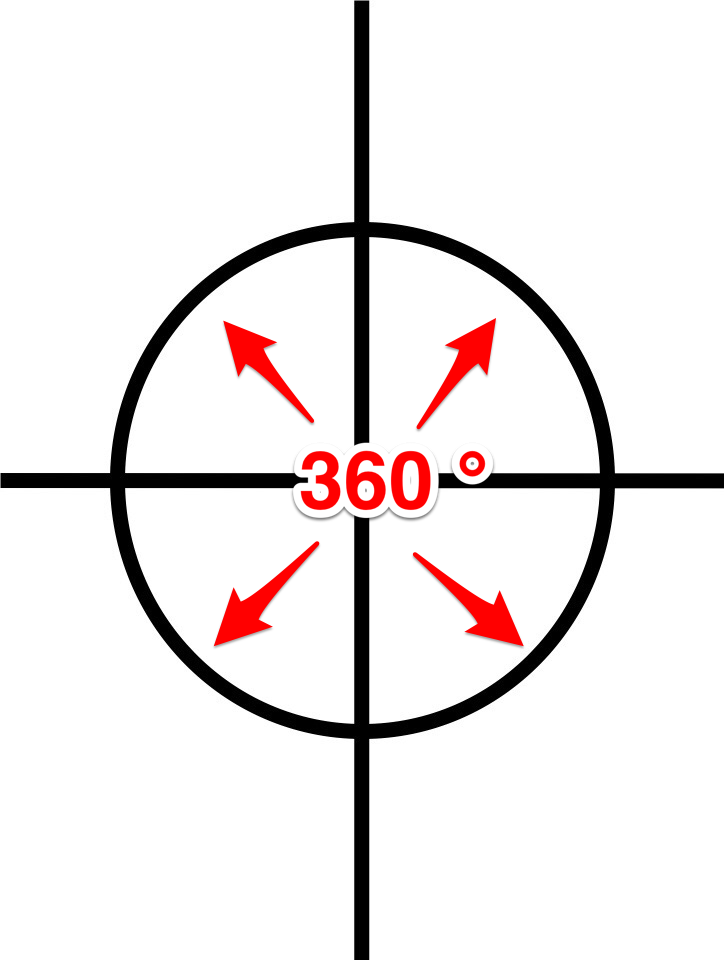
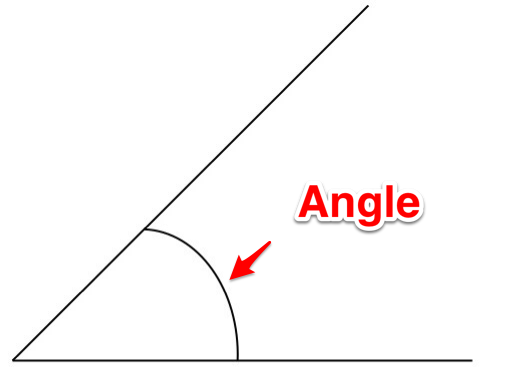
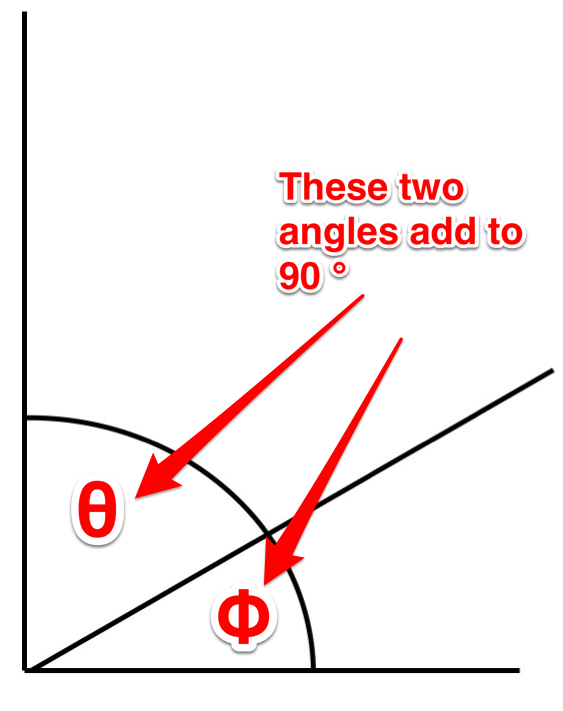
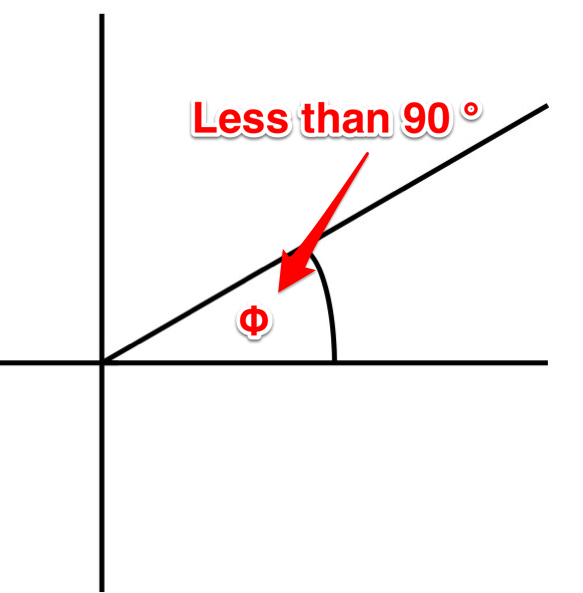
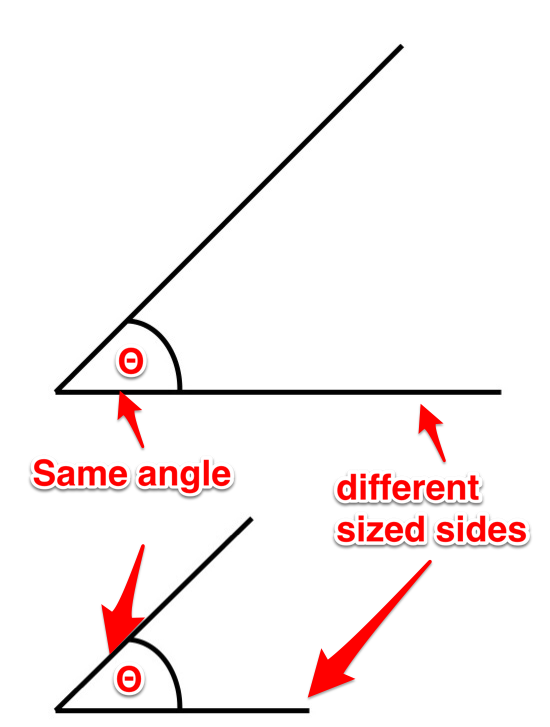
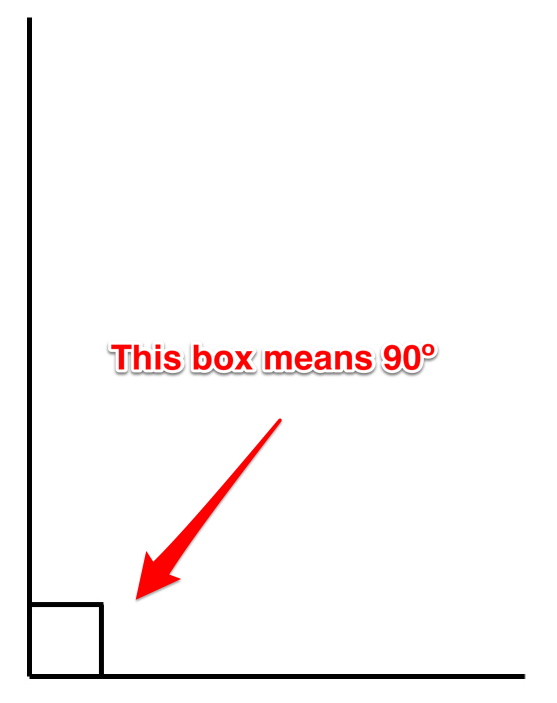
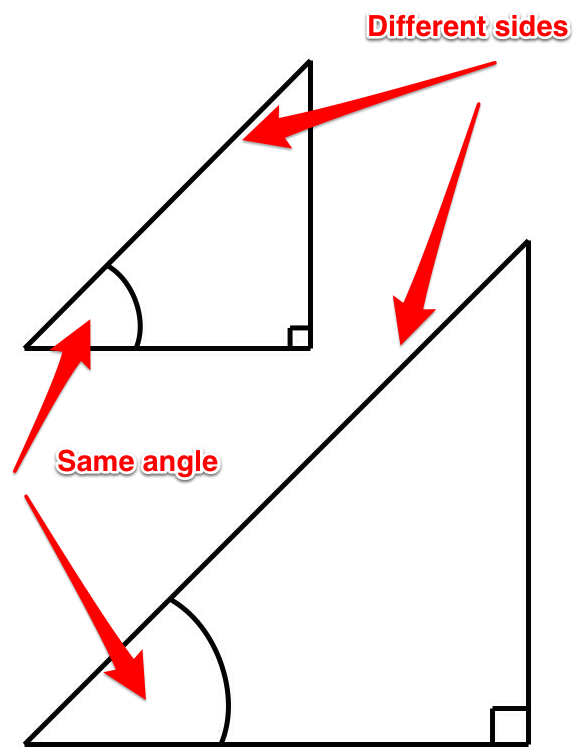
<div class="chapter standard" id="chapter-chapter-1" title="Angles"><div class="chapter-title-wrap"><h3 class="chapter-number">1</h3><h2 class="chapter-title">Angles</h2></div><div class="ugc chapter-ugc"><h1>What&#8217;s the deal with angles anyway?</h1> <p>Before we even get into trigonometry, we need to discuss angles.  Don&#8217;t worry.  Things are not going to get too crazy.  I promise.</p> <p>Let&#8217;s go over the basics first.</p> <p><strong>Degree.</strong>  One-three-hundred-and-sixtieth of the circumference of a circle.  It is also the unit by which we measure angles.</p> <p>&nbsp;</p> <div class="wp-caption aligncenter" id="attachment_144" style="width: 158px"><a href="https://pressbooks.bccampus.ca/trigforelectricians/wp-content/uploads/sites/496/2018/07/cirlce.png"><img src="https://pressbooks.bccampus.ca/trigforelectricians/wp-content/uploads/sites/496/2018/07/cirlce-226x300.png" alt="" class="wp-image-144" width="158" height="210" srcset="https://pressbooks.bccampus.ca/trigforelectricians/wp-content/uploads/sites/496/2018/07/cirlce-226x300.png 226w, https://pressbooks.bccampus.ca/trigforelectricians/wp-content/uploads/sites/496/2018/07/cirlce-65x86.png 65w, https://pressbooks.bccampus.ca/trigforelectricians/wp-content/uploads/sites/496/2018/07/cirlce-225x298.png 225w, https://pressbooks.bccampus.ca/trigforelectricians/wp-content/uploads/sites/496/2018/07/cirlce-350x464.png 350w, https://pressbooks.bccampus.ca/trigforelectricians/wp-content/uploads/sites/496/2018/07/cirlce.png 724w" /></a><div class="wp-caption-text"><strong>Figure 1. Degrees</strong></div></div> <p><strong>Angle.  </strong>This is the space between two intersecting lines.</p> <p>&nbsp;</p> <div class="wp-caption aligncenter" id="attachment_143" style="width: 162px"><a href="https://pressbooks.bccampus.ca/trigforelectricians/wp-content/uploads/sites/496/2018/07/angle.png"><img src="https://pressbooks.bccampus.ca/trigforelectricians/wp-content/uploads/sites/496/2018/07/angle-300x215.png" alt="" class="wp-image-143" width="162" height="116" srcset="https://pressbooks.bccampus.ca/trigforelectricians/wp-content/uploads/sites/496/2018/07/angle-300x215.png 300w, https://pressbooks.bccampus.ca/trigforelectricians/wp-content/uploads/sites/496/2018/07/angle-65x47.png 65w, https://pressbooks.bccampus.ca/trigforelectricians/wp-content/uploads/sites/496/2018/07/angle-225x161.png 225w, https://pressbooks.bccampus.ca/trigforelectricians/wp-content/uploads/sites/496/2018/07/angle-350x251.png 350w, https://pressbooks.bccampus.ca/trigforelectricians/wp-content/uploads/sites/496/2018/07/angle.png 522w" /></a><div class="wp-caption-text"><strong>Figure 2. Angle</strong></div></div> <p><strong>Complementary angles.</strong>  These are two angles whose sum equals 90 degrees.</p> <p>&nbsp;</p> <div class="wp-caption aligncenter" id="attachment_145" style="width: 158px"><a href="https://pressbooks.bccampus.ca/trigforelectricians/wp-content/uploads/sites/496/2018/07/complimentary-angles.png"><img src="https://pressbooks.bccampus.ca/trigforelectricians/wp-content/uploads/sites/496/2018/07/complimentary-angles-238x300.png" alt="" class="wp-image-145" width="158" height="199" srcset="https://pressbooks.bccampus.ca/trigforelectricians/wp-content/uploads/sites/496/2018/07/complimentary-angles-238x300.png 238w, https://pressbooks.bccampus.ca/trigforelectricians/wp-content/uploads/sites/496/2018/07/complimentary-angles-65x82.png 65w, https://pressbooks.bccampus.ca/trigforelectricians/wp-content/uploads/sites/496/2018/07/complimentary-angles-225x284.png 225w, https://pressbooks.bccampus.ca/trigforelectricians/wp-content/uploads/sites/496/2018/07/complimentary-angles-350x442.png 350w, https://pressbooks.bccampus.ca/trigforelectricians/wp-content/uploads/sites/496/2018/07/complimentary-angles.png 563w" /></a><div class="wp-caption-text"><strong>Figure 3. Complementary angle</strong></div></div> <p><strong>Supplementary angles.  </strong>These are two angles whose sum equals 180 degrees.</p> <p>&nbsp;</p> <div class="wp-caption aligncenter" id="attachment_149" style="width: 257px"><a href="https://pressbooks.bccampus.ca/trigforelectricians/wp-content/uploads/sites/496/2018/07/Supplementary-angles-e1541355787309.png"><img src="https://pressbooks.bccampus.ca/trigforelectricians/wp-content/uploads/sites/496/2018/07/Supplementary-angles-300x161.png" alt="" class="wp-image-149" width="257" height="138" /></a><div class="wp-caption-text"><strong>Figure 4. Supplementary angle</strong></div></div> <p><strong>Acute angle.</strong>  An angle that is less than 90 degrees.</p> <p>&nbsp;</p> <div class="wp-caption aligncenter" id="attachment_142" style="width: 167px"><a href="https://pressbooks.bccampus.ca/trigforelectricians/wp-content/uploads/sites/496/2018/07/Acute-angles.png"><img src="https://pressbooks.bccampus.ca/trigforelectricians/wp-content/uploads/sites/496/2018/07/Acute-angles-295x300.png" alt="" class="wp-image-142" width="167" height="170" srcset="https://pressbooks.bccampus.ca/trigforelectricians/wp-content/uploads/sites/496/2018/07/Acute-angles-295x300.png 295w, https://pressbooks.bccampus.ca/trigforelectricians/wp-content/uploads/sites/496/2018/07/Acute-angles-65x66.png 65w, https://pressbooks.bccampus.ca/trigforelectricians/wp-content/uploads/sites/496/2018/07/Acute-angles-225x229.png 225w, https://pressbooks.bccampus.ca/trigforelectricians/wp-content/uploads/sites/496/2018/07/Acute-angles-350x356.png 350w, https://pressbooks.bccampus.ca/trigforelectricians/wp-content/uploads/sites/496/2018/07/Acute-angles.png 583w" /></a><div class="wp-caption-text"><strong>Figure 5. Acute angle</strong></div></div> <p><strong>Obtuse angle.</strong>  An angle that is greater than 90 degrees.</p> <p>&nbsp;</p> <div class="wp-caption aligncenter" id="attachment_146" style="width: 181px"><a href="https://pressbooks.bccampus.ca/trigforelectricians/wp-content/uploads/sites/496/2018/07/obtuse.png"><img src="https://pressbooks.bccampus.ca/trigforelectricians/wp-content/uploads/sites/496/2018/07/obtuse-300x193.png" alt="" class="wp-image-146" width="181" height="116" srcset="https://pressbooks.bccampus.ca/trigforelectricians/wp-content/uploads/sites/496/2018/07/obtuse-300x193.png 300w, https://pressbooks.bccampus.ca/trigforelectricians/wp-content/uploads/sites/496/2018/07/obtuse-65x42.png 65w, https://pressbooks.bccampus.ca/trigforelectricians/wp-content/uploads/sites/496/2018/07/obtuse-225x145.png 225w, https://pressbooks.bccampus.ca/trigforelectricians/wp-content/uploads/sites/496/2018/07/obtuse-350x225.png 350w, https://pressbooks.bccampus.ca/trigforelectricians/wp-content/uploads/sites/496/2018/07/obtuse.png 544w" /></a><div class="wp-caption-text"><strong>Figure 6. Obtuse angle</strong></div></div> <p><strong>Similar angles.  </strong>It is possible for triangles to each have different sized sides but share the same sized angles.  These are called similar angles.</p> <p>&nbsp;</p> <div class="wp-caption aligncenter" id="attachment_148" style="width: 160px"><a href="https://pressbooks.bccampus.ca/trigforelectricians/wp-content/uploads/sites/496/2018/07/Simalar-triangles.png"><img src="https://pressbooks.bccampus.ca/trigforelectricians/wp-content/uploads/sites/496/2018/07/Simalar-triangles-227x300.png" alt="" class="wp-image-148" width="160" height="211" srcset="https://pressbooks.bccampus.ca/trigforelectricians/wp-content/uploads/sites/496/2018/07/Simalar-triangles-227x300.png 227w, https://pressbooks.bccampus.ca/trigforelectricians/wp-content/uploads/sites/496/2018/07/Simalar-triangles-65x86.png 65w, https://pressbooks.bccampus.ca/trigforelectricians/wp-content/uploads/sites/496/2018/07/Simalar-triangles-225x297.png 225w, https://pressbooks.bccampus.ca/trigforelectricians/wp-content/uploads/sites/496/2018/07/Simalar-triangles-350x463.png 350w, https://pressbooks.bccampus.ca/trigforelectricians/wp-content/uploads/sites/496/2018/07/Simalar-triangles.png 550w" /></a><div class="wp-caption-text"><strong>Figure 7. Similar angles</strong></div></div> <p><strong>Right angle.  </strong>This is an angle that is 90 degrees.</p> <p>&nbsp;</p> <div class="wp-caption aligncenter" id="attachment_147" style="width: 160px"><a href="https://pressbooks.bccampus.ca/trigforelectricians/wp-content/uploads/sites/496/2018/07/right-angle.png"><img src="https://pressbooks.bccampus.ca/trigforelectricians/wp-content/uploads/sites/496/2018/07/right-angle-238x300.png" alt="" class="wp-image-147" width="160" height="202" srcset="https://pressbooks.bccampus.ca/trigforelectricians/wp-content/uploads/sites/496/2018/07/right-angle-238x300.png 238w, https://pressbooks.bccampus.ca/trigforelectricians/wp-content/uploads/sites/496/2018/07/right-angle-65x82.png 65w, https://pressbooks.bccampus.ca/trigforelectricians/wp-content/uploads/sites/496/2018/07/right-angle-225x284.png 225w, https://pressbooks.bccampus.ca/trigforelectricians/wp-content/uploads/sites/496/2018/07/right-angle-350x442.png 350w, https://pressbooks.bccampus.ca/trigforelectricians/wp-content/uploads/sites/496/2018/07/right-angle.png 557w" /></a><div class="wp-caption-text"><strong>Figure 8. Right angle</strong></div></div> <p>There is a ton of information about angles that we don&#8217;t need to get into.  Remember:  Try not to overcomplicate things.  Just focus on the basics and you&#8217;ll be fine.</p> <p>Next up:  <strong>Triangles</strong></p> </div></div>
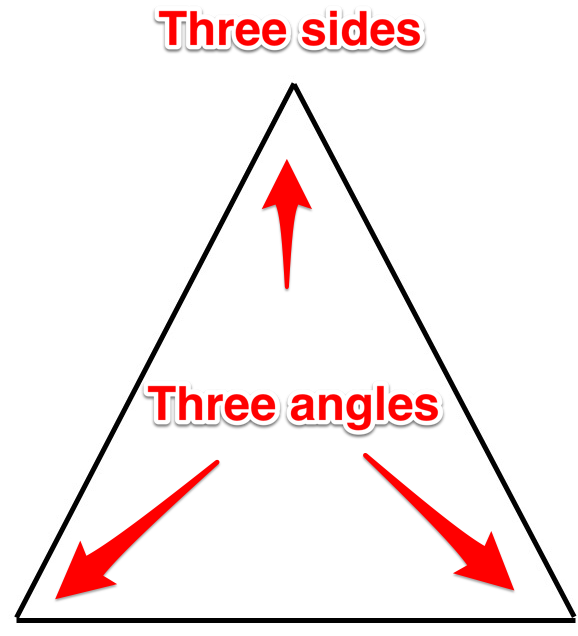
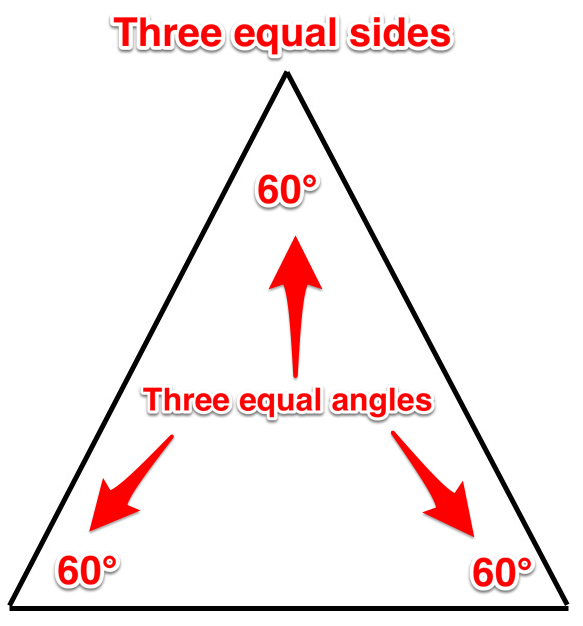
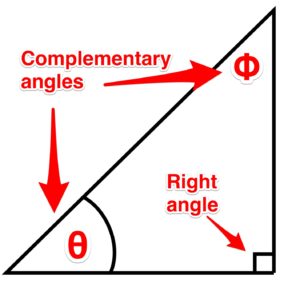
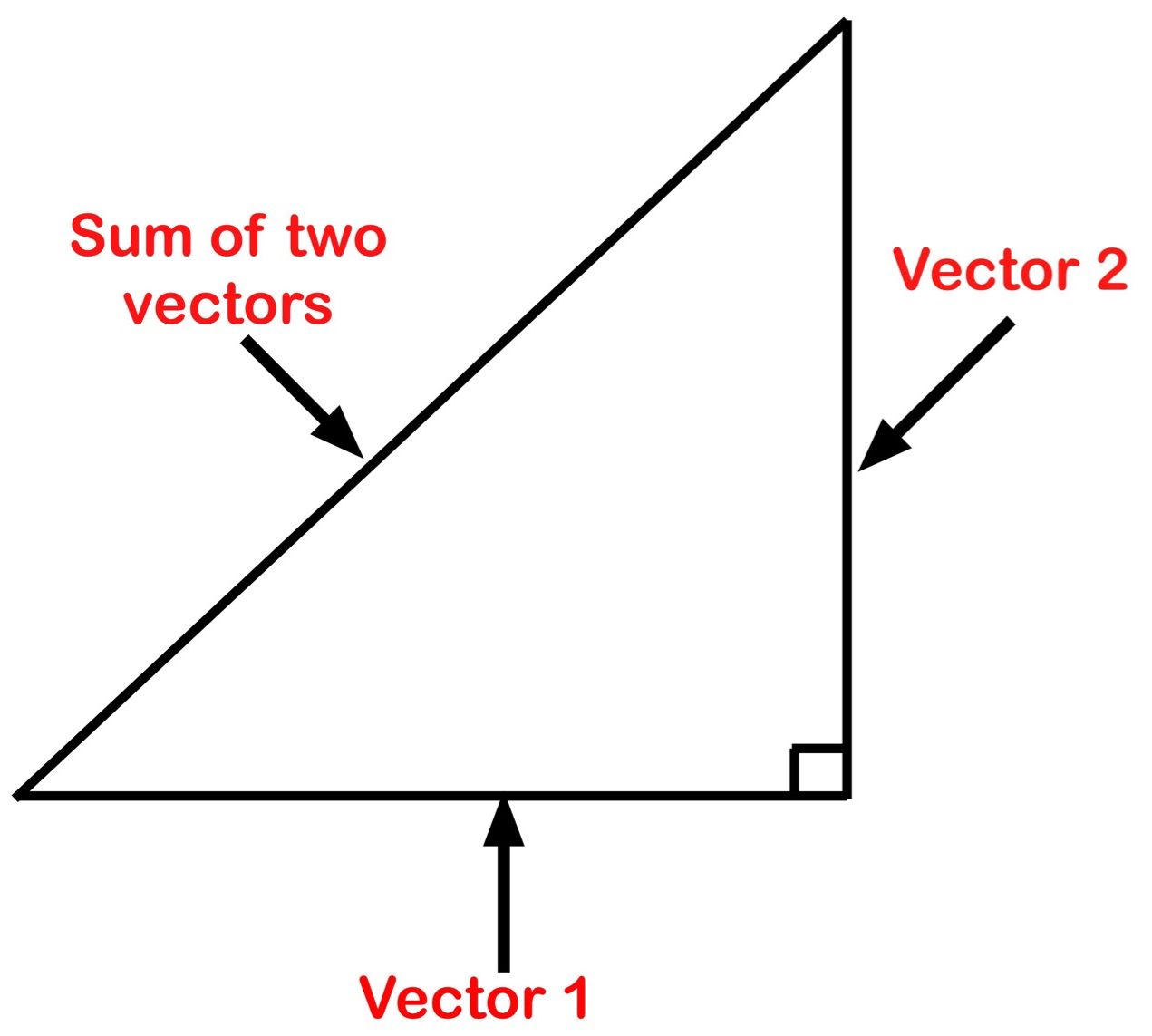
<div class="chapter standard" id="chapter-triangles-three-sides-and-the-truth" title="Triangles"><div class="chapter-title-wrap"><h3 class="chapter-number">2</h3><h2 class="chapter-title">Triangles</h2></div><div class="ugc chapter-ugc"><h1>Why triangles are important</h1> <p>Learning about electrical theory necessitates the study of triangles.  More specifically: right triangles.  Before we dig too much into the right triangle, let&#8217;s go over two key points about triangles.</p> <ul><li>All triangles have three sides.  (File this fact under the &#8220;thank you Captain Obvious&#8221; category.)</li> <li>All triangles contain 180 degrees.</li> </ul> <div class="wp-caption aligncenter" id="attachment_97" style="width: 152px"><a href="https://pressbooks.bccampus.ca/trigforelectricians/wp-content/uploads/sites/496/2018/06/Triangle-e1530128682322.png"><img src="https://pressbooks.bccampus.ca/trigforelectricians/wp-content/uploads/sites/496/2018/06/Triangle-e1530128682322-273x300.png" alt="" class="wp-image-97" width="152" height="167" srcset="https://pressbooks.bccampus.ca/trigforelectricians/wp-content/uploads/sites/496/2018/06/Triangle-e1530128682322-273x300.png 273w, https://pressbooks.bccampus.ca/trigforelectricians/wp-content/uploads/sites/496/2018/06/Triangle-e1530128682322-65x72.png 65w, https://pressbooks.bccampus.ca/trigforelectricians/wp-content/uploads/sites/496/2018/06/Triangle-e1530128682322-225x248.png 225w, https://pressbooks.bccampus.ca/trigforelectricians/wp-content/uploads/sites/496/2018/06/Triangle-e1530128682322-350x385.png 350w, https://pressbooks.bccampus.ca/trigforelectricians/wp-content/uploads/sites/496/2018/06/Triangle-e1530128682322.png 578w" /></a><div class="wp-caption-text"><strong>Figure 9. Triangle</strong></div></div> <h1>Different triangles</h1> <p>The right triangle is the most common triangle that will be used in electrical theory.  It is a good idea to have a basic understanding of other triangles as well.  Here are some common triangles you will come across in trigonometry.</p> <p><strong>Isosceles triangle.</strong>  This triangle has two sides that are equal, and two angles that are equal.</p> <p>&nbsp;</p> <div class="wp-caption aligncenter" id="attachment_106" style="width: 134px"><a href="https://pressbooks.bccampus.ca/trigforelectricians/wp-content/uploads/sites/496/2018/06/Isosceles-e1530128499899.png"><img src="https://pressbooks.bccampus.ca/trigforelectricians/wp-content/uploads/sites/496/2018/06/Isosceles-e1530128499899-181x300.png" alt="" class="wp-image-106" width="134" height="222" srcset="https://pressbooks.bccampus.ca/trigforelectricians/wp-content/uploads/sites/496/2018/06/Isosceles-e1530128499899-181x300.png 181w, https://pressbooks.bccampus.ca/trigforelectricians/wp-content/uploads/sites/496/2018/06/Isosceles-e1530128499899-65x108.png 65w, https://pressbooks.bccampus.ca/trigforelectricians/wp-content/uploads/sites/496/2018/06/Isosceles-e1530128499899-225x373.png 225w, https://pressbooks.bccampus.ca/trigforelectricians/wp-content/uploads/sites/496/2018/06/Isosceles-e1530128499899-350x581.png 350w, https://pressbooks.bccampus.ca/trigforelectricians/wp-content/uploads/sites/496/2018/06/Isosceles-e1530128499899.png 358w" /></a><div class="wp-caption-text"><strong>Figure 10. Isosceles triangle</strong></div></div> <p><strong>Equilateral triangle. </strong> All three sides of this triangle are equal, and all three of its angles are equal too.</p> <p>&nbsp;</p> <div class="wp-caption aligncenter" id="attachment_105" style="width: 157px"><a href="https://pressbooks.bccampus.ca/trigforelectricians/wp-content/uploads/sites/496/2018/06/Equalateral-e1530128541337.png"><img src="https://pressbooks.bccampus.ca/trigforelectricians/wp-content/uploads/sites/496/2018/06/Equalateral-e1530128541337-279x300.png" alt="" class="wp-image-105" width="157" height="169" srcset="https://pressbooks.bccampus.ca/trigforelectricians/wp-content/uploads/sites/496/2018/06/Equalateral-e1530128541337-279x300.png 279w, https://pressbooks.bccampus.ca/trigforelectricians/wp-content/uploads/sites/496/2018/06/Equalateral-e1530128541337-65x70.png 65w, https://pressbooks.bccampus.ca/trigforelectricians/wp-content/uploads/sites/496/2018/06/Equalateral-e1530128541337-225x242.png 225w, https://pressbooks.bccampus.ca/trigforelectricians/wp-content/uploads/sites/496/2018/06/Equalateral-e1530128541337-350x376.png 350w, https://pressbooks.bccampus.ca/trigforelectricians/wp-content/uploads/sites/496/2018/06/Equalateral-e1530128541337.png 583w" /></a><div class="wp-caption-text"><strong>Figure 11. Equilateral triangle</strong></div></div> <p><strong>Similar triangles.</strong>  These triangles each have different sized sides, but they share the same sized angles.</p> <div class="wp-caption aligncenter" id="attachment_104" style="width: 158px"><a href="https://pressbooks.bccampus.ca/trigforelectricians/wp-content/uploads/sites/496/2018/06/Similartriangles-e1530128577293.png"><img src="https://pressbooks.bccampus.ca/trigforelectricians/wp-content/uploads/sites/496/2018/06/Similartriangles-e1530128577293-233x300.png" alt="" class="wp-image-104" width="158" height="203" srcset="https://pressbooks.bccampus.ca/trigforelectricians/wp-content/uploads/sites/496/2018/06/Similartriangles-e1530128577293-233x300.png 233w, https://pressbooks.bccampus.ca/trigforelectricians/wp-content/uploads/sites/496/2018/06/Similartriangles-e1530128577293-65x84.png 65w, https://pressbooks.bccampus.ca/trigforelectricians/wp-content/uploads/sites/496/2018/06/Similartriangles-e1530128577293-225x289.png 225w, https://pressbooks.bccampus.ca/trigforelectricians/wp-content/uploads/sites/496/2018/06/Similartriangles-e1530128577293-350x450.png 350w, https://pressbooks.bccampus.ca/trigforelectricians/wp-content/uploads/sites/496/2018/06/Similartriangles-e1530128577293.png 588w" /></a><div class="wp-caption-text"><strong>Figure 12. Similar triangles</strong></div></div> <h1>So what about these right triangles you were talking about?</h1> <p>A right triangle is a triangle that has one right angle (equal to 90 degrees).  This means that the other two angles are complementary, that is, they must add to 90 degrees.</p> <div class="wp-caption aligncenter" id="attachment_457" style="width: 149px"><img src="https://pressbooks.bccampus.ca/trigforelectricians/wp-content/uploads/sites/496/2018/06/Skitch-Image-3-e1544472313980-300x283.jpg" alt="" class="wp-image-457" width="149" height="141" srcset="https://pressbooks.bccampus.ca/trigforelectricians/wp-content/uploads/sites/496/2018/06/Skitch-Image-3-e1544472313980-300x283.jpg 300w, https://pressbooks.bccampus.ca/trigforelectricians/wp-content/uploads/sites/496/2018/06/Skitch-Image-3-e1544472313980-768x724.jpg 768w, https://pressbooks.bccampus.ca/trigforelectricians/wp-content/uploads/sites/496/2018/06/Skitch-Image-3-e1544472313980-1024x966.jpg 1024w, https://pressbooks.bccampus.ca/trigforelectricians/wp-content/uploads/sites/496/2018/06/Skitch-Image-3-e1544472313980-65x61.jpg 65w, https://pressbooks.bccampus.ca/trigforelectricians/wp-content/uploads/sites/496/2018/06/Skitch-Image-3-e1544472313980-225x212.jpg 225w, https://pressbooks.bccampus.ca/trigforelectricians/wp-content/uploads/sites/496/2018/06/Skitch-Image-3-e1544472313980-350x330.jpg 350w, https://pressbooks.bccampus.ca/trigforelectricians/wp-content/uploads/sites/496/2018/06/Skitch-Image-3-e1544472313980.jpg 1425w" /><div class="wp-caption-text"><strong>Figure 13. Complementary angles.</strong></div></div> <h1>Ok, so what does a right triangle have to do with electrical?</h1> <p>Quite a bit actually.</p> <p>In the world of electrical theory, we will have to add up values.  We call these units <strong>vectors</strong> (more on the concept of vectors in a later chapter). These <em>vectors</em> each head in a different direction.  In fact, they are 90 degrees to each other.  When we add them, the sum of these two vectors ends up being the point between the two sides.</p> <p>&nbsp;</p> <div class="wp-caption aligncenter" id="attachment_102" style="width: 160px"><a href="https://pressbooks.bccampus.ca/trigforelectricians/wp-content/uploads/sites/496/2018/06/Vector90-e1530128646955.jpg"><img src="https://pressbooks.bccampus.ca/trigforelectricians/wp-content/uploads/sites/496/2018/06/Vector90-e1530128646955-300x270.jpg" alt="" class="wp-image-102" width="160" height="144" srcset="https://pressbooks.bccampus.ca/trigforelectricians/wp-content/uploads/sites/496/2018/06/Vector90-e1530128646955-300x270.jpg 300w, https://pressbooks.bccampus.ca/trigforelectricians/wp-content/uploads/sites/496/2018/06/Vector90-e1530128646955-768x691.jpg 768w, https://pressbooks.bccampus.ca/trigforelectricians/wp-content/uploads/sites/496/2018/06/Vector90-e1530128646955-1024x921.jpg 1024w, https://pressbooks.bccampus.ca/trigforelectricians/wp-content/uploads/sites/496/2018/06/Vector90-e1530128646955-65x58.jpg 65w, https://pressbooks.bccampus.ca/trigforelectricians/wp-content/uploads/sites/496/2018/06/Vector90-e1530128646955-225x202.jpg 225w, https://pressbooks.bccampus.ca/trigforelectricians/wp-content/uploads/sites/496/2018/06/Vector90-e1530128646955-350x315.jpg 350w, https://pressbooks.bccampus.ca/trigforelectricians/wp-content/uploads/sites/496/2018/06/Vector90-e1530128646955.jpg 1271w" /></a><div class="wp-caption-text"><strong>Figure 14. Vector triangle</strong></div></div> <p>Because they are not heading in the same direction (they are heading in directions that are 90 degrees to each other) we can&#8217;t add them up normally.  They have to be added <strong>vectorially</strong>.  How do you do this?  I&#8217;m glad you asked.</p> <p>Up next:  <strong>Pythagoras&#8217; theorem</strong></p> </div></div>
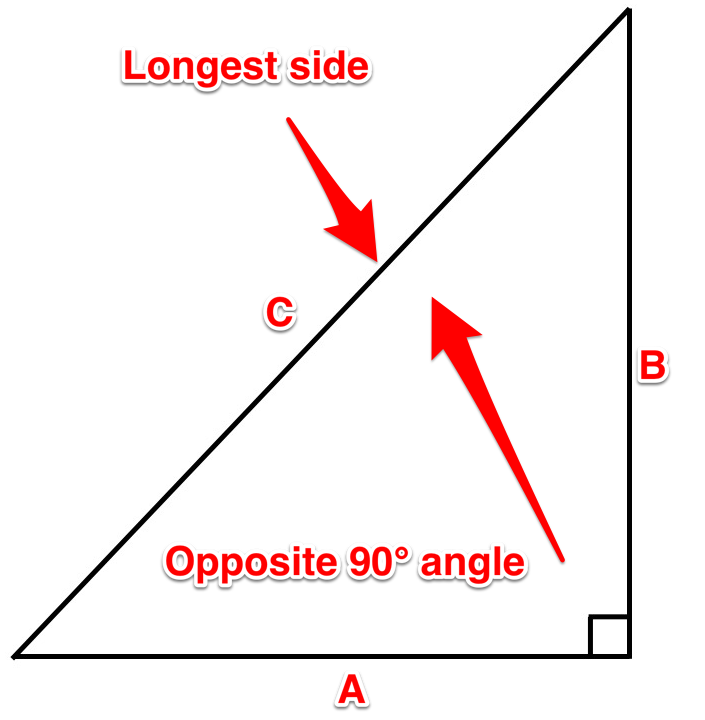
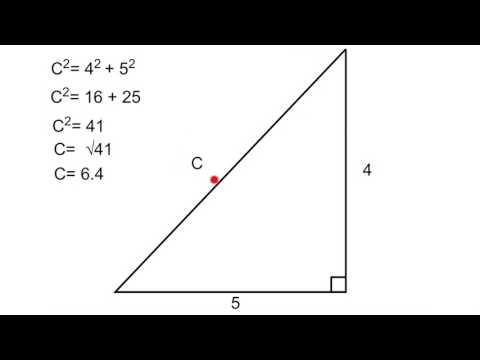
<div class="chapter standard" id="chapter-pythagoras" title="Pythagoras"><div class="chapter-title-wrap"><h3 class="chapter-number">3</h3><h2 class="chapter-title">Pythagoras</h2></div><div class="ugc chapter-ugc"> <h1>Who is this Pythagoras and why does he matter?</h1> <p>Pythagoras was a Greek philosopher who lived around 500 BC. &nbsp;He is credited as being a philosopher and mathematician. &nbsp;Much of what we know of Pythagoras is from writings that were copied down hundreds of years after his death, so the validity of what we do know is questionable.&nbsp; He is credited with Pythagoras’ theorem when actually it has been proven that Babylonians and Indians were using variations of it for hundreds of years before he even came along. You can read more about <a href="http://en.wikipedia.org/wiki/Pythagoras">Pythagoras</a>&nbsp;in this article.</p> <h1>Thanks for the history lesson, but get on with it!</h1> <p>The&nbsp;<strong>Pythagorean theorem</strong>, also known as&nbsp;<strong>Pythagoras’ theorem</strong>, is a relation in Euclidean geometry among the three sides of a right triangle.&nbsp; ‘It states that the square of the hypotenuse (the side opposite the right angle) is equal to the sum of the squares of the other two sides.</p> <h1>Huh?</h1> <p>It’s not as bad as it seems. &nbsp;Basically, the Pythagoras’ theorem says that you can figure out any side of a right triangle as long as you have the other two sides, using the equation:</p> <div class="bcc-box bcc-success"><h3 itemprop="educationalUse" style="text-align: center;">Important Formula!</h3> <p style="text-align: center;">A<sup>2&nbsp;</sup>+ B<sup>2&nbsp;</sup>= C<sup>2</sup></p> </div> <p>When we look at the formula, there is one important thing to remember:&nbsp; C is always the longest side.</p> <p>A and B can be swapped around, but when using this formula, C is always the longest side (which is also the side opposite the 90-degree angle).</p> <div class="wp-caption aligncenter" id="attachment_111" style="width: 168px"><a href="https://pressbooks.bccampus.ca/trigforelectricians/wp-content/uploads/sites/496/2018/06/Opposite-90-e1530129177320.png"><img src="https://pressbooks.bccampus.ca/trigforelectricians/wp-content/uploads/sites/496/2018/06/Opposite-90-e1530129177320-294x300.png" alt="" class="wp-image-111" width="168" height="171" srcset="https://pressbooks.bccampus.ca/trigforelectricians/wp-content/uploads/sites/496/2018/06/Opposite-90-e1530129177320-294x300.png 294w, https://pressbooks.bccampus.ca/trigforelectricians/wp-content/uploads/sites/496/2018/06/Opposite-90-e1530129177320-65x66.png 65w, https://pressbooks.bccampus.ca/trigforelectricians/wp-content/uploads/sites/496/2018/06/Opposite-90-e1530129177320-225x230.png 225w, https://pressbooks.bccampus.ca/trigforelectricians/wp-content/uploads/sites/496/2018/06/Opposite-90-e1530129177320-350x357.png 350w, https://pressbooks.bccampus.ca/trigforelectricians/wp-content/uploads/sites/496/2018/06/Opposite-90-e1530129177320.png 705w" /></a><div class="wp-caption-text"><strong>Figure 15. Longest side triangle</strong></div></div> <p>&nbsp;</p> <div class="textbox textbox--exercises"><div class="textbox__header"><p class="textbox__title" style="text-align: center;"><strong>Video!</strong></p> </div> <div class="textbox__content"><p style="text-align: center;">This video walks through how to apply Pythagoras’ theorem on a right triangle.</p> <div class="video-container"><div class="textbox interactive-content interactive-content--oembed"><img src="https://i.ytimg.com/vi/8rjvhG2pW3c/hqdefault.jpg" alt="Thumbnail for the embedded element &quot;Pythagoras theory&quot;" title="Pythagoras theory" /> <p>A YouTube element has been excluded from this version of the text. You can view it online here: <a href="#pb-interactive-content" title="Pythagoras theory">https://pressbooks.bccampus.ca/trigforelectricians/?p=24</a> </p> </div> </div> </div> </div> <h1>Attributions</h1> <p><a href="https://youtu.be/8rjvhG2pW3c">Pythagoras Theory</a>. video by <a href="https://www.youtube.com/channel/UCRm79BcxKhOWRj6CQAB_Cqg">The Electric Academy</a> is under a <a href="https://creativecommons.org/licenses/by/4.0/">Creative Commons Attribution Licence</a>.</p> </div></div>
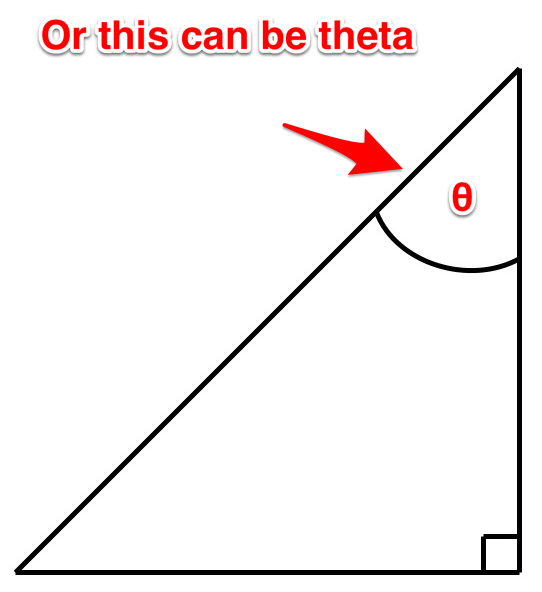
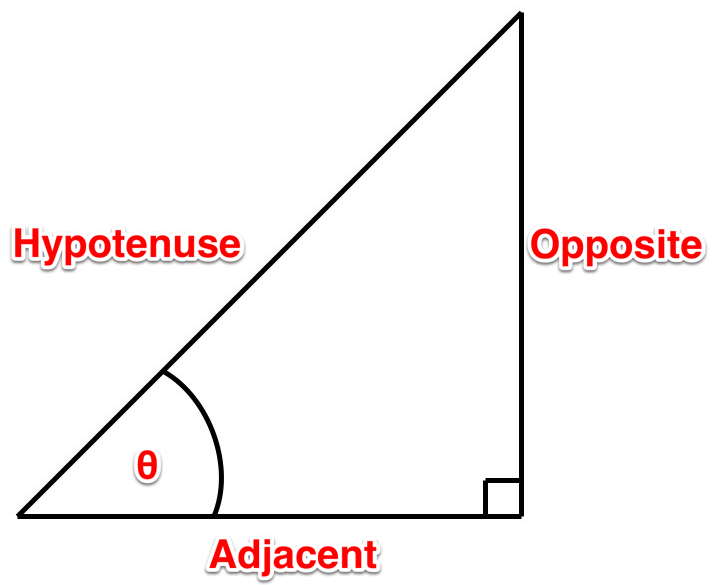
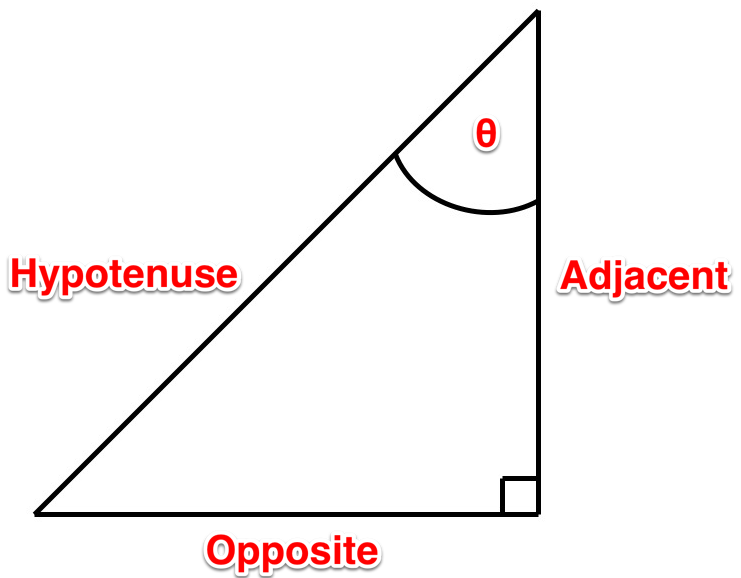
<div class="chapter standard" id="chapter-naming-the-sides-of-the-right-triangle" title="Naming Right Triangle Sides"><div class="chapter-title-wrap"><h3 class="chapter-number">4</h3><h2 class="chapter-title">Naming Right Triangle Sides</h2></div><div class="ugc chapter-ugc"><h1>What is this big fancy word, trigonometry?</h1> <p><strong>Trigonometry</strong> is the study of the relationship that exists between the sides and the angles of a triangle.</p> <p>That sounds complicated and scary.</p> <p>It can be, but lucky for us we are only dealing with right triangles.  This makes it very simple and almost fun.  (Nerd alert!)</p> <h1>First steps</h1> <p>We have already learned how to determine the sides of a triangle using the Pythagoras&#8217; theorem.  Next up is using those sides to determine the angles.  Lucky for us we know that in a right triangle we already have one 90-degree angle.  We also know that if we can solve any of the other two angles, the third one is easy.  (All triangles have 180 degrees.)  Our next step is to name the sides of the triangle.  The names of these sides are dependent on something called the <strong>designate angle</strong> or <strong>theta</strong>.  Theta is an angle that you determine or is determined for you.</p> <div class="wp-caption aligncenter" id="attachment_115" style="width: 174px"><a href="https://pressbooks.bccampus.ca/trigforelectricians/wp-content/uploads/sites/496/2018/06/Designate-1-e1530196829331.png"><img src="https://pressbooks.bccampus.ca/trigforelectricians/wp-content/uploads/sites/496/2018/06/Designate-1-e1530196829331-300x278.png" alt="" class="wp-image-115" width="174" height="161" srcset="https://pressbooks.bccampus.ca/trigforelectricians/wp-content/uploads/sites/496/2018/06/Designate-1-e1530196829331-300x278.png 300w, https://pressbooks.bccampus.ca/trigforelectricians/wp-content/uploads/sites/496/2018/06/Designate-1-e1530196829331-65x60.png 65w, https://pressbooks.bccampus.ca/trigforelectricians/wp-content/uploads/sites/496/2018/06/Designate-1-e1530196829331-225x208.png 225w, https://pressbooks.bccampus.ca/trigforelectricians/wp-content/uploads/sites/496/2018/06/Designate-1-e1530196829331-350x324.png 350w, https://pressbooks.bccampus.ca/trigforelectricians/wp-content/uploads/sites/496/2018/06/Designate-1-e1530196829331.png 578w" /></a><div class="wp-caption-text"><strong>Figure 16. Theta 1</strong></div></div> <p>&nbsp;</p> <div class="wp-caption aligncenter" id="attachment_116" style="width: 161px"><a href="https://pressbooks.bccampus.ca/trigforelectricians/wp-content/uploads/sites/496/2018/06/Designate-2-e1530196796465.png"><img src="https://pressbooks.bccampus.ca/trigforelectricians/wp-content/uploads/sites/496/2018/06/Designate-2-e1530196796465-275x300.png" alt="" class="wp-image-116" width="161" height="176" srcset="https://pressbooks.bccampus.ca/trigforelectricians/wp-content/uploads/sites/496/2018/06/Designate-2-e1530196796465-275x300.png 275w, https://pressbooks.bccampus.ca/trigforelectricians/wp-content/uploads/sites/496/2018/06/Designate-2-e1530196796465-65x71.png 65w, https://pressbooks.bccampus.ca/trigforelectricians/wp-content/uploads/sites/496/2018/06/Designate-2-e1530196796465-225x246.png 225w, https://pressbooks.bccampus.ca/trigforelectricians/wp-content/uploads/sites/496/2018/06/Designate-2-e1530196796465-350x382.png 350w, https://pressbooks.bccampus.ca/trigforelectricians/wp-content/uploads/sites/496/2018/06/Designate-2-e1530196796465.png 542w" /></a><div class="wp-caption-text"><strong>Figure 17. Theta 2</strong></div></div> <p>Now once you have figured out which angle is your theta, we can get to business naming the sides.</p> <p><strong>Adjacent</strong>.  This is the side that sits <em>adjacent</em> to the designate angle.</p> <p><strong>Opposite</strong>.  This is the side that sits <em>opposite</em> to the designate angle.</p> <p><strong>Hypotenuse.</strong>  This is the side that sits <em>opposite</em> the 90-degree angle.</p> <p>The hypotenuse is always the longest side of the triangle and doesn&#8217;t care where the designate angle is.  It only cares that it is opposite the 90-degree angle.</p> <div class="wp-caption aligncenter" id="attachment_117" style="width: 165px"><a href="https://pressbooks.bccampus.ca/trigforelectricians/wp-content/uploads/sites/496/2018/06/Trig-1-e1530196765970.png"><img src="https://pressbooks.bccampus.ca/trigforelectricians/wp-content/uploads/sites/496/2018/06/Trig-1-e1530196765970-300x246.png" alt="" class="wp-image-117" width="165" height="135" srcset="https://pressbooks.bccampus.ca/trigforelectricians/wp-content/uploads/sites/496/2018/06/Trig-1-e1530196765970-300x246.png 300w, https://pressbooks.bccampus.ca/trigforelectricians/wp-content/uploads/sites/496/2018/06/Trig-1-e1530196765970-65x53.png 65w, https://pressbooks.bccampus.ca/trigforelectricians/wp-content/uploads/sites/496/2018/06/Trig-1-e1530196765970-225x185.png 225w, https://pressbooks.bccampus.ca/trigforelectricians/wp-content/uploads/sites/496/2018/06/Trig-1-e1530196765970-350x288.png 350w, https://pressbooks.bccampus.ca/trigforelectricians/wp-content/uploads/sites/496/2018/06/Trig-1-e1530196765970.png 712w" /></a><div class="wp-caption-text"><strong>Figure 18. Hypotenuse </strong></div></div> <p>And if we switch the designate angle, the names of the sides change as in Figure 19.</p> <p>&nbsp;</p> <div class="wp-caption aligncenter" id="attachment_118" style="width: 168px"><a href="https://pressbooks.bccampus.ca/trigforelectricians/wp-content/uploads/sites/496/2018/06/Trig-e1530196729982.png"><img src="https://pressbooks.bccampus.ca/trigforelectricians/wp-content/uploads/sites/496/2018/06/Trig-e1530196729982-300x234.png" alt="" class="wp-image-118" width="168" height="131" srcset="https://pressbooks.bccampus.ca/trigforelectricians/wp-content/uploads/sites/496/2018/06/Trig-e1530196729982-300x234.png 300w, https://pressbooks.bccampus.ca/trigforelectricians/wp-content/uploads/sites/496/2018/06/Trig-e1530196729982-65x51.png 65w, https://pressbooks.bccampus.ca/trigforelectricians/wp-content/uploads/sites/496/2018/06/Trig-e1530196729982-225x176.png 225w, https://pressbooks.bccampus.ca/trigforelectricians/wp-content/uploads/sites/496/2018/06/Trig-e1530196729982-350x273.png 350w, https://pressbooks.bccampus.ca/trigforelectricians/wp-content/uploads/sites/496/2018/06/Trig-e1530196729982.png 741w" /></a><div class="wp-caption-text"><strong>Figure 19. Adjacent and Opposite sides switch places</strong></div></div> <p>The next chapter tells us what to do with these names.</p> </div></div>
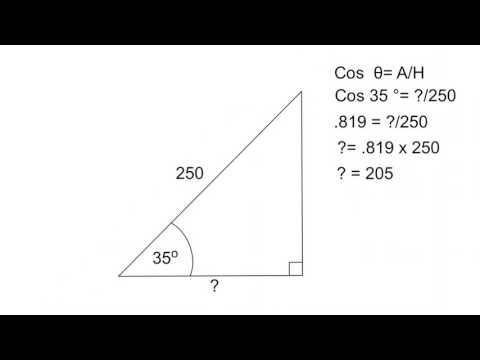
<div class="chapter standard" id="chapter-trigonometry-functions" title="Trigonometry Functions"><div class="chapter-title-wrap"><h3 class="chapter-number">5</h3><h2 class="chapter-title">Trigonometry Functions</h2></div><div class="ugc chapter-ugc"> <p>When determining the designate angle we can use different ratios of sides.</p> <ul><li>We can use a ratio of the opposite to the hypotenuse.</li> <li>We can use a ratio of the adjacent to the hypotenuse.</li> <li>We can use a ration of the opposite to the adjacent.</li> </ul> <p>Each ratio has a trigonometric function that helps turn the ratio into an angle.&nbsp; They are:</p> <ul><li>sin θ = opposite/hypotenuse</li> <li>cos θ = adjacent/hypotenuse</li> <li>tan θ = opposite/adjacent</li> </ul> <p>One way of remembering the ratios are these mnemonics:</p> <ul><li>SOH – Sine is opposite/ hypotenuse</li> <li>CAH – Cosine is adjacent/hypotenuse</li> <li>TOA – Tangent is opposite/ adjacent</li> </ul> <p>By the way,</p> <ul><li>sin is short for sine</li> <li>cos is short for cosine</li> <li>tan is short for tangent</li> </ul> <div class="textbox textbox--exercises"><div class="textbox__header"><p class="textbox__title" style="text-align: center"><strong>Video!</strong></p> </div> <div class="textbox__content"><p style="text-align: center">This video walks through how to determine the angle of a right triangle when you have two sides.</p> <div class="video-container"><div class="textbox interactive-content interactive-content--oembed"><img src="https://i.ytimg.com/vi/qJX9l_8WThs/hqdefault.jpg" alt="Thumbnail for the embedded element &quot;Trigonometry (Part one)&quot;" title="Trigonometry (Part one)" /> <p>A YouTube element has been excluded from this version of the text. You can view it online here: <a href="#pb-interactive-content" title="Trigonometry (Part one)">https://pressbooks.bccampus.ca/trigforelectricians/?p=34</a> </p> </div> </div> </div> </div> <p>&nbsp;</p> <div class="textbox textbox--exercises"><div class="textbox__header"><p class="textbox__title" style="text-align: center"><strong>Video!</strong></p> </div> <div class="textbox__content"><p style="text-align: center">This video walks through how to determine the other sides of a triangle when you have an angle and one side.</p> <div class="video-container"><div class="textbox interactive-content interactive-content--oembed"><img src="https://i.ytimg.com/vi/Aildd3S2eVI/hqdefault.jpg" alt="Thumbnail for the embedded element &quot;Trigonometry (Part two)&quot;" title="Trigonometry (Part two)" /> <p>A YouTube element has been excluded from this version of the text. You can view it online here: <a href="#pb-interactive-content" title="Trigonometry (Part two)">https://pressbooks.bccampus.ca/trigforelectricians/?p=34</a> </p> </div> </div> </div> </div> <h1>Attributions</h1> <p><a href="https://youtu.be/qJX9l_8WThs">Trigonometry (Part one)</a>.video by <a href="https://www.youtube.com/channel/UCRm79BcxKhOWRj6CQAB_Cqg">The Electric Academy</a> is under a <a href="https://creativecommons.org/licenses/by/4.0/">Creative Commons Attribution Licence</a>.</p> <p><a href="https://youtu.be/Aildd3S2eVI">Trigonometry (Part two)</a>.video by <a href="https://www.youtube.com/channel/UCRm79BcxKhOWRj6CQAB_Cqg">The Electric Academy</a> is under a <a href="https://creativecommons.org/licenses/by/4.0/">Creative Commons Attribution Licence</a>.</p> <p>&nbsp;</p> </div></div>
<div class="chapter standard" id="chapter-slug-50" title="Power and Impedance Triangles"><div class="chapter-title-wrap"><h3 class="chapter-number">6</h3><h2 class="chapter-title">Power and Impedance Triangles</h2></div><div class="ugc chapter-ugc"><h1>What is going on here?</h1> <p>This is the point where I am going to ask you to take my hand and to trust me.  Okay, you don&#8217;t have to take my hand, but you do have to trust me.  We are going to start using some terms before totally going into the theory behind them.  I promise that we will get more in-depth into these concepts in future lessons.</p> <h1>Impedance triangles</h1> <p>When dealing with DC circuits the only thing that opposes current is the <strong>resistance</strong> in the circuit.</p> <div class="wp-caption aligncenter" id="attachment_122" style="width: 300px"><a href="https://pressbooks.bccampus.ca/trigforelectricians/wp-content/uploads/sites/496/2018/06/purely-resistive-DC-1-e1530815278488.png"><img src="https://pressbooks.bccampus.ca/trigforelectricians/wp-content/uploads/sites/496/2018/06/purely-resistive-DC-1-e1530815278488-300x165.png" alt="" class="wp-image-122 size-medium" width="300" height="165" srcset="https://pressbooks.bccampus.ca/trigforelectricians/wp-content/uploads/sites/496/2018/06/purely-resistive-DC-1-e1530815278488-300x165.png 300w, https://pressbooks.bccampus.ca/trigforelectricians/wp-content/uploads/sites/496/2018/06/purely-resistive-DC-1-e1530815278488-768x422.png 768w, https://pressbooks.bccampus.ca/trigforelectricians/wp-content/uploads/sites/496/2018/06/purely-resistive-DC-1-e1530815278488-65x36.png 65w, https://pressbooks.bccampus.ca/trigforelectricians/wp-content/uploads/sites/496/2018/06/purely-resistive-DC-1-e1530815278488-225x124.png 225w, https://pressbooks.bccampus.ca/trigforelectricians/wp-content/uploads/sites/496/2018/06/purely-resistive-DC-1-e1530815278488-350x192.png 350w, https://pressbooks.bccampus.ca/trigforelectricians/wp-content/uploads/sites/496/2018/06/purely-resistive-DC-1-e1530815278488.png 837w" /></a><div class="wp-caption-text"><strong>Figure 20. DC resistive circuit</strong></div></div> <p>As we will learn in later units, AC adds a component that opposes current as well.  This is called <strong>reactance</strong> and it runs 90 degrees to the circuit resistance.  This means it is not possible to add them together arithmetically;  it has to be done using the Pythagoras&#8217; theorem.  When you add these two together, you get a total opposition to current flow called <strong>impedance</strong>.</p> <div class="wp-caption aligncenter" id="attachment_123" style="width: 300px"><a href="https://pressbooks.bccampus.ca/trigforelectricians/wp-content/uploads/sites/496/2018/06/RL-AC-2.png"><img src="https://pressbooks.bccampus.ca/trigforelectricians/wp-content/uploads/sites/496/2018/06/RL-AC-2-300x224.png" alt="" class="wp-image-123 size-medium" width="300" height="224" srcset="https://pressbooks.bccampus.ca/trigforelectricians/wp-content/uploads/sites/496/2018/06/RL-AC-2-300x224.png 300w, https://pressbooks.bccampus.ca/trigforelectricians/wp-content/uploads/sites/496/2018/06/RL-AC-2-768x573.png 768w, https://pressbooks.bccampus.ca/trigforelectricians/wp-content/uploads/sites/496/2018/06/RL-AC-2-65x48.png 65w, https://pressbooks.bccampus.ca/trigforelectricians/wp-content/uploads/sites/496/2018/06/RL-AC-2-225x168.png 225w, https://pressbooks.bccampus.ca/trigforelectricians/wp-content/uploads/sites/496/2018/06/RL-AC-2-350x261.png 350w, https://pressbooks.bccampus.ca/trigforelectricians/wp-content/uploads/sites/496/2018/06/RL-AC-2.png 944w" /></a><div class="wp-caption-text"><strong>Figure 21. DC inductive circuit</strong></div></div> <p>The triangle that is created when adding the resistance to the reactance is known as an <strong>impedance triangle</strong>.</p> <div class="wp-caption aligncenter" id="attachment_124" style="width: 300px"><a href="https://pressbooks.bccampus.ca/trigforelectricians/wp-content/uploads/sites/496/2018/06/Impedance-triangle-1-e1530815365370.png"><img src="https://pressbooks.bccampus.ca/trigforelectricians/wp-content/uploads/sites/496/2018/06/Impedance-triangle-1-e1530815365370-300x227.png" alt="" class="wp-image-124 size-medium" width="300" height="227" srcset="https://pressbooks.bccampus.ca/trigforelectricians/wp-content/uploads/sites/496/2018/06/Impedance-triangle-1-e1530815365370-300x227.png 300w, https://pressbooks.bccampus.ca/trigforelectricians/wp-content/uploads/sites/496/2018/06/Impedance-triangle-1-e1530815365370-65x49.png 65w, https://pressbooks.bccampus.ca/trigforelectricians/wp-content/uploads/sites/496/2018/06/Impedance-triangle-1-e1530815365370-225x170.png 225w, https://pressbooks.bccampus.ca/trigforelectricians/wp-content/uploads/sites/496/2018/06/Impedance-triangle-1-e1530815365370-350x265.png 350w, https://pressbooks.bccampus.ca/trigforelectricians/wp-content/uploads/sites/496/2018/06/Impedance-triangle-1-e1530815365370.png 542w" /></a><div class="wp-caption-text"><strong>Figure 22. Impedance triangle</strong></div></div> <p>In an impedance triangle, the resistance (r) is always on the bottom of the triangle, the reactance (x) always goes on the side and the hypotenuse is always the impedance (z).</p> <h1>Power triangles</h1> <p>When dealing with a purely resistive circuit, the power being dissipated is in the form of heat or light and is measured in watts and is known as <strong>true or active power</strong>.  It is a product of I<sup>2</sup>R.</p> <div class="wp-caption aligncenter" id="attachment_125" style="width: 300px"><a href="https://pressbooks.bccampus.ca/trigforelectricians/wp-content/uploads/sites/496/2018/06/purely-resistive-DC-power-e1530231909378.png"><img src="https://pressbooks.bccampus.ca/trigforelectricians/wp-content/uploads/sites/496/2018/06/purely-resistive-DC-power-e1530231909378-300x165.png" alt="" class="wp-image-125 size-medium" width="300" height="165" srcset="https://pressbooks.bccampus.ca/trigforelectricians/wp-content/uploads/sites/496/2018/06/purely-resistive-DC-power-e1530231909378-300x165.png 300w, https://pressbooks.bccampus.ca/trigforelectricians/wp-content/uploads/sites/496/2018/06/purely-resistive-DC-power-e1530231909378-768x424.png 768w, https://pressbooks.bccampus.ca/trigforelectricians/wp-content/uploads/sites/496/2018/06/purely-resistive-DC-power-e1530231909378-65x36.png 65w, https://pressbooks.bccampus.ca/trigforelectricians/wp-content/uploads/sites/496/2018/06/purely-resistive-DC-power-e1530231909378-225x124.png 225w, https://pressbooks.bccampus.ca/trigforelectricians/wp-content/uploads/sites/496/2018/06/purely-resistive-DC-power-e1530231909378-350x193.png 350w, https://pressbooks.bccampus.ca/trigforelectricians/wp-content/uploads/sites/496/2018/06/purely-resistive-DC-power-e1530231909378.png 863w" /></a><div class="wp-caption-text"><strong>Figure 23. Resistive power circuit</strong></div></div> <p>In an AC circuit with inductance, watts are still present.  There is also a reactive power present as current passes across the reactance.  This power is called <strong>reactive power</strong> and is also called <strong>wattless or quadrature power</strong>.  Its unit is the Vars.</p> <p>&nbsp;</p> <div class="wp-caption aligncenter" id="attachment_126" style="width: 300px"><a href="https://pressbooks.bccampus.ca/trigforelectricians/wp-content/uploads/sites/496/2018/06/RL-AC-power-e1530231880108.png"><img src="https://pressbooks.bccampus.ca/trigforelectricians/wp-content/uploads/sites/496/2018/06/RL-AC-power-e1530231880108-300x243.png" alt="" class="wp-image-126 size-medium" width="300" height="243" srcset="https://pressbooks.bccampus.ca/trigforelectricians/wp-content/uploads/sites/496/2018/06/RL-AC-power-e1530231880108-300x243.png 300w, https://pressbooks.bccampus.ca/trigforelectricians/wp-content/uploads/sites/496/2018/06/RL-AC-power-e1530231880108-65x53.png 65w, https://pressbooks.bccampus.ca/trigforelectricians/wp-content/uploads/sites/496/2018/06/RL-AC-power-e1530231880108-225x183.png 225w, https://pressbooks.bccampus.ca/trigforelectricians/wp-content/uploads/sites/496/2018/06/RL-AC-power-e1530231880108-350x284.png 350w, https://pressbooks.bccampus.ca/trigforelectricians/wp-content/uploads/sites/496/2018/06/RL-AC-power-e1530231880108.png 700w" /></a><div class="wp-caption-text"><strong>Figure 24. Inductive power circuit</strong></div></div> <p>Much like the impedance triangle, we can not just add the two powers together to get overall power.  They must be added using the Pythagoras&#8217; theorem.  Their sum is equal to the <strong>apparent power</strong> (VA).</p> <div class="wp-caption aligncenter" id="attachment_127" style="width: 300px"><a href="https://pressbooks.bccampus.ca/trigforelectricians/wp-content/uploads/sites/496/2018/06/Power-triangle-e1530231847893.png"><img src="https://pressbooks.bccampus.ca/trigforelectricians/wp-content/uploads/sites/496/2018/06/Power-triangle-e1530231847893-300x182.png" alt="" class="wp-image-127 size-medium" width="300" height="182" srcset="https://pressbooks.bccampus.ca/trigforelectricians/wp-content/uploads/sites/496/2018/06/Power-triangle-e1530231847893-300x182.png 300w, https://pressbooks.bccampus.ca/trigforelectricians/wp-content/uploads/sites/496/2018/06/Power-triangle-e1530231847893-65x39.png 65w, https://pressbooks.bccampus.ca/trigforelectricians/wp-content/uploads/sites/496/2018/06/Power-triangle-e1530231847893-225x137.png 225w, https://pressbooks.bccampus.ca/trigforelectricians/wp-content/uploads/sites/496/2018/06/Power-triangle-e1530231847893-350x213.png 350w, https://pressbooks.bccampus.ca/trigforelectricians/wp-content/uploads/sites/496/2018/06/Power-triangle-e1530231847893.png 729w" /></a><div class="wp-caption-text"><strong>Figure 25.  Power triangle</strong></div></div> <p>When calculating for reactive power, we are still able to use the power formulas.  We just have to use them with reactance instead of resistance.</p> <ul><li>I<sup>2</sup>X = Vars</li> <li>E<sup>2</sup> (inductor voltage)<sup> </sup>/X = Vars</li> <li>I x E (inductor voltage) = Vars</li> </ul> <div class="bcc-box bcc-success"><h3 itemprop="educationalUse" style="text-align: center;">Remember</h3> <p style="text-align: left;">When building an impedance or power triangle, the resistive component always goes on the bottom of the triangle and the reactive component always goes on the side.</p> </div> <p>&nbsp;</p> </div></div>
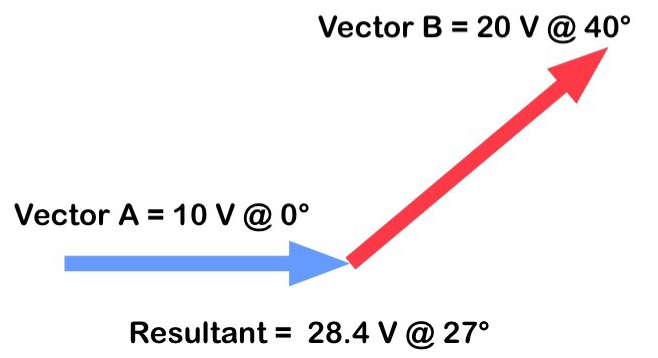
<div class="part " id="part-vectors"><div class="part-title-wrap"><h3 class="part-number">II</h3><h1 class="part-title">Vectors</h1></div><p>Vectors are something that contains magnitude and direction.&nbsp; This is a concept that will continue to follow you throughout your electrical training.</p> <div class="textbox textbox--learning-objectives"><div class="textbox__header"><p class="textbox__title" style="text-align: center;">Learning Objectives</p> </div> <div class="textbox__content"><ul><li>Explain vectors</li> <li>Describe a quadrant system</li> <li>Discuss the difference between polar form and rectangular form</li> <li>Demonstrate how to add vectors</li> </ul> </div> </div> <div class="textbox shaded">See the <a href="#vectors">Vectors</a> section of the <a href="#back-matter-appendix-worksheets">Appendix</a> for worksheets that can be used in this section.</div></div>
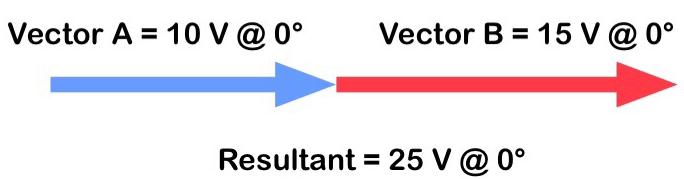
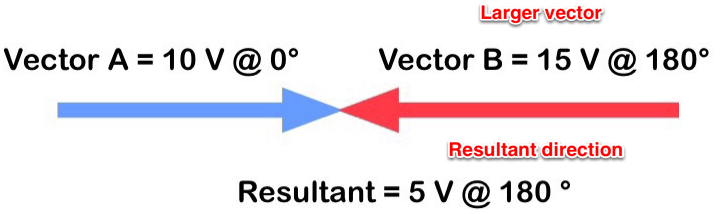
<div class="chapter standard" id="chapter-a-vector-primer" title="A Vector Primer"><div class="chapter-title-wrap"><h3 class="chapter-number">7</h3><h2 class="chapter-title">A Vector Primer</h2></div><div class="ugc chapter-ugc"><h1>What is a vector?</h1> <p>A <strong>vector</strong> is a quantity that possesses magnitude and direction.  As an example, let&#8217;s say I roundhouse kicked you in the head.  The magnitude of the force and the angle at which I kicked you would be a vector.  I know what you&#8217;re thinking:  &#8220;This electrical stuff sounds cool.&#8221;  And you&#8217;d be right.</p> <p>&nbsp;</p> <div class="wp-caption aligncenter" id="attachment_60" style="width: 366px"><img src="https://pressbooks.bccampus.ca/trigforelectricians/wp-content/uploads/sites/496/2018/06/pexels-photo-416818-300x200.jpeg" alt="" class="wp-image-60" width="366" height="244" srcset="https://pressbooks.bccampus.ca/trigforelectricians/wp-content/uploads/sites/496/2018/06/pexels-photo-416818-300x200.jpeg 300w, https://pressbooks.bccampus.ca/trigforelectricians/wp-content/uploads/sites/496/2018/06/pexels-photo-416818-65x43.jpeg 65w, https://pressbooks.bccampus.ca/trigforelectricians/wp-content/uploads/sites/496/2018/06/pexels-photo-416818-225x150.jpeg 225w, https://pressbooks.bccampus.ca/trigforelectricians/wp-content/uploads/sites/496/2018/06/pexels-photo-416818-350x233.jpeg 350w, https://pressbooks.bccampus.ca/trigforelectricians/wp-content/uploads/sites/496/2018/06/pexels-photo-416818.jpeg 640w" /><div class="wp-caption-text">Image retrieved from pixabay.com. Used under Creative Commons CC0 license.</div></div> <h1>Aside from helping me become a fighting machine, how do vectors have anything to do with electricity?</h1> <p>AC values are constantly changing magnitude and direction.  We will talk about this more in-depth in the AC generation portion of the course.  Eventually, we will be required to add these values together.  The sum of the vectors is called the <strong>resultant</strong>.  This is all well and good when vectors are heading in the same direction&#8230;</p> <p>&nbsp;</p> <div class="wp-caption aligncenter" id="attachment_265" style="width: 300px"><a href="https://pressbooks.bccampus.ca/trigforelectricians/wp-content/uploads/sites/496/2018/06/vector1-e1533152364408.png"><img src="https://pressbooks.bccampus.ca/trigforelectricians/wp-content/uploads/sites/496/2018/06/vector1-e1533152364408-300x79.png" alt="" class="wp-image-265 size-medium" width="300" height="79" srcset="https://pressbooks.bccampus.ca/trigforelectricians/wp-content/uploads/sites/496/2018/06/vector1-e1533152364408-300x79.png 300w, https://pressbooks.bccampus.ca/trigforelectricians/wp-content/uploads/sites/496/2018/06/vector1-e1533152364408-65x17.png 65w, https://pressbooks.bccampus.ca/trigforelectricians/wp-content/uploads/sites/496/2018/06/vector1-e1533152364408-225x59.png 225w, https://pressbooks.bccampus.ca/trigforelectricians/wp-content/uploads/sites/496/2018/06/vector1-e1533152364408-350x92.png 350w, https://pressbooks.bccampus.ca/trigforelectricians/wp-content/uploads/sites/496/2018/06/vector1-e1533152364408.png 684w" /></a><div class="wp-caption-text"><strong>Figure 26. Vectors in the same direction</strong></div></div> <p>&#8230; because you can just add them together.</p> <p>&nbsp;</p> <div class="wp-caption aligncenter" id="attachment_266" style="width: 300px"><a href="https://pressbooks.bccampus.ca/trigforelectricians/wp-content/uploads/sites/496/2018/06/vector2-e1533152390991.png"><img src="https://pressbooks.bccampus.ca/trigforelectricians/wp-content/uploads/sites/496/2018/06/vector2-e1533152390991-300x89.png" alt="" class="wp-image-266 size-medium" width="300" height="89" srcset="https://pressbooks.bccampus.ca/trigforelectricians/wp-content/uploads/sites/496/2018/06/vector2-e1533152390991-300x89.png 300w, https://pressbooks.bccampus.ca/trigforelectricians/wp-content/uploads/sites/496/2018/06/vector2-e1533152390991-65x19.png 65w, https://pressbooks.bccampus.ca/trigforelectricians/wp-content/uploads/sites/496/2018/06/vector2-e1533152390991-225x67.png 225w, https://pressbooks.bccampus.ca/trigforelectricians/wp-content/uploads/sites/496/2018/06/vector2-e1533152390991-350x104.png 350w, https://pressbooks.bccampus.ca/trigforelectricians/wp-content/uploads/sites/496/2018/06/vector2-e1533152390991.png 722w" /></a><div class="wp-caption-text"><strong>Figure 27. Vectors in the opposite direction</strong></div></div> <p>It isn&#8217;t even bad if they are heading in the opposite direction.  You can just subtract them.  The only thing when <em>adding</em> them in opposite directions is that you have to pay attention to which vector has the greatest value.  This will become the new direction of the sum of the vectors.</p> <p>The problem arises when they are heading in completely different directions.</p> <p>&nbsp;</p> <div class="wp-caption aligncenter" id="attachment_267" style="width: 300px"><a href="https://pressbooks.bccampus.ca/trigforelectricians/wp-content/uploads/sites/496/2018/06/vectors3-e1533152410837.png"><img src="https://pressbooks.bccampus.ca/trigforelectricians/wp-content/uploads/sites/496/2018/06/vectors3-e1533152410837-300x163.png" alt="" class="wp-image-267 size-medium" width="300" height="163" srcset="https://pressbooks.bccampus.ca/trigforelectricians/wp-content/uploads/sites/496/2018/06/vectors3-e1533152410837-300x163.png 300w, https://pressbooks.bccampus.ca/trigforelectricians/wp-content/uploads/sites/496/2018/06/vectors3-e1533152410837-65x35.png 65w, https://pressbooks.bccampus.ca/trigforelectricians/wp-content/uploads/sites/496/2018/06/vectors3-e1533152410837-225x122.png 225w, https://pressbooks.bccampus.ca/trigforelectricians/wp-content/uploads/sites/496/2018/06/vectors3-e1533152410837-350x190.png 350w, https://pressbooks.bccampus.ca/trigforelectricians/wp-content/uploads/sites/496/2018/06/vectors3-e1533152410837.png 658w" /></a><div class="wp-caption-text"><strong>Figure 28. Vectors moving in different direction</strong></div></div> <h1>How did you do that?</h1> <p>Trust me, it is not difficult.  In order to figure out how to add vectors, we first have to talk about the quadrant system.</p> <p>Up next:  <strong>Quadrants</strong></p> </div></div>
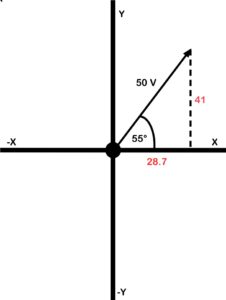
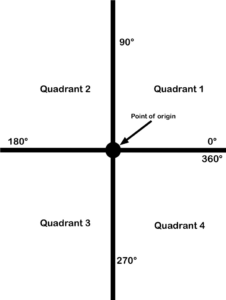
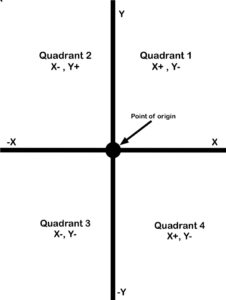
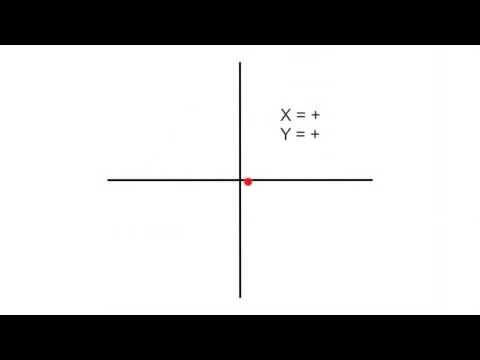
<div class="chapter standard" id="chapter-quadrants" title="Quadrants"><div class="chapter-title-wrap"><h3 class="chapter-number">8</h3><h2 class="chapter-title">Quadrants</h2></div><div class="ugc chapter-ugc"> <h1>Like a Star Trek quadrant?</h1> <p>First off: Nerd alert!</p> <p>Secondly,&nbsp; yes,&nbsp; a <strong>quadrant</strong> is a circle cut into four parts.</p> <h1>What does this have to do with electricity?</h1> <p>Voltage and currents are constantly changing magnitude and direction.&nbsp;&nbsp;When changing direction, they actually rotate in a counterclockwise direction.&nbsp;&nbsp;They are tethered to a <strong>point of origin</strong>.</p> <p>&nbsp;</p> <div class="wp-caption aligncenter" id="attachment_434" style="width: 226px"><img src="https://pressbooks.bccampus.ca/trigforelectricians/wp-content/uploads/sites/496/2018/12/Figure-30-226x300.png" alt="" class="wp-image-434 size-medium" width="226" height="300" srcset="https://pressbooks.bccampus.ca/trigforelectricians/wp-content/uploads/sites/496/2018/12/Figure-30-226x300.png 226w, https://pressbooks.bccampus.ca/trigforelectricians/wp-content/uploads/sites/496/2018/12/Figure-30-65x86.png 65w, https://pressbooks.bccampus.ca/trigforelectricians/wp-content/uploads/sites/496/2018/12/Figure-30-225x298.png 225w, https://pressbooks.bccampus.ca/trigforelectricians/wp-content/uploads/sites/496/2018/12/Figure-30-350x464.png 350w, https://pressbooks.bccampus.ca/trigforelectricians/wp-content/uploads/sites/496/2018/12/Figure-30.png 724w" /><div class="wp-caption-text"><strong>Figure 29. Quadrant point of origin</strong></div></div> <p>Each quadrant contains certain directions.</p> <ul><li>Quadrant 1 has 0 to 90 degrees.</li> <li>Quadrant 2 has 90 to 180 degrees.</li> <li>Quadrant 3 has 180 to 270 degrees.</li> <li>Quadrant 4 has 270 to 360 degrees.</li> </ul> <p>This is very important as it helps us to determine which vectors belong in which quadrant.</p> <h1>Polarity</h1> <p>It is also important to understand polarity when dealing with quadrants.&nbsp;&nbsp;A quadrant system is basically an X-Y graph.&nbsp;&nbsp;We use the <em>point of origin</em> as a reference point.&nbsp;&nbsp;On the X axis, anything to the right of the point of origin is positive and anything to the left is negative.&nbsp;&nbsp;On the Y axis, anything above the point of origin is positive and anything underneath it is negative.&nbsp;&nbsp;This means each quadrant has its own polarity, as shown in Figure 30.</p> <p>&nbsp;</p> <div class="wp-caption aligncenter" id="attachment_435" style="width: 226px"><img src="https://pressbooks.bccampus.ca/trigforelectricians/wp-content/uploads/sites/496/2018/12/Figure-31-226x300.png" alt="" class="wp-image-435 size-medium" width="226" height="300" srcset="https://pressbooks.bccampus.ca/trigforelectricians/wp-content/uploads/sites/496/2018/12/Figure-31-226x300.png 226w, https://pressbooks.bccampus.ca/trigforelectricians/wp-content/uploads/sites/496/2018/12/Figure-31-65x86.png 65w, https://pressbooks.bccampus.ca/trigforelectricians/wp-content/uploads/sites/496/2018/12/Figure-31-225x298.png 225w, https://pressbooks.bccampus.ca/trigforelectricians/wp-content/uploads/sites/496/2018/12/Figure-31-350x464.png 350w, https://pressbooks.bccampus.ca/trigforelectricians/wp-content/uploads/sites/496/2018/12/Figure-31.png 724w" /><div class="wp-caption-text"><strong>Figure 30. Quadrant polarity</strong></div></div> <p>This too is extremely important when it comes to adding vectors.</p> <p>Are you getting excited yet? &nbsp;This is all going to come together in one magical dance.</p> <div class="textbox textbox--exercises"><div class="textbox__header"><p class="textbox__title" style="text-align: center"><strong>Video!</strong></p> </div> <div class="textbox__content"><p style="text-align: center">This video goes into greater detail about the specifics of all four quadrants.</p> <div class="video-container"><div class="textbox interactive-content interactive-content--oembed"><img src="https://i.ytimg.com/vi/ljX1WqEZEBw/hqdefault.jpg" alt="Thumbnail for the embedded element &quot;Quadrants and vectors&quot;" title="Quadrants and vectors" /> <p>A YouTube element has been excluded from this version of the text. You can view it online here: <a href="#pb-interactive-content" title="Quadrants and vectors">https://pressbooks.bccampus.ca/trigforelectricians/?p=65</a> </p> </div> </div> </div> </div> <h1>Attributions</h1> <p><a href="https://youtu.be/Aildd3S2eVI">Quadrants and vectors</a>.&nbsp;video by <a href="https://www.youtube.com/channel/UCRm79BcxKhOWRj6CQAB_Cqg">The Electric Academy</a> is under a <a href="https://creativecommons.org/licenses/by/4.0/">Creative Commons Attribution Licence</a>.</p> </div></div>
<div class="chapter standard" id="chapter-polar-form-vs-rectangular-form" title="Polar vs. Rectangular Form"><div class="chapter-title-wrap"><h3 class="chapter-number">9</h3><h2 class="chapter-title">Polar vs. Rectangular Form</h2></div><div class="ugc chapter-ugc"> <h1>Polar form</h1> <p>When dealing with vectors, there are two ways of expressing them.&nbsp;&nbsp;Up to this point, we have used a magnitude and a direction such as 30 V @ 67°.&nbsp; This is what is known as the <strong>polar form</strong>.&nbsp; It is more often the form that we like to express vectors in.</p> <h1>Rectangular form</h1> <p><strong>Rectangular form</strong> breaks a vector down into X and Y coordinates.&nbsp;&nbsp;In the example below, we have a vector that, when expressed as polar, is 50 V @ 55 degrees.&nbsp;&nbsp;The first step to finding this expression is using the 50 V as the hypotenuse and the direction as the angle.&nbsp;&nbsp;Next, we draw a line straight down from the arrowhead to the X axis.&nbsp;&nbsp;What does this look like to you? If you said right triangle, give yourself a pat on the back.&nbsp;&nbsp;We then can use the angle and the hypotenuse to determine the X axis with these equations:</p> <ul><li>cos 55°×50 = 28.7 for the X axis</li> <li>sin 55°×50 = 41 for the Y axis</li> </ul> <p>This is accomplished just by transposing the ratios from what we learned previously in trigonometry.</p> <p>&nbsp;</p> <div class="wp-caption aligncenter" id="attachment_436" style="width: 226px"><img src="https://pressbooks.bccampus.ca/trigforelectricians/wp-content/uploads/sites/496/2018/12/Figure-32-226x300.jpg" alt="" class="wp-image-436 size-medium" width="226" height="300" srcset="https://pressbooks.bccampus.ca/trigforelectricians/wp-content/uploads/sites/496/2018/12/Figure-32-226x300.jpg 226w, https://pressbooks.bccampus.ca/trigforelectricians/wp-content/uploads/sites/496/2018/12/Figure-32-65x86.jpg 65w, https://pressbooks.bccampus.ca/trigforelectricians/wp-content/uploads/sites/496/2018/12/Figure-32-225x298.jpg 225w, https://pressbooks.bccampus.ca/trigforelectricians/wp-content/uploads/sites/496/2018/12/Figure-32-350x464.jpg 350w, https://pressbooks.bccampus.ca/trigforelectricians/wp-content/uploads/sites/496/2018/12/Figure-32.jpg 724w" /><div class="wp-caption-text"><strong>Figure 31. Quadrant 1</strong></div></div> <p>&nbsp;</p> <p>We then can express the same vector as 28.7,&nbsp; j 41.</p> <h1>Where did that j come from?</h1> <p>The letter j is put in front of the y component to indicate the difference between the X and the Y.&nbsp;&nbsp;The reason j is used is this.</p> <p>As a way of telling the difference between X and Y, it was decided that a letter should be put in front of the Y.&nbsp;&nbsp;The X and Y components don’t really exist, and are referred to as <strong>imaginary numbers</strong>.&nbsp; Because each is an <em>imaginary</em> number, the letter <em>i</em> was suggested.&nbsp; However, the letter i is also used as a symbol for current, so it was decided to go with the letter j instead.</p> <h1>Why polarity is important</h1> <p>Let’s look at another example.&nbsp; The polar form is 60 V @ 140 degrees.&nbsp; This puts the vector in the second quadrant.</p> <p>In the second quadrant, X is – (negative) and Y is + (positive).&nbsp;&nbsp;The angle of 140 degrees is used from the 0-degree point.&nbsp;&nbsp;To use trigonometry, we need to determine what the angle is in reference to the X axis. &nbsp;In this example, it is 40 degrees (the supplement of 140 degrees).&nbsp;&nbsp;After that, we can use trigonometry to determine the X and Y components.</p> <ul><li>cos 40°×60 = 46 for the X axis</li> <li>sin 40°×60 = 39 for the Y axis</li> </ul> <p>&nbsp;</p> <div class="wp-caption aligncenter" id="attachment_437" style="width: 226px"><img src="https://pressbooks.bccampus.ca/trigforelectricians/wp-content/uploads/sites/496/2018/12/Figure-33-226x300.png" alt="" class="wp-image-437 size-medium" width="226" height="300" srcset="https://pressbooks.bccampus.ca/trigforelectricians/wp-content/uploads/sites/496/2018/12/Figure-33-226x300.png 226w, https://pressbooks.bccampus.ca/trigforelectricians/wp-content/uploads/sites/496/2018/12/Figure-33-65x86.png 65w, https://pressbooks.bccampus.ca/trigforelectricians/wp-content/uploads/sites/496/2018/12/Figure-33-225x298.png 225w, https://pressbooks.bccampus.ca/trigforelectricians/wp-content/uploads/sites/496/2018/12/Figure-33-350x464.png 350w, https://pressbooks.bccampus.ca/trigforelectricians/wp-content/uploads/sites/496/2018/12/Figure-33.png 724w" /><div class="wp-caption-text"><strong>Figure 32. Quadrant 2</strong></div></div> <p>If we are going to express it in rectangular form, use -46, j39.&nbsp;&nbsp;Remember that the X component is negative and the Y component is positive as they are in the second quadrant.</p> <div class="textbox textbox--exercises"><div class="textbox__header"><p class="textbox__title" style="text-align: center"><strong>Video!</strong></p> </div> <div class="textbox__content"><p style="text-align: center">This video walks through how to convert from polar form to rectangular form.</p> <div class="video-container"><div class="textbox interactive-content interactive-content--oembed"><img src="https://i.ytimg.com/vi/9QX36MdH9ik/hqdefault.jpg" alt="Thumbnail for the embedded element &quot;Converting Polar to Rectangular&quot;" title="Converting Polar to Rectangular" /> <p>A YouTube element has been excluded from this version of the text. You can view it online here: <a href="#pb-interactive-content" title="Converting Polar to Rectangular">https://pressbooks.bccampus.ca/trigforelectricians/?p=68</a> </p> </div> </div> </div> </div> <h1>Rectangular to polar</h1> <p>Up to this point, we have been converting the polar form to rectangular. &nbsp;It is possible–and even important–to convert from rectangular to the polar form.&nbsp;&nbsp;If you have been given the rectangular coordinates, the best thing you can do is chart them out.</p> <p>For instance, if you are given the coordinates 50, j80, then:</p> <p><strong>Step 1.</strong>&nbsp; Draw them out on an X-Y chart.</p> <p>&nbsp;</p> <div class="wp-caption aligncenter" id="attachment_438" style="width: 226px"><img src="https://pressbooks.bccampus.ca/trigforelectricians/wp-content/uploads/sites/496/2018/12/figure-34-226x300.jpg" alt="" class="wp-image-438 size-medium" width="226" height="300" srcset="https://pressbooks.bccampus.ca/trigforelectricians/wp-content/uploads/sites/496/2018/12/figure-34-226x300.jpg 226w, https://pressbooks.bccampus.ca/trigforelectricians/wp-content/uploads/sites/496/2018/12/figure-34-65x86.jpg 65w, https://pressbooks.bccampus.ca/trigforelectricians/wp-content/uploads/sites/496/2018/12/figure-34-225x298.jpg 225w, https://pressbooks.bccampus.ca/trigforelectricians/wp-content/uploads/sites/496/2018/12/figure-34-350x464.jpg 350w, https://pressbooks.bccampus.ca/trigforelectricians/wp-content/uploads/sites/496/2018/12/figure-34.jpg 724w" /><div class="wp-caption-text"><strong>Figure 33. Quadrant X&nbsp;and Y (step 1)</strong></div></div> <p><strong>Step 2.</strong>&nbsp; Draw in the resultant and use Pythagoras’ theorem to determine its size.</p> <div class="wp-caption aligncenter" id="attachment_439" style="width: 226px"><img src="https://pressbooks.bccampus.ca/trigforelectricians/wp-content/uploads/sites/496/2018/12/Figure-35-226x300.jpg" alt="" class="wp-image-439 size-medium" width="226" height="300" srcset="https://pressbooks.bccampus.ca/trigforelectricians/wp-content/uploads/sites/496/2018/12/Figure-35-226x300.jpg 226w, https://pressbooks.bccampus.ca/trigforelectricians/wp-content/uploads/sites/496/2018/12/Figure-35-65x86.jpg 65w, https://pressbooks.bccampus.ca/trigforelectricians/wp-content/uploads/sites/496/2018/12/Figure-35-225x298.jpg 225w, https://pressbooks.bccampus.ca/trigforelectricians/wp-content/uploads/sites/496/2018/12/Figure-35-350x464.jpg 350w, https://pressbooks.bccampus.ca/trigforelectricians/wp-content/uploads/sites/496/2018/12/Figure-35.jpg 724w" /><div class="wp-caption-text"><strong>Figure 34. Quadrant X&nbsp;and Y (step 2)</strong></div></div> <p><strong>Step 3.&nbsp; </strong>Use trigonometry to determine the angle.</p> <p>&nbsp;</p> <div class="wp-caption aligncenter" id="attachment_440" style="width: 226px"><img src="https://pressbooks.bccampus.ca/trigforelectricians/wp-content/uploads/sites/496/2018/12/Figure-36-226x300.jpg" alt="" class="wp-image-440 size-medium" width="226" height="300" srcset="https://pressbooks.bccampus.ca/trigforelectricians/wp-content/uploads/sites/496/2018/12/Figure-36-226x300.jpg 226w, https://pressbooks.bccampus.ca/trigforelectricians/wp-content/uploads/sites/496/2018/12/Figure-36-65x86.jpg 65w, https://pressbooks.bccampus.ca/trigforelectricians/wp-content/uploads/sites/496/2018/12/Figure-36-225x298.jpg 225w, https://pressbooks.bccampus.ca/trigforelectricians/wp-content/uploads/sites/496/2018/12/Figure-36-350x464.jpg 350w, https://pressbooks.bccampus.ca/trigforelectricians/wp-content/uploads/sites/496/2018/12/Figure-36.jpg 724w" /><div class="wp-caption-text"><strong>Figure 35. Quadrant resultant (step 3)</strong></div></div> <p><strong>Step 4.</strong>&nbsp; Using the resultant and the angle, go ahead and express it in polar form:&nbsp; 94 @ 58°</p> <p>Congrats, you did it!</p> <div class="textbox textbox--exercises"><div class="textbox__header"><p class="textbox__title" style="text-align: center"><strong>Video!</strong></p> </div> <div class="textbox__content" style="text-align: center"><p>This video walks through how to convert from rectangular form to polar form.</p> <div class="video-container"><div class="textbox interactive-content interactive-content--oembed"><img src="https://i.ytimg.com/vi/UCsovkGv24A/hqdefault.jpg" alt="Thumbnail for the embedded element &quot;Converting from Rectangular to Polar form&quot;" title="Converting from Rectangular to Polar form" /> <p>A YouTube element has been excluded from this version of the text. You can view it online here: <a href="#pb-interactive-content" title="Converting from Rectangular to Polar form">https://pressbooks.bccampus.ca/trigforelectricians/?p=68</a> </p> </div> </div> </div> </div> <h1>Heed the quadrant!</h1> <p>There is one thing you need to watch. &nbsp;You need to be aware of what quadrant you are in.&nbsp;&nbsp;This is especially important when dealing with the direction (angle).&nbsp;&nbsp;When we work out the angle using the Pythagoras’ theorem, we use the angle in relation to the X axis but not the direction of the vector.&nbsp;&nbsp;Confused? &nbsp;Look at the example below where the coordinates -36,&nbsp; j29 are given.</p> <p>&nbsp;</p> <p>&nbsp;</p> <div class="wp-caption aligncenter" id="attachment_433" style="width: 226px"><img src="https://pressbooks.bccampus.ca/trigforelectricians/wp-content/uploads/sites/496/2018/12/figure-37-226x300.jpg" alt="" class="wp-image-433 size-medium" width="226" height="300" srcset="https://pressbooks.bccampus.ca/trigforelectricians/wp-content/uploads/sites/496/2018/12/figure-37-226x300.jpg 226w, https://pressbooks.bccampus.ca/trigforelectricians/wp-content/uploads/sites/496/2018/12/figure-37-65x86.jpg 65w, https://pressbooks.bccampus.ca/trigforelectricians/wp-content/uploads/sites/496/2018/12/figure-37-225x298.jpg 225w, https://pressbooks.bccampus.ca/trigforelectricians/wp-content/uploads/sites/496/2018/12/figure-37-350x464.jpg 350w, https://pressbooks.bccampus.ca/trigforelectricians/wp-content/uploads/sites/496/2018/12/figure-37.jpg 724w" /><div class="wp-caption-text"><strong>Figure 36. Quadrant 2 angle</strong></div></div> <p>Using Pythagoras and trigonometry, we worked out that the resultant was 46 and the angle, in reference to the X axis, was 38.4 degrees. &nbsp;However, the polar form would <em>not</em> be 46 @ 38.4 degrees.&nbsp;&nbsp;We have to take into account that it is in the second quadrant. &nbsp;That means the direction must be somewhere between 90 and 180 degrees.&nbsp;&nbsp;In order to work out the actual direction in this example, we take 180 degrees and subtract 38.4 degrees from it to get 141.6 degrees.</p> <p>&nbsp;</p> <div class="wp-caption aligncenter" id="attachment_432" style="width: 226px"><img src="https://pressbooks.bccampus.ca/trigforelectricians/wp-content/uploads/sites/496/2018/12/Figure-38-226x300.jpg" alt="" class="wp-image-432 size-medium" width="226" height="300" srcset="https://pressbooks.bccampus.ca/trigforelectricians/wp-content/uploads/sites/496/2018/12/Figure-38-226x300.jpg 226w, https://pressbooks.bccampus.ca/trigforelectricians/wp-content/uploads/sites/496/2018/12/Figure-38-65x86.jpg 65w, https://pressbooks.bccampus.ca/trigforelectricians/wp-content/uploads/sites/496/2018/12/Figure-38-225x298.jpg 225w, https://pressbooks.bccampus.ca/trigforelectricians/wp-content/uploads/sites/496/2018/12/Figure-38-350x464.jpg 350w, https://pressbooks.bccampus.ca/trigforelectricians/wp-content/uploads/sites/496/2018/12/Figure-38.jpg 724w" /><div class="wp-caption-text"><strong>Figure 37. Quadrant 2 resultant angle</strong></div></div> <p>In the third quadrant, we calculate the angle in reference to the X axis and add 180 degrees to it.&nbsp;&nbsp;In the fourth quadrant, we calculate the angle and subtract it from 360 degrees.</p> <h1>Something cool about the fourth quadrant</h1> <p>When we are dealing with the fourth quadrant, there are two ways we can express the direction.&nbsp;&nbsp;We can work out the angle relative to the X axis and subtract it from 360 degrees as previously stated.&nbsp; Or, another way to express it is to work out the angle and then throw a negative sign in front of it. &nbsp;Mathematically it is the same thing. &nbsp;In this example, it can be expressed as 80 V @ 340° or 80 V @ −20°.</p> <p>&nbsp;</p> <div class="wp-caption aligncenter" id="attachment_431" style="width: 226px"><img src="https://pressbooks.bccampus.ca/trigforelectricians/wp-content/uploads/sites/496/2018/12/figure-39-226x300.jpg" alt="" class="wp-image-431 size-medium" width="226" height="300" srcset="https://pressbooks.bccampus.ca/trigforelectricians/wp-content/uploads/sites/496/2018/12/figure-39-226x300.jpg 226w, https://pressbooks.bccampus.ca/trigforelectricians/wp-content/uploads/sites/496/2018/12/figure-39-65x86.jpg 65w, https://pressbooks.bccampus.ca/trigforelectricians/wp-content/uploads/sites/496/2018/12/figure-39-225x298.jpg 225w, https://pressbooks.bccampus.ca/trigforelectricians/wp-content/uploads/sites/496/2018/12/figure-39-350x464.jpg 350w, https://pressbooks.bccampus.ca/trigforelectricians/wp-content/uploads/sites/496/2018/12/figure-39.jpg 724w" /><div class="wp-caption-text"><strong>Figure 38. Quadrant 4 angle</strong></div></div> <p>Didn’t someone mention something about adding vectors?</p> <h1>Attributions</h1> <p><a href="https://youtu.be/9QX36MdH9ik">Converting Polar to Rectangular</a>.&nbsp;video by <a href="https://www.youtube.com/channel/UCRm79BcxKhOWRj6CQAB_Cqg">The Electric Academy</a> is under a <a href="https://creativecommons.org/licenses/by/4.0/">Creative Commons Attribution Licence</a>.</p> <p><a href="https://youtu.be/UCsovkGv24A">Converting Rectangular to Polar form</a>.&nbsp;video by <a href="https://www.youtube.com/channel/UCRm79BcxKhOWRj6CQAB_Cqg">The Electric Academy</a> is under a <a href="https://creativecommons.org/licenses/by/4.0/">Creative Commons Attribution Licence</a>.</p> </div></div>
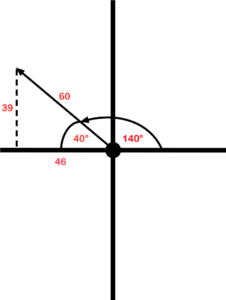
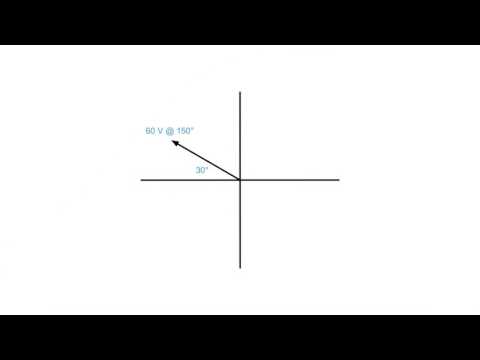
<div class="chapter standard" id="chapter-vector-addition" title="Vector Addition"><div class="chapter-title-wrap"><h3 class="chapter-number">10</h3><h2 class="chapter-title">Vector Addition</h2></div><div class="ugc chapter-ugc"> <h1>A quick recap</h1> <p>There was a fair bit to wrap our heads around before we finally got into vector addition.</p> <p>Here are some of the key points:</p> <ul><li>Vectors contain magnitude (resultant) and direction (angle).</li> <li>Each vector can be broken into X and Y coordinates.</li> <li>We must use a quadrant system to chart the X and Y coordinates.</li> <li>Pay attention to the polarity (what quadrant is it in?).</li> <li>Vectors can be expressed in the polar form (resultant and angle) or rectangular form (X and Y coordinates).</li> <li>Base your angle off of the X axis.</li> <li>When converting from rectangular to polar, it is <em>extremely</em> important to pay attention to what quadrant you are in. <ul><li>Quadrant 1 is the angle you calculate.</li> <li>Quadrant 2 is 180 minus the angle you calculate.</li> <li>Quadrant 3 is 180 plus the angle you calculate.</li> <li>Quadrant 4 is either 360 minus the angle you calculate, or, put a negative in front of the angle you calculate.</li> </ul> </li> </ul> <p>Okay, let’s learn how to add vectors.</p> <h1>Adding vectors</h1> <p>When adding vectors, we have to find some common ground.&nbsp;&nbsp;This is why we focus on the X and Y coordinates. &nbsp;Each vector can be broken down into X and Y coordinates.&nbsp;&nbsp;This allows us to find some common ground as the X coordinates are heading in the same direction and the Y coordinates are heading in the same direction.&nbsp;&nbsp;Let’s look at the example in Figure 39.</p> <p>In this example, we have one vector that is 38 V @ 20 degrees and another that is 100 V @ 135 degrees.</p> <div class="wp-caption aligncenter" id="attachment_137" style="width: 300px"><a href="https://pressbooks.bccampus.ca/trigforelectricians/wp-content/uploads/sites/496/2018/07/Vectoraddition-2-e1530842509300.jpg"><img src="https://pressbooks.bccampus.ca/trigforelectricians/wp-content/uploads/sites/496/2018/07/Vectoraddition-2-e1530842509300-300x190.jpg" alt="" class="wp-image-137 size-medium" width="300" height="190" srcset="https://pressbooks.bccampus.ca/trigforelectricians/wp-content/uploads/sites/496/2018/07/Vectoraddition-2-e1530842509300-300x190.jpg 300w, https://pressbooks.bccampus.ca/trigforelectricians/wp-content/uploads/sites/496/2018/07/Vectoraddition-2-e1530842509300-768x487.jpg 768w, https://pressbooks.bccampus.ca/trigforelectricians/wp-content/uploads/sites/496/2018/07/Vectoraddition-2-e1530842509300-65x41.jpg 65w, https://pressbooks.bccampus.ca/trigforelectricians/wp-content/uploads/sites/496/2018/07/Vectoraddition-2-e1530842509300-225x143.jpg 225w, https://pressbooks.bccampus.ca/trigforelectricians/wp-content/uploads/sites/496/2018/07/Vectoraddition-2-e1530842509300-350x222.jpg 350w, https://pressbooks.bccampus.ca/trigforelectricians/wp-content/uploads/sites/496/2018/07/Vectoraddition-2-e1530842509300.jpg 807w" /></a><div class="wp-caption-text"><strong>Figure 39. Adding vectors&nbsp;</strong></div></div> <p>&nbsp;</p> <p>The first step is to draw in the X and Y axes. (See Figure 40.)&nbsp; This will help provide us with a reference when determining our X and Y coordinates.</p> <p>&nbsp;</p> <div class="wp-caption aligncenter" id="attachment_429" style="width: 300px"><img src="https://pressbooks.bccampus.ca/trigforelectricians/wp-content/uploads/sites/496/2018/12/Figure41-300x224.jpg" alt="" class="wp-image-429 size-medium" width="300" height="224" srcset="https://pressbooks.bccampus.ca/trigforelectricians/wp-content/uploads/sites/496/2018/12/Figure41-300x224.jpg 300w, https://pressbooks.bccampus.ca/trigforelectricians/wp-content/uploads/sites/496/2018/12/Figure41-768x573.jpg 768w, https://pressbooks.bccampus.ca/trigforelectricians/wp-content/uploads/sites/496/2018/12/Figure41-65x48.jpg 65w, https://pressbooks.bccampus.ca/trigforelectricians/wp-content/uploads/sites/496/2018/12/Figure41-225x168.jpg 225w, https://pressbooks.bccampus.ca/trigforelectricians/wp-content/uploads/sites/496/2018/12/Figure41-350x261.jpg 350w, https://pressbooks.bccampus.ca/trigforelectricians/wp-content/uploads/sites/496/2018/12/Figure41.jpg 944w" /><div class="wp-caption-text"><strong>Figure 40. Adding vectors draw quadrant</strong></div></div> <p>Next we will work out the X and the Y for each vector, in Figure 41.</p> <p>&nbsp;</p> <div class="wp-caption aligncenter" id="attachment_428" style="width: 300px"><img src="https://pressbooks.bccampus.ca/trigforelectricians/wp-content/uploads/sites/496/2018/12/figure-42-300x224.jpg" alt="" class="wp-image-428 size-medium" width="300" height="224" srcset="https://pressbooks.bccampus.ca/trigforelectricians/wp-content/uploads/sites/496/2018/12/figure-42-300x224.jpg 300w, https://pressbooks.bccampus.ca/trigforelectricians/wp-content/uploads/sites/496/2018/12/figure-42-768x573.jpg 768w, https://pressbooks.bccampus.ca/trigforelectricians/wp-content/uploads/sites/496/2018/12/figure-42-65x48.jpg 65w, https://pressbooks.bccampus.ca/trigforelectricians/wp-content/uploads/sites/496/2018/12/figure-42-225x168.jpg 225w, https://pressbooks.bccampus.ca/trigforelectricians/wp-content/uploads/sites/496/2018/12/figure-42-350x261.jpg 350w, https://pressbooks.bccampus.ca/trigforelectricians/wp-content/uploads/sites/496/2018/12/figure-42.jpg 944w" /><div class="wp-caption-text"><strong>Figure 41. Adding vectors determining X and Y</strong></div></div> <p>Next add an X-Y chart and enter the coordinates (Figure 42).</p> <p>&nbsp;</p> <div class="wp-caption aligncenter" id="attachment_427" style="width: 300px"><img src="https://pressbooks.bccampus.ca/trigforelectricians/wp-content/uploads/sites/496/2018/12/Figure-43-300x224.jpg" alt="" class="wp-image-427 size-medium" width="300" height="224" srcset="https://pressbooks.bccampus.ca/trigforelectricians/wp-content/uploads/sites/496/2018/12/Figure-43-300x224.jpg 300w, https://pressbooks.bccampus.ca/trigforelectricians/wp-content/uploads/sites/496/2018/12/Figure-43-768x573.jpg 768w, https://pressbooks.bccampus.ca/trigforelectricians/wp-content/uploads/sites/496/2018/12/Figure-43-65x48.jpg 65w, https://pressbooks.bccampus.ca/trigforelectricians/wp-content/uploads/sites/496/2018/12/Figure-43-225x168.jpg 225w, https://pressbooks.bccampus.ca/trigforelectricians/wp-content/uploads/sites/496/2018/12/Figure-43-350x261.jpg 350w, https://pressbooks.bccampus.ca/trigforelectricians/wp-content/uploads/sites/496/2018/12/Figure-43.jpg 944w" /><div class="wp-caption-text"><strong>Figure 42. Adding vectors X and Y chart</strong></div></div> <p>Add up your X coordinates and your Y coordinates and you have your answer in rectangular form (Figure 43).</p> <p>&nbsp;</p> <div class="wp-caption aligncenter" id="attachment_426" style="width: 300px"><img src="https://pressbooks.bccampus.ca/trigforelectricians/wp-content/uploads/sites/496/2018/12/figure-44-300x224.jpg" alt="" class="wp-image-426 size-medium" width="300" height="224" srcset="https://pressbooks.bccampus.ca/trigforelectricians/wp-content/uploads/sites/496/2018/12/figure-44-300x224.jpg 300w, https://pressbooks.bccampus.ca/trigforelectricians/wp-content/uploads/sites/496/2018/12/figure-44-768x573.jpg 768w, https://pressbooks.bccampus.ca/trigforelectricians/wp-content/uploads/sites/496/2018/12/figure-44-65x48.jpg 65w, https://pressbooks.bccampus.ca/trigforelectricians/wp-content/uploads/sites/496/2018/12/figure-44-225x168.jpg 225w, https://pressbooks.bccampus.ca/trigforelectricians/wp-content/uploads/sites/496/2018/12/figure-44-350x261.jpg 350w, https://pressbooks.bccampus.ca/trigforelectricians/wp-content/uploads/sites/496/2018/12/figure-44.jpg 944w" /><div class="wp-caption-text"><strong>Figure 43. Adding vectors for rectangular form</strong></div></div> <p>Take your rectangular form and chart it on its own (Figure 44).</p> <p>&nbsp;</p> <div class="wp-caption aligncenter" id="attachment_425" style="width: 300px"><img src="https://pressbooks.bccampus.ca/trigforelectricians/wp-content/uploads/sites/496/2018/12/Figure-45-300x224.jpg" alt="" class="wp-image-425 size-medium" width="300" height="224" srcset="https://pressbooks.bccampus.ca/trigforelectricians/wp-content/uploads/sites/496/2018/12/Figure-45-300x224.jpg 300w, https://pressbooks.bccampus.ca/trigforelectricians/wp-content/uploads/sites/496/2018/12/Figure-45-768x573.jpg 768w, https://pressbooks.bccampus.ca/trigforelectricians/wp-content/uploads/sites/496/2018/12/Figure-45-65x48.jpg 65w, https://pressbooks.bccampus.ca/trigforelectricians/wp-content/uploads/sites/496/2018/12/Figure-45-225x168.jpg 225w, https://pressbooks.bccampus.ca/trigforelectricians/wp-content/uploads/sites/496/2018/12/Figure-45-350x261.jpg 350w, https://pressbooks.bccampus.ca/trigforelectricians/wp-content/uploads/sites/496/2018/12/Figure-45.jpg 944w" /><div class="wp-caption-text"><strong>Figure 44. Adding vectors for polar form</strong></div></div> <p>Take the resultant and the angle, and convert it to polar form:&nbsp; 90.6 @ (180°−68°)90.6 @ 112°.</p> <p>There you have it. &nbsp;If you have more vectors, you just keep adding other rows to your X-Y chart.</p> <div class="textbox textbox--exercises"><div class="textbox__header"><p class="textbox__title" style="text-align: center"><strong>Video!</strong></p> </div> <div class="textbox__content"><p style="text-align: center">This video walks through how to add vectors heading in completely different directions.</p> <div class="video-container"><div class="textbox interactive-content interactive-content--oembed"><img src="https://i.ytimg.com/vi/lPnuAnbmWvg/hqdefault.jpg" alt="Thumbnail for the embedded element &quot;Vector addition&quot;" title="Vector addition" /> <p>A YouTube element has been excluded from this version of the text. You can view it online here: <a href="#pb-interactive-content" title="Vector addition">https://pressbooks.bccampus.ca/trigforelectricians/?p=71</a> </p> </div> </div> </div> </div> <h1>Attributions</h1> <p><a href="https://youtu.be/lPnuAnbmWvg">Vector addition</a>.&nbsp;video by <a href="https://www.youtube.com/channel/UCRm79BcxKhOWRj6CQAB_Cqg">The Electric Academy</a> is under a <a href="https://creativecommons.org/licenses/by/4.0/">Creative Commons Attribution Licence</a>.</p> <p>&nbsp;</p> </div></div>
<div class="part " id="part-ac-generation"><div class="part-title-wrap"><h3 class="part-number">III</h3><h1 class="part-title">AC Generation</h1></div><p>Where does voltage come from? &nbsp;How do we get it? &nbsp;Thanks to people such as Michael Faraday and Joseph Henry we now have an idea how to harness the energy that was once attributed to the gods.</p> <div class="textbox textbox--learning-objectives"><div class="textbox__header"><p class="textbox__title" style="text-align: center;">Learning Objectives</p> </div> <div class="textbox__content"><ul><li>Explain electromagnetic induction</li> <li>Describe the difference between a simple alternator and practical alternator</li> <li>Discuss how a waveform is generated</li> <li>Analyze a waveform and determine how effective, instantaneous, and average values are calculated</li> </ul> </div> </div> <div class="textbox shaded">See the <a href="#acgeneration">AC Generation</a> section of the <a href="#back-matter-appendix-worksheets">Appendix</a> for worksheets that can be used in this section.</div></div>
<div class="chapter standard" id="chapter-electromagnetic-induction" title="Electromagnetic Induction"><div class="chapter-title-wrap"><h3 class="chapter-number">11</h3><h2 class="chapter-title">Electromagnetic Induction</h2></div><div class="ugc chapter-ugc"><h1>What is this electromagnetic induction of which you speak?</h1> <p><strong>Electromagnetic induction</strong> is when a voltage is created by passing a conductor through a magnetic field.</p> <div class="wp-caption aligncenter" id="attachment_154" style="width: 300px"><img src="https://pressbooks.bccampus.ca/trigforelectricians/wp-content/uploads/sites/496/2018/07/Electromagnetic-induction-1-300x224.png" alt="" class="wp-image-154 size-medium" width="300" height="224" srcset="https://pressbooks.bccampus.ca/trigforelectricians/wp-content/uploads/sites/496/2018/07/Electromagnetic-induction-1-300x224.png 300w, https://pressbooks.bccampus.ca/trigforelectricians/wp-content/uploads/sites/496/2018/07/Electromagnetic-induction-1-768x573.png 768w, https://pressbooks.bccampus.ca/trigforelectricians/wp-content/uploads/sites/496/2018/07/Electromagnetic-induction-1-65x48.png 65w, https://pressbooks.bccampus.ca/trigforelectricians/wp-content/uploads/sites/496/2018/07/Electromagnetic-induction-1-225x168.png 225w, https://pressbooks.bccampus.ca/trigforelectricians/wp-content/uploads/sites/496/2018/07/Electromagnetic-induction-1-350x261.png 350w, https://pressbooks.bccampus.ca/trigforelectricians/wp-content/uploads/sites/496/2018/07/Electromagnetic-induction-1.png 944w" /><div class="wp-caption-text"><strong>Figure 45. Magnetic poles and induction</strong></div></div> <p>The size of the voltage can be varied by three factors:</p> <ol><li>The size of the magnetic field.  The more flux lines there are, the more flux lines there are for the conductor to cut.  The strength of flux is directly proportional to the induced voltage.</li> <li>The active length of the conductor.  Active length meaning the part of the conductor that actually passes through the field.  The active length is directly proportional to the induced voltage.</li> <li>The speed at which the conductor passes through the field.  The faster the conductor passed through the field, the greater the voltage induced.  The speed is directly proportional to the induced voltage.</li> </ol> <p>These relationships to voltage can be broken into this formula:  e = βlv.</p> <p>Where:</p> <p style="padding-left: 30px;">e = peak voltage induced in the inductor (volts)</p> <p style="padding-left: 30px;">B = field strength between the poles (Tesla)</p> <p style="padding-left: 30px;">l = active length of conductor (meters)</p> <p style="padding-left: 30px;">v = velocity of the conductor through the field (m/sec)</p> <p>Here is an example.</p> <p>A conductor that has an active length of 4 meters passes through a field of 5 Tesla at a speed of 15 meters per second.  Determine the peak voltage induced on this conductor.</p> <p style="text-align: center;">(4 m)(5 T)(15 m/sec) = 300 volts peak</p> <p>That&#8217;s crazy!  Who discovered that?</p> <p>The discovery of electromagnetic induction is attributed to Michael Faraday who discovered that when he passed a magnetic field through a conductor a current would flow.</p> <p>As long as there was motion between the field and the conductor, a voltage could be induced.  This could mean the conductor passes through a field or a field passed through a conductor.</p> <p>Next up:  <strong>The alternator</strong></p> </div></div>
<div class="chapter standard" id="chapter-the-alternator" title="The Alternator"><div class="chapter-title-wrap"><h3 class="chapter-number">12</h3><h2 class="chapter-title">The Alternator</h2></div><div class="ugc chapter-ugc"><h1>How do we keep the voltage coming?</h1> <p>We have established that if we have a conductor pass through a field or a field through a conductor a voltage is established.  This means that voltage is only established when there is constant motion.  Instead of having someone passing a conductor through a field rapidly, it was discovered that the conductor could be formed into a loop and rotated through the field to maintain a voltage.  This would be an example of what is known as a <strong>simple alternator</strong>.</p> <p>A simple alternator has two magnetic poles that establish a magnetic field.  The conductor (armature) rotates through this field to establish a voltage.</p> <div class="wp-caption aligncenter" id="attachment_157" style="width: 300px"><a href="https://pressbooks.bccampus.ca/trigforelectricians/wp-content/uploads/sites/496/2018/07/The_Alternator_Drawing01-e1533061165589.jpg"><img src="https://pressbooks.bccampus.ca/trigforelectricians/wp-content/uploads/sites/496/2018/07/The_Alternator_Drawing01-e1533061165589-300x211.jpg" alt="" class="wp-image-157 size-medium" width="300" height="211" srcset="https://pressbooks.bccampus.ca/trigforelectricians/wp-content/uploads/sites/496/2018/07/The_Alternator_Drawing01-e1533061165589-300x211.jpg 300w, https://pressbooks.bccampus.ca/trigforelectricians/wp-content/uploads/sites/496/2018/07/The_Alternator_Drawing01-e1533061165589-768x541.jpg 768w, https://pressbooks.bccampus.ca/trigforelectricians/wp-content/uploads/sites/496/2018/07/The_Alternator_Drawing01-e1533061165589-1024x722.jpg 1024w, https://pressbooks.bccampus.ca/trigforelectricians/wp-content/uploads/sites/496/2018/07/The_Alternator_Drawing01-e1533061165589-65x46.jpg 65w, https://pressbooks.bccampus.ca/trigforelectricians/wp-content/uploads/sites/496/2018/07/The_Alternator_Drawing01-e1533061165589-225x159.jpg 225w, https://pressbooks.bccampus.ca/trigforelectricians/wp-content/uploads/sites/496/2018/07/The_Alternator_Drawing01-e1533061165589-350x247.jpg 350w" /></a><div class="wp-caption-text"><strong>Figure 46. Simple alternator</strong></div></div> <p>&nbsp;</p> <p>A <strong>practical alternator</strong> has a stationary conductor and the field rotates.</p> <div class="wp-caption aligncenter" id="attachment_158" style="width: 300px"><a href="https://pressbooks.bccampus.ca/trigforelectricians/wp-content/uploads/sites/496/2018/07/The_Alternator_Drawing02-e1533061265238.jpg"><img src="https://pressbooks.bccampus.ca/trigforelectricians/wp-content/uploads/sites/496/2018/07/The_Alternator_Drawing02-e1533061265238-300x241.jpg" alt="" class="wp-image-158 size-medium" width="300" height="241" srcset="https://pressbooks.bccampus.ca/trigforelectricians/wp-content/uploads/sites/496/2018/07/The_Alternator_Drawing02-e1533061265238-300x241.jpg 300w, https://pressbooks.bccampus.ca/trigforelectricians/wp-content/uploads/sites/496/2018/07/The_Alternator_Drawing02-e1533061265238-768x618.jpg 768w, https://pressbooks.bccampus.ca/trigforelectricians/wp-content/uploads/sites/496/2018/07/The_Alternator_Drawing02-e1533061265238-1024x824.jpg 1024w, https://pressbooks.bccampus.ca/trigforelectricians/wp-content/uploads/sites/496/2018/07/The_Alternator_Drawing02-e1533061265238-65x52.jpg 65w, https://pressbooks.bccampus.ca/trigforelectricians/wp-content/uploads/sites/496/2018/07/The_Alternator_Drawing02-e1533061265238-225x181.jpg 225w, https://pressbooks.bccampus.ca/trigforelectricians/wp-content/uploads/sites/496/2018/07/The_Alternator_Drawing02-e1533061265238-350x281.jpg 350w" /></a><div class="wp-caption-text"><strong>Figure 47. Practical alternator</strong></div></div> <h1> What are the parts of the alternator?</h1> <div class="wp-caption aligncenter" id="attachment_160" style="width: 300px"><a href="https://pressbooks.bccampus.ca/trigforelectricians/wp-content/uploads/sites/496/2018/07/The_Alternator_Drawing03-1-e1533061532675.jpg"><img src="https://pressbooks.bccampus.ca/trigforelectricians/wp-content/uploads/sites/496/2018/07/The_Alternator_Drawing03-1-e1533061532675-300x218.jpg" alt="" class="wp-image-160" width="300" height="218" srcset="https://pressbooks.bccampus.ca/trigforelectricians/wp-content/uploads/sites/496/2018/07/The_Alternator_Drawing03-1-e1533061532675-300x218.jpg 300w, https://pressbooks.bccampus.ca/trigforelectricians/wp-content/uploads/sites/496/2018/07/The_Alternator_Drawing03-1-e1533061532675-768x557.jpg 768w, https://pressbooks.bccampus.ca/trigforelectricians/wp-content/uploads/sites/496/2018/07/The_Alternator_Drawing03-1-e1533061532675-1024x743.jpg 1024w, https://pressbooks.bccampus.ca/trigforelectricians/wp-content/uploads/sites/496/2018/07/The_Alternator_Drawing03-1-e1533061532675-65x47.jpg 65w, https://pressbooks.bccampus.ca/trigforelectricians/wp-content/uploads/sites/496/2018/07/The_Alternator_Drawing03-1-e1533061532675-225x163.jpg 225w, https://pressbooks.bccampus.ca/trigforelectricians/wp-content/uploads/sites/496/2018/07/The_Alternator_Drawing03-1-e1533061532675-350x254.jpg 350w" /></a><div class="wp-caption-text"><strong>Figure 48. Simple alternator parts</strong></div></div> <p>&nbsp;</p> <div class="wp-caption aligncenter" id="attachment_161" style="width: 286px"><a href="https://pressbooks.bccampus.ca/trigforelectricians/wp-content/uploads/sites/496/2018/07/The_Alternator_Drawing04-e1533061715121.jpg"><img src="https://pressbooks.bccampus.ca/trigforelectricians/wp-content/uploads/sites/496/2018/07/The_Alternator_Drawing04-e1533061715121-300x266.jpg" alt="" class="wp-image-161" width="286" height="254" srcset="https://pressbooks.bccampus.ca/trigforelectricians/wp-content/uploads/sites/496/2018/07/The_Alternator_Drawing04-e1533061715121-300x266.jpg 300w, https://pressbooks.bccampus.ca/trigforelectricians/wp-content/uploads/sites/496/2018/07/The_Alternator_Drawing04-e1533061715121-768x681.jpg 768w, https://pressbooks.bccampus.ca/trigforelectricians/wp-content/uploads/sites/496/2018/07/The_Alternator_Drawing04-e1533061715121-1024x908.jpg 1024w, https://pressbooks.bccampus.ca/trigforelectricians/wp-content/uploads/sites/496/2018/07/The_Alternator_Drawing04-e1533061715121-65x58.jpg 65w, https://pressbooks.bccampus.ca/trigforelectricians/wp-content/uploads/sites/496/2018/07/The_Alternator_Drawing04-e1533061715121-225x199.jpg 225w, https://pressbooks.bccampus.ca/trigforelectricians/wp-content/uploads/sites/496/2018/07/The_Alternator_Drawing04-e1533061715121-350x310.jpg 350w" /></a><div class="wp-caption-text"><strong>Figure 49. Practical alternator parts</strong></div></div> <p><strong>Armature. </strong> This part is what the voltage is induced on to.  It can be rotating (simple alternator) or stationary (practical alternator).</p> <p><strong>Slip rings. </strong> Made of brass, they rotate and either bring current to the load (simple alternator) or excitation to the field (practical alternator).</p> <p><strong>Brushes. </strong> Made of graphite carbon, they are stationary and either pass current to the load (simple alternator) or current to the field (practical alternator).</p> <p><strong>Field poles. </strong> They are either stationary (simple alternator) or rotating (practical alternator).</p> <p><strong>Prime mover. </strong> This part spins the armature (simple) or the field (practical).  Examples include:</p> <ul><li>combustion engine</li> <li>hydro dam</li> <li>hand crank</li> <li>windmill</li> </ul> <h1>Which is better the simple or the practical?</h1> <p>If you guessed the practical, you would be right.  The brushes of a simple alternator have to be sized for the load.  If you have a large load that draws a lot of current, then your brushes would have to be sized accordingly.  Whereas, with the practical alternator the brushes bring current to the field and can be small yet still allow enough current to adjust the field.  With either alternator, the easiest way to adjust the voltage is by varying the field strength.  It is possible to vary the speed on the alternator to adjust the voltage, but this will also change the frequency.</p> <p>Next up:  <strong>How an alternator creates a sine wave</strong></p> </div></div>
<div class="chapter standard" id="chapter-how-a-waveform-is-generated" title="How a Waveform Is Generated"><div class="chapter-title-wrap"><h3 class="chapter-number">13</h3><h2 class="chapter-title">How a Waveform Is Generated</h2></div><div class="ugc chapter-ugc"> <h1>AC generation with an alternator</h1> <p>If Faraday has taught us anything it is this: &nbsp;Any time you pass a conductor through a magnetic field, you induce a voltage.&nbsp;&nbsp;If we take that conductor and turn it into a loop and spin it continually through that magnetic field, we have created an alternator.</p> <div class="wp-caption aligncenter" style="width: 300px"><a href="https://pressbooks.bccampus.ca/trigforelectricians/wp-content/uploads/sites/496/2018/07/The_Alternator_Drawing01-e1533061165589.jpg"><img src="https://pressbooks.bccampus.ca/trigforelectricians/wp-content/uploads/sites/496/2018/07/The_Alternator_Drawing01-e1533061165589-300x211.jpg" alt="" class="wp-image-157 size-medium" width="300" height="211" srcset="https://pressbooks.bccampus.ca/trigforelectricians/wp-content/uploads/sites/496/2018/07/The_Alternator_Drawing01-e1533061165589-300x211.jpg 300w, https://pressbooks.bccampus.ca/trigforelectricians/wp-content/uploads/sites/496/2018/07/The_Alternator_Drawing01-e1533061165589-768x541.jpg 768w, https://pressbooks.bccampus.ca/trigforelectricians/wp-content/uploads/sites/496/2018/07/The_Alternator_Drawing01-e1533061165589-1024x722.jpg 1024w, https://pressbooks.bccampus.ca/trigforelectricians/wp-content/uploads/sites/496/2018/07/The_Alternator_Drawing01-e1533061165589-65x46.jpg 65w, https://pressbooks.bccampus.ca/trigforelectricians/wp-content/uploads/sites/496/2018/07/The_Alternator_Drawing01-e1533061165589-225x159.jpg 225w, https://pressbooks.bccampus.ca/trigforelectricians/wp-content/uploads/sites/496/2018/07/The_Alternator_Drawing01-e1533061165589-350x247.jpg 350w" /></a><div class="wp-caption-text"><strong>Figure 50. Alternator picture</strong></div></div> <p>This means that a voltage will constantly be induced. &nbsp;However, this is not a flat line voltage like direct current.&nbsp;&nbsp;It creates an oscillating voltage that rises and falls.</p> <h1>Is this what you mean by sine wave generation?</h1> <p>Yup, this is exactly what I mean.&nbsp;&nbsp;As the conductor spins through the field, there will be times that it does not cut any lines of flux. &nbsp;There will be times when it cuts some of the lines of flux, and there will be times that it is cutting the maximum amount of flux lines that it can.&nbsp;&nbsp;This means that at some point during the sine wave generation there will be no voltage generated. &nbsp;Then there will be some voltage generated, and then there will be a maximum voltage generated.&nbsp;&nbsp;This creates this thing of beauty.&nbsp; A sine wave.</p> <div class="wp-caption aligncenter" id="attachment_219" style="width: 300px"><a href="https://pressbooks.bccampus.ca/trigforelectricians/wp-content/uploads/sites/496/2018/07/Sine-Wave-e1533077966309.png"><img src="https://pressbooks.bccampus.ca/trigforelectricians/wp-content/uploads/sites/496/2018/07/Sine-Wave-e1533077966309-300x179.png" alt="" class="wp-image-219 size-medium" width="300" height="179" srcset="https://pressbooks.bccampus.ca/trigforelectricians/wp-content/uploads/sites/496/2018/07/Sine-Wave-e1533077966309-300x179.png 300w, https://pressbooks.bccampus.ca/trigforelectricians/wp-content/uploads/sites/496/2018/07/Sine-Wave-e1533077966309-65x39.png 65w, https://pressbooks.bccampus.ca/trigforelectricians/wp-content/uploads/sites/496/2018/07/Sine-Wave-e1533077966309-225x134.png 225w, https://pressbooks.bccampus.ca/trigforelectricians/wp-content/uploads/sites/496/2018/07/Sine-Wave-e1533077966309-350x209.png 350w, https://pressbooks.bccampus.ca/trigforelectricians/wp-content/uploads/sites/496/2018/07/Sine-Wave-e1533077966309.png 759w" /></a><div class="wp-caption-text"><strong>Figure 51. Sine wave</strong></div></div> <h1>Oh yeah, I think I have seen that before</h1> <p>This wave&nbsp;pattern occurs often in nature, including ocean waves, sound&nbsp;waves and light&nbsp;waves. &nbsp;In fact, if you take the hours of daylight in a day and graph it out with the months of the year, guess what? &nbsp;A sine wave is generated. &nbsp;If you’d like to read an interesting article on the seasons and sine wave generation, read <a href="https://www.gazettenet.com/Archives/2014/03/OUT-EArthmatters-hg-031514">Calculus of the seasons</a>.&nbsp; Isn’t nature cool?&nbsp;&nbsp;But I digress.&nbsp;&nbsp;This sine wave is extremely important when it comes to electrical generation.&nbsp; Future postings will discuss its importance and go into in-depth analysis of the waveform.</p> <div class="textbox textbox--exercises"><div class="textbox__header"><p class="textbox__title" style="text-align: center"><strong>Video!</strong></p> </div> <div class="textbox__content"><p style="text-align: center">This video explains how a sine wave is generated in an alternator.</p> <div class="video-container"><div class="textbox interactive-content interactive-content--oembed"><img src="https://i.ytimg.com/vi/L_m1mAY6WZ4/hqdefault.jpg" alt="Thumbnail for the embedded element &quot;Sine Wave generation&quot;" title="Sine Wave generation" /> <p>A YouTube element has been excluded from this version of the text. You can view it online here: <a href="#pb-interactive-content" title="Sine Wave generation">https://pressbooks.bccampus.ca/trigforelectricians/?p=163</a> </p> </div> </div> </div> </div> <h1>Sounds like fun</h1> <p>Oh, it’s fun all right.&nbsp;&nbsp;Trust me.&nbsp; If you find this stuff interesting, it becomes a lot easier to learn and understand.&nbsp; (Fatherly lecture over).&nbsp;&nbsp;If you have a foundational understanding of this concept, then single phase and three-phase generation should be a snap.</p> <h1>Attributions</h1> <p><a href="https://youtu.be/L_m1mAY6WZ4">Sine wave generation</a>. video by&nbsp;<a href="https://www.youtube.com/channel/UCRm79BcxKhOWRj6CQAB_Cqg" target="_blank" rel="noopener">The Electric Academy</a>&nbsp;is under a&nbsp;<a href="https://creativecommons.org/licenses/by/4.0/" target="_blank" rel="noopener">Creative Commons Attribution Licence</a>.</p> </div></div>
<div class="chapter standard" id="chapter-ac-waveform-analysis" title="AC Waveform Analysis"><div class="chapter-title-wrap"><h3 class="chapter-number">14</h3><h2 class="chapter-title">AC Waveform Analysis</h2></div><div class="ugc chapter-ugc"> <h1>What fun can we have with that waveform?</h1> <p>Well, it turns out that there is an awful lot going on in that waveform. &nbsp;Most of it is actually useful as well.</p> <div class="textbox textbox--exercises"><div class="textbox__header"><p class="textbox__title" style="text-align: center"><strong>Video!</strong></p> </div> <div class="textbox__content"><p style="text-align: center">This video shows all that is happening in the sine wave.</p> <div class="video-container"><div class="textbox interactive-content interactive-content--oembed"><img src="https://i.ytimg.com/vi/98FgWHu2eI4/hqdefault.jpg" alt="Thumbnail for the embedded element &quot;AC Waveform analysis&quot;" title="AC Waveform analysis" /> <p>A YouTube element has been excluded from this version of the text. You can view it online here: <a href="#pb-interactive-content" title="AC Waveform analysis">https://pressbooks.bccampus.ca/trigforelectricians/?p=165</a> </p> </div> </div> </div> </div> <h1>To recap</h1> <ul><li style="text-align: left">Average&nbsp;(1&nbsp;alternation) = .639&nbsp;×&nbsp;peak</li> <li style="text-align: left">Instantaneous = sin&nbsp;θ&nbsp;×&nbsp;peak</li> <li style="text-align: left">Effective&nbsp;(RMS) =&nbsp;.707&nbsp;×&nbsp;peak</li> </ul> <h1>Attributions</h1> <p><a href="https://youtu.be/98FgWHu2eI4">AC waveform analysis</a>. video by&nbsp;<a href="https://www.youtube.com/channel/UCRm79BcxKhOWRj6CQAB_Cqg" target="_blank" rel="noopener">The Electric Academy</a>&nbsp;is under a&nbsp;<a href="https://creativecommons.org/licenses/by/4.0/" target="_blank" rel="noopener">Creative Commons Attribution Licence</a>.</p> </div></div>
<div class="chapter standard" id="chapter-frequency" title="Frequency and Alternators"><div class="chapter-title-wrap"><h3 class="chapter-number">15</h3><h2 class="chapter-title">Frequency and Alternators</h2></div><div class="ugc chapter-ugc"> <p>In the last chapter, we learned the term <strong>cycle</strong> means from the point in a waveform to where the waveform starts to repeat itself.&nbsp; When we discuss the term <strong>frequency</strong>, we are referring to how many cycles can occur in one second.&nbsp; Frequency is measured in <strong>hertz</strong> (shout out to Heinrich Hertz) or <strong>CPS</strong> (cycles per second).&nbsp; Two factors affect the frequency in an alternator: rotation speed and the number of poles.</p> <div class="wp-caption aligncenter" id="attachment_279" style="width: 300px"><a href="https://pressbooks.bccampus.ca/trigforelectricians/wp-content/uploads/sites/496/2018/08/Cycle-e1533235726158.png"><img src="https://pressbooks.bccampus.ca/trigforelectricians/wp-content/uploads/sites/496/2018/08/Cycle-e1533235726158-300x158.png" alt="" class="wp-image-279 size-medium" width="300" height="158" srcset="https://pressbooks.bccampus.ca/trigforelectricians/wp-content/uploads/sites/496/2018/08/Cycle-e1533235726158-300x158.png 300w, https://pressbooks.bccampus.ca/trigforelectricians/wp-content/uploads/sites/496/2018/08/Cycle-e1533235726158-768x404.png 768w, https://pressbooks.bccampus.ca/trigforelectricians/wp-content/uploads/sites/496/2018/08/Cycle-e1533235726158-1024x539.png 1024w, https://pressbooks.bccampus.ca/trigforelectricians/wp-content/uploads/sites/496/2018/08/Cycle-e1533235726158-65x34.png 65w, https://pressbooks.bccampus.ca/trigforelectricians/wp-content/uploads/sites/496/2018/08/Cycle-e1533235726158-225x118.png 225w, https://pressbooks.bccampus.ca/trigforelectricians/wp-content/uploads/sites/496/2018/08/Cycle-e1533235726158-350x184.png 350w" /></a><div class="wp-caption-text"><strong>Figure 52. Sine wave cycle</strong></div></div> <h1>Rotation speed</h1> <p>As the armature rotates through the field, it starts to create a waveform (as we saw in the last chapter).&nbsp; One full mechanical rotation of the armature creates one full sine wave on a two-pole alternator.&nbsp; If the two-pole alternator spins three complete revolutions in one second, it will create three full sine waves in that one second.&nbsp; We would say that the frequency is at three cycles per second or three hertz (as the cool kids say).</p> <p>A machine’s rotational speed is measured in rotations per minute or <strong>RPM</strong>.&nbsp; However, we are not concerned with minutes, but rather, with seconds when dealing with frequency.&nbsp; Therefore, RPM must be converted to rotations per second (<strong>RPS</strong>).&nbsp; As there are 60 seconds in a minute, all we have to do is to divide the RPM by 60 to convert it to RPS.</p> <p>For example, if the armature is spinning at a rate of 1800 RPM on a two-pole alternator, we can say that it is spinning at 30 rotations per second.&nbsp; If this alternator has two poles, then in one second it will generate 30 cycles of voltage.&nbsp; It then could be said to have a frequency of 30 cycles per second or 30 Hertz.&nbsp; The frequency of an alternator is directly proportional to the rotational speed of the alternator.</p> <h1>Number of poles</h1> <p>If we add poles to the alternator, we can change the frequency.&nbsp; In a two-pole alternator,&nbsp; Side A of the armature (seen in Figure 53) passes from north to south, and then south to north, to create one complete sine wave. I f we add two more poles, as in Figure 54, then Side A of the armature will move past two north poles and two south poles in one full mechanical revolution.</p> <div class="wp-caption aligncenter" id="attachment_281" style="width: 300px"><a href="https://pressbooks.bccampus.ca/trigforelectricians/wp-content/uploads/sites/496/2018/08/2-Pole-Alternator--e1533235796107.png"><img src="https://pressbooks.bccampus.ca/trigforelectricians/wp-content/uploads/sites/496/2018/08/2-Pole-Alternator--e1533235796107-300x197.png" alt="" class="wp-image-281 size-medium" width="300" height="197" srcset="https://pressbooks.bccampus.ca/trigforelectricians/wp-content/uploads/sites/496/2018/08/2-Pole-Alternator--e1533235796107-300x197.png 300w, https://pressbooks.bccampus.ca/trigforelectricians/wp-content/uploads/sites/496/2018/08/2-Pole-Alternator--e1533235796107-768x505.png 768w, https://pressbooks.bccampus.ca/trigforelectricians/wp-content/uploads/sites/496/2018/08/2-Pole-Alternator--e1533235796107-1024x674.png 1024w, https://pressbooks.bccampus.ca/trigforelectricians/wp-content/uploads/sites/496/2018/08/2-Pole-Alternator--e1533235796107-65x43.png 65w, https://pressbooks.bccampus.ca/trigforelectricians/wp-content/uploads/sites/496/2018/08/2-Pole-Alternator--e1533235796107-225x148.png 225w, https://pressbooks.bccampus.ca/trigforelectricians/wp-content/uploads/sites/496/2018/08/2-Pole-Alternator--e1533235796107-350x230.png 350w, https://pressbooks.bccampus.ca/trigforelectricians/wp-content/uploads/sites/496/2018/08/2-Pole-Alternator--e1533235796107.png 1406w" /></a><div class="wp-caption-text"><strong>Figure 53. Two pole alternator</strong></div></div> <p>Two full sine waves are created in one complete mechanical revolution.&nbsp; If a two-pole alternator creates one cycle of voltage in one second (or one hertz of frequency), a four pole alternator will create two cycles of voltage in one second (or two hertz).</p> <p>The frequency of an alternator is directly proportional to the number of poles in the alternator.</p> <div class="wp-caption aligncenter" id="attachment_280" style="width: 300px"><a href="https://pressbooks.bccampus.ca/trigforelectricians/wp-content/uploads/sites/496/2018/08/4-Pole-Alternator-e1533235914337.png"><img src="https://pressbooks.bccampus.ca/trigforelectricians/wp-content/uploads/sites/496/2018/08/4-Pole-Alternator-e1533235914337-300x248.png" alt="" class="wp-image-280 size-medium" width="300" height="248" srcset="https://pressbooks.bccampus.ca/trigforelectricians/wp-content/uploads/sites/496/2018/08/4-Pole-Alternator-e1533235914337-300x248.png 300w, https://pressbooks.bccampus.ca/trigforelectricians/wp-content/uploads/sites/496/2018/08/4-Pole-Alternator-e1533235914337-768x635.png 768w, https://pressbooks.bccampus.ca/trigforelectricians/wp-content/uploads/sites/496/2018/08/4-Pole-Alternator-e1533235914337-1024x846.png 1024w, https://pressbooks.bccampus.ca/trigforelectricians/wp-content/uploads/sites/496/2018/08/4-Pole-Alternator-e1533235914337-65x54.png 65w, https://pressbooks.bccampus.ca/trigforelectricians/wp-content/uploads/sites/496/2018/08/4-Pole-Alternator-e1533235914337-225x186.png 225w, https://pressbooks.bccampus.ca/trigforelectricians/wp-content/uploads/sites/496/2018/08/4-Pole-Alternator-e1533235914337-350x289.png 350w, https://pressbooks.bccampus.ca/trigforelectricians/wp-content/uploads/sites/496/2018/08/4-Pole-Alternator-e1533235914337.png 1387w" /></a><div class="wp-caption-text"><strong>Figure 54. Four pole alternator</strong></div></div> <h1>Formula time!</h1> <p>Knowing that rotation speed is directly proportional to frequency and that the number of poles is directly proportional to frequency, we can use a formula.&nbsp; The formula looks like this:</p> <p>&nbsp;</p> <div class="wp-caption aligncenter" id="attachment_291" style="width: 136px"><a href="https://pressbooks.bccampus.ca/trigforelectricians/wp-content/uploads/sites/496/2018/08/CodeCogsEqn-3.png"><img src="https://pressbooks.bccampus.ca/trigforelectricians/wp-content/uploads/sites/496/2018/08/CodeCogsEqn-3.png" alt="" class="wp-image-291 size-full" width="136" height="63" srcset="https://pressbooks.bccampus.ca/trigforelectricians/wp-content/uploads/sites/496/2018/08/CodeCogsEqn-3.png 136w, https://pressbooks.bccampus.ca/trigforelectricians/wp-content/uploads/sites/496/2018/08/CodeCogsEqn-3-65x30.png 65w" /></a><div class="wp-caption-text"><strong>Figure 55. Frequency formula</strong></div></div> <p>Where…</p> <p style="padding-left: 30px">f = frequency in hertz</p> <p style="padding-left: 30px">P = number of poles</p> <p style="padding-left: 30px">N = rotational speed in RPM</p> <p>We divide the number of poles by two because there will always be a set of two poles.&nbsp; You can’t have a north pole without a south.&nbsp; We divide the RPM by 60 because we are concerned with rotations per second, not rotations per minute.&nbsp; The formula in Figure 56 can be combined to look like this:</p> <p>&nbsp;</p> <div class="wp-caption aligncenter" id="attachment_289" style="width: 97px"><a href="https://pressbooks.bccampus.ca/trigforelectricians/wp-content/uploads/sites/496/2018/08/CodeCogsEqn-1.png"><img src="https://pressbooks.bccampus.ca/trigforelectricians/wp-content/uploads/sites/496/2018/08/CodeCogsEqn-1.png" alt="" class="wp-image-289 size-full" width="97" height="63" srcset="https://pressbooks.bccampus.ca/trigforelectricians/wp-content/uploads/sites/496/2018/08/CodeCogsEqn-1.png 97w, https://pressbooks.bccampus.ca/trigforelectricians/wp-content/uploads/sites/496/2018/08/CodeCogsEqn-1-65x42.png 65w" /></a><div class="wp-caption-text"><strong>Figure 56. Combined frequency formula</strong></div></div> <div class="textbox textbox--exercises"><div class="textbox__header"><p class="textbox__title" style="text-align: center"><strong>Video!</strong></p> </div> <div class="textbox__content"><p style="text-align: center">This video will walk you through how frequency is related to the RPM and the number of poles of an alternator.</p> <div class="video-container"><div class="textbox interactive-content interactive-content--oembed"><img src="https://i.ytimg.com/vi/7kfcpXhO19Q/hqdefault.jpg" alt="Thumbnail for the embedded element &quot;How RPM and number of poles affect frequency&quot;" title="How RPM and number of poles affect frequency" /> <p>A YouTube element has been excluded from this version of the text. You can view it online here: <a href="#pb-interactive-content" title="How RPM and number of poles affect frequency">https://pressbooks.bccampus.ca/trigforelectricians/?p=278</a> </p> </div> </div> </div> </div> <h1>Attributions<a href="https://youtu.be/98FgWHu2eI4"></a></h1> <p class="title style-scope ytd-video-primary-info-renderer"><a href="https://youtu.be/7kfcpXhO19Q">How RPM and number of poles affect frequency</a>.&nbsp;video by&nbsp;<a href="https://www.youtube.com/channel/UCRm79BcxKhOWRj6CQAB_Cqg" target="_blank" rel="noopener">The Electric Academy</a>&nbsp;is under a&nbsp;<a href="https://creativecommons.org/licenses/by/4.0/" target="_blank" rel="noopener">Creative Commons Attribution Licence</a>.</p> </div></div>
<div class="back-matter miscellaneous" id="back-matter-appendix-worksheets" title="Appendix: Worksheets"><div class="back-matter-title-wrap"><h3 class="back-matter-number">1</h3><h1 class="back-matter-title">Appendix: Worksheets</h1></div><div class="ugc back-matter-ugc"><p>Click on the links below to download the PDF worksheets for each unit.<strong><br /> </strong></p> <h1><a id="trigonometry"></a>Trigonometry</h1> <ul><li><a href="https://pressbooks.bccampus.ca/trigforelectricians/wp-content/uploads/sites/496/2018/07/Pythagoras-worksheet-1.pdf">Pythagoras worksheet #1</a></li> <li><a href="https://pressbooks.bccampus.ca/trigforelectricians/wp-content/uploads/sites/496/2018/07/Pythagoras-worksheet-2.pdf">Pythagoras worksheet #2</a></li> <li><a href="https://pressbooks.bccampus.ca/trigforelectricians/wp-content/uploads/sites/496/2018/07/Trig-worksheet-1-1.pdf">Trigonometry worksheet #1</a></li> <li><a href="https://pressbooks.bccampus.ca/trigforelectricians/wp-content/uploads/sites/496/2018/07/Trig-worksheet-2.pdf">Trigonometry worksheet #2</a></li> <li><a href="https://pressbooks.bccampus.ca/trigforelectricians/wp-content/uploads/sites/496/2018/07/Trig-worksheet-3.pdf">Trigonometry worksheet #3</a></li> <li><a href="https://pressbooks.bccampus.ca/trigforelectricians/wp-content/uploads/sites/496/2018/07/Power-and-Impedance-triangles.pdf">Power and Impedance triangles worksheet</a></li> </ul> <h1><a id="vectors"></a>Vectors</h1> <ul><li><a href="https://pressbooks.bccampus.ca/trigforelectricians/wp-content/uploads/sites/496/2018/07/Polar-to-Rectangular-worksheet.pdf">Polar to Rectangular worksheet</a></li> <li><a href="https://pressbooks.bccampus.ca/trigforelectricians/wp-content/uploads/sites/496/2018/07/Vectors-worksheet-1.pdf">Adding Vectors worksheet #1</a></li> <li><a href="https://pressbooks.bccampus.ca/trigforelectricians/wp-content/uploads/sites/496/2018/07/Adding-vectors-2.pdf">Adding Vectors worksheet #2</a></li> </ul> <h1><a id="acgeneration"></a>AC Generation</h1> <ul><li><a href="https://pressbooks.bccampus.ca/trigforelectricians/wp-content/uploads/sites/496/2018/07/AC-generation-1.pdf">AC generation worksheet</a></li> <li><a href="https://pressbooks.bccampus.ca/trigforelectricians/wp-content/uploads/sites/496/2018/07/AC-Values-2.pdf">AC values worksheet #1</a></li> <li><a href="https://pressbooks.bccampus.ca/trigforelectricians/wp-content/uploads/sites/496/2018/07/AC-values-2.pdf">AC values worksheet #2</a></li> <li><a href="https://pressbooks.bccampus.ca/trigforelectricians/wp-content/uploads/sites/496/2018/07/AC-Values-3.pdf">AC values worksheet #3</a></li> </ul> </div></div>
<div class="back-matter miscellaneous" id="back-matter-glossary" title="Glossary"><div class="back-matter-title-wrap"><h3 class="back-matter-number">2</h3><h1 class="back-matter-title">Glossary</h1></div><div class="ugc back-matter-ugc"> <div class="textbox shaded"><p><strong>active power:</strong>  The power dissipated in the form of heat or light when dealing with a purely resistive circuit.  It is also known as <strong>true power</strong>.</p> <p><strong>acute angle:</strong>  An angle that is less than 90 degrees.</p> <p><strong>adjacent:</strong>  The side of a triangle that sits <em>adjacent</em> to the designate angle.</p> <p><strong>angle:  </strong>The space between two intersecting lines.</p> <p><strong>armature:</strong>  The part of an alternator where the voltage is induced on to.  It can be rotating (simple alternator) or stationary (practical alternator).</p> <p><strong>brushes: </strong> The parts of an alternator that are made of graphite carbon.  They are stationary and either pass current to the load (simple alternator) or current to the field (practical alternator).</p> <p><strong>complementary angles:</strong>  Two angles whose sum equals 90 degrees.</p> <p><strong>CPS:</strong>  Short for cycles per second, used to measure frequency.</p> <p><strong>cycle: </strong> From the point in a waveform to where the waveform starts to repeat itself.</p> <p><strong>degree:</strong>  One-three-hundred-and-sixtieth of the circumference of a circle.  It is also the unit by which we measure angles.</p> <p><strong>designate angle (or theta):</strong>  An angle that you determine or is determined for you, and upon which triangle sides (<em>adjacent</em>, <em>hypotenuse</em>, <em>opposite</em>) are named and dependent.</p> <p><strong>electromagnetic induction:</strong>  When a voltage is created by passing a conductor through a magnetic field.</p> <p><strong>equilateral triangle: </strong> All three sides of this triangle are equal, and all three of its angles are equal too.</p> <p><strong>field poles: </strong> The parts of an alternator that are either stationary (simple alternator) or rotating (practical alternator).</p> <p><strong>frequency: </strong> The number of cycles can occur in one second.  Frequency is measured in hertz or CPS (cycles per second).</p> <p><strong>hertz (Hz):</strong>  The unit used us measure frequency.</p> <p><strong>hypotenuse:</strong>  The side of a triangle that sits <em>opposite</em> the right, or 90-degree, angle.  It is always the longest side of the triangle.</p> <p><strong>imaginary numbers:</strong>  A term referring to components that don&#8217;t really exist such as X and Y.</p> <p><strong>impedance:</strong>  A total opposition to current flow determined by adding reactance to resistance using the Pythagoras&#8217; theorem.</p> <p><strong>impedance triangle:</strong>  The triangle that is created when the resistance is added to the reactance.</p> <p><strong>isosceles triangle:</strong>  This triangle has two sides that are equal, and two angles that are equal.</p> <p><strong>obtuse angle:</strong>  An angle that is greater than 90 degrees.</p> <p><strong>opposite: </strong> The side of a triangle that sits <em>opposite</em> to the designate angle.</p> <p><strong>point of origin:</strong>  A reference point.</p> <p><strong>polar form:</strong>  An expression of vectors using magnitude and direction. See <em>rectangular form.</em></p> <p><strong>practical alternator: </strong> Has a <em>stationary</em> conductor and the field rotates in order to maintain voltage.  See <em>simple alternator</em>.</p> <p><strong>prime mover:</strong>  The part of an alternator that spins the armature (simple) or the field (practical).  Examples include combustion engine, hydro dam, hand crank and windmill.</p> <p style="text-align: left;"><strong>Pythagorean theorem/Pythagoras’ theorem:</strong> A relation in Euclidean geometry among the three sides of a right triangle. It states that the square of the hypotenuse (the side opposite the right angle) is equal to the sum of the squares of the other two sides. In simple terms, this theorem says that you can figure out any side of a right triangle as long as you have the other two sides, using the equation:<br /> A<sup>2 </sup>+ B<sup>2 </sup>= C<sup>2<br /> </sup></p> <p><strong>quadrant</strong>: A circle cut into four parts.</p> <p><strong>quadrature power:</strong>  See <em>reactive power</em>.</p> <p><strong>reactance:</strong>  The component that opposes current in an AC circuit.  This runs 90 degrees to circuit <em>resistance</em>.</p> <p><strong>reactive power:</strong>  The power that is present when current passes across the reactance.  It is also known as <strong>wattless or quadrature power</strong>.</p> <p><strong>rectangular form:</strong>  An expression of vectors using X and Y coordinates. See <em>polar form</em>.</p> <p style="text-align: left;"><strong>resistance:</strong>  The component that opposes current in a DC circuit.</p> <p><strong>resultant:</strong>  The sum of the vectors.</p> <p style="text-align: left;"><strong>right angle: </strong> An angle that equals 90 degrees.</p> <p><strong>RPM:</strong>  Short for rotations per minute, used to measure a machine&#8217;s rotational speed.</p> <p><strong>RPS: </strong> Short for rotations per second.</p> <p><strong>similar angles:  </strong>These triangles each have different sized sides, but share the same sized angles.  See <em>practical  alternator</em>.</p> <p><strong>simple alternator</strong>:  When a conductor is formed into a loop and <em>rotates</em> through a field to maintain voltage.</p> <p><strong>slip rings: </strong> The parts of an alternator that are made of brass.  They rotate and either bring current to the load (simple alternator) or excitation to the field (practical alternator).</p> <p><strong>supplementary angles:  </strong>Two angles whose sum equals 180 degrees.</p> <p><strong>theta:</strong>  See <em>designate angle</em>.</p> <p><strong>trigonometry:</strong>  The study of the relationship that exists between the sides and the angles of a triangle.</p> <p><strong>true power:</strong>  See <em>active power</em>.</p> <p><strong>vector:</strong>  A quantity that possesses magnitude and direction.</p> <p><strong>vectorially:</strong>  Related to or involving vectors.</p> <p><strong>wattless power:</strong>  See <em>reactive power</em>.</p> </div> <div></div> <p>&nbsp;</p> </div></div>
<div class="back-matter miscellaneous" id="back-matter-list-of-links-for-print-users" title="List of Links for Print Copies"><div class="back-matter-title-wrap"><h3 class="back-matter-number">3</h3><h1 class="back-matter-title">List of Links for Print Copies</h1></div><div class="ugc back-matter-ugc"><p>Below is a list of links and their URLs referenced in this book. Links are organized alphabetically by chapter according to the link text.</p> <h1>About the Book</h1> <ul><li>Adoption of an Open Textbook https://open.bccampus.ca/about-2/adoption-form/</li> <li>BCcampus https://bccampus.ca/about-us/</li> <li>BCcampus Open Education http://open.bccampus.ca/</li> <li>British Columbia Ministry of Advanced Education, Skills &amp; Training https://www2.gov.bc.ca/gov/content/governments/organizational-structure/ministries-organizations/ministries/advanced-education-skills-training</li> <li>Hewlett Foundation http://www.hewlett.org/</li> </ul> <h1>Pythagoras</h1> <ul><li>Pythagoras http://en.wikipedia.org/wiki/Pythagoras</li> </ul> <h1>How a Waveform is Generated</h1> <ul><li>Calculus of the seasons https://www.gazettenet.com/Archives/2014/03/OUT-EArthmatters-hg-031514</li> </ul> <h1>Versioning History</h1> <ul><li>B.C. Open Textbook Collection https://open.bccampus.ca/find-open-textbooks/</li> <li>Report an Open Textbook Error https://open.bccampus.ca/reporting-an-open-textbook-error/</li> </ul> <p>&nbsp;</p> <h1></h1> </div></div>
<div class="back-matter miscellaneous" id="back-matter-versioning-history" title="Versioning History"><div class="back-matter-title-wrap"><h3 class="back-matter-number">4</h3><h1 class="back-matter-title">Versioning History</h1></div><div class="ugc back-matter-ugc"><p>This page provides a record of changes made to this textbook. Minor edits are acknowledged with a 0.1 increase in the version number; major edits are acknowledged with a 1.0 increase in the version number. The exported files for this book in the <a href="https://open.bccampus.ca/find-open-textbooks/">B.C. Open Textbook Collection</a> reflect the most recent version.</p> <p>If you find an error in this textbook, please fill out the <a href="https://open.bccampus.ca/reporting-an-open-textbook-error/" class="external-link" rel="nofollow">Report an Open Textbook Error</a> form.</p> <table style="border-collapse: collapse; width: 100%; height: 74px;"><tbody><tr style="height: 14px;"><th class="border" style="width: 25%; height: 14px;" scope="col">Version</th> <th class="border" style="width: 25%; height: 14px;" scope="col">Date</th> <th class="border" style="width: 25%; height: 14px;" scope="col">Change</th> <th class="border" style="width: 25%; height: 14px;" scope="col">Details</th> </tr> <tr style="height: 14px;"><td class="border" style="width: 25%; height: 14px;">1.0</td> <td class="border" style="width: 25%; height: 14px;">December 14, 2018</td> <td class="border" style="width: 25%; height: 14px;">Book published in Pressbooks.</td> <td class="border" style="width: 25%; height: 14px;"></td> </tr> <tr style="height: 46px;"><td class="border" style="width: 25%; height: 46px;">1.1</td> <td class="border" style="width: 25%; height: 46px;">January 28, 2019</td> <td class="border" style="width: 25%; height: 46px;">Updates made in order to publish the book in the B.C. Open Textbook Collection</td> <td class="border" style="width: 25%; height: 46px;">Added a list of links for the print copy, created a versioning history page, and added attribution information for videos.</td> </tr> </tbody> </table> </div></div>

</body>
</html>