2 Chapter 2: Self-Awareness, Personality, Values & Motivation
CHAPTER 2: Self-Awareness, Personality, Values & Motivation
Learning Objectives
By the end of this chapter, you should be able to:
-
Explain what self-awareness is and why it matters for academic, personal, and professional success.
-
Describe how personality traits influence behaviour, communication, and teamwork.
-
Identify your core personal values and understand how they guide decisions and work preferences.
-
Explain the concept of person–organization fit and why alignment between values and work environments matters.
-
Describe the basics of motivation and understand how intrinsic and extrinsic drivers influence behaviour.
-
Apply these concepts to reflect on your own tendencies, strengths, and areas for growth.
Self-Awareness, Personality, and Values
This chapter explores who you are as a person and how understanding yourself can improve your relationships, decisions, and performance in school and at work. This chapter begins with self-awareness — the ability to accurately understand your personality, tendencies, values, strengths, and blind spots. Self-awareness is a powerful foundation for personal growth, teamwork, leadership, and career development.
You will learn how psychologists describe personality traits, how your values shape your decisions, and why different people are motivated by different things. These ideas come together in person–organization fit, a concept that helps you understand why some work environments feel energizing and others feel draining. The chapter also connects these ideas to motivation, offering an early framework for understanding what drives your behaviour and how to align your choices with what truly matters to you.
Personality
Personality refers to the relatively stable patterns of thinking, feeling, and behaving that make each person unique. Although personality does not determine everything, it influences how people communicate, react to stress, collaborate on teams, and make decisions in school and workplace settings.
The most commonly used framework in Organizational Behaviour is the Big Five personality traits:
-
Openness: curiosity, creativity, comfort with new ideas
-
Conscientiousness: organization, responsibility, reliability
-
Extraversion: sociability, energy from social situations
-
Agreeableness: cooperation, empathy, kindness
-
Neuroticism (Emotional Stability): tendency toward anxiety or emotional volatility
For example, highly conscientious students tend to complete assignments early and plan ahead, while extroverted students may feel energized by class discussions or group work. Understanding these tendencies helps individuals choose environments and strategies that fit their strengths.
Self-Awareness: Understanding Yourself
Self-awareness is the ability to notice your own thoughts, emotions, values, strengths, and patterns of behaviour – and to understand how they affect the way you interact with others. People with strong self-awareness can identify what energizes them, what drains them, how they react under stress, and how their behaviour influences teammates. Self-awareness is not about being perfect; it is about being honest with yourself so you can make choices that fit who you are and who you want to become.
Values
Values are deeply held beliefs about what is important, right, or desirable. Unlike personality, values are shaped heavily by culture, family, and life experiences, and they guide decisions about behaviour, priorities, and goals.
Common value categories include:
-
Achievement: working hard, striving for excellence
-
Benevolence: helping or supporting others
-
Tradition: respecting rules, norms, or cultural expectations
-
Self-direction: independence, freedom of choice
-
Security: stability, safety, predictability
When students take on roles or make decisions aligned with their values, they tend to experience greater satisfaction, engagement, and well-being.
Motivation (Preview)
Personality and values influence who you are, but motivation explains why you do what you do. Because motivation is a key driver of behaviour, this chapter also introduces the foundational ideas that help you understand what energizes you, what sustains your effort, and how you can align your work with your strengths and values.
MOTIVATION
Motivation: What Drives People to Act at School and Work
Motivation refers to the internal and external forces that direct, energize, and sustain behaviour. It explains why certain tasks feel interesting and meaningful while others feel draining, why effort changes across situations, and why people persist when things are difficult. Because motivation influences learning, teamwork, leadership, and long-term career choices, understanding what drives you is an essential part of self-awareness.
Intrinsic and Extrinsic Motivation
People are motivated for different reasons:
Intrinsic motivation comes from doing something because it is enjoyable or meaningful.
Example: choosing an elective because you genuinely want to understand the content.
Extrinsic motivation comes from outside rewards or pressures.
Example: completing a weekly quiz because it counts toward your final grade.
Intrinsic motivation usually leads to deeper learning and creativity, while extrinsic motivators are helpful for structure and accountability.
Purpose and Meaning
People feel more motivated when their work connects to personal values or long-term goals.
Example:
A student who values creativity may feel energized by assignments that involve design or storytelling, even when they require more effort.
Classic Motivation Theories
Although newer theories are more widely used today, classic theories help explain foundational human needs and behaviours.
Maslow’s Hierarchy of Needs
Maslow proposed that people are motivated by unmet needs that follow a general pattern:
-
Physiological
-
Safety
-
Belonging
-
Esteem
-
Self-actualization
Example:
A student struggling with sleep or food insecurity may find it difficult to focus on studying or participating in class. When these foundational needs are stabilized, students feel more able to pursue growth, leadership, and creativity.
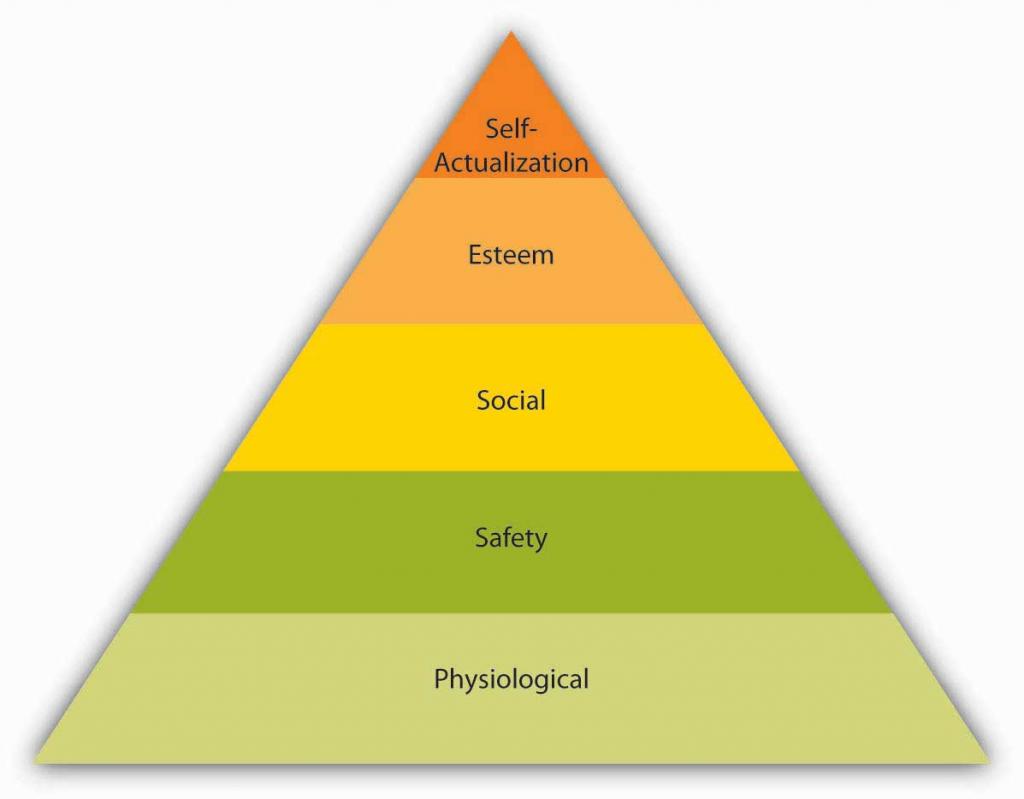
Maslow’s Hierarchy of Needs
source: https://biz.libretexts.org/Bookshelves/Management/Organizational_Behavior/05%3A_Theories_of_Motivation/05.2%3A_Need-Based_Theories_of_Motivation
ERG Theory (Alderfer)
A simpler, more flexible version of Maslow:
-
Existence: basic survival needs (food, housing, safety)
Example: working extra hours to afford rent.* -
Relatedness: social needs (belonging, connection)
Example: joining a club to feel part of a community.* -
Growth: personal development (learning, skill-building)
Example: taking on a challenging co-op to learn new skills.*
Unlike Maslow, ERG allows people to care about multiple needs at once.
Herzberg’s Two-Factor Theory
Herzberg argued that two different sets of factors influence workplace motivation:
-
Hygiene factors (pay, policies, working conditions) prevent dissatisfaction.
-
Motivators (achievement, recognition, growth) create motivation.
Example:
A stable campus job may prevent frustration, but genuine motivation comes from meaningful responsibilities or supportive feedback.
McClelland’s Learned Needs Theory
People develop dominant needs based on life experiences:
-
Achievement (desire to excel)
-
Affiliation (desire for close relationships)
-
Power (desire to influence or lead)
Example:
A student with a strong achievement need may take on challenging tasks in group assignments, while someone with a strong affiliation need may focus on maintaining harmony. Knowing your dominant needs helps you find roles where you thrive.
Why Classic Theories Are Less Popular Today
Classic theories are useful introductions but less emphasized now because:
-
They oversimplify human behaviour.
-
They lack strong scientific support.
-
They assume universal needs that may not apply to all cultures.
-
Modern work requires flexibility, creativity, and autonomy that classic theories do not fully explain.
Still, they offer helpful starting points for understanding basic drivers of behaviour.
Modern Motivation Theories
Modern theories help explain motivation in today’s flexible, knowledge-based environments.
Self-Determination Theory (SDT)
People are most motivated when three needs are met:
-
Autonomy (having choice and control)
-
Competence (feeling capable and improving)
-
Relatedness (feeling connected to others)
When these needs are supported, motivation and well-being increase.
Expectancy Theory
People are motivated when they believe:
-
Their effort will lead to good performance.
-
Good performance will lead to meaningful rewards.
-
The rewards matter to them personally.
Goal-Setting Theory
People perform better when goals are:
-
specific
-
challenging
-
meaningful
-
time-bound
Vague goals create little direction or motivation.
Job Characteristics Model
Tasks are more motivating when they involve:
-
skill variety
-
task identity
-
task significance
-
autonomy
-
feedback
Assignments or jobs with these features feel more meaningful and engaging.
Why We Have Many Different Motivation Theories
Human motivation is complex. People are driven by needs, values, identity, goals, emotions, rewards, relationships, work design, and culture. Because no single theory explains everything, multiple theories exist as tools to help understand different situations:
-
Classic theories explain foundational needs.
-
SDT explains intrinsic motivation and well-being.
-
Expectancy Theory explains effort and fairness.
-
Goal-Setting Theory explains focus and persistence.
-
The Job Characteristics Model explains how work design affects engagement.
Together, these theories help students understand themselves and others, make better academic and career choices, and work more effectively with diverse people.
Video Resource: Modern Perspectives on Motivation
To deepen your understanding of how motivation works in real organizations, this short TED Talk by Dan Pink offers a compelling look at why traditional reward systems (“carrots and sticks”) often fail—and what truly drives people to do their best work. Pink explains the science behind intrinsic motivation and introduces three key factors that fuel high performance in modern settings: autonomy, mastery, and purpose. This video connects directly to the motivation theories in this chapter and helps you think about how your own motivation works in school, teams, and early career roles.
Dan Pink’s “The Puzzle of Motivation”
https://www.ted.com/talks/dan_pink_the_puzzle_of_motivation
Person–Organization Fit
Person–Organization (P–O) Fit refers to how well your personality, values, and motivations align with the culture, expectations, and work style of a particular organization, team, or role. High fit is associated with greater job satisfaction, engagement, and well-being, while poor fit often leads to stress, conflict, and turnover.
Example:
A student who values innovation and autonomy may feel engaged at a start-up but frustrated in a highly structured, rule-heavy workplace.
Understanding your personal tendencies helps you make career decisions that support your long-term well-being.
Strengths and Self-Development
Building on self-awareness, students are encouraged to identify their strengths, reflect on feedback from others, and develop habits that align with their values and goals. Strengths-based development focuses on what people naturally do well instead of exclusively fixing weaknesses.
Example:
A student who excels in organization and planning can take on roles that support team coordination, project scheduling, or administrative tasks, even if they are not the most outspoken team member.