8 CHAPTER 8: Organizational Communication
CHAPTER 8: Organizational Communication
Learning Objectives
By the end of this chapter, you should be able to:
-
Define organizational communication and explain why it matters.
-
Describe formal communication channels inside organizations.
-
Identify how informal networks shape real communication flow.
-
Recognize the role of digital communication tools and norms.
-
Explain communication climate and how organizations communicate values.
-
Identify common barriers to communication across departments.
-
Understand how communication functions during change or crisis.
-
Explain how organizations communicate their identity externally.
-
Apply strategies for improving communication and building feedback loops.
In earlier chapters, you learned how individuals communicate (Chapter 4) and how teams communicate and collaborate (Chapters 5–7). This chapter expands that scope to the organizational level, where communication becomes more complex. Organizations rely on formal structures, digital tools, cross-department relationships, and communication climates that influence openness, trust, and coordination. Understanding these patterns helps you operate effectively within real workplaces, preparing you for the structural and political dynamics introduced in Chapter 10.
1. What Is Organizational Communication?
Organizational communication refers to the structured flow of information and meaning inside an organization. It supports coordination, shapes decisions, reinforces culture, and influences the employee experience.
Communication scholars (such as Karl Weick) emphasize that organizations exist because people communicate — communication isn’t just something organizations do, it is something they are.
In practice, organizational communication includes:
• announcements and updates
• meetings and presentations
• Slack/Teams messages
• check-ins and feedback loops
• everyday conversations
• symbols, practices, and shared routines
Example:
When a hospital shifts to a new scheduling system, the communication strategy (how, when, and why the change is announced) determines whether staff feel informed, confused, or overwhelmed.
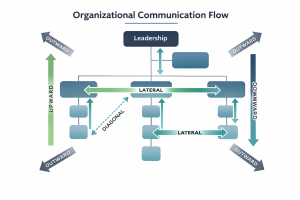
To understand how information moves through an organization, it helps to visualize the primary communication flows.
2. Formal Communication Channels
Formal communication channels follow the official structure of the organization. They make information clear, consistent, and reliable.
2.1 Upward Communication
Information flowing from employees to supervisors or leaders.
Examples include:
• suggestions
• concerns
• incident reports
• progress updates
• questions and clarifications
Example:
A retail employee provides feedback about customer complaints, helping managers adjust processes.
2.2 Downward Communication
Information leaders send to employees, such as:
• strategic updates
• new policies
• expectations and goals
• timelines and priorities
Example:
A shift supervisor shares new safety procedures at the start of each shift.
2.3 Horizontal Communication
Communication between colleagues or departments at the same level.
Used for:
• coordination
• collaboration
• sharing resources
• avoiding duplication
Example:
Marketing and PR teams coordinate messaging before launching a campaign.
2.4 Diagonal Communication
Cross-functional communication that moves both across and between levels.
This is increasingly common in modern, fast-moving organizations.
Example:
A data analyst (mid-level) works directly with an executive from another department to prepare a quarterly report.
3. Informal Communication Networks
Informal networks develop naturally through friendships, trust, and proximity. They often reveal how communication actually flows inside an organization.
These networks include:
• hallway or lunchroom conversations
• group chats
• informal mentoring
• “who you ask when you need help fast”
Informal networks are sometimes called the grapevine, though modern research (e.g., Krackhardt’s “trust ties”) shows they are not just rumor channels — they are critical for learning and support.
Example:
A new employee discovers that although the official process for IT issues is online, the fastest solution is to message Sam in IT, who always responds quickly.
4. Digital Internal Communication Tools
Many organizations use digital platforms to coordinate work, such as:
• Slack
• Microsoft Teams
• Workplace
• Intranets
• Zoom
• Shared drives and collaboration tools
Digital tools shape communication norms, including:
• response time expectations
• tone of communication
• clarity and organization of messages
• where decisions are documented
Example:
A team using Slack may adopt a norm that the “#announcements” channel is for official decisions, while “#team-chat” is casual. This prevents confusion and helps employees know where to find important information.
5. Communication Climate and Culture
5.1 Communication Climate
A communication climate reflects how safe and comfortable employees feel expressing:
• ideas
• mistakes
• concerns
• feedback
A positive climate includes openness, transparency, and respect. A negative climate includes fear, silence, or defensiveness.
Example:
If employees fear punishment for speaking up, they may hide mistakes — which can escalate problems later.
Video: Amy Edmondson – Building a Psychologically Safe Workplace
While psychological safety is often introduced in the context of team effectiveness, it is equally critical at the organizational level. Communication effectiveness depends not only on clear channels and structured processes, but on whether employees feel safe enough to speak up across levels of hierarchy. Without psychological safety, upward communication weakens, mistakes remain unreported, and leaders make decisions based on incomplete or filtered information.
Psychological safety refers to a shared belief that it is safe to take interpersonal risks — such as asking questions, admitting mistakes, or challenging ideas.
Without psychological safety:
-
Employees withhold information
-
Errors go unreported
-
Innovation declines
-
Communication becomes filtered and defensive
As you watch, consider:
-
Why might silence be rational in some organizations?
-
How does psychological safety influence upward communication?
-
What role do leaders play in shaping communication climate?
https://www.youtube.com/watch?v=LhoLuui9gX8
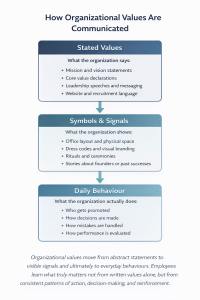
5.2 How Organizations Communicate Values
Organizations communicate values through:
• language (mottos, slogans)
• symbols (office layout, uniforms)
• rituals (weekly meetings, award ceremonies)
• stories (founder myths, success stories)
• routines (onboarding, performance reviews)
Example:
Lululemon expresses values of personal growth and wellness through motivational messages, yoga-related rituals, and training materials that emphasize mindfulness.
6. Barriers to Organizational Communication
Common barriers include:
6.1 Silos Between Departments
Departments may focus only on their own goals, creating duplication or conflicting decisions.
Example:
Marketing runs a promotion without telling Operations, causing inventory shortages.
6.2 Ambiguity or Unclear Messaging
Vague instructions lead to different interpretations.
Example:
A message that says “let’s prioritize quality” may leave employees unclear about what changes are expected.
6.3 Information Overload
Too many messages or too much data can overwhelm employees, leading to missed details.
6.4 Hierarchical Bottlenecks
When information must pass through many levels, it slows down or becomes distorted.
6.5 Remote or Hybrid Challenges
Virtual work can lead to:
• fewer informal interactions
• misinterpretation of tone
• uneven access to information
Insert Visual Placeholder: Communication barriers diagram.
7. Communication During Organizational Change and Crisis
During change or crisis, communication must be:
• timely
• transparent
• consistent
• honest
• two-way
Poor communication fosters:
• confusion
• resistance
• mistrust
• rumors
Example:
During a restructuring, employees rely heavily on communication from leaders to understand what changes mean for their jobs, workload, and team responsibilities.
Research on change communication (e.g., Kotter) highlights that most change efforts fail due to communication breakdowns rather than the strategy itself.
Organizations also communicate externally through employer branding — the way they present their culture and identity to potential employees. We explore this more fully in Chapter 9 when we examine organizational culture.
8. Improving Organizational Communication
8.1 Communication Norms
Teams and organizations benefit from shared norms about:
• tone
• meeting structure
• email/Slack responsiveness
• documentation
• conflict management
These norms reduce misunderstandings and create predictable expectations.
8.2 Cross-Functional Communication
Cross-functional collaboration reduces duplication and improves efficiency.
Example:
Product, engineering, and customer service teams share weekly updates to ensure decisions align across the organization.
8.3 Leadership’s Role
Leaders influence communication by:
• modelling clarity and transparency
• encouraging questions
• responding consistently
• reinforcing values
• creating psychological safety
8.4 Tools and Clarity
Templates, shared repositories, and standardized formats improve communication quality.
Example:
Teams use the same slide template for presentations to ensure consistent messaging.
8.5 Feedback Loops
Feedback systems include:
• surveys
• check-ins
• open forums
• suggestion channels
• exit interviews
These loops help organizations identify patterns and improve communication practices.
8.6 Organizational Learning
Reflection routines — such as after-action reviews or debriefs — help teams and organizations learn from mistakes and successes, improving future communication.
Media Attributions
- ce1dd2f5-c199-4747-b5b4-a8fbe173a10d
- How Organizational Values Are Communicated