4 CHAPTER 4: Communication and Perception
CHAPTER 4 — Communication and Perception
Learning Objectives
By the end of this chapter, you should be able to:
-
Describe the communication process and identify where misunderstandings occur.
-
Explain how perception shapes interpretation and contributes to communication errors.
-
Recognize common communication and perception barriers in academic and workplace settings.
-
Apply verbal, nonverbal, and written communication strategies effectively.
-
Analyze miscommunication examples and propose improvements.
-
Build stronger interpersonal connections in teams by improving clarity and empathy.
1. Why Communication Matters
Communication is the foundation of teamwork, leadership, conflict resolution, and relationship-building — both at university and in professional environments. For first-year students, communication influences:
• group projects
• friendships and peer relationships
• email exchanges with instructors
• presentations and class participation
• early workplace experiences
• conflict management
Miscommunication is the most common cause of team breakdown, both in school and in organizations. Understanding how communication works — and how it fails — helps students navigate interactions with more confidence and clarity.
2. The Communication Process
The modern communication model (based on the classic Shannon–Weaver framework) explains how messages move between people and where misunderstandings can occur.
Sender → Encoding → Channel → Decoding → Receiver → Feedback
(Noise interferes at every stage.)
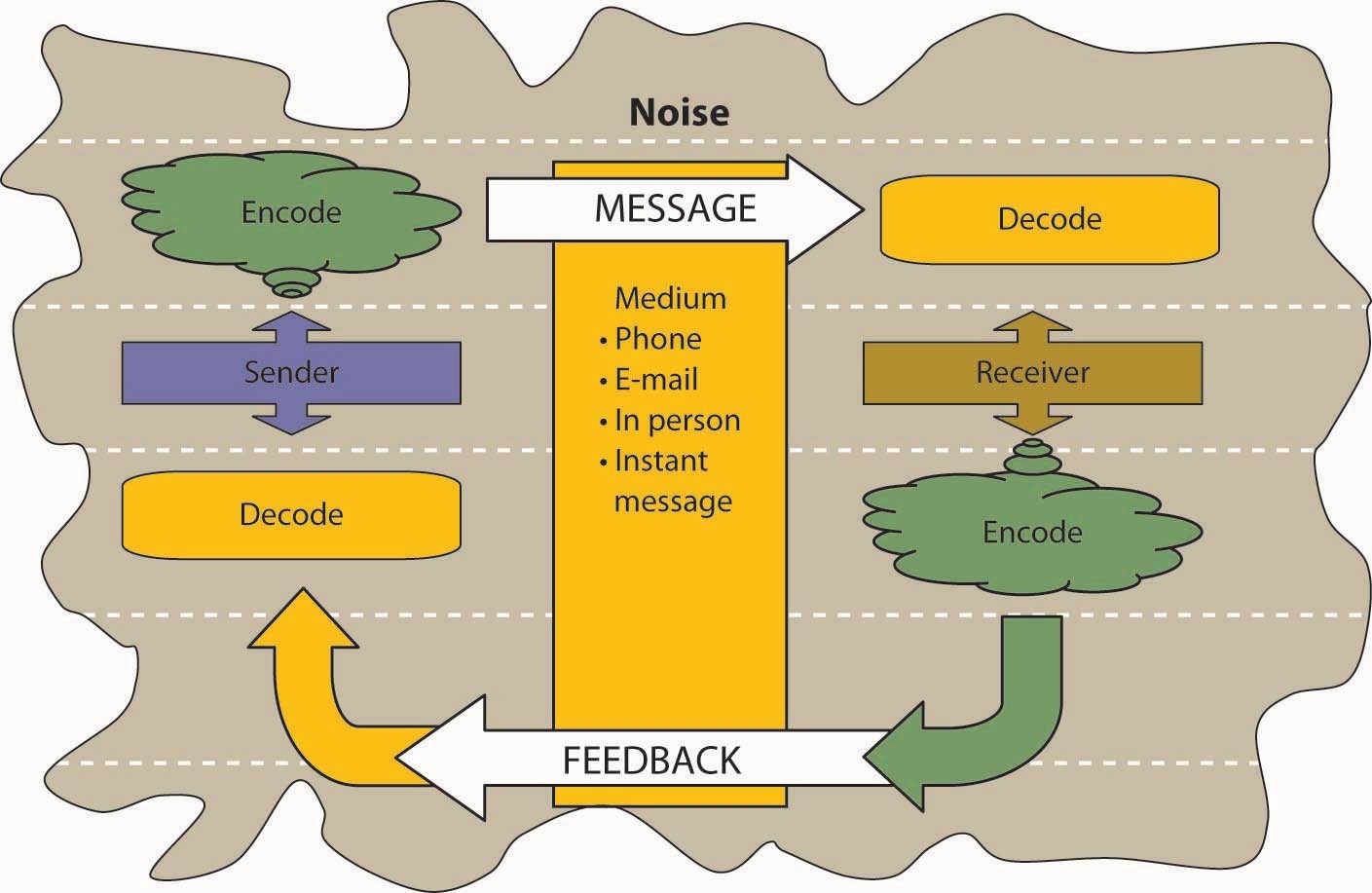
Figure 1: Process Model of Communication
Source: C. Page, Organizational Behaviour, (2024). License: CC BY-NN 4.0 https://kpu.pressbooks.pub/1215organizationalbehaviour
2.1 Key Components
Sender — the person initiating the message
Message — the information being communicated
Encoding — selecting words, tone, and nonverbal cues
Channel — medium used (email, text, in person, Zoom)
Decoding — how the receiver interprets the message
Receiver — the individual receiving the message
Feedback — verbal or nonverbal response
Noise — anything that disrupts clarity: stress, assumptions, distractions, unclear writing
Example:
A student emails a professor: “Can we talk?” Without context, the professor may interpret this as a serious issue. If the student adds details (“I have a quick question about Assignment 2…”), decoding becomes easier.
3. Communication Channels and When to Use Them
Different channels offer different levels of richness (how much information they convey).
High-richness channels (best for emotional, sensitive, or complex topics):
• in-person conversation
• video meetings
• phone calls
Low-richness channels (best for simple or routine information):
• email
• text messages
• learning-management platforms
Example:
A disagreement about workload division should be resolved in person or via video, not text.
Video: The Science Behind Dramatically Better Conversations — Charles Duhigg (TED, 2025)
Communication in real life often breaks down not because people disagree, but because they misunderstand each other’s intentions, meanings, or emotional cues. After learning about perception, interpretation, and barriers to communication, this talk adds practical, research-based tools you can use to make your conversations clearer, more collaborative, and more meaningful. Pulitzer-winning journalist Charles Duhigg explains three evidence-supported strategies—turn-taking, looping for understanding, and asking deeper questions—that help people communicate more effectively across differences, reduce conflict, and build stronger relationships. Watch this video before moving on; it introduces techniques you can use immediately in team projects, workplace interactions, and everyday conversations.
4. Nonverbal Communication
Nonverbal cues often communicate more meaning than words. Albert Mehrabian’s work highlights that tone and body language heavily influence how messages are interpreted.
Common nonverbal cues include:
• facial expressions
• eye contact
• posture
• gestures
• tone and pace of voice
Example:
A teammate says, “It’s fine,” but avoids eye contact and has tense posture. The nonverbal cues contradict the verbal message.
5. Perception and Why We Misunderstand Each Other
Perception is the process of selecting, organizing, and interpreting information. It is shaped by past experiences, expectations, values, emotional state, and cultural background.
Two people can receive the same message but interpret it differently. Miscommunication often occurs not because the message was unclear, but because the interpretation differed.
Example:
A short text message (“K”) may be interpreted as anger by one person and simple efficiency by another.
6. Intercultural Communication
Many communication challenges do not come from personality or intention—they come from cultural differences in how people send and interpret messages. Because classrooms, co-op placements, and workplaces are increasingly multicultural, understanding intercultural communication helps reduce misunderstandings and improves collaboration.
6.1 High-Context and Low-Context Communication
Anthropologist Edward Hall introduced the idea that cultures differ in how directly they communicate meaning.
Low-Context Communication
Meaning is stated clearly in words.
• Direct
• Explicit
• “Say what you mean”
Examples: Canada, United States, Germany, the Netherlands.
Example (Student):
A Canadian teammate sends:
“Let’s meet at 3:00 in the library. Please bring your part of the slides.”
This is clear, specific, and leaves little room for interpretation.
High-Context Communication
Meaning is implied through tone, relationship, or shared understanding.
• Indirect
• Subtle
• Messages rely on context
Examples: Japan, Korea, many Middle Eastern and Latin American cultures.
Example (Student):
A high-context communicator might say:
“Maybe we could connect later this afternoon?”
which can mean:
“We need to meet at 3:00,”
but the expectation is that others infer the meaning.
Example (Workplace):
A high-context coworker may hesitate to say “no” directly, instead saying:
“That might be difficult,”
expecting listeners to understand it means “I can’t do that.”
6.2 Direct and Indirect Feedback
Erin Meyer’s Culture Map highlights differences in how cultures express disagreement.
Direct Feedback Cultures
• Critique is straightforward
• Negative feedback is clear and specific
• More comfortable with open disagreement
Examples: Netherlands, Germany, Israel.
Example:
A teammate says, “Your section needs more evidence. Let’s fix it.”
It is not rude—it is normal communication.
Indirect Feedback Cultures
• Soften or cushion negative messages
• Use polite phrasing or hints
• Avoid open conflict to preserve harmony
Examples: Japan, Korea, Thailand, many Latin American cultures.
Example:
A teammate says, “Your section is interesting. Maybe we could add a bit more information later.”
This often means “This needs major revision,” but in a gentler tone.
6.3 Individualism and Collectivism
Geert Hofstede’s most widely used dimension helps explain differences in teamwork and communication.
Individualistic Cultures
• Emphasize personal goals
• Prefer direct communication
• Expect individuals to speak up for themselves
Examples: Canada, US, UK.
Student Example:
In a meeting, a Canadian student may openly disagree:
“I don’t think this idea will work—let’s try option B.”
Collectivistic Cultures
• Prioritize group harmony
• Communication tends to be more indirect
• People avoid “standing out” to protect relationships
Examples: China, Korea, Japan, Mexico, many African cultures.
Student Example:
A collectivist teammate may stay quiet even when they disagree, assuming the group will interpret their hesitation.
6.4 Why These Differences Matter in Teams
Multicultural student teams often experience tension not because people are uncooperative, but because their communication norms differ.
Team Example 1 — Silence Misinterpreted
Silence in a low-context culture can signal confusion or disagreement.
Silence in a high-context culture may signal respect or careful thinking.
Misunderstanding this can lead to:
“Why aren’t they participating?”
when the real meaning is:
“I don’t want to interrupt others.”
Team Example 2 — Email Tone
A short email like “Please send the file today” may sound rude in some cultures but normal and efficient in others.
6.5 How to Communicate More Effectively Across Cultures – Strategies
• Do not assume silence means agreement.
• Ask clarifying questions (“Can you tell me more about what you meant?”).
• Provide structure: agendas, summaries, clear deadlines.
• Invite perspectives gently: “I’d love to hear your view on this.”
• Notice tone and feedback style differences.
• When unsure, choose clarity over subtlety.
Developing intercultural communication skills helps teams collaborate more successfully and reduces unnecessary conflict.
These cultural differences affect how people perceive messages, give feedback, form impressions, and interpret behaviour. Because communication shapes decision-making, teamwork, and conflict, understanding cultural patterns helps you navigate diverse academic and workplace environments more effectively.
The next section explores evidence-based decision making, showing how clear information, critical thinking, and structured reasoning improve the quality of choices—especially when communication differences create uncertainty.
7. Evidence-Based Decision-Making and Common Pitfalls
Even strong communicators can make poor decisions if they rely too heavily on assumptions. Because perception filters how we interpret messages, cues, and data, it is essential to make decisions based on evidence, not intuition alone.
Evidence-based decision-making means combining multiple sources of information—personal observations, data, conversations, reliable research, and stakeholder feedback—to understand a situation more accurately.
7.1 Four Steps of Evidence-Based Decision-Making
-
Ask the Right Question
Instead of “What do I think is happening?” ask “What evidence would confirm or challenge my assumption?” -
Gather Relevant Evidence
Evidence may include data, policies, peer feedback, instructor comments, or direct observations. -
Evaluate the Evidence
Consider credibility, accuracy, patterns, contradictions, and gaps. -
Make a Decision and Reflect
After choosing a course of action, notice the results so you can improve future decisions.
7.2 Common Decision-Making Pitfalls
• Confirmation Bias: seeking information that confirms your beliefs
• Anchoring: relying too heavily on the first piece of information
• Availability Bias: overvaluing recent or vivid examples
• Overconfidence: assuming your interpretation is more accurate than it is
• Fundamental Attribution Error: assuming someone’s behaviour reflects their personality rather than the situation
7.3 How to Avoid These Pitfalls
• ask clarifying questions
• compare perspectives with peers
• gather concrete data when possible
• challenge assumptions
• summarize your understanding and verify with others
Real-Life Student Example
A professor emails a student: “We need to talk about your assignment.”
Without evidence-based thinking, the student may panic and assume something is wrong.
Using evidence-based decision-making, the student:
• reviews the rubric
• checks past feedback
• asks a clarifying question
• waits for the professor’s reply
The conversation turns out to be about improving a draft — not a problem.
8. Common Perceptual Errors
The field of social cognition highlights several predictable thinking patterns that shape interpretation.
Selective Attention — noticing certain cues while missing others.
Stereotyping — making assumptions based on group membership.
Halo Effect — one positive trait influences the whole impression.
Horn Effect — one negative trait shapes the entire impression.
Recency Effect — overemphasizing recent information.
Confirmation Bias — favouring information that fits existing beliefs.
Attribution Errors — incorrectly judging the cause of someone’s behaviour.
Insert Visual Placeholder: Perceptual errors chart.
Example:
Assuming a teammate is lazy (internal cause) when they may actually be overwhelmed with other deadlines (situational cause).
9. Barriers to Communication
Common barriers include:
• jargon
• cultural differences
• emotional reactions
• unclear writing
• multitasking
• technology distractions
• assumptions
• lack of feedback
Example:
A group member speaks English as an additional language. Rapid-fire discussion makes it difficult for them to participate — not due to ability, but communication speed.
10. Improving Interpersonal Communication
Strong communicators practise skills from interpersonal communication research:
Active Listening includes:
• maintaining eye contact
• paraphrasing
• asking clarifying questions
• avoiding interruptions
Open-Ended Questions deepen understanding.
Choosing Appropriate Channels prevents avoidable conflict.
Clarity and Brevity reduce confusion.
11. Communicating in Teams
Teams benefit from shared expectations around communication.
Effective feedback is:
• specific
• behaviour-focused
• timely
• respectful
To resolve miscommunication:
• assume positive intent
• ask clarifying questions
• restate your interpretation
• switch to a richer communication channel
Example:
Instead of texting “You need to finish your part tonight,” a teammate might say, “Can we clarify our deadlines together? I’m worried we may fall behind.”
12. Written Communication for Students
Professional written communication is essential in university and early career contexts.
Key elements of effective emails:
• clear subject line
• polite greeting
• brief context
• specific request
• appreciative closing
Tone matters. Short messages can be interpreted as abrupt or rude if not written carefully.
13. Example Scenarios
Scenario 1:
A friend replies “K.” The sender interprets anger; the friend intended efficiency.
Scenario 2:
An email without context (“Can you meet today?”) causes confusion; adding details improves clarity.
Scenario 3:
Team conflict escalates because members assume motives instead of clarifying expectations.
14. KEY TAKEAWAYS
4.1 Why Communication Matters — Communication shapes success in group work, friendships, academic interactions, and early employment. Most problems in teams arise from misunderstandings rather than lack of ability, so understanding how communication works helps prevent avoidable conflict.
4.2 The Communication Process — Messages pass through several stages, and interpretation can break down at any point. Stress, assumptions, unclear wording, and distractions often distort meaning, so miscommunication frequently reflects differing interpretations rather than carelessness.
4.3 Communication Channels — Richer channels like in-person or video conversations reduce confusion during complex or emotional discussions, while email or text works best for straightforward information. Choosing an inappropriate channel increases the risk of misunderstanding.
4.4 Nonverbal Communication — Tone, posture, facial expressions, and other nonverbal cues strongly influence how messages are understood. Mixed verbal and nonverbal signals create confusion, so paying attention to body language helps you interpret others more accurately.
4.5 Perception and Misunderstanding — People interpret messages through their own experiences, expectations, emotions, and cultural backgrounds. Two individuals can read the same message very differently, which is why clarifying intentions is essential.
4.6 Intercultural Communication — Cultures vary in directness, feedback style, and reliance on context. Silence, tone, and brevity can mean different things across cultures, and understanding these patterns improves teamwork, reduces conflict, and builds trust.
4.7 Evidence-Based Decision-Making —Good decisions rely on multiple forms of evidence rather than intuition alone. Cognitive biases such as confirmation bias or anchoring can distort judgment, so checking assumptions and seeking clarity leads to more accurate conclusions.
4.8 Common Perceptual Errors — People rely on mental shortcuts that shape how they judge others, including stereotyping, halo and horn effects, and selective attention. Recognizing these patterns helps you form impressions more thoughtfully.
4.9 Barriers to Communication — Jargon, multitasking, emotional reactions, unclear writing, and cultural differences can all disrupt communication. Many barriers reflect situational factors, not personal ability, and slowing down to check understanding can prevent confusion.
4.10 Improving Interpersonal Communication — Interpersonal communication improves when people listen actively, ask clarifying questions, and choose appropriate channels. Clear and concise messages reduce unnecessary conflict and support better understanding.
4.11 Communicating in Teams — Teams function better when communication norms are clear and respectful. Specific, behaviour-focused feedback and a habit of clarifying assumptions help teams resolve issues before they escalate.
4.12 Written Communication for Students — Effective academic and professional writing is clear, courteous, and appropriately structured. Brief messages can sound abrupt without context, so adding clarity helps ensure your tone is understood.
4.13 Example Scenarios — Everyday misunderstandings often stem from assumptions rather than intentional conflict. Adding context, checking interpretations, and asking questions quickly resolves most small communication issues.