The Planetary Health Rapid Impact Assessment tool
3.3 The Planetary Health Rapid Impact Assessment Tool
The objective of the Rapid Assessment Tool for Planetary Health is to provide an easy-to-use tool for people, regardless of their level of expertise, to consider major determinants of planetary health from a holistic perspective. The Rapid Assessment Tool for Planetary Health supports the rapid assessment of all types of interventions across all sectors. It can help people consider the planetary health impacts of interventions, covering both natural and human systems. It helps identify if and how the intervention contributes positively to some dimensions while deteriorating others. It supports the identification of trade-offs, as some interventions bring very desirable impacts on certain dimensions while harming others. It can also be used as an engagement tool for discussing intervention impacts within groups. Responses from different groups of participants can be compiled and contrasted (for details see Brousselle et al. 2024).
Such a tool can also be used at different stages of an evaluation, such as supporting the development of the logic model with a planetary health perspective, in logic analysis to document the theory of intervention, in contribution analysis, or in needs assessments. Additionally, the tool could easily be adapted and integrated into health and environmental impact assessments (HIA and EIA) or accountability exercises led by governments (Brousselle et al., 2024b).
Health and environmental impact assessments have been established to evaluate the impacts of major industrial projects. Environmental impact assessments began to be implemented as regulatory processes by governments as early as the late 1950s (Turnbull, 1992).
In the 1990s, we saw the emergence of a new approach, HIA, aimed at assessing impacts on health and equity of projects in the non-healthcare sectors, and suggesting mitigation measures for reducing harm and increasing positive impacts on human beings (Birley, 2011; Collins & Koplan, 2009; Wright et al., 2005). (as cited in Brousselle et al., 2024b, p. 272)
These processes are generally lengthy and do not always adopt a life-cycle perspective, often overlooking important elements that affect the environment and population health. Using the Planetary Health Rapid Impact Assessment tool in these exercises could support the implementation of a more comprehensive and deliberative approach, while offering insights in a more timely manner (Brousselle et al., 2024b).
The Planetary Health Rapid Impact Assessment tool is a one-page document that can be also converted in an online survey (see Figure 3.1). Other versions have also been developed, one with a 2-step approach, rating the likelihood and the magnitude of the occurrence of impacts, following the method described in Rapid Impact Evaluation (Rowe, 2019a); another one using a numerical scale.
The Planetary Health Rapid Impact Assessment tool can provide guidance to individual users or can be used to survey the positions of different groups. Group survey results can be contrasted according to demographics or other group characteristics and presented to different audiences for engaging in group discussions.
The Planetary Health Rapid Impact Assessment tool has been developed in collaboration with the founders of Climate Caucus, a network of elected leaders in local governments and allies willing to lead transformation in their communities within planetary boundaries (https://www.climatecaucus.ca). The tool can be used as is or it can also be tailored to meet your own needs and evaluation context. The principles according to which the Planetary Health Rapid Impact Assessment tool should be developed and applied are presented in Exhibit 3.1.
In the Planetary Health Rapid Impact Assessment tool, planetary health determinants are identified in capital letters. To maintain a holistic perspective and avoid the “pick and choose” strategy often observed with the United Nations’ SDGs, all dimensions related to natural and human systems (pollution, land and waters, biodiversity, health, equity, prosperity) must be included. Power and Governance are not determinants of planetary health but rather important dimensions to consider for the effective implementation of your intervention. For this reason, they were not initially integrated into the tool. Furthermore, additional subdimensions can be incorporated into the tool as needed. Notably, in Figure 3.1, the dimensions of Reconciliation and UNDRIP, as well as greenhouse gas emissions, typically considered subdimensions of governance and pollution, are presented as distinct dimensions. This modification was made at the request of some elected local government officials in British Columbia to reflect their accountability commitments. The notion of power was also integrated as a dimension after testing the tool with Indigenous experts. Specific language has been added under each capitalized word to help non-experts understand what each dimension encompasses. The language under each dimension can be tailored to align with the specific nature of interventions and their implementation contexts.
Figure 3.1 Planetary Health Rapid Assessment Tool for Local Governments in Canada
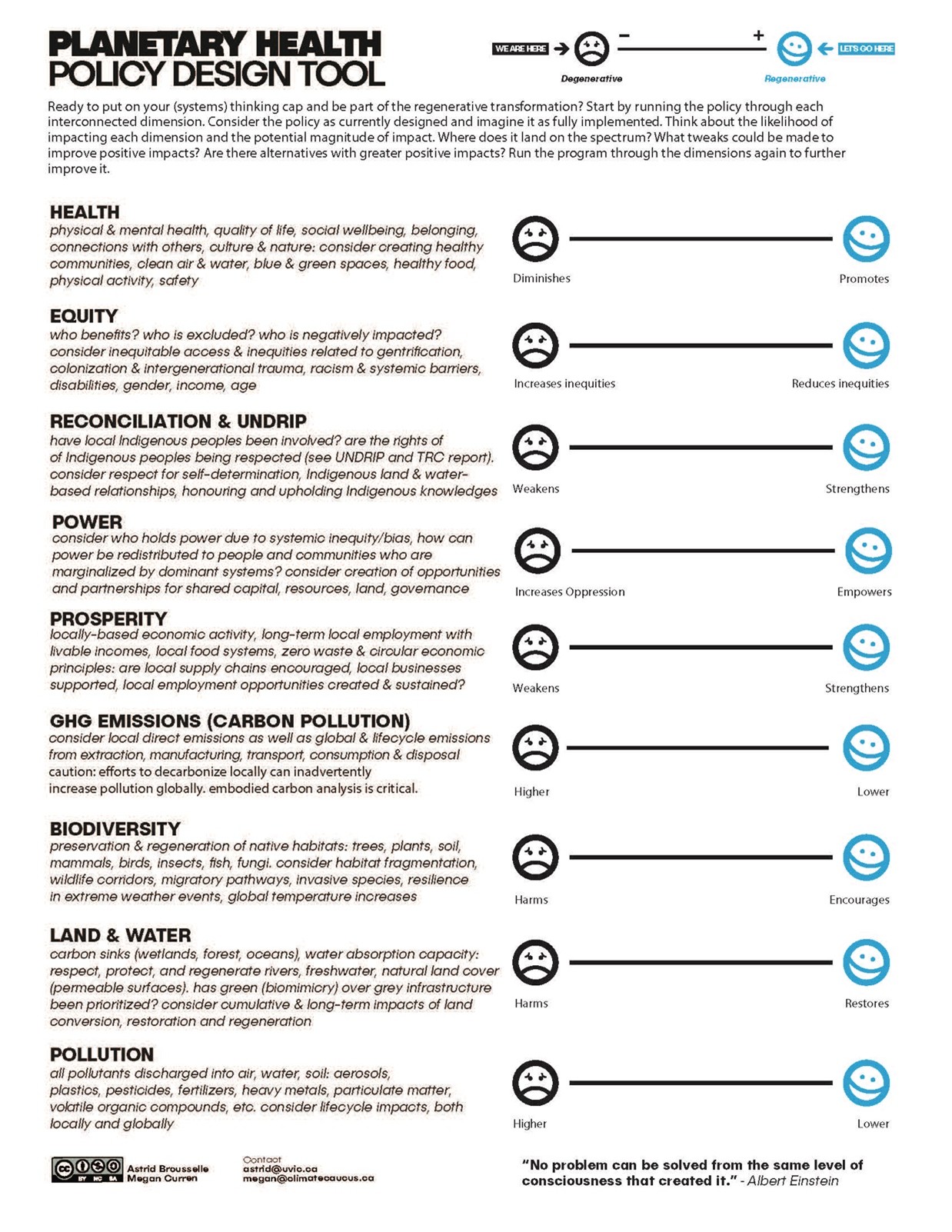
To use the tool, the user or participant is asked to think about the intervention and rate it according to each dimension. Ratings can be converted into indices based on the technique used for visual analog scales in economic evaluation (Drummond et al., 2005). The distance from the start of the scale is measured and converted into a number. If used by individuals, the rating on the scale can be converted into indices and graphs compiling impacts (see Figure 3.2 for an example). If used to survey groups’ perceptions, a scorecard can be created (see Figure 3.3).
Figure 3.2 Example of Synthetic Indices
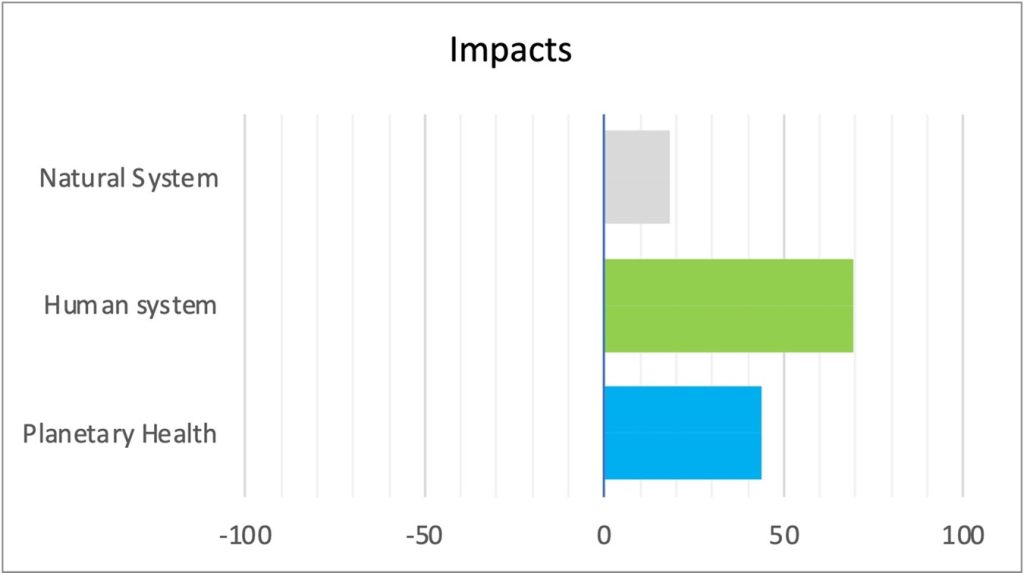
Figure 3.3 Impacts on Planetary Health Dimensions of a 2023 Conference
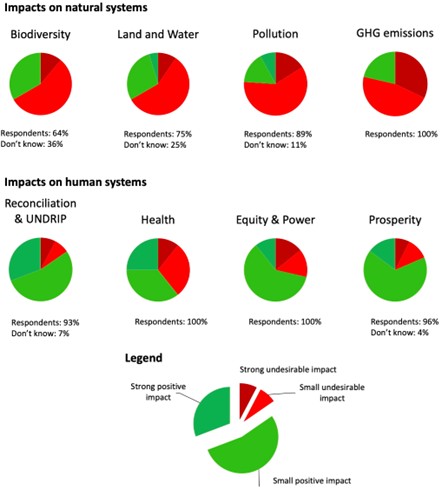
Exhibit 3.1: Principles for the development of Planetary Health Rapid Impact Assessment tools (PHRIA)
Co-design
Co-designing the tool in collaboration with targeted users ensures the assessment dimensions are contextualized according to their needs and that the language used to describe the dimensions is meaningful, understandable, and comprehensive. In addition, co-designing the tools according to the specificity of the context allows governments/organizations to address specific commitments. For example, it would be possible to develop a version specifically addressing the United Nations Sustainable Development Goals, if that was a priority for the organization (Green et al., 2020). However, critical dimensions for planetary health as identified in the Planetary Health Framework should all still be considered as these were identified by existing scientific knowledge.
Easy-to-use tools
In EIA and in HIA, two barriers limit their use and impact: experts are needed to conduct the study and eco-social determinants of health are not easy to understand for non-experts. As we want to encourage widespread use of PHRIA tools, a simple tool can empower people to conduct their own assessments without planetary health-related expertise or knowledge. To make the assessment exercise accessible to non-experts, PHRIA tools should include some language describing what each planetary dimension encompasses. In particular, to circumvent the difficulties experienced in HIA and EIA, it is important how the dimensions of health, equity, and power relations are described.
Deliberation and engagement
Once created, the tool should be implemented and used in deliberation with different groups such as elected officials, administrators, and decision-makers, but also diverse interest groups, such as industrial groups, Indigenous leaders, beneficiaries, and community members. Sharing the tool with a diversity of individuals and groups early in the process is a way to increase the credibility of the exercise, and to enhance deliberation around potential trade-offs. The trade-offs among which dimensions to prioritize over others wouldn’t be the result of an expert’s decision, instead this would be informed by the positions of various groups and the debate taking place. Furthermore, assessing a project using a PHRIA tool may also surface alternatives with potentially higher positive impacts for consideration. Larger participation would also help in controlling individual rating bias.
Life-cycle perspective
Finally, with the purpose of the intervention in mind, we would like to re-emphasize that all kinds of impacts on natural and human systems, in both the short and long term, should be included. In addition, the impact assessment of projects, programs or policies shouldn’t be limited to their implementation or production processes. Limiting the scope of the assessment could derail the process. Pre-selecting a stage or part of the project for evaluation purposes inevitably leads to missing the purpose of exercise itself. A life-cycle perspective should be adopted.
Source: Brousselle, A., Curren, M., Dunbar, B., McDavid, J., Logtenberg, R., & Ney, T. (2024b). Planetary Health: Creating Rapid Impact Assessment Tools. Evaluation, 30(2), 275-276, https://doi.org/10.1177/13563890241227433
Media Attributions
- Figure 3.1 Planetary Health Rapid Assessment Tool for Local Governments in Canada
- Figure 3.2 Example of Synthetic Indices
- Figure 3.3 Impacts on Planetary Health Dimensions of a 2023 Conference