Representing the intervention
6.3 The causal model
Each intervention is meant to address one problem or more. A first helpful step is to understand the role the intervention plays in solving the problem. For this step, building a causal model can be useful. A causal model represents the problem and its root causes that the intervention is meant to address (Renger & Titcomb, 2002).
But first, what is a cause? The study of causes and causality has structured discussions for centuries (Shadish et al., 2002).
A cause is that which makes any other thing, either simple idea, substance or mode, begin to be; and an effect is that, which has its beginning from some other thing. (Locke, 1975, p. 325, cited in Shadish et al., 2002, p.4)
However, causes are not always of the same nature. Some elements, called causes, require specific conditions to produce effects. Shadish et al. provide the example of a match, which can be a cause of a forest fire, but for this to happen, specific conditions are needed, such as something to light the match, dry weather, etc. “Many factors are usually required for an effect to occur, but we rarely know all of them and how they relate to each other” (Shadish et al., 2002, p. 5). These causes are referred to as “INUS conditions,” which stands for “an insufficient, but non-redundant part of an unnecessary but sufficient condition” (Mackie, 1974, cited in Shadish et al., 2002, p.5).
The causal model should represent the factors involved in producing effects. Following Rengers and Titcomb’s advice on building a causal model, the main question you should ask at this early stage about the intervention is “why?” (Renger & Titcomb, 2002). Here are the steps to follow:
- The first step is to identify the problem(s) and state it clearly.
- Then, you need to ask why this problem exists and document its causes. Scientific or expert knowledge are the best sources of information to inform this step.
- After identifying a cause (or causes), continue to ask “why?” it’s happening to identify the determinants of the cause, as if peeling back the layers of an onion.
- Continue to ask “why?” until it feels like recording root causes is no longer fruitful or when the topic is exhausted.
- Repeat for each cause and their determinants.
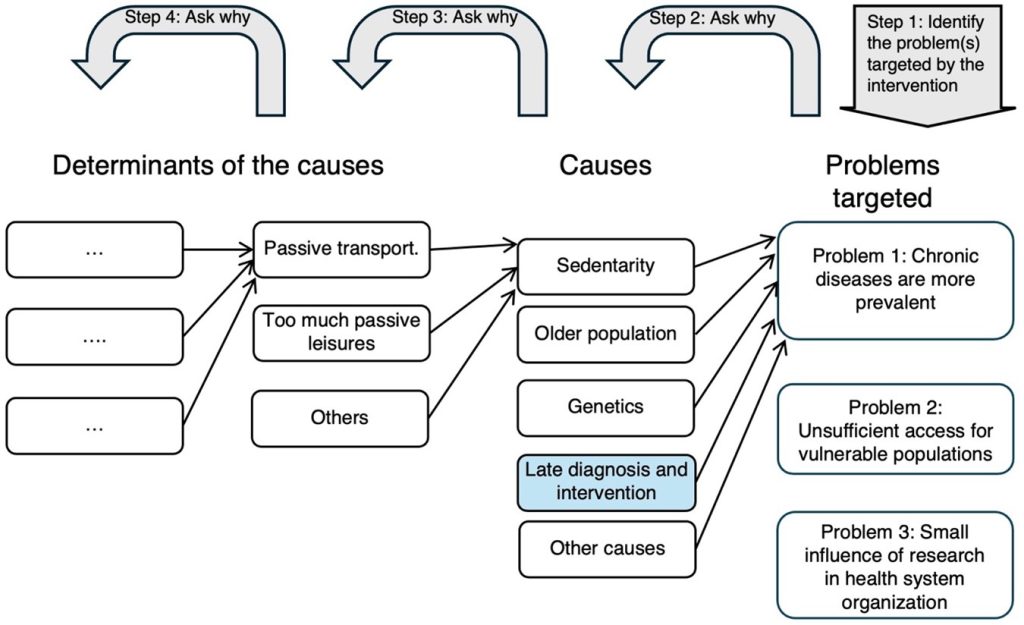
Figure 6.1 presents the start to building a causal model for a Community Based Primary Health Care research initiative that combined 12 different research programs (the intervention).
Figure 6.1 How to Build the Causal Model
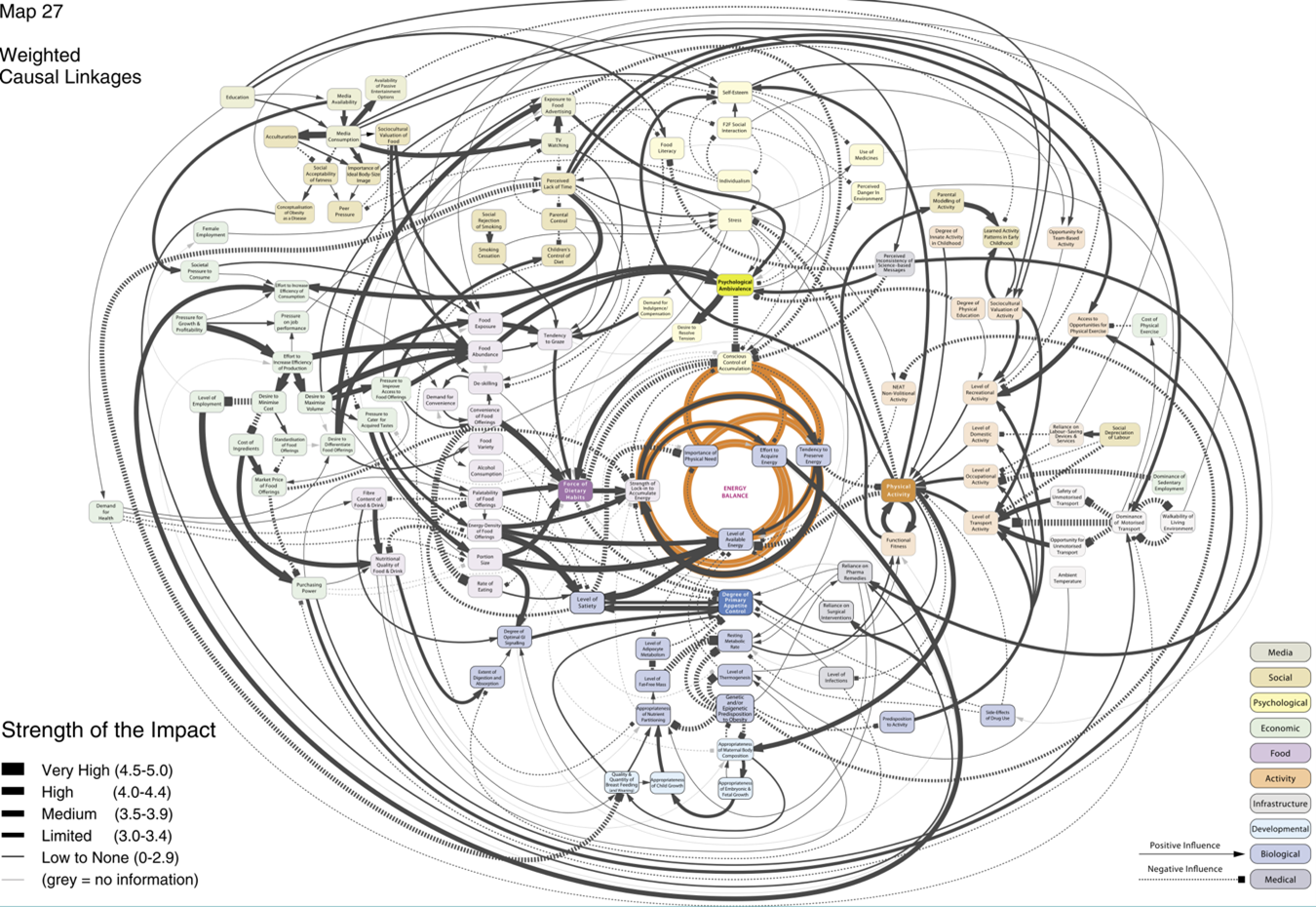
Identification of the root causes of the targeted problem will inevitably offer a simplification of the problem and its underlying causes. For example, the obesity map (see Figure 6.2) developed by the UK Government’s Foresight office (Butland et al., 2007) is a good illustration of the complexity of illness determinants at play. This mapped representation reveals the complexity of the causes of the problem more accurately than a linear representation’s offering. However, when trying to understand the potential importance of the evaluated intervention and its role in addressing the root causes of a problem the mapped representation is probably less easy to work with. The evaluator needs to determine the right balance between finding a model that is sufficiently accurate and deep, and that meets the evaluation’s practicability requirements, according to the use and role of such models in the evaluation.
Figure 6.2 The Obesity Map
Once the causal model is developed, the evaluator can identify and highlight the causes and their determinants that are targeted by the intervention, as not all causes will be addressed by the intervention (see Figure 6.1’s example, in blue).
Causal models are of great importance in evaluations that focus on the relevance of the intervention and in effect analysis.
Media Attributions
- Figure 6.1 How to Build the Causal Model
- Figure 6.2 The Obesity Map