An Example: Evaluating a Local Government Official Community Plan Using Planetary Health Lenses
13.2 Characterizing the OCP within the context of the Planetary Health Framework
Astrid Brousselle and Kai Mountfort
It was not easy to represent the OCP within a logic model. It is a document which identifies 329 policies and actions linked to multiple layers of goals, with some duplications due to their associations with more than one goal. This first step of the project consisted of drafting a representation that would help participants develop their own position on the OCP.
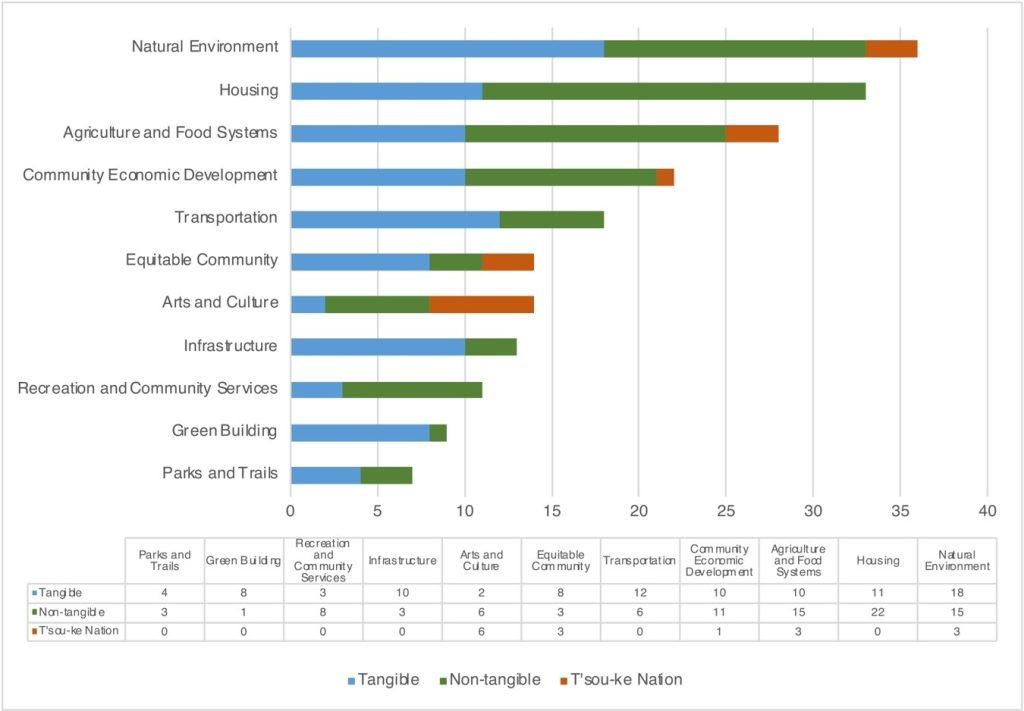
Next, the OCP policies and actions were regrouped under major areas of community policies: agriculture and food systems, arts and culture, community economic development, equitable community, green building, housing, infrastructure, natural environment, parks and trails, recreation and community services, transportation. All actions were then assessed as tangible or non-tangible, and actions specifically involving the T’sou-ke Nation were identified. Tangible policies and actions are palpable and concrete, and non-tangible policies and actions are abstract, vague and not easily measurable (e.g., language such as to engage, discuss and meet with…). While tangible policies and actions are important for public accountability, non-tangible policies and actions are also critical in delivering the OCP’s commitments. Non-tangible policies and actions often involved conversations with key partners in furthering an important initiative for the community. A summary table of the OCP was built and handed to participants. Figures synthesizing the information were created (see Figures 13.1 and 13.2).
Figure 13.1 The Official Community Plan’s Unique Policies and Actions, Categorized by Tangible, Non-Tangible and T’sou-ke Nation
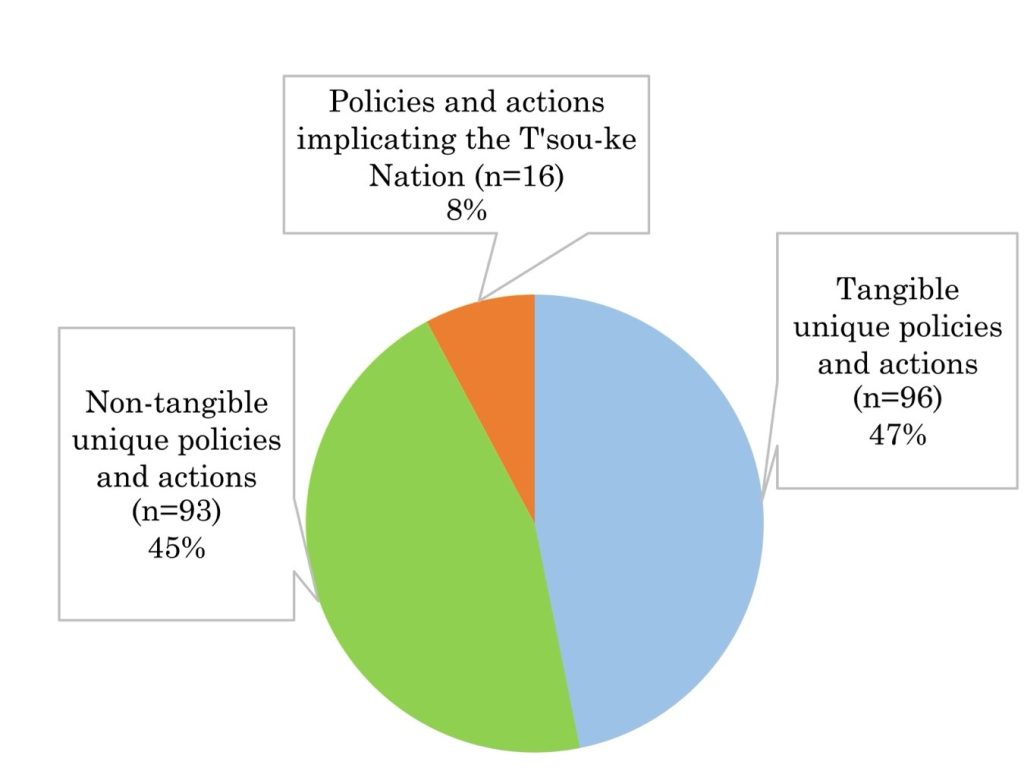
Figure 13.2 Numbers of Unique Policies and Actions from the Official Community Plan Sorted Most to Least by Community Policy
Media Attributions
- Figure 13.1 The Official Community Plan’s Unique Policies and Actions, Categorized by Tangible, Non-Tangible and T’sou-ke Nation
- Figure 13.2 Numbers of Unique Policies and Actions from the Official Community Plan Sorted Most to Least by Community Policy