Chapter 13 – Daily Routines
Unit 2 — Cultural Insight
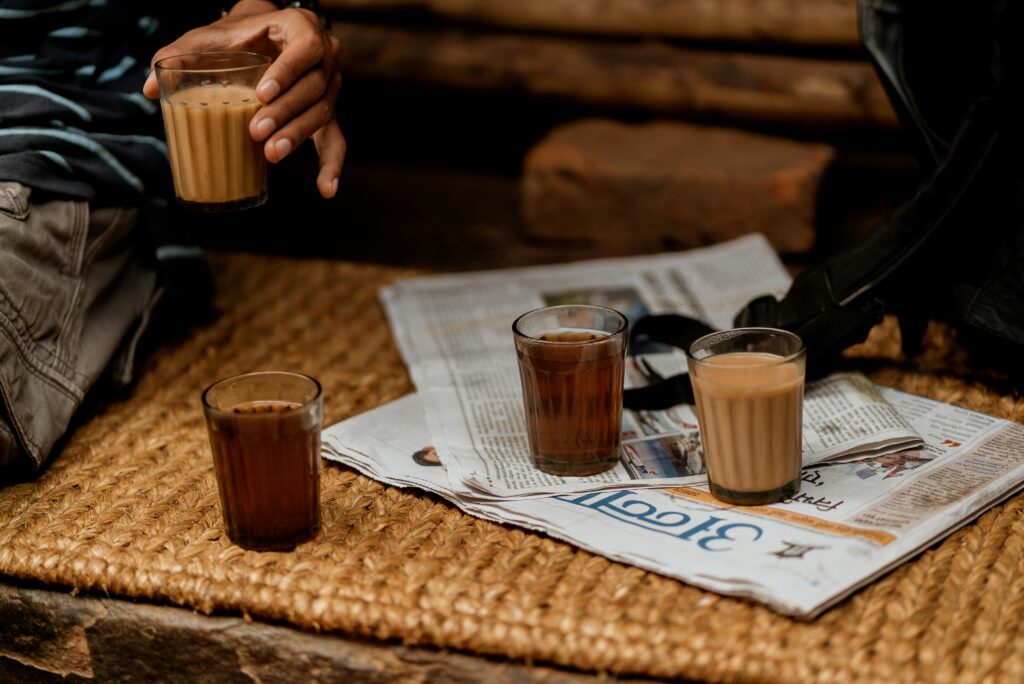
Chiyāpasal: The Everyday Conversation Hub
One of the clearest ways to see how daily routine and social life blend in Nepal is through its tea culture. Tea is more than a drink—it is a social habit—and the tea shop or tea stall, the चियापसल (ciyāpasal), often functions as an informal meeting place. Friends, coworkers, and neighbours may stop by early in the morning before work or school, and again in the afternoon for a short break. People sometimes call this relaxed, unplanned chatting चिया गफ (ciyā gaph, “tea talk”), where casual conversation and friendly gossip are just as important as the tea itself. In this sense, a ciyāpasal works like a small “social office”: a spot to pause, exchange small news, and stay connected through quick, familiar interactions.
In many neighbourhoods—especially in Kathmandu and other busy towns—tea stalls also act as informal community noticeboards. Students, shopkeepers, office workers, drivers, and neighbours drop in not only for tea but for updates about who is around, who is going where, what is open, and what is happening locally. A single newspaper headline or a phone notification can easily turn small talk into a wider conversation about community issues, daily routines, or current events.
For learners, this is a useful cultural lens because ciyā gaph naturally uses high‑frequency, everyday Nepali: time expressions, routine verbs, frequency words like “usually” and “sometimes,” and polite ways of talking about people and their plans. Compared with many North American or European cafés—where conversations may be more private or planned—a Nepali ciyāpasal is open, lively, and deeply social, making it one of the most authentic places to hear natural Nepali interaction.
Media Attributions
- Glasses of tea in Bhaktapur, Nepal © Suraj Shakya is licensed under a Public Domain license