Chapter 8 – States and Conditions
Unit 2 — Cultural Insight
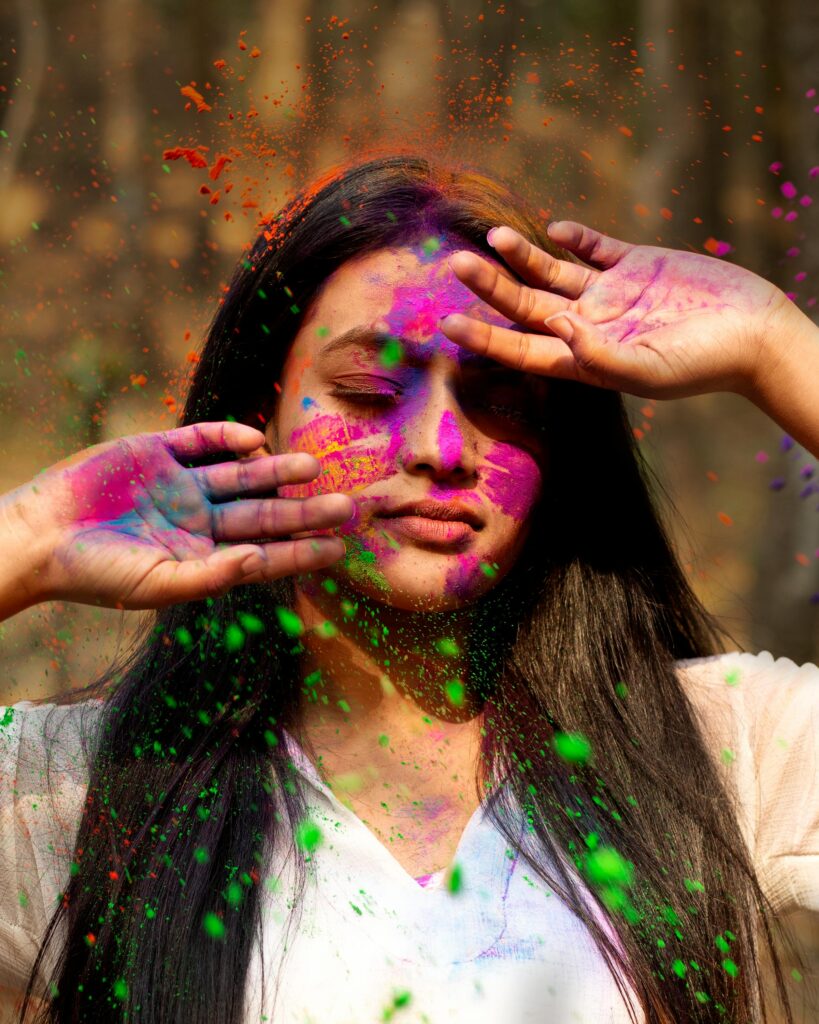
Festival of Colour: Holi and the Meaning of Colours
In Nepal, Holi—also called फागु पूर्णिमा (phāgu pūrṇimā)—is a spring festival known as the “festival of colours.” It marks the shift from winter to spring and is widely celebrated across the country.
Holi in Nepal is celebrated outdoors, in streets, courtyards, school grounds, and neighbourhood lanes. People play by throwing coloured powder and splashing water, often with water balloons or water guns. Friends, families, classmates, and neighbours visit one another, laugh, dance, share snacks, and take photos. The mood is playful and social, and everyday boundaries feel a little softer for the day.
This feeling is stronger because colours have meaning in Nepali culture. Many colours are linked to tradition, religion, and different stages of life:
- Red: love, celebration, marriage, fertility, good luck
- Green: prosperity, harmony, nature, growth
- Yellow: wellbeing, purity, spirituality, knowledge (often linked to turmeric and sunlight)
- White: peace and purity; also used in many Hindu communities during mourning
- Blue: calmness and divine power; often linked with Krishna
- Orange: spiritual life and renunciation; linked with sadhus and monks
- Gold: wealth, abundance, and good fortune
- Purple: royalty, status, nobility (less common in daily rituals)
When these colours are thrown and faces and clothing change, Holi’s message becomes visible: it encourages people to “start again”—to refresh relationships, let go of small tensions, and enter spring with a lighter heart.
For visitors, the best approach is to follow local cues: watch first, ask if you are unsure, and join in gently at the level your host suggests.
Media Attributions
- Woman with Holi powder on her face © Nivan Shrestha is licensed under a CC BY (Attribution) license