Eating Habits, जुठो (jutho), and Food Respect
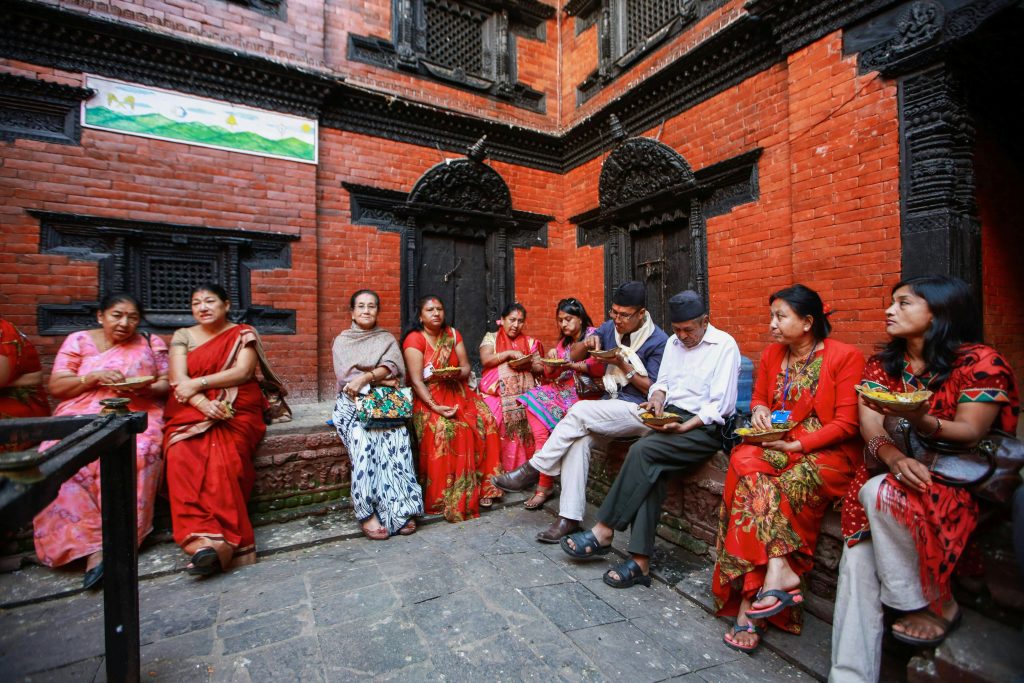
Food etiquette in Nepal can feel unfamiliar at first, especially for people from North America and Europe, but the core idea is simple: keep food and water “clean” for sharing. Many Nepalis eat with the right hand, and even if you prefer utensils, it is polite to pass food, money, and serving items with the right hand (or with both hands to show extra respect). By contrast, Western food customs generally allow the use of either hand, and left-handed eating is not treated as meaningful. In Nepal, however, the left hand is traditionally viewed as less clean, so it is usually used only for holding or stabilizing—not for eating, serving, or offering items to others.
A key cultural concept is जुठो (jutho)—food, drink, or objects become “used” or ritually polluted once they have been touched by someone’s mouth, even indirectly. After this point, they are not suitable for others in a shared context. In many Western settings, sharing water bottles, forks, or bites of food among friends is common and often seen as casual or friendly. In Nepal, however, avoiding jutho is a matter of respect and hygiene within cultural norms. For this reason, people generally do not share cups or bottles, exchange partially eaten food, taste from a spoon and return it to a shared dish, or use personal utensils in communal serving bowls.
When drinking from a shared water container, many Nepalis pour the water into their mouth without touching the spout—something that may look unusual to visitors but is a normal way to keep shared items “clean.”
Hospitality during meals is also shaped by a strong cultural expectation of care. Guests are typically served first, and a host may encourage you more than once to take additional food. In contrast, hosts in many Western cultures may offer food once and then leave the decision to the guest, whereas Nepali hosts take active responsibility for making sure their guest is satisfied. Accepting a second serving—if you can manage it—is often taken as a compliment to the cook or host. You may also be gently discouraged from helping with dishes or cleanup; this is not meant to exclude you, but to honour you as a guest.Dietary expectations differ as well. Because cows are considered sacred in Hindu traditions, many Hindus avoid beef, and in some households it is not cooked at all. Alcohol is also avoided by many families for religious or personal reasons. In North American or European contexts, offering wine or serving beef often feels routine or neutral, but in Nepal, it is more respectful to avoid offering these items unless you are sure of someone’s preferences. When in doubt, it is always polite to ask gently.