Chapter 3 Neoplasia
Common Cancer Types in Canada
Pictures coming soon!
Zoë Soon
Cancer
Unfortunately, cancer is a disease that impacts millions of lives on a global scale, responsible for approximately one in six deaths. In Canada, the four most common types of cancer include prostate cancer with older biological males being most at risk and breast cancer with adult biological females being most at risk. Other prevalent cancers in Canada are lung cancer, colorectal cancer, bladder cancer and uterine cancer. Basal cell and squamous cell skin cancers are also common forms of cancer and are associated with repeated exposure to sun UV rays.
Other major risk factors for development of cancer include smoking, air pollution, alcohol consumption, low intake of fruits and vegetables, high body mass index (BMI), sedentary behaviour, and infection with oncoviruses (e.g., human papilloma virus, HPV, hepatitis B and C viruses, Epstein-Barr virus, and H. pylori) and exposure to either chemical carcinogens (e.g., asbestos) or ionizing (e.g., x-rays and gamma rays) and non-ionizing radiation (e.g., UV rays). In sum, any agent (physical, chemical, or biological) that can cause DNA damage are considered carcinogens, as DNA mutations are the cause of a cell becoming cancerous.
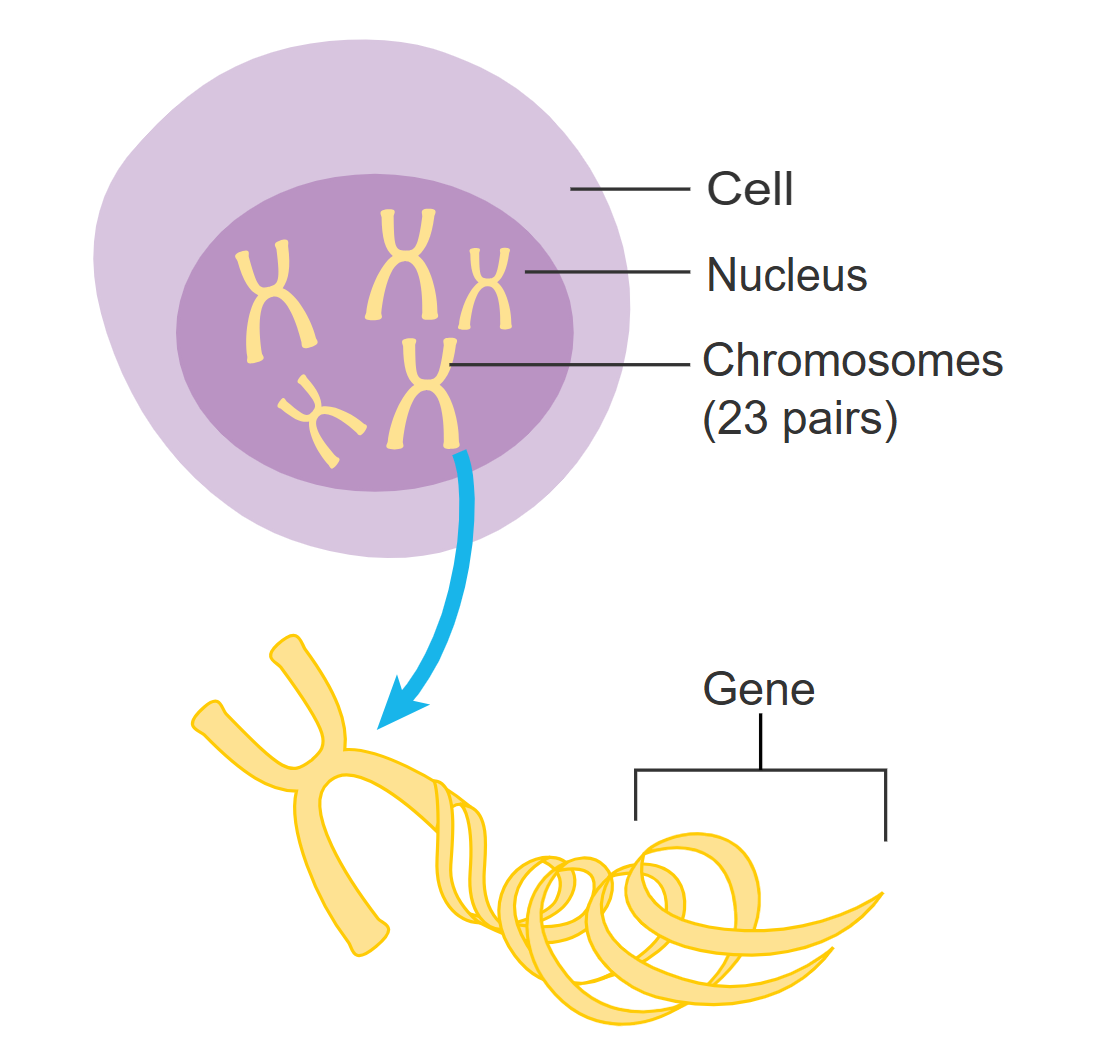
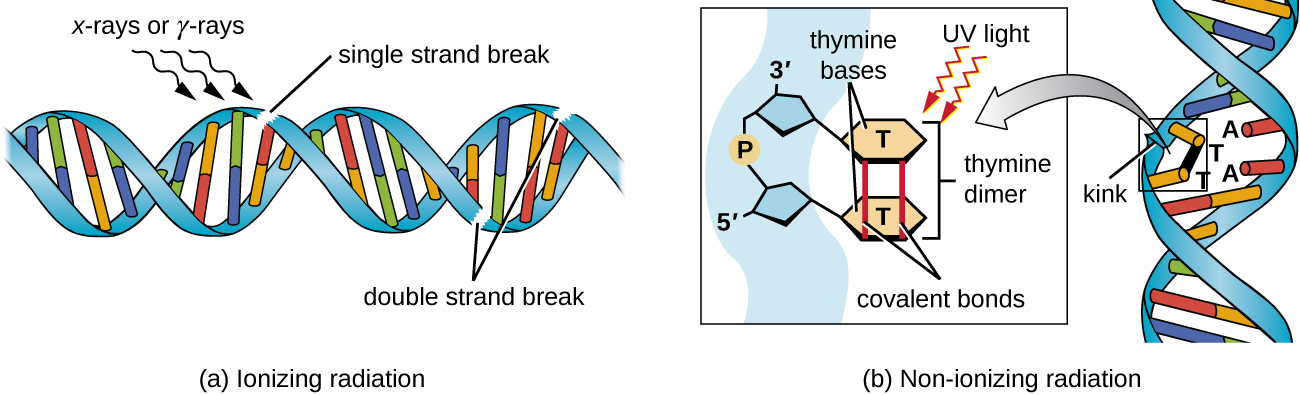
Smoking is widely regarded as the leading cause of cancer, increasing the risk of lung cancer and other types of cancer. In this unit we will explore the pathogenesis of different cancers, other causative agents, and different forms of treatment. Prevention strategies will also be discussed which include avoiding tobacco use and second-hand smoke exposure.
For current Canadian statistics data on incidence, prevalence, mortality and survival rates of each cancer for children and teenagers, visit The Cancer in Young People in Canada Data Tool, and for adults visit The Canadian Cancer Data Tool.
Media Attributions
- Human Somatic Cell with 23 pairs of Chromosomes © Cancer Research UK is licensed under a CC BY-SA (Attribution ShareAlike) license
- Private: DNA Mutation by both Ionizing and Non-ionizing Radiation © Wendy Keenleyside is licensed under a CC BY (Attribution) license