Chapter 9 Selected Diseases and Disorders of the Endocrine System
9p10 Type II Diabetes Mellitus
Zoë Soon
Overview
- Typically older in onset but increasingly affecting children and teenagers due to rising obesity.
- Onset is insidious (gradual) rather than sudden.
- More common than Type I, accounting for about 90% of diabetes cases.
- Often leads to chronic complications, and sometimes acute complications, if blood glucose is not well-controlled.
Causes and Risk Factors:
- Cells become less sensitive to insulin, meaning that:
- Cells become insulin-resistant, and
- Insulin can no longer stimulate cells to insert GLUT4 glucose transporters into cell membranes, leading to low glucose uptake by cells
- Cells become starved for glucose.
- Glucose builds up in blood leading to hyperglycemia
- Thought to be triggered by several possible factors:
- Family history.
- Obesity.
- Sedentary lifestyle.
- Other environmental factors.
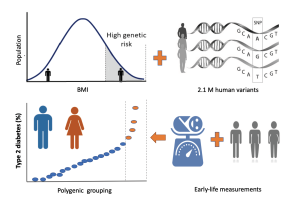
Research has found that there are several risk factors for developing Type 2 Diabetes: high birth weight, high BMI (body mass index) at age 10, high BMI as an adult, being biological male (XY) and at times, there may be some genetic components.
Typical Onset:
- Typically older in onset but increasingly affecting children and teenagers due to rising obesity.
- Onset is insidious (gradual) rather than sudden.
Pathophysiology:
- Lack of insulin prevents glucose entry into cells,
- as cell’s require insulin to insert GLUT4 glucose transporters into their cell membranes.
- leading to high blood glucose levels (hyperglycemia).
- Cells become starved for glucose, impairing ATP production.
- Excess glucose diffuses into urine, drawing water and causing polyuria, causing
- Dehydration triggers thirst (polydipsia).
- The body responds by breaking down proteins and fats for energy:
- Gluconeogenesis: Produces glucose from proteins and fats.
- Lipolysis: Leads to high lipid levels (lipidemia).
Effects on the Body
- Muscle wasting due to protein breakdown.
- High blood lipids increase risk of atherosclerosis.
- Ketone production causes ketosis and potentially ketoacidosis:
- Blood becomes acidic.
- Ketones and glucose are excreted in urine (ketonuria and glucosuria).
Signs and Symptoms:
- Polydipsia: Increased thirst (due to dehydration)
- Polyphagia: Increased hunger
- Polyuria: Increased urine volume (due to glucosuria and osmotic diuresis)
- Electrolyte loss (sodium, potassium) follows water loss.
- Fatigue (due to cell’s reduced ability to uptake glucose)
- Blurred vision (due to retinopathies and diabetic cataracts)
- Slowed healing of wounds (due to cell’s reduced ability to uptake glucose)
- Irritability, slowed reaction, and cognitive impairment (due to neuronal energy deficiency)
Diagnostic Blood Tests:
- Glycated hemoglobin (A1c) test
- Measures the percentage of hemoglobin with blood sugar attached.
- Reflects blood glucose control over 2-3 months.
- Levels above 6.5% suggest diabetes.
- Random blood sugar test
- Blood sample taken randomly, regardless of fasting.
- Blood glucose above 110 mg/dL indicates abnormality.
- Fasting blood sugar test
- Fasting for 12 hours before testing.
- Normal: <110 mg/dL.
- Diabetic: >125 mg/dL.
- Glucose tolerance test:
- Drink 75g glucose, measure levels at 1 and 2 hours.
Urinalysis:
- Urine tests:
- Glucosuria: Glucose in urine.
- Ketonuria: Ketones in urine.
- Useful for detecting diabetic ketoacidosis.
Treatments:
- Lifestyle modifications: Can reverse some issues by improving insulin sensitivity.
- Healthy diet.
-
- Avoid high-glycemic foods (candies, sugary drinks).
- Favor complex carbohydrates (fibers, polysaccharides).
-
- Regular exercise.
-
- Helps reduce blood glucose by increasing skeletal muscle uptake.
- Monitor blood sugars during activity.
- Have carbohydrate snacks available to prevent hypoglycemia.
-
- Stress reduction:
- Stress increases cortisol and glucocorticoids, which raise blood glucose levels.
- Managing stress helps control glucose.
- Weight control:
- Reducing body mass index (BMI) decreases insulin resistance.
- Healthy diet.
- Oral hypoglycemic agents: Lower high blood glucose by increasing cellular responsiveness or insulin secretion.
- Oral hypoglycemic agents for type 2
- Metformin:
-
- Reduces hepatic gluconeogenesis.
- Decreases the liver’s production of excess glucose.
-
- Medications to enhance insulin sensitivity:
-
- Improve tissue response to insulin.
-
- Metformin:
- Oral hypoglycemic agents for type 2
- Insulin injections: Necessary for Type I and often Type II or gestational when beta cells are dysfunctional or destroyed.
- Administered via injections or continuous insulin pumps.
-
- New technology allows for precise, continual insulin delivery to stabilize blood glucose levels.
- Note: Insulin cannot be taken orally because stomach acids degrade it.
-
- Administered via injections or continuous insulin pumps.
Complications of Uncontrolled Diabetes and Risk of Long-Term Damage:
- Blood vessel damage leads to:
- Atheromas formation.
- Vascular damage affecting organs. and putting person at risk for:
- Cardiovascular disease: Stroke, heart attack, peripheral vascular disease.
- Kidney failure (due to nephropathy).
- Nerve damage: Neuropathy
- Pregnancy complications: Stillbirths and miscarriages.
- Increased risk of amputations due to ischemia and gangrene.
- Eye damage: Leading to blindness due to retinal damage (diabetic retinopathy).
- Damage to tiny retinal blood vessels produces:
- Microaneurysms: Weakening and bulging of vessel walls.
- Hemorrhages: Bleeding into the retina.
- Neovascularization: Formation of new, fragile blood vessels that can rupture and cause scarring and distortion of retina.
- Blood and debris can float in the vitreous humor, impairing vision.
- Macular edema causes swelling in the central retina, resulting in distorted vision.
- Damage to tiny retinal blood vessels produces:
- Blurred Vision or Vision Loss:
- also due to development of diabetic (sugar) cataracts results from hyperglycemia
Summary
- Monitoring and controlling blood glucose minimizes complications.
- Lifestyle modifications and medication optimize management.
- Avoid extremes of hypoglycemia and hyperglycemia during daily activities and exercise.
- Proper diet and regular activity help prevent vascular damage and improve quality of life.
Media Attributions
- T2D risk © Moldovan, A.; Waldman, Y.Y.; Brandes, N.; Linial, M. is licensed under a CC BY-SA (Attribution ShareAlike) license