Chapter 7 – Existence and Possession
Unit 2 — Cultural Insight
Festivals and Joining Celebrations
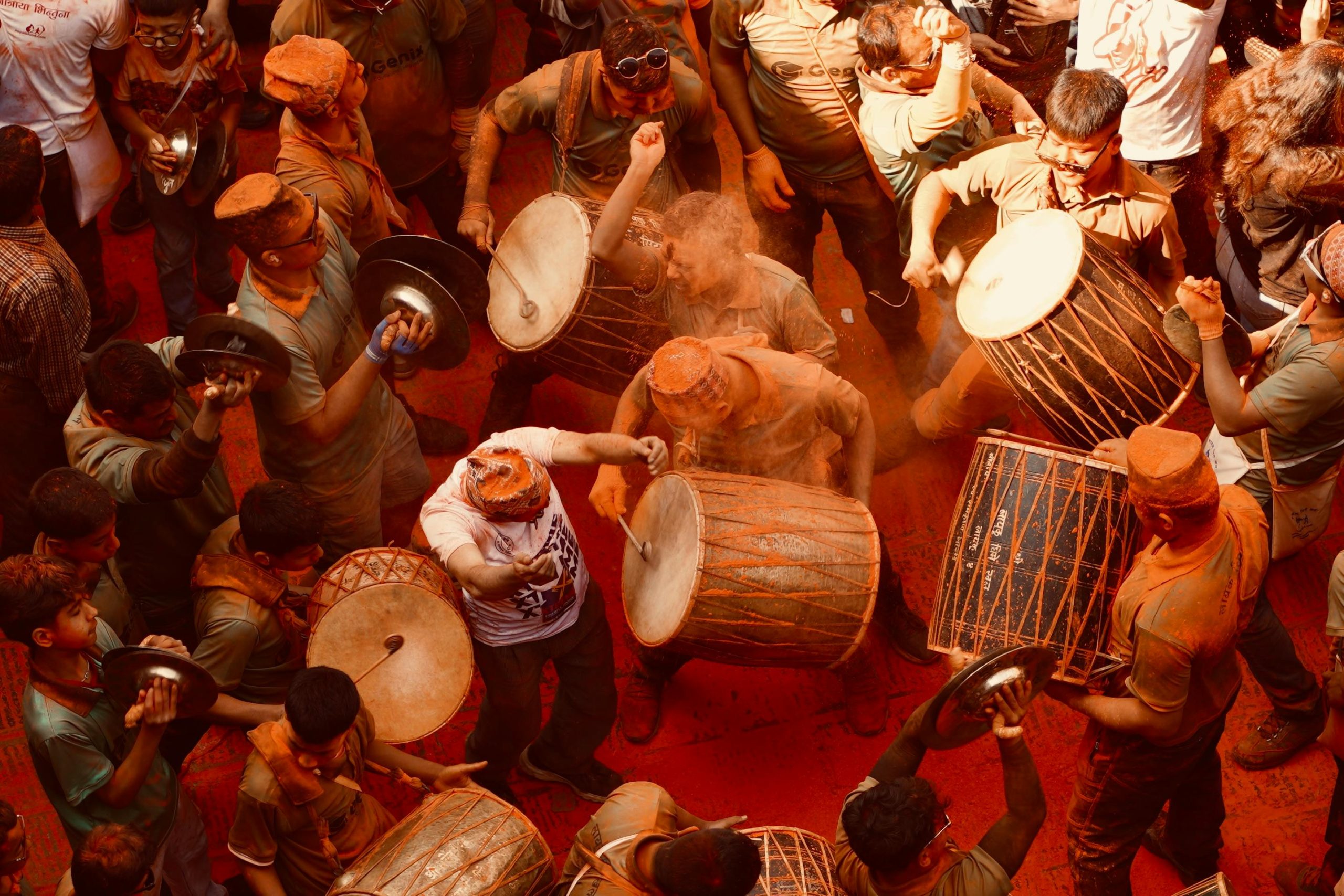
Nepal has a rich festival calendar. Celebrations may be public, such as street processions, temple events, and neighbourhood performances, or private, such as family rituals at home. Visitors are sometimes invited to join. When this happens, simple signs of genuine interest can help build warm connections.
You can show respect by watching attentively, greeting people warmly, and participating in small ways when encouraged. Many festivals last for several days and are centered around family and community. In this context, “joining in” often means sharing time with others: sitting with the group, accepting tea or snacks, and being present rather than trying to take part in every activity.
Festivals Vary by Community
Festivals in Nepal vary widely across communities, regions, and religious traditions. Some festivals, such as दशैं (daśaĩ) and तिहार (tihār), are celebrated widely across the country by many communities. Others are especially important in specific places or communities, such as Newar festivals in the Kathmandu Valley, Buddhist festivals around monasteries, or regional festivals in the Tarai.
Even when the mood feels playful, with music, dancing, crowds, and colour, many moments may still have religious or ritual meaning. Your host’s guidance is important. A host may tell you where to stand, when to step forward, what to accept, and what to avoid. Following this guidance is respectful and natural.
Watch, Ask, and Join
A safe and simple approach is to follow a “watch, ask, and join” pattern.
First, watch how people behave. Notice how they greet each other, where they remove shoes, how they receive food or blessings, and how offerings are handled.
Then, ask briefly if you are unsure. You can use simple questions such as:
Is it okay if I stand here?
Should I remove my shoes?
Can I take a photo?
May I join?
Finally, join at the level your host suggests. This may mean receiving टीका (ṭīkā, “blessing mark”), accepting प्रसाद (prasād, “blessed food”), holding a candle or incense, or joining a short round of singing or dancing.
If You Prefer Not to Participate
If you prefer not to receive something or take part in a ritual action, a gentle and respectful decline is usually acceptable. Tone matters more than the exact words. A calm smile, a small gesture of thanks, and a brief explanation can help keep the interaction comfortable.
For example, you can say that you would like to watch, or that you are grateful but prefer not to participate directly. In most situations, people will understand if you remain respectful.
Basic Festival Etiquette
A few basic habits are helpful in most festival settings. Dress modestly for temples and family rituals. Remove your shoes where others do. Use your right hand, or both hands, when receiving food, blessings, or offerings. Ask before touching ritual objects. Ask before taking close photos, especially during worship, family rituals, or moments of prayer.
When in doubt, stay calm, observe carefully, and let your host guide you. Showing respect, patience, and genuine interest is usually more important than knowing every rule in advance.