Chapter 10 – Introductions and Social Exchanges
Unit 2 — Cultural Insight
Greeting People in Nepali
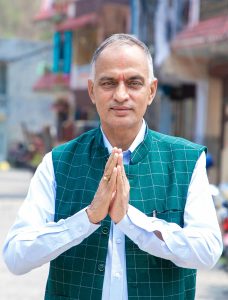
नमस्ते (namaste) is more than a simple “hello.” The word comes from Sanskrit: nama means “bow” or “obeisance,” and te means “to you.” A basic meaning is therefore “I bow to you.” In everyday Nepali, however, नमस्ते (namaste) is mainly used as a polite and respectful greeting in many different situations.
In some spiritual or yoga contexts, people may explain नमस्ते (namaste) as “the divine in me honours the divine in you.” Not everyone thinks of this spiritual meaning in daily conversation, but it reflects the broader idea of mutual respect.
The Gesture
नमस्ते (namaste) is often both a word and a gesture. People bring their palms together in front of the chest, keep the fingers pointing upward, bow the head slightly, and say नमस्ते (namaste) in a warm tone. This hand gesture is often called अञ्जली मुद्रा (añjalī mudrā).
The bow may be deeper when greeting elders, teachers, or respected community members. It may be lighter and more relaxed with friends or people of similar age. In both cases, the gesture communicates respect.
Flexible Greetings
Unlike English, where greetings often depend on the time of day, Nepali uses flexible greetings more often. नमस्ते (namaste) and नमस्कार (namaskār) can be used in the morning, afternoon, or evening. They are safe, polite choices in many everyday contexts.
Time-based greetings that begin with शुभ (śubha), such as शुभ प्रभात (śubha prabhāt, “good morning”) and शुभ रात्रि (śubha rātri, “good night”), are correct and respectful. However, they often sound more formal, ceremonial, or written. They are less common in casual everyday conversation.
Respectful Pronouns and Titles
Politeness in Nepali is not only about greetings. It is also about how you refer to people. तपाईं (tapāī̃) is the default respectful form of “you,” and उहाँ (uhā̃) is a polite form for “he” or “she.”
Nepali also uses respectful suffixes. The suffix जी (jī) commonly follows names or titles, as in सीताजी (sītājī) or रमेशजी (rameśjī). The suffix ज्यू (jyū) is often used with titles, as in गुरुज्यू (gurujyū) or प्रिन्सिपलज्यू (prinsipaljyū).
Using these forms shows respect, social distance, and sometimes warmth. Switching to non-honorific forms can sound casual, direct, or even impolite in the wrong setting, so learners should use respectful forms carefully.
Respect in Everyday Interaction
Respect is very important in Nepali interaction. In public, classroom, and community settings, it is usually polite to use तपाईं (tapāī̃) and respectful verb forms.
Nepali speakers also often use kinship terms to address people kindly, even when they are not relatives. For example, दाइ (dāi, “elder brother”) and दिदी (didī, “elder sister”) can sound respectful and friendly. For elderly people, many speakers use बाजे (bāje, “grandfather”) and बजै (bajai, “grandmother”). In schools, सर (sar) and म्याम (myām) are also common titles.
For learners, नमस्ते (namaste) is the safest and most natural greeting to begin with. Combined with respectful pronouns, polite titles, and a warm tone, it helps create a respectful and friendly first impression.
Media Attributions
- Man Doing Namaste Gesture © CP Khanal is licensed under a Public Domain license