Chapter 1 – Script and Pronunciation
Unit 1 — Devanagari Script
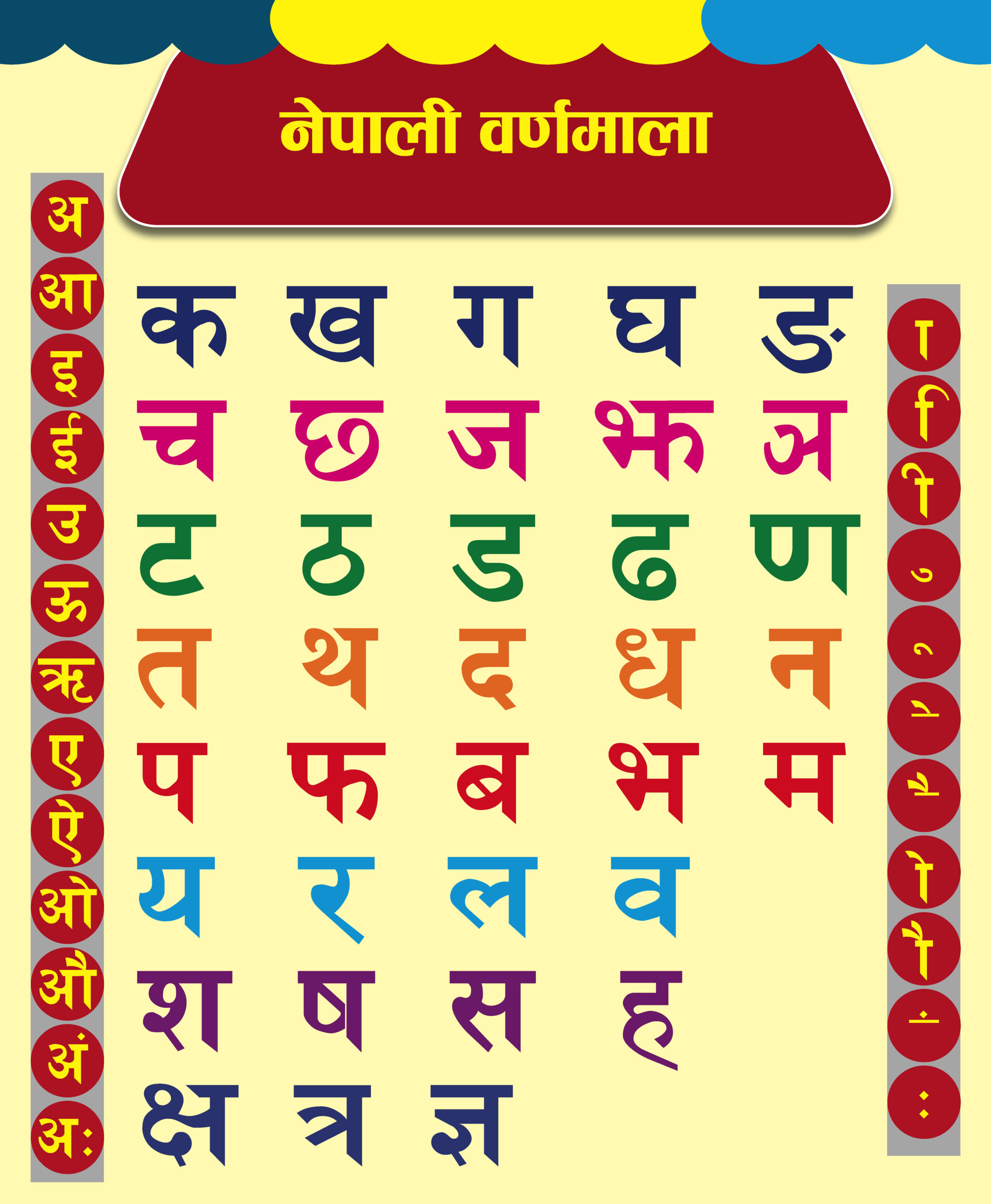
What Is Devanagari?
Devanagari is the script used to write Nepali.
If you are new to Nepali, the script may look unfamiliar at first. This is normal. In this unit, you will begin slowly and learn the basic features of Nepali writing.
By the end of this unit, you will begin to understand:
- how Nepali letters work
- how consonants include a built-in vowel sound
- how vowel signs change the sound of a consonant
- how Nepali is read in small units called अक्षर (akṣara)
- how common writing marks are used
You do not need to memorize everything right away. The goal is to become familiar with the script so that you can start reading simple Nepali words with confidence.
A simple way to remember this is:
Nepali is read in अक्षर (akṣara), or syllable blocks.
For example:
क
ka
कि
ki
को
ko
क्त
kta
Each of these is read as one written unit.
In this unit, you will learn about:
- consonants
- vowels
- vowel signs
- conjuncts
- common writing marks
- अक्षर (akṣara) as the basic reading unit
Consonants
Consonants are the main letters in Nepali.
In Nepali, most consonants include a built-in vowel sound.
For example:
क
ka
This means:
- क is not read as only k
- क is read as ka
- the vowel sound a is already included
Table 1.1.1 — Consonants with the Built-in Vowel Sound
| Nepali | Transliteration | Sound |
|---|---|---|
| क | ka | ka |
| ख | kha | kha |
| ग | ga | ga |
| घ | gha | gha |
| ङ | ṅa | ṅa |
Simple Rule
Remember:
- A Nepali consonant usually includes the vowel sound a.
- You do not need to add a separate letter for this sound.
- The built-in vowel is already part of the consonant.
Examples:
क = ka
ख = kha
ग = ga
Try It Now
Read the letters aloud:
- क — ka
- ख — kha
- ग — ga
- घ — gha
- ङ — ṅa
Now read them again slowly.
Listen for the final a sound in each one.
The Built-in Vowel
A key feature of Nepali writing is the built-in vowel.
Each consonant usually includes the sound a unless:
- another vowel sign changes it
- the vowel sound is removed
For example:
क
ka
The letter क includes two sounds:
- the consonant sound k
- the built-in vowel sound a
Together, क is read as ka.
Table 1.1.2 — Built-in Vowel in Consonants
| Nepali | Transliteration | Explanation |
|---|---|---|
| क | ka | consonant with built-in a |
| ख | kha | consonant with built-in a |
| ग | ga | consonant with built-in a |
| म | ma | consonant with built-in a |
| न | na | consonant with built-in a |
Learner Tip
Do not read क as only k.
Read it as:
क
ka
The a sound is already built into the consonant.
Removing the Built-in Vowel: हलन्त
The हलन्त (halanta) is a small mark.
It removes the built-in a sound from a consonant.
The हलन्त mark looks like this:
्
For example:
क
ka
क्
k
This means:
- क is read as ka
- क् is read as k
- the हलन्त removes the final a sound
Table 1.1.3 — Consonant With and Without हलन्त
| Nepali | Transliteration | Meaning |
|---|---|---|
| क | ka | consonant with built-in a |
| क् | k | consonant without built-in a |
| म | ma | consonant with built-in a |
| म् | m | consonant without built-in a |
| न | na | consonant with built-in a |
| न् | n | consonant without built-in a |
Simple Rule
Without हलन्त:
क = ka
With हलन्त:
क् = k
Try It Now
Read the pairs aloud:
- क — ka
- क् — k
- म — ma
- म् — m
- न — na
- न् — n
Now look carefully at the small mark under the consonant.
That mark is the हलन्त (halanta).
Vowels
स्वर (swara) means a vowel sound in Nepali.
In Nepali writing, vowels can appear in two main ways:
- as independent vowel letters
- as vowel signs attached to consonants
Independent vowels are used when a syllable begins with a vowel.
For example:
अ
a
आ
ā
इ
i
ई
ī
उ
u
ऊ
ū
Table 1.1.4 — Independent Vowels
| Nepali | Transliteration | Sound |
|---|---|---|
| अ | a | a |
| आ | ā | ā |
| इ | i | i |
| ई | ī | ī |
| उ | u | u |
| ऊ | ū | ū |
| ए | e | e |
| ऐ | ai | ai |
| ओ | o | o |
| औ | au | au |
Learner Tip
Independent vowels stand alone.
They do not need to attach to a consonant.
For example:
अ
a
This vowel can stand by itself.
Vowel Signs
Vowel signs are attached to consonants.
They change the built-in a sound into another vowel sound.
For example:
क
ka
का
kā
कि
ki
कु
ku
के
ke
को
ko
In each example:
- the consonant क stays the same
- the vowel sign changes the vowel sound
- the built-in a is replaced by another vowel
Table 1.1.5 — Vowel Signs with क
| Nepali | Transliteration | Explanation |
|---|---|---|
| क | ka | built-in a |
| का | kā | क + ा |
| कि | ki | क + ि |
| की | kī | क + ी |
| कु | ku | क + ु |
| कू | kū | क + ू |
| के | ke | क + े |
| कै | kai | क + ै |
| को | ko | क + ो |
| कौ | kau | क + ौ |
Simple Rule
Vowel signs replace the built-in a sound.
Examples:
क = ka
का = kā
कि = ki
कु = ku
Try It Now
Read these aloud:
- क — ka
- का — kā
- कि — ki
- की — kī
- कु — ku
- कू — kū
- के — ke
- को — ko
Say them slowly first.
Then say them more naturally.
You can use the audio recorder below to record yourself. Listen to your recording and check whether the vowel sound changes clearly.
Independent Vowels and Vowel Signs
Nepali uses independent vowels and vowel signs in different situations.
Use an independent vowel when the syllable begins with a vowel.
For example:
अ
a
Use a vowel sign when the vowel comes after a consonant.
For example:
क
ka
का
kā
कि
ki
These use a consonant with a built-in vowel or a vowel sign.
Table 1.1.6 — Independent Vowels and Vowel Signs
| Vowel sound | Independent vowel | Vowel sign with क | Transliteration |
|---|---|---|---|
| a | अ | क | ka |
| ā | आ | का | kā |
| i | इ | कि | ki |
| ī | ई | की | kī |
| u | उ | कु | ku |
| ū | ऊ | कू | kū |
| e | ए | के | ke |
| ai | ऐ | कै | kai |
| o | ओ | को | ko |
| au | औ | कौ | kau |
Learner Tip
Remember:
- Use an independent vowel when the syllable starts with a vowel.
- Use a vowel sign when the vowel is attached to a consonant.
Example:
अ = independent vowel
का = consonant + vowel sign
अक्षर: The Basic Reading Unit
Nepali is read in अक्षर (akṣara), or syllable blocks.
An अक्षर (akṣara) usually includes one vowel sound.
An अक्षर may be:
- a vowel letter
- a consonant with a built-in vowel
- a consonant with a vowel sign
- a consonant cluster with a vowel
For beginners, it is helpful to read Nepali one अक्षर (akṣara) at a time.
Table 1.1.7 — Examples of अक्षर
| Nepali | Transliteration | Reading unit |
|---|---|---|
| क | ka | one अक्षर |
| कि | ki | one अक्षर |
| कु | ku | one अक्षर |
| को | ko | one अक्षर |
| क्त | kta | one अक्षर |
Simple Rule
Read Nepali in syllable blocks.
Do not read only letter by letter.
For example:
नेपाली
nepālī
can be read as:
ने + पा + ली
ne + pā + lī
Try It Now
Read each अक्षर aloud:
- क — ka
- कि — ki
- कु — ku
- को — ko
- क्त — kta
Now read them again.
Clap once for each अक्षर.
Conjuncts
Sometimes two consonants come together with no vowel sound between them.
This creates a conjunct, or consonant cluster.
For example:
क् + त = क्त
k + ta = kta
This means:
- क् gives the sound k
- त gives the sound ta
- together they form क्त, read as kta
Other examples:
स् + त = स्त
s + ta = sta
प् + र = प्र
p + ra = pra
ग् + य = ग्य
g + ya = gya
Table 1.1.8 — Common Conjuncts
| Consonants | Conjunct | Transliteration |
|---|---|---|
| क् + त | क्त | kta |
| स् + त | स्त | sta |
| प् + र | प्र | pra |
| ग् + य | ग्य | gya |
Learner Tip
A conjunct may look like several consonants joined together.
For now, remember:
- a conjunct is a joined consonant form
- it is usually read as part of one अक्षर (akṣara)
- you do not need to master all conjuncts at once
Common Conjunct Letters
Some conjuncts are very common in Nepali.
Three important ones are:
क्ष
kṣa
त्र
tra
ज्ञ
jña
In modern spoken Nepali, ज्ञ (jña) is often pronounced close to gya.
Table 1.1.9 — Common Conjunct Letters
| Nepali | Transliteration | Beginner pronunciation note |
|---|---|---|
| क्ष | kṣa | often learned as kṣa |
| त्र | tra | pronounced tra |
| ज्ञ | jña | often pronounced close to gya in modern Nepali |
Learner Tip
You do not need to master all conjuncts in this unit.
For now, focus on recognizing these forms:
- क्ष — kṣa
- त्र — tra
- ज्ञ — jña
You will practise them more in later units.
शिरोरेखा: The Top Line
Most Devanagari letters have a horizontal line at the top.
This line is called शिरोरेखा (śirorekhā).
When letters form a word, the top line often connects across the word.
For example:
नेपाली
nepālī
In this word, the top line connects the letters together.
Table 1.1.10 — शिरोरेखा in Words
| Nepali | Transliteration | Note |
|---|---|---|
| नेपाली | nepālī | the top line connects across the word |
| किताब | kitāb | the top line connects across the word |
| कमल | kamal | the top line connects across the word |
Learner Tip
The शिरोरेखा (śirorekhā) helps you see how letters connect inside a word.
When you read Nepali, notice the top line first. It can help you recognize the shape of the word.
Common Writing Marks
Nepali uses several important writing marks.
You will see these marks often when reading and writing Nepali.
In this unit, you will begin by recognizing them.
Table 1.1.11 — Common Writing Marks
| Mark | Nepali name | Transliteration | Use |
|---|---|---|---|
| ् | हलन्त | halanta | removes the built-in a sound |
| ं | बिन्दु | bindu | marks a nasal sound |
| ँ | चन्द्रबिन्दु | candrabindu | marks nasalization |
| । | पूर्ण विराम | pūrṇa wirām | marks the end of a sentence |
| ः | विसर्ग | wisarga | adds a light breathy sound, mostly in formal or Sanskrit-based words |
बिन्दु and चन्द्रबिन्दु
The बिन्दु (bindu) marks a nasal sound.
Example:
गंगा
gaṅgā
The चन्द्रबिन्दु (candrabindu) marks nasalization.
Example:
आँखा
ā̃khā
For beginners, the most important thing is to recognize that both marks are connected to nasal sounds.
Table 1.1.12 — बिन्दु and चन्द्रबिन्दु
| Nepali | Transliteration | Meaning | Mark |
|---|---|---|---|
| गंगा | gaṅgā | a common Nepali female name | बिन्दु |
| आँखा | ā̃khā | eye; eyes | चन्द्रबिन्दु |
| कहाँ | kahā̃ | where | चन्द्रबिन्दु |
| यहाँ | yahā̃ | here | चन्द्रबिन्दु |
Learner Tip
Both बिन्दु (bindu) and चन्द्रबिन्दु (candrabindu) are connected to nasal sounds.
For now:
- notice the mark
- read the example word
- listen carefully to the pronunciation
You will learn more about these sounds later.
पूर्ण विराम
Nepali uses पूर्ण विराम (pūrṇa wirām) to mark the end of a sentence.
The mark looks like this:
।
English usually uses a period.
Nepali uses पूर्ण विराम:
।
For example:
यो किताब हो।
yo kitāb ho.
This is a book.
Table 1.1.13 — पूर्ण विराम in Sentences
| Nepali | Transliteration | English |
|---|---|---|
| यो किताब हो। | yo kitāb ho. | This is a book. |
| उहाँ शिक्षक हुनुहुन्छ। | uhā̃ śikṣak hunuhuncha. | He/She is a teacher. |
| म विद्यार्थी हुँ। | ma widyārthī hũ. | I am a student. |
Simple Rule
Remember:
- English uses a period.
- Nepali uses पूर्ण विराम।
- The Nepali sentence-ending mark is: ।
Try It Now
Look at the sentence:
यो किताब हो।
yo kitāb ho.
This is a book.
Now do these steps:
- Find the पूर्ण विराम।
- Point to it or circle it.
- Read the sentence aloud.
One अक्षर and More Than One अक्षर
Some written forms are one अक्षर.
Examples:
क
ka
कि
ki
को
ko
क्त
kta
Some words have more than one अक्षर.
For example:
रक्त
rakta
This word can be read as:
र + क्त
ra + kta
Table 1.1.14 — One अक्षर vs. More Than One अक्षर
| Nepali | Transliteration | अक्षर breakdown |
|---|---|---|
| क | ka | क |
| कि | ki | कि |
| को | ko | को |
| रक्त | rakta | र + क्त |
| नेपाली | nepālī | ने + पा + ली |
Learner Tip
When a word feels difficult, slow down.
Try this process:
- Look at the whole word.
- Break it into अक्षर (akṣara).
- Read each अक्षर slowly.
- Then read the full word.
Try It Now
Read the word:
नेपाली
nepālī
Now break it into अक्षर:
ने + पा + ली
ne + pā + lī
Read it slowly:
- ने — ne
- पा — pā
- ली — lī
Now read the full word:
नेपाली
nepālī
You can use the audio recorder below to record yourself reading the word slowly and then naturally.
Check Your Understanding
11. Self Reflection
Key Takeaways
- Devanagari is the script used to write Nepali.
- Nepali is read in अक्षर (akṣara), or syllable blocks.
- Most consonants include a built-in a sound.
- The built-in a sound has no separate visible form.
- The हलन्त (halanta) removes the built-in vowel.
- स्वर (swara) means vowel sound.
- Vowels can appear as independent vowel letters.
- Vowels can also appear as vowel signs attached to consonants.
- Vowel signs replace the built-in a sound.
- Consonants can join together to form conjuncts.
- A conjunct is read as part of one अक्षर (akṣara).
- The शिरोरेखा (śirorekhā) is the top line used in Devanagari writing.
- Common marks include बिन्दु, चन्द्रबिन्दु, हलन्त, विसर्ग, and पूर्ण विराम.
- The पूर्ण विराम । marks the end of a sentence.
Devanagari (dewanāgarī) is the script used to write Nepali (and several other languages), in which most consonant letters include an inherent “a” vowel unless modified by vowel signs.
akṣara means a syllabic writing unit in Devanagari (dewanāgarī)—typically a vowel (अ) or a consonant with its vowel (क = ka), and it can include vowel sign (mātrā) (कि, का) or conjuncts (क्त, स्त) as one written unit.
halanta (्) is the Devanagari (dewanāgarī) sign that removes a consonant’s built-in vowel, so the consonant is read without any vowel sound (e.g., क ka → क् k).
swara is a vowel sound or vowel letter in Nepali. Vowels can stand alone or attach to consonants as मात्रा (mātrā).
śirorekhā is the horizontal “headline” at the top of many Devanagari (dewanāgarī) letters that often joins across a word, visually linking the letters together.
bindu (ं) is a nasalization mark written above a letter that signals a nasal sound in the syllable (e.g., गंगा gaṅgā).
candrabindu (ँ) is a nasalization mark written above a letter that shows the vowel is nasalized (e.g., हाँ hā̃).
pūrṇa wirām is the punctuation mark (।) placed at the end of a complete sentence; full stop; period.