Chapter 2 – Basic Greetings and Survival Phrases
Unit 2 — Cultural Insight
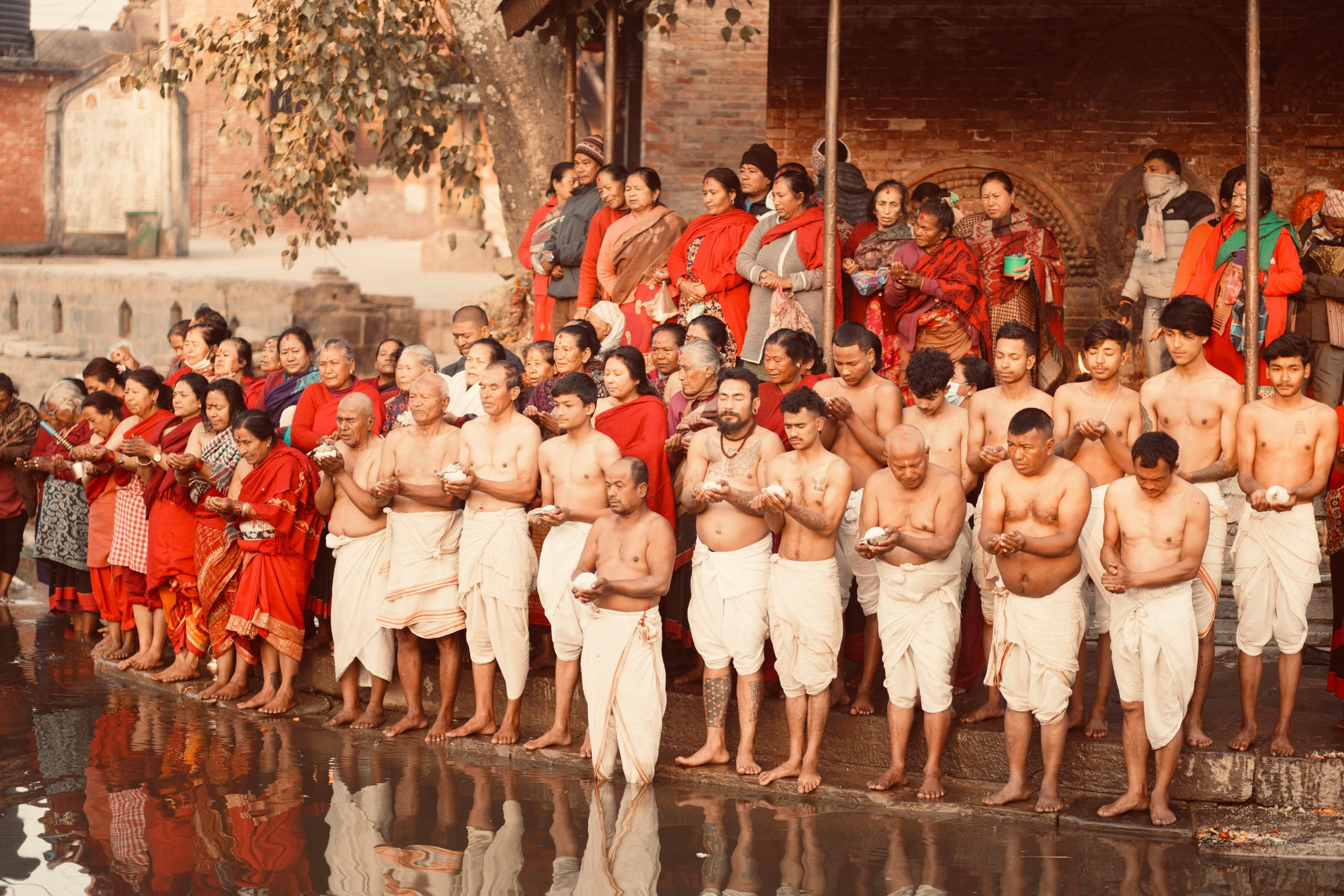
Respect, Hands, and Feet: Everyday Etiquette
In Nepal, everyday politeness is often shown through small actions. Greeting people respectfully, using the right hand when giving or receiving something, and being mindful of feet are common ways to show respect. These habits are especially important when interacting with elders, teachers, guests, and senior community members.
Greeting
The most common greeting in Nepali is नमस्ते (namaste). It can be used in many social situations and is also commonly used when saying goodbye. A more formal greeting is नमस्कार (namaskār), which may be used in public events, speeches, or more formal situations. In cities and professional settings, handshakes are also common, but नमस्ते (namaste) remains the safest and most widely accepted greeting.
Nepali does not usually use separate everyday greetings such as “good morning,” “good afternoon,” “good evening,” or “good night” in the same way English does. Instead, नमस्ते (namaste) works as an all-purpose greeting throughout the day. Expressions such as शुभ प्रभात (śubha prabhāt, “good morning”) and शुभ रात्रि (śubha rātri, “good night”) exist in Nepali, but they are less common in everyday spoken conversation. In most ordinary situations, नमस्ते (namaste) sounds the most natural.
Respect in Groups
Respect for elders and teachers is an important social value in Nepal. In a group setting, people often greet elders first. They may also use more formal language when speaking with someone older, someone in a respected role, or someone they do not know well.
Hands and Exchanging Items
When giving or receiving money, food, gifts, books, or documents, it is polite to use the right hand. Using both hands together can also show extra care and respect. In many situations, using only the left hand may feel impolite because the left hand is sometimes considered less clean.
Feet and Personal Space
Feet are treated with special care in many Nepali social settings. People usually avoid touching others with their feet, pointing the soles of their feet toward someone, stepping over someone’s legs, or sitting in a way that points shoes directly at people. These actions may seem small, but they can feel disrespectful in many homes, classrooms, temples, and community spaces.
If You Make a Mistake
If you accidentally touch someone with your foot, a brief apology is usually enough. Some people may also make a small respectful gesture by lightly touching the area and then touching their forehead. This shows that the contact was accidental and that no disrespect was intended.