Chapter 8 – States and Conditions
Unit 2 — Cultural Insight
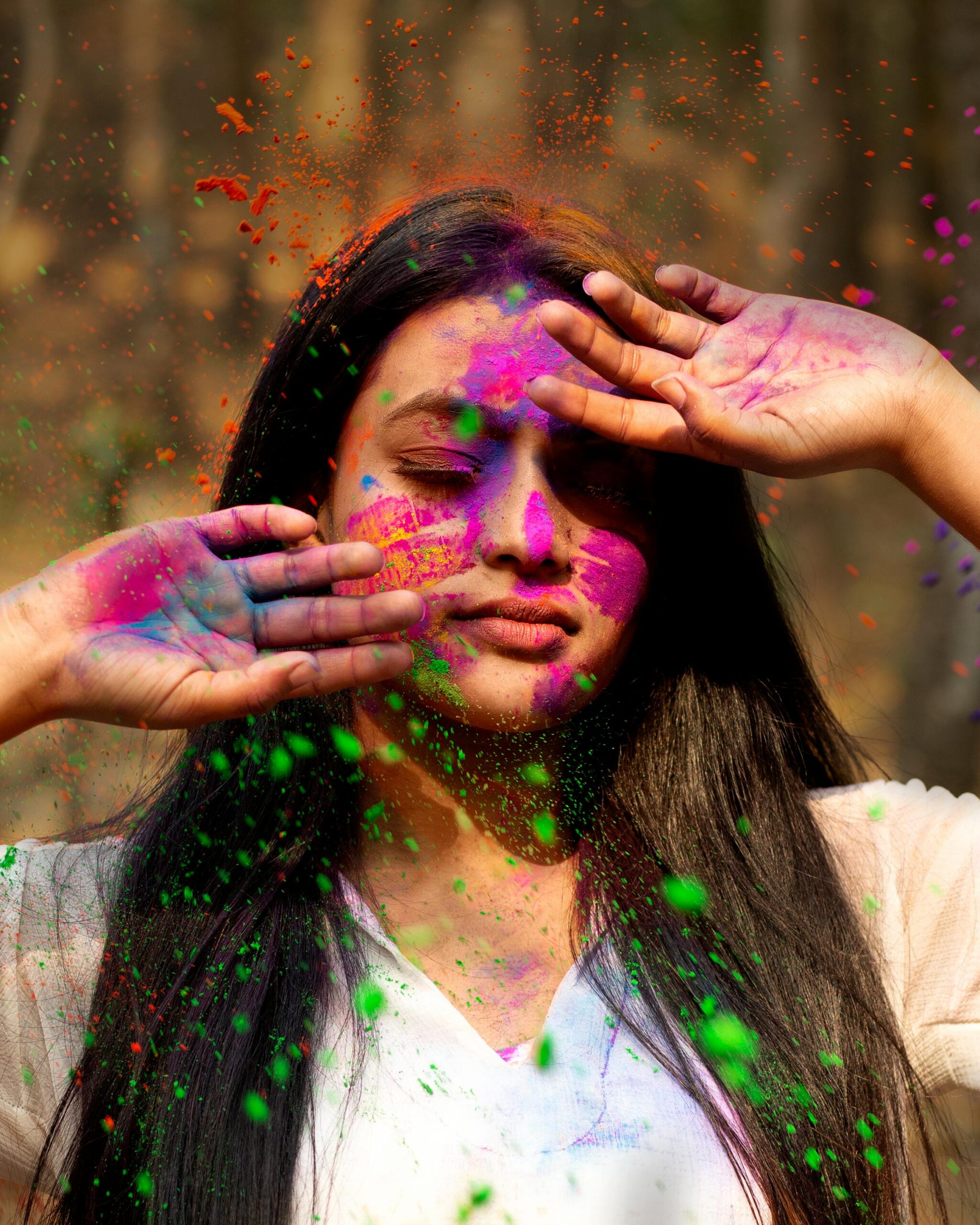
Festival of Colour: Holi and the Meaning of Colours
In Nepal, Holi is also called फागु पूर्णिमा (phāgu pūrṇimā). It is a spring festival often known as the “festival of colours.” Holi marks the shift from winter to spring and is widely celebrated across the country.
Holi is usually celebrated outdoors in streets, courtyards, school grounds, and neighbourhood lanes. People play by throwing coloured powder and splashing water. Water balloons and water guns are also common. Friends, families, classmates, and neighbours may visit one another, laugh, dance, share snacks, and take photos.
The mood is playful, lively, and social. For one day, everyday boundaries often feel a little softer. People greet each other with colour, laughter, and a sense of renewal.
Colours and Their Meanings
Colours are an important part of Holi, and many colours also carry cultural and religious meanings in Nepal. Their meanings can vary by community, region, and context, but the following associations are common:
Red: love, celebration, marriage, fertility, and good luck
Green: prosperity, harmony, nature, and growth
Yellow: wellbeing, purity, spirituality, and knowledge; often linked with turmeric and sunlight
White: peace and purity; also used in many Hindu communities during mourning
Blue: calmness and divine power; often linked with Krishna
Orange: spiritual life and renunciation; often linked with sādhus and monks
Gold: wealth, abundance, and good fortune
Purple: royalty, status, and nobility; less common in everyday rituals
Cultural Meaning of Holi
During Holi, colours cover faces, clothes, streets, and public spaces. This visual change carries a deeper message. Holi invites people to refresh relationships, let go of small tensions, and welcome spring with a lighter heart.
In this sense, Holi is not only about colour and play. It is also about renewal, connection, and community. The shared act of applying colour can help people feel closer, more relaxed, and more open to one another.
For Visitors
For visitors, the safest approach is to follow local cues. Watch first, ask if you are unsure, and join gently at the level your host suggests.
It is also respectful to ask before putting colour on someone, especially elders, children, or people you do not know well. If someone does not want to participate, it is polite to respect their choice. A friendly smile, a small amount of colour, and a respectful attitude are usually enough to take part comfortably.