Chapter 15 – Food, Taste, and Preferences
Unit 2 — Cultural Insight
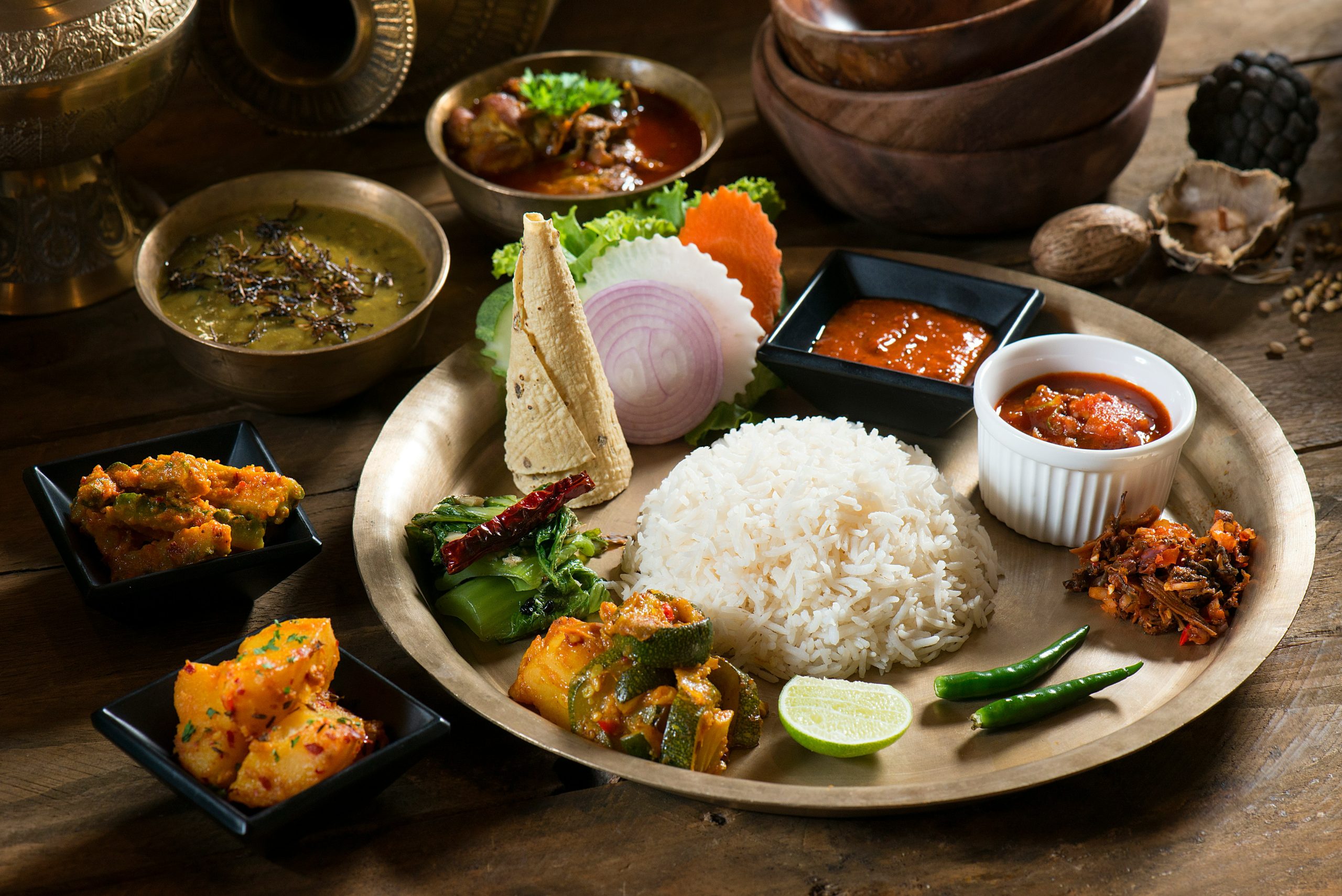
Nepali Food and Hospitality
Food plays a central role in Nepali life. It is not just something to eat. It is one of the most common and meaningful ways people show care, respect, and connection.
A typical home meal is दालभात तरकारी (dālbhāt tarkārī): rice, lentil soup, and vegetable curry. It is often served with flavorful side dishes such as अचार (acār, “pickle” or “chutney”) and साग (sāg, “greens”). Because many families eat this kind of meal every day, food is naturally woven into daily conversation, family routine, and hospitality.
Food as Care
When you visit someone’s home, the host may offer tea, चिया (ciyā), or a meal. This offer is usually genuine. You may also hear people ask खानुभयो? (khānubhayo?, “Have you eaten?”).
For Nepali speakers, this question often works like a warm check-in. It does not always mean only “Have you eaten?” in a literal sense. It can also express care, concern, and affection, similar to asking “How are you?” in many everyday situations.
Compared with many North American or European settings, where food or drink may be offered casually or only on special occasions, Nepali hospitality is often more active and attentive.
Everyday Eating Customs
You may notice some everyday eating customs in Nepal. Many people eat with the right hand, while the left hand is kept for other tasks. Even if you use utensils, it is polite to accept or pass food, plates, cups, or serving items with your right hand. Using both hands can show extra respect.
Hosts may offer you more food more than once. This repeated offering is not usually meant as pressure. It is a cultural gesture of generosity and care. A gentle back-and-forth between host and guest is part of the hospitality ritual.
If you are full, a warm and appreciative answer works well. For example:
धेरै मीठो भयो, पुग्यो।
dherai mīṭho bhayo, pugyo.
It was very tasty. That is enough.
In many Western contexts, guests may take food only once or decline quickly. In Nepal, however, accepting, appreciating, and politely declining more food are all part of the social rhythm of a meal.
Regional Food Traditions
Nepal is also home to rich regional food traditions. One well-known example is Newar cuisine from the Kathmandu Valley. If you are invited to a Newar meal or festival feast, you may see shared platters and many small, flavorful dishes.
Some examples include छोयला (choyalā, “spiced grilled meat”), बारा or वो (bārā or wo, “lentil patties”), आलु तामा (ālu tāmā, “potatoes with bamboo shoots”), यमरी (yamarī, “sweet steamed dumpling”), and many kinds of अचार (acār).
These foods are often connected to festivals, family gatherings, and community celebrations. Tasting them, even just a little, can be a meaningful way to share in local culture.
Useful Food Phrases
For Nepali learners, food is one of the easiest ways to connect with people. A few simple phrases can help you participate naturally in everyday hospitality:
खानुहोस्।
khānuhos.
Please eat.
मीठो छ।
mīṭho cha.
It is tasty.
अलि पिरो छ।
ali piro cha.
It is a little spicy.
पुग्यो।
pugyo.
Enough.
These expressions show politeness, appreciation, and openness. They also help learners build relationships through one of the most welcoming parts of Nepali culture.