Chapter 16 – Shopping
Unit 2 — Cultural Insight
Shopping in Nepal: Markets, Shops, and Bargaining
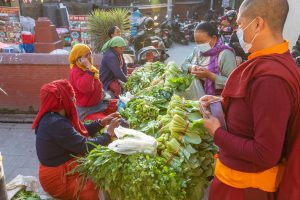
Shopping in Nepal takes place in many everyday settings. You will see street vendors and open markets, बजार (bajār), selling fresh vegetables and fruit. Small corner shops, पसल (pasal), sell snacks, drinks, and basic household goods. Tea shops, चियापसल (ciyāpasal), often serve tea and quick snacks while also functioning as neighbourhood meeting places.
Depending on the area, you may also find vegetable stalls, butcher shops, stationery stores, clothing shops, and weekly markets. These markets are often busiest in the morning. In cities, supermarkets and mini-marts are also becoming more common. In these places, prices are usually fixed. Like many North American and European stores, items may have labels, customers pay at a counter, and the interaction is often quick and transactional.
Bargaining in Everyday Shopping
A major cultural insight for learners is bargaining. In many local markets and small shops, bargaining is a normal and friendly part of shopping, especially when buying clothes, souvenirs, and some household items.
The tone is usually polite and warm. Bargaining is not usually aggressive. It often feels like a soft back-and-forth between the buyer and the seller. A common pattern is to greet the seller first, ask the price, offer a slightly lower price or ask for a discount, and then either accept the final price or leave politely.
Where Bargaining Is Common
Bargaining is common in many street markets, souvenir shops, clothing stalls, and small local shops. In tourist areas, the first price may be higher, and bargaining is often expected.
In local neighbourhood markets, prices are usually closer to everyday local rates. Bargaining may still happen, but it is often gentler and more practical.
For items with very small profit margins, such as basic vegetables, fruit, or everyday groceries, bargaining is less common. However, people may still ask for a small discount or a little extra, such as one more piece of fruit.
Where Not to Bargain
It is also important to know where bargaining is not expected. In supermarkets, pharmacies, modern cafés, department stores, and shops with printed price tags or barcodes, prices are usually fixed. Trying to bargain in these settings can feel awkward.
A simple guideline is:
If items have clear price labels and a cashier counter, the price is usually fixed.
If it is a stall, small counter shop, souvenir vendor, or clothing vendor, polite bargaining is usually acceptable.
Useful Shopping Phrases
For Nepali-language learners, a few basic phrases can make shopping smoother and more respectful:
यो कति हो?
yo kati ho?
How much is this?
अलि सस्तो हुन्छ?
ali sasto huncha?
Can it be a little cheaper?
अलि कम गरिदिनुस् न।
ali kam garidinus na.
Please reduce it a little.
धेरै महँगो भयो।
dherai mahaṅgo bhayo.
That is too expensive.
ठीक छ।
ṭhīk cha.
Okay.
Shopping Etiquette
Small etiquette details matter. Greet the seller first. Keep your tone friendly. Do not criticize the first price harshly. If the price does not work for you, you can smile, say ठीक छ (ṭhīk cha, “okay”), and either accept the price or leave politely.
When paying, it is respectful to give and receive cash, change, or receipts with your right hand. Using both hands can show extra respect, especially with older sellers or in more formal interactions.
Cultural Meaning
For many Western learners, shopping in Nepal may feel more personal and conversational than shopping in many North American or European settings. A short exchange at a shop or market may include greetings, small talk, bargaining, humour, and friendly negotiation.
Once you learn the rhythm, shopping becomes an enjoyable and practical way to use Nepali. It helps learners build confidence, practise everyday phrases, and connect naturally with the community.