Chapter 1 – Script and Pronunciation
Overview
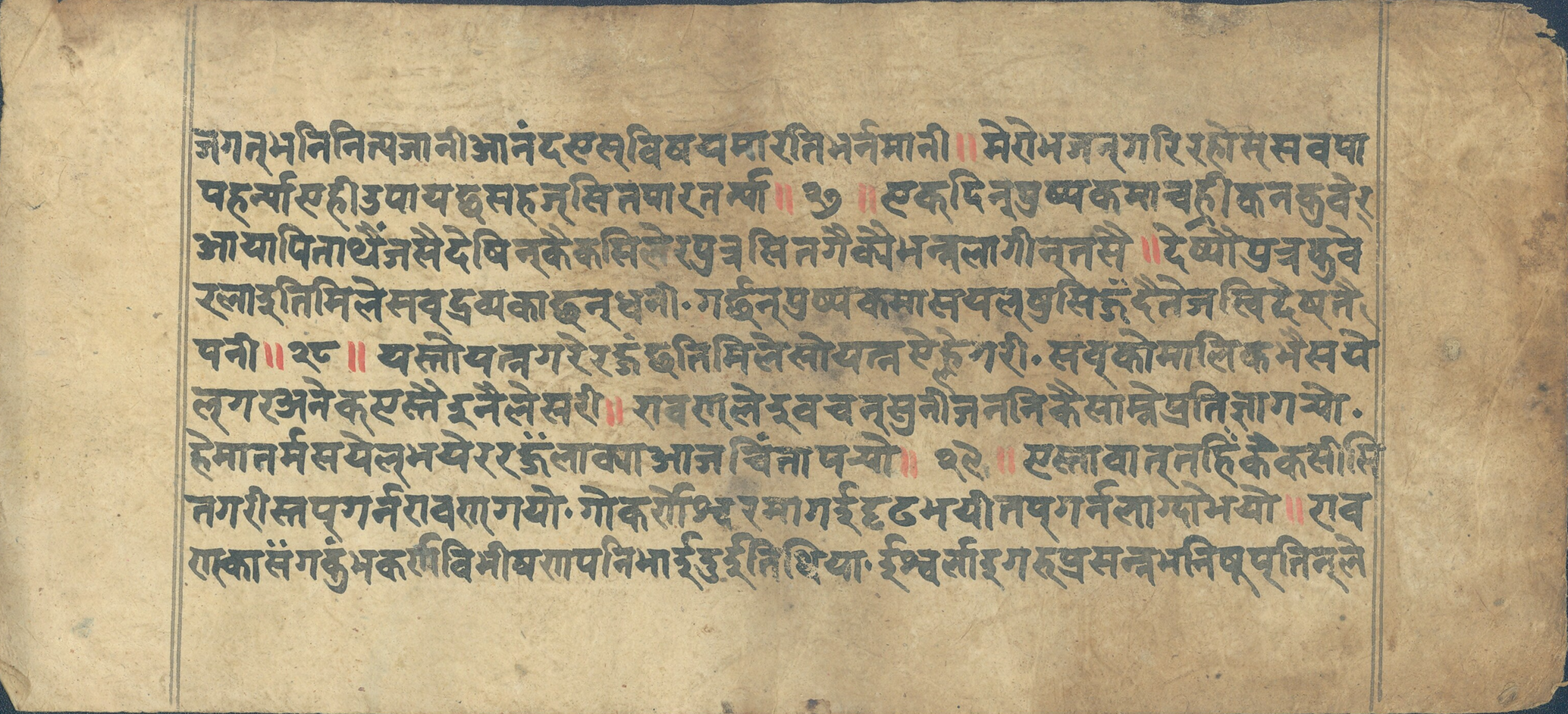
Devanagari (dewanāgarī) is the writing system used for Nepali, Hindi, and Sanskrit. Although it looks different from English, it is highly systematic and can be learned step by step. Like English, Devanāgarī is written from left to right, but its letters typically connect under a horizontal headline called the śirorekhā, which visually “holds” a word together as a single unit.
A key difference from English is how consonants and vowels are represented. In English, a consonant letter like k is written without an inherent vowel. In Devanagari, however, a consonant such as क automatically includes the vowel /a/, so it is read as ka. Because each consonant carries an inherent or ‘built-in vowel’, Devanagari is an abugida rather than an alphabet. Vowels are changed by adding vowel signs, or mātrā, and the vowel can be removed entirely by adding the halanta (्), so क् represents k with no vowel. Sentences typically end with the symbol (।), called pūrṇa wirām, which functions much like a period in English.
Reading in Devanagari also requires a different rhythm. In English, readers often move letter by letter, but in Devanagari the basic unit of reading is the akṣara: a compact written block that represents one consonant (or a consonant cluster) plus one vowel sound. Learning to recognize and process these consonant-plus-vowel blocks—akṣara by akṣara—is essential for decoding Nepali accurately and efficiently.
To support this process, the chapter provides transliteration for all Nepali examples, audio support for key sounds and words, and structured learning tools such as clear tables, practical examples, segmentation practice, and short reading tasks. The chapter is organized into ten short units that build progressively, with each unit introducing a focused concept, reinforcing it through controlled practice, and then applying it to Nepali words and short sentences. Learners should move through the units slowly, repeat sections as needed, or return to earlier topics for review. Each unit is designed to stand on its own while still contributing to a clear, cumulative progression.
Learning Objectives
By the end of this chapter, you will be able to:
- recognize key elements of the dewanāgarī script, the writing system of Nepali and other South Asian languages
- understand core structural features of the script, including the śirorekhā (headline), left-to-right writing, vowels, consonants, and conjuncts
- identify the difference between independent vowel letters and dependent vowel signs, or mātrā
- use transliteration to read and pronounce Nepali sounds more accurately
- begin writing basic vowels and consonants with clear shape and spacing
- recognize special symbols in Nepali script, such as nasalization marks (bindu ं and candrabindu ँ) and wisarga (ः)
- build a foundation for reading and writing simple words in Nepali
Devanagari (dewanāgarī) is the script used to write Nepali (and several other languages), in which most consonant letters include an inherent “a” vowel unless modified by vowel signs.
śirorekhā is the horizontal “headline” at the top of many Devanagari (dewanāgarī) letters that often joins across a word, visually linking the letters together.
mātrā is a vowel sign (vowel diacritics) added to a consonant in Devanagari (dewanāgarī) to change its vowel sound (e.g., क ka → का kā, कि ki, कु ku).
halanta (्) is the Devanagari (dewanāgarī) sign that removes a consonant’s built-in vowel, so the consonant is read without any vowel sound (e.g., क ka → क् k).
pūrṇa wirām is the punctuation mark (।) placed at the end of a complete sentence; full stop; period.
akṣara means a syllabic writing unit in Devanagari (dewanāgarī)—typically a vowel (अ) or a consonant with its vowel (क = ka), and it can include vowel sign (mātrā) (कि, का) or conjuncts (क्त, स्त) as one written unit.